Maynard Ferguson’s Trumpet Mouthpieces: Makers and Models Throughout the Years

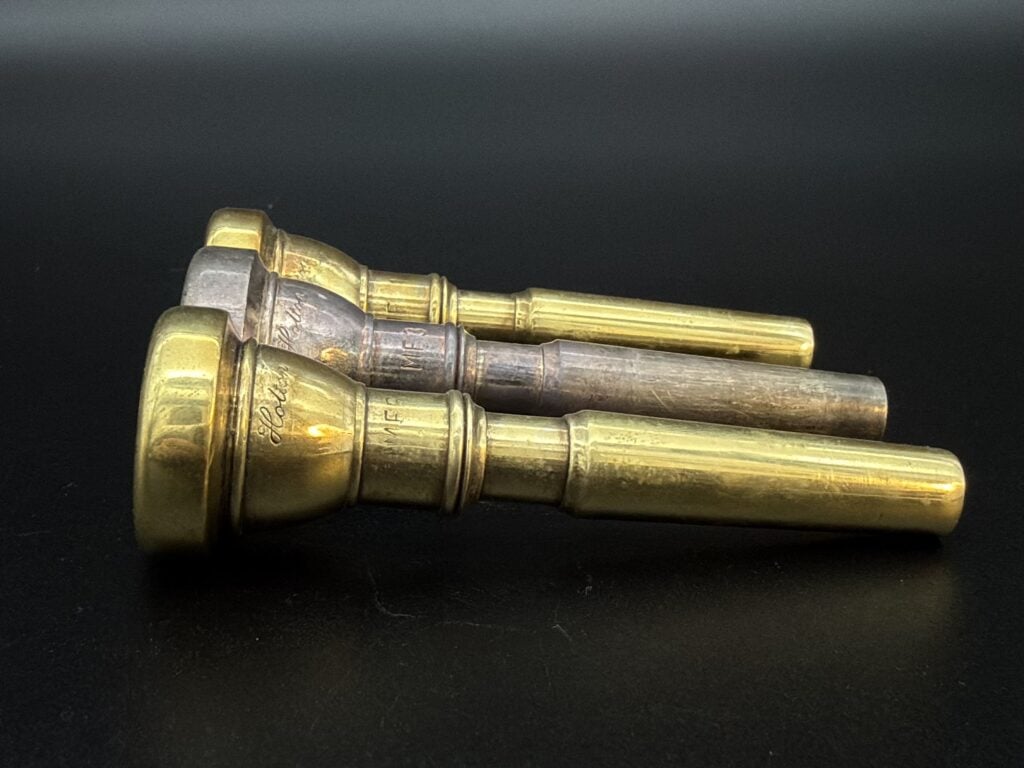
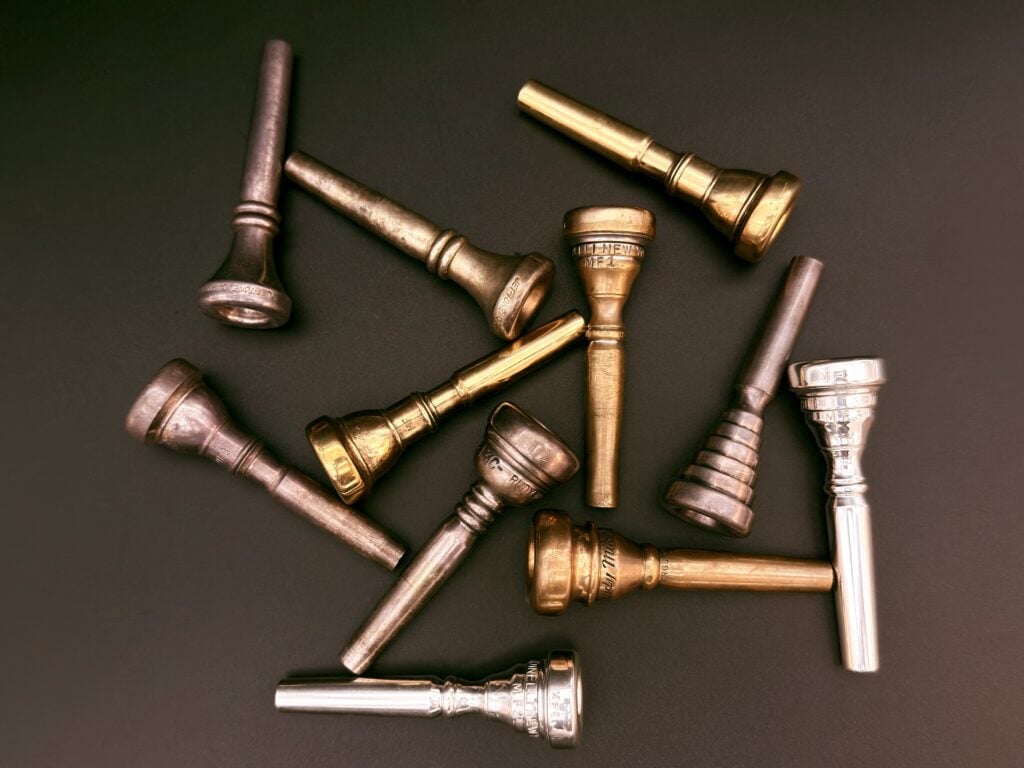
Mouthpieces played by Maynard Ferguson

by Leslie Saidak

Maynard Ferguson was a charismatic and gifted trumpet virtuoso, with a career spanning over 50 years. He performed all over the world, touching countless lives with his music. Throughout his career as a musical superstar, he also made a point to mentor young band members and teach clinics for high school band students, leaving a legacy of vibrant young trumpet players eager to follow in his footsteps.

Throughout the years, he used many different trumpets and trumpet mouthpieces, created by various craftsmen at different companies. This post takes a detailed look at the main trumpet mouthpieces he used, and the specifics of how they evolved through the decades.

Trumpet Mouthpieces used by Maynard Ferguson with approximate dates:

Rudy Muck 13C (1939-1941)

Dominick Calicchio piece, nicknamed “The Holy Grail” (1955-1963)

Giardinelli MF1 and MF2 (1963-1969)

Ferguson-Bell-Limited pieces (1969-1973)

Holton MF1, MF3 and MF6 (early 1970’s)

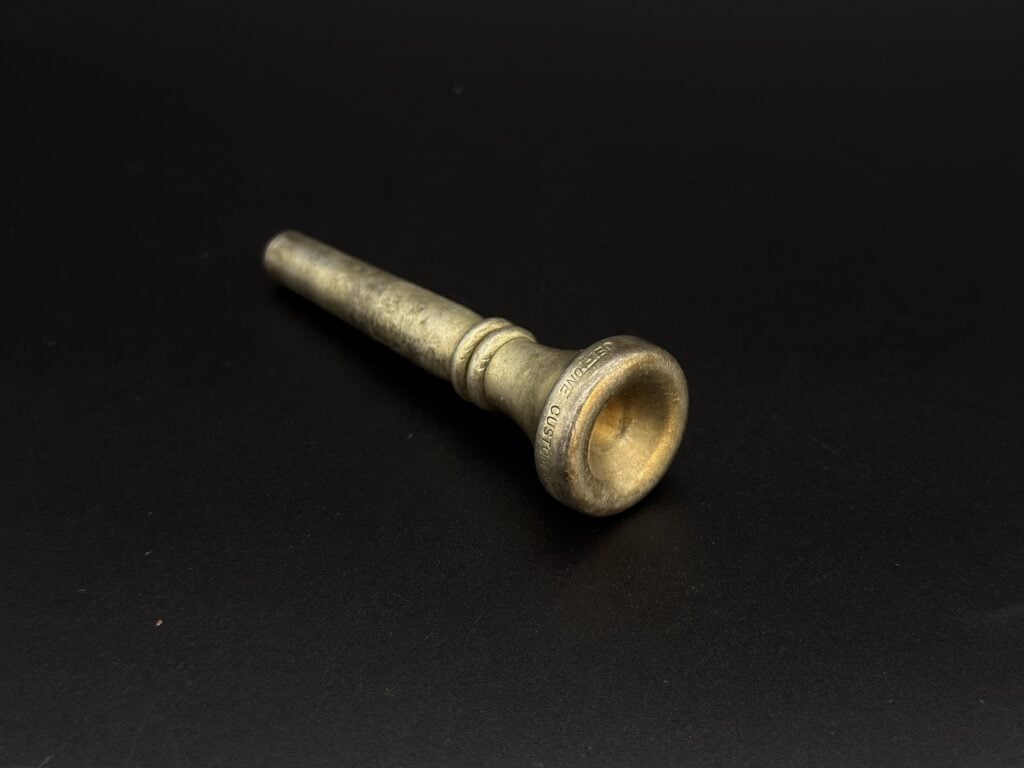
JET-TONE MF Personal, M.F. #2, and M.F. #3 (mid 1970’s-1980’s)

Schilke MF1 and MF2 (1986-1990)

Monette MF II and MF III (1992-2006)
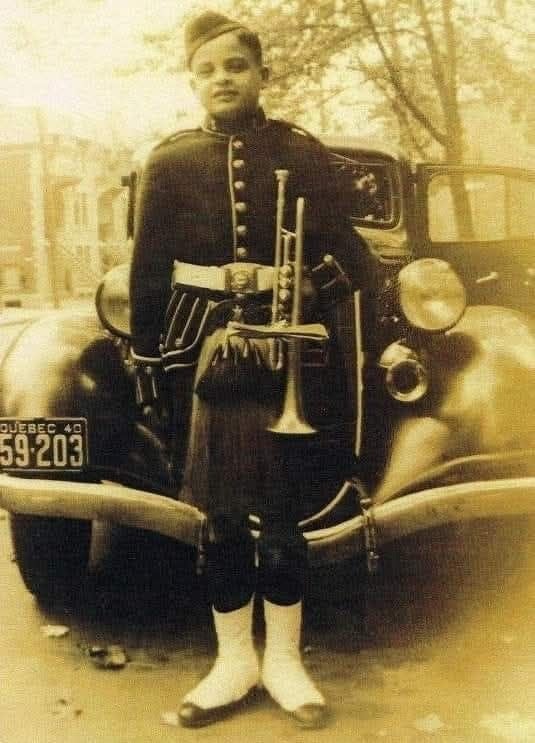
Young Maynard Ferguson

Walter Maynard Ferguson was born on May 4, 1928 in Verdun, Quebec, Canada. Although he started with violin and piano, he began playing trumpet at age 9. At age 13, he had a solo with the Canadian Broadcasting Corporation Orchestra, and at age 14 he earned a scholarship to the Conservatoire de musique du Quebec a Montreal. The child prodigy was on his way to becoming known as one of the most gifted trumpeters of all time.

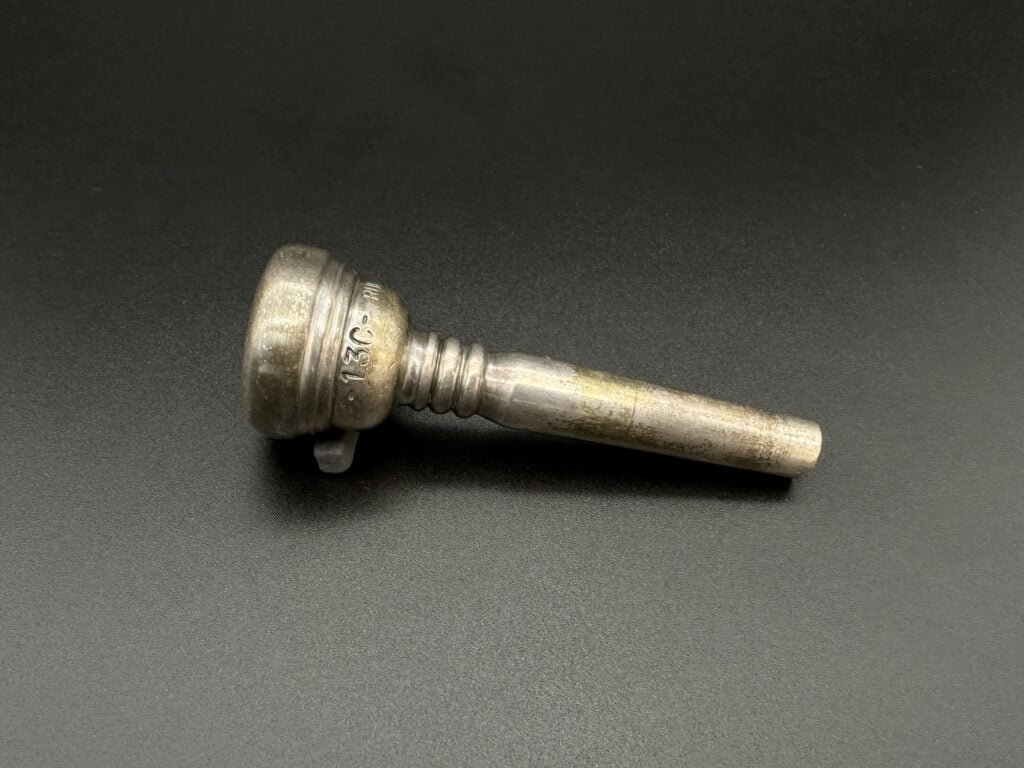
Rudy Muck 13C mouthpiece, created by Rudy Muck.
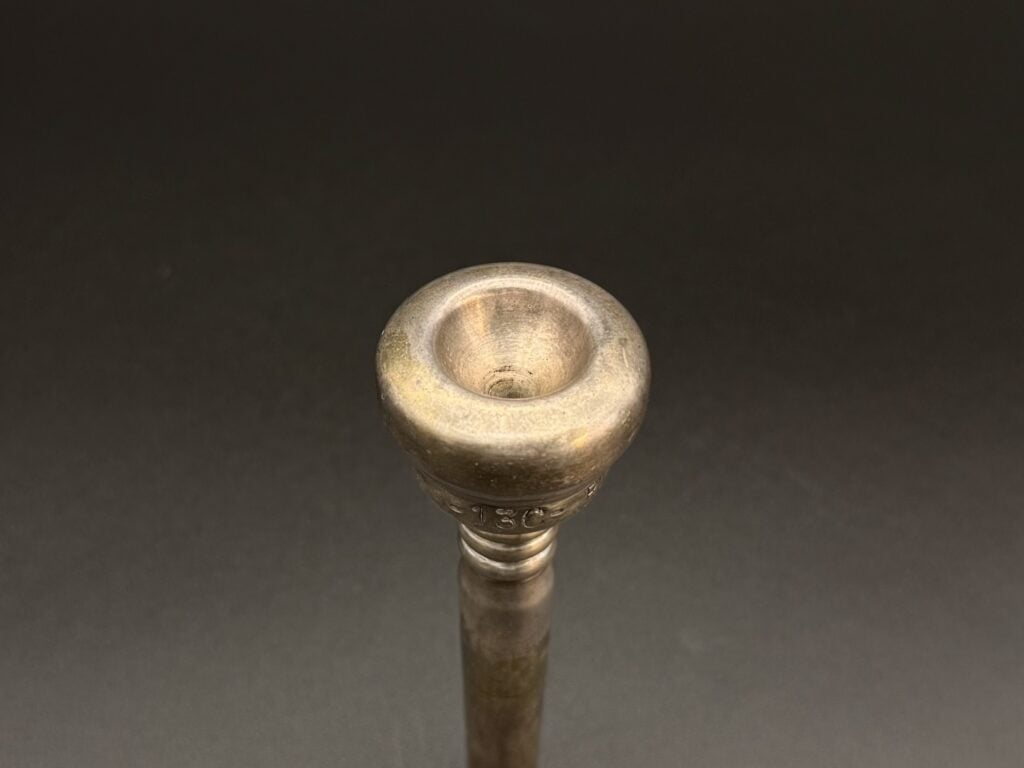
1939-1941 At the beginning of his career, while he was still living in Canada, Maynard used a Rudy Muck 13C. It is said he modified this mouthpiece by sanding down the rim to make better use of the V shaped cup. The inside rim diameter was originally .640″ before the rim was modified.

In the mid 1940’s, John DiStaulo was asked by Maynard’s parents to make a mouthpiece for their son. DiStaulo was a well known Canadian lead trumpet player who also made mouthpieces in his basement. He used the modified Rudy Muck 13C design to create a mouthpiece for Maynard with a wide, flat rim and V-bowl cup. The rim was rounded on the inside and outside edges, and the inside diameter was small, probably around .636″. Many people believe that this mouthpiece design was the key that unlocked Maynard’s range and control in the extreme upper register. From that point on, his playing developed into a talent that is unmatched, bringing musicality and electricity to the entire range of the trumpet.

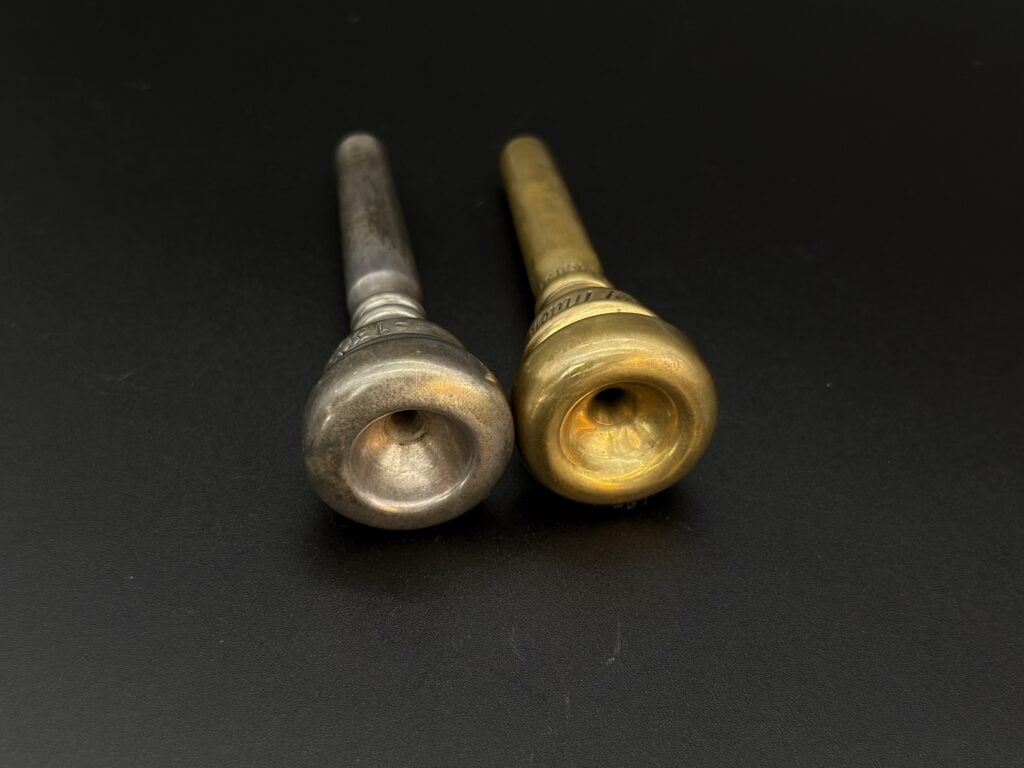
Sometime later, Rudy Muck produced a mouthpiece like Maynard’s modified version of the 13C. It was labeled either “Rudy Muck Cushion Rim 13C, Special .636 M.F.”, or “Rudy Muck Cushion Rim 13C Maynard Ferguson”. Very few of these are still in existence.

Maynard moved to the U.S. in 1948 and played with bands led by Boyd Raeburn, Jimmy Dorsey and Charlie Barnet. In 1950 he joined Stan Kenton’s Orchestra. From 1953-1956 he was a sessions player for Paramount Pictures in Hollywood, CA. During this time, Maynard used a large bore Selmer, extra-large bore Bach (1952-53), a Martin Committee Model, and then a Calicchio trumpet.
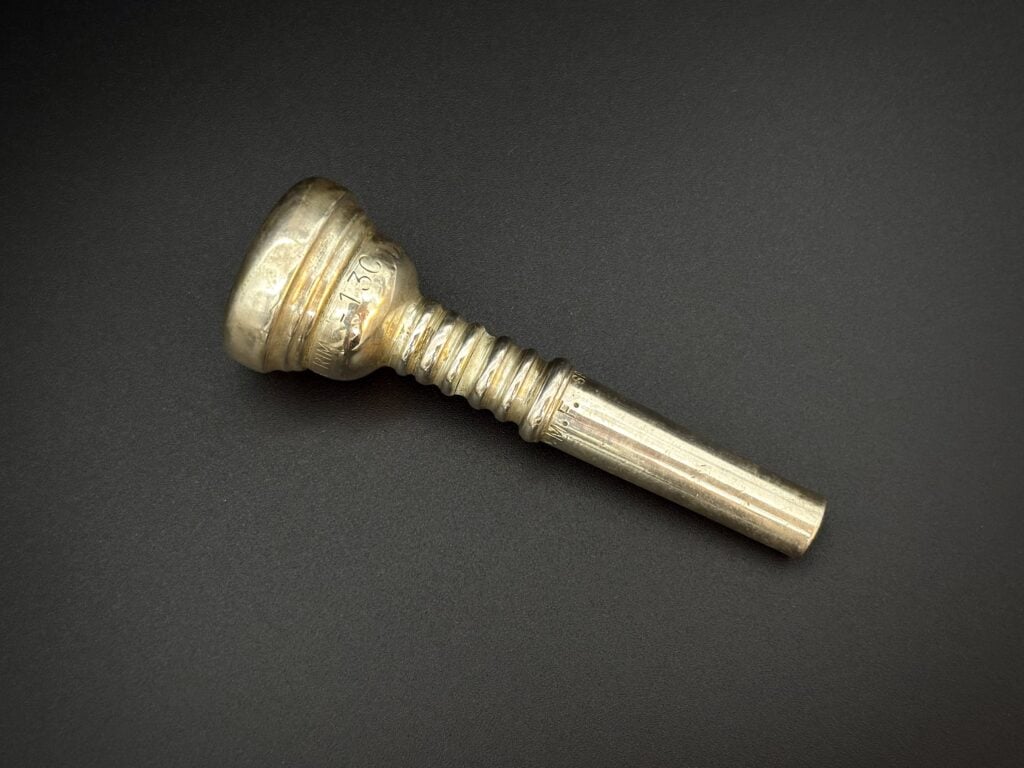
Rudy Muck Cushion Rim 13C Special .636 M.F.
Rudy Muck 13C (left) and Rudy Muck 13C Maynard Ferguson (right). Notice the cup is more shallow and the inside rim more round on the Maynard Ferguson piece.
Rudy Muck Cushion Rim 13C Maynard Ferguson

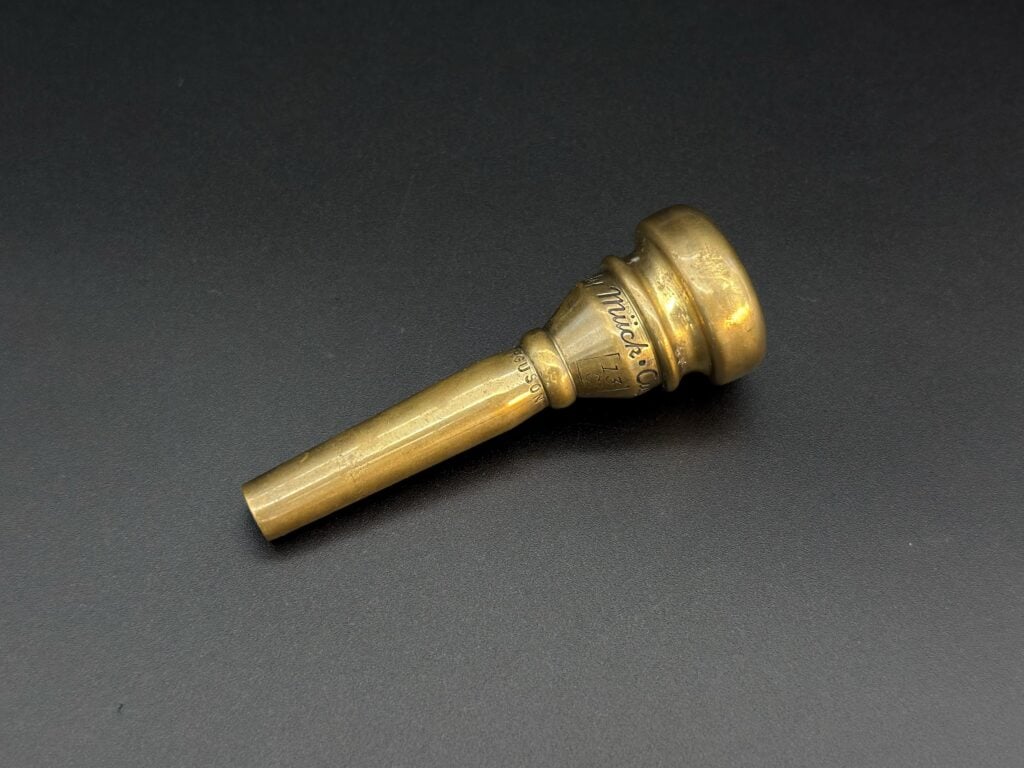
Custom mouthpiece created by Dominick Calicchio, “The Holy Grail”.

In 1955, Maynard had renowned trumpet craftsman Dominick Calicchio create a mouthpiece for him. It had a round inside rim with a diameter of around .623” (It’s hard to measure accurately due to the roundness). Built on the concept of the modified Rudy Muck 13C, it had a shallow concave V cup (also called a V bowl) and a #26 throat. Maynard Ferguson used this mouthpiece during his rise to fame, and eventually gifted it to a member of his band. It was well liked by many superstar trumpet players who tried it, and gained the nickname “The Holy Grail”. It has been reproduced by more than one company over the years, and sold under names such as “Groovin High” and others. In 1956 Maynard formed the Birdland Dream Band. He used a Conn Constellation 38B trumpet (.438 bore) during this time. Recordings during this period include: “Boy with Lots of Brass”, and “Birdland Dream Band” Vol. 1&2.

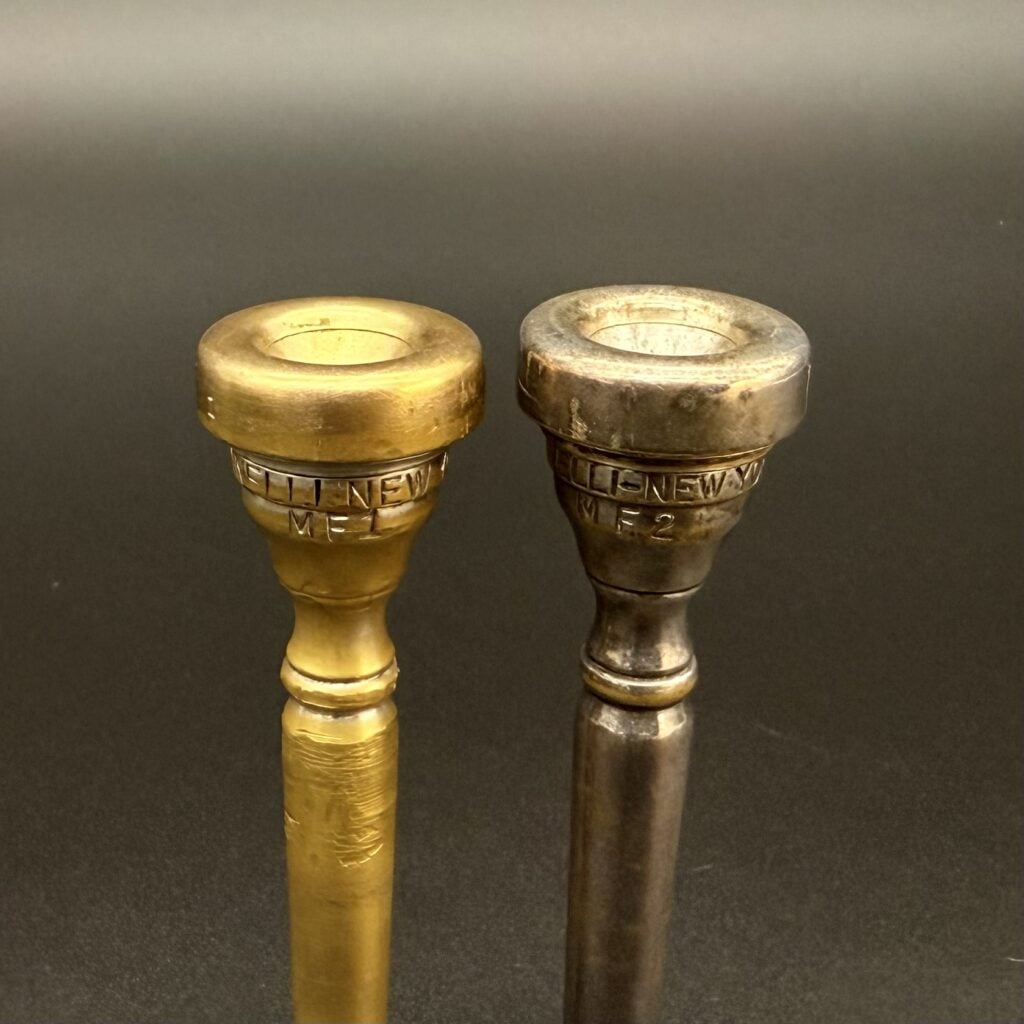
Giardinelli MF1 and MF2, created by Jack Onque.
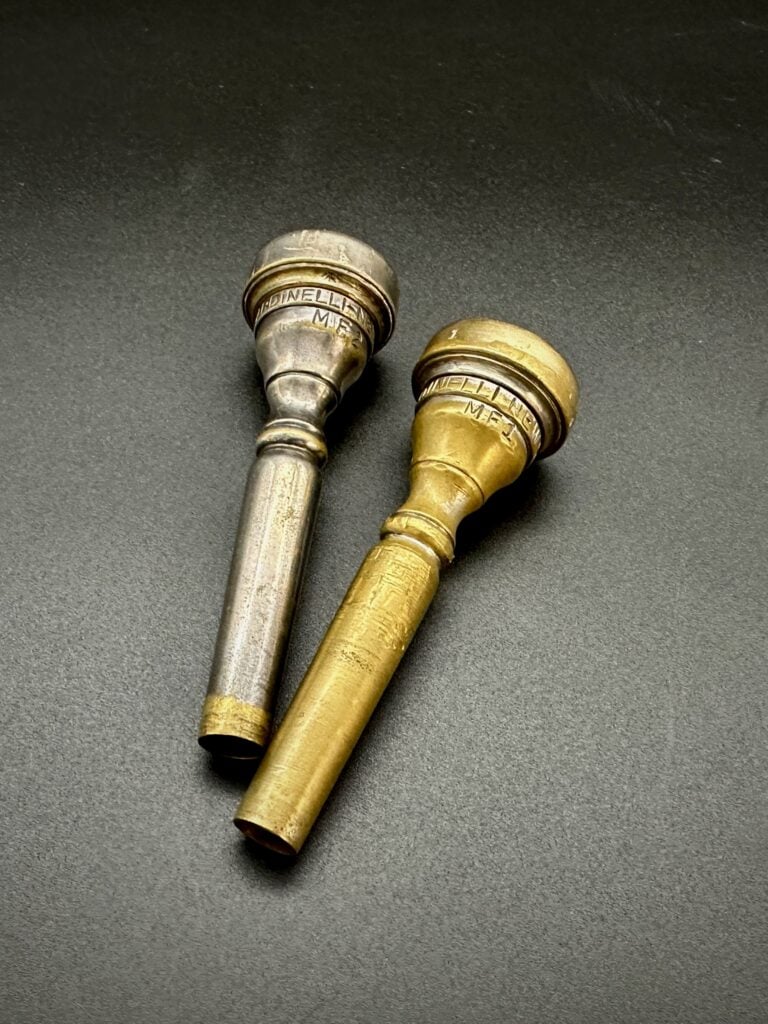
1963-1969  Maynard was played Giardinelli mouthpieces made by machinist Jack Onque during these years. The MF1 had a rounded inside rim like his previous mouthpieces, with a smaller inside rim diameter of .590”. The cup was closer to a straight V shape (but still a V-bowl) and was slightly deeper than the Calicchio mouthpiece. The throat was still a #26. The MF2 had an even smaller inside rim diameter (.580”), and the cup was a slightly convex V shape. Maynard used the Giardinelli mouthpieces during his years in New York with the Birdland Dream Band, and during his years in India (1967-1969). He was still using his Conn Constellation 38B (.438 bore) trumpet. Recordings during this period included: “Maynard ‘63” and “The Maynard Ferguson Sextet”.

Ferguson-Bell-Limited, or FBL mouthpieces, created by Jack Bell.
1969-1973 In the late 1960’s, Maynard worked with Jack Bell, a mouthpiece maker in London, England to create a series of three mouthpieces. These mouthpieces all had the same rounded rim shape, with an inside diameter of .613”, a straight V cup, and a #26 throat. There were three cup depths: FBL TS (or FBL personal), which was shallow, FBL TM (medium depth), and FBL TD (deepest cup). Maynard likely used these interchangeably as needed to get the best sound with that day’s chops. At this time Maynard was using his Liberator trumpet (.462 bore). Recordings during this time included:  “M.F. Horn”, “M.F. Horn 2”, and “M.F. Horn 3”, including the songs “MacArthur Park”, “Give It One”, and “Hey Jude”.

Holton MF1, MF3, and MF6, created by Larry Ramirez.
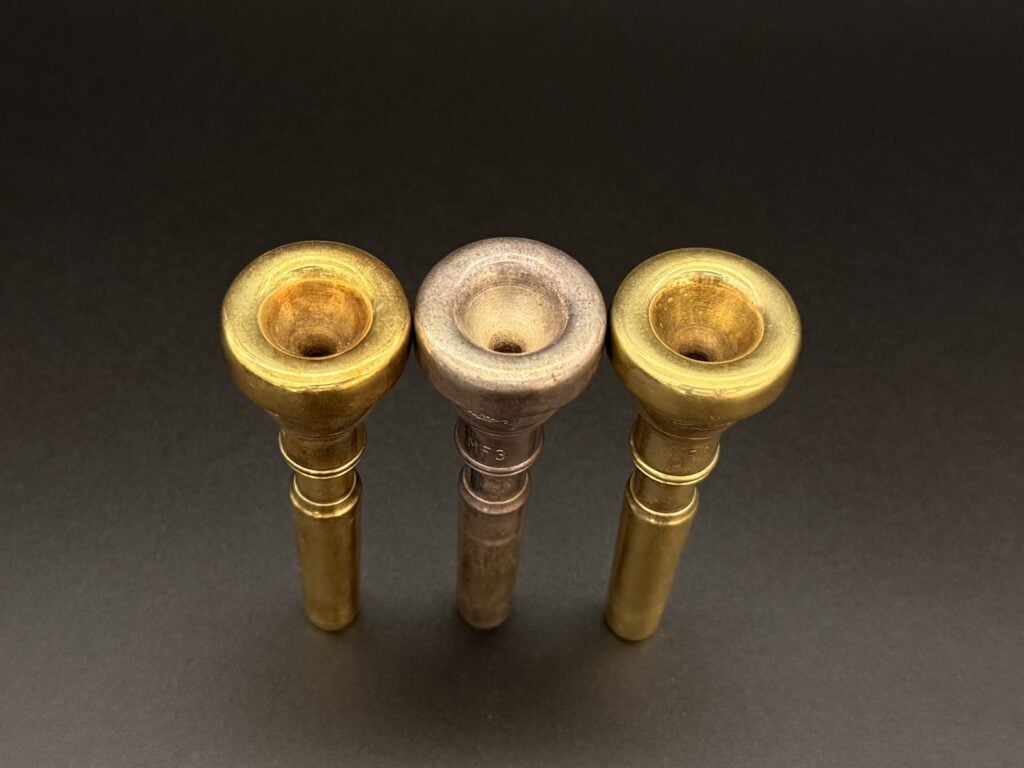
1973 These were the next iteration of Maynard’s mouthpieces, but were still similar in many ways to the Giardinelli and FBL’s. The inside rim was still very round (and difficult to measure accurately) but the inside diameter was a little smaller at about .590”. The cup was now a slightly convex V shape. The MF1 stayed with a #26 throat, but the MF6 had a much larger #19 throat. The MF1 and MF6 had a shallow cup similar in depth to the FBL TS (Personal), but the difference in throat size creates different nuances in cup shape. The MF3, on the  other hand, had a slightly wider inside diameter and a cup depth similar to the FBL TM. Maynard was using the Holton ST301 (.468 bore) and ST 302 (.468 bore) trumpets during this time. Recordings during this time include “M.F. Horn 4 & 5: Live at Jimmy’s” and “Chameleon”.

JET-TONE MF Personal, M.F. #2, and M.F. #3, created by Bill Ratzenberger.
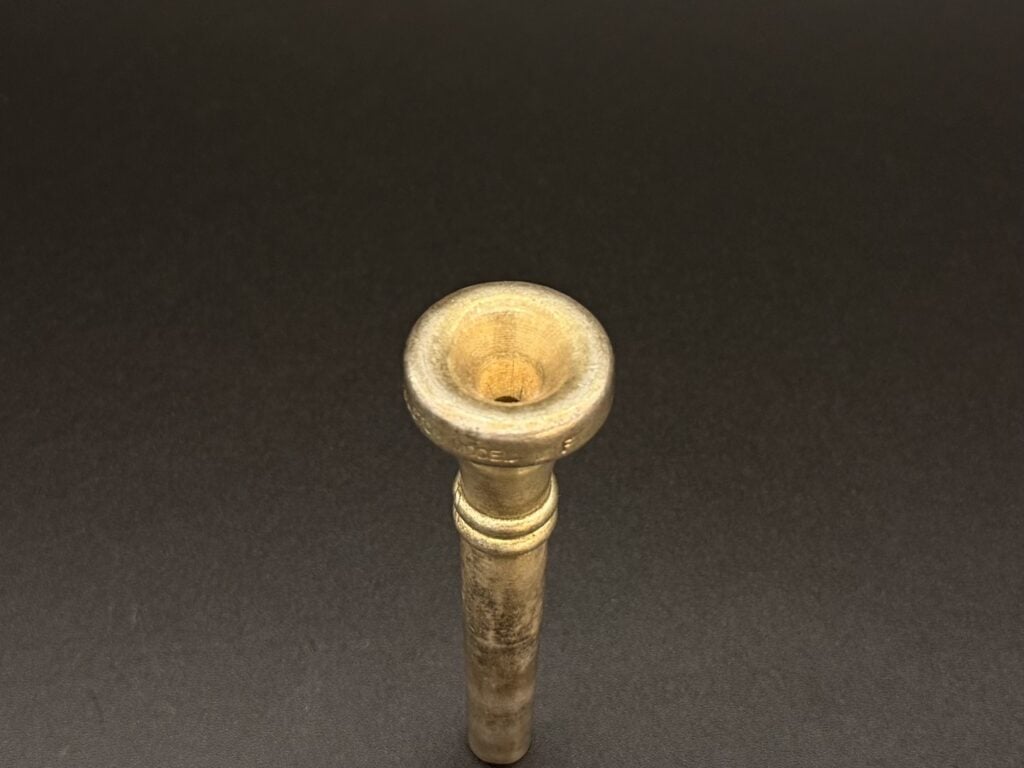
In the mid 1970’s, Maynard worked with Bill Ratzenberger at JET-TONE to create three mouthpieces. The MF Personal had an inside diameter of .593”, a shallow, fully convex V cup, and #19 throat. The M.F. #2 had an inside diameter of .625”, a slightly deeper convex V cup, and #24 throat. The M.F. #3 had a .656” inside diameter, a convex V cup about the same depth as the #2, and a #26 throat. Maynard was playing a .468 bore Holton trumpet during this time. Albums during this time included “Primal Scream” with the song “Pagliacci”, “Conquistador” with the song “Gonna Fly Now (Theme from Rocky)”, “Carnival” including “Birdland”, “Stella by Starlight”, and “Theme from Battlestar Galactica”, and the album “New Vintage” including “Star Wars” and “Airegin”.

Schilke MF1 and MF2, made by Scott Laskey.

1986-1990 These models were similar to his JET-TONE mouthpieces, with some modifications. The MF1 had more of a bowl shaped or double cup, and the MF2 was very similar to the JET-TONE MF personal model. The throat was very open and may have been either a #24 or #19. Maynard was still using a Holton ST 302 (.468 bore) or ST 306 (.468 bore) trumpet at this time. In 1986, the High Voltage Septet was formed. Recordings included: “High Voltage Vol. 1” and “High Voltage Vol. 2”. In 1988, Maynard formed the Big Bop Nouveau band and recorded the album “Big Bop Nouveau”.

Monette MFII and MFIII, made by Dave Monette.

1992-2006 The mouthpieces made for Maynard by Dave Monette were a big change from previous designs. The MFII has an inside diameter of .636”, a medium shallow to shallow bowl shaped cup, and #16 throat. The MFIII has a slightly wider inside rim diameter, slightly more bite to the rim, and Monette’s “SLAP” cup. Maynard used these mouthpieces with the .464 bore trumpet also made by Dave Monette. Recordings during this time include “One More Trip to Birdland”, “Brass Attitude”, and “M.F. Horn VI: Live at Ronnie’s”.
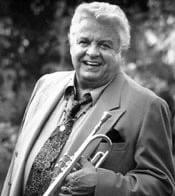
Maynard Ferguson
Maynard Ferguson

Throughout the evolution of most of his mouthpieces, Maynard kept similarities to that  first design from his earliest days on trumpet. He favored a flat rim with a rounded contour on the inside and outside edges. The inside diameter was often hard to quantify because of the roundness, but was usually small, between .590”-.636”. The cup shape was a concave V (or V bowl) early on, moved to a straight V with the Giardinelli and FBL mouthpieces, was a slightly convex V with the Holtons, and eventually a more pronounced convex V shape with the JET-TONE mouthpieces. He favored a larger-than-stock throat size, ranging from #26 – #19 or even larger. When he moved to  Monette mouthpieces, he went in a new direction with a new cup shape and larger inside rim diameter. 

Over the course of his career, Maynard Ferguson never stopped adapting, changing, and trying new ideas. His talent transcended his equipment, and his music is still just as powerful and exciting and compelling today as it was during his lifetime.

“I’m a person of change and I must be honest to my artistry and my creativity. That’s part of the word ‘jazz’… it’s an adventure.”

– Maynard Ferguson

Where to find replicas of Maynard Ferguson’s mouthpieces today

The enduring popularity of Maynard Ferguson’s music has kept demand for his mouthpieces alive until the present day. Most of the original craftsmen are gone, and some of the companies have changed hands or gone out of business. As a result, many of the models described here have fallen out of production. However, Legends Brass is a reliable source for an extensive collection of replicas of Maynard Ferguson’s mouthpieces, including many models no longer available anywhere else.

Find the entire Legends Brass collection of replicas of Maynard Ferguson’s Mouthpieces here.

Preloader Image
Legends Brass GIR MF2 trumpet mouthpieceLegends Brass GIR MF1 trumpet mouthpiece
$140.00
The Legends GIR MF2 is based on a Giardinelli mouthpiece created for Maynard Ferguson in the 1960’s. It has
Legends Brass RM MF Master trumpet mouthpieceLegends Brass RM MF Master trumpet mouthpiece
$165.00
Maynard Ferguson’s first trumpet mouthpiece was a Rudy Muck 13C, which he modified himself by sanding down the rim.
Legends Brass MF HG trumpet mouthpieceLegends Brass GIR MF1 trumpet mouthpiece
$155.00
A modern version of the legendary mouthpiece used by Maynard Ferguson in the 50’s and 60’s, the Legends MF
Legends H MF trumpet mouthpieceLegends Brass GIR MF1 trumpet mouthpiece
$140.00
The Legends H MF is based on a vintage mouthpiece produced and sold by esteemed mouthpiece maker Dave Houser.
Legends Brass MF FBL TD trumpet mouthpieceLegends Brass GIR MF1 trumpet mouthpiece
$155.00
The Legends MF FBL TD: inspired by a mouthpiece made for Maynard Ferguson by Jack Bell in the late
Legends Brass MF FBL TS trumpet mouthpieceLegends Brass GIR MF1 trumpet mouthpiece
$155.00
The Legends MF FBL TS: inspired by a mouthpiece made for Maynard Ferguson by Jack Bell in the late
Legends Brass MF FBL TM trumpet mouthpieceLegends Brass GIR MF1 trumpet mouthpiece
$155.00
The Legends MF FBL TM: inspired by a mouthpiece made for Maynard Ferguson by Jack Bell in the late
Legends Brass MF6 trumpet mouthpieceLegends Brass GIR MF1 trumpet mouthpiece
$155.00
The Legends MF6 is based on a vintage Holton MF6 trumpet mouthpiece. It has a small inside diameter (.590″),

Sources:

This post was revised for publication June 25, 2026. The original blog post was May 4, 2018.

*Author’s Note: It’s often really hard to pin down exact specs on a particular vintage mouthpiece. Handmade mouthpieces have considerable variation. Sometimes (usually) Maynard had personal pieces with specs different from the stock pieces sold under his name. The curved nature of the rim makes it difficult to measure accurately. The above information was gathered from internet sources and online forums and may not be scientifically exact. I’ve been as accurate as possible. I welcome any additional information and input about Maynard’s mouthpieces.

Meet the Maker : Peter Pickett | Progress brings change, but precision craftsmanship endures.

Originally posted June 23, 2020 by John Hutchinson; Updated July 29, 2026 by Leslie Saidak. In 2020, Mouthpiece Online interviewed Peter Pickett, founder of Pickett Brass and now also steward of Blackburn Trumpets. Six years after our original conversation, Peter Pickett reflects on what has changed—and what has not. (Jump to 2026 update.)

Pickett Brass and Blackburn Trumpets

At Pickett Brass and Blackburn Trumpets, every mouthpiece and instrument begins with a deep respect for the art of music and the craft of precision.

2020 INTERVIEW

Can you talk a little about the background to getting started on this trumpet craftsmanship journey with Pickett Brass and Blackburn Trumpets? 

This entire journey of Pickett Brass and Blackburn Trumpets, in hindsight, appears elegant and neat when laid out on paper, but it has actually been quite challenging. I’ll look back one day and say that all the pieces were laid out and it was such a natural progression, but the truth is that opportunities came and went. With some luck, I was able to latch onto key ones along the way. For example, when Cliff Blackburn approached me in 2009 about working with him to carry Blackburn Trumpets forward, I happened to be in the right place at the right time.

Most of the company’s significant steps forward have hinged on being in the right place at the right time, paying attention, and taking advantage of fortuitous timing. You must always be aware of what’s going on around you and have the imagination to envision the possibilities, even when they sound impossible in the moment.

My internal, irrational, and unconscious drive to bring this all to life came from combining the joy of playing trumpet with my background in engineering and manufacturing. What could be a better combination of those interests? So much of the company’s progress has been driven by brute force and pure work ethic: powering through inefficiencies and uncertainty, accelerating our learning, and not settling for what was easy or merely sufficient. Out of the gate, you simply have to execute and do the work required to get it done.

When Pickett Brass officially started in 2003, I did not have all the skills necessary to do what we do today. But that didn’t stop me from stepping forward to see if all of this could work. Stumbling through numerous issues that had nothing to do with the actual parts really woke me up to the sheer number of obstacles we would need to overcome.

Peter Pickett

Who or what were your inspirations?

Most of my inspiration comes from wanting to make something meaningful and bring something to life. Being able to create something from raw materials—from almost nothing—is what fuels me most. Coupling that with music, and creating something that contributes to the creation of music, only reinforces the inspiration.

The incredible variety of artists I get to meet and work with is humbling. Ultimately, it’s a privilege to be part of this music-making community, and that is not something to take lightly. When we are actively part of something larger than ourselves and can contribute to the greater good, it isn’t an opportunity to boast or brag, but rather to quietly contribute to the growth of the community and build strength together.

Peter Pickett with Allen Vizutti
Peter Pickett with long time customer and friend Allen Vizutti

Did you set out with ideas of how manufacturing could be improved?

Absolutely. When any process becomes elegant and efficient, it’s more fun and enjoyable. This applies to any endeavor. We don’t play trumpet because it’s hard, no fun, and produces unpleasant sounds. Instead, when we become adept and efficient at playing the instrument, it becomes more enjoyable—and the end product is that much better. Wanting the business, design, and production processes to be elegant and efficient has always been a significant driving force.

How and why did you branch out from valve trim-sets to the excellent custom mouthpieces that you now produce?

When all of this started in 2001, I was aiming to make only one set of trumpet buttons for myself. They were made by hand—nothing special, but made by me, for me. Stems, top caps, and bottom caps followed, and as far as I could tell at the time, that was all it was going to be.

Mouthpieces followed as a natural progression around 2007. I had the machines to make them and, as every trumpet player knows, no single mouthpiece is going to be “it” for every player. The unlimited possible variations in brass-instrument mouthpieces allow many designers and manufacturers around the world to participate in this industry. That was exciting. Despite the idea that “everything has been invented already,” I could still produce unique mouthpieces that worked differently for players and had never been made before.

Are there any unexpected challenges that you have met along the way?

Absolutely – seemingly endless and absolutely overwhelming at times.  Most people don’t realize what goes into creating and running a complete business. Making actual mouthpieces is only one small aspect and can be challenging in itself, but ultimately it takes so many other steps to get that freshly made mouthpiece out the door to a player.  So overcoming the challenges of running a business from the financial processes, to ecommerce development and management, taxes, payment processing, facilities, and numerous others, have all been challenges.

Running a successful manufacturing business takes a lot of time and commitment. How do you balance this with having a life outside of the workshop?!

Running a small business is all-encompassing and a lifestyle choice. Some call it a curse and others a privilege, but there is almost no time in any day when the business isn’t being worked on or thought about. So balance in the traditional sense is fleeting and fairly nonexistent.

The variety of activities the business offers is one outlet. From manufacturing to meeting with customers, there is a wide range of involvement and autonomy. Trade shows, for example, give me a fantastic opportunity to meet new people, hear new music, and see new places outside the shop.

Can you talk a little about your work with Cliff and taking on the Blackburn Trumpets brand?

Cliff and I have been friends for a long time, beginning when I met him at the 2004 International Trumpet Guild conference in Denver. He probably doesn’t remember that initial introduction, but it was my first opportunity to talk briefly with him and his wife.

Over the years we saw each other often and talked at conferences, eventually working together on manufacturing Blackburn trumpet mouthpieces and other components. At the 2009 ITG Conference in Harrisburg, Pennsylvania, Cliff asked if I would be interested in helping carry Blackburn Trumpets forward after his retirement. Of course the answer was yes, but little did I know it would take another seven years to work through the details.

During that period we trained, learned, and explored what made Blackburn Trumpets so well known. Even after we acquired the company in 2016, an incredible amount of learning and work remained. It has been an overwhelming exercise, but it has ultimately proved worth the work and challenges.    

What were your plans and ambitions for the future?

As it turns out, making trumpets from scratch is hard. The process is mind-boggling when you consider all the details along the way—and details matter. We were working toward complete documentation and process improvements so the Blackburn brand could continue well into the future, with strength and a solid succession plan.

I wanted the Blackburn team to expand as our space expanded. With a solid group of craftspeople who understood the quality and technical expectations, we could produce like no other. On the mouthpiece side, we continued to expand capabilities and improve processes. It may not sound significant, but reducing the number of steps needed to produce a mouthpiece—or any product—makes the entire process better, easier, and more enjoyable. We strive to study how we work and try new approaches so we remain relevant and avoid destructive complacency.

At the moment, the world is in the midst of the Covid-19 pandemic. How has this affected you?

The Covid-19 pandemic and uncertainty has all but fully consumed everyone.  Our business, like many others, has been shut down for a while to stem the spread of the virus, bringing to a halt the production of mouthpieces and trumpets like never before.  In addition, the economic fallout from the significant job disruptions and losses worldwide is incredibly disheartening.  Despite the day to day challenges facing us, I am optimistic that we will get through this together.  This period of time offers an unprecedented opportunity for self reflection and a pause – a universal “time-out” per se. The challenge has been that this has all progressed so quickly and it’s hard to appreciate the sudden change in routines and ‘normal’ and do the self-reflection and evaluation.  Herein lies the present challenge – and the chance for the once in a lifetime opportunity.  

2026 UPDATE

What are the most significant changes at Pickett Brass and Blackburn Trumpets since the original interview in 2020?

The biggest change is that the plans we were discussing in 2020 have become a much broader, more mature operation. We have continued to document processes, strengthen the team, improve the way work moves through the shop, and expand both the Pickett mouthpiece side and the Blackburn instrument side of the business. Of course, we have Covid in there as well – a disruptive event that lasted years.  I think its effects are still being felt, both in how people interact and also in the economy. Covid has become part of how we relate and navigate.

What has not changed is the foundation: we are still in Lexington, still combining musicianship with engineering, and still making products with extraordinary attention to consistency and sound. The scale and range are larger, but the goal remains the same—to make tools that help musicians do their best work.

How has your product line expanded or changed?

The product line now reaches well beyond the trumpet trim sets and early mouthpieces that started the business. On the mouthpiece side, we offer one-piece and modular two-piece designs across trumpet, cornet, flugelhorn, trombone, and other brass applications, along with artist models, educator and young-artist options, multiple materials and finishes, scanning, replating, and related services.

Blackburn has also grown into a wide family of complete instruments and components: B-flat and C trumpets, cornets, piccolo and specialty instruments, bugles and herald trumpets, plus bells, leadpipes, and accessories. That breadth lets us serve a developing student, a teacher building a studio, and a professional looking for a very specific response or sound.

What was your very first shop like? What tools and equipment did you use, and how did that change along the way? When did you move into CNC technology?

The first “shop” was very modest – the 300 square foot garage behind my house. The original goal in 2001 was simply to make one set of trumpet buttons for myself, and those first pieces were made by hand. From there I added the tools and skills needed for stems, caps, and other small parts. By about 2007 I had the machining capability to begin making mouthpieces, and each new product exposed the next limitation in our tooling, measuring, documentation, or workflow.

The move toward CNC was not a single switch so much as an evolution. Manual work taught me how the material behaved and what the musical result needed to be; CNC machining, CAD/CAM, better inspection tools, and more disciplined process control then gave us repeatability and the ability to explore designs much more efficiently. Today our mouthpieces are designed and manufactured in-house using proprietary CAD/CAM software and precision machining, followed by careful measuring, hand finishing, plating, and individual inspection.

How has the Blackburn Trumpets part of the shop evolved? Are high-tech tools used there, or is it all done by hand?

Blackburn has become more deeply integrated into the Lexington shop, while preserving the instrument-making knowledge passed down from Cliff. It is not a choice between technology and handwork; the process depends on using each where it contributes most.

Precision equipment supports design, tooling, repeatable components, pistons and valve blocks, bells, tubing, and inspection. But a Blackburn instrument is still assembled, fitted, finished, tested, and adjusted by skilled craftsman. Bell making, soldering, alignment, final finishing, and play-testing all require judgment that cannot be reduced to pushing a button. Modern engineering helps us hold the details consistently; hand craftsmanship is what turns those details into an instrument.

What is the best way to get Pickett Brass mouthpieces and Blackburn Trumpets?

The easiest starting point is the Pickett Blackburn website, where players can see the broad product range and learn how the different options fit together. We ship worldwide and also work with a number of dealers.

For a specific mouthpiece or instrument, however, the best route is often a conversation. Players can schedule a phone consultation or a visit to our Lexington shop, and trade shows remain a great place to meet us and try equipment. A dealer can also be the right choice when a player wants local guidance. The important thing is not the channel—it is getting enough information about the player, instrument, and musical goal to make a useful recommendation.

You built the bugle used for the Kentucky Derby. How did you make that connection? What kind of instrument is it, and what mouthpiece is used?

That project grew out of a long relationship with Steve Buttleman, the official bugler at Churchill Downs. As the 150th Kentucky Derby approached in 2024, we reached out because it felt like the right moment to create a new instrument for him and bring the Blackburn name back to Churchill Downs.

Steve Buttleman
Steve Buttleman, official bugler at Churchill Downs

We built Steve a custom Blackburn bugle and a B-flat herald trumpet for the Derby and for performances at Churchill Downs and Keeneland. The herald trumpet is based on the Blackburn 313A20S bell and #52 leadpipe, a combination designed to project with power and clarity while remaining easy to play in the fanfare setting. The instrument was a gift from our team, and hearing it carry the “Call to the Post” was both a proud Kentucky moment and a meaningful example of what a close relationship between maker and musician can produce.

What other ways have you connected with and contributed to your local community?

Community has always been part of the reason for doing this work. We contribute first by keeping specialized design and manufacturing in Lexington, employing and training local craftspeople, and making instruments that carry Kentucky workmanship to musicians around the world. We also welcome players and educators into the shop, meet students and professionals at events, support music education through educator and young-artist offerings, and collaborate with local partners when a project needs expertise beyond our walls.

The Derby instruments made that connection visible on a very large stage, but the quieter work matters just as much: helping a student find equipment that makes playing more rewarding, sharing knowledge with an educator, supporting a local ensemble or organization, and creating skilled work here at home.


Pickett Blackburn

We hold an unwavering belief that our knowledge, passion and commitment to you, the musician, will increase confidence on your musical path. We are musicians helping musicians through precise machining, exceptional service, and integrity. We honor and protect the legacy and traditions by guaranteeing the highest product quality and consistency at all times.

-Pickett Brass and Blackburn Trumpets


Original post updated by Leslie Saidak July 29, 2026.

Check out the ultimate directory of trumpet mouthpiece and brass instrument makers