Vhizzper : Mute Review

So, here is a really interesting new product that I have been sent through for review… The Vhizzper mute is the brainchild of Christoph Baerwind, trumpeter in ‘German Brass’ and ‘Der Orchester der Hamburgischen Staatsoper’.   The essential concept is a practice mute that can also be used as a mouthpiece mute.   This is not something that I have encountered before so was fascinated to give it a try.

This mute is adjustable so that you can alter the resistance level and volume. It also comes in 3 colours as pictured above! To start with I used it as a traditional mute. I spent a minute or so trying the different resistance/volume settings and found that I was most comfortable playing at the halfway point between closed and open. This seems to give the best balance for me, but even with the adjuster completely open, the volume is still nice and soft.

I have to confess that it took a little while to get to grips with this mute. Notes were not really where I was expecting them, and I did not really feel in control. However, what I found after a short while was that as soon as I backed off a bit and tried to imagine that there was no mute in, it became easy! I had been over-blowing, which I can only assume is the way that I have always subconsciously approached practice mutes in the past.

It is such a breath of fresh air, being able to blow naturally and keep the centre of the notes exactly where I want them. Once I got used to playing with less effort, even my low C was in tune – this has been sharp to varying degrees on every practice mute that I have ever played. Intonation and response across the range is also very even.

Not only is this a good tool for doing that essential practice when noisemaking is not convenient, I can also see it as a great training tool. Sometimes when faced with a student who just needs to get used to blowing more and keeping the throat open, I have prescribed short bursts of playing with a more traditional practice mute such as a Denis Wick, to add resistance to help with that. In contrast, I can see the Vhizzper being a really useful tool for helping students to develop their lower breathing muscles, and keeping really natural airflow and support.

Next I set the adjuster to the closed position which seems to give the best response for me when using just with the mouthpiece (as pictured above). I have always liked to incorporate lots of free and mouthpiece buzzing into my practice and teaching. It can be a great way of really forcing you to concentrate on the absolute basics of breathing, control and blowing, without getting hung up on the sound. I have tried lots of buzzing aids including the Berp and the Buzzard and found them to have a really positive impact. The Vhizzper is another good product to add to this category.

It adds a little more resistance to your natural mouthpiece buzz so that it comes slightly closer to the feeling that you get when playing the trumpet. It also adds a little more resonance, which is surprising seeing as it is also muting the sound! This helped my general range for buzzing (I have always struggled to get a good natural buzz when playing in both extremes of high and low) and also naturally encourages you to support the airflow in the same way that you would want to play the trumpet.

In summary, I am very impressed! The very nature of a practice mute is that there is a large element of compromise. You are going to lose a level of response, intonation and natural vibration in return for a quieter sound. However, the Vhizzper keeps these compromises to a minimum, stacks up well against the alternatives on the market, and also gives you a valuable mouthpiece buzzing tool. It is certainly worthy of place in any trumpeter’s mute armoury!


Sign up here for new blog articles emailed direct to your inbox:

[jetpack_subscription_form show_subscribers_total=”false” button_on_newline=”false” submit_button_text=”Sign up” custom_font_size=”16″ custom_border_radius=”0″ custom_border_weight=”1″ custom_padding=”15″ custom_spacing=”10″ submit_button_classes=”” email_field_classes=”” show_only_email_and_button=”true”]

Frate Precision : Mouthpiece Review

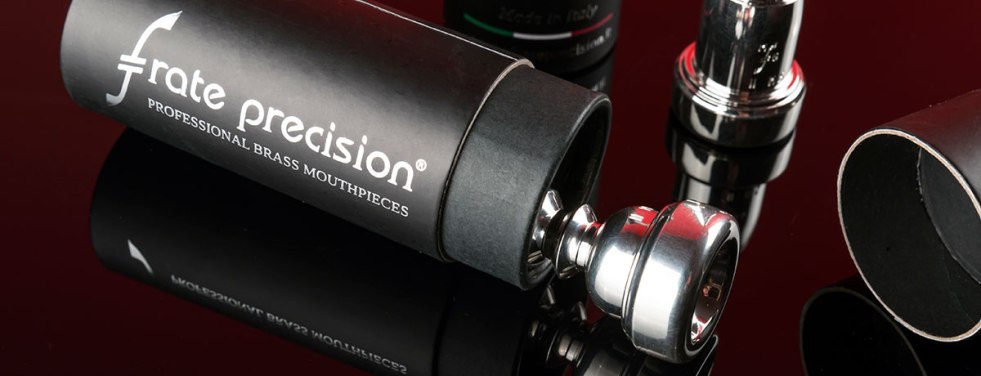
Since 2006 Dario Frate has been designing and making mouthpieces from his base in Lombardy, Italy. The aim across the entire range is to give the player richness of sound, fluidity, and to do it as easily as possible. These are certainly noble ambitions and I was very keen to try some mouthpieces for myself!

I asked Dario to send me a small selection of mouthpieces with the following brief:

  1. An ‘all-rounder’ for a 3C-style player that can accommodate a warm classical sound as well as lighter styles. SELECTED: 3 M,3,106 with a semi-round rim
  2. A possibly shallower version of the above mouthpiece that could help the same player make a brighter sound. SELECTED: 3 HM,106 medium rim shape, medium large backbore
  3. A slightly wider rim mouthpiece aiming at a 1.5C-style player that still gives a degree of versatility. SELECTED: 1 M,3,106 with a semi-round rim
  4. A symphonic style piece allowing a free blow with a rich tonal core. SELECTED: 6+ M,3,106 with a semi-round rim

Below are my thoughts after taking them all through their paces. For general comparison and reference points I have used the Bach sizes to describe them, purely because these are references that most people are accustomed to, and not because they are in any way modelled after the Bach range.

3 M,3,106

First impression on the chops is that this is a very comfortable semi-round rim. The response is quick and the notes slot very easily, far easier than many of the 3C-style mouthpieces that I have played on in the past.

Working through some flexibility exercises (Colin), the word that springs to mind is ‘easy’. There is also a depth to the sound that I often find is missing when playing on a flexible and easy-slotting piece. After playing through some middle register melodies for a few minutes, I am finding that the sound is opening up more as I get used to backing off the air a little bit. This really does tick the boxes that I was looking for with this brief – a solid, warm, centred sound with flexibility and slotting.

3 HM,106

The medium-rounded rim on this has the high point nearer to the centre of the rim rather than the inside. This is really helpful for a little more lip compression without needing to go to a smaller rim size. The cup is also slightly higher without being too shallow. I often find that my fleshy lips bottom out easily on really shallow cups so this seems like a good compromise for me. 

The response is lightning fast with a nice bright yet rounded sound. I am no lead player by any stretch of the imagination but I am able on this mouthpiece to play with good flexibility and control with a centred sound above the stave up to high Fs and Gs – which is the upper limit of my normal controlled, working range. This strikes me as an ideal mouthpiece to look at if you are a legit player looking for a more commercial type piece to switch to when required, and also for more natural commercial players who like a slightly wider rim and a fairly open backbore.

1 M,3,106

This is similar in setup to the first mouthpiece that I played but with a slightly wider inner rim, getting closer to a 1.5C kind of feel. Again, this is really comfortable with a nice balance of cushioning and inner-rim ‘bite’. Flexibility and slotting feel great, and the biggest thing that strikes me is the consistency and depth of sound that I am able to make across the entire range of the trumpet. Playing on these slightly larger rim mouthpieces does not come naturally to me so I have had to spend a good 20 minutes playing through studies and exercises on this one before I can really get the measure of it. And boy was it worth it!!! It has been a long time since I was last able to make a sound this big and broad that still has good control and centre. 

6+ M,3,106

I asked Dario to recommend a setup that could suit a symphonic player who likes the feel of a 1.25C type rim but wants more depth and tonal core. The 6+ that I have been sent has a larger rim diameter than the previous model and slight V-shape to the cup. The sound is huge and still beautifully centred. I have to confess though, that having not played on this style of mouthpiece since college 20 years ago, I am not the best person to really put this through its paces. Some symphonic colleagues of mine here in Manchester kindly agreed to help!

Both of them have generally played on slightly more open feeling mouthpieces to a standard 1.25C, and both agreed that this fits really nicely in that zone. There is a warmth and centre to the broad sound that I am hearing in medium dynamics that holds together really well as they really open up. There are also some really nice increased overtones at the louder dynamics, particularly noticeable on the C trumpet. Feedback from both players is that these feel really comfortable to play too, with the same easy flexibility and slotting that I found on all of the other mouthpieces. You never know, I may have just made a couple of sales here!

In summary, Frate Precision is a really coherent range that sticks to that ethos of richness, fluidity and ease across the entirety. Many mouthpiece manufacturers will make fantastic mouthpieces to suit any player’s requirements and across those ranges will be enormous variation in feel and core sound. This is not a bad thing! We all as players look for THE ONE, so we are so lucky at the moment to have so many dedicated designers and makers who will help us to achieve that goal.

The feature that Dario Frate has brought to his range is that ALL of his mouthpieces should make our jobs as trumpet players, slightly easier, while keeping a rich tonal core in mind. If this is something that you are looking for, you will more than likely find something in this range that suits you.

For further information and expert advice, you can contact Dario Frate directly via his website.

For sales enquiries and advice on which model to select, please visit our Online Store

You may also be interested to read these interviews with Frate Precision artists Massimo Longhi and Fabrizio Bosso, as well as this interview with Dario Frate himself.


Sign up here for new blog articles emailed direct to your inbox:

[jetpack_subscription_form show_subscribers_total=”false” button_on_newline=”false” submit_button_text=”Sign up” custom_font_size=”16″ custom_border_radius=”0″ custom_border_weight=”1″ custom_padding=”15″ custom_spacing=”10″ submit_button_classes=”” email_field_classes=”” show_only_email_and_button=”true”]