Frate Precision: Interview and Mouthpiece Review

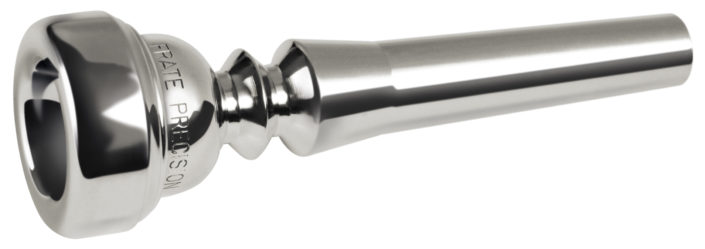
Established in 2006, Frate Precision is the brainchild of trumpet graduate and expert metal-worker Dario Frate. From the facility in Lombardy, Italy they offer a broad range of mouthpieces that are growing in recognition and popularity around the world.Frate PrecisionDario has kindly shared some of his thoughts and experiences with me below, followed by a review from Jaime Tyser of Thompson Music, who has been playing these mouthpieces for a couple of years now.

Dario, how (and why!) did you get started with this? Can you tell us a little about your background?

HOW…

In 2004 I attended the Musikmesse in Germany where I saw numerous exhibitors, but I had the feeling that something in brass mouthpieces was missing.

Therefore I decided to try to create a new Italian mouthpiece dedicated to professional players.

When I was younger I graduated in trumpet studying with the trumpet players of the orchestra of Scala di Milano. Later I worked for 20 years in a big factory as a specialized programmer and expert metalworker on CNC machines – so I put together my knowledge of this along with my experience as a trumpet player!

WHY…

Working in mechanics is cold, but when through mechanics you can produce something that allows a musician to make art, it becomes the best job in the world. The mechanics are then at the service of the art.

I find it really gratifying to help other musicians.

The trumpet (like other brass instruments) is a special instrument – there is no external part that generates the sound, we are the sound producer so the trumpet becomes part of our body!

Frate PrecisionWhat were your priorities when setting out to put together a range of mouthpieces? What did you want to do differently to other manufacturers?

The market is already full of good mouthpieces and there is only space for something new if it is offering something different. The priority for me was the richness and fluidity of the sound. A mouthpiece that vibrates in an easier way thanks to its high quality materials and improved geometric shape. The result is a very different sound and response from our range of mouthpieces.

Before starting my company, I hadn’t worked for any other brass manufacturers so my products are not copies of mouthpieces that already exist.

Have there been any challenges that you have faced along the way?

Since starting in 2006 I have faced several challenges along the way, most importantly with myself!

It is a real challenge at the age of 40 to quit your job, design and make a new product, and start attending the international fairs… in another new language!

I know. You have to be a little crazy. I followed my heart and my passion as a trumpet player rather than reason!

What new developments are you currently working on?

At this moment I am improving the Classic model for trumpet with an another shank length – the medium length shank. It is another alternative option for C trumpet.

The standard length of our classic model is 87.5mm. The new medium length of the classic is 80mm and will be available in all combinations of cup, rim and throat. There are a number of backbores available for this model and it will be available in both classic and multigap.

In addition to this, there is also the short trumpet shank (74.5mm) that is really good for Eb and Piccolo – perfect intonation in all registers.

Jaime Tyser of Thompson Music, Nebraska USA has been using Frate Precision for a while now and has shared her thoughts with us:

My first contact with the Frate Precision mouthpieces was a few years ago when I was playing the 2nd book for the touring broadway ELF. The lead player on tour with them handed me a mouthpiece and said I should check it out! I took it to a church gig and played on it and I remember thinking, ‘wow! This thing has such a great sound!’ However, it was much too big of a diameter for me to get a really good feel for it.

I put it in the back of my mind for a while but it was in the fall of 2014 that I decided to order an experimental group for Thompson Music. There were a couple of reasons for this, it always stuck out in my mind as a product that had potential and I was searching for something a little better to play the 5th onstage part of Mahler 2 for. I ordered a size that fit me, and after a week of playing it I was completely hooked on it. While playing the Mahler, it allowed me to match the other players in sound color, while making it easier for me to move around from supportive lower notes to a few unison high ones. It was very easy to articulate cleanly as well which is so important!

The Frate Precision mouthpieces are very customizable as far as diameter, depth, rim contour, throat, and backbore. It is very possible to find the perfect match for you. The color of sound is very wonderful, I feel that it is a Bach type of sound, but with a lot more character and liveliness to it. The intonation is extremely good, when I play soft the response is still immediate and centered, and when I play loud the sound and pitch does not distort.

In the summer of 2015 I went to Traona, Italy to meet Dario Frate and see where he makes mouthpieces. (And let’s be honest, just to have an excuse to go to Italy). He is an extremely skilled machinist, each mouthpiece is able to be replicated perfectly each time and the designs of the backbores and other characteristics have been carefully thought out.

As I listen to more and more people in the store play these mouthpieces, I see them sell quickly and I hear the difference immediately. The Italian love for quality, a beautiful tone color, and captivating music is the foundation of these mouthpieces. I now own my first whole set of mouthpieces – trumpet, piccolo, flugel, and cornet – and I have loved each one from the day I got it! I am constantly happy with the ease of playability, pitch center, sound quality, dynamic capabilities, articulations, all of it!
– Jaime 3MS, 3, 106 – multi gap

For further information about Frate Precision, please visit:

Frate Precision website

For sales enquiries and for advice on which model to select, please visit our Online Store.


Sign up here for new blog articles emailed direct to your inbox:

[jetpack_subscription_form show_subscribers_total=”false” button_on_newline=”false” submit_button_text=”Sign up” custom_font_size=”16″ custom_border_radius=”0″ custom_border_weight=”1″ custom_padding=”15″ custom_spacing=”10″ submit_button_classes=”” email_field_classes=”” show_only_email_and_button=”true”]

Instrument Review: New Bach B-flat Trumpet Models

The past few years has seen a number of new Bb models enter the Vincent Bach catalogue. Below is a summary…

LT1901B Commercial

LT weight #1 bell with French bead 5” bell, standard weight 2-piece valve section with bronze upper, custom #43 pipe.

This model was a long time in coming. After much experimentation, the #1 bell (so numbered because it is believed to be the first bell design that Vincent Bach drew) was used in lightweight bronze. One of the biggest features is the 2-piece lightweight valve section with a bronze upper, that really adds a lot of brightness to the sound, particularly when you ‘give it one’! The custom #43 leadpipe has a later taper than the standard #25, but opens out quickly through a nice open-feeling tuning slide section. It is available in both ML and L bore.

Lightness of response, dark tone in mid-register and mid to low dynamics, contrasting with real zip and zing for higher register work make this a real Marmite trumpet. For US readers, Marmite is a disgusting, sticky brown product that a vast number of sick people like to spread on their bread – it is not possible to be indifferent to it, you love it or you hate it!

For the record, I really enjoyed playing this horn. I have spoken to some players who have described this model as like playing on a Yamaha LA only without the good intonation! I do not agree. The LT1901B is an individual instrument with some wonderful characteristics that I have not found in other horns.

VISIT THE ‘EDUCATIONAL RESOURCES’ PAGE FOR FREE WORKSHEETS AND LINKS TO PUBLICATIONS

LR19043B Mariachi

Bronze 5” #43 bell with flat bell wire, lightweight 2-piece valve block with nickel upper, LR25 pipe

This custom model for the incredible Jose Hernandez was Bach’s first real success in putting an instrument together for the more commercially minded. Great jazz and commercial players over the years have played and loved their Strads, but there had never been an option for that natural brightness in an instrument.

What I like about this model is it still feels like a Bach. This may sound like a stupid point to make, but it has that natural bite and depth to the attack that makes Bach trumpets different. For a primarily legit player like myself, it feels very comfortable with a natural soft and dark sound, but then opens up as you go through the gears. In the right hands, this trumpet sounds spectacular! My colleagues in the UK and many around the world will already be familiar with Simon Gardner, who uses this model to great effect for warm jazz as well as spectacular full-bodied lead playing.

R180ML37/43 London

Standard weight 1-piece body, LR25 pipe, gold trim, yellow or gold brass bell.

This has been available and popular as a special order for a number of years, especially in the UK. It is basically a reverse leadpipe 180 model, but mounted on a standard rather than a lightweight valve section. This has now been launched for the UK market as a standard model with added gold bling and a price tag to match! It is now just available as special order if you want it to look like a ‘normal’ trumpet!

I was working with Conn-Selmer at the time of its launch in 2015 and had the opportunity to blow on a dozen of these models, mainly 37s but also a couple of 43s. They give a combination of the slightly more open feel of the reverse leadpipe with the solidity of tonal core that you get from a standard leadpipe configuration. I had always been intrigued to try this model as I was always unsure how much genuine difference in feel the reverse leadpipe on a 180 Bach actually made. I always put down the difference in response more to the lighter weight valve section that it was mounted on.

What I found was that this model does actually have its own distinct feel and sound and holds its own within the Bach catalogue. Bach marketing material tells us that it is designed with the brass band heritage and style of many top UK orchestral trumpet players in mind. I am not sure that I completely buy this, but it does certainly give a richer core to the sound. One point to note is that out of the many instruments that I tried, there was a huge variation between them all. We all know that the Bach bell-making process deliberately allows for some variation from instrument to instrument, and we are advised to try a selection before making our minds up. The variation between these London models was even greater however, so I would definitely recommend visiting a stockist who is able to keep a good range in store.

I believe that for most US players, this model would still be a special order – contact Thompson Music for further information.

19037 50th Anniversary Model

Side seam, round steel bell wire, 2-piece valve block.

This is a natural progression from what Bach have learnt from the design of the Artisan range a few years back. Looking to the past to develop something new is not something that happens too often in this industry, but is something at which Bach excels.

The spec above tells you what is different about this model from the 18037 so I will not rehash it here. There is even more natural resonance than the standard 180, and a more focussed tonal core. There is a fraction more weight in the hand compared to the 18037 which adds to the richness of natural sound and also improved slots. I initially found this disconcerting as I am accustomed to having plenty of room to bend notes in tune, particularly the top of the stave E, Eb, D which are generally very flat. The tuning is slightly better on this model, so having that room to manoeuvre was not necessary!

An interesting point that I learnt from a Bach insider is that they save production costs on the Strad 180 models in silver plate by actually using brass outers to the slides instead of the nickel silver which you can clearly see on the lacquered models. The silver plate hides it, so we can’t tell! I have had assurances that there is none of this cost-cutting on the 190 Anniversary Model!!!

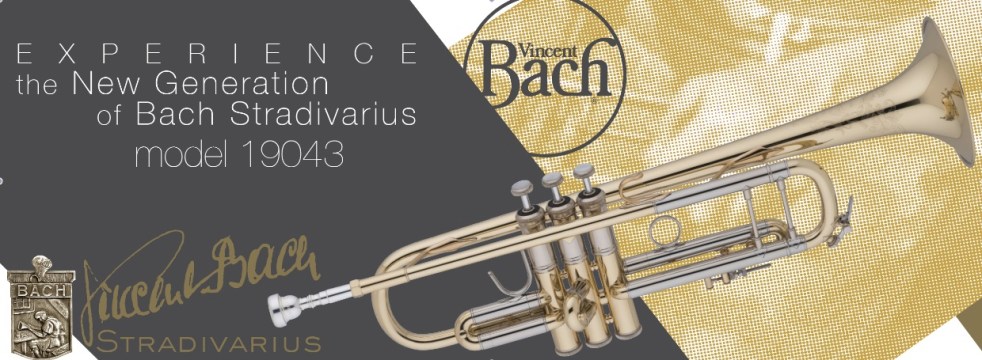
19043 (52nd Anniversary Model!!!)

Side seam, round steel bell wire, 2-piece valve block

This is a model that I have not yet been able to get hold of to assess, so I have been kindly helped out by my friends at Thompson Music! Please see Mike’s video tour of both the 190-37 and 43 below.

VISIT THE ‘EDUCATIONAL RESOURCES’ PAGE FOR FREE WORKSHEETS AND LINKS TO PUBLICATIONS


Sign up here for new blog articles emailed direct to your inbox: