Interview

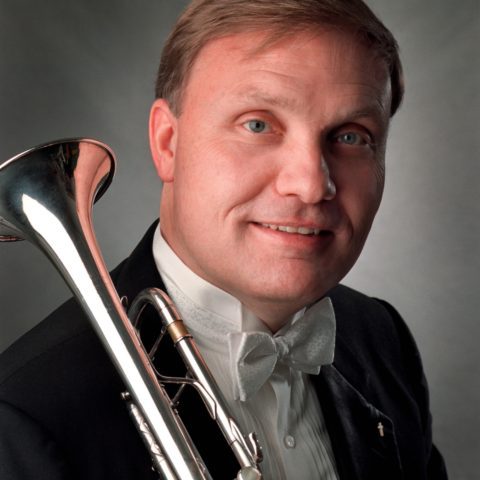
Trumpet Artist Profile : Jack Sutte

As Second Trumpet in The Cleveland Orchestra, teacher of trumpet at Baldwin Wallace University, and with many other musical projects underway, I am grateful to Jack Sutte for his time in this thoughtful interview.

It looks like you come from a very musical family! Can you talk a little about your early musical influences and your journey to eventually settling on the trumpet?

I am more and more thankful for how my parents and teachers ushered me through those early years of music study. As a parent myself, I look back and am amazed at how they managed everything, especially after my father had a catastrophic stroke when I was 13. My parents sacrificed a great deal for my sisters and I to have music lessons, which included dance, voice, violin, and our choice of a woodwind or brass instrument. Music was always at play somewhere in our home. The branches of my musical tree are not singular, but rather an intertwined network of loving and generous family, friends, and teachers. 

Although a bassoonist, my father, John, also played piano and accordion in addition to being a music educator. I remember excerpts from Smetana’s Bartered Bride being whittled away in our living room. He played in the Waukesha Symphony, and I remember attending those concerts with Bach’s sour candies in my pockets. (I learned quickly how loud plastic candy wrappers are!) In retrospect, those concerts impressed upon me a love of symphonic sounds. I also remember playing violin and trumpet duets with my dad with his accompaniments on both keyboard instruments.

My mom, Nayce, whose keen ear and attention to detail were always present, is a retired Wisconsin state-award winning music educator. She taught piano lessons, too. My “Grandma Dot” helped immensely by driving me everywhere when my mom went back to work. Grandma Dot moved in with us following my dad’s stroke and heavily influenced by musical immersion. Michael Sukawaty, who taught music in the same school as my mom, was always present to help and support my musical growth. Michael, who also plays piano, and I often played duets, and he became my de facto dad after my father’s stroke. He has been very influential in my musical journey.

My teachers in Oconomowoc’s Greenland Elementary School were Dwayne Block (band), Mary Petersen (general music with a notable Kodaly influence), and Fred Schwarz (orchestra). They were all super supportive of my violin and beginning trumpet studies. I remember playing the first movement of the Bach Double (BWV 1043) with Mr. Schwarz and wrestling with the bass recorder in Mrs. Petersen’s class. Mr. Block introduced me to my first trumpet solo, but now that I hit 50 years, I cannot remember the name of it. However, I do remember a blue and white cover and a lot of G’s resting at the top of the staff. My middle school band directors were Tanya Broiles-Brouillard, Rick Grothaus, and David Reul. They were supportive and artistically demanding in those awkward teenage years. I wrestled with dental headgear, proving just enough to get some teeth pivoted but avoiding orthodonture. I cried heavily leaving Dr. Bitner’s dental office with the thought of large metal chicklets, wax and flower arranging tape. Nevertheless, I have persevered with slightly crooked teeth! Mr. Reul offered my first opportunities to solo withband and Maid of the Mist remains one of my favorite cornet solos, as does the trio, Bugler’s Holiday.

I had already been studying violin with Patricia Anders, following my Suzuki method beginning with Doris Nadolny, and in addition to the Oconomowoc band program, I played in the Music for Youth (MFY) program which is now the Milwaukee Youth Symphony Orchestra (MYSO). Margery Deutsch, Shelby Keith Dixon, and Fran Richman made great impressions and were incredibly supportive. During my seventh-grade summer, I went to the MFY summer music camp with both my violin and trumpet in tow, just in case, and left with a desire to study only trumpet. The trumpet was my father’s Conn Constellation from his music education classes at college. Not knowing much and unwittingly, I quickly figured out a few things on the trumpet like how to play above the staff. Following the desire to study trumpet with a private teacher, we found Dr. Patricia Backhaus. She was awesome. In addition to modelling a beautiful tone, she introduced me to piccolo trumpet concertos like the Fasch, and French literature, including the Charlier etudes, the Jolivet Concertino and Tomasi Concerto. She also helped me pick out my first professional trumpets.

My high school band directors were A.J. Hoefer and Robert Franzblau. We played inspiring wind ensemble repertoire under Hoefer’s direction and the expectations for top level performances were high. My high school trumpet buddy, Jason Dvorak, was always inspiring and remains a close friend. We were inseparable. I remember our Wind Ensemble sounded exceptional. I also appreciated that while we marched, we were not a marching band per se. Our best work was established in the auditorium where the quality of our collective sound mattered.

It was with Mr. Hoefer that I had my first horse whinny opportunity in Anderson’s Sleigh Ride and the opportunity to perform the first movement of the Tomasi Concerto at Midwest. Dr. Pat supported me through my high school summers at Interlochen, where I studied with J. Craig Davis and Michael Davison. Like my previous teachers, they too were supportive, encouraging, and a lot of fun. Interlochen is where I met the larger-than-life Larry Rachleff, and he suggested that I audition at the Curtis Institute of Music. Being from the Midwest, I naively had not heard of this Philadelphia school, as my focus up to that point was studying at Northwestern with Vincent Cichowicz. I auditioned at the Curtis Institute of Music and began my college studies with Frank Kaderabek. After that, I continued studying for my master’s degree under Raymond Mase at the Juilliard School in New York. Both Kaderabek and Mase were influential teachers, mentors, and at times, surrogate father figures in my life.

Thank you for letting me take a walk down memory lane. There are many more people to give thanks to, but all my musical influencers gracefully led me from my violin studies to trumpet. It became clear that trumpet was ascending, and violin was not. And I am grateful to all those who were part of my musical journey.

Any particular musical or trumpet heroes past or present?

I really admire the recordings of Maurice André, Håkan Hardenberger, and Wynton Marsalis.

I have always enjoyed listening to the recordings of the Chicago Symphony with Reiner, the SanFransisco Symphony with Blomstedt, The Philadelphia Orchestra with Muti, and Cleveland Orchestra recordings with Maazel. I also admire the recorded work of my teachers from Curtis, Juilliard, and Aspen, including Frank Kaderabek, Raymond Mase, and Chris Gekker. They all play with individual style. While studying at Juilliard, the American Brass Quintet (the champions of the brass quintet) became my favorite chamber music group. Alison Krauss and Nora Jones are awesome, too. I really like 1970’s Classic Rock and U2, especially live in-concert. My wife and I were fortunate to recently see U2 perform live at the Sphere in Las Vegas. It was really a compelling and moving musical experience.

You have such wide musical interests with your orchestral playing, chamber music, solo work and composing. How do you manage to juggle this and devote the required time to each discipline?

Ah yes – time management. I am always doing something and am a quintessential list maker.

I really love to practice, especially solo repertoire. The Orchestra calendar is pretty fixed, and all my additional musical interests fit in and around that schedule. I will have to add to the above list: teaching, recording work, parenting, housework, yardwork, dog care, laundry, napping, friendships, family engagements, and husbandry. I do not like being idle, so I try to be efficient and timely in everything I do. If I have a burst of artistic energy pointing to practice or composition, I try to follow it. If I have an idea or musical motif that seems fleeting, I write it down. I keep lists, lots of lists. I like to have a full schedule, but I also know when I need to rest and recharge. I take naps. There is a saying somewhere in literary history that idle hands are the devil’s workshop. I think over time, individual growth is inevitable if we learn lessons from our collective experiences. For me, while it is certainly not a perfect science, I have learned that I am the best version of myself when my life is full in a multitude of areas that are meaningful to me and those who I care about. That being said, it also helps that my wife for the past 20 years, Audra Zarlenga, is my biggest supporter and encourager. We vowed on our wedding day to always continue growing as individuals during our partnership, and to support each other in our professional and personal journeys. Having such a support system is, for lack of a better word, magical. I will be forever grateful.

From a trumpet perspective, do you have to prepare yourself very differently depending on the repertoire and the musical setting? Do you have set practice routines?

I would say my answers to both questions are both yes and no. There are hallmarks of fundamental practice which are necessities, like having all of the playing cards in a deck. I tend to shuffle those practice cards around on a daily, weekly, and monthly basis. I suppose I have my favorites that are in a more regular rotation, but I try to change things up so that I am always listening to my practice in diverse ways. Practicing the same thing every day for me is boring.

For example, practicing softly with a beautiful sound is something I concentrate on, but always in a different fashion or methodology. I enjoy practicing Franquin, Petit, Clarke, Colin, Harris, Thibaud, Irons, Jacobs, Spaulding, Schlossberg, André, Nagel, Vacchiano, etc. – they all have written compelling and inspiring books. I like scales and arpeggiated patterns, slurred and articulated, that extend the registers, ascending and descending. I like to improvise patterns to test my knowledge of the scales. During the pandemic, in order to learn something new, I concentrated on Thibaud’s double pedal tones. I’m still striving for some sort of double C. I do not do a lot of mouthpiece buzzing (except for a few minutes in the car) as I concentrate my time on the horn. I like to practice brass trio music and the solo material I am working on – currently sonatas for trumpet and piano.

As a teacher, what are the main areas that you get students to focus on?

As a professor of trumpet at Baldwin Wallace University, in addition to instructing my students to always strive to produce a beautiful singing sound and become thoughtful musical citizens, I strive to have each student become their own teacher. It’s not about me or my journey, but it is about them and their journey. And each student is unique in their own way. I believe teaching a singing approach through the registers allows my students to ensure that their chops are set up correctly and working efficiently, so that they can enjoy a long career of playing. I aim for the same in my own practice. I also try to get the students to focus on posture, history of the repertoire and its zeitgeist, efficiency (like the concept of resting while you play), breath control, intonation, and overall musical mindfulness (blending, playing with a “warm” sound, and score awareness). Their personal and musical journeys overlap, so I also try to have my students focus on overall wellness and good health.

Jack Sutte

What have been the biggest highlights of your career to date?

Besides getting married and having two aspiring young adult teenagers, the most life changing event prior to the creation of my family was winning the second trumpet job in the Cleveland Orchestra. I am so thankful that Christoph von Dohnányi and the audition committee hired me. Playing with the Cleveland Orchestra has provided me with a wonderful professional career, access to amazing musicians and musical experiences, and frankly, a never-ending platform for planting the seeds of creativity and imagination, which are necessary lifelines for many performing professional musicians, including myself.

In this regard, I would like to mention a few performance highlights during my career. The first is the world premiere of Matthias Pintscher’s Chute d’étoiles for orchestra and two solo trumpets, with The Cleveland Orchestra, music director Franz Welser-Möst, and principal trumpet, Michael Sachs. We performed this work at Severance and Carnegie Hall, and at the Lucerne and Salzburg Festivals. I really enjoy contemporary music, and the opportunity to perform this piece was extremely inspiring.

Two other professional highlights include performing works composed by my friend and Baldwin Wallace Composer-in-Residence, Clint Needham. The first, Fractured Elements, is a concerto for trumpet inspired by the classic elements of nature and their current environmental plight. The second, Resolve, is a concerto for brass trio that was performed by Factory Seconds Brass Trio. The premiers of both Fractured Elements and Resolve were conducted by Brendan Caldwell leading the Baldwin Wallace Symphonic Wind Ensemble.I also had the opportunity to perform the Hummel Concerto in E Major and the Neruda Concerto in E Flat as a soloist with CityMusic Cleveland Chamber Orchestra. Both pieces are classics.

Relative to your next question, I played Schilke trumpets for both performances (E trumpet and Eb cornet, respectively) and cannot say enough good things about Schilke’s instruments.

Can you tell me a little about your relationship with Schilke and the trumpets on which you play?

I love Schilke trumpets and everything they stand for in the industry. The company is 100% family run and has been from its inception. Schilke offers a modern look to total attention to both craftsmanship and detail. It is unfortunate that many of today’s instrument makers are owned by foreign and/or conglomerate business entities, which focus more heavily on volume rather than artistry and handiwork.

My first Schilke trumpet was the P5-4, when I was a teenager. One of the craftsmen at Schilke was the grandfather of one of my sister’s good friends. I regrettably forget this gentleman’s name, but he was part of the team that created the Cauffman radially asymmetric parabolic oval mouthpiece. (I have a 1K.) Somehow along the way, we worked out an agreement where Schilke added an additional P5-4 into their manufacturing run. I remember parting ways with my Getzen four-valve piccolo to help pay for the new Schilke. I really love this Schilke piccolo trumpet, and in high school, the P5-4 contributed heavily to my success in concerto competitions.

My second instrument from Schilke was a D/Eb E3L-4. Fast forward to my undergraduate studies at the Curtis Institute of Music, one of my father’s friends from Lawrence University,

Bruce Brown, gifted me this unique trumpet. I still cherish having and using this trumpet today. I use the D/Eb E3L-4 more as my solo and chamber music projects have expanded. The Schilke four-valve instruments sound superb, are eye-catching and unique.

Fast forward to my time in Cleveland and some more backstory… I have known Andrew Naumann, the owner of Schilke, since high school in Wisconsin. Although we were not in the same class, we had many of the same teachers. I am certain we also enjoyed similar high-valued artistic experiences in wind symphony – all of which helped propel us into our careers in music.

Andrew is a person that I admire hands-down. As a young trumpeter, Andrew peripherally showed me that it was possible to aspire to be a professional in music from Oconomowoc.

Andrew and his wife Julie purchased the Schilke company from the Reynold Schilke family and have preserved the quality and thoughtfully expanded the Schilke offerings. Their team is exceptional. Andrew is an excellent craftsman and can regularly be seen in the factory working on Schilke bells or spraying the perfect finishing coat.

I am excited about the new HDII Bb and C trumpets! Andrew and I have been methodically working on their design. Adding a new HD model seemed to fit in the Schilke series of trumpets.

To that end, the new Bb and C expand Schilke design concepts from the HD series of trumpets.The HDII trumpets incorporate an incredible seamless bell. In addition to a great core of sound and superb intonation, they have indestructible low F’s.

Also to mention is the fixed bell B3-4, affectionately known as “The Shredder.” I love it. This is a highly desirable trumpet and a must-have for anyone playing bass clef notes in the orchestra. I use my 4-valve instruments for work in the orchestra, brass trio, and solo work. Vacchiano is quoted as saying, and I will paraphrase, the D trumpet is the trumpet of the future. I think 4-valve instruments (Bb and C, and D!) are the instruments of the future. You heard it here first!

Any exciting new projects in the pipeline?

Yes, there are a few I would like to mention. Beginning in 2019, I wanted to do something new and challenging for my practice and devised the SonataPalooza Project– based on the Sonatenabend (evening of sonatas). The initial idea was to perform and record twelve sonatas over four concerts in ten days. The first two volumes of SonataPalooza I – Mettle, are released on CD and streaming platforms. Volumes I and II include sonatas by Kennan, Pilss, Mittner, Hindemith, Shapero, and Ewazen. Volumes III (Flor Peeters, Halsey Stevens, and George Antheil) and IV (Jean Hubeau, David Loeb, and Leo Sowerby) should be out in 2024.

SonataPalooza II – Regale, which includes another twelve sonatas, will follow in four additional volumes of three sonatas each in 2025. SonataPalooza 2.5 – A Fairly Fanfarish Sonata Set, includes sonatas written for solo trumpet. SonataPalooza III, An American Collection, will obviously feature sonatas by American composers, including my work for trumpet and piano, Travels. This third collection continues to grow. I am also strategizing a SonataPalooza (IV) with organ. I have an audacious goal of recording the sonata canon for trumpet and piano. Who does not love a palooza?!?

Another collection of solo pieces that I recorded during the Covid-19 pandemic, titled Litany of Breath, after the piece with the same name by David Sampson, is also waiting to be produced.

My dear friend, Robert Pound, who is a fantastic composer, conductor, and professor at Dickinson College, is writing an epic work for trumpet and piano, T’iaxe Salphinx (The Trumpet Shouts/Cries). It is based on Homer’s Iliad using a modern adaptation of Ancient Greek musical principles in a setting of the original text. And finally, Factory Seconds Brass Trio is set to release Regifted, a clever collection of Christmas arrangements for the 2023 holiday season. Please visit www.jacksutte.com and www.factoryseconds.org for more information. Please stream our music on your favorite platform. If you would like to purchase a CD before they become extinct, please contact either website.

Advice · Education · Interview

Trumpet Artist Profile: Philip Smith

At the ITG Conference 2018 I managed to meet with a number of great people to conduct interviews, none greater than Philip Smith!  Former Principal Trumpet with the New York Philharmonic, Phil shares his approach to both trumpet and cornet, and also speaks candidly about his recent experiences with Focal Dystonia.

How did you come to move from England to the US?

My father was a well-respected and successful Salvation Army cornet player.  In addition, after the war, he was Principal Cornet in the Royal Horse Guards, The Blues.  He had done a solo tour of Canada in the early 50s, and in post-war England, I guess the grass looked pretty green over there for a young family.  So, he moved us over there, and 3 years later we moved down to New York City.  My father worked for the [Salvation] Army and played principal cornet in the New York Staff Band, so I grew up on Long Island.

Was the cornet an obvious choice of instrument for you?

It wasn’t really a choice!  It was like, “This is what you do!”.  As I am sure that you are familiar in England, in the Salvation Army, when you get your second teeth, someone slaps an instrument in your hand and off you go.  It is usually a cornet until they figure out that you don’t have the aptitude, or the instrument doesn’t fit you, and then they start moving you down the band!

The Army is a great movement for maintaining music education isn’t it?  I am lucky where I live in the UK that there is a great youth band setup nearby for my son, but there is next to nothing going on in schools.  You have to know where to seek these opportunities out. Is it a similar situation in the USA?

It has just shifted. In our schools here, music is “dying” in the public education arena, but that is where you have to take up the slack.  Quite honestly that is what the Salvation Army has done in a lot of areas.  They have started teaching music, you are getting kids coming in through that, and hopefully families coming into the church.  Families into the church is the whole point.

At what point did you move from cornet onto the trumpet?

Growing up, all of my music was pretty much playing cornet in the Army and at school.  It wasn’t until 11th grade, when I was encouraged to start to think about my future career, and that music education would be a good fit for me, that I started to play some trumpet as well.  The trumpet that I got in 11th grade, in fact, is the very same B-flat trumpet that I still play today!

So, you are a music store’s worst nightmare then!?

Yes!  I have had it done up many times, including just recently.  It is an “old shoe” and that is what I love.

I then started the audition process, really geared up to look towards music education.  I believe it was Carole Dawn Reinhart – herself a soloist, great educator, and also grew up in the Salvation Army – that spoke to my father and suggested that I should audition for music schools. So I ended up going to Juilliard and that’s how I got started!

And was that totally trumpet from then on?

No, I still played cornet as I had a scholarship through the New York Staff Band.  To encourage students to continue to play in the band they would give small scholarships to help you complete your studies.  Playing with the band while I was at Juilliard was an integral part of my development – I was playing with them every week, and once a month I would be up playing solos with them in concert.  This was a great opportunity that a lot of other kids did not have.

I played trumpet at school, and my teacher’s role as I saw it, was to try to take me from being this sweet, ‘bel canto’, pretty-sounding cornet player, and teach me to be a more masculine-sounding trumpet player, and yet not take away other aspects.  So I was able to learn to play both ways!

How compatible are cornet and trumpet at the highest level?  Would you say that there are big technical differences to creating a great sound on both, or is it more a change in approach?

There is a difference in approach.  There was even a difference in approach between the Salvation Army bands, and the contesting brass bands.  A lot of that had to do with my dad – he had a slower vibrato “golden” tone, and that greatly influenced the tone of cornet playing in the USA.  That was therefore the kind of tone that I aimed for.  I am not saying that it was better than more traditional cornet players, just different.  For other players today, such as Philip Cobb, playing cornet and also playing in the London Symphony Orchestra, it is perhaps harder because they have to swing a little wider.  The difference between what we consider to be traditional cornet and traditional trumpet sound has certainly got wider in terms of concept and approach.

Can it be done?  Yeah, it can.  Should it be done?  Yeah, it should.

I was never more shocked than when I travelled over to London as a young professional, giving masterclasses at some of the colleges, and to see the anti-cornet feeling that I was getting from the trumpet players.

I have always found it strange in the UK that the colleges make students decide at age 18 between a ‘Brass Band’ course on cornet, or a trumpet course, and that the two are completely exclusive. Surely these are related disciplines that can be studied and performed side-by-side?

Yes.  Everything is the same, the overall approach, the technique.  In fact, the beauty of the growth of the British Brass Band movement in the USA at the moment is that we now have orchestral players saying, “Wow, look at this repertoire and the level of technique demanded of it!”.  It can only enhance your trumpet playing.  That was probably a signature of my career in that my sound could be strong and strident and still be “cornetty”.  And so much orchestral repertoire demands those two different styles, just look at those beautiful cornet-style melodies in Mahler, and then “wham” you’re back into the big strong trumpet sounds and “zing”again.

And especially in England where there is a great history of fantastic cornet players becoming great principal trumpets, there should never be that separation.

VISIT THE ‘EDUCATIONAL RESOURCES’ PAGE FOR FREE WORKSHEETS AND LINKS TO PUBLICATIONS

Through your career, how important has the idea of a strict ‘practice routine’ been to you?

When I was younger, I never had one.  I just played.  As I havegrown older, fundamentals have become more important out of necessity.  I think the structure of routine can be really beneficial.  You also need to remain flexible for whatever can be thrown at you.  When I was in the Philharmonic, I always had some outside solo event to plan for and spur me on.  Then there was always new orchestral music.  My practice time was generally spent getting that stuff ready, and I did not think too much about the shift in styles, I just played.  That said, orchestral trumpet and solo trumpet shape are two very different things – it is a little bit like being a jazz player and classical player.  Someone like Wynton could play terrific classical trumpet too, but eventuallyeven he had to make a choice.  It can be very hard to maintain two distinctly different ways of playing and practicing over the long-term.

As to fundamentals, I started to discover various different methods and study books.  It is all wonderful stuff, and it is all definitely helpful at different times.  If you are not careful though, you can get sidetracked from the key aspect which is just to PLAY.

Can you talk a little about your recent experience with Focal Dystonia?

Four years ago, I got hit with it, and I basically couldn’t play a note.  I have had to re-teach myself how to play over the last four years, and quite honestly it has been hell.  I wish I could say what triggered it, but I don’t know. I have had people say to me “I can’t believe that you lost your lip” or “I can’t believe you lost your nerve”, and it was neither of those things.  Something happened that took what I knew and wiped it off the map.  I have had to re-teach myself what to do, and in some ways, I have needed to be more ‘fundamentally’ focused, and in other ways I have had to erase everything that I thought I knew as an experienced trumpet person and approach the instrument like I am 7 years old.  That has been difficult!

You just go through the basics – blow air through lips that vibrate and keep everything else out of the way.  And then not obsessing on finding that embouchure “sweet spot,”but to just place the mouthpieceover the natural aperture.  It didn’t feel anything like my proper embouchure, but I had to erase that thought.  The first note that I got was a huge fat middle C, and I felt that I could stick my pinky through the aperture!  But then the next thought was, “How do I get to a D?”. I have had to approach it like a beginner again and build one step at a time.

Having trumpet-playing taken away from me four years ago was like going through a death.  God and I (well me to God) had some strong words!  Seeing the specialist who told me that I was going to have to find myself a new career, and then going and sitting in my car in shock – it was unimaginable to me.

The process has been a case of learning one very small step at a time.  I have had an internal faith to press on, and I have a certain, quiet stubbornness that says “OK, I am going to keep trying”.  Believe me there has been frustration and depression and all of that, but with Practice, Perseverance, Patience and Prayer, those four elements have moved me forwards day-by-day.  I have swung between wanting to throw the whole thing away, and wanting to keep going even stronger.  My goal is to be better today than I was yesterday, without looking back at the player that I was.

How have the past four years influenced your approach to teaching now?

You know, as a man of faith, I believe God provided at just the right time.  Just as my time ended at the Philharmonic, the opportunity arose to teach at the University of Georgia, and I do not think that was a coincidence.  I have been given the opportunity to share all of the experience and knowledge that I have, with kids that I have grown to love.  At the same time I have been able to spend time on my own, out of the limelight, trying to put Humpty together again.

I have loved it with the kids.  Going through Focal Dystonia has definitely impacted the way that I teach.  One of the main things is that it has given me a little more patience.  You will have to ask them what they think though!

What are the priorities for your students to concentrate on?

The first thing is ‘quality of sound’ and ‘beauty of tone’.  Try to get a tone that is rich and full and free.  Obviously, each student comes in with individual issues, but I start with good fundamental technique.  And this very much mirrors what I have had to do myself recently too.  Technique is important but gets you nowhere without a great sound.  Sitting on audition panels behind a screen, there is nothing like that moment when a player’s first note grabs the whole committee, and you see twelve people suddenly wide-eyed, shaken out of their slumber, and wanting to hear more!

I am imagining this to be a tricky question for you, but are there any particular highlights that really stand out from your illustrious performing career?

I have been blessed, I feel like I have lived a fairy tale.  For a Salvation Army kid to go to Juilliard, knowing very little about the world, not being able to transpose, never getting into any orchestras… I wanted to leave Juilliard after my first year because I didn’t feel like I really fit in and didn’t like all of the competitive ‘peacocking’ that was going on.  And from there, to join the Chicago Symphony and then join the New York Philharmonic, see the world, play with great musicians, great conductors… I can’t tell you how blessed I am.

What advice would you give to young aspiring players?

Think a little less of yourself, listen to as much great music as you can and try to copy all of your heroes. In the process of copying, your own personality will blossom out of you.  Sing… sing… sing, with a beautiful sound.  You have found the gift that you enjoy.  Be willing to share it with other people.


Sign up here for new blog articles emailed direct to your inbox:


Advice · Education · Interview

The Carmine Caruso Legacy

I think that the concept of a saxophonist and former violinist becoming one of the most well-respected and well-known trumpet (and brass) teachers is a fascinating one. His callisthenic approach will be well-known to many readers through his publications, but in addition to this concentration on the physical synchronisation of different muscle groups, he also built a reputation on positivity and for really nurturing his students.

So many top players over the years attribute a huge portion of their success to Carmine Caruso – I was fortunate enough to be able to gather the thoughts of four of these fabulous players, in order to get to the bottom of how their experiences with Carmine influenced them and their careers: Marvin Stamm, John Thirkell, Randy Brecker and Markus Stockhausen.

VISIT THE ‘EDUCATIONAL RESOURCES’ PAGE FOR FREE WORKSHEETS AND LINKS TO PUBLICATIONS

Why did you go to study with Carmine Caruso?

MARVIN STAMM:  I had just settled in New York City in late 1966 and was beginning to be a part of the jazz and studio scene. I mentioned to friend and fellow trumpet player Burt Collins that I wanted to continue to study and work on certain aspects of my playing. Coming off the road, I was bothered by a few things that I felt needed to be addressed. Burt told me about his study with Carmine, that he was a trouble-shooter and problem-solver. He also mentioned a number of players who had been helped through studying with Carmine, among them the great lead player Al Porcino and others, and he felt Carmine would be the teacher to see.

JOHN THIRKELL:  I was at Leeds College of Music when I first came across the Caruso Method. I had studied several other method books – Claude Gordon, Louis Maggio etc. – but something about the concise and prescriptive nature of the Caruso appealed to my sensibilities. Do A and B will happen, then do C and D will result, and so on. That kind of regime somehow clicked with me and I quickly became a devotee. My then trumpet teacher was, I’m afraid, very much against such perceived radical methods but I think that only made me more determined. I’ve always been (and still am) one for swimming against the tide.

RANDY BRECKER:  I was playing in the Duke Pearson big band in ’66 and the other 3 trumpet players, (Marvin Stamm, Burt Collins and Joe Shepley) had studied with him and swore by him and said I should see him to improve my range.

MARKUS STOCKHAUSEN:  In January 1978 I came to New York. It was a winter with heavy snow. New York was peaceful and quiet. I contacted Marvin Stamm, whom I admired from his recordings with the Pat Williams Orchestra. I told him that I would like to have lessons with him. He denied and said that instead I should go to his teacher, Carmine Caruso, which then I did. Nevertheless, I had a good time with Marvin, he took me several times to studio sessions and gave me the opportunity to feel the scene, to meet other players like Alan Rubin, Lew Soloff, and also, I witnessed a rehearsal with the Maynard Ferguson Band in some hotel, a great experience at the time.

What were your impressions of the first lesson?

MARVIN:  Carmine was one of the most positive thinkers I have ever met, and he strived to infuse this positive attitude into all his students. Any progress, any improvement, no matter how small, was recognized as progress and needed to be appreciated in that light. My impression after my first lesson was that I had really found the teacher who could help me over whatever obstacles I felt were a problem.

JOHN:  My overriding memory of the first lesson was how energizing it was. He had the uncanny ability to make you feel like you could achieve absolutely anything, and he removed much of the worry I had associated with playing and practicing. He always said that, if you are following his instructions implicitly and not making progress, then the fault was in his teaching rather than in you. That idea was incredibly liberating and allowed me to focus on the process rather than worry about any innate ability. Just do it! I felt that sense of positive energy every single time I came out of a lesson.

Also, I couldn’t believe how little I actually played. I would say in the 90 minutes I was with him, I played probably no more than 15 minutes maximum, the rest of the time being taken up with the explanation of his theories and the idea of allowing your body to adapt and find the solutions rather than you consciously trying to find them. That was a common thread in all of the lessons and I would go as far as to say that he was as much a psychologist as he was a trumpet teacher. He talked you into playing well. There is a common idea that, as a trumpet player if you think you are going to miss it, you’ll miss it. Caruso, as with so many other things, turned that into a positive by inculcating the idea that, by knowing that you will hit it, you’ll hit it. And the more you know it, the more you’ll hit it.

RANDY:  Well he had those airline noise-reducing huge headphones on the whole time and talked a lot… and said a bunch of surprising things about how to approach his exercises (don’t worry about your sound, don’t worry if you miss a note etc.

MARKUS:  With Carmine I had seven lessons. Each time he would write me the next exercise on a little sheet of paper. So, in the beginning I just had the six notes I think, and at the end of the month the full system. His book was in preparation and had not yet been released, and he did not care so much about it, I had the expression. His teaching, though he had a system, seemed very individual.

His room was dusty, with old book shelves full of music, and a fan. The heating was hot, he just wore an undershirt, and often put on his headphones while I played, the kind they use in airports. Now I can understand him very well, because also for me the trumpet often is loud to my ears, and I use some plugs or phones when I play or teach a lot. He was very kind with me, like a father. His eyes were loving and distant at the same time. He was very patient, but clear, to the point.

What were the big changes that you found from the way that you had previously approached the trumpet?

MARVIN:  I’m not sure there were big changes in my approach to the trumpet. What I was looking to find were solutions to a problem, and I believe any big changes were more in my thinking—that is, in discovering how and what to practice to overcome these issues.

Problem-solving, of course, is most always a slow process. The time during which I studied with Carmine took place before cell phones, tablets and laptops, even the Internet, so everything moved at a slower pace than it would today. Musicians’ expectations of progress were based on the “long view” rather than how much could be learned in the short term. Carmine had a unique ability to recognize and analyse individual problems, so the exercises he gave were designed for each student to assimilate corrections into their playing slowly, without disrupting their ability to continue working while at the same time finding answers to their musical problems. The exercises were also meant to become permanent solutions that would serve the players throughout their performance career. So, the big changes happened over time and in small increments.

I approached Carmine to help overcome the “break” I had at the top of the staff—to close the space in that area so as to provide a smooth path from top to bottom. Meantime, Carmine also saw problem areas that he could fix while helping me with what I perceived to be my only impediment. I was using movement or manipulation with my hands for one thing; another was playing a note before properly setting for it, kind of like “jumping on a running horse.” Carmine also knew that I wanted to build stamina and broaden my sound, thereby making my lead-playing stronger and more effective. All this we achieved over time. Patience was the key to the results I desired.

JOHN:  The idea that, whilst practicing the Caruso method, you should not worry at all about musicality or the sound. This was purely calisthenics. Building muscle. Pushing the body a tiny bit further every time and allowing it to find a way to cope. Rather than make arbitrary changes in order to achieve an objective, by pushing the body it will find its own way to cope with the added demands. Again, this is incredibly liberating and allows you to stop worrying and just focus on the process.

Tapping the foot is also a big part of the method – that and the breath attack on the first note of an exercise – the idea being to train all of the disparate muscles required to play a note to come together at the exact same time. Again, subliminally training the body to automatically synchronise everything.

RANDY:  Better high register and more flexibility.

MARKUS:  His exercises focused my embouchure and gave me strength and endurance and developed my high register.

Could you feel a big difference in your playing immediately after starting studying with Carmine, or was it a slower process to see results?

MARVIN:  Some things were immediate, but the bulk of what I wanted to achieve was a slower process.

JOHN:  I think I pretty much felt a difference straight away, but this was probably more a result of the incredible sense of self belief which he gave you. You came away from a lesson feeling that nothing was impossible and that certainly manifested in the way I played thereafter. That confidence removes much of the doubt that holds back progress and I found myself playing with much more abandon. On a more physiological level though, pretty soon I found my range, not necessarily expanding that much but certainly becoming much more solid and dependable and I think that was as a result of the muscular development.

RANDY:  Pretty fast I must say.

Were there any aspects of the teaching that contradicted what you had been working on previously?

MARVIN:  Yes and no. His approach was quite different. Carmine was very “up front” that he was not working on students’ musical values, but on their physical attributes, striving to solidify a structural approach to playing the instrument. He told his students NOT to put aside playing etudes, solo pieces, practicing Arban’s, Schlossberg, Colin or other methods. He always stressed to me the importance of mixing in his studies with all the others that I had been working on, especially the musical ones.

If there were any contradictory elements to Carmine’s approach, they might be the use of nose-breathing, the long-settings, and the tapping of one’s foot to create the rhythmic movement of moving from tone to tone.

Nose-breathing allows one to have no movement of the corners of the mouth when taking a breath, thereby making possible a long setting, a consistent or constant placement of the horn to the lips. Tapping of the foot to set up the “time” meant that when moving from one tone to another, the only thing one had to be aware of was to consciously move “to the beat,” thus eliminating having to think of the many other elements of playing the instrument—the tongue, air, and muscles. Only moving to “time.”

Carmine’s exercises might be considered by some to be contrary to the usual structural exercises as those utilized by Schlossberg, Arban, St. Jacome, and Charles Colin. The approach was certainly different. And though I did some work out of the Baermann Clarinet Method, this was not really for any technical aspect, but rather to work over the break that I hoped to minimize to the fullest. All the exercises other than the Baermann were Carmine’s. There was also a strong focus on using dynamics in his exercises, both in a typical and atypical manner. These were used to work the embouchure in a more arduous way, making actual performance of demanding music much easier.

JOHN:  The idea of not being concerned with musicality or sound was very different but you soon learn to separate out the Caruso part of your practice from the other, more music focused stuff. He would use the analogy of a footballer (American football, not proper football) working out in the gym with weights. Where were the weights during the football game? But the weight training was of fundamental importance to his performance on the field.

RANDY:  Well I always worked on my sound and sound didn’t matter when doing his callisthenic exercises.

MARKUS:  He knew all the struggles that I was going through at the time. My embouchure had to be dry while playing, at least the top lip, which had been a problem for me during concerts when I sweated a lot, especially with spot lights on me. His pedal tone exercises followed by the chord pedals gave me a wet embouchure, resulting in much better playing possibilities.

Did you continue with his methods exactly as prescribed, or did you need to adapt them to fit in better with your work schedule, etc.?

MARVIN:  No, I didn’t find a need to adapt anything to fit my work schedule. Carmine always stressed to practice his exercises as he prescribed in the lessons, but when performing in my work, approach things as I usually did. He said the effects of his exercises working their way into my playing would happen by osmosis—that it should happen seamlessly. In my experience, I found this to be true.

I tried to use his methods exactly as prescribed. As is the case with any fine teacher, however, if he felt at some juncture that a change in approach might be more beneficial, he would make the necessary change. I studied with Carmine six and one-half years and continue to include a number of his exercises in my daily practice, along with a number from Laurie Frink, Dennis Najoom, and the classic methods mentioned earlier.

JOHN:  For several years I followed his methods to the letter but in time, as I got busier and busier as a pro player, I slowly watered down the routine as it can be physically quite demanding, and it becomes more important that your chops are in shape for your session rather than completing the whole routine. The Caruso done thoroughly means you are pushing your body more and more and, by overdoing it you can leave your chops a little shredded. I remember explaining the lessons as taught by Caruso to Guy Barker and, being Guy, he went mad and practiced it for hours. Well, of course it did more harm than good, and he pretty soon gave it up. The idea is to go through the day’s routine, take a break then move on to your regular practice. These days I tend to stick to the 6 notes exercise as part of my warm up and maybe once a week do the full routine.

RANDY:  Tried just to do what he said to do, fit them into what I was already doing, but I applied his ideas about timing to other things I did like the Adam Routine warm up.

MARKUS:  At times I would overdo the exercises. Especially the soft-loud-soft, as well as the loud-soft-loud exercises were very strenuous to me when I did them on a daily basis. Nevertheless, I continued the exercises for quite some years, not always very regularly, but still. Within time I found my own way, a little more moderate, and surely not applying the full system, I am aware of that. I do the exercises only from time to time now, when I feel I need to focus my embouchure or prepare for a very hard trumpet concerto. Often just by doing the “Six notes”, the body remembers the whole thing immediately and I can play up and down without any further warm ups. The body actually is magic, how it can reproduce results that have been properly programmed. In fact that is the basis for Carmine’s system, as well as of others of course, that the cells have memory.

I would like to thank Marvin, John, Randy and Markus for their contributions here! Please visit their websites to find out more:

Marvin Stammmarvinstamm.com

John Thirkelljohnnythirkell.com

Randy Breckerrandybrecker.com

Markus Stockhausenmarkusstockhausen.de

Click here to purchase a copy of Carmine Caruso’s ‘Musical Calisthenics for Brass’ at Thompson Music

Markus Stockhausen’s “The Basic Caruso”, from which his quotes are taken above, is available here

Photo Credits: Bev Nathan (John Thirkell), Judy Kirtley ( Marvin Stamm), Gerhard Richter (Markus Stockhausen)


Sign up here for new blog articles emailed direct to your inbox:


Advice · Interview

Home Recording for Trumpeters

Over the past few months, many of the articles that I have worked on and industry pros that I have interviewed, emphasise how working life has changed drastically since the start of 2020 lockdown. With that in mind, it would be great to explore how we can successfully manage our recordings remotely now that we are all having to work with a greater degree of isolation.
And who better to speak with than 2 industry powerhouses?!

Johnny Thirkell (longtime friend of this website!) has performed on trumpet on over 6000 recordings, including over 40 top ten albums and 23 UK Number One records. Tina Turner, Jamiroquai, David Bowie, George Michael, Bruno Mars, Pet Shop Boys, Level 42 … the list is endless!

Grammy Winner Josh Blair is the ultimate ‘Producer and Engineer to the Stars’ with credits including Adele, Lady Gaga, Jamiroquai, Bruno Mars, Mark Ronson, Duran Duran and Take That.


Johnny Thirkell

I understand that, in these locked-down, Covid times you’ve managed to shift your studio recording career to your home. How does that work?!

Actually, it’s really quite straightforward. The Producer will email or send a link to a rough stereo mix of the track which I just import into Logic and, within 5 minutes I’m overdubbing trumpets. It’s so much easier and more convenient than schlepping into town and enduring the bun fight that is the London Underground and I can record more or less at my convenience. So long as I get it back before the deadline, I do it when it suits me. 

Isn’t that expensive and complicated to set up?

I guess that depends on how far you want to take it. For me it’s really quite basic. All I’m ever going to do is record trumpets over a track, so my equipment needs are pretty minimal. When I send back the recorded trumpets the Producer wants them totally flat – no reverb, no EQ, nothing. So, I don’t need any outboard gear like reverb units or equalisers. Which is just as well because I would have no idea how to use them! My entire rig consists of my MacBook Pro, Logic, a digital interface (I use the Apogee One) and my trusty Royer 121 microphone – for me the truest sounding mic for the trumpet I’ve ever used. Bar none.

In terms of expense, I think it’s always best to get the best you can – particularly the mic. You can be the greatest player in the world, if you’re playing into an awful mic, it’s not going to do you justice. If you’re short of cash, skimp on anything but the mic. The Royer is about £1500 but, trust me, it’s worth every penny if you’re serious about it. From a room perspective, I don’t really have a massive amount of soundproofing but then again I live in the countryside so the occasional squawking Red Kite is about the worst of my problems. If you live in a more urban area then I guess you’re going to have to think about good soundproofing. Bear in mind though, that the inherent volume of the trumpet means that your mic level will be relatively low anyway so it may not pick up faint extraneous sounds. Main thing is though to make sure the room has little or no natural reverb. Keep it as dead as possible because once any natural reverb gets recorded, it can’t be taken off.

And how about technical knowledge? What if you’re something of a technophobe?

Believe me, if I can do it, anyone can. I run the recording procedure very much on a “monkey see, monkey do” basis. I know what I know and that’s about it. If I run into something I don’t understand then there’ll be a YouTube video to help me through it. I’ve learned there are some cardinal rules to apply and, so long as I do that then I rarely run into problems.

And they are?

First of all have a starting template. I have a template in Logic where everything is set up ready to record. There’s a stereo track for the backing track and a bunch of mono tracks ready for the trumpets or flugels. The levels are pretty much set, as is the routing of channels etc. I got someone to help me set it up initially and I’ve hardly ever had to change anything since. Obviously the record levels have to change depending on what it is I’m playing but so long as you make sure that what you record never goes into the red, you’ll be fine. The other thing is sample rate. An engineer will be able to explain the technicalities but basically it seems that some people record at 44.1khz and others at 48khz. Make sure you know which one it is and adjust the setting accordingly in the Audio Settings page. I’ve been caught out by that one. Earlier this year I recorded 10 tracks of trumpets on the BTS single ‘Dynamite’ only to realise that I had the wrong sample rate set and had to do them all again!

VISIT THE ‘EDUCATIONAL RESOURCES’ PAGE FOR FREE WORKSHEETS AND LINKS TO PUBLICATIONS

How does the recording process differ from when you are at a pro studio?

Well, the most obvious difference is that, as well as playing the trumpet, I’m also the engineer. It can get a little awkward having to press record and then play – especially if you have a tight drop-in – but you develop the knack pretty quickly. In terms of mic technique, I would say this would be dependent to a certain degree on what mic you are using. Something like the Royer will take a lot of air pressure so you can get quite close to it but it’s one of those things where a little experimentation will produce great results. Record different things at different volumes and different distances and make a note of the resulting sound. That way you will build up a library of options to wheel out depending on what it is you are recording. Other than that, it’s much the same. 

And then, how do you get the finished results back to the Producer?

There are a couple of things you can do to make the process nice and smooth. Firstly, make sure you have the tempo set correctly before you start and that the backing track starts at Bar 1, Beat 1. Then, when you are finished, put a piece of blank audio on each trumpet track which also starts at beat 1. Then you can merge all of the various sections of each trumpet track into one file so that, when the Producer gets them, he imports them to bar 1 beat 1 and everything will line up. Simple (??!!??). Although the backing track may have been sent to you as an mp3 (quality doesn’t matter for that as it’s only a guide for the trumpet) you should send back the files as WAV or similar high quality.

So, what would you say were the pros and cons of recording at home rather than at a commercial studio?

Well, I would say that flexibility is by far the biggest advantage. Being able to work around your own schedule is very liberating. You can basically go anywhere in the world and your whole recording setup can go with you in a small rucksack. I’m currently riding out the pandemic in Granada and working on some tracks for Jason Derulo – something which I would have had to pass on in the old days. The downside of course is the lack of interaction. Part of being a muso is the social element and you do miss mucking around with your pals in the studio. I don’t miss the Tube, though!


Joshua Blair

How has your working life changed in 2020? Are you doing a lot more work remotely with musicians? How have you found this as a process?

Session (ensemble) sizes have been a lot smaller due to covid restrictions and I’ve been doing a lot more remote work and archive mixing for one of my clients. It can be a bit tricky to get the same sound out of a smaller section but It’s been a nice challenge.

What are the most common requests that you make of trumpet players when you are in the studio with them?

I normally don’t try to make requests of them or any musician for that fact. I’ve been very lucky to work with some amazing musicians over my time and my philosophy is for the technology to get out of the way so they can concentrate on the music not me fussing about them or asking endless questions.

In your view, what is the essential home studio setup that a trumpet player should have in order to record and send you adequate quality audio. And what format should this audio be in?

Decent mic, decent headphones, decent preamp. There’s a lot of great gear out there today and quality equipment prices aren’t too prohibitive. I always like files as BWavs. Sample rate/bit depth should be a question you ask the producer or engineer.

Best mics for recording trumpet?

I’ve always liked condenser mics on trumpets. Some people like ribbons. They’re cool too but on a budget I feel its easier to get a better quality Condenser than Ribbon for the same money. My philosophy is simple, If it sounds good on a voice it’ll sound good on most instruments. You just have to be careful of the SPL as brass can be quite loud. So choose a mic accordingly. Neumann, DPA, Royer are all great brands.

For someone just using a click or guide track in their DAW and recording a limited number of tracks of audio, have you any top tips for improving workflow etc?

A few simple things…

1. Don’t record too hot to the DAW.. Once it distorts its very hard to ‘fix’.

2. Learn how to do some basic editing so you can sort out the parts you’re sending and only send the ones you need with some nice x-fades between the edits.

3. Once you have all your parts, bounce the tracks out all from the same starting point along with the guide track so whom ever is receiving the parts knows where things go.

4. Don’t add any reverb to your tracks (unless requested). If you like some FX you’ve used print them on separate tracks so the Raw (un-processed) tracks are available. I tend to record 5-6 sets of OH mics on drums for one of my clients… Not because we’d use all of them at the same time but as the production changes over time we wouldn’t have to re-record the drums we could just use the different mics to get a different flavour that suited the new direction.

VISIT THE ‘EDUCATIONAL RESOURCES’ PAGE FOR FREE WORKSHEETS AND LINKS TO PUBLICATIONS

What are the most common mistakes that people make when recording and sending you stuff?

Number one is distortion. Number two is the mic’s too far away or there’s too much “room” on the mic. Tuning and timing I can fix.

Do you think that remote recording is going to play a larger role as we hopefully move out of this pandemic?

Yes and no. There’s nothing like the sound of a group of people energising the air in a room together. However, now everyone knows how simple it is to be remote we might see more of that kind of work.

Any other general advice?

Always try to find the joy in what you do!


To find out more about Josh Blair, please visit his website: http://www.joshuablair.com

To read more about Johnny Thirkell you can click here: https://www.johnnythirkell.com

You may also be interested to read some of the other articles that Johnny has contributed to:

Trumpet Artist Profile : John Thirkell

The Carmine Caruso Legacy

Horn Camp 2020


Sign up here for new blog articles emailed direct to your inbox:


Advice · Interview

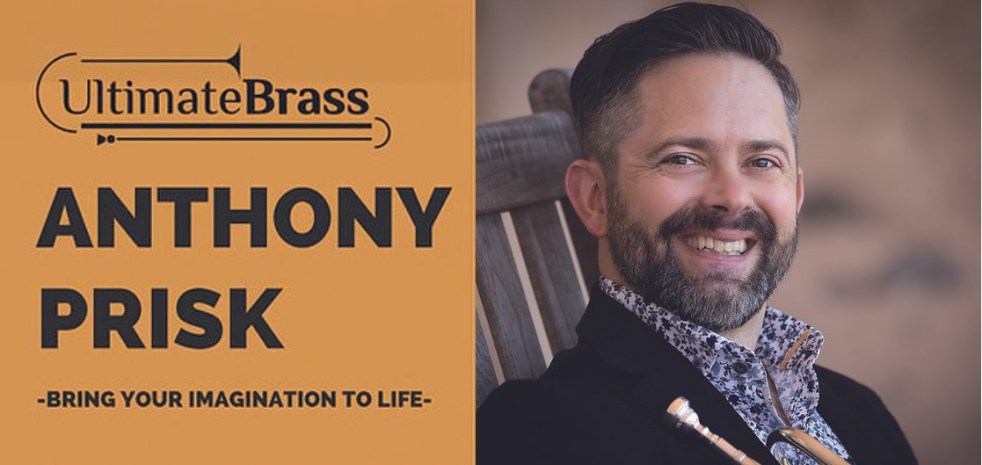
Trumpet Artist Profile : Anthony Prisk

Anthony Prisk has been the 2nd trumpet in the Philadelphia Orchestra since 2013, after previously spending eleven seasons with the Houston Symphony. Tony is an Ultimate Brass and Yamaha artist, and kindly shares his thoughts with us here:

What first drew you to the trumpet in the early days?

I distinctly remember listening to my Dad’s Star Wars soundtrack over and over again. When I went to my elementary school’s band program I was drawn to the cornet and was successful at making a sound. Then as I went along, I really began to enjoy practicing and hearing improvement and performing for my friends and family. It was the ultimate trill to eventually work with and study with Maurice Murphy and John Williams. It came full circle for me!

Who or what were your early musical influences?

My biggest influence in the early days was my high school band directors, Ross Kellan, Greg Cunnigham and Steve Hoffman. Ross was such a positive and encouraging teacher, he instilled pride and artistry in everything we did. I went to the University of Illinois with the goal to follow in his footsteps and influence students in a positive and inspiring way. Eventually, Ray Sasaki took over with this great influence and encouraged me to pursue a life in musical performance and supported my goals and progress. To this day, he is still supportive and helpful in my development as a player and teacher. 

Do you have any particular practice regimes? Does this change a lot depending on what repertoire you are covering in the orchestra?

I am an avid practicer. I have a daily fundamental routine including many concepts from the Sach Daily Fundamentals to Stamp, Schlossberg, Cichowicz, Plog, Vizzutti, Bai Lin, Zauder, Gekker, and more. I do try to stay in shape away from the orchestral repertoire playing etudes and solos from Bousquet, Arban, Concone, Snedecor, Brandt, Charlier, Bitsch, etc…to Bohme, Tomasi, Jolivet, Arutiuinian, etc…If we are playing big rep I will prepare for the week by blowing down Bordogni/Rochut, Brandt, or Smith Top Tones to get ready and then the week of, focus on fundamentals and lighter repertoire to balance my playing. When I am doing a lot of low playing in the orchestra I will turn to playing more piccolo at home and softer solo repertoire. I keep a daily practice log most weeks to keep track of my routines and progress. This also allows me to take notes on what is working and what isn’t. I bring this into my teaching to help students achieve their daily, weekly and life goals. 

What do you think are the most important elements of music and trumpet playing that young players should focus on? 

First of all, SOUND! Finding a Resonant, Brilliant, Rich, Warm, Complex, Flexible, Dominant, Sweet, Singing sound or tone that moves a listener is most important. Finding an efficient way to do this should be a daily goal. Then, for the music, it’s great TIME! Not just playing the correct rhythm but feeling the music and creating the style out of time feel and pulse. If you have these two things, the others will come. Everyone wants great range and speed and loudness but Sound and Time come first. 

How have different teachers through your life shaped the way that you teach?

I have studied with more teachers I can count but every single lesson had something in it that was helpful. I can remember little tips from each lesson from Bud Herseth showing me how he practiced Arban’s and Bobby Shew showing me his wedge breath. There are endless amounts of tools to help students solve issues and achieve their goals. I try to get them to hear the issue, figure out what might be causing it and then create a routine or practice regiment that will nip it in the bud. I also encourage my students to work on their fundamentals to serve the music. For instance, if they are working on Mahler, then play your Concone with a Mahler like sound or work on the Gekker Articulation drills in the tempo and style of Ravel.  This all comes from the many teachers that help me along the way. Thanks to Ray Sasaki, Dr. Mike Ewald, John Hagstrom, Paul Merkelo, Charlie Geyer and Barbara Butler, Mike Sachs, Ray Mase, Chris Gekker and so many more. 

Can you talk a little about your Ultimate Brass mouthpieces, why you play them, and the process of selecting them?

Sun He and I worked on finding a replacement for my longtime Parke mouthpiece. The mouthpiece was wearing out and I always thought it was leaving something on the table for me and my playing. I needed a mouthpiece that was flexible in sound production in my role as second trumpet but also allowed me to step out of the ensemble and lead at times or play solos with brilliance. The mouthpiece line we came up with takes the mouthpieces I played and improved the playability and resonance by finding a better balance of throat and back bore along with adjusting dimensions of the mouthpiece. They are derived from Bach, Parke and Reeves elements but really are unique to Ultimate Brass. We spent a couple years of testing in the orchestra and sending videos back and forth to land on our final product. We are also continuing to develop better versions and more horn specific sizing.

Can you also tell me a little about your relationship with Yamaha?

Ever since Yamaha introduced the Gen 1 Chicago C trumpet I have been playing Yamaha trumpets. I actually had a Yamaha Piccolo way before but I really switched around 2005 or 2006 cold turkey to mostly Yamaha trumpets. Now I am a Yamaha Artist and I play exclusively Yamaha trumpets. The support you get from Bob Malone, Wayne Tanabe and all the folks at Yamaha are unmatched. They are in constant development of new instruments to serve the needs of their customers and artists. It’s a pleasure to work with and represent Yamaha. And the Ultimate Brass mouthpiece works very well with my Gen 3 instruments. 

What are some career highlights to date?

Playing for John Williams was an absolute highlight. I had goose bumps when he walked out on stage the first time. But I really have to say, almost every concert I play with the Philadelphia Orchestra, something special and moving happens on stage. I am absolutely lucky to be playing with so many great and inspiring colleagues, highlights happen every week. I’m looking forward to making more career highlights as we start this new season! 

I guess that there were some periods of long lay-off through the pandemic? Is working life starting to get back to normal now? Are there any lessons that you can take out these past 18 months?

The lessons I learned from the past 18 months are many. Mainly, to appreciate your friends and colleagues. Learn from everyone around you. Take the good and leave the bad. Positive influence and encouragement goes a long way to help others rather than negative talk and thoughts. I learned a lot about how to be a better colleague, teacher and friend. On the trumpet side of things, I experimented with different ways of playing, warming up, equipment, etc. It was time to reflect on weakness in my playing and coming up with new ways of tackling those issues. I also created lots of online content that you can see on my Facebook/Instagram and YouTube Channel. I actually didn’t take any time off the trumpet…I looked at the pandemic as an opportunity in the middle of my career to practice like I was in college again and try to develop better habits for second half of my career. It was a productive time for me that helped me to stay in a positive and productive mindset. 

Any projects that you have coming up that you would like to talk about?

I continue to work on projects for social media and my YouTube tutorials. I am looking forward to a more regular performance schedule and teaching in person. I get so much energy from teaching, sharing my knowledge and inspiring younger students. My hope is to transition from performing to full time teaching in the next 10 years. So my goals currently are to get the most from my playing experiences and build a great trumpet studio at Peabody and Temple University. 

Thank you for asking me to contribute. I enjoy sharing my experiences and stories with the music world. I want people to know I am accessible for questions on social media and look forward to hearing from everyone. Let me know what you think of the Ultimate Brass mouthpieces…I’d love the feedback. 


SIGN UP HERE FOR NEW BLOG ARTICLES EMAILED DIRECT TO YOUR INBOX:

[jetpack_subscription_form show_subscribers_total=”false” button_on_newline=”false” custom_font_size=”16px” custom_border_radius=”0″ custom_border_weight=”1″ custom_padding=”15″ custom_spacing=”10″ submit_button_classes=”” email_field_classes=”” show_only_email_and_button=”true”]

Advice · Interview

Trumpet Artist Profile : Alessandro Silvestro

First trumpet with the Philharmonic Orchestra of Calabria (Italy) and Frate Precision artist Alessandro Silvestro kindly shares some thoughts and experiences with us!:

What first drew you to the trumpet?

I was in the fourth grade when my teacher asked a classmate to bring his trumpet in to play it in front of the whole class. It was the perfect day day for me! I immediately fell in love with this instrument. After a few days, in my small mountain village (Acri – Italy) it was a day of village celebration – I saw the band playing in the streets of the village, and I told my parents that I also wanted to join that band.

I enrolled at the age of 8 in the music course, which the Calabria Region organised every year in collaboration with the band. My first teacher was a clarinetist, it was unusual to have an instrument teacher other than the one I fell in love with and want to learn. I did my musical studies, and after the duration of the course he told me that I had talent and why not try to face a more professional and demanding study? I continued my musical studies and then in 1986 I made the admission to the Conservatory of Music of Cosenza. I attended until 1990 when I met at a masterclass in Palmi (RC) – Italy, my teacher Sandro Verzari, First trumpet of the RAI Symphony Orchestra of Rome and teacher of the Conservatory of Music “A. Casella” of L’Aquila. I moved to him to continue my final studies until graduation. I continued to study with him to prepare myself for a future as a musician and began to participate in various auditions and competitions in Italian orchestras.

Who or what were your first musical influences?

I do not come from a family of musicians, so, until I entered the musical field, I did not realize what the world of music was. My first real musical world was the period of study in the Conservatory, I remember that my first Maestro, Mauro Marcaccio, he gave me cassette tapes of Maurice André. I bought my first vinyl record by Maurice André – this was really influential and I remember that I really wanted to play like him, it was my primary goal! It was my dream, I played with the vinyl almost every day with the trumpet having fun. It was Torelli’s concerto, Viviani’s sonata, Vivaldi’s concerto for two trumpets. In short, I tried to imitate him, at least I tried.

There was also another great influence in the 90s, Canadian Brass. I bought their CD and listened to it over and over. After that CD I immediately formed a brass quintet with the other study and class friends of the conservatory, we enjoyed playing together with the desire to grow so much and learn many other musical things, in addition to the usual class studies in the conservatory doing our first concerts.  Other trumpeters who have influenced my musical path a lot were Timofei Dokshizer, Guy Touvron and Wynton Marsalis.

Do you have special practice regimes? Does this change a lot depending on whether you are performing different styles of repertoire?

I have no special regimes, my study day is always the same. I always divide it by studying with the different trumpet models (Bb, C and Eb Trumpet). I like to vary my routine also so as not to get used to the usual study especially when it comes to technique.

I go in search of new stimuli of new techniques and new styles. I am curious about the technique of other instruments in addition to mine to see how they are structured. This helps me to grow both the musical side and the search for new things and experiment with them on the trumpet.

Obviously based on what I have to play I try to concentrate the study and the right technique for the repertoire to do, then the preparation is subjective for each of us, I change a little bit but I do not distort it in the most absolute way, I also believe that it changes according to the different style of playing.

What do you think are the most important elements of music and trumpet playing that young musicians should focus on?

There are quite a few important elements, the music itself is already the most important thing. First of all, beautiful sound and good intonation. These two factors, are the two most important things that a professional musician or young musician must build.

I believe that building a good foundation is the hardest and most important job. I divide study and preparation into three parts: the first part concerns sound, breathing and control; the second part concerns a whole part where we study the coordination of flexibility, intervals, finger technique, scales in all tones both major and minor. The third and final part is the repertoire.

Can you tell us a bit about your Frate Precision mouthpieces?

I became aware of the Frate mouthpieces when I tried one from the authorized dealer in Gragnano (Naples) – Italy, I immediately realised that it was a truly exceptional product. I bought one based on the characteristics of other mouthpieces I use. After studying it and playing it in the orchestra I realised that it was what I had been looking for a long time! I was immediately struck by the precision of the intonation – very defined and easy on flexibility. It also blends well with the other orchestral instruments, but the thing that struck me most is the projection of the sound in addition to the homogeneity it has on the whole register.

In April I recorded my latest work with the record label Movimento Classical with the “MaSiFuLa Quartet” with the 5+M,6,105 Frate Precision mouthpiece.

What are some career highlights to date?

At the age of 16, I had my first master-class with Sandro Verzari, and I performed the Concertpiece Op.12 by W. Brandt. It was my first experience on a big stage, from that performance I understood that you had to sweat 7 shirts if you wanted to pursue a professional career! I started at the age of 18, doing auditions, competitions and also orchestral experiences as first trumpet and in the section, at the Regional Orchestra of Lazio. I then did the T.I.M International Music Tournament and won the first prize. Immediately after I did other auditions such as the National Symphony Orchestra of the RAI of Turin, the Teatro Regio of Turin, the Teatro San Carlo in Naples, the Teatro dell’Opera in Rome, the ORT Orchestra Regionale Toscana where I stayed for almost three years as first trumpet, the Teatro Massimo in Palermo, with the Sicilian Symphony Orchestra where here too I held the role of first trumpet for three years, with the Solisti Aquilani, Orchestra Sinfonica Abruzzese, Chamber Orchestra Officina Musicale di L’aquila, Orchestra città aperta di l’Aquila where I recorded some soundtracks from Film such as Salvo d’acquisto, the boys of via Pal and Ginostra.

Currently I hold the role of first trumpet with the Philharmonic Orchestra of Calabria, with the MaSiFuLa Quartet and I am a professor at the Conservatory of Music “Giuseppe Martucci” of Salerno – Italy.

Like many artists, I imagine that your work has been severely affected by the pandemic? How did you keep yourself playing at a high level and getting back (hopefully) to being much busier now?

Like many of us the pandemic has been devastating, even in other sectors, especially ours, we found ourselves from the stage that was everyday life, to be closed in four walls of the house without being able to live normal life. In addition to the magic of music and theatre, at the beginning I did not really know where to start. It was really difficult, in the end I said to myself, you have to do something to pass this bad nightmare. With colleagues we recorded videos such as the concert in D minor by A. Marcello, the first half “Andante e Spiccato”, other videos with the quartet MaSiFuLa and published on various social networks, YouTube, Facebook, Instagram.

in addition to having recorded in December 2020 with MaSiFuLa Quartet, our first CD, in the immediacy in April 2021 we prepared and recorded the second CD with the record label Movimento Classical.

Can you tell us about the MaSiFuLa Quartet?

The MaSiFuLa Quartet was formed in May 2020, to date we have completed two recorded works. We are already thinking about the third with music by G. Gershwin, L. Bernstein and we are trying to organize the next future concerts. You can listen to the two CDs on YouTube and on Spotify.

What advice do you have for aspiring young musicians?

From my experience as a professional musician and as a teacher all these years, I advise future aspiring young musicians to work hard, but above all to set the right goal and achieve it with the utmost stubbornness, dedication, conviction, tenacity, preparation and face everything always with conscience!


SIGN UP HERE FOR NEW BLOG ARTICLES EMAILED DIRECT TO YOUR INBOX:

[jetpack_subscription_form show_subscribers_total=”false” button_on_newline=”false” custom_font_size=”16px” custom_border_radius=”0″ custom_border_weight=”1″ custom_padding=”15″ custom_spacing=”10″ submit_button_classes=”” email_field_classes=”” show_only_email_and_button=”true”]

Gear Review · Interview

Trumpet Artist Profile : Alexandre Herichon
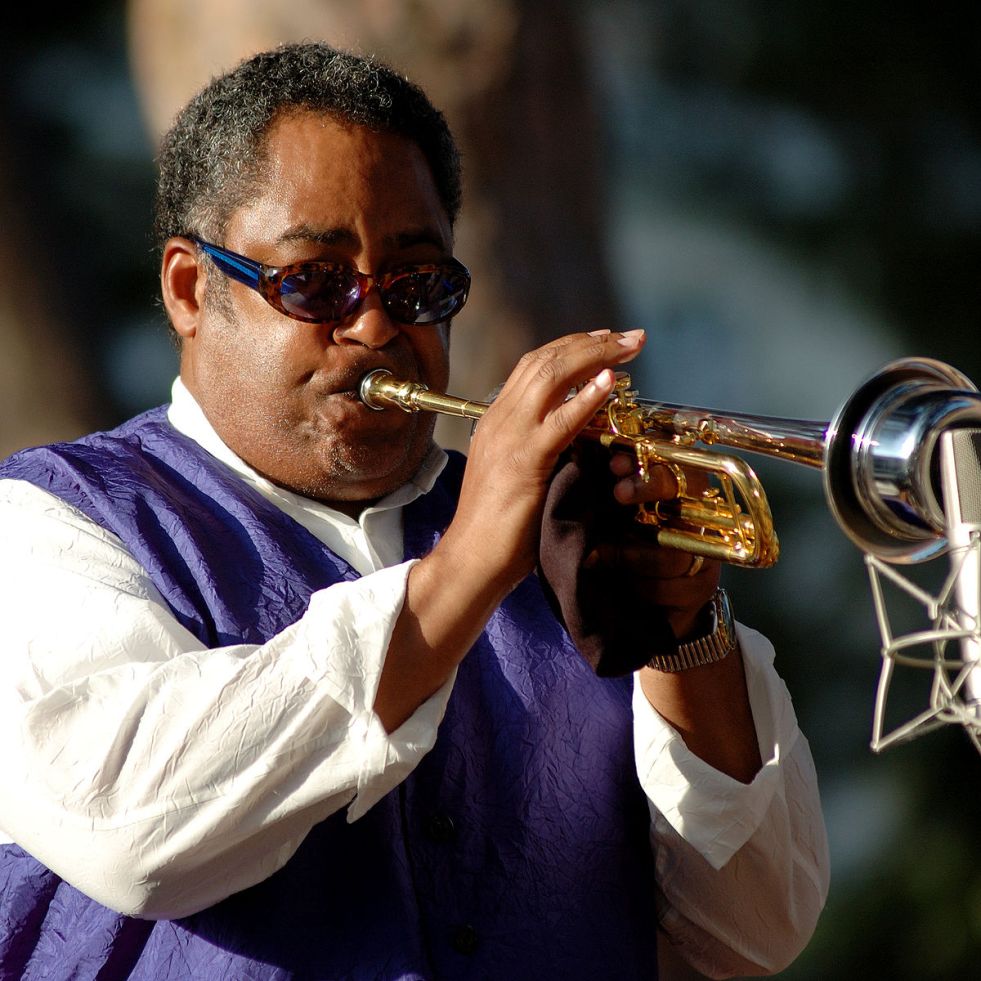
Alexandre Herichon is an eclectic musician, at home playing lead trumpet, improvising, and as a composer/arranger. He shares some trumpeting thoughts as well his experience with his new Agami trumpet.

What first drew you to the trumpeting the early days?

My parents listened to jazz music when I was a kid, and we saw, sometimes, some jazz bands with horn players, so I think it impacted me, but I can’t say why the trumpet, specifically. One thing is shure, I never quit, even in the hard times, since I began, when I was 10. 

Who or what were your early musical influences?

My teachers of course, who gave me the passion of music, the older musician in the music school orchestras and at the early beginning, the fact to play at church with my family. After came the big names and the jazz records. 

Do you have any particular practice regimes? Does this change a lot depending on whether you are doing more lead playing, or jazz, or funk for instance?

Yes, it changes sometimes, and especially depending on what I have to play. The most important for me is my flexibility. So, I always do tongue flexibility exercices to be shure I’m easy with it. Notice that I say, “tongue”, not lips! I do like a kind of whistle and my lips respond to it naturally. Then, if I’m more on a jazz/improvisation gig, I’ll work the most fingering and harmonic exercises on all the range. If I’m on a lead gig, I’ll work some muscles exercises, like Caruso, and be shure to hit the high notes perfectly. 

What do you think are the most important elements of music and trumpet playing that young players should focus on?

Regarding the trumpet playing, the two most important basics are, the air and the tongue position in the mouth. For the music, you can do the kind of music you like and want, but, in all case, do it seriously, spending a lot of time on details and trying to reach perfection. Play all time at 100% trying to make the band or the orchestra sounds greater as possible. Always be invested in the music and it will gives back to you.

Can you talk a little about your Agami trumpet, why you play it, and the process of selecting it?

Agami trumpet are great horns, really! Love it!I first saw pictures on Instagram (go follow him-> agami_music_france 😉) and said to myself “wow, those horns are beautiful!” So Thierry Sohier (from Agami) contacted me to organize a meeting and invited me to try the trumpets. I directly felt good playing it. Easy, great sound, warm on the low range and bright on the upper register, polyvalent. Anyway, all a trumpet should have as qualities. I tested it some months, on many different gigs and adopted it. I feel I can do what I want on this trumpet!

What are some career highlights to date?

I had and still have the chance to play with many great bands and artists around the world, Electro Deluxe in Japan, No Jazz in India, Etienne M’Bappé in South Corea, Panam Panic in Marocco, Big Funk Brass, Ben l’Oncle Soul and more!

Like many artists, I guess that your work has been badly affected by the pandemic? How have you found keeping up the playing to a high level, and getting back to (hopefully) being much busier now?

Yes it was a strange periode… But I have the chance to be a teacher in jazz music conservatory and private lessons so it kept me in touch with people and music, so it helped me a lot. I began to work on music producing too, and it takes a lot of time so it was on point. Some home recordings and tv sessions happened too in the second part of the pandemic and the work began to come again. Now it’s ok and we hope the worst is behind us now. 

And what projects do you have coming up?

My personal projects, Big Funk Brass and Panam Panic have released their albums not long ago (go check it too 😉) so this year will be a booking and touring year, between the other projects and lessons. I’m beginning to think about my new personal project too, kind of new jazz 5tet. I’ll let you know about that when it’ll be more clear. 


SIGN UP HERE FOR NEW BLOG ARTICLES EMAILED DIRECT TO YOUR INBOX:

[jetpack_subscription_form show_subscribers_total=”false” button_on_newline=”false” custom_font_size=”16px” custom_border_radius=”0″ custom_border_weight=”1″ custom_padding=”15″ custom_spacing=”10″ submit_button_classes=”” email_field_classes=”” show_only_email_and_button=”true”]

Gear Review · Interview

Jon Faddis on Ullvén Mutes

…from Jon Faddis:

Hello, Fellow Brass Players,

I would like to tell you about some really good news, not just for me, but for trumpet and trombone players all over the world.
Swedish trumpeter Lasse Lindgren has acquired the rights to make Ullven mutes, which have been unavailable for many years, and also happen to be my all-time favorite mutes.
Dizzy Gillespie game me my first Ullven harmon and cup mutes in 1972. I’ve been using Ullven mutes exclusively for almost 50 years!

These mutes, plus my Schilke Music Products horns, are “tried and true” for me.
I even remember when that first Ullven harmon was stolen from me: October 21, 1977, at Jazz Showcase, in Chicago. It was Dizzy’s 60th birthday celebration, and I had left the mute on the piano on stage between sets. During that time, I was hanging out with Diz and Muhammed Ali backstage. When I went back on  stage to play the next set, my mute was gone!

So you know: The Ullven harmon mute is perfectly in tune down to low F# and has an exceptionally full and even sound when playing on a microphone.
The Ullven cup mute is adjustable and gives the player the option to change the sound to that which she/he is looking for.
The cup can even be used as a plunger (á la #SnookyYoung, on the gold plated Ullven cup which I gave to him as gift back in the day).

These Ullvens also make great quiet practice mutes.
Because of the functionality in this regard, Ullven cup mutes and Ullven Harmon mutes also are superb as a quiet practice mute when one wants to hone skills without disturbing anyone, even and especially late at night, or if you have pets in your home who pick up frequencies at higher intensity — you spare their ears. You also help protect your own hearing as a musician.
It’s also a really nice gift for students (and their families) as they learn the art of the trumpet.
These Ullven mutes are the real deal and Lasse is making them now.
Get ‘em while you can!

Lasse, tack så mycket!

Jon Faddis Sleeping Cat Music, Inc.
@faddisphere
International Trumpet Guild (Official)
International Trumpet Guild Student Group
Jazz Education Network
Schilke Music Products
Ullvén Mutes for Brass Instrument


SIGN UP HERE FOR NEW BLOG ARTICLES EMAILED DIRECT TO YOUR INBOX:

[jetpack_subscription_form show_subscribers_total=”false” button_on_newline=”false” custom_font_size=”16px” custom_border_radius=”0″ custom_border_weight=”1″ custom_padding=”15″ custom_spacing=”10″ submit_button_classes=”” email_field_classes=”” show_only_email_and_button=”true”]

Advice · Interview

Trumpet Artist Profile : John Foster

John Foster is a leading exponent of performance on historical trumpets and cornetto as well as being a former member of the Sydney Symphony Orchestra. John is a former classmate of mine from the Royal College of Music, and talks to me here about trumpets, trumpeting and his recent collaborations with Pickett Brass.

What first drew you to the trumpet? Any early musical influences?

My earliest musical recollections came from listening to my grandmother singing and playing the organ in far North Queensland, and after that my next encounter with music really came through the primary school system. At school I played piano, violin, recorder, percussion, and then eventually by age 10, I was given a trumpet. Probably the first time I was acutely aware of music for the trumpet was when I was 12 years old and heard my first recording of Maurice Andre.

Can you talk a little about your trumpet education and how that has influenced what you are doing now?

All of my early music education on the Trumpet came through I would say an American style of Trumpet teaching. My teacher at age 12 was Yoram Levy (Israel Philharmonic) a former student of Vincent Cichowitz and Adolf Herseth, and all the usual Trumpet methods that went along with the ‘Chicago school’ including the Arban Method, Cichowitz studies, Rochut, Schlossberg, Louis Davidson, Vassily Brandt and several other methods.
After receiving a thorough grounding in orchestra on solo studies on the modern Trumpet I moved to the United Kingdom, to the Royal College of music in London where I studied baroque trumpet with the wonderful Professor Michael Laird (Academy of St Martin’s in the Field) and Mark Bennett, and further formal, modern trumpet studies with Paul Beniston (London Philharmonic). I also benefitted greatly at this time by taking private studies with Ian Balmain (Covent Garden) and Rod Franks (London Symphony). During these formative years I was also very privileged to spend quite a bit of time with Swedish trumpet soloist Håkan Hardenberger.

What trumpeters do you most admire and enjoy listening to?

What a great inspiration is always been French trumpet virtuoso Maurice Andre, his magnificent sound and sensitive approach to music making always seem to transcend the fact he was even playing the trumpet.
These days Reinhold Friedrich is also one of my favorite players to listen to. In a similar way to Maurice Andre he manages to always ensure that the audience feels the emotions he conveys in his playing.
In the 21st-century we are truly spoiled with choice from so many wonderful artists and so many fine recordings being made in the last 50 years. Some other artists (past and present) that spring to mind are Adolf Herseth, Maurice Murphy, Håkan Hardenberger, Thomas Stevens, Vincent DiMartino, Doc Severinsen, Serge Nakariakov, Giuliano Sommerhalder, David Gurrier, Niklas Eklund, Matthias Hoffs, Yigal Melzer, Marc Ulrich, Gabrieli Cassone, Michael Laird, Mark Bennett, Crispian Steele-Perkins, David Blackadder, Neil Brough, Edward H. Tarr, Friedemann Immer, Geoffrey Payne, Gordon Webb, Omar Tomasoni, Michael Sach, and so many more…..

At what point did you make the decision to move away from an orchestral career to focus on early music?

By the time I reached my mid 30s I had already spent the better part of 20 years playing in professional orchestras (the last 12 years of those with the Sydney Symphony). Whilst I adore the orchestral repertoire and performing orchestrally (and will probably never fully divest from playing in orchestras) my true passion has always been with the trumpet/cornetto repertoire from the 16th – 19th centuries. I’m also very involved in directing and conducting now as well.

I hear that you have quite the instrument collection! Can you tell me about a few highlights?

I have over 100 historical instruments pertaining to the trumpet family. Some highlights would include:

•   Original English Slide Trumpet by F.Besson c.1860
•   Hand-Stopped Natural Trumpet in D by Georg Öttensteiner c.1850
•   MacFarlane’s ‘Clapper Key’ Cornopean by Charles Pace c.1850
•   B flat Keyed Bugle by Charles Pace c.1840
•   E flat Keyed Bugle by George Smith c.1835
•   Coach Horn (House of the Duke of Glouster) by Kohler of London c.1796

How does the future look for period instrument performance?

I think the future for period Instrument performance is incredibly bright. Here in Australia (as like never before) universities and Conservatories are embracing early music and historically informed performance practices by adding resources to the departments in order to properly train young musicians.

Any advice for aspiring players who are interested in getting into early brass?

The classical music industry is both a very challenging and rewarding one. Firstly I would advise any aspiring Brass players to definitely become involved in early brass playing. Fundamentally (particularly in the case of the trumpet and horn) the Natural Trumpet/Baroque Trumpet gives the best possible foundation to any serious brass player’s fundamentals, being that everything you perform is based on the natural harmonic series, sounds must be extremely well-connected, with great support and air-flow, as well as there being an absence of ‘force’ in the blowing. Musically, the playing of historical instruments also gives a wonderful foundation into developing ‘ensemble listening skills’. In particular listening to the other instruments and vocalist (not just the immediate Brass colleagues). The softer dynamic range of early brass instruments allows for much more sensitive listening and acute awareness to other ensemble members, and indeed in many cases it also allows more readily to the imitation of style.
From a practical point of view; with the size of the classical music industry seemily shrinking, and with more and more players graduating from leading universities, being able to except work on historical Instruments only allows for one more avenue of work for players. Anything today I see historical instrument playing seeping more and more into the regular working life of symphonic players as well.

How about ATA? Any plans for future course?

Indeed the Australasian Trumpet Academy hopes to have many more courses in the future, once international travel is readily available again (post the current pandemic).

Can you talk a little about your relationship with Pickett Brass and the process of designing your mouthpieces?

Certainly. I have worked with several instrument makers and mouthpiece designers over the past 20 years but upon meeting Peter Pickett (from Pickett Brass) I was immediately impressed. Peter has a wonderful mind for engineering and matches that with all the skill and precision you would expect from a 21st century mouthpiece maker,however what sets him apart is that Peter Pickett is also a real trumpet player. I found it such a great advantage when describing to Peter what I wanted in my signature John Foster Baroque Trumpet Mouthpiece, that not only did he understand what I wanted from the technical specifications, he also knows forensically from the players point of view what will work. The results speak for themselves I love the mouthpieces Peter makes for me and I’d recommend them to anyone. https://www.pickettblackburn.com/signature-series-trumpet-models-c-107_115_200/john-foster-p-1647.html

What does 2021 hold for you?

Lots of Golf and Trumpet Practice at the moment awaiting the end of COVID 19 lockdowns.

What instruments do you use?

Trumpet in C/D (A = 415hz/430hz/ 440hz) – ‘Foster Model’ (2016), based on an instrument by Johann Kodisch (Nürnberg ca.1700)
Baroque Mouthpiece – ‘John Foster’ Signature Model by Pickett Brass
Tromba di tirasi in C/D (A = 415hz) made by my own construction (reproduction bell after J.W. Haas c.1720)
Cornetto (Soprano A = 440hz) – Phillip McCann (2005)
Cornettino – Christopher Monk (c.1970) Mute Cornetto – maker anonymous (UK)
Keyed Trumpet in E flat (A = 430hz, 440hz) My own construction (2006).
Demilune Trumpet in F/E/Eb/D/C/Bb by Stephen Giordano, based on original instrument by Anon (Strasbourg ca. 1805)
Keyed Bugle in B flat ‘New Improved’ by Charles Pace (ca.1840)
Keyed Bugle in E flat by George Smith (ca.1830)
English Slide Trumpet in F/E/Eb/ D/C by F. Besson (c.1880)
Posthorn in A by Kohler and Sons (c.1880)
Cornet in G/Ab/A/Bb ‘Levy Model’ by Courtois (c.1875)
Cornet in Ab/A/Bb by Thiboulville- Lamy (in high pitch, 1890)

Modern Trumpets
• B flat Trumpet by Vincent Bach Model #37
• C Trumpet by Vincent Bach, 25H leadpipe 229 bell.
• Eb/D Trumpet by Schilke
• Piccolo Trumpet by Schilke P5-4

Books:

•   ‘The Baroque Trumpet Revival’ by John Foster (Publisher David Hickman, Hickman Music)

•   ‘The Natural Trumpet’ and other related instruments. by John Foster (published by Kookaburra Music). 


SIGN UP HERE FOR NEW BLOG ARTICLES EMAILED DIRECT TO YOUR INBOX:

[jetpack_subscription_form show_subscribers_total=”false” button_on_newline=”false” custom_font_size=”16px” custom_border_radius=”0″ custom_border_weight=”1″ custom_padding=”15″ custom_spacing=”10″ submit_button_classes=”” email_field_classes=”” show_only_email_and_button=”true”]

Gear Review · Interview

Trumpet Artist Profile : Kissis Muñoz

Originally from Venezuela, Kissis Muñoz is now based in Miami and building a reputation for herself as a top trumpet player…

What first attracted you to the trumpet?

What made me fall in love with the trumpet was its sweet sound and also its strength.

Any early musical influences?

Yes, my dad runs a band and from there I was able to start playing music when I was 8 years old.

Favourite musicians to listen to growing up?  And now?

When I was a child I liked listening to Maurice Andre, Winton Marsalis and Sergei Nakariakov, then my list of trumpeters got bigger and now I really like Francisco (Pacho) Flores, Yturvides Vilchez, Arturo Sandoval, many styles and all exceptional!

What prompted you to move from Venezuela to Miami?

Leaving aside the situation in the country of Venezuela, what has captivated me about the United States is that we are in a country of opportunities, and thank God everything is going wonderfully so far.

Any highlights of his career so far?

I have had the opportunity to be a soloist in various symphony orchestras in Venezuela in which I have performed several concerts such as Haydn, Arutunian and Vivaldi.  I have made a number tours of Europe with the Teresa Carreño Symphony Orchestra of the Venezuelan Orchestra system in which we perform in important musical theatres such as the Konzerthaus in Berlin and the Vienna State Opera.  I have a Bachelor of Music in Instrumental Performance from the Royal School of Music.

Here in Miami I began to live new experiences playing and recording Latin Music with different bands and artists such as Tony Succar, Oscar D ‘Leon, Luis Enrique, Raíces Jazz Big Band and finally last year I made a record with the group Make Sound in which we are all female soloists!

Tell me about the new instruments that you are playing on!

It was a lot of fun, I didn’t expect to change instruments until I played the Victory! I immediately fell in love with them, realized that these trumpets helped me to have a special sound. I tested the full range they had and I stuck with the Revelation Series. It gives me the sound I need for both classical music and other styles!

How has the past year been for you with the Covid closures?  Obviously, it has been a really difficult time globally, but is there something positive or opportunities that you have been able to take advantage of?

It has been a difficult year for everyone but more so for art, we had to reinvent ourselves to continue doing what we love. In my case I took that time to finish the Make Sound album and reconnect musically with works that I had forgotten.

What interests you outside of playing the trumpet?

At this moment I am separating my mind on music and family since we have a 2 year old daughter and she always needs attention. But outside of the trumpet I love to travel and visit my friends, since they are the family that we have here.

Any advice for young aspiring trumpeters?

Although the road is long, strong and stormy we must continue, because when you look back you will realize that nothing was in vain and you will see how much you have progressed.

For further information about Kissis, please visit her social links below:

YouTube

Instagram


SIGN UP HERE FOR NEW BLOG ARTICLES EMAILED DIRECT TO YOUR INBOX:

[jetpack_subscription_form show_subscribers_total=”false” button_on_newline=”false” custom_font_size=”16px” custom_border_radius=”0″ custom_border_weight=”1″ custom_padding=”15″ custom_spacing=”10″ submit_button_classes=”” email_field_classes=”” show_only_email_and_button=”true”]