
Knowing how to safely ship a trumpet is extremely important in the world of brass instruments. Trumpet players all over the world buy and sell used trumpets every day, but not everyone knows how to properly pack a trumpet for shipping. Trumpeters often sell used horns through online marketplaces such as Ebay. They sometimes need to ship a trumpet off to get it repaired, or have a valve alignment or professional cleaning done. Whatever the reason for shipping a trumpet, the challenge remains: how do you protect the trumpet from getting damaged during shipping? And how do you keep shipping costs reasonable?
Here are some tips and tricks to help navigate the world of shipping trumpets.
Do’s and Dont’s for preparing a trumpet for shipping
- Do remove the mouthpiece, wrap it separately, and secure it away from the horn.
- Do ship the trumpet separately from the case if that’s an option.
- Do not leave any item unsecured, such as a tuning slide, extra bell, or trim pieces.
- Do wrap the trumpet and anything else in the package in enough bubble wrap to ensure it will not shift or move during shipping.
- Do not overfill the box with packing peanuts. Over-compressed peanuts will transfer the shock of an impact to the horn, instead of absorbing the shock and protecting the horn.
- Do insure the package for the real value of the contents.
- Do use a box about 24″ X 12″ X 12″ for a trumpet, or the smallest box that will hold all the items to be shipped with 4″ of packing peanuts on every side.
- Do not skimp on tape. Wrap tape in a continuous strip all the way around the box, three strips in each direction.
Step by step instructions for packing a trumpet with or without a case
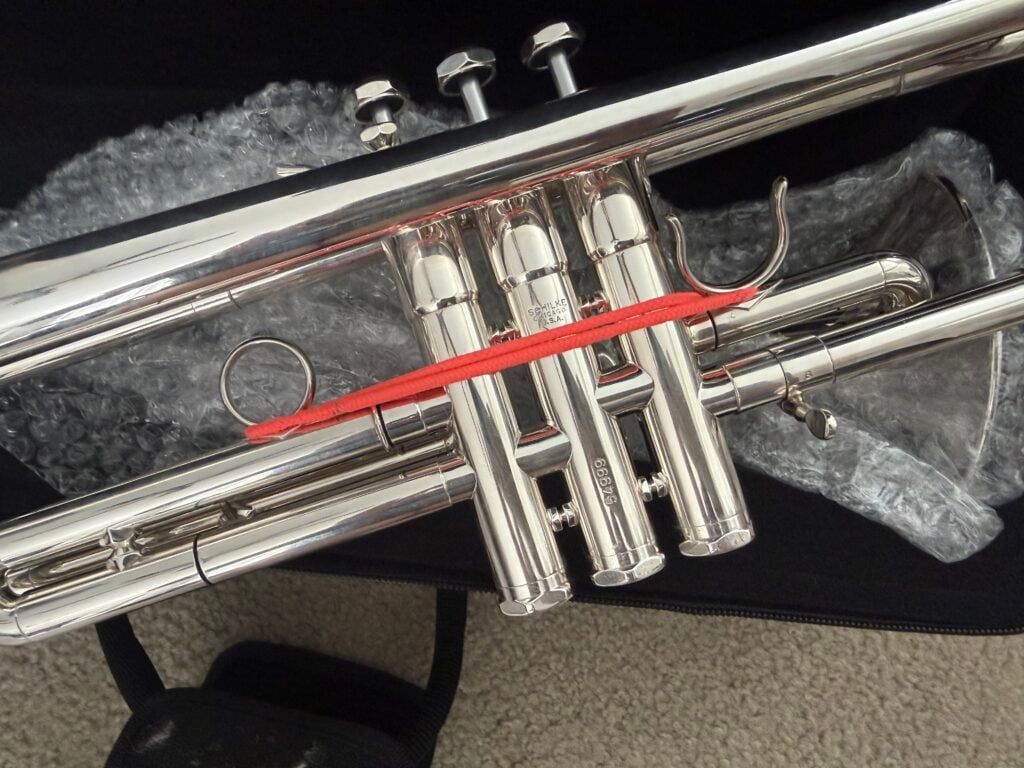
Step 1: use a hair tie to secure the tuning slides
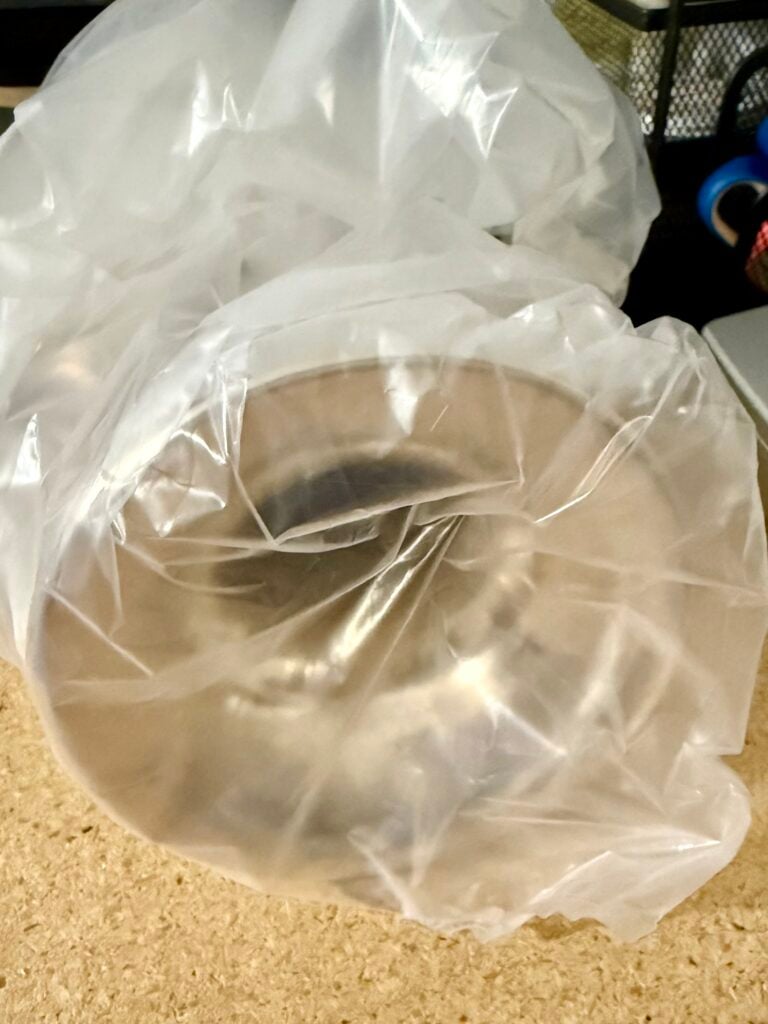
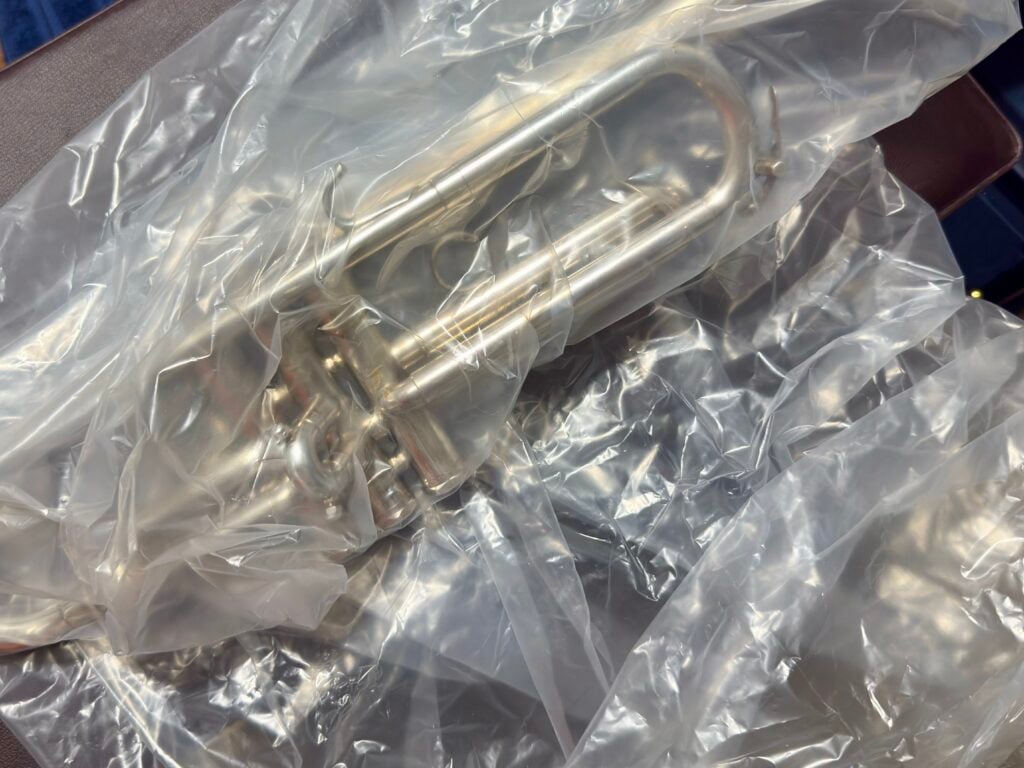
Step 2: wrap the trumpet in a garbage bag and secure it closed with tape to prevent any packing peanuts or other debris from entering the horn.
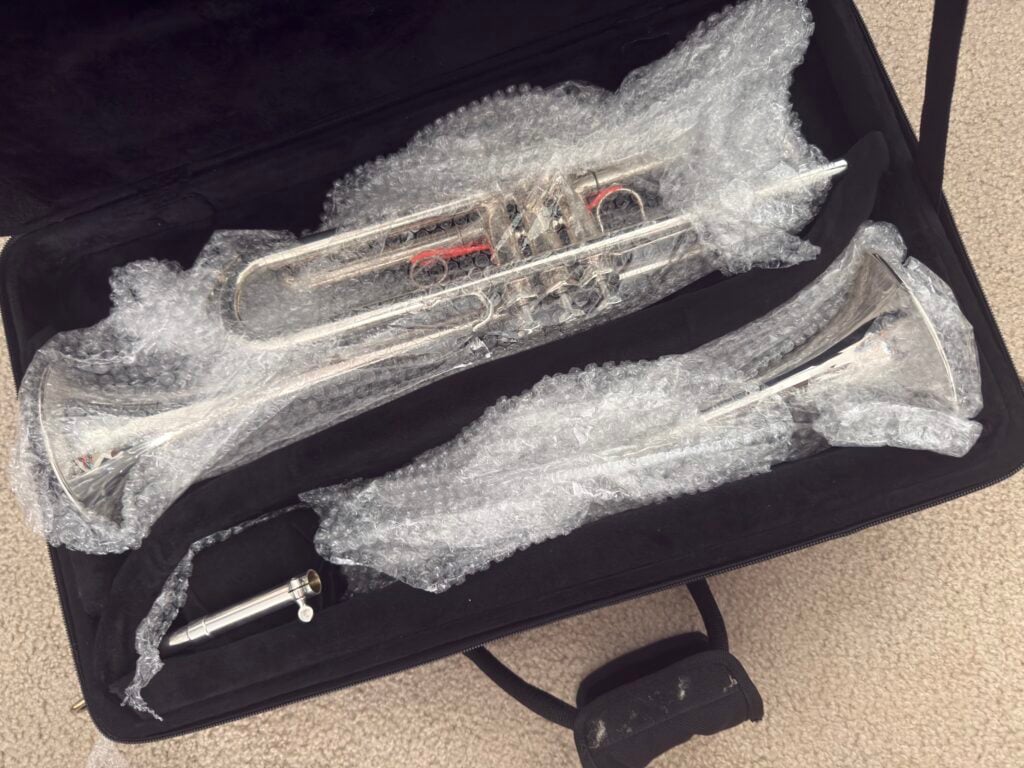
Step 3 If shipping the horn in the case: Wrap each item inside the case with enough thin bubble wrap so that it will not shift. Don’t use so much bubble wrap that there is strong pressure on the horn.
It’s better to ship a trumpet or other brass instrument without the case, if possible. It may seem counterintuitive, but keeping the horn in its case can actually lead to more damage during shipping. Most cases are meant to protect from small dings and scratches due to everyday use. They are not built to protect the horn from severe impacts that can occur during shipping.
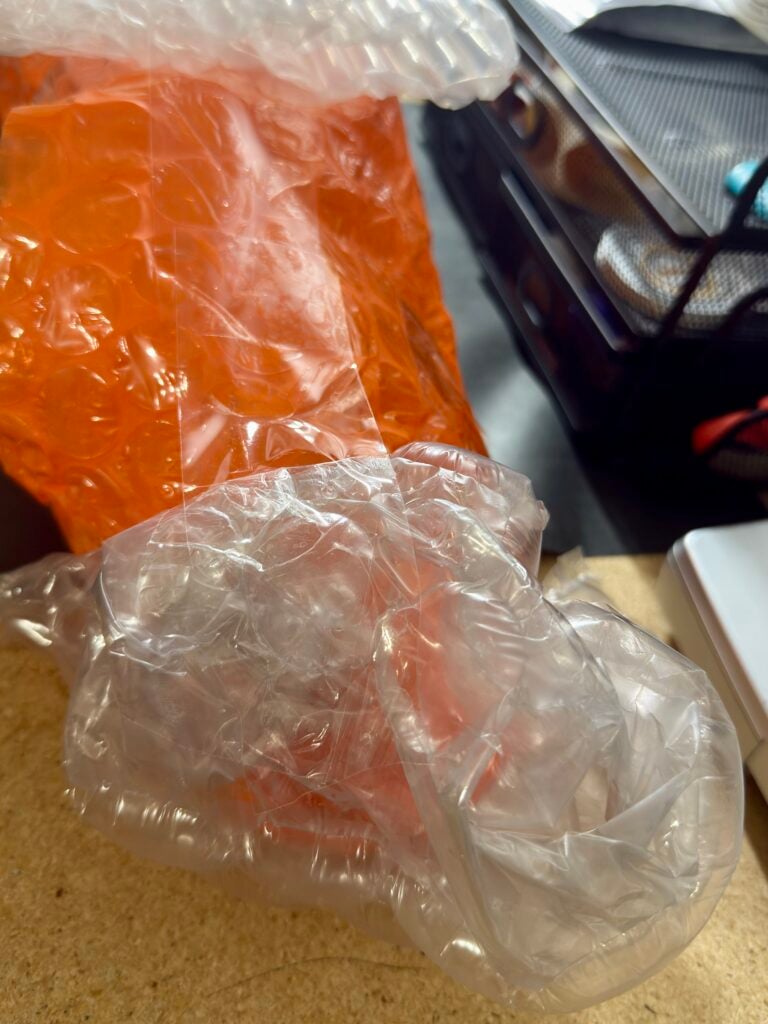
Step 3 If shipping the horn without a case: Wrap the bell end and lead pipe/bell bow end with thicker bubble wrap. Secure with shipping tape. Then wrap the entire horn with a final layer of thin bubble wrap and secure with tape.
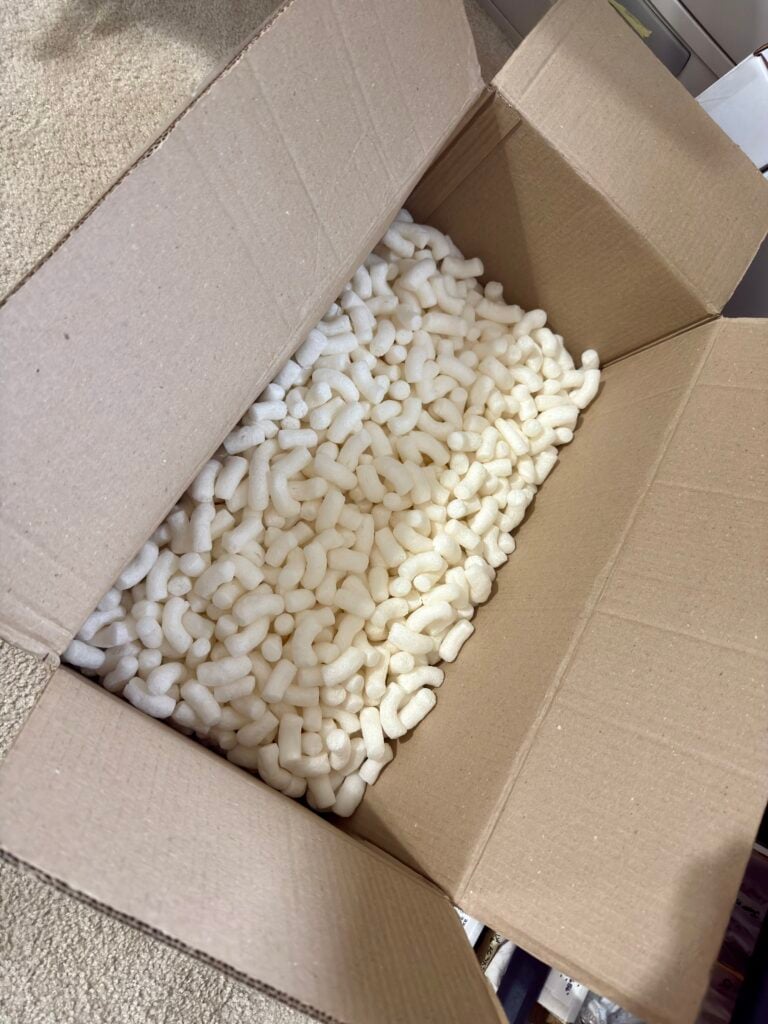
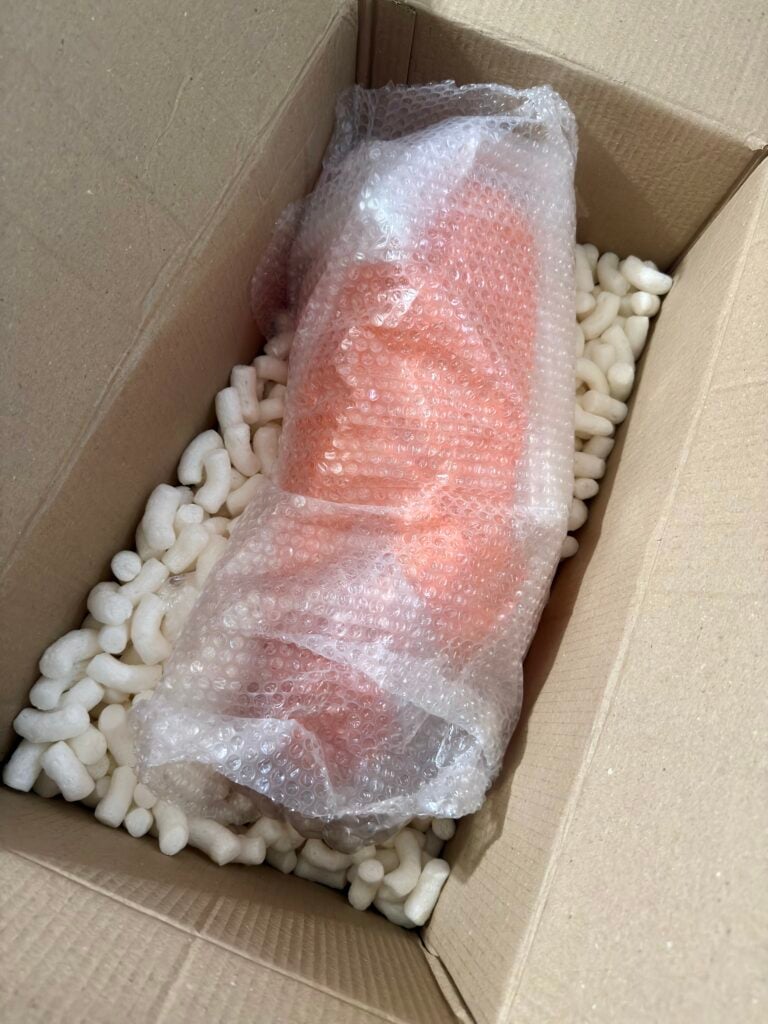
Step 4 if shipping the horn without a case: Fill the bottom of the box with about 4″ of packing peanuts, and place the horn diagonally from corner to corner.
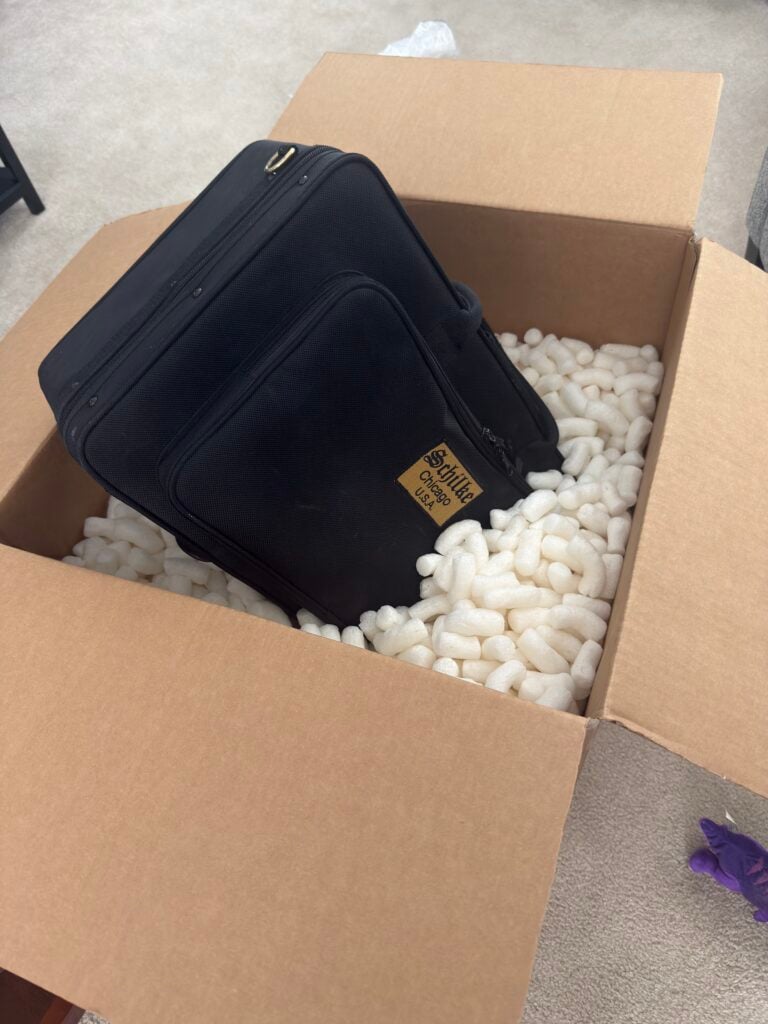
Step 4 if shipping the horn in a case: Make sure there are about 4″ of packing peanuts surrounding the case on all sides.
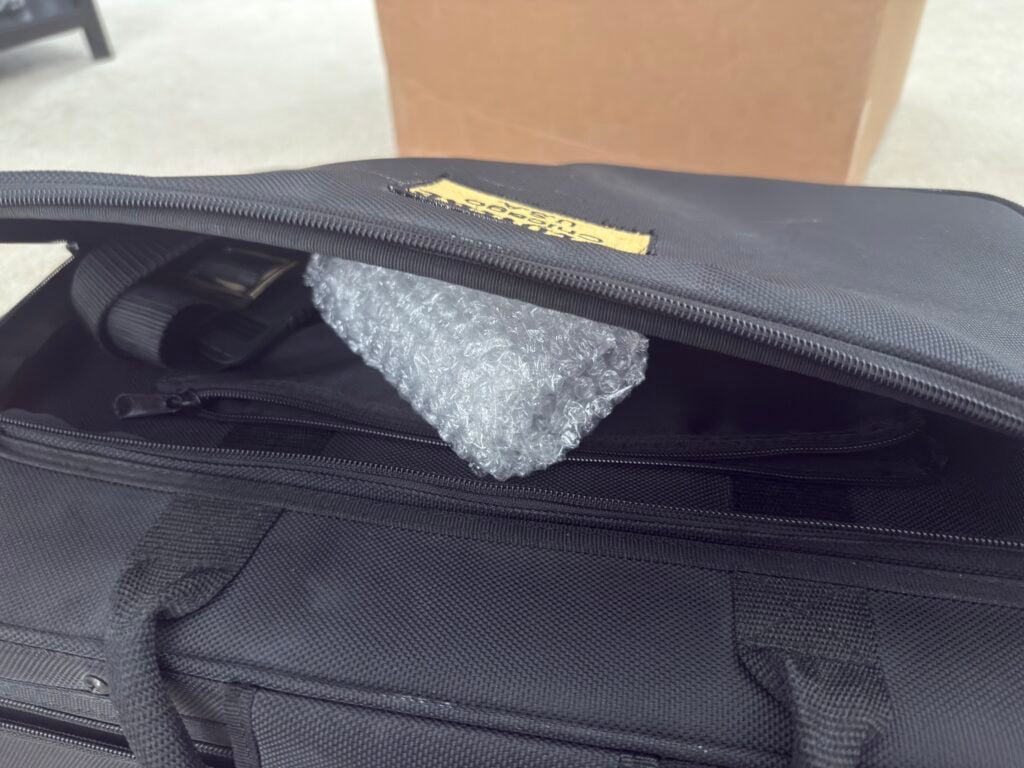
NOTE: wrap the mouthpiece separately and secure away from the horn.
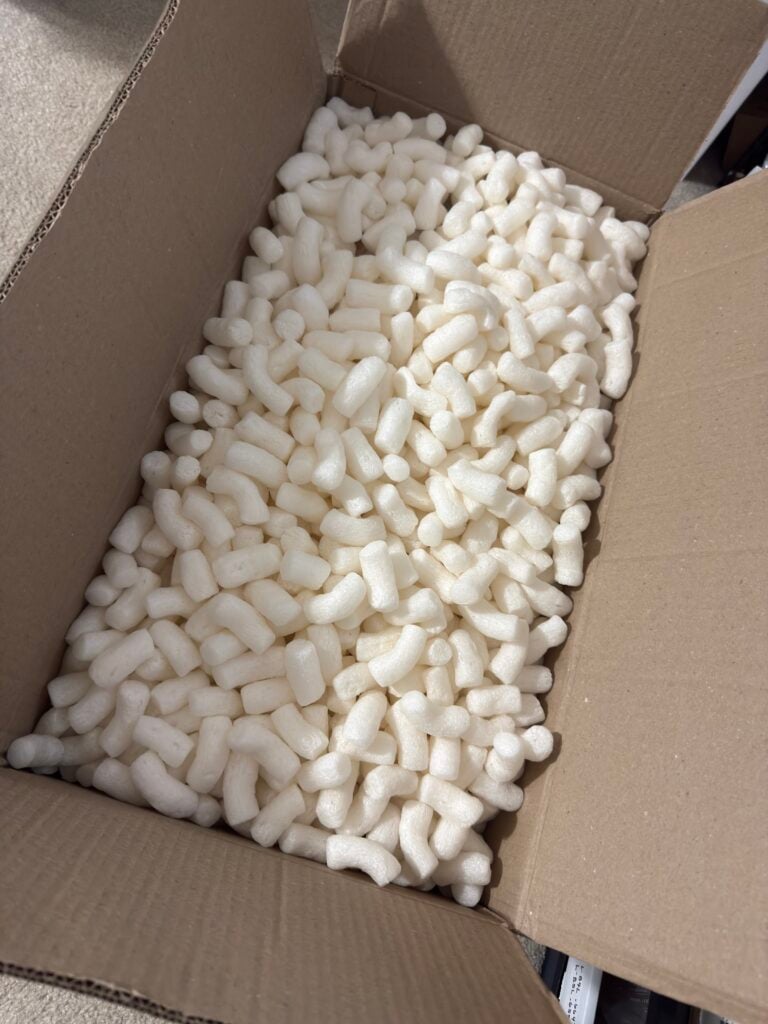
Step 5: Fill the box to the top with packing peanuts. Don’t leave any space in the box, or the trumpet will shift and may be damaged. Don’t overfill the box with packing peanuts, either. Over-compressed peanuts will transfer the shock of an impact to the horn, instead of absorbing the shock and protecting the horn.
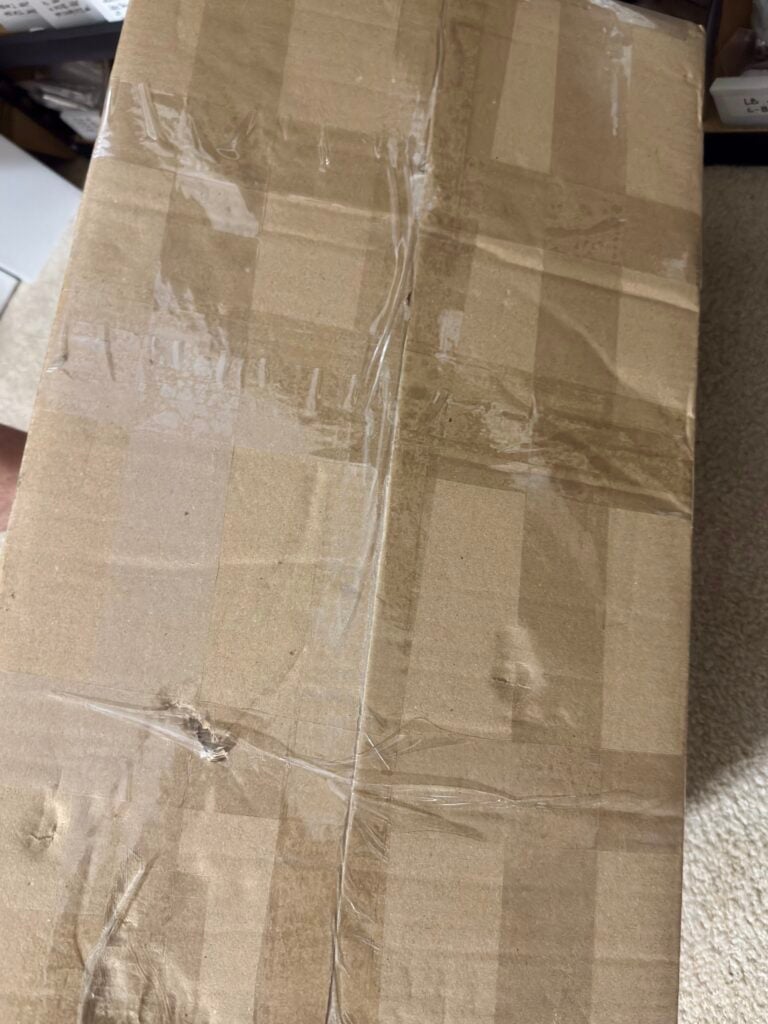
Step 6: Secure the box with a “triple H” pattern of shipping tape. Tape should be wrapped all the way around the box in one continuous strip, not just across the top. This helps strengthen the box. Cover any raised edges with more tape to prevent the box from getting snagged in mechanical shipping equipment. Mark the box “FRAGILE” on all sides.
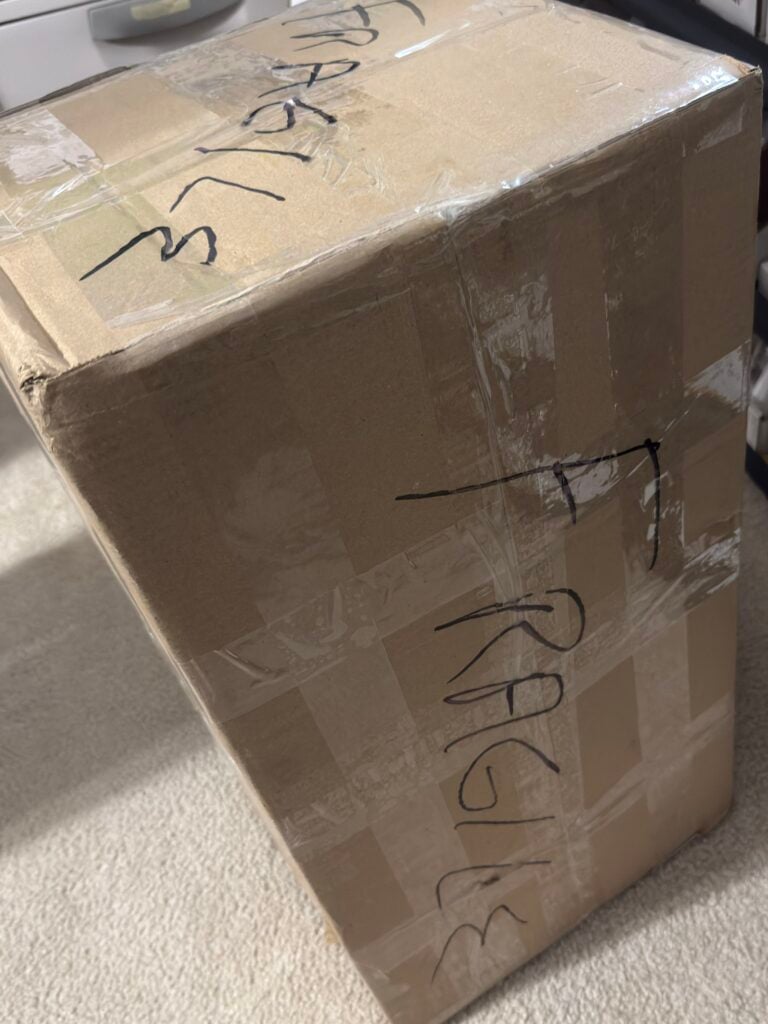
Consider shipping the horn and case separately if the two combined are over 10 pounds. Heavier boxes fall harder, leading to greater impact and potential damage to the horn.
How to Get the Lowest Shipping Rate for a Trumpet
Once your trumpet is packed safely, the next step is finding the best shipping rate. USPS, UPS, and FedEx can all be good options, but the cheapest carrier can vary depending on the size, weight, and destination of your package. A few simple steps can help you avoid paying more than necessary.
1. Keep the Box as Small as Safely Possible
One of the easiest ways to reduce shipping costs is to avoid using an over sized box. A trumpet needs adequate padding and protection, but extra empty space adds both weight and package dimensions.
This is especially important with UPS and FedEx, which may calculate shipping charges using dimensional weight when a package is relatively large compared with its actual weight. In other words, a lightweight trumpet in a large box can cost more to ship than a heavier item in a compact box.
Don’t sacrifice protection just to save a few dollars, but choose a box that allows enough room for padding without leaving several inches of unnecessary empty space.
2. Weigh and Measure the Finished Package
Don’t estimate the size and weight of your shipment. Pack the trumpet completely, including all padding, and then weigh and measure the finished box.
You’ll want to know:
- Actual weight
- Length
- Width
- Height
- Destination ZIP code
Having accurate measurements allows you to get a realistic quote from USPS, UPS, and FedEx rather than discovering that the final price is higher at the counter.
3. Compare USPS, UPS, and FedEx
Don’t assume that one carrier is always the cheapest. Rates can vary significantly depending on where you’re shipping the trumpet and how large the package is.
For a relatively compact trumpet shipment, USPS can sometimes be very competitive, particularly when the package falls within its standard size and weight limits. UPS and FedEx can also be competitive, especially if you have access to discounted commercial or online shipping rates.
Before purchasing a label, enter the same package dimensions, weight, and destination into the rate calculators for all three carriers. Compare the total price for the service you actually need, rather than simply choosing the carrier with the lowest advertised starting rate.
4. Check Online Rates Before Going to the Counter
Shipping directly from a carrier’s retail location isn’t necessarily the cheapest option. USPS, UPS, and FedEx all offer ways to purchase shipping labels online, and online rates can be lower than what you pay at a retail counter.
If you’re regularly shipping trumpets, it can be worth creating accounts with each carrier so you can compare rates and print labels from home.
5. Don’t Pay for Speed You Don’t Need
If the trumpet isn’t needed immediately, avoid paying for overnight or two-day service. Ground shipping is usually considerably less expensive and is perfectly adequate for many trumpet shipments.
For a used trumpet being sold online, for example, the buyer may be perfectly happy to wait several days if it saves a substantial amount on shipping.
6. Consider Insurance When Comparing Prices
The cheapest shipping option isn’t necessarily the best value if you’re shipping an expensive trumpet.
Check what coverage is included with each service and how much additional insurance would cost. If you’re shipping a $2,000 or $3,000 trumpet, spending a little more for appropriate coverage may be worthwhile.
Keep in mind that insurance claims may require documentation of the item’s value and proof that the package was properly packed. Take photographs of the trumpet, the packing materials, and the completed package before sealing the box.
7. Look for Discounts if You Ship Frequently
If you regularly buy and sell trumpets or run a music-related business, don’t limit yourself to standard retail rates. Shipping platforms and business accounts may provide discounted rates with USPS, UPS, or FedEx.
Even a small discount becomes significant if you’re shipping instruments regularly.
The Bottom Line
The best way to get the lowest shipping rate is to compare the actual rates for your completed package. Pack the trumpet securely by following the steps above. Keep the box as compact as practical, weigh and measure it accurately, and compare USPS, UPS, and FedEx before purchasing the label.
Saving a few dollars on shipping is great, but protecting the trumpet should always come first. A slightly higher shipping cost, and a little extra time and effort with packing, is a small price to pay to prevent the hassle and expense of getting a trumpet repaired after it is damaged in shipping.
Helpful links:
UPS shipping calculator: https://www.ups.com/us/en/shipping/quote
USPS shipping calculator: https://postcalc.usps.com