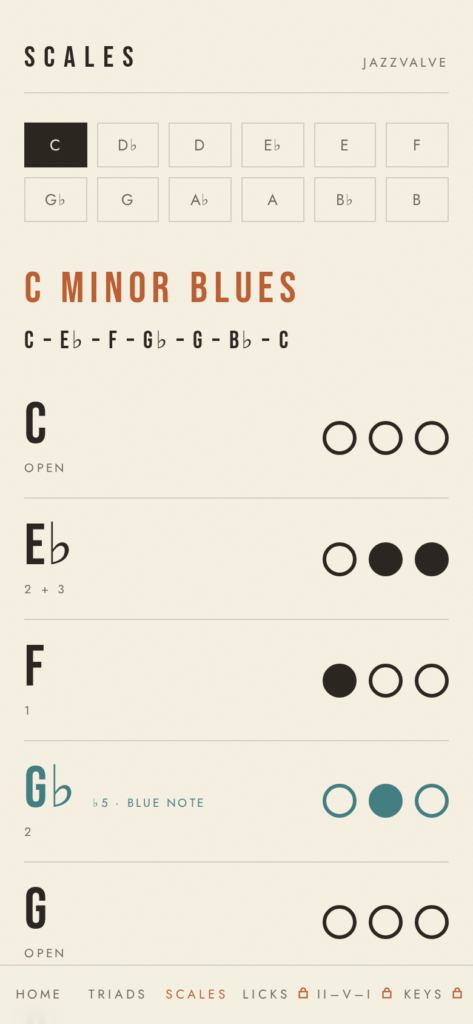
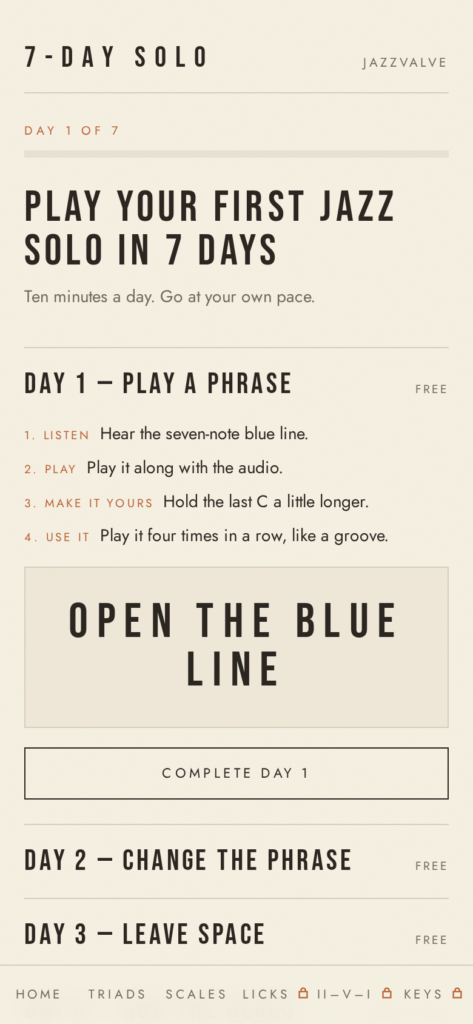
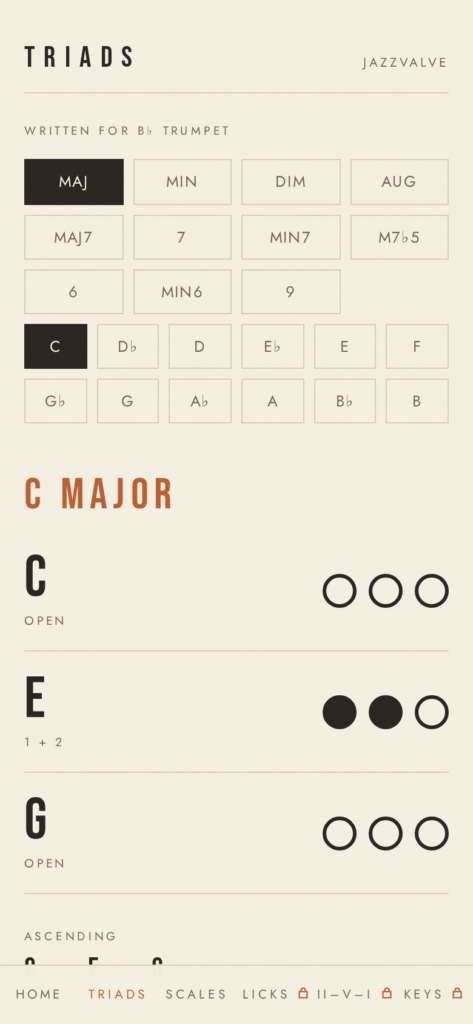
JazzValve is a web-based tool for learning jazz trumpet. All the essential building blocks of jazz improvisation are easily accessible in one place, putting you on the shortest path to unlocking your jazz trumpet voice.
JazzValve is an online practice platform built specifically for jazz trumpet players who want a more structured way to develop improvisational vocabulary. The goal is to make jazz practice feel practical and approachable by giving players focused material to work on through scales, triads, riffs, melodic lines, and other building blocks of improvisation.
A big influence behind JazzValve is the hard bop language of the 1950s and 1960s. Players can use the platform to explore jazz vocabulary and then immediately apply those ideas on the instrument. It’s a concept that sits between traditional method books and unstructured practice — a place where a trumpet player can open the app, know exactly what to work on, and spend ten or fifteen focused minutes developing their jazz language.
JazzValve. The practical and approachable way to learn jazz trumpet.
JazzValve is still growing, adding new practice tools and educational material based on what trumpet players and teachers find useful. It is evolving into a practical companion for students who are learning jazz, as well as more experienced players looking for new vocabulary and ideas to bring into their playing.
There’s a generous amount of material to get you started on the free version of JazzValve. When you’re ready to move to JazzValve Pro, you’ll get access to licks, chord progressions, and more for $9.99/month. Mouthpiece Online readers have exclusive access to a free trial of JazzValve Pro through the link below!
About the Founder
I’m Justin Comstock, a lifelong musician and the founder of JazzValve. Guitar has been my primary instrument for nearly three decades, and improvisation has always been a major part of the way I experience music.
My path to trumpet actually started through listening.
I’m an avid record collector, and over the years I found myself spending more and more time listening to jazz records — especially recordings featuring players like Chet Baker and Miles Davis. There was something about the trumpet that kept pulling my attention away from everything else in the arrangement.
Chet Baker was a particularly important influence. I was drawn to the intimacy of his playing — the space between phrases, the restraint, and the way a relatively simple melodic idea could carry so much emotion. Miles affected me in a similar way. His playing reinforced the idea that phrasing, tone, space, and intention can matter just as much as the number of notes being played.
After enough nights listening to those records, curiosity eventually turned into a question: What would it actually feel like to play this instrument?
So after nearly three decades as a guitarist, I bought a trumpet and became a beginner again.
That experience has been creatively refreshing. Concepts I had known for years on guitar — scales, chord tones, phrasing, ear training, improvisational vocabulary, tension and resolution — suddenly had to be rediscovered through three valves, air, embouchure, and an entirely different physical relationship with the instrument.
It also changed the way I listened to the records that originally inspired me. Instead of simply hearing a Chet Baker or Miles Davis phrase as a listener or guitarist, I started wondering how it sat on the trumpet, how the valves moved, where the player breathed, and why a particular phrase felt the way it did.
That curiosity eventually became JazzValve.
I wanted to build the kind of practice environment I wished I had while making that transition — something that could connect basic trumpet mechanics with the language of jazz and make improvisation feel approachable rather than overwhelming.
For me, JazzValve is really an extension of that experience: being an experienced musician willing to become a beginner again, following curiosity into a new instrument, and discovering that learning something unfamiliar can completely reshape the way you hear music.
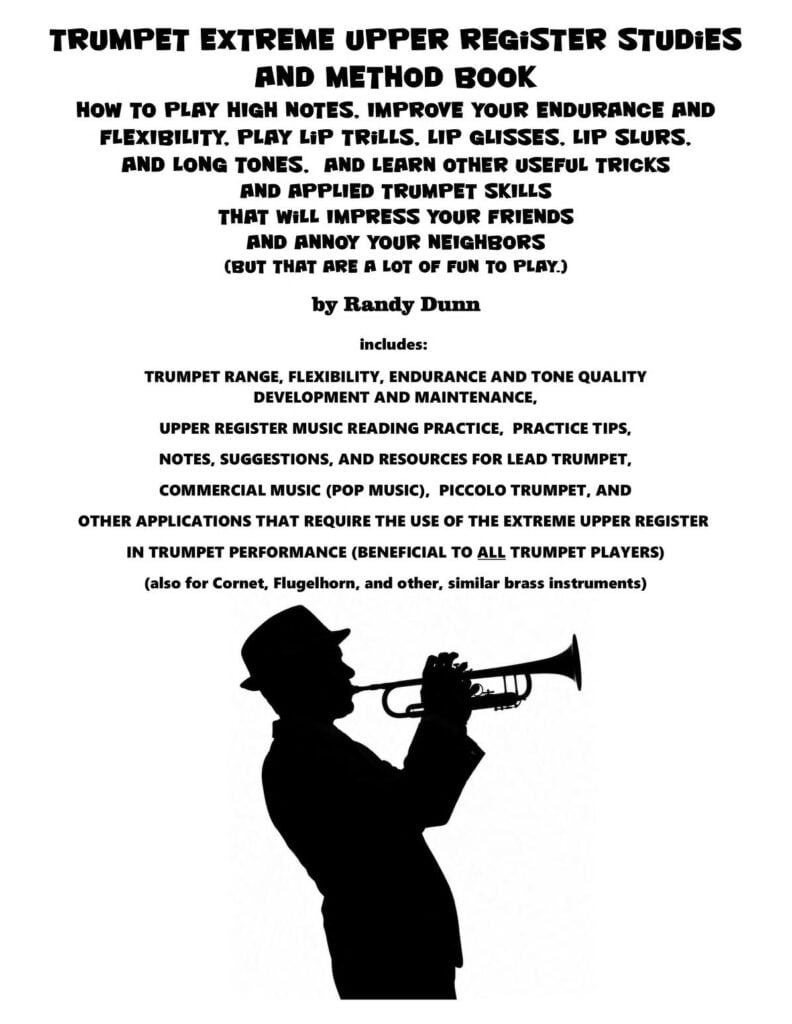
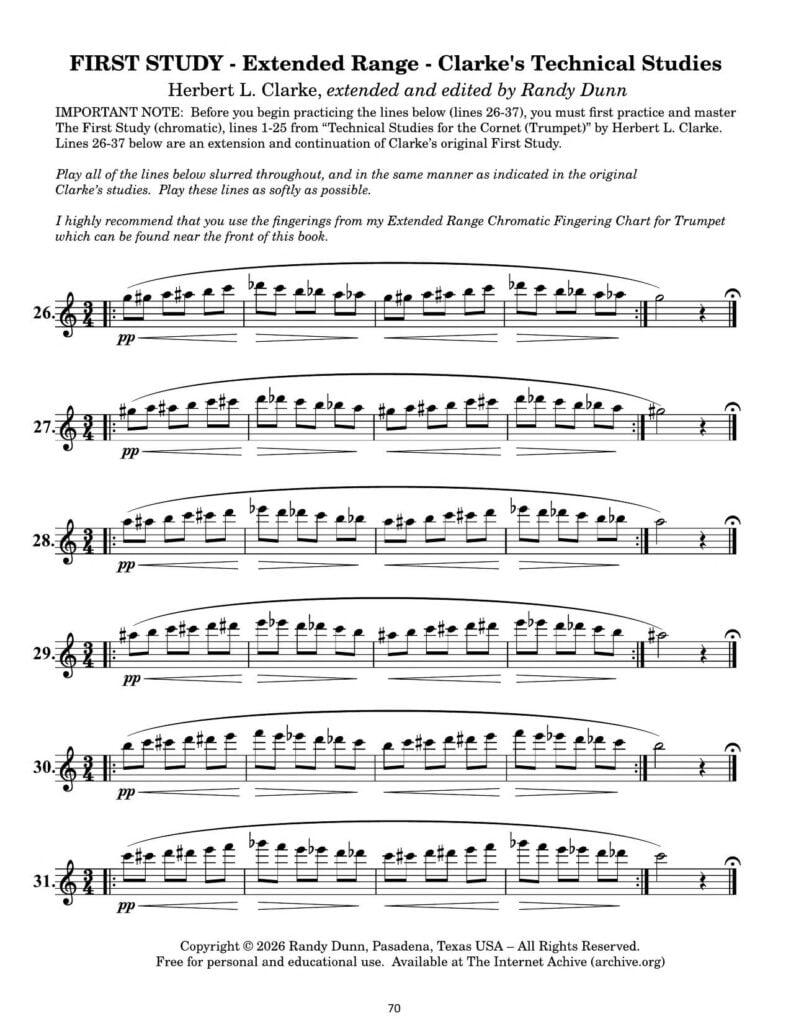
Below is an excerpt from the trumpet method book recently published by Randy Dunn. The entire book is available to print, download, or use online, at no charge, here.
Knowing how to safely ship a trumpet is extremely important in the world of brass instruments. Trumpet players all over the world buy and sell used trumpets every day, but not everyone knows how to properly pack a trumpet for shipping. Trumpeters often sell used horns through online marketplaces such as Ebay. They sometimes need to ship a trumpet off to get it repaired, or have a valve alignment or professional cleaning done. Whatever the reason for shipping a trumpet, the challenge remains: how do you protect the trumpet from getting damaged during shipping? And how do you keep shipping costs reasonable?
Here are some tips and tricks to help navigate the world of shipping trumpets.
Do’s and Dont’s for preparing a trumpet for shipping
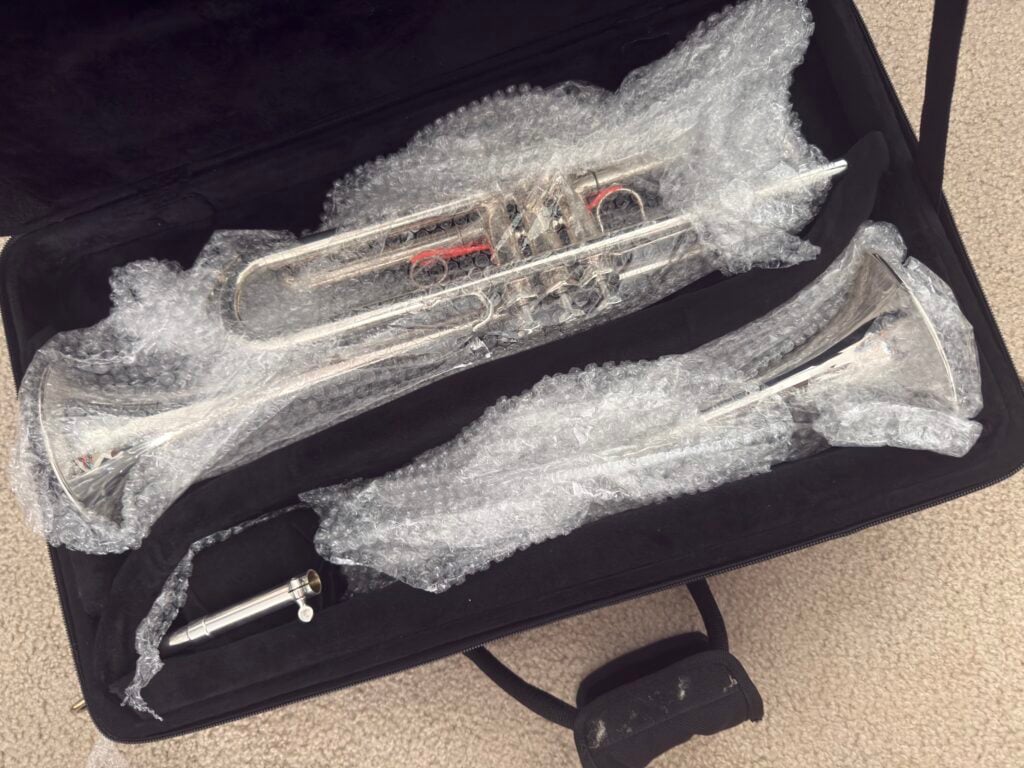
Do remove the mouthpiece, wrap it separately, and secure it away from the horn.
Do ship the trumpet separately from the case if that’s an option.
Do not leave any item unsecured, such as a tuning slide, extra bell, or trim pieces.
Do wrap the trumpet and anything else in the package in enough bubble wrap to ensure it will not shift or move during shipping.
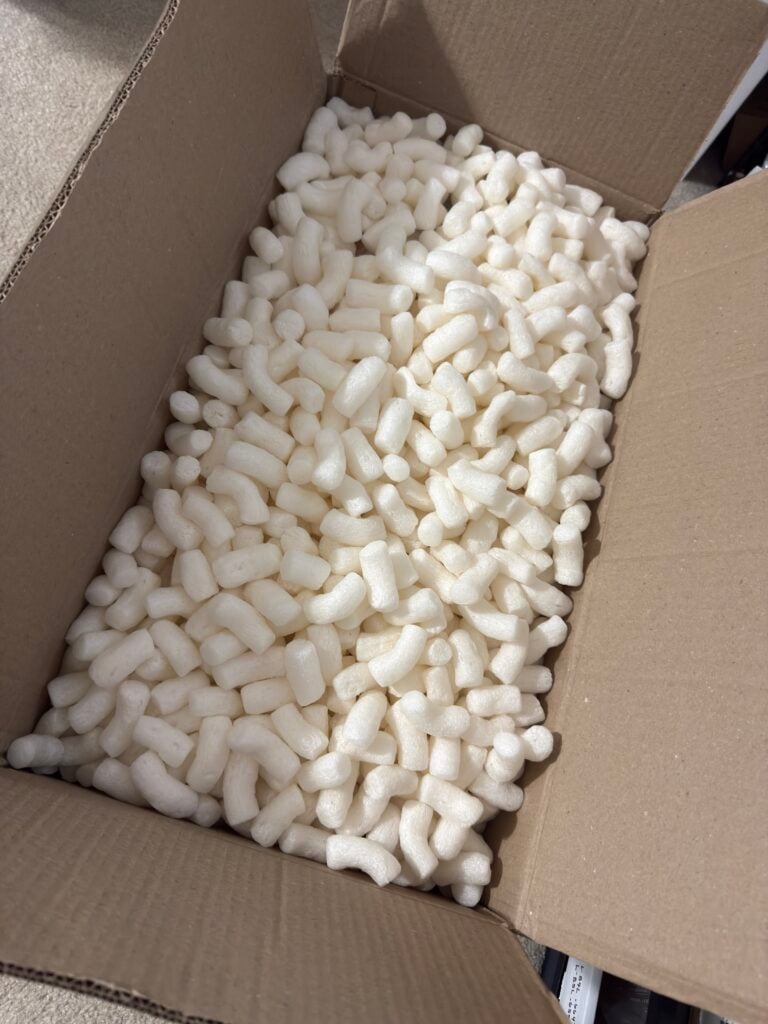
Do not overfill the box with packing peanuts. Over-compressed peanuts will transfer the shock of an impact to the horn, instead of absorbing the shock and protecting the horn.
Do insure the package for the real value of the contents.
Do use a box about 24″ X 12″ X 12″ for a trumpet, or the smallest box that will hold all the items to be shipped with 4″ of packing peanuts on every side.
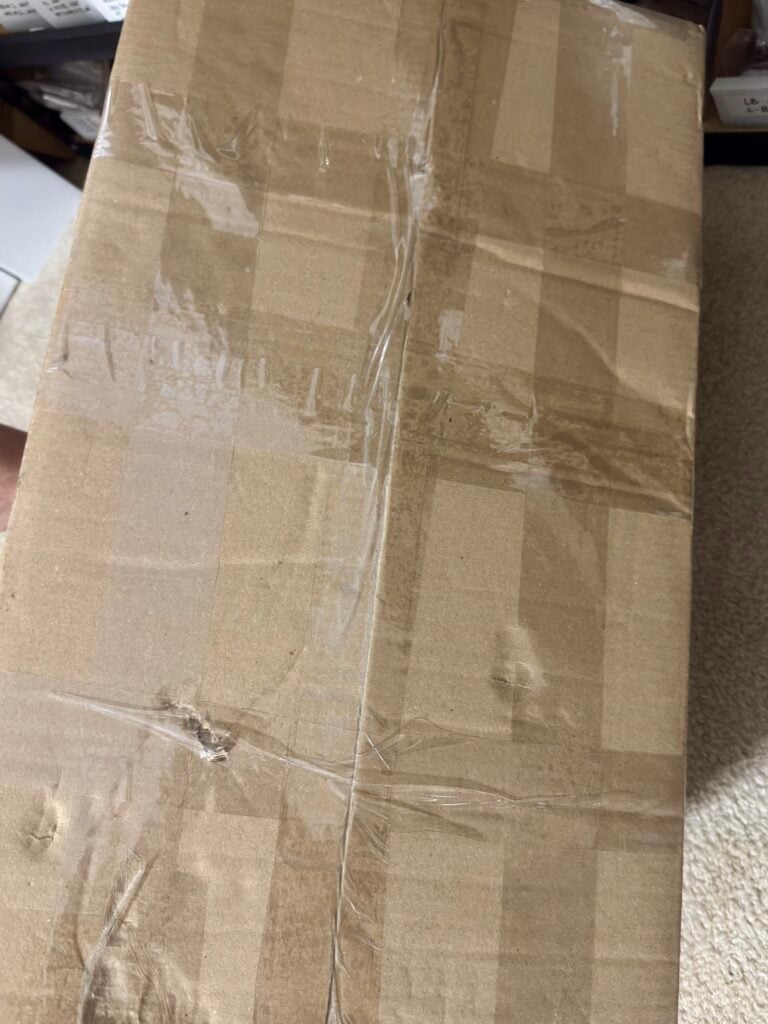
Do not skimp on tape. Wrap tape in a continuous strip all the way around the box, three strips in each direction.
Step by step instructions for packing a trumpet with or without a case
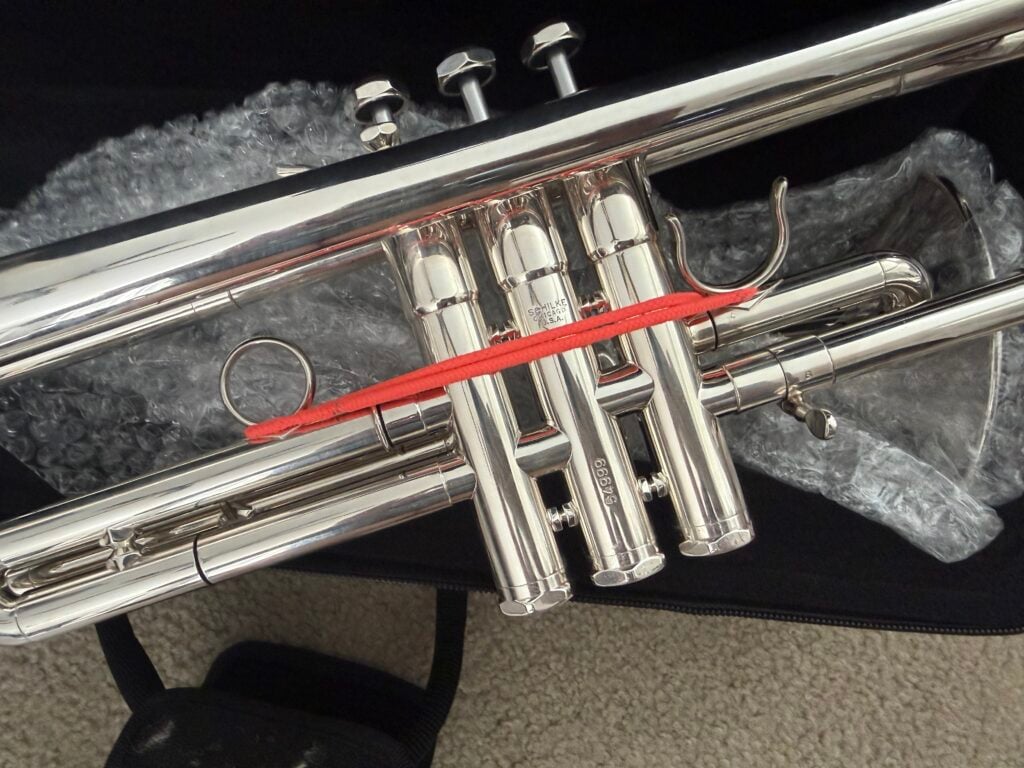
Step 1: use a hair tie to secure the tuning slides
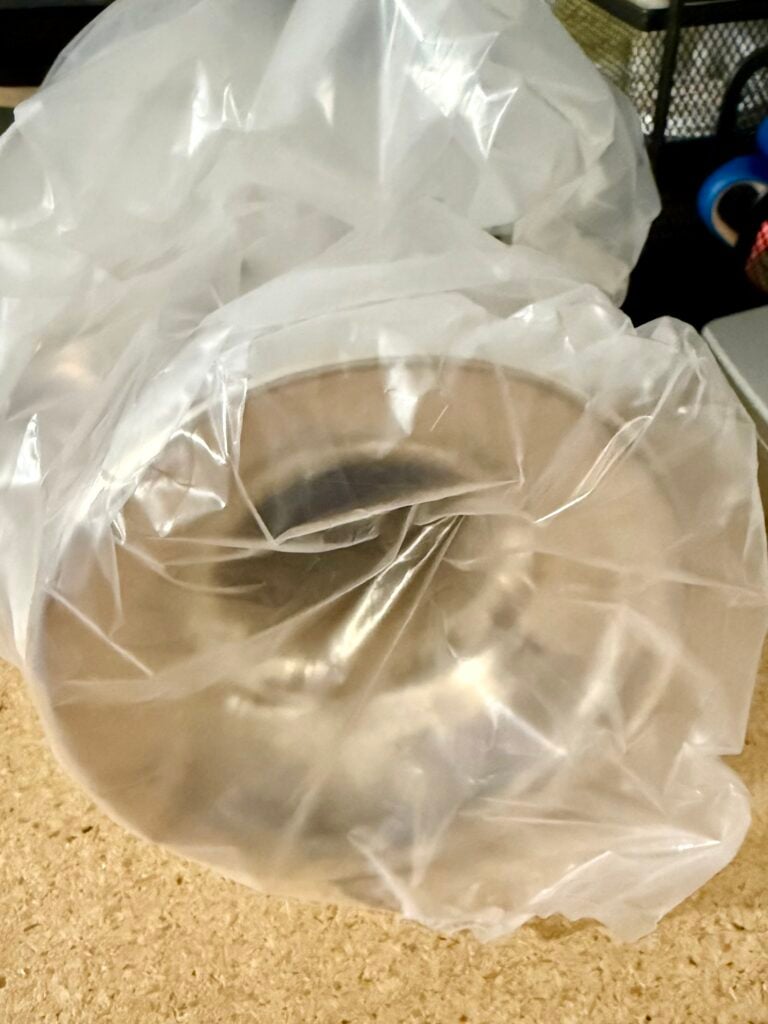
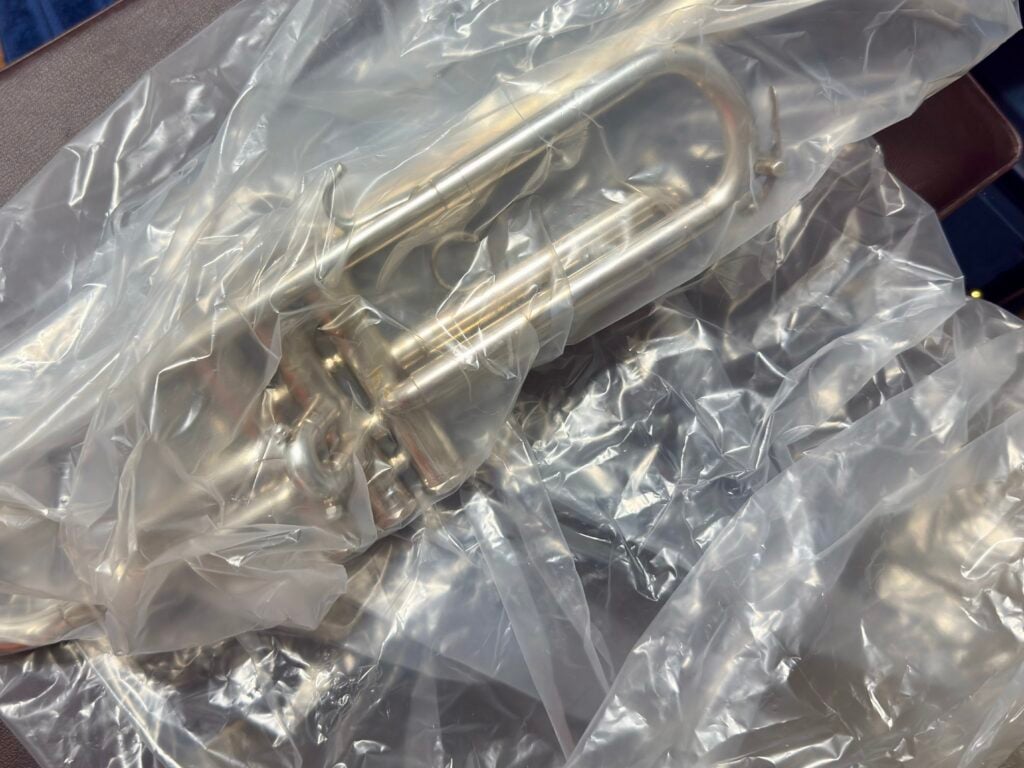
Step 2: wrap the trumpet in a garbage bag and secure it closed with tape to prevent any packing peanuts or other debris from entering the horn.
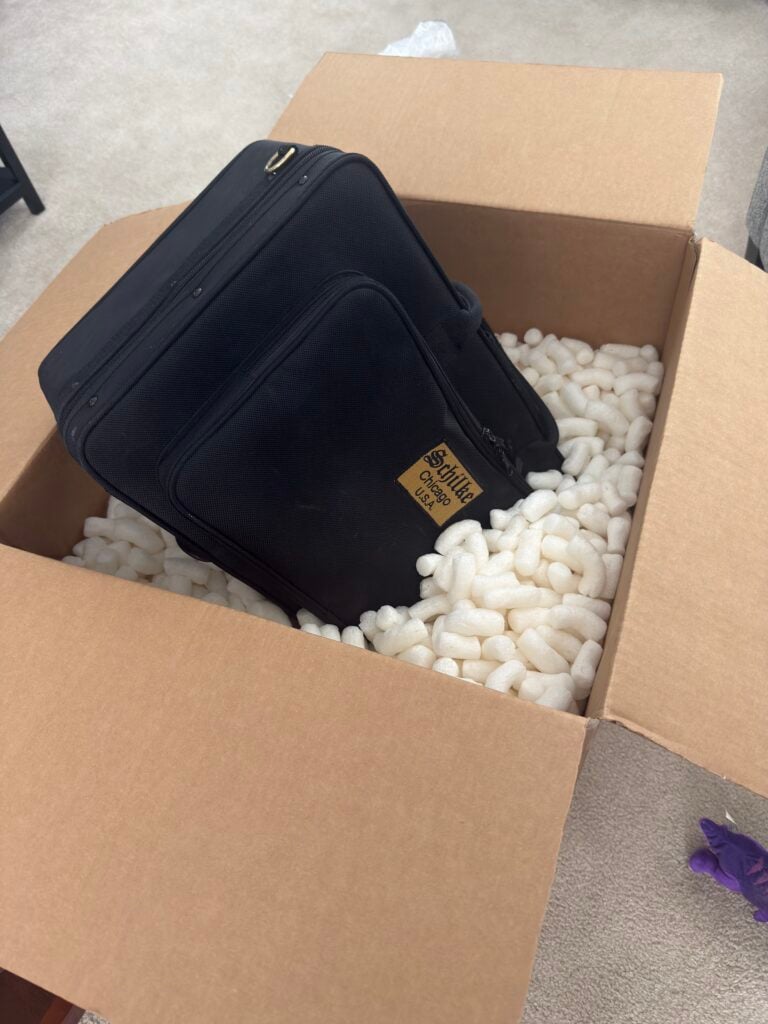
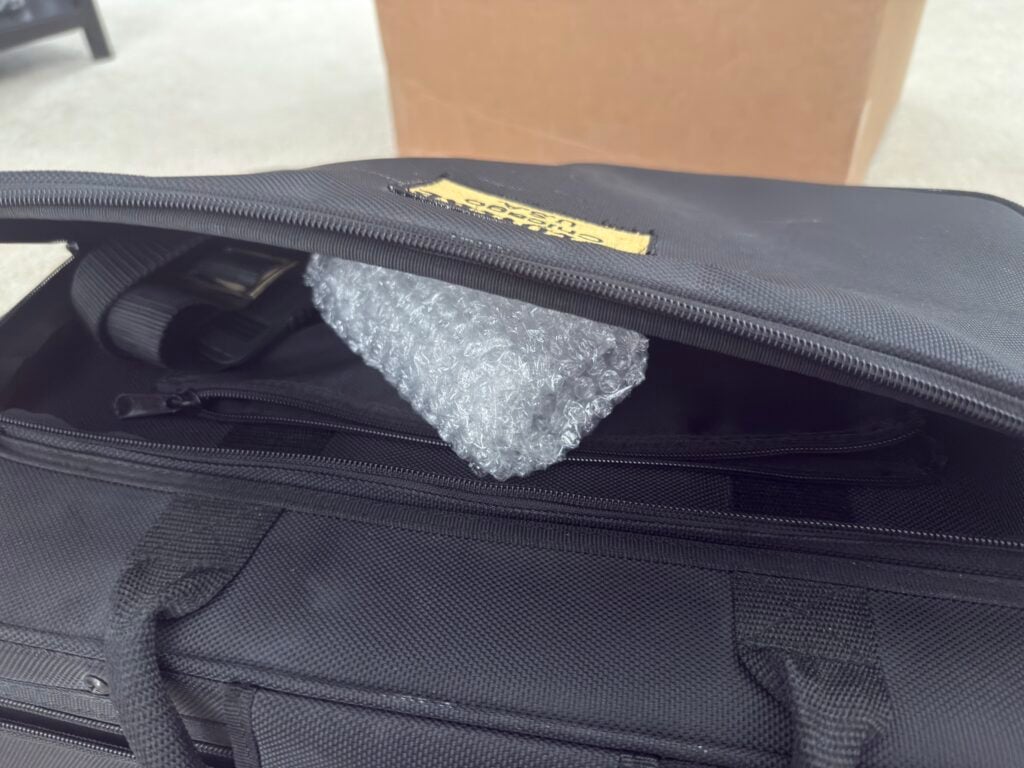
Step 3 If shipping the horn in the case: Wrap each item inside the case with enough thin bubble wrap so that it will not shift. Don’t use so much bubble wrap that there is strong pressure on the horn.
It’s better to ship a trumpet or other brass instrument without the case, if possible. It may seem counterintuitive, but keeping the horn in its case can actually lead to more damage during shipping. Most cases are meant to protect from small dings and scratches due to everyday use. They are not built to protect the horn from severe impacts that can occur during shipping.
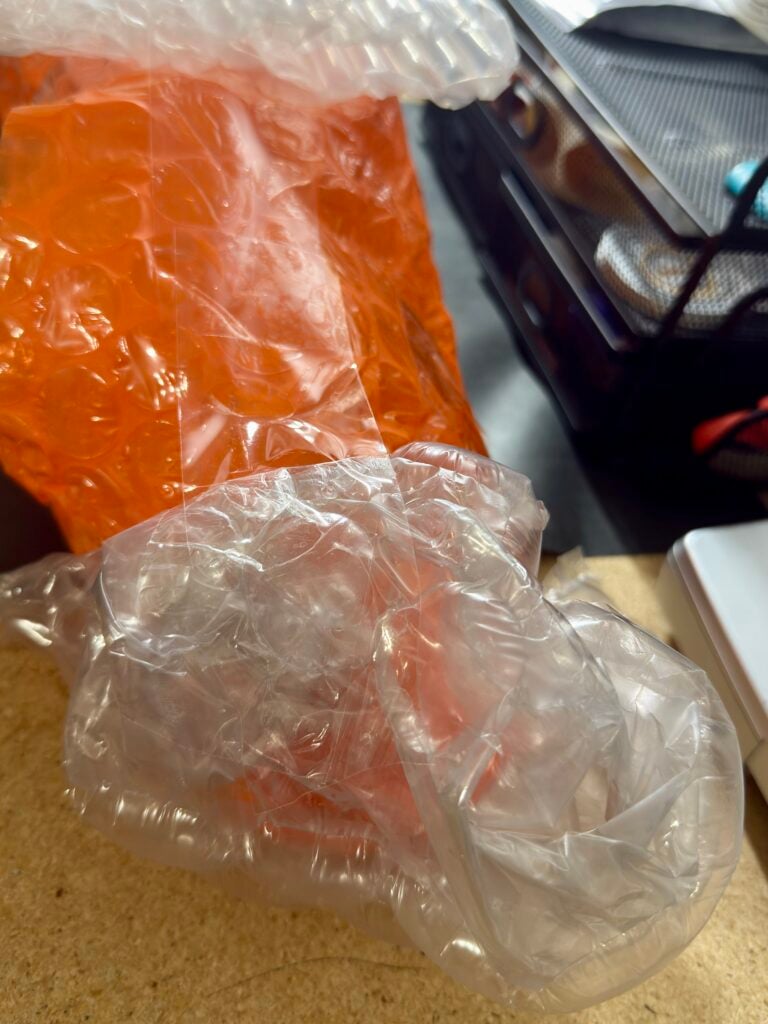
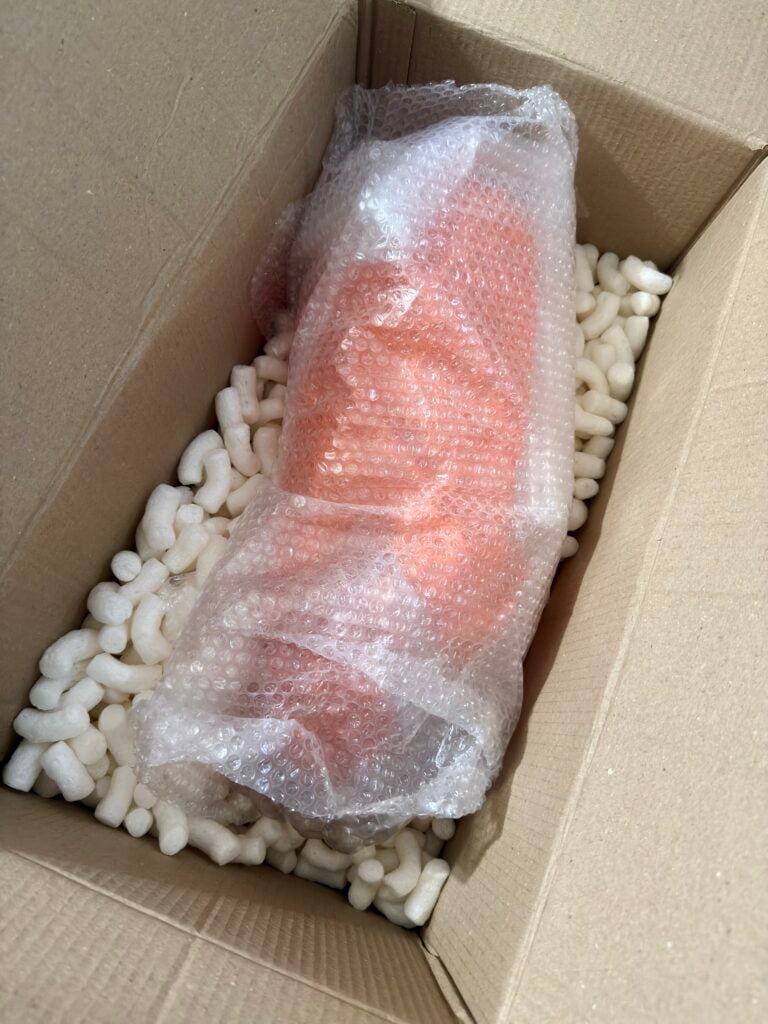
Step 3 If shipping the horn without a case: Wrap the bell end and lead pipe/bell bow end with thicker bubble wrap. Secure with shipping tape. Then wrap the entire horn with a final layer of thin bubble wrap and secure with tape.
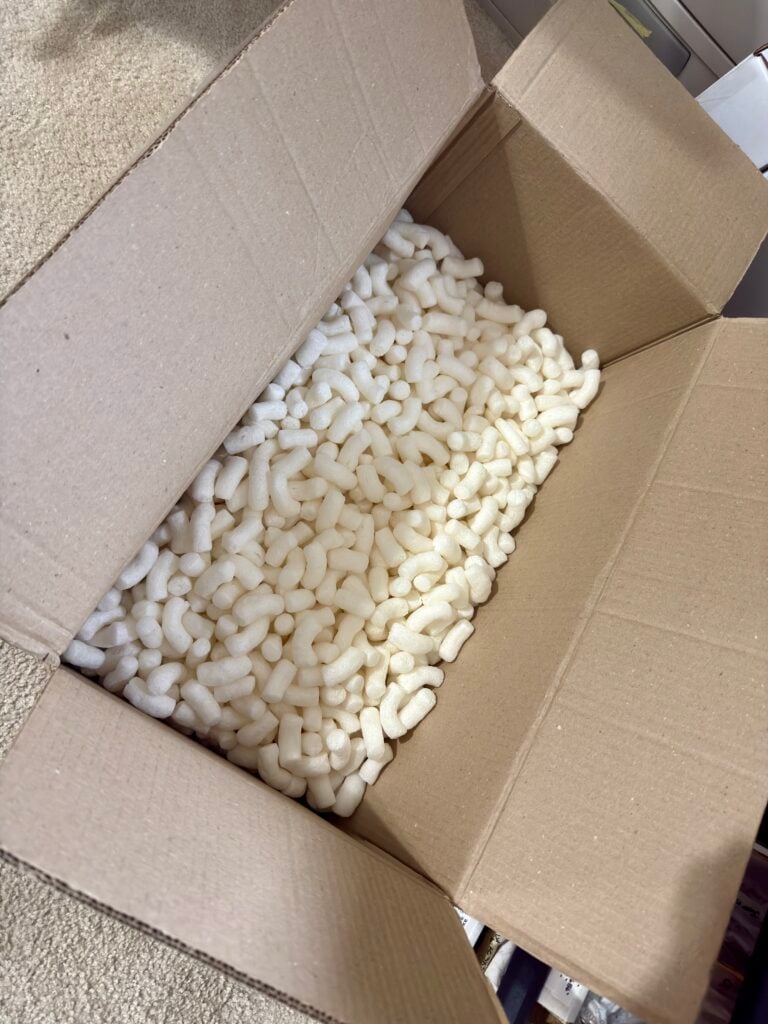
Step 4 if shipping the horn without a case: Fill the bottom of the box with about 4″ of packing peanuts, and place the horn diagonally from corner to corner.
Step 4 if shipping the horn in a case: Make sure there are about 4″ of packing peanuts surrounding the case on all sides.
NOTE: wrap the mouthpiece separately and secure away from the horn.
Step 5: Fill the box to the top with packing peanuts. Don’t leave any space in the box, or the trumpet will shift and may be damaged. Don’t overfill the box with packing peanuts, either. Over-compressed peanuts will transfer the shock of an impact to the horn, instead of absorbing the shock and protecting the horn.
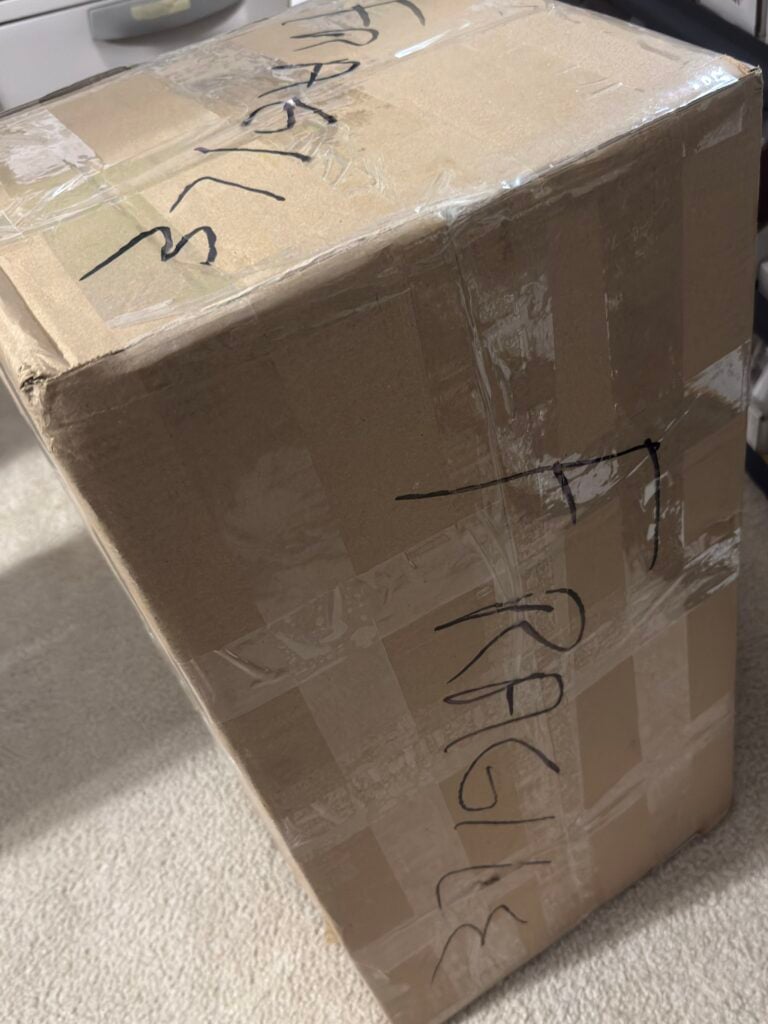
Step 6: Secure the box with a “triple H” pattern of shipping tape. Tape should be wrapped all the way around the box in one continuous strip, not just across the top. This helps strengthen the box. Cover any raised edges with more tape to prevent the box from getting snagged in mechanical shipping equipment. Mark the box “FRAGILE” on all sides.
Consider shipping the horn and case separately if the two combined are over 10 pounds. Heavier boxes fall harder, leading to greater impact and potential damage to the horn.
How to Get the Lowest Shipping Rate for a Trumpet
Once your trumpet is packed safely, the next step is finding the best shipping rate. USPS, UPS, and FedEx can all be good options, but the cheapest carrier can vary depending on the size, weight, and destination of your package. A few simple steps can help you avoid paying more than necessary.
1. Keep the Box as Small as Safely Possible
One of the easiest ways to reduce shipping costs is to avoid using an over sized box. A trumpet needs adequate padding and protection, but extra empty space adds both weight and package dimensions.
This is especially important with UPS and FedEx, which may calculate shipping charges using dimensional weight when a package is relatively large compared with its actual weight. In other words, a lightweight trumpet in a large box can cost more to ship than a heavier item in a compact box.
Don’t sacrifice protection just to save a few dollars, but choose a box that allows enough room for padding without leaving several inches of unnecessary empty space.
2. Weigh and Measure the Finished Package
Don’t estimate the size and weight of your shipment. Pack the trumpet completely, including all padding, and then weigh and measure the finished box.
You’ll want to know:
Actual weight
Length
Width
Height
Destination ZIP code
Having accurate measurements allows you to get a realistic quote from USPS, UPS, and FedEx rather than discovering that the final price is higher at the counter.
3. Compare USPS, UPS, and FedEx
Don’t assume that one carrier is always the cheapest. Rates can vary significantly depending on where you’re shipping the trumpet and how large the package is.
For a relatively compact trumpet shipment, USPS can sometimes be very competitive, particularly when the package falls within its standard size and weight limits. UPS and FedEx can also be competitive, especially if you have access to discounted commercial or online shipping rates.
Before purchasing a label, enter the same package dimensions, weight, and destination into the rate calculators for all three carriers. Compare the total price for the service you actually need, rather than simply choosing the carrier with the lowest advertised starting rate.
4. Check Online Rates Before Going to the Counter
Shipping directly from a carrier’s retail location isn’t necessarily the cheapest option. USPS, UPS, and FedEx all offer ways to purchase shipping labels online, and online rates can be lower than what you pay at a retail counter.
If you’re regularly shipping trumpets, it can be worth creating accounts with each carrier so you can compare rates and print labels from home.
5. Don’t Pay for Speed You Don’t Need
If the trumpet isn’t needed immediately, avoid paying for overnight or two-day service. Ground shipping is usually considerably less expensive and is perfectly adequate for many trumpet shipments.
For a used trumpet being sold online, for example, the buyer may be perfectly happy to wait several days if it saves a substantial amount on shipping.
6. Consider Insurance When Comparing Prices
The cheapest shipping option isn’t necessarily the best value if you’re shipping an expensive trumpet.
Check what coverage is included with each service and how much additional insurance would cost. If you’re shipping a $2,000 or $3,000 trumpet, spending a little more for appropriate coverage may be worthwhile.
Keep in mind that insurance claims may require documentation of the item’s value and proof that the package was properly packed. Take photographs of the trumpet, the packing materials, and the completed package before sealing the box.
7. Look for Discounts if You Ship Frequently
If you regularly buy and sell trumpets or run a music-related business, don’t limit yourself to standard retail rates. Shipping platforms and business accounts may provide discounted rates with USPS, UPS, or FedEx.
Even a small discount becomes significant if you’re shipping instruments regularly.
The Bottom Line
The best way to get the lowest shipping rate is to compare the actual rates for your completed package. Pack the trumpet securely by following the steps above. Keep the box as compact as practical, weigh and measure it accurately, and compare USPS, UPS, and FedEx before purchasing the label.
Saving a few dollars on shipping is great, but protecting the trumpet should always come first. A slightly higher shipping cost, and a little extra time and effort with packing, is a small price to pay to prevent the hassle and expense of getting a trumpet repaired after it is damaged in shipping.
One of the main goals of Mouthpiece Online is to introduce readers to the boutique brands and smaller shops currently creating brass instruments, mouthpieces, and other accessories and relevant gear. Legends Brass is the first in the series of spotlights on these brands.
Who is Legends Brass?
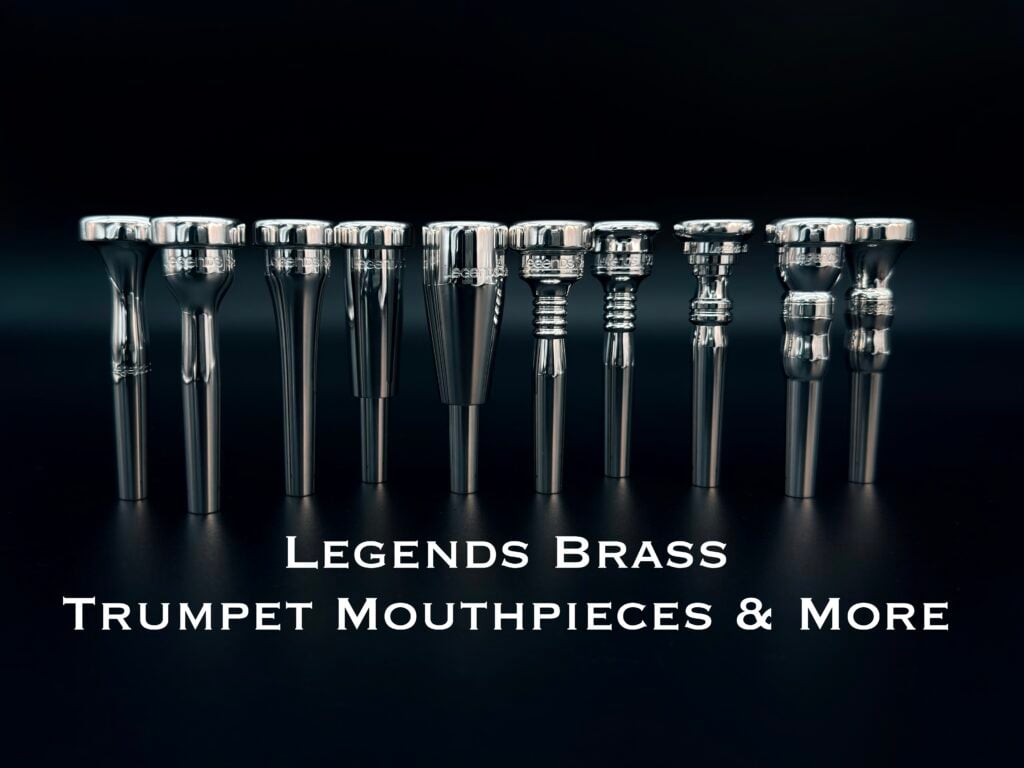
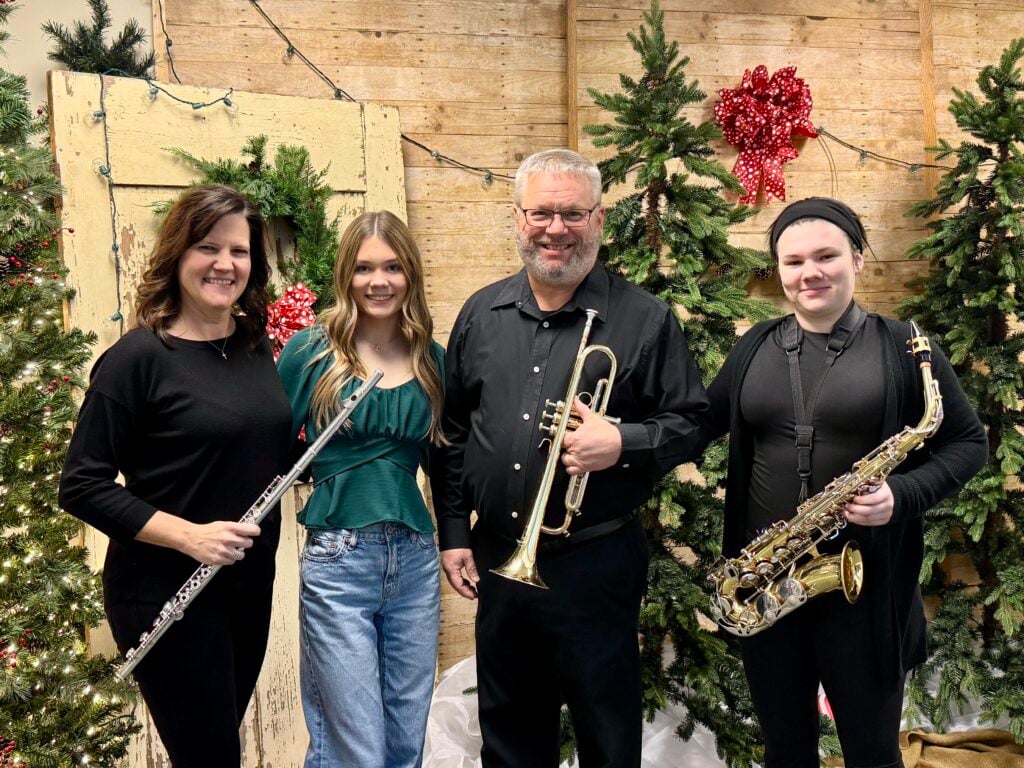
Legends Brass is a boutique trumpet mouthpiece brand, sold through the Legends Brass online store. The product line includes professional quality commercial trumpet mouthpieces, modern reproductions of classic vintage mouthpieces, custom trumpet mouthpieces, and more. Owned and operated by Derek and Leslie Saidak, in Lenoir City, Tennessee, Legends Brass has been in business since 2010. Leslie is the business manager, filling orders and handling day-to-day operations. Derek is the trumpet consultant, guiding customers with trumpet mouthpiece choices, helping design custom mouthpieces, and answering technical questions.
Derek and Leslie Saidak at DCI World Championship Prelims, 2026
What makes Legends Brass Unique Among Trumpet Mouthpiece Companies?
Legends Brass bridges the gap between mass-produced mouthpieces and high-end custom fitting shops. Some trumpet players reach a point where they play one, and only one, trumpet mouthpiece every time they pick up the horn. In other words, they’ve found their “holy grail” mouthpiece and they’re done shopping. But most Legends Brass customers haven’t locked in on a single mouthpiece. Instead, they are open to using multiple different mouthpieces to suit their different playing styles and various gigs. They may still be on the “mouthpiece safari”, trying different things, or they may be settled into a set-up that includes a few different mouthpieces. The Legends Brass philosophy is not to push players to commit to a single mouthpiece, but to encourage them to use the mouthpiece(s) with which they feel most comfortable and sound the best. Just as important, Legends Brass does not push players to buy more mouthpieces than they need. They simply listen to customer needs and guide them into an informed choice.
Most Legends Brass customers are serious trumpet players looking to upgrade their setup to find the best trumpet mouthpiece for their current, specific needs. Others are returning players, or players who have experienced some physical change, such as dental work or significant weight loss. These players often have a good idea of the mouthpiece specs they like; they just need some guidance to get dialed in. For trumpet players who don’t want to visit a high-end specialized custom mouthpiece maker, but need a mouthpiece more specialized than the mass-produced brands, Legends Brass is the perfect fit.
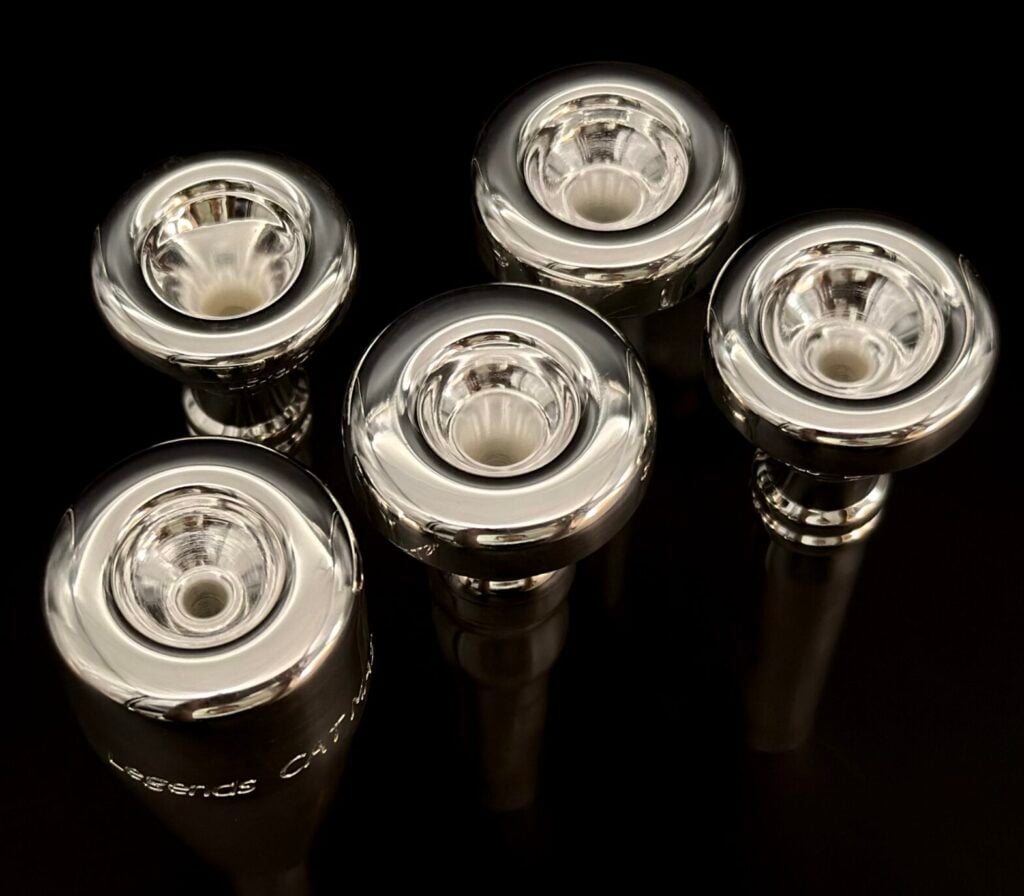
The Legends Brass product line sets them apart from other brands. Sessions and lead trumpet players seeking a commercial trumpet sound have limited mouthpiece options from bigger name brands. Legends Brass has filled this niche with a wide array of commercial trumpet mouthpiece options.
A sample of the Commercial Trumpet Mouthpieces from Legends Brass
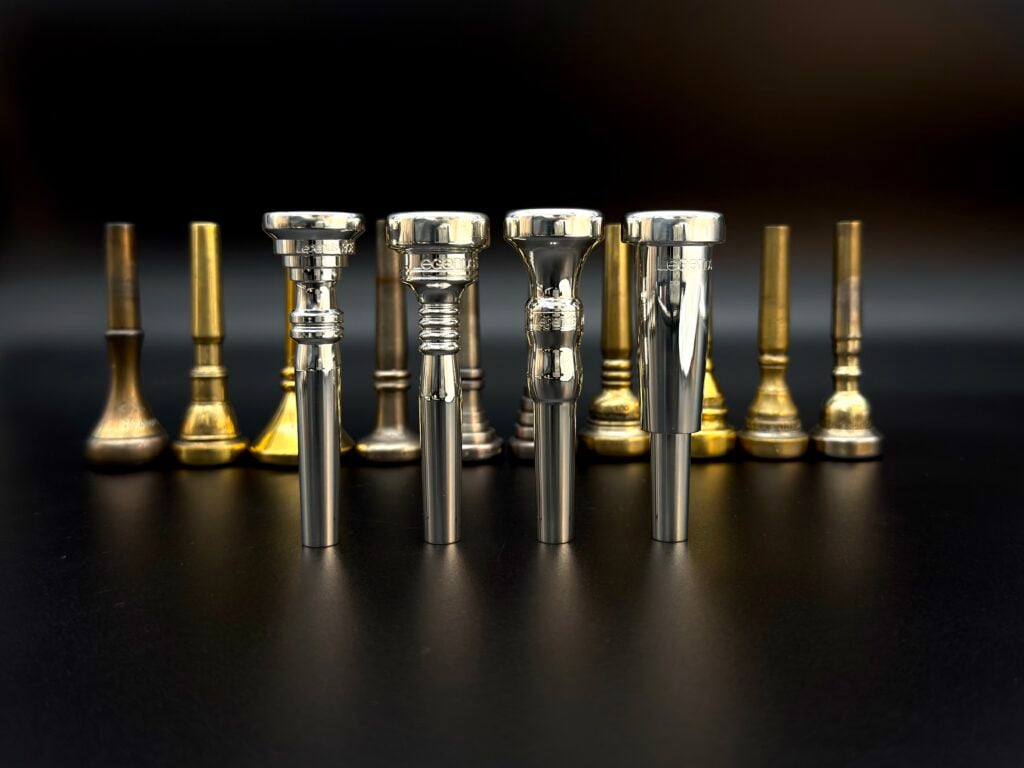
Another popular category of the Legends Brass product line is the “Hall of Legends”. This is a collection of modern reproductions of vintage mouthpieces played by legendary trumpet stars. Iconic mouthpieces that are no longer available elsewhere have been faithfully reproduced, and are now part of the Legends Brass line.
Legends Brass Hall of Legends Models are modern versions of vintage mouthpieces.
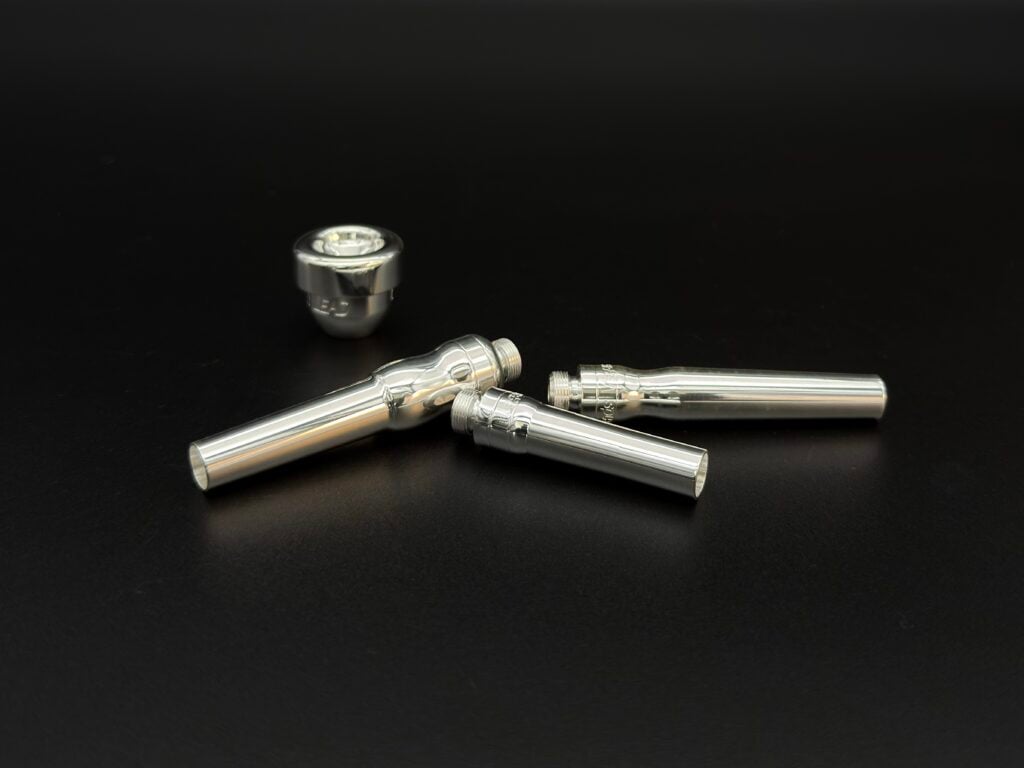
Legends Brass also offers custom mouthpiece services, with a no-pressure sales technique. Having a custom trumpet mouthpiece created is sometimes the only way for a player to get the perfect trumpet mouthpiece. But a one-on-one session with a professional craftsman for a mouthpiece fitting can be time consuming and costly. Legends Brass offers a more affordable option, by allowing players to design their own custom mouthpiece. Interchangeable tops and backbores from the Legends Brass line are another way to test options before settling on a final design. Some players build a mouthpiece “kit” by combining a single rim and cup with interchangeable backbores for trumpet, flugel, cornet, and the other horns they may play.
Hall of Legends Mouthpieces: These are modern versions of vintage mouthpieces. They are inspired by well-loved brands that have gone out of business, or changed hands, or for whatever reason have fallen out of production. Legends Brass starts with a computer-aided scan of a vintage trumpet mouthpiece. Minor adjustments may be made to improve the general playability of the piece, but extreme care is taken to preserve the unique qualities of the original to the extent possible. Usually, the rim and cup will be identical to the vintage piece. Small changes may be made in the throat, backbore, and exterior blank. Once added to the Legends Brass product line, the mouthpiece will be precisely reproduced going forward, using modern CNC technology. Legends Brass has created the Hall of Legends in hopes of preserving the legacy of mouthpiece craftsmen such as Ray Amado, Bill Ratzenberger, Rudy Muck, Dominick Calicchio, Ren Schilke, Larry Ramirez, and other craftsmen. The knowledge these craftsmen had was gained through decades of experience, and their designs have stood the test of time. The retail demand for their vintage mouthpiece designs may not be high, but there will always be value, especially sentimental value, in their unique qualities.
Commercial Mouthpieces: Legends Brass caters to sessions and commercial trumpeters, solo and lead players, and players spending a lot of time in the upper register. With the bigger, mass-produced brands, there isn’t always a huge selection of the small diameter, shallow cup mouthpieces used for this style of playing. Legends Brass has worked to cover that niche thoroughly. They have many models with inside rim diameters below 0.630”, all the way down to 0.500”, and cup depths ranging from shallow to extremely shallow.
Custom Mouthpieces: For players who have really narrowed down the exact specs they want in a trumpet mouthpiece, but can’t find it on the shelf from the bigger brands, Legends Brass offers custom mouthpieces. They aren’t a brick and mortar shop where the customer comes in and gets a professional fitting, and has mouthpiece made on the spot. Instead, they offer consultation and guidance through email and over the phone, and place the custom order with their manufacturer, Pickett Brass. If a player doesn’t have a fairly solid idea of the specs they need in a custom mouthpiece, Legends Brass will help them find a similar model from the product line, or suggest a top and backbore combination.
Legends Brass Signature Series Mouthpieces: These models are available exclusively from Legends Brass. Several well-known trumpet players have worked with Derek Saidak to create a mouthpiece specifically for their unique needs. These projects often lead to novel combinations of rim, cup, and backbore elements, which then become Signature Series models, and permanent additions to the Legends Brass catalog.
Legends Brass Exclusive Mouthpieces: These trumpet mouthpiece models were designed in-house by Derek Saidak. Most of them were designed to give commercial and lead trumpet players a variety of size options when searching for a mouthpiece that supports upper-register playing. They feature smaller inside rim diameters, shallow cups, tighter throats, and backbores with more focus and resistance. These elements can help facilitate endurance, intonation, and range in the upper register. The broad range of options in this category allows players find the combination that best suits their specific needs.
Tops and Backbores: Two-piece mouthpieces make it easy to change the player’s sound, or switch between instruments, without having to adjust to a different rim and cup. All Legends Brass mouthpiece models can be ordered as a “top only” during the checkout process. Backbores screw on to the top, creating an interchangeable two-piece system.
Each Legends Brass backbore is available in lightweight and heavyweight blanks. Lightweight backbores have less mass, and are therefore less efficient. This creates a slightly tighter feel (or blow) and more focused sound. Heavyweight backbores are more efficient and have a more open feel (or blow) and broader sound. There are 14 trumpet backbore choices to cover the spectrum of desired sound characteristics. Also available are flugel backbores (in three shank tapers) and cornet backbores.
Legends Brass Trumpet Backbores:
Manhattan (lightweight and heavyweight)
Very focused sound
T (lightweight and heavyweight)
Focused sound
LA (lightweight and heavyweight)
Medium focused sound
Vegas (lightweight and heavyweight)
Slightly focused sound
S (lightweight and heavyweight)
Standard
O (lightweight and heavyweight)
Slightly open
Chicago (lightweight and heavyweight)
Open
Other Backbores from Legends Brass:
Flugel backbores
Four shank tapers available: Large (Yamaha), Small (Bach), French, and German
Cornet
Open feel. Modern/Standard (Bach) taper
Mouthpieces for other brass instruments: Legends Brass also offers a limited number of mouthpieces for flugel, mellophonium, trombone and tuba.
Legends Brass Backstory: How did the Saidaks get into this?
Derek studied trumpet as a teenager with two great trumpet players, David DeArmond and Ray Brooks. They were both from the Knoxville, TN, area where Derek (and Leslie) grew up. David was a band leader and performer with groups like Mickey, Larry and the Exciters, Mac’s Mob, and Boys’ Night Out. Ray was the leader of the Ray Brooks Orchestra, first conductor of the Tennessee Wind Symphony, and also a member of Boys’ Night Out. David’s lessons taught Derek to play trumpet, introducing him to the music of Maynard Ferguson, Arturo Sandoval, Doc Severinsen, and other great power players. Ray really focused on teaching Derek the mechanics of trumpet mouthpieces. He gave him an informal, but hands-on, practical apprenticeship of sorts. Ray introduced Derek to two-piece mouthpieces, Reeves sleeves, and taught him about gap. They experimented with throat cylinder lengths and backbore tapers, and even modified mouthpieces by hand.
Derek continued playing trumpet throughout his time at Auburn University. He never pursued trumpet performance as a career, though. Instead, he majored in finance, went on to get an M.B.A., and entered a career in banking. Derek and Leslie had met in high school marching band, and became one of the ubiquitous trumpet-flute romances. The relationship carried on through the Auburn marching band. When college was over, they married and settled in their hometown, Lenoir City, TN. Since they both had non-musical jobs, time for playing music was limited. They continued playing in their church orchestra weekly (and still do), for holiday events, and whatever other opportunities they could manage. Music has been an enduring part of their married life that they share and love.
As a serious amateur trumpeter, armed with the knowledge about the mechanics of trumpet mouthpieces taught by mentor Ray Brooks, Derek started experimenting with custom trumpet mouthpieces. He began designing and then tweaking designs, and found a craftsman who would manufacture his custom mouthpieces. This craftsman happened to be a young engineer just starting a small business in his garage – Peter Pickett.
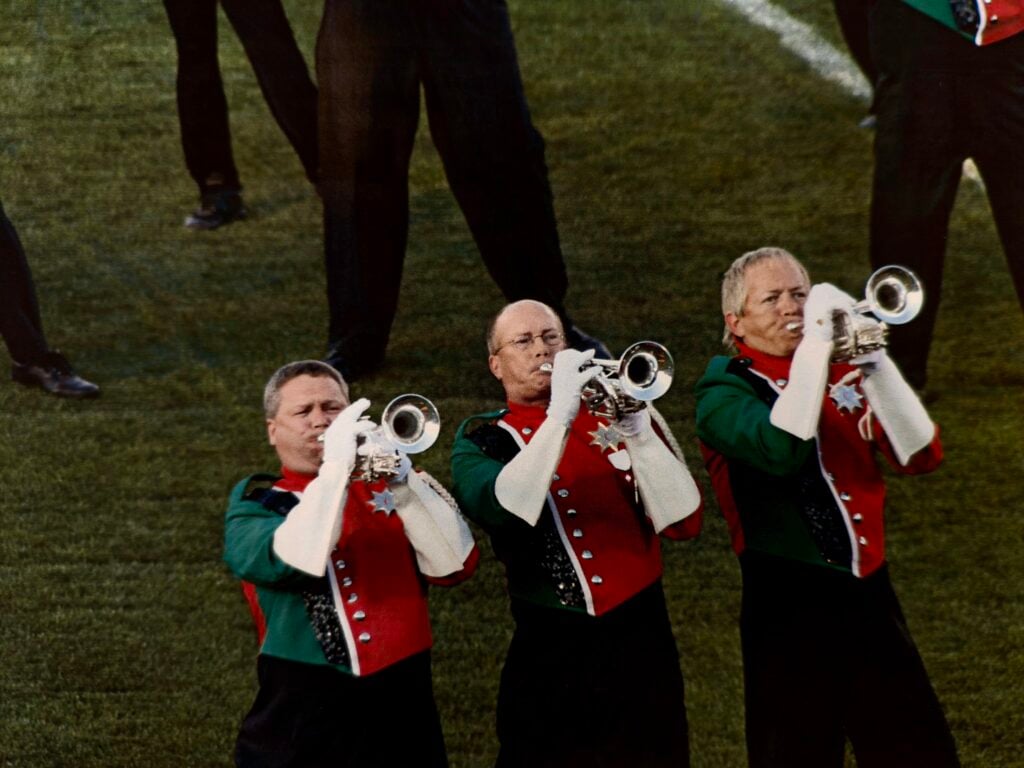
Derek was fully committed to his mouthpiece safari, and was building a sizable collection of custom mouthpieces. They were great designs – they just weren’t his personal holy grail. He began to sell some of these one-off mouthpieces on EBay. They sold better than he expected, and replenished some of his funds, which helped continue the safari. By 2005, their first daughter had come along, and Leslie was a stay-home mom. In 2007, Derek had the opportunity to march a season with the Atlanta CorpsVets, a DCA Drum and Bugle Corp. He played lead soprano trumpet, performed a couple of solos, and had the special privilege of being part of the La Fiesta trio feature with Hunter Moss and Bill Wear.
Left: Derek Saidak, Hunter Moss, and Bill Wear playing La Fiesta, 2007. Right: Derek Saidak, Hornline Rookie of the Year
By the time their second daughter arrived, in 2010, Derek had started an EBay store selling his mouthpieces. Derek and Leslie chose the name Legends Brass for their enterprise, in honor of the legendary trumpet powerhouses they had always loved. The business grew, and by 2017, Legends Brass had grown from an EBay store into a web-based business with an online e-commerce store. Since then, Legends Brass has grown into a small, but solid, boutique brand. Pickett Brass still does all of Legends Brass’s manufacturing. The Saidaks credit Peter Pickett’s high standards and strong commitment to producing the best quality mouthpieces in the industry as foundational to the success of Legends Brass.
Legends Brass ships mouthpieces worldwide, every day. The Saidaks still operate the business from their home, and are committed to continue to do for as long as possible. No overhead means lower prices for customers. They’re not trying to grow the business big, or fast. Instead, their commitment is to providing the best quality trumpet mouthpieces, at the best prices, and with the best customer service they possibly can.
In May of 2026, the Saidaks took on Mouthpiece Online. John Hutchinson, trumpet player and composer in the UK, started this website in 2016. By about 2024, his career began to evolve in a different direction. By 2026, he realized it was time to find someone else to manage the site. Leslie and Derek have jumped in, and plan to continue building on John’s foundation. The Mouthpiece Online mission is to build an online community where smaller independent stores and boutique brands are featured. Serious musicians playing trumpet, flugelhorn, and other brass instruments will be able to connect with craftsmen producing more specialized and customizable pro quality horns, custom mouthpieces, and fine quality gear and accessories.
The world of music is always changing, but the Saidaks stay committed to quality over quantity, cooperation over competition, and integrity over individual gain.
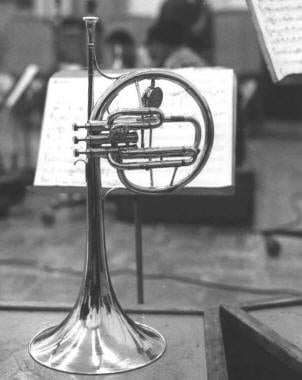
First things first, let’s address the elephant in the room: what even IS a mellophonium?
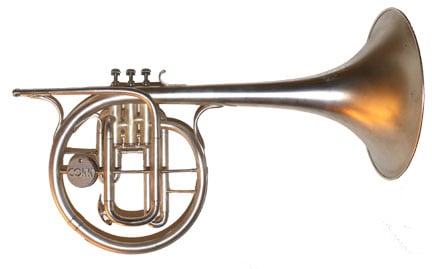
Tiffany Johns, brass performing and recording artist in L.A., had this to say, “The mellophonium is the primary ancestor of the modern marching mellophone. It is a traditional circular mellophone with the bell straightened out, and usually has a cornet shank. Even many brass players don’t know what a mellophonium is, and those that do (mostly Stan Kenton fans and alto brass nerds like myself) can be forgiven for thinking that “mellophonium” = Conn 16E. In fact, while the Conn 16E is by far the most famous model of mellophonium thanks to its use in the Stan Kenton Orchestra from 1960 to 1963, it is not the only one. There were lots of mellophoniums (mellophonia?) at the time: Holton M-601 and M-602, Reynolds ML-12, Courtois, Couesnon, Vox Ampliphonic, Glier (in E-flat), and more. (Read the whole article here.)
The Stan Kenton Mellophoniums (above) in late 1962 or early 1963 featuring (l to r): Dwight Carver, Bob Crull, Ray Starling, and Tony Scodwell. Reprinted from Scott Pirtle’s article here.
Above, a mellophonium used in Stan Kenton’s orchestra.
Mellophoniums are still used today, from time to time. Often, a brass enthusiast picks one up from a used instrument dealer, or somehow comes into possession of a vintage one. If the mouthpiece is missing or damaged, it can be a real challenge to replace it.
The problem with a mellophonium mouthpiece replacement is that it usually starts after something already went wrong. The original piece is lost, damaged, badly worn, or simply never worked that well in the first place. Then you find out quickly that mellophonium gear does not live in the same easy-availability world as modern trumpet or trombone equipment.
That is why replacement has to be approached as a fitting and performance question, not just a parts-ordering question. If you want the instrument to respond correctly, center pitches, and keep the character that made you hold onto a mellophonium in the first place, the mouthpiece choice matters more than many players expect.
What makes a mellophonium mouthpiece replacement tricky
A mellophonium sits in an odd but interesting corner of the brass family. It is not just a trumpet with a different wrap, and it is not simply a small marching horn wearing a vintage name. Depending on the instrument and era, the receiver dimensions, taper expectations, and playing characteristics can vary enough that a casual substitution may sort of fit but still play poorly.
That is where players get into trouble. A mouthpiece that physically inserts into the receiver is not automatically the right match. Too loose, and you can introduce instability, poor slotting, and inconsistent articulation. Too tight, and you may have insertion problems, damage risk, or a mismatch in how the instrument resonates. The fit at the shank matters just as much as the rim and cup if your goal is a useful replacement rather than a compromise.
There is also the sound question. Many vintage mellophoniums have a distinct tonal profile – broad enough to feel horn-like in certain contexts, but direct enough to keep projection and clarity. A replacement mouthpiece can push the instrument brighter, darker, tighter, or less efficient depending on the cup shape, throat, backbore, and overall geometry. Sometimes that is exactly what a player wants. Sometimes it is the reason the instrument suddenly feels wrong.
How to evaluate a mellophonium mouthpiece replacement
The best starting point is the old mouthpiece, assuming you still have it. If the original piece exists, even in rough shape, it gives you useful information about rim diameter, contour, cup depth, and shank fit. Measurements matter here. Visual guesses are rarely enough, especially with older brass gear where maker-to-maker consistency was not always what modern players expect.
If the original is gone, the next best reference is your playing background. A player coming from trumpet may want a familiar rim feel with enough cup and backbore adjustment to let the mellophonium speak more naturally. A low brass doubler or horn player may prioritize a broader feel and different resistance profile. Neither approach is automatically right. It depends on whether the instrument is being used for collection, recording, doubling, or regular performance.
The key variables are straightforward, even if the ideal balance is not.
Rim feel and endurance
If the rim is too different from what you normally play, endurance drops fast. That matters even more on an instrument you may only pick up occasionally. A familiar rim diameter and contour can shorten the adjustment period and make the mellophonium easier to use on real gigs, not just in the practice room.
That said, exact familiarity is not always the best answer. Sometimes a slightly different rim improves control and helps the player avoid overblowing an instrument that wants a different air shape than trumpet.
Cup depth and tonal character
A shallower cup may add immediacy and brightness, but it can also strip away some of the mellophonium’s personality. A deeper cup can broaden the sound and soften the edge, but if it goes too far, the instrument may feel sluggish or lose projection.
This is one of the biggest trade-offs in replacement work. Players who want a vintage-style voice often need more cup than they expected. Players who need easier commercial-style response may lean the other direction.
Throat and backbore balance
A larger throat can open the blow, but only if the rest of the design supports it. Otherwise, response gets vague and pitch can suffer. Backbore shape is just as critical because it influences how the instrument slots, spreads, and carries.
For a mellophonium mouthpiece replacement, copying only the rim and cup while ignoring the back end of the design is a common mistake. The shank fit and backbore relationship often determine whether the instrument feels alive or stubborn.
When a substitute mouthpiece works – and when it does not
Many players first try whatever is already in the case or drawer. That usually means trumpet, cornet, flugelhorn, or mellophone-adjacent options. This can be useful as a test, but it should be treated as temporary unless the fit and playing results are clearly correct.
A trumpet mouthpiece may feel familiar on the face, but the taper and resulting response can be wrong for the instrument. A cornet piece might offer a more suitable tonal direction in some cases, though fit remains the deciding factor. Modern marching mellophone mouthpieces can also miss the mark because the instrument category is related without being identical in actual playing behavior.
The point is that a substitute is only successful if it solves three problems at once: proper insertion and receiver fit, stable response across the range, and a sound that suits the instrument’s intended role. If it misses any one of those, it is probably a workaround rather than a real replacement.
Vintage accuracy versus modern playability
This is where players usually have to make a choice. Do you want the replacement to preserve the original playing concept as closely as possible, or do you want the instrument to be easier to live with using modern mouthpiece logic?
A vintage-accurate approach is ideal if the instrument is used for historical performance, collection authenticity, or recreating a particular sound. In that case, preserving original proportions and overall feel matters. The downside is that some vintage designs were highly specific, and not every player will love them by modern standards.
A modernized approach often keeps the correct external fit while refining the rim, cup transition, or backbore for better efficiency and comfort. For many serious players, this is the sweet spot. It respects the instrument without forcing the player to fight it.
This is also where a specialist maker matters. A generic replacement tends to assume that close enough is good enough. In a niche category like mellophonium, close enough can still leave the instrument noticeably off-center.
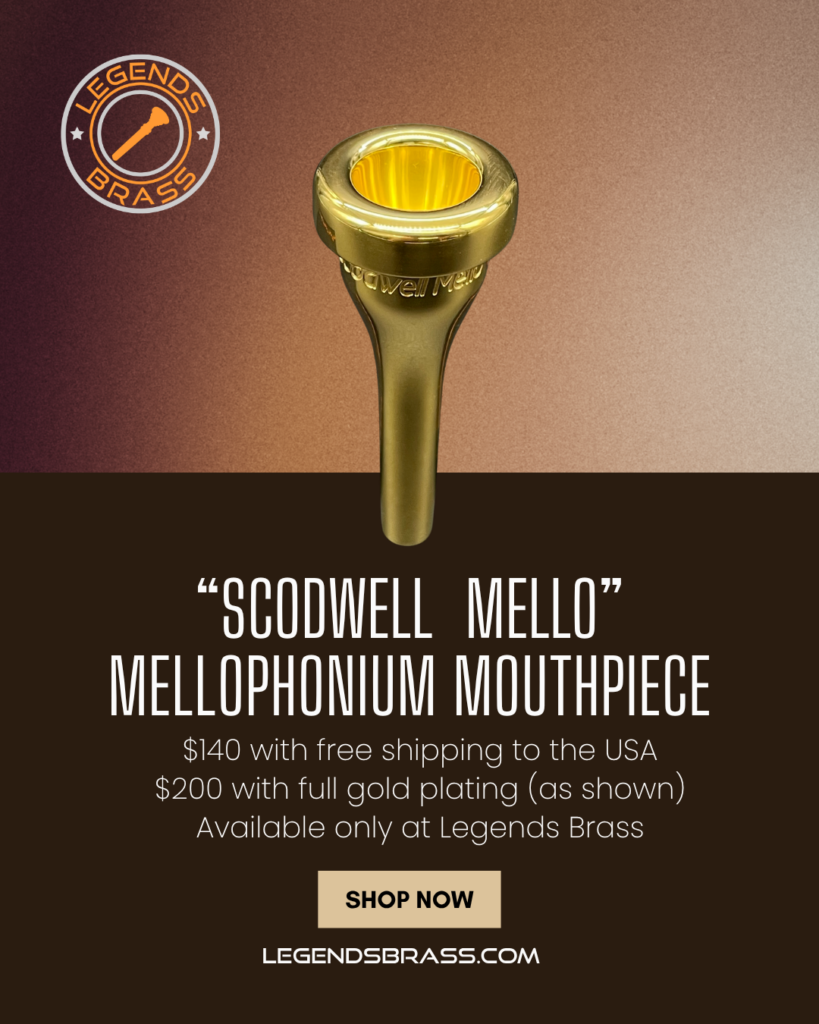
The Legends Scodwell Mello: a mellophonium mouthpiece designed in conjunction with the legendary Tony Scodwell, alumnus of the Stan Kenton band.
This model is based on a Schilke mellophonium mouthpiece made for Mr. Scodwell in 1963. The cup is reminiscent of a Farkus french horn cup. The rim is semi-round and similar to a 5C diameter. We have updated the original with the Legends enhanced throat and backbore. This piece is endorsed and played by the Legendary Tony Scodwell!
Sometimes the mismatch is obvious. The mouthpiece wobbles, binds, or inserts to an unusual depth. Other times the problem shows up in the way the instrument plays.
If attacks feel inconsistent, middle-register notes refuse to center, upper register response gets brittle, or low notes spread more than they should, the mouthpiece may be the issue. The same is true if intonation changes dramatically compared to what the instrument is known to do. Even a good player can spend weeks trying to “adjust” to a setup that simply is not right.
A poor replacement also tends to create confusion about the instrument itself. Players may decide the mellophonium is stuffy, unstable, or quirky when the real problem is that the mouthpiece is not letting the horn operate on its own terms.
Getting the right replacement mouthpiece for you
Replacement is not only about finding something that fits the receiver. It is about identifying what the instrument needs and what the player needs, then getting those two things to meet in one mouthpiece.
For the absolute best fit, you may want to consider a custom mouthpiece. Legends Brass works with customers who want to combine elements of two mouthpieces to create the perfect fit. The original mouthpiece can be sent for scanning, so the measurements of the shank are precisely identical to the original, ensuring the best fit in the horn. The rim and cup specs can be altered to match those the customer is most comfortable with. The resulting “hybrid” mouthpiece is the best of both worlds: the exact rim and cup the player prefers, on the exact best fitting shank. If you’d like more information about a custom mellophonium mouthpiece, contact Legends Brass here.
A practical way to think about mellophonium mouthpiece replacement
Treat the process like restoration with purpose. Start with fit, then protect the sound, then refine the feel. If you reverse that order and chase comfort first, you can end up with a piece that feels familiar but does not let the mellophonium behave like a mellophonium.
The right replacement should make the instrument easier to trust. Notes slot easily. Articulation speaks. Tone has shape instead of guesswork. And most importantly, the mouthpiece stops drawing attention to itself, which is usually the clearest sign that you finally found the correct one.
If your mellophonium has been sitting in the case because the original mouthpiece disappeared years ago, this is one repair decision worth getting right the first time.
Sources:
https://Tiffanyjohns.com post “Mellophonium“. Retrieved 7/13/2026
Contains information related to marketing campaigns of the user. These are shared with Google AdWords / Google Ads when the Google Ads and Google Analytics accounts are linked together.
90 days
__utma
ID used to identify users and sessions
2 years after last activity
__utmt
Used to monitor number of Google Analytics server requests
10 minutes
__utmb
Used to distinguish new sessions and visits. This cookie is set when the GA.js javascript library is loaded and there is no existing __utmb cookie. The cookie is updated every time data is sent to the Google Analytics server.
30 minutes after last activity
__utmc
Used only with old Urchin versions of Google Analytics and not with GA.js. Was used to distinguish between new sessions and visits at the end of a session.
End of session (browser)
__utmz
Contains information about the traffic source or campaign that directed user to the website. The cookie is set when the GA.js javascript is loaded and updated when data is sent to the Google Anaytics server
6 months after last activity
__utmv
Contains custom information set by the web developer via the _setCustomVar method in Google Analytics. This cookie is updated every time new data is sent to the Google Analytics server.
2 years after last activity
__utmx
Used to determine whether a user is included in an A / B or Multivariate test.
18 months
_ga
ID used to identify users
2 years
_gali
Used by Google Analytics to determine which links on a page are being clicked
30 seconds
_ga_
ID used to identify users
2 years
_gid
ID used to identify users for 24 hours after last activity
24 hours
_gat
Used to monitor number of Google Analytics server requests when using Google Tag Manager