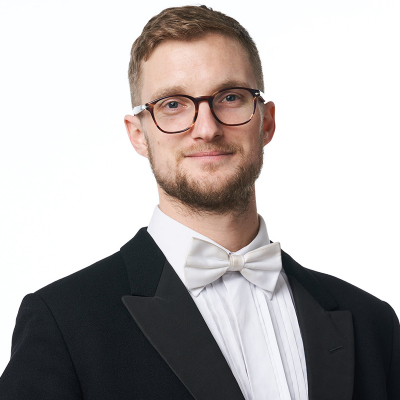
Interview

Trumpet Artist Profile : Jason Lewis

Jason Lewis has been Associate Principal Trumpet with the Royal Scottish National Orchestra since 2019, having previously been principal Trumpet with Scottish Opera. I am grateful for his time to speak to us here, about all things ‘trumpet’ including his new Adams A2 that he has been playing:

What first drew you to the trumpet?

My first memory of trumpet playing was at my primary school in Aberystwyth (Wales), I must have been about eight years old and I listened to the school band one lunch time and that was me hooked. I think I went home asking for trumpet lessons and that’s how it all started…..

Can you talk a little about your early influences and inspirations?

My memory isn’t the best… but I certainly remember my first trumpet teacher very well, Mr Alan Philips who was the local peripatetic brass teacher. He was a fabulous teacher and a great inspiration to so many brass players from that part of Wales. At the age of about fourteen I also started having lessons in South Wales with Philippe Schartz who is the Principal Trumpet at the BBC National Orchestra of Wales. Philippe was also a great influence on me, and I remember that after lessons I would immediately want to go and practise… My greatest takeaway from lessons with Philippe was to always listen. I must have listened to the old Chicago recording of the Mahler symphonies with Solti many many times over. 

What styles and genres of music were you into as a child?

As a child I listened to so many different genres of music. I’m sure I went through a phase of most genres, from Jazz, Soul, RnB, HipHop to Classical, but I must admit trumpet playing was at the forefront of it all, mostly Maurice Andre, Wynton Marsalis and Reinhold Friedrich. 

And now? Who are your biggest influences?

Now, I still listen to a lot of classical music, Mahler, Strauss and Bruckner. I was lucky enough to do a fair amount of opera work between freelancing and I held the Principal Trumpet seat with Scottish Opera for a while – I really love listening to opera, I think it’s fantastic music and I have many great memories. My favourite would have to be Ariadne Auf Naxos. 

When did you realise that you wanted to play the trumpet for a career?

To be honest, I have always loved playing the trumpet and from a young age I loved practising too, and so I guess I always worked hard at it, although I don’t think it ever felt like work…and it still doesn’t! It wasn’t actually until I started my undergraduate course at the Royal Welsh College of Music and Drama in Cardiff that I really focused on orchestral playing and working on auditions. I was lucky to continue studying with Philippe Schartz at the RWCMD so this was straight into hard work as we had already developed a good teacher/student relationship. I started to get some freelance work with the local orchestras in Cardiff (BBC NOW and Welsh National Opera) and this is when I realised maybe making a living from playing the trumpet might actually be possible….

Do you have set, regular practice routines that work for you? Do these play a big part when you are teaching too?

I really like having a set routine and I always have. The exercises change every few weeks as I like to try and keep it fresh, but the outline of the routine stays the same. I basically do some sound work to start with, anything from Chicovitz, Stamp or Claude Rippas (these are just long notes to concentrate on my sound), I then do some lip flexibility, this can be Bai Lin, Charles Colin or Arban. Following that I’ll do some tonguing exercises from the Arban, Clarke or any study from Brant etc.. I think it’s important for me to touch on everything a little each day. I know so many amazing trumpet players who don’t have a routine at all and I admire this, but that doesn’t work for me personally. I find my routine rather therapeutic in a strange way. I always advise students to have some sort of routine to cover all these fundamentals of brass playing daily.

What advice can you offer to aspiring young players, just hopefully starting out on a professional career?

I know its a difficult time at the moment with such little work about for musicians but I’m hopeful that things will get better soon, so my advice is to not lose hope and to continue to work hard, use the time you’ve got now to get the practice done and get to know the orchestral rep you’ll be needing for auditions. Apply for every opportunity that presents itself, every little bit of orchestral playing is experience in your bank and that all becomes very useful when you start freelancing or trialing in different places. If you’re playing a excerpt in a audition that you’ve already played in its entirety somewhere, for me the excerpt makes much more sense and becomes less stressful to play. 

Can you talk a little about the your relationship with Adams and Fultone Brass, and the process of selecting your horn?

Neil Fulton has been absolutely great, I used the time last summer to ask Neil to send up a few Adams Bb trumpets as I had some time to really decide what I wanted…. Obviously I was awkward and wanted something in between what Neil had sent up, but Adams where straight on it and offered to make a trumpet for me. So I’m lucky enough to be playing on a Adams A2 0.50, with a Silver plated body and a raw brass bell. I love it!!I have been in touch with Neil about a C trumpet and am looking forward to trying one out in the coming months…. 

The Adams A2 Bb Trumpet

How has the COVID lockdown affected you and your work? Have there been any positives that you can take at all from this?

As for everybody in the world it’s been a strange, strange year. Unfortunately the orchestra wasn’t able to do any concerts from the end of March last year until September, but luckily for me the RSNO have a media team for recording concerts and so once restrictions were lifted we were able to put a season of online concerts together, going out each Friday evening. This new recording/filming schedule consisted of about half of the workload we are use to, as we normally do a couple of concerts each week across Scotland. I’m very exited to get back to a full schedule as soon as it is safe to do so. Throughout lockdown I’ve used the time to concentrate on my personal practice, I’ve done some form of fitness each day and tried to get out on my motorcycle as much as I am allowed to. I’m sure everyone feels the same but some days feel better than others, but I’m trying to keep positive for better days ahead. 

What are your plans and ambitions for the future?

Plans for the future… I’d like to continue to try and improve my trumpet playing, I think thats always going to be on my list, as is working on being a better orchestral musician. As far as hobbies, I’d like to tour as much of Europe and the UK on my motorcycle. I’ve just applied to become a volunteer biker with Scotservs which is a transport charity for the NHS, so I’m hoping to use some of my days off to help transport essential equipment/blood for the NHS whilst getting to ride my bike.


SIGN UP HERE FOR NEW BLOG ARTICLES EMAILED DIRECT TO YOUR INBOX:

[jetpack_subscription_form show_subscribers_total=”false” button_on_newline=”false” custom_font_size=”16″ custom_border_radius=”0″ custom_border_weight=”1″ custom_padding=”15″ custom_spacing=”10″ submit_button_classes=”” email_field_classes=”” show_only_email_and_button=”true”]

Gear Review · Interview

Freddie Gavita: Interview & Instrument Review

Freddie Gavita is a young trumpet player at the top of his game. The trumpet category winner at the 2017 British Jazz Awards is receiving critical acclaim for his debut album ‘Transient’ as well universal admiration for his stunning playing with the Ronnie Scott’s Club Quintet alongside many other projects.

I have caught up with him here to find out a little more about him, and also his new role as an Adams Performing Artist and his work with Adams and Fultone Brass to settle on a new Adams A4 Bb Trumpet. I have also had the opportunity to get hold of a couple of different A4 models from Fultone Brass to include a review of this trumpet range below.

Fultone Brass

Freddie, can you tell me a little about your musical background and what led you to play the trumpet? Any particular influences?

So I was brought up in Norwich, and started learning the trumpet in primary school aged 7. Back then you got free lessons and a free instrument, and I was lucky to have a teacher in David Amis who had a great knowledge of the physical side of brass playing, a deep love of all styles of jazz (even free!) and was an excellent communicator. I would put a large part of my career down to him, he was my only teacher from 7 – 18 years old. My mum was quite proactive as well, so she bought me a Louis Armstrong cassette which I really took to, and still love his music. My dad was the one that encouraged me to practice until I actually started enjoying practicing!

What trumpet and mouthpieces do you use?

I play a Monette B6 mouthpiece that I bought from eBay when I was 17, and an Adams A4 Custom Series ML with Gold Brass bell.

How did you find the process selecting your new horn? Can you describe the process?

So I was lucky enough to go on the Blue Note Cruise from Miami with the Ronnie Scott’s Quintet and Natalie Williams, and there were about 40 of the greatest jazz musicians on the planet on this boat! I met a great trumpeter called Keyon Harrold who works with Gregory Porter and has just released a brilliant new album of his own, he was playing an A4. As soon as I tried one I knew I wanted to delve deeper as I’d been looking for something like this for years. For me it’s about excitement, which might be dangerous, but I want to feel inspired when I pick up a trumpet and the Adams does this for me! I tried a few other models (A4 LT, A8 etc) with Neil Fulton at Fultone Brass, play testing the horns in the BBC Maida Vale studios! He had a good listen up close and far off, we recorded a few bits so I could hear what it’s like from the other side and then took it away to try it on some gigs, which is the main test any horn has to pass!

I have obviously played a lot of other people’s instruments on gigs, but this had the characteristics I’d always wanted. I can play acoustic gigs with a rhythm section and still not feel like I’m having to over blow to be heard, the slots are wide so you can bend notes and get sounds and tones from the trumpet that you never knew existed. It plays beautifully at a whisper and you can get a big, thick sound from it when you open it up. The valves are amazing as well!

IMG_4403

Your album ‘Transient’ has had a great reception from critics and musicians alike. Was it a difficult process getting this album together?

Thanks! It was difficult in one sense, that I’ve not done it all myself before. It does mean you have more control over what happens, who you use and where you record etc, the music was the least of my worries in a way! I also crowdfunded the album, which was very encouraging; not having to worry too much about the financial side of it does help you relax a little and think about the playing side of things more. We recorded 13 tracks in one day (10 made it onto the record) which for a trumpeter is probably a little silly, I’m happy with the results but I’d definitely do two days next time.

How do you find striking that balance between working on and progressing your own projects, and working with other bands and artists?

I think you have to be strong in your practice more than anything. Fortunately, I’m not much of a lead player, so I can focus on more jazz orientated practice which keeps me in good enough shape to play most of the gigs I do without being too knackered! I should probably do more reading practice as that’s one thing that I feel I’ve neglected a little over the last few years, but I’m ok! Having your own band and project gives you a stronger sense of the way you want to play and sound, so I guess when I have to sound like other trumpet players for different situations I’m trying to access a place where it’s still me, but bringing out their influence in my playing. I’d love to do more with my band, as its where I feel happiest and most at home, but it’s hard getting promoters to take you on playing original music sometimes.

Any top tips or preferred materials for technique preservation etc.?

I try to take at least one day off a week! I’ve fallen in love with the Cichowicz flow studies again recently and I regularly use material from Flexus (Laurie Frink) and Gerard Presencer’s book. I try to practise in my head as much as possible (often singing in my head and moving my fingers), so my mind is ready for the trumpet when I play. Especially when improvising, it really helps to have a clarity of idea in your head before you try to play it on the horn! I always feel the benefit when I get the chance to warm down as well, even if it’s just a few pedal notes. I love the Vizzutti Response and Rejuvenation exercise from New Concepts for this.

Do you have any advice for young aspiring players?

I would encourage any young trumpeters or musicians in general to go out and see as much live music as they can! Whatever style, hearing the best people play gives you such inspiration and a better idea of what you might want to sound like. I fully believe that you make the sound on the instrument that you hear in our mind, and the better the sounds you’ve listened to closely, the better the sound you’ll make!

Mouthpiece Online review of the Adams A4 Trumpet range:

The A4 is one of the most popular in the Adams range. Developed in conjunction with Amik Guerra, it is one of their heavier models with a heavy bronze and nickel silver valve block and a heavy 140mm bell. I had two popular options to try – The first, Adams’ Selected Series with the most popular option of a large bore (12mm) valve section and a 0.45 gauge gold brass bell. The second model is a custom instrument, similar to the standard Selected Series, but with a lighter 0.40 gauge yellow brass bell.

A4_Selected2

My first impression is that these are fabulously designed and constructed instruments. Nothing has been left to chance, and every curve and nuance in the design is there for a technical purpose… and it looks pretty smart too!

I started by blowing the Selected Series gold brass bell model, which I would describe as a real nice combination of silky and solid. The large bore valve section gives you a lovely open feel through the middle of the horn, which is balanced out well with the responsive leadpipe and the larger bell. The harmonics still slot really naturally, yet you are not held back from creating the richness of sound that players want from this style of heavyweight trumpet.

Fultone Brass

The custom model with the yellow brass bell gave me a similar feel. You can continue to make that rich, dark sound at softer dynamics, yet you get a little more sizzle to the sound when you open in the higher registers particularly.

Customisable options on this model include ML (11.7mm) or L bore (12mm), 4 different gauges of bell and 4 different bell materials. It is easy to see why this model has become such a popular one in the Adams range as it offers the remarkable feature of versatility alongside the tonal characteristics that one would expect from a heavier instrument.

To find out more about Freddie Gavita, please visit www.freddiegavita.com

To find out more about Adams Trumpets, please visit www.fultonebrass.co.uk

US readers, please visit Thompson Music for further information on Adams.


Sign up here for new blog articles emailed direct to your inbox:

[jetpack_subscription_form show_subscribers_total=”false” button_on_newline=”false” submit_button_text=”Sign up” custom_font_size=”16″ custom_border_radius=”0″ custom_border_weight=”1″ custom_padding=”15″ custom_spacing=”10″ submit_button_classes=”” email_field_classes=”” show_only_email_and_button=”true”]