Advice · Gear Review

Finding the perfect orchestral mouthpiece

I have spent a lot of time recently (mainly virtually!) working with players who have used this enforced period of time off to look at new and possibly better mouthpiece options for themselves. Many classical, and particularly specialist orchestral players are traditionally very conservative in their choices and often choose to stick to the ‘tried and tested’, even if it is not necessarily completely trusted. Often the rigours and pressures of full-time orchestral playing do not allow time for experimentation!

I have given a summary below of eight Frate Precision models that have worked really well for players looking for a rich and open core sound with great orchestral projection. Each of these eight mouthpieces however have their own unique characteristics:

VISIT THE ‘EDUCATIONAL RESOURCES’ PAGE FOR FREE WORKSHEETS AND LINKS TO PUBLICATIONS


1 M, 3, 102

Cup diameter 16.95mm, Medium deep cup, Throat 3.74mm, Medium-large Backbore #102 : Equivalent: 1-1/2C (26 throat)

This is the new ‘Easy Selection’ model with the #1 rim, and a best seller! The #1 models all have a really comfortable rim and the M (medium deep) cups seem to suit most players that I have encountered. The slightly open throat and the flexible backbore give a nice balance between core sound and flexibility. Great on both Bb and C trumpets.


1 M

Cup diameter 16.95mm, Medium deep cup, Throat 3.66mm, Medium-large backbore #101 : Equivalent: 1-1/2C

This has a similar responsive feeling to the model above, but with a slightly tighter throat and brighter backbore. Particularly good on C trumpets as well as larger Eb instruments such as the Schilke E4. This has also been a really good mouthpiece to recommend to students who have perhaps just moved up to their first ‘larger’ mouthpiece.


1 M, 3, 106

Cup diameter 16.95mm, Medium deep cup, Throat 3.74mm, Medium-large backbore #106 : Equivalent: 1-1/2 C (26-24)

This is my personal favourite, and the model that has really got peoples’ attention here in the UK. It has a nice open feel but with a really rich core sound, great stability and slotting as well as flexibility.


2 M, 3, 102

Cup diameter 16.95mm, Medium deep (V-shape) cup, Throat 3.74mm, Medium-large backbore #102 : Equivalent: 1-1/4C

Although it has the same rim shape, size and contour as the #1 models, the slight V-shape of the cup gives a very different feel and response, more similar to a Bach 1-1/4C. It retains the immense core sound and stability of the 102 backbore, and woks really well across both Bb and C trumpets.


2 M, 3, 106

Cup diameter 16.95mm, Medium deep (V-shape) cup, Throat 3.74mm, Medium-large backbore #106 : Equivalent: 1-1/4C (26-24)

This is a slightly more open feeling and sounding version of the 2 M, 3, 102. The #106 backbore gives that big core sound, but still with the level of control, response and flexibility that players need.


3 M, 3, 106

Cup diameter 16.62mm, Medium deep cup, Throat 3.74mm, Medium-large backbore #106 : Equivalent: 3C (26-24)

For players that like a narrower inside rim, but still an open feel to the mouthpiece. There are a number of well-known makers such as Monette, AR Resonance etc., that use extremely open throats and backbores to get players to fall in love with the sound. However, these infatuations are often short-lived when you realise what you have lost – core sound and flexibility. Both this model and the 1 M, 3, 106 offer the perfect compromise, giving you openness, core sound, response and flexibility.


6+ M, 3, 106

Cup diameter 17.12mm, Medium deep (V-shape) cup, Throat 3.74mm, Medium-large backbore #106 : Equivalent: 1-1/4C – 1C (26-24)

This has a wider inner rim, and a smooth V-shape cup alongside the fantastic power of the #106 backbore. This is a great full-sounding orchestral mouthpiece that has suited players moving from 1, 1C and 1-1/4C style pieces.


5+ M, 3, 106

Cup diameter 17.12mm, Medium deep cup, Throat 3.74mm, Medium-large backbore #106 : Equivalent: 1C (26-24)

The 5+ has the same configuration as the 6+, but with a more traditional bowl-shape medium depth cup. The response is similar, but perhaps with more of a roundness to the sound.


VISIT THE ‘EDUCATIONAL RESOURCES’ PAGE FOR FREE WORKSHEETS AND LINKS TO PUBLICATIONS


Sign up here for new blog articles emailed direct to your inbox:


Advice · Interview

Trumpet Artist Profile : Immanuel Richter

Principal Trumpet with Sinfonieorchester Basel since 2009 having previously held the same post at La Scala, Immanuel Richter has built a reputation for both versatility and virtuosity. He talks to me here about all things trumpet!

What got you started playing the trumpet?

In my little village in the east of Switzerland, there was a trumpet teacher who formed a trumpet ensemble, consisting of at least 20 trumpet players of all levels. They performed sometimes in the church or at some local concerts – I wanted to be part of it. So my Mum contacted the trumpet teacher and I got my first trumpet lessons with him and was a member of his trumpet ensemble quite soon. I started at the age of 7 and took lessons with him for ten years in a row. My early musical influences were for sure the LP’s of my father. He was no musician, nor my mother, but my father was very fond of classical music. So he had some old recordings of Beethoven Violin concerto (with Wolfgang Schneiderhahn), all the Tschaikowsky Symphonies with Karajan and Berlin Phil and some more, not very much, but very precious. And he always said, that if I want to listen to them, I have to sit on the sofa, keep quite and listen carefully. It was like a holy act to put the record on, and than we both listened to the whole piece in silence. It was a very special moment I remember very well. On the trumpet I was very much attracted by Maurice André, I had almost all his recordings (still have them!) and was a real fan of him. When he played in Zurich or somewhere else in Switzerland, I was in the public.

What styles and genres of music were you into as a child?

At the beginning I listened to almost nothing else other than classical music. From Baroque to Tomasi and Jolivet, but I was not attracted very much by the music that most of my classmates were listening to. Growing up I enjoyed – beside the classical music – also very much some pop-legends like Elton John, Joe Cocker, Rod Steward, Barbara Streisand etc. and I still do… My interest for Jazz music has never been very big, but in the last 15 years, due to my dear friend and colleague in the Basel Symphony Orchestra Marc Ullrich (a outstanding trumpet player both in jazz and classical music), my interest in Jazz increased step by step.

And now? Who are your biggest influences?

Today I take my inspiration mostly not from brass players, but from my “spiritual mentors“ like Andras Schiff, Nikolaus Harnoncourt, Claudio Abbado etc. I listen to a lot of youtube-masterclasses (almost every day…), also violin-masterclasses for example with Augustin Hadelich, and I get so many good ideas out of it, ideas, that are very useful to my trumpet playing and my music-making in general. I often think like a violin-player when I play the trumpet. On the violin, all the technical aspects are so visible, which helps to adapt it on the trumpet, whereas most of the technical aspects of trumpet playing are internal (breathing, tongue, throat etc.). And Andras Schiff is just a big source of inspiration, and his huge and profound knowledge about so many different styles (Bach, Schubert, Schumann, Bartok etc.) is just incredible and so fascinating. I adore him.

When did you realise that you wanted to play the trumpet for a career?

I think it was during grammar school, so maybe between 13 and 17. I always played the piano and the trumpet, but in this period I discovered that my potential for the trumpet was bigger and that playing in a big orchestra would be my dream-job.

Do you have set, regular practice routines that work for you? Do these play a big part when you are teaching too?

This is a large topic. But shortly: my warm-ups are almost the same, every day. And always on the same trumpet. Then, the days can be very different, depending on what the schedule is. In general I try to work always with a good plan, so that I know precisely, what I’m going to to and also why. I divide my working day in 4 parts: first part is always like a concert. Playing through some pieces without interrupting, in order to work on the “concert mode“. Second part are the corrections of the first part. 3rd part is devoted to the new pieces I have/want to learn and on the 4th part, I focus on basic technique but I do these “technical drills“ like scales, arpeggios etc. always in relation to the pieces I have to play. So I invent my own exercises for the pieces. I do not play proper Clarke or proper Arban any more, but I take their ideas and adapt them to the music I have to play. And as I got some good results with this working plan for myself I share these ideas also with my students.

VISIT THE ‘EDUCATIONAL RESOURCES’ PAGE FOR FREE WORKSHEETS AND LINKS TO PUBLICATIONS

What advice can you offer to aspiring young players, just hopefully starting out on a professional career?

Keep working, be honest to others and especially to yourself and always try to enjoy what you are doing. 

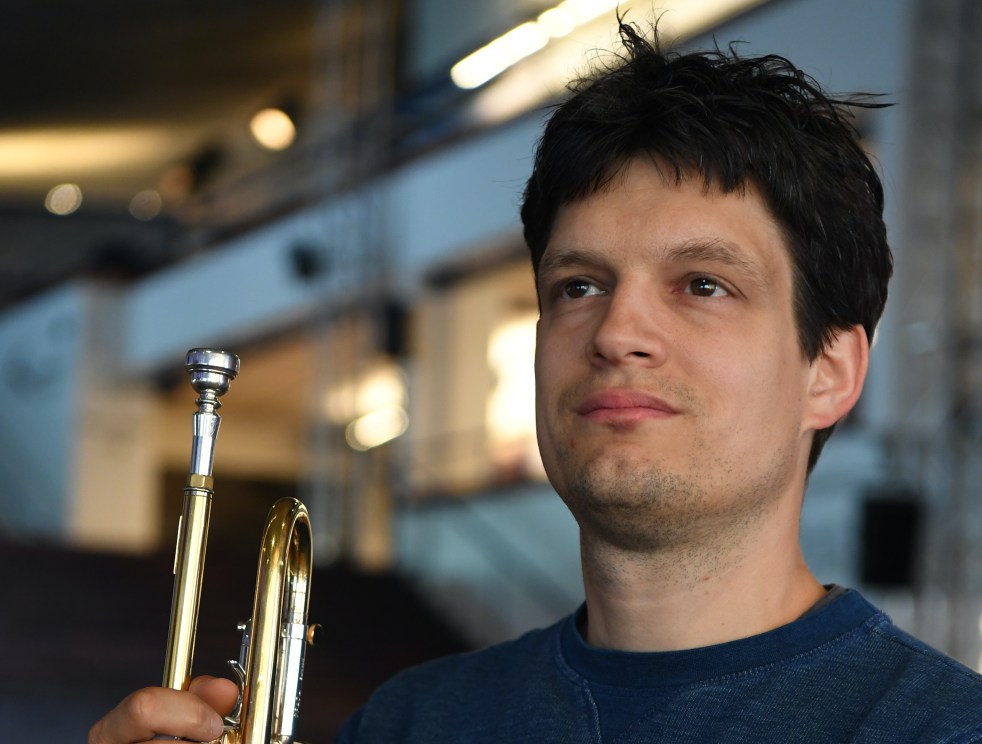
Immanuel plays on the model 3 ML, 3, 105 on both Bb and C trumpet. Click on the image above to find out more.

Can you talk a little about the your relationship with Frate Precision and the process of selecting your mouthpieces?

I met Dario first time in Italy during a masterclass I gave at the Milan conservatory. It was actually my dear friend Massimo Longhi (principal trumpet in Verona) who introduced me to him. I tried some of his mouthpieces in Milan and the first feeling was so good that instantly I took one mouthpiece of his big selection at home. Later on I invited Dario to Lucerne to make a little seminar about mouthpieces with my trumpet class at the Musikhochschule in Luzern. And as usually I tried other types and finally I have now quite a number of Frate mouthpieces where I really feel comfortable with. I think the mouthpiece is the most personal part of the material (much more important than the trumpet itself). So what is good for me can be very bad for an other player and vice versa. I choose a mouthpiece according to different aspects, but the most important for me are: response, sound, intonation, range. I play different types of mouthpieces, not only Frate, but for example my last CD with music for piccolo trumpet (“at the peak“, you find it on Spotify) I played all the pieces with the same Frate mouthpiece. I never was so comfortable on Piccolo before I discovered this mouthpiece. Thanks Dario!!!

How has the COVID lockdown affected you and your work? Have there been any positives that you can take at all from this?

Well, I must confess that I really enjoyed this time. For sure it’s hard, that there were no concerts at all, no public etc. But I’m already 46 years old, I played a lot of concerts, so for me this time was much more like a gift. It was a sabbatical, where I could enjoy my big familiy. It was so great to stay with my wife and the 4 children, to have time to spend together, to do things we could not do before etc. The same is true for my trumpet playing. I had so much time that I could focus much more on the music, on the trumpet. And at the end, I decided to record some of the music I was practicing during lockdown for youtube. In June, I recorded 14 different pieces, in 11 hours on 3 days, all played from memory. It was like to run a marathon on the trumpet and I wanted to find out if I can do it. Now I’m quite happy with the result and you can find it on YouTube on my personal channel, if you are interested.

What are your plans and ambitions for the future?

I’m always driven to become a better trumpet player, a better musician, a better teacher. I hope that this internal energy will never end. The more I learn the more I have the feeling there’s even more to learn. And I hope this experience will last for ever because it keeps me alive, young and fresh, despite of all the inconveniences live may bring to me in the future.

You may also be interested to read this article about Frate Precision orchestral mouthpieces


SIGN UP HERE FOR NEW BLOG ARTICLES EMAILED DIRECT TO YOUR INBOX:


Gear Review

Frate Precision : Black Onyx Trim Kit Review

Hands up, anyone who has wasted a practice session messing around with heavy valve caps and trim in the hope that they will be the answer to all of their problems. And then gone back to what they had on originally. I guess that I am probably not alone.

There are some really attractive options out there and there is no doubting their ability to give you a ‘pimped up’ horn. At first glance, these trim kits from Frate Precision are beautiful. A gold-plated refined Italian design with black onyx set into the finger buttons, and black anodised aluminium stems. They are simply stunning. Ultimately though, what will persuade us to keep them on the horn is how they help or improve the instrument’s performance.
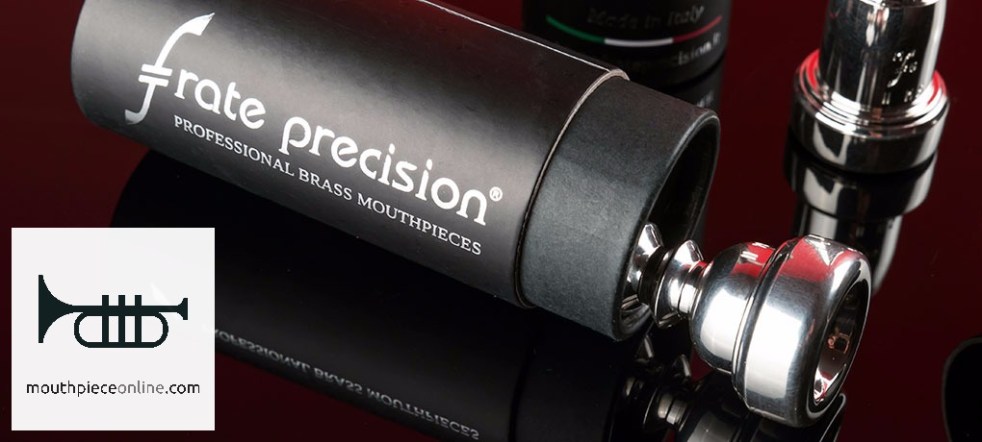
Different weights positioned at different points on the trumpet undoubtedly make a big difference to tonal colour and response. I will go through the 3 different weighted cap options that Frate Precision offer as well as looking at the performance of the upper part of the trim kit.

I have started by putting the trim kit on my Bach LR180ML37. Bach valves are not known for being the smoothest, so I was initially looking for an improvement in the action. These trims use an original dampening system which uses low density rubber washers encased under the finger buttons and positioned on the axis of the stem for a more silent and fluid movement. They certainly made a big improvement to the action of the valves. I then play-tested these using my normal Bach bottom caps and actually found slightly less resistance than normal.

The Frate Precision ‘Light’ bottom caps are 41g and 9mm deep and are a small fraction heavier than my standard Bach caps. There is immediately a greater stability of sound. Slotting is better, but there is still a nice resonance to the sound, which is why I picked out this horn in the first place!

The ‘Medium’ bottom caps are 72g and 13mm deep. They add a real darkness and a silky quality to the focussed sound. This would not be my setup of choice for sitting in an orchestral section and making a blending sound, but I love it nonetheless! Effortless (well, nearly!) power with round and focussed sound – I can see this setup suiting lots of players, classical, jazz and commercial.

The ‘Heavy’ caps are not as extreme as we see from some other makers, at 135g and 20mm deep. I have never really seen the benefits of adding extreme weight to a horn that was not designed with that in mind. The intonation often suffers as well as the original characteristics that presumably led you to pick out that trumpet in the first place! The Frate Precision heavy caps are more ‘civilised’. Yes, they totally change the character of the instrument – dark, compact, forward-facing power – but the intonation and articulation characteristics of the instrument remain intact.

A number of players like to add some additional weight to just one valve. For instance, extra weight to the 3rd valve cap can really help give some extra depth and weight to the sound without compromising the overall resonance of the instrument. Some players like to add that extra weight to the 1st valve which can typically give you a more explosive and immediate attack. Adding a single ‘Medium’ cap to the ‘Light’ kit gave exactly this reaction.

When ordering these kits, you can choose exactly what weights of caps you want (all at the same price), and you can add an additional single heavier one if you like, or even have one swapped over. They are completely customisable.

These trim kits get a ‘highly recommended’ from me! Yes, they look great. But they also give a real and noticeable range of performance enhancements. The full specs and prices are below:

-Refined Italian design

-Disc in Black Onyx set into the finger button

-Black anodised aluminium stem

-Original dampening system

-Available in Gold Plate (£189.95) or Raw Brass (£129.95). An extra bottom cap is £15.95 in Raw Brass and £26.95 in Gold Plate

-Available for Bach and Yamaha trumpets

-Light Bottom Caps 9mm, 41g

-Medium Bottom Caps 13mm, 72g

-Heavy Bottom Caps 20mm, 135g

All of these options are available to purchase in the Online Store with FREE UK Shipping and International Shipping Options.


Sign up here for new blog articles emailed direct to your inbox:

[jetpack_subscription_form subscribe_placeholder=”Enter your email address” show_subscribers_total=”false” button_on_newline=”false” submit_button_text=”Sign up” custom_font_size=”16px” custom_border_radius=”0″ custom_border_weight=”1″ custom_padding=”15″ custom_spacing=”10″ submit_button_classes=”” email_field_classes=”” show_only_email_and_button=”true”]

Advice · Gear Review

Frate Precision : HM Cup Review

I speak to trumpet players regularly who are looking for are looking for a slightly shallower than standard cup in their mouthpiece. Perhaps they are playing a variety of different styles and need the extra brightness and flexibility. Some are symphonic players looking for that additional ‘utility’ mouthpiece that they can switch to when required. Others are commercial and jazz players who are looking for great slotting in the higher registers without a big compromise on sound quality. Or maybe they are looking for a mouthpiece that they can play comfortably on E-flat or Piccolo trumpet.

The best solution that I have found that can work for many of these players is the HM cup/rim range from Frate Precision. They are designed and made in Lombardy, Italy by Dario Frate – you may be interested to read this interview with Dario here.

The range of HM cup mouthpieces from Frate Precision

The striking thing about these high cup mouthpieces is that you do not feel a compromise in sound quality and sonority. The ‘H’ refers to the High (or medium shallow) cup, and the M is the code for the rim shape. Combined with the slightly more open 106 backbore, it is easy to get a ‘sizzle’ to the sound while still keeping a lovely rich tonal core. The slotting and flexibility on them is also fantastic.

On piccolo trumpet, they are available with cornet shank. The standard shank/backbore seems to work best for most players on these.

Here is a list of my most popular and recommended models:

3HM, 106 : This has the number 3 rim (16.62mm), medium shallow HM cup, 3.66mm throat and a medium large backbore. Rim and cup combination and very approximately equivalent to a Bach 3D.

5HM, 106 : Similar to the 3HM, 106 but with a slightly narrower (16.35mm) inside rim.

7HM, 106 : As above but with a 16.22mm inner rim, roughly equivalent to Bach 7D.

All of these combinations are also available and in stock with cornet shank – please do send me a message if you are interested in one of these, or would like any advice on finding the right mouthpiece for you.

I have also reviewed a number of different styles of Frate Precision mouthpieces here.

The full Frate Precision range is available with worldwide shipping from our Online Store.


Sign up here for new blog articles emailed direct to your inbox:

[jetpack_subscription_form show_subscribers_total=”false” button_on_newline=”false” submit_button_text=”Sign up” custom_font_size=”16″ custom_border_radius=”0″ custom_border_weight=”1″ custom_padding=”15″ custom_spacing=”10″ submit_button_classes=”” email_field_classes=”” show_only_email_and_button=”true”]

Gear Review

Frate Precision : Mouthpiece Review

Since 2006 Dario Frate has been designing and making mouthpieces from his base in Lombardy, Italy. The aim across the entire range is to give the player richness of sound, fluidity, and to do it as easily as possible. These are certainly noble ambitions and I was very keen to try some mouthpieces for myself!

I asked Dario to send me a small selection of mouthpieces with the following brief:

  1. An ‘all-rounder’ for a 3C-style player that can accommodate a warm classical sound as well as lighter styles. SELECTED: 3 M,3,106 with a semi-round rim
  2. A possibly shallower version of the above mouthpiece that could help the same player make a brighter sound. SELECTED: 3 HM,106 medium rim shape, medium large backbore
  3. A slightly wider rim mouthpiece aiming at a 1.5C-style player that still gives a degree of versatility. SELECTED: 1 M,3,106 with a semi-round rim
  4. A symphonic style piece allowing a free blow with a rich tonal core. SELECTED: 6+ M,3,106 with a semi-round rim

Below are my thoughts after taking them all through their paces. For general comparison and reference points I have used the Bach sizes to describe them, purely because these are references that most people are accustomed to, and not because they are in any way modelled after the Bach range.

3 M,3,106

First impression on the chops is that this is a very comfortable semi-round rim. The response is quick and the notes slot very easily, far easier than many of the 3C-style mouthpieces that I have played on in the past.

Working through some flexibility exercises (Colin), the word that springs to mind is ‘easy’. There is also a depth to the sound that I often find is missing when playing on a flexible and easy-slotting piece. After playing through some middle register melodies for a few minutes, I am finding that the sound is opening up more as I get used to backing off the air a little bit. This really does tick the boxes that I was looking for with this brief – a solid, warm, centred sound with flexibility and slotting.

3 HM,106

The medium-rounded rim on this has the high point nearer to the centre of the rim rather than the inside. This is really helpful for a little more lip compression without needing to go to a smaller rim size. The cup is also slightly higher without being too shallow. I often find that my fleshy lips bottom out easily on really shallow cups so this seems like a good compromise for me. 

The response is lightning fast with a nice bright yet rounded sound. I am no lead player by any stretch of the imagination but I am able on this mouthpiece to play with good flexibility and control with a centred sound above the stave up to high Fs and Gs – which is the upper limit of my normal controlled, working range. This strikes me as an ideal mouthpiece to look at if you are a legit player looking for a more commercial type piece to switch to when required, and also for more natural commercial players who like a slightly wider rim and a fairly open backbore.

1 M,3,106

This is similar in setup to the first mouthpiece that I played but with a slightly wider inner rim, getting closer to a 1.5C kind of feel. Again, this is really comfortable with a nice balance of cushioning and inner-rim ‘bite’. Flexibility and slotting feel great, and the biggest thing that strikes me is the consistency and depth of sound that I am able to make across the entire range of the trumpet. Playing on these slightly larger rim mouthpieces does not come naturally to me so I have had to spend a good 20 minutes playing through studies and exercises on this one before I can really get the measure of it. And boy was it worth it!!! It has been a long time since I was last able to make a sound this big and broad that still has good control and centre. 

6+ M,3,106

I asked Dario to recommend a setup that could suit a symphonic player who likes the feel of a 1.25C type rim but wants more depth and tonal core. The 6+ that I have been sent has a larger rim diameter than the previous model and slight V-shape to the cup. The sound is huge and still beautifully centred. I have to confess though, that having not played on this style of mouthpiece since college 20 years ago, I am not the best person to really put this through its paces. Some symphonic colleagues of mine here in Manchester kindly agreed to help!

Both of them have generally played on slightly more open feeling mouthpieces to a standard 1.25C, and both agreed that this fits really nicely in that zone. There is a warmth and centre to the broad sound that I am hearing in medium dynamics that holds together really well as they really open up. There are also some really nice increased overtones at the louder dynamics, particularly noticeable on the C trumpet. Feedback from both players is that these feel really comfortable to play too, with the same easy flexibility and slotting that I found on all of the other mouthpieces. You never know, I may have just made a couple of sales here!

In summary, Frate Precision is a really coherent range that sticks to that ethos of richness, fluidity and ease across the entirety. Many mouthpiece manufacturers will make fantastic mouthpieces to suit any player’s requirements and across those ranges will be enormous variation in feel and core sound. This is not a bad thing! We all as players look for THE ONE, so we are so lucky at the moment to have so many dedicated designers and makers who will help us to achieve that goal.

The feature that Dario Frate has brought to his range is that ALL of his mouthpieces should make our jobs as trumpet players, slightly easier, while keeping a rich tonal core in mind. If this is something that you are looking for, you will more than likely find something in this range that suits you.

For further information and expert advice, you can contact Dario Frate directly via his website.

For sales enquiries and advice on which model to select, please visit our Online Store

You may also be interested to read these interviews with Frate Precision artists Massimo Longhi and Fabrizio Bosso, as well as this interview with Dario Frate himself.


Sign up here for new blog articles emailed direct to your inbox:

[jetpack_subscription_form show_subscribers_total=”false” button_on_newline=”false” submit_button_text=”Sign up” custom_font_size=”16″ custom_border_radius=”0″ custom_border_weight=”1″ custom_padding=”15″ custom_spacing=”10″ submit_button_classes=”” email_field_classes=”” show_only_email_and_button=”true”]