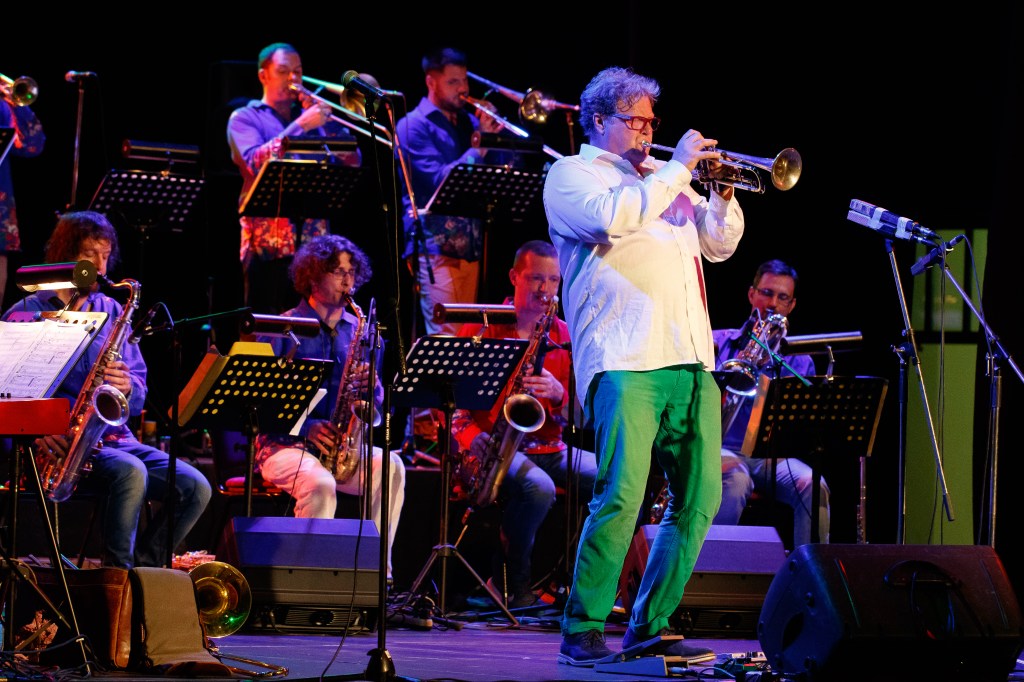
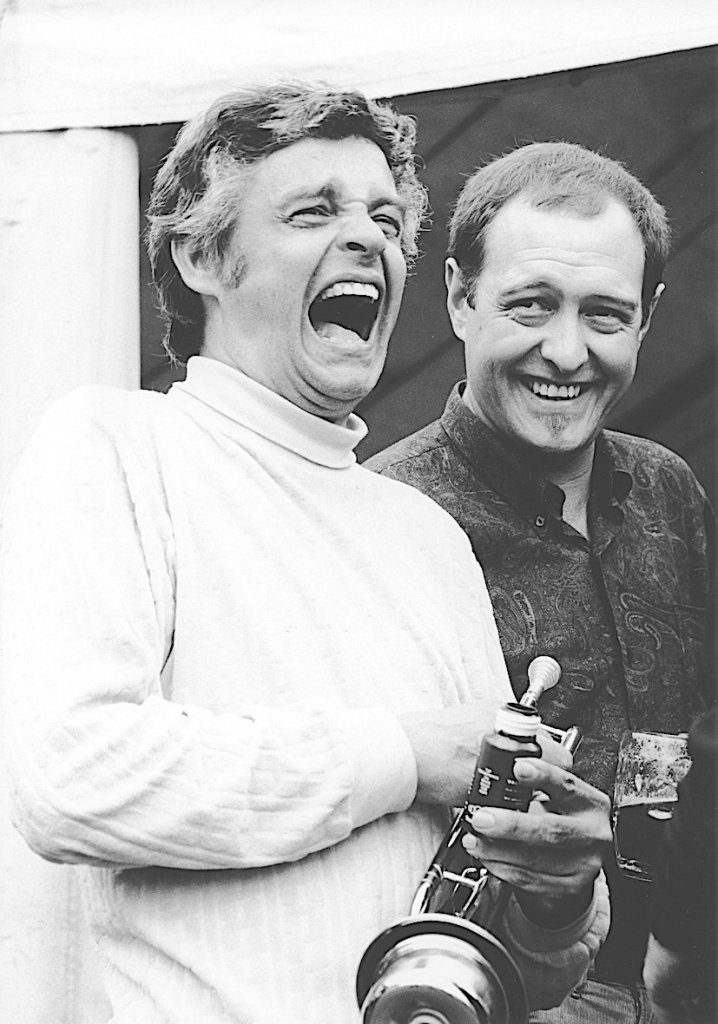
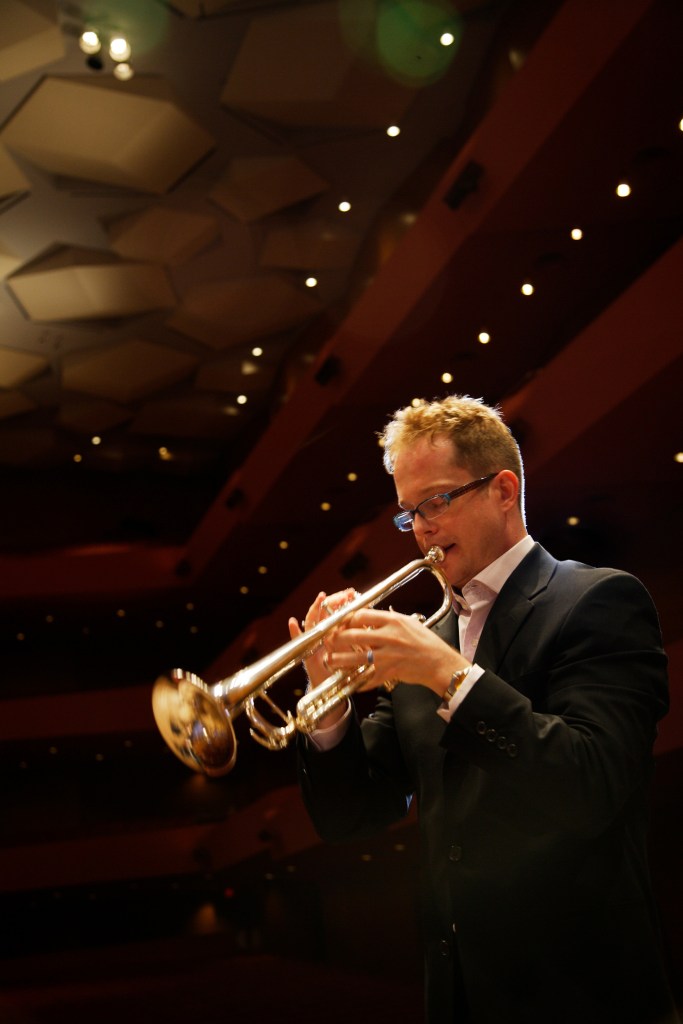
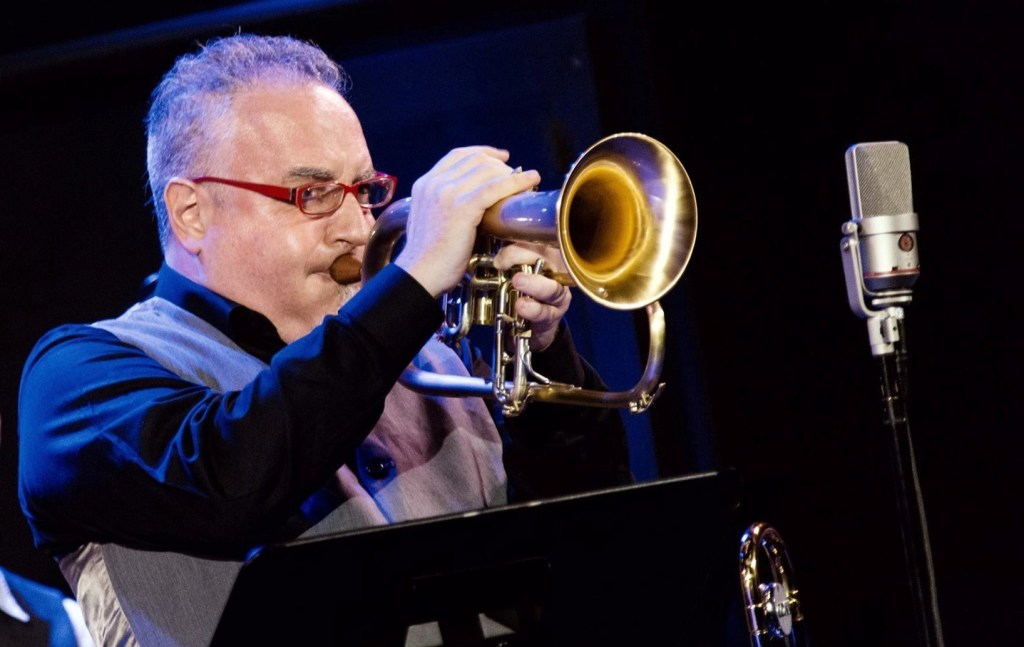
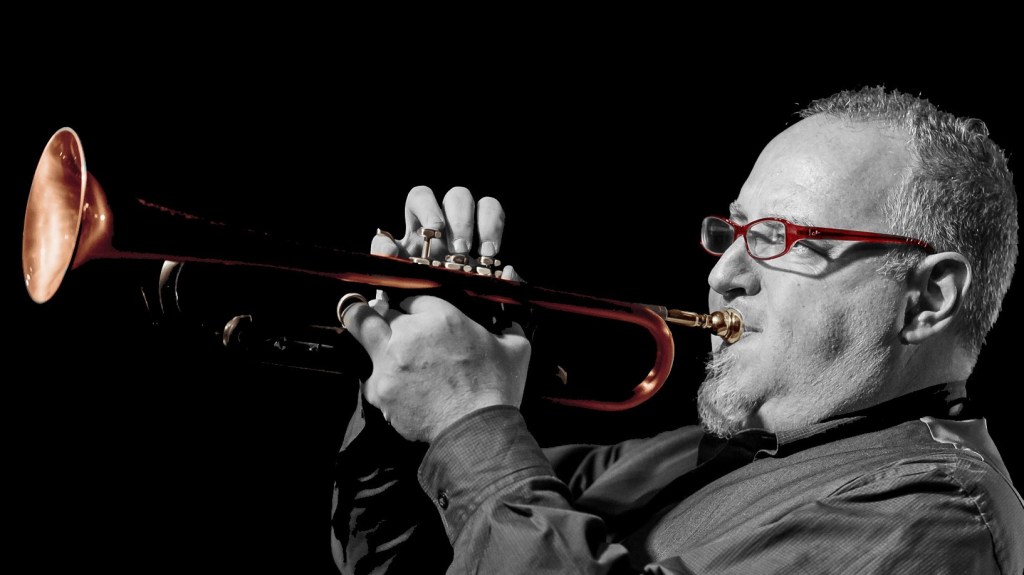
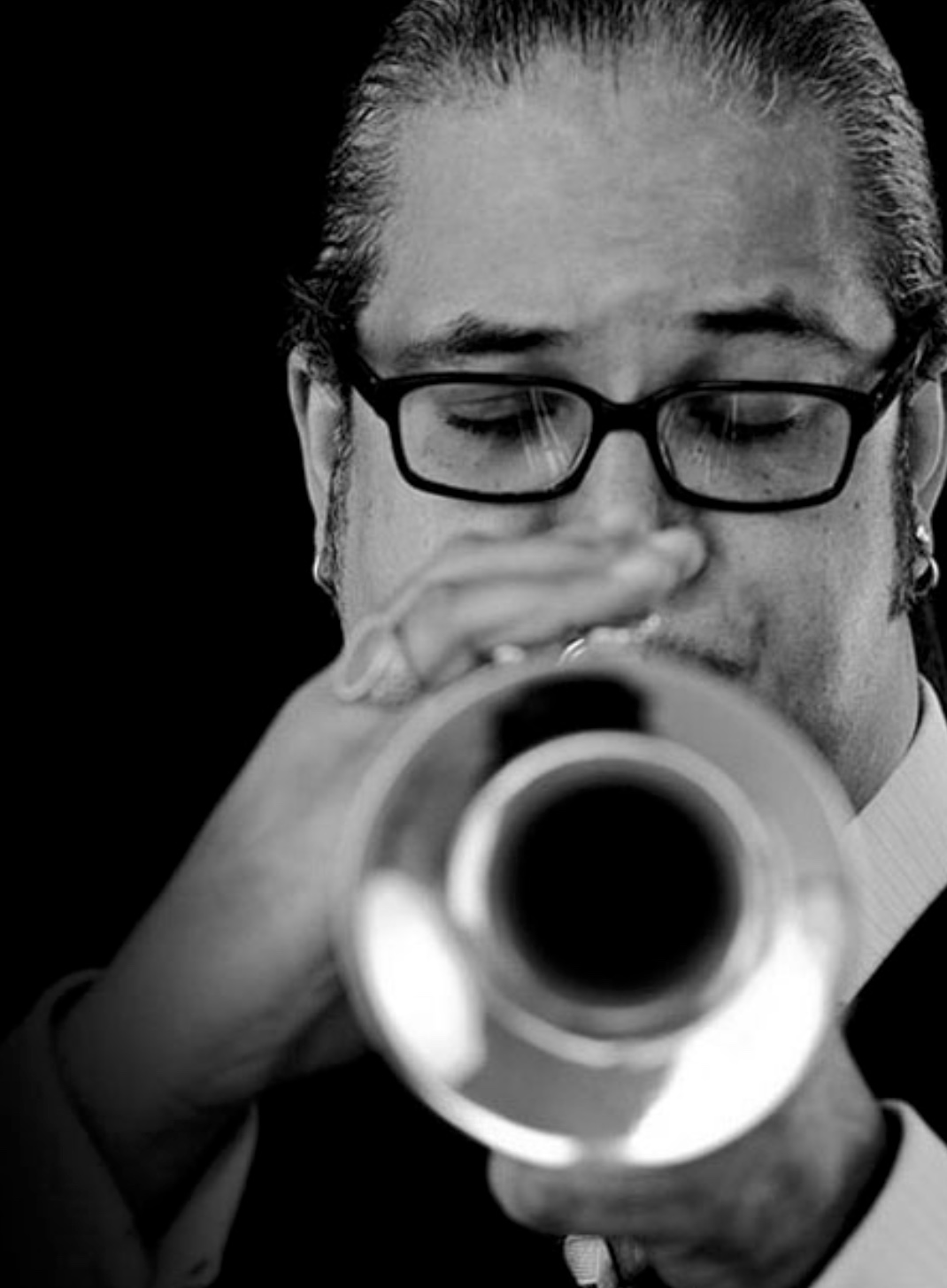
I would like to tell you about some really good news, not just for me, but for trumpet and trombone players all over the world. Swedish trumpeter Lasse Lindgren has acquired the rights to make Ullven mutes, which have been unavailable for many years, and also happen to be my all-time favorite mutes. Dizzy Gillespie game me my first Ullven harmon and cup mutes in 1972. I’ve been using Ullven mutes exclusively for almost 50 years!
These mutes, plus my Schilke Music Products horns, are “tried and true” for me. I even remember when that first Ullven harmon was stolen from me: October 21, 1977, at Jazz Showcase, in Chicago. It was Dizzy’s 60th birthday celebration, and I had left the mute on the piano on stage between sets. During that time, I was hanging out with Diz and Muhammed Ali backstage. When I went back on stage to play the next set, my mute was gone!
So you know: The Ullven harmon mute is perfectly in tune down to low F# and has an exceptionally full and even sound when playing on a microphone. The Ullven cup mute is adjustable and gives the player the option to change the sound to that which she/he is looking for. The cup can even be used as a plunger (á la #SnookyYoung, on the gold plated Ullven cup which I gave to him as gift back in the day).
These Ullvens also make great quiet practice mutes. Because of the functionality in this regard, Ullven cup mutes and Ullven Harmon mutes also are superb as a quiet practice mute when one wants to hone skills without disturbing anyone, even and especially late at night, or if you have pets in your home who pick up frequencies at higher intensity — you spare their ears. You also help protect your own hearing as a musician. It’s also a really nice gift for students (and their families) as they learn the art of the trumpet. These Ullven mutes are the real deal and Lasse is making them now. Get ‘em while you can! Lasse, tack så mycket!“
Jon Faddis Sleeping Cat Music, Inc. @faddisphere International Trumpet Guild (Official) International Trumpet Guild Student Group Jazz Education Network Schilke Music Products Ullvén Mutes for Brass Instrument
SIGN UP HERE FOR NEW BLOG ARTICLES EMAILED DIRECT TO YOUR INBOX:
Lasse Lindgren is a multi-faceted musician, with a reputation as a great ‘lead’ trumpet player as well as a great ‘jazz’ player. In recent times, he is also responsible for the resurrection of the great Ullvén Mute brand, made famous by players such as Dizzy Gillespie and Maynard Ferguson. Lasse kindly talks to me here about all things trumpet as well as this recent project…
What first drew you to the trumpet?
That’s easy! I heard Louis Armstrong on the radio as a 5 year old boy. That totally blew my mind and made me decide to dedicate my life to playing trumpet. Then I had to wait until I was eight before I got a trumpet, and I still remember that moment as very exciting, after I had to wait for years. I also remember that I was dreaming of making that sound for so long, that when I finally got it, it was a great relief to put the mouthpiece to my lips and blow the sound I had in my head for years. I think that also made it easy for me, I got a good sound right away. I think because I was so eager and had the sound built up inside me, it just came out naturally.
Any early musical influences?
As a young boy I loved the recordings of Louis Armstrong, Glenn Miller, Harry James and the other famous BBs. My mother had an old 78rpm record player at my grandparents’ home. I used to love to sit by myself and listen to the old records – that sound made a deep impression on me.
When I was 15, my trumpet teacher played the record “Message from New Port” with Maynard Ferguson’s orchestra for me. That was another “blow my mind” experience. I loved not only MF playing, but the sound and energy of the music arrangements!! and I still do. I thought playing those high notes MF did was something you learn when you get older, that is how stupid I was))-
But of course I wanted to play the notes of MF and his “sound”, but how? No one to ask? So I had to experiment myself by my own. From age of seventeen to twenty I spend 8-10 hours a day with my trumpet, playing, thinking and trying out how to do this.
I also spent some time playing “Free Jazz/music” as a teenager, that opened my ears and mind, Lester Bowie and Art Ensemble of Chicago!
Who have been your favourite players and music to listen to?
Well, when I went to high school, I started to play with friends in a band, and we played some kind of “Jazz-rock” in the style of “Weather Report” and so on. So I broadened my view of music. Then at that time, I also started to be aware of other great Trumpet Heroes, especially in more “modern” Jazz. Artists like Dizzy, Miles Davies, Clifford Brown, Freddie Hubbard, Woody Shaw, Chet Baker, among others, but also the European players like Palle Mikkelborg, Kenny Wheeler (Canadian in UK) Tomas Stanko (I played a lot with him in Germany) and my Swedish friends and heroes Bosse Broberg, Jan Allan and Rolf Ericsson. I also loved players who were both “Lead” and “Jazz” players – Snooky Young, Benny Bailey, Booby Shew (whom I met and got informed about the Yoga Breathing from when I was 18)…
Today I still listen to them all, the old stars were the genuine originals. There are many new great trumpet players of today, but have to admit, I am not so familiar with them, although Roy Hargrove was fantastic, RIP.
It’s hard to invent the wheel again, and to me, many of the young very skilled and talented players of today, sound as though they are playing “licks” they have practiced and learned. To me, that is actually is not spontaneous soulful improvisations, more than showing that they can play the right “hip” patterns over the chord changes – rather boring to me.
It is not easy to make your own sound and style, and I think too few even try. The exception is Tim Hagans, but he is not so young anymore!!
Lasse playing on one of the two Conn Connstellation trumpets that he owns, once belonging to Maynard Ferguson.
Is it a difficult skill to practise, being able to specialize in lead AND jazz? What are the particular challenges? Are there any particular routines that you follow in order to be able to achieve this?
Apart from the physical aspect of these two different ways of playing, the Lead player often has to use different equipment (not always) and play more demanding physical parts, to play with agood sound in the upper register with the endurance required. This takes a lot of work, exercises to keep up the “chops” to handle this, not everyone can do this. The Jazz player, on the other hand, meaning improvised jazz solos, has to learn how to do that… also the techniques. Scales, tunes, and how that music works, most likely Jazz players use different equipment (mouthpiece) compared to the Lead player. A good “lead” player must besides having the control of the instrument in any register, also be able to interpret music, a melodic line that you are asked to play, what the music is about, play it soulful and interesting in the style of the music.
When I play lead, I always ask the composer what the music is about or make my interpretation of the title. I always play as if I were singing the music instead of blowing the trumpet. I think a lead part or a melody also should be played like it was improvised, so it would sound fresh new and spontaneous, but at the same same time consistent the same way each time, so the other musicians can follow and trust in me and the way I play. Lead means to guide, show the way the music should be phrased for the fellow musicians, not only playing high notes. I think you must have an ability to be a leader, a strong personality, not ego, but be a steady and reliable player.
It is also a question of knowledge of style and understanding how to play different types of music. How do you learn to play good “lead”? Listen a lot, sit and play under a good “lead” player for years to get the “Know how”. The same goes for Jazz playing, listen and play with good musicians. So my conclusion is that to play good “Lead” it is good to be able to play some Jazz as well. To play good jazz, one must also be able to present an interesting melody, with respect for the song/tune, and the technique required.
So one difference between “lead” and Jazz is that a leadplayer must sound like the music is improvised but at the same time not. The jazz player should make the music fresh and spontaneous, every time to challenge other musicians and maybe be unpredictable to make it interesting.
I do have my daily routine that I do when warming up, getting my sound in all register together. It takes normally 1-1/2 hours from the first breathing exercise and buzz on the mouthpiece through scales or arpeggios from the deep pedal notes to the high register double C. After this I rest and do other duties. Later if I have time I practice music, Jazz play along records (I still do that with a record player, not with the computer, I’m too old and stupid!) or etudes or music I have to play and need to be practiced.
As well as playing in lots of great bands over the years, you have also been a band leader. When did you realise that you wanted to create music under your own direction?
I remember that I was making drawings of “my own Big Band” when I was 10, so for some reason I always wanted that!
Since I always have been interested in writing music for my band, it was natural to have a group to play my music. For some reason, even though I always loved and listened to “Jazz” old and new, as I mention before, I never hear this in my head when I compose??!! Why? I dont know. So my own music is a little different, I try to make more compositions rather than just a short melody and then the standard for soloists. This is just the way for me, so can my music be called called Jazz??
Is it possible to define what ‘jazz’ is? It is such a broad musical term isn’t it?
Well, Jazz is a name with a history, from mid 19th-century meaning spirit, energy, or courage and other things as well… “semen”… so it has a hot history I suppose! When we talk about what is Jazz today, it covers many “styles”, but for me somehow, it is a rhythm with the swing pattern played on the ride cymbal. As they say triplet groove, swinging eight notes, it is the same as Hip Hop, bebop, dixieland for me. As long as it has that “diiing diiingdidiiiing” groove played on the drums or on the cymbal, it is basic Jazz.
Then there are many other styles that has evolved from this: Free jazz with swing groove or not, Scandinavian sounds of “Jazz”, Latin Jazz… if these are Jazz? Then Funk, more composed music, Charles Mingus wrote as he said – not Jazz, he wrote “Charles Mingus”, even if he was one of the big names in “Jazz”. To me the rhythm and improvisation are important to define Jazz. When I compose it comes out more like my music, which is not so often Jazz, or any typical style. It is hard for me to define my own music which also makes it harder to sell! A lot of my music has more beat grooves or rhythms, straight -jazz eight notes, still it has the other elements in Jazz improvisation. Is it still Jazz?
Any particular career highlights that stand out?
Besides all the gigs and tours with my own groups throughout the years I have some. I did a gig with Ray Charles in Finland once. It was a mix, with a half Finnish band and half Ray Charles orchestra, at a big sports arena, 8-10,000 people. I had some solos and I remember one was 1m in front of Ray Charles. It was a very slow “Georgia” type of song, and I played kind of blusey with some long high notes in the end. I remember it was thrilling and inspiring (goosebumps) to hear Ray’s comments while he was comping me – “yeah man!!” and so on, after that I was offered a job in his band. I didn’t take it however, I already had the gig as lead player in the Danish Radio Jazz Orchestra, and also a family!
In contrast, great moments also happened in smaller situations many times. Like, on tour with my quintet in small villages far up in northern Sweden, at small Jazzclubs in front of 10 people. When some of them, after the concert, come to us with tears in their eyes and thank us for the music. Then I also feel it was a great moment, when I was able with my own music, to touch somebody to tears of joy! Another was when we made a 3 week tour all round Europe with the Danish band. Maria Schneider conducted Gil Evans music with David Sandborn as soloist. We played some of the original scores that Gil wrote for Miles Davies. It was a highlight, especially in Spain. The audience’s reaction in Seville after “Sketches of Spain”, was amazing.
Tell me about the journey bring the great Ullvén brand back to life!
Ullvén Mutes have always been “the Mutes” for me, and I grew up in the same small town of Uddevalla at the west coast of Sweden, where Mr Ullvén had his Workshop. He had also a music shop there were I naturally used to go. Besides that, my mother took care of his bookkeeping, since she worked as an accountant. Mr Gunnar Ullvén used to come home to us every Christmas with gifts, flowers to my mother and a 1 litre bottle of “Popy” Valve lubricant to me. I also remember being in his shop when Dizzy Gillespie called and needed some more mutes – and sometimes as a teenager, I went to Ullvén’s workshop and got some mutes to experiment with. So, when I was offered to take over and restart the company one year ago, it was natural for me, I feel close to this company and its great products.
But, since it has been sleeping for 20 years, it will take some time to get things going, but I do work hard and want to be able to bring these mutes and things available for brass players worldwide again.
All the old tools are still there, and the now old man, who made the mutes by Metalspinning has retired, but he taught his son how to do it, which is great – without them it would have been much harder, maybe impossible for me.
Maynard Ferguson in 1968, with his Ullvén mute and Popy valve oil!
Any particular challenges along the way?
Well, yes, to find suppliers for some of the products I need, like the special Industry felt, Cork, Labels and cardboard can’s for the the mutes. The last time they ordered these things was 25 years ago and most of the suppliers are gone so it takes time to get new contacts. Also for example, getting license to use Dizzy Gillespie’s name – Jon Faddis helped me with that!
What are your plans for the future?
Times are strange in the Era of the Corona Virus!! No gigs last year, but I stay alive with my horns by practising daily as well as possible. I’m of course using the time to get my Ullvén mutes for brass instruments on the market.
Then musically I do have things coming up later this year, but… we don’t know for sure yet.
I have done some recordings that will be out there soon I hope. Two records with the great “Latvian Radio BB”. One released 2 years ago, we should have played concerts with that in 2020, but it was cancelled. Then another with more “standard Jazz” that will also be out soon.
I also made a recording for the Scottish label “Sleepy Night Records” with my own band in Croatia/Slovenia. This is also postponed for better times, hopefully this year!! New arrangements of old “Rock and film” hits, in the style of Maynard Ferguson “Alive and Well in London”.
I have got 25 old arrangements by Slide Hampton, Don Sebesky, Mike Abene, Willie Maiden, and others. Music arranged for Maynard Fergusons Orchestra 1956-65, but never recorded. I will do that with my band here in Sweden as soon as we are allowed to.
Then, once again, I have a third project with the same great “Latvian Big Band” next year. A new album, mostly my own music, arranged by the great Michael Abene, it will be a wonderful adventure.
I will also get a new quartet together, asap, something that I have wanted to do for a long time.
SIGN UP HERE FOR NEW BLOG ARTICLES EMAILED DIRECT TO YOUR INBOX:
Trumpeter Charles Lazarus is a multi-faceted performer, composer, producer and band leader whose career has included tenures in Dallas Brass, Meridian Arts Ensemble, Canadian Brass, and the Minnesota Orchestra. He has appeared as a soloist with numerous orchestras around the US and Canada, performed with the Empire Brass, New York Philharmonic Principal Brass, London Brass, Barry White, and opened for Tony Bennett.
Charles has performed and taught master classes in every US state, Canada, throughout Asia and Europe, and currently serves as adjunct faculty at the University of Minnesota. He has created and produced several crossover orchestral shows featuring his various ensembles with which he has released four CDs and a children’s animated short film.
Hi Chuck, can you please give a little background to your relationship with the trumpet?
When I was 9, my Dad took me to a Dizzy Gillespie concert and I got to meet Dizzy backstage. He actually let me try to play a note on his trumpet which was pretty exciting! I didn’t start playing in band until I was 12, but I picked trumpet and fell in love with the sound and versatility of the instrument right away. Trumpet was just the right amount of frustrating to keep me chasing the dangling carrot of success!
When did you decide that you wanted a career in music?
I knew this would be my career path within the first few week of playing the instrument. It was the first way I had ever seen my own self improvement and I was hooked!
What styles of music have you listened to most over the years?
All styles. I tend to listen more to styles of music I’m not playing at the time.
You have worked across many, many genres and styles over the years. What are the challenges both musically and technically, adjusting to these changes?
Advancing harmonically in jazz is challenging when playing classical music full time, so I try to make sure my daily routine covers a lot of ground harmonically. The biggest difference between my approach as I change styles is articualtion. I pay a lot of attention to that.
How do your practice routines need to change to reflect this?
I pick days where I focus on certain modes or patterns in my playing and incorporate that in my flow studies and arpeggio workouts. Monday= diminished day Tuesday= lydian dominant etc. That kind of thing. Sometimes I substitute my usual Clarke or Vizzutti studies with the John McNeil Art of Jazz Trumpet studies. I can work on my fundamentals of airflow and articulation while exploring harmonic ground. It’s way too easy to get stuck in open harmonics. I try to branch out. I consider it cross training. It’s more efficient and way more fun. I also practice the opposite of what I am performing on any given week. If I’m playing 2nd trumpet in Beethoven one week, I do a lot of high note practice. If I’m playing lead on a pops show, I practice a lot of soft low notes.
Career highlights?
Oh man. So many to be grateful for! Playing the Britten St Edmunsbury Fanfare with Doc Severinsen and Bud Herseth. Playing the Haydn Trumpet Concerto in Carnegie Hall with the NY String Orchestra. My first concert with Canadian Brass. Playing My Spirit Be Joyful next to Rolf Smedvig in Empire Brass. Playing my own jazz compositions with the Minnesota Orchestra for the first time with Osmo Vänskä conducting. The privilege to play in the Minnesota Orchestra brass section with friends that inspire me.
Can you talk a little about the horns and mouthpieces that you play, and the process of working with Pickett Brass to find the right setup?
Well, I’ve known Peter for many years when he was just getting started in his garage! He is a great guy and a total pro. I was already playing Yamaha trumpets when I met him and I’ve been playing them since I was 19. I’ve also owned a number of Blackburns over the years and they are fantastic as well! For mouthpieces, Peter has always been willing to work with players to find a great fit for their style and technical needs. Finding the size and contour of his rims and cups was kind of like finding a pair of shoes that fits perfectly. He’s great at that and because I have so many varied demands on my playing, my line of mouthpieces tends to have something for everyone. It’s all on the Pickett Blackburn site.
I should say though, that for me, the thing that really makes his mouthpieces work so well is the evenness and quality of his backbores. They really even everything out allowing me to relax and blow smoothly, giving me more control over my sound than I’ve ever had. He has a lot of little tweaks in his designs that can accomplish pretty much anything you need. Plus the staff there are all great trumpet players that are a blast to hang out with. In addition to my work with Peter, I’ve also worked a lot with Eric Murine (killer player) and the rest of the staff there on mouthpieces as well as eating BBQ and perfecting the “Whiskey Chew”- An important art in Lexington!
How have you managed during this global lockdown? How do you think that musicians are going to need to adapt in the future to deal with may be a very different musical world?
I’m just trying to practice, plan recordings, and double down on learning technology. I’ve been setting up my home studio for recording and I’ve been getting into some video projects for fun. There are so many new and increasingly efficient ways to reach people online. it’s a perfect and necessary time for all of us to learn more about how to pilot our own ships. I really think when this mess is all over, people will be so starved for live music that it will be a roaring 2020s age of music. I am trying my best to make sure I’m ready for that.
What advice would you give to young and aspiring trumpet players?
View every mistake and failure as an opportunity to learn. Be willing to fail. Every little success is built on a multitude of failures. Most importantly though, enjoy making music. Then, all the work is just an enjoyable part of the process. The smarter you practice, the better you get. The better you get, the easier it is. The easier it is, the more fun you have!
What are you working on at the moment or in the future?
I’m recording some brass quintet and solo trumpet music by Jack Stamp and learning Logic Pro Audio.
‘Trumpet Artist’ is far too narrow a description for Diego Urcola. Perfomer, Band leader, composer, multi-instrumentalist and jazz educator are all monikers that should also be added. Born in Buenos Aires, Argentina, three‑time Grammy nominee Diego Urcola has been a member of the Paquito D’Rivera Quintet since 1991. Additionally, the oft‑in‑demand trumpeter performs regularly with the legendary saxophonist Jimmy Heath, the Caribbean Jazz Project and the Dizzy Gillespie Alumni All‑Star Big Band.
It was great to catch up with NYC-based Schilke artist, Diego for this interview:
Can you give a little background to getting started with the trumpet?
I started playing trumpet in my school band in Argentina when I was 9. I played in the concert, marching and jazz bands. The marching band routine had a New Orleans Jazz part so I started doing that without even knowing that I was playing jazz. My father who was the band director at the time, was a big fan of Sidney Bechet and he had regular jam sessions every Tuesday night at the school with some friends. Those sessions had a big influence on me because I loved the vibe and the improvised music that they were doing… so I decided then that I wanted to be able to do that.
When did you decide that you wanted a career in music?
Around when I was 14, I told my father that I wanted to be a professional musician. He told me that he was OK with it, but from now on I had to practise the trumpet for no less than 2 hours per day. And I’ve been doing that for the last 40 years…
What styles of music have you listened to most over the years?
After my “very early” New Orleans period, I discovered Dizzy, Bird and Miles and I got obsessed about learning the bebop language. I was also studying at the conservatory at that time so I was practicing and listening to a lot of classical music too. Later, already in the USA, I got into more modern jazz styles and also Brazilian, Cuban and South-American music.
How was the transition moving to and studying in Boston, and then later moving to New York?
Well, before I finish high school in Argentina I was already working as a professional trumpet player. I started working with singers, rock bands, musicals, and some orchestral work too. Also I was playing with my own small jazz groups and other jazz bands with musicians 20 or more years older than me. That was when I decided that I needed to move to the USA if I wanted to get better. I won a very good scholarship from Berklee College of Music and that helped me a lot to make the decision to move to the US. After 3 great years in Boston I kind of felt the same way. That in order to get better I needed to be in New York. That was 30 years ago…
I think that I may already know the answer to this, but what have been your favourite gigs?!
Paquito’s Band of course! I‘ve been doing that for the last 30 years! But working with masters like Jimmy Heath, Slide Hampton, Joe Henderson, Ron Carter, James Moody, Bebo Valdes and many others are highlights of my career.
How do your Argentinean roots influence the music that you make today?
A Lot! Especially tango music, the music of my home town Buenos Aires. Also South-American music in general. All music from Latin America has similar roots but they sound very different if you really study them. It’s very rich music, especially rhythmically.
Can you talk a little about the horns and mouthpieces that you play, and the process of working with Schilke to find the right setup?
Right now I’m playing a Schilke HC2 trumpet with a custom 24B mouthpiece. The HC2 is for me the perfect jazz trumpet. Very flexible and with a dark but very rich sound with a lot of overtones. I have been playing very big rims for a while and I love the Schilke 24 rim. The regular cup of the Schilke 24 is too big for jazz so Schilke made me a 24B that is not in their catalog but it is exactly what I need. I also play a Schilke 1040 Flugelhorn with a custom 24F mouthpiece. Before, I was never a big fan of the flugel as an instrument because most of them play out of tune, but the new Schilke flugels have perfect intonation and a beautiful sound.
Do you have a set practice routine?
Yes, I start my day with about 20-30min of long notes. Then I go into a selection of exercises from different books like Caruso, Schlossberg, Flexus and Clarke that I picked out through the years. I play these exercises with different instruments: trumpet, cornet, flugelhorn, piccolo, euphonium, valve and slide trombone.
How have you managed during this global lockdown? How do you think that musicians are going to need to adapt in the future to deal with may be a very different musical world?
It has been a very interesting time. In a way I have been busy doing videos for social media, home recordings, skype lessons and also working on the promotion of my new album “El Duelo” that came out on September 18th. I don’t think anybody knows exactly how things are going to be after this pandemic is over. All the Internet/Social Media things are interesting but they don’t come close to the experience of performing live. I hope we can get back to that very soon.
What advice would you give to young and aspiring trumpet players?
Practice, practice and practice…but also to diversify. To learn how to compose, arrange, record, computer music (sequencers, loops, samplers, DAW, etc…) and to produce content like videos, music for film and TV. I think this type of knowledge is going to be crucial if you want to make a living as a musician in the future.
What are you working on at the moment or in the future?
I just got a commission/grant from the Jazz Coalition so I’m going to start working on that. Also hopefully in the near future play live the music of El Duelo.
Thank you very much for the interview and I wish everybody to stay healthy, positive and active until this pandemic is over!
Winston Byrd has made a career out of drawing on many different styles including classical, blues, pop, jazz and improvisation. One of Winston’s big breaks at a young age was to become a member of the Dizzy Gillespie All-Star Big Band, and he has gone on to have a career working with a ‘who’s who’ of the music business.
Derek Saidak at Legends Brass has very kindly put me in touch with Winston so that we can learn more!…
What drew you to the trumpet as a child?
Well… It was a combination of things. I first saw Dizzy Gillespie on The Tonight Show, then I saw Chuck Mangione on Don Kirshner’s Midnight Special, and the one that sealed the deal was seeing and hearing Alan Rubin, in The Blues Brothers. It was seeing all these great men, doing what they do, that lit the fire under me, so by the time I got to the point in elementary school, where they ask you, “What do YOU want to play?”, it was a done deal.
Did you have any particular early musical influences or heroes?
PLENTY!!! Of course, John Birks ‘Dizzy’ Gillespie, that’s where we’ll start, because be it, The Tonight Show, Sesame Street, etc… because when I was a kid, he was everywhere and to a child, his trumpet just had your attention… It was the coolest thing to me. It didn’t look like everyone else’s trumpet, and that’s what made Dizzy so cool to me… He was an individual and unique, no on equaled him!
As I went on, I would check people out, and I would say, going forth, Jon Faddis, who not only is a hero to me, but also a friend and mentor. I never got to meet Dizzy, because right when I was about to get on the scene, he had passed by then, but being around Jon is being around Dizzy’s spirit and I’d like to say that I did meet Dizzy through Jon.
Clark Terry… who really helped EVERYBODY and took a liking to me when I was a teenager.
He too was basically family! He and my Dad would have a drink together, when ever I had a gig with him. He was so good to me and my family. I spoke with him, two days before his passing and he asked about my Mom, Dad and Brother… Brings tears to my eyes thinking about it… He was my friend, my musical grandpa and my hero…
Randy Brecker, who’s style is like no one else and his approach to improvisation, has always stuck with me. I just love the way Randy thinks! Don Ellis, who made me learn different time signatures (which made it easier because I’m a drummer as well!), Lew Soloff, cause he could play just about anything. I particularly like to go back in history and check out the elders, A LOT, like Roy Eldridge, Charlie Shavers, Joe Newman, Joe Wilder… Those gentlemen were beyond incredible and really did pave the way for us generations to come.
Can you pick out a few career highlights to date?
Oh… let’s see… There’s the 27 years of traveling the world, the TV stuff, here, there and abroad, the movies I’ve played on, played for Her Majesty, The Queen, last summer… John, I can hardly keep up with myself and to be honest, when I conquer one mountain, I’m usually sprinting down the downgrade of it to take on the next one that I’m about to climb. I never rest on my laurels and I’m ALWAYS up for the next challenge/adventure, whatever it is, but to list them all here… We’d need a MUCH bigger interview!
What projects have you got coming up?
Well, I’m in the middle of my fourth album and this is a special one, because as I said above, I’m always looking for the next challenge. I wish I could say more about it, but around the camp, “Mums” the word, but I can assure you, it’s going to surprise EVERYBODY!!!
As a top performer, are there any particular routines that you follow to keep yourself in good shape for performance? How do keep on top of your trumpet playing, particularly while you are travelling?
For one thing, it was vigorously exciting to be hitting the road at 17, now I’m 45 and you HAVE to take care of yourself, if you want to continue the longevity of your craft.
1.) REST!!!!! You gotta get rest on the road! It never hurts to hang out, here and there, but you have to remember, this instrument is just as physical as a sport, so proper rest is a must!
2.) Warm-Up… I don’t care how old or young you are, again, this is a physical instrument that combines cardio and muscular activities. If you don’t warm up, one day IT WILL catch up with you! Doc Severinsen is in his 90’s and he’s does a long warm up! Whether you take an hour (I do an hour to ninety minutes) or 4 or whatever, you gotta warm up!!!!!
3.) Listen… Listen to music at every chance. Doesn’t matter what genre, keep music in your ear. When I’m on the road, I got volumes to choose from. If I can’t get too much practice done in travels, I’m listening and within that listening, my brain is inhaling all those licks, patterns and nuances that are definitely gonna come out in my playing. My mind is a steel trap, John!
4.) Relax… When I’m on the road for long periods of time, I try to work in a golf game or two. Now, I’ll be the first to say, I ain’t that great at the game, but I enjoy for the scenery, the peacefulness and it takes my mind off the music, so that when I go back to it, it’s all fresh and new to me… (I’m not admitting any past golf scores, either…)
5.) Have fun… John, I have MAJOR fun out on the road. Life is too short to deal with mess. There’s a whole world that’s beautiful and exciting out here to see, and I’m thankful to God that He’s given me the opportunity to see all the sides of His Wonderful Creation, Our Planet. The different people, creeds, colors, religions, foods, cultures, etc… I really enjoy going to other places and partaking into THEIR culture, rather staying within mine, in a foreign country…
I tell young musicians ALL the time… I was 17 when I had my chance, and if you get yours…
SEE THE WORLD!!!!
Can you tell us a little about the current relationships that you have with manufacturers? What was the process like, working with Legends Brass on new mouthpieces?
My relationships are just like family…
The longest relationship out of all my endorsements, is Cannonball Musical Instruments. Tevis and Sheryl Laukat are my ‘second in command’ parents, when my own parents can’t make it to an event or something, that’s how close we are and I love them dearly, and Derek Saidak is like my big brother, who takes very special care of me!
Working with Derek… He’s a smart guy! He knows his stuff on mouthpieces and he’s a very fine player himself! I don’t get to Tennessee as much as I’d like to, but I’m gonna get there more now, as my schedule is taking me there, in the near future, but I say that to say this…
Derek is so knowledgeable and on top of his game, that, when I want to make a change or alter anything within my own line of mouthpieces, he can do it with just my explaining it to him over the phone! That’s how genius this guy is, and I am mighty, mighty proud to be playing his mouthpieces, because they are that great AND MORE!!!!!
Have I forgotten anything?! Is there anything else?!
I’d just like to say Thank You and that it was an honor and a pleasure to talk with you, John! I hope we get to do it again sometime soon!
To find out more about Winston Byrd including current projects and recordings, visit www.winstonbyrd.com
The Legends Brass mouthpieces that Winston plays on can be viewed here
Sign up here for new blog articles emailed direct to your inbox:
ID used to identify users for 24 hours after last activity
24 hours
_gat
Used to monitor number of Google Analytics server requests when using Google Tag Manager
1 minute
_gac_
Contains information related to marketing campaigns of the user. These are shared with Google AdWords / Google Ads when the Google Ads and Google Analytics accounts are linked together.
90 days
__utma
ID used to identify users and sessions
2 years after last activity
__utmt
Used to monitor number of Google Analytics server requests
10 minutes
__utmb
Used to distinguish new sessions and visits. This cookie is set when the GA.js javascript library is loaded and there is no existing __utmb cookie. The cookie is updated every time data is sent to the Google Analytics server.
30 minutes after last activity
__utmc
Used only with old Urchin versions of Google Analytics and not with GA.js. Was used to distinguish between new sessions and visits at the end of a session.
End of session (browser)
__utmz
Contains information about the traffic source or campaign that directed user to the website. The cookie is set when the GA.js javascript is loaded and updated when data is sent to the Google Anaytics server
6 months after last activity
__utmv
Contains custom information set by the web developer via the _setCustomVar method in Google Analytics. This cookie is updated every time new data is sent to the Google Analytics server.
2 years after last activity
__utmx
Used to determine whether a user is included in an A / B or Multivariate test.
18 months
_ga
ID used to identify users
2 years
_gali
Used by Google Analytics to determine which links on a page are being clicked