Gear Review

Frate Precision : Mouthpiece Review

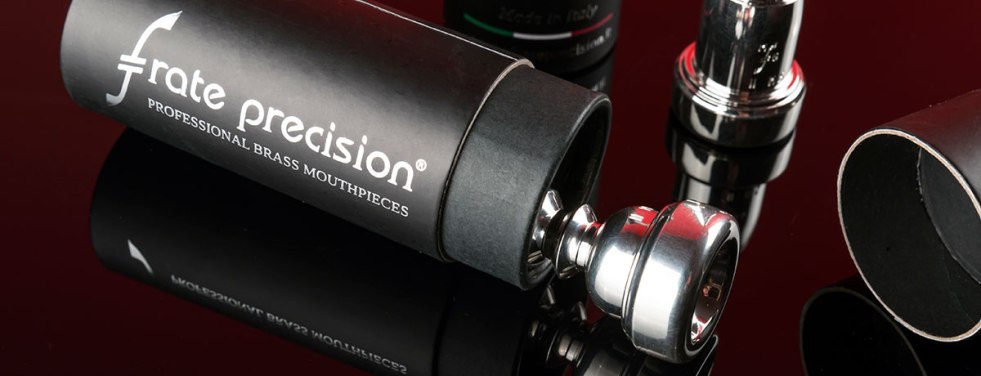
Since 2006 Dario Frate has been designing and making mouthpieces from his base in Lombardy, Italy. The aim across the entire range is to give the player richness of sound, fluidity, and to do it as easily as possible. These are certainly noble ambitions and I was very keen to try some mouthpieces for myself!

I asked Dario to send me a small selection of mouthpieces with the following brief:

  1. An ‘all-rounder’ for a 3C-style player that can accommodate a warm classical sound as well as lighter styles. SELECTED: 3 M,3,106 with a semi-round rim
  2. A possibly shallower version of the above mouthpiece that could help the same player make a brighter sound. SELECTED: 3 HM,106 medium rim shape, medium large backbore
  3. A slightly wider rim mouthpiece aiming at a 1.5C-style player that still gives a degree of versatility. SELECTED: 1 M,3,106 with a semi-round rim
  4. A symphonic style piece allowing a free blow with a rich tonal core. SELECTED: 6+ M,3,106 with a semi-round rim

Below are my thoughts after taking them all through their paces. For general comparison and reference points I have used the Bach sizes to describe them, purely because these are references that most people are accustomed to, and not because they are in any way modelled after the Bach range.

3 M,3,106

First impression on the chops is that this is a very comfortable semi-round rim. The response is quick and the notes slot very easily, far easier than many of the 3C-style mouthpieces that I have played on in the past.

Working through some flexibility exercises (Colin), the word that springs to mind is ‘easy’. There is also a depth to the sound that I often find is missing when playing on a flexible and easy-slotting piece. After playing through some middle register melodies for a few minutes, I am finding that the sound is opening up more as I get used to backing off the air a little bit. This really does tick the boxes that I was looking for with this brief – a solid, warm, centred sound with flexibility and slotting.

3 HM,106

The medium-rounded rim on this has the high point nearer to the centre of the rim rather than the inside. This is really helpful for a little more lip compression without needing to go to a smaller rim size. The cup is also slightly higher without being too shallow. I often find that my fleshy lips bottom out easily on really shallow cups so this seems like a good compromise for me. 

The response is lightning fast with a nice bright yet rounded sound. I am no lead player by any stretch of the imagination but I am able on this mouthpiece to play with good flexibility and control with a centred sound above the stave up to high Fs and Gs – which is the upper limit of my normal controlled, working range. This strikes me as an ideal mouthpiece to look at if you are a legit player looking for a more commercial type piece to switch to when required, and also for more natural commercial players who like a slightly wider rim and a fairly open backbore.

1 M,3,106

This is similar in setup to the first mouthpiece that I played but with a slightly wider inner rim, getting closer to a 1.5C kind of feel. Again, this is really comfortable with a nice balance of cushioning and inner-rim ‘bite’. Flexibility and slotting feel great, and the biggest thing that strikes me is the consistency and depth of sound that I am able to make across the entire range of the trumpet. Playing on these slightly larger rim mouthpieces does not come naturally to me so I have had to spend a good 20 minutes playing through studies and exercises on this one before I can really get the measure of it. And boy was it worth it!!! It has been a long time since I was last able to make a sound this big and broad that still has good control and centre. 

6+ M,3,106

I asked Dario to recommend a setup that could suit a symphonic player who likes the feel of a 1.25C type rim but wants more depth and tonal core. The 6+ that I have been sent has a larger rim diameter than the previous model and slight V-shape to the cup. The sound is huge and still beautifully centred. I have to confess though, that having not played on this style of mouthpiece since college 20 years ago, I am not the best person to really put this through its paces. Some symphonic colleagues of mine here in Manchester kindly agreed to help!

Both of them have generally played on slightly more open feeling mouthpieces to a standard 1.25C, and both agreed that this fits really nicely in that zone. There is a warmth and centre to the broad sound that I am hearing in medium dynamics that holds together really well as they really open up. There are also some really nice increased overtones at the louder dynamics, particularly noticeable on the C trumpet. Feedback from both players is that these feel really comfortable to play too, with the same easy flexibility and slotting that I found on all of the other mouthpieces. You never know, I may have just made a couple of sales here!

In summary, Frate Precision is a really coherent range that sticks to that ethos of richness, fluidity and ease across the entirety. Many mouthpiece manufacturers will make fantastic mouthpieces to suit any player’s requirements and across those ranges will be enormous variation in feel and core sound. This is not a bad thing! We all as players look for THE ONE, so we are so lucky at the moment to have so many dedicated designers and makers who will help us to achieve that goal.

The feature that Dario Frate has brought to his range is that ALL of his mouthpieces should make our jobs as trumpet players, slightly easier, while keeping a rich tonal core in mind. If this is something that you are looking for, you will more than likely find something in this range that suits you.

For further information and expert advice, you can contact Dario Frate directly via his website.

For sales enquiries and advice on which model to select, please visit our Online Store

You may also be interested to read these interviews with Frate Precision artists Massimo Longhi and Fabrizio Bosso, as well as this interview with Dario Frate himself.


Sign up here for new blog articles emailed direct to your inbox:

[jetpack_subscription_form show_subscribers_total=”false” button_on_newline=”false” submit_button_text=”Sign up” custom_font_size=”16″ custom_border_radius=”0″ custom_border_weight=”1″ custom_padding=”15″ custom_spacing=”10″ submit_button_classes=”” email_field_classes=”” show_only_email_and_button=”true”]

Gear Review · Interview

Trumpet Artist Profile: Massimo Longhi

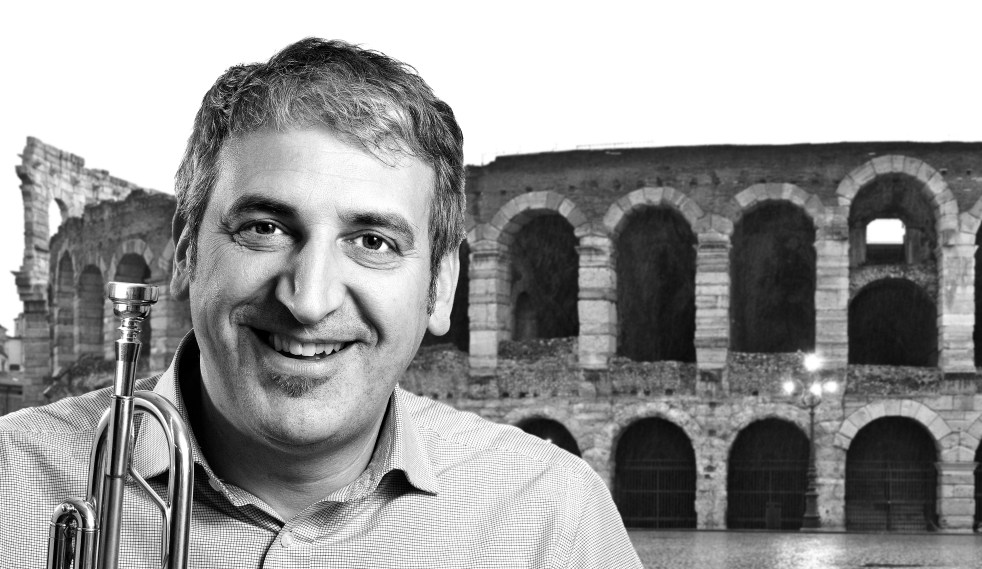
After visiting the Arena in the beautiful city of Verona some 20 years ago, I have been fascinated by not only its history but its use today as one of the most spectacular opera venues that you will ever visit.  Built nearly 2,000 years ago, this outdoor amphitheatre could accommodate over 30,000 spectators, attracting audiences from across the Roman Empire.

What would it be like to work here as Principal Trumpet with its resident orchestra?  Well Massimo Longhi knows!  He has held this position for 25 years now and has kindly shared his thoughts with us.

What got you started on trumpet?

The trumpet came into my life at 10, my grandfather and my uncle played in my family in the village band.

Who and what were your biggest early musical influences?

Certainly, Maurice Andre was decisive, and then the opera, which still fascinates me and stimulates me, and has opened me up to an incredible world and has influenced my way of playing.

Which trumpeters today do you enjoy listening to?

The one and only… Wynton Marsalis

How did joining the ‘Arena di Verona Orchestra’ come about?

The Verona Arena Orchestra is a full-time orchestra that carries out the summer festival in the Arena from May to September and the rest of the year is produced in the beautiful Teatro Filarmonico of the city (18th century theatre) with operas, concerts and ballets.

In 1993 I won the competition for the position of the first trumpet, and have been there ever since.

The Arena in Verona is one of my favourite places to visit! Was it difficult to adjust to playing outdoors instead of a traditional concert hall environment?  Are there any things that you do different technically on the trumpet when playing outdoors?

Every year when we start work in the Arena we need a little bit of acoustic adjustment, the ear has to get used to it. Technically we think we are playing better, rather than stronger, the best thing is to imitate the voice of the singers and to think of projecting the sound.  The less force use, the more the sound projects and sings.  I do not need use any different equipment for playing in this environment.

Are there any favourite memories or highlights from your time so far in the orchestra, that you would like to share?

Today, just as 24 years ago, when I started working in the Arena, the most incredible thing is the moment of silence that precedes the director’s gesture that starts the show and I can assure you that the silence of 15,000 people is magical!

What projects have you got going on at the moment?

In addition to the orchestra, I have been a conductor for some time.  Here is an association that organises my master class concerts and competitions – www.associazionemusicalepozzoli.com

What are the most important things for young aspiring trumpet players to remember?

That the study and the continuous work on the instrument will give the best results, playing an instrument on a professional level means dedicating oneself to it every day.  It’s a bit like trying to fill a bucket with a hole in it!

What gear are you playing on?

I am a Yamaha artist and I use their trumpets but the mouthpiece for the trumpet player is incredibly important!  I play Frate Precision mouthpieces.

What are the benefits that you have found after changing to your Frate Precision mouthpieces?

The first time I tried them I was struck by how they responded to my ideal sound.  It may seem strange but since I use it I have not had any problems with my lips.  I also liked having the opportunity to develop some ideas with Dario and I must say that today I am extremely pleased!

Can you tell us a little about the process involved with selecting your mouthpiece?

Choosing a mouthpiece is not simple but if we base the choice mainly on the sound we want, it is easier to achieve.  Personally, I have to be satisfied with the sound first, and then later I looked for variations on the edge of the rim and the throat that help me to smooth out any imperfections.

Massimo plays on the following model of mouthpiece: Classic Model 2-M-3-106.

For sales enquires and for advice on which mouthpiece to select, please visit our Online Store.

You can find out more about Dario Frate in this interview.

You can read about fellow Frate Precision artist, Fabrizio Bosso in this interview.


Sign up here for new blog articles emailed direct to your inbox:

[jetpack_subscription_form show_subscribers_total=”false” button_on_newline=”false” submit_button_text=”Sign up” custom_font_size=”16″ custom_border_radius=”0″ custom_border_weight=”1″ custom_padding=”15″ custom_spacing=”10″ submit_button_classes=”” email_field_classes=”” show_only_email_and_button=”true”]