Interview

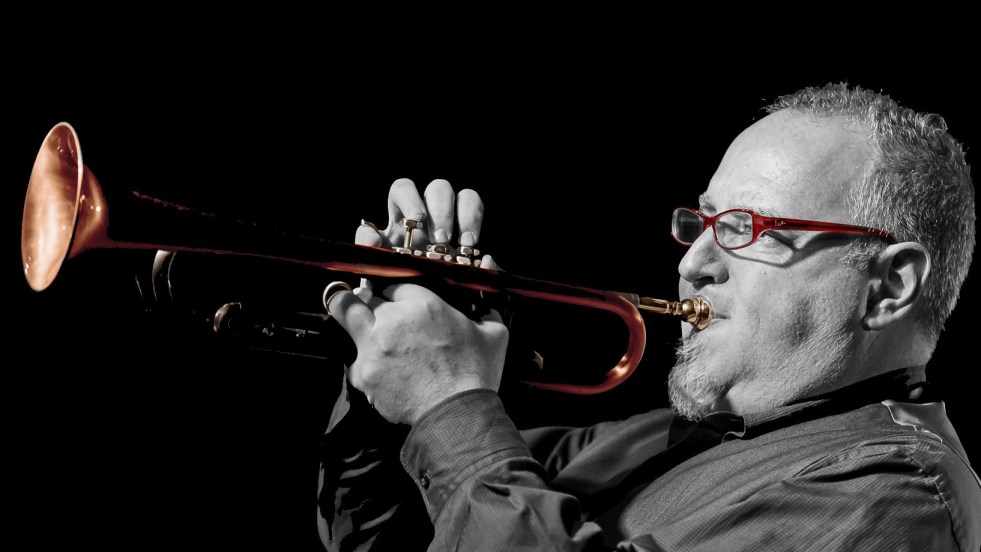
Trumpet Artist Profile : Diego Urcola

‘Trumpet Artist’ is far too narrow a description for Diego Urcola. Perfomer, Band leader, composer, multi-instrumentalist and jazz educator are all monikers that should also be added. Born in Buenos Aires, Argentina, three‑time Grammy nominee Diego Urcola has been a member of the Paquito D’Rivera Quintet since 1991. Additionally, the oft‑in‑demand trumpeter performs regularly with the legendary saxophonist Jimmy Heath, the Caribbean Jazz Project and the Dizzy Gillespie Alumni All‑Star Big Band.

It was great to catch up with NYC-based Schilke artist, Diego for this interview:

Can you give a little background to getting started with the trumpet?

I started playing trumpet in my school band in Argentina when I was 9. I played in the concert, marching and jazz bands. The marching band routine had a New Orleans Jazz part so I started doing that without even knowing that I was playing jazz. My father who was the band director at the time, was a big fan of Sidney Bechet and he had regular jam sessions every Tuesday night at the school with some friends. Those sessions had a big influence on me because I loved the vibe and the improvised music that they were doing… so I decided then that I wanted to be able to do that.

When did you decide that you wanted a career in music?

Around when I was 14, I told my father that I wanted to be a professional musician. He told me that he was OK with it, but from now on I had to practise the trumpet for no less than 2 hours per day. And I’ve been doing that for the last 40 years…

What styles of music have you listened to most over the years?

After my “very early” New Orleans period, I discovered Dizzy, Bird and Miles and I got obsessed about learning the bebop language. I was also studying at the conservatory at that time so I was practicing and listening to a lot of classical music too. Later, already in the USA, I got into more modern jazz styles and also Brazilian, Cuban and South-American music.

How was the transition moving to and studying in Boston, and then later moving to New York?

Well, before I finish high school in Argentina I was already working as a professional trumpet player. I started working with singers, rock bands, musicals, and some orchestral work too. Also I was playing with my own small jazz groups and other jazz bands with musicians 20 or more years older than me. That was when I decided that I needed to move to the USA if I wanted to get better. I won a very good scholarship from Berklee College of Music and that helped me a lot to make the decision to move to the US. After 3 great years in Boston I kind of felt the same way. That in order to get better I needed to be in New York. That was 30 years ago…

I think that I may already know the answer to this, but what have been your favourite gigs?!

Paquito’s Band of course! I‘ve been doing that for the last 30 years! But working with masters like Jimmy Heath, Slide Hampton, Joe Henderson, Ron Carter, James Moody, Bebo Valdes and many others are highlights of my career.

How do your Argentinean roots influence the music that you make today?

A Lot! Especially tango music, the music of my home town Buenos Aires. Also South-American music in general. All music from Latin America has similar roots but they sound very different if you really study them. It’s very rich music, especially rhythmically. 

Can you talk a little about the horns and mouthpieces that you play, and the process of working with Schilke to find the right setup?

Right now I’m playing a Schilke HC2 trumpet with a custom 24B mouthpiece. The HC2 is for me the perfect jazz trumpet. Very flexible and with a dark but very rich sound with a lot of overtones. I have been playing very big rims for a while and I love the Schilke 24 rim. The regular cup of the Schilke 24 is too big for jazz so Schilke made me a 24B that is not in their catalog but it is exactly what I need. I also play a  Schilke 1040 Flugelhorn with a custom 24F mouthpiece. Before, I was never a big fan of the flugel as an instrument because most of them play out of tune, but the new Schilke flugels have perfect intonation and a beautiful sound.

Do you have a set practice routine?   

Yes, I start my day with about 20-30min of long notes. Then I go into a selection of exercises from different books like Caruso, Schlossberg, Flexus and Clarke that I picked out through the years. I play these exercises with different instruments: trumpet, cornet, flugelhorn, piccolo, euphonium, valve and slide trombone. 

How have you managed during this global lockdown? How do you think that musicians are going to need to adapt in the future to deal with may be a very different musical world?

It has been a very interesting time. In a way I have been busy doing videos for social media, home recordings, skype lessons and also working on the promotion of my new album “El Duelo” that came out on September 18th. I don’t think anybody knows exactly how things are going to be after this pandemic is over. All the Internet/Social Media things are interesting but they don’t come close to the experience of performing live. I hope we can get back to that very soon.

What advice would you give to young and aspiring trumpet players?

Practice, practice and practice…but also to diversify. To learn how to compose, arrange, record, computer music (sequencers, loops, samplers, DAW, etc…) and to produce content like videos, music for film and TV. I think this type of knowledge is going to be crucial if you want to make a living as a musician in the future.

What are you working on at the moment or in the future?

I just got a commission/grant from the Jazz Coalition so I’m going to start working on that. Also hopefully in the near future play live the music of El Duelo. 

Thank you very much for the interview and I wish everybody to stay healthy, positive and active until this pandemic is over!

You can visit Diego’s website for more information.

Information on his latest release, “El Duelo” is here.

Click here for the Schilke HC2 trumpet that Diego plays.

And the Schilke 1040 Flugelhorn is here too.


Sign up here for new blog articles emailed direct to your inbox:

[jetpack_subscription_form show_subscribers_total=”false” button_on_newline=”false” submit_button_text=”Sign up” custom_font_size=”16″ custom_border_radius=”0″ custom_border_weight=”1″ custom_padding=”15″ custom_spacing=”10″ submit_button_classes=”” email_field_classes=”” show_only_email_and_button=”true”]

Advice · Education · Interview

Professional Development : Kate Amrine

When I left music college (nearly) 20 years ago, the approach to building a healthy portfolio of freelance work as a trumpeter was rather different to now:  Face-to-face networking; Being in “the right place at the right time” with the right people; Backing up any opportunities by being a “good guy to have around” and a good player.  This was the limit to one’s self-marketing.

It struck me at the time that even when things were busy, and the diary was booked up a couple of months ahead, there was never a feeling of being in control and having ‘ownership’ (this seems to be the buzz word) of your career.  This is what led me to start to explore other things that I could do alongside the trumpet-playing that could bring me more of a sense of control over my own career.

Speaking to younger professionals now, I see quite a different picture.  The opportunities that the internet has brought are vast, and musicians are quickly learning how to maximise what it has to offer. Players now have limitless control over their own image and career.  This series looks at this in more detail:

Next up in ‘Part 2’ to help me look at this in more depth is Kate Amrine.  Kate is a trumpet player and educator based in New York City.  She currently freelances in many different genres from Orchestra to Broadway, and also is an active soloist, currently working on her second album.  Music entrepreneurship has always been an interest and she recently presented her “Designing your Career in Music” masterclass at New York University where Kate has been an Adjunct Professor since 2013.

How did you find the transition from college to working as a trumpet player?

When I first moved to NYC 8 years ago to start my undergraduate degree at New York University, I remember being so enamoured by being able to play so many different styles and seeing so many opportunities to play everywhere I looked.  The sense of wonder and amazement hasn’t diminished but now it is accompanied with the knowledge of knowing how much work everything requires and knowing that sometimes things just don’t work out, no matter how much work goes into it.  Since I moved here, I have recorded a solo album, started recording my second album, became a composer, performed 2 concertos as a soloist with orchestra, given countless recitals, played on Broadway, and many more things.  It is an exciting time to be a musician, yet I know that it is very different than it was even as little as ten years ago.  I currently teach all ages from elementary school to college students at NYU and I really enjoy helping musicians find their path and purpose.  I have written many posts about how I started freelancing in New York and other various aspects of being a musician on my blog.  Check them out here: http://kateamrine.com/blog

I knew pretty early on when I moved here that my reputation started immediately – both as a person and as a musician.  Even when I was a student and still learning, I knew that every time someone worked with me and heard me play that it was an opportunity that could further my career – no matter how small the gig, how much it paid, or what kind of music it was.  I still have that mindset that anyone and everyone is always listening, and I think it is one of the most valuable things to keep in mind when building a career as a musician.

What did you expect working life to be like when you were at college?  Were you given any career development guidance?  Was the reality of working life different to how you imagined it?

I had huge preconceptions of what music school was like – most of which were tied to what I thought I needed to know upon graduation.  For example, I assumed that I was supposed to learn all of the brass quintet repertoire in college and I didn’t want to be unprepared when I graduated if I was called for something, so I put together a group and ended up learning a good majority of the brass quintet rep by performing it in the subway.  I was so concerned about being behind and unprepared when I graduated that I over prepared and tried to do as much as possible to get ready for life after graduation.  I took some music business classes at school but quickly realized that a lot of what I was expecting to learn about “the real world” I was going to have to learn myself.  I constantly met with other musicians to learn from them over coffee.  I listened to many music entrepreneurship podcasts.  I read many of the books designed to help students figure out what’s next.  I was always fascinated with how musicians build their careers from their own personal interests, what pays the bills, navigating admin and teaching jobs and more.  I had some admin experience during school: working for trumpeter Jeremy Pelt as his assistant, working for the Festival of New Trumpet Music, and assisting John Rojak the head of the Brass Dept at NYU.  I was incredibly grateful for these experiences because I learned so much about life, being a musician, how to put projects together, and more – all of which prepared me so much for everything I do today.

Despite everything I did to be in the best possible situation when I graduated, in my third year at NYU I found out I was going to be graduating a year early so I had to accelerate my plans and get my career plans in order.  Even here in NYC, I felt like being in school can be such an uncomfortable bubble where your whole world is determined by the people around you and it can be hard to break out of that.  Some of my colleagues didn’t always have the best attitudes and weren’t inspiring positive influences to be around, and that was sometimes difficult to try to ignore.  Fortunately, the majority of my colleagues were great, and I was excited to be in ensembles outside of required orchestra – playing new music, recording for films, and more.  I knew that things would be different after I graduated but there were so many things that I couldn’t have realized or prepared for when I was still stuck in the “bubble” of school.  I subsequently learned so much more in that year out of school than I had in my last year of undergrad because I figured out how good I really needed to be to be a working musician, how to master time management and be the most productive, and so many more things that weren’t quite possible to really grasp when I was in school.

The biggest difference I felt after I graduated was that I wasn’t being seen as much as I had been while in school at NYU.  I would see other musicians in the practice rooms, in class, in rehearsal, and around campus and then they would think of me as someone to work with for upcoming projects.  However, when I graduated and spent more time practicing at home and playing occasional gigs, I didn’t see as many people who I could potentially work with as I had been at school, and I remember feeling a sudden shift and dip in my gig income where I soon realised I needed to figure out a new plan.  I figured out that I needed to make more of a conscious attempt to be seen – both online and in person at gigs.  I had to talk with people, get to know them and what they were involved in and be more personally engaged in being a more direct part of other people’s projects and the community.  Only after this mindset shift and a drastic improvement in my playing did I start to see some big changes in the year after I finished my undergraduate degree.

Do you think that educational institutions need to look again at how they prepare students for a career in music?

I do think that educational institutions need to revisit the way they prepare students for a career in music, but I think it will be a long time before the change is made.  For example, I knew that my income after school would be combining what I earned from any admin or teaching jobs with what I earned performing.  However, I never took any classes on teaching in my undergraduate degree because they never fit with my schedule as a performance major.  There are also so many “area specific” things that I think are harder to teach on a national level, particularly how to get started freelancing in a scene like New York where there are already so many accomplished and talented people everywhere.  I also remember hearing stories about the old days where someone graduates, and they are immediately handed a Broadway show, or they take their first ever orchestra audition and get the job. These kinds of things don’t happen too often anymore, and I think schools should prepare their students more for building a diverse income of multiple streams not from one position or even particular style of music.

Another thing that I think is important to mention is that we don’t have to do this alone.  When we are looking to get better at a certain type of music or area of our practice, we take a lesson.  If you are looking to get more in shape, then you hire a personal trainer.  Last year I was looking to get more organized in my career and I started working with a coach.  Having someone who isn’t a friend, or your parents listen to your dreams, goals, and help push you in the right direction is such an invaluable experience and I definitely recommend it.  I think someone graduating college and thinking “what do I do now??” is probably the clearest example of someone who would benefit from working with a career coach but that isn’t the only type of person who would benefit from being focused and introspective.  I consider myself to be very organized and self-aware yet the process of talking to someone who isn’t personally invested in my own projects has been extremely helpful in figuring out exactly what I want to be doing and how to get there.

image2

You have a number of varied and interesting projects that you have put together.  Can you tell us a little about them?

Currently I am working on a bunch of different projects and I feel so lucky and inspired to be a part of them.  My newest one is eGALitarian – a brass ensemble comprised of women playing music by women composers.  Our goal is to inspire women in the community and make a difference for the women around us.  In addition to our standard concerts, we are collaborating with different organizations in the community to make an impact.  With my colleague Becca Epstein-Boley, I run the Brass Chicks Blog where we publish interviews with prominent female brass players and feature a weekly Five Things Friday post written by a member of the community.  We curate the content and plan the social media as well.  I also recently joined Wavefield, a new music ensemble where we will be doing some teaching and performing a few concerts at Carnegie Hall.  My friend Kate Barmotina and I have been collaborating as a duo (Kate squared) and putting together concerts featuring women performers and women composers.  Outside of these projects, I have been doing a bit more composing and am getting pieces and recordings together for my second album featuring new music inspired by politics and social concepts.  I recently put together a solo show of this music and it was reviewed here:
https://nationalsawdust.org/thelog/2018/08/24/in-review-kate-amrine/

I notice that you are involved in a number of all-female groups and music blogs etc.  Would you say that things are better now for female brass players?  There are certainly a larger number of high-profile female brass soloists now.  Would you say that this reflected on the freelance scene in NYC?

There are certainly a higher number of female brass soloists than there were, and it is very exciting.  I always try to show my students examples of both men and women performing. Growing up I didn’t really see too many examples of prominent female brass players, although my first two trumpet teachers were women in the military bands in DC.  In terms of the general treatment of female musicians, it is hard to say if things are necessarily “better now” than they were 20 – 30 years ago… especially since I was very young then.  With the rise of social media, there is certainly a greater access to education about the wide variety of brass players out there, but it hasn’t necessarily made its way into pop culture as much.  I still occasionally get comments from audience members and non-musicians asking about my lung capacity as a woman and commenting on how my gender is pretty rare as a brass player.  As awful as it is, I think that the ‘Me Too’ era has been a great thing for interactions with people of all genders and sexualities.  There is a serious reckoning in the arts world (from classical organizations like NY Phil, the Met, NY City Ballet to movies and more) and people are realizing that certain behaviour should no longer be tolerated and passed over.  This will create more respectful environments for all musicians and it is very exciting.

I do think the New York City freelance scene is much more diverse now than several years ago.  Usually I am not the only female musician in the brass section, but there are some subsets of NYC freelancing, like Broadway for example, that could certainly be a bit more diverse.  On the other hand, a vast majority of my performances this month in September have been with all female ensembles so there are many women around who are collaborating to create new and interesting musical experiences.

How differently do you approach “just promoting yourself”, to promoting a particular project?  I like your “Trumpet Tips Tuesday”!

Thank you!  I’ve been having a great time with the Trumpet Tips Tuesday videos and it has been a fun thing to work on.  If you haven’t checked out any of the Trumpet Tips videos, please check out my Instagram @katetrumpet or search for #TrumpetTipsTuesday .  I think of promoting myself as highlighting everything about me, from sharing a selfie, what I like to eat (donuts), the commute to a recent rehearsal, and more.  Promoting ME is basically a complete package of this is the kind of person I am;  this is what it would be like to study with me, work with me, and/or interact with me.  Promoting a project is a lot more calculated and planned out based on the release date, who else is involved, and more.  The most successful project that I promoted (other than Brass Chicks, which is continuous and ongoing) was my album As I Am.  The funds for my debut album were raised through crowdfunding on Indiegogo’s Generosity platform and all of the posting and contacting people about it in the months before the recording sessions was a very involved process.  I ended up raising about 80% of what was needed, which equated to $6500, and was unbelievably helpful to the completion of the album.

How do you keep track of your promotional activities?  Do you draw up a plan/strategy for each project, or is it more instinctive?

I keep track of marketing and promotion by making a calendar with a note for what I’m posting on each day.  Since I mostly post the same things on each platform like Facebook and Instagram, it is generally pretty easy to keep track.  Having a whole week or month planned out is perfect for seeing the trajectory of what I’m posting. I can plan to highlight different upcoming gigs, time out promotion for a show just right, and make sure I don’t share too many of one kind of post too often.  I don’t usually post different things on each account, but some things are better on Instagram than Facebook.  For example, if I am advertising a new blog post then I’ll either screenshot it (for Instagram) or post the link and a description on Facebook.  Similarly, sharing relevant NY stories or political things is definitely better for Facebook and I use the Instagram story feature to show little highlights throughout my day.  I also always try to keep track of my audience.  Personally, my audience on my Facebook personal page and even my artist page is mostly comprised of fellow freelancers and people I know in New York City while my Instagram is more connected internationally to trumpet players and artists everywhere.

With your crystal ball, how do you think things will change further for musicians looking to promote themselves, and find & engage new audiences?

I honestly think it is a very exciting time for musicians looking to promote themselves and expand their audiences because anything can happen.  There are some seriously creative chamber ensembles out there, like the Melodica Men, Too Many Zooz, Two Cellos, and more where musicians have found their own artistic voice and are able to make money performing.  In a way this puts a different kind of pressure on young musicians because it is almost not enough anymore to graduate with a good take on orchestral excerpts and standard solo repertoire – expecting to be employed.  The most successful musicians today are the ones who can book their own performances, network with other musicians, and have a strong musical vision for the kind of music they want to perform.

Website: kateamrine.com

Instagram: @katetrumpet

Facebook: @kateamrine

Blog: kateamrine.com/blog

You may also be interested to read ‘Professional Development’ Part 1, which gets the thoughts of UK-based trumpeter and marketer, Becca Toft.


Sign up here for new blog articles emailed direct to your inbox:

[jetpack_subscription_form show_subscribers_total=”false” button_on_newline=”false” submit_button_text=”Sign up” custom_font_size=”16″ custom_border_radius=”0″ custom_border_weight=”1″ custom_padding=”15″ custom_spacing=”10″ submit_button_classes=”” email_field_classes=”” show_only_email_and_button=”true”]