Interview

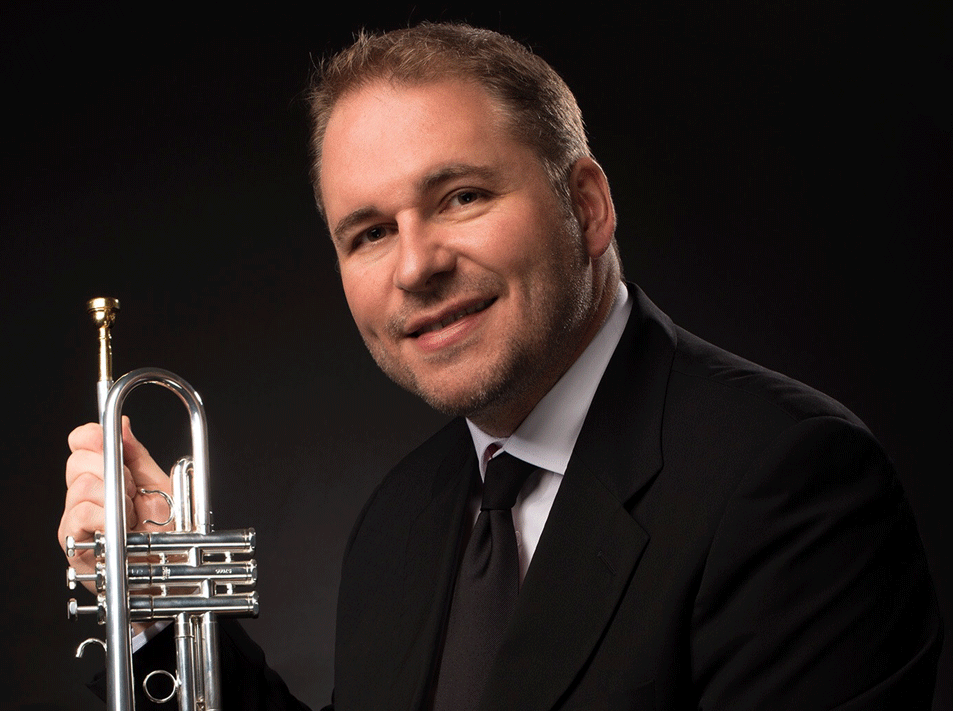
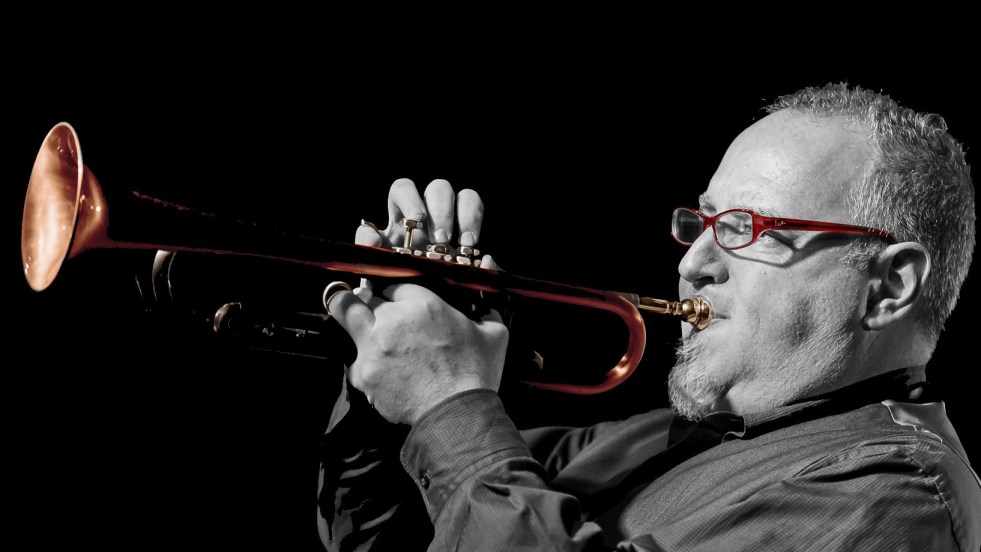
Trumpet Artist Profile : Diego Urcola

‘Trumpet Artist’ is far too narrow a description for Diego Urcola. Perfomer, Band leader, composer, multi-instrumentalist and jazz educator are all monikers that should also be added. Born in Buenos Aires, Argentina, three‑time Grammy nominee Diego Urcola has been a member of the Paquito D’Rivera Quintet since 1991. Additionally, the oft‑in‑demand trumpeter performs regularly with the legendary saxophonist Jimmy Heath, the Caribbean Jazz Project and the Dizzy Gillespie Alumni All‑Star Big Band.

It was great to catch up with NYC-based Schilke artist, Diego for this interview:

Can you give a little background to getting started with the trumpet?

I started playing trumpet in my school band in Argentina when I was 9. I played in the concert, marching and jazz bands. The marching band routine had a New Orleans Jazz part so I started doing that without even knowing that I was playing jazz. My father who was the band director at the time, was a big fan of Sidney Bechet and he had regular jam sessions every Tuesday night at the school with some friends. Those sessions had a big influence on me because I loved the vibe and the improvised music that they were doing… so I decided then that I wanted to be able to do that.

When did you decide that you wanted a career in music?

Around when I was 14, I told my father that I wanted to be a professional musician. He told me that he was OK with it, but from now on I had to practise the trumpet for no less than 2 hours per day. And I’ve been doing that for the last 40 years…

What styles of music have you listened to most over the years?

After my “very early” New Orleans period, I discovered Dizzy, Bird and Miles and I got obsessed about learning the bebop language. I was also studying at the conservatory at that time so I was practicing and listening to a lot of classical music too. Later, already in the USA, I got into more modern jazz styles and also Brazilian, Cuban and South-American music.

How was the transition moving to and studying in Boston, and then later moving to New York?

Well, before I finish high school in Argentina I was already working as a professional trumpet player. I started working with singers, rock bands, musicals, and some orchestral work too. Also I was playing with my own small jazz groups and other jazz bands with musicians 20 or more years older than me. That was when I decided that I needed to move to the USA if I wanted to get better. I won a very good scholarship from Berklee College of Music and that helped me a lot to make the decision to move to the US. After 3 great years in Boston I kind of felt the same way. That in order to get better I needed to be in New York. That was 30 years ago…

I think that I may already know the answer to this, but what have been your favourite gigs?!

Paquito’s Band of course! I‘ve been doing that for the last 30 years! But working with masters like Jimmy Heath, Slide Hampton, Joe Henderson, Ron Carter, James Moody, Bebo Valdes and many others are highlights of my career.

How do your Argentinean roots influence the music that you make today?

A Lot! Especially tango music, the music of my home town Buenos Aires. Also South-American music in general. All music from Latin America has similar roots but they sound very different if you really study them. It’s very rich music, especially rhythmically. 

Can you talk a little about the horns and mouthpieces that you play, and the process of working with Schilke to find the right setup?

Right now I’m playing a Schilke HC2 trumpet with a custom 24B mouthpiece. The HC2 is for me the perfect jazz trumpet. Very flexible and with a dark but very rich sound with a lot of overtones. I have been playing very big rims for a while and I love the Schilke 24 rim. The regular cup of the Schilke 24 is too big for jazz so Schilke made me a 24B that is not in their catalog but it is exactly what I need. I also play a  Schilke 1040 Flugelhorn with a custom 24F mouthpiece. Before, I was never a big fan of the flugel as an instrument because most of them play out of tune, but the new Schilke flugels have perfect intonation and a beautiful sound.

Do you have a set practice routine?   

Yes, I start my day with about 20-30min of long notes. Then I go into a selection of exercises from different books like Caruso, Schlossberg, Flexus and Clarke that I picked out through the years. I play these exercises with different instruments: trumpet, cornet, flugelhorn, piccolo, euphonium, valve and slide trombone. 

How have you managed during this global lockdown? How do you think that musicians are going to need to adapt in the future to deal with may be a very different musical world?

It has been a very interesting time. In a way I have been busy doing videos for social media, home recordings, skype lessons and also working on the promotion of my new album “El Duelo” that came out on September 18th. I don’t think anybody knows exactly how things are going to be after this pandemic is over. All the Internet/Social Media things are interesting but they don’t come close to the experience of performing live. I hope we can get back to that very soon.

What advice would you give to young and aspiring trumpet players?

Practice, practice and practice…but also to diversify. To learn how to compose, arrange, record, computer music (sequencers, loops, samplers, DAW, etc…) and to produce content like videos, music for film and TV. I think this type of knowledge is going to be crucial if you want to make a living as a musician in the future.

What are you working on at the moment or in the future?

I just got a commission/grant from the Jazz Coalition so I’m going to start working on that. Also hopefully in the near future play live the music of El Duelo. 

Thank you very much for the interview and I wish everybody to stay healthy, positive and active until this pandemic is over!

You can visit Diego’s website for more information.

Information on his latest release, “El Duelo” is here.

Click here for the Schilke HC2 trumpet that Diego plays.

And the Schilke 1040 Flugelhorn is here too.


Sign up here for new blog articles emailed direct to your inbox:

[jetpack_subscription_form show_subscribers_total=”false” button_on_newline=”false” submit_button_text=”Sign up” custom_font_size=”16″ custom_border_radius=”0″ custom_border_weight=”1″ custom_padding=”15″ custom_spacing=”10″ submit_button_classes=”” email_field_classes=”” show_only_email_and_button=”true”]

Advice · Gear Review · Interview

Marc Geujon and the New Schilke ‘Soloiste’

Marc Geujon is Principal Trumpet of the Orchestre de l’Opéra National de Paris.  As well being a Professor at the Conservatoire de Saint Maur des Fossés, he is growing in reputation as a soloist and educator.  September 2018 will also see Marc take up a teaching position at the Conservatoire National Supérieur de Musique de Paris. I was delighted to be able to catch up with him and also to find out about his latest collaboration with Schilke.

 What drew you to the trumpet as a child?

When I was 11, I asked my parents if I could learn music.  After one year of learning theory and reading notes, I asked the music school if I could try trombone.  The music school director answered, “There are no more trombones available, you will learn the trumpet…!”.  I began with a non-professional teacher in my village.  One year later, I passed an audition to enter the regional conservatory.  The trumpet teacher didn’t want to take me in his class, because my sound and level were so terrible, and he told me to learn the tuba.  I refused…  He said, “Ok… stop playing during the summer and we will start at the beginning in September.  Four years later, I graduated from the conservatory and joined Eric Aubier’s class for 1 and a half years.  After, I entered the Paris Conservatoire.

Were there any particular early musical influences, or any musicians now that you particularly admire?

As with a lot of players, my first recordings were of Maurice André.  And the CD which persuaded me to become a trumpeter was “Great French Trumpet Concertos” from Eric Aubier.

It was the reason why I asked to study with Aubier.  He taught me a lot, especially on stage.  When I was around 20, he asked me many times to play some baroque pieces for 2 trumpets or more with him (Vivaldi, Molter…) and also played the second part in Bach Masterpieces with him.  It was an incredible experience for me.

Now, I’m a big fan of Reinhold Friedrich, Matthias Höfs, Pacho Flores… As orchestral players, I love Gábor Tarkövi, Peter Masseurs, Frits Damrow, David Bilger, Michael Sachs…

https://youtu.be/Tvua70Ctjfc

Do you have a set practise routine that works for everything, or do you have to change it drastically depending on what gigs you have in your diary?  Does your practice change drastically from doing an operatic run, or a recital tour for example?

I have a practice routine that works for most of my days.  Basics from Michael Sachs Daily Routine, Plog Program, Stamp, Arban, Clarke…  It depends on the time I have to practice.  I try to think the trumpet to be as natural and easy as possible…  I work every day in that way.  The only thing very important is that I need to practice in the morning, every day.  I drive my kids to school every morning and begin my warm-up at 8:30am.

How does this change when you are travelling?

The problem is to play in the hotel room, with a practice mute.  And also the jet lag… but I try to keep my routine and to do my best despite the hours, places and climate.

When you are teaching, have you found that your emphasis has changed over the years as your own experiences and playing develops and changes?  Are there particular ‘schools of thought’ or strict ‘methods’ that you like to use with your students?

Yes, I have evolved a lot in my playing and teaching year after year.  I try to be a student in my mind every day.  I listen to a lot of music, I practice a lot of new things, I buy a lot of new books… so I try to share all my experiences with my students.

The most important thing I try to teach is “Trumpet playing must be easy”.  I have the chance to see most of world’s best singers on stage every evening.  The better they are, the easier they sing!  It takes a lot of time and practice to play with easiness, but it’s so important and useful…

Marc Geujon

What are the key things that young aspiring players should concentrate on?

Sound, rhythm, music…and practice!

What has the process been like working on new Trumpets and Mouthpieces with Schilke? Can you tell us a little about how that relationship came about and what the design process was like?

Around 12 years ago, I was in a music shop in Paris to try a Schilke P5-4 piccolo for a colleague.  Andrew Naumann, Schilke owner and president, and Phil Baughman, sales manager, were in the upper floors of the shop.  They heard me playing the piccolo and offered me a Bb trumpet t try, a B1 anniversary model. I wasn’t a fan of that model, but I tested also a C trumpet (a C3) and it was so much easier to play compare to my Bach C.  I bought it, and an X3 Bb one month later.

I met Andrew Naumann and his wife Julie several times after that, and I’m lucky to say that we are good friends now.  I have played Schilke for 12 years now (C3, X3, E3L, G1L, P7-4, C5-4, XA-1…).  When Schilke created their HD models, Andrew asked me to test them.  They were good horns, but too stiff for me.  We developed the C3HD, which was a little bit more flexible and brighter.  It was better, but I was not completely satisfied for my playing style.  Andrew and I discussed a completely new project.  A new line which keep the standard qualities of the Schilke trumpets, but with a more orchestral instrument, with a beautiful rich sound, a lot of core, brilliance, and extremely flexible.

Soloiste-Bb-Silver
The Schilke Soloiste Bb Trumpet

After 18 months of design and research, the Soloiste series was born. A new C and a new Bb trumpet, completely new…  Not an assembly of existing parts, or small modifications on existing horns…  And I can say that these trumpets are the best trumpets I have ever played.

Soloiste-C-Gold
The Schilke Soloiste C Trumpet

In February, I was at the Schilke factory to finalize the Bb Soloiste with Andrew, and I asked Chris Jones, the Schilke mouthpiece production manager for a mouthpiece which fits perfectly with my Soloiste new trumpets. He made an incredible mouthpiece for me, and the Schilke Soloiste MG mouthpiece was born…

Most enjoyable project or gig?

I can say that it’s Christmas every day for me.  I’m a lucky guy! I play in a wonderful orchestra, the Opera National de Paris orchestra, with a very nice and talented brass section.  I play chamber music with the Opera brass quintet.  I play regularly with piano or organ for recitals, and more and more with orchestra for solo concerts.

Every time I play, it is a good moment for me.  And I love to meet other musicians from all over the world to play, discuss and share…

Proudest professional moment?

Perhaps ‘Pictures at an Exhibition’ in Vienna Musikverein with the Paris opera orchestra… a wonderful moment with my colleagues.  It was a change from our usual work in the pit.

https://youtu.be/W0-lJVmsDXg

What have you got coming up that you are most looking forward to?

I would love to record CDs now.  It would be a good time in my life to do that… and I would love to travel more to play and teach French trumpet repertoire.

Thanks for your time Marc, is there anything else that you would like to add?

I would just like to thank very much my family for all the love they give me, Andrew and Julie Naumann with all the Schilke team for all their support and kindness, all the musicians I have met who have taught me something extra, and also, thank you, John for asking me these questions! 😉

Please visit Thompson Music to find out more about the new Schilke Soloiste Trumpets on the links below:

Schilke Soloiste Bb Trumpet

Schilke Soloiste C Trumpet

To find out more about Marc Geujon, please visit his website


Sign up here for new blog articles emailed direct to your inbox:

[jetpack_subscription_form show_subscribers_total=”false” button_on_newline=”false” submit_button_text=”Sign up” custom_font_size=”16″ custom_border_radius=”0″ custom_border_weight=”1″ custom_padding=”15″ custom_spacing=”10″ submit_button_classes=”” email_field_classes=”” show_only_email_and_button=”true”]