Gear Review · Interview

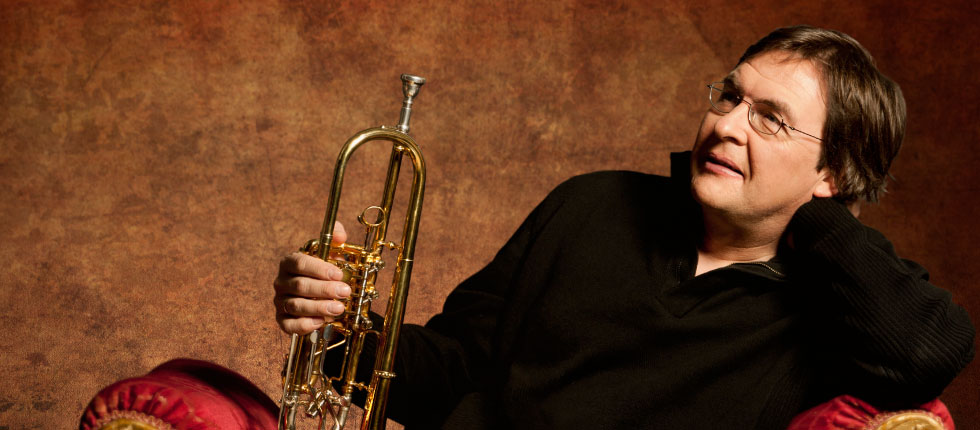
Trumpet Artist Profile : Matthias Höfs

Matthias Höfs is a trumpet player and musician of the highest order. He is Professor of Trumpet at the University for Music and Theatre in Hamburg, and an acclaimed soloist and chamber musician in his native Germany and around the globe.

Last year’s release of his ‘Bach Trumpet Concertos’ album – beautiful performances of great Bach concertos arranged for the trumpet – led to me being mildly obsessed with any of Matthias’ recordings that I could get my hands on! A truly astonishing feat of music-making [IMHO!]. It was a real privilege to catch up with him here for this article:

Please can you give a bit of background to what got you started playing the trumpet and who your early musical influences were?

As a young boy, I would hear stories from my grandmother about my grandfather, who was an avid trumpet player in the church’s brass ensemble. Unfortunately, I never got to know him, but when my parents later asked me (I had just turned 6 years old) if I wanted to learn an instrument, I remembered my enthusiasm for the trumpet from those stories. On top of that, I was also fascinated by such shiny gold instruments!

As I had absolutely no musical training (I couldn’t read a single note), I started to learn solely by ear and would try to play melodies from the radio. Unknowingly, it was a very good method to train the ear and feeling for the instrument. Finally, when I was 11 years old and came to learn with my first teacher, Prof. Peter Kallensee, the then solo trumpet player of the Hamburg Philharmonic State Orchestra, my wish was clear: to play solo trumpet in a large symphony orchestra. To this day I still spend a lot of time on stage with friends from my youth orchestra days. Since 1980 I have played together with Christoph Baerwind, Uwe Füssel, and Werner Heckmann, all of whom were also later members of German Brass.

At what point in your career did you realise that solo performance and musical innovation would play an important part for you?

I have always had a desire to play music with my friends. Since there was however, very little chamber music for trumpet, I began very early on to arrange for a wide variety of instruments so that I could also play music with strings and woodwinds. Then, when I was engaged as the principal trumpet of the Hamburg State Opera at age 18, I enjoyed a great support from my chief conductor, who let me regularly perform as a soloist with the orchestra. In 1984 the invitation came to join the newly established ensemble, German Brass. I will never be able to forget the ensemble’s first concert. The trumpet group at the time consisted of Konraden Groth, Günther Betz, Reinhold Friedrich and my humble self! Since then German Brass has been like a family and has strongly influenced my playing.

How do you manage to juggle multiple projects alongside keeping your trumpet playing at the highest level?

When you are passionate about something, you can always find room to consistently pursue what is important to you. So I have, for example, no scruples about a practice session in an empty airport gate before a connecting flight, or to practise in a car park if there is nothing better available. I also enjoy practising outdoors under the open sky. This happens sometimes during tours in the warmer months while we’re travelling by car, we’ll look for a rest area in a remote forest.

Have your practice routines and practice sessions changed much over the years?

I don’t have any ‘Routine’ and don’t like purely technical exercises without a hint of music. For me, a sense of feeling for the body and embouchure is very important. If you can ‘save’ a good feeling, then you can make your warm-ups very compact and save a lot of time. 

©Sibylle Zettler

What are the key things that young aspiring players should concentrate on?

We will make the most progress when we try to play music with the greatest joy, ease and relaxation, and only ask of ourselves the things that we can play in a controlled manner. 

Would you say that your approach to trumpet teaching has changed much over the years, and if so, how?

For me, it is very important to see the trumpet as a musical medium and not as a sort of sport. The tone and expression stand in the foreground. Naturally, technique also helps us to implement this and with it to gain assurance. However, the pressure of performing at auditions and competitions has increased enormously over the years. The standard is constantly climbing and there are always more and more better players and fewer jobs. Because of that, psychological aspects play an ever-increasing roll in lessons. 

You have worked closely with a number of makers and artisans on helping to develop new and better products. Please can you talk a little on the process of developing the Vhizzper with our mutual friend, Christoph Baerwind?

The Vhizzper Mute is the idea and product of my friend and German Brass colleague, Christoph. I have accompanied and followed the stages of its development through repeated testing and playing. Because we are more or less neighbours and have known each other since childhood, this is very easy, uncomplicated and effective. This practise mute is a great asset for our equipment and another tone colour that we can use for more than just practising.

What has been your most enjoyable project to be a part of?

There are so many wonderful moments for me that I have been able to experience through music over the years, that I find it very difficult to name a single concert or moment. Naturally, it is often the Premiers, the famous ‘first time’, that stays in everyone’s memories: the first concerto with a large orchestra, the first opera, the first German Brass concert…

At the time of writing, we are all in a strange worldwide state of lockdown due to Covid 19. Has this enforced break made you change your perspective or think differently at all on any aspects of life or music-making?

Naturally, these times change all of our thoughts and actions. What we musicians realise, and I think also our audience is there is no alternative to live concerts or operas. This energy can only be freed together with the audience in this special acoustic and atmosphere. Naturally, we are also grateful that at the moment through the internet, we still have the opportunity to convey anything at all. But that cannot at all replace live performances. If there is something positive to see in the situation, it’s the time that we suddenly have with family. You can practise and arrange without the pressure of a deadline, and reflect on the essential things…

What are your ambitions for the future?

Of course, we are all craving to play concerts together again and to be able to bring everything than we are planning now onto the stage. For me, it is something fantastic if it succeeds in bringing our instrument, the trumpet, new works either self-arranged or to be commissioned, where we can show new colours or techniques. The collaboration with my instrument maker Max Thein is also, for me, very inspirational and satisfying when we manage to continue to improve the instrument or to develop new models. For me, to share my experiences and the passion for my instrument and the music with my students at the University for Music and Theatre in Hamburg is very fulfilling. What more could you wish for?!

To find out more about Matthias Höfs, please visit his website.

Please click here to read the review of the excellent Vhizzper Mute


Sign up here for new blog articles emailed direct to your inbox:

[jetpack_subscription_form show_subscribers_total=”false” button_on_newline=”false” submit_button_text=”Sign up” custom_font_size=”16″ custom_border_radius=”0″ custom_border_weight=”1″ custom_padding=”15″ custom_spacing=”10″ submit_button_classes=”” email_field_classes=”” show_only_email_and_button=”true”]

Gear Review

Vhizzper : Mute Review

So, here is a really interesting new product that I have been sent through for review… The Vhizzper mute is the brainchild of Christoph Baerwind, trumpeter in ‘German Brass’ and ‘Der Orchester der Hamburgischen Staatsoper’.   The essential concept is a practice mute that can also be used as a mouthpiece mute.   This is not something that I have encountered before so was fascinated to give it a try.

This mute is adjustable so that you can alter the resistance level and volume. It also comes in 3 colours as pictured above! To start with I used it as a traditional mute. I spent a minute or so trying the different resistance/volume settings and found that I was most comfortable playing at the halfway point between closed and open. This seems to give the best balance for me, but even with the adjuster completely open, the volume is still nice and soft.

I have to confess that it took a little while to get to grips with this mute. Notes were not really where I was expecting them, and I did not really feel in control. However, what I found after a short while was that as soon as I backed off a bit and tried to imagine that there was no mute in, it became easy! I had been over-blowing, which I can only assume is the way that I have always subconsciously approached practice mutes in the past.

It is such a breath of fresh air, being able to blow naturally and keep the centre of the notes exactly where I want them. Once I got used to playing with less effort, even my low C was in tune – this has been sharp to varying degrees on every practice mute that I have ever played. Intonation and response across the range is also very even.

Not only is this a good tool for doing that essential practice when noisemaking is not convenient, I can also see it as a great training tool. Sometimes when faced with a student who just needs to get used to blowing more and keeping the throat open, I have prescribed short bursts of playing with a more traditional practice mute such as a Denis Wick, to add resistance to help with that. In contrast, I can see the Vhizzper being a really useful tool for helping students to develop their lower breathing muscles, and keeping really natural airflow and support.

Next I set the adjuster to the closed position which seems to give the best response for me when using just with the mouthpiece (as pictured above). I have always liked to incorporate lots of free and mouthpiece buzzing into my practice and teaching. It can be a great way of really forcing you to concentrate on the absolute basics of breathing, control and blowing, without getting hung up on the sound. I have tried lots of buzzing aids including the Berp and the Buzzard and found them to have a really positive impact. The Vhizzper is another good product to add to this category.

It adds a little more resistance to your natural mouthpiece buzz so that it comes slightly closer to the feeling that you get when playing the trumpet. It also adds a little more resonance, which is surprising seeing as it is also muting the sound! This helped my general range for buzzing (I have always struggled to get a good natural buzz when playing in both extremes of high and low) and also naturally encourages you to support the airflow in the same way that you would want to play the trumpet.

In summary, I am very impressed! The very nature of a practice mute is that there is a large element of compromise. You are going to lose a level of response, intonation and natural vibration in return for a quieter sound. However, the Vhizzper keeps these compromises to a minimum, stacks up well against the alternatives on the market, and also gives you a valuable mouthpiece buzzing tool. It is certainly worthy of place in any trumpeter’s mute armoury!


Sign up here for new blog articles emailed direct to your inbox:

[jetpack_subscription_form show_subscribers_total=”false” button_on_newline=”false” submit_button_text=”Sign up” custom_font_size=”16″ custom_border_radius=”0″ custom_border_weight=”1″ custom_padding=”15″ custom_spacing=”10″ submit_button_classes=”” email_field_classes=”” show_only_email_and_button=”true”]