Interview

Trumpet Artist Profile: Jerry Hey

Jerry Hey is one of the most prolifically recorded trumpet players around. His style, sound and musicality made him the go-to guy on the LA scene, and as a horn arranger he is second to none. His collaborative projects with the great Quincy Jones are now legendary, and even now, after 40 years at the very top of the business, Jerry is still the man to go to for scintillating horns.

From a personal perspective, Jerry is the reason that I picked up a trumpet as a child after hearing those early Michael Jackson albums, so I was delighted that he could spare me some time to answer a few questions:

10155247_745011175540487_3006028246139385832_n
Jerry playing with Seawind in the ’70s

My reason for first picking up a trumpet was hearing you on those Michael Jackson tracks! What was yours?

My father was a trombone player and my 10-year older brother had a bugle he played in the Boy Scouts that I picked up as a child.

Who would you say was your biggest musical influence in those early days?

Clifford Brown – my father heard him live in Chicago and bought his first record.

VISIT THE ‘EDUCATIONAL RESOURCES’ PAGE FOR FREE WORKSHEETS AND LINKS TO PUBLICATIONS

Can you tell us a little about your time studying with Bill Adam?

He was simply the greatest person I have ever met, and that has nothing to do with the trumpet but a lot about life, which I try to emulate.

[youtube https://www.youtube.com/watch?v=qWrxgrDMQmE&w=854&h=480]

Your time in Hawaii in the early days sounded huge in terms of your development as a player and arranger. How did that move to LA come about and how was that transition?

Hawaii was pivotal in my development with forming Seawind and meeting Gary Grant. Seawind moved to LA to record and Gary had moved from Hawaii a year earlier. Seawind played at the Baked Potato in North Hollywood at least once a week for a couple of years. A lot of musicians came to hear us so that helped get my start in the studio scene, but Gary Grant was instrumental in getting me on many sessions. Also, having met Chuck Findlay and Dalton Smith in Hawaii, they also recommended me for sessions.

27459581_1896192140422379_5793760852817823140_n
Gary Grant, Jerry Hey, Bill Reichenbach, Larry Williams

Did you have any regular practise routines to keep you in shape during busy periods?

I did the daily routine that evolved under Mr. Adam’s teaching and that Larry Hall and I adapted.

What are the priorities for young and aspiring players hoping to have a long and successful career?

Listen, listen, listen… and then practise!

[youtube https://www.youtube.com/watch?v=IhssbQAbM10&w=854&h=480]

What trumpets and mouthpieces have you used over the years?

Bach 37 and Bach 3C were my standards throughout, but I played a Calicchio for a while and a had a Bob Reeves mouthpiece which was a copy of a NYC Bach 3C rim.

To read reviews of the latest Bach models, click here.

This is a guest question from Johnny Thirkell, who I interviewed a few weeks ago! [you can read it here] “In the lesson that you gave me, you had me blowing super loud through everything. Much louder than I would ordinarily practise. Is there a specific reason for that or is it just that I am a wimp?!”

It is mainly to get the sound concept that Mr. Adam was trying to impress upon us all. And also to keep the air moving at all times. But once that is established it doesn’t have to be at full volume all the time, like when playing Arban or Charlier for example.

VISIT THE ‘EDUCATIONAL RESOURCES’ PAGE FOR FREE WORKSHEETS AND LINKS TO PUBLICATIONS

Your horn sections have always had a trademark sound and style that have set the benchmark that producers and engineers now aspire to. Where did that rich, bright and intense sound come from?

It all starts with the players and everyone having a concept of how to make the section sound the best. Then the writing and engineering also play a big part in the sound. Fortunately, I started with Bruce Swedien and Quincy, who both knew exactly how the horn section should be recorded and what the section should sound like. It was a big learning experience for me with both of them.

14708383_1298262346882031_1788043795554436819_n
Jerry with Quincy Jones

What are your favourite microphones for recording trumpet?

Bruce Swedien has an incredible array of mikes he used on us, and any mike he used was amazing. My general favourites are Neumann U47, Neumann KM54, Neumann FET47, Neumann U67, and most recently the Royer 121 and 122.

What are the horn sections that you like to listen to that you have not been involved with?!

Tower of Power, Brecker Brothers, Edgar Winter White Trash, Stevie Wonder, Snooky Young with Count Basie and Thad Jones.

Is there a particular project that you can say has been your most enjoyable?

Too many to single out just one! Any Quincy projects, Al Jarreau, Earth Wind and Fire, David Foster Projects, and George Duke.

Do you have proudest professional moment?

There are so many recordings that I am very proud of, but maybe the proudest moment was the first time I worked with my son, Andrew, when he recorded the horn section. We were doing our usual recording when I said, “Let’s double that!”  Andrew talked back through the phones and said, “maybe we should do one more”.  “Play that back for me Andrew. Wow, OK, you’re right. Let’s do one more take!”  And from that very point on, I knew he had some really amazing ears and I go with his suggestion every time. I’m a proud father!”

1780803_686298148078457_1738959349_n
Gary Grant, Wayne Bergeron, Andrew Hey, Jerry Hey, Bill Reichenbach, Dan Higgins

If you are interested to read more from Jerry, please give Michael Davis’ Hip-BoneMusic a visit. There is a great interview covering all sorts, from ‘Arranging Techniques’ to ‘Wine Recommendations’!


Sign up here for new blog articles emailed direct to your inbox:


Advice · Interview

Trumpet Artist Profile: Matilda Lloyd

There are not many 22-year-olds that made it onto my list of fabulous trumpet players that I wanted to try to interview. Matilda Lloyd’s biography however, is glitteringly impressive and it does not seem possible to have achieved so much in music at such a young age!

Matilda came to prominence in the UK in 2014 by winning both the Brass Final of BBC Young Musician of the Year, as well as the BBC Radio 2 Young Brass Award. A BBC Proms solo debut followed in 2016, and in October last year, Matilda won the inaugural Eric Aubier International Trumpet Competition in France, beating off competition from 53 other top players along the way.

Graduating from Trinity College, Cambridge last year, she is now studying for a Masters at the Royal Academy of Music in London. I am grateful that Matilda could find the time in amongst her studies and trumpet engagements to share some thoughts with us:

What made you choose the trumpet as an instrument? Were there any particular early musical influences?

My Dad played the trumpet while he was at school. As a very curious 8 year old, I was rummaging around in our cupboards one afternoon and stumbled across his very old trumpet. Naturally, I wanted to have a go! As I could make a decent sound on the instrument, which isn’t easy to do, I decided that I wanted to start having lessons and that’s where the story began. My Mum is a piano teacher and accompanist, and she started teaching me the basics on the piano a few years earlier, so my ability to read music and rhythms really helped when I first started to play the trumpet.

What are some of your performing highlights to date?

I think my absolute performing highlight has to be playing as a soloist at the BBC Proms in July 2016. Walking onstage at the Royal Albert Hall to an audience of 6,000 and many thousands more watching when the Prom was broadcast on television, was one of the most memorable experiences of my life. It was absolutely exhilarating, and an experience like no other. Performing with the BBC Philharmonic, led by Alpesh Chauhan, was just incredible as I really felt the support of the orchestra and that they were following me – it felt more like chamber music than a concerto. And I was lucky enough to be able to do it twice! Aside from the Proms, another performing highlight was playing First Trumpet in Bruckner’s Seventh Symphony with Bernard Haitink conducting in his home, the Royal Concertgebouw in Amsterdam. To work with such an incredible conductor in a place that means so much to him with an audience that were so mesmerised by the performance was absolutely unforgettable.

AJM_6050.jpg

What are your long term goals after leaving the Royal Academy of Music?

My ambition is to be an international trumpet soloist. I would love to be able to expand the trumpet repertoire, both through the commissioning of new works and also the revival of forgotten works. Too often, works are performed at their premiere and then rarely played again – and I am trying to re-introduce lost works into the repertoire by recording them and playing them in my recital programmes. I would also like to do more educational and outreach work as a soloist to try and encourage more young people (especially girls!) to take up a brass instrument.

What instruments and mouthpieces do you play on?

I’ve had my Bach Stradivarius LR43 Bb Trumpet for about 10 years now! I originally wanted the more standard 37, but at the time of my purchase the UK warehouse had just burnt down and the shop didn’t have any in stock to sell! Luckily, I decided in the shop that I preferred the 43 anyway and haven’t ever wavered from that decision. I have recently purchased the new Yamaha C trumpet that I absolutely adore – it feels very easy to play. I also have a Yamaha Eb/D trumpet, and a Schilke piccolo. I play on a Warburton mouthpiece – 10* backbore with a 3M top.

You have had success in a number of high profile competitions now, while still very young. How do you manage preparing so many programmes for a gruelling competition week while also continuing with your studies and other engagements?

This is a difficult question as different methods work for different people! What’s best for me is to learn pieces well in advance. If I know I have a quiet period say five months before a competition, I will learn a few of the pieces in the repertoire during that time. This enables me to leave them alone during busier patches when I have more urgent things to prioritise. I also find that this ends up improving how I play those pieces as I always find them easier at the second time of practising them! I also always try to perform the pieces for a competition beforehand, whether in a recital or a masterclass, just so that the competition is never the first time performing the repertoire.

AJM_6435

Do you have any particular advice on keeping your chops in good physical shape during these preparations?

I recommend not doing much more than 3½ to 4 hours of practice a day. And ideally this would be split up into smaller chunks spread throughout the day for the best stamina. It is very tempting in the run up to a concert or competition to panic and do last-minute over practice, where you suddenly increase the amount of practice or the length of practice sessions. This is very bad for the lip so try to avoid this as much as possible! I would recommend tapering down the amount of practice over the few days before the performance to rest the lips and give them a chance to recover and be on top form for the day.

Congratulations on winning the inaugural Eric Aubier Trumpet Competition last October! Can you share with us any insights into what it was like going through that process in particular? 

Thank you very much! The competition was a great experience for me, particularly as I was able to share a flat with a fellow student from the Royal Academy of Music. This was an absolutely fantastic idea and I think my experience of the competition would have been completely different if I had stayed alone. It was great to have company throughout the week as it was a complete rollercoaster. With the quick-fire rounds often on consecutive days, emotions ranged from being nervous before performing, the adrenaline and high after performing, the worry about whether the performance was good enough or not, the anticipation of the results, the elation at finding out I had got through a round, the stress of having to then rehearse with the pianist for the next round on that same day, and then the nerves for that performance in the next round the next day! Having someone to share all of this with made it a whole lot easier, so an enormous thank you to Aaron Akugbo for his company and support. The competition in Rouen was an incredibly enjoyable week for me. All the other competitors were very friendly, and many of them stayed the whole week to support us in the semi-final and final, which was really lovely.

Do you have any general advice for any young players?

I just want to say something that I think will resonate with every brass player in the world! Every single musician in the world has periods or moments of self-doubt, wondering whether they are good enough or not for something, or comparing themselves to other players. So often, people are afraid to enter a competition or put themselves forward for a concert or opportunity because they are afraid that they won’t play as well as they know they can or fear that someone else will play better. All I have to say about this is that you are not alone! The only outcome of not applying for something is that it won’t happen. If you don’t apply for a competition, you can never win it. So the one thing I would encourage all brass players is to put themselves forward for opportunities and embrace them!

Please visit www.matildalloyd.com for further information and for upcoming concerts

You can also follow Matilda on Twitter at @lloyd_matilda and on Instagram as @matildalloydtrumpet 


Sign up here for new blog articles emailed direct to your inbox:

[jetpack_subscription_form show_subscribers_total=”false” button_on_newline=”false” submit_button_text=”Sign up” custom_font_size=”16″ custom_border_radius=”0″ custom_border_weight=”1″ custom_padding=”15″ custom_spacing=”10″ submit_button_classes=”” email_field_classes=”” show_only_email_and_button=”true”]

Gear Review

Instrument Review: New Bach B-flat Trumpet Models

The past few years has seen a number of new Bb models enter the Vincent Bach catalogue. Below is a summary…

LT1901B Commercial

LT weight #1 bell with French bead 5” bell, standard weight 2-piece valve section with bronze upper, custom #43 pipe.

This model was a long time in coming. After much experimentation, the #1 bell (so numbered because it is believed to be the first bell design that Vincent Bach drew) was used in lightweight bronze. One of the biggest features is the 2-piece lightweight valve section with a bronze upper, that really adds a lot of brightness to the sound, particularly when you ‘give it one’! The custom #43 leadpipe has a later taper than the standard #25, but opens out quickly through a nice open-feeling tuning slide section. It is available in both ML and L bore.

Lightness of response, dark tone in mid-register and mid to low dynamics, contrasting with real zip and zing for higher register work make this a real Marmite trumpet. For US readers, Marmite is a disgusting, sticky brown product that a vast number of sick people like to spread on their bread – it is not possible to be indifferent to it, you love it or you hate it!

For the record, I really enjoyed playing this horn. I have spoken to some players who have described this model as like playing on a Yamaha LA only without the good intonation! I do not agree. The LT1901B is an individual instrument with some wonderful characteristics that I have not found in other horns.

VISIT THE ‘EDUCATIONAL RESOURCES’ PAGE FOR FREE WORKSHEETS AND LINKS TO PUBLICATIONS

LR19043B Mariachi

Bronze 5” #43 bell with flat bell wire, lightweight 2-piece valve block with nickel upper, LR25 pipe

This custom model for the incredible Jose Hernandez was Bach’s first real success in putting an instrument together for the more commercially minded. Great jazz and commercial players over the years have played and loved their Strads, but there had never been an option for that natural brightness in an instrument.

What I like about this model is it still feels like a Bach. This may sound like a stupid point to make, but it has that natural bite and depth to the attack that makes Bach trumpets different. For a primarily legit player like myself, it feels very comfortable with a natural soft and dark sound, but then opens up as you go through the gears. In the right hands, this trumpet sounds spectacular! My colleagues in the UK and many around the world will already be familiar with Simon Gardner, who uses this model to great effect for warm jazz as well as spectacular full-bodied lead playing.

R180ML37/43 London

Standard weight 1-piece body, LR25 pipe, gold trim, yellow or gold brass bell.

This has been available and popular as a special order for a number of years, especially in the UK. It is basically a reverse leadpipe 180 model, but mounted on a standard rather than a lightweight valve section. This has now been launched for the UK market as a standard model with added gold bling and a price tag to match! It is now just available as special order if you want it to look like a ‘normal’ trumpet!

I was working with Conn-Selmer at the time of its launch in 2015 and had the opportunity to blow on a dozen of these models, mainly 37s but also a couple of 43s. They give a combination of the slightly more open feel of the reverse leadpipe with the solidity of tonal core that you get from a standard leadpipe configuration. I had always been intrigued to try this model as I was always unsure how much genuine difference in feel the reverse leadpipe on a 180 Bach actually made. I always put down the difference in response more to the lighter weight valve section that it was mounted on.

What I found was that this model does actually have its own distinct feel and sound and holds its own within the Bach catalogue. Bach marketing material tells us that it is designed with the brass band heritage and style of many top UK orchestral trumpet players in mind. I am not sure that I completely buy this, but it does certainly give a richer core to the sound. One point to note is that out of the many instruments that I tried, there was a huge variation between them all. We all know that the Bach bell-making process deliberately allows for some variation from instrument to instrument, and we are advised to try a selection before making our minds up. The variation between these London models was even greater however, so I would definitely recommend visiting a stockist who is able to keep a good range in store.

I believe that for most US players, this model would still be a special order – contact Thompson Music for further information.

19037 50th Anniversary Model

Side seam, round steel bell wire, 2-piece valve block.

This is a natural progression from what Bach have learnt from the design of the Artisan range a few years back. Looking to the past to develop something new is not something that happens too often in this industry, but is something at which Bach excels.

The spec above tells you what is different about this model from the 18037 so I will not rehash it here. There is even more natural resonance than the standard 180, and a more focussed tonal core. There is a fraction more weight in the hand compared to the 18037 which adds to the richness of natural sound and also improved slots. I initially found this disconcerting as I am accustomed to having plenty of room to bend notes in tune, particularly the top of the stave E, Eb, D which are generally very flat. The tuning is slightly better on this model, so having that room to manoeuvre was not necessary!

An interesting point that I learnt from a Bach insider is that they save production costs on the Strad 180 models in silver plate by actually using brass outers to the slides instead of the nickel silver which you can clearly see on the lacquered models. The silver plate hides it, so we can’t tell! I have had assurances that there is none of this cost-cutting on the 190 Anniversary Model!!!

19043 (52nd Anniversary Model!!!)

Side seam, round steel bell wire, 2-piece valve block

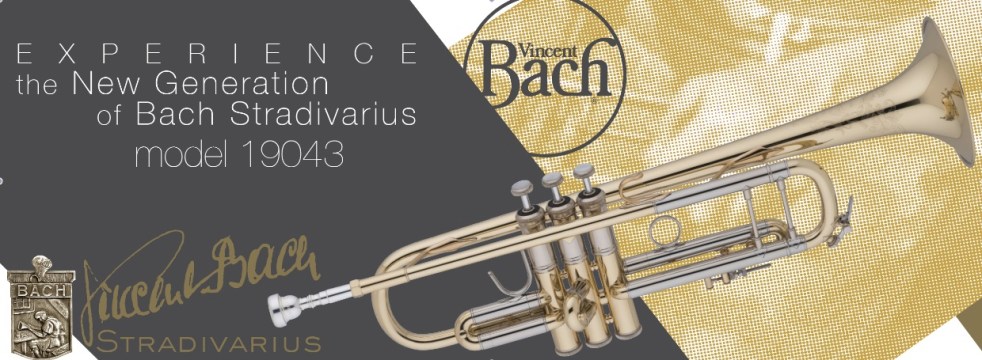
This is a model that I have not yet been able to get hold of to assess, so I have been kindly helped out by my friends at Thompson Music! Please see Mike’s video tour of both the 190-37 and 43 below.

VISIT THE ‘EDUCATIONAL RESOURCES’ PAGE FOR FREE WORKSHEETS AND LINKS TO PUBLICATIONS


Sign up here for new blog articles emailed direct to your inbox: