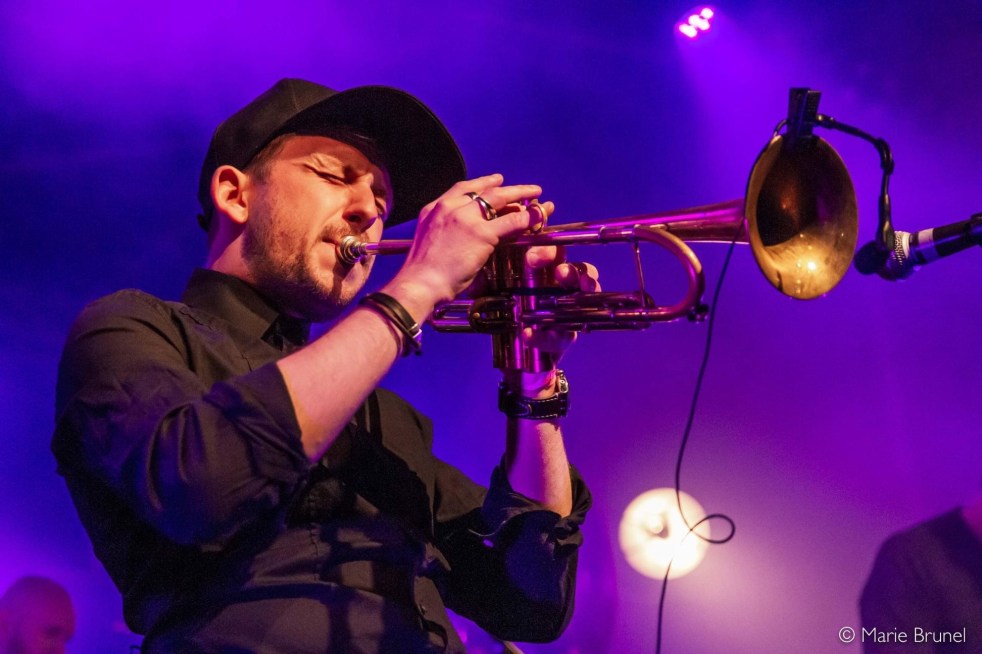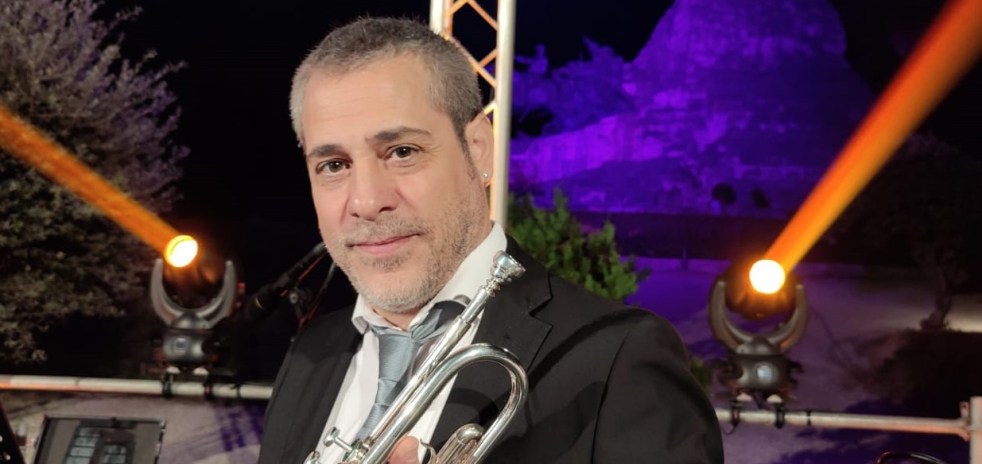
Trumpet Artist Profile : Alessandro Silvestro

First trumpet with the Philharmonic Orchestra of Calabria (Italy) and Frate Precision artist Alessandro Silvestro kindly shares some thoughts and experiences with us!:

What first drew you to the trumpet?

I was in the fourth grade when my teacher asked a classmate to bring his trumpet in to play it in front of the whole class. It was the perfect day day for me! I immediately fell in love with this instrument. After a few days, in my small mountain village (Acri – Italy) it was a day of village celebration – I saw the band playing in the streets of the village, and I told my parents that I also wanted to join that band.

I enrolled at the age of 8 in the music course, which the Calabria Region organised every year in collaboration with the band. My first teacher was a clarinetist, it was unusual to have an instrument teacher other than the one I fell in love with and want to learn. I did my musical studies, and after the duration of the course he told me that I had talent and why not try to face a more professional and demanding study? I continued my musical studies and then in 1986 I made the admission to the Conservatory of Music of Cosenza. I attended until 1990 when I met at a masterclass in Palmi (RC) – Italy, my teacher Sandro Verzari, First trumpet of the RAI Symphony Orchestra of Rome and teacher of the Conservatory of Music “A. Casella” of L’Aquila. I moved to him to continue my final studies until graduation. I continued to study with him to prepare myself for a future as a musician and began to participate in various auditions and competitions in Italian orchestras.

Who or what were your first musical influences?

I do not come from a family of musicians, so, until I entered the musical field, I did not realize what the world of music was. My first real musical world was the period of study in the Conservatory, I remember that my first Maestro, Mauro Marcaccio, he gave me cassette tapes of Maurice André. I bought my first vinyl record by Maurice André – this was really influential and I remember that I really wanted to play like him, it was my primary goal! It was my dream, I played with the vinyl almost every day with the trumpet having fun. It was Torelli’s concerto, Viviani’s sonata, Vivaldi’s concerto for two trumpets. In short, I tried to imitate him, at least I tried.

There was also another great influence in the 90s, Canadian Brass. I bought their CD and listened to it over and over. After that CD I immediately formed a brass quintet with the other study and class friends of the conservatory, we enjoyed playing together with the desire to grow so much and learn many other musical things, in addition to the usual class studies in the conservatory doing our first concerts.  Other trumpeters who have influenced my musical path a lot were Timofei Dokshizer, Guy Touvron and Wynton Marsalis.

Do you have special practice regimes? Does this change a lot depending on whether you are performing different styles of repertoire?

I have no special regimes, my study day is always the same. I always divide it by studying with the different trumpet models (Bb, C and Eb Trumpet). I like to vary my routine also so as not to get used to the usual study especially when it comes to technique.

I go in search of new stimuli of new techniques and new styles. I am curious about the technique of other instruments in addition to mine to see how they are structured. This helps me to grow both the musical side and the search for new things and experiment with them on the trumpet.

Obviously based on what I have to play I try to concentrate the study and the right technique for the repertoire to do, then the preparation is subjective for each of us, I change a little bit but I do not distort it in the most absolute way, I also believe that it changes according to the different style of playing.

What do you think are the most important elements of music and trumpet playing that young musicians should focus on?

There are quite a few important elements, the music itself is already the most important thing. First of all, beautiful sound and good intonation. These two factors, are the two most important things that a professional musician or young musician must build.

I believe that building a good foundation is the hardest and most important job. I divide study and preparation into three parts: the first part concerns sound, breathing and control; the second part concerns a whole part where we study the coordination of flexibility, intervals, finger technique, scales in all tones both major and minor. The third and final part is the repertoire.

Can you tell us a bit about your Frate Precision mouthpieces?

I became aware of the Frate mouthpieces when I tried one from the authorized dealer in Gragnano (Naples) – Italy, I immediately realised that it was a truly exceptional product. I bought one based on the characteristics of other mouthpieces I use. After studying it and playing it in the orchestra I realised that it was what I had been looking for a long time! I was immediately struck by the precision of the intonation – very defined and easy on flexibility. It also blends well with the other orchestral instruments, but the thing that struck me most is the projection of the sound in addition to the homogeneity it has on the whole register.

In April I recorded my latest work with the record label Movimento Classical with the “MaSiFuLa Quartet” with the 5+M,6,105 Frate Precision mouthpiece.

What are some career highlights to date?

At the age of 16, I had my first master-class with Sandro Verzari, and I performed the Concertpiece Op.12 by W. Brandt. It was my first experience on a big stage, from that performance I understood that you had to sweat 7 shirts if you wanted to pursue a professional career! I started at the age of 18, doing auditions, competitions and also orchestral experiences as first trumpet and in the section, at the Regional Orchestra of Lazio. I then did the T.I.M International Music Tournament and won the first prize. Immediately after I did other auditions such as the National Symphony Orchestra of the RAI of Turin, the Teatro Regio of Turin, the Teatro San Carlo in Naples, the Teatro dell’Opera in Rome, the ORT Orchestra Regionale Toscana where I stayed for almost three years as first trumpet, the Teatro Massimo in Palermo, with the Sicilian Symphony Orchestra where here too I held the role of first trumpet for three years, with the Solisti Aquilani, Orchestra Sinfonica Abruzzese, Chamber Orchestra Officina Musicale di L’aquila, Orchestra città aperta di l’Aquila where I recorded some soundtracks from Film such as Salvo d’acquisto, the boys of via Pal and Ginostra.

Currently I hold the role of first trumpet with the Philharmonic Orchestra of Calabria, with the MaSiFuLa Quartet and I am a professor at the Conservatory of Music “Giuseppe Martucci” of Salerno – Italy.

Like many artists, I imagine that your work has been severely affected by the pandemic? How did you keep yourself playing at a high level and getting back (hopefully) to being much busier now?

Like many of us the pandemic has been devastating, even in other sectors, especially ours, we found ourselves from the stage that was everyday life, to be closed in four walls of the house without being able to live normal life. In addition to the magic of music and theatre, at the beginning I did not really know where to start. It was really difficult, in the end I said to myself, you have to do something to pass this bad nightmare. With colleagues we recorded videos such as the concert in D minor by A. Marcello, the first half “Andante e Spiccato”, other videos with the quartet MaSiFuLa and published on various social networks, YouTube, Facebook, Instagram.

in addition to having recorded in December 2020 with MaSiFuLa Quartet, our first CD, in the immediacy in April 2021 we prepared and recorded the second CD with the record label Movimento Classical.

Can you tell us about the MaSiFuLa Quartet?

The MaSiFuLa Quartet was formed in May 2020, to date we have completed two recorded works. We are already thinking about the third with music by G. Gershwin, L. Bernstein and we are trying to organize the next future concerts. You can listen to the two CDs on YouTube and on Spotify.

What advice do you have for aspiring young musicians?

From my experience as a professional musician and as a teacher all these years, I advise future aspiring young musicians to work hard, but above all to set the right goal and achieve it with the utmost stubbornness, dedication, conviction, tenacity, preparation and face everything always with conscience!


SIGN UP HERE FOR NEW BLOG ARTICLES EMAILED DIRECT TO YOUR INBOX:

[jetpack_subscription_form show_subscribers_total=”false” button_on_newline=”false” custom_font_size=”16px” custom_border_radius=”0″ custom_border_weight=”1″ custom_padding=”15″ custom_spacing=”10″ submit_button_classes=”” email_field_classes=”” show_only_email_and_button=”true”]

Faxx : Mute Review

The Faxx brand may already be known to many of you. It has a reputation for reliable accessories at a reasonable price. I have recommended the Faxx mouthpieces to young students for many years as they offer comfort and quality at a price point that is appealing to parents! However I was yet to try any of their mutes until I was sent a box by American Way Marketing who own the Faxx brand.

Here is a run down on the box’s contents!…

Compact Aluminium Practice Mute

I own quite a few practice mutes and must have tried dozens of them over the years. Each one requires you to make a compromise in some way. I have a favourite mute for playing as softly as possible so that it is barely audible – it is super quiet but the intonation is tough down low. I have another for general practice where I want good tuning and response – it is however too loud for some sneaky blowing at the side of the stage where you don’t want to be heard. This Compact Aluminium Practice Mute from Faxx is brilliant for travelling. It is small enough to store in the bell of the horn without taking up additional space in the case, but it also blows surprisingly well.

The intonation is even across the range and although quite a resistant mute, still allows you to blow in an honest way rather than constantly over-blowing. I like this mute. It is reassuringly robust, clearly well-designed and made and retailing at around $45, gives you the value that you would expect from Faxx.

Aluminium Straight Mute

This is a well-made, sturdy all aluminium mute with great corks. We often underestimate the importance of good corks to the fit in the bell as well as the overall sound. This model is also available with a copper bottom as well as in all copper.

The blow is responsive at quiet dynamics as well as having a lots of lovely bright overtones when playing forte. There is also a really satisfying ‘bite’ to the attack at stronger dynamics, while still keeping the core of the sound. These make a really great addition to any pro orchestral section, but at a price point to suit students and pros alike – around $40!

Aluminium Harmon Mute

There are a number of Harmon style mutes in the Faxx range. This traditional long body mute, a short bodied harmon, and also the bubble style harmon that is reviewed below. All of these are available in both aluminium and copper, and you will now not be surprised to learn that they sell at a fraction of the cost of many of the other brands!

This traditional harmon mute, like the straight and practice mutes above, is well-made, sturdy and fits a variety of bell flares very well. With tube out, it is easy to achieve that smoke jazz club sound and responds particularly well with close miking. With tube in it is a completely different beast! The volume and projection are exceptional and makes a great wah-wah!

Aluminium Bubble Harmon Mute

Until now, I had never really given much thought to how the body shape affects the sound. The difference between this and the model above is huge. Even with tube out, this is an incredible resonant mute, so much so that you can feel the vibrations coming back through your hands while playing. Projection is great and it compares really favourably with my normal aluminium bubble mute from another more expensive brand!

These great value and great performing mutes are now commonly available across the UK, the USA and farther afield in most good music stores. I strongly recommend that you give them a try – these are far more than just student mutes!

To find more information on the full Faxx range and also where you can find a dealer near you, please visit American Way Marketing.


SIGN UP HERE FOR NEW BLOG ARTICLES EMAILED DIRECT TO YOUR INBOX:

[jetpack_subscription_form show_subscribers_total=”false” button_on_newline=”false” custom_font_size=”16px” custom_border_radius=”0″ custom_border_weight=”1″ custom_padding=”15″ custom_spacing=”10″ submit_button_classes=”” email_field_classes=”” show_only_email_and_button=”true”]

Trumpet Artist Profile : Alexandre Herichon

Alexandre Herichon is an eclectic musician, at home playing lead trumpet, improvising, and as a composer/arranger. He shares some trumpeting thoughts as well his experience with his new Agami trumpet.

What first drew you to the trumpeting the early days?

My parents listened to jazz music when I was a kid, and we saw, sometimes, some jazz bands with horn players, so I think it impacted me, but I can’t say why the trumpet, specifically. One thing is shure, I never quit, even in the hard times, since I began, when I was 10. 

Who or what were your early musical influences?

My teachers of course, who gave me the passion of music, the older musician in the music school orchestras and at the early beginning, the fact to play at church with my family. After came the big names and the jazz records. 

Do you have any particular practice regimes? Does this change a lot depending on whether you are doing more lead playing, or jazz, or funk for instance?

Yes, it changes sometimes, and especially depending on what I have to play. The most important for me is my flexibility. So, I always do tongue flexibility exercices to be shure I’m easy with it. Notice that I say, “tongue”, not lips! I do like a kind of whistle and my lips respond to it naturally. Then, if I’m more on a jazz/improvisation gig, I’ll work the most fingering and harmonic exercises on all the range. If I’m on a lead gig, I’ll work some muscles exercises, like Caruso, and be shure to hit the high notes perfectly. 

What do you think are the most important elements of music and trumpet playing that young players should focus on?

Regarding the trumpet playing, the two most important basics are, the air and the tongue position in the mouth. For the music, you can do the kind of music you like and want, but, in all case, do it seriously, spending a lot of time on details and trying to reach perfection. Play all time at 100% trying to make the band or the orchestra sounds greater as possible. Always be invested in the music and it will gives back to you.

Can you talk a little about your Agami trumpet, why you play it, and the process of selecting it?

Agami trumpet are great horns, really! Love it!I first saw pictures on Instagram (go follow him-> agami_music_france 😉) and said to myself “wow, those horns are beautiful!” So Thierry Sohier (from Agami) contacted me to organize a meeting and invited me to try the trumpets. I directly felt good playing it. Easy, great sound, warm on the low range and bright on the upper register, polyvalent. Anyway, all a trumpet should have as qualities. I tested it some months, on many different gigs and adopted it. I feel I can do what I want on this trumpet!

What are some career highlights to date?

I had and still have the chance to play with many great bands and artists around the world, Electro Deluxe in Japan, No Jazz in India, Etienne M’Bappé in South Corea, Panam Panic in Marocco, Big Funk Brass, Ben l’Oncle Soul and more!

Like many artists, I guess that your work has been badly affected by the pandemic? How have you found keeping up the playing to a high level, and getting back to (hopefully) being much busier now?

Yes it was a strange periode… But I have the chance to be a teacher in jazz music conservatory and private lessons so it kept me in touch with people and music, so it helped me a lot. I began to work on music producing too, and it takes a lot of time so it was on point. Some home recordings and tv sessions happened too in the second part of the pandemic and the work began to come again. Now it’s ok and we hope the worst is behind us now. 

And what projects do you have coming up?

My personal projects, Big Funk Brass and Panam Panic have released their albums not long ago (go check it too 😉) so this year will be a booking and touring year, between the other projects and lessons. I’m beginning to think about my new personal project too, kind of new jazz 5tet. I’ll let you know about that when it’ll be more clear. 


SIGN UP HERE FOR NEW BLOG ARTICLES EMAILED DIRECT TO YOUR INBOX:

[jetpack_subscription_form show_subscribers_total=”false” button_on_newline=”false” custom_font_size=”16px” custom_border_radius=”0″ custom_border_weight=”1″ custom_padding=”15″ custom_spacing=”10″ submit_button_classes=”” email_field_classes=”” show_only_email_and_button=”true”]