
JazzValve is a web-based tool for learning jazz trumpet. All the essential building blocks of jazz improvisation are easily accessible in one place, putting you on the shortest path to unlocking your jazz trumpet voice.

JazzValve is an online practice platform built specifically for jazz trumpet players who want a more structured way to develop improvisational vocabulary. The goal is to make jazz practice feel practical and approachable by giving players focused material to work on through scales, triads, riffs, melodic lines, and other building blocks of improvisation.
A big influence behind JazzValve is the hard bop language of the 1950s and 1960s. Players can use the platform to explore jazz vocabulary and then immediately apply those ideas on the instrument. It’s a concept that sits between traditional method books and unstructured practice — a place where a trumpet player can open the app, know exactly what to work on, and spend ten or fifteen focused minutes developing their jazz language.
JazzValve. The practical and approachable way to learn jazz trumpet.
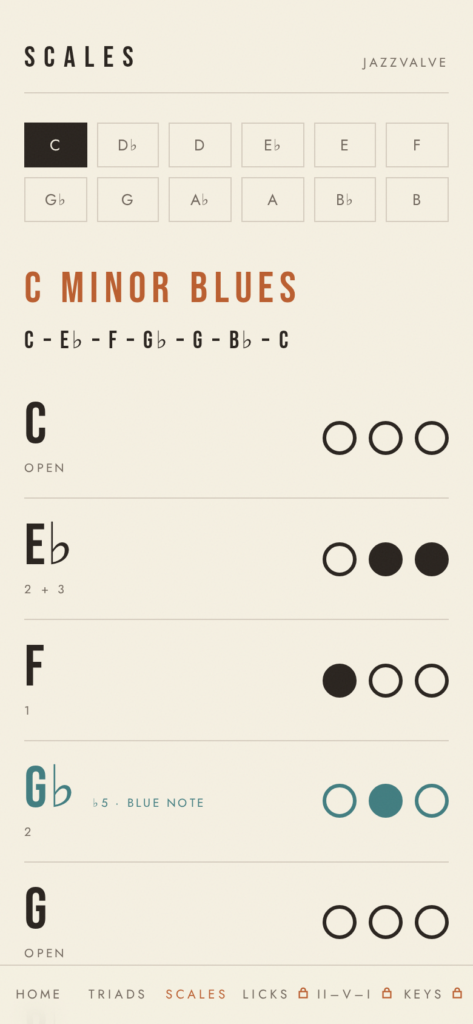
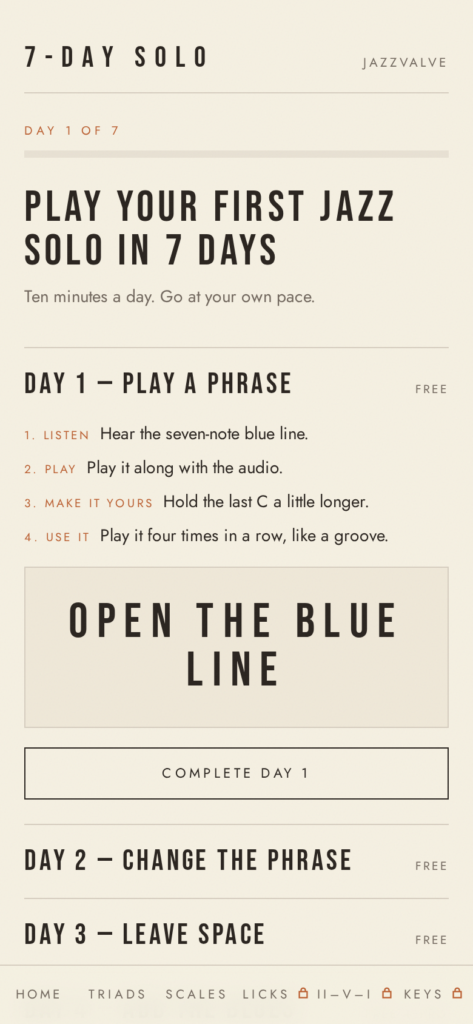
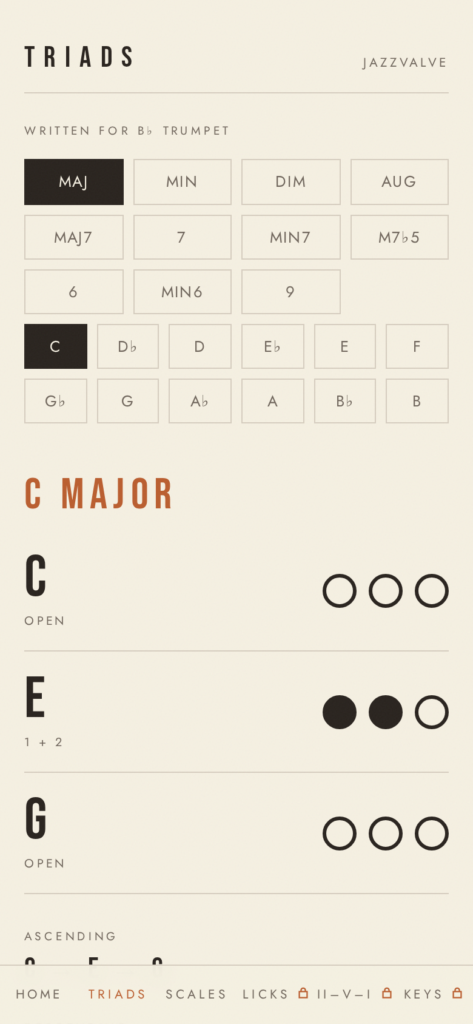
JazzValve is still growing, adding new practice tools and educational material based on what trumpet players and teachers find useful. It is evolving into a practical companion for students who are learning jazz, as well as more experienced players looking for new vocabulary and ideas to bring into their playing.
There’s a generous amount of material to get you started on the free version of JazzValve. When you’re ready to move to JazzValve Pro, you’ll get access to licks, chord progressions, and more for $9.99/month. Mouthpiece Online readers have exclusive access to a free trial of JazzValve Pro through the link below!
About the Founder
I’m Justin Comstock, a lifelong musician and the founder of JazzValve. Guitar has been my primary instrument for nearly three decades, and improvisation has always been a major part of the way I experience music.

My path to trumpet actually started through listening.
I’m an avid record collector, and over the years I found myself spending more and more time listening to jazz records — especially recordings featuring players like Chet Baker and Miles Davis. There was something about the trumpet that kept pulling my attention away from everything else in the arrangement.
Chet Baker was a particularly important influence. I was drawn to the intimacy of his playing — the space between phrases, the restraint, and the way a relatively simple melodic idea could carry so much emotion. Miles affected me in a similar way. His playing reinforced the idea that phrasing, tone, space, and intention can matter just as much as the number of notes being played.
After enough nights listening to those records, curiosity eventually turned into a question: What would it actually feel like to play this instrument?
So after nearly three decades as a guitarist, I bought a trumpet and became a beginner again.
That experience has been creatively refreshing. Concepts I had known for years on guitar — scales, chord tones, phrasing, ear training, improvisational vocabulary, tension and resolution — suddenly had to be rediscovered through three valves, air, embouchure, and an entirely different physical relationship with the instrument.
It also changed the way I listened to the records that originally inspired me. Instead of simply hearing a Chet Baker or Miles Davis phrase as a listener or guitarist, I started wondering how it sat on the trumpet, how the valves moved, where the player breathed, and why a particular phrase felt the way it did.
That curiosity eventually became JazzValve.
I wanted to build the kind of practice environment I wished I had while making that transition — something that could connect basic trumpet mechanics with the language of jazz and make improvisation feel approachable rather than overwhelming.
For me, JazzValve is really an extension of that experience: being an experienced musician willing to become a beginner again, following curiosity into a new instrument, and discovering that learning something unfamiliar can completely reshape the way you hear music.
Learn more about JazzValve here: