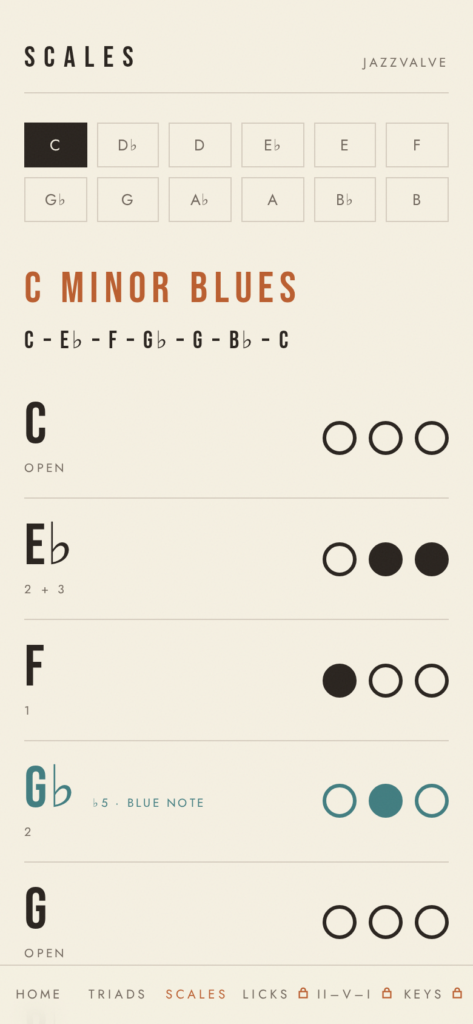
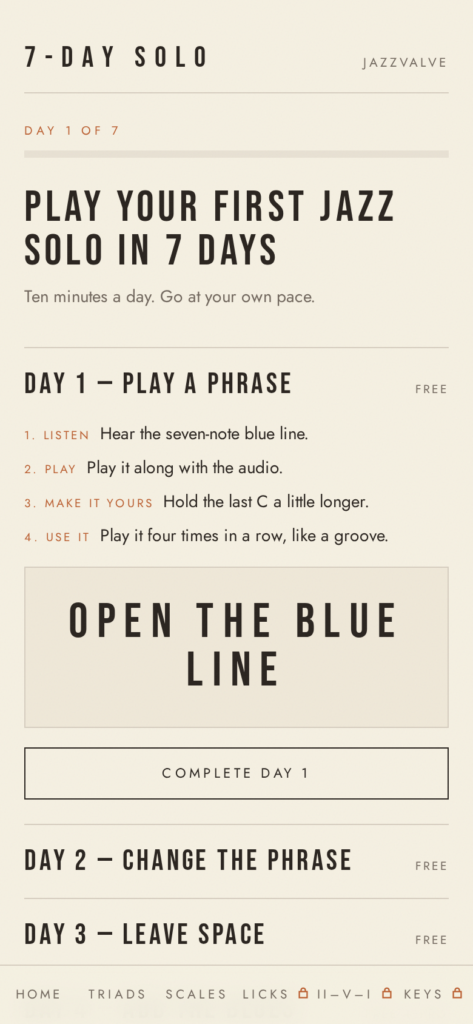
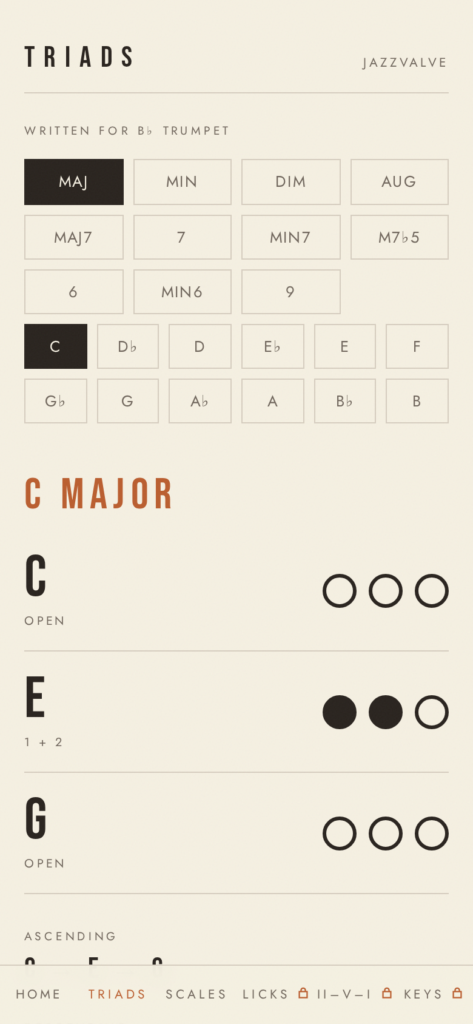
JazzValve is a web-based tool for learning jazz trumpet. All the essential building blocks of jazz improvisation are easily accessible in one place, putting you on the shortest path to unlocking your jazz trumpet voice.
JazzValve is an online practice platform built specifically for jazz trumpet players who want a more structured way to develop improvisational vocabulary. The goal is to make jazz practice feel practical and approachable by giving players focused material to work on through scales, triads, riffs, melodic lines, and other building blocks of improvisation.
A big influence behind JazzValve is the hard bop language of the 1950s and 1960s. Players can use the platform to explore jazz vocabulary and then immediately apply those ideas on the instrument. It’s a concept that sits between traditional method books and unstructured practice — a place where a trumpet player can open the app, know exactly what to work on, and spend ten or fifteen focused minutes developing their jazz language.
JazzValve. The practical and approachable way to learn jazz trumpet.
JazzValve is still growing, adding new practice tools and educational material based on what trumpet players and teachers find useful. It is evolving into a practical companion for students who are learning jazz, as well as more experienced players looking for new vocabulary and ideas to bring into their playing.
There’s a generous amount of material to get you started on the free version of JazzValve. When you’re ready to move to JazzValve Pro, you’ll get access to licks, chord progressions, and more for $9.99/month. Mouthpiece Online readers have exclusive access to a free trial of JazzValve Pro through the link below!
About the Founder
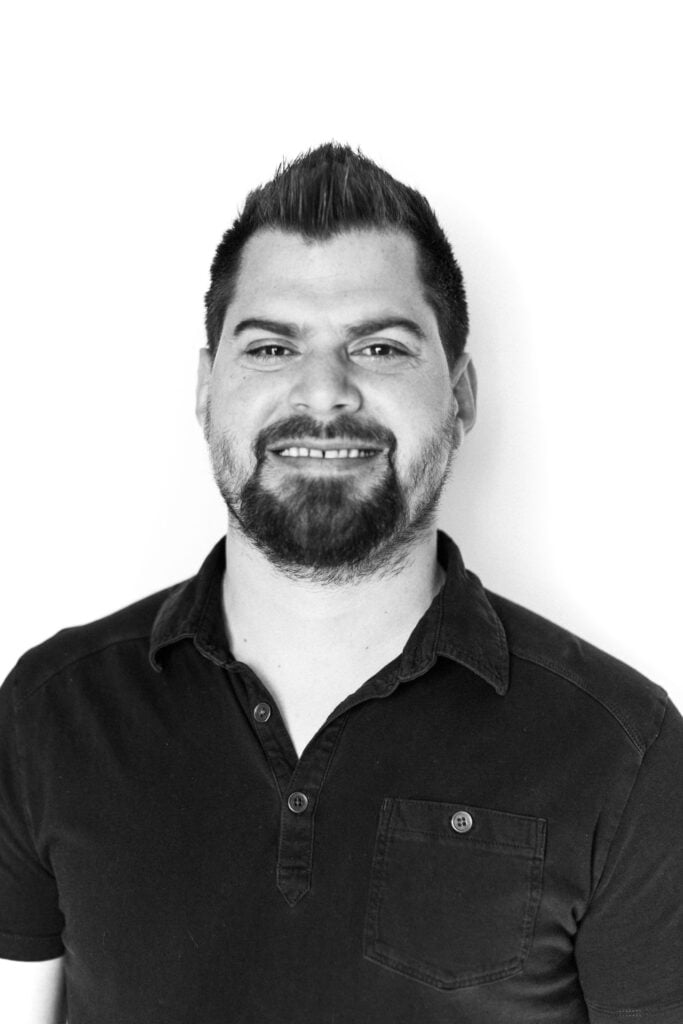
I’m Justin Comstock, a lifelong musician and the founder of JazzValve. Guitar has been my primary instrument for nearly three decades, and improvisation has always been a major part of the way I experience music.
My path to trumpet actually started through listening.
I’m an avid record collector, and over the years I found myself spending more and more time listening to jazz records — especially recordings featuring players like Chet Baker and Miles Davis. There was something about the trumpet that kept pulling my attention away from everything else in the arrangement.
Chet Baker was a particularly important influence. I was drawn to the intimacy of his playing — the space between phrases, the restraint, and the way a relatively simple melodic idea could carry so much emotion. Miles affected me in a similar way. His playing reinforced the idea that phrasing, tone, space, and intention can matter just as much as the number of notes being played.
After enough nights listening to those records, curiosity eventually turned into a question: What would it actually feel like to play this instrument?
So after nearly three decades as a guitarist, I bought a trumpet and became a beginner again.
That experience has been creatively refreshing. Concepts I had known for years on guitar — scales, chord tones, phrasing, ear training, improvisational vocabulary, tension and resolution — suddenly had to be rediscovered through three valves, air, embouchure, and an entirely different physical relationship with the instrument.
It also changed the way I listened to the records that originally inspired me. Instead of simply hearing a Chet Baker or Miles Davis phrase as a listener or guitarist, I started wondering how it sat on the trumpet, how the valves moved, where the player breathed, and why a particular phrase felt the way it did.
That curiosity eventually became JazzValve.
I wanted to build the kind of practice environment I wished I had while making that transition — something that could connect basic trumpet mechanics with the language of jazz and make improvisation feel approachable rather than overwhelming.
For me, JazzValve is really an extension of that experience: being an experienced musician willing to become a beginner again, following curiosity into a new instrument, and discovering that learning something unfamiliar can completely reshape the way you hear music.
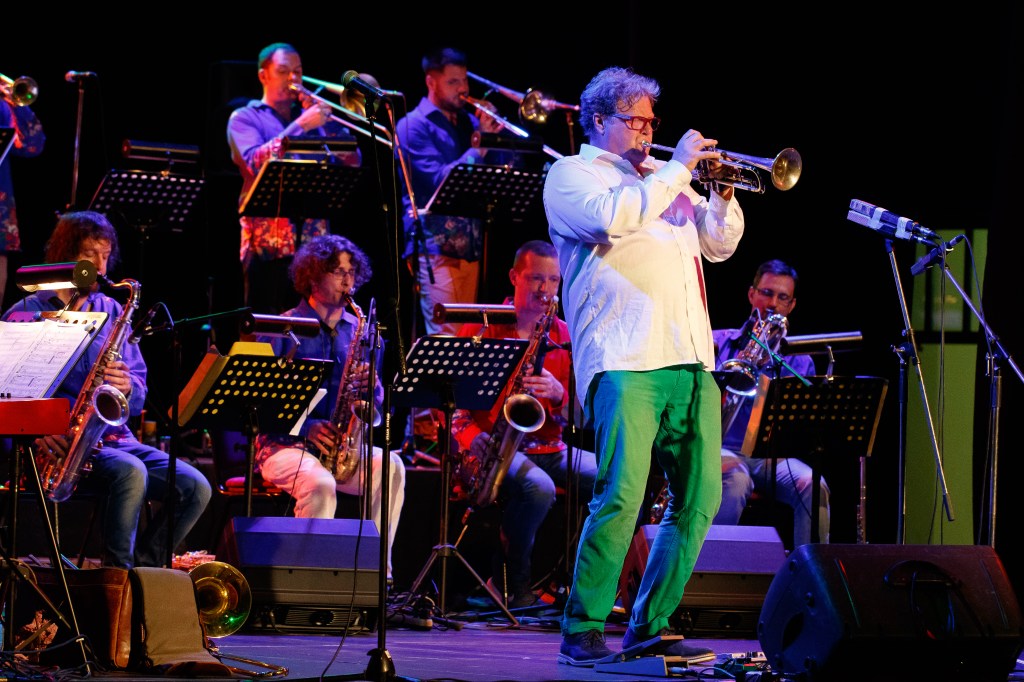
Lasse Lindgren is a multi-faceted musician, with a reputation as a great ‘lead’ trumpet player as well as a great ‘jazz’ player. In recent times, he is also responsible for the resurrection of the great Ullvén Mute brand, made famous by players such as Dizzy Gillespie and Maynard Ferguson. Lasse kindly talks to me here about all things trumpet as well as this recent project…
What first drew you to the trumpet?
That’s easy! I heard Louis Armstrong on the radio as a 5 year old boy. That totally blew my mind and made me decide to dedicate my life to playing trumpet. Then I had to wait until I was eight before I got a trumpet, and I still remember that moment as very exciting, after I had to wait for years. I also remember that I was dreaming of making that sound for so long, that when I finally got it, it was a great relief to put the mouthpiece to my lips and blow the sound I had in my head for years. I think that also made it easy for me, I got a good sound right away. I think because I was so eager and had the sound built up inside me, it just came out naturally.
Any early musical influences?
As a young boy I loved the recordings of Louis Armstrong, Glenn Miller, Harry James and the other famous BBs. My mother had an old 78rpm record player at my grandparents’ home. I used to love to sit by myself and listen to the old records – that sound made a deep impression on me.
When I was 15, my trumpet teacher played the record “Message from New Port” with Maynard Ferguson’s orchestra for me. That was another “blow my mind” experience. I loved not only MF playing, but the sound and energy of the music arrangements!! and I still do. I thought playing those high notes MF did was something you learn when you get older, that is how stupid I was))-
But of course I wanted to play the notes of MF and his “sound”, but how? No one to ask? So I had to experiment myself by my own. From age of seventeen to twenty I spend 8-10 hours a day with my trumpet, playing, thinking and trying out how to do this.
I also spent some time playing “Free Jazz/music” as a teenager, that opened my ears and mind, Lester Bowie and Art Ensemble of Chicago!
Who have been your favourite players and music to listen to?
Well, when I went to high school, I started to play with friends in a band, and we played some kind of “Jazz-rock” in the style of “Weather Report” and so on. So I broadened my view of music. Then at that time, I also started to be aware of other great Trumpet Heroes, especially in more “modern” Jazz. Artists like Dizzy, Miles Davies, Clifford Brown, Freddie Hubbard, Woody Shaw, Chet Baker, among others, but also the European players like Palle Mikkelborg, Kenny Wheeler (Canadian in UK) Tomas Stanko (I played a lot with him in Germany) and my Swedish friends and heroes Bosse Broberg, Jan Allan and Rolf Ericsson. I also loved players who were both “Lead” and “Jazz” players – Snooky Young, Benny Bailey, Booby Shew (whom I met and got informed about the Yoga Breathing from when I was 18)…
Today I still listen to them all, the old stars were the genuine originals. There are many new great trumpet players of today, but have to admit, I am not so familiar with them, although Roy Hargrove was fantastic, RIP.
It’s hard to invent the wheel again, and to me, many of the young very skilled and talented players of today, sound as though they are playing “licks” they have practiced and learned. To me, that is actually is not spontaneous soulful improvisations, more than showing that they can play the right “hip” patterns over the chord changes – rather boring to me.
It is not easy to make your own sound and style, and I think too few even try. The exception is Tim Hagans, but he is not so young anymore!!
Lasse playing on one of the two Conn Connstellation trumpets that he owns, once belonging to Maynard Ferguson.
Is it a difficult skill to practise, being able to specialize in lead AND jazz? What are the particular challenges? Are there any particular routines that you follow in order to be able to achieve this?
Apart from the physical aspect of these two different ways of playing, the Lead player often has to use different equipment (not always) and play more demanding physical parts, to play with agood sound in the upper register with the endurance required. This takes a lot of work, exercises to keep up the “chops” to handle this, not everyone can do this. The Jazz player, on the other hand, meaning improvised jazz solos, has to learn how to do that… also the techniques. Scales, tunes, and how that music works, most likely Jazz players use different equipment (mouthpiece) compared to the Lead player. A good “lead” player must besides having the control of the instrument in any register, also be able to interpret music, a melodic line that you are asked to play, what the music is about, play it soulful and interesting in the style of the music.
When I play lead, I always ask the composer what the music is about or make my interpretation of the title. I always play as if I were singing the music instead of blowing the trumpet. I think a lead part or a melody also should be played like it was improvised, so it would sound fresh new and spontaneous, but at the same same time consistent the same way each time, so the other musicians can follow and trust in me and the way I play. Lead means to guide, show the way the music should be phrased for the fellow musicians, not only playing high notes. I think you must have an ability to be a leader, a strong personality, not ego, but be a steady and reliable player.
It is also a question of knowledge of style and understanding how to play different types of music. How do you learn to play good “lead”? Listen a lot, sit and play under a good “lead” player for years to get the “Know how”. The same goes for Jazz playing, listen and play with good musicians. So my conclusion is that to play good “Lead” it is good to be able to play some Jazz as well. To play good jazz, one must also be able to present an interesting melody, with respect for the song/tune, and the technique required.
So one difference between “lead” and Jazz is that a leadplayer must sound like the music is improvised but at the same time not. The jazz player should make the music fresh and spontaneous, every time to challenge other musicians and maybe be unpredictable to make it interesting.
I do have my daily routine that I do when warming up, getting my sound in all register together. It takes normally 1-1/2 hours from the first breathing exercise and buzz on the mouthpiece through scales or arpeggios from the deep pedal notes to the high register double C. After this I rest and do other duties. Later if I have time I practice music, Jazz play along records (I still do that with a record player, not with the computer, I’m too old and stupid!) or etudes or music I have to play and need to be practiced.
As well as playing in lots of great bands over the years, you have also been a band leader. When did you realise that you wanted to create music under your own direction?
I remember that I was making drawings of “my own Big Band” when I was 10, so for some reason I always wanted that!
Since I always have been interested in writing music for my band, it was natural to have a group to play my music. For some reason, even though I always loved and listened to “Jazz” old and new, as I mention before, I never hear this in my head when I compose??!! Why? I dont know. So my own music is a little different, I try to make more compositions rather than just a short melody and then the standard for soloists. This is just the way for me, so can my music be called called Jazz??
Is it possible to define what ‘jazz’ is? It is such a broad musical term isn’t it?
Well, Jazz is a name with a history, from mid 19th-century meaning spirit, energy, or courage and other things as well… “semen”… so it has a hot history I suppose! When we talk about what is Jazz today, it covers many “styles”, but for me somehow, it is a rhythm with the swing pattern played on the ride cymbal. As they say triplet groove, swinging eight notes, it is the same as Hip Hop, bebop, dixieland for me. As long as it has that “diiing diiingdidiiiing” groove played on the drums or on the cymbal, it is basic Jazz.
Then there are many other styles that has evolved from this: Free jazz with swing groove or not, Scandinavian sounds of “Jazz”, Latin Jazz… if these are Jazz? Then Funk, more composed music, Charles Mingus wrote as he said – not Jazz, he wrote “Charles Mingus”, even if he was one of the big names in “Jazz”. To me the rhythm and improvisation are important to define Jazz. When I compose it comes out more like my music, which is not so often Jazz, or any typical style. It is hard for me to define my own music which also makes it harder to sell! A lot of my music has more beat grooves or rhythms, straight -jazz eight notes, still it has the other elements in Jazz improvisation. Is it still Jazz?
Any particular career highlights that stand out?
Besides all the gigs and tours with my own groups throughout the years I have some. I did a gig with Ray Charles in Finland once. It was a mix, with a half Finnish band and half Ray Charles orchestra, at a big sports arena, 8-10,000 people. I had some solos and I remember one was 1m in front of Ray Charles. It was a very slow “Georgia” type of song, and I played kind of blusey with some long high notes in the end. I remember it was thrilling and inspiring (goosebumps) to hear Ray’s comments while he was comping me – “yeah man!!” and so on, after that I was offered a job in his band. I didn’t take it however, I already had the gig as lead player in the Danish Radio Jazz Orchestra, and also a family!
In contrast, great moments also happened in smaller situations many times. Like, on tour with my quintet in small villages far up in northern Sweden, at small Jazzclubs in front of 10 people. When some of them, after the concert, come to us with tears in their eyes and thank us for the music. Then I also feel it was a great moment, when I was able with my own music, to touch somebody to tears of joy! Another was when we made a 3 week tour all round Europe with the Danish band. Maria Schneider conducted Gil Evans music with David Sandborn as soloist. We played some of the original scores that Gil wrote for Miles Davies. It was a highlight, especially in Spain. The audience’s reaction in Seville after “Sketches of Spain”, was amazing.
Tell me about the journey bring the great Ullvén brand back to life!
Ullvén Mutes have always been “the Mutes” for me, and I grew up in the same small town of Uddevalla at the west coast of Sweden, where Mr Ullvén had his Workshop. He had also a music shop there were I naturally used to go. Besides that, my mother took care of his bookkeeping, since she worked as an accountant. Mr Gunnar Ullvén used to come home to us every Christmas with gifts, flowers to my mother and a 1 litre bottle of “Popy” Valve lubricant to me. I also remember being in his shop when Dizzy Gillespie called and needed some more mutes – and sometimes as a teenager, I went to Ullvén’s workshop and got some mutes to experiment with. So, when I was offered to take over and restart the company one year ago, it was natural for me, I feel close to this company and its great products.
But, since it has been sleeping for 20 years, it will take some time to get things going, but I do work hard and want to be able to bring these mutes and things available for brass players worldwide again.
All the old tools are still there, and the now old man, who made the mutes by Metalspinning has retired, but he taught his son how to do it, which is great – without them it would have been much harder, maybe impossible for me.
Maynard Ferguson in 1968, with his Ullvén mute and Popy valve oil!
Any particular challenges along the way?
Well, yes, to find suppliers for some of the products I need, like the special Industry felt, Cork, Labels and cardboard can’s for the the mutes. The last time they ordered these things was 25 years ago and most of the suppliers are gone so it takes time to get new contacts. Also for example, getting license to use Dizzy Gillespie’s name – Jon Faddis helped me with that!
What are your plans for the future?
Times are strange in the Era of the Corona Virus!! No gigs last year, but I stay alive with my horns by practising daily as well as possible. I’m of course using the time to get my Ullvén mutes for brass instruments on the market.
Then musically I do have things coming up later this year, but… we don’t know for sure yet.
I have done some recordings that will be out there soon I hope. Two records with the great “Latvian Radio BB”. One released 2 years ago, we should have played concerts with that in 2020, but it was cancelled. Then another with more “standard Jazz” that will also be out soon.
I also made a recording for the Scottish label “Sleepy Night Records” with my own band in Croatia/Slovenia. This is also postponed for better times, hopefully this year!! New arrangements of old “Rock and film” hits, in the style of Maynard Ferguson “Alive and Well in London”.
I have got 25 old arrangements by Slide Hampton, Don Sebesky, Mike Abene, Willie Maiden, and others. Music arranged for Maynard Fergusons Orchestra 1956-65, but never recorded. I will do that with my band here in Sweden as soon as we are allowed to.
Then, once again, I have a third project with the same great “Latvian Big Band” next year. A new album, mostly my own music, arranged by the great Michael Abene, it will be a wonderful adventure.
I will also get a new quartet together, asap, something that I have wanted to do for a long time.
SIGN UP HERE FOR NEW BLOG ARTICLES EMAILED DIRECT TO YOUR INBOX:
What have our favourite players practiced to sound so great?
What secrets have they learnt to improvise so melodically and effortlessly?
Well, I can tell you from personal experience of working and studying with many great players is that they have developed their jazz vocabulary!
A great way to do this is by listening to the greats of the music.
As Clark Terry used to say – Imitate, Assimilate, Innovate.
Many of the wonderful players that we listen to have taken jazz vocabulary and made it there own, sometimes by adding other great players’ in fluences or by practicing language and vocabulary so much that they start to hear their own things to play. The more you develop the skills of practicing vocabulary, especially in all 12 keys, the more you develop your own aural skills and imagination. Developing the skill of instantly being able to play what you hear in your head is what every musician wants but how is this achieved?
To hear wonderful jazz phrases in our heads, we must practice the language or vocabulary of the masters of the music, if we don’t, we can still improvise but it has a real chance of not sounding authentic!
If you are new to improvising and developing your aural skills, here is an exercise you can start doing straight away to develop
1. What you hear 2. The ability to play it.
I would recommend staring off with extremely simple tunes, like a nursery rhyme! I have created a short YouTube video on this subject using ‘Twinkle twinkle little star’ as the tune to practice.
https://www.youtube.com/watch?v=wl1goUXBmOM
Try and play it, starting on various different notes (all 12 keys would be best). At first it may prove quite a challenge, especially in the more unfamiliar keys!
By doing this, you develop the ability to play what you hear in your head!
The next thing to do it to try and learn (really well) either a simple jazz tune (when the Saints is pretty simple) or if you feel you are ready, learn 8 bars of your favourite solo by your favourite player! This is the imitate part! Play it over and over until it is very easy! Next, either chromatically or in a cycle of 5ths or 4ths (depends if you are going up or down), learn it fluently in all the other keys! This really well prove to be frustrating at first, but the more you do it, the easier it becomes, especially if studying one player.
Once you have learnt an 8 bar phrase, keep going until you can play the whole solo. You don’t have to play the whole solo in all 12 keys, just the parts you really like. This is the assimilate part! By building up an armoury of phrases & vocabulary, you will always have something to play, the more you have, the better your solos will be. Especially by working out why some phrases sound so good.
https://www.youtube.com/watch?v=nBH2ryHgPYM
Once you have practiced and can fluently play lots of your favourite phrases, analyse them, work out why it sounds so good. This is the innovate part. What is it about the phrase you like? Could it be rhythmic, melodic…? What ever it is, try to create your own phrases using the techniques that they have! This will help us to not simply copy and paste other musicians licks, endlessly into out own solos! There are many that do it, try not to be one of them!
For me, the best jazz musicians are those who play beautiful, endless melodic phrases without (it seems) ever playing licks! Why do they sound so good? Well they are still using the vocabulary that makes jazz sound so great, they are just so imaginative and have endless creativity! They also have wonderful ears and play/outline the changes very well. If you listened to a solo of Clifford Brown with any rhythm section, you would still hear the chords being outlined in his solos! The same with Chet Baker, Bobby Shew, Blue Mitchell, Chuck Findley, Warren Vache……
If your current ability is not up to playing the music of these amazing players, I have created jazz etudes, with the beginner/intermediate player in mind. Jazz etudes, written over famous chord sequences (jazz standards) and in different genres including, dixieland, bebop, standards and latin (bossanova).
When we are learning the phrases, we are learning to speak the language of jazz, the correct grammar if you will. We want to make sense when we solo.
This is a music that takes a lifetime to master. We should be constantly challenging ourselves with different ways to approach our practice of improvisation and solos.
I don’t know when it happens but there does come a time when you do start to hear authentic things in your head. The more you practice and the more you listen to the and study the greats of the music, the more chance you have to create beautiful sounding solos yourself.
Just remember that Rome wasn’t built in a day and you have your whole life to work at this wonderful music! Be patient with yourself, seek out great players and teachers to learn from, transcribe solos and work your favourite phrases into your own playing, try to play together with other musicians too (ones that are much better but supportive if possible). You should also learn to spell out the chords and scales on your instruments too, this will prove invaluable in helping you to get around the chord changes.
I hope you find this article informative and helpful.
Warm regards, Darren Lloyd
SIGN UP HERE FOR NEW BLOG ARTICLES EMAILED DIRECT TO YOUR INBOX:
Transcription is a great skill to develop in itself, but is also invaluable for developing our ears and our general musical awareness. Darren Lloyd from ‘Jazz etudes’ talks here about how to actually go about this and develop this important musical skill:
https://youtu.be/nBH2ryHgPYM
Sign up here for new Mouthpiece Online blog articles emailed direct to your inbox:
Jazz Etudes is a new resource that helps and supports students new to the world of jazz improvisation. The approach is centred around developing your jazz vocabulary and although primarily aimed at intermediate players, is receiving praise and endorsements from musicians at the top of their game.
The creator of jazzetudes.net is Darren Lloyd, a professional player and teacher, and I am grateful to him for telling us a little more about this exciting venture:
“ I started the trumpet at the age of 12, I was instantly drawn to the jazz side with my first introduction being Chris Barber live at the London Palladium featuring the fabulous Pat Halcox and another record I was given called 22 trumpet greats that heavily featured the amazing Kenny Baker. After this I started buying jazz records, another I remember vividly was a recording called ‘I love jazz’ which featured Art Farmer, Miles Davis, Louis Armstrong, among many other great jazz artists such as Woody Herman, Sarah Vaughan, Count Basie, Art Blakey, Duke Ellington Charles Mingus, Dave Brubeck….
My career as a trumpet player has included playing with: The Royal Marines Band Service, Halle Orchestra, Liverpool Philharmonic Orchestra, Opera North, Echoes of Ellington Orchestra, Manchester Camerata, Northern Chamber Orchestra, Super Tramp Big Band, Pasadena roof Orchestra, many West end musical theatre and national touring productions. I have also worked with musicians such as Dianne Schur, Buddy Greco, Conte Candoli, Buddy Childers, Mike Vax, Derek Watkins, Tony Coe, James Morrison to name a few.
As well as playing at the highest level in the UK, I am also certified teacher with 12 years experience. Since moving to the North West of the UK I have completed a Master of Arts in jazz performance and also qualified as a teacher. Combining my love of jazz and music education, I created the website jazzetudes.net
The aim of the website and the whole ethos of the site and its publications is to:
Give musicians interested in jazz something to play that will give them the confidence to continue with this great type of musicality
Give intermediate musicians a way to develop their jazz vocabulary by playing through the etudes, committing some or all of an etude to memory and practicing in different keys
Help develop phrasing, articulation, listening skills and a general awareness of jazz music
The etudes (currently) have been created using tunes from bebop, dixieland, latin and jazz standards. The etudes come in concert pitch, Bb pitch, Eb pitch as well as bass clef. All the etudes are aimed at early intermediate through to advanced intermediate (around grade 4 or 5 through to grade 7).
What I feel is the biggest difference between my jazz etudes (and other products being created) are they have been created with the intermediate player in mind. I also produce many YouTube videos which vary in their content, from demo etude videos to free lessons!
Currently I am working on a Louis Armstrong etude book along with a video where I will demonstrate many of the techniques one can incorporate into playing in that style.
I also have plans to create a jazz improvisation course specifically aimed at intermediate students that will focus on developing beautiful melodic, flowing solos.
Along with this, I am also producing a jazz style duet book where I will record both the 1st an 2nd parts so that customers can either play with a friend, teacher or pupil or if unable to do that can play along with me!
Finally, I want to record some of my original music either as a trio or duo and also make the sheet music available so that customers can use the music with their own ensembles. Listen to the recording for their own pleasure or play along with the backing track (the exact recording but without me).
Here is what people are saying about Jazz Etudes:
“Exactly what I need to break the impasse and have the confidence to overcome years of “slavery to the dots”. Darren has achieved so much by Intelligently applying himself to the task of understanding the language and developing his own talent. His material and demonstrations…. make real progress achievable whether you are approaching improvisation like me from a classical background, or simply seeking to develop authenticity…. Darren’s articulate presentation encourages you to persist and really achieve. See you at the other end…..”Ken Brown – Trumpet, Hallé Orchestra
“The thing I like about your etudes is it allows me to be slightly freer in my improvisation. I usually find due to my “classical” background that I improvise ok-ish during rehearsals but when I get to the gig my ideas freeze up. This may be due to not having enough jazz language to use. Without doubt your etudes are helping me cement a better awareness of the language.”Martin Winter – Principal Trumpet, Bergen Philharmonic
“I love your jazz etudes …not just for myself but for all of my students. They range from grade 3 up to grade 8. I have been teaching trumpet and jazz for over 40 years now and have tried a lot of methods but yours are proving to be the best by far…. I realised (with my research of US music colleges) that “light/jazz” had to be learned on a par with classical if to survive in the profession. When I played with the RPO Pops and Paul McCartney this came in very handy!! I look forward to all your future projects. We never stop learning so keep up the great work Darren. “Graham Russell – Lead Trumpet, Studio/West-end/Shirley Bassey
Sign up here for new blog articles emailed direct to your inbox:
Marvin Stamm is a colossus of the music world, having performed and recorded with many jazz legends throughout his illustrious career. At 79-years-young, he is still going strong and has many interesting thoughts here on adapting to change, both musically and physiologically over the years. There is sound and compelling advice here for musicians of all instruments and of all ages!
What first drew you to the trumpet?
Upon reaching the seventh grade in the school I attended in Memphis, Tennessee, every student was required to participate in a form of the arts—either become part of the band or sing in the chorus and take art. I had no talent for art nor any interest in singing in a chorus, so I chose instrumental music, which at my school was the standard concert band instrumentation. Part of my decision also rested upon the fact that I was rather shy at that age, and thought I could hide within a larger organization and not be noticed. The reason I chose the trumpet was because my older brother, an avid record collector, had a recording by Clyde McCoy entitled “The Sugar Blues” with which he employed the Harmon mute with the stem to produce wa-wa effects, growling, and flutter-tongue. This was quite impressive to me, and this is why I chose the trumpet.
Were there any particular early influences or musicians that you admired?
There were many early influences upon me, and they would have great consequence on the path I chose. Among the important people who first influenced me were my two wonderful band directors during my school years in Memphis; they gave me great training in the basics of music, playing in their concert bands. Another was my afore-mentioned brother, Gordon. My interest in jazz came about very early in my musical experience because hegave me access to his complete jazz collection, allowing me to play along with his records pretty much from the genesis of my musical endeavors. This gave me early exposure to this music and hadgreat impact on me. I was so enthralled with playing music that I decided after only two years—at age fourteen—this would be my path in life.
Another person exerting great influence during my high school years in Memphis was my trumpet teacher, Perry Wilson. Perry helped me build my musical foundation. He took me through Arban’s, St. Jacome, Schossberg, and Klose, also spending a great deal of time playing duets with me in order to teach me how to work, phrase and blend with other players. At the end of each lesson, he took me into one of the piano rooms and played tunes with me to help me broaden my improvisational skills, learn new material—and, so very important—develop my ear. He also was instrumental in my working in Memphis dance bands from age sixteen. I was very fortunate to have fine and dedicated teachers from the very beginning who prepared me well for my chosen career.
Through every phase of my musical and personal life there have been people willing to offer encouragement and help. There were several very fine musicians form my growing up in Memphis, many of the professional players the Dallas/Ft. Worth area and at the university during my years at North Texas State (now the University of North Texas). The years with Stan Kenton and Woody Herman were of immense value to my growing and developing as a player as well as the two years doing show work in Reno, Nevada. And then throughout all my years working in New York and beyond.
It would be impossible to list all the musicians with whom I have worked and who personally influenced me, but among the trumpet players whom most of our colleagues would recognize would be Mannie Klein, Bernie Glow, Ernie Royal, Snooky Young, Thad Jones, Ray Crisara, Burt Collins, and Kenny Wheeler. And this lists just a few of the many who were of enormous significance to my music and my life. Someone once said to me that I had achieved a marvelous career and I had done all on my own efforts. I laughed and told him he could not be more mistaken. I had help every step of the way and experience this still to this day—from friends and musical colleagues alike.
As a young player, what was it like joining Stan Kenton?
I joined the Stan Kenton Orchestra as his jazz trumpet soloist immediately upon graduation from the University of North Texas in 1961. However, my relationship with Stan pre-dated that occasion because the North Texas band was kind of a house band at the 1960 Indiana University Kenton Clinics, serving as his band for that week. He conducted us in nightly concerts and became quite familiar with my playing, In November of that year Stan asked me to complete the last three and a half weeks of the 1960 tour because Sam Noto had been offered a steady gig at the Latin Quarter in New York City and needed to leave the band. This was really my baptism of fire with the band.
I joined fully after graduating from North Texas and toured with him for two years, recording five albums with the band. The orchestra, during my tenure, toured only in the U.S. and Canada, mostly playing one-nighters. I gained a good bit of national recognition and exposure touring with the band and especially through my being featured extensively on the recordings.
Working for Stan Kenton was great—he was very much a father figure, quite a special person, and very dedicated and inspiring to one such as myself. He was also very patient with me during my time with the band. I underwent a bit of an embouchure change because I was playing low onto the top lip, that is, onto the red tissue of the lip. Because the band played so hard, and most times quite loud, this caused me to cut my lip. With the help of John Haynie, my trumpet teacher from the University of North Texas, I moved the mouthpiece up on the top lip a good bit, providing more vibrating surface for playing and more muscle tissue, more “meat”, for the mouthpiece to rest upon. This was quite a drastic move for me and took a long time for me to adjust to, causing me a great deal of stress. During this whole period of adjustment, Stan was very patient and encouraging to me, showing how much concern and care he had for the people who played in his band.
My time on the Kenton band provided great experience in that it gave me a clear view of “life on the road.” I received a lot of solo exposure and met many people who contributed much to my growth and life experience. Some became friends for life. This playing experience was especially invaluable because you had to be at the top of your form every night in spite of being weary or sometimes ill; or many times playing where acoustics were less than perfect with tired or hurt “chops” and always being on the move. This instilled the concept that when it was time to perform, it didn’t matter how you felt—you were expected to be at your best at all times, under all sorts of conditions. And the one who expected the most from you was you yourself!
During your period as a busy studio player, what were the main things that you concentrated on in practice sessions to keep yourself in good shape and ready for anything?
Fundamentals, fundamentals, fundamentals! I wanted to keep my embouchure strong, but flexible and my technique accurate. We almost never knew what we would be playing from session to session until our arrival at the date. And some days we would be playing three or four different sessions, all of a different musical style. I might be playing lead trumpet on one session, flugelhorn on another, and piccolo trumpet on a third. Our musicality depended upon our exposure to many styles of music and the interpretation thereof. But the ability to go into number of different musical environments, having the flexibility and stamina to perform to the highest standards day in and day out was the foundation of such a career. I found that keepingmy“instrumental”side in it’s best working order was the best way to be prepared for this kind of functionality. That meant stressing fundamentals.
What prompted your move away from the studio work to concentrate on your own jazz projects?
In the late ‘80s I realized I was feeling musically unfulfilled by the work I was doing. For the first 17 years or so of my studio period, while doing a lot of commercials and such, I still was also involved with a lot of musical recording projects, many of which were in the jazz genre. In the early ‘80s, the shift in work was more to commercials, and the recordings were mostly R&R recordings. There was little creative input being asked of the players, and I was feeling like just a journeyman musician, like “cog in the wheel” of most projects.
In addition, the technology aspect of the music was growing and many of the keyboardists and synthesizer players involved in projects were also being asked to write the arrangements for these projects—few with any knowledge of or skills in orchestration. We became the sources for informing them of what possibilities there were for various instruments, sometimes teaching them the most rudimentary things such as what was the lowest note on a trombone and the highest note playable by a typical saxophonist. It was very frustrating to most of us who had worked for years to become educated, masterful musicians.
In 1987, Lew Soloff introduced me to Swiss composer and and band leader George Gruntz, who was looking for someone to replace Lew for an upcoming tour, as Lew was already booked at that period of time. George invited me to join his group of U.S. and European musicians and I accepted, beginning what was to be a twenty-three year association with his Concert Jazz Band.
The musicians for this tour included Americans Lee Konitz, Claudio Roditi, Larry Schneider, Mike Richmond. Adam Nussbaum, Ray Anderson, Art Barron, David Taylor, Joe Henderson and others. Among the Europeans were trumpeters Palle Mikkelbourg, Manfred Schoof, and alto saxophonist Luten Petrovsky. There were straight-ahead players, BeBop players, and avant-garde players, all coming from across the musical spectrum. Moming from a more traditional big band background, I was initially taken aback by it all, but by the end of the tour, I was inspired. I felt that it might just be possible to move away from being a studio musician to become a jazz musician.
The thought was, at first, frightening. I remember one night discussing what I intended with drummer Ed Soph, wondering aloud how I was going to make this happen. Ed told me not to worry, it would definitely happen. Of course, I also talked all this over with my wife, who felt I should go for it. From this, my decision was made. For the next three years, i put myself out there, and if there was a choice between a recording session or a jazz gig or a tour, I took the jazz gig and turned down the session. Eventually, it became obvious to those in the business and they started calling others for studio dates. As well, my work as a jazz player was growing, so over time, one replaced the other. This began the most creative period of my musical life, and I never looked back.
As the years have gone by, would you say that your approach towards practice, preparation and performance has changed? If so, is it something that has had to change?
I certainly feel my approach has changed over time. It is true physically as well as musically. People tend to change physically as they age, even from their 30’s into their 40’s. and again from their 40’s into their 50’s and so on. This is just a physiological fact. Understanding when one’s practice and approach to the instrument needs to be altered—even if only slightly—from time to time to meet these circumstances is a great challenge. No one wants to change from what has worked successfully for a long time. But sometimes change is necessary, particularly when the problem may be physiological. I have seen many examples of players who don’t understand when their physiology changes and are so stymied by this that they don’t recover. They keep trying to approach everything the same way they have done for years, and yet, it doesn’t work anymore. Having a teacher or outside coach can help when one feels frustrated. A coach or teacher one trusts may see things looking from outside our faces than we don’t perceive on the inside. I sought help several times from the late Laurie Frink, a most wonderful teacher and player, who helped me to understand and work through my own problems.
Musical circumstances can also require a player take a different approach to practice. It all depends upon the kind of music and performance one is being asked to play, especially if one is working as a free-lance player. One example would be someone playing a show night after night that requires a hard blow, but then being asked to play a week in a small chamber orchestra where the music is softer and requires a different sound. The practice necessary to prepare for this kind of change would be quite different than the preparation for a difficult show. Practicing fundamentals to keep one’s embouchure flexible to play in any circumstance is necessary and certainly helps one to overcome many of the changes one must go through.
Every player experiencing physical or musical changes in their playing must be mindful of finding his own solutions to whatever challenges might arise. This will involve being flexible in his thinking and approach to these challenges going through the various stages of their careers. There has never been one answer for everyone; each of us must find our own. This is a challenge we all face.
What equipment do you use?
My trumpet is a Bach Model 72 Lightweight that the great lead player Bernie Glow picked out for me in 1969. My mouthpiece is a Najoom 7M (for medium). I play two flugelhorns, an old Cousnon I bought used in 1964, probably made in the 1950’s, and a French Besson, made under the auspices of Boosey and Hawkes by Zig Kanstul, at the urging of me and Guido Basso,the great Canadian trumpeter. I use either a GR custom mouthpiece (close to a 62M) or a very old Bach 10 1/2 C flugelhorn mouthpiece.
What do you think the priorities are for young aspiring players to keep in mind to give themselves the best shot at a long and successful career as a trumpeter?
There are a number of priorities to developing a long and successful career, each being a key basis of the other. Mastery of one’s instrument is certainly the foundation of any successful career, and practice of the fundamentals is the basis of that foundation. Part of this is also understanding the importance of developing a good sound because one’s sound is his voice, who he is musically. And while mastering etudes, solos, and excerpts are important, listening to and performing in many areas of music is the key to becoming a versatile player—and versatility is central to being a busy, working musician. There are those who are able to develop a career as a specialist in a given field, but they are rare birds in the equation. Being able to answer any work call and performing whatever that call requires is the key to having a successful career as a working musician. And that means having a working knowledge of many kinds of music.
What are your proudest career moments?
Over many years of playing music, I believe the thing I am most proud of is all the years of playing in the company of so many great musicians and being accepted as one of them. I had the great privilege of playing with my heroes, and to this day, I still feel that I am trying to play up to the level of musicianship that they set. But I don’t feel this as an element ofpride; I actually feel great humility at this acceptance and being a part of so many wonderful musical moments. I had the privilege of living my dream, fulfilling my musical fantasies.
What are your most enjoyable career moments?
There have been so many that it is difficult to pick one or two special experiences because there have been so many. Sitting a the trumpet section with people like Bernie Glow, Ernie Royal, Snooky Young, Ray Crisara, Randy Brecker, and so many others was always special. Reaching to achieve the highest level of performance in the company of many great musicians was constantly thrilling. Words can’t really express the feelings this generated, day after day, performance after performance. I guess the most important thing to take away from what I am trying to express is that music is never about “me,” but about “we.” Community, everyone striving to bring the best to each musical moment, is the most fulfilling element of great musicians playing together. And I was most fortunate to be some part of so many of those experiences.
What projects have you got coming up?
I am going to be doing a project in the UK next summer with Matt Gough and Andy Bush, both excellent trumpeters and composers. Andy and I met in the mid-1980’sand have been dear friends ever since. Matt is a new friend and the composer of a magnificent multi-medium suite, “The Forgotten Fairground.” I’m sure you’ll be hearing a lot about this project soon.
I’ve also been privileged to be a part of several projects by pianist and composer Michael Holober. We’ve become very close friends dating back to when he conducted the Westchester Jazz Orchestra of which I was a member. I have been a part of four of his projects in the past four or five years, and he has mentioned two or three future projects that he is working on. Michael is also a musical partner in my quartet along with drummer Dennis Mackrel and bassist Mike McGuirk.
And I continue to perform as a guest soloist in various settings. I appeared at the Guildhall this past July, performing two of the Miles Davis/Gil Evans suites, “Miles Ahead” and “Sketches of Spain,” with Scott Stroman conducting. Working under Scott’s baton is always exhilarating! I shared the solo chores with UK trumpeter Robbie Robson, and if any of your readers are unfamiliar with Robbie’s music, please do become familiar with it. Robbie is extraordinarily creative and gifted musician. I enjoyed so much sharing this program with him.
In closing, let me say that in light of all I have been so fortunate to do in music, I am happy any time I can be in the company of extraordinary and like-minded musicians, people I can enjoy playing with, listening to, and learning from. To me, that’s what it’s all about!
Please click here to read about Marvin’s time studying with Carmine Caruso
You can see and hear lots of great clips of Marvin playing on his website
Sign up here for new blog articles emailed direct to your inbox:
I met up with Markus Stockhausen on a (typically) rainy day at the Royal Northern College of Music in Manchester, UK on 23rd March 2018. He is a trumpeter at the cutting edge of modern performance, and as I was to find out during the course of this interview, a fascinating one at that!
JH: Thank you for meeting me here in Manchester Markus! You are in the middle of a tour at the moment I believe?
MS: Yes, last week I was touring with Florian Weber, we had 4 concerts in the UK. And here in Manchester I have a guest professorship at the RNCM, so I come here once or twice a year to either teach or do concerts. This time around I am doing a concert of my compositions with Big Band and String Orchestra. There are some smaller scale pieces in the first half with different instrumentation and lots of different elements including free improvisation. The second half is a piece called “Tanzendes Licht” [Dancing Light], a work that I wrote around 10 years ago for the Swiss Jazz Orchestra together with the Camerata Bern. That was a commission to bring those two ensembles together. I also later adapted it slightly to perform with the Metropole Orkest under Jules Buckley. This is the version that we are performing now in Manchester. I am very happy to come here, and the students, particularly the rhythm section, are excellent. I was so astonished to find such good players here, and all so young too!
Festival Time in Jazz, August 2017 in Ozieri, Sardegna, Italy. Photo: Gerhard Richter
JH: Can I take you back to the beginning of your trumpet experience and ask you what made you choose the trumpet?
MS: My father [Composer, Karlheinz Stockhausen] brought me a small post horn back from England when I was about 8 or 9. I had a blow on that one a few times and somehow, I felt drawn to the trumpet players of the brass section whenever I would go along to hear my father’s works in rehearsals and concerts. I don’t know why, I just found this fascinating! I started on piano when I was age 6, but when I was 12 we had to choose a second instrument at school. I tried the trumpet, and although I don’t think that I was especially gifted at that stage, I loved the sound and also the possibilities of being able to play with other players in small ensembles, wind bands, big bands, dance music, on weddings, funerals! … everything that you can think of! We had a band at school, we started to improvise, I had a small motorbike and with the trumpet on my back I was travelling all over the place going from one rehearsal to another. School wasn’t really that important to me, it was more about making music.
When I was around 15 or 16 we had a lot of good teachers. Jiggs Whigham lived near my home and leant me some important LPs. He also came down to teach our school big band sometimes which was great.
There were 3 main strands to my music making in those early days: The 1st was my classical teacher who took me through the major repertoire – Haydn, Hummel, Telemann, Hindemith etc, and orchestral excerpts and studies. The 2nd was the jazz and improvising that I enjoyed doing. The 3rd was from when I was 17 when I started to work with my father who would take me into orchestras to sit in the trumpet section to play his pieces. And when I was around 18 or 19 I began to take solo roles in some of his projects. He wrote “Sirius” for me which was an incredibly musical and demanding piece, 96 minutes of music we had to perform from memory. I was just 19 at this point! Shortly after, in 1978 he wrote “Michaels Reise um die Erde” as a trumpet concerto for me, which – being part of the Opera cycle “Licht” – in 1981 had its opera premiere at La Scala di Milano.
The kind of training that I received through my father really exceeds anything that any other student could possibly have! It was so broad.
JH: With this incredibly broad training that you had, with so many different styles, did you identify mostly with and enjoy one particular kind of playing?
MS: At that age, no, I enjoyed everything. I was ambitious and wanted to develop everything. I entered solo competitions which opened the door for me to perform with orchestras. I was taken on by an agent who helped to develop this side with me. I lost count of the number of times that I performed the Haydn concerto… with my father’s cadenzas of course! I had requests from other composers to perform their works, which I did sometimes, but I favoured working and collaborating with my father.
People told me that I had to decide which direction to take. I also considered conducting which I enjoyed, but ultimately decided not to pursue that as my trumpet playing would suffer. That was a big decision. I made the decision NOT to choose between playing different styles, but to continue pushing myself with classical, jazz etc. It became hard sometimes when a concerto one night would be followed by a jazz club gig the next, followed by a project with my father! I tried to space things out but it was not always possible – it sometimes was difficult and stressful.
JH: And what about now? Do you find that it is difficult to prepare for so many different kinds of projects?
MS: Yes, but in 2001 I took the decision to stop the collaboration with my father and to concentrate more on my own projects. This gives me more space to contemplate and organise. I also no longer take on classical concertos, I think my last Haydn concerto was 2008. There are lots of people that can do that – I think that it is important that I concentrate on what I can do that is unique. I wanted to explore my creative side deeper, and since then I have started various projects, duos, trio, quartet, larger ensembles… I recently started 2 new ensembles with 7 musicians, one is called Wild Life, the other is called Eternal Voyage. Sometimes I composefor them, but Wild Life is completely improvised.
I do not write so much now for larger ensemble. My son is now 25, and when he started to get older I was writing a lot. But when my daughter arrived in 2009, I felt that my energy and time to compose reduced drastically. Part of that creative energy goes into a person rather than into compositions! And it has to be that way.
JH: And are you able now to manage your work schedule pretty much how you want it, around your family life? It is that age-old dilemma for working musicians isn’t it?!
MS: I get complaints from my family that I am not at home enough, but they get used to it of course. It is difficult, but we manage. But if you want to keep the trumpet up at a good level, you have to be performing constantly. So, it is an essential choice for me to be on the road a lot, and away from the family sometimes. You certainly get used to airports and train stations! I try to do mostof my organisational work while I am travelling so that when I am at home, I can be more present. The projects that I do now are all incredibly enjoyable and rewarding, and I am at least able to stay in control of my schedule from this point of view. Sometimes I go on tour with my wife Tara Bouman, our duo MOVING SOUNDS. Then the whole family travels, which is very nice too.
My duo with Florian Weber is particularly busy at the moment, I think as funding gets tighter, a duo is suddenly much more appealing to a promoter than a quartet! And we constantly change our performances and the pieces depending on how we feel. It is incredibly liberating to be able to follow your emotions and state of mind instantlyin a performance.
As an interpreter,preparing a concerto is completely different as you have to train yourself to replicate a state of mind that is particularly suitable to that repertoire. The mental preparation is often the biggest challenge with that. With improvised music, I can just follow my own intuition, emotion and energy levels. “Go with the flow” as you say in English, and ride on the wave of your energy. It is more natural in a way.
Markus Stockhausen in Starnberg, 2016. Photo: Thomas J. Krebs
JH: You talk and teach on the subjects of the emotional, mental and spiritualpreparations towards performance and music making. Do you think that this is an aspect that can be ignored with a lot of ‘traditional’ trumpet teaching?
MS: No, they are as important for traditional performance also. Yet, I would say that it is very personal. From a young age, I was interested in finding better ways for controlling my body, controlling my breathing, and found that yoga was very helpful. I still do it on a daily basis. When I am travelling I will go for a short run every day and also do some meditation which helps me to stay calm, centre myself, and also to connect to something that is much bigger than we are, I call it ‘The Source’. Everything that we are is a manifestation of something vaster than we can possibly comprehend. And yet every one of us is a representation of that, and if we can make that conscious link to that ‘source’, by reducing our mental activity to an open state, we can have access to a much greater wisdom and energy that we can use in our lives. It brings us forward, it inspires us, it gives us ideas, and also good health. It is nothing strange or foreign, it is our deeper nature. Just open up to it.
JH: Would you say that this outlook changes the way that you approach playing and practicing the trumpet?
MS: I just try to listen to my body when I practice, to see what it needs. There is still some ambition there to cover the full range and to play strongly. I usually do some flapping of the lips and a short mouthpiece warm-up to promote blood circulation. I then activate my breathing as I learnt under Carmine Caruso. I have a pdf available to download on my website of my version of some of these exercises, that I find really helpful, I call them “The Basic Caruso”. Then I proceed with gently soft low register exercises for a few minutes before I start to play whatever I want to.
Coming back to Caruso, I studied twice with him having been recommended to him by Marvin Stamm. I was initially irritated that he was not a trumpeter, and there was a sterile system of how to practice… but then I understood, and it opened up something in me and made me understand that activating your breathing is the MOST important thing. I added a little bit myself, where you exhale completely before inhaling. You are then full of breath which gives you much more energy, even to approach simple things. Teaching your body to work in this way takes a lot of the problems away from the lip.
Another thing is that when you play a difficult passage, of course there is tension in the body. The important thing is that once you no longer need the tension, you should release it and move past it. I learnt this from yoga. The balance between contraction and relaxation is key. We have this in trumpet playing all of the time.
Another piece of advice that I would like to offer is not to overdo the practice. Stop as you are beginning to feel tired, do not push on through. I made this mistake too many times in my youth, it is much better to play in smaller units and then take a break. I tend to do 2 or 3 sessions each day, around 40-45 minutes each time. I try to make sure that I really challenge myself in that time, but then take the time to relax afterwards. A lot of my practice involves improvisation, so I like to sometimes use a metronome to train my timing, as well as varying the spaces in which I play – sometimes a dry room, sometimes a big resonant space. It can feel physically very different playing in different rooms as you need to breathe much more deeply in a bigger space in order to fill it. The whole body vibrates differently, as well as your instrument of course. Sometimes I will also change my equipment depending on the space too.
JH: Do you tend to stick to a fairly set routine when practicing, or does it change a lot depending on what projects you are working on?
MS: It is pretty fluid really. The warm up is only 10 to 15 minutes and then I practice whatever I need to be working on, whether it be improvisation, pieces with my small groups, or something else. Usually there is a lot of organisational work to do along with lots of travelling so my practice time is limited. I have to really focus on what is coming up next and make the best possible use of my available practice time. My equipment changes depending on whether or not I will be miked up or not, so that also affects my practice.
Festival Time in Jazz, August 2017 in Ozieri, Sardegna, Italy. Photo: Gerhard Richter
JH: And what equipment are you using mostly?
MS: I mostly play Bb trumpet, Flugelhorns and Piccolo. These are the instruments that I generally travel with. I have a tuning bell, large bore Bach with a lightweight 72 bell. This is my oldest instrument and is the one that I fill has ‘my sound’. I also recently bought a Bach 43B (Mariachi) with a bronze bell. I love the sound of it and I am gradually getting used to having a bit more resistance. I also have an Olds Recording that has been customised, a Callichio with a Bach bell, a Schilke X3 with a beryllium bell and several others! Sometimes I don’t really feel like playing a particular trumpet on one day, so I will change things around and pick something else. On longer tours of course, I have to decide on an instrument to take with me. When I am going to a concert by car, sometimes I may take several instruments with me including perhaps 2 different flugelhorns – I have a very nice Van Laar flugelhorn which is quite heavy – great sound, great projection, but can get tiring playing for long performances. I also have a much lighter instrument, an Adams with a very light copper bell that was made for me by a local maker, Gaertner und Thul. It allows me to play very evenly and in tune in the whole register and does not tire me. I took off all excess weight including the triggers and the regular water-keysto make it as light as possible. At least with the flugelhorn, you can still get the water out quickly and easily by twisting and tipping the instrument. I am quite extreme in the way that I adjust and customise my instruments! My research on flugelhorns lasts about 4 years now …
I also am particular with mouthpieces. I have a wide variety of different styles, cup depths, apertures… but all with the same rim from JBS. These rims were unfortunately discontinued so I made sure that I bought a lot of them! I combine the rims and cups with different Warburton backbores. The difference a small adjustment to throat or backbore can make to the whole response and intonation of your instrument is phenomenal, and I like to experiment until it is as good as it can be.
I must say that in the last 20 years or so, the quality of mouthpiece manufacture around the world has drastically improved and there are so many makers that can produce consistent products. Even the Bach mouthpieces tend to be very consistent now! Thanks to the new digital technology.
Young players now have such an advantage having access to fantastic craftsmanship with instruments and mouthpieces. The only question is making sure that you have opportunities to try them.
JH: Would you say that things have changed in the past 20 or 30 years to make it even more important for students to be developing versatility in their playing and being open to trying lots of musical styles?
MS: The possibilities are there more than before, and maybe also the necessity to be a versatile player. I you go down the route of being a freelance player, I think that versatility is an absolute ‘must’. From early on I would encourage students to be good readers, to have orchestral experience, to have big band experience, and also some small group experience including improvisation.
But this is one answer only… The alternative answer to this question is, in the end you must realise yourself. Find out whatyou love, who you really are, and try to find situations which match your satisfaction and musical desires and instincts. Or else, you might be unhappy. In the end, we live our lives for ourselves, not for the money, not for anyone else. Through music we have incredible opportunities to express ourselves. It is worth saying that not many of us know at a young age exactly what we want to do, so perhaps a combination of both of these answers is the correct approach, try out many things and distillate your taste, style, abilities and thus find yourself.
JH: What are your plans looking ahead?
MS: Right now, I want to concentrate on the projects that I currently have going on, including my duo with Florian Weber called ‘Inside Out’, our CD ‘Alba’ on ECM has been doing really well. I have a new recording coming out in July with an ensemble that I have got going again called ‘Eternal Voyage’, on Sony Records. There are a lot more ‘world music’ elements in this and it is a bringing together of East and West. I like the name and concept of ‘one world music’ as a way of describing this group, but it is sometimes difficult to get engagements for this ensemble, because we are many players. I also have a new improvising group that includes my brother Simon again – we hadn’t worked together for about 15 years. The project is called Wild Life and we have just had a beautiful festival appearance, which has been filmed for the prestigious arte tv.
The ‘Moving Sounds’ duo with my wife Tara Bouman on clarinets also has some concerts coming up later in the year. We perform together since 2002 and have steadily developed our playing. It is maybe the most spiritual music of all my projects. My quartet ‘Quadrivium’ had a CD release with Sony last August that has been successful. Because of this recording I am nominated for the German ‘Echo Jazz Prize’. We will promote this group still further. We have to put a lot of energy into developing these projects, but I am pleased that we are getting a lot back now as a result of the hard work.
I am also continuing my seminars which give me occasional moments of rest from the touring and concerts. This is almost a second life in parallel with everything else, where everyone can come and participate. We do introspection, singing, voice improvisation and silence – this has the purpose of relaxing and finding your own centre in a more spiritual environment. I find that music is such a perfect means to dive into silence and meditation and expand yourself and relax. I found some beautiful places where I can run these seminars throughout the year and for me it is a really good mix.
MS: We are in a world with more possibilities than ever before, of course also with more competition. Have trust in yourself, don’t compare yourself in a judging way, follow your inner vocation, and if you pursue you ambitions, they willmaterialise. Follow your inner conviction and your desires, and in the long run you will succeed. And above all: enjoy your life. It is the only thing you have, and you will only ever live NOW.
JH: Thank you for your time Markus, and I am looking forward to hearing you perform at the ITG Conference in San Antonio, TX in May!
D.H. Lawrence writes: “Never set a child afloat on the flat sea of life with only one sail to catch the wind.” The same could easily be said about trumpet students and the importance of developing versatility in not only their playing but also their outlook on life.
To discuss how we achieve this, I have been fortunate to have the thoughts and experience of 2 fantastic trumpet players who have both made careers out of crossing musical boundaries, genres and pigeon holes.
Mike Lovatt is primarily a commercial player (John Wilson Orchestra, BBC Big Band and session and show extraordinaire) although classically trained, who is often asked to guest on principal trumpet with the major orchestras. www.mikelovatt.co.uk
Shaun Hooke is a classically trained player, now Principal Trumpet with the RTE Concert Orchestra in Dublin and regularly also plays lead trumpet with the RTE Big Band. www.dublintrumpetacademy.com
They both have some fascinating insights into approaching very similar problems and challenges, but from different perspectives.
Can you tell us a little about your background as a player, and what you got you into the trumpet in the first place?
Mike: I was born into a musical family. My Dad was head of music at a secondary school and my Mum was a fine amateur singer with the local choral society. Early in his career my Dad began to collect instruments and taught himself to play them. There were no peripatetic teachers in those days and he wanted to be able to teach well enough to form a youth orchestra within the school. By the time he retired he was conducting an orchestra of about 70 children! The trumpet was one of the many instruments lying around the house. I really wanted to play the trombone but at the age of eight my arms weren’t long enough.
Around that age on a shopping trip to the local supermarket, I was drawn to the record carousel and saw a record with a picture of a trumpet player on the front. It was Eddie Calvert ‘The Man with the Golden Trumpet’ I immediately asked if I could have it and after listening to the album I tried to play along with it using an old Selmer. I was hooked! Trumpet playing was all I wanted to do.
I began to play in my Dad’s youth orchestra and eventually the Staffordshire youth orchestra. I really wanted to be a professional and every day I would rush from school to try to play along to all sorts of records. I would pretend I was doing a concert with the Syd Lawrence Orchestra or that I was Maurice Murphy with the London Symphony Orchestra or a member of the PJBE, or the great Kenny Baker. This developed my ear not only for pitch but also for sound, style, articulation, placement of time and phrasing.
Disaster struck when aged 14; I was involved in a serious cycling accident. I lacerated my top lip and lost several front teeth. I thought my playing days were over. Thanks to the skills of the plastic surgeons of the North Staffs hospital I healed and began to try to play again. At first it was terrible, I could not produce a sound. Eventually I got it working again enough to do my grade 8 and I then auditioned for the music colleges. The range I previously had didn’t come back however and it wasn’t until I discovered the Maggio system some 10 years later that finally my chops came together.
I was fortunate to study at Trinity College of Music in the 80’s. My teacher was Norman Burgess, formally principal trumpet of the BBC concert orchestra, and later co-principal in the BBC Symphony. He taught me to be as versatile as possible with a view to being employable in the future. He also encouraged me to attend the extra-curricular college big band rehearsals run by the great Bobby Lamb. There were no Jazz courses available at music colleges back then, so I was lucky to be able to learn from these two great musicians who between them had a wealth of experience from all sides of the profession. I quickly realized that whatever style you play, a good solid technique on the instrument is essential. With a strong technical foundation and embouchure, it is possible to cope with the demands of all styles of playing.
Shaun: I grew up in Leicestershire in England. I was enormously lucky to be able to avail of free trumpet lessons provided by our County Music Service. Particularly Don Blakeson, who was taught by David Mason who in turn apparently could trace back teacher to teacher all the way back to Handel’s time! I’m doing the Messiah next week so hopefully something has worn off on me. I was also heavily involved with Enderby Silver Band. I started with them as they reformed in ’77 when I was a nipper and enjoyed many happy years growing up with so many wonderful people to mentor me.
I decided to do Chemistry at Oxford University rather than going on to music college, but I had the trumpet bug and after completing a doctorate I knew I wanted to at least give pro trumpet playing a go. Jon Holland and Wes Warren at the CBSO taught me orchestral skills and still now I put myself back in their presence the moment before I play something. What did Jon say to do here? What was Wes’s trick for this?…
Quite quickly I was appointed to Principal Trumpet in the RTE Concert Orchestra but to this day I’m still thinking about how these guys coached me and I’m passing it on to my own students.
Your job involves you constantly switching styles – do you have a regular practise routine that encompasses everything, and what are the most important things to concentrate on?
Mike: I believe production is key across all types of trumpet playing. In commercial music, big bands and some Jazz playing the style requires a more defined articulation and sometimes brightness and sizzle in the sound. I always maintain that under that brightness there should be a full broad tone across the entire register. High notes are expected in lead trumpet playing and some areas of commercial music and so should be developed. However, they must never be the be all and end all at the expense of a good sound and considered playing. Super C is almost normal range these days but it’s important to have a full rich centered sound. You should always use your ears and listen to all types of music… try playing along with the music you listen to and copy it. You could also record yourself playing different styles and listen back and compare. For a particular style to come across to the listener, it needs to be exaggerated.
Shaun: I don’t really have a set practice routine. As a full time performer, I think it’s important to have some time away from the trumpet. I try to have one day a week where I’m neither playing or studying repertoire to help clear the head and relax the muscles. My emphasis on preparation is looking after the basics. Generally, I always have plenty of strength, stamina and range because I’m working pretty constantly. There are skills however that might not be required week in week out, and these are the ones that I’m careful to maintain at home. Flexibilities and double and triple tonguing can get rusty pretty quickly if you don’t end up being asked to produce them, particularly valve/tongue coordination so these are the things I always make sure stay sharp. The other golden rule is “practice what you’re NOT doing currently.” If I’ve been doing lead big band charts at work I try to make sure I play something at home on my regular orchestral mouthpiece and something on the piccolo trumpet – choose something for my own pleasure rather than something coming up in the schedule. Vice versa, I always try to do 15-20 minutes on my lead mouthpiece, 2-3 days before I start a project that is going to need that. Other than that, I try to listen to recordings of stuff I have coming up. Not really to familiarise or learn repertoire but more to guard from getting “stuck in your ways”.
It’s nice to be inspired by others and try to do repertoire differently the next time it comes around. I listen to lots of players from the 20s,30s and 40s and try to emulate their styles. There are lots of transcriptions of their solos and I like to collect the original recordings.
Do you have a basic instrument and mouthpiece setup that covers most things, or is it very different depending on what the schedule brings?
Mike: My basic trumpet and mouthpiece set up is the same for most of the works I perform. I play my own signature model Mike Lovatt Smith-Watkins Bb Trumpet exclusively. It is a 460 bore. The bell is similar in size to a Bach 37 except that is a heavy weight. I have two gold plated instruments and one that is silver-plated. I use my own range of signature mouthpieces of which there are three models: Studio, Lead and Classical.
The majority of my playing is done on the Studio mouthpiece. On this set up I play first Trumpet in the John Wilson Orchestra, perform lead on the West End show 42nd Street and the BBC big band, and when on first trumpet in Studio sessions. Mouthpieces are very personal and what works for me may not work for someone else. Lip formation and lip thickness determine what might work and feel comfortable to the individual. My mouthpieces are perfect for the various styles required of me. It seems other players like their ability to be used in different settings. When playing in the high register, I find the Lead with its large back bore, medium shallow cup and the comfy 5ish Bach diameter rim enables me to produce a bright sound I need, and stamina is helped by the resistance being transferred to the trumpet through the large back bore. I use my classical piece (more or less a Bach 3C) for studio sessions sitting down the line, my practice and occasionally on first trumpet if I require a broader darker sound.
My instruments have different qualities because of the plating. The silver ML Smith Watkins trumpet enables me to produce a cutting bright sound not only useful in Lead but also certain styles of orchestral music too. I don’t change lead pipes for different styles of playing. I could if I wanted, as the trumpet features an interchangeable leadpipe system. However, I like to keep the feel (resistance) of the instrument the same regardless of the genre of the music I am playing to help me with my production and familiarity in supporting the notes and sound. I use the ML designed pipe that comes with the trumpet as it balances perfectly with the 37-size bell and the bore size of the instrument. The most important thing here is sound quality whether it is classical, jazz, lead in a big band, pop horn section or solo.
Shaun: To be honest, kit is everything in my job. We try of course to perform in the correct style, but the range of sounds and timbres required is so varied that it really means you need some different equipment to achieve that. At the beginning of my career I did that mostly by playing on my beloved Bach (then later Yamaha) B-flat and using quite a variety of mouthpieces. It had a degree of success, but it is hard work on the embouchure, chopping and changing rims, cup depths, throats, backbores etc… and I certainly felt that my tuning and accuracy suffered.
For the past number of years I have had a different approach. My responsibilities at RTE were putting more emphasis on my role as lead trumpet in the RTE Big Band and I felt I needed a dedicated lead instrument. I tried great gear from Shires, Smith-Watkins and Schilke but I fell in love with B&S’s JBX trumpet. When I’d decided to buy this, the store asked if I’d like to try the B&S Challenger II trumpet (their standard classical model). Well I loved it. So now I have two B flat trumpets, one for classical work and one for light repertoire. The huge advantage for me is that the reverse leadpipe is almost the same on both, the bore is the same, the bell profile is the same, so the tuning slots and the way it “blows” feels entirely similar, making it so easy to switch back and forth.
But the JBX bell is lightweight and has a French bead giving it a really exciting live fizzing sound. Whilst the Challenger II bell (a 43) is much more solid and rounded sound much like the Bachs I’d been playing for the previous 30 years. Since then I have B&S C and E-flat trumpets both light and heavyweight bells. As to mouthpieces I use a Bach 1 1/4c on both of my B-flats for orchestral (Challenger II) and “Show” work (JBX). For lead work I use a Marcinkiewitz 3/3C. I turned up at work once without my old lead mouthpiece and was loaned this by my excellent co-principal Eoin Daly – I liked it so much I bought 2 so I could keep one at home and one at work and therefore wouldn’t be caught out again. I have a Schilke piccolo that I use for recording work but have recently just bought a Scherzer rotary valve piccolo for baroque and orchestral repertoire. Again, it’s all about making the right sound. I use a Marcinkievitz 7s mouthpiece on the piccolo. I found one in 1989 in an “odds and sods” box at a band competition thinking it would be a good “screamer” mouthpiece but it didn’t work for that. It got me through a tour of Brandenburg 2 though so I’ve stuck with it.
How has the versatility that you require affected the way that you approach teaching? Do you recommend that advancing students work on a wide variety of playing styles or concentrate on fundamentals?
Mike: The versatility that I have developed over the years is something I try to pass on to my students. I encourage listening to all types of music. This is essential for stylistic development. Occasionally this is done in lessons but I encourage listening to be done on a regular basis to keep ones ear in tune with different styles. A couple of years ago I gave a trumpet class at a major conservatoire in London and when I asked if anyone had listened to any music recordings or attended concerts recently, not one of the 12 classical trumpet students had. One of them admitted to listening to Bruno Mars three days previously!
I teach fundamental trumpet techniques. First and foremost, I make sure the student has a solid embouchure formation and can make a good basic sound. I’m a stickler for note production and articulation so there are exercises based around those techniques using Arban and Schlossberg. I use Caruso, Stamp, Maggio and my own ideas to develop the embouchure. I try to instill playing with reverence for the music. Long notes are important to develop resonance and to find the ‘soul’ of the note and the core of ones playing. When you have control of the sound, this can be adapted and applied to whatever style you are playing. I teach different vibrato techniques and ways to help note projection whether at the back of an orchestra, in a west end pit or in a studio microphone technique to record well.
Shaun: The music business is hard and getting harder. I always encourage my students to be flexible even if you’re pretty sure that you will be going in one particular direction. Make sure you have the skills to be able to say ‘yes’ to the next call and go in and do a good job. It is a wonderful way to earn a living but at the outset, you need to be out there making contacts and proving your professional credentials. One of my colleagues in the RTE CO was a regular in a German Beer band to put money on the table while he was trying to break into the orchestral scene. Work hard but don’t be over focused is my advice.
What is easier, a classically trained player playing light music or a commercial player playing in a classical orchestra section?
Mike: As someone who has dipped my toe into both sides of the profession, I am inclined to say that both styles are as difficult as the other to play convincingly. You need to apply yourself honestly to the style and exaggerate it enough to come across to the listener. I have always had the view that trumpet playing is trumpet playing and that the most important quality to have is solid musicianship built from listening. Always listen carefully to your sound and the music going on around you. If you’re playing third trumpet in a classical section on a film soundtrack recording, you then respect that and whoever is on first trumpet. Try to blend with them and above all support the sound style they are playing. The same goes for an orchestral player playing big band repertoire on a symphonic pops date. I have played with orchestras from San Francisco Symphony, the Concertgebouw Amsterdam, CBSO, BBC Symphony, LSO, LPO, Philharmonia, BBC Scottish, BBC Philharmonic, RTE Concert, Gothenburg Symphony, BBC Concert and many more. On many of these occasions my role is to help shape and lead classical players into becoming commercial big band section players in a three-hour rehearsal followed by a concert. Some seem more capable of giving up to the music and using their ears more than others. If they have a solid technique and command of their instrument, then they are more able to adapt successfully.
To quote John Wilson “anyone who can play good lead trumpet in a dance band can play first trumpet in a symphony orchestra”.
I think it can be difficult for ‘classical’ players to get used to playing swing quavers, combined with the way in which articulation changes in commercial playing. I always try to help by singing the phrasing to them and making them feel confident they can do it. It’s also important to tell the players to articulate and play the shorts and longs accurately.
Shaun: I think that it is not always right to pigeon hole people like that, but there are people who specialise of course. I remember taking the chance to have Tony Fisher come over to cover a James Bond concert for me when my wife was about to pop with our first child. Of course, I waxed lyrical to our management – he was interviewed for RTE radio about the very first Bond sessions including of course the original theme track – it was a brilliant week. Then the baby was born, and I was gone for a few weeks and they asked him to come and do a week of Mendelsohn… he gracefully declined – although it would have been interesting I expect!
I come from a classical background, trained over the years and “on the job” to do light repertoire, and I have local guys here that slot in well in the RTECO and RTE Big Band, but similarly we have guys who mostly do commercial work who are fine sitting down the line on orchestral repertoire. We have lots of mixed programmes where this is required. All the “classical” guys have plenty of “light” experience and the commercial guys are for the most part classical trained so have orchestral skills and can TRANSPOSE. That is the key!
What challenges and projects have you got coming up?
Mike: I’m so happy I’ve managed to carry on doing many varied projects, gigs and recordings with orchestras, bands, groups and big bands all over the world. My future projects include my first solo album with the amazing Fodens Brass Band, directing the Stockholm Radio Symphony Brass in a concert of Billy May’s Big Fat Brass music, big band lead trumpet sessions for Gary Barlow, UK jazz festivals this summer with the Skelton Skinner all-stars, concerts with the John Wilson Orchestra, concerts and broadcasts on lead trumpet with the BBC Big Band, continuing on lead trumpet for 42nd street and as guest first trumpet for the Symphony in Antwerp. I am fortunate to be looking forward to such a stylistically varied schedule.
Shaun: A few highlights of upcoming stuff are: The Classical Series at the National Concert Hall featuring Mozart, Mendelssohn and Beethoven; studio work with Irish singer/songwriters for rock station RTE2FM; Giselle with visiting English National Ballet, Bartok’s Bluebeard’s Castle with the Irish National Opera. Up to our summer holidays we are also doing 4 sell-out shows at the Donnybrook Dublin Rugby Stadium and The Marquee in Cork with RTE2FM of 90s dance anthems! Hopefully we will tour this show in Australia in the autumn.
LT weight #1 bell with French bead 5” bell, standard weight 2-piece valve section with bronze upper, custom #43 pipe.
This model was a long time in coming. After much experimentation, the #1 bell (so numbered because it is believed to be the first bell design that Vincent Bach drew) was used in lightweight bronze. One of the biggest features is the 2-piece lightweight valve section with a bronze upper, that really adds a lot of brightness to the sound, particularly when you ‘give it one’! The custom #43 leadpipe has a later taper than the standard #25, but opens out quickly through a nice open-feeling tuning slide section. It is available in both ML and L bore.
Lightness of response, dark tone in mid-register and mid to low dynamics, contrasting with real zip and zing for higher register work make this a real Marmite trumpet. For US readers, Marmite is a disgusting, sticky brown product that a vast number of sick people like to spread on their bread – it is not possible to be indifferent to it, you love it or you hate it!
For the record, I really enjoyed playing this horn. I have spoken to some players who have described this model as like playing on a Yamaha LA only without the good intonation! I do not agree. The LT1901B is an individual instrument with some wonderful characteristics that I have not found in other horns.
Bronze 5” #43 bell with flat bell wire, lightweight 2-piece valve block with nickel upper, LR25 pipe
This custom model for the incredible Jose Hernandez was Bach’s first real success in putting an instrument together for the more commercially minded. Great jazz and commercial players over the years have played and loved their Strads, but there had never been an option for that natural brightness in an instrument.
What I like about this model is it still feels like a Bach. This may sound like a stupid point to make, but it has that natural bite and depth to the attack that makes Bach trumpets different. For a primarily legit player like myself, it feels very comfortable with a natural soft and dark sound, but then opens up as you go through the gears. In the right hands, this trumpet sounds spectacular! My colleagues in the UK and many around the world will already be familiar with Simon Gardner, who uses this model to great effect for warm jazz as well as spectacular full-bodied lead playing.
Standard weight 1-piece body, LR25 pipe, gold trim, yellow or gold brass bell.
This has been available and popular as a special order for a number of years, especially in the UK. It is basically a reverse leadpipe 180 model, but mounted on a standard rather than a lightweight valve section. This has now been launched for the UK market as a standard model with added gold bling and a price tag to match! It is now just available as special order if you want it to look like a ‘normal’ trumpet!
I was working with Conn-Selmer at the time of its launch in 2015 and had the opportunity to blow on a dozen of these models, mainly 37s but also a couple of 43s. They give a combination of the slightly more open feel of the reverse leadpipe with the solidity of tonal core that you get from a standard leadpipe configuration. I had always been intrigued to try this model as I was always unsure how much genuine difference in feel the reverse leadpipe on a 180 Bach actually made. I always put down the difference in response more to the lighter weight valve section that it was mounted on.
What I found was that this model does actually have its own distinct feel and sound and holds its own within the Bach catalogue. Bach marketing material tells us that it is designed with the brass band heritage and style of many top UK orchestral trumpet players in mind. I am not sure that I completely buy this, but it does certainly give a richer core to the sound. One point to note is that out of the many instruments that I tried, there was a huge variation between them all. We all know that the Bach bell-making process deliberately allows for some variation from instrument to instrument, and we are advised to try a selection before making our minds up. The variation between these London models was even greater however, so I would definitely recommend visiting a stockist who is able to keep a good range in store.
I believe that for most US players, this model would still be a special order – contact Thompson Music for further information.
Side seam, round steel bell wire, 2-piece valve block.
This is a natural progression from what Bach have learnt from the design of the Artisan range a few years back. Looking to the past to develop something new is not something that happens too often in this industry, but is something at which Bach excels.
The spec above tells you what is different about this model from the 18037 so I will not rehash it here. There is even more natural resonance than the standard 180, and a more focussed tonal core. There is a fraction more weight in the hand compared to the 18037 which adds to the richness of natural sound and also improved slots. I initially found this disconcerting as I am accustomed to having plenty of room to bend notes in tune, particularly the top of the stave E, Eb, D which are generally very flat. The tuning is slightly better on this model, so having that room to manoeuvre was not necessary!
An interesting point that I learnt from a Bach insider is that they save production costs on the Strad 180 models in silver plate by actually using brass outers to the slides instead of the nickel silver which you can clearly see on the lacquered models. The silver plate hides it, so we can’t tell! I have had assurances that there is none of this cost-cutting on the 190 Anniversary Model!!!
19043 (52nd Anniversary Model!!!)
Side seam, round steel bell wire, 2-piece valve block
This is a model that I have not yet been able to get hold of to assess, so I have been kindly helped out by my friends at Thompson Music! Please see Mike’s video tour of both the 190-37 and 43 below.
Raynald Colom is one of the bright talents to emerge from the thriving Spanish jazz scene to make a splash on the International circuit. Described as “a simply superb trumpet player” by JazzWise and “a force of spirit and feeling” by DownBeat Magazine, it is easy to see why his profile is on the rise.
Ray kindly gave up some of his time for me last month to tell us a little about himself and his trumpet playing:
Can you tell us a little about your musical background and early musical influences?
Because my parents are in the music biz, I started when I was 4 playing violin until I was 8 – that’s when my dad brought a trumpet home and I fell in love with the instrument. I was lucky for 2 years to have André Spelitsch as a teacher, who held the 1st trumpet chair of the Orchestre de Paris. After that my family moved to Barcelona where I mainly played by ear and also played with my dad’s band, learning the Armstrong repertoire and all the greats. When I was 17, I received a scholarship to attend Berklee College of Music, but I stayed there for just two semesters (LOL!). I would say at that time I was into Clifford Brown, Dizzy , Lee Morgan and of course Miles.
What can you tell us about what appears to be a thriving jazz scene in Spain at the moment?
There are a lot of great cats that created the path for the younger generations like Tete Montoliu. After him people like Jorge Rossy, Perico Sambeat, Marc Miralta. But what for me is really thriving is the so-called “flamenco jazz” created by musicians like Carles Benavent or Jorge Pardo, alongside Paco de Lucia who played with Miles and Chick Correa. I’m lucky to play with these guys on regular basis.
How does it compare to other countries as you visit on tour?
Well, we are a southern country with the Mediterranean Sea so I would say the life gives you a different approach rhythm-wise… if there is a negative note I would say that there is no real industry in the so called “jazz” (don’t really like this word ) world compared to France or Germany.
You are based in Barcelona right? What is the atmosphere like in the close-knit musical community there after the horrific attack recently?
Man, I just did a gig right after the attacks and I have to say Barcelona is an example of togetherness and kindness. Barcelona is a melting pot of cultures and I saw that when we played.
What projects have you got going on at the moment?
Luckily quite a few! I have got my new band called “STEEL” that use pedal steel guitar and lots of electronics that we are going to record in the fall. I also just did a live recording with master bass player Carles Benavent and Tomasito. For 2018 I’m putting together a band with my good friend and guitarist from NYC, Yotam Silberstein and Piraña, Carles Benavent and Diego del Morao. A dream band for me! Several other projects and records are coming too. I feel blessed that musicians count me in for their music!
What equipment do you use?
Right now I’m playing the P.Mauriat PMT-72. Great horn! I like the fact that it doesn’t colour your sound. Also I can have a big sound without having to play a horn that is too heavy. I have been playing P.Mauriat for the last 4 years and I’m really happy with it. [You can read the Mouthpiece Online review of this instrument here]
For the mouthpiece I play a custom-made signature model consisting of briarwood and metal. I have been working with “Investigaciones Manchegas” from Spain for a year on how to get all that “wood” warm sound without loosing the edge of metal and it came out in the most amazing way. We are now working on put it in the market soon. [You can read about different mouthpiece materials here]
Any advice on keeping your trumpet playing in good shape especially when you are on the road?
Long tones and regular Arban and Clark studies. Usually I try to have at least 30/45 minutes before the sound check and play basics: intonation, attack, scales (really simple and slow) and whatever I’m working on at that time. If you have a routine you do when you are at home, let’s say 2/3 hours approx., it is kind of a compressed one to manage when you don’t have the time for it on the road. Good sleep (when you can!), eat well, and lots of water to hydrated the body and muscles so your lips don’t get like a wooden block!
Anything else that you would like to mention?
Just to thank you for spreading to word in our trumpet community – music can heal the soul and gives a better society where everyone is welcome and grows with respect and love.
For further information about Raynald and his music, please visit raynaldcolom.biz
Sign up here for new blog articles emailed direct to your inbox:
ID used to identify users for 24 hours after last activity
24 hours
_gat
Used to monitor number of Google Analytics server requests when using Google Tag Manager
1 minute
_gac_
Contains information related to marketing campaigns of the user. These are shared with Google AdWords / Google Ads when the Google Ads and Google Analytics accounts are linked together.
90 days
__utma
ID used to identify users and sessions
2 years after last activity
__utmt
Used to monitor number of Google Analytics server requests
10 minutes
__utmb
Used to distinguish new sessions and visits. This cookie is set when the GA.js javascript library is loaded and there is no existing __utmb cookie. The cookie is updated every time data is sent to the Google Analytics server.
30 minutes after last activity
__utmc
Used only with old Urchin versions of Google Analytics and not with GA.js. Was used to distinguish between new sessions and visits at the end of a session.
End of session (browser)
__utmz
Contains information about the traffic source or campaign that directed user to the website. The cookie is set when the GA.js javascript is loaded and updated when data is sent to the Google Anaytics server
6 months after last activity
__utmv
Contains custom information set by the web developer via the _setCustomVar method in Google Analytics. This cookie is updated every time new data is sent to the Google Analytics server.
2 years after last activity
__utmx
Used to determine whether a user is included in an A / B or Multivariate test.
18 months
_ga
ID used to identify users
2 years
_gali
Used by Google Analytics to determine which links on a page are being clicked