Advice · Education · Interview

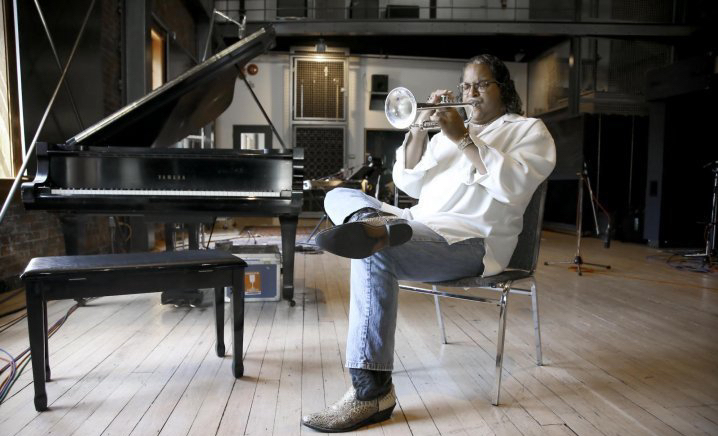
Trumpet Artist Profile: Marvin Stamm

Marvin Stamm is a colossus of the music world, having performed and recorded with many jazz legends throughout his illustrious career. At 79-years-young, he is still going strong and has many interesting thoughts here on adapting to change, both musically and physiologically over the years. There is sound and compelling advice here for musicians of all instruments and of all ages!

What first drew you to the trumpet?

Upon reaching the seventh grade in the school I attended in Memphis, Tennessee, every student was required to participate in a form of the arts—either become part of the band or sing in the chorus and take art. I had no talent for art nor any interest in singing in a chorus, so I chose instrumental music, which at my school was the standard concert band instrumentation. Part of my decision also rested upon the fact that I was rather shy at that age, and thought I could hide within a larger organization and not be noticed. The reason I chose the trumpet was because my older brother, an avid record collector, had a recording by Clyde McCoy entitled “The Sugar Blues” with which he employed the Harmon mute with the stem to produce wa-wa effects, growling, and flutter-tongue. This was quite impressive to me, and this is why I chose the trumpet.

Were there any particular early influences or musicians that you admired?

There were many early influences upon me, and they would have great consequence on the path I chose. Among the important people who first influenced me were my two wonderful band directors during my school years in Memphis; they gave me great training in the basics of music, playing in their concert bands. Another was my afore-mentioned brother, Gordon. My interest in jazz came about very early in my musical experience because hegave me access to his complete jazz collection, allowing me to play along with his records pretty much from the genesis of my musical endeavors. This gave me early exposure to this music  and hadgreat impact on me. I was so enthralled with playing music that I decided after only two years—at age fourteen—this would be my path in life.

Another person exerting great influence during my high school years in Memphis was my trumpet teacher, Perry Wilson. Perry helped me build my musical foundation. He took me through Arban’s, St. Jacome, Schossberg, and Klose, also spending a great deal of time playing duets with me in order to teach me how to work, phrase and blend with other players. At the end of each lesson, he took me into one of the piano rooms and played tunes with me to help me broaden my improvisational skills, learn new material—and, so very important—develop my ear. He also was instrumental in my working in Memphis dance bands from age sixteen. I was very fortunate to have fine and dedicated teachers from the very beginning who prepared me well for my chosen career.

Through every phase of my musical and personal life there have been people willing to offer encouragement and help. There were several very fine musicians form my growing up in Memphis, many of the professional players the Dallas/Ft. Worth area and at the university during my years at North Texas State (now the University of North Texas). The years with Stan Kenton and Woody Herman were of immense value to my growing and developing as a player as well as the two years doing show work in Reno, Nevada. And then throughout all my years working in New York and beyond.

It would be impossible to list all the musicians with whom I have worked and who personally influenced me, but among the trumpet players whom most of our colleagues would recognize would be Mannie Klein, Bernie Glow, Ernie Royal, Snooky Young, Thad Jones, Ray Crisara, Burt Collins,  and Kenny Wheeler. And this lists just a few of the many who were of enormous significance to my music and my life. Someone once said to me that I had achieved a marvelous career and I had done all on my own efforts. I laughed and told him he could not be more mistaken. I had help every step of the way and experience this still to this day—from friends and musical colleagues alike.

As a young player, what was it like joining Stan Kenton?

I joined the Stan Kenton Orchestra as his jazz trumpet soloist immediately upon graduation from the University of North Texas in 1961. However, my relationship with Stan pre-dated that occasion because the North Texas band was kind of a house band at the 1960 Indiana University Kenton Clinics, serving as his band for that week. He conducted us in nightly concerts and became quite familiar with my playing, In November of that year Stan asked me to complete the last three and a half weeks of the 1960 tour because Sam Noto had been offered a steady gig at the Latin Quarter in New York City and needed to leave the band. This was really my baptism of fire with the band.

I joined fully after graduating from North Texas and toured with him for two years, recording five albums with the band. The orchestra, during my tenure, toured only in the U.S. and Canada, mostly playing one-nighters. I gained a good bit of national recognition and exposure touring with the band and especially through my being featured extensively on the recordings.

Working for Stan Kenton was great—he was very much a father figure, quite a special person, and very dedicated and inspiring to one such as myself. He was also very patient with me during my time with the band. I underwent a bit of an embouchure change because I was playing low onto the top lip, that is, onto the red tissue of the lip. Because the band played so hard, and most times quite loud, this caused me to cut my lip. With the help of John Haynie, my trumpet teacher from the University of North Texas, I moved the mouthpiece up on the top lip a good bit, providing more vibrating surface for playing and more muscle tissue, more “meat”, for the mouthpiece to rest upon. This was quite a drastic move for me and took a long time for me to adjust to, causing me a great deal of stress. During this whole period of adjustment, Stan was very patient and encouraging to me, showing how much concern and care he had for the people who played in his band.

My time on the Kenton band provided great experience in that it gave me a clear view of “life on the road.” I received a lot of solo exposure and met many people who contributed much to my growth and life experience. Some became friends for life. This playing experience was especially invaluable because you had to be at the top of your form every night in spite of being weary or sometimes ill; or many times playing where acoustics were less than perfect with tired or hurt “chops” and always being on the move. This instilled the concept that when it was time to perform, it didn’t matter how you felt—you were expected to be at your best at all times, under all sorts of conditions. And the one who expected the most from you was you yourself!

During your period as a busy studio player, what were the main things that you concentrated on in practice sessions to keep yourself in good shape and ready for anything?

Fundamentals, fundamentals, fundamentals! I wanted to keep my embouchure strong, but flexible and my technique accurate. We almost never knew what we would be playing from session to session until our arrival at the date. And some days we would be  playing three or four different sessions, all of a different musical style. I might be playing lead trumpet on one session, flugelhorn on another, and piccolo trumpet on a third. Our musicality depended upon our exposure to many styles of music and the interpretation thereof. But the ability to go into number of different musical environments, having the flexibility and stamina to perform to the highest standards day in and day out was the foundation of such a career. I found that keepingmy“instrumental”side in it’s best working order was the best way to be prepared for this kind of functionality. That meant stressing fundamentals.

What prompted your move away from the studio work to concentrate on your own jazz projects?

In the late ‘80s I realized I was feeling musically unfulfilled by the work I was doing. For the first 17 years or so of my studio period, while doing a lot of commercials and such, I still was also involved with a lot of musical recording projects, many of which were in the jazz genre. In the early ‘80s, the shift in work was more to commercials, and the recordings were mostly R&R recordings. There was little creative input being asked of the players, and I was feeling like just a journeyman musician, like “cog in the wheel” of most projects.

In addition, the technology aspect of the music was growing and many of the keyboardists and synthesizer players involved in projects were also being asked to write the arrangements for these projects—few with any knowledge of or skills in orchestration. We became the sources for informing them of what possibilities there were for various instruments, sometimes teaching them the most rudimentary things such as what was the lowest note on a trombone and the highest note playable by a typical saxophonist. It was very frustrating to most of us who had worked for years to become educated, masterful musicians.

In 1987, Lew Soloff introduced me to Swiss composer and and band leader George Gruntz, who was looking for someone to replace Lew for an upcoming tour, as Lew was already booked at that period of time. George invited me to join his group of U.S. and European musicians and I accepted, beginning what was to be a twenty-three year association with his Concert Jazz Band.

The musicians for this tour included Americans Lee Konitz, Claudio Roditi, Larry Schneider, Mike Richmond. Adam Nussbaum, Ray Anderson, Art Barron, David Taylor, Joe Henderson and others. Among the Europeans were trumpeters Palle Mikkelbourg, Manfred Schoof, and alto saxophonist Luten Petrovsky. There were straight-ahead players, BeBop players, and avant-garde players, all coming from across the musical spectrum. Moming from a more traditional big band background, I was initially taken aback by it all, but by the end of the tour, I was inspired. I felt that it might just be possible to move away from being a studio musician to become a jazz musician.

The thought was, at first, frightening. I remember one night discussing what I intended with drummer Ed Soph, wondering aloud how I was going to make this happen. Ed told me not to worry, it would definitely happen. Of course, I also talked all this over with my wife, who felt I should go for it. From this, my decision was made. For the next three years, i put myself out there, and if there was a choice between a recording session or a jazz gig or a tour, I took the jazz gig and turned down the session. Eventually, it became obvious to those in the business and they started calling others for studio dates. As well, my work as a jazz player was growing, so over time, one replaced the other. This began the most creative period of my musical life, and I never looked back.

As the years have gone by, would you say that your approach towards practice, preparation and performance has changed? If so, is it something that has had to change?

I certainly feel my approach has changed over time. It is true physically as well as musically. People tend to change physically as they age, even from their 30’s into their 40’s. and again from their 40’s into their 50’s and so on. This is just a physiological fact. Understanding when one’s practice and approach to the instrument needs to be altered—even if only slightly—from time to time to meet these circumstances is a great challenge. No one wants to change from what has worked successfully for a long time. But sometimes change is necessary, particularly when the problem may be physiological. I have seen many examples of players who don’t understand when their physiology changes and are so stymied by this that they don’t recover. They keep trying to approach everything the same way they have done for years, and yet, it doesn’t work anymore. Having a teacher or outside coach can help when one feels frustrated. A coach or teacher one trusts may see things looking from outside our faces than we don’t perceive on the inside. I sought help several times from the late Laurie Frink, a most wonderful teacher and player, who helped me to understand and work through my own problems.

Musical circumstances can also require a player take a different approach to practice. It all depends upon the kind of music and performance one is being asked to play, especially if one is working as a free-lance player. One example would be someone playing a show night after night that requires a hard blow, but then being asked to play a week in a small chamber orchestra where the  music is softer and requires a different sound. The practice necessary to prepare for this kind of change would be quite different than the preparation for a difficult show. Practicing fundamentals to keep one’s embouchure flexible to play in any circumstance is necessary and certainly helps one to overcome many of the changes one must go through.

Every player experiencing physical or musical changes in their playing must be mindful of finding his own solutions to whatever challenges might arise. This will involve being flexible in his thinking and approach to these challenges going through the various stages of their careers. There has never been one answer for everyone; each of us must find our own. This is a challenge we all face.

What equipment do you use?

My trumpet is a Bach Model 72 Lightweight that the great lead player Bernie Glow picked out for me in 1969. My mouthpiece is a Najoom 7M (for medium). I play two flugelhorns, an old Cousnon I bought used in 1964, probably made in the 1950’s, and a French Besson, made under the auspices of Boosey and Hawkes by Zig Kanstul, at the urging of me and Guido Basso,the great Canadian trumpeter. I use either a GR custom mouthpiece (close to a 62M) or a very old Bach 10 1/2 C flugelhorn mouthpiece.

What do you think the priorities are for young aspiring players to keep in mind to give themselves the best shot at a long and successful career as a trumpeter?

There are a number of priorities to developing a long and successful career, each being a key basis of the other. Mastery of one’s instrument is certainly the foundation of any successful career, and practice of the fundamentals is the basis of that foundation. Part of this is also understanding the importance of developing a good sound because one’s sound is his voice, who he is musically. And while mastering etudes, solos, and excerpts are important, listening to and performing in many areas of music is the key to becoming a versatile player—and versatility is central to being a busy, working musician. There are those who are able to develop a career as a specialist in a given field, but they are rare birds in the equation. Being able to answer any work call and performing whatever that call requires is the key to having a successful career as a working musician. And that means having a working knowledge of many kinds of music.

What are your proudest career moments?

Over many years of playing music, I believe the thing I am most proud of is all the years of playing in the company of so many great musicians and being accepted as one of them. I had the great privilege of playing with my heroes, and to this day, I still feel that I am trying to play up to the level of musicianship that they set. But I don’t feel this as an element ofpride; I actually feel great humility at this acceptance and being a part of so many wonderful musical moments. I had the privilege of living my dream, fulfilling my musical fantasies.

What are your most enjoyable career moments?

There have been so many that it is difficult to pick one or two special experiences because there have been so many. Sitting a the trumpet section with people like Bernie Glow, Ernie Royal, Snooky Young, Ray Crisara, Randy Brecker, and so many others was always special. Reaching to achieve the highest level of performance in the company of many great musicians was constantly thrilling. Words can’t really express the feelings this generated, day after day, performance after performance. I guess the most important thing to take away from what I am trying to express is that music is never about “me,” but about “we.” Community, everyone striving to bring the best to each musical moment, is the most fulfilling element of great musicians playing together. And I was most fortunate to be some part of so many of those experiences.

What projects have you got coming up?

I am going to be doing a project in the UK next summer with Matt Gough and Andy Bush, both excellent trumpeters and composers. Andy and I met in the mid-1980’sand have been dear friends ever since. Matt is a new friend and the composer of a magnificent multi-medium suite, “The Forgotten Fairground.” I’m sure you’ll be hearing a lot about this project soon.

I’ve also been privileged to be a part of several projects by pianist and composer Michael Holober. We’ve become very close friends dating back to when he conducted the Westchester Jazz Orchestra of which I was a member. I have been a part of four of his projects in the past four or five years, and he has mentioned two or three future projects that he is working on. Michael is also a musical partner in my quartet along with drummer Dennis Mackrel and  bassist Mike McGuirk.

And I continue to perform as a guest soloist in various settings. I appeared at the Guildhall this past July, performing two of the Miles Davis/Gil Evans suites, “Miles Ahead” and “Sketches of Spain,” with Scott Stroman conducting. Working under Scott’s baton is always exhilarating!  I shared the solo chores with UK trumpeter Robbie Robson, and if any of your readers are unfamiliar with Robbie’s music, please do become familiar with it. Robbie is extraordinarily creative and gifted musician. I enjoyed so much sharing this program with him.

In closing, let me say that in light of all I have been so fortunate to do in music, I am happy any time I can be in the company of extraordinary and like-minded musicians, people I can enjoy playing with, listening to, and  learning from. To me, that’s what it’s all about!

Please click here to read about Marvin’s time studying with Carmine Caruso

You can see and hear lots of great clips of Marvin playing on his website


Sign up here for new blog articles emailed direct to your inbox:

[jetpack_subscription_form show_subscribers_total=”false” button_on_newline=”false” submit_button_text=”Sign up” custom_font_size=”16″ custom_border_radius=”0″ custom_border_weight=”1″ custom_padding=”15″ custom_spacing=”10″ submit_button_classes=”” email_field_classes=”” show_only_email_and_button=”true”]

Interview

Trumpet Artist Profile: Winston Byrd

Winston Byrd has made a career out of drawing on many different styles including classical, blues, pop, jazz and improvisation. One of Winston’s big breaks at a young age was to become a member of the Dizzy Gillespie All-Star Big Band, and he has gone on to have a career working with a ‘who’s who’ of the music business. 

Derek Saidak at Legends Brass has very kindly put me in touch with Winston so that we can learn more!…

Legends Brass

What drew you to the trumpet as a child?

Well…  It was a combination of things.  I first saw Dizzy Gillespie on The Tonight Show, then I saw Chuck Mangione on Don Kirshner’s Midnight Special, and the one that sealed the deal was seeing and hearing Alan Rubin, in The Blues Brothers.  It was seeing all these great men, doing what they do, that lit the fire under me, so by the time I got to the point in elementary school, where they ask you, “What do YOU want to play?”, it was a done deal.

Did you have any particular early musical influences or heroes?

PLENTY!!! Of course, John Birks ‘Dizzy’ Gillespie, that’s where we’ll start, because be it, The Tonight Show, Sesame Street, etc…  because when I was a kid, he was everywhere and to a child, his trumpet just had your attention…  It was the coolest thing to me.  It didn’t look like everyone else’s trumpet, and that’s what made Dizzy so cool to me…  He was an individual and unique, no on equaled him!

As I went on, I would check people out, and I would say, going forth, Jon Faddis, who not only is a hero to me, but also a friend and mentor.  I never got to meet Dizzy, because right when I was about to get on the scene, he had passed by then, but being around Jon is being around Dizzy’s spirit and I’d like to say that I did meet Dizzy through Jon.

Clark Terry…  who really helped EVERYBODY and took a liking to me when I was a teenager.

He too was basically family!  He and my Dad would have a drink together, when ever I had a gig with him.  He was so good to me and my family.  I spoke with him, two days before his passing and he asked about my Mom, Dad and Brother…  Brings tears to my eyes thinking about it…  He was my friend, my musical grandpa and my hero…

Randy Brecker, who’s style is like no one else and his approach to improvisation, has always stuck with me.  I just love the way Randy thinks!  Don Ellis, who made me learn different time signatures (which made it easier because I’m a drummer as well!), Lew Soloff, cause he could play just about anything.  I particularly like to go back in history and check out the elders, A LOT, like Roy Eldridge, Charlie Shavers, Joe Newman, Joe Wilder…  Those gentlemen were beyond incredible and really did pave the way for us generations to come.

Can you pick out a few career highlights to date?

Oh…  let’s see…  There’s the 27 years of traveling the world, the TV stuff, here, there and abroad, the movies I’ve played on, played for Her Majesty, The Queen, last summer…  John, I can hardly keep up with myself and to be honest, when I conquer one mountain, I’m usually sprinting down the downgrade of it to take on the next one that I’m about to climb.  I never rest on my laurels and I’m ALWAYS up for the next challenge/adventure, whatever it is, but to list them all here…  We’d need a MUCH bigger interview!

What projects have you got coming up?

Well, I’m in the middle of my fourth album and this is a special one, because as I said above, I’m always looking for the next challenge.  I wish I could say more about it, but around the camp, “Mums” the word, but I can assure you, it’s going to surprise EVERYBODY!!!

WB2

As a top performer, are there any particular routines that you follow to keep yourself in good shape for performance? How do keep on top of your trumpet playing, particularly while you are travelling?

For one thing, it was vigorously exciting to be hitting the road at 17, now I’m 45 and you HAVE to take care of yourself, if you want to continue the longevity of your craft.

1.) REST!!!!!  You gotta get rest on the road!  It never hurts to hang out, here and there, but you have to remember, this instrument is just as physical as a sport, so proper rest is a must!

2.) Warm-Up…  I don’t care how old or young you are, again, this is a physical instrument that combines cardio and muscular activities.  If you don’t warm up, one day IT WILL catch up with you!  Doc Severinsen is in his 90’s and he’s does a long warm up!  Whether you take an hour (I do an hour to ninety minutes) or 4 or whatever, you gotta warm up!!!!!

3.) Listen…  Listen to music at every chance.  Doesn’t matter what genre, keep music in your ear.  When I’m on the road, I got volumes to choose from.  If I can’t get too much practice done in travels, I’m listening and within that listening, my brain is inhaling all those licks, patterns and nuances that are definitely gonna come out in my playing.  My mind is a steel trap, John!

4.) Relax…  When I’m on the road for long periods of time, I try to work in a golf game or two.  Now, I’ll be the first to say, I ain’t that great at the game, but I enjoy for the scenery, the peacefulness and it takes my mind off the music, so that when I go back to it, it’s all fresh and new to me…  (I’m not admitting any past golf scores, either…)

5.) Have fun…  John, I have MAJOR fun out on the road.  Life is too short to deal with mess.  There’s a whole world that’s beautiful and exciting out here to see, and I’m thankful to God that He’s given me the opportunity to see all the sides of His Wonderful Creation, Our Planet. The different people, creeds, colors, religions, foods, cultures, etc…  I really enjoy going to other places and partaking into THEIR culture, rather staying within mine, in a foreign country…

I tell young musicians ALL the time…  I was 17 when I had my chance, and if you get yours…

SEE THE WORLD!!!!

Can you tell us a little about the current relationships that you have with manufacturers? What was the process like, working with Legends Brass on new mouthpieces?

My relationships are just like family…

The longest relationship out of all my endorsements, is Cannonball Musical Instruments.  Tevis and Sheryl Laukat are my ‘second in command’ parents, when my own parents can’t make it to an event or something, that’s how close we are and I love them dearly, and Derek Saidak is like my big brother, who takes very special care of me!

Working with Derek…  He’s a smart guy!  He knows his stuff on mouthpieces and he’s a very fine player himself!  I don’t get to Tennessee as much as I’d like to, but I’m gonna get there more now, as my schedule is taking me there, in the near future, but I say that to say this…

Derek is so knowledgeable and on top of his game, that, when I want to make a change or alter anything within my own line of mouthpieces, he can do it with just my explaining it to him over the phone!  That’s how genius this guy is, and I am mighty, mighty proud to be playing his mouthpieces, because they are that great AND MORE!!!!!

Have I forgotten anything?! Is there anything else?!

I’d just like to say Thank You and that it was an honor and a pleasure to talk with you, John!  I hope we get to do it again sometime soon!

To find out more about Winston Byrd including current projects and recordings, visit www.winstonbyrd.com

Legends Brass

The Legends Brass mouthpieces that Winston plays on can be viewed here


Sign up here for new blog articles emailed direct to your inbox:

[jetpack_subscription_form show_subscribers_total=”false” button_on_newline=”false” submit_button_text=”Sign up” custom_font_size=”16″ custom_border_radius=”0″ custom_border_weight=”1″ custom_padding=”15″ custom_spacing=”10″ submit_button_classes=”” email_field_classes=”” show_only_email_and_button=”true”]