Advice · Gear Review · Interview

Trumpet Artist Profile : Lasse Lindgren

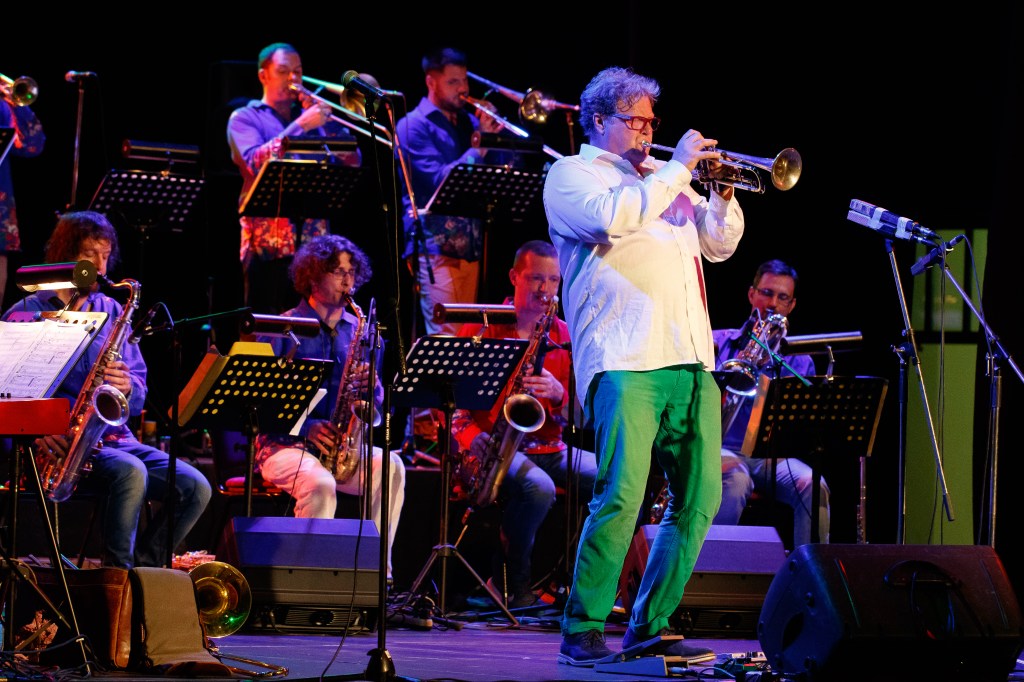
Lasse Lindgren is a multi-faceted musician, with a reputation as a great ‘lead’ trumpet player as well as a great ‘jazz’ player. In recent times, he is also responsible for the resurrection of the great Ullvén Mute brand, made famous by players such as Dizzy Gillespie and Maynard Ferguson. Lasse kindly talks to me here about all things trumpet as well as this recent project…

What first drew you to the trumpet?

That’s easy! I heard Louis Armstrong on the radio as a 5 year old boy. That totally blew my mind and made me decide to dedicate my life to playing trumpet. Then I had to wait until I was eight before I got a trumpet, and I still remember that moment as very exciting, after I had to wait for years. I also remember that I was dreaming of making that sound for so long, that when I finally got it, it was a great relief to put the mouthpiece to my lips and blow the sound I had in my head for years. I think that also made it easy for me, I got a good sound right away. I think because I was so eager and had the sound built up inside me, it just came out naturally.

Any early musical influences?

As a young boy I loved the recordings of Louis Armstrong, Glenn Miller, Harry James and the other famous BBs. My mother had an old 78rpm record player at my grandparents’ home. I used to love to sit by myself and listen to the old records – that sound made a deep impression on me.

When I was 15, my trumpet teacher played the record “Message from New Port” with Maynard Ferguson’s orchestra for me. That was another “blow my mind” experience. I loved not only MF playing, but the sound and energy of the music arrangements!! and I still do. I thought playing those high notes MF did was something you learn when you get older, that is how stupid I was))-

But of course I wanted to play the notes of MF and his “sound”, but how? No one to ask? So I had to experiment myself by my own. From age of seventeen to twenty I spend 8-10 hours a day with my trumpet, playing, thinking and trying out how to do this.

I also spent some time playing “Free Jazz/music” as a teenager, that opened my ears and mind, Lester Bowie and Art Ensemble of Chicago!

Who have been your favourite players and music to listen to?

Well, when I went to high school, I started to play with friends in a band, and we played some kind of “Jazz-rock” in the style of “Weather Report” and so on. So I broadened my view of music. Then at that time, I also started to be aware of other great Trumpet Heroes, especially in more “modern” Jazz. Artists like Dizzy, Miles Davies, Clifford Brown, Freddie Hubbard, Woody Shaw, Chet Baker, among others, but also the European players like Palle Mikkelborg, Kenny Wheeler (Canadian in UK) Tomas Stanko (I played a lot with him in Germany) and my Swedish friends and heroes Bosse Broberg, Jan Allan and Rolf Ericsson. I also loved players who were both “Lead” and “Jazz” players – Snooky Young, Benny Bailey, Booby Shew (whom I met and got informed about the Yoga Breathing from when I was 18)…

Today I still listen to them all, the old stars were the genuine originals. There are many new great trumpet players of today, but have to admit, I am not so familiar with them, although Roy Hargrove was fantastic, RIP.

It’s hard to invent the wheel again, and to me, many of the young very skilled and talented players of today, sound as though they are playing “licks” they have practiced and learned. To me, that is actually is not spontaneous soulful improvisations, more than showing that they can play the right “hip” patterns over the chord changes – rather boring to me.

It is not easy to make your own sound and style, and I think too few even try. The exception is Tim Hagans, but he is not so young anymore!!

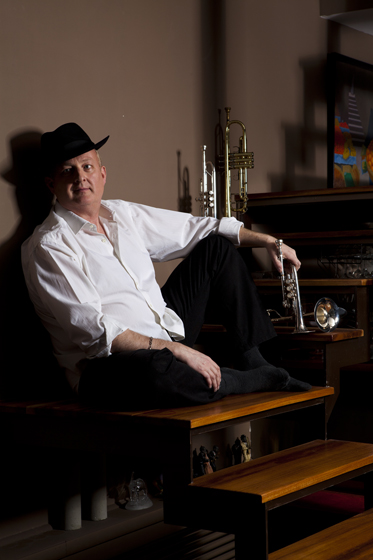
Lasse playing on one of the two Conn Connstellation trumpets that he owns, once belonging to Maynard Ferguson.

Is it a difficult skill to practise, being able to specialize in lead AND jazz? What are the particular challenges? Are there any particular routines that you follow in order to be able to achieve this?

Apart from the physical aspect of these two different ways of playing, the Lead player often has to use different equipment (not always) and play more demanding physical parts, to play with agood sound in the upper register with the endurance required. This takes a lot of work, exercises to keep up the “chops” to handle this, not everyone can do this. The Jazz player, on the other hand, meaning improvised jazz solos, has to learn how to do that… also the techniques. Scales, tunes, and how that music works, most likely Jazz players use different equipment (mouthpiece) compared to the Lead player. A good “lead” player must besides having the control of the instrument in any register, also be able to interpret music, a melodic line that you are asked to play, what the music is about, play it soulful and interesting in the style of the music.

When I play lead, I always ask the composer what the music is about or make my interpretation of the title. I always play as if I were singing the music instead of blowing the trumpet. I think a lead part or a melody also should be played like it was improvised, so it would sound fresh new and spontaneous, but at the same same time consistent the same way each time, so the other musicians can follow and trust in me and the way I play. Lead means to guide, show the way the music should be phrased for the fellow musicians, not only playing high notes. I think you must have an ability to be a leader, a strong personality, not ego, but be a steady and reliable player.

It is also a question of knowledge of style and understanding how to play different types of music. How do you learn to play good “lead”? Listen a lot, sit and play under a good “lead” player for years to get the “Know how”. The same goes for Jazz playing, listen and play with good musicians. So my conclusion is that to play good “Lead” it is good to be able to play some Jazz as well. To play good jazz, one must also be able to present an interesting melody, with respect for the song/tune, and the technique required.

So one difference between “lead” and Jazz is that a leadplayer must sound like the music is improvised but at the same time not. The jazz player should make the music fresh and spontaneous, every time to challenge other musicians and maybe be unpredictable to make it interesting.

I do have my daily routine that I do when warming up, getting my sound in all register together. It takes normally 1-1/2 hours from the first breathing exercise and buzz on the mouthpiece through scales or arpeggios from the deep pedal notes to the high register double C. After this I rest and do other duties. Later if I have
time I practice music, Jazz play along records (I still do that with a record player, not with the computer, I’m too old and stupid!) or etudes or music I have to play and need to be practiced.

As well as playing in lots of great bands over the years, you have also been a band leader. When did you realise that you wanted to create music under your own direction?

I remember that I was making drawings of “my own Big Band” when I was 10, so for some reason I always wanted that!

Since I always have been interested in writing music for my band, it was natural to have a group to play my music. For some reason, even though I always loved and listened to “Jazz” old and new, as I mention before, I never hear this in my head when I compose??!! Why? I dont know. So my own music is a little different, I try to make more compositions rather than just a short melody and then the standard for soloists. This is just the way for me, so can my music be called called Jazz??

Is it possible to define what ‘jazz’ is? It is such a broad musical term isn’t it?

Well, Jazz is a name with a history, from mid 19th-century meaning spirit, energy, or courage and other things as well… “semen”… so it has a hot history I suppose! When we talk about what is Jazz today, it covers many “styles”, but for me somehow, it is a rhythm with the swing pattern played on the ride cymbal. As they say triplet groove,
swinging eight notes, it is the same as Hip Hop, bebop, dixieland for me. As long as it has that “diiing diiingdidiiiing” groove played on the drums or on the cymbal, it is basic Jazz.

Then there are many other styles that has evolved from this: Free jazz with swing groove or not, Scandinavian sounds of “Jazz”, Latin Jazz… if these are Jazz? Then Funk, more composed music, Charles Mingus wrote as he said – not Jazz, he wrote “Charles Mingus”, even if he was one of the big names in “Jazz”. To me the rhythm and improvisation are important to define Jazz. When I compose it comes out more like my music, which is not so often Jazz, or any typical style. It is hard for me to define my own music which also makes it harder to sell! A lot of my music has more beat grooves or rhythms, straight -jazz eight notes, still it has the other elements in Jazz improvisation. Is it still Jazz?

Any particular career highlights that stand out?

Besides all the gigs and tours with my own groups throughout the years I have some. I did a gig with Ray Charles in Finland once. It was a mix, with a half Finnish band and half Ray Charles orchestra, at a big sports arena, 8-10,000 people. I had some solos and I remember one was 1m in front of Ray Charles. It was a very slow “Georgia” type of song, and I played kind of blusey with some long high notes in the end. I remember it was thrilling and inspiring (goosebumps) to hear Ray’s comments while he was comping me – “yeah man!!” and so on, after that I was offered a job in his band. I didn’t take it however, I already had the gig as lead player in the Danish Radio Jazz Orchestra, and also a family!

In contrast, great moments also happened in smaller situations many times. Like, on tour with my quintet in small villages far up in northern Sweden, at small Jazzclubs in front of 10 people. When some of them, after the concert, come to us with tears in their eyes and thank us for the music. Then I also feel it was a great moment, when I was able with my own music, to touch somebody to tears of joy! Another was when we made a 3 week tour all round Europe with the Danish band. Maria Schneider conducted Gil Evans music with David Sandborn as soloist. We played some of the original scores that Gil wrote for Miles Davies. It was a highlight, especially in Spain. The audience’s reaction in Seville after “Sketches of Spain”, was amazing.

Tell me about the journey bring the great Ullvén brand back to life!

Ullvén Mutes have always been “the Mutes” for me, and I grew up in the same small town of Uddevalla at the west coast of Sweden, where Mr Ullvén had his Workshop. He had also a music shop there were I naturally used to go. Besides that, my mother took care of his bookkeeping, since she worked as an accountant. Mr Gunnar Ullvén used to come home to us every Christmas with gifts, flowers to my mother and a 1 litre bottle of “Popy” Valve lubricant to me. I also remember being in his shop when Dizzy Gillespie called and needed some more mutes – and sometimes as a teenager, I went to Ullvén’s workshop and got some mutes to experiment with. So, when I was offered to take over and restart the company one year ago, it was natural for me, I feel close to this company and its great products.

But, since it has been sleeping for 20 years, it will take some time to get things going, but I do work hard and want to be able to bring these mutes and things available for brass players worldwide again.

All the old tools are still there, and the now old man, who made the mutes by Metalspinning has retired, but he taught his son how to do it, which is great – without them it would have been much harder, maybe impossible for me.

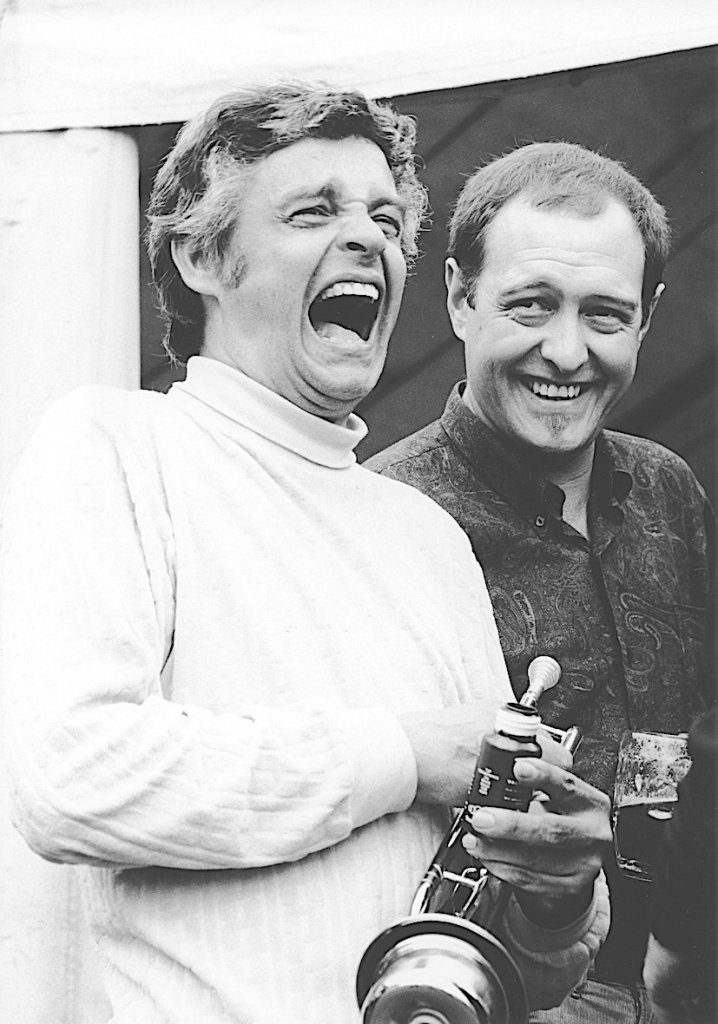
Maynard Ferguson in 1968, with his Ullvén mute and Popy valve oil!

Any particular challenges along the way?

Well, yes, to find suppliers for some of the products I need, like the special Industry felt, Cork, Labels and cardboard can’s for the the mutes. The last time they ordered these things was 25 years ago and most of the suppliers are gone so it takes time to get new contacts. Also for example, getting license to use Dizzy Gillespie’s name – Jon Faddis helped me with that!

What are your plans for the future?

Times are strange in the Era of the Corona Virus!! No gigs last year, but I stay alive with my horns by practising daily as well as possible. I’m of course using the time to get my Ullvén mutes for brass instruments on the market.

Then musically I do have things coming up later this year, but… we don’t know for sure yet.

I have done some recordings that will be out there soon I hope. Two records with the great “Latvian Radio BB”. One released 2 years ago, we should have played concerts with that in 2020, but it was cancelled. Then another with more “standard Jazz” that will also be out soon.

I also made a recording for the Scottish label “Sleepy Night Records” with my own band in Croatia/Slovenia. This is also postponed for better times, hopefully this year!! New arrangements of old “Rock and film” hits, in the style of Maynard Ferguson “Alive and Well in London”.

I have got 25 old arrangements by Slide Hampton, Don Sebesky, Mike Abene, Willie Maiden, and others. Music arranged for Maynard Fergusons Orchestra 1956-65, but never recorded. I will do that with my band here in Sweden as soon as we are allowed to.

Then, once again, I have a third project with the same great “Latvian Big Band” next year. A new album, mostly my own music, arranged by the great Michael Abene, it will be a wonderful adventure.

I will also get a new quartet together, asap, something that I have wanted to do for a long time.


SIGN UP HERE FOR NEW BLOG ARTICLES EMAILED DIRECT TO YOUR INBOX:

[jetpack_subscription_form show_subscribers_total=”false” button_on_newline=”false” custom_font_size=”16px” custom_border_radius=”0″ custom_border_weight=”1″ custom_padding=”15″ custom_spacing=”10″ submit_button_classes=”” email_field_classes=”” show_only_email_and_button=”true”]

Advice · Education · Interview

Trumpet Artist Profile : Eric Aubier

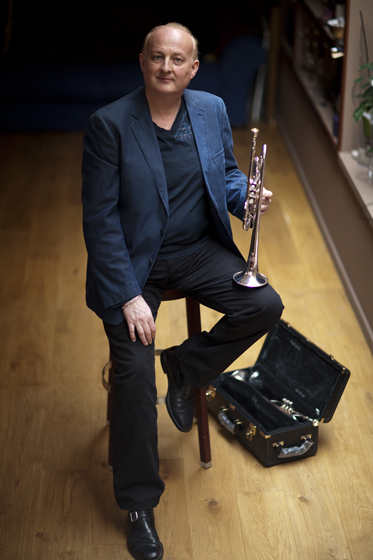
A renowned soloist and educator, Eric Aubier is held in the highest regard by musicians around the world. He talks to me here about being a child prodigy and breaking into the industry at a young age, his trumpet heroes, his glittering career so far, and the challenges that we must all face up to as we navigate our way through this global pandemic…

Can you give a little background to your relationship with the trumpet? What were your early influences?

It could be summed up with this statement: “I did not choose the trumpet; it was it who chose me”.

In fact, I started the trumpet by pure chance! I come from a modest background and we lived in a working-class suburb of Paris. My parents were looking for a cultural activity to do during the schoolchildren’s free day in France. It turns out that we had a neighbour in our building who brought his children to our city’s music conservatory, which had just opened. I started doing music theory with my older brother for several months. I was 6. When the principal asked us to choose an instrument, my parents didn’t have the money!

So it was not possible to buy! Luckily, a neighbour had an old Couesnon trumpet in a cupboard at his house and he offered to lend it to us. My brother and I started like this! Also, there was no trumpet teacher and we started with a horn teacher.

At that time, I had no notion of music and was not particularly attracted to it! I just obeyed my father who was rather bossy! The beginnings in music theory were difficult, I did not understand anything, but on the trumpet, it worked straight away! It was easy for me! This is the first contact with the trumpet. So, it was not the trumpet that I liked but more the fact of being highlighted. I saw my father’s satisfaction there. Obviously very early on I was made aware of the great master of the trumpet Maurice André and I started listening to his recordings on vinyl records.

You could say that all my early years were influenced only by Maurice André.

In conclusion, in this time I did not particularly like the trumpet or the music but the importance it gave me. I really discovered the music and the instrument much later.

When did you decide that you wanted a career in music?

It’s very simple, never! It just happened on its own, without having to think about it as if there couldn’t be any other way. This is due to the fact that I joined Maurice André at the CNSM in Paris very early on. I was barely 14 years old. I got my Trumpet award when I was just 16 years old (Masters equivalent today).

In fact, in my youth, I would have liked to do scientific work. I was very interested in sciences like astronomy, molecular biology, nuclear physics, all things in the world infinitely large and small. Later, I almost became a racing driver or restaurateur! But this is another story!

To sum up, I didn’t choose the profession of musician, it’s not that I was against it because it worked pretty well for me, but I would never have dared to tell my father that I would like to do other things. So, the question never really arose.

What styles of music have you listened to most over the years?

My early listening was for years mainly Maurice André but also Sydney Bechet and Louis Amstrong. I actually listened to what my parents bought or liked! It wasn’t until my teenage years, when I attended the CNSM, that I was introduced to other genres of music by my classmates.

It was the heyday of Bill Chase and Maynard Ferguson who became my “secret” idols hahaha. I loved Count Basie and the big bands too.

I can say that I really “discovered” music when I entered the Paris Opera, I was 19 years old. Then I traveled to many countries, entered trumpet competitions and discovered other worlds and other paths that made me who I am today. Now I love the violin, I love lyrical art, jazz in general but especially to compensate for my frustration of not being able to express with my trumpet what can be expressed with a violin, a human voice or a freedom of improvisation whether in phrasing like Clifford Brown, in colour like Chet or Miles or in the humanity in Armstrong who remains for me the undisputed master.

After breaking through into the profession at a young age, were there any particular challenges that you faced? Would you do anything differently if you had your time over again?

The answer is yes, twice! I arrived in an adult world and I was still a child or almost, I only had social relations with my parents or almost and it was very difficult both in my beginnings at the CNSM in Paris and when I started to work in the orchestra. I was not prepared.

As everything had been easy for me at the start, I came up against the “real” world, that of rivalry and competition. There is no empathy but the harsh reality on the ground.  At the time, few very young people like me (as a trumpeter), if any, had faced this kind of situation. Today it’s very different, a lot of young people reach a high level very quickly and have learned from the experiences of people like me.

I found myself without a teacher very early on and suffered greatly from this loneliness. I was set apart. I had to do it myself.

Looking back, yes, I would do it differently now, but I had neither the idea nor the possibility at the time. It was the time when everyone wanted to be Maurice André, to look like Maurice André.

We were considered by foreign trumpeters as privileged to have the chance to rub shoulders with the Master. Of course, I never thought of going anywhere else because we felt like we had the “best” here! Yet this is what I missed in my studies in my opinion.

In demand as a soloist and educator, how do you manage your practice routines? Do these stay the same or do they change drastically depending on what you are working on?

I gradually built my practice routines with my personal experiences and especially with my students. I started teaching at 17! I had time to experiment a lot! In the 1980s I was a colleague of Pierre Thibaut at the Paris Opera Orchestra and as Pierre only spoke of methods, mouthpieces and trumpets, I was able to know a lot of things without asking anything hahaha! That was all that he talked about! As I teach a lot, I mainly work on routines, technical, warm-ups with the students. I don’t change my routine much, but my exercises are numerous and have a wide field of action.

So, I would say that depending on my performance in concert, I manage differently by increasing or decreasing the ranges of certain exercises and choosing the most appropriate.

Can you take us through some of your career highlights?

I have flashbacks coming back to me. I don’t know if these are the most emblematic, but they are the ones that I have not forgotten, and which obviously marked me.

A Christmas mass that my primary school principal had asked me to do with him (he was an amateur lyric singer!) and who gave me some coins at the end of our performance saying “Here is your first fee!”. I was 9 or 10 years old!

My first real solo concert with the conservatory orchestra on April 28, 1972, I played Haydn on C trumpet. In fact, I didn’t have any others …

Concert at the Salle Pleyel in 1974 with the Philharmonic Radio orchestra! I played Hummel still in C!

Recording of my first CD in 1987 with the Paris Bastille Opera Orchestra with Marius Constant.

My recital with percussion (Heptade by Jolivet etc ..) in Santa Barbara at ITG 1989.

My tour of 40 concerts in the USA with a French chamber orchestra in 1988.

Recital with the only piano available completely out of tune in Douala, Cameroon in Africa.

Concert at Theater Colon in Buenos Aires, Argentina in 1995.

My recital at the ITG in Long Beach in 1996

My meeting with James Watson, whom I loved.

My concert with organ (Thierry Escaich) and 235 trumpeters that I conducted at Suntory Hall in Tokyo in 2010

Concert in the El Jem arena in Tunisia in front of thousands of Muslim faithful (Obliged to wait after the 1st movement of Hummel because it was the time of prayer) I ended up without light because the sun had set!

But above all, to have a family in a lot of countries around the world thanks to my students.

Can you talk a little about the horns and mouthpieces that you play, and the process of working with Yamaha to find the right setup?

Music for me it is less a rigid art than a philosophical allegory!

I find this symbolism in the Yamaha instruments that I have been playing for 20 years now. They are technically reliable, potentially full of color and nuance but if they were to have only one quality, I would say they are … unconstrained and liberated, they know how to accompany you in the effort but also know how to be forgotten to allow full artistic expression to develop. However, not everything was perfect at the time, but Yamaha has always had the concern to develop its instruments by synthesizing all the requests of artists on the 5 continents.

We can say that Bob Malone’s commitment was decisive. Yamaha, for example, today has one of the best C-trumpets in the world, if not the best!  Anyway, I sincerely believe they have the best, most consistent and homogeneous line of trumpets in the world. The engineering process really evolved with the artist models of Malone. I did not intervene directly in the development process of the instrument but indirectly asking for years to make me Malone lead pipes for my instruments! They finally heard my requests and Yamaha hired Bob!

Bob had made the trumpet for me in the past and prior to my collaboration with Yamaha I only played instruments that were reworked or made by him. In fact, at the start of my collaboration with Yamaha I continued for a while to play the C Yamaha trumpet with an MC2 lead pipe.

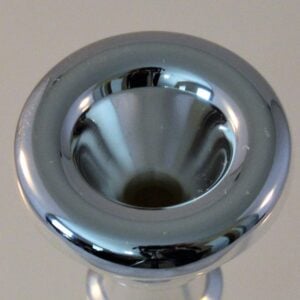
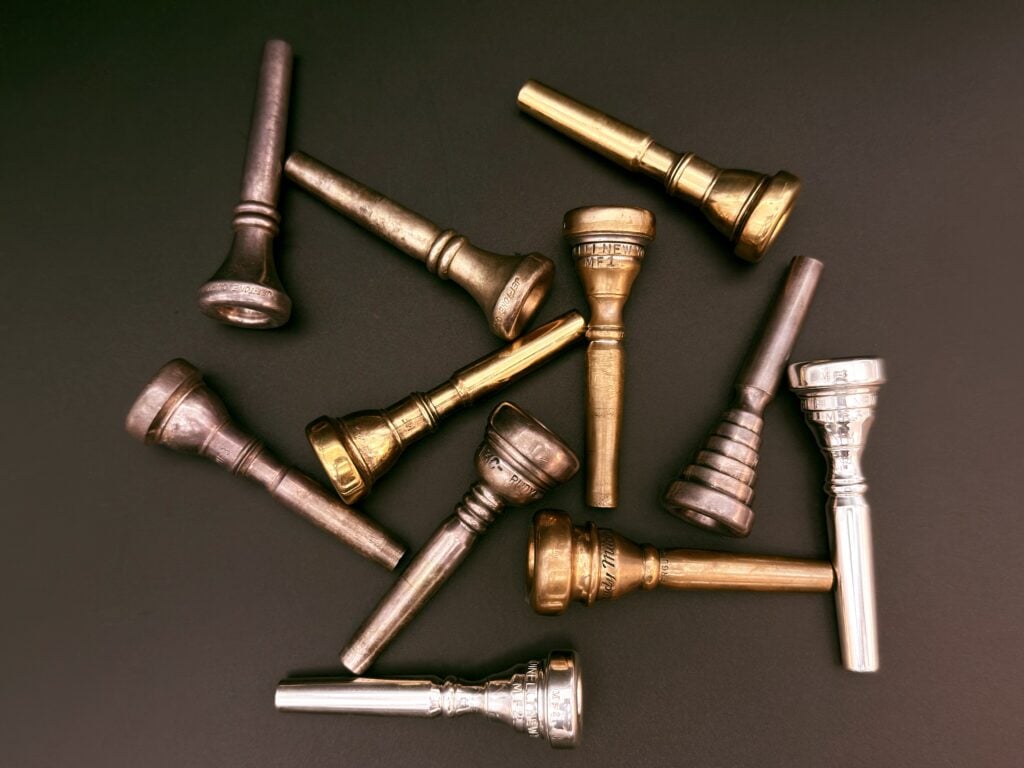
Regarding the mouthpieces, with me it’s very simple! I have been playing the same C and B flat trumpet mouthpiece for 35 years now.

I have recorded almost all of my records with it. It was made by a real master: Toshiaki Kameyama. He was working for Yamaha in Germany at the time.

My first quality criterion for a mouthpiece is above all the homogeneity in the range without any compromise on the sound and whatever the technical difficulty. 

I think this mouthpiece is very multi-skilled, both for orchestral and solo play. It was designed on this basis. It can give a lot for those who know how to demand perfection.

Besides my old mouthpiece, I play new mouthpieces that Kameyama made for me for piccolo, E flat, D trumpets…

How have you managed during this global lockdown? How do you think that musicians are going to need to adapt in the future to deal with may be a very different musical world?

Like the whole world, we have all been surprised by the pandemic and the strictness of the new measures taken by the various governments. In France there is lockdown as in many other countries!

This created a state of bewilderment and putting us into this state unknown to almost everyone.

For us musicians it is clear that our activity was and is still being questioned, leading us to ask ourselves questions about our future.

Paradoxically, this experience could be beneficial in the long term! In fact, I have been wondering for several years about the evolution of our profession. We can see that things have evolved considerably since the 1980s and that our profession is in decline overall. During my studies and in the early days of my career, the world has changed a lot. We can no longer compare the situations of a musician starting his career today and when I started mine for example.

With this pandemic “adventure”, it may well be that we are rushing things because it is certain that the world after will be different.

As in all of human history if we are to survive, we will have to adapt! I think this situation is not new if you look at the history of the world. Regularly, particularly with technological advances, professions must evolve. We have to constantly reinvent ourselves in fact. The problem is that today everything is going very fast, too fast and if we don’t anticipate we can disappear quickly enough! For us musicians and trumpeters, what solutions do we have? Of course, all is not over and that concerts will still exist after this crisis, but it is clear that the trend is towards a certain decline in the performing arts with or without a pandemic! Today it is more complicated to move people, the average age in the “classical” concert is still very high. It becomes very difficult to fill the rooms.

During the lockdown we saw loads of people coming together to create virtual recordings. Videos of this type have invaded the web. I myself have initiated projects and participated in others. We have all done, and even now, lessons by videoconference on Zoom or whatever. Everyone had fun with it! However, is this the future of our profession? I am not sure … 

Today we see flourishing the first virtual concerts broadcast on the net or the broadcast of programs recorded in the form of virtual performances. Is this the future?

For me, this is only part of our future. We still have to reinvent the essentials! Because if we transpose our business “from before” to other broadcast medium without changing anything, the result will not be much different in the end.

This means that for me, with or without a pandemic, the essential remains to be reinvented. As for starting the crisis, I asked my students to do a short essay on the future of our profession with the new components of distancing. Well, none of them did! I think they are not really aware of all of this.

In short, adaptation to technological tools and their uses is necessary, but it is only the means of transmission and not the crux of the matter.

Suggestions: For me the first concern is our teaching methods which are used most of the time to make instrumentalists, technicians, even “musicians”, forgetting that our future could be in the education of the public. The idea is to “build” enlightened people capable of discernment. If we browse the new media (Facebook, Instagram, YouTube) we find anything and everything! However what will determine success is the number of likes or views! Would the great soloists of yesterday turn into a Youtube artist manager? I believe their talents would not be enough!

The profession is therefore transformed into something other than purely artistic musical talent. We are in the world of imaging, 20 or 30 years ago it was almost exclusively the sound business. The technological component takes up a lot of space, but not only that. The business strategy too.

You have to recompose everything taking into account these different parameters. If you look at the “internet artists” who work or succeed today, they are nothing to do with our “soloists” from a few years ago.

Secondly, it is clear that for me, being exclusively a performing is no longer a viable future.

Basically, what interests’ people is to show a universe that is unknown to them. In our profession we reproduce a lot because the majority do what already exists. And finally, few people are able to make a real difference between the performers. The difference no longer makes on the quality because we no longer recognize ourselves in it. It is therefore necessary to evolve and personalize more than before. We must learn to exist not only with our quality of playing the trumpet but to know how to use the components of our personality to include them in our proposals. We must become as much “actors” as musicians. We can see the trend today! The evolution is more based on the looks of the performer. Obviously on a certain side because today we sell images and not just sound.

It would therefore be necessary to evolve knowing not only to offer a good performance but an entire universe in which you will be recognised by everything that makes you unique.

What other advice would you give to young and aspiring trumpet players?

I would tell them:

First, know who you want to be! Obviously for that you already need to have a certain open-mindedness and awareness of the world around you.

If you are looking for yourself, which is okay, start by thinking about who you would like to look like! Often students ask me, (to do a Masters abroad for example) who should I go to see or who could I go to see? I can’t understand this question! I answer them, who would you like to look like? Who do you admire among the existing personalities? Here is the answer! If you want to become a musician “by default”, that is to say, I study to get my diploma and I find a job to live quietly until the end of my career – so change your mind – there will soon be no space for these attitudes!

Think and anticipate! How? Listen to the world around you. Therefore? Travel!

Motivation is the main engine, it’s what starts everything! If you run out, find out why! If you can’t find it, change path!

Take advantage of the time of your studies to try to open yourself to as many things as possible, not just the trumpet and all the theoretical courses that go around. Other disciplines, other art forms or even sports or sciences.

Learn the art of challenging right from the start! Take part in promotional contests.

Know how to spotlight your talents. Be aware of who you are, what are your strengths, your weaknesses!

Have goals, feed on your dreams! Believe in what you are doing. Belief is power! Finally, perhaps the most important: Dare! Everything is impossible until you try!

Summary: 

Dream! Believe! Travel! Dare! 

If you do all this, you will emerge a real personality and a unique being, whatever your modes of expression are.

What are you working on at the moment?

As I mainly play abroad, the concerts have stopped for me not being able to travel at the moment. However, I continue to practice as I hope to be free again soon!

Institutionally I continue to teach mainly at the Haute Ecole de Musique in Lausanne in Switzerland.

I am waiting to be able to travel again to teach at Nagoya University of the Arts in Japan, Shobi College of Music in Tokyo as well as the Royal Academy of Music in London where I am a guest professor.

In private education, I developed my own trumpet institute where I specialize in coaching. I have given so many “classical” master classes all over the world, and today I am trying to evolve. I use my experience, notably acquired as a jury member in a large number of international competitions over the past 25 years, to manage students and prepare them as best as possible for both international and positional competitions. So, coaching to be as close as possible to the control of one’s full abilities.

I’m still recording! I have a CD of “Belle Epoque” style cornet pieces which will be released in a few weeks, a project on the works of Julien François Zbinden and a little later a project around Bach.

For more on Eric, please visit his website: http://www.eric-aubier.com

For more on the range of Yamaha trumpets that Eric plays, please visit: https://europe.yamaha.com/en/products/musical_instruments/winds/trumpets/index.html


Sign up here for new blog articles emailed direct to your inbox:

[jetpack_subscription_form show_subscribers_total=”false” button_on_newline=”false” submit_button_text=”Sign up” custom_font_size=”16″ custom_border_radius=”0″ custom_border_weight=”1″ custom_padding=”15″ custom_spacing=”10″ submit_button_classes=”” email_field_classes=”” show_only_email_and_button=”true”]