Advice · Interview

Trumpet Artist Profile : John Foster

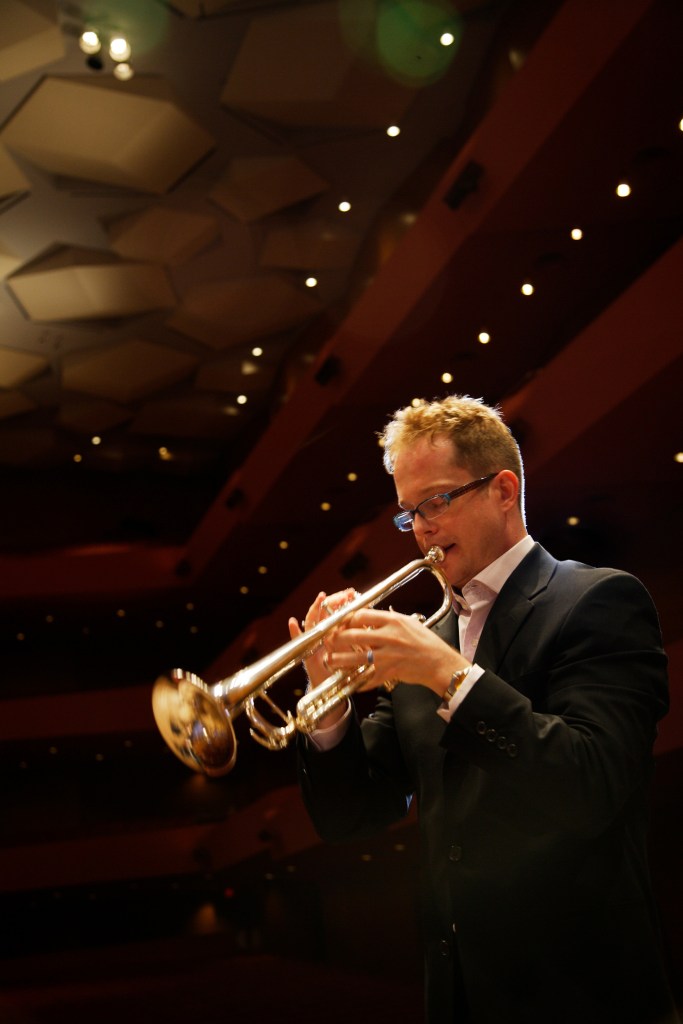
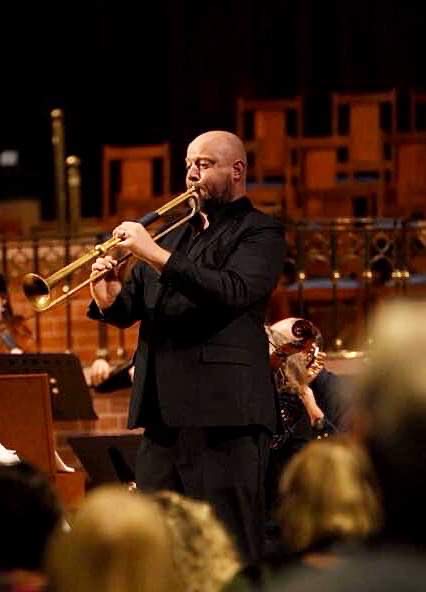
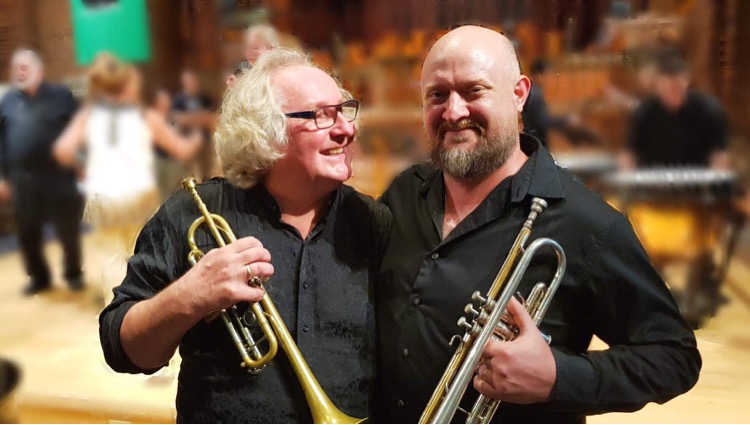
John Foster is a leading exponent of performance on historical trumpets and cornetto as well as being a former member of the Sydney Symphony Orchestra. John is a former classmate of mine from the Royal College of Music, and talks to me here about trumpets, trumpeting and his recent collaborations with Pickett Brass.

What first drew you to the trumpet? Any early musical influences?

My earliest musical recollections came from listening to my grandmother singing and playing the organ in far North Queensland, and after that my next encounter with music really came through the primary school system. At school I played piano, violin, recorder, percussion, and then eventually by age 10, I was given a trumpet. Probably the first time I was acutely aware of music for the trumpet was when I was 12 years old and heard my first recording of Maurice Andre.

Can you talk a little about your trumpet education and how that has influenced what you are doing now?

All of my early music education on the Trumpet came through I would say an American style of Trumpet teaching. My teacher at age 12 was Yoram Levy (Israel Philharmonic) a former student of Vincent Cichowitz and Adolf Herseth, and all the usual Trumpet methods that went along with the ‘Chicago school’ including the Arban Method, Cichowitz studies, Rochut, Schlossberg, Louis Davidson, Vassily Brandt and several other methods.
After receiving a thorough grounding in orchestra on solo studies on the modern Trumpet I moved to the United Kingdom, to the Royal College of music in London where I studied baroque trumpet with the wonderful Professor Michael Laird (Academy of St Martin’s in the Field) and Mark Bennett, and further formal, modern trumpet studies with Paul Beniston (London Philharmonic). I also benefitted greatly at this time by taking private studies with Ian Balmain (Covent Garden) and Rod Franks (London Symphony). During these formative years I was also very privileged to spend quite a bit of time with Swedish trumpet soloist Håkan Hardenberger.
What trumpeters do you most admire and enjoy listening to?

What a great inspiration is always been French trumpet virtuoso Maurice Andre, his magnificent sound and sensitive approach to music making always seem to transcend the fact he was even playing the trumpet.
These days Reinhold Friedrich is also one of my favorite players to listen to. In a similar way to Maurice Andre he manages to always ensure that the audience feels the emotions he conveys in his playing.
In the 21st-century we are truly spoiled with choice from so many wonderful artists and so many fine recordings being made in the last 50 years. Some other artists (past and present) that spring to mind are Adolf Herseth, Maurice Murphy, Håkan Hardenberger, Thomas Stevens, Vincent DiMartino, Doc Severinsen, Serge Nakariakov, Giuliano Sommerhalder, David Gurrier, Niklas Eklund, Matthias Hoffs, Yigal Melzer, Marc Ulrich, Gabrieli Cassone, Michael Laird, Mark Bennett, Crispian Steele-Perkins, David Blackadder, Neil Brough, Edward H. Tarr, Friedemann Immer, Geoffrey Payne, Gordon Webb, Omar Tomasoni, Michael Sach, and so many more…..
At what point did you make the decision to move away from an orchestral career to focus on early music?

By the time I reached my mid 30s I had already spent the better part of 20 years playing in professional orchestras (the last 12 years of those with the Sydney Symphony). Whilst I adore the orchestral repertoire and performing orchestrally (and will probably never fully divest from playing in orchestras) my true passion has always been with the trumpet/cornetto repertoire from the 16th – 19th centuries. I’m also very involved in directing and conducting now as well.

I hear that you have quite the instrument collection! Can you tell me about a few highlights?

I have over 100 historical instruments pertaining to the trumpet family. Some highlights would include:

•   Original English Slide Trumpet by F.Besson c.1860
•   Hand-Stopped Natural Trumpet in D by Georg Öttensteiner c.1850
•   MacFarlane’s ‘Clapper Key’ Cornopean by Charles Pace c.1850
•   B flat Keyed Bugle by Charles Pace c.1840
•   E flat Keyed Bugle by George Smith c.1835
•   Coach Horn (House of the Duke of Glouster) by Kohler of London c.1796

How does the future look for period instrument performance?

I think the future for period Instrument performance is incredibly bright. Here in Australia (as like never before) universities and Conservatories are embracing early music and historically informed performance practices by adding resources to the departments in order to properly train young musicians.

Any advice for aspiring players who are interested in getting into early brass?

The classical music industry is both a very challenging and rewarding one. Firstly I would advise any aspiring Brass players to definitely become involved in early brass playing. Fundamentally (particularly in the case of the trumpet and horn) the Natural Trumpet/Baroque Trumpet gives the best possible foundation to any serious brass player’s fundamentals, being that everything you perform is based on the natural harmonic series, sounds must be extremely well-connected, with great support and air-flow, as well as there being an absence of ‘force’ in the blowing. Musically, the playing of historical instruments also gives a wonderful foundation into developing ‘ensemble listening skills’. In particular listening to the other instruments and vocalist (not just the immediate Brass colleagues). The softer dynamic range of early brass instruments allows for much more sensitive listening and acute awareness to other ensemble members, and indeed in many cases it also allows more readily to the imitation of style.
From a practical point of view; with the size of the classical music industry seemily shrinking, and with more and more players graduating from leading universities, being able to except work on historical Instruments only allows for one more avenue of work for players. Anything today I see historical instrument playing seeping more and more into the regular working life of symphonic players as well.

How about ATA? Any plans for future course?

Indeed the Australasian Trumpet Academy hopes to have many more courses in the future, once international travel is readily available again (post the current pandemic).

Can you talk a little about your relationship with Pickett Brass and the process of designing your mouthpieces?

Certainly. I have worked with several instrument makers and mouthpiece designers over the past 20 years but upon meeting Peter Pickett (from Pickett Brass) I was immediately impressed. Peter has a wonderful mind for engineering and matches that with all the skill and precision you would expect from a 21st century mouthpiece maker,however what sets him apart is that Peter Pickett is also a real trumpet player. I found it such a great advantage when describing to Peter what I wanted in my signature John Foster Baroque Trumpet Mouthpiece, that not only did he understand what I wanted from the technical specifications, he also knows forensically from the players point of view what will work. The results speak for themselves I love the mouthpieces Peter makes for me and I’d recommend them to anyone. https://www.pickettblackburn.com/signature-series-trumpet-models-c-107_115_200/john-foster-p-1647.html

What does 2021 hold for you?

Lots of Golf and Trumpet Practice at the moment awaiting the end of COVID 19 lockdowns.

What instruments do you use?

Trumpet in C/D (A = 415hz/430hz/ 440hz) – ‘Foster Model’ (2016), based on an instrument by Johann Kodisch (Nürnberg ca.1700)
Baroque Mouthpiece – ‘John Foster’ Signature Model by Pickett Brass
Tromba di tirasi in C/D (A = 415hz) made by my own construction (reproduction bell after J.W. Haas c.1720)
Cornetto (Soprano A = 440hz) – Phillip McCann (2005)
Cornettino – Christopher Monk (c.1970) Mute Cornetto – maker anonymous (UK)
Keyed Trumpet in E flat (A = 430hz, 440hz) My own construction (2006).
Demilune Trumpet in F/E/Eb/D/C/Bb by Stephen Giordano, based on original instrument by Anon (Strasbourg ca. 1805)
Keyed Bugle in B flat ‘New Improved’ by Charles Pace (ca.1840)
Keyed Bugle in E flat by George Smith (ca.1830)
English Slide Trumpet in F/E/Eb/ D/C by F. Besson (c.1880)
Posthorn in A by Kohler and Sons (c.1880)
Cornet in G/Ab/A/Bb ‘Levy Model’ by Courtois (c.1875)
Cornet in Ab/A/Bb by Thiboulville- Lamy (in high pitch, 1890)

Modern Trumpets
• B flat Trumpet by Vincent Bach Model #37
• C Trumpet by Vincent Bach, 25H leadpipe 229 bell.
• Eb/D Trumpet by Schilke
• Piccolo Trumpet by Schilke P5-4

Books:

•   ‘The Baroque Trumpet Revival’ by John Foster (Publisher David Hickman, Hickman Music)

•   ‘The Natural Trumpet’ and other related instruments. by John Foster (published by Kookaburra Music). 


SIGN UP HERE FOR NEW BLOG ARTICLES EMAILED DIRECT TO YOUR INBOX:

[jetpack_subscription_form show_subscribers_total=”false” button_on_newline=”false” custom_font_size=”16px” custom_border_radius=”0″ custom_border_weight=”1″ custom_padding=”15″ custom_spacing=”10″ submit_button_classes=”” email_field_classes=”” show_only_email_and_button=”true”]

Advice · Interview

Trumpet Artist Profile : Charles Lazarus

Trumpeter Charles Lazarus is a multi-faceted performer, composer, producer and band leader whose career has included tenures in Dallas Brass, Meridian Arts Ensemble, Canadian Brass, and the Minnesota Orchestra. He has appeared as a soloist with numerous orchestras around the US and Canada, performed with the Empire Brass, New York Philharmonic Principal Brass, London Brass, Barry White, and opened for Tony Bennett.

Charles has performed and taught master classes in every US state, Canada, throughout Asia and Europe, and currently serves as adjunct faculty at the University of Minnesota. He has created and produced several crossover orchestral shows featuring his various ensembles with which he has released four CDs and a children’s animated short film.

Hi Chuck, can you please give a little background to your relationship with the trumpet?

When I was 9, my Dad took me to a Dizzy Gillespie concert and I got to meet Dizzy backstage.  He actually let me try to play a note on his trumpet which was pretty exciting! I didn’t start playing in band until I was 12, but I picked trumpet and fell in love with the sound and versatility of the instrument right away. Trumpet was just the right amount of frustrating to keep me chasing the dangling carrot of success!

When did you decide that you wanted a career in music?

I knew this would be my career path within the first few week of playing the instrument. It was the first way I had ever seen my own self improvement and I was hooked!

What styles of music have you listened to most over the years?

All styles. I tend to listen more to styles of music I’m not playing at the time.

You have worked across many, many genres and styles over the years. What are the challenges both musically and technically, adjusting to these changes?

Advancing harmonically in jazz is challenging when playing classical music full time, so I try to make sure my daily routine covers a lot of ground harmonically. The biggest difference between my approach as I change styles is articualtion. I pay a lot of attention to that.

How do your practice routines need to change to reflect this?

I pick days where I focus on certain modes or patterns in my playing and incorporate that in my flow studies and arpeggio workouts. Monday= diminished day Tuesday= lydian dominant etc. That kind of thing. Sometimes I substitute my usual Clarke or Vizzutti studies with the John McNeil Art of Jazz Trumpet studies. I can work on my fundamentals of airflow and articulation while exploring harmonic ground. It’s way too easy to get stuck in open harmonics. I try to branch out. I consider it cross training. It’s more efficient and way more fun. I also practice the opposite of what I am performing on any given week. If I’m playing 2nd trumpet in Beethoven one week, I do a lot of high note practice. If I’m playing lead on a pops show, I practice a lot of soft low notes.

Career highlights?

Oh man. So many to be grateful for!
Playing the Britten St Edmunsbury Fanfare with Doc Severinsen and Bud Herseth.
Playing the Haydn Trumpet  Concerto in Carnegie Hall with the NY String Orchestra.
My first concert with Canadian Brass.
Playing My Spirit Be Joyful next to Rolf Smedvig in Empire Brass.
Playing my own jazz compositions with the Minnesota Orchestra for the first time with Osmo Vänskä conducting.
The privilege to play in the Minnesota Orchestra brass section with friends that inspire me.

Can you talk a little about the horns and mouthpieces that you play, and the process of working with Pickett Brass to find the right setup?

Well, I’ve known Peter for many years when he was just getting started in his garage! He is a great guy and a total pro. I was already playing Yamaha trumpets when I met him and I’ve been playing them since I was 19. I’ve also owned a number of Blackburns over the years and they are fantastic as well!  For mouthpieces, Peter has always been willing to work with players to find a great fit for their style and technical needs. Finding the size and contour of his rims and cups was kind of like finding a pair of shoes that fits perfectly. He’s great at that and because I have so many varied demands on my playing, my line of mouthpieces tends to have something for everyone. It’s all on the Pickett Blackburn site.

I should say though, that for me, the thing that really makes his mouthpieces work so well is the evenness and quality of his backbores. They really even everything out allowing me to relax and blow smoothly, giving me more control over my sound than I’ve ever had. He has a lot of little tweaks in his designs that can accomplish pretty much anything you need. Plus the staff there are all great trumpet players that are a blast to hang out with. In addition to my work with Peter, I’ve also worked a lot with Eric Murine (killer player) and the rest of the staff there on mouthpieces as well as eating BBQ and perfecting the “Whiskey Chew”-  An important art in Lexington!

How have you managed during this global lockdown? How do you think that musicians are going to need to adapt in the future to deal with may be a very different musical world?

I’m just trying to practice, plan recordings, and double down on learning technology. I’ve been setting up my home studio for recording and I’ve been getting into some video projects for fun. There are so many new and increasingly  efficient ways to reach people online. it’s a perfect and necessary time for all of us to learn more about how to pilot our own ships.  I really think when this mess is all over, people will be so starved for live music that it will be a roaring 2020s age of music. I am trying my best to make sure I’m ready for that.

What advice would you give to young and aspiring trumpet players?

View every mistake and failure as an opportunity to learn. Be willing to fail.  Every little success is built on a multitude of failures. Most importantly though, enjoy making music. Then, all the work is just an enjoyable part of the process. The smarter you practice, the better you get. The better you get, the easier it is. The easier it is, the more fun you have!

What are you working on at the moment or in the future?

I’m recording some brass quintet and solo trumpet music by Jack Stamp and learning Logic Pro Audio.

You can visit the Charles Lazarus website here.

The range of Lazarus Signature mouthpieces can be viewed here.

You may also be interested to read this interview with master craftsman, Peter Pickett.


Sign up here for new blog articles emailed direct to your inbox:

[jetpack_subscription_form show_subscribers_total=”false” button_on_newline=”false” submit_button_text=”Sign up” custom_font_size=”16″ custom_border_radius=”0″ custom_border_weight=”1″ custom_padding=”15″ custom_spacing=”10″ submit_button_classes=”” email_field_classes=”” show_only_email_and_button=”true”]

Advice · Interview

‘Meet the Maker’ : Peter Pickett

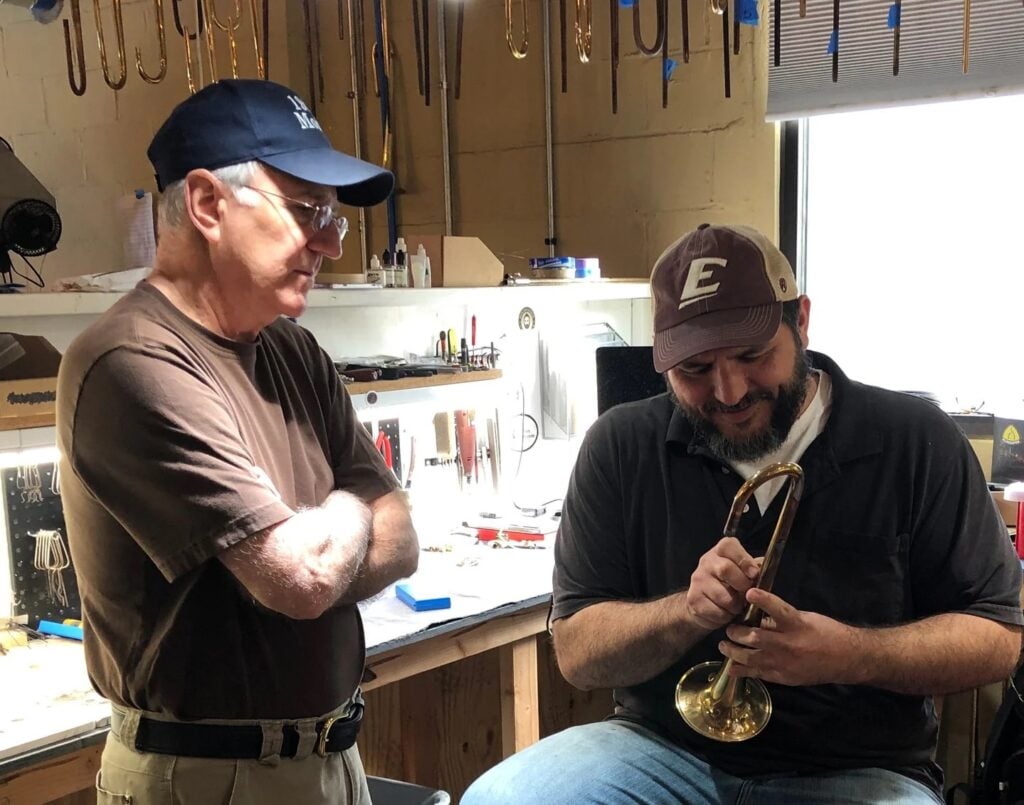
Many top players have already turned to Pickett Brass and Blackburn Trumpets for mouthpieces and trumpets. At the helm is Peter Pickett who has kindly given up his time to answer some questions…

Can you talk a little about the background to getting started on this trumpet craftsmanship journey? 

This entire journey to date in hindsight appears elegant and neat when laid out on paper, but rather, has been quite challenging.  I’ll look back one day on life and say that all the pieces were laid out and it was such a natural progression, but the truth is that opportunities came and went, but with some luck, I was able to latch onto key ones along the way.  For example, when Cliff Blackburn approached me in 2009 on working with him to carry forward Blackburn Trumpets, I happened to have been in the right place at the right time.  Having said that, most of the company’s significant forward steps have hinged on being in the right place at the right time, and paying attention to see and take advantage of fortuitous timing.  You must always be aware of what’s going on around you and have the imagination to envision the possibilities at all times, even as impossible as it may sound at the moment.

My internal, irrational, and unconscious drive to bring this all to life has been a result of combining the joy of playing trumpet and of my engineering background and manufacturing.  What could be a better combination of those interests?  So much of the company’s progress and progression has been driven by brute force and pure work ethic, powering through significant inefficiencies and unawareness, to accelerate learning and progress to get ahead of the learning curve and not settling for what was easy or simply sufficient in the moment.  We’ve worked through a number of these headwinds, but out of the gate, you just have to execute and work regardless of what it takes to get it done.

When Pickett Brass officially started in 2003, I did not have all the skills necessary to do what we do today.  But this didn’t stop me from stepping forth to see if all of this could work.  Stumbling through numerous issues having nothing to do with the actual parts in the beginning really woke me up to the sheer number of obstacles that would need to be overcome.   

Who or what were your inspirations?

Most of my inspiration comes from wanting to actually make something meaningful, bringing something to life.  Being able to create something from raw materials, from almost nothing, that act of creating is what fuels me the most.  This coupled with music and creating something that contributes to the creation of music only reinforces the inspiration.  The incredible variety of artists that I get to meet and work with is humbling.  Ultimately it’s a privilege to be a part of this music making community –  which is not something to be taken lightly.  When we are actively part of something larger than ourselves, and can contribute to the greater good, it’s not an opportunity to boast or brag, but rather to quietly contribute to the growth of all in the community together, creating community strength.

Did you set out with ideas of how manufacturing could be improved?

Absolutely – when any process becomes elegant and efficient, it is more fun and enjoyable.  This applies to any endeavor – for example, we don’t play trumpet because it’s hard, no fun, and produces unpleasant sounds.  No – instead, when we become adept and efficient at playing the instrument, it is more fun and enjoyable – and the end product is all that much better.  Wanting the business processes, the design processes, and production processes to be elegant and efficient has always been a significant driving force.

How and why did you branch out from valve trim-sets to the excellent custom mouthpieces that you now produce?

When all of this started in 2001, I was only aiming to make 1 set of trumpet buttons for myself.  They were made by hand, nothing special, but just made by me, for me.  This was followed by stems, top caps, and bottom caps and as far as I could tell at the time, this was all it was going to be.  Mouthpieces eventually followed as a natural progression around 2007.  I had the machines to do them and as every trumpet player knows, no one mouthpiece is going to be ‘it’ for any player.  The unlimited possible variations for brass instrument mouthpieces allows for numerous designers and manufacturers all around the world to take part and participate in this industry.  This was exciting to know despite “everything has been invented already”, I could still produce unique mouthpieces that work like no other for players and that had never been made before.  

Are there any unexpected challenges that you have met along the way?

Absolutely – seemingly endless and absolutely overwhelming at times.  Most people don’t realize what goes into creating and running a complete business.  Making actual mouthpieces is only one small aspect and can be challenging into itself, but ultimately it takes so many other steps to get that freshly made mouthpiece out the door to a player.  So overcoming the challenges of running a business from the financial processes, to ecommerce development and management, taxes, payment processing, facilities, and numerous others, have all been challenges.

Running a successful manufacturing business takes a lot of time and commitment. How do you balance this with having a life outside of the workshop?!

Running a small business is all life-encompassing and a lifestyle choice.  Some say it’s a curse, others a privilege, but there is nearly no time in any day that the business isn’t being worked on or thought about.  So life balance in the traditional sense is fleeting and fairly non-existent. The variety of activities that the business offers is one outlet though – from manufacturing to meeting with customers, there is a wide range of involvement and autonomy.  For example, trade shows give me a fantastic opportunity to meet new people, hear new music, and see new areas outside of the shop.  

Can you talk a little about your work with Cliff and taking on the Blackburn trumpets brand?

Cliff and I have been friends for a long time – starting by meeting him in 2004 at the ITG conference in Denver, Colorado.  He probably doesn’t remember that initial introduction, but it was the first opportunity for me to talk to him and his wife, albeit briefly.  Since that early introduction, through the years, we’ve seen each other often and talked at conferences, and eventually worked together on manufacturing the Blackburn trumpet mouthpieces.  After years of collaborating with Cliff on the manufacturing of various trumpet components for Blackburn Trumpets, he approached me at the ITG Conference in Harrisburg, Pennsylvania in 2009 asking if I’d be interested in working with him in carrying the Blackburn Trumpets company forward after his retirement.  Of course the answer was yes, but little did I know that it would take an additional 7 years to work through the details.

We worked together through that period on training, learning, and exploring what made the Blackburn Trumpets what they are so well known for.  And even after we acquired the company in 2016, we had an incredible amount of learning and work still left to do.  It has been an incredibly overwhelming exercise, but has ultimately proven to be worth the work and challenges.    

What are your plans and ambitions for the future?

As it turns out, making trumpets from scratch is hard – the entire process of making a trumpet from scratch is mind boggling when you consider all the details along the way.  And details matter.  So we are working hard towards complete documentation and process improvements so that the Blackburn brand continues well into the future with strength and a strong succession plan.

I would like the Blackburn team to expand as our space continues to expand.  By having a solid group of craftsmen that are ingrained with the quality and technical expectations, we can produce like no other.  With this solid knowledge base, the Blackburn brand can be expanded into numerous other areas.In regards to the mouthpiece side of the business, we continue to expand our capabilities and improve processes.  It may not sound significant, but when you reduce the number of steps you take to accomplish the tasks it takes to produce a mouthpiece or any other product, the entire process becomes better, easier, and much more enjoyable.  This type of work is difficult in itself and is hard to do while working through day to day business.  However, we strive to take time to study how we do things and to try new approaches, so to maintain our relevance and avoid destructive complacency.

At the moment, the world is in the midst of the Covid-19 pandemic. How has this affected you?

The Covid-19 pandemic and uncertainty has all but fully consumed everyone.  Our business, like many others, has been shut down for a while to stem the spread of the virus, bringing to a halt the production of mouthpieces and trumpets like never before.  In addition, the economic fallout from the significant job disruptions and losses worldwide is incredibly disheartening.  Despite the day to day challenges facing us, I am optimistic that we will get through this together.  This period of time offers an unprecedented opportunity for self reflection and a pause – a universal “time-out” persay.  The challenge has been that this has all progressed so quickly and it’s hard to appreciate the sudden change in routines and ‘normal’ and do the self-reflection and evaluation.  Herein lies the present challenge – and the chance for the once in a lifetime opportunity.  


Sign up here for new blog articles emailed direct to your inbox:

[jetpack_subscription_form show_subscribers_total=”false” button_on_newline=”false” submit_button_text=”Sign up” custom_font_size=”16″ custom_border_radius=”0″ custom_border_weight=”1″ custom_padding=”15″ custom_spacing=”10″ submit_button_classes=”” email_field_classes=”” show_only_email_and_button=”true”]

Gear Review · Interview

Trumpet Artist Profile: Vince DiMartino

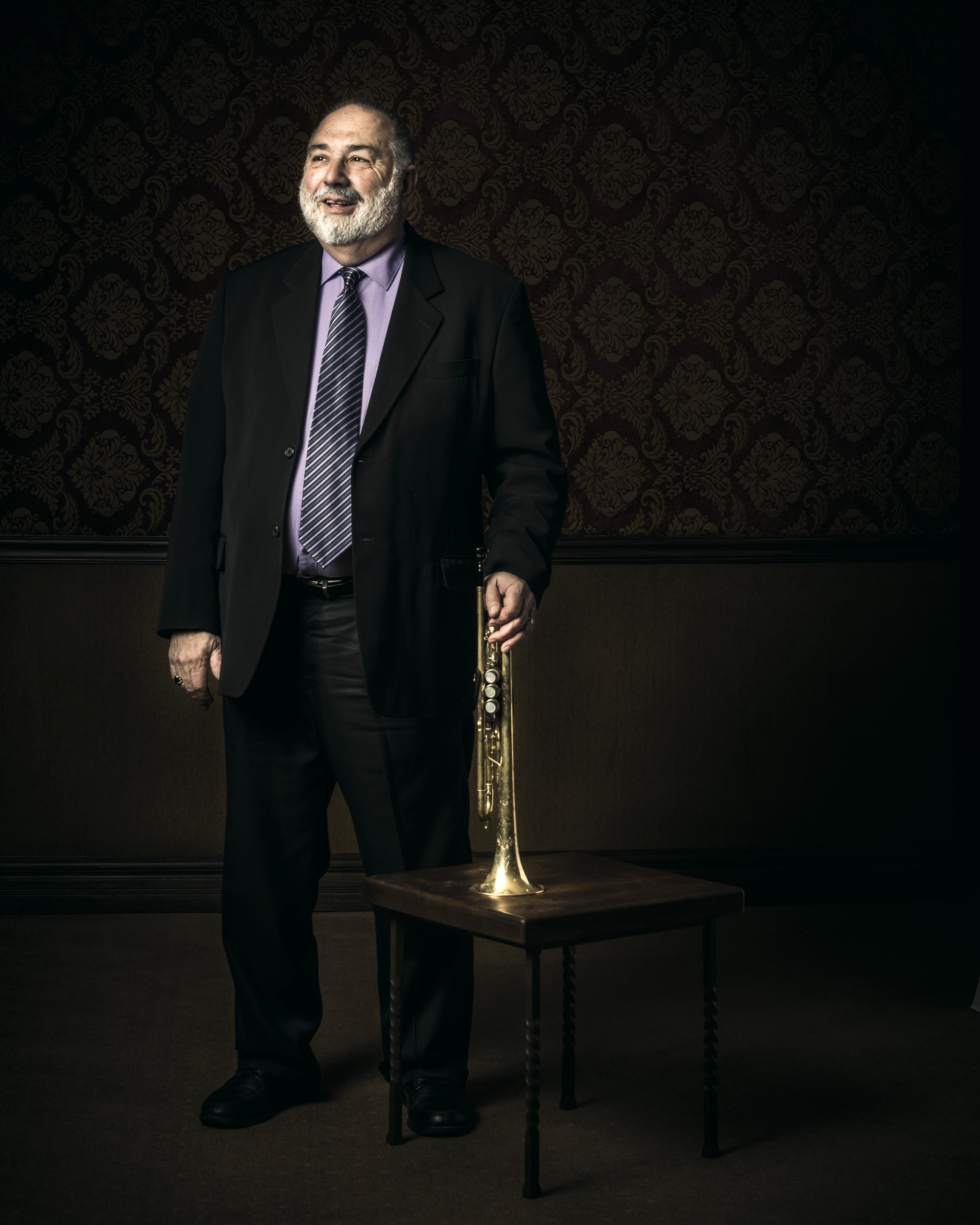
Vince DiMartino is sought after as both a trumpet performer and educator. His vast wealth of performance experience includes lead and solo work with the Lionel Hampton Band, Chuck Mangione Band and Clark Terry Band. Vince has appeared as soloist with top orchestras and bands throughout the USA and also has numerous solo recording projects. He has played an important part for the International Trumpet Guild over the years, and is a regular teacher, clinician and artist at specialist seminars and courses around the world.

Pickett Brass

Through Vince’s relationship with Pickett Brass, I was delighted to be able to put a few questions to him:

What drew you to the trumpet as a child?

I really was interested in drums but they said they had enough so I tried trumpet! I liked it and stuck with it.

Did you have any particular early musical influences or heroes?

Yes! I met Louis Armstrong in my first year of playing. He talked to me and was so nice to me. I also met Maynard Ferguson the same night!  My neighbor was a bass player and told me to get a few records-Miles Davis, Maynard, Rafael Mendez and Billy Butterfield. Lucky me!

Career highlights to date?

So many…but I try to love every day, concert, rehearsal or practicing. I must say there is nothing like playing with my son Gabriel. I love Greece and my friends, Australia and my friends there, Asia….etc. Every place in the world especially home is great!

As a leading educator and clinician, have you found that your approach to playing and teaching the trumpet has changed over the years? How and why?!

Of course! My attention to the basics of producing a consistent sound are always in my mind. My teaching has become more simple. Every school of trumpet thought eventually reaches that same conclusion.

2015 Cancer Blows

As a top performer, are there any particular routines that you follow to keep yourself in good shape for performance?

I try to keep my fundamentals higher than what is required to play most works.

How do keep on top of your trumpet playing while you are travelling?

Keep doing what you do every day the same as best you can. Try to play three times a day. I usually do that at home too.

Can you tell us a little about the current relationships that you have with manufacturers? What was the process like, working with Pickett Brass on new mouthpieces?

We are lucky to have so many wonderful industry people! I know most of them by name, product and reputation. I have been fortunate to have worked pretty closely with many of them.

As far as working with Peter Pickett and Eric Murine, it is wonderful! They have helped me develop a set of mouthpieces for all my trumpets, cornets and flugelhorn. I am lucky to live close to Lexington and can visit frequently. Peter is always willing to listen to me about my “ideas”. He lets me try some things and then we go on, working together hand in hand. I always feel like I am part of the process. As a result, I have felt that many of the things we have to do with a trumpet are more confident and feel good. Eric is a fine player too and usually comes very close to picking what I need to start with. Great team work from all sides.

Pickett Brass Banner

Pickett Brass offer a huge range of trumpet mouthpieces – their experience in trumpet playing and manufacturing gives a broad range that is immaculately designed and produced. As well as Vince, they have an incredible roster of artists including Allen Vizzutti, Rex Richardson, Doc Severinsen and Jens Lindemann. Visit their website to find out more.

Thompson Music stock a great range of Pickett Brass mouthpieces – you can click here to view the full range.

The Vince DiMartino Signature mouthpieces are all available here

Vince is also a Shires Performing Artist: You can view these trumpets here


Sign up here for new blog articles emailed direct to your inbox:

[jetpack_subscription_form show_subscribers_total=”false” button_on_newline=”false” submit_button_text=”Sign up” custom_font_size=”16″ custom_border_radius=”0″ custom_border_weight=”1″ custom_padding=”15″ custom_spacing=”10″ submit_button_classes=”” email_field_classes=”” show_only_email_and_button=”true”]