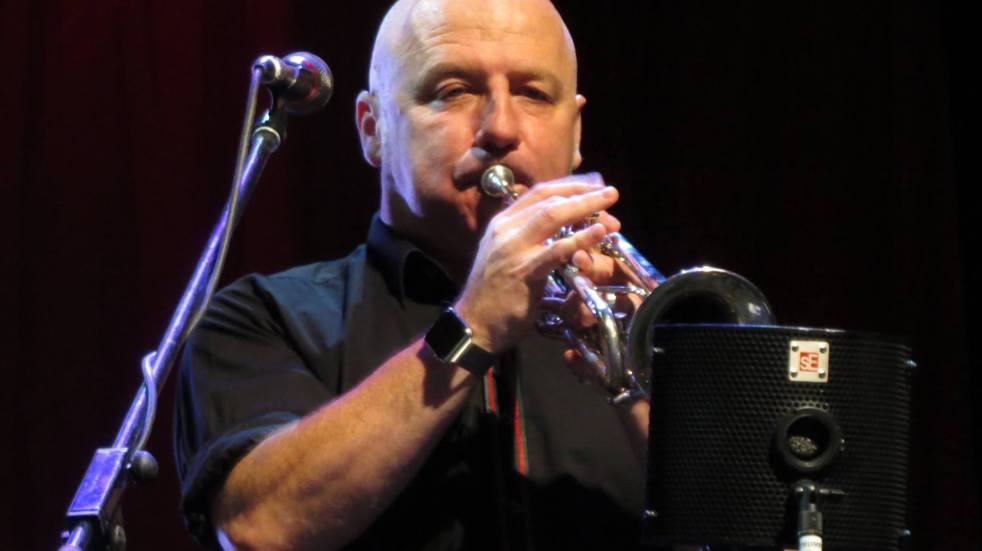
Advice · Interview

Home Recording for Trumpeters

Over the past few months, many of the articles that I have worked on and industry pros that I have interviewed, emphasise how working life has changed drastically since the start of 2020 lockdown. With that in mind, it would be great to explore how we can successfully manage our recordings remotely now that we are all having to work with a greater degree of isolation.

And who better to speak with than 2 industry powerhouses?!

Johnny Thirkell (longtime friend of this website!) has performed on trumpet on over 6000 recordings, including over 40 top ten albums and 23 UK Number One records. Tina Turner, Jamiroquai, David Bowie, George Michael, Bruno Mars, Pet Shop Boys, Level 42 … the list is endless!

Grammy Winner Josh Blair is the ultimate ‘Producer and Engineer to the Stars’ with credits including Adele, Lady Gaga, Jamiroquai, Bruno Mars, Mark Ronson, Duran Duran and Take That.


Johnny Thirkell

I understand that, in these locked-down, Covid times you’ve managed to shift your studio recording career to your home. How does that work?!

Actually, it’s really quite straightforward. The Producer will email or send a link to a rough stereo mix of the track which I just import into Logic and, within 5 minutes I’m overdubbing trumpets. It’s so much easier and more convenient than schlepping into town and enduring the bun fight that is the London Underground and I can record more or less at my convenience. So long as I get it back before the deadline, I do it when it suits me. 

Isn’t that expensive and complicated to set up?

I guess that depends on how far you want to take it. For me it’s really quite basic. All I’m ever going to do is record trumpets over a track, so my equipment needs are pretty minimal. When I send back the recorded trumpets the Producer wants them totally flat – no reverb, no EQ, nothing. So, I don’t need any outboard gear like reverb units or equalisers. Which is just as well because I would have no idea how to use them! My entire rig consists of my MacBook Pro, Logic, a digital interface (I use the Apogee One) and my trusty Royer 121 microphone – for me the truest sounding mic for the trumpet I’ve ever used. Bar none.

In terms of expense, I think it’s always best to get the best you can – particularly the mic. You can be the greatest player in the world, if you’re playing into an awful mic, it’s not going to do you justice. If you’re short of cash, skimp on anything but the mic. The Royer is about £1500 but, trust me, it’s worth every penny if you’re serious about it. From a room perspective, I don’t really have a massive amount of soundproofing but then again I live in the countryside so the occasional squawking Red Kite is about the worst of my problems. If you live in a more urban area then I guess you’re going to have to think about good soundproofing. Bear in mind though, that the inherent volume of the trumpet means that your mic level will be relatively low anyway so it may not pick up faint extraneous sounds. Main thing is though to make sure the room has little or no natural reverb. Keep it as dead as possible because once any natural reverb gets recorded, it can’t be taken off.

And how about technical knowledge? What if you’re something of a technophobe?

Believe me, if I can do it, anyone can. I run the recording procedure very much on a “monkey see, monkey do” basis. I know what I know and that’s about it. If I run into something I don’t understand then there’ll be a YouTube video to help me through it. I’ve learned there are some cardinal rules to apply and, so long as I do that then I rarely run into problems.

And they are?

First of all have a starting template. I have a template in Logic where everything is set up ready to record. There’s a stereo track for the backing track and a bunch of mono tracks ready for the trumpets or flugels. The levels are pretty much set, as is the routing of channels etc. I got someone to help me set it up initially and I’ve hardly ever had to change anything since. Obviously the record levels have to change depending on what it is I’m playing but so long as you make sure that what you record never goes into the red, you’ll be fine. The other thing is sample rate. An engineer will be able to explain the technicalities but basically it seems that some people record at 44.1khz and others at 48khz. Make sure you know which one it is and adjust the setting accordingly in the Audio Settings page. I’ve been caught out by that one. Earlier this year I recorded 10 tracks of trumpets on the BTS single ‘Dynamite’ only to realise that I had the wrong sample rate set and had to do them all again!

VISIT THE ‘EDUCATIONAL RESOURCES’ PAGE FOR FREE WORKSHEETS AND LINKS TO PUBLICATIONS

How does the recording process differ from when you are at a pro studio?

Well, the most obvious difference is that, as well as playing the trumpet, I’m also the engineer. It can get a little awkward having to press record and then play – especially if you have a tight drop-in – but you develop the knack pretty quickly. In terms of mic technique, I would say this would be dependent to a certain degree on what mic you are using. Something like the Royer will take a lot of air pressure so you can get quite close to it but it’s one of those things where a little experimentation will produce great results. Record different things at different volumes and different distances and make a note of the resulting sound. That way you will build up a library of options to wheel out depending on what it is you are recording. Other than that, it’s much the same. 

And then, how do you get the finished results back to the Producer?

There are a couple of things you can do to make the process nice and smooth. Firstly, make sure you have the tempo set correctly before you start and that the backing track starts at Bar 1, Beat 1. Then, when you are finished, put a piece of blank audio on each trumpet track which also starts at beat 1. Then you can merge all of the various sections of each trumpet track into one file so that, when the Producer gets them, he imports them to bar 1 beat 1 and everything will line up. Simple (??!!??). Although the backing track may have been sent to you as an mp3 (quality doesn’t matter for that as it’s only a guide for the trumpet) you should send back the files as WAV or similar high quality.

So, what would you say were the pros and cons of recording at home rather than at a commercial studio?

Well, I would say that flexibility is by far the biggest advantage. Being able to work around your own schedule is very liberating. You can basically go anywhere in the world and your whole recording setup can go with you in a small rucksack. I’m currently riding out the pandemic in Granada and working on some tracks for Jason Derulo – something which I would have had to pass on in the old days. The downside of course is the lack of interaction. Part of being a muso is the social element and you do miss mucking around with your pals in the studio. I don’t miss the Tube, though!


Joshua Blair

How has your working life changed in 2020? Are you doing a lot more work remotely with musicians? How have you found this as a process?

Session (ensemble) sizes have been a lot smaller due to covid restrictions and I’ve been doing a lot more remote work and archive mixing for one of my clients. It can be a bit tricky to get the same sound out of a smaller section but It’s been a nice challenge.

What are the most common requests that you make of trumpet players when you are in the studio with them?

I normally don’t try to make requests of them or any musician for that fact. I’ve been very lucky to work with some amazing musicians over my time and my philosophy is for the technology to get out of the way so they can concentrate on the music not me fussing about them or asking endless questions.

In your view, what is the essential home studio setup that a trumpet player should have in order to record and send you adequate quality audio. And what format should this audio be in?

Decent mic, decent headphones, decent preamp. There’s a lot of great gear out there today and quality equipment prices aren’t too prohibitive. I always like files as BWavs. Sample rate/bit depth should be a question you ask the producer or engineer.

Best mics for recording trumpet?

I’ve always liked condenser mics on trumpets. Some people like ribbons. They’re cool too but on a budget I feel its easier to get a better quality Condenser than Ribbon for the same money. My philosophy is simple, If it sounds good on a voice it’ll sound good on most instruments. You just have to be careful of the SPL as brass can be quite loud. So choose a mic accordingly. Neumann, DPA, Royer are all great brands.

For someone just using a click or guide track in their DAW and recording a limited number of tracks of audio, have you any top tips for improving workflow etc?

A few simple things…

1. Don’t record too hot to the DAW.. Once it distorts its very hard to ‘fix’.

2. Learn how to do some basic editing so you can sort out the parts you’re sending and only send the ones you need with some nice x-fades between the edits.

3. Once you have all your parts, bounce the tracks out all from the same starting point along with the guide track so whom ever is receiving the parts knows where things go.

4. Don’t add any reverb to your tracks (unless requested). If you like some FX you’ve used print them on separate tracks so the Raw (un-processed) tracks are available. I tend to record 5-6 sets of OH mics on drums for one of my clients… Not because we’d use all of them at the same time but as the production changes over time we wouldn’t have to re-record the drums we could just use the different mics to get a different flavour that suited the new direction.

VISIT THE ‘EDUCATIONAL RESOURCES’ PAGE FOR FREE WORKSHEETS AND LINKS TO PUBLICATIONS

What are the most common mistakes that people make when recording and sending you stuff?

Number one is distortion. Number two is the mic’s too far away or there’s too much “room” on the mic. Tuning and timing I can fix.

Do you think that remote recording is going to play a larger role as we hopefully move out of this pandemic?

Yes and no. There’s nothing like the sound of a group of people energising the air in a room together. However, now everyone knows how simple it is to be remote we might see more of that kind of work.

Any other general advice?

Always try to find the joy in what you do!


To find out more about Josh Blair, please visit his website: http://www.joshuablair.com

To read more about Johnny Thirkell you can click here: https://www.johnnythirkell.com

You may also be interested to read some of the other articles that Johnny has contributed to:

Trumpet Artist Profile : John Thirkell

The Carmine Caruso Legacy

Horn Camp 2020


Sign up here for new blog articles emailed direct to your inbox:


Advice · Education · Interview

Trumpet Artist Profile: Markus Stockhausen
I met up with Markus Stockhausen on a (typically) rainy day at the Royal Northern College of Music in Manchester, UK on 23rd March 2018. He is a trumpeter at the cutting edge of modern performance, and as I was to find out during the course of this interview, a fascinating one at that!

JH: Thank you for meeting me here in Manchester Markus! You are in the middle of a tour at the moment I believe?

MS: Yes, last week I was touring with Florian Weber, we had 4 concerts in the UK. And here in Manchester I have a guest professorship at the RNCM, so I come here once or twice a year to either teach or do concerts. This time around I am doing a concert of my compositions with Big Band and String Orchestra. There are some smaller scale pieces in the first half with different instrumentation and lots of different elements including free improvisation. The second half is a piece called “Tanzendes Licht” [Dancing Light], a work that I wrote around 10 years ago for the Swiss Jazz Orchestra together with the Camerata Bern. That was a commission to bring those two ensembles together. I also later adapted it slightly to perform with the Metropole Orkest under Jules Buckley. This is the version that we are performing now in Manchester. I am very happy to come here, and the students, particularly the rhythm section, are excellent. I was so astonished to find such good players here, and all so young too!

pressefoto_inside_out_8
Festival Time in Jazz, August 2017 in Ozieri, Sardegna, Italy. Photo: Gerhard Richter

JH: Can I take you back to the beginning of your trumpet experience and ask you what made you choose the trumpet?

MS: My father [Composer, Karlheinz Stockhausen] brought me a small post horn back from England when I was about 8 or 9. I had a blow on that one a few times and somehow, I felt drawn to the trumpet players of the brass section whenever I would go along to hear my father’s works in rehearsals and concerts. I don’t know why, I just found this fascinating! I started on piano when I was age 6, but when I was 12 we had to choose a second instrument at school. I tried the trumpet, and although I don’t think that I was especially gifted at that stage, I loved the sound and also the possibilities of being able to play with other players in small ensembles, wind bands, big bands, dance music, on weddings, funerals! … everything that you can think of! We had a band at school, we started to improvise, I had a small motorbike and with the trumpet on my back I was travelling all over the place going from one rehearsal to another. School wasn’t really that important to me, it was more about making music.

When I was around 15 or 16 we had a lot of good teachers. Jiggs Whigham lived near my home and leant me some important LPs. He also came down to teach our school big band sometimes which was great.

There were 3 main strands to my music making in those early days: The 1st was my classical teacher who took me through the major repertoire – Haydn, Hummel, Telemann, Hindemith etc, and orchestral excerpts and studies. The 2nd was the jazz and improvising that I enjoyed doing. The 3rd was from when I was 17 when I started to work with my father who would take me into orchestras to sit in the trumpet section to play his pieces. And when I was around 18 or 19 I began to take solo roles in some of his projects. He wrote “Sirius” for me which was an incredibly musical and demanding piece, 96 minutes of music we had to perform from memory. I was just 19 at this point! Shortly after, in 1978 he wrote “Michaels Reise um die Erde” as a trumpet concerto for me, which – being part of the Opera cycle “Licht”  – in 1981 had its opera premiere at La Scala di Milano.

The kind of training that I received through my father really exceeds anything that any other student could possibly have! It was so broad.

JH: With this incredibly broad training that you had, with so many different styles, did you identify mostly with and enjoy one particular kind of playing?

MS: At that age, no, I enjoyed everything. I was ambitious and wanted to develop everything. I entered solo competitions which opened the door for me to perform with orchestras. I was taken on by an agent who helped to develop this side with me. I lost count of the number of times that I performed the Haydn concerto… with my father’s cadenzas of course! I had requests from other composers to perform their works, which I did sometimes, but I favoured working and collaborating with my father.

People told me that I had to decide which direction to take. I also considered conducting which I enjoyed, but ultimately decided not to pursue that as my trumpet playing would suffer. That was a big decision. I made the decision NOT to choose between playing different styles, but to continue pushing myself with classical, jazz etc. It became hard sometimes when a concerto one night would be followed by a jazz club gig the next, followed by a project with my father! I tried to space things out but it was not always possible – it sometimes was difficult and stressful.

JH: And what about now? Do you find that it is difficult to prepare for so many different kinds of projects?

MS: Yes, but in 2001 I took the decision to stop the collaboration with my father and to concentrate more on my own projects. This gives me more space to contemplate and organise. I also no longer take on classical concertos, I think my last Haydn concerto was 2008. There are lots of people that can do that – I think that it is important that I concentrate on what I can do that is unique. I wanted to explore my creative side deeper, and since then I have started various projects, duos, trio, quartet, larger ensembles… I recently started 2 new ensembles with 7 musicians, one is called Wild Life, the other is called Eternal Voyage. Sometimes I composefor them, but Wild Life is completely improvised.

I do not write so much now for larger ensemble. My son is now 25, and when he started to get older I was writing a lot. But when my daughter arrived in 2009, I felt that my energy and time to compose reduced drastically. Part of that creative energy goes into a person rather than into compositions! And it has to be that way.

JH: And are you able now to manage your work schedule pretty much how you want it, around your family life? It is that age-old dilemma for working musicians isn’t it?!

MS: I get complaints from my family that I am not at home enough, but they get used to it of course. It is difficult, but we manage. But if you want to keep the trumpet up at a good level, you have to be performing constantly. So, it is an essential choice for me to be on the road a lot, and away from the family sometimes. You certainly get used to airports and train stations! I try to do mostof my organisational work while I am travelling so that when I am at home, I can be more present. The projects that I do now are all incredibly enjoyable and rewarding, and I am at least able to stay in control of my schedule from this point of view. Sometimes I go on tour with my wife Tara Bouman, our duo MOVING SOUNDS. Then the whole family travels, which is very nice too.

My duo with Florian Weber is particularly busy at the moment, I think as funding gets tighter, a duo is suddenly much more appealing to a promoter than a quartet! And we constantly change our performances and the pieces depending on how we feel. It is incredibly liberating to be able to follow your emotions and state of mind instantlyin a performance.

As an interpreter,preparing a concerto is completely different as you have to train yourself to replicate a state of mind that is particularly suitable to that repertoire. The mental preparation is often the biggest challenge with that. With improvised music, I can just follow my own intuition, emotion and energy levels. “Go with the flow” as you say in English, and ride on the wave of your energy. It is more natural in a way.

pressefoto_markus_stockhausen_22
Markus Stockhausen in Starnberg, 2016. Photo: Thomas J. Krebs

JH: You talk and teach on the subjects of the emotional, mental and spiritualpreparations towards performance and music making. Do you think that this is an aspect that can be ignored with a lot of ‘traditional’ trumpet teaching?

MS: No, they are as important for traditional performance also. Yet, I would say that it is very personal. From a young age, I was interested in finding better ways for controlling my body, controlling my breathing, and found that yoga was very helpful. I still do it on a daily basis. When I am travelling I will go for a short run every day and also do some meditation which helps me to stay calm, centre myself, and also to connect to something that is much bigger than we are, I call it ‘The Source’. Everything that we are is a manifestation of something vaster than we can possibly comprehend. And yet every one of us is a representation of that, and if we can make that conscious link to that ‘source’, by reducing our mental activity to an open state, we can have access to a much greater wisdom and energy that we can use in our lives. It brings us forward, it inspires us, it gives us ideas, and also good health. It is nothing strange or foreign, it is our deeper nature. Just open up to it.

JH: Would you say that this outlook changes the way that you approach playing and practicing the trumpet?

MS: I just try to listen to my body when I practice, to see what it needs. There is still some ambition there to cover the full range and to play strongly. I usually do some flapping of the lips and a short mouthpiece warm-up to promote blood circulation. I then activate my breathing as I learnt under Carmine Caruso. I have a pdf available to download on my website of my version of some of these exercises, that I find really helpful, I call them “The Basic Caruso”. Then I proceed with gently soft low register exercises for a few minutes before I start to play whatever I want to.

Coming back to Caruso, I studied twice with him having been recommended to him by Marvin Stamm. I was initially irritated that he was not a trumpeter, and there was a sterile system of how to practice… but then I understood, and it opened up something in me and made me understand that activating your breathing is the MOST important thing. I added a little bit myself, where you exhale completely before inhaling. You are then full of breath which gives you much more energy, even to approach simple things. Teaching your body to work in this way takes a lot of the problems away from the lip.

Another thing is that when you play a difficult passage, of course there is tension in the body. The important thing is that once you no longer need the tension, you should release it and move past it. I learnt this from yoga. The balance between contraction and relaxation is key. We have this in trumpet playing all of the time.

Another piece of advice that I would like to offer is not to overdo the practice. Stop as you are beginning to feel tired, do not push on through. I made this mistake too many times in my youth, it is much better to play in smaller units and then take a break. I tend to do 2 or 3 sessions each day, around 40-45 minutes each time. I try to make sure that I really challenge myself in that time, but then take the time to relax afterwards. A lot of my practice involves improvisation, so I like to sometimes use a metronome to train my timing, as well as varying the spaces in which I play – sometimes a dry room, sometimes a big resonant space. It can feel physically very different playing in different rooms as you need to breathe much more deeply in a bigger space in order to fill it. The whole body vibrates differently, as well as your instrument of course. Sometimes I will also change my equipment depending on the space too.

You can download Markus’ Basic Caruso as a PDF here

JH: Do you tend to stick to a fairly set routine when practicing, or does it change a lot depending on what projects you are working on?

MS: It is pretty fluid really. The warm up is only 10 to 15 minutes and then I practice whatever I need to be working on, whether it be improvisation, pieces with my small groups, or something else. Usually there is a lot of organisational work to do along with lots of travelling so my practice time is limited. I have to really focus on what is coming up next and make the best possible use of my available practice time. My equipment changes depending on whether or not I will be miked up or not, so that also affects my practice.

pressefoto_markus_stockhausen_26
Festival Time in Jazz, August 2017 in Ozieri, Sardegna, Italy. Photo: Gerhard Richter

JH: And what equipment are you using mostly?

MS: I mostly play Bb trumpet, Flugelhorns and Piccolo. These are the instruments that I generally travel with. I have a tuning bell, large bore Bach with a lightweight 72 bell. This is my oldest instrument and is the one that I fill has ‘my sound’. I also recently bought a Bach 43B (Mariachi) with a bronze bell. I love the sound of it and I am gradually getting used to having a bit more resistance. I also have an Olds Recording that has been customised, a Callichio with a Bach bell, a Schilke X3 with a beryllium bell and several others! Sometimes I don’t really feel like playing a particular trumpet on one day, so I will change things around and pick something else. On longer tours of course, I have to decide on an instrument to take with me. When I am going to a concert by car, sometimes I may take several instruments with me including perhaps 2 different flugelhorns – I have a very nice Van Laar flugelhorn which is quite heavy – great sound, great projection, but can get tiring playing for long performances. I also have a much lighter instrument, an Adams with a very light copper bell that was made for me by a local maker, Gaertner und Thul. It allows me to play very evenly and in tune in the whole register and does not tire me. I took off all excess weight including the triggers and the regular water-keysto make it as light as possible. At least with the flugelhorn, you can still get the water out quickly and easily by twisting and tipping the instrument. I am quite extreme in the way that I adjust and customise my instruments! My research on flugelhorns lasts about 4 years now …

I also am particular with mouthpieces. I have a wide variety of different styles, cup depths, apertures… but all with the same rim from JBS. These rims were unfortunately discontinued so I made sure that I bought a lot of them! I combine the rims and cups with different Warburton backbores. The difference a small adjustment to throat or backbore can make to the whole response and intonation of your instrument is phenomenal, and I like to experiment until it is as good as it can be.

I must say that in the last 20 years or so, the quality of mouthpiece manufacture around the world has drastically improved and there are so many makers that can produce consistent products. Even the Bach mouthpieces tend to be very consistent now! Thanks to the new digital technology.

Young players now have such an advantage having access to fantastic craftsmanship with instruments and mouthpieces. The only question is making sure that you have opportunities to try them.

JH: Would you say that things have changed in the past 20 or 30 years to make it even more important for students to be developing versatility in their playing and being open to trying lots of musical styles?

MS: The possibilities are there more than before, and maybe also the necessity to be a versatile player. I you go down the route of being a freelance player, I think that versatility is an absolute ‘must’. From early on I would encourage students to be good readers, to have orchestral experience, to have big band experience, and also some small group experience including improvisation.

But this is one answer only… The alternative answer to this question is, in the end you must realise yourself. Find out whatyou love, who you really are, and try to find situations which match your satisfaction and musical desires and instincts. Or else, you might be unhappy. In the end, we live our lives for ourselves, not for the money, not for anyone else. Through music we have incredible opportunities to express ourselves. It is worth saying that not many of us know at a young age exactly what we want to do, so perhaps a combination of both of these answers is the correct approach, try out many things and distillate your taste, style, abilities and thus find yourself.

JH: What are your plans looking ahead?

MS: Right now, I want to concentrate on the projects that I currently have going on, including my duo with Florian Weber called ‘Inside Out’, our CD ‘Alba’ on ECM has been doing really well. I have a new recording coming out in July with an ensemble that I have got going again called ‘Eternal Voyage’, on Sony Records. There are a lot more ‘world music’ elements in this and it is a bringing together of East and West. I like the name and concept of ‘one world music’ as a way of describing this group, but it is sometimes difficult to get engagements for this ensemble, because we are many players. I also have a new improvising group that includes my brother Simon again – we hadn’t worked together for about 15 years. The project is called Wild Life and we have just had a beautiful festival appearance, which has been filmed for the prestigious arte tv.

The ‘Moving Sounds’ duo with my wife Tara Bouman on clarinets also has some concerts coming up later in the year. We perform together since 2002 and have steadily developed our playing. It is maybe the most spiritual music of all my projects. My quartet ‘Quadrivium’ had a CD release with Sony last August that has been successful. Because of this recording I am nominated for the German ‘Echo Jazz Prize’. We will promote this group still further. We have to put a lot of energy into developing these projects, but I am pleased that we are getting a lot back now as a result of the hard work.

I am also continuing my seminars which give me occasional moments of rest from the touring and concerts. This is almost a second life in parallel with everything else, where everyone can come and participate. We do introspection, singing, voice improvisation and silence – this has the purpose of relaxing and finding your own centre in a more spiritual environment. I find that music is such a perfect means to dive into silence and meditation and expand yourself and relax. I found some beautiful places where I can run these seminars throughout the year and for me it is a really good mix.

MS: We are in a world with more possibilities than ever before, of course also with more competition. Have trust in yourself, don’t compare yourself in a judging way, follow your inner vocation, and if you pursue you ambitions, they willmaterialise. Follow your inner conviction and your desires, and in the long run you will succeed. And above all: enjoy your life. It is the only thing you have, and you will only ever live NOW.

JH: Thank you for your time Markus, and I am looking forward to hearing you perform at the ITG Conference in San Antonio, TX in May!

You can visit Markus’ website here

Full discography is available here

Here are a handful of my favourite recordings to check out!:

‘New Colours of Piccolo Trumpet’ (1993)

‘Alba’ (2016) with Florian Weber

‘Continuum’ (1983) with Rainer Brüninghaus and Fredy Studer

‘For My People’ (1999) with Ferenc Snetberger

‘Far Into The Stars’ (2017) with Quadrivium


Sign up here for new blog articles emailed direct to your inbox:

[jetpack_subscription_form show_subscribers_total=”false” button_on_newline=”false” submit_button_text=”Sign up” custom_font_size=”16″ custom_border_radius=”0″ custom_border_weight=”1″ custom_padding=”15″ custom_spacing=”10″ submit_button_classes=”” email_field_classes=”” show_only_email_and_button=”true”]

Interview

Trumpet Artist Profile: Jerry Hey

Jerry Hey is one of the most prolifically recorded trumpet players around. His style, sound and musicality made him the go-to guy on the LA scene, and as a horn arranger he is second to none. His collaborative projects with the great Quincy Jones are now legendary, and even now, after 40 years at the very top of the business, Jerry is still the man to go to for scintillating horns.

From a personal perspective, Jerry is the reason that I picked up a trumpet as a child after hearing those early Michael Jackson albums, so I was delighted that he could spare me some time to answer a few questions:

10155247_745011175540487_3006028246139385832_n
Jerry playing with Seawind in the ’70s

My reason for first picking up a trumpet was hearing you on those Michael Jackson tracks! What was yours?

My father was a trombone player and my 10-year older brother had a bugle he played in the Boy Scouts that I picked up as a child.

Who would you say was your biggest musical influence in those early days?

Clifford Brown – my father heard him live in Chicago and bought his first record.

VISIT THE ‘EDUCATIONAL RESOURCES’ PAGE FOR FREE WORKSHEETS AND LINKS TO PUBLICATIONS

Can you tell us a little about your time studying with Bill Adam?

He was simply the greatest person I have ever met, and that has nothing to do with the trumpet but a lot about life, which I try to emulate.

[youtube https://www.youtube.com/watch?v=qWrxgrDMQmE&w=854&h=480]

Your time in Hawaii in the early days sounded huge in terms of your development as a player and arranger. How did that move to LA come about and how was that transition?

Hawaii was pivotal in my development with forming Seawind and meeting Gary Grant. Seawind moved to LA to record and Gary had moved from Hawaii a year earlier. Seawind played at the Baked Potato in North Hollywood at least once a week for a couple of years. A lot of musicians came to hear us so that helped get my start in the studio scene, but Gary Grant was instrumental in getting me on many sessions. Also, having met Chuck Findlay and Dalton Smith in Hawaii, they also recommended me for sessions.

27459581_1896192140422379_5793760852817823140_n
Gary Grant, Jerry Hey, Bill Reichenbach, Larry Williams

Did you have any regular practise routines to keep you in shape during busy periods?

I did the daily routine that evolved under Mr. Adam’s teaching and that Larry Hall and I adapted.

What are the priorities for young and aspiring players hoping to have a long and successful career?

Listen, listen, listen… and then practise!

[youtube https://www.youtube.com/watch?v=IhssbQAbM10&w=854&h=480]

What trumpets and mouthpieces have you used over the years?

Bach 37 and Bach 3C were my standards throughout, but I played a Calicchio for a while and a had a Bob Reeves mouthpiece which was a copy of a NYC Bach 3C rim.

To read reviews of the latest Bach models, click here.

This is a guest question from Johnny Thirkell, who I interviewed a few weeks ago! [you can read it here] “In the lesson that you gave me, you had me blowing super loud through everything. Much louder than I would ordinarily practise. Is there a specific reason for that or is it just that I am a wimp?!”

It is mainly to get the sound concept that Mr. Adam was trying to impress upon us all. And also to keep the air moving at all times. But once that is established it doesn’t have to be at full volume all the time, like when playing Arban or Charlier for example.

VISIT THE ‘EDUCATIONAL RESOURCES’ PAGE FOR FREE WORKSHEETS AND LINKS TO PUBLICATIONS

Your horn sections have always had a trademark sound and style that have set the benchmark that producers and engineers now aspire to. Where did that rich, bright and intense sound come from?

It all starts with the players and everyone having a concept of how to make the section sound the best. Then the writing and engineering also play a big part in the sound. Fortunately, I started with Bruce Swedien and Quincy, who both knew exactly how the horn section should be recorded and what the section should sound like. It was a big learning experience for me with both of them.

14708383_1298262346882031_1788043795554436819_n
Jerry with Quincy Jones

What are your favourite microphones for recording trumpet?

Bruce Swedien has an incredible array of mikes he used on us, and any mike he used was amazing. My general favourites are Neumann U47, Neumann KM54, Neumann FET47, Neumann U67, and most recently the Royer 121 and 122.

What are the horn sections that you like to listen to that you have not been involved with?!

Tower of Power, Brecker Brothers, Edgar Winter White Trash, Stevie Wonder, Snooky Young with Count Basie and Thad Jones.

Is there a particular project that you can say has been your most enjoyable?

Too many to single out just one! Any Quincy projects, Al Jarreau, Earth Wind and Fire, David Foster Projects, and George Duke.

Do you have proudest professional moment?

There are so many recordings that I am very proud of, but maybe the proudest moment was the first time I worked with my son, Andrew, when he recorded the horn section. We were doing our usual recording when I said, “Let’s double that!”  Andrew talked back through the phones and said, “maybe we should do one more”.  “Play that back for me Andrew. Wow, OK, you’re right. Let’s do one more take!”  And from that very point on, I knew he had some really amazing ears and I go with his suggestion every time. I’m a proud father!”

1780803_686298148078457_1738959349_n
Gary Grant, Wayne Bergeron, Andrew Hey, Jerry Hey, Bill Reichenbach, Dan Higgins

If you are interested to read more from Jerry, please give Michael Davis’ Hip-BoneMusic a visit. There is a great interview covering all sorts, from ‘Arranging Techniques’ to ‘Wine Recommendations’!


Sign up here for new blog articles emailed direct to your inbox:


Advice · Interview

Trumpet Artist Profile: John Thirkell

Johnny Thirkell is one of the most recorded trumpet players still working today. Through the 80s and 90s, as well as being a member of Level 42, Swing Out Sister and Jamiroquai, he has also worked with George Michael, Bruno Mars, Phil Collins, Pet Shop Boys, Kylie Minogue, Eric Clapton, Buddy Rich, The Who and Tina Turner. He has performed on over 6000 recordings including 23 No.1 records – most recently the Bruno Mars/Mark Ronson smash, “Uptown Funk”. The list goes on and on!!
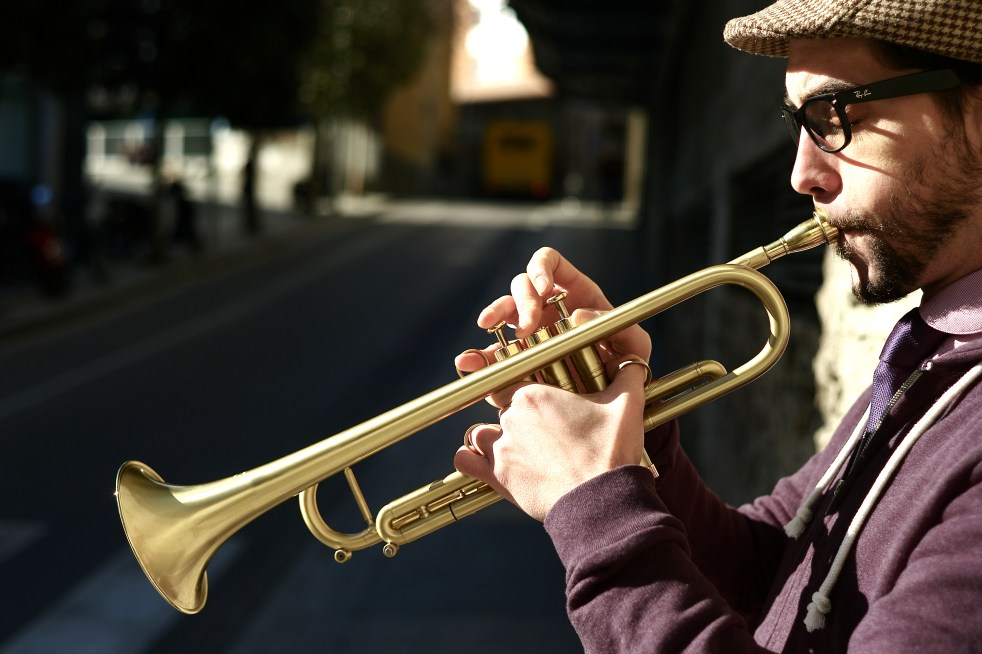
For 10 years, John had a self-imposed break from the trumpet to concentrate on his various businesses in music and technology, but he is now back playing again and very graciously agreed to meet me in a my local pub to discuss his career…so far!

JH: What got you interested in the trumpet to start off with?

JT: Well an old friend of mine from school in the North-East of England made me want to start. Ken Brown, now 2nd trumpet with the Hallé Orchestra was a boy-wonder cornet player at school and I saw the kudos that this got him at school. This piqued my interest, and then when I found out that band practise was the same time as 2nd period maths, I thought “I’m in, where do I sign?”. I loved it immediately, and there was nothing that I wanted to do more from that point onwards.

JH: And apart from Ken, where there any other particular musical influences or inspirations?

JT: My father took me to see the Syd Lawrence Orchestra at the Billingham Forum. Freddy Staff stood up and played ‘Manhattan’ and this blew my mind. The next big damascene moment was hearing Tower of Power for the first time! “THAT is what I want to do!”. This is probably what guided me towards the pop music scene. And then, before long I came across the playing of Jerry Hey. He is an incredibly nice guy, but his trumpet playing was sublime, and his arrangements are incredible. This is the pinnacle of the craft! Jerry was very much the inspiration for the ‘Phantom Horns’. We could never dream of coming close, but you always want to try!

I have worked with Lisa Stansfield on and off for 25 years and on our most recent album and the previous one, Jerry did half of the horn section stuff in LA, and I did the other half in Rochdale! Trust me, when you listen to the album, you can tell who is who! For me that is such a thrill. This guy has been my idol all through my career. They say “never meet your heroes” but it was amazing having lessons with him.

JH: So, talking about horn sections, when you set up ‘Phantom Horns’ was there a particular identity or sound that you wanted?

JT: No. Really, we wanted to be able to adapt to whatever the artists and producers wanted. Flexibility and versatility were absolutely key. Our job as a horn section is to blend and provide what fits with the particular artist. I have recently been going through a load of old recording and video clips, and I was struck how we sounded incredibly different from project to project. I think that if a band booked the Tower of Power horns they would be wanting and expecting that particular sound. Our job was to fit in!

Chile Flugel

JH: I really like the incredible stat about your chart appearances. Can you tell me about that!?

JT: Yes, I was on at least one album in the UK charts without a break for 13 years and 4 months. This was with dozens of different acts through that period. At one stage there were 11 albums in the top-50 that I was playing on at the same time! I think that this is not symptomatic of being earth-shatteringly brilliant, more that I always had a business mind. I would approach my work as business, and on keeping good working relationships with people and always treating the artists and their music with respect. If a parent came up to you with their baby, you wouldn’t tell them that it was ugly! It is the same with musicians and their music. You have to treat people well and remember how important it is to them. You also have to remember that once your name is on an album, it is there forever! If I was not happy with the way that I had played on a particular take, I would sabotage it to make sure that nobody would ever hear it. It didn’t make me popular with other musicians on some occasions, but it is important that you take pride in everything that you do. If you don’t, it will come back to haunt you.

VIDEOJamiroquai – Tighten up – Live at club Citta, Tokyo 1993

VIDEOBuddy Rich Band – Prague 1984

JH: Through busy patches and big tours, how do you keep on top of your playing and technique?

JT: I certainly have a strict-ish 20 minute warm-up routine that I do when I am busy. I will vary it though. I had this idea a few years ago, coming back to playing again, that it would be a great idea for a book to talk to all the great players about their practise routines. I sat with lots of great players – Craig Wild, Andy Greenwood, Simon Gardner, Wayne Bergeron, Malcolm McNab, Gary Grant, Jerry Hey… and discovered that hardly any of them seem to have one. There’s the book out of the window!

I love to be organised with my practise and use various apps to keep track of what I have been doing. I suspect that I am rather OCD with it all, but it works!

I had some lessons actually with Gary Grant, Jerry Hey and Malcolm McNab. I love to go and talk to these guys, you can learn so much from them. I have been a massive Jerry Hey fan since I was around 18. He is so gracious and we spent a whole day at his house just talking about the trumpet.

JH: Does that leave you with a feeling of worry or anxiety if you haven’t been able to do your daily routine, like if you have just got off a flight or something?

JT: Yes I think sometimes it does. I also have an emergency short routine too, that I can do in the car that mainly involves buzzing. Jerry Hey would always do lots of practise including long warm-up/set-up before work. I asked what he does if he is on in LA at 9am in the morning. He answered very matter-of-factly that he would just get up at 4am so that he has time to do it and then travel in to the city!

JH: So here is the geek question… Equipment?

I’ve played on the same trumpet throughout my entire career. It is a 1962 Doc Severinsen Getzen Eterna, and I find that it just does everything that I need it to. It started out silver plated, I painted it white for a while during the Phantom Horns period, and it has now been beautifully replated like new. I am also playing on the same Marcinciewicz mouthpiece that I have had for years. I also use a Getzen Eterna Flugelhorn which I bought from Giardinelli’s in 1979. I absolutely love it and everyone comments what a big warm sound it has. I would not swap it for anything!

I must be any music shop’s worst customer! I think that given a bit of time, you end up sounding like yourself on any instrument setup. Some will obviously make it easier, but I have always felt comfortable on what I have so have had no reason to change.

Johnny Thirkell

JH: Would you say that the music industry has changed a lot over the years?

JT: Certainly. Some avenues for work have changed and dried up but there are also huge opportunities that have been created by the internet. Even I am able to build my own website, and I’m an idiot when it comes to that! If I can do it, there is hope for us all. I may have run a software company, but I got clever people to do all of that! I think that young people coming into the industry need to be exploring those avenues for promoting yourself and generating additional income streams. We have to be much more self-starting, the world has become much more democratised. In music there are all these outlets, and the long-term winners are the ones that really take advantage of this. Blockchain technology in the distribution of music is also going to keep changing the way that we all work, allowing us to track every digital file that we create.

Some younger UK players are really building a great reputation for themselves. Louis Dowdeswell for example – loads of the top guys in the US like Wayne Bergeron are talking about him. I love the idea of young people just making it happen. What’s really interesting is when I was a young player, all the ‘old-school’ trumpeters would tell us that they would hate to be starting out on a career then as there wasn’t enough work around. It didn’t deter us, and here I am, still playing the trumpet all these years later! So that is the lesson that I would pass on to these younger players. Forget what those ‘old farts’ said! The nature of the beast changes – there was a period of around 10 years where I was surviving entirely on studio work, but then you get a show or whatever, but it has started to get a little more fragmented now. The ‘playing’ industry is certainly different to how it was, but I do not think that it is necessarily worse. The smart ones are the ones that get with the program and make a career for themselves. What these young guys like Louis and Tom Walsh are doing is fantastic. They are really making use of all of their talents.

The key is to embrace a portfolio of careers, whether it be playing, teaching, writing, producing, and to put your heart and soul into it and make it the best that it can be. Embracing the changes and the new technology is key and makes for a much more interesting way to earn a living.

JH: There is a big emphasis on ‘identity’ isn’t there? And I think that if you embrace the fact that being a trumpet player today is so much more than just being a trumpet player, you are going to be a lot happier! And a lot of these younger guys are really going for it.

JT: Absolutely, and in my day, we were very much compartmentalised to an even greater extent. You were either a studio player, or a show player, or a function band player or whatever. That started to break down as there became less studio work and less work generally. I never forget hearing for the first time that a guy like Derek Watkins would take on a show – we were amazed that he would do that. We never thought of him as a ‘show player’ but looking back, that was ridiculous. Why on earth wouldn’t he? It is great work, and he was a great player.

Things are certainly more fragmented now in the music industry, but as I said the key is to embrace it instead of bemoaning it. It is like when the drum machines were first introduced. It showed up that there were 2 kinds of drummer – those that complained that the drum machine was taking some of their work, and those that went out and bought one! Who better to programme a drum machine than a drummer? And for me, that sums up the differences.

JH: So we have talked about compartmentalising and pigeon-holing players. What ‘slot’ would you have put yourself in 20 years ago?

JT: Pop. Almost exclusively pop music studio work. I would tour sometimes. There were 3 bands over the years that I had a spell in: Swing Out Sister, I did about 4 or 5 years. I was with Level 42 for 8 years, then after that, Jamiroquai. Now those bands only toured for part of the year so a lot of the rest of the time was studio work. Myself and sax-player Gary Barnacle set up a horn section called ‘Phantom Horns’ which we branded and treated like a business. For 15 years, I would say that I was exclusively pop music.

JT Purple

JH: And if you had to give yourself a job title now, and ‘pigeon-hole’ yourself, what would you say? I am guessing that it is probably a little more complicated!

JT: My wife describes me as a retired business man, but I am not so sure that I like that particular moniker! I am enjoying being a trumpet player again and feel that I am playing better than ever. For the first time ever, I have TIME to practise, and I am loving it! I had many years as a full-on professional musician, then 10 years as a full-on business person building up and running a number of businesses – throughout all of that though, inside I still feel like a trumpet player, and dress like one too!

I like to be stimulated and love being on the board for various things like the Music City Foundation in Sheffield, and also being involved with numerous projects involving music, education and technology. It keeps me busy and interested. Underneath it all though, there is no hiding from the fact that I am a ‘trumpet player’!

JH: So, here’s a strange thing: Reading your discography I see that you are listed as playing flute on a Kylie Minogue track. Surely that is a mistake?

JT: That is not a typo! Steve Anderson was the producer on that track and booked me on trumpet. We were at Olympic studios in London, I was the last instrument to go on and they needed rough mixes by that night. Steve was struggling to find good flute samples in a hurry so I said, “If it is not too difficult, I’ve got my daughter’s flute in the car!”. I went and got it and played one bar of flute, for no extra money I might add!

JH: Any other projects on the go at the moment?

JT: I am starting the next Lisa Stansfield tour in April 2018 for a couple of months, I then will be working with Marti Pellow for a month after that. I have also just finished doing some arrangements for a great new young artist. Hopefully I can say more soon!

JH: What advice would you give to a young JT?!

JT: Treat your career like a business and don’t worry about what other people think!

Please visit Johnny’s awesome website at johnnythirkell.com

Be sure to also check out the great videos and audio clips on there!


Sign up here for new blog articles emailed direct to your inbox:

[jetpack_subscription_form show_subscribers_total=”false” button_on_newline=”false” submit_button_text=”Sign up” custom_font_size=”16″ custom_border_radius=”0″ custom_border_weight=”1″ custom_padding=”15″ custom_spacing=”10″ submit_button_classes=”” email_field_classes=”” show_only_email_and_button=”true”]

Interview

Trumpet Artist Profile: Raynald Colom

Raynald Colom is one of the bright talents to emerge from the thriving Spanish jazz scene to make a splash on the International circuit. Described as “a simply superb trumpet player” by JazzWise and “a force of spirit and feeling” by DownBeat Magazine, it is easy to see why his profile is on the rise.
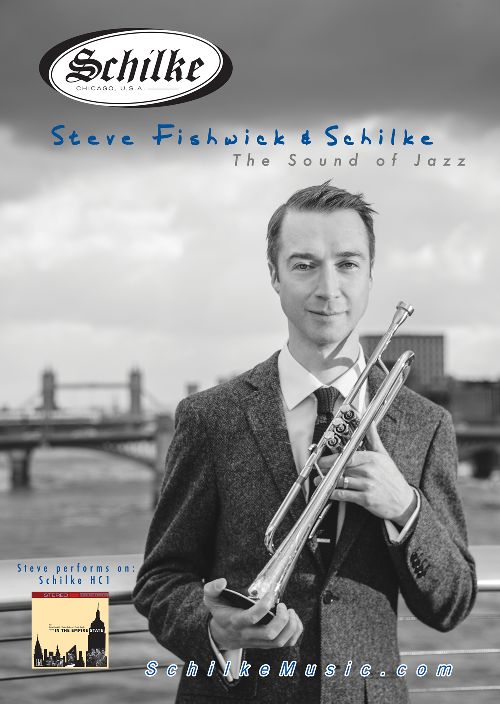
Ray kindly gave up some of his time for me last month to tell us a little about himself and his trumpet playing:

Can you tell us a little about your musical background and early musical influences?

Because my parents are in the music biz, I started when I was 4 playing violin until I was 8 – that’s when my dad brought a trumpet home and I fell in love with the instrument. I was lucky for 2 years to have André Spelitsch as a teacher, who held the 1st trumpet chair of the Orchestre de Paris. After that my family moved to Barcelona where I mainly played by ear and also played with my dad’s band, learning the Armstrong repertoire and all the greats. When I was 17, I received a scholarship to attend Berklee College of Music, but I stayed there for just two semesters (LOL!). I would say at that time I was into Clifford Brown, Dizzy , Lee Morgan and of course Miles.

What can you tell us about what appears to be a thriving jazz scene in Spain at the moment?

There are a lot of great cats that created the path for the younger generations like Tete Montoliu. After him people like Jorge Rossy, Perico Sambeat, Marc Miralta. But what for me is really thriving is the so-called “flamenco jazz” created by musicians like Carles Benavent or Jorge Pardo, alongside Paco de Lucia who played with Miles and Chick Correa. I’m lucky to play with these guys on regular basis.

How does it compare to other countries as you visit on tour?

Well, we are a southern country with the Mediterranean Sea so I would say the life gives you a different approach rhythm-wise… if there is a negative note I would say that there is no real industry in the so called “jazz” (don’t really like this word ) world compared to France or Germany.

You are based in Barcelona right? What is the atmosphere like in the close-knit musical community there after the horrific attack recently?

Man, I just did a gig right after the attacks and I have to say Barcelona is an example of togetherness and kindness. Barcelona is a melting pot of cultures and I saw that when we played.

What projects have you got going on at the moment?

Luckily quite a few! I have got my new band called “STEEL” that use pedal steel guitar and lots of electronics that we are going to record in the fall. I also just did a live recording with master bass player Carles Benavent and Tomasito. For 2018 I’m putting together a band with my good friend and guitarist from NYC, Yotam Silberstein and Piraña, Carles Benavent and Diego del Morao. A dream band for me! Several other projects and records are coming too. I feel blessed that musicians count me in for their music!

What equipment do you use?

Right now I’m playing the P.Mauriat PMT-72. Great horn! I like the fact that it doesn’t colour your sound. Also I can have a big sound without having to play a horn that is too heavy. I have been playing P.Mauriat for the last 4 years and I’m really happy with it. [You can read the Mouthpiece Online review of this instrument here]

For the mouthpiece I play a custom-made signature model consisting of briarwood and metal. I have been working with “Investigaciones Manchegas” from Spain for a year on how to get all that “wood” warm sound without loosing the edge of metal and it came out in the most amazing way. We are now working on put it in the market soon. [You can read about different mouthpiece materials here]

Any advice on keeping your trumpet playing in good shape especially when you are on the road?

Long tones and regular Arban and Clark studies. Usually I try to have at least 30/45 minutes before the sound check and play basics: intonation, attack, scales (really simple and slow) and whatever I’m working on at that time. If you have a routine you do when you are at home, let’s say 2/3 hours approx., it is kind of a compressed one to manage when you don’t have the time for it on the road. Good sleep (when you can!), eat well, and lots of water to hydrated the body and muscles so your lips don’t get like a wooden block!

Anything else that you would like to mention?

Just to thank you for spreading to word in our trumpet community – music can heal the soul and gives a better society where everyone is welcome and grows with respect and love.

For further information about Raynald and his music, please visit raynaldcolom.biz


Sign up here for new blog articles emailed direct to your inbox:

[jetpack_subscription_form show_subscribers_total=”false” button_on_newline=”false” submit_button_text=”Sign up” custom_font_size=”16″ custom_border_radius=”0″ custom_border_weight=”1″ custom_padding=”15″ custom_spacing=”10″ submit_button_classes=”” email_field_classes=”” show_only_email_and_button=”true”]

Interview

Trumpet Artist Profile: Steve Fishwick

With a rapidly growing profile on the UK and International Jazz circuits, and an ever-increasing back catalogue of critically-acclaimed recordings to his name, I am immensely grateful to trumpeter and Schilke Artist, Steve Fishwick for giving up his time to share his thoughts and insights…

Tell us about how you got into trumpet playing, and your main influences.

“Aged 8, I started having lessons with a wonderful teacher called John Crosdale who had spent time in the Halle orchestra.  My twin brother Matt (now a drummer) made fun of me for a week then decided that he wanted to play too.  I think our parents thought we’d give it up in a few months.  Mr Crosdale used to regale my parents with stories of his professional trumpet playing days, so to an 8 or 9 year old, this was the greatest thing ever.  By the age of 10, I had more or less made up my mind that I was going to be a professional musician, not really having any idea what that entailed or how hard it would be!

I’ll be forever grateful to Mr Crosdale because he was so curious and enthusiastic about music.  When my brother and I started getting interested in jazz, he didn’t discourage it, he was very positive and excited by it even though he was a classical trumpet player.  At the time, the 1980s jazz boom was underway. Wynton Marsalis’ fame was at its peak so he was on the TV all the time along with Courtney Pine, Tommy Smith and Andy Sheppard.  Plus, they were showing old jazz 625s on the TV which we used to video tape and watch over and over.  I remember going to see Dizzy Gillespie with the United Nations Orchestra (with Arturo Sandoval and Claudio Roditi) and our teacher Mr Crosdale was in attendance too.  At our next lesson, he presented us with a programme signed by Dizzy, he’d gone backstage after the concert to meet the band and chat to Arturo about trumpet technique!  He really was an inspirational teacher.

I had got into some bad habits, playing on the red of my lip, so I undertook an embouchure change.  I had no idea what I was doing, I just changed position and told myself: “right that’s where I’m putting the mouthpiece from now on” and it kind of worked.  Then we went to London to study at the Royal Academy of Music under Graham Collier (we were there 1994-98).  Steve Waterman was my teacher along with Gerard Precenser (for my final year) who was very inspirational.  I also had some lessons from vibraphonist Anthony Kerr who was very helpful when I was trying to get fast tempos together, and Martin Speake was great too.  I played pretty convincing jazz when I arrived at college but I didn’t really know technically what I was doing (I was playing mainly by ear).  Martin found me out on day one and proceeded to roast me.  I was a little headstrong and stupid in those days and rebelled quite a bit, but the lessons stuck with me and much, much later I eventually caught on to what they were trying to tell me!

I should also mention Lew Soloff who I had the good fortune of working with in Pete Long’s Gillespiana.  I had met him in New York a little while before this too.  He was very encouraging, but told me in no uncertain terms that I needed to improve my technique, particularly my breathing.  He turned me onto the Arnold Jacobs breathing exercises which I’ve been working on ever since, along with the Chicowicz long tones and flow studies (which Terrell Stafford turned me onto).  I would say that these two things, more than anything else, have improved my trumpet technique immensely.

As for players that I admire, there are a lot!  Main influences I would say are Kenny Dorham, Miles Davis, Art Farmer, Lee Morgan, Freddie Hubbard, Blue Mitchell, Donald Byrd, Clifford Brown, Woody Shaw, Charlie Parker and Dizzy.  I often feel torn between the Kenny Dorham/Miles Davis vulnerable introspection and the more gregarious extrovert Lee Morgan and Freddie Hubbard.  So, I guess I’m trying to balance the two things in some way.  I also listen to more contemporary players like Joe Magnarelli, Ritchie Vitale, Wallace Roney, Scott Wendholt and pretty much anyone playing now.  I try and keep up with all the contemporary players: Avishai Cohen, Ambrose Akinmusire, Michael Rodriguez and the rest of them.  Plus, we have some very fine jazz trumpet players over here in the UK who are very inspiring, such as Percy Pursglove, Tom Walsh and Robbie Robson.  I also like to listen to classical music too.”

What model trumpet do you play?

“I am playing a Schilke HC-1.  For a long time, I played a Martin Committee from the 1940s, but I wore the thing out, put my hands through the brass and everything.  Even after I had it reconditioned it just became unviable to play as my everyday horn.  I got another Martin but the tuning wasn’t fantastic.  Then I moved onto Olds Supers which I liked, incredible projection, but I never felt like I could hear myself very well – Probably because the horn was so good at projecting!  I eventually bought a Schilke B1 after a lot of research.  Basically, I like lightweight horns with step bore and a reverse leadpipe.  I like to feel the horn vibrate in my hands as I’m playing it.  The B1 is great, it has a wide variety of tonal expression, and out front it doesn’t sound bright at all.  But from behind the horn it does sound a little bright.  So, I’ve moved onto the HC-1 which, although it was designed for Wallace Roney, I feel it could have been designed personally for me!  It is a fantastic amalgamation of the Martin Committee and the classic Schilke designs, two of my favourite horns.  The sound is great, the tuning perfect and the resistance from low to upper register is amazingly consistent.  For me personally and for what I’m trying to do, they are the best horns out there.”

…and mouthpiece?!

“I play on a Monette B2S3 Prana Resonance Mouthpiece.  I’ve experimented a lot – Used to play big mouthpieces, moved to shallow ones and gradually went bigger again.  I think most jazz players want something that can give them a big, warm sound but also enables them to get into the upper register.  So, everything is a little bit of a compromise between sound and range, deep and shallow.  The Monette mouthpiece isn’t a compromise, great sound and the upper register is easier.  If I try and play a conventional mouthpiece now, it just doesn’t work.  And the sound is nowhere close to the Monettes (for me personally, not that other players can’t make conventional mouthpieces sound great, I mean Clifford Brown didn’t need it!).  I feel that they also ‘correct’ your playing in some way.  If I’m not using my air correctly or I have tension somewhere in my body then the mouthpiece just kind of shuts down, it doesn’t work.  I don’t consider myself the greatest trumpet technician as it’s something I’ve always struggled with, so I need the daily reminder!”

What are the most important aspects of trumpet playing that young, aspiring musicians should focus on?

“I think an aspiring player should concentrate on sound.  There is a lot to think about when learning any instrument, so I think that sound sometimes goes out of the window.  Along with this goes correct breathing and listening a lot to the greats.  A lot of younger players don’t know how to listen, and in a lot of ways it isn’t their fault.  They have Spotify, YouTube and all of this music at their fingertips, so they end up listening to different stuff every day.  There is a lot to be said for the old way of getting a bunch of CDs and listening to them repeatedly, internalising them and really learning every note on the record.  Also, listening isn’t as social as it used to be when you would get together with friends and listen to music.  Everybody listens on headphones on their phone or computer in isolation.  Do yourself a favour and buy a decent stereo system!  It will sound so much better and you will hear details in the music you won’t have heard before.  Also, you’ll experience the joy of listening and sharing music with friends.  I feel listening and internalising the sound of great players is hugely important, it will give you a strong concept of what you want to sound like.  And if you don’t have that strongly in your mind, it will never come out of the bell of the instrument.  Also go to gigs and hear people live!  It’s the best lesson you will ever get.  The amount of great, great trumpet players that I go to hear and see zero of my trumpet students there in the audience alarms me.

When I was a young player, I attended the Wavendon Jazz Summer Course. Steve Waterman was teaching there and he was invaluable because he showed me all of these transcriptions of people like Lee Morgan and Miles Davis he had done.  Before that I was seriously groping in the dark, but I went home and started transcribing, and my jazz playing started rapidly improving.  It kind of makes me chuckle now when I tell my students they have to transcribe and some of the reactions of horror that I get, because it is quite a daunting prospect at first.  I remember transcribing from vinyl and cassettes because I didn’t have a CD player.  If you wanted to slow it down you had to buy a special cassette player from the US that slowed the music to half speed but made it an octave lower in pitch.  Now there are numerous computer apps that you can download in seconds for a few pounds that can slow the music down whilst keeping the pitch.

Teaching is really important to me.  I think that we have a lot of amazing players here in the UK that aren’t really appreciated enough, and the standard is getting better and better year after year.  I love being part of a team in the colleges that I teach at (Leeds College of Music, Guildhall School of Music and Drama, Birmingham Conservatoire, and the Royal Academy of Music).  When you manage to get the student to play better during the lesson and you see them getting the idea, coupled with seeing their progress over time, it’s exciting and very rewarding to feel you’ve been a part of that process.”

What projects do you currently have in the pipeline?

“I have a band co-led with my brother Matt, featuring Dave O’Higgins on Saxophone, Rob Barron on piano and Dario de Leche playing the music of Cedar Walton.  My brother and I had the honour of recording with Mr Walton in 2007 along with bass legend Peter Washington and my long standing musical partner Osian Roberts.

I recorded a CD last November with Alex Garnett on Alto Saxophone, New York bassist Mike Karn and Matt again on drums.  We’re currently working to get that mixed, mastered and released with a view to touring late next year.

Also in the pipeline is another sextet album as a follow up to our two previous CDs, In the Empire State and When Night Falls.  This band features Osian Roberts on Tenor, NYC musicians Frank Basile on Baritone, Mike Karn on bass and Jeb Patton on drums.  I’m writing music for that when I can find the time!”

Details on projects, recordings and future gigs can be found at www.stevefishwickjazz.com

Instrument details can be found at www.schilkemusic.com


Sign up here for new blog articles emailed direct to your inbox:

[jetpack_subscription_form show_subscribers_total=”false” button_on_newline=”false” submit_button_text=”Sign up” custom_font_size=”16″ custom_border_radius=”0″ custom_border_weight=”1″ custom_padding=”15″ custom_spacing=”10″ submit_button_classes=”” email_field_classes=”” show_only_email_and_button=”true”]