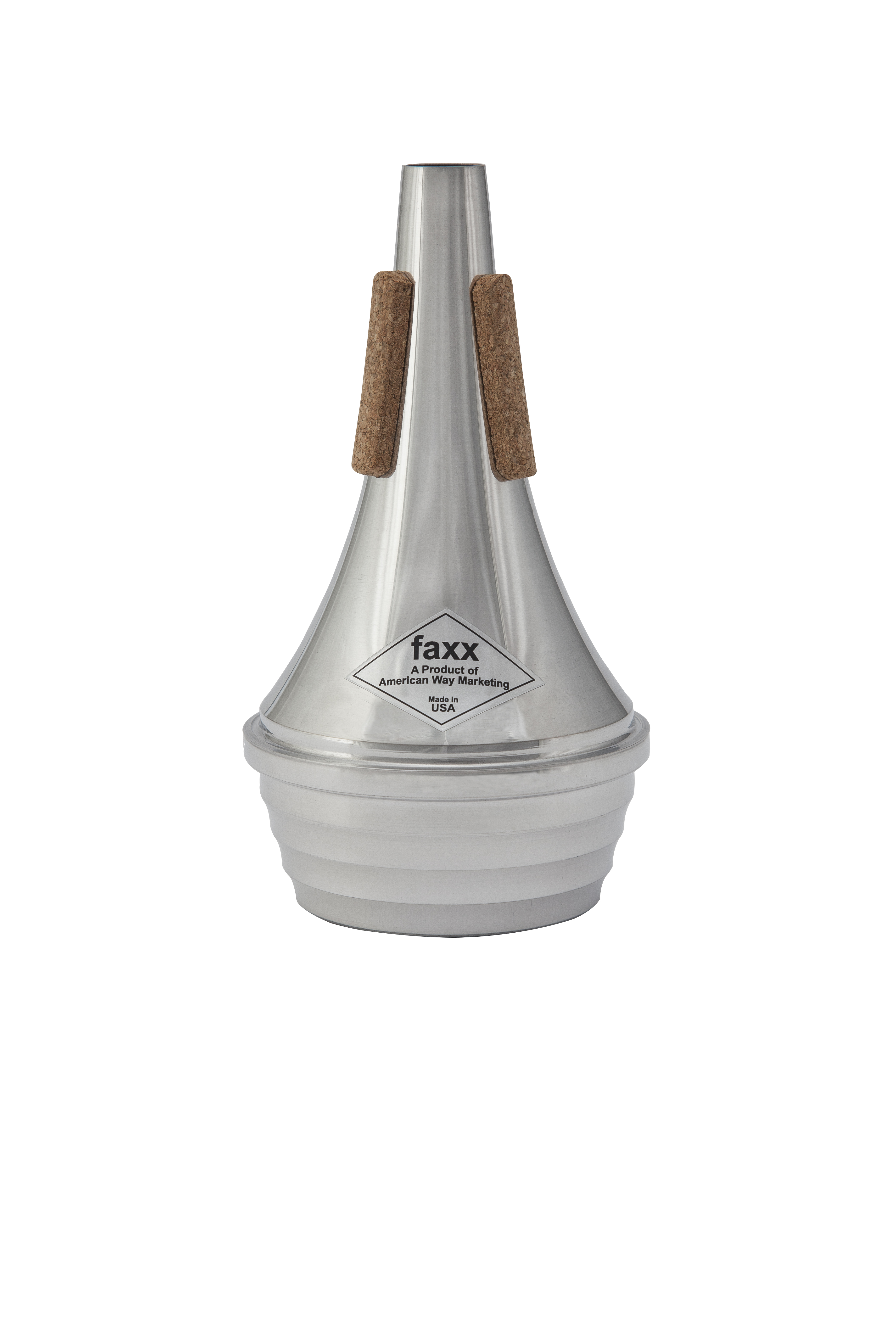
The Faxx brand may already be known to many of you. It has a reputation for reliable accessories at a reasonable price. I have recommended the Faxx mouthpieces to young students for many years as they offer comfort and quality at a price point that is appealing to parents! However I was yet to try any of their mutes until I was sent a box by American Way Marketing who own the Faxx brand.
Here is a run down on the box’s contents!…
Compact Aluminium Practice Mute
I own quite a few practice mutes and must have tried dozens of them over the years. Each one requires you to make a compromise in some way. I have a favourite mute for playing as softly as possible so that it is barely audible – it is super quiet but the intonation is tough down low. I have another for general practice where I want good tuning and response – it is however too loud for some sneaky blowing at the side of the stage where you don’t want to be heard. This Compact Aluminium Practice Mute from Faxx is brilliant for travelling. It is small enough to store in the bell of the horn without taking up additional space in the case, but it also blows surprisingly well.
The intonation is even across the range and although quite a resistant mute, still allows you to blow in an honest way rather than constantly over-blowing. I like this mute. It is reassuringly robust, clearly well-designed and made and retailing at around $45, gives you the value that you would expect from Faxx.
Aluminium Straight Mute
This is a well-made, sturdy all aluminium mute with great corks. We often underestimate the importance of good corks to the fit in the bell as well as the overall sound. This model is also available with a copper bottom as well as in all copper.
The blow is responsive at quiet dynamics as well as having a lots of lovely bright overtones when playing forte. There is also a really satisfying ‘bite’ to the attack at stronger dynamics, while still keeping the core of the sound. These make a really great addition to any pro orchestral section, but at a price point to suit students and pros alike – around $40!
Aluminium Harmon Mute
There are a number of Harmon style mutes in the Faxx range. This traditional long body mute, a short bodied harmon, and also the bubble style harmon that is reviewed below. All of these are available in both aluminium and copper, and you will now not be surprised to learn that they sell at a fraction of the cost of many of the other brands!
This traditional harmon mute, like the straight and practice mutes above, is well-made, sturdy and fits a variety of bell flares very well. With tube out, it is easy to achieve that smoke jazz club sound and responds particularly well with close miking. With tube in it is a completely different beast! The volume and projection are exceptional and makes a great wah-wah!
Aluminium Bubble Harmon Mute
Until now, I had never really given much thought to how the body shape affects the sound. The difference between this and the model above is huge. Even with tube out, this is an incredible resonant mute, so much so that you can feel the vibrations coming back through your hands while playing. Projection is great and it compares really favourably with my normal aluminium bubble mute from another more expensive brand!
These great value and great performing mutes are now commonly available across the UK, the USA and farther afield in most good music stores. I strongly recommend that you give them a try – these are far more than just student mutes!
To find more information on the full Faxx range and also where you can find a dealer near you, please visit American Way Marketing.
SIGN UP HERE FOR NEW BLOG ARTICLES EMAILED DIRECT TO YOUR INBOX:
I would like to tell you about some really good news, not just for me, but for trumpet and trombone players all over the world. Swedish trumpeter Lasse Lindgren has acquired the rights to make Ullven mutes, which have been unavailable for many years, and also happen to be my all-time favorite mutes. Dizzy Gillespie game me my first Ullven harmon and cup mutes in 1972. I’ve been using Ullven mutes exclusively for almost 50 years!
These mutes, plus my Schilke Music Products horns, are “tried and true” for me. I even remember when that first Ullven harmon was stolen from me: October 21, 1977, at Jazz Showcase, in Chicago. It was Dizzy’s 60th birthday celebration, and I had left the mute on the piano on stage between sets. During that time, I was hanging out with Diz and Muhammed Ali backstage. When I went back on stage to play the next set, my mute was gone!
So you know: The Ullven harmon mute is perfectly in tune down to low F# and has an exceptionally full and even sound when playing on a microphone. The Ullven cup mute is adjustable and gives the player the option to change the sound to that which she/he is looking for. The cup can even be used as a plunger (á la #SnookyYoung, on the gold plated Ullven cup which I gave to him as gift back in the day).
These Ullvens also make great quiet practice mutes. Because of the functionality in this regard, Ullven cup mutes and Ullven Harmon mutes also are superb as a quiet practice mute when one wants to hone skills without disturbing anyone, even and especially late at night, or if you have pets in your home who pick up frequencies at higher intensity — you spare their ears. You also help protect your own hearing as a musician. It’s also a really nice gift for students (and their families) as they learn the art of the trumpet. These Ullven mutes are the real deal and Lasse is making them now. Get ‘em while you can! Lasse, tack så mycket!“
Jon Faddis Sleeping Cat Music, Inc. @faddisphere International Trumpet Guild (Official) International Trumpet Guild Student Group Jazz Education Network Schilke Music Products Ullvén Mutes for Brass Instrument
SIGN UP HERE FOR NEW BLOG ARTICLES EMAILED DIRECT TO YOUR INBOX:
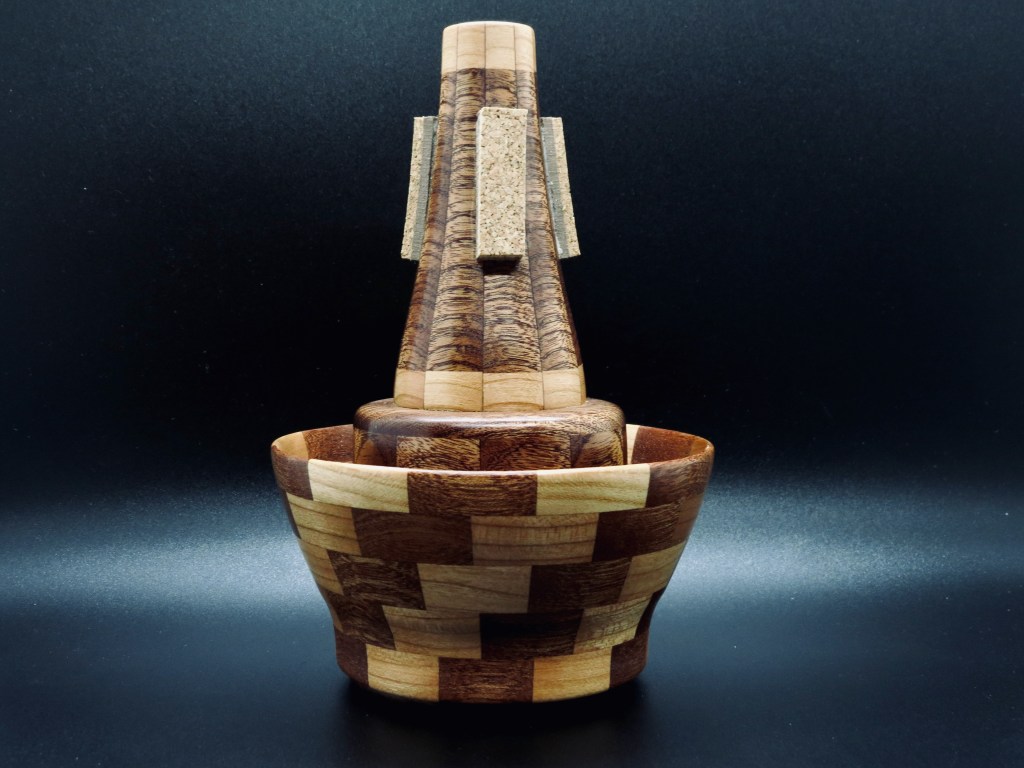
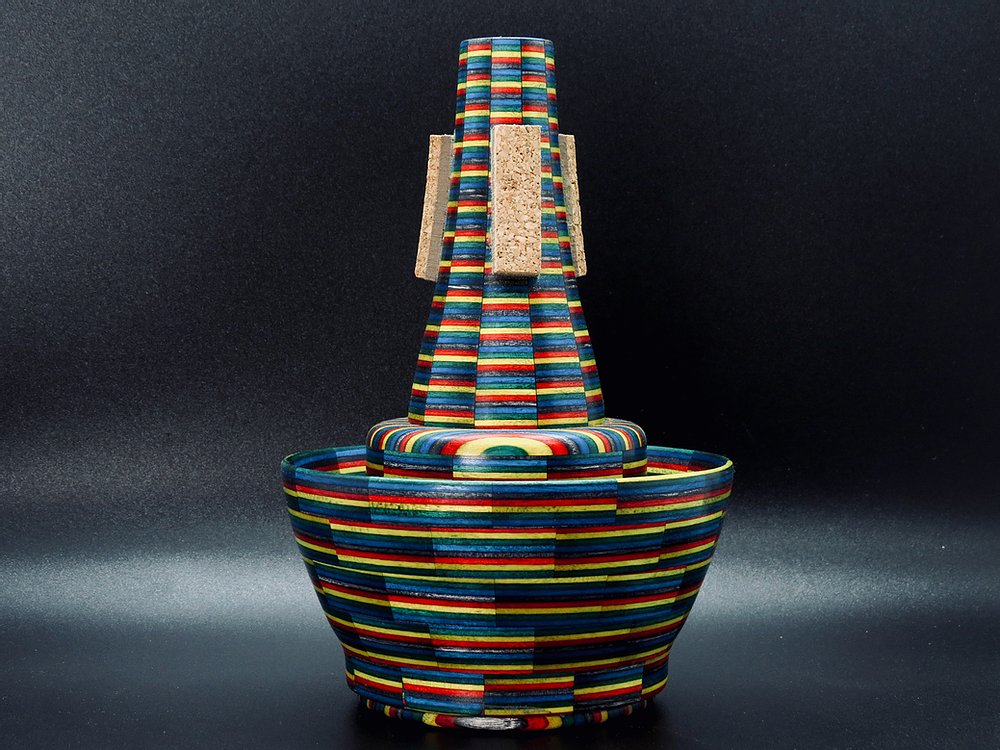
Further to my interview with Tom Clary, the master craftsman behind ‘Clary Woodmutes’ [read it here if you haven’t already!], Tom has kindly sent me a beautiful Kramer Adjustable Cup model to try out. Crafted from gorgeous Sapele and Cherry woods, this model is named after Don Kramer, one of Tom’s former teachers.
The above ‘glamour’ shot of this mute looks pretty great. But trust me, it does not do it justice! The grain of the woods, the beautiful sheen… and the smell. Heaven! As I am admiring the fantastic craftsmanship, it suddenly occurred to me that I should probably try it out, and it does not disappoint. This model has a flat cup rim, but it is also available with a scalloped rim too.
I started off with cup at full extension, and there is immediately a fantastic resonance to the sound. Of course there is the softness that you would expect from a cup mute, but there is a depth of sound that you just do not get with some of your ‘pret-a-porter’ mutes such as H&B and DW.
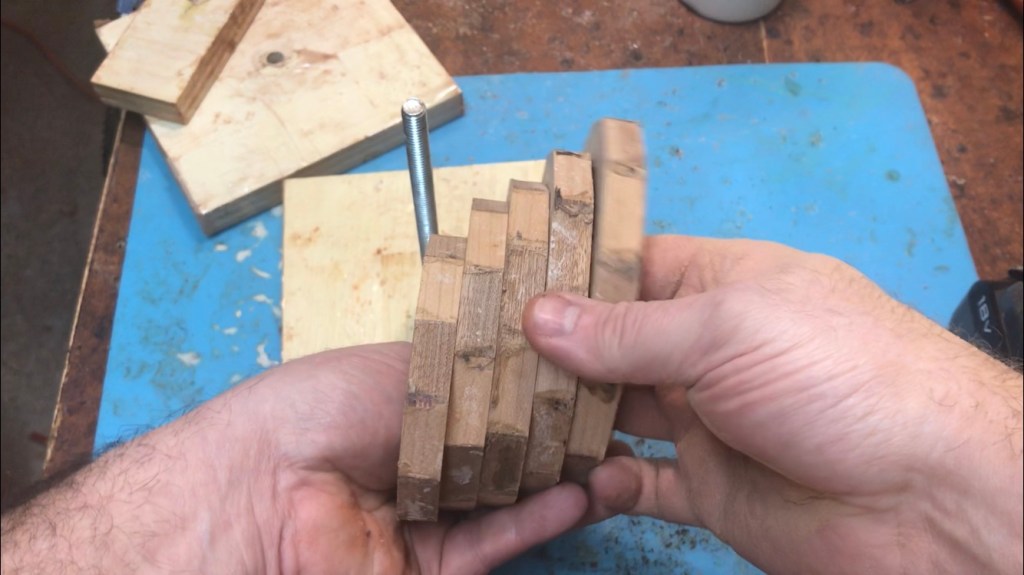
Sometimes we want a more enclosed sound with mellow to the max, and this is where the adjustable feature comes in. I moved it inwards to give just a 2mm gap to the rim of the bell and it is transformed. There is a lovely added resistance to give you something to blow against. Often, this is the point where the intonation could suffer, but the resonance within the body of the mute allows you to keep that core sound and good tuning alongside the softness and even smokiness that we look for. Incidentally this cup section alone is made up of over 60 individual pieces of wood.
And with the cup removed, this is a resonant and responsive straight mute. Projection is stunning and the response at both loud and soft dynamics is as even as any great mute that I have played. When sent an item for review, I try very hard to give an objective opinion on what I have been sent. And here, I promise that I have, it is just that I can genuinely only find positive things to say!
SIGN UP HERE FOR NEW BLOG ARTICLES EMAILED DIRECT TO YOUR INBOX:
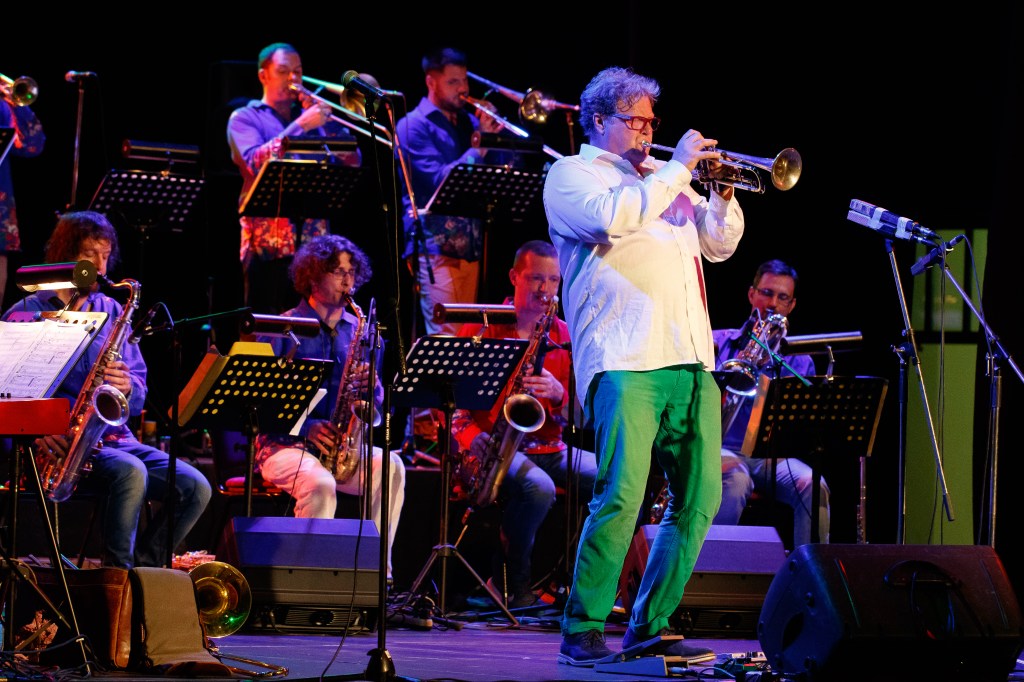
Lasse Lindgren is a multi-faceted musician, with a reputation as a great ‘lead’ trumpet player as well as a great ‘jazz’ player. In recent times, he is also responsible for the resurrection of the great Ullvén Mute brand, made famous by players such as Dizzy Gillespie and Maynard Ferguson. Lasse kindly talks to me here about all things trumpet as well as this recent project…
What first drew you to the trumpet?
That’s easy! I heard Louis Armstrong on the radio as a 5 year old boy. That totally blew my mind and made me decide to dedicate my life to playing trumpet. Then I had to wait until I was eight before I got a trumpet, and I still remember that moment as very exciting, after I had to wait for years. I also remember that I was dreaming of making that sound for so long, that when I finally got it, it was a great relief to put the mouthpiece to my lips and blow the sound I had in my head for years. I think that also made it easy for me, I got a good sound right away. I think because I was so eager and had the sound built up inside me, it just came out naturally.
Any early musical influences?
As a young boy I loved the recordings of Louis Armstrong, Glenn Miller, Harry James and the other famous BBs. My mother had an old 78rpm record player at my grandparents’ home. I used to love to sit by myself and listen to the old records – that sound made a deep impression on me.
When I was 15, my trumpet teacher played the record “Message from New Port” with Maynard Ferguson’s orchestra for me. That was another “blow my mind” experience. I loved not only MF playing, but the sound and energy of the music arrangements!! and I still do. I thought playing those high notes MF did was something you learn when you get older, that is how stupid I was))-
But of course I wanted to play the notes of MF and his “sound”, but how? No one to ask? So I had to experiment myself by my own. From age of seventeen to twenty I spend 8-10 hours a day with my trumpet, playing, thinking and trying out how to do this.
I also spent some time playing “Free Jazz/music” as a teenager, that opened my ears and mind, Lester Bowie and Art Ensemble of Chicago!
Who have been your favourite players and music to listen to?
Well, when I went to high school, I started to play with friends in a band, and we played some kind of “Jazz-rock” in the style of “Weather Report” and so on. So I broadened my view of music. Then at that time, I also started to be aware of other great Trumpet Heroes, especially in more “modern” Jazz. Artists like Dizzy, Miles Davies, Clifford Brown, Freddie Hubbard, Woody Shaw, Chet Baker, among others, but also the European players like Palle Mikkelborg, Kenny Wheeler (Canadian in UK) Tomas Stanko (I played a lot with him in Germany) and my Swedish friends and heroes Bosse Broberg, Jan Allan and Rolf Ericsson. I also loved players who were both “Lead” and “Jazz” players – Snooky Young, Benny Bailey, Booby Shew (whom I met and got informed about the Yoga Breathing from when I was 18)…
Today I still listen to them all, the old stars were the genuine originals. There are many new great trumpet players of today, but have to admit, I am not so familiar with them, although Roy Hargrove was fantastic, RIP.
It’s hard to invent the wheel again, and to me, many of the young very skilled and talented players of today, sound as though they are playing “licks” they have practiced and learned. To me, that is actually is not spontaneous soulful improvisations, more than showing that they can play the right “hip” patterns over the chord changes – rather boring to me.
It is not easy to make your own sound and style, and I think too few even try. The exception is Tim Hagans, but he is not so young anymore!!
Lasse playing on one of the two Conn Connstellation trumpets that he owns, once belonging to Maynard Ferguson.
Is it a difficult skill to practise, being able to specialize in lead AND jazz? What are the particular challenges? Are there any particular routines that you follow in order to be able to achieve this?
Apart from the physical aspect of these two different ways of playing, the Lead player often has to use different equipment (not always) and play more demanding physical parts, to play with agood sound in the upper register with the endurance required. This takes a lot of work, exercises to keep up the “chops” to handle this, not everyone can do this. The Jazz player, on the other hand, meaning improvised jazz solos, has to learn how to do that… also the techniques. Scales, tunes, and how that music works, most likely Jazz players use different equipment (mouthpiece) compared to the Lead player. A good “lead” player must besides having the control of the instrument in any register, also be able to interpret music, a melodic line that you are asked to play, what the music is about, play it soulful and interesting in the style of the music.
When I play lead, I always ask the composer what the music is about or make my interpretation of the title. I always play as if I were singing the music instead of blowing the trumpet. I think a lead part or a melody also should be played like it was improvised, so it would sound fresh new and spontaneous, but at the same same time consistent the same way each time, so the other musicians can follow and trust in me and the way I play. Lead means to guide, show the way the music should be phrased for the fellow musicians, not only playing high notes. I think you must have an ability to be a leader, a strong personality, not ego, but be a steady and reliable player.
It is also a question of knowledge of style and understanding how to play different types of music. How do you learn to play good “lead”? Listen a lot, sit and play under a good “lead” player for years to get the “Know how”. The same goes for Jazz playing, listen and play with good musicians. So my conclusion is that to play good “Lead” it is good to be able to play some Jazz as well. To play good jazz, one must also be able to present an interesting melody, with respect for the song/tune, and the technique required.
So one difference between “lead” and Jazz is that a leadplayer must sound like the music is improvised but at the same time not. The jazz player should make the music fresh and spontaneous, every time to challenge other musicians and maybe be unpredictable to make it interesting.
I do have my daily routine that I do when warming up, getting my sound in all register together. It takes normally 1-1/2 hours from the first breathing exercise and buzz on the mouthpiece through scales or arpeggios from the deep pedal notes to the high register double C. After this I rest and do other duties. Later if I have time I practice music, Jazz play along records (I still do that with a record player, not with the computer, I’m too old and stupid!) or etudes or music I have to play and need to be practiced.
As well as playing in lots of great bands over the years, you have also been a band leader. When did you realise that you wanted to create music under your own direction?
I remember that I was making drawings of “my own Big Band” when I was 10, so for some reason I always wanted that!
Since I always have been interested in writing music for my band, it was natural to have a group to play my music. For some reason, even though I always loved and listened to “Jazz” old and new, as I mention before, I never hear this in my head when I compose??!! Why? I dont know. So my own music is a little different, I try to make more compositions rather than just a short melody and then the standard for soloists. This is just the way for me, so can my music be called called Jazz??
Is it possible to define what ‘jazz’ is? It is such a broad musical term isn’t it?
Well, Jazz is a name with a history, from mid 19th-century meaning spirit, energy, or courage and other things as well… “semen”… so it has a hot history I suppose! When we talk about what is Jazz today, it covers many “styles”, but for me somehow, it is a rhythm with the swing pattern played on the ride cymbal. As they say triplet groove, swinging eight notes, it is the same as Hip Hop, bebop, dixieland for me. As long as it has that “diiing diiingdidiiiing” groove played on the drums or on the cymbal, it is basic Jazz.
Then there are many other styles that has evolved from this: Free jazz with swing groove or not, Scandinavian sounds of “Jazz”, Latin Jazz… if these are Jazz? Then Funk, more composed music, Charles Mingus wrote as he said – not Jazz, he wrote “Charles Mingus”, even if he was one of the big names in “Jazz”. To me the rhythm and improvisation are important to define Jazz. When I compose it comes out more like my music, which is not so often Jazz, or any typical style. It is hard for me to define my own music which also makes it harder to sell! A lot of my music has more beat grooves or rhythms, straight -jazz eight notes, still it has the other elements in Jazz improvisation. Is it still Jazz?
Any particular career highlights that stand out?
Besides all the gigs and tours with my own groups throughout the years I have some. I did a gig with Ray Charles in Finland once. It was a mix, with a half Finnish band and half Ray Charles orchestra, at a big sports arena, 8-10,000 people. I had some solos and I remember one was 1m in front of Ray Charles. It was a very slow “Georgia” type of song, and I played kind of blusey with some long high notes in the end. I remember it was thrilling and inspiring (goosebumps) to hear Ray’s comments while he was comping me – “yeah man!!” and so on, after that I was offered a job in his band. I didn’t take it however, I already had the gig as lead player in the Danish Radio Jazz Orchestra, and also a family!
In contrast, great moments also happened in smaller situations many times. Like, on tour with my quintet in small villages far up in northern Sweden, at small Jazzclubs in front of 10 people. When some of them, after the concert, come to us with tears in their eyes and thank us for the music. Then I also feel it was a great moment, when I was able with my own music, to touch somebody to tears of joy! Another was when we made a 3 week tour all round Europe with the Danish band. Maria Schneider conducted Gil Evans music with David Sandborn as soloist. We played some of the original scores that Gil wrote for Miles Davies. It was a highlight, especially in Spain. The audience’s reaction in Seville after “Sketches of Spain”, was amazing.
Tell me about the journey bring the great Ullvén brand back to life!
Ullvén Mutes have always been “the Mutes” for me, and I grew up in the same small town of Uddevalla at the west coast of Sweden, where Mr Ullvén had his Workshop. He had also a music shop there were I naturally used to go. Besides that, my mother took care of his bookkeeping, since she worked as an accountant. Mr Gunnar Ullvén used to come home to us every Christmas with gifts, flowers to my mother and a 1 litre bottle of “Popy” Valve lubricant to me. I also remember being in his shop when Dizzy Gillespie called and needed some more mutes – and sometimes as a teenager, I went to Ullvén’s workshop and got some mutes to experiment with. So, when I was offered to take over and restart the company one year ago, it was natural for me, I feel close to this company and its great products.
But, since it has been sleeping for 20 years, it will take some time to get things going, but I do work hard and want to be able to bring these mutes and things available for brass players worldwide again.
All the old tools are still there, and the now old man, who made the mutes by Metalspinning has retired, but he taught his son how to do it, which is great – without them it would have been much harder, maybe impossible for me.
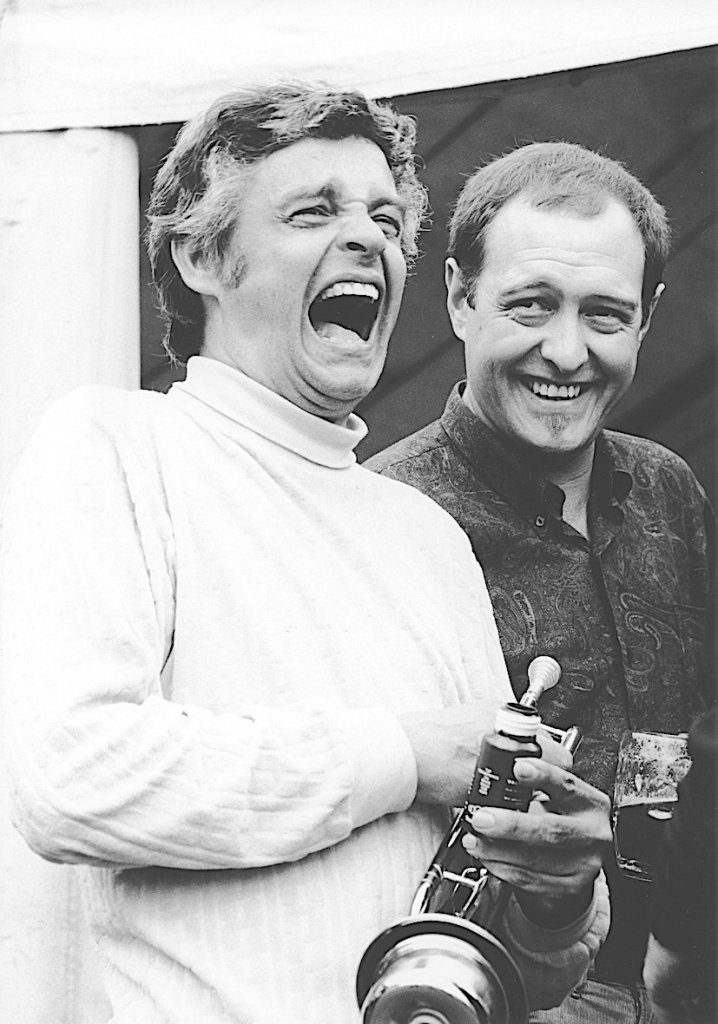
Maynard Ferguson in 1968, with his Ullvén mute and Popy valve oil!
Any particular challenges along the way?
Well, yes, to find suppliers for some of the products I need, like the special Industry felt, Cork, Labels and cardboard can’s for the the mutes. The last time they ordered these things was 25 years ago and most of the suppliers are gone so it takes time to get new contacts. Also for example, getting license to use Dizzy Gillespie’s name – Jon Faddis helped me with that!
What are your plans for the future?
Times are strange in the Era of the Corona Virus!! No gigs last year, but I stay alive with my horns by practising daily as well as possible. I’m of course using the time to get my Ullvén mutes for brass instruments on the market.
Then musically I do have things coming up later this year, but… we don’t know for sure yet.
I have done some recordings that will be out there soon I hope. Two records with the great “Latvian Radio BB”. One released 2 years ago, we should have played concerts with that in 2020, but it was cancelled. Then another with more “standard Jazz” that will also be out soon.
I also made a recording for the Scottish label “Sleepy Night Records” with my own band in Croatia/Slovenia. This is also postponed for better times, hopefully this year!! New arrangements of old “Rock and film” hits, in the style of Maynard Ferguson “Alive and Well in London”.
I have got 25 old arrangements by Slide Hampton, Don Sebesky, Mike Abene, Willie Maiden, and others. Music arranged for Maynard Fergusons Orchestra 1956-65, but never recorded. I will do that with my band here in Sweden as soon as we are allowed to.
Then, once again, I have a third project with the same great “Latvian Big Band” next year. A new album, mostly my own music, arranged by the great Michael Abene, it will be a wonderful adventure.
I will also get a new quartet together, asap, something that I have wanted to do for a long time.
SIGN UP HERE FOR NEW BLOG ARTICLES EMAILED DIRECT TO YOUR INBOX:
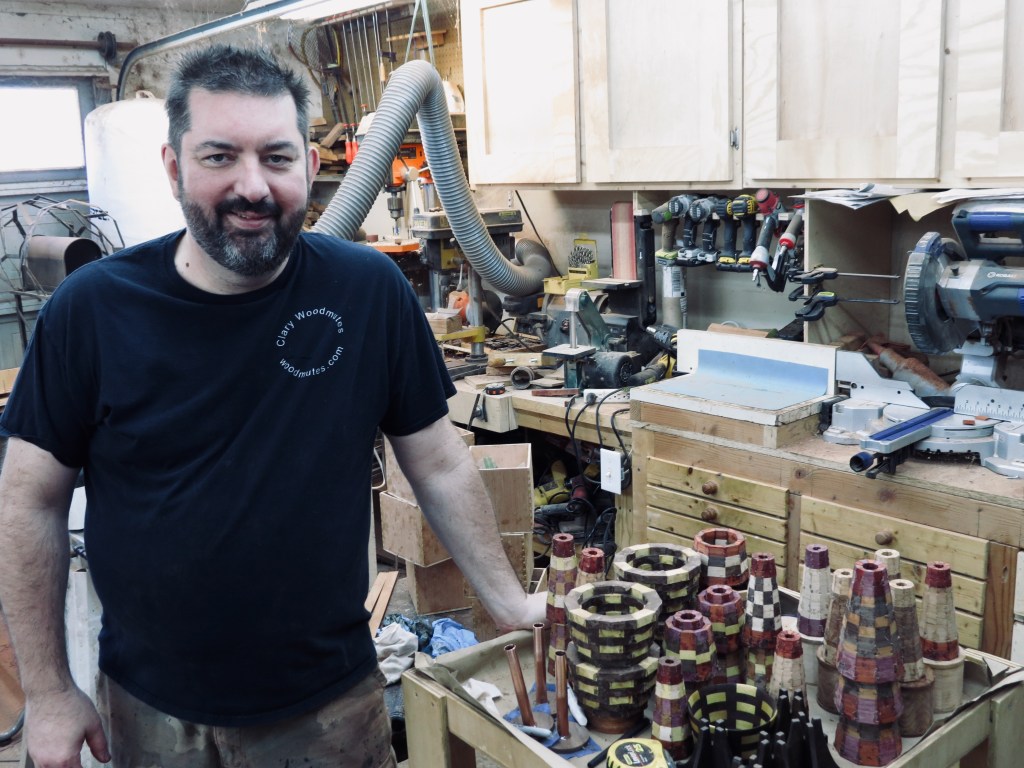
In May 2018 in San Antonio (TX) I had the great pleasure of meeting Tom Clary at the annual ITG conference. Tom is the founder / designer / master craftsman behind Clary Woodmutes, and was there to display his range of beautifully-crafted wooden trumpet mutes.
Two years on, Clary Woodmutes continue to go from strength to strength with a broad range of exquisite looking (and sounding!) mutes – I was delighted to sit down and spend some time with him (socially-distanced over Zoom of course) to chat about this great progress:
So tell us how you got started with the trumpet and making mutes.
After High School, I went to Henderson State University in Arkansas, where I was going to get a music education degree. Then I decided that I would transfer to the University of Memphis to pursue a jazz composition degree – a couple of years into that I started playing around town quite a bit. I dropped out of school to play the trumpet full-time. At that time I was playing at BB King’s blues club in the house band – for a 23 year-old that was pretty cool!
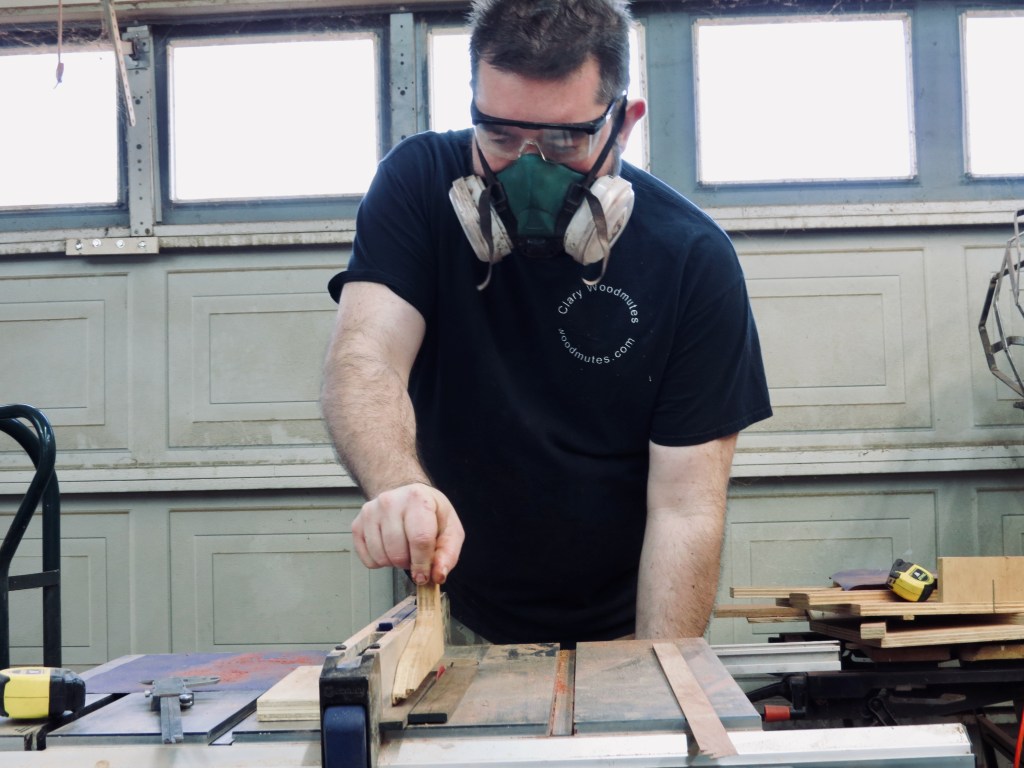
As the years went by, I met my now wife, we had a couple of children, and I decided to ‘get serious’! I went back to finish my music degree and also got a law degree. It was time for me to start thinking about other people! I practiced law for 15 years – I was still playing the trumpet at this time – at the weekends I would look for diversions or hobbies to take my mind off the work. I had always enjoyed carpentry and my dad was into construction – I started wood-working in my garage.
One day I decided to try to make a mute for my own fun, and that is how all of this started! It was just a simple wooden cone, I put corks on it and it kind of worked!
At what point did it move from just being a weekend thing?
It took a little while. I would gradually make more, and experiment along the way to get the sound right. I would take them to gigs and give some away to get feedback from different players. I learned a lot about the mutes, and then slowly I became more ambitious with it, and wanted to expand the range and figure out how to build a website!#00:10:37.18#
I wanted to make sure that they all looked pretty. Wood is beautiful, and I wanted these mutes to be as appealing to the eye as they are to the ear. It was probably 3-4 years from making my first mute to getting the website up and running. That was in February 2018.
When we met at ITG in May 2018, I got to see and try some of your straight mutes. Your range now looks huge! Has this expansion been part of a master plan, or is it more a case of making a custom order and then that making it into production?
Kind of a mixture of both. I’m the kind of person who is interested in lots of different things – I have been a trumpeter, an arranger, a sound engineer, a lawyer… I have changed careers frequently! The fact that I am 7-8 years into this mute adventure, and it still holds my interest is remarkable!! Part of that is coming up with new stuff. If I just confined myself to making straight mutes all of the time I would get super bored. My natural curiosity and need for variety drives me to always look at new things.
That must be an interesting and challenging design process with there not being many wooden mute ranges of this quality and aesthetic on the market? And not many alternatives to compare them with?
I was no acoustician or designer so everything I did was trial and error. I learnt how to work the shapes out of wood on Youtube! The design process was not exactly deliberate, ad some of it was taking an aluminium mute and analysing it, and seeing what I could apply to making a wooden mute. I just went day-by-day figuring it out.
Was there a lot of trial-and-error on the different types of wood?
Yes, that’s what made it really interesting. Learning what subtle differences the different materials make. Last week I made a comparison video of the 4 straight mutes that I make and you can really hear the subtle differences in the wood.
Were there any surprises that you encountered along the way? Any that you hoped would work but ended up in the scrap pile?!
My scrap pile is big! A lot of mutes made it in there, especially when I first started. I found it frustrating when things didn’t turn out as I intended. Along the way I have learned that it is just part of the process. I have learnt from my mistakes and bad choices!
You could say that there is no such thing as a mistake if you have ended up learning from it?
Very true! I think that I have also learned a lot about myself through this whole process – not thinking that you always have to be right or have immediate success. Life is a process!
How have you found building relationships with trumpeters through all of this?
It has been great. I have met a lot of really wonderful people, at shows like ITG and NTC, and also folks reaching out to me on the internet. It is wonderful, I feel extremely lucky to meet all these people and communicate with them. That has been one of the biggest positives – people all the time will suggest things and want to participate in the process. This is great for me, and I also want to get as much feedback on every mute as possible so that they can keep getting better.
As things get busier, how do you juggle everything now?
When I was still trying to practice law, and write music, and play the trumpet… that was challenging. Law school was the point where I really learnt how to manage my time. Ever since this pandemic hit, it has been easier to focus more on what is important. The trumpet playing and music writing has obviously disappeared, and I have had the chance to focus just on the trumpet mutes during this period. It has been positive in this way.
I will get up and drink some coffee with my family, then go into my workshop and make mutes for the day. And about 5pm I will come out and cook some dinner. The pandemic has had a horrible and devastating effect on the world, so it is important to try to acknowledge some positives too.
So what’s next?!
I found this really cool plywood online – thin veneered layers that are sandwiched together – with each layer dyed a different colour. I ordered some of this, and made up some mutes that look really great. I am going to do some limited edition stuff.
Visit woodmutes.com to find out more and to see the full range of great mutes that are available.
Sign up here for new blog articles emailed direct to your inbox:
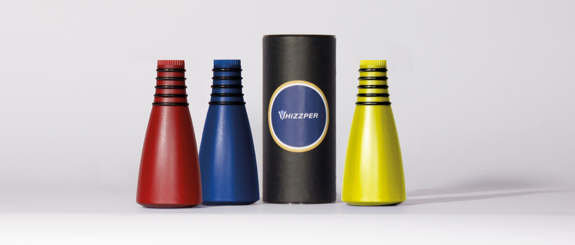
So, here is a really interesting new product that I have been sent through for review… The Vhizzper mute is the brainchild of Christoph Baerwind, trumpeter in ‘German Brass’ and ‘Der Orchester der Hamburgischen Staatsoper’. The essential concept is a practice mute that can also be used as a mouthpiece mute. This is not something that I have encountered before so was fascinated to give it a try.
This mute is adjustable so that you can alter the resistance level and volume. It also comes in 3 colours as pictured above! To start with I used it as a traditional mute. I spent a minute or so trying the different resistance/volume settings and found that I was most comfortable playing at the halfway point between closed and open. This seems to give the best balance for me, but even with the adjuster completely open, the volume is still nice and soft.
I have to confess that it took a little while to get to grips with this mute. Notes were not really where I was expecting them, and I did not really feel in control. However, what I found after a short while was that as soon as I backed off a bit and tried to imagine that there was no mute in, it became easy! I had been over-blowing, which I can only assume is the way that I have always subconsciously approached practice mutes in the past.
It is such a breath of fresh air, being able to blow naturally and keep the centre of the notes exactly where I want them. Once I got used to playing with less effort, even my low C was in tune – this has been sharp to varying degrees on every practice mute that I have ever played. Intonation and response across the range is also very even.
Not only is this a good tool for doing that essential practice when noisemaking is not convenient, I can also see it as a great training tool. Sometimes when faced with a student who just needs to get used to blowing more and keeping the throat open, I have prescribed short bursts of playing with a more traditional practice mute such as a Denis Wick, to add resistance to help with that. In contrast, I can see the Vhizzper being a really useful tool for helping students to develop their lower breathing muscles, and keeping really natural airflow and support.
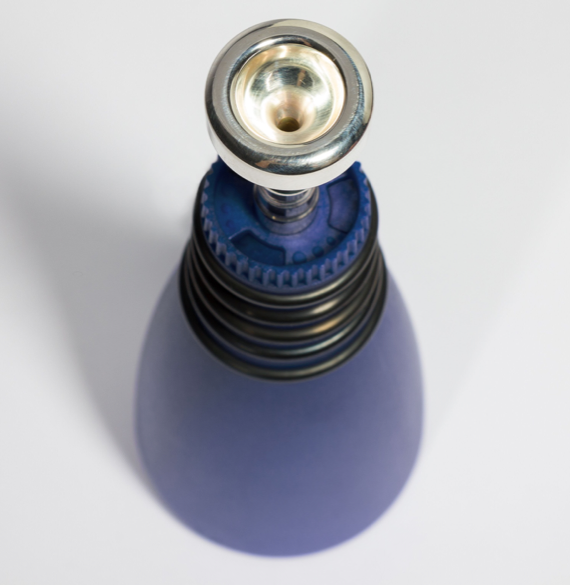
Next I set the adjuster to the closed position which seems to give the best response for me when using just with the mouthpiece (as pictured above). I have always liked to incorporate lots of free and mouthpiece buzzing into my practice and teaching. It can be a great way of really forcing you to concentrate on the absolute basics of breathing, control and blowing, without getting hung up on the sound. I have tried lots of buzzing aids including the Berp and the Buzzard and found them to have a really positive impact. The Vhizzper is another good product to add to this category.
It adds a little more resistance to your natural mouthpiece buzz so that it comes slightly closer to the feeling that you get when playing the trumpet. It also adds a little more resonance, which is surprising seeing as it is also muting the sound! This helped my general range for buzzing (I have always struggled to get a good natural buzz when playing in both extremes of high and low) and also naturally encourages you to support the airflow in the same way that you would want to play the trumpet.
In summary, I am very impressed! The very nature of a practice mute is that there is a large element of compromise. You are going to lose a level of response, intonation and natural vibration in return for a quieter sound. However, the Vhizzper keeps these compromises to a minimum, stacks up well against the alternatives on the market, and also gives you a valuable mouthpiece buzzing tool. It is certainly worthy of place in any trumpeter’s mute armoury!
Sign up here for new blog articles emailed direct to your inbox:
Used to distinguish new sessions and visits. This cookie is set when the GA.js javascript library is loaded and there is no existing __utmb cookie. The cookie is updated every time data is sent to the Google Analytics server.
30 minutes after last activity
__utmc
Used only with old Urchin versions of Google Analytics and not with GA.js. Was used to distinguish between new sessions and visits at the end of a session.
End of session (browser)
__utmz
Contains information about the traffic source or campaign that directed user to the website. The cookie is set when the GA.js javascript is loaded and updated when data is sent to the Google Anaytics server
6 months after last activity
__utmv
Contains custom information set by the web developer via the _setCustomVar method in Google Analytics. This cookie is updated every time new data is sent to the Google Analytics server.
2 years after last activity
__utmx
Used to determine whether a user is included in an A / B or Multivariate test.
18 months
_ga
ID used to identify users
2 years
_gali
Used by Google Analytics to determine which links on a page are being clicked
30 seconds
_ga_
ID used to identify users
2 years
_gid
ID used to identify users for 24 hours after last activity
24 hours
_gat
Used to monitor number of Google Analytics server requests when using Google Tag Manager
1 minute
_gac_
Contains information related to marketing campaigns of the user. These are shared with Google AdWords / Google Ads when the Google Ads and Google Analytics accounts are linked together.
90 days
__utma
ID used to identify users and sessions
2 years after last activity
__utmt
Used to monitor number of Google Analytics server requests