Advice · Education · Interview

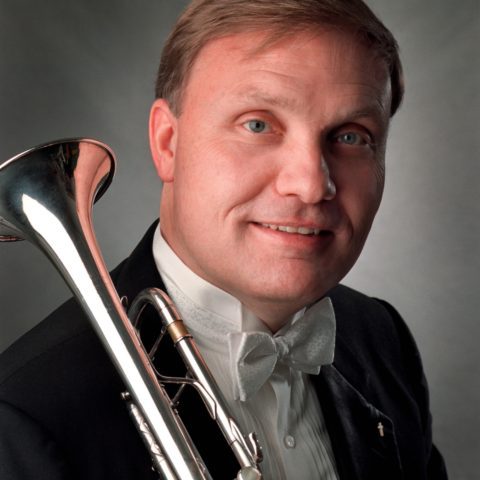
Trumpet Artist Profile: Philip Smith

At the ITG Conference 2018 I managed to meet with a number of great people to conduct interviews, none greater than Philip Smith!  Former Principal Trumpet with the New York Philharmonic, Phil shares his approach to both trumpet and cornet, and also speaks candidly about his recent experiences with Focal Dystonia.

How did you come to move from England to the US?

My father was a well-respected and successful Salvation Army cornet player.  In addition, after the war, he was Principal Cornet in the Royal Horse Guards, The Blues.  He had done a solo tour of Canada in the early 50s, and in post-war England, I guess the grass looked pretty green over there for a young family.  So, he moved us over there, and 3 years later we moved down to New York City.  My father worked for the [Salvation] Army and played principal cornet in the New York Staff Band, so I grew up on Long Island.

Was the cornet an obvious choice of instrument for you?

It wasn’t really a choice!  It was like, “This is what you do!”.  As I am sure that you are familiar in England, in the Salvation Army, when you get your second teeth, someone slaps an instrument in your hand and off you go.  It is usually a cornet until they figure out that you don’t have the aptitude, or the instrument doesn’t fit you, and then they start moving you down the band!

The Army is a great movement for maintaining music education isn’t it?  I am lucky where I live in the UK that there is a great youth band setup nearby for my son, but there is next to nothing going on in schools.  You have to know where to seek these opportunities out. Is it a similar situation in the USA?

It has just shifted. In our schools here, music is “dying” in the public education arena, but that is where you have to take up the slack.  Quite honestly that is what the Salvation Army has done in a lot of areas.  They have started teaching music, you are getting kids coming in through that, and hopefully families coming into the church.  Families into the church is the whole point.

At what point did you move from cornet onto the trumpet?

Growing up, all of my music was pretty much playing cornet in the Army and at school.  It wasn’t until 11th grade, when I was encouraged to start to think about my future career, and that music education would be a good fit for me, that I started to play some trumpet as well.  The trumpet that I got in 11th grade, in fact, is the very same B-flat trumpet that I still play today!

So, you are a music store’s worst nightmare then!?

Yes!  I have had it done up many times, including just recently.  It is an “old shoe” and that is what I love.

I then started the audition process, really geared up to look towards music education.  I believe it was Carole Dawn Reinhart – herself a soloist, great educator, and also grew up in the Salvation Army – that spoke to my father and suggested that I should audition for music schools. So I ended up going to Juilliard and that’s how I got started!

And was that totally trumpet from then on?

No, I still played cornet as I had a scholarship through the New York Staff Band.  To encourage students to continue to play in the band they would give small scholarships to help you complete your studies.  Playing with the band while I was at Juilliard was an integral part of my development – I was playing with them every week, and once a month I would be up playing solos with them in concert.  This was a great opportunity that a lot of other kids did not have.

I played trumpet at school, and my teacher’s role as I saw it, was to try to take me from being this sweet, ‘bel canto’, pretty-sounding cornet player, and teach me to be a more masculine-sounding trumpet player, and yet not take away other aspects.  So I was able to learn to play both ways!

How compatible are cornet and trumpet at the highest level?  Would you say that there are big technical differences to creating a great sound on both, or is it more a change in approach?

There is a difference in approach.  There was even a difference in approach between the Salvation Army bands, and the contesting brass bands.  A lot of that had to do with my dad – he had a slower vibrato “golden” tone, and that greatly influenced the tone of cornet playing in the USA.  That was therefore the kind of tone that I aimed for.  I am not saying that it was better than more traditional cornet players, just different.  For other players today, such as Philip Cobb, playing cornet and also playing in the London Symphony Orchestra, it is perhaps harder because they have to swing a little wider.  The difference between what we consider to be traditional cornet and traditional trumpet sound has certainly got wider in terms of concept and approach.

Can it be done?  Yeah, it can.  Should it be done?  Yeah, it should.

I was never more shocked than when I travelled over to London as a young professional, giving masterclasses at some of the colleges, and to see the anti-cornet feeling that I was getting from the trumpet players.

I have always found it strange in the UK that the colleges make students decide at age 18 between a ‘Brass Band’ course on cornet, or a trumpet course, and that the two are completely exclusive. Surely these are related disciplines that can be studied and performed side-by-side?

Yes.  Everything is the same, the overall approach, the technique.  In fact, the beauty of the growth of the British Brass Band movement in the USA at the moment is that we now have orchestral players saying, “Wow, look at this repertoire and the level of technique demanded of it!”.  It can only enhance your trumpet playing.  That was probably a signature of my career in that my sound could be strong and strident and still be “cornetty”.  And so much orchestral repertoire demands those two different styles, just look at those beautiful cornet-style melodies in Mahler, and then “wham” you’re back into the big strong trumpet sounds and “zing”again.

And especially in England where there is a great history of fantastic cornet players becoming great principal trumpets, there should never be that separation.

VISIT THE ‘EDUCATIONAL RESOURCES’ PAGE FOR FREE WORKSHEETS AND LINKS TO PUBLICATIONS

Through your career, how important has the idea of a strict ‘practice routine’ been to you?

When I was younger, I never had one.  I just played.  As I havegrown older, fundamentals have become more important out of necessity.  I think the structure of routine can be really beneficial.  You also need to remain flexible for whatever can be thrown at you.  When I was in the Philharmonic, I always had some outside solo event to plan for and spur me on.  Then there was always new orchestral music.  My practice time was generally spent getting that stuff ready, and I did not think too much about the shift in styles, I just played.  That said, orchestral trumpet and solo trumpet shape are two very different things – it is a little bit like being a jazz player and classical player.  Someone like Wynton could play terrific classical trumpet too, but eventuallyeven he had to make a choice.  It can be very hard to maintain two distinctly different ways of playing and practicing over the long-term.

As to fundamentals, I started to discover various different methods and study books.  It is all wonderful stuff, and it is all definitely helpful at different times.  If you are not careful though, you can get sidetracked from the key aspect which is just to PLAY.

Can you talk a little about your recent experience with Focal Dystonia?

Four years ago, I got hit with it, and I basically couldn’t play a note.  I have had to re-teach myself how to play over the last four years, and quite honestly it has been hell.  I wish I could say what triggered it, but I don’t know. I have had people say to me “I can’t believe that you lost your lip” or “I can’t believe you lost your nerve”, and it was neither of those things.  Something happened that took what I knew and wiped it off the map.  I have had to re-teach myself what to do, and in some ways, I have needed to be more ‘fundamentally’ focused, and in other ways I have had to erase everything that I thought I knew as an experienced trumpet person and approach the instrument like I am 7 years old.  That has been difficult!

You just go through the basics – blow air through lips that vibrate and keep everything else out of the way.  And then not obsessing on finding that embouchure “sweet spot,”but to just place the mouthpieceover the natural aperture.  It didn’t feel anything like my proper embouchure, but I had to erase that thought.  The first note that I got was a huge fat middle C, and I felt that I could stick my pinky through the aperture!  But then the next thought was, “How do I get to a D?”. I have had to approach it like a beginner again and build one step at a time.

Having trumpet-playing taken away from me four years ago was like going through a death.  God and I (well me to God) had some strong words!  Seeing the specialist who told me that I was going to have to find myself a new career, and then going and sitting in my car in shock – it was unimaginable to me.

The process has been a case of learning one very small step at a time.  I have had an internal faith to press on, and I have a certain, quiet stubbornness that says “OK, I am going to keep trying”.  Believe me there has been frustration and depression and all of that, but with Practice, Perseverance, Patience and Prayer, those four elements have moved me forwards day-by-day.  I have swung between wanting to throw the whole thing away, and wanting to keep going even stronger.  My goal is to be better today than I was yesterday, without looking back at the player that I was.

How have the past four years influenced your approach to teaching now?

You know, as a man of faith, I believe God provided at just the right time.  Just as my time ended at the Philharmonic, the opportunity arose to teach at the University of Georgia, and I do not think that was a coincidence.  I have been given the opportunity to share all of the experience and knowledge that I have, with kids that I have grown to love.  At the same time I have been able to spend time on my own, out of the limelight, trying to put Humpty together again.

I have loved it with the kids.  Going through Focal Dystonia has definitely impacted the way that I teach.  One of the main things is that it has given me a little more patience.  You will have to ask them what they think though!

What are the priorities for your students to concentrate on?

The first thing is ‘quality of sound’ and ‘beauty of tone’.  Try to get a tone that is rich and full and free.  Obviously, each student comes in with individual issues, but I start with good fundamental technique.  And this very much mirrors what I have had to do myself recently too.  Technique is important but gets you nowhere without a great sound.  Sitting on audition panels behind a screen, there is nothing like that moment when a player’s first note grabs the whole committee, and you see twelve people suddenly wide-eyed, shaken out of their slumber, and wanting to hear more!

I am imagining this to be a tricky question for you, but are there any particular highlights that really stand out from your illustrious performing career?

I have been blessed, I feel like I have lived a fairy tale.  For a Salvation Army kid to go to Juilliard, knowing very little about the world, not being able to transpose, never getting into any orchestras… I wanted to leave Juilliard after my first year because I didn’t feel like I really fit in and didn’t like all of the competitive ‘peacocking’ that was going on.  And from there, to join the Chicago Symphony and then join the New York Philharmonic, see the world, play with great musicians, great conductors… I can’t tell you how blessed I am.

What advice would you give to young aspiring players?

Think a little less of yourself, listen to as much great music as you can and try to copy all of your heroes. In the process of copying, your own personality will blossom out of you.  Sing… sing… sing, with a beautiful sound.  You have found the gift that you enjoy.  Be willing to share it with other people.


Sign up here for new blog articles emailed direct to your inbox:


Advice · Education

How can we develop jazz vocabulary?

An article by Darren Lloyd of JazzEtudes.net

What have our favourite players practiced to sound so great?

What secrets have they learnt to improvise so melodically and effortlessly?

Well, I can tell you from personal experience of working and studying with many great players is that they have developed their jazz vocabulary!

A great way to do this is by listening to the greats of the music.

As Clark Terry used to say – Imitate, Assimilate, Innovate.

Many of the wonderful players that we listen to have taken jazz vocabulary and made it there own, sometimes by adding other great players’ in fluences or by practicing language and vocabulary so much that they start to hear their own things to play. The more you develop the skills of practicing vocabulary, especially in all 12 keys, the more you develop your own aural skills and imagination. Developing the skill of instantly being able to play what you hear in your head is what every musician wants but how is this achieved?

To hear wonderful jazz phrases in our heads, we must practice the language or vocabulary of the masters of the music, if we don’t, we can still improvise but it has a real chance of not sounding authentic!

If you are new to improvising and developing your aural skills, here is an exercise you can start doing straight away to develop

1. What you hear
2. The ability to play it.

I would recommend staring off with extremely simple tunes, like a nursery rhyme! I have created a short YouTube video on this subject using ‘Twinkle twinkle little star’ as the tune to practice.

Try and play it, starting on various different notes (all 12 keys would be best). At first it may prove quite a challenge, especially in the more unfamiliar keys!

By doing this, you develop the ability to play what you hear in your head!

The next thing to do it to try and learn (really well) either a simple jazz tune (when the Saints is pretty simple) or if you feel you are ready, learn 8 bars of your favourite solo by your favourite player! This is the imitate part! Play it over and over until it is very easy! Next, either chromatically or in a cycle of 5ths or 4ths (depends if you are going up or down), learn it fluently in all the other keys! This really well prove to be frustrating at first, but the more you do it, the easier it becomes, especially if studying one player.

Once you have learnt an 8 bar phrase, keep going until you can play the whole solo. You don’t have to play the whole solo in all 12 keys, just the parts you really like. This is the assimilate part! By building up an armoury of phrases & vocabulary, you will always have something to play, the more you have, the better your solos will be. Especially by working out why some phrases sound so good.

Once you have practiced and can fluently play lots of your favourite phrases, analyse them, work out why it sounds so good. This is the innovate part. What is it about the phrase you like? Could it be rhythmic, melodic…? What ever it is, try to create your own phrases using the techniques that they have! This will help us to not simply copy and paste other musicians licks, endlessly into out own solos! There are many that do it, try not to be one of them!

For me, the best jazz musicians are those who play beautiful, endless melodic phrases without (it seems) ever playing licks! Why do they sound so good? Well they are still using the vocabulary that makes jazz sound so great, they are just so imaginative and have endless creativity! They also have wonderful ears and play/outline the changes very well. If you listened to a solo of Clifford Brown with any rhythm section, you would still hear the chords being outlined in his solos! The same with Chet Baker, Bobby Shew, Blue Mitchell, Chuck Findley, Warren Vache……

If your current ability is not up to playing the music of these amazing players, I have created jazz etudes, with the beginner/intermediate player in mind. Jazz etudes, written over famous chord sequences (jazz standards) and in different genres including, dixieland, bebop, standards and latin (bossanova).

When we are learning the phrases, we are learning to speak the language of jazz, the correct grammar if you will. We want to make sense when we solo.

This is a music that takes a lifetime to master. We should be constantly challenging ourselves with different ways to approach our practice of improvisation and solos.

I don’t know when it happens but there does come a time when you do start to hear authentic things in your head. The more you practice and the more you listen to the and study the greats of the music, the more chance you have to create beautiful sounding solos yourself.

Just remember that Rome wasn’t built in a day and you have your whole life to work at this wonderful music! Be patient with yourself, seek out great players and teachers to learn from, transcribe solos and work your favourite phrases into your own playing, try to play together with other musicians too (ones that are much better but supportive if possible). You should also learn to spell out the chords and scales on your instruments too, this will prove invaluable in helping you to get around the chord changes.

I hope you find this article informative and helpful.

Warm regards, Darren Lloyd


SIGN UP HERE FOR NEW BLOG ARTICLES EMAILED DIRECT TO YOUR INBOX:

[jetpack_subscription_form show_subscribers_total=”false” button_on_newline=”false” custom_font_size=”16″ custom_border_radius=”0″ custom_border_weight=”1″ custom_padding=”15″ custom_spacing=”10″ submit_button_classes=”” email_field_classes=”” show_only_email_and_button=”true”]

Advice · Education

Mental Practice Preparation

Mental practice preparation” – Getting ourselves in the right frame of mind, and then planning and executing our practice goals – an article by Sam Neufeld of ‘Trumpet Warmup’.

2020 was difficult at times to stay motivated to practice. Gigs dried up and so did motivation to keep our chops together. Luckily there are some things we can do to get back on track.

Here are three strategies I am using in 2021 that you can use too:

  1. Set the bar low
  2. Remove distraction
  3. Track progress

Overall the name of the game is to develop consistency.

Let’s break it down…

  1. Setting the bar low for practice time.

A couple weeks ago, my friend mentioned he was going to start working out everyday. Last year he worked out only a handful of times and wanted to change that. I asked him, “how certain are you that you can workout seven days a week? Are you 100% certain that you won’t miss a single day?”

Well, of course the answer was no. He could not say with complete confidence that he’d not miss a single day especially since his previous track record was so different.

I said to him “Instead of attempting to workout everyday, start with something you know you’ll complete with 100% certainty.” 

Set the bar SO LOW that you cannot fail. This is a strategy that’s worked wonders for me in the past and I am using it this year to start practicing consistently again and improve my trumpet playing. I missed somewhere between 30-60 days last year and because of it my playing suffered. In order to get back on track, I’ve set the bar low by pledging to practice everyday for at least 5 minutes. There will be days that I practice 2+ hours, but 5 minutes minimum per day gets me back on track towards forming the daily habit of practicing.

  1. Remove distraction from the practice space.

Where do you practice currently? During Covid-19 times, it’s likely a bedroom or office space. If you’re lucky – an isolated practice space or garage. But, you don’t need a separate/isolated room. What may help you most is a dedicated practice space. Somewhere you have everything needed to complete a successful practice session.

In this space you need:

  • Mirror
  • Tuner
  • Trumpet stand
  • Music stand
  • Chair
  • Water bottle

Optional:

  • Computer or tv
  • Camera
  • Microphone
  • Mutes
  • Coffee
  • Other trumpet gadgets

I treat this like going to the gym. What do you bring with you before leaving for the gym? Water bottle, change of clothes, shampoo, etc… Treat practicing the same way this year. Don’t let the fact that you’re stuck in your apartment next to your tv distract you. Remove the distractions physically if possible, but more importantly – mentally.

  1. Record video and audio to track progress.

Accountability is a great motivator for staying true to your goal. If you have a private teacher, this is one form of accountability. Your teacher adds pressure to practice each week that wouldn’t otherwise be there.

Here’s another form of accountability that you may not already be utilizing: Instagram.

Create an account dedicated to practicing. Post your videos even if they suck. Get over the fear of “what will so-and-so think”. This is about improving over time, not sounding good every single day. You don’t have to like other people’s posts or comment fire emojis if you don’t want to. Although I suspect over time you will end up finding a friendly community of like-minded trumpet players that you enjoy engaging with.

By posting to Instagram, you will have accountability and a practice log. Months or years later you can analyze your past videos to see if you’ve actually improved or not! 

So this is my strategy for 2021. It’s time to get back on track. 

Follow me – @samneufeldtrumpet on Instagram

Follow – @trumpetwarmup on Instagram

Thoughts or questions? Email me at [email protected]. I love to chat 🙂


Sign up here for new blog articles emailed direct to your inbox:

[jetpack_subscription_form show_subscribers_total=”false” button_on_newline=”false” custom_font_size=”16″ custom_border_radius=”0″ custom_border_weight=”1″ custom_padding=”15″ custom_spacing=”10″ submit_button_classes=”” email_field_classes=”” show_only_email_and_button=”true”]

Advice · Education · Interview

Trumpet Warmup

Trumpet Warmup is a great new online portal for trumpet players, allowing you to customise your routine with the aid of resources from top artists and educators. Sam Neufeld, the website’s founder, speaks to me here about his exciting new venture.

Can you give a little background to your relationship with the trumpet?

At six years old, I heard my dad playing Clifford Brown, Miles Davis, and Lee Morgan frequently on his stereo. There was something about the trumpet that enthralled me at a young age. I wanted to do what they were doing.

Throughout middle school and high school, I took quickly to improvisation and jazz. My trumpet technique, however, held me back. Endurance and range were my biggest issues and at 16 years old my new teacher persuaded me to change my embouchure.

The whole process left me with a bad case of “paralysis through analysis” for years to follow.

Not until recently did I realize how consistent I need to be with my warmup and daily routine.

In my mind, trumpet technique is analogous to strength training. One month of deadlifting and squats everyday will set you on the right track, but you have to keep it up consistently for months and years to see noticeable results. Similarly, the trumpet takes lots of focus and deliberate practice over many years to develop proper technique and strength. That’s what I’m focusing on now. I’m excited for the day I am able to play a 3 hour gig and feel strong or stronger at the end of the night.

What prompted you to setup Trumpet Warmup?

To put it simply I wanted it for my own practising. I was unable to find something that would suit my needs. I wanted a video play-along routine that would allow me to practice back and forth a pro. I also wanted to have the ability to switch between different artists’ routines.

Over the past 5 years, I’ve worked freelance in videography, photography, and website design. I knew that I had the skills to make it happen with little up-front cost – so why not give it a shot and scratch my own itch?

Who is it aimed at?

Trumpet Warmup is aimed at the intermediate trumpet player. A high school student or an amateur will benefit most from Trumpet Warmup.

There will be some value for the pro or the beginner, but it’s aimed at the intermediate player for now.

What are the key elements that set it apart from other platforms?

The video (quality and presentation) sets it apart. I’ve spent a lot of time crafting a look that will engage the user and allow them to see the artist’s embouchure and posture. It’s meant to feel like you are practicing with the pro.

What new developments are you currently working on?

Content, content, content. I started Trumpet Warmup a few weeks before COVID-19 lockdowns began, which threw things off track. I’m back on track now and working hard to crank out the content so there is something for every user.

How can readers find out more?

If you’ve made it this far, I just have one ask. Please sign up for the newsletter by visiting www.trumpetwarmup.com. It’ll take a few seconds and would mean a lot to me. If you have any comments, questions, or feedback – please send me an email to [email protected]


Sign up here for new blog articles emailed direct to your inbox:

[jetpack_subscription_form show_subscribers_total=”false” button_on_newline=”false” submit_button_text=”Sign up” custom_font_size=”16″ custom_border_radius=”0″ custom_border_weight=”1″ custom_padding=”15″ custom_spacing=”10″ submit_button_classes=”” email_field_classes=”” show_only_email_and_button=”true”]

Gear Review

Vhizzper : Mute Review

So, here is a really interesting new product that I have been sent through for review… The Vhizzper mute is the brainchild of Christoph Baerwind, trumpeter in ‘German Brass’ and ‘Der Orchester der Hamburgischen Staatsoper’.   The essential concept is a practice mute that can also be used as a mouthpiece mute.   This is not something that I have encountered before so was fascinated to give it a try.
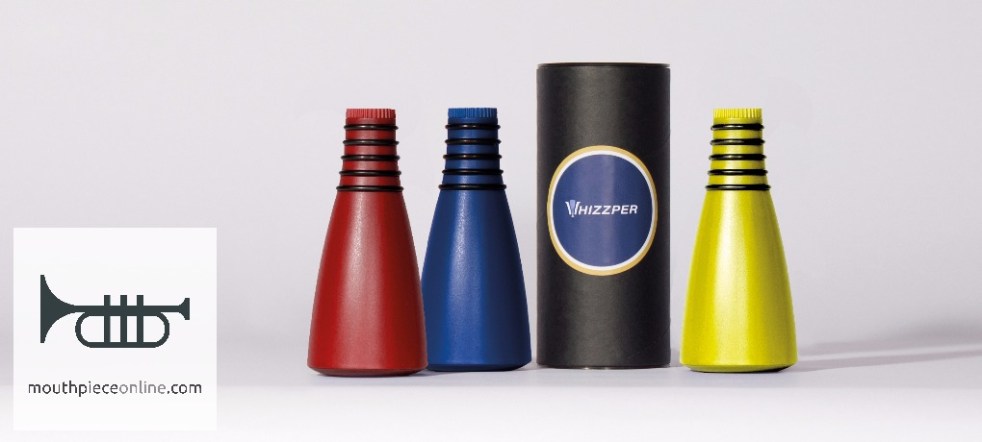
This mute is adjustable so that you can alter the resistance level and volume. It also comes in 3 colours as pictured above! To start with I used it as a traditional mute. I spent a minute or so trying the different resistance/volume settings and found that I was most comfortable playing at the halfway point between closed and open. This seems to give the best balance for me, but even with the adjuster completely open, the volume is still nice and soft.

I have to confess that it took a little while to get to grips with this mute. Notes were not really where I was expecting them, and I did not really feel in control. However, what I found after a short while was that as soon as I backed off a bit and tried to imagine that there was no mute in, it became easy! I had been over-blowing, which I can only assume is the way that I have always subconsciously approached practice mutes in the past.

It is such a breath of fresh air, being able to blow naturally and keep the centre of the notes exactly where I want them. Once I got used to playing with less effort, even my low C was in tune – this has been sharp to varying degrees on every practice mute that I have ever played. Intonation and response across the range is also very even.

Not only is this a good tool for doing that essential practice when noisemaking is not convenient, I can also see it as a great training tool. Sometimes when faced with a student who just needs to get used to blowing more and keeping the throat open, I have prescribed short bursts of playing with a more traditional practice mute such as a Denis Wick, to add resistance to help with that. In contrast, I can see the Vhizzper being a really useful tool for helping students to develop their lower breathing muscles, and keeping really natural airflow and support.

Next I set the adjuster to the closed position which seems to give the best response for me when using just with the mouthpiece (as pictured above). I have always liked to incorporate lots of free and mouthpiece buzzing into my practice and teaching. It can be a great way of really forcing you to concentrate on the absolute basics of breathing, control and blowing, without getting hung up on the sound. I have tried lots of buzzing aids including the Berp and the Buzzard and found them to have a really positive impact. The Vhizzper is another good product to add to this category.

It adds a little more resistance to your natural mouthpiece buzz so that it comes slightly closer to the feeling that you get when playing the trumpet. It also adds a little more resonance, which is surprising seeing as it is also muting the sound! This helped my general range for buzzing (I have always struggled to get a good natural buzz when playing in both extremes of high and low) and also naturally encourages you to support the airflow in the same way that you would want to play the trumpet.

In summary, I am very impressed! The very nature of a practice mute is that there is a large element of compromise. You are going to lose a level of response, intonation and natural vibration in return for a quieter sound. However, the Vhizzper keeps these compromises to a minimum, stacks up well against the alternatives on the market, and also gives you a valuable mouthpiece buzzing tool. It is certainly worthy of place in any trumpeter’s mute armoury!


Sign up here for new blog articles emailed direct to your inbox:

[jetpack_subscription_form show_subscribers_total=”false” button_on_newline=”false” submit_button_text=”Sign up” custom_font_size=”16″ custom_border_radius=”0″ custom_border_weight=”1″ custom_padding=”15″ custom_spacing=”10″ submit_button_classes=”” email_field_classes=”” show_only_email_and_button=”true”]

Advice · Gear Review

Buying Guide : Practice Mutes

Practice Mutes have become accepted as a necessary evil for brass players.  They are not an ideal way of preparing yourself, however there are times where we all accept that you just need to practice or warm-up quietly.  Listed below are a number of mutes currently available that will all do the job.  They will all have different strengths though, so I have tried to demystify them somewhat with this ‘Buying Guide’.

NB. The prices listed here are meant as a guide and are subject to change.

Vhizzper Practice Mute and Buzzing Aid

I have put this at the top because it is by far the best practice aid that I have come across. A great mute that does not allow you to overflow while practising, and also has a built-in mouthpiece buzzing aid. Around $80, worth every penny!

Sshhmute Practice Mute for Trumpet

A really great lightweight and responsive mute.  The intonation is pretty good across the range. Low C and below tends to be slightly sharp as with pretty much all practice mutes, however this is better than most.  Priced at just $50, this is a really good all-rounder.

sshhmute

Sshhmute Practice Mute for Piccolo Trumpet

Lightweight, robust and actually surprisingly free-blowing for a piccolo practice mute.  A good buy at $50.

sshhmutepiccolo

Sshhmute Whisper Mute for Trumpet

As with the other Sshhmutes, this has very low resistance and a nice quick response.  The Whisper Mute has a lovely soft tone that can also be used in a section where a real muted pianissimo is required.  Again, a good buy at $50.

sshhmutewhisper

Trumcor Trumpet Lyric Stealth Mute

This is not the quietest practice mute on the market, however it is one of the most even and allows you to blow pretty honestly.  This is a great hotel room tool!  $60 for this one.

trumcor-lyric-stealth

Brass Spa Trumpet Practice Mute

This is extremely decent especially considering its modest price tag of $35.  Back pressure is pretty low, cutting down on over-blowing, and intonation as also surprisingly good for the price point.

brassspatrumpetpracticemute-a

Best Brass Trumpet Practice Mute

This is an excellent compact mute that only just protrudes from the bell.  You do not get a feeling of ‘battling’ this mute as it feels really natural.  It is quieter than most and also has decent intonation. $94.99

bestbrasstrumpetwarmupmutethumb

Best Brass Jr. Trumpet Practice Mute Ebrass

This is a plastic (and therefore lighter) version of Best Brass’ practice mutes.  There are some small compromises in resistance and tuning compared to its big brother, however this is reflected in the lower price of $54.99, and it is still a darn good mute!

bestbrassjrsmall

Trumcor Trumpet Super Stealth Mute

Like the Lyric Stealth, this has a nice even response across all registers and dynamics.  It is softer however, so inevitably has slightly more resistance. $45

trumcor-super-stealth

Softone Mute for Brass – Trumpet

This lightweight neoprene will fit easily in any case and is great for travelling.  There are a number of sponge ring inserts so that you can adjust the volume and resistance levels.  It also doubles up as a very compact bucket mute by hanging it over the bell of your horn.  Even if you already have a preferred general practice or warm-up mute, this is something a little different that will always have a use. $39.99

Softone Mute

Trumcor Piccolo Trumpet Stealth Mute

This is very quiet and perfect for that ‘back of the church’ warm-up.  $40

trumcor-piccolo-stealth

Denis Wick Trumpet Practice Mute

Let’s face it, all of us have probably had one of these classics at some point!  A good solid all-rounder that allows for a quiet warm-up. The intonation is perhaps not quite as good as some of the newer designs on the market, however still a good mute for the price. $42.95

Wick Practice Mute

Jo-ral Trumpet Practice Mute

This is not the quietest mute on the market, however the intonation across the range is very good. $46.99

joral-trumpet-practice-mute-tpt1p-1

Yamaha SB7XC Silent Brass System for Trumpet

The Silent Brass system has been around for a while now, and the latest pickup mute is very good indeed.  Now fitting completely into the bell for storage, the intonation, response and quiet volume are all very good.  Even at the price of $189.99, the sharpness in the lower register has not been completely eliminated, however the digital technology that comes packed inside the Personal Studio, and the acoustic environment that it creates are exceptional.

yamahasilentbrass-1


Sign up here for new blog articles emailed direct to your inbox:

[jetpack_subscription_form show_subscribers_total=”false” button_on_newline=”false” submit_button_text=”Sign up” custom_font_size=”16″ custom_border_radius=”0″ custom_border_weight=”1″ custom_padding=”15″ custom_spacing=”10″ submit_button_classes=”” email_field_classes=”” show_only_email_and_button=”true”]