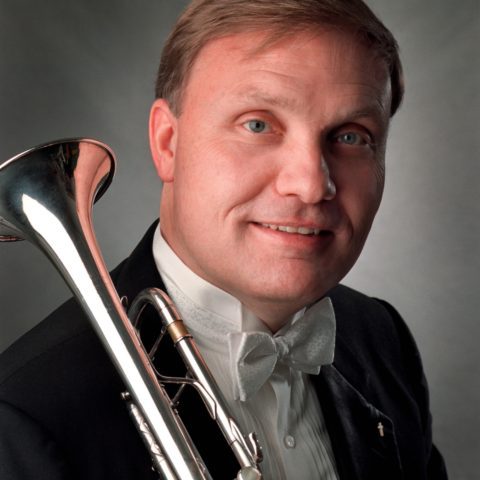
At the ITG Conference 2018 I managed to meet with a number of great people to conduct interviews, none greater than Philip Smith! Former Principal Trumpet with the New York Philharmonic, Phil shares his approach to both trumpet and cornet, and also speaks candidly about his recent experiences with Focal Dystonia.
How did you come to move from England to the US?
My father was a well-respected and successful Salvation Army cornet player. In addition, after the war, he was Principal Cornet in the Royal Horse Guards, The Blues. He had done a solo tour of Canada in the early 50s, and in post-war England, I guess the grass looked pretty green over there for a young family. So, he moved us over there, and 3 years later we moved down to New York City. My father worked for the [Salvation] Army and played principal cornet in the New York Staff Band, so I grew up on Long Island.
Was the cornet an obvious choice of instrument for you?
It wasn’t really a choice! It was like, “This is what you do!”. As I am sure that you are familiar in England, in the Salvation Army, when you get your second teeth, someone slaps an instrument in your hand and off you go. It is usually a cornet until they figure out that you don’t have the aptitude, or the instrument doesn’t fit you, and then they start moving you down the band!
The Army is a great movement for maintaining music education isn’t it? I am lucky where I live in the UK that there is a great youth band setup nearby for my son, but there is next to nothing going on in schools. You have to know where to seek these opportunities out. Is it a similar situation in the USA?
It has just shifted. In our schools here, music is “dying” in the public education arena, but that is where you have to take up the slack. Quite honestly that is what the Salvation Army has done in a lot of areas. They have started teaching music, you are getting kids coming in through that, and hopefully families coming into the church. Families into the church is the whole point.
At what point did you move from cornet onto the trumpet?
Growing up, all of my music was pretty much playing cornet in the Army and at school. It wasn’t until 11th grade, when I was encouraged to start to think about my future career, and that music education would be a good fit for me, that I started to play some trumpet as well. The trumpet that I got in 11th grade, in fact, is the very same B-flat trumpet that I still play today!
So, you are a music store’s worst nightmare then!?
Yes! I have had it done up many times, including just recently. It is an “old shoe” and that is what I love.
I then started the audition process, really geared up to look towards music education. I believe it was Carole Dawn Reinhart – herself a soloist, great educator, and also grew up in the Salvation Army – that spoke to my father and suggested that I should audition for music schools. So I ended up going to Juilliard and that’s how I got started!
And was that totally trumpet from then on?
No, I still played cornet as I had a scholarship through the New York Staff Band. To encourage students to continue to play in the band they would give small scholarships to help you complete your studies. Playing with the band while I was at Juilliard was an integral part of my development – I was playing with them every week, and once a month I would be up playing solos with them in concert. This was a great opportunity that a lot of other kids did not have.
I played trumpet at school, and my teacher’s role as I saw it, was to try to take me from being this sweet, ‘bel canto’, pretty-sounding cornet player, and teach me to be a more masculine-sounding trumpet player, and yet not take away other aspects. So I was able to learn to play both ways!
How compatible are cornet and trumpet at the highest level? Would you say that there are big technical differences to creating a great sound on both, or is it more a change in approach?
There is a difference in approach. There was even a difference in approach between the Salvation Army bands, and the contesting brass bands. A lot of that had to do with my dad – he had a slower vibrato “golden” tone, and that greatly influenced the tone of cornet playing in the USA. That was therefore the kind of tone that I aimed for. I am not saying that it was better than more traditional cornet players, just different. For other players today, such as Philip Cobb, playing cornet and also playing in the London Symphony Orchestra, it is perhaps harder because they have to swing a little wider. The difference between what we consider to be traditional cornet and traditional trumpet sound has certainly got wider in terms of concept and approach.
Can it be done? Yeah, it can. Should it be done? Yeah, it should.
I was never more shocked than when I travelled over to London as a young professional, giving masterclasses at some of the colleges, and to see the anti-cornet feeling that I was getting from the trumpet players.
I have always found it strange in the UK that the colleges make students decide at age 18 between a ‘Brass Band’ course on cornet, or a trumpet course, and that the two are completely exclusive. Surely these are related disciplines that can be studied and performed side-by-side?
Yes. Everything is the same, the overall approach, the technique. In fact, the beauty of the growth of the British Brass Band movement in the USA at the moment is that we now have orchestral players saying, “Wow, look at this repertoire and the level of technique demanded of it!”. It can only enhance your trumpet playing. That was probably a signature of my career in that my sound could be strong and strident and still be “cornetty”. And so much orchestral repertoire demands those two different styles, just look at those beautiful cornet-style melodies in Mahler, and then “wham” you’re back into the big strong trumpet sounds and “zing”again.
And especially in England where there is a great history of fantastic cornet players becoming great principal trumpets, there should never be that separation.
Through your career, how important has the idea of a strict ‘practice routine’ been to you?
When I was younger, I never had one. I just played. As I havegrown older, fundamentals have become more important out of necessity. I think the structure of routine can be really beneficial. You also need to remain flexible for whatever can be thrown at you. When I was in the Philharmonic, I always had some outside solo event to plan for and spur me on. Then there was always new orchestral music. My practice time was generally spent getting that stuff ready, and I did not think too much about the shift in styles, I just played. That said, orchestral trumpet and solo trumpet shape are two very different things – it is a little bit like being a jazz player and classical player. Someone like Wynton could play terrific classical trumpet too, but eventuallyeven he had to make a choice. It can be very hard to maintain two distinctly different ways of playing and practicing over the long-term.
As to fundamentals, I started to discover various different methods and study books. It is all wonderful stuff, and it is all definitely helpful at different times. If you are not careful though, you can get sidetracked from the key aspect which is just to PLAY.
Can you talk a little about your recent experience with Focal Dystonia?
Four years ago, I got hit with it, and I basically couldn’t play a note. I have had to re-teach myself how to play over the last four years, and quite honestly it has been hell. I wish I could say what triggered it, but I don’t know. I have had people say to me “I can’t believe that you lost your lip” or “I can’t believe you lost your nerve”, and it was neither of those things. Something happened that took what I knew and wiped it off the map. I have had to re-teach myself what to do, and in some ways, I have needed to be more ‘fundamentally’ focused, and in other ways I have had to erase everything that I thought I knew as an experienced trumpet person and approach the instrument like I am 7 years old. That has been difficult!
You just go through the basics – blow air through lips that vibrate and keep everything else out of the way. And then not obsessing on finding that embouchure “sweet spot,”but to just place the mouthpieceover the natural aperture. It didn’t feel anything like my proper embouchure, but I had to erase that thought. The first note that I got was a huge fat middle C, and I felt that I could stick my pinky through the aperture! But then the next thought was, “How do I get to a D?”. I have had to approach it like a beginner again and build one step at a time.
Having trumpet-playing taken away from me four years ago was like going through a death. God and I (well me to God) had some strong words! Seeing the specialist who told me that I was going to have to find myself a new career, and then going and sitting in my car in shock – it was unimaginable to me.
The process has been a case of learning one very small step at a time. I have had an internal faith to press on, and I have a certain, quiet stubbornness that says “OK, I am going to keep trying”. Believe me there has been frustration and depression and all of that, but with Practice, Perseverance, Patience and Prayer, those four elements have moved me forwards day-by-day. I have swung between wanting to throw the whole thing away, and wanting to keep going even stronger. My goal is to be better today than I was yesterday, without looking back at the player that I was.
How have the past four years influenced your approach to teaching now?
You know, as a man of faith, I believe God provided at just the right time. Just as my time ended at the Philharmonic, the opportunity arose to teach at the University of Georgia, and I do not think that was a coincidence. I have been given the opportunity to share all of the experience and knowledge that I have, with kids that I have grown to love. At the same time I have been able to spend time on my own, out of the limelight, trying to put Humpty together again.
I have loved it with the kids. Going through Focal Dystonia has definitely impacted the way that I teach. One of the main things is that it has given me a little more patience. You will have to ask them what they think though!
What are the priorities for your students to concentrate on?
The first thing is ‘quality of sound’ and ‘beauty of tone’. Try to get a tone that is rich and full and free. Obviously, each student comes in with individual issues, but I start with good fundamental technique. And this very much mirrors what I have had to do myself recently too. Technique is important but gets you nowhere without a great sound. Sitting on audition panels behind a screen, there is nothing like that moment when a player’s first note grabs the whole committee, and you see twelve people suddenly wide-eyed, shaken out of their slumber, and wanting to hear more!
I am imagining this to be a tricky question for you, but are there any particular highlights that really stand out from your illustrious performing career?
I have been blessed, I feel like I have lived a fairy tale. For a Salvation Army kid to go to Juilliard, knowing very little about the world, not being able to transpose, never getting into any orchestras… I wanted to leave Juilliard after my first year because I didn’t feel like I really fit in and didn’t like all of the competitive ‘peacocking’ that was going on. And from there, to join the Chicago Symphony and then join the New York Philharmonic, see the world, play with great musicians, great conductors… I can’t tell you how blessed I am.
What advice would you give to young aspiring players?
Think a little less of yourself, listen to as much great music as you can and try to copy all of your heroes. In the process of copying, your own personality will blossom out of you. Sing… sing… sing, with a beautiful sound. You have found the gift that you enjoy. Be willing to share it with other people.
Sign up here for new blog articles emailed direct to your inbox:
I think that the concept of a saxophonist and former violinist becoming one of the most well-respected and well-known trumpet (and brass) teachers is a fascinating one. His callisthenic approach will be well-known to many readers through his publications, but in addition to this concentration on the physical synchronisation of different muscle groups, he also built a reputation on positivity and for really nurturing his students.
So many top players over the years attribute a huge portion of their success to Carmine Caruso – I was fortunate enough to be able to gather the thoughts of four of these fabulous players, in order to get to the bottom of how their experiences with Carmine influenced them and their careers: Marvin Stamm, John Thirkell, Randy Brecker and Markus Stockhausen.
MARVIN STAMM: I had just settled in New York City in late 1966 and was beginning to be a part of the jazz and studio scene. I mentioned to friend and fellow trumpet player Burt Collins that I wanted to continue to study and work on certain aspects of my playing. Coming off the road, I was bothered by a few things that I felt needed to be addressed. Burt told me about his study with Carmine, that he was a trouble-shooter and problem-solver. He also mentioned a number of players who had been helped through studying with Carmine, among them the great lead player Al Porcino and others, and he felt Carmine would be the teacher to see.
JOHN THIRKELL: I was at Leeds College of Music when I first came across the Caruso Method. I had studied several other method books – Claude Gordon, Louis Maggio etc. – but something about the concise and prescriptive nature of the Caruso appealed to my sensibilities. Do A and B will happen, then do C and D will result, and so on. That kind of regime somehow clicked with me and I quickly became a devotee. My then trumpet teacher was, I’m afraid, very much against such perceived radical methods but I think that only made me more determined. I’ve always been (and still am) one for swimming against the tide.
RANDY BRECKER: I was playing in the Duke Pearson big band in ’66 and the other 3 trumpet players, (Marvin Stamm, Burt Collins and Joe Shepley) had studied with him and swore by him and said I should see him to improve my range.
MARKUS STOCKHAUSEN: In January 1978 I came to New York. It was a winter with heavy snow. New York was peaceful and quiet. I contacted Marvin Stamm, whom I admired from his recordings with the Pat Williams Orchestra. I told him that I would like to have lessons with him. He denied and said that instead I should go to his teacher, Carmine Caruso, which then I did. Nevertheless, I had a good time with Marvin, he took me several times to studio sessions and gave me the opportunity to feel the scene, to meet other players like Alan Rubin, Lew Soloff, and also, I witnessed a rehearsal with the Maynard Ferguson Band in some hotel, a great experience at the time.
What were your impressions of the first lesson?
MARVIN: Carmine was one of the most positive thinkers I have ever met, and he strived to infuse this positive attitude into all his students. Any progress, any improvement, no matter how small, was recognized as progress and needed to be appreciated in that light. My impression after my first lesson was that I had really found the teacher who could help me over whatever obstacles I felt were a problem.
JOHN: My overriding memory of the first lesson was how energizing it was. He had the uncanny ability to make you feel like you could achieve absolutely anything, and he removed much of the worry I had associated with playing and practicing. He always said that, if you are following his instructions implicitly and not making progress, then the fault was in his teaching rather than in you. That idea was incredibly liberating and allowed me to focus on the process rather than worry about any innate ability. Just do it! I felt that sense of positive energy every single time I came out of a lesson.
Also, I couldn’t believe how little I actually played. I would say in the 90 minutes I was with him, I played probably no more than 15 minutes maximum, the rest of the time being taken up with the explanation of his theories and the idea of allowing your body to adapt and find the solutions rather than you consciously trying to find them. That was a common thread in all of the lessons and I would go as far as to say that he was as much a psychologist as he was a trumpet teacher. He talked you into playing well. There is a common idea that, as a trumpet player if you think you are going to miss it, you’ll miss it. Caruso, as with so many other things, turned that into a positive by inculcating the idea that, by knowing that you will hit it, you’ll hit it. And the more you know it, the more you’ll hit it.
RANDY: Well he had those airline noise-reducing huge headphones on the whole time and talked a lot… and said a bunch of surprising things about how to approach his exercises (don’t worry about your sound, don’t worry if you miss a note etc.
MARKUS: With Carmine I had seven lessons. Each time he would write me the next exercise on a little sheet of paper. So, in the beginning I just had the six notes I think, and at the end of the month the full system. His book was in preparation and had not yet been released, and he did not care so much about it, I had the expression. His teaching, though he had a system, seemed very individual.
His room was dusty, with old book shelves full of music, and a fan. The heating was hot, he just wore an undershirt, and often put on his headphones while I played, the kind they use in airports. Now I can understand him very well, because also for me the trumpet often is loud to my ears, and I use some plugs or phones when I play or teach a lot. He was very kind with me, like a father. His eyes were loving and distant at the same time. He was very patient, but clear, to the point.
What were the big changes that you found from the way that you had previously approached the trumpet?
MARVIN: I’m not sure there were big changes in my approach to the trumpet. What I was looking to find were solutions to a problem, and I believe any big changes were more in my thinking—that is, in discovering how and what to practice to overcome these issues.
Problem-solving, of course, is most always a slow process. The time during which I studied with Carmine took place before cell phones, tablets and laptops, even the Internet, so everything moved at a slower pace than it would today. Musicians’ expectations of progress were based on the “long view” rather than how much could be learned in the short term. Carmine had a unique ability to recognize and analyse individual problems, so the exercises he gave were designed for each student to assimilate corrections into their playing slowly, without disrupting their ability to continue working while at the same time finding answers to their musical problems. The exercises were also meant to become permanent solutions that would serve the players throughout their performance career. So, the big changes happened over time and in small increments.
I approached Carmine to help overcome the “break” I had at the top of the staff—to close the space in that area so as to provide a smooth path from top to bottom. Meantime, Carmine also saw problem areas that he could fix while helping me with what I perceived to be my only impediment. I was using movement or manipulation with my hands for one thing; another was playing a note before properly setting for it, kind of like “jumping on a running horse.” Carmine also knew that I wanted to build stamina and broaden my sound, thereby making my lead-playing stronger and more effective. All this we achieved over time. Patience was the key to the results I desired.
JOHN: The idea that, whilst practicing the Caruso method, you should not worry at all about musicality or the sound. This was purely calisthenics. Building muscle. Pushing the body a tiny bit further every time and allowing it to find a way to cope. Rather than make arbitrary changes in order to achieve an objective, by pushing the body it will find its own way to cope with the added demands. Again, this is incredibly liberating and allows you to stop worrying and just focus on the process.
Tapping the foot is also a big part of the method – that and the breath attack on the first note of an exercise – the idea being to train all of the disparate muscles required to play a note to come together at the exact same time. Again, subliminally training the body to automatically synchronise everything.
RANDY: Better high register and more flexibility.
MARKUS: His exercises focused my embouchure and gave me strength and endurance and developed my high register.
Could you feel a big difference in your playing immediately after starting studying with Carmine, or was it a slower process to see results?
MARVIN: Some things were immediate, but the bulk of what I wanted to achieve was a slower process.
JOHN: I think I pretty much felt a difference straight away, but this was probably more a result of the incredible sense of self belief which he gave you. You came away from a lesson feeling that nothing was impossible and that certainly manifested in the way I played thereafter. That confidence removes much of the doubt that holds back progress and I found myself playing with much more abandon. On a more physiological level though, pretty soon I found my range, not necessarily expanding that much but certainly becoming much more solid and dependable and I think that was as a result of the muscular development.
RANDY: Pretty fast I must say.
Were there any aspects of the teaching that contradicted what you had been working on previously?
MARVIN: Yes and no. His approach was quite different. Carmine was very “up front” that he was not working on students’ musical values, but on their physical attributes, striving to solidify a structural approach to playing the instrument. He told his students NOT to put aside playing etudes, solo pieces, practicing Arban’s, Schlossberg, Colin or other methods. He always stressed to me the importance of mixing in his studies with all the others that I had been working on, especially the musical ones.
If there were any contradictory elements to Carmine’s approach, they might be the use of nose-breathing, the long-settings, and the tapping of one’s foot to create the rhythmic movement of moving from tone to tone.
Nose-breathing allows one to have no movement of the corners of the mouth when taking a breath, thereby making possible a long setting, a consistent or constant placement of the horn to the lips. Tapping of the foot to set up the “time” meant that when moving from one tone to another, the only thing one had to be aware of was to consciously move “to the beat,” thus eliminating having to think of the many other elements of playing the instrument—the tongue, air, and muscles. Only moving to “time.”
Carmine’s exercises might be considered by some to be contrary to the usual structural exercises as those utilized by Schlossberg, Arban, St. Jacome, and Charles Colin. The approach was certainly different. And though I did some work out of the Baermann Clarinet Method, this was not really for any technical aspect, but rather to work over the break that I hoped to minimize to the fullest. All the exercises other than the Baermann were Carmine’s. There was also a strong focus on using dynamics in his exercises, both in a typical and atypical manner. These were used to work the embouchure in a more arduous way, making actual performance of demanding music much easier.
JOHN: The idea of not being concerned with musicality or sound was very different but you soon learn to separate out the Caruso part of your practice from the other, more music focused stuff. He would use the analogy of a footballer (American football, not proper football) working out in the gym with weights. Where were the weights during the football game? But the weight training was of fundamental importance to his performance on the field.
RANDY: Well I always worked on my sound and sound didn’t matter when doing his callisthenic exercises.
MARKUS: He knew all the struggles that I was going through at the time. My embouchure had to be dry while playing, at least the top lip, which had been a problem for me during concerts when I sweated a lot, especially with spot lights on me. His pedal tone exercises followed by the chord pedals gave me a wet embouchure, resulting in much better playing possibilities.
Did you continue with his methods exactly as prescribed, or did you need to adapt them to fit in better with your work schedule, etc.?
MARVIN: No, I didn’t find a need to adapt anything to fit my work schedule. Carmine always stressed to practice his exercises as he prescribed in the lessons, but when performing in my work, approach things as I usually did. He said the effects of his exercises working their way into my playing would happen by osmosis—that it should happen seamlessly. In my experience, I found this to be true.
I tried to use his methods exactly as prescribed. As is the case with any fine teacher, however, if he felt at some juncture that a change in approach might be more beneficial, he would make the necessary change. I studied with Carmine six and one-half years and continue to include a number of his exercises in my daily practice, along with a number from Laurie Frink, Dennis Najoom, and the classic methods mentioned earlier.
JOHN: For several years I followed his methods to the letter but in time, as I got busier and busier as a pro player, I slowly watered down the routine as it can be physically quite demanding, and it becomes more important that your chops are in shape for your session rather than completing the whole routine. The Caruso done thoroughly means you are pushing your body more and more and, by overdoing it you can leave your chops a little shredded. I remember explaining the lessons as taught by Caruso to Guy Barker and, being Guy, he went mad and practiced it for hours. Well, of course it did more harm than good, and he pretty soon gave it up. The idea is to go through the day’s routine, take a break then move on to your regular practice. These days I tend to stick to the 6 notes exercise as part of my warm up and maybe once a week do the full routine.
RANDY: Tried just to do what he said to do, fit them into what I was already doing, but I applied his ideas about timing to other things I did like the Adam Routine warm up.
MARKUS: At times I would overdo the exercises. Especially the soft-loud-soft, as well as the loud-soft-loud exercises were very strenuous to me when I did them on a daily basis. Nevertheless, I continued the exercises for quite some years, not always very regularly, but still. Within time I found my own way, a little more moderate, and surely not applying the full system, I am aware of that. I do the exercises only from time to time now, when I feel I need to focus my embouchure or prepare for a very hard trumpet concerto. Often just by doing the “Six notes”, the body remembers the whole thing immediately and I can play up and down without any further warm ups. The body actually is magic, how it can reproduce results that have been properly programmed. In fact that is the basis for Carmine’s system, as well as of others of course, that the cells have memory.
I would like to thank Marvin, John, Randy and Markus for their contributions here! Please visit their websites to find out more:
In an effort to share the many ways the ITG serves the worldwide trumpet community, the International Trumpet Guild is regularly sharing content from the ITGJournal on their social media platforms (as well as here on MouthpieceOnline.com!). In January of 2020, they featured one of their ITG Honorary Award winners, Marie Speziale, in an article by Wendy Matthews and Marcelyn Atwood.
Marie was the first woman trumpeter ever to be appointed to a major American orchestra, held the associate principal trumpet position with the Cincinnati Symphony for 32 years, and, more recently, built one of the top trumpet studios in the US at Rice University. Marie is a kind person, nurturing teacher, and wonderful ambassador of the trumpet. Please enjoy learning more about her here:
Trumpeter Charles Lazarus is a multi-faceted performer, composer, producer and band leader whose career has included tenures in Dallas Brass, Meridian Arts Ensemble, Canadian Brass, and the Minnesota Orchestra. He has appeared as a soloist with numerous orchestras around the US and Canada, performed with the Empire Brass, New York Philharmonic Principal Brass, London Brass, Barry White, and opened for Tony Bennett.
Charles has performed and taught master classes in every US state, Canada, throughout Asia and Europe, and currently serves as adjunct faculty at the University of Minnesota. He has created and produced several crossover orchestral shows featuring his various ensembles with which he has released four CDs and a children’s animated short film.
Hi Chuck, can you please give a little background to your relationship with the trumpet?
When I was 9, my Dad took me to a Dizzy Gillespie concert and I got to meet Dizzy backstage. He actually let me try to play a note on his trumpet which was pretty exciting! I didn’t start playing in band until I was 12, but I picked trumpet and fell in love with the sound and versatility of the instrument right away. Trumpet was just the right amount of frustrating to keep me chasing the dangling carrot of success!
When did you decide that you wanted a career in music?
I knew this would be my career path within the first few week of playing the instrument. It was the first way I had ever seen my own self improvement and I was hooked!
What styles of music have you listened to most over the years?
All styles. I tend to listen more to styles of music I’m not playing at the time.
You have worked across many, many genres and styles over the years. What are the challenges both musically and technically, adjusting to these changes?
Advancing harmonically in jazz is challenging when playing classical music full time, so I try to make sure my daily routine covers a lot of ground harmonically. The biggest difference between my approach as I change styles is articualtion. I pay a lot of attention to that.
How do your practice routines need to change to reflect this?
I pick days where I focus on certain modes or patterns in my playing and incorporate that in my flow studies and arpeggio workouts. Monday= diminished day Tuesday= lydian dominant etc. That kind of thing. Sometimes I substitute my usual Clarke or Vizzutti studies with the John McNeil Art of Jazz Trumpet studies. I can work on my fundamentals of airflow and articulation while exploring harmonic ground. It’s way too easy to get stuck in open harmonics. I try to branch out. I consider it cross training. It’s more efficient and way more fun. I also practice the opposite of what I am performing on any given week. If I’m playing 2nd trumpet in Beethoven one week, I do a lot of high note practice. If I’m playing lead on a pops show, I practice a lot of soft low notes.
Career highlights?
Oh man. So many to be grateful for! Playing the Britten St Edmunsbury Fanfare with Doc Severinsen and Bud Herseth. Playing the Haydn Trumpet Concerto in Carnegie Hall with the NY String Orchestra. My first concert with Canadian Brass. Playing My Spirit Be Joyful next to Rolf Smedvig in Empire Brass. Playing my own jazz compositions with the Minnesota Orchestra for the first time with Osmo Vänskä conducting. The privilege to play in the Minnesota Orchestra brass section with friends that inspire me.
Can you talk a little about the horns and mouthpieces that you play, and the process of working with Pickett Brass to find the right setup?
Well, I’ve known Peter for many years when he was just getting started in his garage! He is a great guy and a total pro. I was already playing Yamaha trumpets when I met him and I’ve been playing them since I was 19. I’ve also owned a number of Blackburns over the years and they are fantastic as well! For mouthpieces, Peter has always been willing to work with players to find a great fit for their style and technical needs. Finding the size and contour of his rims and cups was kind of like finding a pair of shoes that fits perfectly. He’s great at that and because I have so many varied demands on my playing, my line of mouthpieces tends to have something for everyone. It’s all on the Pickett Blackburn site.
I should say though, that for me, the thing that really makes his mouthpieces work so well is the evenness and quality of his backbores. They really even everything out allowing me to relax and blow smoothly, giving me more control over my sound than I’ve ever had. He has a lot of little tweaks in his designs that can accomplish pretty much anything you need. Plus the staff there are all great trumpet players that are a blast to hang out with. In addition to my work with Peter, I’ve also worked a lot with Eric Murine (killer player) and the rest of the staff there on mouthpieces as well as eating BBQ and perfecting the “Whiskey Chew”- An important art in Lexington!
How have you managed during this global lockdown? How do you think that musicians are going to need to adapt in the future to deal with may be a very different musical world?
I’m just trying to practice, plan recordings, and double down on learning technology. I’ve been setting up my home studio for recording and I’ve been getting into some video projects for fun. There are so many new and increasingly efficient ways to reach people online. it’s a perfect and necessary time for all of us to learn more about how to pilot our own ships. I really think when this mess is all over, people will be so starved for live music that it will be a roaring 2020s age of music. I am trying my best to make sure I’m ready for that.
What advice would you give to young and aspiring trumpet players?
View every mistake and failure as an opportunity to learn. Be willing to fail. Every little success is built on a multitude of failures. Most importantly though, enjoy making music. Then, all the work is just an enjoyable part of the process. The smarter you practice, the better you get. The better you get, the easier it is. The easier it is, the more fun you have!
What are you working on at the moment or in the future?
I’m recording some brass quintet and solo trumpet music by Jack Stamp and learning Logic Pro Audio.
The challenge of adding resistance to the mouthpiece buzz is one that a number of people have tackled, but always with big compromises to be made. German trumpet player, educator and designer, Markus Arnold talks to me here about his journey in designing the acclaimed ‘Buzz-R’.
Can you give us a little background to starting this design process?
My father taught me how to play trumpet at an early age. Since then I’m playing professionally in very different styles of music (classical music, bigband/jazz, german/austrian folk music, etc.).I also do workshops, band/orchestra coaching, clinics and private teaching.
The Buzz-R is handmade out of high quality wood and was developed in cooperation with a woodwind instrument manufacturer. We tested quite a few different sorts of wood and after a while we found the perfect one in terms of vibrance, resistance and longevity. The form of the product is designed ergonomically so the Buzz-R is easy and comfortable to hold.
What are the primary purposes of the Buzz-R?
First of all, the main concept of this training device is added resistance. The mouthpiece alone makes it quite hard to produce a relaxed buzz. There’s much more embouchure and lip tension needed than if you would play your actual instrument. Especially Kids and Beginners are having a hard time with this lack of resistance. I think that buzzing the mouthpiece should feel like playing the instrument. And that’s why the Buzz-R works so well. You can adjust the degree of resistance, depending on your individual taste, with closing one hole or one-and-a-half or letting both holes open for a freer feel of blow.
One other great feature is that you can practice almost everywhere. Because of its quiet sound and small size you can use it in the car, on a trip, on holidays and at home. Especially whenever it is unable for you to bring your instrument with you. The Buzz-R is also excellent for warming up.
What challenges did you face along the way with this design process?
Of course it can be very difficult for a family company to grow and compete with the big brands. But our strong spirit and love of detail helped us to make brass players from over the world become better players. We’re receiving messages everyday from happy customers, telling us about their progress. That’s a very satisfying feeling!
How long was the process from initial conception to the product reaching the market?
The process was quite long. I thought about the idea for over 20 years. And this idea wasn’t commercial at all in the beginning. I built the first example for myself after experiencing positive effects from buzzing the mouthpiece with added resistance, especially with wood. And so the “Buzz-R” was born. More and more colleagues got interested in the concept so I decided to produce more.
What were your main ways of launching and marketing the Buzz-R?
In the beginning I was mainly advertising my products through social media like facebook and instagram. It took not very long and big shops like Thomann and Amazon got interested. Meanwhile there are dealers all over the world who are selling my products. And even famous players like Wayne Bergeron or Eric Miyashiro are talking about using the Buzz-R in their workshops and clinics. This is also not too bad 😉
Is there anything that you would differently?
Nothing!
What new developments are you currently working on?
We have a new product available in our online shop, called the “Lipmaster”. It’s a unique training device, which is also handmade out of high quality wood. With the Lipmaster you can train your embouchure and lip muscles easily and isolated, away from your instrument. You can find it on our website www.buzz-r.de.
We’ve also planned to publish a new brass method book in the near future where the concept of the Buzz-R is explained in detail. It will be an innovative compilation of common topics like embouchure, breathing, efficient practice, etc. This book also includes some instructional videos, exercises with funky play-alongs and practice routines.
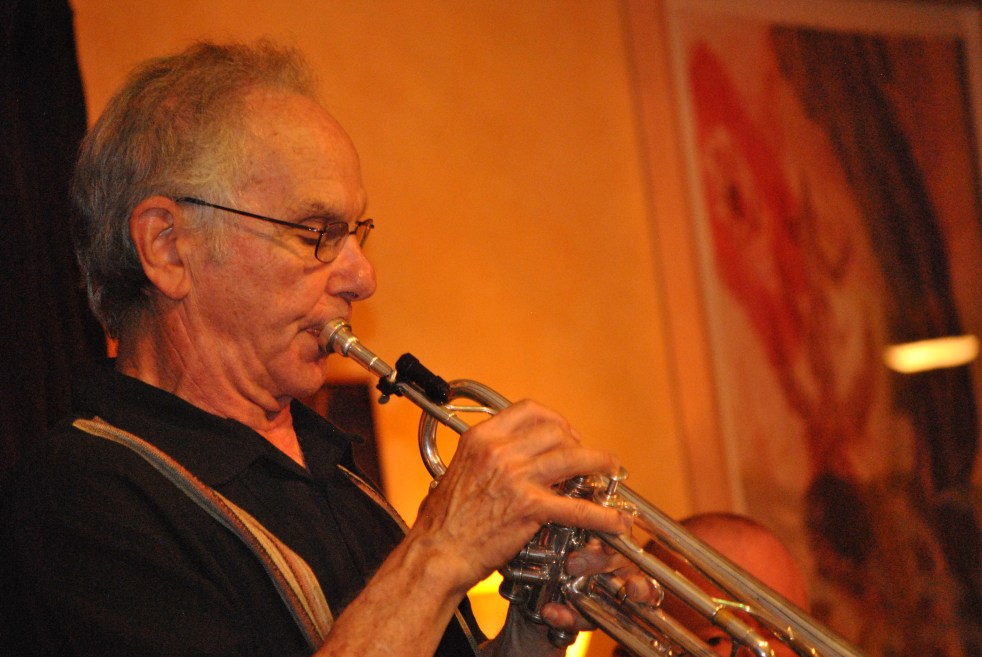
Randy Dunn is a trumpeter from Houston, TX with incredibly broad experience across diverse musical styles as a performer and educator. It was fascinating to interview him on a whole range of topics including his approach to playing and teaching as well as working on mouthpiece designs with Legends Brass.
What drew you to the trumpet as a child?
For some reason, I was always highly interested in music as a child, in spite of the fact that neither of my parents were musicians. There were a couple of things from my early childhood that I suspect were responsible for my great general interest in music. In the early 1960s, when I was very young, our family had bought a tiny, wind-driven (by a small electric motor) portable, table-top reed organ that had medium-small-sized black and white keyboard keys (they were probably just the right key size for my little 5-year-old fingers) and it also had two rows of accordion-like chord buttons and bass buttons that played a limited selection of chords that were arranged in an order that made sense regarding key relationships.
Even though this little organ was bought for the amusement of the entire family (to be used sort of like a toy), I was the member of the family who was playing with it most of the time, and I spent hours and hours entertaining myself with it. This tiny organ was made for use by non-musician amateurs, and it came with some little songbooks that had some easy, familiar songs in them (folk songs and old pop songs, mostly) and I sort of taught myself to read music by playing the songs in those books, and I also enjoyed just freely improvising on those keys. My improvising probably wasn’t that great, I’m sure, since I knew nothing about music theory at the time. But it was at least good enough to please and entertain the child version of myself. It just occurred to me for the first time in my adult life that I might be able to find some pictures and other information about that little organ online, and I did! It was a Sears Silvertone Model 603 Organ (no doubt ordered out of the Sears catalog.) Here is a link to a YouTube video of that organ in action: https://www.youtube.com/watch?v=cORy05zY_gU
I also had a small record player when I was very young (my parents must have bought it for me when I was around 5 years old), and I also had a lot of vinyl records (singles and full albums) to play on it, and I really loved listening to those records over and over, and spent a lot of time doing that. I had vinyl records with all kinds of music recorded on them, including music genres such as “kiddie music” recorded specifically for children, pop music, movie soundtrack albums, classical music albums, easy listening music (“elevator music”), and also some jazz and jazz pop music. This was the early to mid 1960s, so there was still a good bit of new jazz-influenced popular music being recorded at the time. I didn’t spend very much time listening to the children’s records that I owned, instead choosing to play all of the other records over and over again and really enjoying them all, especially the ones that featured orchestras and big bands.
So, I think having both that little Sears organ (which was almost like a toy) and that little record player when I was a young child really taught me how to listen to music and also encouraged me to mentally analyze music that I was listening to, even though it was in a musically uneducated way.
Later, when I was about to turn age 11 and was also about enter the 6th grade in public school, I knew that I wanted to play an instrument in the school band, but I had a really tough time deciding on which instrument I wanted to play, since I liked all of the instruments. I remember really liking the clarinet a lot back then, and I had thought that was the instrument that I wanted to play. But my parents talked me into playing the cornet instead, for some reason. They had a couple of friends who had been in the school band who had played the cornet, and I think they also might have just really liked the cornet and trumpet better themselves. So, I became a cornet player (and later, a trumpet player) more or less by random accident.
Did you have any particular early musical influences or heroes?
Growing up as a young child in the 1960s, I heard a lot of great trumpet music on the radio that I really enjoyed (much of which I heard well before I ever even played the cornet or trumpet), since there were a lot of hit singles that featured the trumpet back then, such as the hit single recordings by Al Hirt and by Herb Alpert and the Tijuana Brass. And, I also remember really liking the trumpet and brass section on those early Blood Sweat & Tears hits (Lew Soloff in particular later became a huge influence on my trumpet playing.) Those artists continued to record big hits into my early days of playing the cornet (trumpet) when I was in junior high school, and I sometimes tried to play their music myself by ear, or at least what little of it their music that I could play back then. Herb Alpert’s hits were heard everywhere at that time, and so everyone knew them and recognized them all, and the same was true with some of Al Hirt’s recordings. Once I began playing the cornet myself, I checked out a couple of Al Hirt’s albums from our local public library (on the recommendation of my middle school band director), and I listened to those recordings over and over again, and I really loved every Al Hirt track that I ever heard, even though I was a very weak young cornet/trumpet player at the time, and wasn’t yet serious about playing the trumpet myself.
Entering into high school was a big musical game-changer for me. That’s when I started buying and listening to lots of albums recorded by Doc Severinsen. My high school band director and Doc had met one year at the Texas Music Educators Association convention one year before I had ever entered high school and they had become good friends. As a result of that friendship, Doc played concerts as a featured soloist with my high school band every year that I was there, in addition to also playing those concerts several years before and after I was in the high school band.
When I was still in middle school (or “junior high school”), I had heard Doc play a live concert with the high school band and I was totally mesmerized with how beautifully and musically Doc played the trumpet, and that’s when I became Doc’s fan for life. So Doc is definitely a big personal mentor and inspiration of mine, and I have had the pleasure of getting to visit with Doc and reminisce about those times on several occasions over the years when Doc had come to Houston to perform with various different professional musical ensembles that he has led.
While I was still in high school, I also starting listening to a lot of Marice André albums, and as a result of that listening, he was a great influence on my piccolo trumpet playing once I added that instrument to my collection when I was in college. I also first began listening to a lot of great recordings of many of the standard trumpet concertos (recorded by many different soloists) when I was in high school, such as concerti by Hummel, Haydn, Torelli, Telemann, Franz Richter, and others. Also around that same time, some of the other, older high school band students had introduced me to the music of Bill Chase (and his trumpet-heavy jazz-rock band, Chase), as well as to the big band music of Maynard Ferguson, which resulted in my loving and idolizing those great trumpet players as well. And, of course, I was also also staying up late and watching and listening to Doc Severinsen play with (and lead) the orchestra for the Tonight Show with Johnny Carson on TV most week nights.
Rafael Mendez was another great trumpet soloist whose recordings I had also listened to a lot beginning when I was in high school. Also in my high school days, I became a big fan of the group, Chicago (beginning my freshman year in high school), and later, Tower of Power, and both of those bands had great horn sections that featured some fine trumpet playing. And, I also began to really like and appreciate the music of Henry Mancini back then, which included Mancini’s great trumpet sections and soloists, such as Bud Brisbois and Conte Candoli, and Mancini’s music was heard in many movies and television shows of that time period. Mancini even had his own weekly musical TV show called The Mancini Generation during that time period.
I definitely need to mention that Bob Odneal has been a huge influence on my lead trumpet playing. I have known Bob and have been listening to him play for many years, ever since I was in high school (Bob and I attended the same high school in our hometown of Baytown, Texas, although he is older than me, and therefore attended that school—and played concerts with Doc there—before I did.) I have really learned a whole lot from Bob throughout my entire lifetime, and I still continue to learn things from him. In addition to Bob being an extraordinary trumpet player, he is also a really great teacher and band leader.
Going from late high school into college, I added even more trumpet heroes to my list of major influences, including Clifford Brown, Jon Faddis, Marvin Stamm, and Arturo Sandoval (during his days in Cuba when he played with the band, Irakere.)
While I was in college, I also began to gravitate much more toward classical music (which became my primary performance genre throughout most of my life), and in that genre, I was most greatly influenced by my college trumpet professor and former Houston Symphony principal trumpet, James Austin, who is to this day, my idea of what the perfect symphonic trumpet player should sound like. But Bud Herseth, Vincent Chicowicz, and Gerard Schwarz and several other trumpeter players who were playing with the major symphony orchestras at that time also greatly influenced me as a classical trumpet and orchestral trumpet music performer, along with Maurice Andre, of course, who is the gold standard of piccolo trumpet performance.
There are so many other great trumpet players whose music has touched and influenced me greatly, and I think that, as trumpet players, we are each a product of everything and everyone we have ever listened to. But the trumpet players I mentioned above are the ones who have had the biggest influence on me, especially in my earlier years, from childhood up through early college in particular.
What have been some of your career highlights to date?
Probably the most enjoyable moments of my career have been getting to perform often with some of Houston’s finest classical and orchestral musicians, including many who perform with the major local professional orchestras, such as the Houston Symphony, Houston Ballet, and Houston Grand Opera orchestras, and also with musicians who are members of the great local professional theater orchestras. But, it has been equally rewarding for me to be able to perform with some of the Houston area’s greatest jazz and pop musicians. Houston has some of the finest musicians you will ever find, in all genres.
I have also really enjoyed getting to perform in orchestras and bands with some well-known singers and instrumental soloists, including Johnny Mathis, Casey Abrams, Doc Severinsen, Dennis Dotson, Kirk Whalum, and many others. Since I got to play concerts with Doc Seveinsen back when I was in high school, that experience has been hard to top!
I have also done some interesting film and television music recording work, including playing the fanfares in the 2015 BBC-TV movie, The Dresser, staring Anthony Hopkins and Ian McKellan, and also writing and performing a trumpet fanfare duet for a Zappos Shoes television commercial. I have also worked as a composer and music producer for several up-and-coming film directors both Houston and Austin, Texas, writing and producing music for some short films (made for film festivals) and some television programming. I even played trumpet and flugelhorn (among other instruments) in some of that film and television music that I produced.
I really enjoy playing a lot of different types of music (which keeps me from getting bored), including classical chamber music, orchestral music, big band jazz, small jazz combo, pop/R&B/funk/rock, and latin music. And speaking of latin music, I’ve even played in bands in which all of the other band members were fluent in Spanish (since it was their first language) except for me, and the rehearsals and performances of those bands were conducted completely in Spanish. Fortunately, music is the universal language, which makes communication among musicians easy, in spite of any language differences.
As an experienced educator and player, have you found that your approach to playing and teaching the trumpet has changed over the years?
I am a retired music educator, having taught band and music for many years in the public schools in Texas. Before I retired from teaching, I was also working part-time as a free lance professional trumpet player all those years that I was a teacher (the trumpet gigs were mostly in the evenings and on weekends.) Before becoming a life-long career classroom teacher, I also spent four years working as a full-time private trumpet teacher in the Houston area. During that time period, I was teaching between 90 to 110 trumpet students each week, while also simultaneously working as a free lance trumpet player. (I had also taught trumpet lessons part-time my last couple of years in college.)Even though I am retired from teaching, I still enjoy continuing to work some with band and music students from local high schools, middle schools, and colleges, in addition to continuing to work as a free lance professional trumpet player.
The biggest change to my playing and teaching the trumpet over the years is that I now personally spend a lot less time on practicing warm-ups, etudes, and technical exercises (you know, all of that “trumpet stuff”), and I instead spend a lot more time practicing repertoire for upcoming concerts and other performances. It is important to practice all of those trumpet techniques basics, but you encounter a lot of those in the repertoire you play anyway (especially if you are playing professionally.)
I do continue to play certain exercises on a regular basis (see next question for more details), but I often divide and spread those routine exercises out over 2 different days rather than practicing all of those different routine and technical exercises all on the same day (which, if I did practice them all on the same day, might leave little time for me to practice my performance repertoire, which is much more important, since that’s what I’m getting paid to play.) Splitting up my routine practice exercises and warm-ups and spreading them out over a couple of days also makes my practice days more interesting, since every day’s practice is a little bit different, with more variety. (Again, see the next question for more details about how I do all of this.)
As a performer, are there any particular routines that you follow to keep yourself in good shape for performance? How do you keep on top of your trumpet playing while you are traveling or really busy?
There are two very important things that I do to keep myself in good shape for trumpet performances:
(1) I make sure that at least 50% of my daily trumpet practice and playing is done in the middle to low register and/or playing very softly. This is an important technique for developing and maintaining good endurance (and also important for a strong upper register, which seems to be closely associated with good endurance.) This type of daily practice (when at all possible) has been recommended to me by many great trumpet players from all music genres, from classical and orchestral to jazz and beyond.
I keep a written practice journal that keeps running totals of how much time I have spent so far each day practicing soft/middle-low register stuff: I draw a smooth circle around the numbers of minutes (or hours and minutes) that I have written down for this type of practice that I have done. And, I draw a jagged, spiky circle around the minutes of loud and/or high register practice that I have done in each of my practice sessions. If I do a combination of the two types of playing during the same practice, then I circle the practice time for that session by making part of the circle smooth, and part of the circle spiky-jagged, approximately indicating the ratio amounts of the two types of practice done. After my last practice session of the day, I add up all of those minutes (from my two running totals of those two different types of practice) in order to get a grand total of hours and minutes that I practiced that entire day, and I write that total practice time amount in the left margin, next to the day’s date in my journal, and then I draw a rectangular box around the grand total of hours and minutes that I practiced that day.
(2) The other thing that is important is that, instead of practicing just once a day for a long time period, I like to practice in several relatively-short practice sessions throughout the day (always beginning my first practice session of the day fairly early in the morning), and then I rest and don’t play the trumpet for at least as long as I just practiced in the previous session before I begin the next practice session of the day. And, the moment when my lips are starting to feel either a little tired and fatigued, or “wobbly,” or maybe even feeling a little bit painful sometimes, then I stop playing immediately and take another long rest (or, I’ll stop practicing for the rest of the day, if my lips are too tired, or if I feel like I have practiced enough that day.)
As for what I practice, I probably spend about 90% of my time practicing music for upcoming performances, since that’s what I’m getting paid to play. It’s very easy to get distracted with practicing too many warm-ups, technical studies, etudes, lip-slurs, and long-tones, and other “trumpet player stuff.” Nobody will ever pay you to play any of those things! Not that those things don’t have value, because they do—I admit that I do think that they are important, and so I still spend a little time practicing and playing them—but no more than about 10% of my daily practice time on them, usually. Younger and developing trumpet students may need to spend a little larger percentage of their practice time each day playing these types of exercises though, in order to learn those techniques that are still new to them and therefore haven’t mastered yet. (That’s called “paying dues” and developing the basic skills of fine trumpet playing.)
I always warm up carefully each day, starting on second-line G (with at least a fairly long note, getting the best, most centered tone quality possible), and then I gradually expand my way down lower and then up higher throughout the total commonly-used range of the trumpet (or maybe even higher, if I am about to play some lead trumpet music or something that goes extremely high.) I do these expanding-throughout-my-entire range warm-ups with either some slow scales and/or arpeggios, or sometimes with expanding lipslurs and/or lip glisses (octave glisses), very carefully moving into the extremes of the lower and higher registers, and concentrating on relaxing and using as little mouthpiece pressure as possible, while getting the most beautiful, well-centered sound I possibly can.
I have a list of several things in my practice routine that I like to do regularly. When I was a student (especially in college), I would practice and play each of those things every day, if at all possible. But, after many years of playing all of those basic trumpet techniques, I now usually split them up and spread them out over 2 days (occasionally even having to spread them out over more than two days) so that I don’t spend more than 10% of my daily practice time on warm-ups and technical studies (“trumpet stuff.”)
I do have a set of “trumpet technique basics” that I like to start my practice day with, not only as a warm-up, but also to focus my practice, and to maintain all of the basic skills that I need to play the trumpet the way that I want to be able to. Each day, I practice each of those trumpet technique basics on only one pitch (or “key”) in all possible octaves (or, I might instead stick with that same pitch/key for two days, if I split this routine up and spread it out over two days.) After I have played through all of these exercises on that particular pitch or key, then I will move on to a new pitch to focus on for the next new day’s warm-up and routine practice. (I do this with all twelve possible pitches/keys, going through them in the order of the circle of fifths.)
Here is that list of daily (or semi-daily) essential exercises and skills for trumpet playing that I practice every day (or, sometimes over the span of 2 days, if I split this routine approximately in half and do only half of it a day over the span of 2 days), and I practice these regularly in order to keep my basic trumpet skills and techniques in good condition:
1. Longtones and Tonguing Exercises—I play long notes very softly on the “pitch of the day” in all octaves possible, holding each of these notes for as long I can in one breath (I count the number of seconds I hold each note), until I can no longer hold the note out without still being relaxed (and then stopping before I would have to squeeze the last of the air out in order to go any longer.) I do this a couple of times with each note (in each octave), and then I also play a long, single tongue exercise on that same note, starting with a whole note, and then going to shorter and shorter note values (whole note, 2 half notes, 4 quarter notes, 8 eighth-notes, 16 16th-notes, and then ending with a whole note with a fermata over it.) I then play various common double-tonguing and triple-tonguing rhythmic exercises on that same note. I repeat this process with the same pitch in every octave that I can comfortably play it in.
2. 4ths and 5ths—I slur between the “note of the day”, up a perfect 5th, then up a perfect 4th from there, etc., playing these 2 different pitches in all registers (also taking them down into the lowest register possible.) These 2 pitches function like tonic and dominant, or the 1st and 5th pitches of a scale, and therefore, these intervals are often found in music. Then, I start with the “note of the day” and this time, I slur up a perfect 4th first, then up a perfect 5th from there, etc., playing these 2 different pitches in all registers possible. In this case, these 2 pitches function like dominant and tonic, or the 5thand 1st pitches of a scale. [In other words, my “pitch of the day” serves as both tonic and dominant in these 4ths and 5ths interval exercises that I practice.]
3. Octaves—I play octave jumps, up and down, using the “pitch of the day,” playing these cleanly in all possible octaves, slurred, tongued, and also glissed. For even more of a challenge, I’ll jump up and down between all possible octaves that I can play of that “pitch of the day.”
4. Scales & Arpeggios—On the “pitch of the day,” I play a scale and an arpeggio, playing each in as many octaves as possible, first by memory, then I either play some arpeggio (chord) studies from the Arban book, or a I simply make up my own, similar arpeggio/chord studies. The “scale and arpeggio of the day” that I play as part of my practice routine is always selected from one of the following pairs:
(Notice that the first five pairs listed below are scales and arpeggios that are often used with the same harmonies or chord symbols.)
●Major Scale and Major (Triad) Arpeggios (maybe with a little bit of Major 7th chord arpeggio also);
●Mixolydian Scale (Dominant 7th Scale) and Dominant 7th Arpeggios;
●Minor Scale—I like to mostly practice the Dorian Minor scale, because that’s the minor scale that I use most often in jazz improvisation (but I also sometimes play the other minor scale forms a bit: Melodic, Harmonic, and Natural Minor scales) and Minor (Triad) Arpeggio, and also the Minor 7th Arpeggio;
●Diminished Scale (also known as Octatonic Scale or Whole-Step—Half-Step Scale) and Diminished 7th Arpeggios
●Whole Tone Scale and Augmented (Triad) Arpeggios;
●Blues Scale, and Pentatonic Scale, and also Stacks of Perfect 4ths (the stacks of 4ths, which represent extended tertian harmonies, such as 13th chords—are practiced here instead of the usual arpeggios)
●3rds Studies (scales with broken 3rds), plus Clarke’s Technical Studies (my choice), plus favorite “licks” or I’ll review some of the most technically challenging scales and arpeggios of my choice.
I eventually work my way through all of the “scales and arpeggios” pairings listed above, playing each set in all 12 keys/pitch centers. Since there are 7 of these pairings, and 12 different pitch centers (or keys) for each one, it takes me at least 84 days to work my way through all of them, if I do a new one every day (7 x 12 = 84.) So, in other words, it takes me almost 3 months—minimum–to complete this cycle. If I spit the daily routine in half, it will take me twice as long to work my way through all of these routines. I have a deck of color-coded index cards with each of these scale+arpeggio sets in each key/pitch center written on them that I use to help me keep track of which one I’m currently on, along with notes about which ones I have practiced on each day that I keep in my practice journal.
5. Interval Studies—from the Arban book, etc. (These are extremely important in developing and maintaining accuracy in playing.) I do these starting on the “pitch of the day” only, using the “scale of the day” from my practice routine.
6. Clarke’s Technical Studies by Herbert L. Clarke (the study of my choice from this book—I often rotate these), played in the “key of the day” only, but in all of its possible octaves.
7. Chromatic Scale, starting on the “pitch of the day,” going up as many octaves as possible. (It’s important to be able to play chromatic runs starting on every note, and the First Study from Clarke’s Technical Studies is also a great study for achieving great chromatic scale technique.
8. Range Practice—For playing in the extreme upper register, I will play some exercises (such as octave jumps—slurred and tongued—or arpeggios or scales or favorite licks) starting with one that goes up to high C above the staff, then going up from there by half-steps until I go as high as I can possibly play. For me, that’s usually about a double-high C, but sometimes a little higher than that, and on some days it’s a little lower (if I’m having a particularly bad chops day.) I rest frequently, as necessary in order to avoid tiring my lips out and injuring myself. I usually do these range exercises going up to double-C every day, but on the rare day that I might be having a “bad chops day,” I might skip these that day. I know some very fine trumpet players who also have great endurance and a great upper register who only practice these types of range exercises every other day. So you have to do it the way that works best for you personally.
9. Lip Glisses (Glissandi)—These sort of go along with the Range Exercises listed above. I start on C in the staff and gliss up to high C, glissing up and down several times, usually a total of eight times without stopping in between each one at these different dynamic levels: mf, mf, pp, pp, ff, ff, mf, mf. I then continue going up chromatically by half-steps, doing the same thing, but moving up gradually to higher and higher notes, until I am playing octave glisses up to double-high C (or as high as I can go on that particular day, at least.) NOTE: When I was younger, I spent a lot of time practicing lower lip glisses, going through all 7 lip-slur fingerings and starting on the lowest note that I could play with each fingering, and gradually adding more and more notes to these lipslurs/glisses, working my way up to playing 7-note glisses with each fingering, then later even 8-note and 9-note glisses. Those are really great exercises for learning all of the notes in the harmonic series for each of the seven fingering combinations of the trumpet.
ADDITIONAL NOTE: When I was a student (in high school and college), I spent a lot more time practicing the “trumpet basics” that make up my daily routine, but that’s because those skills were new to me then (or at least newer), so I was still learning these skills then and developing those basic techniques and establishing the muscle memory needed to perform each of them well and accurately. In my student days, I spent a lot more time practicing long-tones, lip-slurs, and scales (and later, also arpeggios.) Every great professional trumpet player I have every known, no matter what age and generation (trumpet players from all music genres, from classical/orchestral to jazz and beyond) has stressed the importance of practicing these things, and I have personally heard many of them warming-up with them and practicing them.
As I got older and had learned my lip-slurs extremely well (along with their accompanying harmonic series notes) and was therefore very skilled at playing them, to the point where they were almost boring, and required little concentration or effort from me when playing them, I then stopped practicing so many lip slurs, relying instead mostly on arpeggio studies to help me to maintain my lip flexibility in much the same manner, only I also get arpeggio fingering technique practice in with those exercises.
Throughout high school and college I also spent a lot of time practicing lip trill exercises in all registers (starting out with the lip trills in the middle and low registers only at first, in my early high school years.) But, again, after I had gotten really good at those and they had become extremely easy for me to play (even the lip trills in the upper register), I no longer spent much time practicing lip trills, with the exception of the ones that I would encounter in concert and gig literature that I would be playing (lip trills are especially common in big band music, of course.)
Also, as a student, I spent a lot of time gradually learning all of the different common scale and arpeggio forms listed above in my practice routine. Beginning a little bit in middle school and continuing into high school, I had learned all 12 major scales and major triad arpeggios, spending a couple of weeks on mastering each one of these 12 scales (along with the corresponding arpeggio) when I was in my first year in high school so that I could learn them really well and in order to play them really fast if I needed to (or wanted to.) Then, after learning all 12 of them (in all keys), I would quickly play through all of my major scales and arpeggios every day, starting with the lowest one (F# or Gb) and going up chromatically by ½ steps to as high as I could go playing these scales and octaves two octaves each, and then I would play the remaining scales/arpeggios that were then above my two octave range only one octave each (or, one octave “plus”–with a partial extra octave, as my young high school range would permit.)
Late in high school, I started to learn some minor scales and arpeggios a little bit, but I didn’t really woodshed those and learn them really well (along with the other scales and arpeggios I mentioned above) until I began my college years of study and realized that I still had a whole lot more to learn in order to achieve really good, comprehensive, basic trumpet technique.
Technology has produced the biggest changes in the way that I practice now compared to when I was younger. Metronome and tuner apps, instead of actual metronomes and tuning machines that I used in the pre-computer days when I was younger, as well as music audio and video files that can be instantly downloaded or streamed from the internet have all been major game-changers in the way that I practice now. Also, some other music-related computer programs, such as Digital Audio Workstation (DAW) programs have also changed the way that I sometimes practice and make music now.
As far as what I do to keep my chops and my trumpet playing in good shape when I’m traveling or really busy: I always travel with at least one instrument (Bb), even if it’s only my cheap little Bb pocket trumpet. No matter where I travel to, I always manage to find a some place there where I can get some practicing done without disturbing others. Over the years, I’ve practiced in many empty hotel ballrooms and meeting rooms, in empty classrooms of schools and universities, in empty Sunday school rooms and sanctuaries in churches, in parking garages, in empty stairwells, in empty office buildings—after office hours, in empty wooded areas, etc. When traveling, I find myself constantly analyzing every place that I see and evaluating it for its use as a temporary practice room or practice space.
If I’m staying in a hotel when I travel, I sometimes might do a little bit of my warming up and such in my hotel room, but if I do, I’ll point my trumpet bell toward something that will either absorb or dissipate the sound somewhat (pointing my bell toward pillows, or chair cushions, or heavy clothing, etc.) If I’m staying with relatives or friends who live out of town, I’ll usually wait to let my really loud and really high practicing rip lose when everyone else leaves the house for some reason or another.
Before I retired from teaching, I always kept my pocket trumpet in my car, where I often played warm-ups and chop-builders on it (long-tones, lipslurs, etc.), as well as tonguing exercises and other things on it, sometimes even playing these one-handed while I was driving to and from work (which was usually about a 30-minute trip each way for me, depending on the Houston traffic.) Every time that I had to stop at a traffic light, or got caught in a stop-and-go traffic jam, or got stuck behind a train that was either very long or that was stopped on the track, I got some really good practicing in. (There was a train track very close to the school that I taught at.) When I traveled to conventions, I would often carry my pocket trumpet in a small gig bag and then put it in a backpack that I carried around with me.
Other than practicing, I sometimes “set my chops” to embouchure position (but sort of relaxed—not too tense) during times when I’m sitting idle, but am unable to play the trumpet (in meetings, in waiting rooms, watching a TV show, etc.) I have always made the most of every minute that I have had to practice, even while I was still working a day job. Any time that I had before school, or during my lunch time (after I had finished eating) I would use these opportunities to get in a little bit of practicing (every little bit of practice that you can do helps.) Always getting my first practice session of the day done as early in the day as possible really helps with keeping my chops in shape also.
Can you tell us a little about the current relationships that you have with manufacturers? What was the process like, working with Legends Brass on new mouthpieces? How have these new mouthpieces helped your trumpet playing?
Working with Legends Brass on my signature custom mouthpiece, the GIT R DUNN trumpet mouthpiece, was a wonderful experience for me. Derek Saidak and his wife, Leslie (who own and operate Legends Brass) are both mouthpiece-making geniuses, and I am extremely impressed with the way they run their business, their great selection of unique mouthpiece designs that can meet the needs and preferences of just about any trumpet player, and their amazing attention to detail and creativity.
Derek designed the GIT R DUNN mouthpiece for me to use primarily for me to use for classical and orchestral trumpet playing on my larger trumpets, such as my trumpets in the keys of Bb, C, D and Eb (not for piccolo trumpet use.) Before Derek began designing that mouthpiece (at my request), I had recently switched to using two different Legends mouthpieces for my lead trumpet playing (and similar playing) and also for my piccolo trumpet playing. Both of these Legends mouthpieces have different advantages and different qualities in the way they sound and play and are therefore each best suited for different situations. (See below for more information about this.)
I loved the comfort and the feel of my Legends JT CS .600” lead trumpet mouthpiece so much (which is my primary lead trumpet mouthpiece) that I wanted to play on it all the time! And, even though the sound is great on it, it doesn’t quite get that characteristically orchestral trumpet sound that virtually all professional orchestra and classical trumpet players typically get. Also, it was always difficult for me to quickly switch back and forth between my lead trumpet/piccolo mouthpiece and my old “classical” mouthpiece, because the feel and the blow of the two mouthpieces were so different. This had really become an issue with my playing in recent years as I began to play a lot more different kinds of gigs requiring me to play a lot of different styles of music (classical chamber music, orchestral music, big band, jazz, pop, etc.) Similarly challenging was the fact that more churches (and therefore more church gigs) were moving toward blended services that required me to quickly switch back and forth between playing more contemporary lead trumpet-type jazz and rock style music to playing traditional classical, baroque, and romantic style music, all within the same church service, and often switching back and forth between the two different styles.
To solve this problem, I wanted a special custom mouthpiece that had the same rim, throat, and venturi cylinder design as the Legends JT CS .600” “lead trumpet” mouthpiece that I had been using for lead trumpet and piccolo trumpet playing, but I wanted the new custom mouthpiece to have a more open, broader, darker-sounding backbore (like the Legends Chicago backbore), and I also wanted this new custom mouthpiece to have a little bit deeper cup (but not too deep.) Derek and I both believed that these changes in the design would fatten up and darken the sound a bit more, yet would still provide good support in the upper register as well as enable good endurance, all while still being able to produce a rich, fat sound that still produces some “classical” brilliance and richness to its tone. The result was the new Legends GIT R DUNN .600” trumpet mouthpiece, which I am very pleased with, and I now use that mouthpiece exclusively for my general trumpet playing and practice, as well as for performing “classical” style chamber music and orchestra music. (I use the GIT R DUNN mouthpiece for everything except for piccolo trumpet playing, lead trumpet playing, and for some jazz solo playing.) By the way: I know many other older professional classical trumpet players who, like me, played on typical large inner diameter rim trumpet mouthpieces when they were young college students and young professional players, but who now play on much smaller inner diameter rim mouthpieces.
Not long before working with Derek on designing the GIT R DUNN mouthpiece, I had begun using two other Legends mouthpieces that were from the standard Legends mouthpiece catalog. I was using those two mouthpieces for lead trumpet-type playing and for playing piccolo trumpet, and those are the mouthpieces that I still use exclusively for those purposes. And now I can’t imagine having to use any other mouthpieces for those types of playing.
For most of my lead trumpet playing (probably about 80% of the time), and for all of my piccolo trumpet playing, I use the Legends JT CS .600” mouthpiece, which is inspired by the classic Jet Tone Charlie Shavers model mouthpiece, but with some significant improvements that Derek made to the original design. This mouthpiece has the most comfortable rim of any trumpet mouthpiece I have ever played on in my many years of trying hundreds of different trumpet mouthpieces. And, it is so easy to play on, giving me great results with less effort, and also encouraging me to relax more when I’m playing. It gets that big, fat sound that I want on piccolo trumpet without requiring me to work too hard, greatly improving my endurance on the piccolo trumpet as well as making the upper register much easier.
And that same Legends JT CS .600” mouthpiece has a similar effect when I use it for lead trumpet playing on the standard Bb trumpet. On that instrument, it also gives me a big, fat, beautiful sound that requires less effort than any of the lead trumpet mouthpieces that I had ever used or tried before. Likewise, this mouthpiece also greatly improved my lead trumpet endurance, and it also really stabilized my extreme upper register (from normal lead trumpet range up to double-high C and a little beyond), making my extreme upper register playing so much easier and much stronger-sounding and more beautiful-sounding than every before. The tone quality of this mouthpiece is so great in all registers that I also usually use it for playing jazz trumpet solos, in addition to using it as a lead trumpet mouthpiece.
Sometimes when I’m playing lead trumpet, I will instead use the Legends RM 16S .595” mouthpiece (which I use for playing lead trumpet about 20% of the time), which is a mouthpiece inspired by the classic Rudy Muck mouthpiece, but with some very important improvements that Derek made to the original, classic design. Like the Legends JT CS, the Legends RM 16S is also very comfortable, with a wide, cushion rim. And, the rim of the RM 16S feels like it is the same size as the JT CS, even though its inner-rim diameter is actually slightly smaller (but the outer rim is even wider, providing even more cushion.) I use the RM 16S for lead trumpet work that requires me to play gigs that last for an extra-long time, or that require almost continuous playing, or that involve an unusual amount of extreme upper register lead trumpet playing. The RM 16S requires me to back off and relax when I play even more so than the JT CS does, because of the way that it blows, which is extremely efficiently. And that, in addition to the extra-wide extreme cushion rim, makes it feel almost like I don’t even have a mouthpiece touching my lips when I play on it.
The RM 16S also has a bit more edge and brightness to it than the JT CS does. But on the other hand, the JT CS is a little fatter-sounding, yet still has plenty of brightness to allow it to cut through a big band also. Flexibility is also just a little bit easier on the JT CS than on the RM 16S. But, my choice of which one of these two mouthpieces I use when playing lead depends both on the style of the piece of music that I’m playing, the type of sound that I want for that particular piece, and also sometimes the type of performance that I’m using it in. (I’ll often switch back and forth between these two lead trumpet mouthpieces during a big band gig.)These three trumpet mouthpieces of mine that are made by Legends Brass (GIT R DUNN, JT CS, and RM 16S) are the only trumpet mouthpieces that I ever use now. I don’t have any formal relationships with any instrument manufacturers, and I use a variety of great instruments made by various manufacturers. (See the list of these below, at the bottom of this interview.)
2020 so far has been a ‘challenging’ year to say the least? What has this meant so far for your work? How have you been adapting to online work?
Well, like everyone else, I’ve had a lot of gigs and performances canceled as a result of the COVID-19 pandemic quarantine. For many of us living in the United States, the quarantine began in full shortly before Palm Sunday and Easter, so many of us musicians had our Easter gigs canceled. Several bands that I often perform with usually play a lot of festivals and party gigs beginning about early to mid-spring and going on into the summer, and those gigs will also all be lost this year, as well as the many weddings and wedding reception gigs that we do. Also, the jazz quintet that I sometimes play with abruptly had all of its restaurant, club, and wine bar gigs canceled after all of those venues were ordered to close down in order to slow down the spread of the COVID-19 virus.
My wife (who is a professional organist/pianist) and I are both more fortunate than many other musicians because we are also both retired public school music teachers, which means that we are both still getting our monthly teacher pension payments. Even during the quarantine, my wife still continues to work as a church organist, but she and the rest of her church’s staff are now streaming church services via live video broadcasts on the internet each Sunday morning. These services are presented to an empty sanctuary with nobody sitting in the pews, and the staff members who are delivering the services are all carefully practicing social distancing by remaining far away from each other while they are at work.
In addition to our pensions, my wife and I also have some stock-heavy retirement investments that have lost a lot of money during this current stock market crash and economic crisis. Fortunately (I think?), we are still in the early years of our retirement, so hopefully the stock market will be able to recover quickly enough so that our investments will regain their original pre-stock market crash value before too long, and before we start drawing down extra funds from that retirement nest egg of ours.
During the quarantine, I have been able to keep my trumpet practicing going strong, in spite of the fact that I have no performances scheduled for the foreseeable future. I begin my first practice session of each day, as always, early each the morning, shortly after waking up and having some coffee. It’s been difficult to be as productive as normal for most of us, I think, because most people haven’t been sleeping very well during this quarantine, for various reasons. That’s one of the main reasons why I make sure to get my trumpet practice out of the way early, while my somewhat sleep-deprived mind is still in its freshest and most productive state.
I originally thought I would be making a number of new trumpet videos to post online while under quarantine, but—so far, at least—I’ve been busy with other things. In between keeping up with the pandemic news and standing in long lines for groceries and other essentials from time-to-time when I need to get them, I’ve also been hard at work finishing up my income tax returns (which, in the U.S., can be rather complicated and time-consuming, unfortunately.)
My wife and I have also been busy dealing with a cat who gave birth to kittens behind a swimming pool chemicals storage chest in our back yard. First, I had to build a fence in our back yard to close off the part of the yard that the cats were in from the rest of the yard where our two dogs roam around so that I could protect the cats from the dogs. After a few days, we took pity on the cats and moved them inside, into our house. But that meant that I then had to install a temporary screen door going into the part of the house where the cats are living in order to, once again, keep our dogs away from them. It also meant making and furnishing a cat nursery box, buying cat food, a cat litter box, kitty litter, and all of the other necessary cat accessories, since we hadn’t had any cats during our entire adult lifetime, just dogs. The learning curve was also steep, since we had to learn all about cats, and what to do with them and how to take care of them. Thank heavens for Google and YouTube!
Also, during the earliest days of this quarantine, before the cats arrived in our back yard, I was bored enough and had enough time and energy on my hands that I started to work on designing some new trumpet mutes that I had been thinking about making for a while. I spent a lot of time experimenting with various prototypes for these new mutes and, as a result, I came up with a really great set of unique mutes (or, more accurately, a mute system) which is extremely versatile and can be used for several different types of common mute indications found in trumpet sheet music, or for discretionary trumpet solo use, or even as excellent trumpet practice mutes.
The result of this effort is that I have now created the best trumpet mutes of the following types that I have ever played: bucket mute, hat mute, “in stand” mute, practice mute, and whisper mute (soft mute.) I am so thrilled with the results that I am planning on manufacturing these mutes of mine commercially once we all start recovering from the current economic crisis that has resulted from the COVID-19 pandemic shutdown. I’m hoping to be able to launch these new mute products beginning in early 2021, and I think that I’ll be able to sell them at a very reasonable price so that they are afforable not only for professional trumpet players, but for students as well. I really believe in these mutes, and I think that they will become revolutionary new accessories that every trumpet player will want to have.
It’s interesting that it took a pandemic and a quarantine for me to be inspired to invent and perfect those new mutes. I read an article recently that said that, when Sir Isaac Newton was quarantined during another famous pandemic that you might have heard of, known as the Plague, he continued his studies and work at home. It was during this time of quarantine that Newton did some of his best and most famous work, including inventing calculus, studying optics and light, and studying gravity, which led him to the creation of his famous laws of motion. https://www.biography.com/news/isaac-newton-quarantine-plague-discoveriesI’m not saying that my newly-invented trumpet mutes are as significant or as important as all of those things that Newton invented, of course. But, I do think that my new mutes will be significant to trumpet players and that they will also be greatly admired and appreciated by trumpet players and their audiences. This is just another example of how we can all use this time of quarantine and isolation to accomplish some great things, or at least to continue to get some work done so that we are ready to resume our business as usual once the quarantine is lifted. Once the quarantine ends and live music performances are finally allowed to resume, those of us who kept our chops in shape by practicing throughout the quarantine period will be ready to work, and we’ll be the ones getting all of the gigs and keeping our performing reputations going. (And each student who continues to practice hard throughout this quarantine will likely wind up being first chair in their school band when school finally starts back up again.)
What advice do you have for young aspiring trumpet players out there?
I recommend practicing daily in multiple practice sessions, and always practicing with daily goals as well as long-term goals. (It helps to write everything down.) Also, you should find the best teachers you can to study with, and don’t be shy about asking questions of pro players who you see perform, or who maybe that you yourself get to perform with. (You can learn a lot from older players, especially.)
Also, make sure that other people hear you play, and that you are always prepared to sound as good as you possibly can, even if you are just playing in rehearsals or in semi-public practice areas. (Such as university music school practice rooms.) A university jazz band director happened to walk by my practice room in the school’s music building once when I was in the middle of playing a Maynard Ferguson solo (from his latest album at that time), and that jazz band director (who hadn’t met me before) introduced himself to me and invited me to audition to play lead trumpet in his jazz band, since his hot-shot lead trumpet player that was in his band had just graduated and left the university. I wound up winning the audition for that spot in the band, which means that there must have been a bunch of trumpet players with weak upper registers at that school that particular year, because I didn’t even think that my range and upper register were that great at that time! But that was a really great experience for me, as it was my first opportunity to play lead trumpet in a big band.
I also recommend that you make friends with other fine professional trumpet players and other serious trumpet students, and that you also develop strong friendships with other fine musicians who play other instruments besides the trumpet. Not only can you learn a lot from these types of connections, but these relationships could also help you to get some future gigs and other jobs of various types (such as music teaching jobs.)
If you ever get bored with your practicing and playing, then do something to shake things up a bit. Start playing some styles of music that are outside of your typical comfort area. For example, classical and orchestral specialist trumpet players could start practicing some jazz also. And, jazz or big band specialist trumpet players could practice and play some classical trumpet music. Not only will this give you more musical diversity, but it will also make you a better musician, and will present you with the opportunity to learn and develop some new skills.
Listen to a lot of recordings (over and over again) and also listen to live performances of the trumpet players who you want to sound like, and then make an effort to copy their sound and style when you practice.
Thank you, John. This interview and discussion was a real pleasure.
Randy plays on the following Legends Brass mouthpieces:
GIT R DUNN .600” (for general playing, classical and orchestral music on the larger trumpets)
JT CS .600” (piccolo trumpet mouthpiece, primary lead trumpet and jazz trumpet mouthpiece)
RM 16S .595” (extreme situations lead trumpet mouthpiece!)
MouthpieceOnline readers can get a 10% discount on any Legends Brass mouthpieces by using the code ” TEN% “. Please visit the Legends Brass website to see the range!
Sign up here for new blog articles emailed direct to your inbox:
Mario Guarneri will be known to many readers as a performer and educator of the highest calibre. A former member of the Los Angeles Philharmonic, Mario is also in demand as educator and lecturer on the pedagogical concepts involved with his groundbreaking designs (www.berp.com) and the trumpet in general. Here he shares with me some thoughts on approaching different stylistic challenges both as a player and a teacher.
Can you please give a little background to your playing styles?
Interesting question that I don’t ever recall answering before. First of all, I believe from the beginning I was taught to play in the style of the music you were performing. Using my ears and understanding the context was critical to what sound and style I heard in my head and should be reflected in the music I was playing. The point of being a professional musician when reproducing music composed by someone else is to first understand the “style” of the written notes (context). You then create the style in how you take notes on a page and end up making appropriate sounds to come out of the bell.
The style I select is totally dependent on the context of the music when I’m playing something composed. If I’m recreating someone else’s style by ear then I also need to understand and listen to the context. In either case the ear connected to your musical brain is your most important teacher. That by the way is also true for basic sound production on a trumpet.
In my opinion I was not paid to place my “style” into orchestral solos required to perform as an orchestral trumpet player. However, I must admit that I tried sometimes to the dismay of the conductor. The skill of being able to perform in different styles served me well during the 12 years of my life when I was working in the LA studios. It was not unusual to go from “Looney Toons” in the morning to a John Williams score that afternoon and maybe an LA Chamber Orchestra concert that night. How fortunate I was to have those opportunities.
When I improvise and/or perform music I have written, then I create my own style which I hope to make interesting, compelling to the listener, lyrical, “musical” and above all honest.
What kind of groups did you play in as a kid?
I played in the school band starting when I was eight… (yes we had a band in elementary school.) When I was eleven, I played in what was called a “Dixieland” band with high school kids, and I joined the Berkeley Youth Symphony when I was 14. I joined the union at 13 and played summer gigs with a dance band of adult professionals.
Who were your biggest trumpeting influences?
I was listening to Louis Armstrong, Bunny Berigan, Harry James, Rafael Mendez, Muggsy Spaniard, Roy Eldridge, Chet Baker, a recording of the Haydn by Wobisch and my teacher Eddie Smith
What was the focus of your practice time as a young player and student?
The Arban’s book and Mendez solos, plus transcribing some jazz solos and improvising on basic blues changes. I had a 78 record with blues in Bb on one side and in F on the other side.
We seem to live in an age where people need to be defined by one thing. Pigeon-holed. Does this ring true to you?
I have done my best to defy being thought of as being a particular type, (i.e. classical, commercial, jazz, avant-garde, studio.. etc.) of trumpet player.
What is your experience (both positive and negative) of being defined in this way?
I personally see nothing positive about being defined as one kind of player. However, there are people that hire musicians who want to make sure they are hiring the right person for the job “style-wise” who want to know “what kind of a player are you”? I think a better question would be and one that I have asked players when I have contracted orchestras for film dates, “are you comfortable playing…?” Professionals know what they are capable of doing and rarely put themselves in the wrong musical situation. If they do it once it probably won’t happen again.
What steps have you taken to overcome any difficulties caused by this?
One of the best pieces of advice I got on this subject was from Manny Klein, a legendary trumpet player in Los Angeles.
“Kid, it’s not what you play, it’s what you pass”. It happened more than once that a contractor put me in the wrong seat…faced with a lead trumpet big band part with Chuck Findley in the section I would immediately pass the part along with the extra money I was to receive as the principle player.
What are the biggest technical changes that you make when completely switching styles?
First, I would decide if it will help to make a physical change by playing a different instrument and/or a different mouthpiece. Those changes will often support the way I hear a different style. Hearing the style in your head is the most important aspect of switching styles in my opinion. Any technical changes happen “automatically” if I hear the style/sound before I put it into the instrument. For instance, articulations are very different between the orchestral world and bebop style. I could break it down to “where the tongue goes and how the air is released” for a student, but eventually you need to get to the point of hearing it and playing what you hear.
Do you need to take a different approach to technical trumpet practice as you prepare for a patch of symphony work compared to say a jazz combo?
Yes, but not entirely. I believe that the basic function and use of the breath is the same, and that the embouchure set up also stays consistent. All of the things I do for sound production, strength, flexibility, endurance, range are the same. Suspending the breath and playing on top of an engaged air capacity works for everything. Free buzzing, playing on the berp, playing pedals, working the Stamp exercises and working out of the Flexus book with lots of bending is what I do for starters every day. (See my videos, Berp & Bat Tools Part I and II at www.berp.com). The bigger difference in approach is between written music and improvised in my mind.
For recreating notes on a page, the skill set is all about accuracy, evenness of sound, intonation and musical style. That would also be true for playing lead in a big band, principle in an orchestra, brass quintet, etc.
Improvising requires playing what you hear/compose instantaneously! At the very least a different skill set which to my mind requires different practice routines. The first part stays the same. Working towards the most efficient sound production habits should be the foundation for all styles and musical challenges.
The essential difference comes down to being able to instantaneously hear and play a sound that is not predetermined. Because you are composing in the moment when improvising your technique has to be such that you can produce whatever interval your creative mind comes up with. When I played in the orchestra when I knew the schedule for the year, I could prepare to play every note I needed to play for the next year (except for the contemporary pieces we performed or obscure literature which I had not seen before).
It is easy to get very static in your approach when playing in an orchestra because of the requirements I just mentioned. The practice routine will also start to become too “routine” and your playing can suffer from staying too inside the box…doing only that which allows you to “do your job”. Of course that in itself is a big challenge, but I believe the musical benefits of doing more than that are extremely rewarding and worthwhile.
Your basic set up should allow you to do whatever you hear and your daily routine should include exercises you make up on the spot so that you can test to see that your set-up allows intervals and dynamic shifts that you may never have thought of before! The critical part of the set-up is fully explained in the previous mentioned Berp and Bat Tools video, but how you set up and suspend your air and “creating a face” with your embouchure are the most important elements.
How do you keep your ears and brain fully prepared for switching and playing in different styles, from a musical perspective?
This may sound obvious, but I believe the most efficient practice tool is to listen very intently and imitate on your instrument and with your voice. It is also very helpful to record and compare your version with the style you are trying to recreate. Playbacks can be painful but “the proof is in the pudding”. Finally, here is an exercise I created to help me with this process. Take an orchestral excerpt like the opening to “Pictures at an exhibition” and play the pitches out of time and transpose up and down an octave from the original for each note. Connect the line in an improvisational style. Does your set up make it easy to do this? Starting from the other side of the spectrum take a bebop line like “Freedom Jazz Dance” and perform it as though it was the opening to “Pictures….”
How do you approach all of these practice elements with your current students? Is there a technical ‘middle ground’ to be found to give students a good overall grounding, or do they need to be prepared to switch?
If you prepare consistently with each breath engaged and “making your face” at the end of the breath you will have the potential to perform whatever you are hearing in your head. Challenge yourself every day and enjoy the process. Music is such a wonderful gift to share ….do it with gratitude and appreciate the opportunity.
Sign up here for new blog articles emailed direct to your inbox:
Johnny Thirkell is one of the great unsung heroes of the music industry. With a truly prolific recording output, his trumpet features on thousands of hits over the past thirty odd years. To find out more about Johnny, please follow this link to read this great interview (even if I do say so myself!) that I did with him last year.
I caught up with Johnny recently to find out about his creatively-named ‘Horn Camp’, a residential course in the beautiful surroundings of the Sierra Nevada mountains…
Tell me about Horn Camp.
Horn Camp is about a group of Trumpet and Sax players getting together for a week to play, learn, talk and hang together in a friendly and relaxed atmosphere.
I’m very fortunate to have a house in the beautiful Sierra Nevada mountains, about 20 minutes out of Granada and it’s where I go whenever I need to get away from all the distractions of life and focus on something that needs to be done – whether it’s practice, writing, business or just thinking, I find the relaxed and peaceful environment helps me to really get down to work and I always achieve much more there than I could ever do at home. So it seemed to me that it would be the perfect place to take a bunch of students if we wanted to focus on the fundamentals of playing as well as look at the peripheral things which can really make all the difference. Things which aren’t easily taught within the confines of the regular teaching schedule.
I’ve always found the traditional 1 hour a week teaching model to be quite limiting insofar as there is only so much you can convey in an hour and often, by the time the student has gone home and gets around to practicing, he/she may well have forgotten some of the teachings and you, the teacher, are not there to answer any questions. Also, in a one hour lesson it’s very difficult to fit in some of the peripheral disciplines which can be hugely beneficial to wind players – things like breathing exercises, posture, stress management and mental well-being. So, by running the camp we allow students to put a week aside to focus on all of these things while we, the teachers are available all day long to answer any questions and provide help and guidance. Plus, it will be fun too!!
What can students expect?
Aside from a great environment where we all work together, we will look at a more rounded approach to playing your instrument. Not just technique on the instrument but also the things you can do without the instrument to improve your playing and musicianship. There’ll be modules on Pilates for Wind players, Cognitive learning techniques, Breathing exercises, stress management and lots more. Plus, after dinner there will be the opportunity to talk about a broader range of things – like how publishing works, copyright protection or brass arranging – or simply to answer any questions the students might have.
We aim to create a relaxed environment where we all help and encourage each other, irrespective of individual ability, and no-one needs to worry about traffic or the daily chores of life. We’ll break up the day relaxing by the pool or walking the famous hanging bridges of the Los Cahorras, which are close by. We might even have the odd drink!
Why Trumpet & Sax?
Being wind instruments, there is so much crossover in technique between the two – particularly in the fundamentals such as breath control – and I think there is much that we can learn from each other. The Sax tutor is my old friend Snake Davis. He and I have been best buddies for 40 years and in that time we’ve worked together on more sessions and tours than I care to remember. However, as well as being an amazing sax player he is one of the best communicators and educators that I know and he will be leading a lot of the ‘off-instrument’ subjects like Pilates, Yoga breathing etc. Things which are highly relevant to both instruments, irrespective of ability level. Ideally we will have 3-4 trumpeters and 3-4 sax players so there’s also plenty of scope for knocking up some ensembles too.
What standard do you need to be?
Because there is a lot of focus on fundamentals such as breath control, expression and musicality as well as the ‘off-instrument’ disciplines, the camp will be relevant to players of a wide range of abilities. In fact I see it as a plus to have a range of abilities as it usually winds up with everyone helping each other. We always ask students to leave their competitiveness at the gate and enter into an atmosphere of mutual trust and support. That way we will all take away the maximum from the week and no-one need feel awkward or out of their depth. Having said that, you will need to be able to play – but I would say that so long as you play to a reasonable level, you will fit in and benefit greatly from the course.
What’s included?
The camp runs from the 4thto the 10thMay 2019 and the fee includes all tuition plus resources – worksheets and music – breakfast, lunch and evening meal every day and all beer, wine and soft drinks for the duration. We will collect students from Malaga Airport and drop them back at the end of the week. There are double and twin rooms available and non-playing partners are welcome.