Advice · Education · Interview

The Carmine Caruso Legacy

I think that the concept of a saxophonist and former violinist becoming one of the most well-respected and well-known trumpet (and brass) teachers is a fascinating one. His callisthenic approach will be well-known to many readers through his publications, but in addition to this concentration on the physical synchronisation of different muscle groups, he also built a reputation on positivity and for really nurturing his students.

So many top players over the years attribute a huge portion of their success to Carmine Caruso – I was fortunate enough to be able to gather the thoughts of four of these fabulous players, in order to get to the bottom of how their experiences with Carmine influenced them and their careers: Marvin Stamm, John Thirkell, Randy Brecker and Markus Stockhausen.

VISIT THE ‘EDUCATIONAL RESOURCES’ PAGE FOR FREE WORKSHEETS AND LINKS TO PUBLICATIONS

Why did you go to study with Carmine Caruso?

MARVIN STAMM:  I had just settled in New York City in late 1966 and was beginning to be a part of the jazz and studio scene. I mentioned to friend and fellow trumpet player Burt Collins that I wanted to continue to study and work on certain aspects of my playing. Coming off the road, I was bothered by a few things that I felt needed to be addressed. Burt told me about his study with Carmine, that he was a trouble-shooter and problem-solver. He also mentioned a number of players who had been helped through studying with Carmine, among them the great lead player Al Porcino and others, and he felt Carmine would be the teacher to see.

JOHN THIRKELL:  I was at Leeds College of Music when I first came across the Caruso Method. I had studied several other method books – Claude Gordon, Louis Maggio etc. – but something about the concise and prescriptive nature of the Caruso appealed to my sensibilities. Do A and B will happen, then do C and D will result, and so on. That kind of regime somehow clicked with me and I quickly became a devotee. My then trumpet teacher was, I’m afraid, very much against such perceived radical methods but I think that only made me more determined. I’ve always been (and still am) one for swimming against the tide.

RANDY BRECKER:  I was playing in the Duke Pearson big band in ’66 and the other 3 trumpet players, (Marvin Stamm, Burt Collins and Joe Shepley) had studied with him and swore by him and said I should see him to improve my range.

MARKUS STOCKHAUSEN:  In January 1978 I came to New York. It was a winter with heavy snow. New York was peaceful and quiet. I contacted Marvin Stamm, whom I admired from his recordings with the Pat Williams Orchestra. I told him that I would like to have lessons with him. He denied and said that instead I should go to his teacher, Carmine Caruso, which then I did. Nevertheless, I had a good time with Marvin, he took me several times to studio sessions and gave me the opportunity to feel the scene, to meet other players like Alan Rubin, Lew Soloff, and also, I witnessed a rehearsal with the Maynard Ferguson Band in some hotel, a great experience at the time.

What were your impressions of the first lesson?

MARVIN:  Carmine was one of the most positive thinkers I have ever met, and he strived to infuse this positive attitude into all his students. Any progress, any improvement, no matter how small, was recognized as progress and needed to be appreciated in that light. My impression after my first lesson was that I had really found the teacher who could help me over whatever obstacles I felt were a problem.

JOHN:  My overriding memory of the first lesson was how energizing it was. He had the uncanny ability to make you feel like you could achieve absolutely anything, and he removed much of the worry I had associated with playing and practicing. He always said that, if you are following his instructions implicitly and not making progress, then the fault was in his teaching rather than in you. That idea was incredibly liberating and allowed me to focus on the process rather than worry about any innate ability. Just do it! I felt that sense of positive energy every single time I came out of a lesson.

Also, I couldn’t believe how little I actually played. I would say in the 90 minutes I was with him, I played probably no more than 15 minutes maximum, the rest of the time being taken up with the explanation of his theories and the idea of allowing your body to adapt and find the solutions rather than you consciously trying to find them. That was a common thread in all of the lessons and I would go as far as to say that he was as much a psychologist as he was a trumpet teacher. He talked you into playing well. There is a common idea that, as a trumpet player if you think you are going to miss it, you’ll miss it. Caruso, as with so many other things, turned that into a positive by inculcating the idea that, by knowing that you will hit it, you’ll hit it. And the more you know it, the more you’ll hit it.

RANDY:  Well he had those airline noise-reducing huge headphones on the whole time and talked a lot… and said a bunch of surprising things about how to approach his exercises (don’t worry about your sound, don’t worry if you miss a note etc.

MARKUS:  With Carmine I had seven lessons. Each time he would write me the next exercise on a little sheet of paper. So, in the beginning I just had the six notes I think, and at the end of the month the full system. His book was in preparation and had not yet been released, and he did not care so much about it, I had the expression. His teaching, though he had a system, seemed very individual.

His room was dusty, with old book shelves full of music, and a fan. The heating was hot, he just wore an undershirt, and often put on his headphones while I played, the kind they use in airports. Now I can understand him very well, because also for me the trumpet often is loud to my ears, and I use some plugs or phones when I play or teach a lot. He was very kind with me, like a father. His eyes were loving and distant at the same time. He was very patient, but clear, to the point.

What were the big changes that you found from the way that you had previously approached the trumpet?

MARVIN:  I’m not sure there were big changes in my approach to the trumpet. What I was looking to find were solutions to a problem, and I believe any big changes were more in my thinking—that is, in discovering how and what to practice to overcome these issues.

Problem-solving, of course, is most always a slow process. The time during which I studied with Carmine took place before cell phones, tablets and laptops, even the Internet, so everything moved at a slower pace than it would today. Musicians’ expectations of progress were based on the “long view” rather than how much could be learned in the short term. Carmine had a unique ability to recognize and analyse individual problems, so the exercises he gave were designed for each student to assimilate corrections into their playing slowly, without disrupting their ability to continue working while at the same time finding answers to their musical problems. The exercises were also meant to become permanent solutions that would serve the players throughout their performance career. So, the big changes happened over time and in small increments.

I approached Carmine to help overcome the “break” I had at the top of the staff—to close the space in that area so as to provide a smooth path from top to bottom. Meantime, Carmine also saw problem areas that he could fix while helping me with what I perceived to be my only impediment. I was using movement or manipulation with my hands for one thing; another was playing a note before properly setting for it, kind of like “jumping on a running horse.” Carmine also knew that I wanted to build stamina and broaden my sound, thereby making my lead-playing stronger and more effective. All this we achieved over time. Patience was the key to the results I desired.

JOHN:  The idea that, whilst practicing the Caruso method, you should not worry at all about musicality or the sound. This was purely calisthenics. Building muscle. Pushing the body a tiny bit further every time and allowing it to find a way to cope. Rather than make arbitrary changes in order to achieve an objective, by pushing the body it will find its own way to cope with the added demands. Again, this is incredibly liberating and allows you to stop worrying and just focus on the process.

Tapping the foot is also a big part of the method – that and the breath attack on the first note of an exercise – the idea being to train all of the disparate muscles required to play a note to come together at the exact same time. Again, subliminally training the body to automatically synchronise everything.

RANDY:  Better high register and more flexibility.

MARKUS:  His exercises focused my embouchure and gave me strength and endurance and developed my high register.

Could you feel a big difference in your playing immediately after starting studying with Carmine, or was it a slower process to see results?

MARVIN:  Some things were immediate, but the bulk of what I wanted to achieve was a slower process.

JOHN:  I think I pretty much felt a difference straight away, but this was probably more a result of the incredible sense of self belief which he gave you. You came away from a lesson feeling that nothing was impossible and that certainly manifested in the way I played thereafter. That confidence removes much of the doubt that holds back progress and I found myself playing with much more abandon. On a more physiological level though, pretty soon I found my range, not necessarily expanding that much but certainly becoming much more solid and dependable and I think that was as a result of the muscular development.

RANDY:  Pretty fast I must say.

Were there any aspects of the teaching that contradicted what you had been working on previously?

MARVIN:  Yes and no. His approach was quite different. Carmine was very “up front” that he was not working on students’ musical values, but on their physical attributes, striving to solidify a structural approach to playing the instrument. He told his students NOT to put aside playing etudes, solo pieces, practicing Arban’s, Schlossberg, Colin or other methods. He always stressed to me the importance of mixing in his studies with all the others that I had been working on, especially the musical ones.

If there were any contradictory elements to Carmine’s approach, they might be the use of nose-breathing, the long-settings, and the tapping of one’s foot to create the rhythmic movement of moving from tone to tone.

Nose-breathing allows one to have no movement of the corners of the mouth when taking a breath, thereby making possible a long setting, a consistent or constant placement of the horn to the lips. Tapping of the foot to set up the “time” meant that when moving from one tone to another, the only thing one had to be aware of was to consciously move “to the beat,” thus eliminating having to think of the many other elements of playing the instrument—the tongue, air, and muscles. Only moving to “time.”

Carmine’s exercises might be considered by some to be contrary to the usual structural exercises as those utilized by Schlossberg, Arban, St. Jacome, and Charles Colin. The approach was certainly different. And though I did some work out of the Baermann Clarinet Method, this was not really for any technical aspect, but rather to work over the break that I hoped to minimize to the fullest. All the exercises other than the Baermann were Carmine’s. There was also a strong focus on using dynamics in his exercises, both in a typical and atypical manner. These were used to work the embouchure in a more arduous way, making actual performance of demanding music much easier.

JOHN:  The idea of not being concerned with musicality or sound was very different but you soon learn to separate out the Caruso part of your practice from the other, more music focused stuff. He would use the analogy of a footballer (American football, not proper football) working out in the gym with weights. Where were the weights during the football game? But the weight training was of fundamental importance to his performance on the field.

RANDY:  Well I always worked on my sound and sound didn’t matter when doing his callisthenic exercises.

MARKUS:  He knew all the struggles that I was going through at the time. My embouchure had to be dry while playing, at least the top lip, which had been a problem for me during concerts when I sweated a lot, especially with spot lights on me. His pedal tone exercises followed by the chord pedals gave me a wet embouchure, resulting in much better playing possibilities.

Did you continue with his methods exactly as prescribed, or did you need to adapt them to fit in better with your work schedule, etc.?

MARVIN:  No, I didn’t find a need to adapt anything to fit my work schedule. Carmine always stressed to practice his exercises as he prescribed in the lessons, but when performing in my work, approach things as I usually did. He said the effects of his exercises working their way into my playing would happen by osmosis—that it should happen seamlessly. In my experience, I found this to be true.

I tried to use his methods exactly as prescribed. As is the case with any fine teacher, however, if he felt at some juncture that a change in approach might be more beneficial, he would make the necessary change. I studied with Carmine six and one-half years and continue to include a number of his exercises in my daily practice, along with a number from Laurie Frink, Dennis Najoom, and the classic methods mentioned earlier.

JOHN:  For several years I followed his methods to the letter but in time, as I got busier and busier as a pro player, I slowly watered down the routine as it can be physically quite demanding, and it becomes more important that your chops are in shape for your session rather than completing the whole routine. The Caruso done thoroughly means you are pushing your body more and more and, by overdoing it you can leave your chops a little shredded. I remember explaining the lessons as taught by Caruso to Guy Barker and, being Guy, he went mad and practiced it for hours. Well, of course it did more harm than good, and he pretty soon gave it up. The idea is to go through the day’s routine, take a break then move on to your regular practice. These days I tend to stick to the 6 notes exercise as part of my warm up and maybe once a week do the full routine.

RANDY:  Tried just to do what he said to do, fit them into what I was already doing, but I applied his ideas about timing to other things I did like the Adam Routine warm up.

MARKUS:  At times I would overdo the exercises. Especially the soft-loud-soft, as well as the loud-soft-loud exercises were very strenuous to me when I did them on a daily basis. Nevertheless, I continued the exercises for quite some years, not always very regularly, but still. Within time I found my own way, a little more moderate, and surely not applying the full system, I am aware of that. I do the exercises only from time to time now, when I feel I need to focus my embouchure or prepare for a very hard trumpet concerto. Often just by doing the “Six notes”, the body remembers the whole thing immediately and I can play up and down without any further warm ups. The body actually is magic, how it can reproduce results that have been properly programmed. In fact that is the basis for Carmine’s system, as well as of others of course, that the cells have memory.

I would like to thank Marvin, John, Randy and Markus for their contributions here! Please visit their websites to find out more:

Marvin Stammmarvinstamm.com

John Thirkelljohnnythirkell.com

Randy Breckerrandybrecker.com

Markus Stockhausenmarkusstockhausen.de

Click here to purchase a copy of Carmine Caruso’s ‘Musical Calisthenics for Brass’ at Thompson Music

Markus Stockhausen’s “The Basic Caruso”, from which his quotes are taken above, is available here

Photo Credits: Bev Nathan (John Thirkell), Judy Kirtley ( Marvin Stamm), Gerhard Richter (Markus Stockhausen)


Sign up here for new blog articles emailed direct to your inbox:


Advice · Interview

Trumpet Artist Profile : Anthony Prisk

Anthony Prisk has been the 2nd trumpet in the Philadelphia Orchestra since 2013, after previously spending eleven seasons with the Houston Symphony. Tony is an Ultimate Brass and Yamaha artist, and kindly shares his thoughts with us here:

What first drew you to the trumpet in the early days?

I distinctly remember listening to my Dad’s Star Wars soundtrack over and over again. When I went to my elementary school’s band program I was drawn to the cornet and was successful at making a sound. Then as I went along, I really began to enjoy practicing and hearing improvement and performing for my friends and family. It was the ultimate trill to eventually work with and study with Maurice Murphy and John Williams. It came full circle for me!

Who or what were your early musical influences?

My biggest influence in the early days was my high school band directors, Ross Kellan, Greg Cunnigham and Steve Hoffman. Ross was such a positive and encouraging teacher, he instilled pride and artistry in everything we did. I went to the University of Illinois with the goal to follow in his footsteps and influence students in a positive and inspiring way. Eventually, Ray Sasaki took over with this great influence and encouraged me to pursue a life in musical performance and supported my goals and progress. To this day, he is still supportive and helpful in my development as a player and teacher. 

Do you have any particular practice regimes? Does this change a lot depending on what repertoire you are covering in the orchestra?

I am an avid practicer. I have a daily fundamental routine including many concepts from the Sach Daily Fundamentals to Stamp, Schlossberg, Cichowicz, Plog, Vizzutti, Bai Lin, Zauder, Gekker, and more. I do try to stay in shape away from the orchestral repertoire playing etudes and solos from Bousquet, Arban, Concone, Snedecor, Brandt, Charlier, Bitsch, etc…to Bohme, Tomasi, Jolivet, Arutiuinian, etc…If we are playing big rep I will prepare for the week by blowing down Bordogni/Rochut, Brandt, or Smith Top Tones to get ready and then the week of, focus on fundamentals and lighter repertoire to balance my playing. When I am doing a lot of low playing in the orchestra I will turn to playing more piccolo at home and softer solo repertoire. I keep a daily practice log most weeks to keep track of my routines and progress. This also allows me to take notes on what is working and what isn’t. I bring this into my teaching to help students achieve their daily, weekly and life goals. 

What do you think are the most important elements of music and trumpet playing that young players should focus on? 

First of all, SOUND! Finding a Resonant, Brilliant, Rich, Warm, Complex, Flexible, Dominant, Sweet, Singing sound or tone that moves a listener is most important. Finding an efficient way to do this should be a daily goal. Then, for the music, it’s great TIME! Not just playing the correct rhythm but feeling the music and creating the style out of time feel and pulse. If you have these two things, the others will come. Everyone wants great range and speed and loudness but Sound and Time come first. 

How have different teachers through your life shaped the way that you teach?

I have studied with more teachers I can count but every single lesson had something in it that was helpful. I can remember little tips from each lesson from Bud Herseth showing me how he practiced Arban’s and Bobby Shew showing me his wedge breath. There are endless amounts of tools to help students solve issues and achieve their goals. I try to get them to hear the issue, figure out what might be causing it and then create a routine or practice regiment that will nip it in the bud. I also encourage my students to work on their fundamentals to serve the music. For instance, if they are working on Mahler, then play your Concone with a Mahler like sound or work on the Gekker Articulation drills in the tempo and style of Ravel.  This all comes from the many teachers that help me along the way. Thanks to Ray Sasaki, Dr. Mike Ewald, John Hagstrom, Paul Merkelo, Charlie Geyer and Barbara Butler, Mike Sachs, Ray Mase, Chris Gekker and so many more. 

Can you talk a little about your Ultimate Brass mouthpieces, why you play them, and the process of selecting them?

Sun He and I worked on finding a replacement for my longtime Parke mouthpiece. The mouthpiece was wearing out and I always thought it was leaving something on the table for me and my playing. I needed a mouthpiece that was flexible in sound production in my role as second trumpet but also allowed me to step out of the ensemble and lead at times or play solos with brilliance. The mouthpiece line we came up with takes the mouthpieces I played and improved the playability and resonance by finding a better balance of throat and back bore along with adjusting dimensions of the mouthpiece. They are derived from Bach, Parke and Reeves elements but really are unique to Ultimate Brass. We spent a couple years of testing in the orchestra and sending videos back and forth to land on our final product. We are also continuing to develop better versions and more horn specific sizing.

Can you also tell me a little about your relationship with Yamaha?

Ever since Yamaha introduced the Gen 1 Chicago C trumpet I have been playing Yamaha trumpets. I actually had a Yamaha Piccolo way before but I really switched around 2005 or 2006 cold turkey to mostly Yamaha trumpets. Now I am a Yamaha Artist and I play exclusively Yamaha trumpets. The support you get from Bob Malone, Wayne Tanabe and all the folks at Yamaha are unmatched. They are in constant development of new instruments to serve the needs of their customers and artists. It’s a pleasure to work with and represent Yamaha. And the Ultimate Brass mouthpiece works very well with my Gen 3 instruments. 

What are some career highlights to date?

Playing for John Williams was an absolute highlight. I had goose bumps when he walked out on stage the first time. But I really have to say, almost every concert I play with the Philadelphia Orchestra, something special and moving happens on stage. I am absolutely lucky to be playing with so many great and inspiring colleagues, highlights happen every week. I’m looking forward to making more career highlights as we start this new season! 

I guess that there were some periods of long lay-off through the pandemic? Is working life starting to get back to normal now? Are there any lessons that you can take out these past 18 months?

The lessons I learned from the past 18 months are many. Mainly, to appreciate your friends and colleagues. Learn from everyone around you. Take the good and leave the bad. Positive influence and encouragement goes a long way to help others rather than negative talk and thoughts. I learned a lot about how to be a better colleague, teacher and friend. On the trumpet side of things, I experimented with different ways of playing, warming up, equipment, etc. It was time to reflect on weakness in my playing and coming up with new ways of tackling those issues. I also created lots of online content that you can see on my Facebook/Instagram and YouTube Channel. I actually didn’t take any time off the trumpet…I looked at the pandemic as an opportunity in the middle of my career to practice like I was in college again and try to develop better habits for second half of my career. It was a productive time for me that helped me to stay in a positive and productive mindset. 

Any projects that you have coming up that you would like to talk about?

I continue to work on projects for social media and my YouTube tutorials. I am looking forward to a more regular performance schedule and teaching in person. I get so much energy from teaching, sharing my knowledge and inspiring younger students. My hope is to transition from performing to full time teaching in the next 10 years. So my goals currently are to get the most from my playing experiences and build a great trumpet studio at Peabody and Temple University. 

Thank you for asking me to contribute. I enjoy sharing my experiences and stories with the music world. I want people to know I am accessible for questions on social media and look forward to hearing from everyone. Let me know what you think of the Ultimate Brass mouthpieces…I’d love the feedback. 


SIGN UP HERE FOR NEW BLOG ARTICLES EMAILED DIRECT TO YOUR INBOX:

[jetpack_subscription_form show_subscribers_total=”false” button_on_newline=”false” custom_font_size=”16px” custom_border_radius=”0″ custom_border_weight=”1″ custom_padding=”15″ custom_spacing=”10″ submit_button_classes=”” email_field_classes=”” show_only_email_and_button=”true”]

Gear Review · Interview

Trumpet Artist Profile : Alexandre Herichon

Alexandre Herichon is an eclectic musician, at home playing lead trumpet, improvising, and as a composer/arranger. He shares some trumpeting thoughts as well his experience with his new Agami trumpet.

What first drew you to the trumpeting the early days?

My parents listened to jazz music when I was a kid, and we saw, sometimes, some jazz bands with horn players, so I think it impacted me, but I can’t say why the trumpet, specifically. One thing is shure, I never quit, even in the hard times, since I began, when I was 10. 

Who or what were your early musical influences?

My teachers of course, who gave me the passion of music, the older musician in the music school orchestras and at the early beginning, the fact to play at church with my family. After came the big names and the jazz records. 

Do you have any particular practice regimes? Does this change a lot depending on whether you are doing more lead playing, or jazz, or funk for instance?

Yes, it changes sometimes, and especially depending on what I have to play. The most important for me is my flexibility. So, I always do tongue flexibility exercices to be shure I’m easy with it. Notice that I say, “tongue”, not lips! I do like a kind of whistle and my lips respond to it naturally. Then, if I’m more on a jazz/improvisation gig, I’ll work the most fingering and harmonic exercises on all the range. If I’m on a lead gig, I’ll work some muscles exercises, like Caruso, and be shure to hit the high notes perfectly. 

What do you think are the most important elements of music and trumpet playing that young players should focus on?

Regarding the trumpet playing, the two most important basics are, the air and the tongue position in the mouth. For the music, you can do the kind of music you like and want, but, in all case, do it seriously, spending a lot of time on details and trying to reach perfection. Play all time at 100% trying to make the band or the orchestra sounds greater as possible. Always be invested in the music and it will gives back to you.

Can you talk a little about your Agami trumpet, why you play it, and the process of selecting it?

Agami trumpet are great horns, really! Love it!I first saw pictures on Instagram (go follow him-> agami_music_france 😉) and said to myself “wow, those horns are beautiful!” So Thierry Sohier (from Agami) contacted me to organize a meeting and invited me to try the trumpets. I directly felt good playing it. Easy, great sound, warm on the low range and bright on the upper register, polyvalent. Anyway, all a trumpet should have as qualities. I tested it some months, on many different gigs and adopted it. I feel I can do what I want on this trumpet!

What are some career highlights to date?

I had and still have the chance to play with many great bands and artists around the world, Electro Deluxe in Japan, No Jazz in India, Etienne M’Bappé in South Corea, Panam Panic in Marocco, Big Funk Brass, Ben l’Oncle Soul and more!

Like many artists, I guess that your work has been badly affected by the pandemic? How have you found keeping up the playing to a high level, and getting back to (hopefully) being much busier now?

Yes it was a strange periode… But I have the chance to be a teacher in jazz music conservatory and private lessons so it kept me in touch with people and music, so it helped me a lot. I began to work on music producing too, and it takes a lot of time so it was on point. Some home recordings and tv sessions happened too in the second part of the pandemic and the work began to come again. Now it’s ok and we hope the worst is behind us now. 

And what projects do you have coming up?

My personal projects, Big Funk Brass and Panam Panic have released their albums not long ago (go check it too 😉) so this year will be a booking and touring year, between the other projects and lessons. I’m beginning to think about my new personal project too, kind of new jazz 5tet. I’ll let you know about that when it’ll be more clear. 


SIGN UP HERE FOR NEW BLOG ARTICLES EMAILED DIRECT TO YOUR INBOX:

[jetpack_subscription_form show_subscribers_total=”false” button_on_newline=”false” custom_font_size=”16px” custom_border_radius=”0″ custom_border_weight=”1″ custom_padding=”15″ custom_spacing=”10″ submit_button_classes=”” email_field_classes=”” show_only_email_and_button=”true”]

Advice · Interview

Trumpet Artist Profile : John Foster

John Foster is a leading exponent of performance on historical trumpets and cornetto as well as being a former member of the Sydney Symphony Orchestra. John is a former classmate of mine from the Royal College of Music, and talks to me here about trumpets, trumpeting and his recent collaborations with Pickett Brass.

What first drew you to the trumpet? Any early musical influences?

My earliest musical recollections came from listening to my grandmother singing and playing the organ in far North Queensland, and after that my next encounter with music really came through the primary school system. At school I played piano, violin, recorder, percussion, and then eventually by age 10, I was given a trumpet. Probably the first time I was acutely aware of music for the trumpet was when I was 12 years old and heard my first recording of Maurice Andre.

Can you talk a little about your trumpet education and how that has influenced what you are doing now?

All of my early music education on the Trumpet came through I would say an American style of Trumpet teaching. My teacher at age 12 was Yoram Levy (Israel Philharmonic) a former student of Vincent Cichowitz and Adolf Herseth, and all the usual Trumpet methods that went along with the ‘Chicago school’ including the Arban Method, Cichowitz studies, Rochut, Schlossberg, Louis Davidson, Vassily Brandt and several other methods.
After receiving a thorough grounding in orchestra on solo studies on the modern Trumpet I moved to the United Kingdom, to the Royal College of music in London where I studied baroque trumpet with the wonderful Professor Michael Laird (Academy of St Martin’s in the Field) and Mark Bennett, and further formal, modern trumpet studies with Paul Beniston (London Philharmonic). I also benefitted greatly at this time by taking private studies with Ian Balmain (Covent Garden) and Rod Franks (London Symphony). During these formative years I was also very privileged to spend quite a bit of time with Swedish trumpet soloist Håkan Hardenberger.

What trumpeters do you most admire and enjoy listening to?

What a great inspiration is always been French trumpet virtuoso Maurice Andre, his magnificent sound and sensitive approach to music making always seem to transcend the fact he was even playing the trumpet.
These days Reinhold Friedrich is also one of my favorite players to listen to. In a similar way to Maurice Andre he manages to always ensure that the audience feels the emotions he conveys in his playing.
In the 21st-century we are truly spoiled with choice from so many wonderful artists and so many fine recordings being made in the last 50 years. Some other artists (past and present) that spring to mind are Adolf Herseth, Maurice Murphy, Håkan Hardenberger, Thomas Stevens, Vincent DiMartino, Doc Severinsen, Serge Nakariakov, Giuliano Sommerhalder, David Gurrier, Niklas Eklund, Matthias Hoffs, Yigal Melzer, Marc Ulrich, Gabrieli Cassone, Michael Laird, Mark Bennett, Crispian Steele-Perkins, David Blackadder, Neil Brough, Edward H. Tarr, Friedemann Immer, Geoffrey Payne, Gordon Webb, Omar Tomasoni, Michael Sach, and so many more…..

At what point did you make the decision to move away from an orchestral career to focus on early music?

By the time I reached my mid 30s I had already spent the better part of 20 years playing in professional orchestras (the last 12 years of those with the Sydney Symphony). Whilst I adore the orchestral repertoire and performing orchestrally (and will probably never fully divest from playing in orchestras) my true passion has always been with the trumpet/cornetto repertoire from the 16th – 19th centuries. I’m also very involved in directing and conducting now as well.

I hear that you have quite the instrument collection! Can you tell me about a few highlights?

I have over 100 historical instruments pertaining to the trumpet family. Some highlights would include:

•   Original English Slide Trumpet by F.Besson c.1860
•   Hand-Stopped Natural Trumpet in D by Georg Öttensteiner c.1850
•   MacFarlane’s ‘Clapper Key’ Cornopean by Charles Pace c.1850
•   B flat Keyed Bugle by Charles Pace c.1840
•   E flat Keyed Bugle by George Smith c.1835
•   Coach Horn (House of the Duke of Glouster) by Kohler of London c.1796

How does the future look for period instrument performance?

I think the future for period Instrument performance is incredibly bright. Here in Australia (as like never before) universities and Conservatories are embracing early music and historically informed performance practices by adding resources to the departments in order to properly train young musicians.

Any advice for aspiring players who are interested in getting into early brass?

The classical music industry is both a very challenging and rewarding one. Firstly I would advise any aspiring Brass players to definitely become involved in early brass playing. Fundamentally (particularly in the case of the trumpet and horn) the Natural Trumpet/Baroque Trumpet gives the best possible foundation to any serious brass player’s fundamentals, being that everything you perform is based on the natural harmonic series, sounds must be extremely well-connected, with great support and air-flow, as well as there being an absence of ‘force’ in the blowing. Musically, the playing of historical instruments also gives a wonderful foundation into developing ‘ensemble listening skills’. In particular listening to the other instruments and vocalist (not just the immediate Brass colleagues). The softer dynamic range of early brass instruments allows for much more sensitive listening and acute awareness to other ensemble members, and indeed in many cases it also allows more readily to the imitation of style.
From a practical point of view; with the size of the classical music industry seemily shrinking, and with more and more players graduating from leading universities, being able to except work on historical Instruments only allows for one more avenue of work for players. Anything today I see historical instrument playing seeping more and more into the regular working life of symphonic players as well.

How about ATA? Any plans for future course?

Indeed the Australasian Trumpet Academy hopes to have many more courses in the future, once international travel is readily available again (post the current pandemic).

Can you talk a little about your relationship with Pickett Brass and the process of designing your mouthpieces?

Certainly. I have worked with several instrument makers and mouthpiece designers over the past 20 years but upon meeting Peter Pickett (from Pickett Brass) I was immediately impressed. Peter has a wonderful mind for engineering and matches that with all the skill and precision you would expect from a 21st century mouthpiece maker,however what sets him apart is that Peter Pickett is also a real trumpet player. I found it such a great advantage when describing to Peter what I wanted in my signature John Foster Baroque Trumpet Mouthpiece, that not only did he understand what I wanted from the technical specifications, he also knows forensically from the players point of view what will work. The results speak for themselves I love the mouthpieces Peter makes for me and I’d recommend them to anyone. https://www.pickettblackburn.com/signature-series-trumpet-models-c-107_115_200/john-foster-p-1647.html

What does 2021 hold for you?

Lots of Golf and Trumpet Practice at the moment awaiting the end of COVID 19 lockdowns.

What instruments do you use?

Trumpet in C/D (A = 415hz/430hz/ 440hz) – ‘Foster Model’ (2016), based on an instrument by Johann Kodisch (Nürnberg ca.1700)
Baroque Mouthpiece – ‘John Foster’ Signature Model by Pickett Brass
Tromba di tirasi in C/D (A = 415hz) made by my own construction (reproduction bell after J.W. Haas c.1720)
Cornetto (Soprano A = 440hz) – Phillip McCann (2005)
Cornettino – Christopher Monk (c.1970) Mute Cornetto – maker anonymous (UK)
Keyed Trumpet in E flat (A = 430hz, 440hz) My own construction (2006).
Demilune Trumpet in F/E/Eb/D/C/Bb by Stephen Giordano, based on original instrument by Anon (Strasbourg ca. 1805)
Keyed Bugle in B flat ‘New Improved’ by Charles Pace (ca.1840)
Keyed Bugle in E flat by George Smith (ca.1830)
English Slide Trumpet in F/E/Eb/ D/C by F. Besson (c.1880)
Posthorn in A by Kohler and Sons (c.1880)
Cornet in G/Ab/A/Bb ‘Levy Model’ by Courtois (c.1875)
Cornet in Ab/A/Bb by Thiboulville- Lamy (in high pitch, 1890)

Modern Trumpets
• B flat Trumpet by Vincent Bach Model #37
• C Trumpet by Vincent Bach, 25H leadpipe 229 bell.
• Eb/D Trumpet by Schilke
• Piccolo Trumpet by Schilke P5-4

Books:

•   ‘The Baroque Trumpet Revival’ by John Foster (Publisher David Hickman, Hickman Music)

•   ‘The Natural Trumpet’ and other related instruments. by John Foster (published by Kookaburra Music). 


SIGN UP HERE FOR NEW BLOG ARTICLES EMAILED DIRECT TO YOUR INBOX:

[jetpack_subscription_form show_subscribers_total=”false” button_on_newline=”false” custom_font_size=”16px” custom_border_radius=”0″ custom_border_weight=”1″ custom_padding=”15″ custom_spacing=”10″ submit_button_classes=”” email_field_classes=”” show_only_email_and_button=”true”]

Advice · Interview

Trumpet Artist Profile : Jeroen Berwaerts

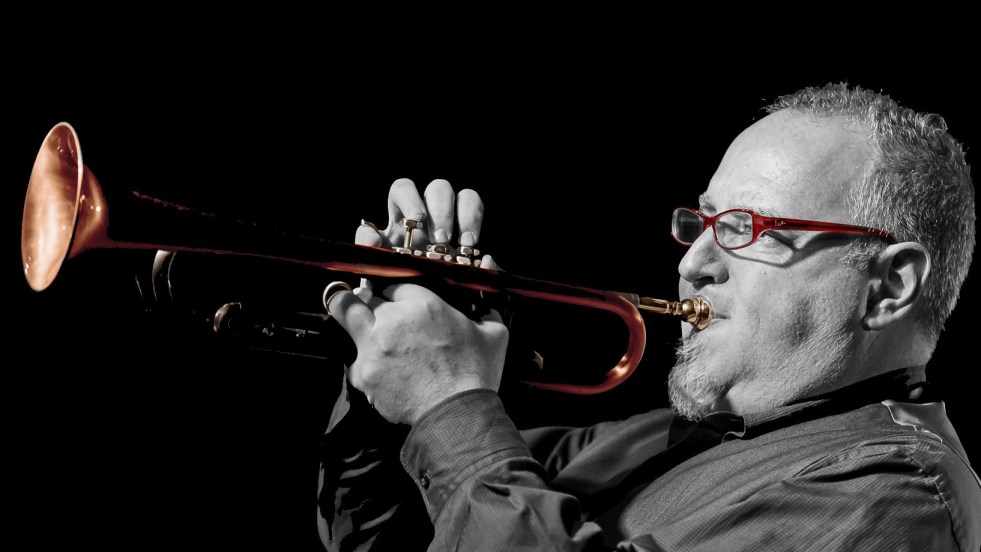
Belgian trumpet soloist Jeroen Berwaerts combines immense technical prowess with beautiful sensitivity across a huge range of styles. His CV is extraordinary, boasting solo appearances with orchestras across the globe, teaching commitments in Hannover and London, as well as a really interesting relationship with Yamaha.
What first drew you to the trumpet? Who or what were your early musical influences?

My father was the key. He played euphonium in the hometown band and brought a trumpet home. He did teach me the first notes. About half a year later I had my first real teacher at a music school, he was a Horn player , very much focused on a nice round and warm sound, that sound idea never left me. I also switched to the cornet at the beginning years because that trumpet was too heavy for me.

You had significant success as a young soloist – at what point did you know that you wanted a career as a trumpet player?

I cannot remember that I ever wanted to become anything else in my life. After hearing and seeing a concert of the Philip Jones brass ensemble in Kerkrade (Holland) I told my father on the way home , that’s what I wanna do. I must have been around 9 or 10 years old.

Your early competition successes must have helped to open some doors for you? How did this success influence the pattern of your current working life?

I realize now that these competitions at young age, as well as concerts or performance situations, are the best base to have for security on stage later on. Due to the fact that I have always performed or competed, the stage as well as the challenge to conquer pieces feel very much like home for me.

You have received critical acclaim for your interpretations of many different musical styles – do you find it difficult to ’switch gear’ between them?

With the right equipment and the correct mindset it’s not really a problem. I find ‘variety’ one of the most beautiful sides of being a trumpet player.We can compare it with being a Decathlon athlete. It’s very challenging to switch between styles, instruments, including many different colors and moods, but it’s never boring 🙂

Do you have any regular practise routines that you use?

Oh yes, I have my favorites like Charles Colin lip flexibilities and vincent cichowicz. But also Caruso, Arban….. some of them are always around and some come and go 🙂 I like the balance between a secure feeling (what we now) and new challenges (the unknown). But most important for me, when I practice I probably sing about 50% of the time and play 50%. I see the trumpet as my own voice-extension.

Do these routines change a lot depending on what repertoire you are working on?

When I am working on a big program or physically demanding works (so practically all the time :-)), I try to never neglect the “sports” aspect of the job.The actual work I am doing is a combination between high-performance sports and musicianship. And yes, there are great routines to support different issues that come up depending on the works we play.

To what extent does your equipment need to change depending on what you are working on?

I have never been too much into trying out thousands of mouthpieces and trumpets, I need equipment that I trust, that’s it. The mouthpiece I play is a 30 year old 1,5c Bach. It’s so old that my friends at Yamaha have to change the head of the lead pipe when I am trying out there newest babies.

What key advice do you have for today’s young and aspiring trumpet players?

Practise, practise, practise ! And read the “ten rules for students and teachers” from John Cage.

Can you please talk a little about your relationship with Yamaha and how you have worked to develop the right instrument and mouthpiece combinations for you?

The most important thing for me, working with Thomas, Timo and Eddy is that they understand my language. Talking about sound is mostly very abstract and at that point you need a good understanding, that works great. Like I wrote before, I was never so much into changing material but last year, we worked on a Bflat and I have never played an instrument that good. It speaks as if I can just sing in it.

What are you currently working towards? Do you have any up and coming projects that you would like to talk about?

My personal challenges are a program in April where I will play Michael Haydn C-Major concerto in combination with a very demanding work by Viennese composer HK Gruber. And in May another challenging program together with Reinhold Friedrich where I will perform rather modern works by Hindemith, M.B.Watkins, Ligeti and Hosokawa.Before these events I’ll have the pleasure to be working with the brass sections of several nice orchestras in Germany, mostly in a “lead/play” function.

We will be performing (mostly streaming for now) original works for brass by Tomasi, Grieg, Britten, Henze and many other composers. Between these soloistic pleasures there is the red wire of education. As much as I love to perform and be on stage, it is always the greatest pleasure to work with my students in Hannover or to come to London to the RAM and work with our students there. I find education such a wonderful field, it’s demanding at one side but you are also able to learn so much yourself continuously. Maybe THE most meaningful profession.

We are living through difficult times in the midst of COVID-19 lockdowns across the globe. How has this affected your preparations and projects?

Of course there was a period where most concerts where cancelled but I tried to re-orientate immediately and see where the possibilities are. I am very grateful and lucky to not needing so much to be motivated. Trying to motivate others is actually the best motivation for me.

And of course being on the road so much it was a new and fantastic feeling to be home and in one place for such a long time, I forgot how that felt.


Sign up here for new blog articles emailed direct to your inbox:

[jetpack_subscription_form show_subscribers_total=”false” button_on_newline=”false” custom_font_size=”16″ custom_border_radius=”0″ custom_border_weight=”1″ custom_padding=”15″ custom_spacing=”10″ submit_button_classes=”” email_field_classes=”” show_only_email_and_button=”true”]

Advice · Interview

Trumpet Artist Profile : John Eth

John Eth is a well-respected trumpeter, originally from Phoenix, Arizona. The Legends Brass artist was kind enough to give up his time to answer some questions below.

Can you tell us a little about what got you started on the trumpet?

I remember every weekend my father playing Harry James records all day Saturdays and Sundays. Even though my father was not a musician he loved the Harry James big band. So when in 4th grade  the band director came around to classes asking if anyone wanted to be in the band I immediately raised my hand. When asked what instrument I wanted to play I volunteered for the trumpet. My parents rented me a trumpet before the band would start so I was very excited to try and play it.

I would put Harry James records on the player and listen a little then try to play what I was hearing. I had no idea of what notes were or what valves to push down but I kept trying to play what I heard and eventually played what sounded to me like the same note. I practiced this way until band started at school. Unfortunately this led to me hearing in the key of B Flat. Even today I hear notes that are relative to my trumpet.

My music teacher was a french horn player and also in the Phoenix Symphony. I studied with him through sixth grade. At that time he suggested that I should take lessons from Hershel Kreloff the principal trumpeter in the Phoenix Symphony. I studied with Mr. Kreloff until the summer after 8th grade. I had split my lip very badly in a summer community band and Mr. Kreloff said that he could not help me and that I would probably not be able to play trumpet again. I was devastated. After calling every trumpet teacher in Arizona I came across Tony Picciotto. Tony was a trumpet player who had played with the Tommy Dorsey Orchestra. Tony recently had moved to Scottsdale Arizona and was teaching at Otto Steins music in Phoenix. Tony took me under his wings and was the only one that said he could help me. With Tony Picciotto’s help I was soon back to practising the trumpet.

When did you decide that you wanted a career in music?

I never really thought that music or playing the trumpet would lead to a career. The first time that I realized that you could make money playing music was in High School. A few of us had gotten together and formed a Tijuana Brass type band and was offered a gig at a Frat party at Arizona State University. Non of us were old enough to even drive a car so our parents had to drive us to the job. We each were paid $50 dollars. That was a lot of money for High School kids. That one job changed my thoughts and was the start to my career in music.

What styles of music have you listened to most over the years?

Music styles that have influenced me the most are Big Bands including the Harry James Big Band, all of the Maynard Ferguson Bands and the Stan Kenton Orchestra. Rock and Roll Bands, Blood Sweat & Tears, Chicago and Tower of Power.

How about career highlights?

As I look back to my career some of the highlights would include, in high school through auditions being selected to 1st chair trumpet in the All State Orchestra and in my senior year of high school being granted a scholarship in music to Arizona State University.

My freshman year at Arizona State University I was selected to first chair trumpet in Orchestra, Concert band and Brass Choir. Another memorial moment was being featured at a football halftime performance playing Doc Severinsen’s ‘Monday Monday’.

After Collage I have was blessed with being able to perform with over 30 major entertainers including Elvis Presley, Tom Jones,Buddy Rich, Aretha Franklin, The Four Tops, The Temptations, Sammy Davis Jr., Liberace, and to many more to name.

I have been a guest artist on the TBN network, Featured on World Wide TV as a Christian artist and performed on stage with Phil Driscoll. I have also recorded my own Christian album Titled “God and God Alone”. Another highlight was being selected to be in “The Upper Register” a publication listing over 200 Lead and High Note Players.

My trumpet skills have allowed me to have recorded a number of studio projects including the following, Buck Rogers and The 21st Century television movie , the theme songs for the television series Harper Valley PTA and Sheriff Lobo. More of my studio work has included two Super Bowl half time shows and over 20 CD’s for various artist.

Throughout my musical career I have had the opportunity of meeting three famous trumpet players that I have had a personnel relationships with that have been a blessing and inspiration to me. 

I had the pleasure of having lunch with Mr. Clark Terry where we discussed his musical career, the people who influenced him as a player and how he has influenced many young players. Truly an inspirational man.

Bobby Shew and I met at a college performance where I had the pleasure of taking the place of Lou Soloff in the trumpet section. Afterwords Mr. Shew and I have kept in touch for many years as friends. He has been a true inspiration to me and has blessed me by endorsing my trumpet skills.

Bud Brisbois and I became very close friends after meeting each other at a rehearsal band in Scottsdale Arizona. We would meet for lunch at least 2 to 3 times a week discussing everything from trumpet to life. Many of the things that I learned from him I still apply to my playing today. Bud was my friend, an inspiration, and is truly missed.

Of all the accomplishments, playing, recording and being featured that I have had throughout my life I have to say that the most important things to me are meeting and becoming friends with Clark Terry, Bobby Shew and Bud Brisbois. The time spent with these great musicians can never be replaced.

What does your practice routine look like?

My practice is very basic. I constantly work on corner and support strength. Lip trills slow and fast everyday. An example would be trilling from second line “G” in the staff to 3rd space “C” in the staff. I then go down chromaticly, next would be “F# to B natural” and so on. I do these lip trills until I feel a lactic acid build up then stop and rest. It’s the same idea as lifting weights. You have to build up the muscles that are used to play in all registers of the instrument.

I also never practice anything louder than Mezzo forte. By practicing at a softer level it keeps the aperture tighter and more closed. This is very important for playing in the upper register. All my life the routine I have used to build more breath support consists of Long Tones. I practice Long Tones by starting on 3rd space “C” in the staff and going down chromaticly the entire range of the instrument. I hold each note out as long as I possibly can, not breathing until all I can muster is a very small buzz. Make sure that you are sitting down if you do this! You can possibly black out from lack of oxygen.

How about your horns and mouthpieces?

At this time I play Carol Brass instruments. My trumpet is a Carol Brass model CTR-5060H-GSS. It is silver plated with a sterling silver lead pipe. I find that this instruments sound is versatile enough to play all the different styles of music without being to bright or to dark.

I play a Legends Brass custom designed mouthpiece It is the model “ETHS”. A number of years ago My business partner and I started Xstream Mouthpieces. Being a machinist I designed my own mouthpiece with a different style of cup. I call this design a “Compression Cup”. I have played this design cup for over 10 years. 5 years ago we closed our business and sold all of our machines used to make mouthpieces.

I recently was not getting the results that I wanted with my mouthpiece and decided to reach out to Derek Saidak to see if he could help. I asked Derek if he could scan the rim and cup of the mouthpiece that I designed and put it on his backbores. He said “No Problem” so I sent my mouthpiece off to Mr. Saidak and within a few weeks I received 3 mouthpieces with an exact rim and cup match on the Legends Brass mouthpiece design. All three had a different backbore designed by Legends Brass. This gave me exactly what I needed. I am now a fan of Legends Brass and highly endorse their products. I encourage all trumpet players to give them a chance. Legends Brass has more mouthpiece options than any other mouthpiece manufacture I have come across and can make you a custom mouthpiece as well.

My custom Legends design mouthpiece should be available soon if anyone would like to try it. Many Thanks to Derek Saidak for helping me achieve my goals.

How having you been managing during this global Covid lockdown?

The global lockdown has been stressful at best. I found that keeping focus on my music has been very helpful. I recently set up a small recording studio in my office that lets me play along and record using music tracks. This at least gives me a feeling of playing with a musical group. If this is not possible for players to do I would encourage everyone to put on a CD or an MP3 and play along with it. I feel that it is very important to be playing music not just practising exercises.  

Only one can guess what the future holds. I believe that after a vaccine is approved things will get back to normal. Music is so much a part of every day life through radio, live concerts, television, movies and so much more that the public will be the driving force behind bringing live performances back.

What piece of advice can you offer young and aspiring players?

Don’t be afraid to invest in yourself and in try new ideas. It used to be a given to start out using a bach 3C mouthpiece or something similar in size. Don’t be afraid to try a smaller mouthpiece! The upper register will be easier to play. Buy a quality instrument. If you cannot afford a new instrument buy a good used major brand instrument. Take lessons from someone that you admire for their abilities. If you would like to be a symphonic player take lessons from someone that has experience in that field of music. Likewise if you aspire to be a Maynard Ferguson style of player take lessons from someone that can help you with the extreme upper register of the instrument. Don’t be afraid of changing instructors if you are not getting the results that you want.

What are you working on at the moment?

 Today I am working on a new website, johneth.com that will have everything from tips on practice, how to overcome injuries, video instructions, performance updates and much more. The website should be up and running in early November 2020. I have also started writing a new book “Surviving The Trumpet” which will soon be available. Starting a new recording project is also one of my pet projects. Even though the future is a little rocky right now I encourage everyone not to get depressed. Keep working on your God given talents and everything will be alright.  

You can find out more about the Legends Brass mouthpieces at https://legendsbrass.com

You can also view and purchase a selection of great Legends Brass mouthpieces at our Online Store


Sign up here for new blog articles emailed direct to your inbox:

[jetpack_subscription_form show_subscribers_total=”false” button_on_newline=”false” submit_button_text=”Sign up” custom_font_size=”16″ custom_border_radius=”0″ custom_border_weight=”1″ custom_padding=”15″ custom_spacing=”10″ submit_button_classes=”” email_field_classes=”” show_only_email_and_button=”true”]

Interview

Trumpet Artist Profile : Diego Urcola

‘Trumpet Artist’ is far too narrow a description for Diego Urcola. Perfomer, Band leader, composer, multi-instrumentalist and jazz educator are all monikers that should also be added. Born in Buenos Aires, Argentina, three‑time Grammy nominee Diego Urcola has been a member of the Paquito D’Rivera Quintet since 1991. Additionally, the oft‑in‑demand trumpeter performs regularly with the legendary saxophonist Jimmy Heath, the Caribbean Jazz Project and the Dizzy Gillespie Alumni All‑Star Big Band.
It was great to catch up with NYC-based Schilke artist, Diego for this interview:

Can you give a little background to getting started with the trumpet?

I started playing trumpet in my school band in Argentina when I was 9. I played in the concert, marching and jazz bands. The marching band routine had a New Orleans Jazz part so I started doing that without even knowing that I was playing jazz. My father who was the band director at the time, was a big fan of Sidney Bechet and he had regular jam sessions every Tuesday night at the school with some friends. Those sessions had a big influence on me because I loved the vibe and the improvised music that they were doing… so I decided then that I wanted to be able to do that.

When did you decide that you wanted a career in music?

Around when I was 14, I told my father that I wanted to be a professional musician. He told me that he was OK with it, but from now on I had to practise the trumpet for no less than 2 hours per day. And I’ve been doing that for the last 40 years…

What styles of music have you listened to most over the years?

After my “very early” New Orleans period, I discovered Dizzy, Bird and Miles and I got obsessed about learning the bebop language. I was also studying at the conservatory at that time so I was practicing and listening to a lot of classical music too. Later, already in the USA, I got into more modern jazz styles and also Brazilian, Cuban and South-American music.

How was the transition moving to and studying in Boston, and then later moving to New York?

Well, before I finish high school in Argentina I was already working as a professional trumpet player. I started working with singers, rock bands, musicals, and some orchestral work too. Also I was playing with my own small jazz groups and other jazz bands with musicians 20 or more years older than me. That was when I decided that I needed to move to the USA if I wanted to get better. I won a very good scholarship from Berklee College of Music and that helped me a lot to make the decision to move to the US. After 3 great years in Boston I kind of felt the same way. That in order to get better I needed to be in New York. That was 30 years ago…

I think that I may already know the answer to this, but what have been your favourite gigs?!

Paquito’s Band of course! I‘ve been doing that for the last 30 years! But working with masters like Jimmy Heath, Slide Hampton, Joe Henderson, Ron Carter, James Moody, Bebo Valdes and many others are highlights of my career.

How do your Argentinean roots influence the music that you make today?

A Lot! Especially tango music, the music of my home town Buenos Aires. Also South-American music in general. All music from Latin America has similar roots but they sound very different if you really study them. It’s very rich music, especially rhythmically. 

Can you talk a little about the horns and mouthpieces that you play, and the process of working with Schilke to find the right setup?

Right now I’m playing a Schilke HC2 trumpet with a custom 24B mouthpiece. The HC2 is for me the perfect jazz trumpet. Very flexible and with a dark but very rich sound with a lot of overtones. I have been playing very big rims for a while and I love the Schilke 24 rim. The regular cup of the Schilke 24 is too big for jazz so Schilke made me a 24B that is not in their catalog but it is exactly what I need. I also play a  Schilke 1040 Flugelhorn with a custom 24F mouthpiece. Before, I was never a big fan of the flugel as an instrument because most of them play out of tune, but the new Schilke flugels have perfect intonation and a beautiful sound.

Do you have a set practice routine?   

Yes, I start my day with about 20-30min of long notes. Then I go into a selection of exercises from different books like Caruso, Schlossberg, Flexus and Clarke that I picked out through the years. I play these exercises with different instruments: trumpet, cornet, flugelhorn, piccolo, euphonium, valve and slide trombone. 

How have you managed during this global lockdown? How do you think that musicians are going to need to adapt in the future to deal with may be a very different musical world?

It has been a very interesting time. In a way I have been busy doing videos for social media, home recordings, skype lessons and also working on the promotion of my new album “El Duelo” that came out on September 18th. I don’t think anybody knows exactly how things are going to be after this pandemic is over. All the Internet/Social Media things are interesting but they don’t come close to the experience of performing live. I hope we can get back to that very soon.

What advice would you give to young and aspiring trumpet players?

Practice, practice and practice…but also to diversify. To learn how to compose, arrange, record, computer music (sequencers, loops, samplers, DAW, etc…) and to produce content like videos, music for film and TV. I think this type of knowledge is going to be crucial if you want to make a living as a musician in the future.

What are you working on at the moment or in the future?

I just got a commission/grant from the Jazz Coalition so I’m going to start working on that. Also hopefully in the near future play live the music of El Duelo. 

Thank you very much for the interview and I wish everybody to stay healthy, positive and active until this pandemic is over!

You can visit Diego’s website for more information.

Information on his latest release, “El Duelo” is here.

Click here for the Schilke HC2 trumpet that Diego plays.

And the Schilke 1040 Flugelhorn is here too.


Sign up here for new blog articles emailed direct to your inbox:

[jetpack_subscription_form show_subscribers_total=”false” button_on_newline=”false” submit_button_text=”Sign up” custom_font_size=”16″ custom_border_radius=”0″ custom_border_weight=”1″ custom_padding=”15″ custom_spacing=”10″ submit_button_classes=”” email_field_classes=”” show_only_email_and_button=”true”]

Gear Review · Interview

Trumpet Artist Profile : Matthias Höfs

Matthias Höfs is a trumpet player and musician of the highest order. He is Professor of Trumpet at the University for Music and Theatre in Hamburg, and an acclaimed soloist and chamber musician in his native Germany and around the globe.

Last year’s release of his ‘Bach Trumpet Concertos’ album – beautiful performances of great Bach concertos arranged for the trumpet – led to me being mildly obsessed with any of Matthias’ recordings that I could get my hands on! A truly astonishing feat of music-making [IMHO!]. It was a real privilege to catch up with him here for this article:

Please can you give a bit of background to what got you started playing the trumpet and who your early musical influences were?

As a young boy, I would hear stories from my grandmother about my grandfather, who was an avid trumpet player in the church’s brass ensemble. Unfortunately, I never got to know him, but when my parents later asked me (I had just turned 6 years old) if I wanted to learn an instrument, I remembered my enthusiasm for the trumpet from those stories. On top of that, I was also fascinated by such shiny gold instruments!

As I had absolutely no musical training (I couldn’t read a single note), I started to learn solely by ear and would try to play melodies from the radio. Unknowingly, it was a very good method to train the ear and feeling for the instrument. Finally, when I was 11 years old and came to learn with my first teacher, Prof. Peter Kallensee, the then solo trumpet player of the Hamburg Philharmonic State Orchestra, my wish was clear: to play solo trumpet in a large symphony orchestra. To this day I still spend a lot of time on stage with friends from my youth orchestra days. Since 1980 I have played together with Christoph Baerwind, Uwe Füssel, and Werner Heckmann, all of whom were also later members of German Brass.

At what point in your career did you realise that solo performance and musical innovation would play an important part for you?

I have always had a desire to play music with my friends. Since there was however, very little chamber music for trumpet, I began very early on to arrange for a wide variety of instruments so that I could also play music with strings and woodwinds. Then, when I was engaged as the principal trumpet of the Hamburg State Opera at age 18, I enjoyed a great support from my chief conductor, who let me regularly perform as a soloist with the orchestra. In 1984 the invitation came to join the newly established ensemble, German Brass. I will never be able to forget the ensemble’s first concert. The trumpet group at the time consisted of Konraden Groth, Günther Betz, Reinhold Friedrich and my humble self! Since then German Brass has been like a family and has strongly influenced my playing.

How do you manage to juggle multiple projects alongside keeping your trumpet playing at the highest level?

When you are passionate about something, you can always find room to consistently pursue what is important to you. So I have, for example, no scruples about a practice session in an empty airport gate before a connecting flight, or to practise in a car park if there is nothing better available. I also enjoy practising outdoors under the open sky. This happens sometimes during tours in the warmer months while we’re travelling by car, we’ll look for a rest area in a remote forest.

Have your practice routines and practice sessions changed much over the years?

I don’t have any ‘Routine’ and don’t like purely technical exercises without a hint of music. For me, a sense of feeling for the body and embouchure is very important. If you can ‘save’ a good feeling, then you can make your warm-ups very compact and save a lot of time. 

©Sibylle Zettler

What are the key things that young aspiring players should concentrate on?

We will make the most progress when we try to play music with the greatest joy, ease and relaxation, and only ask of ourselves the things that we can play in a controlled manner. 

Would you say that your approach to trumpet teaching has changed much over the years, and if so, how?

For me, it is very important to see the trumpet as a musical medium and not as a sort of sport. The tone and expression stand in the foreground. Naturally, technique also helps us to implement this and with it to gain assurance. However, the pressure of performing at auditions and competitions has increased enormously over the years. The standard is constantly climbing and there are always more and more better players and fewer jobs. Because of that, psychological aspects play an ever-increasing roll in lessons. 

You have worked closely with a number of makers and artisans on helping to develop new and better products. Please can you talk a little on the process of developing the Vhizzper with our mutual friend, Christoph Baerwind?

The Vhizzper Mute is the idea and product of my friend and German Brass colleague, Christoph. I have accompanied and followed the stages of its development through repeated testing and playing. Because we are more or less neighbours and have known each other since childhood, this is very easy, uncomplicated and effective. This practise mute is a great asset for our equipment and another tone colour that we can use for more than just practising.

What has been your most enjoyable project to be a part of?

There are so many wonderful moments for me that I have been able to experience through music over the years, that I find it very difficult to name a single concert or moment. Naturally, it is often the Premiers, the famous ‘first time’, that stays in everyone’s memories: the first concerto with a large orchestra, the first opera, the first German Brass concert…

At the time of writing, we are all in a strange worldwide state of lockdown due to Covid 19. Has this enforced break made you change your perspective or think differently at all on any aspects of life or music-making?

Naturally, these times change all of our thoughts and actions. What we musicians realise, and I think also our audience is there is no alternative to live concerts or operas. This energy can only be freed together with the audience in this special acoustic and atmosphere. Naturally, we are also grateful that at the moment through the internet, we still have the opportunity to convey anything at all. But that cannot at all replace live performances. If there is something positive to see in the situation, it’s the time that we suddenly have with family. You can practise and arrange without the pressure of a deadline, and reflect on the essential things…

What are your ambitions for the future?

Of course, we are all craving to play concerts together again and to be able to bring everything than we are planning now onto the stage. For me, it is something fantastic if it succeeds in bringing our instrument, the trumpet, new works either self-arranged or to be commissioned, where we can show new colours or techniques. The collaboration with my instrument maker Max Thein is also, for me, very inspirational and satisfying when we manage to continue to improve the instrument or to develop new models. For me, to share my experiences and the passion for my instrument and the music with my students at the University for Music and Theatre in Hamburg is very fulfilling. What more could you wish for?!

To find out more about Matthias Höfs, please visit his website.

Please click here to read the review of the excellent Vhizzper Mute


Sign up here for new blog articles emailed direct to your inbox:

[jetpack_subscription_form show_subscribers_total=”false” button_on_newline=”false” submit_button_text=”Sign up” custom_font_size=”16″ custom_border_radius=”0″ custom_border_weight=”1″ custom_padding=”15″ custom_spacing=”10″ submit_button_classes=”” email_field_classes=”” show_only_email_and_button=”true”]

Advice · Education · Interview

Trumpet Artist Profile: Marvin Stamm

Marvin Stamm is a colossus of the music world, having performed and recorded with many jazz legends throughout his illustrious career. At 79-years-young, he is still going strong and has many interesting thoughts here on adapting to change, both musically and physiologically over the years. There is sound and compelling advice here for musicians of all instruments and of all ages!

What first drew you to the trumpet?

Upon reaching the seventh grade in the school I attended in Memphis, Tennessee, every student was required to participate in a form of the arts—either become part of the band or sing in the chorus and take art. I had no talent for art nor any interest in singing in a chorus, so I chose instrumental music, which at my school was the standard concert band instrumentation. Part of my decision also rested upon the fact that I was rather shy at that age, and thought I could hide within a larger organization and not be noticed. The reason I chose the trumpet was because my older brother, an avid record collector, had a recording by Clyde McCoy entitled “The Sugar Blues” with which he employed the Harmon mute with the stem to produce wa-wa effects, growling, and flutter-tongue. This was quite impressive to me, and this is why I chose the trumpet.

Were there any particular early influences or musicians that you admired?

There were many early influences upon me, and they would have great consequence on the path I chose. Among the important people who first influenced me were my two wonderful band directors during my school years in Memphis; they gave me great training in the basics of music, playing in their concert bands. Another was my afore-mentioned brother, Gordon. My interest in jazz came about very early in my musical experience because hegave me access to his complete jazz collection, allowing me to play along with his records pretty much from the genesis of my musical endeavors. This gave me early exposure to this music  and hadgreat impact on me. I was so enthralled with playing music that I decided after only two years—at age fourteen—this would be my path in life.

Another person exerting great influence during my high school years in Memphis was my trumpet teacher, Perry Wilson. Perry helped me build my musical foundation. He took me through Arban’s, St. Jacome, Schossberg, and Klose, also spending a great deal of time playing duets with me in order to teach me how to work, phrase and blend with other players. At the end of each lesson, he took me into one of the piano rooms and played tunes with me to help me broaden my improvisational skills, learn new material—and, so very important—develop my ear. He also was instrumental in my working in Memphis dance bands from age sixteen. I was very fortunate to have fine and dedicated teachers from the very beginning who prepared me well for my chosen career.

Through every phase of my musical and personal life there have been people willing to offer encouragement and help. There were several very fine musicians form my growing up in Memphis, many of the professional players the Dallas/Ft. Worth area and at the university during my years at North Texas State (now the University of North Texas). The years with Stan Kenton and Woody Herman were of immense value to my growing and developing as a player as well as the two years doing show work in Reno, Nevada. And then throughout all my years working in New York and beyond.

It would be impossible to list all the musicians with whom I have worked and who personally influenced me, but among the trumpet players whom most of our colleagues would recognize would be Mannie Klein, Bernie Glow, Ernie Royal, Snooky Young, Thad Jones, Ray Crisara, Burt Collins,  and Kenny Wheeler. And this lists just a few of the many who were of enormous significance to my music and my life. Someone once said to me that I had achieved a marvelous career and I had done all on my own efforts. I laughed and told him he could not be more mistaken. I had help every step of the way and experience this still to this day—from friends and musical colleagues alike.

As a young player, what was it like joining Stan Kenton?

I joined the Stan Kenton Orchestra as his jazz trumpet soloist immediately upon graduation from the University of North Texas in 1961. However, my relationship with Stan pre-dated that occasion because the North Texas band was kind of a house band at the 1960 Indiana University Kenton Clinics, serving as his band for that week. He conducted us in nightly concerts and became quite familiar with my playing, In November of that year Stan asked me to complete the last three and a half weeks of the 1960 tour because Sam Noto had been offered a steady gig at the Latin Quarter in New York City and needed to leave the band. This was really my baptism of fire with the band.

I joined fully after graduating from North Texas and toured with him for two years, recording five albums with the band. The orchestra, during my tenure, toured only in the U.S. and Canada, mostly playing one-nighters. I gained a good bit of national recognition and exposure touring with the band and especially through my being featured extensively on the recordings.

Working for Stan Kenton was great—he was very much a father figure, quite a special person, and very dedicated and inspiring to one such as myself. He was also very patient with me during my time with the band. I underwent a bit of an embouchure change because I was playing low onto the top lip, that is, onto the red tissue of the lip. Because the band played so hard, and most times quite loud, this caused me to cut my lip. With the help of John Haynie, my trumpet teacher from the University of North Texas, I moved the mouthpiece up on the top lip a good bit, providing more vibrating surface for playing and more muscle tissue, more “meat”, for the mouthpiece to rest upon. This was quite a drastic move for me and took a long time for me to adjust to, causing me a great deal of stress. During this whole period of adjustment, Stan was very patient and encouraging to me, showing how much concern and care he had for the people who played in his band.

My time on the Kenton band provided great experience in that it gave me a clear view of “life on the road.” I received a lot of solo exposure and met many people who contributed much to my growth and life experience. Some became friends for life. This playing experience was especially invaluable because you had to be at the top of your form every night in spite of being weary or sometimes ill; or many times playing where acoustics were less than perfect with tired or hurt “chops” and always being on the move. This instilled the concept that when it was time to perform, it didn’t matter how you felt—you were expected to be at your best at all times, under all sorts of conditions. And the one who expected the most from you was you yourself!

During your period as a busy studio player, what were the main things that you concentrated on in practice sessions to keep yourself in good shape and ready for anything?

Fundamentals, fundamentals, fundamentals! I wanted to keep my embouchure strong, but flexible and my technique accurate. We almost never knew what we would be playing from session to session until our arrival at the date. And some days we would be  playing three or four different sessions, all of a different musical style. I might be playing lead trumpet on one session, flugelhorn on another, and piccolo trumpet on a third. Our musicality depended upon our exposure to many styles of music and the interpretation thereof. But the ability to go into number of different musical environments, having the flexibility and stamina to perform to the highest standards day in and day out was the foundation of such a career. I found that keepingmy“instrumental”side in it’s best working order was the best way to be prepared for this kind of functionality. That meant stressing fundamentals.

What prompted your move away from the studio work to concentrate on your own jazz projects?

In the late ‘80s I realized I was feeling musically unfulfilled by the work I was doing. For the first 17 years or so of my studio period, while doing a lot of commercials and such, I still was also involved with a lot of musical recording projects, many of which were in the jazz genre. In the early ‘80s, the shift in work was more to commercials, and the recordings were mostly R&R recordings. There was little creative input being asked of the players, and I was feeling like just a journeyman musician, like “cog in the wheel” of most projects.

In addition, the technology aspect of the music was growing and many of the keyboardists and synthesizer players involved in projects were also being asked to write the arrangements for these projects—few with any knowledge of or skills in orchestration. We became the sources for informing them of what possibilities there were for various instruments, sometimes teaching them the most rudimentary things such as what was the lowest note on a trombone and the highest note playable by a typical saxophonist. It was very frustrating to most of us who had worked for years to become educated, masterful musicians.

In 1987, Lew Soloff introduced me to Swiss composer and and band leader George Gruntz, who was looking for someone to replace Lew for an upcoming tour, as Lew was already booked at that period of time. George invited me to join his group of U.S. and European musicians and I accepted, beginning what was to be a twenty-three year association with his Concert Jazz Band.

The musicians for this tour included Americans Lee Konitz, Claudio Roditi, Larry Schneider, Mike Richmond. Adam Nussbaum, Ray Anderson, Art Barron, David Taylor, Joe Henderson and others. Among the Europeans were trumpeters Palle Mikkelbourg, Manfred Schoof, and alto saxophonist Luten Petrovsky. There were straight-ahead players, BeBop players, and avant-garde players, all coming from across the musical spectrum. Moming from a more traditional big band background, I was initially taken aback by it all, but by the end of the tour, I was inspired. I felt that it might just be possible to move away from being a studio musician to become a jazz musician.

The thought was, at first, frightening. I remember one night discussing what I intended with drummer Ed Soph, wondering aloud how I was going to make this happen. Ed told me not to worry, it would definitely happen. Of course, I also talked all this over with my wife, who felt I should go for it. From this, my decision was made. For the next three years, i put myself out there, and if there was a choice between a recording session or a jazz gig or a tour, I took the jazz gig and turned down the session. Eventually, it became obvious to those in the business and they started calling others for studio dates. As well, my work as a jazz player was growing, so over time, one replaced the other. This began the most creative period of my musical life, and I never looked back.

As the years have gone by, would you say that your approach towards practice, preparation and performance has changed? If so, is it something that has had to change?

I certainly feel my approach has changed over time. It is true physically as well as musically. People tend to change physically as they age, even from their 30’s into their 40’s. and again from their 40’s into their 50’s and so on. This is just a physiological fact. Understanding when one’s practice and approach to the instrument needs to be altered—even if only slightly—from time to time to meet these circumstances is a great challenge. No one wants to change from what has worked successfully for a long time. But sometimes change is necessary, particularly when the problem may be physiological. I have seen many examples of players who don’t understand when their physiology changes and are so stymied by this that they don’t recover. They keep trying to approach everything the same way they have done for years, and yet, it doesn’t work anymore. Having a teacher or outside coach can help when one feels frustrated. A coach or teacher one trusts may see things looking from outside our faces than we don’t perceive on the inside. I sought help several times from the late Laurie Frink, a most wonderful teacher and player, who helped me to understand and work through my own problems.

Musical circumstances can also require a player take a different approach to practice. It all depends upon the kind of music and performance one is being asked to play, especially if one is working as a free-lance player. One example would be someone playing a show night after night that requires a hard blow, but then being asked to play a week in a small chamber orchestra where the  music is softer and requires a different sound. The practice necessary to prepare for this kind of change would be quite different than the preparation for a difficult show. Practicing fundamentals to keep one’s embouchure flexible to play in any circumstance is necessary and certainly helps one to overcome many of the changes one must go through.

Every player experiencing physical or musical changes in their playing must be mindful of finding his own solutions to whatever challenges might arise. This will involve being flexible in his thinking and approach to these challenges going through the various stages of their careers. There has never been one answer for everyone; each of us must find our own. This is a challenge we all face.

What equipment do you use?

My trumpet is a Bach Model 72 Lightweight that the great lead player Bernie Glow picked out for me in 1969. My mouthpiece is a Najoom 7M (for medium). I play two flugelhorns, an old Cousnon I bought used in 1964, probably made in the 1950’s, and a French Besson, made under the auspices of Boosey and Hawkes by Zig Kanstul, at the urging of me and Guido Basso,the great Canadian trumpeter. I use either a GR custom mouthpiece (close to a 62M) or a very old Bach 10 1/2 C flugelhorn mouthpiece.

What do you think the priorities are for young aspiring players to keep in mind to give themselves the best shot at a long and successful career as a trumpeter?

There are a number of priorities to developing a long and successful career, each being a key basis of the other. Mastery of one’s instrument is certainly the foundation of any successful career, and practice of the fundamentals is the basis of that foundation. Part of this is also understanding the importance of developing a good sound because one’s sound is his voice, who he is musically. And while mastering etudes, solos, and excerpts are important, listening to and performing in many areas of music is the key to becoming a versatile player—and versatility is central to being a busy, working musician. There are those who are able to develop a career as a specialist in a given field, but they are rare birds in the equation. Being able to answer any work call and performing whatever that call requires is the key to having a successful career as a working musician. And that means having a working knowledge of many kinds of music.

What are your proudest career moments?

Over many years of playing music, I believe the thing I am most proud of is all the years of playing in the company of so many great musicians and being accepted as one of them. I had the great privilege of playing with my heroes, and to this day, I still feel that I am trying to play up to the level of musicianship that they set. But I don’t feel this as an element ofpride; I actually feel great humility at this acceptance and being a part of so many wonderful musical moments. I had the privilege of living my dream, fulfilling my musical fantasies.

What are your most enjoyable career moments?

There have been so many that it is difficult to pick one or two special experiences because there have been so many. Sitting a the trumpet section with people like Bernie Glow, Ernie Royal, Snooky Young, Ray Crisara, Randy Brecker, and so many others was always special. Reaching to achieve the highest level of performance in the company of many great musicians was constantly thrilling. Words can’t really express the feelings this generated, day after day, performance after performance. I guess the most important thing to take away from what I am trying to express is that music is never about “me,” but about “we.” Community, everyone striving to bring the best to each musical moment, is the most fulfilling element of great musicians playing together. And I was most fortunate to be some part of so many of those experiences.

What projects have you got coming up?

I am going to be doing a project in the UK next summer with Matt Gough and Andy Bush, both excellent trumpeters and composers. Andy and I met in the mid-1980’sand have been dear friends ever since. Matt is a new friend and the composer of a magnificent multi-medium suite, “The Forgotten Fairground.” I’m sure you’ll be hearing a lot about this project soon.

I’ve also been privileged to be a part of several projects by pianist and composer Michael Holober. We’ve become very close friends dating back to when he conducted the Westchester Jazz Orchestra of which I was a member. I have been a part of four of his projects in the past four or five years, and he has mentioned two or three future projects that he is working on. Michael is also a musical partner in my quartet along with drummer Dennis Mackrel and  bassist Mike McGuirk.

And I continue to perform as a guest soloist in various settings. I appeared at the Guildhall this past July, performing two of the Miles Davis/Gil Evans suites, “Miles Ahead” and “Sketches of Spain,” with Scott Stroman conducting. Working under Scott’s baton is always exhilarating!  I shared the solo chores with UK trumpeter Robbie Robson, and if any of your readers are unfamiliar with Robbie’s music, please do become familiar with it. Robbie is extraordinarily creative and gifted musician. I enjoyed so much sharing this program with him.

In closing, let me say that in light of all I have been so fortunate to do in music, I am happy any time I can be in the company of extraordinary and like-minded musicians, people I can enjoy playing with, listening to, and  learning from. To me, that’s what it’s all about!

Please click here to read about Marvin’s time studying with Carmine Caruso

You can see and hear lots of great clips of Marvin playing on his website


Sign up here for new blog articles emailed direct to your inbox:

[jetpack_subscription_form show_subscribers_total=”false” button_on_newline=”false” submit_button_text=”Sign up” custom_font_size=”16″ custom_border_radius=”0″ custom_border_weight=”1″ custom_padding=”15″ custom_spacing=”10″ submit_button_classes=”” email_field_classes=”” show_only_email_and_button=”true”]

Interview

Trumpet Artist Profile: Fabrizio Bosso

Italian readers will most likely need no introduction to Fabrizio Bosso. He is already a jazz superstar in his native Italy, and is now in demand on the international circuit with his various groups. Born in Turin in 1973, his fluency both musically and technically has brought him award upon award for his numerous albums, and Fabrizio’s post-bop style continues to develop to the delight of his listeners.

What made you want to learn the trumpet?

My father Gianni is an amateur trumpeter. He still plays in a big band, and it was him that guided me towards the trumpet, and also to jazz. I started to play at age 5, but I never had to be pushed, it was always  my wish, and my family supported me from the beginning.

Fabrizio Bosso 2015 (Ph Roberto Cifarelli)

Who were your main musical influences?

I have two names in answering this question: Clifford Brown is the master that I look to in the past, and Wynton Marsalis is my favourite current player.

Are there any particular routines that you follow to keep yourself in shape for performance?

I play a lot of concerts each year and I am always travelling – this makes it difficult to find enough time to practice! Almost every day I work on basics including exercises and techniques from Clarke and Arban.

What do the next few months hold for you?

I am really happy that I am touring with my quartet, not just in Italy but also abroad. In June I will be in the USA – in Chicago, North Carolina, Washington and New York I very much hope that readers will come see us and listen to our music!

What can you tell us about choosing your Frate Precision mouthpiece?

I met Dario Frate some time and I have tested many of his mouthpieces over the years. Around one year ago, I found the perfect size for me that gives exactly the response that I want, and also gives me complete satisfaction  in the sound quality in all ranges and all dynamics!

Please visit Fabrizio’s website for further information.

Fabrizio plays exclusively on his Frate Precision Mouthpiece, the details of which are below:

Frate Precision Classic 6+, M, 3, 106: CLICK HERE TO SEE DETAILS OF THIS MODEL

frateclassic

The full range of Frate Precision trumpet mouthpieces is available from our Online Store.

Frate Precision and Thompson Music will both be at the ITG Conference 2018 (San Antonio TX, 29th May-2nd June) where you can have the opportunity to try out a huge variety of mouthpieces. See you there!


Sign up here for new blog articles emailed direct to your inbox:

[jetpack_subscription_form show_subscribers_total=”false” button_on_newline=”false” submit_button_text=”Sign up” custom_font_size=”16″ custom_border_radius=”0″ custom_border_weight=”1″ custom_padding=”15″ custom_spacing=”10″ submit_button_classes=”” email_field_classes=”” show_only_email_and_button=”true”]