Advice · Interview

‘Meet the Maker’ : Peter Pickett

Many top players have already turned to Pickett Brass and Blackburn Trumpets for mouthpieces and trumpets. At the helm is Peter Pickett who has kindly given up his time to answer some questions…

Can you talk a little about the background to getting started on this trumpet craftsmanship journey? 

This entire journey to date in hindsight appears elegant and neat when laid out on paper, but rather, has been quite challenging.  I’ll look back one day on life and say that all the pieces were laid out and it was such a natural progression, but the truth is that opportunities came and went, but with some luck, I was able to latch onto key ones along the way.  For example, when Cliff Blackburn approached me in 2009 on working with him to carry forward Blackburn Trumpets, I happened to have been in the right place at the right time.  Having said that, most of the company’s significant forward steps have hinged on being in the right place at the right time, and paying attention to see and take advantage of fortuitous timing.  You must always be aware of what’s going on around you and have the imagination to envision the possibilities at all times, even as impossible as it may sound at the moment.

My internal, irrational, and unconscious drive to bring this all to life has been a result of combining the joy of playing trumpet and of my engineering background and manufacturing.  What could be a better combination of those interests?  So much of the company’s progress and progression has been driven by brute force and pure work ethic, powering through significant inefficiencies and unawareness, to accelerate learning and progress to get ahead of the learning curve and not settling for what was easy or simply sufficient in the moment.  We’ve worked through a number of these headwinds, but out of the gate, you just have to execute and work regardless of what it takes to get it done.

When Pickett Brass officially started in 2003, I did not have all the skills necessary to do what we do today.  But this didn’t stop me from stepping forth to see if all of this could work.  Stumbling through numerous issues having nothing to do with the actual parts in the beginning really woke me up to the sheer number of obstacles that would need to be overcome.   

Who or what were your inspirations?

Most of my inspiration comes from wanting to actually make something meaningful, bringing something to life.  Being able to create something from raw materials, from almost nothing, that act of creating is what fuels me the most.  This coupled with music and creating something that contributes to the creation of music only reinforces the inspiration.  The incredible variety of artists that I get to meet and work with is humbling.  Ultimately it’s a privilege to be a part of this music making community –  which is not something to be taken lightly.  When we are actively part of something larger than ourselves, and can contribute to the greater good, it’s not an opportunity to boast or brag, but rather to quietly contribute to the growth of all in the community together, creating community strength.

Did you set out with ideas of how manufacturing could be improved?

Absolutely – when any process becomes elegant and efficient, it is more fun and enjoyable.  This applies to any endeavor – for example, we don’t play trumpet because it’s hard, no fun, and produces unpleasant sounds.  No – instead, when we become adept and efficient at playing the instrument, it is more fun and enjoyable – and the end product is all that much better.  Wanting the business processes, the design processes, and production processes to be elegant and efficient has always been a significant driving force.

How and why did you branch out from valve trim-sets to the excellent custom mouthpieces that you now produce?

When all of this started in 2001, I was only aiming to make 1 set of trumpet buttons for myself.  They were made by hand, nothing special, but just made by me, for me.  This was followed by stems, top caps, and bottom caps and as far as I could tell at the time, this was all it was going to be.  Mouthpieces eventually followed as a natural progression around 2007.  I had the machines to do them and as every trumpet player knows, no one mouthpiece is going to be ‘it’ for any player.  The unlimited possible variations for brass instrument mouthpieces allows for numerous designers and manufacturers all around the world to take part and participate in this industry.  This was exciting to know despite “everything has been invented already”, I could still produce unique mouthpieces that work like no other for players and that had never been made before.  

Are there any unexpected challenges that you have met along the way?

Absolutely – seemingly endless and absolutely overwhelming at times.  Most people don’t realize what goes into creating and running a complete business.  Making actual mouthpieces is only one small aspect and can be challenging into itself, but ultimately it takes so many other steps to get that freshly made mouthpiece out the door to a player.  So overcoming the challenges of running a business from the financial processes, to ecommerce development and management, taxes, payment processing, facilities, and numerous others, have all been challenges.

Running a successful manufacturing business takes a lot of time and commitment. How do you balance this with having a life outside of the workshop?!

Running a small business is all life-encompassing and a lifestyle choice.  Some say it’s a curse, others a privilege, but there is nearly no time in any day that the business isn’t being worked on or thought about.  So life balance in the traditional sense is fleeting and fairly non-existent. The variety of activities that the business offers is one outlet though – from manufacturing to meeting with customers, there is a wide range of involvement and autonomy.  For example, trade shows give me a fantastic opportunity to meet new people, hear new music, and see new areas outside of the shop.  

Can you talk a little about your work with Cliff and taking on the Blackburn trumpets brand?

Cliff and I have been friends for a long time – starting by meeting him in 2004 at the ITG conference in Denver, Colorado.  He probably doesn’t remember that initial introduction, but it was the first opportunity for me to talk to him and his wife, albeit briefly.  Since that early introduction, through the years, we’ve seen each other often and talked at conferences, and eventually worked together on manufacturing the Blackburn trumpet mouthpieces.  After years of collaborating with Cliff on the manufacturing of various trumpet components for Blackburn Trumpets, he approached me at the ITG Conference in Harrisburg, Pennsylvania in 2009 asking if I’d be interested in working with him in carrying the Blackburn Trumpets company forward after his retirement.  Of course the answer was yes, but little did I know that it would take an additional 7 years to work through the details.

We worked together through that period on training, learning, and exploring what made the Blackburn Trumpets what they are so well known for.  And even after we acquired the company in 2016, we had an incredible amount of learning and work still left to do.  It has been an incredibly overwhelming exercise, but has ultimately proven to be worth the work and challenges.    

What are your plans and ambitions for the future?

As it turns out, making trumpets from scratch is hard – the entire process of making a trumpet from scratch is mind boggling when you consider all the details along the way.  And details matter.  So we are working hard towards complete documentation and process improvements so that the Blackburn brand continues well into the future with strength and a strong succession plan.

I would like the Blackburn team to expand as our space continues to expand.  By having a solid group of craftsmen that are ingrained with the quality and technical expectations, we can produce like no other.  With this solid knowledge base, the Blackburn brand can be expanded into numerous other areas.In regards to the mouthpiece side of the business, we continue to expand our capabilities and improve processes.  It may not sound significant, but when you reduce the number of steps you take to accomplish the tasks it takes to produce a mouthpiece or any other product, the entire process becomes better, easier, and much more enjoyable.  This type of work is difficult in itself and is hard to do while working through day to day business.  However, we strive to take time to study how we do things and to try new approaches, so to maintain our relevance and avoid destructive complacency.

At the moment, the world is in the midst of the Covid-19 pandemic. How has this affected you?

The Covid-19 pandemic and uncertainty has all but fully consumed everyone.  Our business, like many others, has been shut down for a while to stem the spread of the virus, bringing to a halt the production of mouthpieces and trumpets like never before.  In addition, the economic fallout from the significant job disruptions and losses worldwide is incredibly disheartening.  Despite the day to day challenges facing us, I am optimistic that we will get through this together.  This period of time offers an unprecedented opportunity for self reflection and a pause – a universal “time-out” persay.  The challenge has been that this has all progressed so quickly and it’s hard to appreciate the sudden change in routines and ‘normal’ and do the self-reflection and evaluation.  Herein lies the present challenge – and the chance for the once in a lifetime opportunity.  


Sign up here for new blog articles emailed direct to your inbox:

[jetpack_subscription_form show_subscribers_total=”false” button_on_newline=”false” submit_button_text=”Sign up” custom_font_size=”16″ custom_border_radius=”0″ custom_border_weight=”1″ custom_padding=”15″ custom_spacing=”10″ submit_button_classes=”” email_field_classes=”” show_only_email_and_button=”true”]

Advice · Gear Review

Frate Precision : HM Cup Review

I speak to trumpet players regularly who are looking for are looking for a slightly shallower than standard cup in their mouthpiece. Perhaps they are playing a variety of different styles and need the extra brightness and flexibility. Some are symphonic players looking for that additional ‘utility’ mouthpiece that they can switch to when required. Others are commercial and jazz players who are looking for great slotting in the higher registers without a big compromise on sound quality. Or maybe they are looking for a mouthpiece that they can play comfortably on E-flat or Piccolo trumpet.

The best solution that I have found that can work for many of these players is the HM cup/rim range from Frate Precision. They are designed and made in Lombardy, Italy by Dario Frate – you may be interested to read this interview with Dario here.

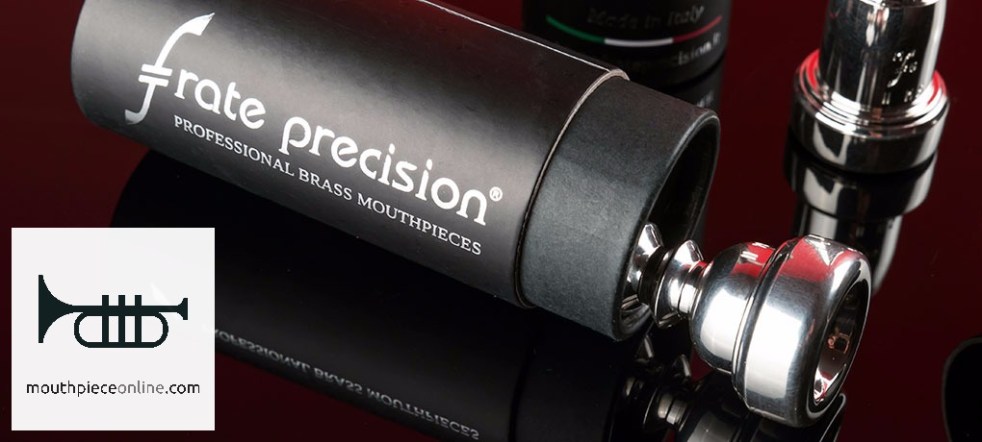
The range of HM cup mouthpieces from Frate Precision

The striking thing about these high cup mouthpieces is that you do not feel a compromise in sound quality and sonority. The ‘H’ refers to the High (or medium shallow) cup, and the M is the code for the rim shape. Combined with the slightly more open 106 backbore, it is easy to get a ‘sizzle’ to the sound while still keeping a lovely rich tonal core. The slotting and flexibility on them is also fantastic.

On piccolo trumpet, they are available with cornet shank. The standard shank/backbore seems to work best for most players on these.

Here is a list of my most popular and recommended models:

3HM, 106 : This has the number 3 rim (16.62mm), medium shallow HM cup, 3.66mm throat and a medium large backbore. Rim and cup combination and very approximately equivalent to a Bach 3D.

5HM, 106 : Similar to the 3HM, 106 but with a slightly narrower (16.35mm) inside rim.

7HM, 106 : As above but with a 16.22mm inner rim, roughly equivalent to Bach 7D.

All of these combinations are also available and in stock with cornet shank – please do send me a message if you are interested in one of these, or would like any advice on finding the right mouthpiece for you.

I have also reviewed a number of different styles of Frate Precision mouthpieces here.

The full Frate Precision range is available with worldwide shipping from our Online Store.


Sign up here for new blog articles emailed direct to your inbox:

[jetpack_subscription_form show_subscribers_total=”false” button_on_newline=”false” submit_button_text=”Sign up” custom_font_size=”16″ custom_border_radius=”0″ custom_border_weight=”1″ custom_padding=”15″ custom_spacing=”10″ submit_button_classes=”” email_field_classes=”” show_only_email_and_button=”true”]

Advice · Education · Gear Review · Interview

The Bob Reeves Interview

When you talk about getting your trumpets adjusted so that they respond perfectly to you or matching and adjusting a mouthpiece so that it works perfectly with your horn, you are probably already thinking about Bob Reeves!  
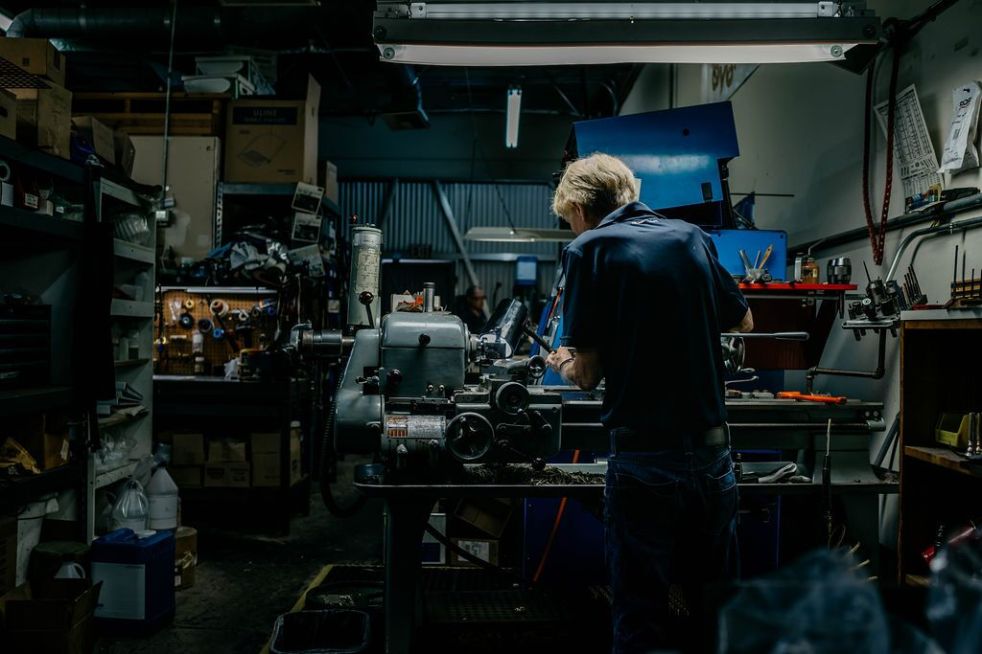
I was able to meet up with Bob at ITG 2018 for a coffee and a chat about his career.  In 2018, Bob was celebrating a staggering 50 years in the industry.  I am sure that he has some pretty special stories to tell, but in this interview, we mainly stuck to the technical stuff and the fascinating challenges that he faces in helping us all to be better players.

One of the topics that readers would like to hear about is matching the right equipment to players.  What can you tell us?!

When I started in Hollywood it was the capital of music.  There was so much recording going on there.  There were great players already in Los Angeles but also lots of touring orchestras from the US and around the world would visit.  I used to work with whatever they brought in for me to look at.  My philosophy is to service.  I am not a salesman; I don’t sell things.  I listened to players to work out what will make their life easier.

Take one great Hollywood trumpet player, Tony Terran. I saw him 3 times a week looking at adjusting mouthpieces.  I had pretty well perfected the process for valve alignment – I call that the foundation.  If that is not right, you can forget the rest of it.  So, one day I took his trumpet, took it in the back, cleaned it and did a valve alignment on it, and brought it back.  He then came back 3 days later with all of his trumpets and his son’s, had them aligned, and never needed to have another mouthpiece adjusted in all his career.

I stayed in touch with his son who now still uses those same trumpets in Las Vegas and says that he doesn’t ever need anything else from a horn.  I like to hear that.  Like I said, I am not a salesman, I don’t care what people come in for.  I hear them play, and that gives me most of the answers to where their problems lie.  If I can fix that by looking at the player and their equipment, that is great.  I don’t have to sell them something.

So, if you are listening to a player, can you confidently diagnose their technical deficiencies just from the sound?

Yes.  I won’t mention any names, but there is a particular trumpet soloist who makes me crazy.  I can hear on recordings that they are a very fine musician, but there are some technical problems that I would be able to fix given a chance.  I can hear that the instrument is very badly out of alignment, so every note sounds different.  And you can see looking at their face while playing that it is a battle and is having to overcompensate.  Maybe one day I will reach out to them!

I built trumpets at Benge back in the 60s.  I was the worst guy in the place because I always wanted to try to improve things.  After 3 years, I didn’t have a friend in the place!  I am not sorry about that at all.  It started me on the process of making trumpets to be as good as they can be.  And I still keep working on it today.

Trumpets built today by a number of manufacturers are very poorly made and adjustment is essential.  Many instruments are designed alongside great players, but the problem is that at the mouthpiece end of the instrument, you can’t really hear yourself clearly while playing.  I will always listen to the sound coming from the bell.  That is what matters.  You have to be able to tell where the note actually starts.  I can tell you whether the note is starting inside the bell, at the edge or even outside of the bell.  You cannot tell this when you are playing.

All the time that I am working with a player, I am listening carefully to their sound and how they describe what they are not satisfied with, but I am also slowly teaching them to listen too, as they have often never thought about it before.  You are busy in your head when you are playing so you tend to ignore things.  Maybe you are just glad to get the note!

So, doing the valve alignment is the foundation to figuring out any other problems.  Higher register is where I see the biggest problems occurring, often with very fine and strong players.  People reach a point where they change from what they can do instinctively with their good technique and change to try to ’muscle’ the next note out.  This is an area that I often work on both in trumpet and mouthpiece adjustment but also in that player’s own technique.

I have a good friend and talented trumpet player.  He could play solos with double C and triple C, just like songs.  He had that upper register so figured out that he could just ‘play’ the thing without thought.  He never looked like he was working hard.  And he did that on a standard mouthpiece.  There are very few people who have figured that out!

So how do you approach it with a customer when you know that there are things as much about their own trumpet technique that need to be fixed, as well as the trumpet and mouthpiece?  That must be tricky!

Everybody who comes in has their own opinion.  If it is correct, I say nothing.  For most players, it takes more time to adjust their thinking than it does to adjust the horn.  The mouthpiece is David and their own mind is Goliath!  Through our conversation I need to slowly get them to give up a little – as my suggestions gradually become more successful, they become easier and easier to work with.  The next time they come back it is much easier.

What are the most common adjustments to mouthpieces that you make?

The rim is the most important to most players.  Most people come in with a rim that they like, so I just cut the rim off and work with that if it is already comfortable for the player.  Then we work on finding something that matches the sound that he wants and also with the kind of resistance that he wants to match that horn.  I don’t tell anybody what to do, I don’t make choices for people.  I advise, but you’ve got to make the choice that is right for you.  You’ve got to be happy.  That’s the only way that I am going to be happy.

Is there ever a battle where perhaps people don’t like to hear what you have to say?

Absolutely.  A few people have packed up their stuff on me.  You know what, sometimes they don’t come back for years.  And then all of a sudden, they come back because someone else has eventually convinced them.

Which of your customers over the years have given you the most pride in the changes that you have been able to help with?

There are so many and don’t want to leave anyone out!  One example would be the 8 hours that I spent with Hakan Hardenberger and changed everything that he came in with!  He did a concert the next night and sounded great.  Doc Severinsen has been a great guy to work with.  Sometimes it is difficult as he always has his own opinions and you have to work with that.  He is a great trumpet player and a terrific person.  There really are too many great players that it has been a pleasure to work with!

Are there common preconceptions that players come to you with?

We talk about the gap between the end of the mouthpiece and start of the leadpipe.  People have opinions about that, professors have opinions about that.  The player tells you that they must have a gap of precisely X.  Nobody can tell you that, it is very personal.  For you, that gap might be 2 hairs’ width too big or small, but some people will remain adamant until you have proved it to them.  6 thousands of an inch gap completely changes the way that the horn feels and sounds.  Getting the gap right is matching the mouthpiece to the trumpet.  That gap cannot be taken to the next trumpet.  You have to discover it all over again.  That is what got me started thinking about building sleeves, because the player wants to have one mouthpiece in a number of different horns. I think of mouthpieces as tools – I probably have 25,000 different ‘tools’ in my shop, all with different purposes.

If you are playing the horn in a small room, you may want a different gap than you may want in a larger room.  The reflected sound coming off a wall in a smaller room is going to be very different to what a listener will hear when you are playing in a concert hall.  This is one important thing that I have to teach players when they come in.  If I convert a player’s mouthpiece to the sleeves system, I suggest 3 sleeves.  At first, the player wants the one that works there and then. It may not be perfect in the next venue.  So, small variations may sit easier for different performance settings.

The important thing for me is not to have a plan for a particular player until I have heard them properly.  Then, I will have a number of options in mind for us to experiment with.  I have been doing this a lot of years now, but I will never presume to know exactly what will be perfect for each player that I hear.  It is really important to try the things that your instincts tell you may not be right too!

‘Service’ always needs to come first, certainly before ‘sales’.  I hope that this is something that continues in our industry, but it is hard to predict what is to come for different companies in the future.  The thing that I think about at the end of each day is the person that I have helped and whether or not their life is a little easier.  Not, whether I have made money or not.

Are there any new developments or tools that you are looking at for the future?

We are always looking to see what we can improve both in the products and services we offer, and in our manufacturing processes.  For trumpet, our latest thing is a project of mine that I had wanted to do for several years.  I took good examples of popular rims and cups — 3C, 1-1/2C, and some others – and designed a backbore to go with them that keeps their classical sound but improves their intonation and efficiency. 

Our biggest developments have been for trombone.  I’ve done custom work for trombone players since the beginning, but for the first time we released a line of stock mouthpieces in collaboration with Noah Gladstone of the Brass Ark.  We have models for small and large bore tenor and bass trombone. It’s been great to see players like Jay Friedman and Charlie Vernon of the Chicago Symphony and David Rejano Cantero of the L.A. Philharmonic using our pieces.  Besides the stock and custom mouthpieces we make, we now also offer our Reeves Sleeve system for large bore tenor and bass trombone.

I have a hard time sleeping at night because I’m always thinking of new things.  The next project will likely be a new trumpet backbore I’ve been working on.  We’ll see!

Do you still have any ambitions to fulfil or are you there yet?!

One thing I would love to do is to spend more time travelling to different countries, listening to and working with lots more players. Although the fundamentals are the same for great trumpet players around the world, there are so many subtleties and small differences of tone and style that I want to explore more.

To find out more about Bob Reeves Brass, please visit their website: bobreeves.com


Sign up here for new blog articles emailed direct to your inbox:

[jetpack_subscription_form show_subscribers_total=”false” button_on_newline=”false” submit_button_text=”Sign up” custom_font_size=”16″ custom_border_radius=”0″ custom_border_weight=”1″ custom_padding=”15″ custom_spacing=”10″ submit_button_classes=”” email_field_classes=”” show_only_email_and_button=”true”]

Gear Review · Interview

Trumpet Artist Profile: Massimo Longhi

After visiting the Arena in the beautiful city of Verona some 20 years ago, I have been fascinated by not only its history but its use today as one of the most spectacular opera venues that you will ever visit.  Built nearly 2,000 years ago, this outdoor amphitheatre could accommodate over 30,000 spectators, attracting audiences from across the Roman Empire.

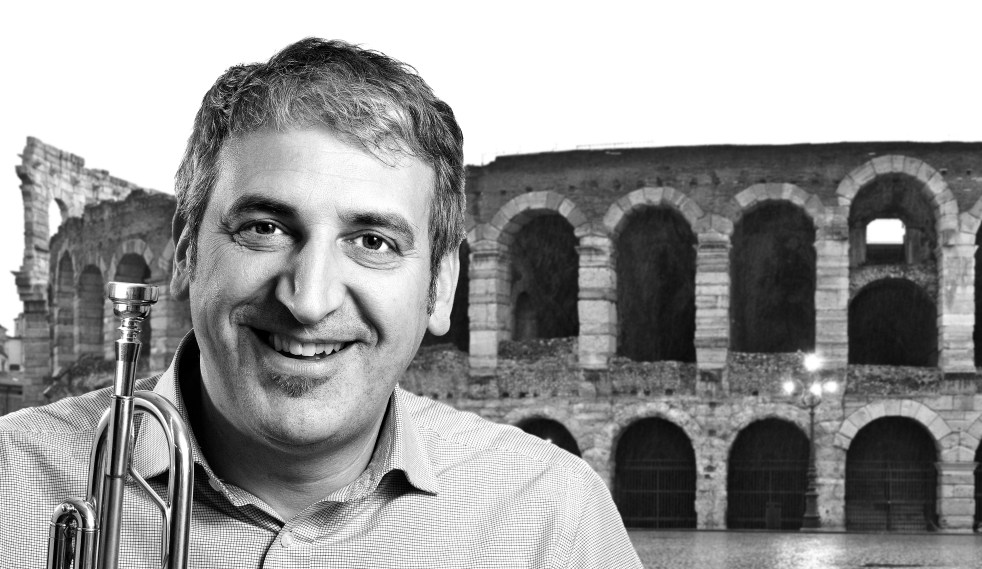
What would it be like to work here as Principal Trumpet with its resident orchestra?  Well Massimo Longhi knows!  He has held this position for 25 years now and has kindly shared his thoughts with us.

What got you started on trumpet?

The trumpet came into my life at 10, my grandfather and my uncle played in my family in the village band.

Who and what were your biggest early musical influences?

Certainly, Maurice Andre was decisive, and then the opera, which still fascinates me and stimulates me, and has opened me up to an incredible world and has influenced my way of playing.

Which trumpeters today do you enjoy listening to?

The one and only… Wynton Marsalis

How did joining the ‘Arena di Verona Orchestra’ come about?

The Verona Arena Orchestra is a full-time orchestra that carries out the summer festival in the Arena from May to September and the rest of the year is produced in the beautiful Teatro Filarmonico of the city (18th century theatre) with operas, concerts and ballets.

In 1993 I won the competition for the position of the first trumpet, and have been there ever since.

The Arena in Verona is one of my favourite places to visit! Was it difficult to adjust to playing outdoors instead of a traditional concert hall environment?  Are there any things that you do different technically on the trumpet when playing outdoors?

Every year when we start work in the Arena we need a little bit of acoustic adjustment, the ear has to get used to it. Technically we think we are playing better, rather than stronger, the best thing is to imitate the voice of the singers and to think of projecting the sound.  The less force use, the more the sound projects and sings.  I do not need use any different equipment for playing in this environment.

Are there any favourite memories or highlights from your time so far in the orchestra, that you would like to share?

Today, just as 24 years ago, when I started working in the Arena, the most incredible thing is the moment of silence that precedes the director’s gesture that starts the show and I can assure you that the silence of 15,000 people is magical!

What projects have you got going on at the moment?

In addition to the orchestra, I have been a conductor for some time.  Here is an association that organises my master class concerts and competitions – www.associazionemusicalepozzoli.com

What are the most important things for young aspiring trumpet players to remember?

That the study and the continuous work on the instrument will give the best results, playing an instrument on a professional level means dedicating oneself to it every day.  It’s a bit like trying to fill a bucket with a hole in it!

What gear are you playing on?

I am a Yamaha artist and I use their trumpets but the mouthpiece for the trumpet player is incredibly important!  I play Frate Precision mouthpieces.

What are the benefits that you have found after changing to your Frate Precision mouthpieces?

The first time I tried them I was struck by how they responded to my ideal sound.  It may seem strange but since I use it I have not had any problems with my lips.  I also liked having the opportunity to develop some ideas with Dario and I must say that today I am extremely pleased!

Can you tell us a little about the process involved with selecting your mouthpiece?

Choosing a mouthpiece is not simple but if we base the choice mainly on the sound we want, it is easier to achieve.  Personally, I have to be satisfied with the sound first, and then later I looked for variations on the edge of the rim and the throat that help me to smooth out any imperfections.

Massimo plays on the following model of mouthpiece: Classic Model 2-M-3-106.

For sales enquires and for advice on which mouthpiece to select, please visit our Online Store.

You can find out more about Dario Frate in this interview.

You can read about fellow Frate Precision artist, Fabrizio Bosso in this interview.


Sign up here for new blog articles emailed direct to your inbox:

[jetpack_subscription_form show_subscribers_total=”false” button_on_newline=”false” submit_button_text=”Sign up” custom_font_size=”16″ custom_border_radius=”0″ custom_border_weight=”1″ custom_padding=”15″ custom_spacing=”10″ submit_button_classes=”” email_field_classes=”” show_only_email_and_button=”true”]