Advice · Education · Playing techniques · Teaching techniques

Mastering Trumpet Articulation: The Power of Articulated Air

So, what does Articulated Air mean? Some teachers may refer to articulation or tonguing as an isolated discipline in trumpet playing. The reality is that everything comes back to the way that we control our flow of air through the trumpet. This is nothing new, of course, we know that the air is what fuels the machinery of our music-making. So why, do we as teachers so often talk to students in terms that can be confusing and take the emphasis away from the only truly crucial element?

The use of language in teaching, particularly with younger and developing minds is crucial to give clarity of message and to make sure that the correct mental triggers are in place to help them in their development. This is a concept in which I have a great interest and have worked extensively with students and teachers to develop a way of communicating sometimes complex ideas in a simple and straightforward way.

The relaxed and full breath at the start of any phrase is always crucial and should be foremost in the player’s mind, no matter how challenging the exercise may appear. A beautiful sound is only possible from a sense of relaxation and should always be aspired to. I try to avoid words such as blow and push, as they automatically trigger a sense of tension in the mind and body. Instead, we think about releasing the air through the trumpet, and setting up a steady flow of air.

Articulated Air is a concept that adds the tongue (in various shapes and positions depending on what you are playing) to your airstream. The focus as ever is on the breath in and supporting the flow of air out. We set up the air to flow and allow the tongue to articulate as the icing on the cake.

In this publication, I have developed several exercises that encourage this natural use of articulated air. Many of them also include aspects of traditional airflow and flexibility work to make sure that the emphasis remains on this. In our standard repertoire of standard methods and study books (including Arban, Clarke, Schlossberg, Vizzutti etc.) there are many excellent exercises that can and should also be used. It is important though to always focus on this relaxed air. This can easily be forgotten during an intense practice session.

Below are 4 chapters from the book (Articulation Slur Warm-ups, Circle of 5ths Articulation Patterns, Dotted Rhythms and Irregular Patterns) which you are welcome to download and use for free:

VISIT THE ‘EDUCATIONAL RESOURCES’ PAGE FOR FREE WORKSHEETS AND LINKS TO OTHER PUBLICATIONS

Advice · Education · Interview

The Carmine Caruso Legacy

I think that the concept of a saxophonist and former violinist becoming one of the most well-respected and well-known trumpet (and brass) teachers is a fascinating one. His callisthenic approach will be well-known to many readers through his publications, but in addition to this concentration on the physical synchronisation of different muscle groups, he also built a reputation on positivity and for really nurturing his students.

So many top players over the years attribute a huge portion of their success to Carmine Caruso – I was fortunate enough to be able to gather the thoughts of four of these fabulous players, in order to get to the bottom of how their experiences with Carmine influenced them and their careers: Marvin Stamm, John Thirkell, Randy Brecker and Markus Stockhausen.

VISIT THE ‘EDUCATIONAL RESOURCES’ PAGE FOR FREE WORKSHEETS AND LINKS TO PUBLICATIONS

Why did you go to study with Carmine Caruso?

MARVIN STAMM:  I had just settled in New York City in late 1966 and was beginning to be a part of the jazz and studio scene. I mentioned to friend and fellow trumpet player Burt Collins that I wanted to continue to study and work on certain aspects of my playing. Coming off the road, I was bothered by a few things that I felt needed to be addressed. Burt told me about his study with Carmine, that he was a trouble-shooter and problem-solver. He also mentioned a number of players who had been helped through studying with Carmine, among them the great lead player Al Porcino and others, and he felt Carmine would be the teacher to see.

JOHN THIRKELL:  I was at Leeds College of Music when I first came across the Caruso Method. I had studied several other method books – Claude Gordon, Louis Maggio etc. – but something about the concise and prescriptive nature of the Caruso appealed to my sensibilities. Do A and B will happen, then do C and D will result, and so on. That kind of regime somehow clicked with me and I quickly became a devotee. My then trumpet teacher was, I’m afraid, very much against such perceived radical methods but I think that only made me more determined. I’ve always been (and still am) one for swimming against the tide.

RANDY BRECKER:  I was playing in the Duke Pearson big band in ’66 and the other 3 trumpet players, (Marvin Stamm, Burt Collins and Joe Shepley) had studied with him and swore by him and said I should see him to improve my range.

MARKUS STOCKHAUSEN:  In January 1978 I came to New York. It was a winter with heavy snow. New York was peaceful and quiet. I contacted Marvin Stamm, whom I admired from his recordings with the Pat Williams Orchestra. I told him that I would like to have lessons with him. He denied and said that instead I should go to his teacher, Carmine Caruso, which then I did. Nevertheless, I had a good time with Marvin, he took me several times to studio sessions and gave me the opportunity to feel the scene, to meet other players like Alan Rubin, Lew Soloff, and also, I witnessed a rehearsal with the Maynard Ferguson Band in some hotel, a great experience at the time.

What were your impressions of the first lesson?

MARVIN:  Carmine was one of the most positive thinkers I have ever met, and he strived to infuse this positive attitude into all his students. Any progress, any improvement, no matter how small, was recognized as progress and needed to be appreciated in that light. My impression after my first lesson was that I had really found the teacher who could help me over whatever obstacles I felt were a problem.

JOHN:  My overriding memory of the first lesson was how energizing it was. He had the uncanny ability to make you feel like you could achieve absolutely anything, and he removed much of the worry I had associated with playing and practicing. He always said that, if you are following his instructions implicitly and not making progress, then the fault was in his teaching rather than in you. That idea was incredibly liberating and allowed me to focus on the process rather than worry about any innate ability. Just do it! I felt that sense of positive energy every single time I came out of a lesson.

Also, I couldn’t believe how little I actually played. I would say in the 90 minutes I was with him, I played probably no more than 15 minutes maximum, the rest of the time being taken up with the explanation of his theories and the idea of allowing your body to adapt and find the solutions rather than you consciously trying to find them. That was a common thread in all of the lessons and I would go as far as to say that he was as much a psychologist as he was a trumpet teacher. He talked you into playing well. There is a common idea that, as a trumpet player if you think you are going to miss it, you’ll miss it. Caruso, as with so many other things, turned that into a positive by inculcating the idea that, by knowing that you will hit it, you’ll hit it. And the more you know it, the more you’ll hit it.

RANDY:  Well he had those airline noise-reducing huge headphones on the whole time and talked a lot… and said a bunch of surprising things about how to approach his exercises (don’t worry about your sound, don’t worry if you miss a note etc.

MARKUS:  With Carmine I had seven lessons. Each time he would write me the next exercise on a little sheet of paper. So, in the beginning I just had the six notes I think, and at the end of the month the full system. His book was in preparation and had not yet been released, and he did not care so much about it, I had the expression. His teaching, though he had a system, seemed very individual.

His room was dusty, with old book shelves full of music, and a fan. The heating was hot, he just wore an undershirt, and often put on his headphones while I played, the kind they use in airports. Now I can understand him very well, because also for me the trumpet often is loud to my ears, and I use some plugs or phones when I play or teach a lot. He was very kind with me, like a father. His eyes were loving and distant at the same time. He was very patient, but clear, to the point.

What were the big changes that you found from the way that you had previously approached the trumpet?

MARVIN:  I’m not sure there were big changes in my approach to the trumpet. What I was looking to find were solutions to a problem, and I believe any big changes were more in my thinking—that is, in discovering how and what to practice to overcome these issues.

Problem-solving, of course, is most always a slow process. The time during which I studied with Carmine took place before cell phones, tablets and laptops, even the Internet, so everything moved at a slower pace than it would today. Musicians’ expectations of progress were based on the “long view” rather than how much could be learned in the short term. Carmine had a unique ability to recognize and analyse individual problems, so the exercises he gave were designed for each student to assimilate corrections into their playing slowly, without disrupting their ability to continue working while at the same time finding answers to their musical problems. The exercises were also meant to become permanent solutions that would serve the players throughout their performance career. So, the big changes happened over time and in small increments.

I approached Carmine to help overcome the “break” I had at the top of the staff—to close the space in that area so as to provide a smooth path from top to bottom. Meantime, Carmine also saw problem areas that he could fix while helping me with what I perceived to be my only impediment. I was using movement or manipulation with my hands for one thing; another was playing a note before properly setting for it, kind of like “jumping on a running horse.” Carmine also knew that I wanted to build stamina and broaden my sound, thereby making my lead-playing stronger and more effective. All this we achieved over time. Patience was the key to the results I desired.

JOHN:  The idea that, whilst practicing the Caruso method, you should not worry at all about musicality or the sound. This was purely calisthenics. Building muscle. Pushing the body a tiny bit further every time and allowing it to find a way to cope. Rather than make arbitrary changes in order to achieve an objective, by pushing the body it will find its own way to cope with the added demands. Again, this is incredibly liberating and allows you to stop worrying and just focus on the process.

Tapping the foot is also a big part of the method – that and the breath attack on the first note of an exercise – the idea being to train all of the disparate muscles required to play a note to come together at the exact same time. Again, subliminally training the body to automatically synchronise everything.

RANDY:  Better high register and more flexibility.

MARKUS:  His exercises focused my embouchure and gave me strength and endurance and developed my high register.

Could you feel a big difference in your playing immediately after starting studying with Carmine, or was it a slower process to see results?

MARVIN:  Some things were immediate, but the bulk of what I wanted to achieve was a slower process.

JOHN:  I think I pretty much felt a difference straight away, but this was probably more a result of the incredible sense of self belief which he gave you. You came away from a lesson feeling that nothing was impossible and that certainly manifested in the way I played thereafter. That confidence removes much of the doubt that holds back progress and I found myself playing with much more abandon. On a more physiological level though, pretty soon I found my range, not necessarily expanding that much but certainly becoming much more solid and dependable and I think that was as a result of the muscular development.

RANDY:  Pretty fast I must say.

Were there any aspects of the teaching that contradicted what you had been working on previously?

MARVIN:  Yes and no. His approach was quite different. Carmine was very “up front” that he was not working on students’ musical values, but on their physical attributes, striving to solidify a structural approach to playing the instrument. He told his students NOT to put aside playing etudes, solo pieces, practicing Arban’s, Schlossberg, Colin or other methods. He always stressed to me the importance of mixing in his studies with all the others that I had been working on, especially the musical ones.

If there were any contradictory elements to Carmine’s approach, they might be the use of nose-breathing, the long-settings, and the tapping of one’s foot to create the rhythmic movement of moving from tone to tone.

Nose-breathing allows one to have no movement of the corners of the mouth when taking a breath, thereby making possible a long setting, a consistent or constant placement of the horn to the lips. Tapping of the foot to set up the “time” meant that when moving from one tone to another, the only thing one had to be aware of was to consciously move “to the beat,” thus eliminating having to think of the many other elements of playing the instrument—the tongue, air, and muscles. Only moving to “time.”

Carmine’s exercises might be considered by some to be contrary to the usual structural exercises as those utilized by Schlossberg, Arban, St. Jacome, and Charles Colin. The approach was certainly different. And though I did some work out of the Baermann Clarinet Method, this was not really for any technical aspect, but rather to work over the break that I hoped to minimize to the fullest. All the exercises other than the Baermann were Carmine’s. There was also a strong focus on using dynamics in his exercises, both in a typical and atypical manner. These were used to work the embouchure in a more arduous way, making actual performance of demanding music much easier.

JOHN:  The idea of not being concerned with musicality or sound was very different but you soon learn to separate out the Caruso part of your practice from the other, more music focused stuff. He would use the analogy of a footballer (American football, not proper football) working out in the gym with weights. Where were the weights during the football game? But the weight training was of fundamental importance to his performance on the field.

RANDY:  Well I always worked on my sound and sound didn’t matter when doing his callisthenic exercises.

MARKUS:  He knew all the struggles that I was going through at the time. My embouchure had to be dry while playing, at least the top lip, which had been a problem for me during concerts when I sweated a lot, especially with spot lights on me. His pedal tone exercises followed by the chord pedals gave me a wet embouchure, resulting in much better playing possibilities.

Did you continue with his methods exactly as prescribed, or did you need to adapt them to fit in better with your work schedule, etc.?

MARVIN:  No, I didn’t find a need to adapt anything to fit my work schedule. Carmine always stressed to practice his exercises as he prescribed in the lessons, but when performing in my work, approach things as I usually did. He said the effects of his exercises working their way into my playing would happen by osmosis—that it should happen seamlessly. In my experience, I found this to be true.

I tried to use his methods exactly as prescribed. As is the case with any fine teacher, however, if he felt at some juncture that a change in approach might be more beneficial, he would make the necessary change. I studied with Carmine six and one-half years and continue to include a number of his exercises in my daily practice, along with a number from Laurie Frink, Dennis Najoom, and the classic methods mentioned earlier.

JOHN:  For several years I followed his methods to the letter but in time, as I got busier and busier as a pro player, I slowly watered down the routine as it can be physically quite demanding, and it becomes more important that your chops are in shape for your session rather than completing the whole routine. The Caruso done thoroughly means you are pushing your body more and more and, by overdoing it you can leave your chops a little shredded. I remember explaining the lessons as taught by Caruso to Guy Barker and, being Guy, he went mad and practiced it for hours. Well, of course it did more harm than good, and he pretty soon gave it up. The idea is to go through the day’s routine, take a break then move on to your regular practice. These days I tend to stick to the 6 notes exercise as part of my warm up and maybe once a week do the full routine.

RANDY:  Tried just to do what he said to do, fit them into what I was already doing, but I applied his ideas about timing to other things I did like the Adam Routine warm up.

MARKUS:  At times I would overdo the exercises. Especially the soft-loud-soft, as well as the loud-soft-loud exercises were very strenuous to me when I did them on a daily basis. Nevertheless, I continued the exercises for quite some years, not always very regularly, but still. Within time I found my own way, a little more moderate, and surely not applying the full system, I am aware of that. I do the exercises only from time to time now, when I feel I need to focus my embouchure or prepare for a very hard trumpet concerto. Often just by doing the “Six notes”, the body remembers the whole thing immediately and I can play up and down without any further warm ups. The body actually is magic, how it can reproduce results that have been properly programmed. In fact that is the basis for Carmine’s system, as well as of others of course, that the cells have memory.

I would like to thank Marvin, John, Randy and Markus for their contributions here! Please visit their websites to find out more:

Marvin Stammmarvinstamm.com

John Thirkelljohnnythirkell.com

Randy Breckerrandybrecker.com

Markus Stockhausenmarkusstockhausen.de

Click here to purchase a copy of Carmine Caruso’s ‘Musical Calisthenics for Brass’ at Thompson Music

Markus Stockhausen’s “The Basic Caruso”, from which his quotes are taken above, is available here

Photo Credits: Bev Nathan (John Thirkell), Judy Kirtley ( Marvin Stamm), Gerhard Richter (Markus Stockhausen)


Sign up here for new blog articles emailed direct to your inbox:


Advice · Education

Claude Gordon Practice Routines

The following article was originally written by Jeff Purtle and published in The Brass herald in 2009. Jeff Purtle is a private teacher, clinician, and trumpet player with international clientele. As a protégé of Claude Gordon he continues the traditions of Claude Gordon and Herbert L. Clarke with effortless playing and productive practice. Please visit purtle.com for a fabulous range of educational content.

A practice routine is a tool to become an excellent and consistent player. It also gives a scientific way to understand how to improve specific skills. These qualities are essential for a long successful career. Claude Gordon believed anyone could be a “virtuoso” if he knew how to practice.

Gordon took Herbert L. Clarke’s principles and applied them with more structure. My previous article defined the content and this article is about the practical application. The assignments serve to set goals and understand what causes the progress. Refer to the pictured assignment from Gordon and the explanation below. Even Gordon improved his teaching over the years by using this method.

Claude Gordon Practice Routine - Jeff Purtle - Jan 28, 1985

VISIT THE ‘EDUCATIONAL RESOURCES’ PAGE FOR FREE WORKSHEETS AND LINKS TO PUBLICATIONS

Breathing Exercises

Breathing Exercises are always the first item. The focus is on taking a “Big Breath” and maintaining the chest in an “up” position during both inhale and exhale. Forget about the stomach or diaphragm. If the chest stays up you cannot breath incorrectly. The first exercise is 5 sets of 10 breaths standing in place. The second exercise is called “5 Walking,” which is 5 equal sniffs-inhaling while walking, 5 holding-full, 5 puffs-exhaling, and 5 holding-empty, then repeating this cycle walking a square city block. Each month it progresses one more step, then after 10 walking it moves to 5 jogging until finally reaching 10 jogging. Another form of breathing exercise is the “long hold” in the “Range Study” section.

Order

Sections A through D of the CG assignment were usually flexibility studies, intervals, tonguing and scales. Tongue Level studies should usually be the first thing to play. Gordon said, “The air does the work; the tongue channels the pitch.” They develop flexibility and ease in navigating the instrument. It is similar to stretching before a physical sport to be flexible. Gordon’s Daily Trumpet Routines book is excellent to use with all the models. Other flexibility books like ColinIronsWalter Smith and Staigers may be used in this area too. The point is to “watch the tongue” and learn how to coordinate the wind power and tongue level to discover how to “let the air do the work”, as Gordon said, and not be focused on the lip. Collect all possible material in this category even from other instruments as Gordon did.

Section I of the CG assignment is where the fingers and breath control are developed while working on Clarke’s Technical Studies. The first priority is to “strike the valves hard and lift the fingers high”, which is mandatory. Do each study with seven days of each of the following: single tongued, K tongued, double (or triple) tongued, and finally slurring as written. Practice accurately to play accurately. Things should then be prioritized as follows: accuracy, evenness, speed, whisper soft playing and finally repetitions in one breath. Never play softer than you can get a secure sound. Other scales and arpeggio studies fit in this area too, but Clarke’s book should be reviewed at least annually. Refer to Gordon’s Systematic Approach book for the some of the fingerings from Clarke that were passed down to Gordon. These are mandatory to train the fingers to function independently of each other with speed and control.

How You Practice

“How You Practice” was Gordon’s label for a way of practicing technical etudes and problem passages. It involves starting on the last beat of the music and progressively working backward one beat at a time with four perfect performances in a row before moving to the next step. (Use diagram with steps.)

How You Practice Diagram

Range Study

Down Routine

Claude Gordon - Systematic Approach - Down Routine

Section II of the CG assignment is the Range Study area. This takes the player first into the pedal tones (i.e. “Down Routine”), followed by a 5-10 minute rest, then to the high register (i.e. “Up Routine”), followed by a brief warm down (i.e. “Relax Lip”) and an hour long rest.  All the other routine elements work along with the Range Study to increase the player’s range. The goal is a more playable range, usable in all situations. 

Up Routine

Claude Gordon - Systematic Approach - Up Routine

The “long hold” in the Down Routine is held until the sound stops and all the air is expelled. This is an isometric type of exercise that strengthens the muscles used for blowing. You never do a hold like that on high notes. The Down Routine played before the Up Routine helps the player discover how to play high with ease as opposed to tightness. Playing from pedals to the high register can be effortless if worked on systematically. The rests are not literally four beats, but you must rest as much as you play with the mouthpiece off the lips to avoid fatigue and bad habits that come from playing when tired. Gordon said, “If you rest properly you can play all day.” This also develops endurance by learning the knack of playing with ease instead of by brute force. “Watch the tongue” meant to visualize the tongue and feel it’s unique vowel position for every note. This is how you learn to play accurately. The “Eee” syllable must be in the very front of the tongue for faster air speed. Gordon said, “Let the air do the work and let the air save the lip.” This means to blow stronger when ascending to get the right feel. Pedal F through C# should be played in tune. Pedal C through Pedal F# are initially very flat for most people, but the pitch will come up in time. It is possible to play to the third pedal C or lower. The pedals help improve a free vibration of the lips and indirectly help many aspects of playing. Care must be taken to not play them too loud.

Start the Up Routine in the pedals. On the first arpeggio leave pedal C below pitch, but play pedal E in tune by sounding the note 8va to get a reference pitch before playing the arpeggio. This fermata should only be a brief hold with a crescendo. Rest between each key. Continue up as far as possible. Remember this is a calisthenic exercise more than a musical exercise. Work up as high as possible, making only make three attempts at the highest note and then stopping to avoid developing bad habits.

Relax Lip

Relax Lip Warm Down to Pedal C and Lower

“Relax Lip” was a brief warm down to be played 3x after the Range Study. It can also be played other times. After the Range Study and “Relax Lip” the player shouldn’t play a note for an hour in order to completely recover. It is also wise to not do the Range Study before a demanding performance.

Technique Applied

Section III of the CG assignment is where solos, etudes, orchestral excerpts and other music is placed. The Range Study can also be placed at the very end of the routine with the etudes before it.

There are other variations that can be made to the routine, but this is the normal way. See the article What To Practice on www.purtle.com for a list of books to use in the routines. The practice routines are how the player can learn that brass playing is no harder than deep breathing. It’s not luck or natural talent. After playing the routine you should feel better than when you started. The goal of the routine is to learn to play with ease.

There is a balance between staying too long on an exercise and loosing focus vs. not staying long enough for the exercise to accomplish the desired result. Sometimes the same items can be worked on with variations. A teacher can spot things we ourselves don’t notice.

Personal Use

Claude Gordon Certified Teacher Certificate

In order to teach correctly you have to play correctly and understand it. Gordon said the following on my pedagogy certificate from 1989, “…with personal use of these principles is hereby qualified to teach correctly.” Gordon knew that the teacher must be in tune with his own playing and practice in order to take students along the road to improvement.


Advice · Interview

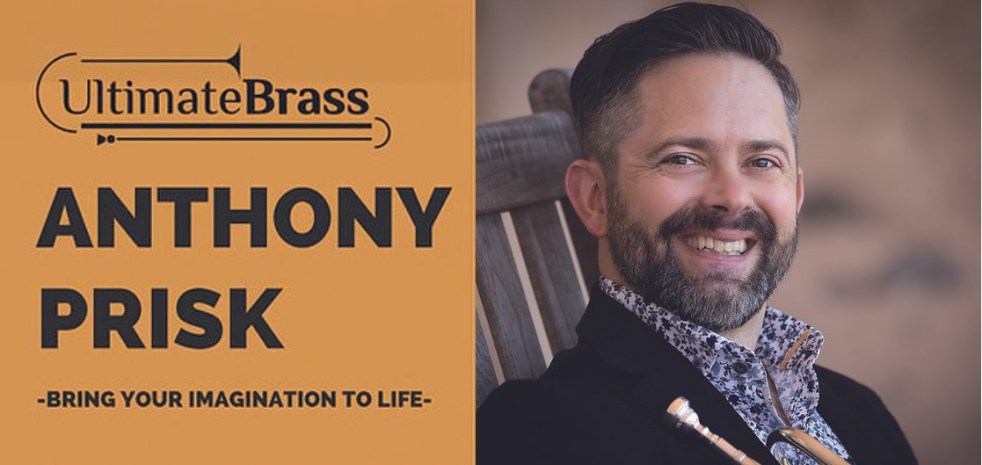
Trumpet Artist Profile : Anthony Prisk

Anthony Prisk has been the 2nd trumpet in the Philadelphia Orchestra since 2013, after previously spending eleven seasons with the Houston Symphony. Tony is an Ultimate Brass and Yamaha artist, and kindly shares his thoughts with us here:

What first drew you to the trumpet in the early days?

I distinctly remember listening to my Dad’s Star Wars soundtrack over and over again. When I went to my elementary school’s band program I was drawn to the cornet and was successful at making a sound. Then as I went along, I really began to enjoy practicing and hearing improvement and performing for my friends and family. It was the ultimate trill to eventually work with and study with Maurice Murphy and John Williams. It came full circle for me!

Who or what were your early musical influences?

My biggest influence in the early days was my high school band directors, Ross Kellan, Greg Cunnigham and Steve Hoffman. Ross was such a positive and encouraging teacher, he instilled pride and artistry in everything we did. I went to the University of Illinois with the goal to follow in his footsteps and influence students in a positive and inspiring way. Eventually, Ray Sasaki took over with this great influence and encouraged me to pursue a life in musical performance and supported my goals and progress. To this day, he is still supportive and helpful in my development as a player and teacher. 

Do you have any particular practice regimes? Does this change a lot depending on what repertoire you are covering in the orchestra?

I am an avid practicer. I have a daily fundamental routine including many concepts from the Sach Daily Fundamentals to Stamp, Schlossberg, Cichowicz, Plog, Vizzutti, Bai Lin, Zauder, Gekker, and more. I do try to stay in shape away from the orchestral repertoire playing etudes and solos from Bousquet, Arban, Concone, Snedecor, Brandt, Charlier, Bitsch, etc…to Bohme, Tomasi, Jolivet, Arutiuinian, etc…If we are playing big rep I will prepare for the week by blowing down Bordogni/Rochut, Brandt, or Smith Top Tones to get ready and then the week of, focus on fundamentals and lighter repertoire to balance my playing. When I am doing a lot of low playing in the orchestra I will turn to playing more piccolo at home and softer solo repertoire. I keep a daily practice log most weeks to keep track of my routines and progress. This also allows me to take notes on what is working and what isn’t. I bring this into my teaching to help students achieve their daily, weekly and life goals. 

What do you think are the most important elements of music and trumpet playing that young players should focus on? 

First of all, SOUND! Finding a Resonant, Brilliant, Rich, Warm, Complex, Flexible, Dominant, Sweet, Singing sound or tone that moves a listener is most important. Finding an efficient way to do this should be a daily goal. Then, for the music, it’s great TIME! Not just playing the correct rhythm but feeling the music and creating the style out of time feel and pulse. If you have these two things, the others will come. Everyone wants great range and speed and loudness but Sound and Time come first. 

How have different teachers through your life shaped the way that you teach?

I have studied with more teachers I can count but every single lesson had something in it that was helpful. I can remember little tips from each lesson from Bud Herseth showing me how he practiced Arban’s and Bobby Shew showing me his wedge breath. There are endless amounts of tools to help students solve issues and achieve their goals. I try to get them to hear the issue, figure out what might be causing it and then create a routine or practice regiment that will nip it in the bud. I also encourage my students to work on their fundamentals to serve the music. For instance, if they are working on Mahler, then play your Concone with a Mahler like sound or work on the Gekker Articulation drills in the tempo and style of Ravel.  This all comes from the many teachers that help me along the way. Thanks to Ray Sasaki, Dr. Mike Ewald, John Hagstrom, Paul Merkelo, Charlie Geyer and Barbara Butler, Mike Sachs, Ray Mase, Chris Gekker and so many more. 

Can you talk a little about your Ultimate Brass mouthpieces, why you play them, and the process of selecting them?

Sun He and I worked on finding a replacement for my longtime Parke mouthpiece. The mouthpiece was wearing out and I always thought it was leaving something on the table for me and my playing. I needed a mouthpiece that was flexible in sound production in my role as second trumpet but also allowed me to step out of the ensemble and lead at times or play solos with brilliance. The mouthpiece line we came up with takes the mouthpieces I played and improved the playability and resonance by finding a better balance of throat and back bore along with adjusting dimensions of the mouthpiece. They are derived from Bach, Parke and Reeves elements but really are unique to Ultimate Brass. We spent a couple years of testing in the orchestra and sending videos back and forth to land on our final product. We are also continuing to develop better versions and more horn specific sizing.

Can you also tell me a little about your relationship with Yamaha?

Ever since Yamaha introduced the Gen 1 Chicago C trumpet I have been playing Yamaha trumpets. I actually had a Yamaha Piccolo way before but I really switched around 2005 or 2006 cold turkey to mostly Yamaha trumpets. Now I am a Yamaha Artist and I play exclusively Yamaha trumpets. The support you get from Bob Malone, Wayne Tanabe and all the folks at Yamaha are unmatched. They are in constant development of new instruments to serve the needs of their customers and artists. It’s a pleasure to work with and represent Yamaha. And the Ultimate Brass mouthpiece works very well with my Gen 3 instruments. 

What are some career highlights to date?

Playing for John Williams was an absolute highlight. I had goose bumps when he walked out on stage the first time. But I really have to say, almost every concert I play with the Philadelphia Orchestra, something special and moving happens on stage. I am absolutely lucky to be playing with so many great and inspiring colleagues, highlights happen every week. I’m looking forward to making more career highlights as we start this new season! 

I guess that there were some periods of long lay-off through the pandemic? Is working life starting to get back to normal now? Are there any lessons that you can take out these past 18 months?

The lessons I learned from the past 18 months are many. Mainly, to appreciate your friends and colleagues. Learn from everyone around you. Take the good and leave the bad. Positive influence and encouragement goes a long way to help others rather than negative talk and thoughts. I learned a lot about how to be a better colleague, teacher and friend. On the trumpet side of things, I experimented with different ways of playing, warming up, equipment, etc. It was time to reflect on weakness in my playing and coming up with new ways of tackling those issues. I also created lots of online content that you can see on my Facebook/Instagram and YouTube Channel. I actually didn’t take any time off the trumpet…I looked at the pandemic as an opportunity in the middle of my career to practice like I was in college again and try to develop better habits for second half of my career. It was a productive time for me that helped me to stay in a positive and productive mindset. 

Any projects that you have coming up that you would like to talk about?

I continue to work on projects for social media and my YouTube tutorials. I am looking forward to a more regular performance schedule and teaching in person. I get so much energy from teaching, sharing my knowledge and inspiring younger students. My hope is to transition from performing to full time teaching in the next 10 years. So my goals currently are to get the most from my playing experiences and build a great trumpet studio at Peabody and Temple University. 

Thank you for asking me to contribute. I enjoy sharing my experiences and stories with the music world. I want people to know I am accessible for questions on social media and look forward to hearing from everyone. Let me know what you think of the Ultimate Brass mouthpieces…I’d love the feedback. 


SIGN UP HERE FOR NEW BLOG ARTICLES EMAILED DIRECT TO YOUR INBOX:

[jetpack_subscription_form show_subscribers_total=”false” button_on_newline=”false” custom_font_size=”16px” custom_border_radius=”0″ custom_border_weight=”1″ custom_padding=”15″ custom_spacing=”10″ submit_button_classes=”” email_field_classes=”” show_only_email_and_button=”true”]

Education · Gear Review

Faxx : Mute Review

The Faxx brand may already be known to many of you. It has a reputation for reliable accessories at a reasonable price. I have recommended the Faxx mouthpieces to young students for many years as they offer comfort and quality at a price point that is appealing to parents! However I was yet to try any of their mutes until I was sent a box by American Way Marketing who own the Faxx brand.

Here is a run down on the box’s contents!…

Compact Aluminium Practice Mute

I own quite a few practice mutes and must have tried dozens of them over the years. Each one requires you to make a compromise in some way. I have a favourite mute for playing as softly as possible so that it is barely audible – it is super quiet but the intonation is tough down low. I have another for general practice where I want good tuning and response – it is however too loud for some sneaky blowing at the side of the stage where you don’t want to be heard. This Compact Aluminium Practice Mute from Faxx is brilliant for travelling. It is small enough to store in the bell of the horn without taking up additional space in the case, but it also blows surprisingly well.

The intonation is even across the range and although quite a resistant mute, still allows you to blow in an honest way rather than constantly over-blowing. I like this mute. It is reassuringly robust, clearly well-designed and made and retailing at around $45, gives you the value that you would expect from Faxx.

Aluminium Straight Mute

This is a well-made, sturdy all aluminium mute with great corks. We often underestimate the importance of good corks to the fit in the bell as well as the overall sound. This model is also available with a copper bottom as well as in all copper.

The blow is responsive at quiet dynamics as well as having a lots of lovely bright overtones when playing forte. There is also a really satisfying ‘bite’ to the attack at stronger dynamics, while still keeping the core of the sound. These make a really great addition to any pro orchestral section, but at a price point to suit students and pros alike – around $40!

Aluminium Harmon Mute

There are a number of Harmon style mutes in the Faxx range. This traditional long body mute, a short bodied harmon, and also the bubble style harmon that is reviewed below. All of these are available in both aluminium and copper, and you will now not be surprised to learn that they sell at a fraction of the cost of many of the other brands!

This traditional harmon mute, like the straight and practice mutes above, is well-made, sturdy and fits a variety of bell flares very well. With tube out, it is easy to achieve that smoke jazz club sound and responds particularly well with close miking. With tube in it is a completely different beast! The volume and projection are exceptional and makes a great wah-wah!

Aluminium Bubble Harmon Mute

Until now, I had never really given much thought to how the body shape affects the sound. The difference between this and the model above is huge. Even with tube out, this is an incredible resonant mute, so much so that you can feel the vibrations coming back through your hands while playing. Projection is great and it compares really favourably with my normal aluminium bubble mute from another more expensive brand!

These great value and great performing mutes are now commonly available across the UK, the USA and farther afield in most good music stores. I strongly recommend that you give them a try – these are far more than just student mutes!

To find more information on the full Faxx range and also where you can find a dealer near you, please visit American Way Marketing.


SIGN UP HERE FOR NEW BLOG ARTICLES EMAILED DIRECT TO YOUR INBOX:

[jetpack_subscription_form show_subscribers_total=”false” button_on_newline=”false” custom_font_size=”16px” custom_border_radius=”0″ custom_border_weight=”1″ custom_padding=”15″ custom_spacing=”10″ submit_button_classes=”” email_field_classes=”” show_only_email_and_button=”true”]

Advice · Education

So You or Your Kid Wants to Play the Trumpet

An article by Estela Aragon, CEO/Founder at TrumpetHeadquarters.com

Ahhhh the trumpet. So many of all ages fall in love with the instrument due to its age- less sound and versatility. The trumpet plays nice with classical, jazz, pop, mariachi, latin jazz, bluegrass, dixieland and many eastern music forms. It’s no wonder that the world is never short of people dreaming of being able to play “What a Wonderful World.”

If you are an adult thinking of picking up the trumpet or if your child wants to learn it stick with me for a bit. We will cover considerations for children and other aspects of diving into this instrument that always take people by surprise. I’ve taught thousands of lessons to people all over the world, and this is what you must know before you or your child become trumpet players.

Age and Size Considerations

For a long time very young children have played the trumpet, and many famous trumpet players started playing around between 6 and 9 years old. Children as young as 4 can play the horn, but they will experience some difficulties during the first few years since their “baby” teeth will still be there, so it is better to start playing trumpet when teeth have become permanent between the ages of 10 and 12. However, many children start younger and that is okay as long as a private teacher supervises their development.

While we’re on the subject of teeth, let’s talk about braces. If you or your child foresees getting braces within 8 months or so of starting trumpet, I recommend to wait until the braces are off. Unfortunately, the mouthpiece sits exactly where the braces are and while it is possible to navigate this change (though not without major hurdles) with students who have been playing for at least 1 to 2 years, it is monumentally difficult to learn how to play the trumpet with braces, especially when they’re freshly installed.

And what about the weight of a brass instrument?

The trumpet, while not particularly heavy, can be quite a monster to hold for children younger than 8 and smaller older children. Due to the weight, weak forearms and wrists, the front of the trumpet (the bell) tends to dip down, which causes prob- lems at the embouchure. Some kids are tall and have longer arms so they could fare well, but most kids under 8 will do better with a cornet instead of a trumpet.

Let’s look at these two instruments.

Cornet vs. Bb trumpet

The cornet is played exactly like the trumpet, it’s also held the same way and sounds almost the same. The cornet is warmer than the trumpet’s brilliant tone. The biggest benefit of the cornet for children is that it is much smaller and the bell won’t dip. It’s a perfect size for young kids.

Some adults prefer the cornet too because of its compact size and tone quality. Culturally, the cornet is more widely played in some countries than others too, such as in the UK, where the cornet is a staple of the British brass band and a common solo instrument.

The decision between a cornet and a Bb trumpet should be in the size benefits and tone preference.

Maintenance and Must-Knows

Many new players and parents are surprised to see so many moving parts on a trumpet. The horn has 3 valves that need oiling and 4 slides that need greasing. Of the 4 slides, 1 is stationary and 3 need to move smoothly and quickly.

How often you oil valves depends on how much you play the instrument and in which conditions, but generally you will want to oil the valves once a week. The slides should be greased as often as needed to maintain smooth movement.

I’d like to stress how important this maintenance is. The trumpet cannot be played properly when the valves are even a tiny bit sticky or slow. The slide must also move freely because we move these slides while we play simultaneously. Yes, we move more than just the valves! So parents, be aware that you will need to learn how to oil and grease the instrument and it is always a good idea to show your child how it’s done.

To learn more about trumpet maintenance and cleaning the instrument visit my guide.

Practice Commitment

This is by far the biggest obstacle in trumpet playing and one that new students find surprising. The trumpet requires a rather significant time commitment to truly ad- vance. This is due to the nature of the instrument and its requirement on our facial muscles.

The trumpet is a brass instrument and it requires a certain strength of facial muscles. That is, you have to exercise (through practicing) your facial muscles in order to gain enough strength and flexibility to be successful. The most apparent proof of this is how children usually puff their cheeks like little balloons when they first pick up the horn. This is because their cheek muscles and the corners of their lips are weak from their age and lack of practice. After about 2 to 4 weeks of practicing most children will gain enough strength to keep the cheeks from puffing.

The same process of gaining strength is true for other parts of the embouchure including the tongue muscle.

Okay, so now we know how demanding a brass instrument is for the face, now we add the size of the facial muscles. Compared to other larger muscles groups, facial muscles are very, very small, which makes them lose their strength very, very fast.

So what does this mean for trumpet playing?

It means that when beginners don’t play for 3 or 4 days in a row they lose a lot of that muscle strength. This is even true for professional trumpet players who can go a few days or a week without playing and be alright, but it will still take 2 or 3 days to get back on track. I’ve been playing for 21 years and if I take 2 weeks off I need 2 weeks to get back to it.

For this reason parents should be prepared to set a practice schedule to ensure that the child gains confidence in their playing and experiences success. At the beginning, practicing 15 to 30 minutes a day is sufficient until they gain enough strength to increase their load.

VISIT THE ‘EDUCATIONAL RESOURCES’ PAGE FOR FREE WORKSHEETS AND LINKS TO PUBLICATIONS

Listening and Understanding a New Language

Let’s say you’re going to learn French. Some things that you have to do is learn how to read and write the new language. You also have to listen to dialogues and mimic sounds. Eventually you gain enough understanding of the language to speak without needing help.

Music, with any instrument, is the same.

Most beginners will focus on learning the notes, the sheet music and the fingerings. What is often forgotten is to listen. This is equivalent of listening to dialogues to learn how to pronounce words in a foreign language. New students must listen to dedicated trumpet music daily to nurture the mind’s ear, to nurture the concept of tone.

Last Words

While the trumpet is a demanding instrument, the rewards are truly remarkable. Dive in with a simple practice schedule and enjoy a lifetime of music.

For more trumpet tips and recommendations follow my Instagram @trumpetheadquarters.


SIGN UP HERE FOR NEW BLOG ARTICLES EMAILED DIRECT TO YOUR INBOX:


Advice · Education · Gear Review

Do Bell Covers help prevent the spread of COVID-19?

OK, so I need to say right off the bat that I have no intention of actually answering this question! I am certainly not qualified. This past year (plus change) has seen it become ok for us all to express ‘opinions’ on science, and for us to have the choice to either agree or disagree, sometimes depending on our political leanings. This confusion has been confusing!

There have been a number of studies (such as this one from Brass Bands England) that support the science-based hypotheses that like face-mask wearing, a cloth covering over the bell of your horn helps to reduce the risk of harmful airborne droplets being dispersed. The use of bell covers, wiping down surfaces such as music stands with alcohol wipes, the regular washing of hands, social distancing and safe disposal of water from the instruments all help reduce risk, without removing it completely of course.

One thing that all musicians agree on is that kids need to be making music again. And a huge part of this is giving each other the confidence that we are all doing everything that can ‘reasonably’ be done to protect each other at the same time. So instead of “do they help?”, the question that we should really be asking ourselves is “are we really prepared to not take every possible step to protect each other?”. And this seems particularly pertinent at a time where we had been starting to feel more relaxed about the future after the early success of the vaccination roll-outs, but are becoming increasingly aware of new variants. It is likely that we will need to approach music in groups with some caution for some time to come.

So now that we have taken the obstacle of answering my initial question out of the equation, what is left to object to?

Sound quality? Well there is a slight change. The sound takes on a slightly softened edge, and there is a slight stuffiness up top. But it is only a small difference and pretty much imperceptible to your school bander.

Cost? Fair enough, everyone has suffered a financial impact to varying degrees over this past 15 months, and what band or school is going to relish the prospect of kitting out a full band with more accessories?

Well there is a solution at hand! Alliance Brass have developed a great quality bell cover that they want to make accessible to schools, community bands and professional groups at rock bottom prices. They retail at just £3.07 each. Here is what the maker has to say:

Alliance has teamed up with a leading Northern textile company to produce stretchable bell covers that reduce the risk of spreading harmful airborne droplets and aerosols produced by brass instruments. The covers are very easy to fit and make hardly any perceptible difference to the sound of the instrument. The player might notice a very slight difference in response in the high register, but the sound remains true from low to high.

This product is aimed at school ensembles, amateur bands and professional brass sections. The safest way to play brass music is outside with the recommended distance between players of 2.00m whilst not facing or playing into another player. If playing indoors with the minimum distance (2m) between players, bell covers can reduce the spread of germs and viruses greatly. Remember that venting water keys can spread germs too, so be careful to have a cloth or some paper to catch any water from the instrument, and to dispose of any paper safely.

Our partners making the bell covers are a traditional family-owned Manchester-based business who started spinning and weaving cotton in the nineteenth century. Last year they were busy making PPE for the NHS. We have designed this range of bell covers which are produced in Greater Manchester using their skills developed in making PPE. We are proud to work with another successful British firm.

Please click here to view or purchase this product.


SIGN UP HERE FOR NEW BLOG ARTICLES EMAILED DIRECT TO YOUR INBOX:

[jetpack_subscription_form show_subscribers_total=”false” button_on_newline=”false” custom_font_size=”16px” custom_border_radius=”0″ custom_border_weight=”1″ custom_padding=”15″ custom_spacing=”10″ submit_button_classes=”” email_field_classes=”” show_only_email_and_button=”true”]

Advice · Education

ITG 45

The 45th Annual International Trumpet Guild Conference begins now! Trumpeters of all ages will find this virtual workshop an opportunity to improve their playing by accessing the Conference content for an entire 60 days! Don’t miss this opportunity to learn from over 200 of the finest players and teachers in our profession. For those students who are on break, this is a great way to stay engaged and maximize progress while away from school!  

If you are serious about improving your trumpet playing, this is the resource you have been waiting for. Register today!

www.itgconference.org/2021-registration/


SIGN UP HERE FOR NEW BLOG ARTICLES EMAILED DIRECT TO YOUR INBOX:

[jetpack_subscription_form show_subscribers_total=”false” button_on_newline=”false” custom_font_size=”16px” custom_border_radius=”0″ custom_border_weight=”1″ custom_padding=”15″ custom_spacing=”10″ submit_button_classes=”” email_field_classes=”” show_only_email_and_button=”true”]

Advice · Education · Interview

Trumpet Headquarters : Estela Aragon

Education is a lifelong journey, and a journey that often starts in schools around the world that suffer from a lack of funding in music. It is more important than ever to find good quality and reliable resources to help children on their musical journey, as well as adults and advanced learners too. Trumpet Headquarters is a wonderful resource set up by Estela Aragon who was kind enough to talk to me here.

Can you give a little background to your relationship with the trumpet and your professional background?

Do I have a story for you! I began playing trumpet in 6th grade entirely by accident. Back then we had “the wheel” which was a system in which first semester 6th grade students would try an elective for two weeks at a time and then decide which one they wanted to continue for their second semester and on. I tried band for a couple of weeks and during that time we all got trumpets, because it was just to try music, but I thought that meant I had been assigned the trumpet.

See, I didn’t speak English yet as I had recently moved to the United States from my home country Peru, and I was under the impression that I had to play the trumpet! Now, the tryout went great and I was the only student who was able to make a sound on the first try. So, I took that and rolled with it. It was the first time I felt comfortable anywhere, like I belonged, especially in a country where I felt lost due to a language barrier.

That small moment eventually grew into an obsession and passion, which of course became a life-long learning experience. Fast-forward 10ish years and like most musicians in school, I performed as many gigs as possible, and started teaching private lessons in my first year of undergrad. I had a lot of very fulfilling playing experiences from orchestras to weddings to even country music gigs, locally and abroad. It wasn’t until my master’s degree that I decided to focus on private and non-institutional trumpet education. That led me to found my private studio MusicFit Academy, through which I continue to teach full-time today and of course, TrumpetHeadquarters.com, or THQ, was founded shortly after.

What prompted you to setup Trumpet Headquarters?

About 5 years ago I was a in a place of innovation having just wrapped up my master’s degree. I found myself teaching a lot, figuring out life outside of school, and as I grew my private studio I began to run out of times to teach. More and more often I was turning down perfectly good candidates due to time constraints. That’s when I had the “aha” moment to setup some sort of online trumpet lessons course where my prospective students could learn the ropes while they waited for a slot to open.

I also wanted to provide professional and reliable information to counter the massive amount of erroneous guidance floating on the internet. Thus, as the idea was refined, it eventually morphed into not only the trumpet course, but also into an open educational resource for trumpet rated topics. THQ provides a great amount of information for anyone willing to learn.

It’s worth noting that all the resources outside of the trumpet course are free of charge. Want to know about trumpet cases? Mouthpieces? Books for musicians? Best apps for practicing? Notable trumpet players? I have provided all of that information and more. My goal was and will continue to be to educate.

Who is it aimed at?

Simply put; anyone with a trumpet and a hunger to learn how to play it! I approach the course like I approach my private lessons…no fuss, no complications, just simple and easy to understand explanations. I made sure to present the content in a very step-by-step manner.

Absolute beginners will see helpful lessons in posture, breathing, trumpet anatomy and other basics. There is also an introduction to reading sheet music and all the basic techniques and tips for novices, such as how to clearly articulate, slur and change notes evenly. The course goes on to cover intermediate topics such as dexterity, multiple tonguing, range, pitch bending…etc, and of course the advanced lessons delve into even deeper concepts like musicality, lip trills and more.

I have students ranging from ages 9 to 70+, so I think it’s safe to say that the course is well-suited for all ages and skill levels.

What are the key elements that readers should know about it, that sets it apart from other platforms?

As I mentioned, my approach is very simplistic and that alone is an important factor in why the course works. Twisted and over-complicated teaching result in a frustrating learning experience. I also provide a student- only forum where I answer daily questions from them and tend to their needs. They can post pictures and videos of their progress and I reply promptly with my feedback. They really love being able to get that one-on- one attention since naturally, that is a huge setback in self-paced learning.

I have also written over 100 pages of original sheet music with drills and exercises for the course, and I provide other helpful resources such as a fingering chart with all the alternate fingerings; something I haven’t found anywhere else online. Each video features a bullet point list of what I call “Pro Tips”, video chapters, picture-in-picture capabilities and speed change settings. At the bottom of each lesson page, I also provide 3 suggestions for related topics throughout the rest of the website which could be blog entries, a resource page or even a link to another lesson that covers a similar concept.

The bells and whistles are everywhere to ensure a smooth experience for the students as well as an environment to focus on learning. No distractions!

Are there any elements of music education generally that you feel are genuinely lacking at the moment? What can we do to help with this?

Right now, trumpet students all over the world are doing their band classes on Zoom, which of course causes a myriad of drawbacks on its own, but it also highlights the problems in music education that were already there before Covid.

In my professional experience, it is simply impossible for a single band teacher to shape and look after each student. When it comes to brass, and naturally other instruments, we know how important the early few months are. During that time the player will inevitably form habits for the rest of their lives, and if those are bad habits, now you’ve got a player who is struggling, working much harder than they need to and likely will continue to have that experience until they finish high school. Due to the lack of personal attention, students end up with problems such as: incorrectly placed mouthpieces, air control issues, severe tension problems, a lack of tone concept, efficiency and endurance problems, and many more. But what can we really do about it?

It is simply not realistic to expect band teachers to know the in and outs of every instrument, or to know how to precisely diagnose problems and even if they did, there is not enough time for them to guide 80+ students individually. For this reason I advocate bringing specialized artists into the classroom and now that we are so accustomed to Zoom, there is really no barrier for who you can bring in your student’s radar. Bringing in artists helps more than just the students; it also lightens the load for the band director and contributes to the flow of jobs for musicians.

I do understand that there is a cost involved and not all band programs have the means, so that is a hoop that some have to jump through and find creative solutions for. At THQ I also offer a hefty discount for band programs who want to get all of their trumpet players on the same page by signing up for the course as a section. This could also be a more cost- effective solution for when hiring an artist to teach weekly masterclasses is not possible.

While this is a big gap in music education, and solutions are difficult to afford, we can all work together to come up with affordable options. So if you’re an artist, I encourage you to come up with a group class blueprint, put an attainable price tag on it and pitch it to schools. It’s a great way to make an impact and an income.

What new developments are you currently working on?

I have so many plans for this year I don’t even know where to begin! I just finished adding 18 beginner duets in response to a poll from my students asking for play-along material. I now plan on adding duet content for the intermediate and advanced levels as well. We can learn so much from playing duets of course, so I’m excited to provide this layer of education to the course.

Naturally, more content is coming for all levels. As I come across topics in my private lessons and with colleagues I write them down to bring them into the course as tutorials on many different concepts from playing, to practicing to mental preparation. Prospective students can certainly look forward to a growing a library of trumpet lessons.

I do have something big in the works for this year…and I mean big. I can’t give away too many details, but I will say that it will provide a solution to the greatest setbacks self-taught trumpet players have; accountability and overwhelm of what to practice. This will be part of the course later this year and I’ll be back to talk about it when it’s almost out of the oven!

Thanks for your time Estela. Is there anything else that you would like to add?

I’d like to welcome trumpet players, from beginners to pros, to come visit TrumpetHeadquarters.com. The site provides a lot of useful content for teachers, curated lists of books, apps and so much more I can’t list here. It really is the headquarters of all things trumpet and I love to share it with everyone.

For those interested in learning, just sign-up for the course! If you have any questions feel free to email me directly at [email protected], and if you just want to keep in touch or wait for the next big sale make sure you sign up for the free newsletter on the homepage.

Thanks for this fun interview John!


SIGN UP HERE FOR NEW BLOG ARTICLES EMAILED DIRECT TO YOUR INBOX:

[jetpack_subscription_form show_subscribers_total=”false” button_on_newline=”false” custom_font_size=”16″ custom_border_radius=”0″ custom_border_weight=”1″ custom_padding=”15″ custom_spacing=”10″ submit_button_classes=”” email_field_classes=”” show_only_email_and_button=”true”]

Advice · Education · Interview

Trumpet Artist Profile : Christopher Still

Chris Still is a renowned musician and educator, and I was delighted that he was able to find time to do this interview. He is currently a member of the Los Angeles Philharmonic and the founder of ‘Honesty Pill’.

Regular readers will have read Chris’ feature a couple of weeks ago – If you haven’t already, please do follow this link to find out more about his incredible project.

In THIS feature, Chris talks about all things trumpet! …

Please can you give a bit of background to what got you started playing the trumpet and who your early musical influences were?

My father was a really big early influence for me. He was an amateur trumpet player in the local fire Department band and would often take me along with him for rehearsals. Actually, one of my earliest musical memories was of him playing an old Shelton Brooks Dixie land tune, “The Darktown Strutters’ Ball”. I’m sure I still have that sheet music lying around in a box somewhere.

He also had a pretty extensive record collection including the Phillip Jones Brass Ensemble, and too many Herb Albert and the Tijuana Brass records to count.

Like every other teenager growing up in the 80s, I also thought I was going to become the next Maynard Ferguson, but luckily, I realized at an early age that probably wasn’t a really good career path for me.

At what point in your early trumpeting did you realize that an orchestral job would be your aim?

I actually did not set out to become an orchestral trumpet player, but initially thought I would become a band teacher. In fact, I did my undergraduate double major in music education and performance at the Crane School of Music SUNY Potsdam in NY. And I think that undergraduate degree in education was one of the best things that ever happened to me. It made me a better performer, clearly a better teacher, and has helped me become a better coach as well.

I think that every performer should do some teaching, and every teacher should still get up and perform regularly. That is one of the strongest takeaways from my early career.

It wasn’t until a performance of Stravinsky’s “The Soldiers Tale”, that I realized I wanted to switch my focus to orchestral performance. I ended up going to do a Master’s degree at the New England Conservatory in Boston and that sort of set my trajectory towards orchestral performance.

How do you manage to juggle all of your other projects alongside keeping your trumpet playing at the highest level?

Other projects aside, I think the best way to answer this question is to first address how to just keep your playing at a high level in any case. And that comes from being efficient and effective in the practice room. I think this is an area most people could improve a lot. I mean, think about it. One of the biggest questions i get is how long should I practice something? This would dictate how much time you have leftover afterwards right? And there are several ways to answer this. Number one, when your mental focus begins to fade and it becomes diminishing returns, it’s time to move on. Or, if you have become physically exhausted to the point of diminishing returns that’s another good indication it’s time to move on to something else.

But the number one way to be efficient in the practice room and know when to stop, is when you have achieved your goal for that session. The problem is most people don’t actually set goals or have any metric to know if they’ve improved or achieved anything. Most musicians just spend their wheels in the practice room. So how would you ever know it’s time to move on? And that’s the problem with efficiency right there.

So to get back to your original question, I have found I have time for other projects in my life by becoming efficient with the work that I have to do for the Los Angeles Philharmonic. Of course sometimes I realized that I’ve taken on too much and I have to put a project on the backburner for a while. Developing some skills to balance work life as another area I think most musicians could improve a lot.

I guess the last point to make answering this question is that the trumpet section of my orchestra is a pretty efficient machine. Everyone pulls their weight and everyone has the skills and mindset control to be effective and efficient and get the job done. When you are surrounded by people with that type of work ethic, it makes it really easy to stay in stride.

Have your practice routines and practice sessions changed much over the years?

Oh completely. My practice routines change regularly depending on what type of challenge I need to face. A great tip here is to try and practice the opposite types of challenges at home then you have to do at work. For example, if we are playing a lot of Beethoven on Rotary trumpets for a week or two, I will be sure to practice some high horn work like piccolo. Or, if we are playing some world premiere with a ton of really loud playing, my practice sessions at home look a lot more soft, low and relaxing.

But to answer the question in more of a big picture, I think it’s important to know why you are practicing a certain thing or using a certain tool in the practice room. If you understand the “why”, then you can switch up what you do whenever you want and still accomplish the goals. I think when people don’t know the purpose of a particular approach or exercise, their practice becomes a little mindless, and certainly can become boring or routine.

Another thing i should mention here is, as the years go by my level of awareness continues to rise. Every five years or so I realize that I could probably be doing something even more efficiently than I have been doing it. So I make adjustments. This is good news though because this means I am on an upward trajectory with my playing. And the only other option is to be on a downward trajectory, and I’m really not interested in that.

What are the key things that young aspiring players should concentrate on?

This is a big question. And it depends on the context. However if I were to answer generally, if I were to give you the number one thing that would fast track your improvement, is to record yourself. And I don’t mean once in a while. I mean record yourself every day, for a very short period of time, and then listen back right away while you still remember what it felt like. That is how you improve quickly. That is how you raise your levels of awareness. That is how you swallow the honesty pill and deal with the things in your playing that need to be dealt with for you to improve.

Also, take your work seriously, but don’t take yourself seriously. Musicians are really good at forgetting why they started playing an instrument in the first place…because it brought us joy. That is something that we all need to remember to connect to as we strive to become better musicians. And that is something you can do when you’re first starting out or if you’re a seasoned pro. Find the joy.

Would you say that your approach to trumpet teaching has changed much over the years, and if so, how?

One of the things I’ve noticed having been a coach and teacher for so long, is that everyone tends to make the same exact types of mistakes. In fact, in the study of excerpts, many people make the exact same mistakes over and over. So when someone comes in to study with me, my default is that i already know most of what they’re probably going to do wrong. This has saved me a lot of time and made me become a much more effective teacher.

However, one of the things that has evolved and my teaching over the past 10 years or so, is I try to create more of a thinking space for my students. I am letting them find these solutions themselves with my guidance, instead of just telling them what they’re doing wrong. I think I have realized that my number one job as a teacher is to help my students do their own best independent thinking. That is what will give them the tools to solve problems when I am not around. And that’s sort of the point of teaching isn’t it?

Trust me, I still call my students out when they make mistakes, but I have been making an effort to lead them more than just tell them what’s wrong. Funny thing is, when they record themselves, they hear their mistakes right away anyway, so I normally don’t have to say anything.

You have worked closely with a number of makers and manufacturers in making sure that you are playing gear that is best suited to you. Please can you talk a little about your relationships with any of these?

I have been a Yamaha performing artist since I was the principal trumpet of the Colorado Symphony, and can’t say enough great things about the support I have gotten from Bob Malone and my colleagues at Yamaha. The equipment is unparalleled in my opinion, and the support network that comes with it is really aligned with my needs.

Joining the Yamaha family was a really easy decision for me because i already loved their equipment and it just keeps getting better.

What has been your most enjoyable project or concert to be a part of?

That’s a tough question to answer. I’m lucky to work in an orchestra that experiments with a wide variety of genres and types of projects, so it’s hard to pick just one. I’ll narrow it down to three.

• Mahler 9 with the Los Angeles Philharmonic and Gustavo Dudamel at the Musikverein in Vienna. It doesn’t get much better than that for me.
• Anytime John Williams conducts the LA Phil at the Hollywood Bowl for 18,000 screaming, light saber waving fans
• Playing with Herbie Hancock at Walt Disney Concert Hall and talking to him about his dogs after the concert.

What are your trumpeting ambitions for the future?

Happily, the trumpet section of the LA Phil is pretty ambitious and we are always pushing each other to improve and discover things about our playing. So I guess my ambition is to keep contributing and supporting that mission in every way I can.


Sign up here for new blog articles emailed direct to your inbox:

[jetpack_subscription_form show_subscribers_total=”false” button_on_newline=”false” submit_button_text=”Sign up” custom_font_size=”16″ custom_border_radius=”0″ custom_border_weight=”1″ custom_padding=”15″ custom_spacing=”10″ submit_button_classes=”” email_field_classes=”” show_only_email_and_button=”true”]