Interview

Trumpet Artist Profile : Jack Sutte

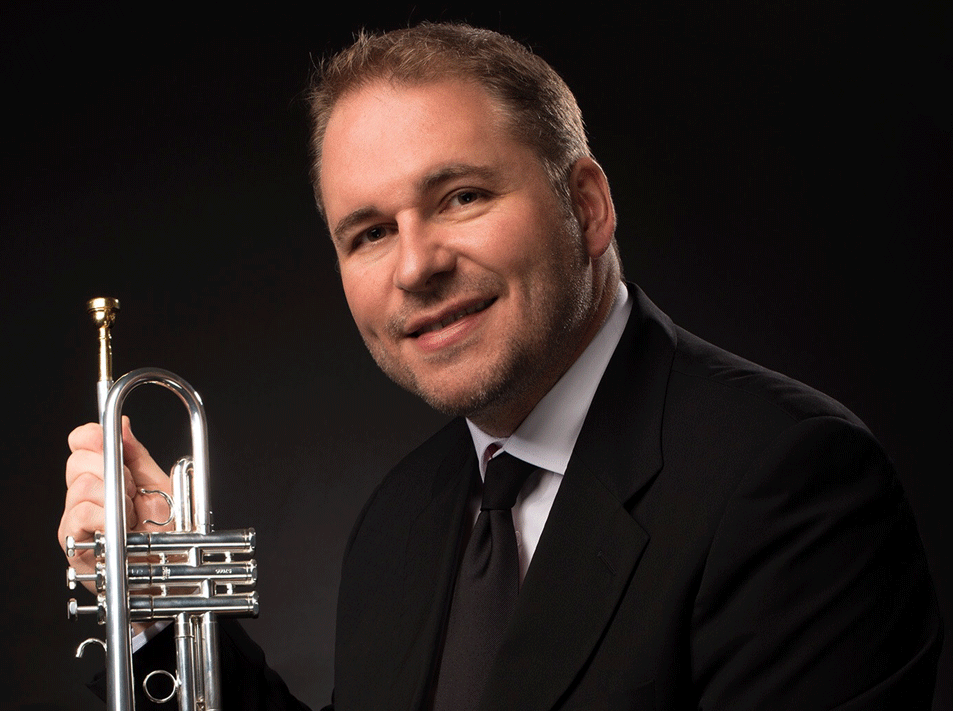
As Second Trumpet in The Cleveland Orchestra, teacher of trumpet at Baldwin Wallace University, and with many other musical projects underway, I am grateful to Jack Sutte for his time in this thoughtful interview.

It looks like you come from a very musical family! Can you talk a little about your early musical influences and your journey to eventually settling on the trumpet?

I am more and more thankful for how my parents and teachers ushered me through those early years of music study. As a parent myself, I look back and am amazed at how they managed everything, especially after my father had a catastrophic stroke when I was 13. My parents sacrificed a great deal for my sisters and I to have music lessons, which included dance, voice, violin, and our choice of a woodwind or brass instrument. Music was always at play somewhere in our home. The branches of my musical tree are not singular, but rather an intertwined network of loving and generous family, friends, and teachers. 

Although a bassoonist, my father, John, also played piano and accordion in addition to being a music educator. I remember excerpts from Smetana’s Bartered Bride being whittled away in our living room. He played in the Waukesha Symphony, and I remember attending those concerts with Bach’s sour candies in my pockets. (I learned quickly how loud plastic candy wrappers are!) In retrospect, those concerts impressed upon me a love of symphonic sounds. I also remember playing violin and trumpet duets with my dad with his accompaniments on both keyboard instruments.

My mom, Nayce, whose keen ear and attention to detail were always present, is a retired Wisconsin state-award winning music educator. She taught piano lessons, too. My “Grandma Dot” helped immensely by driving me everywhere when my mom went back to work. Grandma Dot moved in with us following my dad’s stroke and heavily influenced by musical immersion. Michael Sukawaty, who taught music in the same school as my mom, was always present to help and support my musical growth. Michael, who also plays piano, and I often played duets, and he became my de facto dad after my father’s stroke. He has been very influential in my musical journey.

My teachers in Oconomowoc’s Greenland Elementary School were Dwayne Block (band), Mary Petersen (general music with a notable Kodaly influence), and Fred Schwarz (orchestra). They were all super supportive of my violin and beginning trumpet studies. I remember playing the first movement of the Bach Double (BWV 1043) with Mr. Schwarz and wrestling with the bass recorder in Mrs. Petersen’s class. Mr. Block introduced me to my first trumpet solo, but now that I hit 50 years, I cannot remember the name of it. However, I do remember a blue and white cover and a lot of G’s resting at the top of the staff. My middle school band directors were Tanya Broiles-Brouillard, Rick Grothaus, and David Reul. They were supportive and artistically demanding in those awkward teenage years. I wrestled with dental headgear, proving just enough to get some teeth pivoted but avoiding orthodonture. I cried heavily leaving Dr. Bitner’s dental office with the thought of large metal chicklets, wax and flower arranging tape. Nevertheless, I have persevered with slightly crooked teeth! Mr. Reul offered my first opportunities to solo withband and Maid of the Mist remains one of my favorite cornet solos, as does the trio, Bugler’s Holiday.

I had already been studying violin with Patricia Anders, following my Suzuki method beginning with Doris Nadolny, and in addition to the Oconomowoc band program, I played in the Music for Youth (MFY) program which is now the Milwaukee Youth Symphony Orchestra (MYSO). Margery Deutsch, Shelby Keith Dixon, and Fran Richman made great impressions and were incredibly supportive. During my seventh-grade summer, I went to the MFY summer music camp with both my violin and trumpet in tow, just in case, and left with a desire to study only trumpet. The trumpet was my father’s Conn Constellation from his music education classes at college. Not knowing much and unwittingly, I quickly figured out a few things on the trumpet like how to play above the staff. Following the desire to study trumpet with a private teacher, we found Dr. Patricia Backhaus. She was awesome. In addition to modelling a beautiful tone, she introduced me to piccolo trumpet concertos like the Fasch, and French literature, including the Charlier etudes, the Jolivet Concertino and Tomasi Concerto. She also helped me pick out my first professional trumpets.

My high school band directors were A.J. Hoefer and Robert Franzblau. We played inspiring wind ensemble repertoire under Hoefer’s direction and the expectations for top level performances were high. My high school trumpet buddy, Jason Dvorak, was always inspiring and remains a close friend. We were inseparable. I remember our Wind Ensemble sounded exceptional. I also appreciated that while we marched, we were not a marching band per se. Our best work was established in the auditorium where the quality of our collective sound mattered.

It was with Mr. Hoefer that I had my first horse whinny opportunity in Anderson’s Sleigh Ride and the opportunity to perform the first movement of the Tomasi Concerto at Midwest. Dr. Pat supported me through my high school summers at Interlochen, where I studied with J. Craig Davis and Michael Davison. Like my previous teachers, they too were supportive, encouraging, and a lot of fun. Interlochen is where I met the larger-than-life Larry Rachleff, and he suggested that I audition at the Curtis Institute of Music. Being from the Midwest, I naively had not heard of this Philadelphia school, as my focus up to that point was studying at Northwestern with Vincent Cichowicz. I auditioned at the Curtis Institute of Music and began my college studies with Frank Kaderabek. After that, I continued studying for my master’s degree under Raymond Mase at the Juilliard School in New York. Both Kaderabek and Mase were influential teachers, mentors, and at times, surrogate father figures in my life.

Thank you for letting me take a walk down memory lane. There are many more people to give thanks to, but all my musical influencers gracefully led me from my violin studies to trumpet. It became clear that trumpet was ascending, and violin was not. And I am grateful to all those who were part of my musical journey.

Any particular musical or trumpet heroes past or present?

I really admire the recordings of Maurice André, Håkan Hardenberger, and Wynton Marsalis.

I have always enjoyed listening to the recordings of the Chicago Symphony with Reiner, the SanFransisco Symphony with Blomstedt, The Philadelphia Orchestra with Muti, and Cleveland Orchestra recordings with Maazel. I also admire the recorded work of my teachers from Curtis, Juilliard, and Aspen, including Frank Kaderabek, Raymond Mase, and Chris Gekker. They all play with individual style. While studying at Juilliard, the American Brass Quintet (the champions of the brass quintet) became my favorite chamber music group. Alison Krauss and Nora Jones are awesome, too. I really like 1970’s Classic Rock and U2, especially live in-concert. My wife and I were fortunate to recently see U2 perform live at the Sphere in Las Vegas. It was really a compelling and moving musical experience.

You have such wide musical interests with your orchestral playing, chamber music, solo work and composing. How do you manage to juggle this and devote the required time to each discipline?

Ah yes – time management. I am always doing something and am a quintessential list maker.

I really love to practice, especially solo repertoire. The Orchestra calendar is pretty fixed, and all my additional musical interests fit in and around that schedule. I will have to add to the above list: teaching, recording work, parenting, housework, yardwork, dog care, laundry, napping, friendships, family engagements, and husbandry. I do not like being idle, so I try to be efficient and timely in everything I do. If I have a burst of artistic energy pointing to practice or composition, I try to follow it. If I have an idea or musical motif that seems fleeting, I write it down. I keep lists, lots of lists. I like to have a full schedule, but I also know when I need to rest and recharge. I take naps. There is a saying somewhere in literary history that idle hands are the devil’s workshop. I think over time, individual growth is inevitable if we learn lessons from our collective experiences. For me, while it is certainly not a perfect science, I have learned that I am the best version of myself when my life is full in a multitude of areas that are meaningful to me and those who I care about. That being said, it also helps that my wife for the past 20 years, Audra Zarlenga, is my biggest supporter and encourager. We vowed on our wedding day to always continue growing as individuals during our partnership, and to support each other in our professional and personal journeys. Having such a support system is, for lack of a better word, magical. I will be forever grateful.

From a trumpet perspective, do you have to prepare yourself very differently depending on the repertoire and the musical setting? Do you have set practice routines?

I would say my answers to both questions are both yes and no. There are hallmarks of fundamental practice which are necessities, like having all of the playing cards in a deck. I tend to shuffle those practice cards around on a daily, weekly, and monthly basis. I suppose I have my favorites that are in a more regular rotation, but I try to change things up so that I am always listening to my practice in diverse ways. Practicing the same thing every day for me is boring.

For example, practicing softly with a beautiful sound is something I concentrate on, but always in a different fashion or methodology. I enjoy practicing Franquin, Petit, Clarke, Colin, Harris, Thibaud, Irons, Jacobs, Spaulding, Schlossberg, André, Nagel, Vacchiano, etc. – they all have written compelling and inspiring books. I like scales and arpeggiated patterns, slurred and articulated, that extend the registers, ascending and descending. I like to improvise patterns to test my knowledge of the scales. During the pandemic, in order to learn something new, I concentrated on Thibaud’s double pedal tones. I’m still striving for some sort of double C. I do not do a lot of mouthpiece buzzing (except for a few minutes in the car) as I concentrate my time on the horn. I like to practice brass trio music and the solo material I am working on – currently sonatas for trumpet and piano.

As a teacher, what are the main areas that you get students to focus on?

As a professor of trumpet at Baldwin Wallace University, in addition to instructing my students to always strive to produce a beautiful singing sound and become thoughtful musical citizens, I strive to have each student become their own teacher. It’s not about me or my journey, but it is about them and their journey. And each student is unique in their own way. I believe teaching a singing approach through the registers allows my students to ensure that their chops are set up correctly and working efficiently, so that they can enjoy a long career of playing. I aim for the same in my own practice. I also try to get the students to focus on posture, history of the repertoire and its zeitgeist, efficiency (like the concept of resting while you play), breath control, intonation, and overall musical mindfulness (blending, playing with a “warm” sound, and score awareness). Their personal and musical journeys overlap, so I also try to have my students focus on overall wellness and good health.

Jack Sutte

What have been the biggest highlights of your career to date?

Besides getting married and having two aspiring young adult teenagers, the most life changing event prior to the creation of my family was winning the second trumpet job in the Cleveland Orchestra. I am so thankful that Christoph von Dohnányi and the audition committee hired me. Playing with the Cleveland Orchestra has provided me with a wonderful professional career, access to amazing musicians and musical experiences, and frankly, a never-ending platform for planting the seeds of creativity and imagination, which are necessary lifelines for many performing professional musicians, including myself.

In this regard, I would like to mention a few performance highlights during my career. The first is the world premiere of Matthias Pintscher’s Chute d’étoiles for orchestra and two solo trumpets, with The Cleveland Orchestra, music director Franz Welser-Möst, and principal trumpet, Michael Sachs. We performed this work at Severance and Carnegie Hall, and at the Lucerne and Salzburg Festivals. I really enjoy contemporary music, and the opportunity to perform this piece was extremely inspiring.

Two other professional highlights include performing works composed by my friend and Baldwin Wallace Composer-in-Residence, Clint Needham. The first, Fractured Elements, is a concerto for trumpet inspired by the classic elements of nature and their current environmental plight. The second, Resolve, is a concerto for brass trio that was performed by Factory Seconds Brass Trio. The premiers of both Fractured Elements and Resolve were conducted by Brendan Caldwell leading the Baldwin Wallace Symphonic Wind Ensemble.I also had the opportunity to perform the Hummel Concerto in E Major and the Neruda Concerto in E Flat as a soloist with CityMusic Cleveland Chamber Orchestra. Both pieces are classics.

Relative to your next question, I played Schilke trumpets for both performances (E trumpet and Eb cornet, respectively) and cannot say enough good things about Schilke’s instruments.

Can you tell me a little about your relationship with Schilke and the trumpets on which you play?

I love Schilke trumpets and everything they stand for in the industry. The company is 100% family run and has been from its inception. Schilke offers a modern look to total attention to both craftsmanship and detail. It is unfortunate that many of today’s instrument makers are owned by foreign and/or conglomerate business entities, which focus more heavily on volume rather than artistry and handiwork.

My first Schilke trumpet was the P5-4, when I was a teenager. One of the craftsmen at Schilke was the grandfather of one of my sister’s good friends. I regrettably forget this gentleman’s name, but he was part of the team that created the Cauffman radially asymmetric parabolic oval mouthpiece. (I have a 1K.) Somehow along the way, we worked out an agreement where Schilke added an additional P5-4 into their manufacturing run. I remember parting ways with my Getzen four-valve piccolo to help pay for the new Schilke. I really love this Schilke piccolo trumpet, and in high school, the P5-4 contributed heavily to my success in concerto competitions.

My second instrument from Schilke was a D/Eb E3L-4. Fast forward to my undergraduate studies at the Curtis Institute of Music, one of my father’s friends from Lawrence University,

Bruce Brown, gifted me this unique trumpet. I still cherish having and using this trumpet today. I use the D/Eb E3L-4 more as my solo and chamber music projects have expanded. The Schilke four-valve instruments sound superb, are eye-catching and unique.

Fast forward to my time in Cleveland and some more backstory… I have known Andrew Naumann, the owner of Schilke, since high school in Wisconsin. Although we were not in the same class, we had many of the same teachers. I am certain we also enjoyed similar high-valued artistic experiences in wind symphony – all of which helped propel us into our careers in music.

Andrew is a person that I admire hands-down. As a young trumpeter, Andrew peripherally showed me that it was possible to aspire to be a professional in music from Oconomowoc.

Andrew and his wife Julie purchased the Schilke company from the Reynold Schilke family and have preserved the quality and thoughtfully expanded the Schilke offerings. Their team is exceptional. Andrew is an excellent craftsman and can regularly be seen in the factory working on Schilke bells or spraying the perfect finishing coat.

I am excited about the new HDII Bb and C trumpets! Andrew and I have been methodically working on their design. Adding a new HD model seemed to fit in the Schilke series of trumpets.

To that end, the new Bb and C expand Schilke design concepts from the HD series of trumpets.The HDII trumpets incorporate an incredible seamless bell. In addition to a great core of sound and superb intonation, they have indestructible low F’s.

Also to mention is the fixed bell B3-4, affectionately known as “The Shredder.” I love it. This is a highly desirable trumpet and a must-have for anyone playing bass clef notes in the orchestra. I use my 4-valve instruments for work in the orchestra, brass trio, and solo work. Vacchiano is quoted as saying, and I will paraphrase, the D trumpet is the trumpet of the future. I think 4-valve instruments (Bb and C, and D!) are the instruments of the future. You heard it here first!

Any exciting new projects in the pipeline?

Yes, there are a few I would like to mention. Beginning in 2019, I wanted to do something new and challenging for my practice and devised the SonataPalooza Project– based on the Sonatenabend (evening of sonatas). The initial idea was to perform and record twelve sonatas over four concerts in ten days. The first two volumes of SonataPalooza I – Mettle, are released on CD and streaming platforms. Volumes I and II include sonatas by Kennan, Pilss, Mittner, Hindemith, Shapero, and Ewazen. Volumes III (Flor Peeters, Halsey Stevens, and George Antheil) and IV (Jean Hubeau, David Loeb, and Leo Sowerby) should be out in 2024.

SonataPalooza II – Regale, which includes another twelve sonatas, will follow in four additional volumes of three sonatas each in 2025. SonataPalooza 2.5 – A Fairly Fanfarish Sonata Set, includes sonatas written for solo trumpet. SonataPalooza III, An American Collection, will obviously feature sonatas by American composers, including my work for trumpet and piano, Travels. This third collection continues to grow. I am also strategizing a SonataPalooza (IV) with organ. I have an audacious goal of recording the sonata canon for trumpet and piano. Who does not love a palooza?!?

Another collection of solo pieces that I recorded during the Covid-19 pandemic, titled Litany of Breath, after the piece with the same name by David Sampson, is also waiting to be produced.

My dear friend, Robert Pound, who is a fantastic composer, conductor, and professor at Dickinson College, is writing an epic work for trumpet and piano, T’iaxe Salphinx (The Trumpet Shouts/Cries). It is based on Homer’s Iliad using a modern adaptation of Ancient Greek musical principles in a setting of the original text. And finally, Factory Seconds Brass Trio is set to release Regifted, a clever collection of Christmas arrangements for the 2023 holiday season. Please visit www.jacksutte.com and www.factoryseconds.org for more information. Please stream our music on your favorite platform. If you would like to purchase a CD before they become extinct, please contact either website.

Gear Review · Interview

Jon Faddis on Ullvén Mutes

…from Jon Faddis:

Hello, Fellow Brass Players,

I would like to tell you about some really good news, not just for me, but for trumpet and trombone players all over the world.
Swedish trumpeter Lasse Lindgren has acquired the rights to make Ullven mutes, which have been unavailable for many years, and also happen to be my all-time favorite mutes.
Dizzy Gillespie game me my first Ullven harmon and cup mutes in 1972. I’ve been using Ullven mutes exclusively for almost 50 years!

These mutes, plus my Schilke Music Products horns, are “tried and true” for me.
I even remember when that first Ullven harmon was stolen from me: October 21, 1977, at Jazz Showcase, in Chicago. It was Dizzy’s 60th birthday celebration, and I had left the mute on the piano on stage between sets. During that time, I was hanging out with Diz and Muhammed Ali backstage. When I went back on  stage to play the next set, my mute was gone!

So you know: The Ullven harmon mute is perfectly in tune down to low F# and has an exceptionally full and even sound when playing on a microphone.
The Ullven cup mute is adjustable and gives the player the option to change the sound to that which she/he is looking for.
The cup can even be used as a plunger (á la #SnookyYoung, on the gold plated Ullven cup which I gave to him as gift back in the day).

These Ullvens also make great quiet practice mutes.
Because of the functionality in this regard, Ullven cup mutes and Ullven Harmon mutes also are superb as a quiet practice mute when one wants to hone skills without disturbing anyone, even and especially late at night, or if you have pets in your home who pick up frequencies at higher intensity — you spare their ears. You also help protect your own hearing as a musician.
It’s also a really nice gift for students (and their families) as they learn the art of the trumpet.
These Ullven mutes are the real deal and Lasse is making them now.
Get ‘em while you can!

Lasse, tack så mycket!

Jon Faddis Sleeping Cat Music, Inc.
@faddisphere
International Trumpet Guild (Official)
International Trumpet Guild Student Group
Jazz Education Network
Schilke Music Products
Ullvén Mutes for Brass Instrument


SIGN UP HERE FOR NEW BLOG ARTICLES EMAILED DIRECT TO YOUR INBOX:

[jetpack_subscription_form show_subscribers_total=”false” button_on_newline=”false” custom_font_size=”16px” custom_border_radius=”0″ custom_border_weight=”1″ custom_padding=”15″ custom_spacing=”10″ submit_button_classes=”” email_field_classes=”” show_only_email_and_button=”true”]

Interview

Trumpet Artist Profile : Diego Urcola

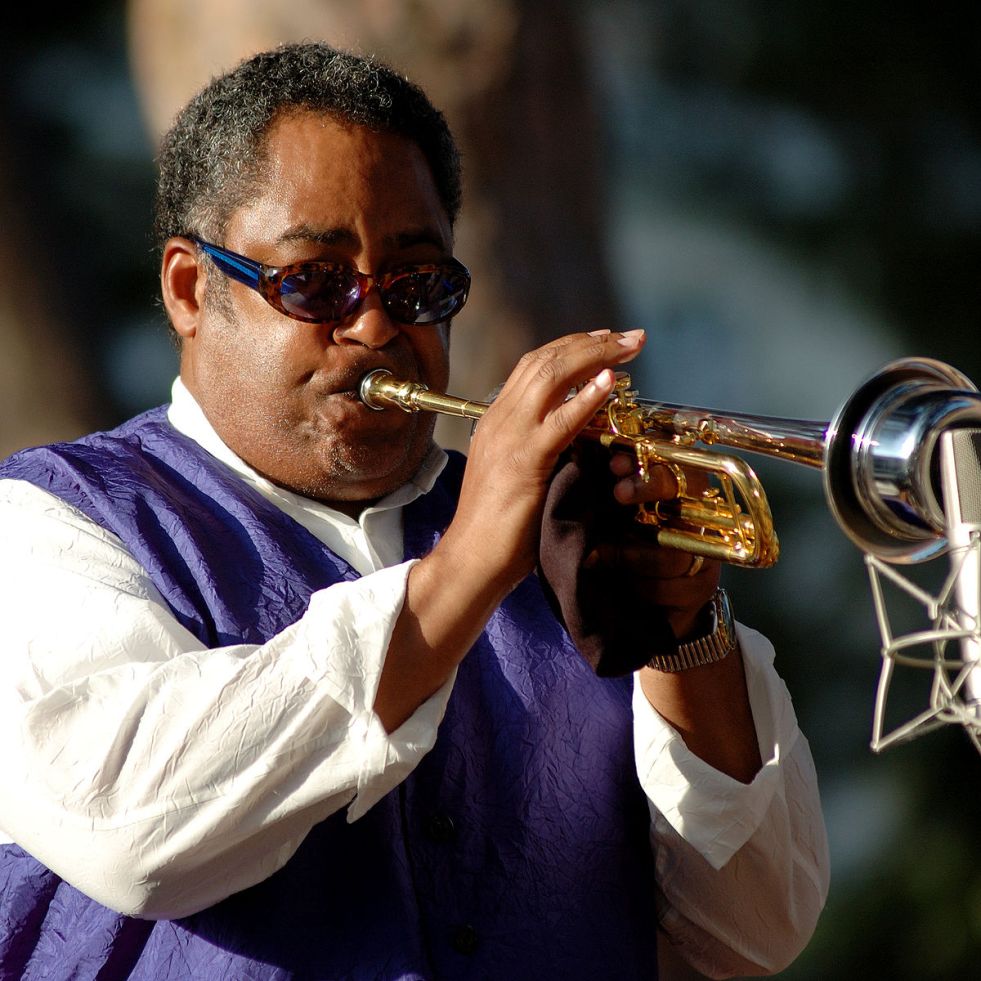
‘Trumpet Artist’ is far too narrow a description for Diego Urcola. Perfomer, Band leader, composer, multi-instrumentalist and jazz educator are all monikers that should also be added. Born in Buenos Aires, Argentina, three‑time Grammy nominee Diego Urcola has been a member of the Paquito D’Rivera Quintet since 1991. Additionally, the oft‑in‑demand trumpeter performs regularly with the legendary saxophonist Jimmy Heath, the Caribbean Jazz Project and the Dizzy Gillespie Alumni All‑Star Big Band.
It was great to catch up with NYC-based Schilke artist, Diego for this interview:

Can you give a little background to getting started with the trumpet?

I started playing trumpet in my school band in Argentina when I was 9. I played in the concert, marching and jazz bands. The marching band routine had a New Orleans Jazz part so I started doing that without even knowing that I was playing jazz. My father who was the band director at the time, was a big fan of Sidney Bechet and he had regular jam sessions every Tuesday night at the school with some friends. Those sessions had a big influence on me because I loved the vibe and the improvised music that they were doing… so I decided then that I wanted to be able to do that.

When did you decide that you wanted a career in music?

Around when I was 14, I told my father that I wanted to be a professional musician. He told me that he was OK with it, but from now on I had to practise the trumpet for no less than 2 hours per day. And I’ve been doing that for the last 40 years…

What styles of music have you listened to most over the years?

After my “very early” New Orleans period, I discovered Dizzy, Bird and Miles and I got obsessed about learning the bebop language. I was also studying at the conservatory at that time so I was practicing and listening to a lot of classical music too. Later, already in the USA, I got into more modern jazz styles and also Brazilian, Cuban and South-American music.

How was the transition moving to and studying in Boston, and then later moving to New York?

Well, before I finish high school in Argentina I was already working as a professional trumpet player. I started working with singers, rock bands, musicals, and some orchestral work too. Also I was playing with my own small jazz groups and other jazz bands with musicians 20 or more years older than me. That was when I decided that I needed to move to the USA if I wanted to get better. I won a very good scholarship from Berklee College of Music and that helped me a lot to make the decision to move to the US. After 3 great years in Boston I kind of felt the same way. That in order to get better I needed to be in New York. That was 30 years ago…

I think that I may already know the answer to this, but what have been your favourite gigs?!

Paquito’s Band of course! I‘ve been doing that for the last 30 years! But working with masters like Jimmy Heath, Slide Hampton, Joe Henderson, Ron Carter, James Moody, Bebo Valdes and many others are highlights of my career.

How do your Argentinean roots influence the music that you make today?

A Lot! Especially tango music, the music of my home town Buenos Aires. Also South-American music in general. All music from Latin America has similar roots but they sound very different if you really study them. It’s very rich music, especially rhythmically. 

Can you talk a little about the horns and mouthpieces that you play, and the process of working with Schilke to find the right setup?

Right now I’m playing a Schilke HC2 trumpet with a custom 24B mouthpiece. The HC2 is for me the perfect jazz trumpet. Very flexible and with a dark but very rich sound with a lot of overtones. I have been playing very big rims for a while and I love the Schilke 24 rim. The regular cup of the Schilke 24 is too big for jazz so Schilke made me a 24B that is not in their catalog but it is exactly what I need. I also play a  Schilke 1040 Flugelhorn with a custom 24F mouthpiece. Before, I was never a big fan of the flugel as an instrument because most of them play out of tune, but the new Schilke flugels have perfect intonation and a beautiful sound.

Do you have a set practice routine?   

Yes, I start my day with about 20-30min of long notes. Then I go into a selection of exercises from different books like Caruso, Schlossberg, Flexus and Clarke that I picked out through the years. I play these exercises with different instruments: trumpet, cornet, flugelhorn, piccolo, euphonium, valve and slide trombone. 

How have you managed during this global lockdown? How do you think that musicians are going to need to adapt in the future to deal with may be a very different musical world?

It has been a very interesting time. In a way I have been busy doing videos for social media, home recordings, skype lessons and also working on the promotion of my new album “El Duelo” that came out on September 18th. I don’t think anybody knows exactly how things are going to be after this pandemic is over. All the Internet/Social Media things are interesting but they don’t come close to the experience of performing live. I hope we can get back to that very soon.

What advice would you give to young and aspiring trumpet players?

Practice, practice and practice…but also to diversify. To learn how to compose, arrange, record, computer music (sequencers, loops, samplers, DAW, etc…) and to produce content like videos, music for film and TV. I think this type of knowledge is going to be crucial if you want to make a living as a musician in the future.

What are you working on at the moment or in the future?

I just got a commission/grant from the Jazz Coalition so I’m going to start working on that. Also hopefully in the near future play live the music of El Duelo. 

Thank you very much for the interview and I wish everybody to stay healthy, positive and active until this pandemic is over!

You can visit Diego’s website for more information.

Information on his latest release, “El Duelo” is here.

Click here for the Schilke HC2 trumpet that Diego plays.

And the Schilke 1040 Flugelhorn is here too.


Sign up here for new blog articles emailed direct to your inbox:

[jetpack_subscription_form show_subscribers_total=”false” button_on_newline=”false” submit_button_text=”Sign up” custom_font_size=”16″ custom_border_radius=”0″ custom_border_weight=”1″ custom_padding=”15″ custom_spacing=”10″ submit_button_classes=”” email_field_classes=”” show_only_email_and_button=”true”]

Advice · Gear Review · Interview

Marc Geujon and the New Schilke ‘Soloiste’

Marc Geujon is Principal Trumpet of the Orchestre de l’Opéra National de Paris.  As well being a Professor at the Conservatoire de Saint Maur des Fossés, he is growing in reputation as a soloist and educator.  September 2018 will also see Marc take up a teaching position at the Conservatoire National Supérieur de Musique de Paris. I was delighted to be able to catch up with him and also to find out about his latest collaboration with Schilke.

 What drew you to the trumpet as a child?

When I was 11, I asked my parents if I could learn music.  After one year of learning theory and reading notes, I asked the music school if I could try trombone.  The music school director answered, “There are no more trombones available, you will learn the trumpet…!”.  I began with a non-professional teacher in my village.  One year later, I passed an audition to enter the regional conservatory.  The trumpet teacher didn’t want to take me in his class, because my sound and level were so terrible, and he told me to learn the tuba.  I refused…  He said, “Ok… stop playing during the summer and we will start at the beginning in September.  Four years later, I graduated from the conservatory and joined Eric Aubier’s class for 1 and a half years.  After, I entered the Paris Conservatoire.

Were there any particular early musical influences, or any musicians now that you particularly admire?

As with a lot of players, my first recordings were of Maurice André.  And the CD which persuaded me to become a trumpeter was “Great French Trumpet Concertos” from Eric Aubier.

It was the reason why I asked to study with Aubier.  He taught me a lot, especially on stage.  When I was around 20, he asked me many times to play some baroque pieces for 2 trumpets or more with him (Vivaldi, Molter…) and also played the second part in Bach Masterpieces with him.  It was an incredible experience for me.

Now, I’m a big fan of Reinhold Friedrich, Matthias Höfs, Pacho Flores… As orchestral players, I love Gábor Tarkövi, Peter Masseurs, Frits Damrow, David Bilger, Michael Sachs…

https://youtu.be/Tvua70Ctjfc

Do you have a set practise routine that works for everything, or do you have to change it drastically depending on what gigs you have in your diary?  Does your practice change drastically from doing an operatic run, or a recital tour for example?

I have a practice routine that works for most of my days.  Basics from Michael Sachs Daily Routine, Plog Program, Stamp, Arban, Clarke…  It depends on the time I have to practice.  I try to think the trumpet to be as natural and easy as possible…  I work every day in that way.  The only thing very important is that I need to practice in the morning, every day.  I drive my kids to school every morning and begin my warm-up at 8:30am.

How does this change when you are travelling?

The problem is to play in the hotel room, with a practice mute.  And also the jet lag… but I try to keep my routine and to do my best despite the hours, places and climate.

When you are teaching, have you found that your emphasis has changed over the years as your own experiences and playing develops and changes?  Are there particular ‘schools of thought’ or strict ‘methods’ that you like to use with your students?

Yes, I have evolved a lot in my playing and teaching year after year.  I try to be a student in my mind every day.  I listen to a lot of music, I practice a lot of new things, I buy a lot of new books… so I try to share all my experiences with my students.

The most important thing I try to teach is “Trumpet playing must be easy”.  I have the chance to see most of world’s best singers on stage every evening.  The better they are, the easier they sing!  It takes a lot of time and practice to play with easiness, but it’s so important and useful…

Marc Geujon

What are the key things that young aspiring players should concentrate on?

Sound, rhythm, music…and practice!

What has the process been like working on new Trumpets and Mouthpieces with Schilke? Can you tell us a little about how that relationship came about and what the design process was like?

Around 12 years ago, I was in a music shop in Paris to try a Schilke P5-4 piccolo for a colleague.  Andrew Naumann, Schilke owner and president, and Phil Baughman, sales manager, were in the upper floors of the shop.  They heard me playing the piccolo and offered me a Bb trumpet t try, a B1 anniversary model. I wasn’t a fan of that model, but I tested also a C trumpet (a C3) and it was so much easier to play compare to my Bach C.  I bought it, and an X3 Bb one month later.

I met Andrew Naumann and his wife Julie several times after that, and I’m lucky to say that we are good friends now.  I have played Schilke for 12 years now (C3, X3, E3L, G1L, P7-4, C5-4, XA-1…).  When Schilke created their HD models, Andrew asked me to test them.  They were good horns, but too stiff for me.  We developed the C3HD, which was a little bit more flexible and brighter.  It was better, but I was not completely satisfied for my playing style.  Andrew and I discussed a completely new project.  A new line which keep the standard qualities of the Schilke trumpets, but with a more orchestral instrument, with a beautiful rich sound, a lot of core, brilliance, and extremely flexible.

Soloiste-Bb-Silver
The Schilke Soloiste Bb Trumpet

After 18 months of design and research, the Soloiste series was born. A new C and a new Bb trumpet, completely new…  Not an assembly of existing parts, or small modifications on existing horns…  And I can say that these trumpets are the best trumpets I have ever played.

Soloiste-C-Gold
The Schilke Soloiste C Trumpet

In February, I was at the Schilke factory to finalize the Bb Soloiste with Andrew, and I asked Chris Jones, the Schilke mouthpiece production manager for a mouthpiece which fits perfectly with my Soloiste new trumpets. He made an incredible mouthpiece for me, and the Schilke Soloiste MG mouthpiece was born…

Most enjoyable project or gig?

I can say that it’s Christmas every day for me.  I’m a lucky guy! I play in a wonderful orchestra, the Opera National de Paris orchestra, with a very nice and talented brass section.  I play chamber music with the Opera brass quintet.  I play regularly with piano or organ for recitals, and more and more with orchestra for solo concerts.

Every time I play, it is a good moment for me.  And I love to meet other musicians from all over the world to play, discuss and share…

Proudest professional moment?

Perhaps ‘Pictures at an Exhibition’ in Vienna Musikverein with the Paris opera orchestra… a wonderful moment with my colleagues.  It was a change from our usual work in the pit.

https://youtu.be/W0-lJVmsDXg

What have you got coming up that you are most looking forward to?

I would love to record CDs now.  It would be a good time in my life to do that… and I would love to travel more to play and teach French trumpet repertoire.

Thanks for your time Marc, is there anything else that you would like to add?

I would just like to thank very much my family for all the love they give me, Andrew and Julie Naumann with all the Schilke team for all their support and kindness, all the musicians I have met who have taught me something extra, and also, thank you, John for asking me these questions! 😉

Please visit Thompson Music to find out more about the new Schilke Soloiste Trumpets on the links below:

Schilke Soloiste Bb Trumpet

Schilke Soloiste C Trumpet

To find out more about Marc Geujon, please visit his website


Sign up here for new blog articles emailed direct to your inbox:

[jetpack_subscription_form show_subscribers_total=”false” button_on_newline=”false” submit_button_text=”Sign up” custom_font_size=”16″ custom_border_radius=”0″ custom_border_weight=”1″ custom_padding=”15″ custom_spacing=”10″ submit_button_classes=”” email_field_classes=”” show_only_email_and_button=”true”]

Advice · Education · Interview

How To Be a Versatile Trumpeter

D.H. Lawrence writes: “Never set a child afloat on the flat sea of life with only one sail to catch the wind.”  The same could easily be said about trumpet students and the importance of developing versatility in not only their playing but also their outlook on life.
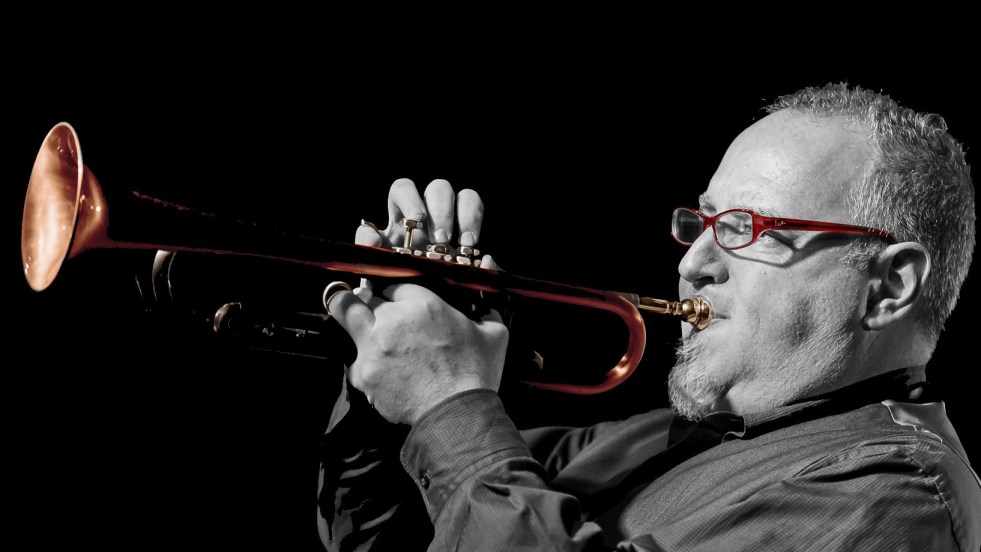
To discuss how we achieve this, I have been fortunate to have the thoughts and experience of 2 fantastic trumpet players who have both made careers out of crossing musical boundaries, genres and pigeon holes.

Mike Lovatt is primarily a commercial player (John Wilson Orchestra, BBC Big Band and session and show extraordinaire) although classically trained, who is often asked to guest on principal trumpet with the major orchestras. www.mikelovatt.co.uk

mike-lovatt_pr042

Shaun Hooke is a classically trained player, now Principal Trumpet with the RTE Concert Orchestra in Dublin and regularly also plays lead trumpet with the RTE Big Band. www.dublintrumpetacademy.com

shaunhooke

They both have some fascinating insights into approaching very similar problems and challenges, but from different perspectives.

Can you tell us a little about your background as a player, and what you got you into the trumpet in the first place?

Mike: I was born into a musical family. My Dad was head of music at a secondary school and my Mum was a fine amateur singer with the local choral society. Early in his career my Dad began to collect instruments and taught himself to play them. There were no peripatetic teachers in those days and he wanted to be able to teach well enough to form a youth orchestra within the school. By the time he retired he was conducting an orchestra of about 70 children! The trumpet was one of the many instruments lying around the house. I really wanted to play the trombone but at the age of eight my arms weren’t long enough.

Around that age on a shopping trip to the local supermarket, I was drawn to the record carousel and saw a record with a picture of a trumpet player on the front. It was Eddie Calvert ‘The Man with the Golden Trumpet’ I immediately asked if I could have it and after listening to the album I tried to play along with it using an old Selmer. I was hooked! Trumpet playing was all I wanted to do.

I began to play in my Dad’s youth orchestra and eventually the Staffordshire youth orchestra. I really wanted to be a professional and every day I would rush from school to try to play along to all sorts of records. I would pretend I was doing a concert with the Syd Lawrence Orchestra or that I was Maurice Murphy with the London Symphony Orchestra or a member of the PJBE, or the great Kenny Baker. This developed my ear not only for pitch but also for sound, style, articulation, placement of time and phrasing.

Disaster struck when aged 14; I was involved in a serious cycling accident. I lacerated my top lip and lost several front teeth. I thought my playing days were over. Thanks to the skills of the plastic surgeons of the North Staffs hospital I healed and began to try to play again. At first it was terrible, I could not produce a sound. Eventually I got it working again enough to do my grade 8 and I then auditioned for the music colleges. The range I previously had didn’t come back however and it wasn’t until I discovered the Maggio system some 10 years later that finally my chops came together.

I was fortunate to study at Trinity College of Music in the 80’s. My teacher was Norman Burgess, formally principal trumpet of the BBC concert orchestra, and later co-principal in the BBC Symphony.  He taught me to be as versatile as possible with a view to being employable in the future. He also encouraged me to attend the extra-curricular college big band rehearsals run by the great Bobby Lamb.  There were no Jazz courses available at music colleges back then, so I was lucky to be able to learn from these two great musicians who between them had a wealth of experience from all sides of the profession. I quickly realized that whatever style you play, a good solid technique on the instrument is essential. With a strong technical foundation and embouchure, it is possible to cope with the demands of all styles of playing.

Shaun: I grew up in Leicestershire in England.  I was enormously lucky to be able to avail of free trumpet lessons provided by our County Music Service. Particularly Don Blakeson, who was taught by David Mason who in turn apparently could trace back teacher to teacher all the way back to Handel’s time! I’m doing the Messiah next week so hopefully something has worn off on me. I was also heavily involved with Enderby Silver Band. I started with them as they reformed in ’77 when I was a nipper and enjoyed many happy years growing up with so many wonderful people to mentor me.

I decided to do Chemistry at Oxford University rather than going on to music college, but I had the trumpet bug and after completing a doctorate I knew I wanted to at least give pro trumpet playing a go. Jon Holland and Wes Warren at the CBSO taught me orchestral skills and still now I put myself back in their presence the moment before I play something.  What did Jon say to do here?  What was Wes’s trick for this?…

Quite quickly I was appointed to Principal Trumpet in the RTE Concert Orchestra but to this day I’m still thinking about how these guys coached me and I’m passing it on to my own students.

Your job involves you constantly switching styles – do you have a regular practise routine that encompasses everything, and what are the most important things to concentrate on?

Mike: I believe production is key across all types of trumpet playing. In commercial music, big bands and some Jazz playing the style requires a more defined articulation and sometimes brightness and sizzle in the sound. I always maintain that under that brightness there should be a full broad tone across the entire register. High notes are expected in lead trumpet playing and some areas of commercial music and so should be developed. However, they must never be the be all and end all at the expense of a good sound and considered playing. Super C is almost normal range these days but it’s important to have a full rich centered sound. You should always use your ears and listen to all types of music… try playing along with the music you listen to and copy it. You could also record yourself playing different styles and listen back and compare. For a particular style to come across to the listener, it needs to be exaggerated.

Shaun: I don’t really have a set practice routine. As a full time performer, I think it’s important to have some time away from the trumpet. I try to have one day a week where I’m neither playing or studying repertoire to help clear the head and relax the muscles. My emphasis on preparation is looking after the basics. Generally, I always have plenty of strength, stamina and range because I’m working pretty constantly. There are skills however that might not be required week in week out, and these are the ones that I’m careful to maintain at home. Flexibilities and double and triple tonguing can get rusty pretty quickly if you don’t end up being asked to produce them, particularly valve/tongue coordination so these are the things I always make sure stay sharp. The other golden rule is “practice what you’re NOT doing currently.”  If I’ve been doing lead big band charts at work I try to make sure I play something at home on my regular orchestral mouthpiece and something on the piccolo trumpet – choose something for my own pleasure rather than something coming up in the schedule. Vice versa, I always try to do 15-20 minutes on my lead mouthpiece, 2-3 days before I start a project that is going to need that. Other than that, I try to listen to recordings of stuff I have coming up. Not really to familiarise or learn repertoire but more to guard from getting “stuck in your ways”.

It’s nice to be inspired by others and try to do repertoire differently the next time it comes around. I listen to lots of players from the 20s,30s and 40s and try to emulate their styles. There are lots of transcriptions of their solos and I like to collect the original recordings.

Do you have a basic instrument and mouthpiece setup that covers most things, or is it very different depending on what the schedule brings?

Mike: My basic trumpet and mouthpiece set up is the same for most of the works I perform. I play my own signature model Mike Lovatt Smith-Watkins Bb Trumpet exclusively. It is a 460 bore. The bell is similar in size to a Bach 37 except that is a heavy weight.  I have two gold plated instruments and one that is silver-plated. I use my own range of signature mouthpieces of which there are three models: Studio, Lead and Classical.

The majority of my playing is done on the Studio mouthpiece. On this set up I play first Trumpet in the John Wilson Orchestra, perform lead on the West End show 42nd Street and the BBC big band, and when on first trumpet in Studio sessions.  Mouthpieces are very personal and what works for me may not work for someone else. Lip formation and lip thickness determine what might work and feel comfortable to the individual.  My mouthpieces are perfect for the various styles required of me. It seems other players like their ability to be used in different settings. When playing in the high register, I find the Lead with its large back bore, medium shallow cup and the comfy 5ish Bach diameter rim enables me to produce a bright sound I need, and stamina is helped by the resistance being transferred to the trumpet through the large back bore. I use my classical piece (more or less a Bach 3C) for studio sessions sitting down the line, my practice and occasionally on first trumpet if I require a broader darker sound.

My instruments have different qualities because of the plating. The silver ML Smith Watkins trumpet enables me to produce a cutting bright sound not only useful in Lead but also certain styles of orchestral music too. I don’t change lead pipes for different styles of playing. I could if I wanted, as the trumpet features an interchangeable leadpipe system. However, I like to keep the feel (resistance) of the instrument the same regardless of the genre of the music I am playing to help me with my production and familiarity in supporting the notes and sound. I use the ML designed pipe that comes with the trumpet as it balances perfectly with the 37-size bell and the bore size of the instrument. The most important thing here is sound quality whether it is classical, jazz, lead in a big band, pop horn section or solo.

Shaun: To be honest, kit is everything in my job. We try of course to perform in the correct style, but the range of sounds and timbres required is so varied that it really means you need some different equipment to achieve that. At the beginning of my career I did that mostly by playing on my beloved Bach (then later Yamaha) B-flat and using quite a variety of mouthpieces. It had a degree of success, but it is hard work on the embouchure, chopping and changing rims, cup depths, throats, backbores etc… and I certainly felt that my tuning and accuracy suffered.

For the past number of years I have had a different approach. My responsibilities at RTE were putting more emphasis on my role as lead trumpet in the RTE Big Band and I felt I needed a dedicated lead instrument. I tried great gear from Shires, Smith-Watkins and Schilke but I fell in love with B&S’s JBX trumpet. When I’d decided to buy this, the store asked if I’d like to try the B&S Challenger II trumpet (their standard classical model). Well I loved it. So now I have two B flat trumpets, one for classical work and one for light repertoire. The huge advantage for me is that the reverse leadpipe is almost the same on both, the bore is the same, the bell profile is the same, so the tuning slots and the way it “blows” feels entirely similar, making it so easy to switch back and forth.

But the JBX bell is lightweight and has a French bead giving it a really exciting live fizzing sound. Whilst the Challenger II bell (a 43) is much more solid and rounded sound much like the Bachs I’d been playing for the previous 30 years. Since then I have B&S C  and E-flat trumpets both light and heavyweight bells. As to mouthpieces I use a Bach 1 1/4c on both of my B-flats for orchestral (Challenger II) and “Show” work (JBX). For lead work I use a Marcinkiewitz 3/3C.  I turned up at work once without my old lead mouthpiece and was loaned this by my excellent co-principal Eoin Daly – I liked it so much I bought 2 so I could keep one at home and one at work and therefore wouldn’t be caught out again. I have a Schilke piccolo that I use for recording work but have recently just bought a Scherzer rotary valve piccolo for baroque and orchestral repertoire.  Again, it’s all about making the right sound. I use a Marcinkievitz 7s mouthpiece on the piccolo. I found one in 1989 in an “odds and sods” box at a band competition thinking it would be a good “screamer” mouthpiece but it didn’t work for that. It got me through a tour of Brandenburg 2 though so I’ve stuck with it.

How has the versatility that you require affected the way that you approach teaching? Do you recommend that advancing students work on a wide variety of playing styles or concentrate on fundamentals?

Mike: The versatility that I have developed over the years is something I try to pass on to my students.  I encourage listening to all types of music. This is essential for stylistic development.  Occasionally this is done in lessons but I encourage listening to be done on a regular basis to keep ones ear in tune with different styles. A couple of years ago I gave a trumpet class at a major conservatoire in London and when I asked if anyone had listened to any music recordings or attended concerts recently, not one of the 12 classical trumpet students had. One of them admitted to listening to Bruno Mars three days previously!

I teach fundamental trumpet techniques. First and foremost, I make sure the student has a solid embouchure formation and can make a good basic sound. I’m a stickler for note production and articulation so there are exercises based around those techniques using Arban and Schlossberg. I use Caruso, Stamp, Maggio and my own ideas to develop the embouchure. I try to instill playing with reverence for the music. Long notes are important to develop resonance and to find the ‘soul’ of the note and the core of ones playing. When you have control of the sound, this can be adapted and applied to whatever style you are playing. I teach different vibrato techniques and ways to help note projection whether at the back of an orchestra, in a west end pit or in a studio microphone technique to record well.

Shaun: The music business is hard and getting harder. I always encourage my students to be flexible even if you’re pretty sure that you will be going in one particular direction. Make sure you have the skills to be able to say ‘yes’ to the next call and go in and do a good job. It is a wonderful way to earn a living but at the outset, you need to be out there making contacts and proving your professional credentials. One of my colleagues in the RTE CO was a regular in a German Beer band to put money on the table while he was trying to break into the orchestral scene. Work hard but don’t be over focused is my advice.

What is easier, a classically trained player playing light music or a commercial player playing in a classical orchestra section?

Mike: As someone who has dipped my toe into both sides of the profession, I am inclined to say that both styles are as difficult as the other to play convincingly. You need to apply yourself honestly to the style and exaggerate it enough to come across to the listener. I have always had the view that trumpet playing is trumpet playing and that the most important quality to have is solid musicianship built from listening. Always listen carefully to your sound and the music going on around you. If you’re playing third trumpet in a classical section on a film soundtrack recording, you then respect that and whoever is on first trumpet. Try to blend with them and above all support the sound style they are playing. The same goes for an orchestral player playing big band repertoire on a symphonic pops date. I have played with orchestras from San Francisco Symphony, the Concertgebouw Amsterdam, CBSO, BBC Symphony, LSO, LPO, Philharmonia, BBC Scottish, BBC Philharmonic, RTE Concert, Gothenburg Symphony, BBC Concert and many more. On many of these occasions my role is to help shape and lead classical players into becoming commercial big band section players in a three-hour rehearsal followed by a concert. Some seem more capable of giving up to the music and using their ears more than others. If they have a solid technique and command of their instrument, then they are more able to adapt successfully.

To quote John Wilson “anyone who can play good lead trumpet in a dance band can play first trumpet in a symphony orchestra”.

I think it can be difficult for ‘classical’ players to get used to playing swing quavers, combined with the way in which articulation changes in commercial playing. I always try to help by singing the phrasing to them and making them feel confident they can do it. It’s also important to tell the players to articulate and play the shorts and longs accurately.

Shaun: I think that it is not always right to pigeon hole people like that, but there are people who specialise of course. I remember taking the chance to have Tony Fisher come over to cover a James Bond concert for me when my wife was about to pop with our first child. Of course, I waxed lyrical to our management – he was interviewed for RTE radio about the very first Bond sessions including of course the original theme track – it was a brilliant week. Then the baby was born, and I was gone for a few weeks and they asked him to come and do a week of Mendelsohn… he gracefully declined – although it would have been interesting I expect!

I come from a classical background, trained over the years and “on the job” to do light repertoire, and I have local guys here that slot in well in the RTECO and RTE Big Band, but similarly we have guys who mostly do commercial work who are fine sitting down the line on orchestral repertoire. We have lots of mixed programmes where this is required. All the “classical” guys have plenty of “light” experience and the commercial guys are for the most part classical trained so have orchestral skills and can TRANSPOSE.  That is the key!

What challenges and projects have you got coming up?

Mike: I’m so happy I’ve managed to carry on doing many varied projects, gigs and recordings with orchestras, bands, groups and big bands all over the world. My future projects include my first solo album with the amazing Fodens Brass Band, directing the Stockholm Radio Symphony Brass in a concert of Billy May’s Big Fat Brass music, big band lead trumpet sessions for Gary Barlow, UK jazz festivals this summer with the Skelton Skinner all-stars, concerts with the John Wilson Orchestra, concerts and broadcasts on lead trumpet with the BBC Big Band, continuing on lead trumpet for 42nd street and as guest first trumpet for the Symphony in Antwerp. I am fortunate to be looking forward to such a stylistically varied schedule.

Shaun: A few highlights of upcoming stuff are: The Classical Series at the National Concert Hall featuring Mozart, Mendelssohn and Beethoven; studio work with Irish singer/songwriters for rock station RTE2FM; Giselle with visiting English National Ballet, Bartok’s Bluebeard’s Castle with the Irish National Opera. Up to our summer holidays we are also doing 4 sell-out shows at the Donnybrook Dublin Rugby Stadium and The Marquee in Cork with RTE2FM of 90s dance anthems! Hopefully we will tour this show in Australia in the autumn.

For further information about Mike Lovatt, please visit www.mikelovatt.co.uk

Mike’s signature ML Smith-Watkins trumpet is reviewed here if you would like to read more.

For to find out more about Shaun Hooke, please visit www.dublintrumpetacademy.com

Shaun is a B&S Artist and you can view the trumpet range here.

You may also be interested to read a review here of good all-round B-flat trumpets.

For a great range of trumpets, mouthpieces and specialist advice, please visit Thompson Music


Sign up here for new blog articles emailed direct to your inbox:

[jetpack_subscription_form show_subscribers_total=”false” button_on_newline=”false” submit_button_text=”Sign up” custom_font_size=”16″ custom_border_radius=”0″ custom_border_weight=”1″ custom_padding=”15″ custom_spacing=”10″ submit_button_classes=”” email_field_classes=”” show_only_email_and_button=”true”]

Interview

Trumpet Artist Profile: Steve Fishwick

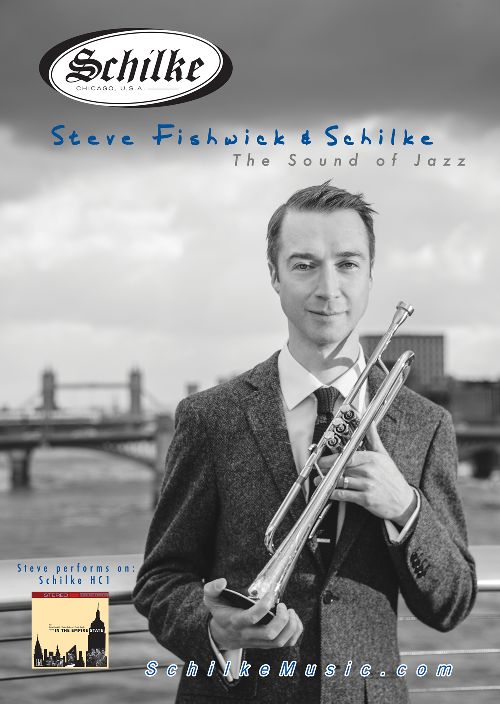
With a rapidly growing profile on the UK and International Jazz circuits, and an ever-increasing back catalogue of critically-acclaimed recordings to his name, I am immensely grateful to trumpeter and Schilke Artist, Steve Fishwick for giving up his time to share his thoughts and insights…

Tell us about how you got into trumpet playing, and your main influences.

“Aged 8, I started having lessons with a wonderful teacher called John Crosdale who had spent time in the Halle orchestra.  My twin brother Matt (now a drummer) made fun of me for a week then decided that he wanted to play too.  I think our parents thought we’d give it up in a few months.  Mr Crosdale used to regale my parents with stories of his professional trumpet playing days, so to an 8 or 9 year old, this was the greatest thing ever.  By the age of 10, I had more or less made up my mind that I was going to be a professional musician, not really having any idea what that entailed or how hard it would be!

I’ll be forever grateful to Mr Crosdale because he was so curious and enthusiastic about music.  When my brother and I started getting interested in jazz, he didn’t discourage it, he was very positive and excited by it even though he was a classical trumpet player.  At the time, the 1980s jazz boom was underway. Wynton Marsalis’ fame was at its peak so he was on the TV all the time along with Courtney Pine, Tommy Smith and Andy Sheppard.  Plus, they were showing old jazz 625s on the TV which we used to video tape and watch over and over.  I remember going to see Dizzy Gillespie with the United Nations Orchestra (with Arturo Sandoval and Claudio Roditi) and our teacher Mr Crosdale was in attendance too.  At our next lesson, he presented us with a programme signed by Dizzy, he’d gone backstage after the concert to meet the band and chat to Arturo about trumpet technique!  He really was an inspirational teacher.

I had got into some bad habits, playing on the red of my lip, so I undertook an embouchure change.  I had no idea what I was doing, I just changed position and told myself: “right that’s where I’m putting the mouthpiece from now on” and it kind of worked.  Then we went to London to study at the Royal Academy of Music under Graham Collier (we were there 1994-98).  Steve Waterman was my teacher along with Gerard Precenser (for my final year) who was very inspirational.  I also had some lessons from vibraphonist Anthony Kerr who was very helpful when I was trying to get fast tempos together, and Martin Speake was great too.  I played pretty convincing jazz when I arrived at college but I didn’t really know technically what I was doing (I was playing mainly by ear).  Martin found me out on day one and proceeded to roast me.  I was a little headstrong and stupid in those days and rebelled quite a bit, but the lessons stuck with me and much, much later I eventually caught on to what they were trying to tell me!

I should also mention Lew Soloff who I had the good fortune of working with in Pete Long’s Gillespiana.  I had met him in New York a little while before this too.  He was very encouraging, but told me in no uncertain terms that I needed to improve my technique, particularly my breathing.  He turned me onto the Arnold Jacobs breathing exercises which I’ve been working on ever since, along with the Chicowicz long tones and flow studies (which Terrell Stafford turned me onto).  I would say that these two things, more than anything else, have improved my trumpet technique immensely.

As for players that I admire, there are a lot!  Main influences I would say are Kenny Dorham, Miles Davis, Art Farmer, Lee Morgan, Freddie Hubbard, Blue Mitchell, Donald Byrd, Clifford Brown, Woody Shaw, Charlie Parker and Dizzy.  I often feel torn between the Kenny Dorham/Miles Davis vulnerable introspection and the more gregarious extrovert Lee Morgan and Freddie Hubbard.  So, I guess I’m trying to balance the two things in some way.  I also listen to more contemporary players like Joe Magnarelli, Ritchie Vitale, Wallace Roney, Scott Wendholt and pretty much anyone playing now.  I try and keep up with all the contemporary players: Avishai Cohen, Ambrose Akinmusire, Michael Rodriguez and the rest of them.  Plus, we have some very fine jazz trumpet players over here in the UK who are very inspiring, such as Percy Pursglove, Tom Walsh and Robbie Robson.  I also like to listen to classical music too.”

What model trumpet do you play?

“I am playing a Schilke HC-1.  For a long time, I played a Martin Committee from the 1940s, but I wore the thing out, put my hands through the brass and everything.  Even after I had it reconditioned it just became unviable to play as my everyday horn.  I got another Martin but the tuning wasn’t fantastic.  Then I moved onto Olds Supers which I liked, incredible projection, but I never felt like I could hear myself very well – Probably because the horn was so good at projecting!  I eventually bought a Schilke B1 after a lot of research.  Basically, I like lightweight horns with step bore and a reverse leadpipe.  I like to feel the horn vibrate in my hands as I’m playing it.  The B1 is great, it has a wide variety of tonal expression, and out front it doesn’t sound bright at all.  But from behind the horn it does sound a little bright.  So, I’ve moved onto the HC-1 which, although it was designed for Wallace Roney, I feel it could have been designed personally for me!  It is a fantastic amalgamation of the Martin Committee and the classic Schilke designs, two of my favourite horns.  The sound is great, the tuning perfect and the resistance from low to upper register is amazingly consistent.  For me personally and for what I’m trying to do, they are the best horns out there.”

…and mouthpiece?!

“I play on a Monette B2S3 Prana Resonance Mouthpiece.  I’ve experimented a lot – Used to play big mouthpieces, moved to shallow ones and gradually went bigger again.  I think most jazz players want something that can give them a big, warm sound but also enables them to get into the upper register.  So, everything is a little bit of a compromise between sound and range, deep and shallow.  The Monette mouthpiece isn’t a compromise, great sound and the upper register is easier.  If I try and play a conventional mouthpiece now, it just doesn’t work.  And the sound is nowhere close to the Monettes (for me personally, not that other players can’t make conventional mouthpieces sound great, I mean Clifford Brown didn’t need it!).  I feel that they also ‘correct’ your playing in some way.  If I’m not using my air correctly or I have tension somewhere in my body then the mouthpiece just kind of shuts down, it doesn’t work.  I don’t consider myself the greatest trumpet technician as it’s something I’ve always struggled with, so I need the daily reminder!”

What are the most important aspects of trumpet playing that young, aspiring musicians should focus on?

“I think an aspiring player should concentrate on sound.  There is a lot to think about when learning any instrument, so I think that sound sometimes goes out of the window.  Along with this goes correct breathing and listening a lot to the greats.  A lot of younger players don’t know how to listen, and in a lot of ways it isn’t their fault.  They have Spotify, YouTube and all of this music at their fingertips, so they end up listening to different stuff every day.  There is a lot to be said for the old way of getting a bunch of CDs and listening to them repeatedly, internalising them and really learning every note on the record.  Also, listening isn’t as social as it used to be when you would get together with friends and listen to music.  Everybody listens on headphones on their phone or computer in isolation.  Do yourself a favour and buy a decent stereo system!  It will sound so much better and you will hear details in the music you won’t have heard before.  Also, you’ll experience the joy of listening and sharing music with friends.  I feel listening and internalising the sound of great players is hugely important, it will give you a strong concept of what you want to sound like.  And if you don’t have that strongly in your mind, it will never come out of the bell of the instrument.  Also go to gigs and hear people live!  It’s the best lesson you will ever get.  The amount of great, great trumpet players that I go to hear and see zero of my trumpet students there in the audience alarms me.

When I was a young player, I attended the Wavendon Jazz Summer Course. Steve Waterman was teaching there and he was invaluable because he showed me all of these transcriptions of people like Lee Morgan and Miles Davis he had done.  Before that I was seriously groping in the dark, but I went home and started transcribing, and my jazz playing started rapidly improving.  It kind of makes me chuckle now when I tell my students they have to transcribe and some of the reactions of horror that I get, because it is quite a daunting prospect at first.  I remember transcribing from vinyl and cassettes because I didn’t have a CD player.  If you wanted to slow it down you had to buy a special cassette player from the US that slowed the music to half speed but made it an octave lower in pitch.  Now there are numerous computer apps that you can download in seconds for a few pounds that can slow the music down whilst keeping the pitch.

Teaching is really important to me.  I think that we have a lot of amazing players here in the UK that aren’t really appreciated enough, and the standard is getting better and better year after year.  I love being part of a team in the colleges that I teach at (Leeds College of Music, Guildhall School of Music and Drama, Birmingham Conservatoire, and the Royal Academy of Music).  When you manage to get the student to play better during the lesson and you see them getting the idea, coupled with seeing their progress over time, it’s exciting and very rewarding to feel you’ve been a part of that process.”

What projects do you currently have in the pipeline?

“I have a band co-led with my brother Matt, featuring Dave O’Higgins on Saxophone, Rob Barron on piano and Dario de Leche playing the music of Cedar Walton.  My brother and I had the honour of recording with Mr Walton in 2007 along with bass legend Peter Washington and my long standing musical partner Osian Roberts.

I recorded a CD last November with Alex Garnett on Alto Saxophone, New York bassist Mike Karn and Matt again on drums.  We’re currently working to get that mixed, mastered and released with a view to touring late next year.

Also in the pipeline is another sextet album as a follow up to our two previous CDs, In the Empire State and When Night Falls.  This band features Osian Roberts on Tenor, NYC musicians Frank Basile on Baritone, Mike Karn on bass and Jeb Patton on drums.  I’m writing music for that when I can find the time!”

Details on projects, recordings and future gigs can be found at www.stevefishwickjazz.com

Instrument details can be found at www.schilkemusic.com


Sign up here for new blog articles emailed direct to your inbox:

[jetpack_subscription_form show_subscribers_total=”false” button_on_newline=”false” submit_button_text=”Sign up” custom_font_size=”16″ custom_border_radius=”0″ custom_border_weight=”1″ custom_padding=”15″ custom_spacing=”10″ submit_button_classes=”” email_field_classes=”” show_only_email_and_button=”true”]