Advice · Education · Interview

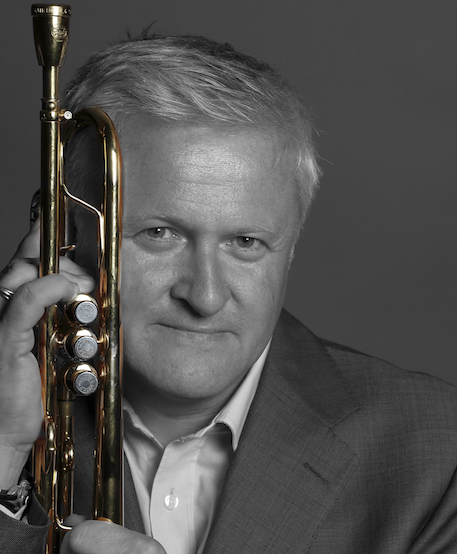
Trumpet Artist Profile: Marvin Stamm

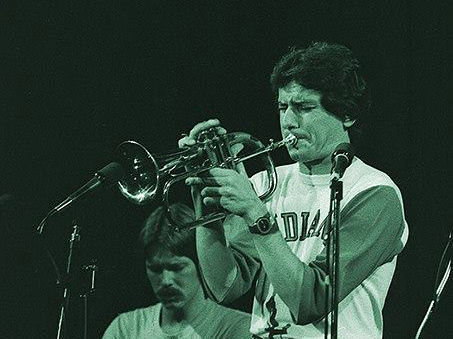
Marvin Stamm is a colossus of the music world, having performed and recorded with many jazz legends throughout his illustrious career. At 79-years-young, he is still going strong and has many interesting thoughts here on adapting to change, both musically and physiologically over the years. There is sound and compelling advice here for musicians of all instruments and of all ages!

What first drew you to the trumpet?

Upon reaching the seventh grade in the school I attended in Memphis, Tennessee, every student was required to participate in a form of the arts—either become part of the band or sing in the chorus and take art. I had no talent for art nor any interest in singing in a chorus, so I chose instrumental music, which at my school was the standard concert band instrumentation. Part of my decision also rested upon the fact that I was rather shy at that age, and thought I could hide within a larger organization and not be noticed. The reason I chose the trumpet was because my older brother, an avid record collector, had a recording by Clyde McCoy entitled “The Sugar Blues” with which he employed the Harmon mute with the stem to produce wa-wa effects, growling, and flutter-tongue. This was quite impressive to me, and this is why I chose the trumpet.

Were there any particular early influences or musicians that you admired?

There were many early influences upon me, and they would have great consequence on the path I chose. Among the important people who first influenced me were my two wonderful band directors during my school years in Memphis; they gave me great training in the basics of music, playing in their concert bands. Another was my afore-mentioned brother, Gordon. My interest in jazz came about very early in my musical experience because hegave me access to his complete jazz collection, allowing me to play along with his records pretty much from the genesis of my musical endeavors. This gave me early exposure to this music  and hadgreat impact on me. I was so enthralled with playing music that I decided after only two years—at age fourteen—this would be my path in life.

Another person exerting great influence during my high school years in Memphis was my trumpet teacher, Perry Wilson. Perry helped me build my musical foundation. He took me through Arban’s, St. Jacome, Schossberg, and Klose, also spending a great deal of time playing duets with me in order to teach me how to work, phrase and blend with other players. At the end of each lesson, he took me into one of the piano rooms and played tunes with me to help me broaden my improvisational skills, learn new material—and, so very important—develop my ear. He also was instrumental in my working in Memphis dance bands from age sixteen. I was very fortunate to have fine and dedicated teachers from the very beginning who prepared me well for my chosen career.

Through every phase of my musical and personal life there have been people willing to offer encouragement and help. There were several very fine musicians form my growing up in Memphis, many of the professional players the Dallas/Ft. Worth area and at the university during my years at North Texas State (now the University of North Texas). The years with Stan Kenton and Woody Herman were of immense value to my growing and developing as a player as well as the two years doing show work in Reno, Nevada. And then throughout all my years working in New York and beyond.

It would be impossible to list all the musicians with whom I have worked and who personally influenced me, but among the trumpet players whom most of our colleagues would recognize would be Mannie Klein, Bernie Glow, Ernie Royal, Snooky Young, Thad Jones, Ray Crisara, Burt Collins,  and Kenny Wheeler. And this lists just a few of the many who were of enormous significance to my music and my life. Someone once said to me that I had achieved a marvelous career and I had done all on my own efforts. I laughed and told him he could not be more mistaken. I had help every step of the way and experience this still to this day—from friends and musical colleagues alike.

As a young player, what was it like joining Stan Kenton?

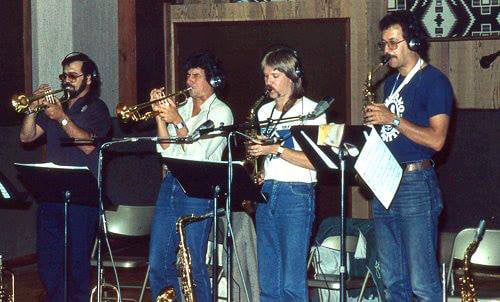
I joined the Stan Kenton Orchestra as his jazz trumpet soloist immediately upon graduation from the University of North Texas in 1961. However, my relationship with Stan pre-dated that occasion because the North Texas band was kind of a house band at the 1960 Indiana University Kenton Clinics, serving as his band for that week. He conducted us in nightly concerts and became quite familiar with my playing, In November of that year Stan asked me to complete the last three and a half weeks of the 1960 tour because Sam Noto had been offered a steady gig at the Latin Quarter in New York City and needed to leave the band. This was really my baptism of fire with the band.

I joined fully after graduating from North Texas and toured with him for two years, recording five albums with the band. The orchestra, during my tenure, toured only in the U.S. and Canada, mostly playing one-nighters. I gained a good bit of national recognition and exposure touring with the band and especially through my being featured extensively on the recordings.

Working for Stan Kenton was great—he was very much a father figure, quite a special person, and very dedicated and inspiring to one such as myself. He was also very patient with me during my time with the band. I underwent a bit of an embouchure change because I was playing low onto the top lip, that is, onto the red tissue of the lip. Because the band played so hard, and most times quite loud, this caused me to cut my lip. With the help of John Haynie, my trumpet teacher from the University of North Texas, I moved the mouthpiece up on the top lip a good bit, providing more vibrating surface for playing and more muscle tissue, more “meat”, for the mouthpiece to rest upon. This was quite a drastic move for me and took a long time for me to adjust to, causing me a great deal of stress. During this whole period of adjustment, Stan was very patient and encouraging to me, showing how much concern and care he had for the people who played in his band.

My time on the Kenton band provided great experience in that it gave me a clear view of “life on the road.” I received a lot of solo exposure and met many people who contributed much to my growth and life experience. Some became friends for life. This playing experience was especially invaluable because you had to be at the top of your form every night in spite of being weary or sometimes ill; or many times playing where acoustics were less than perfect with tired or hurt “chops” and always being on the move. This instilled the concept that when it was time to perform, it didn’t matter how you felt—you were expected to be at your best at all times, under all sorts of conditions. And the one who expected the most from you was you yourself!

During your period as a busy studio player, what were the main things that you concentrated on in practice sessions to keep yourself in good shape and ready for anything?

Fundamentals, fundamentals, fundamentals! I wanted to keep my embouchure strong, but flexible and my technique accurate. We almost never knew what we would be playing from session to session until our arrival at the date. And some days we would be  playing three or four different sessions, all of a different musical style. I might be playing lead trumpet on one session, flugelhorn on another, and piccolo trumpet on a third. Our musicality depended upon our exposure to many styles of music and the interpretation thereof. But the ability to go into number of different musical environments, having the flexibility and stamina to perform to the highest standards day in and day out was the foundation of such a career. I found that keepingmy“instrumental”side in it’s best working order was the best way to be prepared for this kind of functionality. That meant stressing fundamentals.

What prompted your move away from the studio work to concentrate on your own jazz projects?

In the late ‘80s I realized I was feeling musically unfulfilled by the work I was doing. For the first 17 years or so of my studio period, while doing a lot of commercials and such, I still was also involved with a lot of musical recording projects, many of which were in the jazz genre. In the early ‘80s, the shift in work was more to commercials, and the recordings were mostly R&R recordings. There was little creative input being asked of the players, and I was feeling like just a journeyman musician, like “cog in the wheel” of most projects.

In addition, the technology aspect of the music was growing and many of the keyboardists and synthesizer players involved in projects were also being asked to write the arrangements for these projects—few with any knowledge of or skills in orchestration. We became the sources for informing them of what possibilities there were for various instruments, sometimes teaching them the most rudimentary things such as what was the lowest note on a trombone and the highest note playable by a typical saxophonist. It was very frustrating to most of us who had worked for years to become educated, masterful musicians.

In 1987, Lew Soloff introduced me to Swiss composer and and band leader George Gruntz, who was looking for someone to replace Lew for an upcoming tour, as Lew was already booked at that period of time. George invited me to join his group of U.S. and European musicians and I accepted, beginning what was to be a twenty-three year association with his Concert Jazz Band.

The musicians for this tour included Americans Lee Konitz, Claudio Roditi, Larry Schneider, Mike Richmond. Adam Nussbaum, Ray Anderson, Art Barron, David Taylor, Joe Henderson and others. Among the Europeans were trumpeters Palle Mikkelbourg, Manfred Schoof, and alto saxophonist Luten Petrovsky. There were straight-ahead players, BeBop players, and avant-garde players, all coming from across the musical spectrum. Moming from a more traditional big band background, I was initially taken aback by it all, but by the end of the tour, I was inspired. I felt that it might just be possible to move away from being a studio musician to become a jazz musician.

The thought was, at first, frightening. I remember one night discussing what I intended with drummer Ed Soph, wondering aloud how I was going to make this happen. Ed told me not to worry, it would definitely happen. Of course, I also talked all this over with my wife, who felt I should go for it. From this, my decision was made. For the next three years, i put myself out there, and if there was a choice between a recording session or a jazz gig or a tour, I took the jazz gig and turned down the session. Eventually, it became obvious to those in the business and they started calling others for studio dates. As well, my work as a jazz player was growing, so over time, one replaced the other. This began the most creative period of my musical life, and I never looked back.

As the years have gone by, would you say that your approach towards practice, preparation and performance has changed? If so, is it something that has had to change?

I certainly feel my approach has changed over time. It is true physically as well as musically. People tend to change physically as they age, even from their 30’s into their 40’s. and again from their 40’s into their 50’s and so on. This is just a physiological fact. Understanding when one’s practice and approach to the instrument needs to be altered—even if only slightly—from time to time to meet these circumstances is a great challenge. No one wants to change from what has worked successfully for a long time. But sometimes change is necessary, particularly when the problem may be physiological. I have seen many examples of players who don’t understand when their physiology changes and are so stymied by this that they don’t recover. They keep trying to approach everything the same way they have done for years, and yet, it doesn’t work anymore. Having a teacher or outside coach can help when one feels frustrated. A coach or teacher one trusts may see things looking from outside our faces than we don’t perceive on the inside. I sought help several times from the late Laurie Frink, a most wonderful teacher and player, who helped me to understand and work through my own problems.

Musical circumstances can also require a player take a different approach to practice. It all depends upon the kind of music and performance one is being asked to play, especially if one is working as a free-lance player. One example would be someone playing a show night after night that requires a hard blow, but then being asked to play a week in a small chamber orchestra where the  music is softer and requires a different sound. The practice necessary to prepare for this kind of change would be quite different than the preparation for a difficult show. Practicing fundamentals to keep one’s embouchure flexible to play in any circumstance is necessary and certainly helps one to overcome many of the changes one must go through.

Every player experiencing physical or musical changes in their playing must be mindful of finding his own solutions to whatever challenges might arise. This will involve being flexible in his thinking and approach to these challenges going through the various stages of their careers. There has never been one answer for everyone; each of us must find our own. This is a challenge we all face.

What equipment do you use?

My trumpet is a Bach Model 72 Lightweight that the great lead player Bernie Glow picked out for me in 1969. My mouthpiece is a Najoom 7M (for medium). I play two flugelhorns, an old Cousnon I bought used in 1964, probably made in the 1950’s, and a French Besson, made under the auspices of Boosey and Hawkes by Zig Kanstul, at the urging of me and Guido Basso,the great Canadian trumpeter. I use either a GR custom mouthpiece (close to a 62M) or a very old Bach 10 1/2 C flugelhorn mouthpiece.

What do you think the priorities are for young aspiring players to keep in mind to give themselves the best shot at a long and successful career as a trumpeter?

There are a number of priorities to developing a long and successful career, each being a key basis of the other. Mastery of one’s instrument is certainly the foundation of any successful career, and practice of the fundamentals is the basis of that foundation. Part of this is also understanding the importance of developing a good sound because one’s sound is his voice, who he is musically. And while mastering etudes, solos, and excerpts are important, listening to and performing in many areas of music is the key to becoming a versatile player—and versatility is central to being a busy, working musician. There are those who are able to develop a career as a specialist in a given field, but they are rare birds in the equation. Being able to answer any work call and performing whatever that call requires is the key to having a successful career as a working musician. And that means having a working knowledge of many kinds of music.

What are your proudest career moments?

Over many years of playing music, I believe the thing I am most proud of is all the years of playing in the company of so many great musicians and being accepted as one of them. I had the great privilege of playing with my heroes, and to this day, I still feel that I am trying to play up to the level of musicianship that they set. But I don’t feel this as an element ofpride; I actually feel great humility at this acceptance and being a part of so many wonderful musical moments. I had the privilege of living my dream, fulfilling my musical fantasies.

What are your most enjoyable career moments?

There have been so many that it is difficult to pick one or two special experiences because there have been so many. Sitting a the trumpet section with people like Bernie Glow, Ernie Royal, Snooky Young, Ray Crisara, Randy Brecker, and so many others was always special. Reaching to achieve the highest level of performance in the company of many great musicians was constantly thrilling. Words can’t really express the feelings this generated, day after day, performance after performance. I guess the most important thing to take away from what I am trying to express is that music is never about “me,” but about “we.” Community, everyone striving to bring the best to each musical moment, is the most fulfilling element of great musicians playing together. And I was most fortunate to be some part of so many of those experiences.

What projects have you got coming up?

I am going to be doing a project in the UK next summer with Matt Gough and Andy Bush, both excellent trumpeters and composers. Andy and I met in the mid-1980’sand have been dear friends ever since. Matt is a new friend and the composer of a magnificent multi-medium suite, “The Forgotten Fairground.” I’m sure you’ll be hearing a lot about this project soon.

I’ve also been privileged to be a part of several projects by pianist and composer Michael Holober. We’ve become very close friends dating back to when he conducted the Westchester Jazz Orchestra of which I was a member. I have been a part of four of his projects in the past four or five years, and he has mentioned two or three future projects that he is working on. Michael is also a musical partner in my quartet along with drummer Dennis Mackrel and  bassist Mike McGuirk.

And I continue to perform as a guest soloist in various settings. I appeared at the Guildhall this past July, performing two of the Miles Davis/Gil Evans suites, “Miles Ahead” and “Sketches of Spain,” with Scott Stroman conducting. Working under Scott’s baton is always exhilarating!  I shared the solo chores with UK trumpeter Robbie Robson, and if any of your readers are unfamiliar with Robbie’s music, please do become familiar with it. Robbie is extraordinarily creative and gifted musician. I enjoyed so much sharing this program with him.

In closing, let me say that in light of all I have been so fortunate to do in music, I am happy any time I can be in the company of extraordinary and like-minded musicians, people I can enjoy playing with, listening to, and  learning from. To me, that’s what it’s all about!

Please click here to read about Marvin’s time studying with Carmine Caruso

You can see and hear lots of great clips of Marvin playing on his website


Sign up here for new blog articles emailed direct to your inbox:

[jetpack_subscription_form show_subscribers_total=”false” button_on_newline=”false” submit_button_text=”Sign up” custom_font_size=”16″ custom_border_radius=”0″ custom_border_weight=”1″ custom_padding=”15″ custom_spacing=”10″ submit_button_classes=”” email_field_classes=”” show_only_email_and_button=”true”]

Interview

Trumpet Artist Profile: Jerry Hey

Jerry Hey is one of the most prolifically recorded trumpet players around. His style, sound and musicality made him the go-to guy on the LA scene, and as a horn arranger he is second to none. His collaborative projects with the great Quincy Jones are now legendary, and even now, after 40 years at the very top of the business, Jerry is still the man to go to for scintillating horns.

From a personal perspective, Jerry is the reason that I picked up a trumpet as a child after hearing those early Michael Jackson albums, so I was delighted that he could spare me some time to answer a few questions:

10155247_745011175540487_3006028246139385832_n
Jerry playing with Seawind in the ’70s

My reason for first picking up a trumpet was hearing you on those Michael Jackson tracks! What was yours?

My father was a trombone player and my 10-year older brother had a bugle he played in the Boy Scouts that I picked up as a child.

Who would you say was your biggest musical influence in those early days?

Clifford Brown – my father heard him live in Chicago and bought his first record.

VISIT THE ‘EDUCATIONAL RESOURCES’ PAGE FOR FREE WORKSHEETS AND LINKS TO PUBLICATIONS

Can you tell us a little about your time studying with Bill Adam?

He was simply the greatest person I have ever met, and that has nothing to do with the trumpet but a lot about life, which I try to emulate.

[youtube https://www.youtube.com/watch?v=qWrxgrDMQmE&w=854&h=480]

Your time in Hawaii in the early days sounded huge in terms of your development as a player and arranger. How did that move to LA come about and how was that transition?

Hawaii was pivotal in my development with forming Seawind and meeting Gary Grant. Seawind moved to LA to record and Gary had moved from Hawaii a year earlier. Seawind played at the Baked Potato in North Hollywood at least once a week for a couple of years. A lot of musicians came to hear us so that helped get my start in the studio scene, but Gary Grant was instrumental in getting me on many sessions. Also, having met Chuck Findlay and Dalton Smith in Hawaii, they also recommended me for sessions.

27459581_1896192140422379_5793760852817823140_n
Gary Grant, Jerry Hey, Bill Reichenbach, Larry Williams

Did you have any regular practise routines to keep you in shape during busy periods?

I did the daily routine that evolved under Mr. Adam’s teaching and that Larry Hall and I adapted.

What are the priorities for young and aspiring players hoping to have a long and successful career?

Listen, listen, listen… and then practise!

[youtube https://www.youtube.com/watch?v=IhssbQAbM10&w=854&h=480]

What trumpets and mouthpieces have you used over the years?

Bach 37 and Bach 3C were my standards throughout, but I played a Calicchio for a while and a had a Bob Reeves mouthpiece which was a copy of a NYC Bach 3C rim.

To read reviews of the latest Bach models, click here.

This is a guest question from Johnny Thirkell, who I interviewed a few weeks ago! [you can read it here] “In the lesson that you gave me, you had me blowing super loud through everything. Much louder than I would ordinarily practise. Is there a specific reason for that or is it just that I am a wimp?!”

It is mainly to get the sound concept that Mr. Adam was trying to impress upon us all. And also to keep the air moving at all times. But once that is established it doesn’t have to be at full volume all the time, like when playing Arban or Charlier for example.

VISIT THE ‘EDUCATIONAL RESOURCES’ PAGE FOR FREE WORKSHEETS AND LINKS TO PUBLICATIONS

Your horn sections have always had a trademark sound and style that have set the benchmark that producers and engineers now aspire to. Where did that rich, bright and intense sound come from?

It all starts with the players and everyone having a concept of how to make the section sound the best. Then the writing and engineering also play a big part in the sound. Fortunately, I started with Bruce Swedien and Quincy, who both knew exactly how the horn section should be recorded and what the section should sound like. It was a big learning experience for me with both of them.

14708383_1298262346882031_1788043795554436819_n
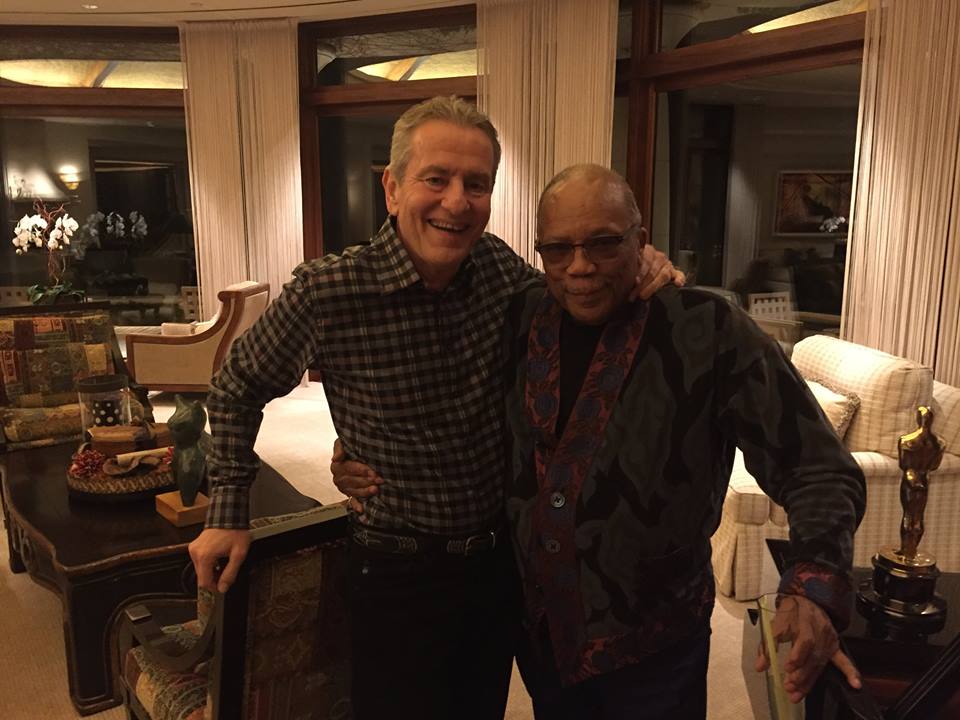
Jerry with Quincy Jones

What are your favourite microphones for recording trumpet?

Bruce Swedien has an incredible array of mikes he used on us, and any mike he used was amazing. My general favourites are Neumann U47, Neumann KM54, Neumann FET47, Neumann U67, and most recently the Royer 121 and 122.

What are the horn sections that you like to listen to that you have not been involved with?!

Tower of Power, Brecker Brothers, Edgar Winter White Trash, Stevie Wonder, Snooky Young with Count Basie and Thad Jones.

Is there a particular project that you can say has been your most enjoyable?

Too many to single out just one! Any Quincy projects, Al Jarreau, Earth Wind and Fire, David Foster Projects, and George Duke.

Do you have proudest professional moment?

There are so many recordings that I am very proud of, but maybe the proudest moment was the first time I worked with my son, Andrew, when he recorded the horn section. We were doing our usual recording when I said, “Let’s double that!”  Andrew talked back through the phones and said, “maybe we should do one more”.  “Play that back for me Andrew. Wow, OK, you’re right. Let’s do one more take!”  And from that very point on, I knew he had some really amazing ears and I go with his suggestion every time. I’m a proud father!”

1780803_686298148078457_1738959349_n
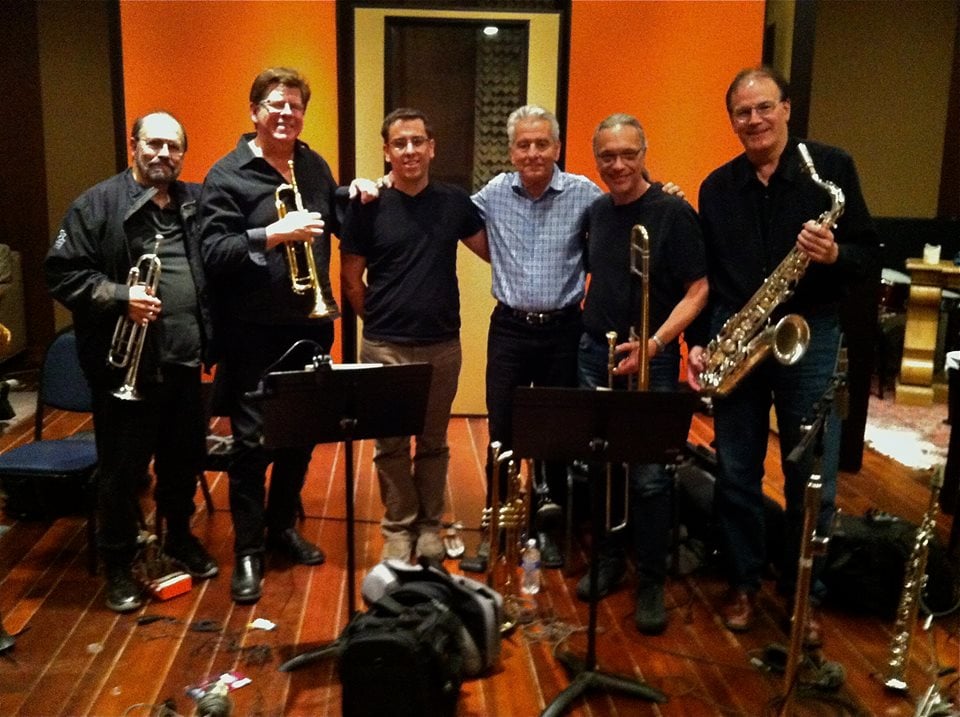
Gary Grant, Wayne Bergeron, Andrew Hey, Jerry Hey, Bill Reichenbach, Dan Higgins

If you are interested to read more from Jerry, please give Michael Davis’ Hip-BoneMusic a visit. There is a great interview covering all sorts, from ‘Arranging Techniques’ to ‘Wine Recommendations’!


Sign up here for new blog articles emailed direct to your inbox:


Advice · Education · Interview

How To Be a Versatile Trumpeter

D.H. Lawrence writes: “Never set a child afloat on the flat sea of life with only one sail to catch the wind.”  The same could easily be said about trumpet students and the importance of developing versatility in not only their playing but also their outlook on life.

To discuss how we achieve this, I have been fortunate to have the thoughts and experience of 2 fantastic trumpet players who have both made careers out of crossing musical boundaries, genres and pigeon holes.

Mike Lovatt is primarily a commercial player (John Wilson Orchestra, BBC Big Band and session and show extraordinaire) although classically trained, who is often asked to guest on principal trumpet with the major orchestras. www.mikelovatt.co.uk

mike-lovatt_pr042

Shaun Hooke is a classically trained player, now Principal Trumpet with the RTE Concert Orchestra in Dublin and regularly also plays lead trumpet with the RTE Big Band. www.dublintrumpetacademy.com

shaunhooke

They both have some fascinating insights into approaching very similar problems and challenges, but from different perspectives.

Can you tell us a little about your background as a player, and what you got you into the trumpet in the first place?

Mike: I was born into a musical family. My Dad was head of music at a secondary school and my Mum was a fine amateur singer with the local choral society. Early in his career my Dad began to collect instruments and taught himself to play them. There were no peripatetic teachers in those days and he wanted to be able to teach well enough to form a youth orchestra within the school. By the time he retired he was conducting an orchestra of about 70 children! The trumpet was one of the many instruments lying around the house. I really wanted to play the trombone but at the age of eight my arms weren’t long enough.

Around that age on a shopping trip to the local supermarket, I was drawn to the record carousel and saw a record with a picture of a trumpet player on the front. It was Eddie Calvert ‘The Man with the Golden Trumpet’ I immediately asked if I could have it and after listening to the album I tried to play along with it using an old Selmer. I was hooked! Trumpet playing was all I wanted to do.

I began to play in my Dad’s youth orchestra and eventually the Staffordshire youth orchestra. I really wanted to be a professional and every day I would rush from school to try to play along to all sorts of records. I would pretend I was doing a concert with the Syd Lawrence Orchestra or that I was Maurice Murphy with the London Symphony Orchestra or a member of the PJBE, or the great Kenny Baker. This developed my ear not only for pitch but also for sound, style, articulation, placement of time and phrasing.

Disaster struck when aged 14; I was involved in a serious cycling accident. I lacerated my top lip and lost several front teeth. I thought my playing days were over. Thanks to the skills of the plastic surgeons of the North Staffs hospital I healed and began to try to play again. At first it was terrible, I could not produce a sound. Eventually I got it working again enough to do my grade 8 and I then auditioned for the music colleges. The range I previously had didn’t come back however and it wasn’t until I discovered the Maggio system some 10 years later that finally my chops came together.

I was fortunate to study at Trinity College of Music in the 80’s. My teacher was Norman Burgess, formally principal trumpet of the BBC concert orchestra, and later co-principal in the BBC Symphony.  He taught me to be as versatile as possible with a view to being employable in the future. He also encouraged me to attend the extra-curricular college big band rehearsals run by the great Bobby Lamb.  There were no Jazz courses available at music colleges back then, so I was lucky to be able to learn from these two great musicians who between them had a wealth of experience from all sides of the profession. I quickly realized that whatever style you play, a good solid technique on the instrument is essential. With a strong technical foundation and embouchure, it is possible to cope with the demands of all styles of playing.

Shaun: I grew up in Leicestershire in England.  I was enormously lucky to be able to avail of free trumpet lessons provided by our County Music Service. Particularly Don Blakeson, who was taught by David Mason who in turn apparently could trace back teacher to teacher all the way back to Handel’s time! I’m doing the Messiah next week so hopefully something has worn off on me. I was also heavily involved with Enderby Silver Band. I started with them as they reformed in ’77 when I was a nipper and enjoyed many happy years growing up with so many wonderful people to mentor me.

I decided to do Chemistry at Oxford University rather than going on to music college, but I had the trumpet bug and after completing a doctorate I knew I wanted to at least give pro trumpet playing a go. Jon Holland and Wes Warren at the CBSO taught me orchestral skills and still now I put myself back in their presence the moment before I play something.  What did Jon say to do here?  What was Wes’s trick for this?…

Quite quickly I was appointed to Principal Trumpet in the RTE Concert Orchestra but to this day I’m still thinking about how these guys coached me and I’m passing it on to my own students.

Your job involves you constantly switching styles – do you have a regular practise routine that encompasses everything, and what are the most important things to concentrate on?

Mike: I believe production is key across all types of trumpet playing. In commercial music, big bands and some Jazz playing the style requires a more defined articulation and sometimes brightness and sizzle in the sound. I always maintain that under that brightness there should be a full broad tone across the entire register. High notes are expected in lead trumpet playing and some areas of commercial music and so should be developed. However, they must never be the be all and end all at the expense of a good sound and considered playing. Super C is almost normal range these days but it’s important to have a full rich centered sound. You should always use your ears and listen to all types of music… try playing along with the music you listen to and copy it. You could also record yourself playing different styles and listen back and compare. For a particular style to come across to the listener, it needs to be exaggerated.

Shaun: I don’t really have a set practice routine. As a full time performer, I think it’s important to have some time away from the trumpet. I try to have one day a week where I’m neither playing or studying repertoire to help clear the head and relax the muscles. My emphasis on preparation is looking after the basics. Generally, I always have plenty of strength, stamina and range because I’m working pretty constantly. There are skills however that might not be required week in week out, and these are the ones that I’m careful to maintain at home. Flexibilities and double and triple tonguing can get rusty pretty quickly if you don’t end up being asked to produce them, particularly valve/tongue coordination so these are the things I always make sure stay sharp. The other golden rule is “practice what you’re NOT doing currently.”  If I’ve been doing lead big band charts at work I try to make sure I play something at home on my regular orchestral mouthpiece and something on the piccolo trumpet – choose something for my own pleasure rather than something coming up in the schedule. Vice versa, I always try to do 15-20 minutes on my lead mouthpiece, 2-3 days before I start a project that is going to need that. Other than that, I try to listen to recordings of stuff I have coming up. Not really to familiarise or learn repertoire but more to guard from getting “stuck in your ways”.

It’s nice to be inspired by others and try to do repertoire differently the next time it comes around. I listen to lots of players from the 20s,30s and 40s and try to emulate their styles. There are lots of transcriptions of their solos and I like to collect the original recordings.

Do you have a basic instrument and mouthpiece setup that covers most things, or is it very different depending on what the schedule brings?

Mike: My basic trumpet and mouthpiece set up is the same for most of the works I perform. I play my own signature model Mike Lovatt Smith-Watkins Bb Trumpet exclusively. It is a 460 bore. The bell is similar in size to a Bach 37 except that is a heavy weight.  I have two gold plated instruments and one that is silver-plated. I use my own range of signature mouthpieces of which there are three models: Studio, Lead and Classical.

The majority of my playing is done on the Studio mouthpiece. On this set up I play first Trumpet in the John Wilson Orchestra, perform lead on the West End show 42nd Street and the BBC big band, and when on first trumpet in Studio sessions.  Mouthpieces are very personal and what works for me may not work for someone else. Lip formation and lip thickness determine what might work and feel comfortable to the individual.  My mouthpieces are perfect for the various styles required of me. It seems other players like their ability to be used in different settings. When playing in the high register, I find the Lead with its large back bore, medium shallow cup and the comfy 5ish Bach diameter rim enables me to produce a bright sound I need, and stamina is helped by the resistance being transferred to the trumpet through the large back bore. I use my classical piece (more or less a Bach 3C) for studio sessions sitting down the line, my practice and occasionally on first trumpet if I require a broader darker sound.

My instruments have different qualities because of the plating. The silver ML Smith Watkins trumpet enables me to produce a cutting bright sound not only useful in Lead but also certain styles of orchestral music too. I don’t change lead pipes for different styles of playing. I could if I wanted, as the trumpet features an interchangeable leadpipe system. However, I like to keep the feel (resistance) of the instrument the same regardless of the genre of the music I am playing to help me with my production and familiarity in supporting the notes and sound. I use the ML designed pipe that comes with the trumpet as it balances perfectly with the 37-size bell and the bore size of the instrument. The most important thing here is sound quality whether it is classical, jazz, lead in a big band, pop horn section or solo.

Shaun: To be honest, kit is everything in my job. We try of course to perform in the correct style, but the range of sounds and timbres required is so varied that it really means you need some different equipment to achieve that. At the beginning of my career I did that mostly by playing on my beloved Bach (then later Yamaha) B-flat and using quite a variety of mouthpieces. It had a degree of success, but it is hard work on the embouchure, chopping and changing rims, cup depths, throats, backbores etc… and I certainly felt that my tuning and accuracy suffered.

For the past number of years I have had a different approach. My responsibilities at RTE were putting more emphasis on my role as lead trumpet in the RTE Big Band and I felt I needed a dedicated lead instrument. I tried great gear from Shires, Smith-Watkins and Schilke but I fell in love with B&S’s JBX trumpet. When I’d decided to buy this, the store asked if I’d like to try the B&S Challenger II trumpet (their standard classical model). Well I loved it. So now I have two B flat trumpets, one for classical work and one for light repertoire. The huge advantage for me is that the reverse leadpipe is almost the same on both, the bore is the same, the bell profile is the same, so the tuning slots and the way it “blows” feels entirely similar, making it so easy to switch back and forth.

But the JBX bell is lightweight and has a French bead giving it a really exciting live fizzing sound. Whilst the Challenger II bell (a 43) is much more solid and rounded sound much like the Bachs I’d been playing for the previous 30 years. Since then I have B&S C  and E-flat trumpets both light and heavyweight bells. As to mouthpieces I use a Bach 1 1/4c on both of my B-flats for orchestral (Challenger II) and “Show” work (JBX). For lead work I use a Marcinkiewitz 3/3C.  I turned up at work once without my old lead mouthpiece and was loaned this by my excellent co-principal Eoin Daly – I liked it so much I bought 2 so I could keep one at home and one at work and therefore wouldn’t be caught out again. I have a Schilke piccolo that I use for recording work but have recently just bought a Scherzer rotary valve piccolo for baroque and orchestral repertoire.  Again, it’s all about making the right sound. I use a Marcinkievitz 7s mouthpiece on the piccolo. I found one in 1989 in an “odds and sods” box at a band competition thinking it would be a good “screamer” mouthpiece but it didn’t work for that. It got me through a tour of Brandenburg 2 though so I’ve stuck with it.

How has the versatility that you require affected the way that you approach teaching? Do you recommend that advancing students work on a wide variety of playing styles or concentrate on fundamentals?

Mike: The versatility that I have developed over the years is something I try to pass on to my students.  I encourage listening to all types of music. This is essential for stylistic development.  Occasionally this is done in lessons but I encourage listening to be done on a regular basis to keep ones ear in tune with different styles. A couple of years ago I gave a trumpet class at a major conservatoire in London and when I asked if anyone had listened to any music recordings or attended concerts recently, not one of the 12 classical trumpet students had. One of them admitted to listening to Bruno Mars three days previously!

I teach fundamental trumpet techniques. First and foremost, I make sure the student has a solid embouchure formation and can make a good basic sound. I’m a stickler for note production and articulation so there are exercises based around those techniques using Arban and Schlossberg. I use Caruso, Stamp, Maggio and my own ideas to develop the embouchure. I try to instill playing with reverence for the music. Long notes are important to develop resonance and to find the ‘soul’ of the note and the core of ones playing. When you have control of the sound, this can be adapted and applied to whatever style you are playing. I teach different vibrato techniques and ways to help note projection whether at the back of an orchestra, in a west end pit or in a studio microphone technique to record well.

Shaun: The music business is hard and getting harder. I always encourage my students to be flexible even if you’re pretty sure that you will be going in one particular direction. Make sure you have the skills to be able to say ‘yes’ to the next call and go in and do a good job. It is a wonderful way to earn a living but at the outset, you need to be out there making contacts and proving your professional credentials. One of my colleagues in the RTE CO was a regular in a German Beer band to put money on the table while he was trying to break into the orchestral scene. Work hard but don’t be over focused is my advice.

What is easier, a classically trained player playing light music or a commercial player playing in a classical orchestra section?

Mike: As someone who has dipped my toe into both sides of the profession, I am inclined to say that both styles are as difficult as the other to play convincingly. You need to apply yourself honestly to the style and exaggerate it enough to come across to the listener. I have always had the view that trumpet playing is trumpet playing and that the most important quality to have is solid musicianship built from listening. Always listen carefully to your sound and the music going on around you. If you’re playing third trumpet in a classical section on a film soundtrack recording, you then respect that and whoever is on first trumpet. Try to blend with them and above all support the sound style they are playing. The same goes for an orchestral player playing big band repertoire on a symphonic pops date. I have played with orchestras from San Francisco Symphony, the Concertgebouw Amsterdam, CBSO, BBC Symphony, LSO, LPO, Philharmonia, BBC Scottish, BBC Philharmonic, RTE Concert, Gothenburg Symphony, BBC Concert and many more. On many of these occasions my role is to help shape and lead classical players into becoming commercial big band section players in a three-hour rehearsal followed by a concert. Some seem more capable of giving up to the music and using their ears more than others. If they have a solid technique and command of their instrument, then they are more able to adapt successfully.

To quote John Wilson “anyone who can play good lead trumpet in a dance band can play first trumpet in a symphony orchestra”.

I think it can be difficult for ‘classical’ players to get used to playing swing quavers, combined with the way in which articulation changes in commercial playing. I always try to help by singing the phrasing to them and making them feel confident they can do it. It’s also important to tell the players to articulate and play the shorts and longs accurately.

Shaun: I think that it is not always right to pigeon hole people like that, but there are people who specialise of course. I remember taking the chance to have Tony Fisher come over to cover a James Bond concert for me when my wife was about to pop with our first child. Of course, I waxed lyrical to our management – he was interviewed for RTE radio about the very first Bond sessions including of course the original theme track – it was a brilliant week. Then the baby was born, and I was gone for a few weeks and they asked him to come and do a week of Mendelsohn… he gracefully declined – although it would have been interesting I expect!

I come from a classical background, trained over the years and “on the job” to do light repertoire, and I have local guys here that slot in well in the RTECO and RTE Big Band, but similarly we have guys who mostly do commercial work who are fine sitting down the line on orchestral repertoire. We have lots of mixed programmes where this is required. All the “classical” guys have plenty of “light” experience and the commercial guys are for the most part classical trained so have orchestral skills and can TRANSPOSE.  That is the key!

What challenges and projects have you got coming up?

Mike: I’m so happy I’ve managed to carry on doing many varied projects, gigs and recordings with orchestras, bands, groups and big bands all over the world. My future projects include my first solo album with the amazing Fodens Brass Band, directing the Stockholm Radio Symphony Brass in a concert of Billy May’s Big Fat Brass music, big band lead trumpet sessions for Gary Barlow, UK jazz festivals this summer with the Skelton Skinner all-stars, concerts with the John Wilson Orchestra, concerts and broadcasts on lead trumpet with the BBC Big Band, continuing on lead trumpet for 42nd street and as guest first trumpet for the Symphony in Antwerp. I am fortunate to be looking forward to such a stylistically varied schedule.

Shaun: A few highlights of upcoming stuff are: The Classical Series at the National Concert Hall featuring Mozart, Mendelssohn and Beethoven; studio work with Irish singer/songwriters for rock station RTE2FM; Giselle with visiting English National Ballet, Bartok’s Bluebeard’s Castle with the Irish National Opera. Up to our summer holidays we are also doing 4 sell-out shows at the Donnybrook Dublin Rugby Stadium and The Marquee in Cork with RTE2FM of 90s dance anthems! Hopefully we will tour this show in Australia in the autumn.

For further information about Mike Lovatt, please visit www.mikelovatt.co.uk

Mike’s signature ML Smith-Watkins trumpet is reviewed here if you would like to read more.

For to find out more about Shaun Hooke, please visit www.dublintrumpetacademy.com

Shaun is a B&S Artist and you can view the trumpet range here.

You may also be interested to read a review here of good all-round B-flat trumpets.

For a great range of trumpets, mouthpieces and specialist advice, please visit Thompson Music


Sign up here for new blog articles emailed direct to your inbox:

[jetpack_subscription_form show_subscribers_total=”false” button_on_newline=”false” submit_button_text=”Sign up” custom_font_size=”16″ custom_border_radius=”0″ custom_border_weight=”1″ custom_padding=”15″ custom_spacing=”10″ submit_button_classes=”” email_field_classes=”” show_only_email_and_button=”true”]

Advice · Interview

Trumpet Artist Profile: Matilda Lloyd

There are not many 22-year-olds that made it onto my list of fabulous trumpet players that I wanted to try to interview. Matilda Lloyd’s biography however, is glitteringly impressive and it does not seem possible to have achieved so much in music at such a young age!

Matilda came to prominence in the UK in 2014 by winning both the Brass Final of BBC Young Musician of the Year, as well as the BBC Radio 2 Young Brass Award. A BBC Proms solo debut followed in 2016, and in October last year, Matilda won the inaugural Eric Aubier International Trumpet Competition in France, beating off competition from 53 other top players along the way.

Graduating from Trinity College, Cambridge last year, she is now studying for a Masters at the Royal Academy of Music in London. I am grateful that Matilda could find the time in amongst her studies and trumpet engagements to share some thoughts with us:

What made you choose the trumpet as an instrument? Were there any particular early musical influences?

My Dad played the trumpet while he was at school. As a very curious 8 year old, I was rummaging around in our cupboards one afternoon and stumbled across his very old trumpet. Naturally, I wanted to have a go! As I could make a decent sound on the instrument, which isn’t easy to do, I decided that I wanted to start having lessons and that’s where the story began. My Mum is a piano teacher and accompanist, and she started teaching me the basics on the piano a few years earlier, so my ability to read music and rhythms really helped when I first started to play the trumpet.

What are some of your performing highlights to date?

I think my absolute performing highlight has to be playing as a soloist at the BBC Proms in July 2016. Walking onstage at the Royal Albert Hall to an audience of 6,000 and many thousands more watching when the Prom was broadcast on television, was one of the most memorable experiences of my life. It was absolutely exhilarating, and an experience like no other. Performing with the BBC Philharmonic, led by Alpesh Chauhan, was just incredible as I really felt the support of the orchestra and that they were following me – it felt more like chamber music than a concerto. And I was lucky enough to be able to do it twice! Aside from the Proms, another performing highlight was playing First Trumpet in Bruckner’s Seventh Symphony with Bernard Haitink conducting in his home, the Royal Concertgebouw in Amsterdam. To work with such an incredible conductor in a place that means so much to him with an audience that were so mesmerised by the performance was absolutely unforgettable.

AJM_6050.jpg

What are your long term goals after leaving the Royal Academy of Music?

My ambition is to be an international trumpet soloist. I would love to be able to expand the trumpet repertoire, both through the commissioning of new works and also the revival of forgotten works. Too often, works are performed at their premiere and then rarely played again – and I am trying to re-introduce lost works into the repertoire by recording them and playing them in my recital programmes. I would also like to do more educational and outreach work as a soloist to try and encourage more young people (especially girls!) to take up a brass instrument.

What instruments and mouthpieces do you play on?

I’ve had my Bach Stradivarius LR43 Bb Trumpet for about 10 years now! I originally wanted the more standard 37, but at the time of my purchase the UK warehouse had just burnt down and the shop didn’t have any in stock to sell! Luckily, I decided in the shop that I preferred the 43 anyway and haven’t ever wavered from that decision. I have recently purchased the new Yamaha C trumpet that I absolutely adore – it feels very easy to play. I also have a Yamaha Eb/D trumpet, and a Schilke piccolo. I play on a Warburton mouthpiece – 10* backbore with a 3M top.

You have had success in a number of high profile competitions now, while still very young. How do you manage preparing so many programmes for a gruelling competition week while also continuing with your studies and other engagements?

This is a difficult question as different methods work for different people! What’s best for me is to learn pieces well in advance. If I know I have a quiet period say five months before a competition, I will learn a few of the pieces in the repertoire during that time. This enables me to leave them alone during busier patches when I have more urgent things to prioritise. I also find that this ends up improving how I play those pieces as I always find them easier at the second time of practising them! I also always try to perform the pieces for a competition beforehand, whether in a recital or a masterclass, just so that the competition is never the first time performing the repertoire.

AJM_6435

Do you have any particular advice on keeping your chops in good physical shape during these preparations?

I recommend not doing much more than 3½ to 4 hours of practice a day. And ideally this would be split up into smaller chunks spread throughout the day for the best stamina. It is very tempting in the run up to a concert or competition to panic and do last-minute over practice, where you suddenly increase the amount of practice or the length of practice sessions. This is very bad for the lip so try to avoid this as much as possible! I would recommend tapering down the amount of practice over the few days before the performance to rest the lips and give them a chance to recover and be on top form for the day.

Congratulations on winning the inaugural Eric Aubier Trumpet Competition last October! Can you share with us any insights into what it was like going through that process in particular? 

Thank you very much! The competition was a great experience for me, particularly as I was able to share a flat with a fellow student from the Royal Academy of Music. This was an absolutely fantastic idea and I think my experience of the competition would have been completely different if I had stayed alone. It was great to have company throughout the week as it was a complete rollercoaster. With the quick-fire rounds often on consecutive days, emotions ranged from being nervous before performing, the adrenaline and high after performing, the worry about whether the performance was good enough or not, the anticipation of the results, the elation at finding out I had got through a round, the stress of having to then rehearse with the pianist for the next round on that same day, and then the nerves for that performance in the next round the next day! Having someone to share all of this with made it a whole lot easier, so an enormous thank you to Aaron Akugbo for his company and support. The competition in Rouen was an incredibly enjoyable week for me. All the other competitors were very friendly, and many of them stayed the whole week to support us in the semi-final and final, which was really lovely.

Do you have any general advice for any young players?

I just want to say something that I think will resonate with every brass player in the world! Every single musician in the world has periods or moments of self-doubt, wondering whether they are good enough or not for something, or comparing themselves to other players. So often, people are afraid to enter a competition or put themselves forward for a concert or opportunity because they are afraid that they won’t play as well as they know they can or fear that someone else will play better. All I have to say about this is that you are not alone! The only outcome of not applying for something is that it won’t happen. If you don’t apply for a competition, you can never win it. So the one thing I would encourage all brass players is to put themselves forward for opportunities and embrace them!

Please visit www.matildalloyd.com for further information and for upcoming concerts

You can also follow Matilda on Twitter at @lloyd_matilda and on Instagram as @matildalloydtrumpet 


Sign up here for new blog articles emailed direct to your inbox:

[jetpack_subscription_form show_subscribers_total=”false” button_on_newline=”false” submit_button_text=”Sign up” custom_font_size=”16″ custom_border_radius=”0″ custom_border_weight=”1″ custom_padding=”15″ custom_spacing=”10″ submit_button_classes=”” email_field_classes=”” show_only_email_and_button=”true”]

Gear Review

Instrument Review: New Bach B-flat Trumpet Models

The past few years has seen a number of new Bb models enter the Vincent Bach catalogue. Below is a summary…

LT1901B Commercial

LT weight #1 bell with French bead 5” bell, standard weight 2-piece valve section with bronze upper, custom #43 pipe.

This model was a long time in coming. After much experimentation, the #1 bell (so numbered because it is believed to be the first bell design that Vincent Bach drew) was used in lightweight bronze. One of the biggest features is the 2-piece lightweight valve section with a bronze upper, that really adds a lot of brightness to the sound, particularly when you ‘give it one’! The custom #43 leadpipe has a later taper than the standard #25, but opens out quickly through a nice open-feeling tuning slide section. It is available in both ML and L bore.

Lightness of response, dark tone in mid-register and mid to low dynamics, contrasting with real zip and zing for higher register work make this a real Marmite trumpet. For US readers, Marmite is a disgusting, sticky brown product that a vast number of sick people like to spread on their bread – it is not possible to be indifferent to it, you love it or you hate it!

For the record, I really enjoyed playing this horn. I have spoken to some players who have described this model as like playing on a Yamaha LA only without the good intonation! I do not agree. The LT1901B is an individual instrument with some wonderful characteristics that I have not found in other horns.

VISIT THE ‘EDUCATIONAL RESOURCES’ PAGE FOR FREE WORKSHEETS AND LINKS TO PUBLICATIONS

LR19043B Mariachi

Bronze 5” #43 bell with flat bell wire, lightweight 2-piece valve block with nickel upper, LR25 pipe

This custom model for the incredible Jose Hernandez was Bach’s first real success in putting an instrument together for the more commercially minded. Great jazz and commercial players over the years have played and loved their Strads, but there had never been an option for that natural brightness in an instrument.

What I like about this model is it still feels like a Bach. This may sound like a stupid point to make, but it has that natural bite and depth to the attack that makes Bach trumpets different. For a primarily legit player like myself, it feels very comfortable with a natural soft and dark sound, but then opens up as you go through the gears. In the right hands, this trumpet sounds spectacular! My colleagues in the UK and many around the world will already be familiar with Simon Gardner, who uses this model to great effect for warm jazz as well as spectacular full-bodied lead playing.

R180ML37/43 London

Standard weight 1-piece body, LR25 pipe, gold trim, yellow or gold brass bell.

This has been available and popular as a special order for a number of years, especially in the UK. It is basically a reverse leadpipe 180 model, but mounted on a standard rather than a lightweight valve section. This has now been launched for the UK market as a standard model with added gold bling and a price tag to match! It is now just available as special order if you want it to look like a ‘normal’ trumpet!

I was working with Conn-Selmer at the time of its launch in 2015 and had the opportunity to blow on a dozen of these models, mainly 37s but also a couple of 43s. They give a combination of the slightly more open feel of the reverse leadpipe with the solidity of tonal core that you get from a standard leadpipe configuration. I had always been intrigued to try this model as I was always unsure how much genuine difference in feel the reverse leadpipe on a 180 Bach actually made. I always put down the difference in response more to the lighter weight valve section that it was mounted on.

What I found was that this model does actually have its own distinct feel and sound and holds its own within the Bach catalogue. Bach marketing material tells us that it is designed with the brass band heritage and style of many top UK orchestral trumpet players in mind. I am not sure that I completely buy this, but it does certainly give a richer core to the sound. One point to note is that out of the many instruments that I tried, there was a huge variation between them all. We all know that the Bach bell-making process deliberately allows for some variation from instrument to instrument, and we are advised to try a selection before making our minds up. The variation between these London models was even greater however, so I would definitely recommend visiting a stockist who is able to keep a good range in store.

I believe that for most US players, this model would still be a special order – contact Thompson Music for further information.

19037 50th Anniversary Model

Side seam, round steel bell wire, 2-piece valve block.

This is a natural progression from what Bach have learnt from the design of the Artisan range a few years back. Looking to the past to develop something new is not something that happens too often in this industry, but is something at which Bach excels.

The spec above tells you what is different about this model from the 18037 so I will not rehash it here. There is even more natural resonance than the standard 180, and a more focussed tonal core. There is a fraction more weight in the hand compared to the 18037 which adds to the richness of natural sound and also improved slots. I initially found this disconcerting as I am accustomed to having plenty of room to bend notes in tune, particularly the top of the stave E, Eb, D which are generally very flat. The tuning is slightly better on this model, so having that room to manoeuvre was not necessary!

An interesting point that I learnt from a Bach insider is that they save production costs on the Strad 180 models in silver plate by actually using brass outers to the slides instead of the nickel silver which you can clearly see on the lacquered models. The silver plate hides it, so we can’t tell! I have had assurances that there is none of this cost-cutting on the 190 Anniversary Model!!!

19043 (52nd Anniversary Model!!!)

Side seam, round steel bell wire, 2-piece valve block

This is a model that I have not yet been able to get hold of to assess, so I have been kindly helped out by my friends at Thompson Music! Please see Mike’s video tour of both the 190-37 and 43 below.

VISIT THE ‘EDUCATIONAL RESOURCES’ PAGE FOR FREE WORKSHEETS AND LINKS TO PUBLICATIONS


Sign up here for new blog articles emailed direct to your inbox:


Advice · Gear Review

The ‘All Rounder’

There is a multitude of great pro trumpets currently on the market, and some wonderful manufacturers working alongside players and teachers to develop instruments for every style of music, approach and player. In a previous post I have discussed finding the right balance of resonance/resistance for you. Here I am going to be less specific!…

At some point in every player’s development, there comes a point where you are looking for that first pro-level instrument. In most cases we are advised to get something as flexible as possible and suitable for a variety of styles and settings. It is this ‘all-rounder’ that I am talking about here.

I have lined up Bb trumpets to try from Bach, Yamaha, B&S, Conn & P.Mauriat. I have played on a number of other good all-round Bb trumpets over the years from Stomvi, Getzen, Schilke, Jupiter XO and Kanstul among others, and would welcome your thoughts and opinions on these and any other instruments that fit into this category that I have not been able to line up here. Schilke I know in particular is really loved by a lot of my US colleagues. Unfortunately the full range of Bbs is not easily available in the UK so I may have to arrange a visit to Chicago in the future to finish this article properly!!!

Bach Stradivarius 180 Series

This has been the reference instrument for players across the globe for many years now. It is characterised by lots of overtones around a warm rounded-core. The bells are designed to be individual – the positive of this is that there is likely to be a trumpet available somewhere to suit most players. The negative of course is that it is advisable to try a large number of these to get one that feels right for you.

The 2 most popular are the 180ML37 and the LR180ML43. The 180ML37 has been considered the go-to 1st pro trumpet for generations. The late taper #37 bell is the one that manufacturers such as Yamaha and B&S have tried to emulate in their models over the years. The LR180ML43 is a lighter instrument with reverse leadpipe and an early taper #43 bell. This has been popular particularly in Europe with players who cover a wide variety of musical styles and genres.

Intonation is generally pretty good on Bachs, however some instruments can be very flat at the 5th Partial (top space E, Eb and D) and quite sharp at the 6th (G, F# and F) meaning that it can take some adjustment for a student to get used to it. They also for this reason generally work best when combined with a larger fuller-cupped mouthpiece so that the pitch can be adjusted easier.

Current prices in the UK are around £2,500-£2,900 (including tax) and in the US around $2,600-$3,100.

Yamaha Xeno YTR8335RGS

I have picked this instrument from the range, as although it is not the ‘basic’ model, I believe that it is the most versatile. Bach loyalists over the years have criticised Yamaha instruments for their lack of character. The RGS has a more open and less resistant leadpipe configuration paired with a gold brass bell. This gives a lovely combination of a warm even sound across lower and medium dynamics, but has a great bright ‘sizzle’ when you give it some welly!

For years, the Yamahas have been considered the cheaper and lesser alternative to the Bachs, however the improvements to this model in particular make it a good and viable option. Intonation is pretty even across the range with a much livelier response than other models in the Xeno range.

Prices however have risen a lot recently so they are no longer the ‘cheap’ alternative. £2,000-£2,300 in the UK and $2,400-$2,700 in the US.

B&S Challenger II 3137

A number of pro orchestral players have moved onto this trumpet or versions of it in recent years, most notably Philip Cobb at the London Symphony Orchestra. The Challenger II is considered to be a good Bach-copy at an excellent price. It also has elements of the Yamaha in its smooth transition across the registers, even sound and decent intonation. There is a little something missing with regard to overall resonance for my personal taste, but you cannot deny that this model proves exceptional value for money (in Europe at least!) and is a very good trumpet for someone who is just starting to take their playing and progress really seriously.

UK prices are around £1,300-£1,700. Prices in the US are $2,000-$3,300. By this from the UK people!

P.Mauriat PMT-71

Now this is an interesting one. P.Mauriat trumpets are not widely available in the UK, but are well represented across mainland Europe and the USA. I worked with P.Mauriat a few years ago so fortunately had the opportunity to try a wide variety of their models.

Their first moves into the trumpet market included some interesting designs of primarily jazz models – both heavy 600 series and lightweight 700 series instruments.

Their recently launched 71 (and 72 with a gold brass bell) have a lot of the lively and responsive characteristics of the original PMT-700, but with much more depth of sound making this a really versatile instrument. I am yet to see one ‘on the market’ in the UK or Europe yet, but I believe that some of my American colleagues are starting to be able to see them over there. Worth checking out if you get the opportunity – time I suppose will tell whether P.Mauriat make a significant impact in an area that already has some steep competition!

I imagine that prices will be around £2,000 and $2,300 respectively.

Conn Vintage One 1BS

I have selected the sterling silver bell model from this range – the resonance and brightness is astonishing. It is not necessarily your typical ‘all-rounder’, however I have selected it here because I have come across probably an even split of classical players on this as I have jazz/commercial.

I was knocked out by the ease of making a full and rounded sound on this horn, and also at how it really takes off in the louder passages with relatively little effort. The downside for me however was the intonation: Low C sits a fraction sharp for my setup and 3rd-space C is slightly flat. Not having a clean octave here takes some getting used to.

UK prices are around £2,200-£2,400. US is around $2,800-$3,200.

As I have been talking to players while putting this together, people keep raving to me about their perfect Bb trumpet from X, Y and Z manufacturer. There is wonderful research, design and craftsmanship around the globe going into trumpet manufacture at the moment, including a number of smaller specialist trumpet-builders that I will be featuring in coming weeks. Again, my emphasis here is on that FIRST PRO TRUMPET PURCHASE that generally needs to be a good all-rounder and blend easily with friends and colleagues.

I very much welcome your thoughts and comments on any of the instruments featured here, and indeed any of the multitude that are not!


Sign up here for new blog articles emailed direct to your inbox:

[jetpack_subscription_form show_subscribers_total=”false” button_on_newline=”false” submit_button_text=”Sign up” custom_font_size=”16″ custom_border_radius=”0″ custom_border_weight=”1″ custom_padding=”15″ custom_spacing=”10″ submit_button_classes=”” email_field_classes=”” show_only_email_and_button=”true”]

Advice

Resonance vs. Resistance

It has become an almost daily occurrence that I speak to trumpeters who believe that they are either looking for an instrument with natural open resonance OR a closed resistance. The title of this blog post is a deliberate misnomer as I do not believe that these two factors are mutually exclusive. In fact I would say that every horn for every player needs the perfect balance of the two.

The question should not be “do I want an open or resistant horn?” but instead “where in the horn do I want to feel that resistance and resonance?”. These two elements are absolutely essential in a trumpet to give the player their perfect blend of tone colour and projection.

Working with Vincent Bach a few years ago, I spent a lot of time travelling around UK conservatoires giving presentations to students and teachers on how to try to communicate the sound and response that they want to achieve, and what technical variables in a trumpet they should look for based on this and their playing style.

Some examples of popular horn setups:
A player that likes the feel of a really open horn mid-section will need to balance this out by finding resistance elsewhere in the horn in order to achieve that perfect resonance. The standard Bach 180 Stradivarius large bore Bb Trumpet for instance uses a fairly middle-of-the-road leadpipe at the start of the horn, and a relatively compact late taper #25 bell to allow the sound to really connect and blossom. This has typically suited players with a broad airstream who like that openness through the horn, and that feeling of ‘connection’ late on.

Another (yet totally different) large bore example is the approach championed by the late, great Derek Watkins. With a fast and narrower airstream, the sound really ‘connects’ immediately with a resistant leadpipe, and then is allowed to blossom through an open valve section and early taper bell.

With M and ML models, most players tend to use the valve section as a pivot with either an open (or reverse) leadpipe or a more open feeling early taper bell depending on whether you want to connect early or late on in the instrument. For players who like that mid-section connection (please forgive the corny cadence!), models such as the Bach LR180ML43 are very popular – an open reversed #25 leadpipe with an open feeling #43 bell.

In the interests of brevity here, I have focused on the most common variables and used Bach purely as a reference point as these models are familiar to most players. There are of course other ways of achieving this connection at the desired point by adding weight or varying the materials at crucial spots for example.

The crucial question again in approaching what setup is right for the individual player is “where do I want to feel the sound connecting?” Once you have an answer to this, you are all set to go and find your perfect trumpet!


Sign up here for new blog articles emailed direct to your inbox:

[jetpack_subscription_form show_subscribers_total=”false” button_on_newline=”false” submit_button_text=”Sign up” custom_font_size=”16″ custom_border_radius=”0″ custom_border_weight=”1″ custom_padding=”15″ custom_spacing=”10″ submit_button_classes=”” email_field_classes=”” show_only_email_and_button=”true”]