Gear Review · Interview

Jon Faddis on Ullvén Mutes

…from Jon Faddis:

Hello, Fellow Brass Players,

I would like to tell you about some really good news, not just for me, but for trumpet and trombone players all over the world.
Swedish trumpeter Lasse Lindgren has acquired the rights to make Ullven mutes, which have been unavailable for many years, and also happen to be my all-time favorite mutes.
Dizzy Gillespie game me my first Ullven harmon and cup mutes in 1972. I’ve been using Ullven mutes exclusively for almost 50 years!

These mutes, plus my Schilke Music Products horns, are “tried and true” for me.
I even remember when that first Ullven harmon was stolen from me: October 21, 1977, at Jazz Showcase, in Chicago. It was Dizzy’s 60th birthday celebration, and I had left the mute on the piano on stage between sets. During that time, I was hanging out with Diz and Muhammed Ali backstage. When I went back on  stage to play the next set, my mute was gone!

So you know: The Ullven harmon mute is perfectly in tune down to low F# and has an exceptionally full and even sound when playing on a microphone.
The Ullven cup mute is adjustable and gives the player the option to change the sound to that which she/he is looking for.
The cup can even be used as a plunger (á la #SnookyYoung, on the gold plated Ullven cup which I gave to him as gift back in the day).

These Ullvens also make great quiet practice mutes.
Because of the functionality in this regard, Ullven cup mutes and Ullven Harmon mutes also are superb as a quiet practice mute when one wants to hone skills without disturbing anyone, even and especially late at night, or if you have pets in your home who pick up frequencies at higher intensity — you spare their ears. You also help protect your own hearing as a musician.
It’s also a really nice gift for students (and their families) as they learn the art of the trumpet.
These Ullven mutes are the real deal and Lasse is making them now.
Get ‘em while you can!

Lasse, tack så mycket!

Jon Faddis Sleeping Cat Music, Inc.
@faddisphere
International Trumpet Guild (Official)
International Trumpet Guild Student Group
Jazz Education Network
Schilke Music Products
Ullvén Mutes for Brass Instrument


SIGN UP HERE FOR NEW BLOG ARTICLES EMAILED DIRECT TO YOUR INBOX:

[jetpack_subscription_form show_subscribers_total=”false” button_on_newline=”false” custom_font_size=”16px” custom_border_radius=”0″ custom_border_weight=”1″ custom_padding=”15″ custom_spacing=”10″ submit_button_classes=”” email_field_classes=”” show_only_email_and_button=”true”]

Gear Review

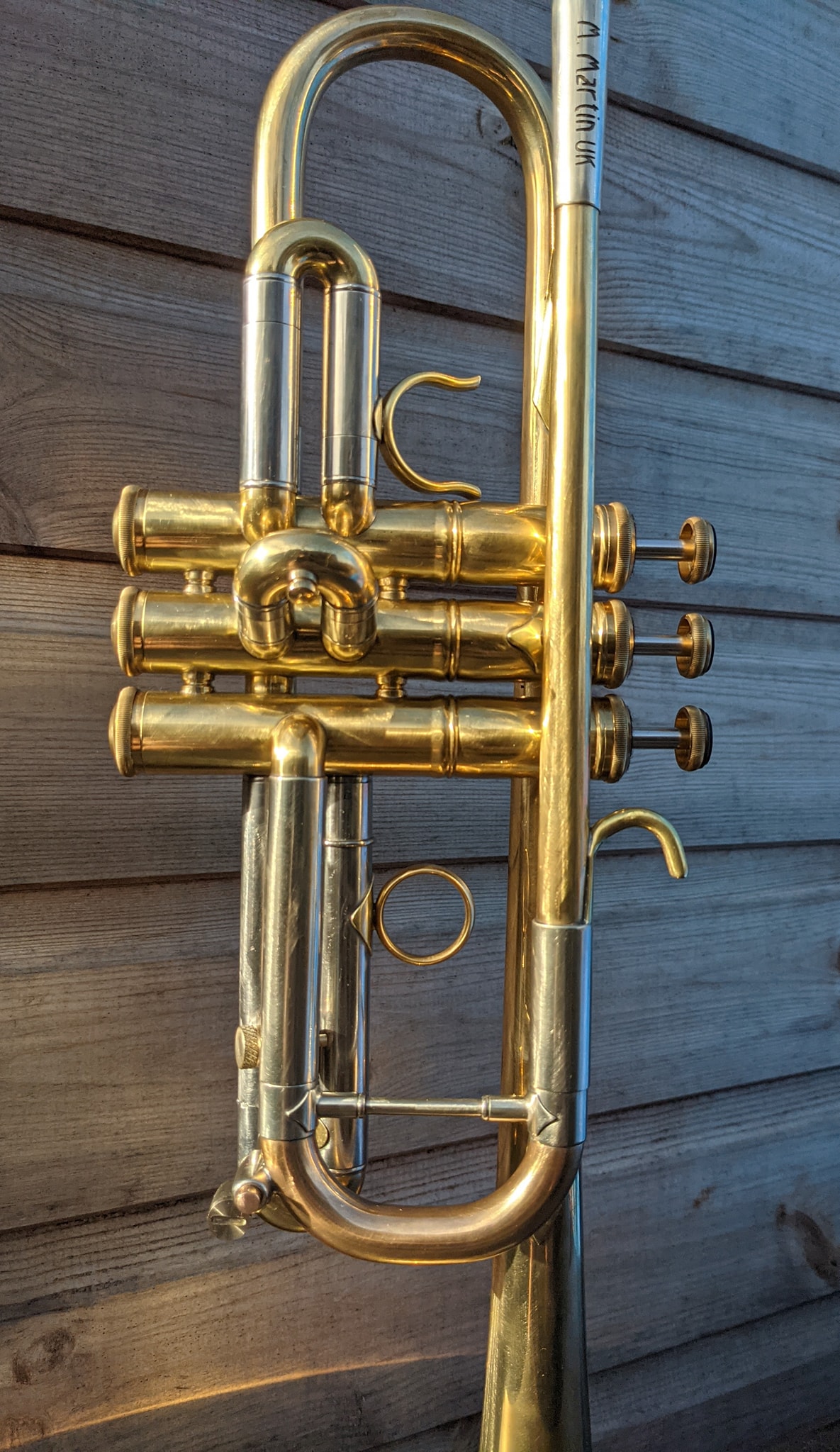
Instrument Review : C Trumpet from Norwich Natural Trumpets

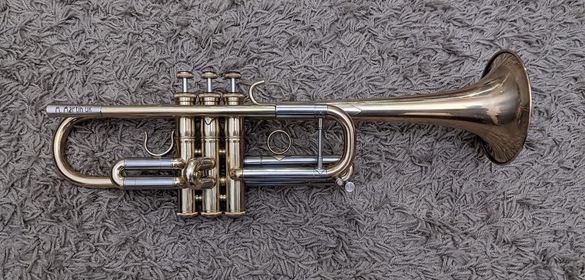
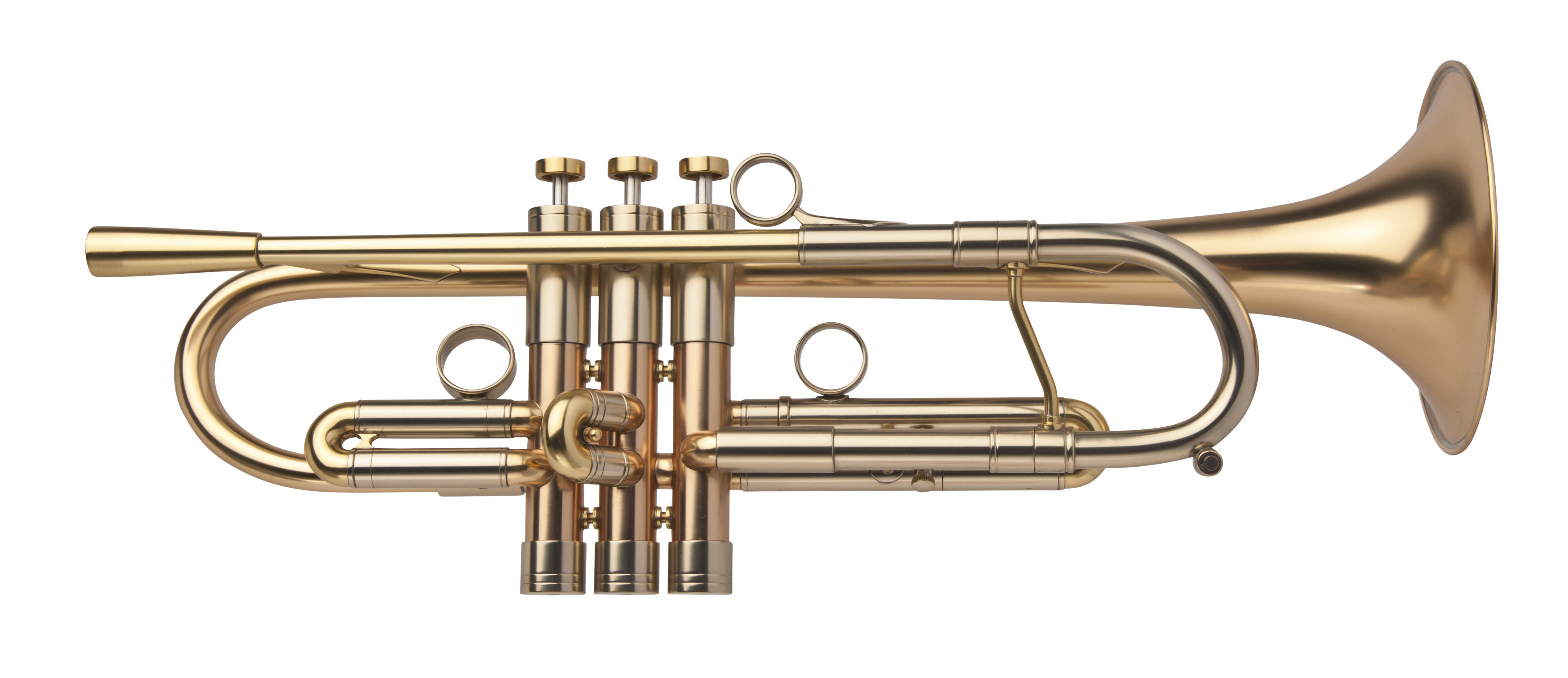
I was recently sent a new C trumpet by Matt Martin from Norwich Natural Trumpets. This was designed in collaboration with Mark Bennett and has arrived with me looking spectacular. These trumpets are custom-built to order, but surprisingly do not have the custom price tag. In fact they are currently less expensive than many people’s favoured Bach or Yamaha models!

This model is based around a medium large .460 bore Hoxon Gakki valve set (the MAW valve set is also going to be an option), a 0.45mm gauge gold brass bell opening out to 125mm, an open Malone-style leadpipe and a D-shaped bronze tuning slide. The bell taper is not too dissimilar to a Bach 239.

Looking at the spec, the first thing that stands out is the medium large bore. Most of us are more familiar with a large (.462 or .464) bore on C trumpets. So I approached playing this trumpet with the preconception that it would feel small, stuffy or restricted in some way. It did not!

Responsive and lively, ‘yes’, but certainly not restricted. The sound is full-bodied with a rich tonal core that I immediately loved. It also feels open, not unlike playing a nice symphonic style Bb trumpet.

The Bb similarities do not end there. The intonation is great across the range as is the sound quality. I have always primarily played Bb trumpet have found the adjustment to C trumpet intonation a challenge. I am pleased to report that this Norwich Natural Trumpets model does not pose the same challenge!

As you may be aware, Matt Martin’s natural and period trumpets have been ever-growing in popularity – It is great to see this craftsmanship and artistry expanding to modern trumpets. There are also some great new developments with the Bb trumpets coming, and I look forward to getting to try these too!

Please visit Norwich Natural Trumpets for further information.

Advice · Gear Review

Buying Guide : Practice Mutes

Practice Mutes have become accepted as a necessary evil for brass players.  They are not an ideal way of preparing yourself, however there are times where we all accept that you just need to practice or warm-up quietly.  Listed below are a number of mutes currently available that will all do the job.  They will all have different strengths though, so I have tried to demystify them somewhat with this ‘Buying Guide’.

NB. The prices listed here are meant as a guide and are subject to change.

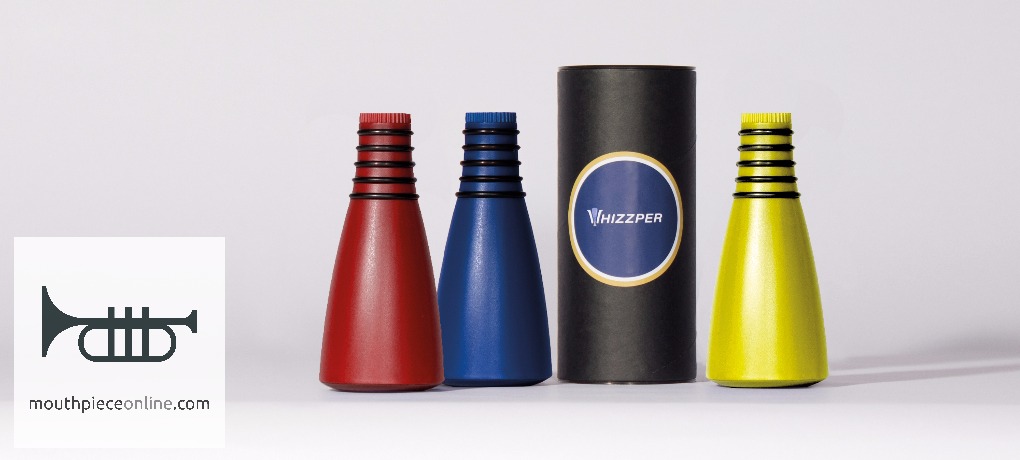
Vhizzper Practice Mute and Buzzing Aid

I have put this at the top because it is by far the best practice aid that I have come across. A great mute that does not allow you to overflow while practising, and also has a built-in mouthpiece buzzing aid. Around $80, worth every penny!

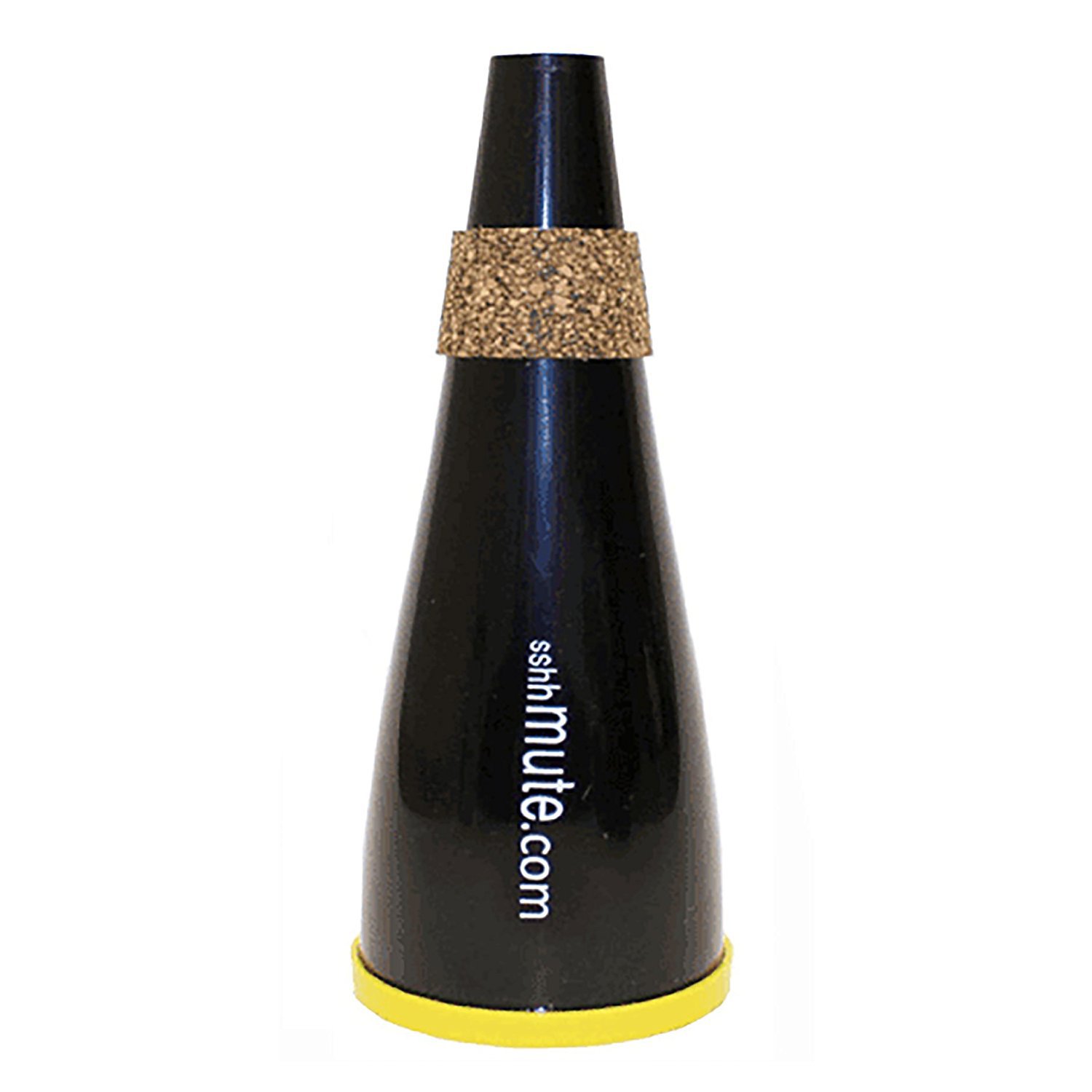
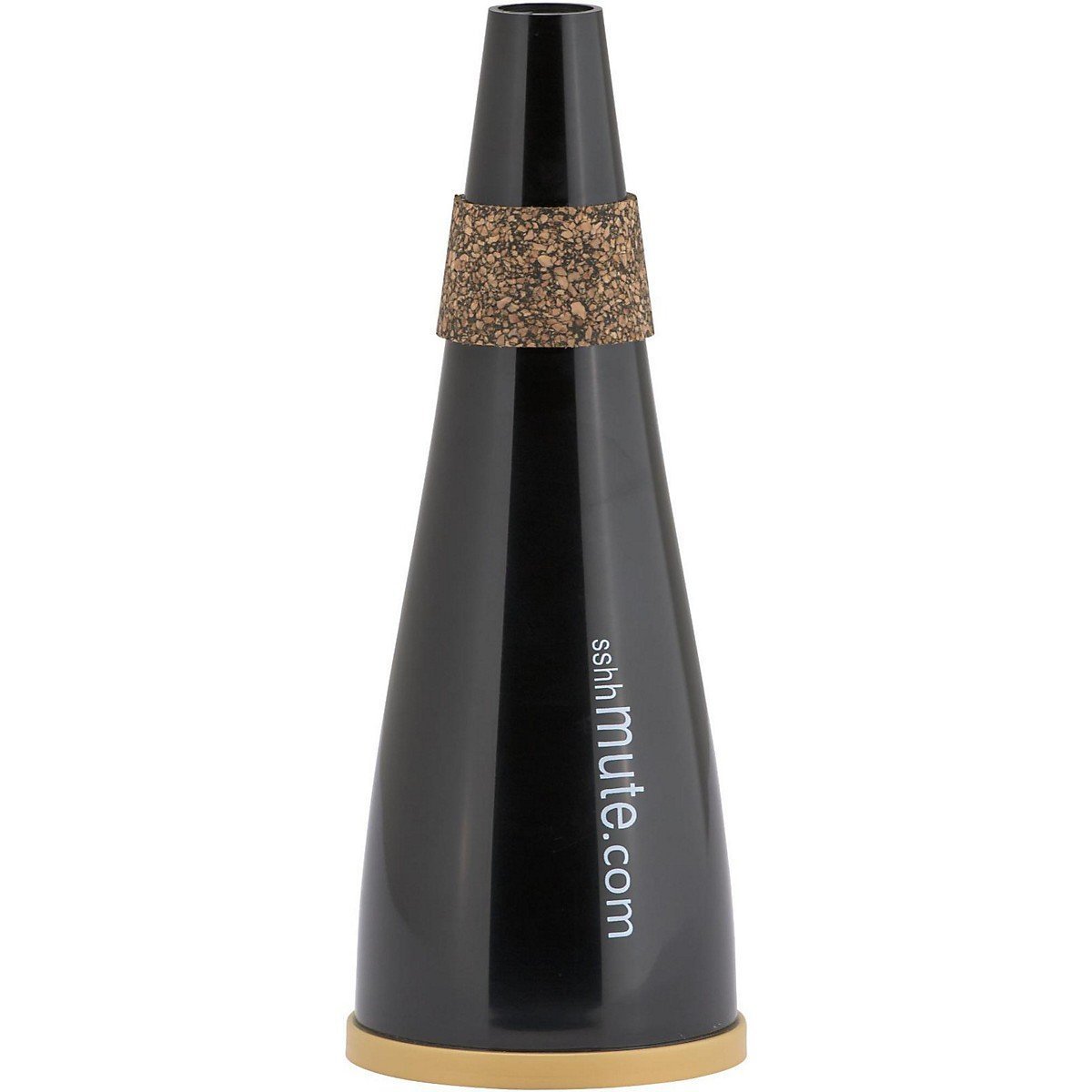
Sshhmute Practice Mute for Trumpet

A really great lightweight and responsive mute.  The intonation is pretty good across the range. Low C and below tends to be slightly sharp as with pretty much all practice mutes, however this is better than most.  Priced at just $50, this is a really good all-rounder.

sshhmute

Sshhmute Practice Mute for Piccolo Trumpet

Lightweight, robust and actually surprisingly free-blowing for a piccolo practice mute.  A good buy at $50.

sshhmutepiccolo

Sshhmute Whisper Mute for Trumpet

As with the other Sshhmutes, this has very low resistance and a nice quick response.  The Whisper Mute has a lovely soft tone that can also be used in a section where a real muted pianissimo is required.  Again, a good buy at $50.

sshhmutewhisper

Trumcor Trumpet Lyric Stealth Mute

This is not the quietest practice mute on the market, however it is one of the most even and allows you to blow pretty honestly.  This is a great hotel room tool!  $60 for this one.

trumcor-lyric-stealth

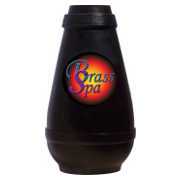
Brass Spa Trumpet Practice Mute

This is extremely decent especially considering its modest price tag of $35.  Back pressure is pretty low, cutting down on over-blowing, and intonation as also surprisingly good for the price point.

brassspatrumpetpracticemute-a

Best Brass Trumpet Practice Mute

This is an excellent compact mute that only just protrudes from the bell.  You do not get a feeling of ‘battling’ this mute as it feels really natural.  It is quieter than most and also has decent intonation. $94.99

bestbrasstrumpetwarmupmutethumb

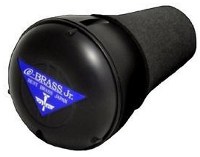
Best Brass Jr. Trumpet Practice Mute Ebrass

This is a plastic (and therefore lighter) version of Best Brass’ practice mutes.  There are some small compromises in resistance and tuning compared to its big brother, however this is reflected in the lower price of $54.99, and it is still a darn good mute!

bestbrassjrsmall

Trumcor Trumpet Super Stealth Mute

Like the Lyric Stealth, this has a nice even response across all registers and dynamics.  It is softer however, so inevitably has slightly more resistance. $45

trumcor-super-stealth

Softone Mute for Brass – Trumpet

This lightweight neoprene will fit easily in any case and is great for travelling.  There are a number of sponge ring inserts so that you can adjust the volume and resistance levels.  It also doubles up as a very compact bucket mute by hanging it over the bell of your horn.  Even if you already have a preferred general practice or warm-up mute, this is something a little different that will always have a use. $39.99

Softone Mute

Trumcor Piccolo Trumpet Stealth Mute

This is very quiet and perfect for that ‘back of the church’ warm-up.  $40

trumcor-piccolo-stealth

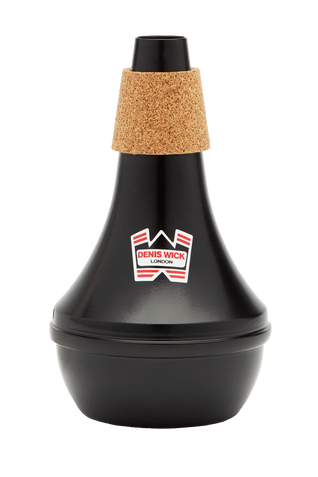
Denis Wick Trumpet Practice Mute

Let’s face it, all of us have probably had one of these classics at some point!  A good solid all-rounder that allows for a quiet warm-up. The intonation is perhaps not quite as good as some of the newer designs on the market, however still a good mute for the price. $42.95

Wick Practice Mute

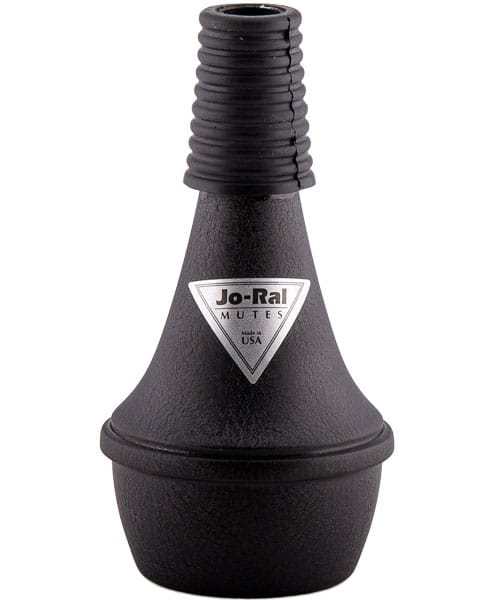
Jo-ral Trumpet Practice Mute

This is not the quietest mute on the market, however the intonation across the range is very good. $46.99

joral-trumpet-practice-mute-tpt1p-1

Yamaha SB7XC Silent Brass System for Trumpet

The Silent Brass system has been around for a while now, and the latest pickup mute is very good indeed.  Now fitting completely into the bell for storage, the intonation, response and quiet volume are all very good.  Even at the price of $189.99, the sharpness in the lower register has not been completely eliminated, however the digital technology that comes packed inside the Personal Studio, and the acoustic environment that it creates are exceptional.

yamahasilentbrass-1


Sign up here for new blog articles emailed direct to your inbox:

[jetpack_subscription_form show_subscribers_total=”false” button_on_newline=”false” submit_button_text=”Sign up” custom_font_size=”16″ custom_border_radius=”0″ custom_border_weight=”1″ custom_padding=”15″ custom_spacing=”10″ submit_button_classes=”” email_field_classes=”” show_only_email_and_button=”true”]

Interview

Trumpet Artist Profile: Jerry Hey

Jerry Hey is one of the most prolifically recorded trumpet players around. His style, sound and musicality made him the go-to guy on the LA scene, and as a horn arranger he is second to none. His collaborative projects with the great Quincy Jones are now legendary, and even now, after 40 years at the very top of the business, Jerry is still the man to go to for scintillating horns.

From a personal perspective, Jerry is the reason that I picked up a trumpet as a child after hearing those early Michael Jackson albums, so I was delighted that he could spare me some time to answer a few questions:

10155247_745011175540487_3006028246139385832_n
Jerry playing with Seawind in the ’70s

My reason for first picking up a trumpet was hearing you on those Michael Jackson tracks! What was yours?

My father was a trombone player and my 10-year older brother had a bugle he played in the Boy Scouts that I picked up as a child.

Who would you say was your biggest musical influence in those early days?

Clifford Brown – my father heard him live in Chicago and bought his first record.

VISIT THE ‘EDUCATIONAL RESOURCES’ PAGE FOR FREE WORKSHEETS AND LINKS TO PUBLICATIONS

Can you tell us a little about your time studying with Bill Adam?

He was simply the greatest person I have ever met, and that has nothing to do with the trumpet but a lot about life, which I try to emulate.

[youtube https://www.youtube.com/watch?v=qWrxgrDMQmE&w=854&h=480]

Your time in Hawaii in the early days sounded huge in terms of your development as a player and arranger. How did that move to LA come about and how was that transition?

Hawaii was pivotal in my development with forming Seawind and meeting Gary Grant. Seawind moved to LA to record and Gary had moved from Hawaii a year earlier. Seawind played at the Baked Potato in North Hollywood at least once a week for a couple of years. A lot of musicians came to hear us so that helped get my start in the studio scene, but Gary Grant was instrumental in getting me on many sessions. Also, having met Chuck Findlay and Dalton Smith in Hawaii, they also recommended me for sessions.

27459581_1896192140422379_5793760852817823140_n
Gary Grant, Jerry Hey, Bill Reichenbach, Larry Williams

Did you have any regular practise routines to keep you in shape during busy periods?

I did the daily routine that evolved under Mr. Adam’s teaching and that Larry Hall and I adapted.

What are the priorities for young and aspiring players hoping to have a long and successful career?

Listen, listen, listen… and then practise!

[youtube https://www.youtube.com/watch?v=IhssbQAbM10&w=854&h=480]

What trumpets and mouthpieces have you used over the years?

Bach 37 and Bach 3C were my standards throughout, but I played a Calicchio for a while and a had a Bob Reeves mouthpiece which was a copy of a NYC Bach 3C rim.

To read reviews of the latest Bach models, click here.

This is a guest question from Johnny Thirkell, who I interviewed a few weeks ago! [you can read it here] “In the lesson that you gave me, you had me blowing super loud through everything. Much louder than I would ordinarily practise. Is there a specific reason for that or is it just that I am a wimp?!”

It is mainly to get the sound concept that Mr. Adam was trying to impress upon us all. And also to keep the air moving at all times. But once that is established it doesn’t have to be at full volume all the time, like when playing Arban or Charlier for example.

VISIT THE ‘EDUCATIONAL RESOURCES’ PAGE FOR FREE WORKSHEETS AND LINKS TO PUBLICATIONS

Your horn sections have always had a trademark sound and style that have set the benchmark that producers and engineers now aspire to. Where did that rich, bright and intense sound come from?

It all starts with the players and everyone having a concept of how to make the section sound the best. Then the writing and engineering also play a big part in the sound. Fortunately, I started with Bruce Swedien and Quincy, who both knew exactly how the horn section should be recorded and what the section should sound like. It was a big learning experience for me with both of them.

14708383_1298262346882031_1788043795554436819_n
Jerry with Quincy Jones

What are your favourite microphones for recording trumpet?

Bruce Swedien has an incredible array of mikes he used on us, and any mike he used was amazing. My general favourites are Neumann U47, Neumann KM54, Neumann FET47, Neumann U67, and most recently the Royer 121 and 122.

What are the horn sections that you like to listen to that you have not been involved with?!

Tower of Power, Brecker Brothers, Edgar Winter White Trash, Stevie Wonder, Snooky Young with Count Basie and Thad Jones.

Is there a particular project that you can say has been your most enjoyable?

Too many to single out just one! Any Quincy projects, Al Jarreau, Earth Wind and Fire, David Foster Projects, and George Duke.

Do you have proudest professional moment?

There are so many recordings that I am very proud of, but maybe the proudest moment was the first time I worked with my son, Andrew, when he recorded the horn section. We were doing our usual recording when I said, “Let’s double that!”  Andrew talked back through the phones and said, “maybe we should do one more”.  “Play that back for me Andrew. Wow, OK, you’re right. Let’s do one more take!”  And from that very point on, I knew he had some really amazing ears and I go with his suggestion every time. I’m a proud father!”

1780803_686298148078457_1738959349_n
Gary Grant, Wayne Bergeron, Andrew Hey, Jerry Hey, Bill Reichenbach, Dan Higgins

If you are interested to read more from Jerry, please give Michael Davis’ Hip-BoneMusic a visit. There is a great interview covering all sorts, from ‘Arranging Techniques’ to ‘Wine Recommendations’!


Sign up here for new blog articles emailed direct to your inbox:


Interview

Trumpet Artist Profile: Winston Byrd

Winston Byrd has made a career out of drawing on many different styles including classical, blues, pop, jazz and improvisation. One of Winston’s big breaks at a young age was to become a member of the Dizzy Gillespie All-Star Big Band, and he has gone on to have a career working with a ‘who’s who’ of the music business. 

Derek Saidak at Legends Brass has very kindly put me in touch with Winston so that we can learn more!…

Legends Brass

What drew you to the trumpet as a child?

Well…  It was a combination of things.  I first saw Dizzy Gillespie on The Tonight Show, then I saw Chuck Mangione on Don Kirshner’s Midnight Special, and the one that sealed the deal was seeing and hearing Alan Rubin, in The Blues Brothers.  It was seeing all these great men, doing what they do, that lit the fire under me, so by the time I got to the point in elementary school, where they ask you, “What do YOU want to play?”, it was a done deal.

Did you have any particular early musical influences or heroes?

PLENTY!!! Of course, John Birks ‘Dizzy’ Gillespie, that’s where we’ll start, because be it, The Tonight Show, Sesame Street, etc…  because when I was a kid, he was everywhere and to a child, his trumpet just had your attention…  It was the coolest thing to me.  It didn’t look like everyone else’s trumpet, and that’s what made Dizzy so cool to me…  He was an individual and unique, no on equaled him!

As I went on, I would check people out, and I would say, going forth, Jon Faddis, who not only is a hero to me, but also a friend and mentor.  I never got to meet Dizzy, because right when I was about to get on the scene, he had passed by then, but being around Jon is being around Dizzy’s spirit and I’d like to say that I did meet Dizzy through Jon.

Clark Terry…  who really helped EVERYBODY and took a liking to me when I was a teenager.

He too was basically family!  He and my Dad would have a drink together, when ever I had a gig with him.  He was so good to me and my family.  I spoke with him, two days before his passing and he asked about my Mom, Dad and Brother…  Brings tears to my eyes thinking about it…  He was my friend, my musical grandpa and my hero…

Randy Brecker, who’s style is like no one else and his approach to improvisation, has always stuck with me.  I just love the way Randy thinks!  Don Ellis, who made me learn different time signatures (which made it easier because I’m a drummer as well!), Lew Soloff, cause he could play just about anything.  I particularly like to go back in history and check out the elders, A LOT, like Roy Eldridge, Charlie Shavers, Joe Newman, Joe Wilder…  Those gentlemen were beyond incredible and really did pave the way for us generations to come.

Can you pick out a few career highlights to date?

Oh…  let’s see…  There’s the 27 years of traveling the world, the TV stuff, here, there and abroad, the movies I’ve played on, played for Her Majesty, The Queen, last summer…  John, I can hardly keep up with myself and to be honest, when I conquer one mountain, I’m usually sprinting down the downgrade of it to take on the next one that I’m about to climb.  I never rest on my laurels and I’m ALWAYS up for the next challenge/adventure, whatever it is, but to list them all here…  We’d need a MUCH bigger interview!

What projects have you got coming up?

Well, I’m in the middle of my fourth album and this is a special one, because as I said above, I’m always looking for the next challenge.  I wish I could say more about it, but around the camp, “Mums” the word, but I can assure you, it’s going to surprise EVERYBODY!!!

WB2

As a top performer, are there any particular routines that you follow to keep yourself in good shape for performance? How do keep on top of your trumpet playing, particularly while you are travelling?

For one thing, it was vigorously exciting to be hitting the road at 17, now I’m 45 and you HAVE to take care of yourself, if you want to continue the longevity of your craft.

1.) REST!!!!!  You gotta get rest on the road!  It never hurts to hang out, here and there, but you have to remember, this instrument is just as physical as a sport, so proper rest is a must!

2.) Warm-Up…  I don’t care how old or young you are, again, this is a physical instrument that combines cardio and muscular activities.  If you don’t warm up, one day IT WILL catch up with you!  Doc Severinsen is in his 90’s and he’s does a long warm up!  Whether you take an hour (I do an hour to ninety minutes) or 4 or whatever, you gotta warm up!!!!!

3.) Listen…  Listen to music at every chance.  Doesn’t matter what genre, keep music in your ear.  When I’m on the road, I got volumes to choose from.  If I can’t get too much practice done in travels, I’m listening and within that listening, my brain is inhaling all those licks, patterns and nuances that are definitely gonna come out in my playing.  My mind is a steel trap, John!

4.) Relax…  When I’m on the road for long periods of time, I try to work in a golf game or two.  Now, I’ll be the first to say, I ain’t that great at the game, but I enjoy for the scenery, the peacefulness and it takes my mind off the music, so that when I go back to it, it’s all fresh and new to me…  (I’m not admitting any past golf scores, either…)

5.) Have fun…  John, I have MAJOR fun out on the road.  Life is too short to deal with mess.  There’s a whole world that’s beautiful and exciting out here to see, and I’m thankful to God that He’s given me the opportunity to see all the sides of His Wonderful Creation, Our Planet. The different people, creeds, colors, religions, foods, cultures, etc…  I really enjoy going to other places and partaking into THEIR culture, rather staying within mine, in a foreign country…

I tell young musicians ALL the time…  I was 17 when I had my chance, and if you get yours…

SEE THE WORLD!!!!

Can you tell us a little about the current relationships that you have with manufacturers? What was the process like, working with Legends Brass on new mouthpieces?

My relationships are just like family…

The longest relationship out of all my endorsements, is Cannonball Musical Instruments.  Tevis and Sheryl Laukat are my ‘second in command’ parents, when my own parents can’t make it to an event or something, that’s how close we are and I love them dearly, and Derek Saidak is like my big brother, who takes very special care of me!

Working with Derek…  He’s a smart guy!  He knows his stuff on mouthpieces and he’s a very fine player himself!  I don’t get to Tennessee as much as I’d like to, but I’m gonna get there more now, as my schedule is taking me there, in the near future, but I say that to say this…

Derek is so knowledgeable and on top of his game, that, when I want to make a change or alter anything within my own line of mouthpieces, he can do it with just my explaining it to him over the phone!  That’s how genius this guy is, and I am mighty, mighty proud to be playing his mouthpieces, because they are that great AND MORE!!!!!

Have I forgotten anything?! Is there anything else?!

I’d just like to say Thank You and that it was an honor and a pleasure to talk with you, John!  I hope we get to do it again sometime soon!

To find out more about Winston Byrd including current projects and recordings, visit www.winstonbyrd.com

Legends Brass

The Legends Brass mouthpieces that Winston plays on can be viewed here


Sign up here for new blog articles emailed direct to your inbox:

[jetpack_subscription_form show_subscribers_total=”false” button_on_newline=”false” submit_button_text=”Sign up” custom_font_size=”16″ custom_border_radius=”0″ custom_border_weight=”1″ custom_padding=”15″ custom_spacing=”10″ submit_button_classes=”” email_field_classes=”” show_only_email_and_button=”true”]

Gear Review · Interview

Trumpet Artist Profile: Vince DiMartino

Vince DiMartino is sought after as both a trumpet performer and educator. His vast wealth of performance experience includes lead and solo work with the Lionel Hampton Band, Chuck Mangione Band and Clark Terry Band. Vince has appeared as soloist with top orchestras and bands throughout the USA and also has numerous solo recording projects. He has played an important part for the International Trumpet Guild over the years, and is a regular teacher, clinician and artist at specialist seminars and courses around the world.

Pickett Brass

Through Vince’s relationship with Pickett Brass, I was delighted to be able to put a few questions to him:

What drew you to the trumpet as a child?

I really was interested in drums but they said they had enough so I tried trumpet! I liked it and stuck with it.

Did you have any particular early musical influences or heroes?

Yes! I met Louis Armstrong in my first year of playing. He talked to me and was so nice to me. I also met Maynard Ferguson the same night!  My neighbor was a bass player and told me to get a few records-Miles Davis, Maynard, Rafael Mendez and Billy Butterfield. Lucky me!

Career highlights to date?

So many…but I try to love every day, concert, rehearsal or practicing. I must say there is nothing like playing with my son Gabriel. I love Greece and my friends, Australia and my friends there, Asia….etc. Every place in the world especially home is great!

As a leading educator and clinician, have you found that your approach to playing and teaching the trumpet has changed over the years? How and why?!

Of course! My attention to the basics of producing a consistent sound are always in my mind. My teaching has become more simple. Every school of trumpet thought eventually reaches that same conclusion.

2015 Cancer Blows

As a top performer, are there any particular routines that you follow to keep yourself in good shape for performance?

I try to keep my fundamentals higher than what is required to play most works.

How do keep on top of your trumpet playing while you are travelling?

Keep doing what you do every day the same as best you can. Try to play three times a day. I usually do that at home too.

Can you tell us a little about the current relationships that you have with manufacturers? What was the process like, working with Pickett Brass on new mouthpieces?

We are lucky to have so many wonderful industry people! I know most of them by name, product and reputation. I have been fortunate to have worked pretty closely with many of them.

As far as working with Peter Pickett and Eric Murine, it is wonderful! They have helped me develop a set of mouthpieces for all my trumpets, cornets and flugelhorn. I am lucky to live close to Lexington and can visit frequently. Peter is always willing to listen to me about my “ideas”. He lets me try some things and then we go on, working together hand in hand. I always feel like I am part of the process. As a result, I have felt that many of the things we have to do with a trumpet are more confident and feel good. Eric is a fine player too and usually comes very close to picking what I need to start with. Great team work from all sides.

Pickett Brass Banner

Pickett Brass offer a huge range of trumpet mouthpieces – their experience in trumpet playing and manufacturing gives a broad range that is immaculately designed and produced. As well as Vince, they have an incredible roster of artists including Allen Vizzutti, Rex Richardson, Doc Severinsen and Jens Lindemann. Visit their website to find out more.

Thompson Music stock a great range of Pickett Brass mouthpieces – you can click here to view the full range.

The Vince DiMartino Signature mouthpieces are all available here

Vince is also a Shires Performing Artist: You can view these trumpets here


Sign up here for new blog articles emailed direct to your inbox:

[jetpack_subscription_form show_subscribers_total=”false” button_on_newline=”false” submit_button_text=”Sign up” custom_font_size=”16″ custom_border_radius=”0″ custom_border_weight=”1″ custom_padding=”15″ custom_spacing=”10″ submit_button_classes=”” email_field_classes=”” show_only_email_and_button=”true”]

Advice · Education · Interview

How To Be a Versatile Trumpeter

D.H. Lawrence writes: “Never set a child afloat on the flat sea of life with only one sail to catch the wind.”  The same could easily be said about trumpet students and the importance of developing versatility in not only their playing but also their outlook on life.

To discuss how we achieve this, I have been fortunate to have the thoughts and experience of 2 fantastic trumpet players who have both made careers out of crossing musical boundaries, genres and pigeon holes.

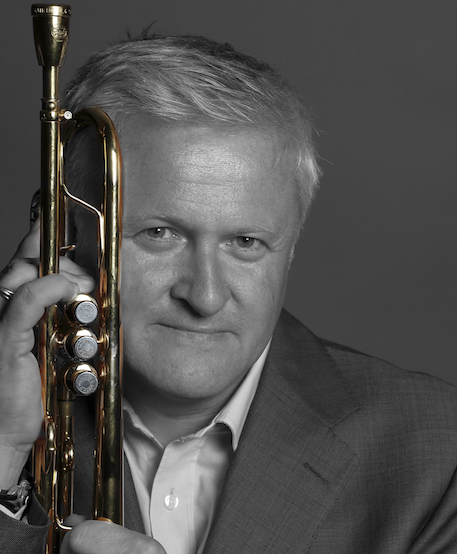
Mike Lovatt is primarily a commercial player (John Wilson Orchestra, BBC Big Band and session and show extraordinaire) although classically trained, who is often asked to guest on principal trumpet with the major orchestras. www.mikelovatt.co.uk
mike-lovatt_pr042

Shaun Hooke is a classically trained player, now Principal Trumpet with the RTE Concert Orchestra in Dublin and regularly also plays lead trumpet with the RTE Big Band. www.dublintrumpetacademy.com

shaunhooke

They both have some fascinating insights into approaching very similar problems and challenges, but from different perspectives.

Can you tell us a little about your background as a player, and what you got you into the trumpet in the first place?

Mike: I was born into a musical family. My Dad was head of music at a secondary school and my Mum was a fine amateur singer with the local choral society. Early in his career my Dad began to collect instruments and taught himself to play them. There were no peripatetic teachers in those days and he wanted to be able to teach well enough to form a youth orchestra within the school. By the time he retired he was conducting an orchestra of about 70 children! The trumpet was one of the many instruments lying around the house. I really wanted to play the trombone but at the age of eight my arms weren’t long enough.

Around that age on a shopping trip to the local supermarket, I was drawn to the record carousel and saw a record with a picture of a trumpet player on the front. It was Eddie Calvert ‘The Man with the Golden Trumpet’ I immediately asked if I could have it and after listening to the album I tried to play along with it using an old Selmer. I was hooked! Trumpet playing was all I wanted to do.

I began to play in my Dad’s youth orchestra and eventually the Staffordshire youth orchestra. I really wanted to be a professional and every day I would rush from school to try to play along to all sorts of records. I would pretend I was doing a concert with the Syd Lawrence Orchestra or that I was Maurice Murphy with the London Symphony Orchestra or a member of the PJBE, or the great Kenny Baker. This developed my ear not only for pitch but also for sound, style, articulation, placement of time and phrasing.

Disaster struck when aged 14; I was involved in a serious cycling accident. I lacerated my top lip and lost several front teeth. I thought my playing days were over. Thanks to the skills of the plastic surgeons of the North Staffs hospital I healed and began to try to play again. At first it was terrible, I could not produce a sound. Eventually I got it working again enough to do my grade 8 and I then auditioned for the music colleges. The range I previously had didn’t come back however and it wasn’t until I discovered the Maggio system some 10 years later that finally my chops came together.

I was fortunate to study at Trinity College of Music in the 80’s. My teacher was Norman Burgess, formally principal trumpet of the BBC concert orchestra, and later co-principal in the BBC Symphony.  He taught me to be as versatile as possible with a view to being employable in the future. He also encouraged me to attend the extra-curricular college big band rehearsals run by the great Bobby Lamb.  There were no Jazz courses available at music colleges back then, so I was lucky to be able to learn from these two great musicians who between them had a wealth of experience from all sides of the profession. I quickly realized that whatever style you play, a good solid technique on the instrument is essential. With a strong technical foundation and embouchure, it is possible to cope with the demands of all styles of playing.

Shaun: I grew up in Leicestershire in England.  I was enormously lucky to be able to avail of free trumpet lessons provided by our County Music Service. Particularly Don Blakeson, who was taught by David Mason who in turn apparently could trace back teacher to teacher all the way back to Handel’s time! I’m doing the Messiah next week so hopefully something has worn off on me. I was also heavily involved with Enderby Silver Band. I started with them as they reformed in ’77 when I was a nipper and enjoyed many happy years growing up with so many wonderful people to mentor me.

I decided to do Chemistry at Oxford University rather than going on to music college, but I had the trumpet bug and after completing a doctorate I knew I wanted to at least give pro trumpet playing a go. Jon Holland and Wes Warren at the CBSO taught me orchestral skills and still now I put myself back in their presence the moment before I play something.  What did Jon say to do here?  What was Wes’s trick for this?…

Quite quickly I was appointed to Principal Trumpet in the RTE Concert Orchestra but to this day I’m still thinking about how these guys coached me and I’m passing it on to my own students.

Your job involves you constantly switching styles – do you have a regular practise routine that encompasses everything, and what are the most important things to concentrate on?

Mike: I believe production is key across all types of trumpet playing. In commercial music, big bands and some Jazz playing the style requires a more defined articulation and sometimes brightness and sizzle in the sound. I always maintain that under that brightness there should be a full broad tone across the entire register. High notes are expected in lead trumpet playing and some areas of commercial music and so should be developed. However, they must never be the be all and end all at the expense of a good sound and considered playing. Super C is almost normal range these days but it’s important to have a full rich centered sound. You should always use your ears and listen to all types of music… try playing along with the music you listen to and copy it. You could also record yourself playing different styles and listen back and compare. For a particular style to come across to the listener, it needs to be exaggerated.

Shaun: I don’t really have a set practice routine. As a full time performer, I think it’s important to have some time away from the trumpet. I try to have one day a week where I’m neither playing or studying repertoire to help clear the head and relax the muscles. My emphasis on preparation is looking after the basics. Generally, I always have plenty of strength, stamina and range because I’m working pretty constantly. There are skills however that might not be required week in week out, and these are the ones that I’m careful to maintain at home. Flexibilities and double and triple tonguing can get rusty pretty quickly if you don’t end up being asked to produce them, particularly valve/tongue coordination so these are the things I always make sure stay sharp. The other golden rule is “practice what you’re NOT doing currently.”  If I’ve been doing lead big band charts at work I try to make sure I play something at home on my regular orchestral mouthpiece and something on the piccolo trumpet – choose something for my own pleasure rather than something coming up in the schedule. Vice versa, I always try to do 15-20 minutes on my lead mouthpiece, 2-3 days before I start a project that is going to need that. Other than that, I try to listen to recordings of stuff I have coming up. Not really to familiarise or learn repertoire but more to guard from getting “stuck in your ways”.

It’s nice to be inspired by others and try to do repertoire differently the next time it comes around. I listen to lots of players from the 20s,30s and 40s and try to emulate their styles. There are lots of transcriptions of their solos and I like to collect the original recordings.

Do you have a basic instrument and mouthpiece setup that covers most things, or is it very different depending on what the schedule brings?

Mike: My basic trumpet and mouthpiece set up is the same for most of the works I perform. I play my own signature model Mike Lovatt Smith-Watkins Bb Trumpet exclusively. It is a 460 bore. The bell is similar in size to a Bach 37 except that is a heavy weight.  I have two gold plated instruments and one that is silver-plated. I use my own range of signature mouthpieces of which there are three models: Studio, Lead and Classical.

The majority of my playing is done on the Studio mouthpiece. On this set up I play first Trumpet in the John Wilson Orchestra, perform lead on the West End show 42nd Street and the BBC big band, and when on first trumpet in Studio sessions.  Mouthpieces are very personal and what works for me may not work for someone else. Lip formation and lip thickness determine what might work and feel comfortable to the individual.  My mouthpieces are perfect for the various styles required of me. It seems other players like their ability to be used in different settings. When playing in the high register, I find the Lead with its large back bore, medium shallow cup and the comfy 5ish Bach diameter rim enables me to produce a bright sound I need, and stamina is helped by the resistance being transferred to the trumpet through the large back bore. I use my classical piece (more or less a Bach 3C) for studio sessions sitting down the line, my practice and occasionally on first trumpet if I require a broader darker sound.

My instruments have different qualities because of the plating. The silver ML Smith Watkins trumpet enables me to produce a cutting bright sound not only useful in Lead but also certain styles of orchestral music too. I don’t change lead pipes for different styles of playing. I could if I wanted, as the trumpet features an interchangeable leadpipe system. However, I like to keep the feel (resistance) of the instrument the same regardless of the genre of the music I am playing to help me with my production and familiarity in supporting the notes and sound. I use the ML designed pipe that comes with the trumpet as it balances perfectly with the 37-size bell and the bore size of the instrument. The most important thing here is sound quality whether it is classical, jazz, lead in a big band, pop horn section or solo.

Shaun: To be honest, kit is everything in my job. We try of course to perform in the correct style, but the range of sounds and timbres required is so varied that it really means you need some different equipment to achieve that. At the beginning of my career I did that mostly by playing on my beloved Bach (then later Yamaha) B-flat and using quite a variety of mouthpieces. It had a degree of success, but it is hard work on the embouchure, chopping and changing rims, cup depths, throats, backbores etc… and I certainly felt that my tuning and accuracy suffered.

For the past number of years I have had a different approach. My responsibilities at RTE were putting more emphasis on my role as lead trumpet in the RTE Big Band and I felt I needed a dedicated lead instrument. I tried great gear from Shires, Smith-Watkins and Schilke but I fell in love with B&S’s JBX trumpet. When I’d decided to buy this, the store asked if I’d like to try the B&S Challenger II trumpet (their standard classical model). Well I loved it. So now I have two B flat trumpets, one for classical work and one for light repertoire. The huge advantage for me is that the reverse leadpipe is almost the same on both, the bore is the same, the bell profile is the same, so the tuning slots and the way it “blows” feels entirely similar, making it so easy to switch back and forth.

But the JBX bell is lightweight and has a French bead giving it a really exciting live fizzing sound. Whilst the Challenger II bell (a 43) is much more solid and rounded sound much like the Bachs I’d been playing for the previous 30 years. Since then I have B&S C  and E-flat trumpets both light and heavyweight bells. As to mouthpieces I use a Bach 1 1/4c on both of my B-flats for orchestral (Challenger II) and “Show” work (JBX). For lead work I use a Marcinkiewitz 3/3C.  I turned up at work once without my old lead mouthpiece and was loaned this by my excellent co-principal Eoin Daly – I liked it so much I bought 2 so I could keep one at home and one at work and therefore wouldn’t be caught out again. I have a Schilke piccolo that I use for recording work but have recently just bought a Scherzer rotary valve piccolo for baroque and orchestral repertoire.  Again, it’s all about making the right sound. I use a Marcinkievitz 7s mouthpiece on the piccolo. I found one in 1989 in an “odds and sods” box at a band competition thinking it would be a good “screamer” mouthpiece but it didn’t work for that. It got me through a tour of Brandenburg 2 though so I’ve stuck with it.

How has the versatility that you require affected the way that you approach teaching? Do you recommend that advancing students work on a wide variety of playing styles or concentrate on fundamentals?

Mike: The versatility that I have developed over the years is something I try to pass on to my students.  I encourage listening to all types of music. This is essential for stylistic development.  Occasionally this is done in lessons but I encourage listening to be done on a regular basis to keep ones ear in tune with different styles. A couple of years ago I gave a trumpet class at a major conservatoire in London and when I asked if anyone had listened to any music recordings or attended concerts recently, not one of the 12 classical trumpet students had. One of them admitted to listening to Bruno Mars three days previously!

I teach fundamental trumpet techniques. First and foremost, I make sure the student has a solid embouchure formation and can make a good basic sound. I’m a stickler for note production and articulation so there are exercises based around those techniques using Arban and Schlossberg. I use Caruso, Stamp, Maggio and my own ideas to develop the embouchure. I try to instill playing with reverence for the music. Long notes are important to develop resonance and to find the ‘soul’ of the note and the core of ones playing. When you have control of the sound, this can be adapted and applied to whatever style you are playing. I teach different vibrato techniques and ways to help note projection whether at the back of an orchestra, in a west end pit or in a studio microphone technique to record well.

Shaun: The music business is hard and getting harder. I always encourage my students to be flexible even if you’re pretty sure that you will be going in one particular direction. Make sure you have the skills to be able to say ‘yes’ to the next call and go in and do a good job. It is a wonderful way to earn a living but at the outset, you need to be out there making contacts and proving your professional credentials. One of my colleagues in the RTE CO was a regular in a German Beer band to put money on the table while he was trying to break into the orchestral scene. Work hard but don’t be over focused is my advice.

What is easier, a classically trained player playing light music or a commercial player playing in a classical orchestra section?

Mike: As someone who has dipped my toe into both sides of the profession, I am inclined to say that both styles are as difficult as the other to play convincingly. You need to apply yourself honestly to the style and exaggerate it enough to come across to the listener. I have always had the view that trumpet playing is trumpet playing and that the most important quality to have is solid musicianship built from listening. Always listen carefully to your sound and the music going on around you. If you’re playing third trumpet in a classical section on a film soundtrack recording, you then respect that and whoever is on first trumpet. Try to blend with them and above all support the sound style they are playing. The same goes for an orchestral player playing big band repertoire on a symphonic pops date. I have played with orchestras from San Francisco Symphony, the Concertgebouw Amsterdam, CBSO, BBC Symphony, LSO, LPO, Philharmonia, BBC Scottish, BBC Philharmonic, RTE Concert, Gothenburg Symphony, BBC Concert and many more. On many of these occasions my role is to help shape and lead classical players into becoming commercial big band section players in a three-hour rehearsal followed by a concert. Some seem more capable of giving up to the music and using their ears more than others. If they have a solid technique and command of their instrument, then they are more able to adapt successfully.

To quote John Wilson “anyone who can play good lead trumpet in a dance band can play first trumpet in a symphony orchestra”.

I think it can be difficult for ‘classical’ players to get used to playing swing quavers, combined with the way in which articulation changes in commercial playing. I always try to help by singing the phrasing to them and making them feel confident they can do it. It’s also important to tell the players to articulate and play the shorts and longs accurately.

Shaun: I think that it is not always right to pigeon hole people like that, but there are people who specialise of course. I remember taking the chance to have Tony Fisher come over to cover a James Bond concert for me when my wife was about to pop with our first child. Of course, I waxed lyrical to our management – he was interviewed for RTE radio about the very first Bond sessions including of course the original theme track – it was a brilliant week. Then the baby was born, and I was gone for a few weeks and they asked him to come and do a week of Mendelsohn… he gracefully declined – although it would have been interesting I expect!

I come from a classical background, trained over the years and “on the job” to do light repertoire, and I have local guys here that slot in well in the RTECO and RTE Big Band, but similarly we have guys who mostly do commercial work who are fine sitting down the line on orchestral repertoire. We have lots of mixed programmes where this is required. All the “classical” guys have plenty of “light” experience and the commercial guys are for the most part classical trained so have orchestral skills and can TRANSPOSE.  That is the key!

What challenges and projects have you got coming up?

Mike: I’m so happy I’ve managed to carry on doing many varied projects, gigs and recordings with orchestras, bands, groups and big bands all over the world. My future projects include my first solo album with the amazing Fodens Brass Band, directing the Stockholm Radio Symphony Brass in a concert of Billy May’s Big Fat Brass music, big band lead trumpet sessions for Gary Barlow, UK jazz festivals this summer with the Skelton Skinner all-stars, concerts with the John Wilson Orchestra, concerts and broadcasts on lead trumpet with the BBC Big Band, continuing on lead trumpet for 42nd street and as guest first trumpet for the Symphony in Antwerp. I am fortunate to be looking forward to such a stylistically varied schedule.

Shaun: A few highlights of upcoming stuff are: The Classical Series at the National Concert Hall featuring Mozart, Mendelssohn and Beethoven; studio work with Irish singer/songwriters for rock station RTE2FM; Giselle with visiting English National Ballet, Bartok’s Bluebeard’s Castle with the Irish National Opera. Up to our summer holidays we are also doing 4 sell-out shows at the Donnybrook Dublin Rugby Stadium and The Marquee in Cork with RTE2FM of 90s dance anthems! Hopefully we will tour this show in Australia in the autumn.

For further information about Mike Lovatt, please visit www.mikelovatt.co.uk

Mike’s signature ML Smith-Watkins trumpet is reviewed here if you would like to read more.

For to find out more about Shaun Hooke, please visit www.dublintrumpetacademy.com

Shaun is a B&S Artist and you can view the trumpet range here.

You may also be interested to read a review here of good all-round B-flat trumpets.

For a great range of trumpets, mouthpieces and specialist advice, please visit Thompson Music


Sign up here for new blog articles emailed direct to your inbox:

[jetpack_subscription_form show_subscribers_total=”false” button_on_newline=”false” submit_button_text=”Sign up” custom_font_size=”16″ custom_border_radius=”0″ custom_border_weight=”1″ custom_padding=”15″ custom_spacing=”10″ submit_button_classes=”” email_field_classes=”” show_only_email_and_button=”true”]

Advice · Interview

Trumpet Artist Profile: John Thirkell

Johnny Thirkell is one of the most recorded trumpet players still working today. Through the 80s and 90s, as well as being a member of Level 42, Swing Out Sister and Jamiroquai, he has also worked with George Michael, Bruno Mars, Phil Collins, Pet Shop Boys, Kylie Minogue, Eric Clapton, Buddy Rich, The Who and Tina Turner. He has performed on over 6000 recordings including 23 No.1 records – most recently the Bruno Mars/Mark Ronson smash, “Uptown Funk”. The list goes on and on!!

For 10 years, John had a self-imposed break from the trumpet to concentrate on his various businesses in music and technology, but he is now back playing again and very graciously agreed to meet me in a my local pub to discuss his career…so far!

JH: What got you interested in the trumpet to start off with?

JT: Well an old friend of mine from school in the North-East of England made me want to start. Ken Brown, now 2nd trumpet with the Hallé Orchestra was a boy-wonder cornet player at school and I saw the kudos that this got him at school. This piqued my interest, and then when I found out that band practise was the same time as 2nd period maths, I thought “I’m in, where do I sign?”. I loved it immediately, and there was nothing that I wanted to do more from that point onwards.

JH: And apart from Ken, where there any other particular musical influences or inspirations?

JT: My father took me to see the Syd Lawrence Orchestra at the Billingham Forum. Freddy Staff stood up and played ‘Manhattan’ and this blew my mind. The next big damascene moment was hearing Tower of Power for the first time! “THAT is what I want to do!”. This is probably what guided me towards the pop music scene. And then, before long I came across the playing of Jerry Hey. He is an incredibly nice guy, but his trumpet playing was sublime, and his arrangements are incredible. This is the pinnacle of the craft! Jerry was very much the inspiration for the ‘Phantom Horns’. We could never dream of coming close, but you always want to try!

I have worked with Lisa Stansfield on and off for 25 years and on our most recent album and the previous one, Jerry did half of the horn section stuff in LA, and I did the other half in Rochdale! Trust me, when you listen to the album, you can tell who is who! For me that is such a thrill. This guy has been my idol all through my career. They say “never meet your heroes” but it was amazing having lessons with him.

JH: So, talking about horn sections, when you set up ‘Phantom Horns’ was there a particular identity or sound that you wanted?

JT: No. Really, we wanted to be able to adapt to whatever the artists and producers wanted. Flexibility and versatility were absolutely key. Our job as a horn section is to blend and provide what fits with the particular artist. I have recently been going through a load of old recording and video clips, and I was struck how we sounded incredibly different from project to project. I think that if a band booked the Tower of Power horns they would be wanting and expecting that particular sound. Our job was to fit in!

Chile Flugel

JH: I really like the incredible stat about your chart appearances. Can you tell me about that!?

JT: Yes, I was on at least one album in the UK charts without a break for 13 years and 4 months. This was with dozens of different acts through that period. At one stage there were 11 albums in the top-50 that I was playing on at the same time! I think that this is not symptomatic of being earth-shatteringly brilliant, more that I always had a business mind. I would approach my work as business, and on keeping good working relationships with people and always treating the artists and their music with respect. If a parent came up to you with their baby, you wouldn’t tell them that it was ugly! It is the same with musicians and their music. You have to treat people well and remember how important it is to them. You also have to remember that once your name is on an album, it is there forever! If I was not happy with the way that I had played on a particular take, I would sabotage it to make sure that nobody would ever hear it. It didn’t make me popular with other musicians on some occasions, but it is important that you take pride in everything that you do. If you don’t, it will come back to haunt you.

VIDEOJamiroquai – Tighten up – Live at club Citta, Tokyo 1993

VIDEOBuddy Rich Band – Prague 1984

JH: Through busy patches and big tours, how do you keep on top of your playing and technique?

JT: I certainly have a strict-ish 20 minute warm-up routine that I do when I am busy. I will vary it though. I had this idea a few years ago, coming back to playing again, that it would be a great idea for a book to talk to all the great players about their practise routines. I sat with lots of great players – Craig Wild, Andy Greenwood, Simon Gardner, Wayne Bergeron, Malcolm McNab, Gary Grant, Jerry Hey… and discovered that hardly any of them seem to have one. There’s the book out of the window!

I love to be organised with my practise and use various apps to keep track of what I have been doing. I suspect that I am rather OCD with it all, but it works!

I had some lessons actually with Gary Grant, Jerry Hey and Malcolm McNab. I love to go and talk to these guys, you can learn so much from them. I have been a massive Jerry Hey fan since I was around 18. He is so gracious and we spent a whole day at his house just talking about the trumpet.

JH: Does that leave you with a feeling of worry or anxiety if you haven’t been able to do your daily routine, like if you have just got off a flight or something?

JT: Yes I think sometimes it does. I also have an emergency short routine too, that I can do in the car that mainly involves buzzing. Jerry Hey would always do lots of practise including long warm-up/set-up before work. I asked what he does if he is on in LA at 9am in the morning. He answered very matter-of-factly that he would just get up at 4am so that he has time to do it and then travel in to the city!

JH: So here is the geek question… Equipment?

I’ve played on the same trumpet throughout my entire career. It is a 1962 Doc Severinsen Getzen Eterna, and I find that it just does everything that I need it to. It started out silver plated, I painted it white for a while during the Phantom Horns period, and it has now been beautifully replated like new. I am also playing on the same Marcinciewicz mouthpiece that I have had for years. I also use a Getzen Eterna Flugelhorn which I bought from Giardinelli’s in 1979. I absolutely love it and everyone comments what a big warm sound it has. I would not swap it for anything!

I must be any music shop’s worst customer! I think that given a bit of time, you end up sounding like yourself on any instrument setup. Some will obviously make it easier, but I have always felt comfortable on what I have so have had no reason to change.

Johnny Thirkell

JH: Would you say that the music industry has changed a lot over the years?

JT: Certainly. Some avenues for work have changed and dried up but there are also huge opportunities that have been created by the internet. Even I am able to build my own website, and I’m an idiot when it comes to that! If I can do it, there is hope for us all. I may have run a software company, but I got clever people to do all of that! I think that young people coming into the industry need to be exploring those avenues for promoting yourself and generating additional income streams. We have to be much more self-starting, the world has become much more democratised. In music there are all these outlets, and the long-term winners are the ones that really take advantage of this. Blockchain technology in the distribution of music is also going to keep changing the way that we all work, allowing us to track every digital file that we create.

Some younger UK players are really building a great reputation for themselves. Louis Dowdeswell for example – loads of the top guys in the US like Wayne Bergeron are talking about him. I love the idea of young people just making it happen. What’s really interesting is when I was a young player, all the ‘old-school’ trumpeters would tell us that they would hate to be starting out on a career then as there wasn’t enough work around. It didn’t deter us, and here I am, still playing the trumpet all these years later! So that is the lesson that I would pass on to these younger players. Forget what those ‘old farts’ said! The nature of the beast changes – there was a period of around 10 years where I was surviving entirely on studio work, but then you get a show or whatever, but it has started to get a little more fragmented now. The ‘playing’ industry is certainly different to how it was, but I do not think that it is necessarily worse. The smart ones are the ones that get with the program and make a career for themselves. What these young guys like Louis and Tom Walsh are doing is fantastic. They are really making use of all of their talents.

The key is to embrace a portfolio of careers, whether it be playing, teaching, writing, producing, and to put your heart and soul into it and make it the best that it can be. Embracing the changes and the new technology is key and makes for a much more interesting way to earn a living.

JH: There is a big emphasis on ‘identity’ isn’t there? And I think that if you embrace the fact that being a trumpet player today is so much more than just being a trumpet player, you are going to be a lot happier! And a lot of these younger guys are really going for it.

JT: Absolutely, and in my day, we were very much compartmentalised to an even greater extent. You were either a studio player, or a show player, or a function band player or whatever. That started to break down as there became less studio work and less work generally. I never forget hearing for the first time that a guy like Derek Watkins would take on a show – we were amazed that he would do that. We never thought of him as a ‘show player’ but looking back, that was ridiculous. Why on earth wouldn’t he? It is great work, and he was a great player.

Things are certainly more fragmented now in the music industry, but as I said the key is to embrace it instead of bemoaning it. It is like when the drum machines were first introduced. It showed up that there were 2 kinds of drummer – those that complained that the drum machine was taking some of their work, and those that went out and bought one! Who better to programme a drum machine than a drummer? And for me, that sums up the differences.

JH: So we have talked about compartmentalising and pigeon-holing players. What ‘slot’ would you have put yourself in 20 years ago?

JT: Pop. Almost exclusively pop music studio work. I would tour sometimes. There were 3 bands over the years that I had a spell in: Swing Out Sister, I did about 4 or 5 years. I was with Level 42 for 8 years, then after that, Jamiroquai. Now those bands only toured for part of the year so a lot of the rest of the time was studio work. Myself and sax-player Gary Barnacle set up a horn section called ‘Phantom Horns’ which we branded and treated like a business. For 15 years, I would say that I was exclusively pop music.

JT Purple

JH: And if you had to give yourself a job title now, and ‘pigeon-hole’ yourself, what would you say? I am guessing that it is probably a little more complicated!

JT: My wife describes me as a retired business man, but I am not so sure that I like that particular moniker! I am enjoying being a trumpet player again and feel that I am playing better than ever. For the first time ever, I have TIME to practise, and I am loving it! I had many years as a full-on professional musician, then 10 years as a full-on business person building up and running a number of businesses – throughout all of that though, inside I still feel like a trumpet player, and dress like one too!

I like to be stimulated and love being on the board for various things like the Music City Foundation in Sheffield, and also being involved with numerous projects involving music, education and technology. It keeps me busy and interested. Underneath it all though, there is no hiding from the fact that I am a ‘trumpet player’!

JH: So, here’s a strange thing: Reading your discography I see that you are listed as playing flute on a Kylie Minogue track. Surely that is a mistake?

JT: That is not a typo! Steve Anderson was the producer on that track and booked me on trumpet. We were at Olympic studios in London, I was the last instrument to go on and they needed rough mixes by that night. Steve was struggling to find good flute samples in a hurry so I said, “If it is not too difficult, I’ve got my daughter’s flute in the car!”. I went and got it and played one bar of flute, for no extra money I might add!

JH: Any other projects on the go at the moment?

JT: I am starting the next Lisa Stansfield tour in April 2018 for a couple of months, I then will be working with Marti Pellow for a month after that. I have also just finished doing some arrangements for a great new young artist. Hopefully I can say more soon!

JH: What advice would you give to a young JT?!

JT: Treat your career like a business and don’t worry about what other people think!

Please visit Johnny’s awesome website at johnnythirkell.com

Be sure to also check out the great videos and audio clips on there!


Sign up here for new blog articles emailed direct to your inbox:

[jetpack_subscription_form show_subscribers_total=”false” button_on_newline=”false” submit_button_text=”Sign up” custom_font_size=”16″ custom_border_radius=”0″ custom_border_weight=”1″ custom_padding=”15″ custom_spacing=”10″ submit_button_classes=”” email_field_classes=”” show_only_email_and_button=”true”]

Gear Review · Interview

Freddie Gavita: Interview & Instrument Review

Freddie Gavita is a young trumpet player at the top of his game. The trumpet category winner at the 2017 British Jazz Awards is receiving critical acclaim for his debut album ‘Transient’ as well universal admiration for his stunning playing with the Ronnie Scott’s Club Quintet alongside many other projects.

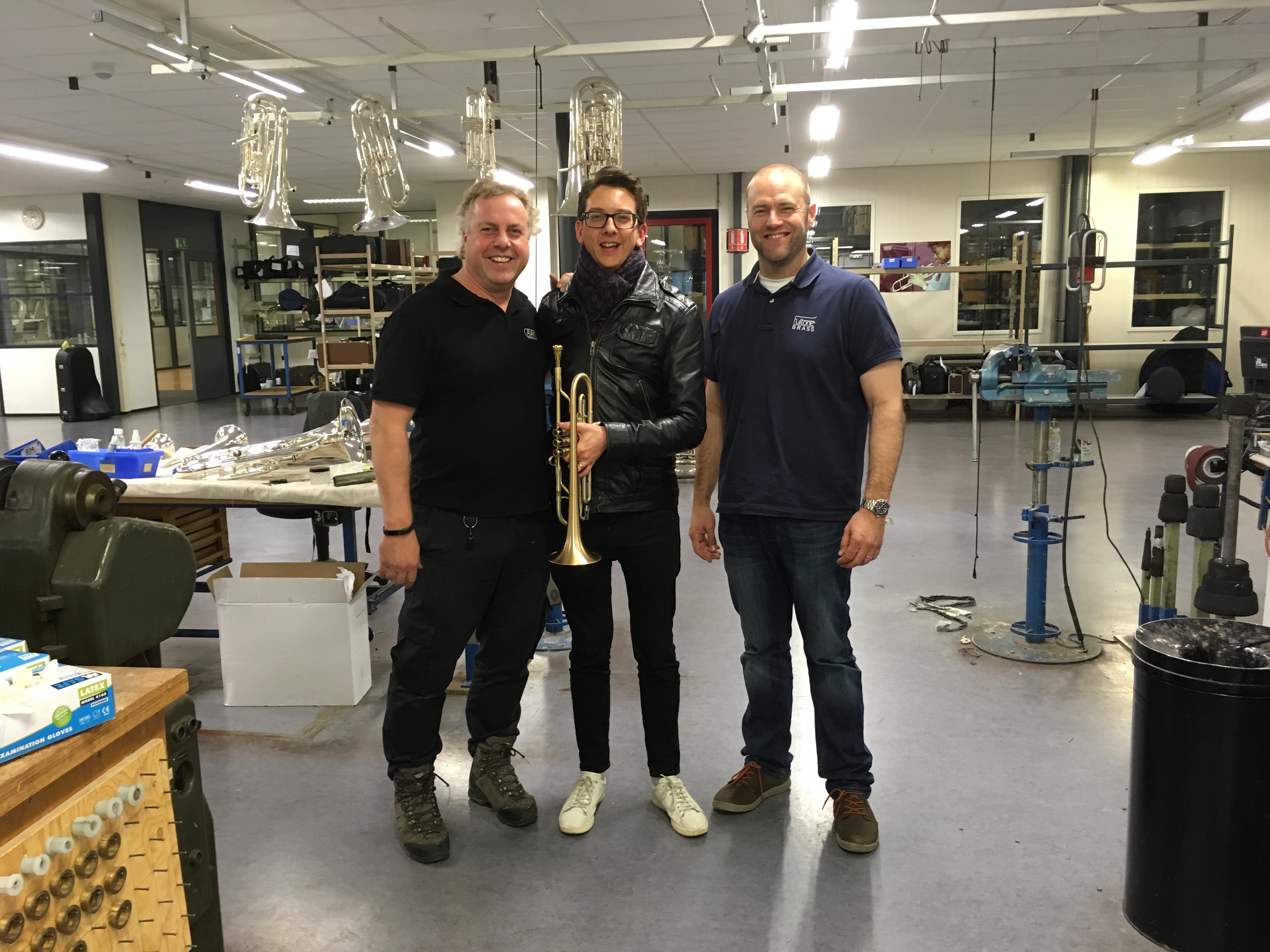
I have caught up with him here to find out a little more about him, and also his new role as an Adams Performing Artist and his work with Adams and Fultone Brass to settle on a new Adams A4 Bb Trumpet. I have also had the opportunity to get hold of a couple of different A4 models from Fultone Brass to include a review of this trumpet range below.

Fultone Brass

Freddie, can you tell me a little about your musical background and what led you to play the trumpet? Any particular influences?

So I was brought up in Norwich, and started learning the trumpet in primary school aged 7. Back then you got free lessons and a free instrument, and I was lucky to have a teacher in David Amis who had a great knowledge of the physical side of brass playing, a deep love of all styles of jazz (even free!) and was an excellent communicator. I would put a large part of my career down to him, he was my only teacher from 7 – 18 years old. My mum was quite proactive as well, so she bought me a Louis Armstrong cassette which I really took to, and still love his music. My dad was the one that encouraged me to practice until I actually started enjoying practicing!

What trumpet and mouthpieces do you use?

I play a Monette B6 mouthpiece that I bought from eBay when I was 17, and an Adams A4 Custom Series ML with Gold Brass bell.

How did you find the process selecting your new horn? Can you describe the process?

So I was lucky enough to go on the Blue Note Cruise from Miami with the Ronnie Scott’s Quintet and Natalie Williams, and there were about 40 of the greatest jazz musicians on the planet on this boat! I met a great trumpeter called Keyon Harrold who works with Gregory Porter and has just released a brilliant new album of his own, he was playing an A4. As soon as I tried one I knew I wanted to delve deeper as I’d been looking for something like this for years. For me it’s about excitement, which might be dangerous, but I want to feel inspired when I pick up a trumpet and the Adams does this for me! I tried a few other models (A4 LT, A8 etc) with Neil Fulton at Fultone Brass, play testing the horns in the BBC Maida Vale studios! He had a good listen up close and far off, we recorded a few bits so I could hear what it’s like from the other side and then took it away to try it on some gigs, which is the main test any horn has to pass!

I have obviously played a lot of other people’s instruments on gigs, but this had the characteristics I’d always wanted. I can play acoustic gigs with a rhythm section and still not feel like I’m having to over blow to be heard, the slots are wide so you can bend notes and get sounds and tones from the trumpet that you never knew existed. It plays beautifully at a whisper and you can get a big, thick sound from it when you open it up. The valves are amazing as well!

IMG_4403

Your album ‘Transient’ has had a great reception from critics and musicians alike. Was it a difficult process getting this album together?

Thanks! It was difficult in one sense, that I’ve not done it all myself before. It does mean you have more control over what happens, who you use and where you record etc, the music was the least of my worries in a way! I also crowdfunded the album, which was very encouraging; not having to worry too much about the financial side of it does help you relax a little and think about the playing side of things more. We recorded 13 tracks in one day (10 made it onto the record) which for a trumpeter is probably a little silly, I’m happy with the results but I’d definitely do two days next time.

How do you find striking that balance between working on and progressing your own projects, and working with other bands and artists?

I think you have to be strong in your practice more than anything. Fortunately, I’m not much of a lead player, so I can focus on more jazz orientated practice which keeps me in good enough shape to play most of the gigs I do without being too knackered! I should probably do more reading practice as that’s one thing that I feel I’ve neglected a little over the last few years, but I’m ok! Having your own band and project gives you a stronger sense of the way you want to play and sound, so I guess when I have to sound like other trumpet players for different situations I’m trying to access a place where it’s still me, but bringing out their influence in my playing. I’d love to do more with my band, as its where I feel happiest and most at home, but it’s hard getting promoters to take you on playing original music sometimes.

Any top tips or preferred materials for technique preservation etc.?

I try to take at least one day off a week! I’ve fallen in love with the Cichowicz flow studies again recently and I regularly use material from Flexus (Laurie Frink) and Gerard Presencer’s book. I try to practise in my head as much as possible (often singing in my head and moving my fingers), so my mind is ready for the trumpet when I play. Especially when improvising, it really helps to have a clarity of idea in your head before you try to play it on the horn! I always feel the benefit when I get the chance to warm down as well, even if it’s just a few pedal notes. I love the Vizzutti Response and Rejuvenation exercise from New Concepts for this.

Do you have any advice for young aspiring players?

I would encourage any young trumpeters or musicians in general to go out and see as much live music as they can! Whatever style, hearing the best people play gives you such inspiration and a better idea of what you might want to sound like. I fully believe that you make the sound on the instrument that you hear in our mind, and the better the sounds you’ve listened to closely, the better the sound you’ll make!

Mouthpiece Online review of the Adams A4 Trumpet range:

The A4 is one of the most popular in the Adams range. Developed in conjunction with Amik Guerra, it is one of their heavier models with a heavy bronze and nickel silver valve block and a heavy 140mm bell. I had two popular options to try – The first, Adams’ Selected Series with the most popular option of a large bore (12mm) valve section and a 0.45 gauge gold brass bell. The second model is a custom instrument, similar to the standard Selected Series, but with a lighter 0.40 gauge yellow brass bell.

A4_Selected2

My first impression is that these are fabulously designed and constructed instruments. Nothing has been left to chance, and every curve and nuance in the design is there for a technical purpose… and it looks pretty smart too!

I started by blowing the Selected Series gold brass bell model, which I would describe as a real nice combination of silky and solid. The large bore valve section gives you a lovely open feel through the middle of the horn, which is balanced out well with the responsive leadpipe and the larger bell. The harmonics still slot really naturally, yet you are not held back from creating the richness of sound that players want from this style of heavyweight trumpet.

Fultone Brass

The custom model with the yellow brass bell gave me a similar feel. You can continue to make that rich, dark sound at softer dynamics, yet you get a little more sizzle to the sound when you open in the higher registers particularly.

Customisable options on this model include ML (11.7mm) or L bore (12mm), 4 different gauges of bell and 4 different bell materials. It is easy to see why this model has become such a popular one in the Adams range as it offers the remarkable feature of versatility alongside the tonal characteristics that one would expect from a heavier instrument.

To find out more about Freddie Gavita, please visit www.freddiegavita.com

To find out more about Adams Trumpets, please visit www.fultonebrass.co.uk

US readers, please visit Thompson Music for further information on Adams.


Sign up here for new blog articles emailed direct to your inbox:

[jetpack_subscription_form show_subscribers_total=”false” button_on_newline=”false” submit_button_text=”Sign up” custom_font_size=”16″ custom_border_radius=”0″ custom_border_weight=”1″ custom_padding=”15″ custom_spacing=”10″ submit_button_classes=”” email_field_classes=”” show_only_email_and_button=”true”]
Advice · Interview

Trumpet Artist Profile: Eric Miyashiro

With a trumpet in his hands, Eric Miyashiro is a force of nature. The powerful sound, blistering range and flamboyant lyrical playing suggest a very different personality to the one that I met! Eric is one of the gentlest, nicest people that I have come across so I was thrilled when he agreed to spend some time doing this interview for Mouthpiece Online…

What drew you to the trumpet as a child?

My dad was a well-known trumpet player in Honolulu, Hawaii, so music and trumpet came naturally.  It was like a “toy” for me, I really don’t remember when I started to play!

Who are/were your main musical and trumpeting influences?

Well, there are sooooo many… my dad, Maynard, Bobby Shew, Snooky, Doc, Herseth, Vizzutti, Jerry Hey, Chuck Findley, Freddie, Stahl, Chase, Audino, Clark Terry, Faddis, Wynton… too many to list. I like everybody! I always try to find something in a player that I like, and then learn from them.

As a young pro, one of your first big touring band gigs was with Buddy Rich – What was it like as a young player going into that environment on lead trumpet?

To tell you the truth, I was too green to take that chair, I was not ready… but I think that Buddy saw something in me and he let me grow in to that chair. It was brutally a tough, difficult book to play. Buddy’s energy was so strong that you can’t help but to get caught up in that typhoon of power – it was real tough to try to keep up with him. But it was also the best, and the most fun I had on the road… I would not trade those years for anything!

You have worked with a few manufacturers over the years on custom mouthpiece and horn designs. Can you give us any insights on the design process from a players’ perspective, particularly in relation to your GR mouthpiece and Yamaha trumpet?

Over the years, I was able to meet and work with most of the famous makers. Each company has their own philosophy and systems in designing their products, some of them contradicted the others, but overall the science is the same. Yamaha and GR are at the highest level of product tolerance control in my opinion. To me, the horn and mouthpiece are just tools, it really doesn’t make you sound any different or better then you are capable… depending on how long the “honeymoon” period lasts!

But having a horn that is easy to work with is the key to letting your personal voice come through your playing. I have had about 600 mouthpieces, 47 Bb trumpets, 2 MF Firebirds, 5 flugels, 4 piccolos, 3 melophoniums and a superbone. I have tried all the gadgets known to mankind, and my conclusion is in the end, it’s you and your “voice” in your head that matters. You can change the way you sound by finding a sound that you want and need, that comes from listening, and trying to get a strong image etched in your head. Your priority should be finding equipment that is easy to handle. Only then can you concentrate on the music at hand, rather than fighting the horn, and blaming the horn and mouthpiece for your performances.

Mouthpieces are like your shoe size, bigger is not better! And resistance, from your horn or mouthpiece, is your friend. Learn how to use resistance. Lean against it, and let the resistance help to keep your buzz from opening up too much.

In some recent ‘clinics’ of yours that I attended, you discussed some really interesting approaches to playing high notes! You demonstrated with a leadpipe and some tissue paper that it is not necessarily about airspeed. Can you share some of your thoughts, theories on this? How did you come to start using these techniques?

I always knew from early on that it wasn’t all about the “Air”, “Tongue Arch”, “Pedal Tones” etc. Everything is important, and it’s about balance. We often base our playing on physics with fluid dynamic and acoustic theories. What we do is completely unique. There are very few detailed, and scientifically proven studies done on the physics of brass playing. Any studies are not accurate and reliable because of the player’s physical and personality differences.

The amount and the speed/pressure of the air is a factor that will come into play with the lip tension, tongue position, mouthpiece design, the horn, acoustical condition and the size of the room etc… and on and on… So many factors are involved, but one thing that is certain, is that we “overblow” when things are not working with the chops.

I know this because I am guilty of having done this for most of my life. So, I have been doing my share of studies and experimentation to figure what does and does not work. The bore size, bell size, venturi size, or the gap and drill size on mouthpieces does not necessarily determine the resistance. It is the balance between all of this, plus the most unstable factor, you and your preference.

For you, what are the key factors in keeping on top of your playing when you are travelling?

Sleep, (which is hard to do….) Lots of water, avoiding alcohol, (which is really hard to do)… and keeping your chops in shape by carefully maintaining the buzz centre and the mouthpiece position.

If you could give any advice to a teenage Eric, or suggest that he does things differently, what would you say?

Take lessons!!!! I have never taken a lesson in my life, I am self-taught so I have many bad habits!

Please visit www.ericmiyashiro.com to find out more.

To see the range of GR Mouthpieces, please visit Thompson Music and purchase with an additional 11% off over Thanksgiving weekend.


Sign up here for new blog articles emailed direct to your inbox:

[jetpack_subscription_form show_subscribers_total=”false” button_on_newline=”false” submit_button_text=”Sign up” custom_font_size=”16″ custom_border_radius=”0″ custom_border_weight=”1″ custom_padding=”15″ custom_spacing=”10″ submit_button_classes=”” email_field_classes=”” show_only_email_and_button=”true”]