
Trumpet Artist Profile : Lasse Lindgren

Lasse Lindgren is a multi-faceted musician, with a reputation as a great ‘lead’ trumpet player as well as a great ‘jazz’ player. In recent times, he is also responsible for the resurrection of the great Ullvén Mute brand, made famous by players such as Dizzy Gillespie and Maynard Ferguson. Lasse kindly talks to me here about all things trumpet as well as this recent project…

What first drew you to the trumpet?

That’s easy! I heard Louis Armstrong on the radio as a 5 year old boy. That totally blew my mind and made me decide to dedicate my life to playing trumpet. Then I had to wait until I was eight before I got a trumpet, and I still remember that moment as very exciting, after I had to wait for years. I also remember that I was dreaming of making that sound for so long, that when I finally got it, it was a great relief to put the mouthpiece to my lips and blow the sound I had in my head for years. I think that also made it easy for me, I got a good sound right away. I think because I was so eager and had the sound built up inside me, it just came out naturally.

Any early musical influences?

As a young boy I loved the recordings of Louis Armstrong, Glenn Miller, Harry James and the other famous BBs. My mother had an old 78rpm record player at my grandparents’ home. I used to love to sit by myself and listen to the old records – that sound made a deep impression on me.

When I was 15, my trumpet teacher played the record “Message from New Port” with Maynard Ferguson’s orchestra for me. That was another “blow my mind” experience. I loved not only MF playing, but the sound and energy of the music arrangements!! and I still do. I thought playing those high notes MF did was something you learn when you get older, that is how stupid I was))-

But of course I wanted to play the notes of MF and his “sound”, but how? No one to ask? So I had to experiment myself by my own. From age of seventeen to twenty I spend 8-10 hours a day with my trumpet, playing, thinking and trying out how to do this.

I also spent some time playing “Free Jazz/music” as a teenager, that opened my ears and mind, Lester Bowie and Art Ensemble of Chicago!

Who have been your favourite players and music to listen to?

Well, when I went to high school, I started to play with friends in a band, and we played some kind of “Jazz-rock” in the style of “Weather Report” and so on. So I broadened my view of music. Then at that time, I also started to be aware of other great Trumpet Heroes, especially in more “modern” Jazz. Artists like Dizzy, Miles Davies, Clifford Brown, Freddie Hubbard, Woody Shaw, Chet Baker, among others, but also the European players like Palle Mikkelborg, Kenny Wheeler (Canadian in UK) Tomas Stanko (I played a lot with him in Germany) and my Swedish friends and heroes Bosse Broberg, Jan Allan and Rolf Ericsson. I also loved players who were both “Lead” and “Jazz” players – Snooky Young, Benny Bailey, Booby Shew (whom I met and got informed about the Yoga Breathing from when I was 18)…

Today I still listen to them all, the old stars were the genuine originals. There are many new great trumpet players of today, but have to admit, I am not so familiar with them, although Roy Hargrove was fantastic, RIP.

It’s hard to invent the wheel again, and to me, many of the young very skilled and talented players of today, sound as though they are playing “licks” they have practiced and learned. To me, that is actually is not spontaneous soulful improvisations, more than showing that they can play the right “hip” patterns over the chord changes – rather boring to me.

It is not easy to make your own sound and style, and I think too few even try. The exception is Tim Hagans, but he is not so young anymore!!
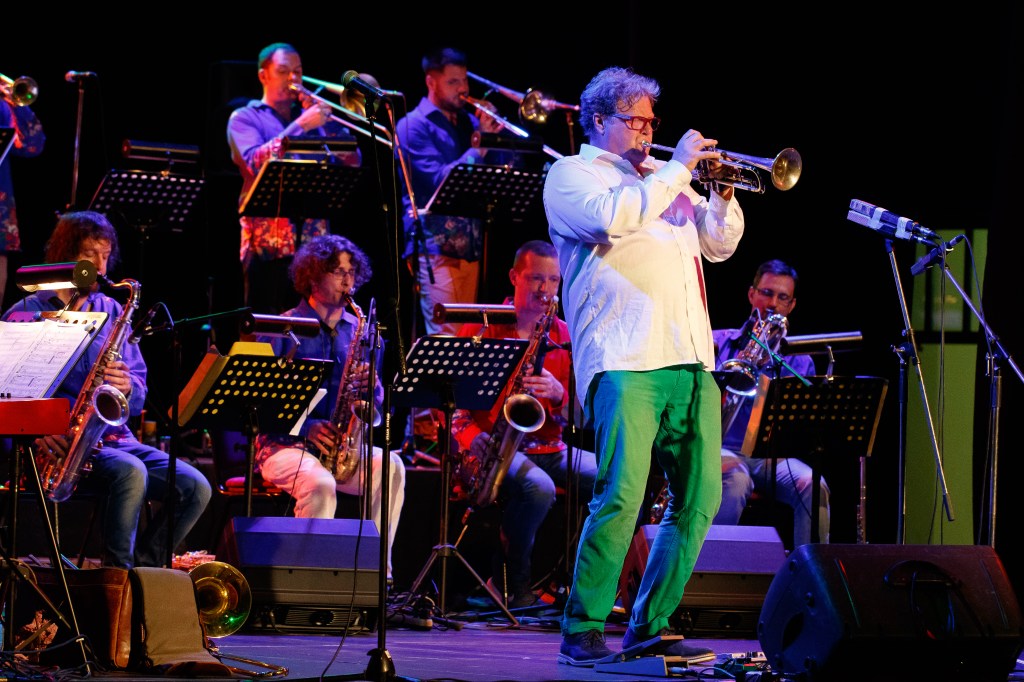
Lasse playing on one of the two Conn Connstellation trumpets that he owns, once belonging to Maynard Ferguson.

Is it a difficult skill to practise, being able to specialize in lead AND jazz? What are the particular challenges? Are there any particular routines that you follow in order to be able to achieve this?

Apart from the physical aspect of these two different ways of playing, the Lead player often has to use different equipment (not always) and play more demanding physical parts, to play with agood sound in the upper register with the endurance required. This takes a lot of work, exercises to keep up the “chops” to handle this, not everyone can do this. The Jazz player, on the other hand, meaning improvised jazz solos, has to learn how to do that… also the techniques. Scales, tunes, and how that music works, most likely Jazz players use different equipment (mouthpiece) compared to the Lead player. A good “lead” player must besides having the control of the instrument in any register, also be able to interpret music, a melodic line that you are asked to play, what the music is about, play it soulful and interesting in the style of the music.

When I play lead, I always ask the composer what the music is about or make my interpretation of the title. I always play as if I were singing the music instead of blowing the trumpet. I think a lead part or a melody also should be played like it was improvised, so it would sound fresh new and spontaneous, but at the same same time consistent the same way each time, so the other musicians can follow and trust in me and the way I play. Lead means to guide, show the way the music should be phrased for the fellow musicians, not only playing high notes. I think you must have an ability to be a leader, a strong personality, not ego, but be a steady and reliable player.

It is also a question of knowledge of style and understanding how to play different types of music. How do you learn to play good “lead”? Listen a lot, sit and play under a good “lead” player for years to get the “Know how”. The same goes for Jazz playing, listen and play with good musicians. So my conclusion is that to play good “Lead” it is good to be able to play some Jazz as well. To play good jazz, one must also be able to present an interesting melody, with respect for the song/tune, and the technique required.

So one difference between “lead” and Jazz is that a leadplayer must sound like the music is improvised but at the same time not. The jazz player should make the music fresh and spontaneous, every time to challenge other musicians and maybe be unpredictable to make it interesting.

I do have my daily routine that I do when warming up, getting my sound in all register together. It takes normally 1-1/2 hours from the first breathing exercise and buzz on the mouthpiece through scales or arpeggios from the deep pedal notes to the high register double C. After this I rest and do other duties. Later if I have
time I practice music, Jazz play along records (I still do that with a record player, not with the computer, I’m too old and stupid!) or etudes or music I have to play and need to be practiced.

As well as playing in lots of great bands over the years, you have also been a band leader. When did you realise that you wanted to create music under your own direction?

I remember that I was making drawings of “my own Big Band” when I was 10, so for some reason I always wanted that!

Since I always have been interested in writing music for my band, it was natural to have a group to play my music. For some reason, even though I always loved and listened to “Jazz” old and new, as I mention before, I never hear this in my head when I compose??!! Why? I dont know. So my own music is a little different, I try to make more compositions rather than just a short melody and then the standard for soloists. This is just the way for me, so can my music be called called Jazz??

Is it possible to define what ‘jazz’ is? It is such a broad musical term isn’t it?

Well, Jazz is a name with a history, from mid 19th-century meaning spirit, energy, or courage and other things as well… “semen”… so it has a hot history I suppose! When we talk about what is Jazz today, it covers many “styles”, but for me somehow, it is a rhythm with the swing pattern played on the ride cymbal. As they say triplet groove,
swinging eight notes, it is the same as Hip Hop, bebop, dixieland for me. As long as it has that “diiing diiingdidiiiing” groove played on the drums or on the cymbal, it is basic Jazz.

Then there are many other styles that has evolved from this: Free jazz with swing groove or not, Scandinavian sounds of “Jazz”, Latin Jazz… if these are Jazz? Then Funk, more composed music, Charles Mingus wrote as he said – not Jazz, he wrote “Charles Mingus”, even if he was one of the big names in “Jazz”. To me the rhythm and improvisation are important to define Jazz. When I compose it comes out more like my music, which is not so often Jazz, or any typical style. It is hard for me to define my own music which also makes it harder to sell! A lot of my music has more beat grooves or rhythms, straight -jazz eight notes, still it has the other elements in Jazz improvisation. Is it still Jazz?

Any particular career highlights that stand out?

Besides all the gigs and tours with my own groups throughout the years I have some. I did a gig with Ray Charles in Finland once. It was a mix, with a half Finnish band and half Ray Charles orchestra, at a big sports arena, 8-10,000 people. I had some solos and I remember one was 1m in front of Ray Charles. It was a very slow “Georgia” type of song, and I played kind of blusey with some long high notes in the end. I remember it was thrilling and inspiring (goosebumps) to hear Ray’s comments while he was comping me – “yeah man!!” and so on, after that I was offered a job in his band. I didn’t take it however, I already had the gig as lead player in the Danish Radio Jazz Orchestra, and also a family!

In contrast, great moments also happened in smaller situations many times. Like, on tour with my quintet in small villages far up in northern Sweden, at small Jazzclubs in front of 10 people. When some of them, after the concert, come to us with tears in their eyes and thank us for the music. Then I also feel it was a great moment, when I was able with my own music, to touch somebody to tears of joy! Another was when we made a 3 week tour all round Europe with the Danish band. Maria Schneider conducted Gil Evans music with David Sandborn as soloist. We played some of the original scores that Gil wrote for Miles Davies. It was a highlight, especially in Spain. The audience’s reaction in Seville after “Sketches of Spain”, was amazing.

Tell me about the journey bring the great Ullvén brand back to life!

Ullvén Mutes have always been “the Mutes” for me, and I grew up in the same small town of Uddevalla at the west coast of Sweden, where Mr Ullvén had his Workshop. He had also a music shop there were I naturally used to go. Besides that, my mother took care of his bookkeeping, since she worked as an accountant. Mr Gunnar Ullvén used to come home to us every Christmas with gifts, flowers to my mother and a 1 litre bottle of “Popy” Valve lubricant to me. I also remember being in his shop when Dizzy Gillespie called and needed some more mutes – and sometimes as a teenager, I went to Ullvén’s workshop and got some mutes to experiment with. So, when I was offered to take over and restart the company one year ago, it was natural for me, I feel close to this company and its great products.

But, since it has been sleeping for 20 years, it will take some time to get things going, but I do work hard and want to be able to bring these mutes and things available for brass players worldwide again.

All the old tools are still there, and the now old man, who made the mutes by Metalspinning has retired, but he taught his son how to do it, which is great – without them it would have been much harder, maybe impossible for me.
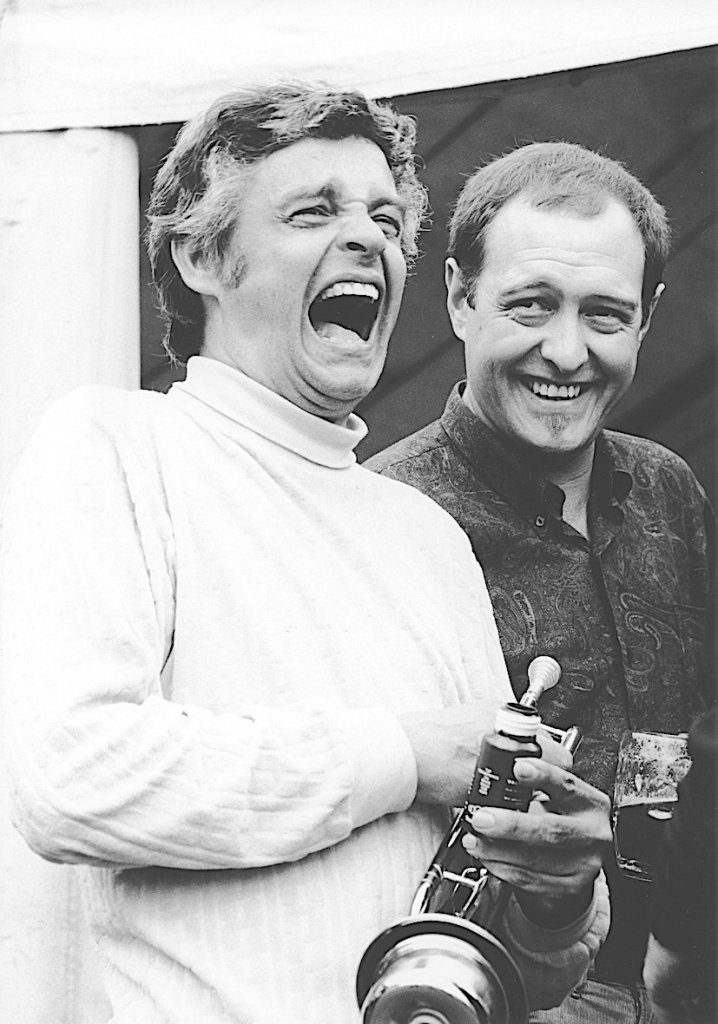
Maynard Ferguson in 1968, with his Ullvén mute and Popy valve oil!

Any particular challenges along the way?

Well, yes, to find suppliers for some of the products I need, like the special Industry felt, Cork, Labels and cardboard can’s for the the mutes. The last time they ordered these things was 25 years ago and most of the suppliers are gone so it takes time to get new contacts. Also for example, getting license to use Dizzy Gillespie’s name – Jon Faddis helped me with that!

What are your plans for the future?

Times are strange in the Era of the Corona Virus!! No gigs last year, but I stay alive with my horns by practising daily as well as possible. I’m of course using the time to get my Ullvén mutes for brass instruments on the market.

Then musically I do have things coming up later this year, but… we don’t know for sure yet.

I have done some recordings that will be out there soon I hope. Two records with the great “Latvian Radio BB”. One released 2 years ago, we should have played concerts with that in 2020, but it was cancelled. Then another with more “standard Jazz” that will also be out soon.

I also made a recording for the Scottish label “Sleepy Night Records” with my own band in Croatia/Slovenia. This is also postponed for better times, hopefully this year!! New arrangements of old “Rock and film” hits, in the style of Maynard Ferguson “Alive and Well in London”.

I have got 25 old arrangements by Slide Hampton, Don Sebesky, Mike Abene, Willie Maiden, and others. Music arranged for Maynard Fergusons Orchestra 1956-65, but never recorded. I will do that with my band here in Sweden as soon as we are allowed to.

Then, once again, I have a third project with the same great “Latvian Big Band” next year. A new album, mostly my own music, arranged by the great Michael Abene, it will be a wonderful adventure.

I will also get a new quartet together, asap, something that I have wanted to do for a long time.


SIGN UP HERE FOR NEW BLOG ARTICLES EMAILED DIRECT TO YOUR INBOX:
[jetpack_subscription_form show_subscribers_total=”false” button_on_newline=”false” custom_font_size=”16px” custom_border_radius=”0″ custom_border_weight=”1″ custom_padding=”15″ custom_spacing=”10″ submit_button_classes=”” email_field_classes=”” show_only_email_and_button=”true”]

Design Innovations : Ultimate Brass

Established 2013 in Philadelphia by Chinese-born bass trombonist Sun He, Ultimate Brass started as a brass instrument repair studio and later became an innovative company that designs and makes brass instrument mouthpieces, trombones, trumpets, and brass instrument accessories. Ultimate Brass Mouthpieces and accessories are being used daily by members of the Chicago Symphony, Philadelphia Orchestra, New York Philharmonic, Aachen Chamber Orchestra, Singapore Symphony, Melbourne Symphony, Beijing Symphony, Shanghai Symphony, Shenzhen Symphony and many other brass musicians across the world. Sun has been kind enough to share some of his thoughts on getting all of this off the ground.

Can you talk a little about the background to getting started on this mouthpiece craftsmanship journey?

Before diving into the music world, I was a engineering student at University of Science and Technology in Beijing, in 2013. When I first move to Philadelphia, I was able to combine my technical skills and musicianship and start my own brass repair shop. At that moment I thought I would never get into the mouthpiece business, it is such a different world than building and repairing musical instruments. Around that time, I was searching for a good mouthpiece for myself, but I still had not thought to start my own project.

In 2014, a friend want me to modify a mouthpiece rim for him, eventually I did, and it was pretty successful. Around the same time, a “modified” mouthpiece can sell for a lot money in China. For example, some teachers and shops ordered stock Bach 1 1/2, drilled to #25 hole and sell to students for over $200USD. I was shocked, and I started to think about how to create a line of high quality product, and sell for a reasonable price.  By the way, I still don’t understand why people are so obsessed with “modification”!.

It was Jeff Lang who finally encouraged me to get into this business, we would run into each other in the school lobby. Somehow we started to have a chat about mouthpieces, and he described how he felt about his current set up, and where he thought things could be improve. Then I started to experiment and finally created the Jeff Lang signature model for him.

Who or what were your inspirations?

Every mouthpiece maker I have ever encountered, every teacher I have studied with, and everyone I have collaborated with inspired me in some level, there are always things that I could learn from other people.

Did you set out with ideas of how manufacture could be improved?

Yes, I have a lot ideas, and I am always experimenting with new things – although sometimes the experiment can be expensive!

How do you bring other players into the design process?

I start with sit down with them for a coffee, a nice chat, learn about their personality; listen to their recordings, and recordings of their orchestra, in order to learn the sound concept. Then usually we start with a model from current product line, and tweak it to fit to the players needs. 

Are there any unexpected challenges that you have met along the way?

This is a tough question. I am Chinese, and when we first started to promote Ultimate Brass products, some customers automatically connected our products with cheap price and lower quality… which is not true. And I remember when the first time at an exhibition, a customer came to our booth, asked : “What are these copied from?”, I said: “Excuse me? what do you mean?”. He said: ”You are Chinese, right? Everything from Chinese makers is a copy of something.” Then he pointed at another booth of a Chinese “Trombone Maker” and said: ”Look at their beautiful knock off.”

We have closely collaborated with many great brass musicians over the past few years, some of the models took over 2 years of R&D, just to get the product perfect. I wish I could just snap my finger and copy something, and make our artist happy. I could save a lot of time and money in the process!

Running a successful manufacture business takes a lot of time and commitment. How do you balance this with having a life outside of the workshop?

I work on other projects to rest from one project, always keep everything fresh. The most important thing is that you need to know when and where to stop.

Plans and ambitions for the future?

I have a lot other interests, mainly because I want to try out as interesting stuff as possible in a limited life time!

What are you looking forward to post-COVID?

I love to eat, the first thing I do when I arrive in a new place, is to open the local gourmet app, of course I’ll do my homework before arrival.


SIGN UP HERE FOR NEW BLOG ARTICLES EMAILED DIRECT TO YOUR INBOX:

[jetpack_subscription_form show_subscribers_total=”false” button_on_newline=”false” custom_font_size=”16px” custom_border_radius=”0″ custom_border_weight=”1″ custom_padding=”15″ custom_spacing=”10″ submit_button_classes=”” email_field_classes=”” show_only_email_and_button=”true”]

Trumpet Artist Profile : Immanuel Richter

Principal Trumpet with Sinfonieorchester Basel since 2009 having previously held the same post at La Scala, Immanuel Richter has built a reputation for both versatility and virtuosity. He talks to me here about all things trumpet!

What got you started playing the trumpet?

In my little village in the east of Switzerland, there was a trumpet teacher who formed a trumpet ensemble, consisting of at least 20 trumpet players of all levels. They performed sometimes in the church or at some local concerts – I wanted to be part of it. So my Mum contacted the trumpet teacher and I got my first trumpet lessons with him and was a member of his trumpet ensemble quite soon. I started at the age of 7 and took lessons with him for ten years in a row. My early musical influences were for sure the LP’s of my father. He was no musician, nor my mother, but my father was very fond of classical music. So he had some old recordings of Beethoven Violin concerto (with Wolfgang Schneiderhahn), all the Tschaikowsky Symphonies with Karajan and Berlin Phil and some more, not very much, but very precious. And he always said, that if I want to listen to them, I have to sit on the sofa, keep quite and listen carefully. It was like a holy act to put the record on, and than we both listened to the whole piece in silence. It was a very special moment I remember very well. On the trumpet I was very much attracted by Maurice André, I had almost all his recordings (still have them!) and was a real fan of him. When he played in Zurich or somewhere else in Switzerland, I was in the public.

What styles and genres of music were you into as a child?

At the beginning I listened to almost nothing else other than classical music. From Baroque to Tomasi and Jolivet, but I was not attracted very much by the music that most of my classmates were listening to. Growing up I enjoyed – beside the classical music – also very much some pop-legends like Elton John, Joe Cocker, Rod Steward, Barbara Streisand etc. and I still do… My interest for Jazz music has never been very big, but in the last 15 years, due to my dear friend and colleague in the Basel Symphony Orchestra Marc Ullrich (a outstanding trumpet player both in jazz and classical music), my interest in Jazz increased step by step.

And now? Who are your biggest influences?

Today I take my inspiration mostly not from brass players, but from my “spiritual mentors“ like Andras Schiff, Nikolaus Harnoncourt, Claudio Abbado etc. I listen to a lot of youtube-masterclasses (almost every day…), also violin-masterclasses for example with Augustin Hadelich, and I get so many good ideas out of it, ideas, that are very useful to my trumpet playing and my music-making in general. I often think like a violin-player when I play the trumpet. On the violin, all the technical aspects are so visible, which helps to adapt it on the trumpet, whereas most of the technical aspects of trumpet playing are internal (breathing, tongue, throat etc.). And Andras Schiff is just a big source of inspiration, and his huge and profound knowledge about so many different styles (Bach, Schubert, Schumann, Bartok etc.) is just incredible and so fascinating. I adore him.

When did you realise that you wanted to play the trumpet for a career?

I think it was during grammar school, so maybe between 13 and 17. I always played the piano and the trumpet, but in this period I discovered that my potential for the trumpet was bigger and that playing in a big orchestra would be my dream-job.

Do you have set, regular practice routines that work for you? Do these play a big part when you are teaching too?

This is a large topic. But shortly: my warm-ups are almost the same, every day. And always on the same trumpet. Then, the days can be very different, depending on what the schedule is. In general I try to work always with a good plan, so that I know precisely, what I’m going to to and also why. I divide my working day in 4 parts: first part is always like a concert. Playing through some pieces without interrupting, in order to work on the “concert mode“. Second part are the corrections of the first part. 3rd part is devoted to the new pieces I have/want to learn and on the 4th part, I focus on basic technique but I do these “technical drills“ like scales, arpeggios etc. always in relation to the pieces I have to play. So I invent my own exercises for the pieces. I do not play proper Clarke or proper Arban any more, but I take their ideas and adapt them to the music I have to play. And as I got some good results with this working plan for myself I share these ideas also with my students.

VISIT THE ‘EDUCATIONAL RESOURCES’ PAGE FOR FREE WORKSHEETS AND LINKS TO PUBLICATIONS

What advice can you offer to aspiring young players, just hopefully starting out on a professional career?

Keep working, be honest to others and especially to yourself and always try to enjoy what you are doing. 

Immanuel plays on the model 3 ML, 3, 105 on both Bb and C trumpet. Click on the image above to find out more.

Can you talk a little about the your relationship with Frate Precision and the process of selecting your mouthpieces?

I met Dario first time in Italy during a masterclass I gave at the Milan conservatory. It was actually my dear friend Massimo Longhi (principal trumpet in Verona) who introduced me to him. I tried some of his mouthpieces in Milan and the first feeling was so good that instantly I took one mouthpiece of his big selection at home. Later on I invited Dario to Lucerne to make a little seminar about mouthpieces with my trumpet class at the Musikhochschule in Luzern. And as usually I tried other types and finally I have now quite a number of Frate mouthpieces where I really feel comfortable with. I think the mouthpiece is the most personal part of the material (much more important than the trumpet itself). So what is good for me can be very bad for an other player and vice versa. I choose a mouthpiece according to different aspects, but the most important for me are: response, sound, intonation, range. I play different types of mouthpieces, not only Frate, but for example my last CD with music for piccolo trumpet (“at the peak“, you find it on Spotify) I played all the pieces with the same Frate mouthpiece. I never was so comfortable on Piccolo before I discovered this mouthpiece. Thanks Dario!!!

How has the COVID lockdown affected you and your work? Have there been any positives that you can take at all from this?

Well, I must confess that I really enjoyed this time. For sure it’s hard, that there were no concerts at all, no public etc. But I’m already 46 years old, I played a lot of concerts, so for me this time was much more like a gift. It was a sabbatical, where I could enjoy my big familiy. It was so great to stay with my wife and the 4 children, to have time to spend together, to do things we could not do before etc. The same is true for my trumpet playing. I had so much time that I could focus much more on the music, on the trumpet. And at the end, I decided to record some of the music I was practicing during lockdown for youtube. In June, I recorded 14 different pieces, in 11 hours on 3 days, all played from memory. It was like to run a marathon on the trumpet and I wanted to find out if I can do it. Now I’m quite happy with the result and you can find it on YouTube on my personal channel, if you are interested.

What are your plans and ambitions for the future?

I’m always driven to become a better trumpet player, a better musician, a better teacher. I hope that this internal energy will never end. The more I learn the more I have the feeling there’s even more to learn. And I hope this experience will last for ever because it keeps me alive, young and fresh, despite of all the inconveniences live may bring to me in the future.

You may also be interested to read this article about Frate Precision orchestral mouthpieces


SIGN UP HERE FOR NEW BLOG ARTICLES EMAILED DIRECT TO YOUR INBOX:

Design Innovations : Ultra Pure Oils

Ken Saul is the founder of Ultra-Pure Oils LLC, and talks to us here about getting started with creating his first valve oil product and how that has developed in to the extensive range that we see today.

Can you give a little of your background and your relationship with the trumpet.

I started the trumpet when I was 10 years old as part of our public school band program. Trombone was actually my first choice, but my arm was short and my older brother already played the trombone, so trumpet became my second choice. My main trumpet teacher in high school and college was Joe Alessi, Sr., the father of the famous trombone player of the New York Philharmonic. We were so fortunate to have Mr. Alessi in our town. He was formerly with the Metropolitan Opera Orchestra and a student of William Vacchiano, Harry Glantz, and Max Schlossberg.  So Mr. Alessi’s students all got great training on trumpet fundamentals (lots of Arban, Schlossberg, Clarke, etc.). After receiving my college degree in music performance, I went on to study electrical engineering, which had always been my hobby. Even though I had a 30 year career in high tech as an electrical engineer, I never stopped playing the trumpet, and have been principal trumpet in our local university symphony for over 20 years. You can hear me on my YouTube channel .

What led you to start Ultra Pure Oils?

When my son was about 3 years old, he was digging around my trumpet case and I remembered that the bottle of valve oil was hazardous and to be kept away from children. I started looking around for a good valve oil that was not so smelly or hazardous, and was not able to find anything at that time (1990).  I was familiar with synthetic oils from my day job, and began to blend oils to produce a good valve oil for trumpet. At that time, it was just a hobby, but I found it to be interesting and rewarding.

What were the first products that you launched and why?

The first product was just a good valve oil.  At that time, we really only had kerosene-based valve oils, and these smelled bad and would evaporate quickly.  Some even left residues behind which would gum up the valves if not cleaned constantly. I intended Ultra-Pure Professional valve oil to be odorless, long-lasting, super smooth feeling, and to leave no residues behind.

What was the R&D process like for your products? Did you get other people/players involved?

I am trained in design of experiments, statistics, and material science, so I definitely approached product development from an engineer’s perspective. After I was pretty happy with the valve oil, I sent it around to many of my friends and got feedback from them to make any fine adjustments.  I began selling it through an ad in the ITG Journal. Remember, this was before the internet was invented! Mostly it sold to people I knew, and it grew slowly by word-of-mouth. In the year 2000, Dave Monette began using Ultra-Pure valve oil on his fine instruments and word spread more quickly about our product and we added a few retail dealers.  We then added regular and light tuning slide greases.

Have there been any unexpected challenges along the way?

Keeping oil in the bottle and not leaking in shipment is a definite challenge that every valve oil company has faced. It is difficult to tighten the caps properly by hand, and we gradually added power equipment and automation to properly seal and tighten caps.  We have also had to meet all the regulatory challenges involving types of bottles and caps, labeling, and warnings that are required of all consumer products that are light viscosity oils, even if they are food-safe and generally harmless.  The most recent challenge was during this COVID pandemic, most of the bottle makers changed their factories over to making only bottles for hand sanitizers, hand soap, and other essential health needs.  The bottles we needed took many months to procure instead of the usual few weeks. Fortunately, we did not run out of bottles, but we did have to ship oils in some unusual bottles as a stop-gap measure.

How do you balance running UP with having a life outside of work?!

This is a great question! Ultra-Pure Oils began growing organically, but gradually began consuming all my nights and weekends. Right at the point that it was clear that Ultra-Pure Oils was bringing in enough income on its own, I was offered an early retirement incentive from my employer and jumped at the opportunity. That was nine years ago, and our business has blossomed since my “retirement”. We finally had time to find excellent distributors all around the globe and started working with many instrument makers to provide their private label lubricants. Working for myself in our home workshop is incredibly rewarding and leaves me time to get out for a good walk everyday, practise trumpet, and enjoy gardening.

Any plans or new developments for the future?

We now offer a full line of lubricants for every instrument, including valve oils, rotary oils, trombone slide lube, tuning slide oils and greases, and excellent care kits for brassesand woodwinds.  I look forward to travelling to more to trade shows and festivals when we are able to do so again, and to meet many of our customers and dealers.  

Please visit the Ultra-Pure Oils website for further information.

You may also be interested to read this article written by Ken on how to clean the trumpet.


SIGN UP HERE FOR NEW BLOG ARTICLES EMAILED DIRECT TO YOUR INBOX:

[jetpack_subscription_form show_subscribers_total=”false” button_on_newline=”false” custom_font_size=”16″ custom_border_radius=”0″ custom_border_weight=”1″ custom_padding=”15″ custom_spacing=”10″ submit_button_classes=”” email_field_classes=”” show_only_email_and_button=”true”]

Trumpet Artist Profile : Evan Taylor

2020 was a tough year across the globe, but despite this, Evan Taylor continued his upward trajectory as a winner of ‘Jazz in Europe 2020’ and a finalist in the ITG’s Jazz Improvisation Competition. So what is next for this talented young man?!

What first drew you to the trumpet?

When I was about 10 years old my dream was to be a drummer. In fact, I had saved up and bought a Pearl drumset that I kept in my room and used to play it every day. My mother made me join the school band in 6th grade, where I assumed I would be a percussion player. However, the program I was joining required that you spend one year on either, Flute, Clarinet, Trombone or Trumpet. My uncle had an old Bach trumpet lying around, which would eliminate any rental costs for my parents, so we decided that was going to be my avenue for the first year. Not long after I developed a natural affinity for the horn and it became my pride and joy! 

Can you talk a little about your early influences and inspirations?

My early influence for music was Church! My grandfather was a pastor, and my father and mother had both dabbled in music. I grew up singing in church, playing guitar in church, etc. My influences on the trumpet were Bob Parker and John Taranko. Bob was a choir director at Ludington High School, who had previously studied classical trumpet at Michigan State University. Both were my private instructors in high school and middle school and helped develop my early playing. I think at the time I was listening to mostly Lee Morgan & Blue Mitchell records.

What styles and genres of music were you into as a child?

As a child I loved listening to my mom’s CD’s. Mostly contemporary christian and gospel music, I recall a lot of Michael W. Smith albums. I would pop them into the DVD player and just sit on the carpet listening to them in the living room. I was attracted to a lot of John Mayer’s early albums as well, my mom was a big JM fan. She had all his early albums on disc and would keep them in the car!

And now? Who are your biggest influences?

My influences have a pretty widespread variety now, on purpose, because I’m trying to diversify as much as possible. Kris Johnson and Etienne Charles were two musical mentors that I studied with over the course of the last six years who have had a big impact on the way I treat my journey. As far as the trumpet goes, the last few years I have been really listening to and digging into the style of Marquis Hill and Sean Jones. A lot of my writing techniques are in an attempt to emulate them or pull sounds from the same palette. However, I’ve found myself working much with analog sound production in the last two years. I have a home studio where I record and I’m constantly checking out different styles of beatmaking, house music production, and hip hop artists. This has drastically changed the way I think about ensemble playing and how trumpet / horns fit into recorded or performed music.

When did you realise that you wanted to play the trumpet for a career?

Sometime around the end of highschool I decided if I was going to do it, I needed mentorship. I was really inspired by my time studying at Michigan State University and the music faculty there really shaped my playing abilities. I don’t think I ever realized it, I think I was sort of just pulled in that direction because of things that had occurred in my life. Music had always been my way of connecting to the world, and trumpet became my voice for that. 

You have had some fantastic competition success so far. Can you talk a little about preparing for big competitions like the 2020 ITG contest?

Thank you so much! ITG was a really cool experience that pushed me extremely hard. They had a heavy hitting staff list applied to judge the competition. I really had my head down during that time and knew it was a big deal to even have the opportunity to be a finalist. I focused hard on my fundamentals, I developed a pretty distinct practice routine in the months leading up to that competition. We recorded the tapes for it on campus at the University of Utah. I really learned a lot about improvisation while I was getting ready for that, I spent a lot of late nights in my home studio just listening to Greg Gisbert and Clark Terry albums. 

Do you have set, regular practice routines that work for you? Do these play a big part when you are teaching too?

Yes, one-hundred percent. I still do Arbans 47 almost every day. It’s like breathing for me. I don’t even really think about it anymore, and I can play it almost any way you can think of, and definitely in all 12 keys. I put all of my students on this exercise and make them learn it. It’s an interval study and if you can get it in all 12 keys major, minor, harmonic minor, altered, it can really really change how you think about music. I also do a longtone flush every day just to keep everything vibrating smoothly. This helps me with range, tone development, and just staying fluid. I practice more fundamentals than I practice anything else at this point, mostly because I don’t always have time to do the things I’d like to work on. I’m too busy recording or out playing gigs, etc. Gotta make sure the lips are working at all times and I’m ready to play whatever is put in front of me.

Can you talk a little about the your relationship with Victory and the process of selecting your horn?

The owner of Victory, Melvin Quinones, is one of the sweetest people you will ever meet. He is one of the most humble, genuine cats I have ever come across in the music industry. I connected him via my friend Candido Abeyta who has been a Growling Sax artist for Melvin for the last several years. My first time meeting Melvin in person we stayed in a hotel in Anaheim my first year as an artist for Victory and worked together at the NAMM conference testing horns and comparing Victory trumpets with a few other brands. Melvin has always taken great care of me, and when I found out they were developing a horn that had a Christian stamp on it, I knew I had to try it. The “Trumpet of Jesus” professional model is by far one of the best horns, if not the best horn I have ever tried. It fits me perfectly. I believe in God, and destiny. I believe that this company has created something truly, truly, heaven blessed by designing this horn model. It was a no-brainer to decide to be an artist with this company.

How has the COVID lockdown affected you and your work? Have there been any positives that you can take at all from this?

COVID was one of the most dramatic, hard times I think any of us have ever been through. I lost a lot of friends because of this awful, dreaded virus. I’m confident that this time has revealed a lot about our culture and the things we truly cling to. I’ve changed a lot in the last two years and realized what I value. Life is short. As far as priorities go, I just want to put God first, then family, close friends, and music last on the list. I hope that my trumpet playing and musicianship can inspire people, and honor the people I’ve lost. 

What are your plans and ambitions for the future?

I just moved to Miami, FL this week. I made the 35 hour drive from Salt Lake City, UT to here throughout the course of the week by myself. I’m hoping by moving here I will have made a grand step in the right direction. I will be continuing to do studio recording work for several companies, meanwhile working on pursuing my artistry and broadening my network. I’m humbled to be affiliated with the projects I am currently on, many of them I can’t talk about at the moment, but my team has big things cooking for 2021! I’m very blessed to have plenty of work already lined up in Florida as a trumpet player, producer, and composer. I also teach private lessons via Zoom for a local music program in Detroit, Michigan. My ambitions revolve around building a healthy lifestyle that honors God and my family, and I hope that my music can be a vessel that contributes to that process.
Much love!

You can find out more about Evan Taylor and his music by visiting his website.

You may also be interested to read this interview with Victory Music Instruments’ founder, Melvin Quinones.


SIGN UP HERE FOR NEW BLOG ARTICLES EMAILED DIRECT TO YOUR INBOX:

[jetpack_subscription_form show_subscribers_total=”false” button_on_newline=”false” custom_font_size=”16″ custom_border_radius=”0″ custom_border_weight=”1″ custom_padding=”15″ custom_spacing=”10″ submit_button_classes=”” email_field_classes=”” show_only_email_and_button=”true”]

Trumpet Artist Profile : Jason Lewis

Jason Lewis has been Associate Principal Trumpet with the Royal Scottish National Orchestra since 2019, having previously been principal Trumpet with Scottish Opera. I am grateful for his time to speak to us here, about all things ‘trumpet’ including his new Adams A2 that he has been playing:

What first drew you to the trumpet?

My first memory of trumpet playing was at my primary school in Aberystwyth (Wales), I must have been about eight years old and I listened to the school band one lunch time and that was me hooked. I think I went home asking for trumpet lessons and that’s how it all started…..

Can you talk a little about your early influences and inspirations?

My memory isn’t the best… but I certainly remember my first trumpet teacher very well, Mr Alan Philips who was the local peripatetic brass teacher. He was a fabulous teacher and a great inspiration to so many brass players from that part of Wales. At the age of about fourteen I also started having lessons in South Wales with Philippe Schartz who is the Principal Trumpet at the BBC National Orchestra of Wales. Philippe was also a great influence on me, and I remember that after lessons I would immediately want to go and practise… My greatest takeaway from lessons with Philippe was to always listen. I must have listened to the old Chicago recording of the Mahler symphonies with Solti many many times over. 

What styles and genres of music were you into as a child?

As a child I listened to so many different genres of music. I’m sure I went through a phase of most genres, from Jazz, Soul, RnB, HipHop to Classical, but I must admit trumpet playing was at the forefront of it all, mostly Maurice Andre, Wynton Marsalis and Reinhold Friedrich. 

And now? Who are your biggest influences?

Now, I still listen to a lot of classical music, Mahler, Strauss and Bruckner. I was lucky enough to do a fair amount of opera work between freelancing and I held the Principal Trumpet seat with Scottish Opera for a while – I really love listening to opera, I think it’s fantastic music and I have many great memories. My favourite would have to be Ariadne Auf Naxos. 

When did you realise that you wanted to play the trumpet for a career?

To be honest, I have always loved playing the trumpet and from a young age I loved practising too, and so I guess I always worked hard at it, although I don’t think it ever felt like work…and it still doesn’t! It wasn’t actually until I started my undergraduate course at the Royal Welsh College of Music and Drama in Cardiff that I really focused on orchestral playing and working on auditions. I was lucky to continue studying with Philippe Schartz at the RWCMD so this was straight into hard work as we had already developed a good teacher/student relationship. I started to get some freelance work with the local orchestras in Cardiff (BBC NOW and Welsh National Opera) and this is when I realised maybe making a living from playing the trumpet might actually be possible….

Do you have set, regular practice routines that work for you? Do these play a big part when you are teaching too?

I really like having a set routine and I always have. The exercises change every few weeks as I like to try and keep it fresh, but the outline of the routine stays the same. I basically do some sound work to start with, anything from Chicovitz, Stamp or Claude Rippas (these are just long notes to concentrate on my sound), I then do some lip flexibility, this can be Bai Lin, Charles Colin or Arban. Following that I’ll do some tonguing exercises from the Arban, Clarke or any study from Brant etc.. I think it’s important for me to touch on everything a little each day. I know so many amazing trumpet players who don’t have a routine at all and I admire this, but that doesn’t work for me personally. I find my routine rather therapeutic in a strange way. I always advise students to have some sort of routine to cover all these fundamentals of brass playing daily.

What advice can you offer to aspiring young players, just hopefully starting out on a professional career?

I know its a difficult time at the moment with such little work about for musicians but I’m hopeful that things will get better soon, so my advice is to not lose hope and to continue to work hard, use the time you’ve got now to get the practice done and get to know the orchestral rep you’ll be needing for auditions. Apply for every opportunity that presents itself, every little bit of orchestral playing is experience in your bank and that all becomes very useful when you start freelancing or trialing in different places. If you’re playing a excerpt in a audition that you’ve already played in its entirety somewhere, for me the excerpt makes much more sense and becomes less stressful to play. 

Can you talk a little about the your relationship with Adams and Fultone Brass, and the process of selecting your horn?

Neil Fulton has been absolutely great, I used the time last summer to ask Neil to send up a few Adams Bb trumpets as I had some time to really decide what I wanted…. Obviously I was awkward and wanted something in between what Neil had sent up, but Adams where straight on it and offered to make a trumpet for me. So I’m lucky enough to be playing on a Adams A2 0.50, with a Silver plated body and a raw brass bell. I love it!!I have been in touch with Neil about a C trumpet and am looking forward to trying one out in the coming months…. 

The Adams A2 Bb Trumpet

How has the COVID lockdown affected you and your work? Have there been any positives that you can take at all from this?

As for everybody in the world it’s been a strange, strange year. Unfortunately the orchestra wasn’t able to do any concerts from the end of March last year until September, but luckily for me the RSNO have a media team for recording concerts and so once restrictions were lifted we were able to put a season of online concerts together, going out each Friday evening. This new recording/filming schedule consisted of about half of the workload we are use to, as we normally do a couple of concerts each week across Scotland. I’m very exited to get back to a full schedule as soon as it is safe to do so. Throughout lockdown I’ve used the time to concentrate on my personal practice, I’ve done some form of fitness each day and tried to get out on my motorcycle as much as I am allowed to. I’m sure everyone feels the same but some days feel better than others, but I’m trying to keep positive for better days ahead. 

What are your plans and ambitions for the future?

Plans for the future… I’d like to continue to try and improve my trumpet playing, I think thats always going to be on my list, as is working on being a better orchestral musician. As far as hobbies, I’d like to tour as much of Europe and the UK on my motorcycle. I’ve just applied to become a volunteer biker with Scotservs which is a transport charity for the NHS, so I’m hoping to use some of my days off to help transport essential equipment/blood for the NHS whilst getting to ride my bike.


SIGN UP HERE FOR NEW BLOG ARTICLES EMAILED DIRECT TO YOUR INBOX:

[jetpack_subscription_form show_subscribers_total=”false” button_on_newline=”false” custom_font_size=”16″ custom_border_radius=”0″ custom_border_weight=”1″ custom_padding=”15″ custom_spacing=”10″ submit_button_classes=”” email_field_classes=”” show_only_email_and_button=”true”]

Trumpet Headquarters : Estela Aragon

Education is a lifelong journey, and a journey that often starts in schools around the world that suffer from a lack of funding in music. It is more important than ever to find good quality and reliable resources to help children on their musical journey, as well as adults and advanced learners too. Trumpet Headquarters is a wonderful resource set up by Estela Aragon who was kind enough to talk to me here.

Can you give a little background to your relationship with the trumpet and your professional background?

Do I have a story for you! I began playing trumpet in 6th grade entirely by accident. Back then we had “the wheel” which was a system in which first semester 6th grade students would try an elective for two weeks at a time and then decide which one they wanted to continue for their second semester and on. I tried band for a couple of weeks and during that time we all got trumpets, because it was just to try music, but I thought that meant I had been assigned the trumpet.

See, I didn’t speak English yet as I had recently moved to the United States from my home country Peru, and I was under the impression that I had to play the trumpet! Now, the tryout went great and I was the only student who was able to make a sound on the first try. So, I took that and rolled with it. It was the first time I felt comfortable anywhere, like I belonged, especially in a country where I felt lost due to a language barrier.

That small moment eventually grew into an obsession and passion, which of course became a life-long learning experience. Fast-forward 10ish years and like most musicians in school, I performed as many gigs as possible, and started teaching private lessons in my first year of undergrad. I had a lot of very fulfilling playing experiences from orchestras to weddings to even country music gigs, locally and abroad. It wasn’t until my master’s degree that I decided to focus on private and non-institutional trumpet education. That led me to found my private studio MusicFit Academy, through which I continue to teach full-time today and of course, TrumpetHeadquarters.com, or THQ, was founded shortly after.

What prompted you to setup Trumpet Headquarters?

About 5 years ago I was a in a place of innovation having just wrapped up my master’s degree. I found myself teaching a lot, figuring out life outside of school, and as I grew my private studio I began to run out of times to teach. More and more often I was turning down perfectly good candidates due to time constraints. That’s when I had the “aha” moment to setup some sort of online trumpet lessons course where my prospective students could learn the ropes while they waited for a slot to open.

I also wanted to provide professional and reliable information to counter the massive amount of erroneous guidance floating on the internet. Thus, as the idea was refined, it eventually morphed into not only the trumpet course, but also into an open educational resource for trumpet rated topics. THQ provides a great amount of information for anyone willing to learn.

It’s worth noting that all the resources outside of the trumpet course are free of charge. Want to know about trumpet cases? Mouthpieces? Books for musicians? Best apps for practicing? Notable trumpet players? I have provided all of that information and more. My goal was and will continue to be to educate.

Who is it aimed at?

Simply put; anyone with a trumpet and a hunger to learn how to play it! I approach the course like I approach my private lessons…no fuss, no complications, just simple and easy to understand explanations. I made sure to present the content in a very step-by-step manner.

Absolute beginners will see helpful lessons in posture, breathing, trumpet anatomy and other basics. There is also an introduction to reading sheet music and all the basic techniques and tips for novices, such as how to clearly articulate, slur and change notes evenly. The course goes on to cover intermediate topics such as dexterity, multiple tonguing, range, pitch bending…etc, and of course the advanced lessons delve into even deeper concepts like musicality, lip trills and more.

I have students ranging from ages 9 to 70+, so I think it’s safe to say that the course is well-suited for all ages and skill levels.

What are the key elements that readers should know about it, that sets it apart from other platforms?

As I mentioned, my approach is very simplistic and that alone is an important factor in why the course works. Twisted and over-complicated teaching result in a frustrating learning experience. I also provide a student- only forum where I answer daily questions from them and tend to their needs. They can post pictures and videos of their progress and I reply promptly with my feedback. They really love being able to get that one-on- one attention since naturally, that is a huge setback in self-paced learning.

I have also written over 100 pages of original sheet music with drills and exercises for the course, and I provide other helpful resources such as a fingering chart with all the alternate fingerings; something I haven’t found anywhere else online. Each video features a bullet point list of what I call “Pro Tips”, video chapters, picture-in-picture capabilities and speed change settings. At the bottom of each lesson page, I also provide 3 suggestions for related topics throughout the rest of the website which could be blog entries, a resource page or even a link to another lesson that covers a similar concept.

The bells and whistles are everywhere to ensure a smooth experience for the students as well as an environment to focus on learning. No distractions!

Are there any elements of music education generally that you feel are genuinely lacking at the moment? What can we do to help with this?

Right now, trumpet students all over the world are doing their band classes on Zoom, which of course causes a myriad of drawbacks on its own, but it also highlights the problems in music education that were already there before Covid.

In my professional experience, it is simply impossible for a single band teacher to shape and look after each student. When it comes to brass, and naturally other instruments, we know how important the early few months are. During that time the player will inevitably form habits for the rest of their lives, and if those are bad habits, now you’ve got a player who is struggling, working much harder than they need to and likely will continue to have that experience until they finish high school. Due to the lack of personal attention, students end up with problems such as: incorrectly placed mouthpieces, air control issues, severe tension problems, a lack of tone concept, efficiency and endurance problems, and many more. But what can we really do about it?

It is simply not realistic to expect band teachers to know the in and outs of every instrument, or to know how to precisely diagnose problems and even if they did, there is not enough time for them to guide 80+ students individually. For this reason I advocate bringing specialized artists into the classroom and now that we are so accustomed to Zoom, there is really no barrier for who you can bring in your student’s radar. Bringing in artists helps more than just the students; it also lightens the load for the band director and contributes to the flow of jobs for musicians.

I do understand that there is a cost involved and not all band programs have the means, so that is a hoop that some have to jump through and find creative solutions for. At THQ I also offer a hefty discount for band programs who want to get all of their trumpet players on the same page by signing up for the course as a section. This could also be a more cost- effective solution for when hiring an artist to teach weekly masterclasses is not possible.

While this is a big gap in music education, and solutions are difficult to afford, we can all work together to come up with affordable options. So if you’re an artist, I encourage you to come up with a group class blueprint, put an attainable price tag on it and pitch it to schools. It’s a great way to make an impact and an income.

What new developments are you currently working on?

I have so many plans for this year I don’t even know where to begin! I just finished adding 18 beginner duets in response to a poll from my students asking for play-along material. I now plan on adding duet content for the intermediate and advanced levels as well. We can learn so much from playing duets of course, so I’m excited to provide this layer of education to the course.

Naturally, more content is coming for all levels. As I come across topics in my private lessons and with colleagues I write them down to bring them into the course as tutorials on many different concepts from playing, to practicing to mental preparation. Prospective students can certainly look forward to a growing a library of trumpet lessons.

I do have something big in the works for this year…and I mean big. I can’t give away too many details, but I will say that it will provide a solution to the greatest setbacks self-taught trumpet players have; accountability and overwhelm of what to practice. This will be part of the course later this year and I’ll be back to talk about it when it’s almost out of the oven!

Thanks for your time Estela. Is there anything else that you would like to add?

I’d like to welcome trumpet players, from beginners to pros, to come visit TrumpetHeadquarters.com. The site provides a lot of useful content for teachers, curated lists of books, apps and so much more I can’t list here. It really is the headquarters of all things trumpet and I love to share it with everyone.

For those interested in learning, just sign-up for the course! If you have any questions feel free to email me directly at trumpetheadquarters@gmail.com, and if you just want to keep in touch or wait for the next big sale make sure you sign up for the free newsletter on the homepage.

Thanks for this fun interview John!


SIGN UP HERE FOR NEW BLOG ARTICLES EMAILED DIRECT TO YOUR INBOX:
[jetpack_subscription_form show_subscribers_total=”false” button_on_newline=”false” custom_font_size=”16″ custom_border_radius=”0″ custom_border_weight=”1″ custom_padding=”15″ custom_spacing=”10″ submit_button_classes=”” email_field_classes=”” show_only_email_and_button=”true”]

The Journey to Victory! : Melvin Quinones

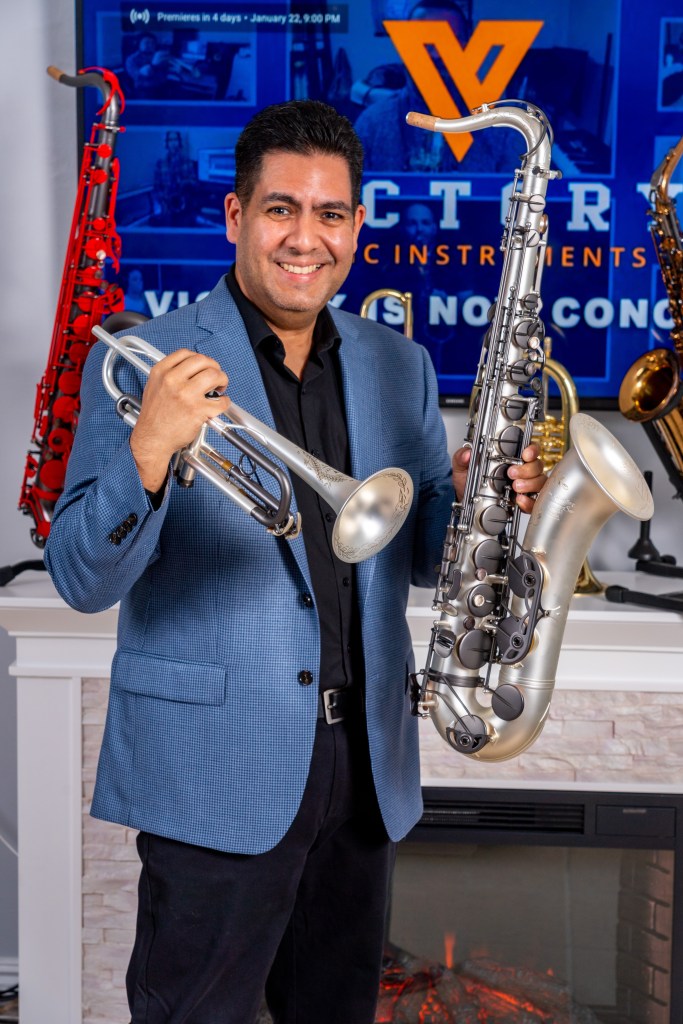
At the recent 2021 NAMM show I was fortunate to spend some (virtual) time with Melvin Quinones, founder of Victory Music Instruments based in Port Saint Lucie, Florida. He was kind enough to talk me through the Victory trumpet range and has also shared his fascinating story in this article:

I was born in Brooklyn NY but my parents moved to Puerto Rico when I was seven. At the age of twelve I started studying saxophone with the only intention to someday play in church. Three years after I started playing in local Christian music bands and quickly got recognition in Western Puerto Rico. At 18 I started working professionally with Wilkins, a popular pop artist in the 90’s and toured with him for 2 years. I also studied Music Education at the Interamerican University of Puerto Rico. 

In 1991 I joined the US Army as a quartermasters specialist, then transferred to an Army national guard band based in Puerto Rico where I played for 7 years. In the mid 90’s I was very attracted to computer recording, before there was even a Pro Tools interface. I started recording with Ensoniq Paris, and became very fluent in working with computers. This opened the doors for me to work with Microsoft where I then transitioned to a Full Time information technology career. During this time I also studied Quality Control engineering. 

After nearly 10 years in IT I explored opportunities again in the music field, working as a producer for Univision reality show. In 2009 I used my technical knowledge to create a musicians social network called mymusictalk. It quickly gained popularity among musicians and this network had members in over 100 countries. During this time I was able to connect with thousands of musicians, suppliers, distributors, at the center of all. Having my own brand of musical instrument was always a dream that I never thought would be possible, but all of the experiences of the past provided me with enough knowledge about the industry, logistics and design of musical instruments based on actual feedback from the members of my network. Many of the top musicians that were a part of mymusictalk quickly endorsed my instruments and within only 3 years we have supporters and dealers in over 20 countries. 

The first musical instrument created was called “The Growling Sax”. This instrument was designed with very high specifications but would easily cost about 30% lower than all of the top instruments it competed against. This first prototype was named the Origin Series, and it’s still our #1 selling saxophone. After designing 3 series of saxophones I started working on a trumpet prototype, with the guidance of Osvaldo Fleites, one of the most respected trumpeters in Latinamerica, known for his work with Gloria Estefan and Andrea Bocelli, just to name a few names. This prototype became the Revelation Series, a very appropriate name considering it’s a new brand that is quickly turning heads around. This is when the Victory brand was born. 

The name Victory is only appropriate considering the process that led me to create this company. I won’t be talking about my struggles or sacrifices, but everything that I have accomplished has been through hard work, faith and perseverance. This is not a complaint, but on the contrary, every struggle and hardship led me to learn and develop skills and forge the character required to create a successful business. 

During 2020 my company completed the development of student trumpet, flugelhorn, flute and clarinet. Also released a professional Revelation Series flugelhorn that sounds amazing and is getting really good reviews. Earlier this year we debuted with the Trumpet of Jesus, developed with Gerardo Rodriguez and it was an instant success. In the last 2 months, Victory trumpets have become the most wanted trumpet by musicians in Latinamerica, and we are gaining attention from Europe, Canada and USA. During our presentation at NAMM 2021, the Trumpet of Jesus won the Music Inc Magazine Editors Choice award for NAMM. 

For 2021 we will focus on establishing partnerships with dealers around the world and make sure that everyone knows about our brand. We are still working on the logistics strategy, supplying for the different markets and countries. We slowly plan to develop new lines of wind instruments for band and orchestra. 


SIGN UP HERE FOR NEW BLOG ARTICLES EMAILED DIRECT TO YOUR INBOX:
[jetpack_subscription_form show_subscribers_total=”false” button_on_newline=”false” custom_font_size=”16″ custom_border_radius=”0″ custom_border_weight=”1″ custom_padding=”15″ custom_spacing=”10″ submit_button_classes=”” email_field_classes=”” show_only_email_and_button=”true”]

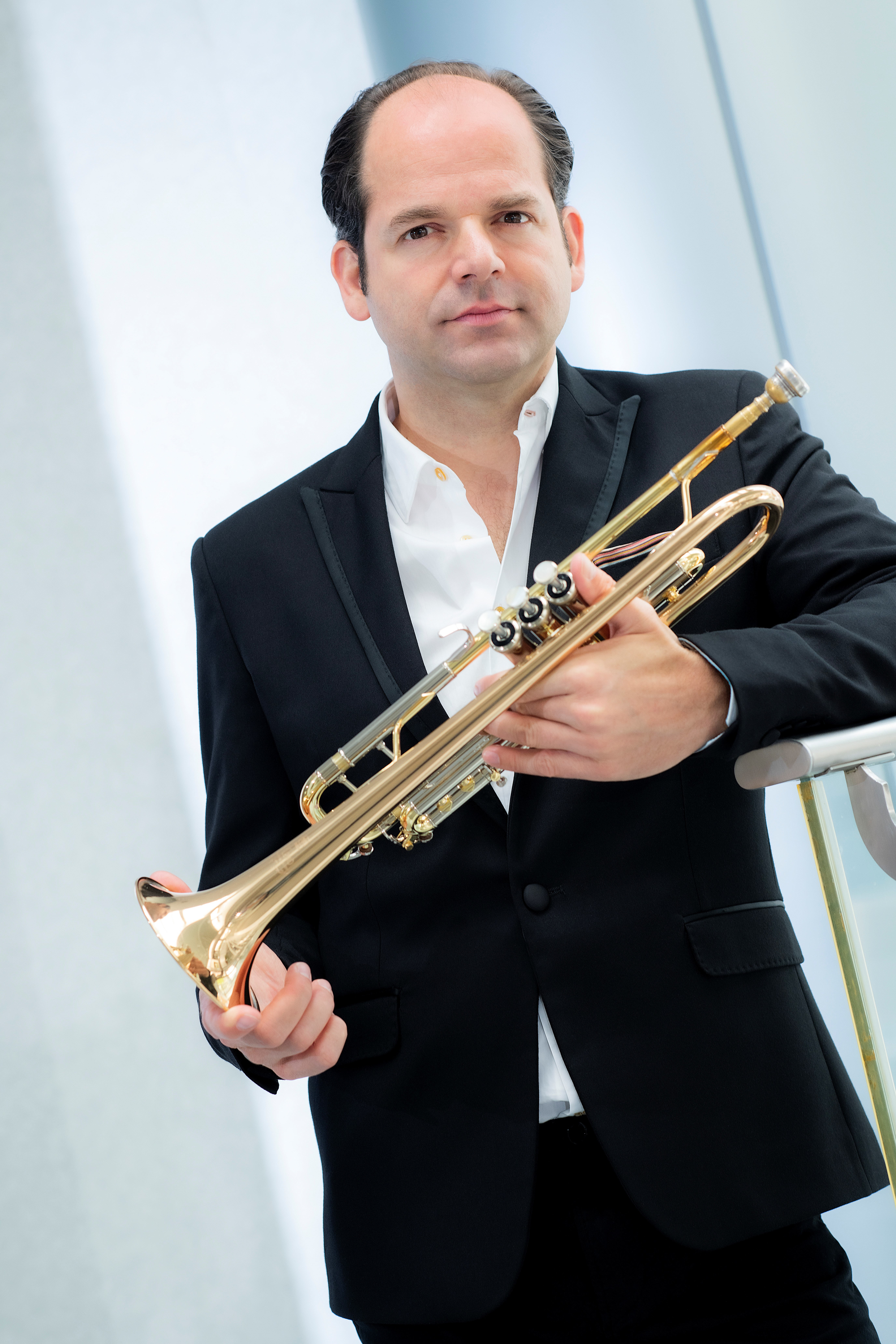
Trumpet Artist Profile : Jeroen Berwaerts

Belgian trumpet soloist Jeroen Berwaerts combines immense technical prowess with beautiful sensitivity across a huge range of styles. His CV is extraordinary, boasting solo appearances with orchestras across the globe, teaching commitments in Hannover and London, as well as a really interesting relationship with Yamaha.

What first drew you to the trumpet? Who or what were your early musical influences?

My father was the key. He played euphonium in the hometown band and brought a trumpet home. He did teach me the first notes. About half a year later I had my first real teacher at a music school, he was a Horn player , very much focused on a nice round and warm sound, that sound idea never left me. I also switched to the cornet at the beginning years because that trumpet was too heavy for me.

You had significant success as a young soloist – at what point did you know that you wanted a career as a trumpet player?

I cannot remember that I ever wanted to become anything else in my life. After hearing and seeing a concert of the Philip Jones brass ensemble in Kerkrade (Holland) I told my father on the way home , that’s what I wanna do. I must have been around 9 or 10 years old.

Your early competition successes must have helped to open some doors for you? How did this success influence the pattern of your current working life?

I realize now that these competitions at young age, as well as concerts or performance situations, are the best base to have for security on stage later on. Due to the fact that I have always performed or competed, the stage as well as the challenge to conquer pieces feel very much like home for me.

You have received critical acclaim for your interpretations of many different musical styles – do you find it difficult to ’switch gear’ between them?

With the right equipment and the correct mindset it’s not really a problem. I find ‘variety’ one of the most beautiful sides of being a trumpet player.We can compare it with being a Decathlon athlete. It’s very challenging to switch between styles, instruments, including many different colors and moods, but it’s never boring 🙂

Do you have any regular practise routines that you use?

Oh yes, I have my favorites like Charles Colin lip flexibilities and vincent cichowicz. But also Caruso, Arban….. some of them are always around and some come and go 🙂 I like the balance between a secure feeling (what we now) and new challenges (the unknown). But most important for me, when I practice I probably sing about 50% of the time and play 50%. I see the trumpet as my own voice-extension.

Do these routines change a lot depending on what repertoire you are working on?

When I am working on a big program or physically demanding works (so practically all the time :-)), I try to never neglect the “sports” aspect of the job.The actual work I am doing is a combination between high-performance sports and musicianship. And yes, there are great routines to support different issues that come up depending on the works we play.

To what extent does your equipment need to change depending on what you are working on?

I have never been too much into trying out thousands of mouthpieces and trumpets, I need equipment that I trust, that’s it. The mouthpiece I play is a 30 year old 1,5c Bach. It’s so old that my friends at Yamaha have to change the head of the lead pipe when I am trying out there newest babies.

What key advice do you have for today’s young and aspiring trumpet players?

Practise, practise, practise ! And read the “ten rules for students and teachers” from John Cage.

Can you please talk a little about your relationship with Yamaha and how you have worked to develop the right instrument and mouthpiece combinations for you?

The most important thing for me, working with Thomas, Timo and Eddy is that they understand my language. Talking about sound is mostly very abstract and at that point you need a good understanding, that works great. Like I wrote before, I was never so much into changing material but last year, we worked on a Bflat and I have never played an instrument that good. It speaks as if I can just sing in it.

What are you currently working towards? Do you have any up and coming projects that you would like to talk about?

My personal challenges are a program in April where I will play Michael Haydn C-Major concerto in combination with a very demanding work by Viennese composer HK Gruber. And in May another challenging program together with Reinhold Friedrich where I will perform rather modern works by Hindemith, M.B.Watkins, Ligeti and Hosokawa.Before these events I’ll have the pleasure to be working with the brass sections of several nice orchestras in Germany, mostly in a “lead/play” function.

We will be performing (mostly streaming for now) original works for brass by Tomasi, Grieg, Britten, Henze and many other composers. Between these soloistic pleasures there is the red wire of education. As much as I love to perform and be on stage, it is always the greatest pleasure to work with my students in Hannover or to come to London to the RAM and work with our students there. I find education such a wonderful field, it’s demanding at one side but you are also able to learn so much yourself continuously. Maybe THE most meaningful profession.

We are living through difficult times in the midst of COVID-19 lockdowns across the globe. How has this affected your preparations and projects?

Of course there was a period where most concerts where cancelled but I tried to re-orientate immediately and see where the possibilities are. I am very grateful and lucky to not needing so much to be motivated. Trying to motivate others is actually the best motivation for me.

And of course being on the road so much it was a new and fantastic feeling to be home and in one place for such a long time, I forgot how that felt.


Sign up here for new blog articles emailed direct to your inbox:

[jetpack_subscription_form show_subscribers_total=”false” button_on_newline=”false” custom_font_size=”16″ custom_border_radius=”0″ custom_border_weight=”1″ custom_padding=”15″ custom_spacing=”10″ submit_button_classes=”” email_field_classes=”” show_only_email_and_button=”true”]

Do you want to improve your improvisation?

Jazz Etudes is a new resource that helps and supports students new to the world of jazz improvisation. The approach is centred around developing your jazz vocabulary and although primarily aimed at intermediate players, is receiving praise and endorsements from musicians at the top of their game.

The creator of jazzetudes.net is Darren Lloyd, a professional player and teacher, and I am grateful to him for telling us a little more about this exciting venture:

 I started the trumpet at the age of 12, I was instantly drawn to the jazz side with my first introduction being Chris Barber live at the London Palladium featuring the fabulous Pat Halcox and another record I was given called 22 trumpet greats that heavily featured the amazing Kenny Baker. After this I started buying jazz records, another I remember vividly was a recording called ‘I love jazz’ which featured Art Farmer, Miles Davis, Louis Armstrong, among many other great jazz artists such as Woody Herman, Sarah Vaughan, Count Basie, Art Blakey, Duke Ellington Charles Mingus, Dave Brubeck…. 

My career as a trumpet player has included playing with: The Royal Marines Band Service, Halle Orchestra, Liverpool Philharmonic Orchestra, Opera North, Echoes of Ellington Orchestra, Manchester Camerata, Northern Chamber Orchestra, Super Tramp Big Band, Pasadena roof Orchestra, many West end musical theatre and national touring productions. I have also worked with musicians such as Dianne Schur, Buddy Greco, Conte Candoli, Buddy Childers, Mike Vax, Derek Watkins, Tony Coe, James Morrison to name a few. 

As well as playing at the highest level in the UK, I am also certified teacher with 12 years experience. Since moving to the North West of the UK I have completed a Master of Arts in jazz performance and also qualified as a teacher. Combining my love of jazz and music education, I created the website jazzetudes.net

The aim of the website and the whole ethos of the site and its publications is to:

  1. Give musicians interested in jazz something to play that will give them the confidence to continue with this great type of musicality 
  2. Give intermediate musicians a way to develop their jazz vocabulary by playing through the etudes, committing some or all of an etude to memory and practicing in different keys 
  3. Help develop phrasing, articulation, listening skills and a general awareness of jazz music 

The etudes (currently) have been created using tunes from bebop, dixieland, latin and jazz standards. The etudes come in concert pitch, Bb pitch, Eb pitch as well as bass clef. All the etudes are aimed at early intermediate through to advanced intermediate (around grade 4 or 5 through to grade 7). 

What I feel is the biggest difference between my jazz etudes (and other products being created) are they have been created with the intermediate player in mind. I also produce many YouTube videos which vary in their content, from demo etude videos to free lessons! 

Currently I am working on a Louis Armstrong etude book along with a video where I will demonstrate many of the techniques one can incorporate into playing in that style.

I also have plans to create a jazz improvisation course specifically aimed at intermediate students that will focus on developing beautiful melodic, flowing solos. 

Along with this, I am also producing a jazz style duet book where I will record both the 1st an 2nd parts so that customers can either play with a friend, teacher or pupil or if unable to do that can play along with me! 

Finally, I want to record some of my original music either as a trio or duo and also make the sheet music available so that customers can use the music with their own ensembles. Listen to the recording for their own pleasure or play along with the backing track (the exact recording but without me). 

Here is what people are saying about Jazz Etudes:

“Exactly what I need to break the impasse and have the confidence to overcome years of “slavery to the dots”. Darren has achieved so much by Intelligently applying himself to the task of understanding the language and developing his own talent. His material and demonstrations…. make real progress achievable whether you are approaching improvisation like me from a classical background, or simply seeking to develop authenticity…. Darren’s articulate presentation encourages you to persist and really achieve. See you at the other end…..” Ken Brown – Trumpet, Hallé Orchestra

“The thing I like about your etudes is it allows me to be slightly freer in my improvisation. I usually find due to my “classical” background that I improvise ok-ish during rehearsals but when I get to the gig my ideas freeze up. This may be due to not having enough jazz language to use. Without doubt your etudes are helping me cement a better awareness of the language.” Martin Winter – Principal Trumpet, Bergen Philharmonic

“I love your jazz etudes …not just for myself but for all of my students. They range from grade 3 up to grade 8. I have been teaching trumpet and jazz for over 40 years now and have tried a lot of methods but yours are proving to be the best by far…. I realised (with my research of US music colleges) that “light/jazz” had to be learned on a par with classical if to survive in the profession.  When I played with the RPO Pops and Paul McCartney this came in very handy!! I look forward to all your future projects. We never stop learning so keep up the great work Darren. “ Graham Russell – Lead Trumpet, Studio/West-end/Shirley Bassey


Sign up here for new blog articles emailed direct to your inbox:

[jetpack_subscription_form show_subscribers_total=”false” button_on_newline=”false” submit_button_text=”Sign up” custom_font_size=”16″ custom_border_radius=”0″ custom_border_weight=”1″ custom_padding=”15″ custom_spacing=”10″ submit_button_classes=”” email_field_classes=”” show_only_email_and_button=”true”]