Interview

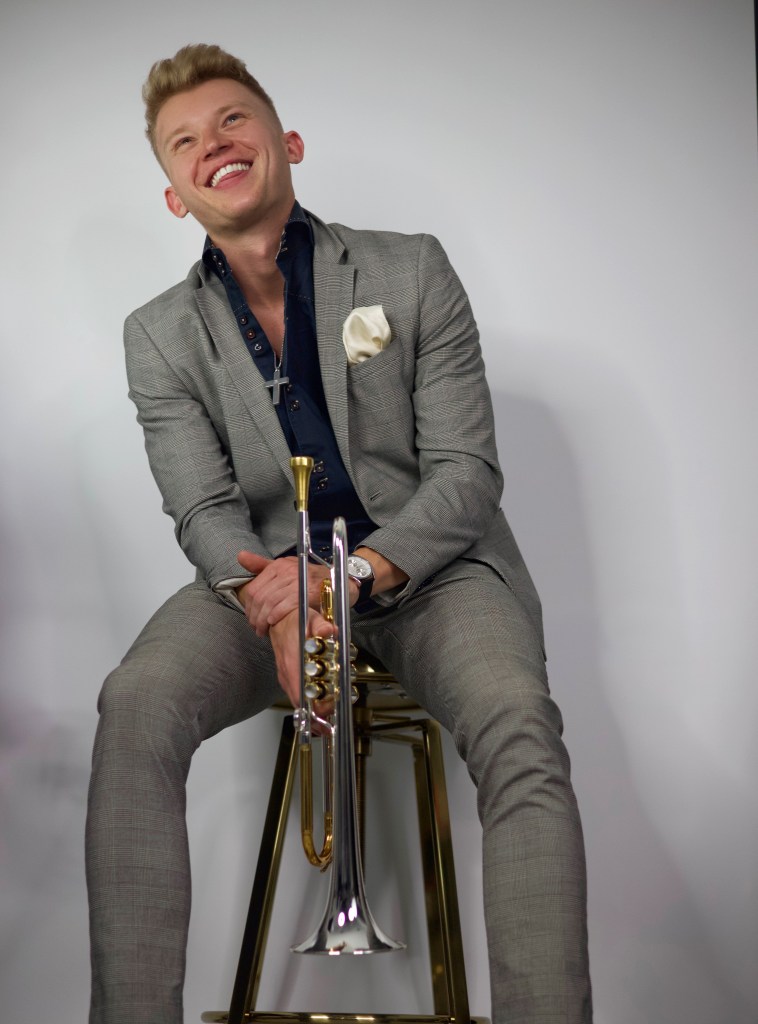
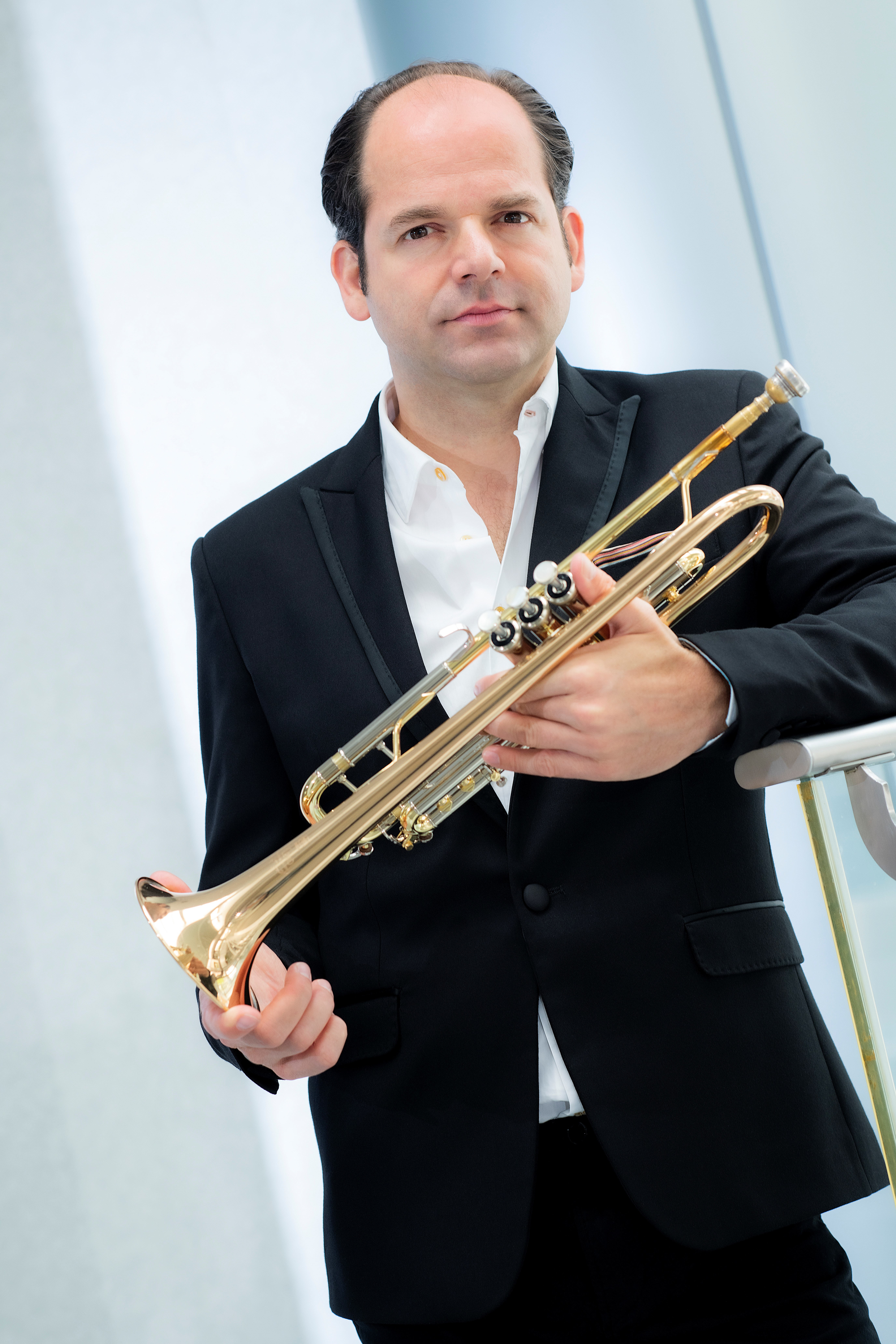
Trumpet Artist Profile : Evan Taylor

2020 was a tough year across the globe, but despite this, Evan Taylor continued his upward trajectory as a winner of ‘Jazz in Europe 2020’ and a finalist in the ITG’s Jazz Improvisation Competition. So what is next for this talented young man?!

What first drew you to the trumpet?

When I was about 10 years old my dream was to be a drummer. In fact, I had saved up and bought a Pearl drumset that I kept in my room and used to play it every day. My mother made me join the school band in 6th grade, where I assumed I would be a percussion player. However, the program I was joining required that you spend one year on either, Flute, Clarinet, Trombone or Trumpet. My uncle had an old Bach trumpet lying around, which would eliminate any rental costs for my parents, so we decided that was going to be my avenue for the first year. Not long after I developed a natural affinity for the horn and it became my pride and joy! 

Can you talk a little about your early influences and inspirations?

My early influence for music was Church! My grandfather was a pastor, and my father and mother had both dabbled in music. I grew up singing in church, playing guitar in church, etc. My influences on the trumpet were Bob Parker and John Taranko. Bob was a choir director at Ludington High School, who had previously studied classical trumpet at Michigan State University. Both were my private instructors in high school and middle school and helped develop my early playing. I think at the time I was listening to mostly Lee Morgan & Blue Mitchell records.

What styles and genres of music were you into as a child?

As a child I loved listening to my mom’s CD’s. Mostly contemporary christian and gospel music, I recall a lot of Michael W. Smith albums. I would pop them into the DVD player and just sit on the carpet listening to them in the living room. I was attracted to a lot of John Mayer’s early albums as well, my mom was a big JM fan. She had all his early albums on disc and would keep them in the car!
And now? Who are your biggest influences?

My influences have a pretty widespread variety now, on purpose, because I’m trying to diversify as much as possible. Kris Johnson and Etienne Charles were two musical mentors that I studied with over the course of the last six years who have had a big impact on the way I treat my journey. As far as the trumpet goes, the last few years I have been really listening to and digging into the style of Marquis Hill and Sean Jones. A lot of my writing techniques are in an attempt to emulate them or pull sounds from the same palette. However, I’ve found myself working much with analog sound production in the last two years. I have a home studio where I record and I’m constantly checking out different styles of beatmaking, house music production, and hip hop artists. This has drastically changed the way I think about ensemble playing and how trumpet / horns fit into recorded or performed music.

When did you realise that you wanted to play the trumpet for a career?

Sometime around the end of highschool I decided if I was going to do it, I needed mentorship. I was really inspired by my time studying at Michigan State University and the music faculty there really shaped my playing abilities. I don’t think I ever realized it, I think I was sort of just pulled in that direction because of things that had occurred in my life. Music had always been my way of connecting to the world, and trumpet became my voice for that. 

You have had some fantastic competition success so far. Can you talk a little about preparing for big competitions like the 2020 ITG contest?

Thank you so much! ITG was a really cool experience that pushed me extremely hard. They had a heavy hitting staff list applied to judge the competition. I really had my head down during that time and knew it was a big deal to even have the opportunity to be a finalist. I focused hard on my fundamentals, I developed a pretty distinct practice routine in the months leading up to that competition. We recorded the tapes for it on campus at the University of Utah. I really learned a lot about improvisation while I was getting ready for that, I spent a lot of late nights in my home studio just listening to Greg Gisbert and Clark Terry albums. 

Do you have set, regular practice routines that work for you? Do these play a big part when you are teaching too?

Yes, one-hundred percent. I still do Arbans 47 almost every day. It’s like breathing for me. I don’t even really think about it anymore, and I can play it almost any way you can think of, and definitely in all 12 keys. I put all of my students on this exercise and make them learn it. It’s an interval study and if you can get it in all 12 keys major, minor, harmonic minor, altered, it can really really change how you think about music. I also do a longtone flush every day just to keep everything vibrating smoothly. This helps me with range, tone development, and just staying fluid. I practice more fundamentals than I practice anything else at this point, mostly because I don’t always have time to do the things I’d like to work on. I’m too busy recording or out playing gigs, etc. Gotta make sure the lips are working at all times and I’m ready to play whatever is put in front of me.

Can you talk a little about the your relationship with Victory and the process of selecting your horn?

The owner of Victory, Melvin Quinones, is one of the sweetest people you will ever meet. He is one of the most humble, genuine cats I have ever come across in the music industry. I connected him via my friend Candido Abeyta who has been a Growling Sax artist for Melvin for the last several years. My first time meeting Melvin in person we stayed in a hotel in Anaheim my first year as an artist for Victory and worked together at the NAMM conference testing horns and comparing Victory trumpets with a few other brands. Melvin has always taken great care of me, and when I found out they were developing a horn that had a Christian stamp on it, I knew I had to try it. The “Trumpet of Jesus” professional model is by far one of the best horns, if not the best horn I have ever tried. It fits me perfectly. I believe in God, and destiny. I believe that this company has created something truly, truly, heaven blessed by designing this horn model. It was a no-brainer to decide to be an artist with this company.

How has the COVID lockdown affected you and your work? Have there been any positives that you can take at all from this?

COVID was one of the most dramatic, hard times I think any of us have ever been through. I lost a lot of friends because of this awful, dreaded virus. I’m confident that this time has revealed a lot about our culture and the things we truly cling to. I’ve changed a lot in the last two years and realized what I value. Life is short. As far as priorities go, I just want to put God first, then family, close friends, and music last on the list. I hope that my trumpet playing and musicianship can inspire people, and honor the people I’ve lost. 

What are your plans and ambitions for the future?

I just moved to Miami, FL this week. I made the 35 hour drive from Salt Lake City, UT to here throughout the course of the week by myself. I’m hoping by moving here I will have made a grand step in the right direction. I will be continuing to do studio recording work for several companies, meanwhile working on pursuing my artistry and broadening my network. I’m humbled to be affiliated with the projects I am currently on, many of them I can’t talk about at the moment, but my team has big things cooking for 2021! I’m very blessed to have plenty of work already lined up in Florida as a trumpet player, producer, and composer. I also teach private lessons via Zoom for a local music program in Detroit, Michigan. My ambitions revolve around building a healthy lifestyle that honors God and my family, and I hope that my music can be a vessel that contributes to that process.
Much love!

You can find out more about Evan Taylor and his music by visiting his website.

You may also be interested to read this interview with Victory Music Instruments’ founder, Melvin Quinones.


SIGN UP HERE FOR NEW BLOG ARTICLES EMAILED DIRECT TO YOUR INBOX:
[jetpack_subscription_form show_subscribers_total=”false” button_on_newline=”false” custom_font_size=”16″ custom_border_radius=”0″ custom_border_weight=”1″ custom_padding=”15″ custom_spacing=”10″ submit_button_classes=”” email_field_classes=”” show_only_email_and_button=”true”]

Advice · Interview

Trumpet Artist Profile : Jeroen Berwaerts

Belgian trumpet soloist Jeroen Berwaerts combines immense technical prowess with beautiful sensitivity across a huge range of styles. His CV is extraordinary, boasting solo appearances with orchestras across the globe, teaching commitments in Hannover and London, as well as a really interesting relationship with Yamaha.

What first drew you to the trumpet? Who or what were your early musical influences?

My father was the key. He played euphonium in the hometown band and brought a trumpet home. He did teach me the first notes. About half a year later I had my first real teacher at a music school, he was a Horn player , very much focused on a nice round and warm sound, that sound idea never left me. I also switched to the cornet at the beginning years because that trumpet was too heavy for me.

You had significant success as a young soloist – at what point did you know that you wanted a career as a trumpet player?

I cannot remember that I ever wanted to become anything else in my life. After hearing and seeing a concert of the Philip Jones brass ensemble in Kerkrade (Holland) I told my father on the way home , that’s what I wanna do. I must have been around 9 or 10 years old.

Your early competition successes must have helped to open some doors for you? How did this success influence the pattern of your current working life?

I realize now that these competitions at young age, as well as concerts or performance situations, are the best base to have for security on stage later on. Due to the fact that I have always performed or competed, the stage as well as the challenge to conquer pieces feel very much like home for me.

You have received critical acclaim for your interpretations of many different musical styles – do you find it difficult to ’switch gear’ between them?

With the right equipment and the correct mindset it’s not really a problem. I find ‘variety’ one of the most beautiful sides of being a trumpet player.We can compare it with being a Decathlon athlete. It’s very challenging to switch between styles, instruments, including many different colors and moods, but it’s never boring 🙂

Do you have any regular practise routines that you use?

Oh yes, I have my favorites like Charles Colin lip flexibilities and vincent cichowicz. But also Caruso, Arban….. some of them are always around and some come and go 🙂 I like the balance between a secure feeling (what we now) and new challenges (the unknown). But most important for me, when I practice I probably sing about 50% of the time and play 50%. I see the trumpet as my own voice-extension.

Do these routines change a lot depending on what repertoire you are working on?

When I am working on a big program or physically demanding works (so practically all the time :-)), I try to never neglect the “sports” aspect of the job.The actual work I am doing is a combination between high-performance sports and musicianship. And yes, there are great routines to support different issues that come up depending on the works we play.

To what extent does your equipment need to change depending on what you are working on?

I have never been too much into trying out thousands of mouthpieces and trumpets, I need equipment that I trust, that’s it. The mouthpiece I play is a 30 year old 1,5c Bach. It’s so old that my friends at Yamaha have to change the head of the lead pipe when I am trying out there newest babies.

What key advice do you have for today’s young and aspiring trumpet players?

Practise, practise, practise ! And read the “ten rules for students and teachers” from John Cage.

Can you please talk a little about your relationship with Yamaha and how you have worked to develop the right instrument and mouthpiece combinations for you?

The most important thing for me, working with Thomas, Timo and Eddy is that they understand my language. Talking about sound is mostly very abstract and at that point you need a good understanding, that works great. Like I wrote before, I was never so much into changing material but last year, we worked on a Bflat and I have never played an instrument that good. It speaks as if I can just sing in it.

What are you currently working towards? Do you have any up and coming projects that you would like to talk about?

My personal challenges are a program in April where I will play Michael Haydn C-Major concerto in combination with a very demanding work by Viennese composer HK Gruber. And in May another challenging program together with Reinhold Friedrich where I will perform rather modern works by Hindemith, M.B.Watkins, Ligeti and Hosokawa.Before these events I’ll have the pleasure to be working with the brass sections of several nice orchestras in Germany, mostly in a “lead/play” function.

We will be performing (mostly streaming for now) original works for brass by Tomasi, Grieg, Britten, Henze and many other composers. Between these soloistic pleasures there is the red wire of education. As much as I love to perform and be on stage, it is always the greatest pleasure to work with my students in Hannover or to come to London to the RAM and work with our students there. I find education such a wonderful field, it’s demanding at one side but you are also able to learn so much yourself continuously. Maybe THE most meaningful profession.

We are living through difficult times in the midst of COVID-19 lockdowns across the globe. How has this affected your preparations and projects?

Of course there was a period where most concerts where cancelled but I tried to re-orientate immediately and see where the possibilities are. I am very grateful and lucky to not needing so much to be motivated. Trying to motivate others is actually the best motivation for me.

And of course being on the road so much it was a new and fantastic feeling to be home and in one place for such a long time, I forgot how that felt.


Sign up here for new blog articles emailed direct to your inbox:

[jetpack_subscription_form show_subscribers_total=”false” button_on_newline=”false” custom_font_size=”16″ custom_border_radius=”0″ custom_border_weight=”1″ custom_padding=”15″ custom_spacing=”10″ submit_button_classes=”” email_field_classes=”” show_only_email_and_button=”true”]

Advice · Interview

Trumpet Artist Profile : John Eth

John Eth is a well-respected trumpeter, originally from Phoenix, Arizona. The Legends Brass artist was kind enough to give up his time to answer some questions below.

Can you tell us a little about what got you started on the trumpet?

I remember every weekend my father playing Harry James records all day Saturdays and Sundays. Even though my father was not a musician he loved the Harry James big band. So when in 4th grade  the band director came around to classes asking if anyone wanted to be in the band I immediately raised my hand. When asked what instrument I wanted to play I volunteered for the trumpet. My parents rented me a trumpet before the band would start so I was very excited to try and play it.

I would put Harry James records on the player and listen a little then try to play what I was hearing. I had no idea of what notes were or what valves to push down but I kept trying to play what I heard and eventually played what sounded to me like the same note. I practiced this way until band started at school. Unfortunately this led to me hearing in the key of B Flat. Even today I hear notes that are relative to my trumpet.

My music teacher was a french horn player and also in the Phoenix Symphony. I studied with him through sixth grade. At that time he suggested that I should take lessons from Hershel Kreloff the principal trumpeter in the Phoenix Symphony. I studied with Mr. Kreloff until the summer after 8th grade. I had split my lip very badly in a summer community band and Mr. Kreloff said that he could not help me and that I would probably not be able to play trumpet again. I was devastated. After calling every trumpet teacher in Arizona I came across Tony Picciotto. Tony was a trumpet player who had played with the Tommy Dorsey Orchestra. Tony recently had moved to Scottsdale Arizona and was teaching at Otto Steins music in Phoenix. Tony took me under his wings and was the only one that said he could help me. With Tony Picciotto’s help I was soon back to practising the trumpet.

When did you decide that you wanted a career in music?

I never really thought that music or playing the trumpet would lead to a career. The first time that I realized that you could make money playing music was in High School. A few of us had gotten together and formed a Tijuana Brass type band and was offered a gig at a Frat party at Arizona State University. Non of us were old enough to even drive a car so our parents had to drive us to the job. We each were paid $50 dollars. That was a lot of money for High School kids. That one job changed my thoughts and was the start to my career in music.

What styles of music have you listened to most over the years?

Music styles that have influenced me the most are Big Bands including the Harry James Big Band, all of the Maynard Ferguson Bands and the Stan Kenton Orchestra. Rock and Roll Bands, Blood Sweat & Tears, Chicago and Tower of Power.

How about career highlights?

As I look back to my career some of the highlights would include, in high school through auditions being selected to 1st chair trumpet in the All State Orchestra and in my senior year of high school being granted a scholarship in music to Arizona State University.

My freshman year at Arizona State University I was selected to first chair trumpet in Orchestra, Concert band and Brass Choir. Another memorial moment was being featured at a football halftime performance playing Doc Severinsen’s ‘Monday Monday’.

After Collage I have was blessed with being able to perform with over 30 major entertainers including Elvis Presley, Tom Jones,Buddy Rich, Aretha Franklin, The Four Tops, The Temptations, Sammy Davis Jr., Liberace, and to many more to name.

I have been a guest artist on the TBN network, Featured on World Wide TV as a Christian artist and performed on stage with Phil Driscoll. I have also recorded my own Christian album Titled “God and God Alone”. Another highlight was being selected to be in “The Upper Register” a publication listing over 200 Lead and High Note Players.

My trumpet skills have allowed me to have recorded a number of studio projects including the following, Buck Rogers and The 21st Century television movie , the theme songs for the television series Harper Valley PTA and Sheriff Lobo. More of my studio work has included two Super Bowl half time shows and over 20 CD’s for various artist.

Throughout my musical career I have had the opportunity of meeting three famous trumpet players that I have had a personnel relationships with that have been a blessing and inspiration to me. 

I had the pleasure of having lunch with Mr. Clark Terry where we discussed his musical career, the people who influenced him as a player and how he has influenced many young players. Truly an inspirational man.

Bobby Shew and I met at a college performance where I had the pleasure of taking the place of Lou Soloff in the trumpet section. Afterwords Mr. Shew and I have kept in touch for many years as friends. He has been a true inspiration to me and has blessed me by endorsing my trumpet skills.

Bud Brisbois and I became very close friends after meeting each other at a rehearsal band in Scottsdale Arizona. We would meet for lunch at least 2 to 3 times a week discussing everything from trumpet to life. Many of the things that I learned from him I still apply to my playing today. Bud was my friend, an inspiration, and is truly missed.

Of all the accomplishments, playing, recording and being featured that I have had throughout my life I have to say that the most important things to me are meeting and becoming friends with Clark Terry, Bobby Shew and Bud Brisbois. The time spent with these great musicians can never be replaced.

What does your practice routine look like?

My practice is very basic. I constantly work on corner and support strength. Lip trills slow and fast everyday. An example would be trilling from second line “G” in the staff to 3rd space “C” in the staff. I then go down chromaticly, next would be “F# to B natural” and so on. I do these lip trills until I feel a lactic acid build up then stop and rest. It’s the same idea as lifting weights. You have to build up the muscles that are used to play in all registers of the instrument.

I also never practice anything louder than Mezzo forte. By practicing at a softer level it keeps the aperture tighter and more closed. This is very important for playing in the upper register. All my life the routine I have used to build more breath support consists of Long Tones. I practice Long Tones by starting on 3rd space “C” in the staff and going down chromaticly the entire range of the instrument. I hold each note out as long as I possibly can, not breathing until all I can muster is a very small buzz. Make sure that you are sitting down if you do this! You can possibly black out from lack of oxygen.

How about your horns and mouthpieces?

At this time I play Carol Brass instruments. My trumpet is a Carol Brass model CTR-5060H-GSS. It is silver plated with a sterling silver lead pipe. I find that this instruments sound is versatile enough to play all the different styles of music without being to bright or to dark.

I play a Legends Brass custom designed mouthpiece It is the model “ETHS”. A number of years ago My business partner and I started Xstream Mouthpieces. Being a machinist I designed my own mouthpiece with a different style of cup. I call this design a “Compression Cup”. I have played this design cup for over 10 years. 5 years ago we closed our business and sold all of our machines used to make mouthpieces.

I recently was not getting the results that I wanted with my mouthpiece and decided to reach out to Derek Saidak to see if he could help. I asked Derek if he could scan the rim and cup of the mouthpiece that I designed and put it on his backbores. He said “No Problem” so I sent my mouthpiece off to Mr. Saidak and within a few weeks I received 3 mouthpieces with an exact rim and cup match on the Legends Brass mouthpiece design. All three had a different backbore designed by Legends Brass. This gave me exactly what I needed. I am now a fan of Legends Brass and highly endorse their products. I encourage all trumpet players to give them a chance. Legends Brass has more mouthpiece options than any other mouthpiece manufacture I have come across and can make you a custom mouthpiece as well.

My custom Legends design mouthpiece should be available soon if anyone would like to try it. Many Thanks to Derek Saidak for helping me achieve my goals.

How having you been managing during this global Covid lockdown?

The global lockdown has been stressful at best. I found that keeping focus on my music has been very helpful. I recently set up a small recording studio in my office that lets me play along and record using music tracks. This at least gives me a feeling of playing with a musical group. If this is not possible for players to do I would encourage everyone to put on a CD or an MP3 and play along with it. I feel that it is very important to be playing music not just practising exercises.  

Only one can guess what the future holds. I believe that after a vaccine is approved things will get back to normal. Music is so much a part of every day life through radio, live concerts, television, movies and so much more that the public will be the driving force behind bringing live performances back.

What piece of advice can you offer young and aspiring players?

Don’t be afraid to invest in yourself and in try new ideas. It used to be a given to start out using a bach 3C mouthpiece or something similar in size. Don’t be afraid to try a smaller mouthpiece! The upper register will be easier to play. Buy a quality instrument. If you cannot afford a new instrument buy a good used major brand instrument. Take lessons from someone that you admire for their abilities. If you would like to be a symphonic player take lessons from someone that has experience in that field of music. Likewise if you aspire to be a Maynard Ferguson style of player take lessons from someone that can help you with the extreme upper register of the instrument. Don’t be afraid of changing instructors if you are not getting the results that you want.

What are you working on at the moment?

 Today I am working on a new website, johneth.com that will have everything from tips on practice, how to overcome injuries, video instructions, performance updates and much more. The website should be up and running in early November 2020. I have also started writing a new book “Surviving The Trumpet” which will soon be available. Starting a new recording project is also one of my pet projects. Even though the future is a little rocky right now I encourage everyone not to get depressed. Keep working on your God given talents and everything will be alright.  

You can find out more about the Legends Brass mouthpieces at https://legendsbrass.com

You can also view and purchase a selection of great Legends Brass mouthpieces at our Online Store


Sign up here for new blog articles emailed direct to your inbox:

[jetpack_subscription_form show_subscribers_total=”false” button_on_newline=”false” submit_button_text=”Sign up” custom_font_size=”16″ custom_border_radius=”0″ custom_border_weight=”1″ custom_padding=”15″ custom_spacing=”10″ submit_button_classes=”” email_field_classes=”” show_only_email_and_button=”true”]

Advice · Interview

Trumpet Artist Profile : Charles Lazarus

Trumpeter Charles Lazarus is a multi-faceted performer, composer, producer and band leader whose career has included tenures in Dallas Brass, Meridian Arts Ensemble, Canadian Brass, and the Minnesota Orchestra. He has appeared as a soloist with numerous orchestras around the US and Canada, performed with the Empire Brass, New York Philharmonic Principal Brass, London Brass, Barry White, and opened for Tony Bennett.

Charles has performed and taught master classes in every US state, Canada, throughout Asia and Europe, and currently serves as adjunct faculty at the University of Minnesota. He has created and produced several crossover orchestral shows featuring his various ensembles with which he has released four CDs and a children’s animated short film.

Hi Chuck, can you please give a little background to your relationship with the trumpet?

When I was 9, my Dad took me to a Dizzy Gillespie concert and I got to meet Dizzy backstage.  He actually let me try to play a note on his trumpet which was pretty exciting! I didn’t start playing in band until I was 12, but I picked trumpet and fell in love with the sound and versatility of the instrument right away. Trumpet was just the right amount of frustrating to keep me chasing the dangling carrot of success!

When did you decide that you wanted a career in music?

I knew this would be my career path within the first few week of playing the instrument. It was the first way I had ever seen my own self improvement and I was hooked!

What styles of music have you listened to most over the years?

All styles. I tend to listen more to styles of music I’m not playing at the time.

You have worked across many, many genres and styles over the years. What are the challenges both musically and technically, adjusting to these changes?

Advancing harmonically in jazz is challenging when playing classical music full time, so I try to make sure my daily routine covers a lot of ground harmonically. The biggest difference between my approach as I change styles is articualtion. I pay a lot of attention to that.

How do your practice routines need to change to reflect this?

I pick days where I focus on certain modes or patterns in my playing and incorporate that in my flow studies and arpeggio workouts. Monday= diminished day Tuesday= lydian dominant etc. That kind of thing. Sometimes I substitute my usual Clarke or Vizzutti studies with the John McNeil Art of Jazz Trumpet studies. I can work on my fundamentals of airflow and articulation while exploring harmonic ground. It’s way too easy to get stuck in open harmonics. I try to branch out. I consider it cross training. It’s more efficient and way more fun. I also practice the opposite of what I am performing on any given week. If I’m playing 2nd trumpet in Beethoven one week, I do a lot of high note practice. If I’m playing lead on a pops show, I practice a lot of soft low notes.

Career highlights?

Oh man. So many to be grateful for!
Playing the Britten St Edmunsbury Fanfare with Doc Severinsen and Bud Herseth.
Playing the Haydn Trumpet  Concerto in Carnegie Hall with the NY String Orchestra.
My first concert with Canadian Brass.
Playing My Spirit Be Joyful next to Rolf Smedvig in Empire Brass.
Playing my own jazz compositions with the Minnesota Orchestra for the first time with Osmo Vänskä conducting.
The privilege to play in the Minnesota Orchestra brass section with friends that inspire me.

Can you talk a little about the horns and mouthpieces that you play, and the process of working with Pickett Brass to find the right setup?

Well, I’ve known Peter for many years when he was just getting started in his garage! He is a great guy and a total pro. I was already playing Yamaha trumpets when I met him and I’ve been playing them since I was 19. I’ve also owned a number of Blackburns over the years and they are fantastic as well!  For mouthpieces, Peter has always been willing to work with players to find a great fit for their style and technical needs. Finding the size and contour of his rims and cups was kind of like finding a pair of shoes that fits perfectly. He’s great at that and because I have so many varied demands on my playing, my line of mouthpieces tends to have something for everyone. It’s all on the Pickett Blackburn site.

I should say though, that for me, the thing that really makes his mouthpieces work so well is the evenness and quality of his backbores. They really even everything out allowing me to relax and blow smoothly, giving me more control over my sound than I’ve ever had. He has a lot of little tweaks in his designs that can accomplish pretty much anything you need. Plus the staff there are all great trumpet players that are a blast to hang out with. In addition to my work with Peter, I’ve also worked a lot with Eric Murine (killer player) and the rest of the staff there on mouthpieces as well as eating BBQ and perfecting the “Whiskey Chew”-  An important art in Lexington!

How have you managed during this global lockdown? How do you think that musicians are going to need to adapt in the future to deal with may be a very different musical world?

I’m just trying to practice, plan recordings, and double down on learning technology. I’ve been setting up my home studio for recording and I’ve been getting into some video projects for fun. There are so many new and increasingly  efficient ways to reach people online. it’s a perfect and necessary time for all of us to learn more about how to pilot our own ships.  I really think when this mess is all over, people will be so starved for live music that it will be a roaring 2020s age of music. I am trying my best to make sure I’m ready for that.

What advice would you give to young and aspiring trumpet players?

View every mistake and failure as an opportunity to learn. Be willing to fail.  Every little success is built on a multitude of failures. Most importantly though, enjoy making music. Then, all the work is just an enjoyable part of the process. The smarter you practice, the better you get. The better you get, the easier it is. The easier it is, the more fun you have!

What are you working on at the moment or in the future?

I’m recording some brass quintet and solo trumpet music by Jack Stamp and learning Logic Pro Audio.

You can visit the Charles Lazarus website here.

The range of Lazarus Signature mouthpieces can be viewed here.

You may also be interested to read this interview with master craftsman, Peter Pickett.


Sign up here for new blog articles emailed direct to your inbox:

[jetpack_subscription_form show_subscribers_total=”false” button_on_newline=”false” submit_button_text=”Sign up” custom_font_size=”16″ custom_border_radius=”0″ custom_border_weight=”1″ custom_padding=”15″ custom_spacing=”10″ submit_button_classes=”” email_field_classes=”” show_only_email_and_button=”true”]

Interview

Trumpet Artist Profile : Diego Urcola

‘Trumpet Artist’ is far too narrow a description for Diego Urcola. Perfomer, Band leader, composer, multi-instrumentalist and jazz educator are all monikers that should also be added. Born in Buenos Aires, Argentina, three‑time Grammy nominee Diego Urcola has been a member of the Paquito D’Rivera Quintet since 1991. Additionally, the oft‑in‑demand trumpeter performs regularly with the legendary saxophonist Jimmy Heath, the Caribbean Jazz Project and the Dizzy Gillespie Alumni All‑Star Big Band.

It was great to catch up with NYC-based Schilke artist, Diego for this interview:

Can you give a little background to getting started with the trumpet?

I started playing trumpet in my school band in Argentina when I was 9. I played in the concert, marching and jazz bands. The marching band routine had a New Orleans Jazz part so I started doing that without even knowing that I was playing jazz. My father who was the band director at the time, was a big fan of Sidney Bechet and he had regular jam sessions every Tuesday night at the school with some friends. Those sessions had a big influence on me because I loved the vibe and the improvised music that they were doing… so I decided then that I wanted to be able to do that.

When did you decide that you wanted a career in music?

Around when I was 14, I told my father that I wanted to be a professional musician. He told me that he was OK with it, but from now on I had to practise the trumpet for no less than 2 hours per day. And I’ve been doing that for the last 40 years…

What styles of music have you listened to most over the years?

After my “very early” New Orleans period, I discovered Dizzy, Bird and Miles and I got obsessed about learning the bebop language. I was also studying at the conservatory at that time so I was practicing and listening to a lot of classical music too. Later, already in the USA, I got into more modern jazz styles and also Brazilian, Cuban and South-American music.

How was the transition moving to and studying in Boston, and then later moving to New York?

Well, before I finish high school in Argentina I was already working as a professional trumpet player. I started working with singers, rock bands, musicals, and some orchestral work too. Also I was playing with my own small jazz groups and other jazz bands with musicians 20 or more years older than me. That was when I decided that I needed to move to the USA if I wanted to get better. I won a very good scholarship from Berklee College of Music and that helped me a lot to make the decision to move to the US. After 3 great years in Boston I kind of felt the same way. That in order to get better I needed to be in New York. That was 30 years ago…

I think that I may already know the answer to this, but what have been your favourite gigs?!

Paquito’s Band of course! I‘ve been doing that for the last 30 years! But working with masters like Jimmy Heath, Slide Hampton, Joe Henderson, Ron Carter, James Moody, Bebo Valdes and many others are highlights of my career.

How do your Argentinean roots influence the music that you make today?

A Lot! Especially tango music, the music of my home town Buenos Aires. Also South-American music in general. All music from Latin America has similar roots but they sound very different if you really study them. It’s very rich music, especially rhythmically. 

Can you talk a little about the horns and mouthpieces that you play, and the process of working with Schilke to find the right setup?

Right now I’m playing a Schilke HC2 trumpet with a custom 24B mouthpiece. The HC2 is for me the perfect jazz trumpet. Very flexible and with a dark but very rich sound with a lot of overtones. I have been playing very big rims for a while and I love the Schilke 24 rim. The regular cup of the Schilke 24 is too big for jazz so Schilke made me a 24B that is not in their catalog but it is exactly what I need. I also play a  Schilke 1040 Flugelhorn with a custom 24F mouthpiece. Before, I was never a big fan of the flugel as an instrument because most of them play out of tune, but the new Schilke flugels have perfect intonation and a beautiful sound.

Do you have a set practice routine?   

Yes, I start my day with about 20-30min of long notes. Then I go into a selection of exercises from different books like Caruso, Schlossberg, Flexus and Clarke that I picked out through the years. I play these exercises with different instruments: trumpet, cornet, flugelhorn, piccolo, euphonium, valve and slide trombone. 

How have you managed during this global lockdown? How do you think that musicians are going to need to adapt in the future to deal with may be a very different musical world?

It has been a very interesting time. In a way I have been busy doing videos for social media, home recordings, skype lessons and also working on the promotion of my new album “El Duelo” that came out on September 18th. I don’t think anybody knows exactly how things are going to be after this pandemic is over. All the Internet/Social Media things are interesting but they don’t come close to the experience of performing live. I hope we can get back to that very soon.

What advice would you give to young and aspiring trumpet players?

Practice, practice and practice…but also to diversify. To learn how to compose, arrange, record, computer music (sequencers, loops, samplers, DAW, etc…) and to produce content like videos, music for film and TV. I think this type of knowledge is going to be crucial if you want to make a living as a musician in the future.

What are you working on at the moment or in the future?

I just got a commission/grant from the Jazz Coalition so I’m going to start working on that. Also hopefully in the near future play live the music of El Duelo. 

Thank you very much for the interview and I wish everybody to stay healthy, positive and active until this pandemic is over!

You can visit Diego’s website for more information.

Information on his latest release, “El Duelo” is here.

Click here for the Schilke HC2 trumpet that Diego plays.

And the Schilke 1040 Flugelhorn is here too.


Sign up here for new blog articles emailed direct to your inbox:

[jetpack_subscription_form show_subscribers_total=”false” button_on_newline=”false” submit_button_text=”Sign up” custom_font_size=”16″ custom_border_radius=”0″ custom_border_weight=”1″ custom_padding=”15″ custom_spacing=”10″ submit_button_classes=”” email_field_classes=”” show_only_email_and_button=”true”]

Advice · Education · Interview

Honesty Pill : In conversation with Christopher Still

Educator, clinician and coach (and also a trumpet player with the Los Angeles Philharmonic!) Chris Still has a really fascinating project that can benefit ALL musicians. I am extremely grateful for his time to chat about “Honesty Pill”.

Can you give a brief rundown of what Honesty Pill is all about?

Sure. Honesty Pill is an online resource that helps people teach themselves to be better musicians. I like to talk about auditions a lot because they require such complicated and focused effort, and because those same techniques apply to all areas of musical performance and practice.
I chose the name “Honesty Pill” in reaction to a common issue with performers and artists—people are afraid to take a close look at what they’re doing wrong, even if they desperately want to succeed. My goal is to help people to tackle their issues, so they can achieve their goals. I like to call my approach “swallowing the Honesty Pill.”
I offer practical courses, informative articles, and activities to help you ditch your excuses and really improve.

Did you come to a lot of these improvement processes from your own learning or teaching experiences, and if so, how?

In all of the years I’ve been coaching and teaching, I’ve definitely noticed that everyone is making the exact same types of mistakes. All of us. Which is actually really good news, because if we are all making the same mistakes, that means that we can all solve those mistakes. In other words, you are not the first person to have an unfocused sound, or issues with your time or rhythm.

Basically, I get paid to watch people think, and that has informed my coaching and teaching and certainly helped me design the programs that I offer today.

And I should be clear, I have personally made all of those mistakes I’m talking about, and also figured out the solutions to them. So if I can do it, so can you.

What are the most common misconceptions that even the most ‘diligent’ of musicians come to you with?

This is an easy one. Whether we’re talking about audition strategy, improving practice habits or creating an online business, even the most diligent musicians don’t start the process early enough, and they wait until it’s “perfect” until they let anyone else hear what they are doing.

And this is understandable, since we are trained to lock ourselves in a practice room seeking perfection. Newsflash––perfection does not exist. Everything is a work on progress, and the only way to really improve is to fail and learn. But most musicians are afraid to do that.

At the time of writing, we are in a worldwide Covid 19 lockdown – a lot of people are finding that they have time to reflect on a lot of things including perhaps addressing musical, technical, emotional and mental barriers to their success. Are there any basic tips or general advice that you can give to help people analyze and address what needs to be worked on?

Obviously, the pandemic has been devastating on so many levels. But I am remaining optimistic, because I believe the bigger the problem is, the bigger the opportunity that comes with it. And that goes for practicing too. We spend so much of our musical lives running around staying “busy” that we never stop to reflect on what’s actually happening in our lives. It’s like one of those snow globes with a little village scene inside…we shake it up and the snow swirls around covering everything. And just when it starts to settle, we shake it all up again.

The lockdown has forced us all to let everything settle, and then stare right at it for a really long time. I’m not sure I have any advice, but I would say that this is a great opportunity to get used to slowing down, to being more mindful in the practice room as well as in our daily lives.

Can you talk a little about how your coaching process works? And has this changed a lot since we have all now moved online?

My coaching hasn’t actually changed much at all since Covid-19. I started coaching online three years ago when I realized I could reach a much wider audience that way, and help more musicians achieve their goals.

If I had to notice one change, it would be that so many online barriers that existed before the pandemic have been completely torn down. Three years ago most people had never logged into a digital classroom in their lives, and now that has completely shifted. Which I think is one of the silver linings in this situation.

What are the areas that you have addressed yourself by taking the Honesty Pill?

Great question. Full confession here––there is nothing in my teaching or coaching that I don’t do myself, every day. I still record myself. I still have a practice buddy. I still use a practice chart. These tools and skills are for life, not just for while you are in school or trying to get a job.

The idea that we can ever be “done” mastering something is misguided. It’s not like one day there is a knock on the door of your practice room and someone hands you a certificate that shows you are finished working on your rhythm or articulation.

All of this is to say, the fun part of mastery is the journey, and while we’re all on different points along the way, we are all on it together.

How can people get in touch with you?

I’m on all of the usual social media platforms:
Website: www.honestypill.com (join my mailing list to get in the loop on free trainings and resources)
Facebook “Honesty Pill” group: https://www.facebook.com/groups/honestypill/
Instagram @honestypill

Chris’ Online Business Accelerator is still enrolling until 5th July, so please do also check that out: https://honestypill.com/online-business-accelerator/

You may also be interested to check out Chris’ interview talking about all-things trumpet here.


Sign up here for new blog articles emailed direct to your inbox:

[jetpack_subscription_form show_subscribers_total=”false” button_on_newline=”false” submit_button_text=”Sign up” custom_font_size=”16″ custom_border_radius=”0″ custom_border_weight=”1″ custom_padding=”15″ custom_spacing=”10″ submit_button_classes=”” email_field_classes=”” show_only_email_and_button=”true”]

Advice · Education · Interview

Trumpet Artist Profile: Mario Guarneri

Mario Guarneri will be known to many readers as a performer and educator of the highest calibre.  A former member of the Los Angeles Philharmonic, Mario is also in demand as educator and lecturer on the pedagogical concepts involved with his groundbreaking designs (www.berp.com) and the trumpet in general.  Here he shares with me some thoughts on approaching different stylistic challenges both as a player and a teacher.

Can you please give a little background to your playing styles? 

Interesting question that I don’t ever recall answering before. First of all, I believe from the beginning I was taught to play in the style of the music you were performing.  Using my ears and understanding the context was critical to what sound and style I heard in my head and should be reflected in the music I was playing.  The point of being a professional musician when reproducing music composed by someone else is to first understand the “style” of the written notes (context).  You then create the style in how you take notes on a page and end up making appropriate sounds to come out of the bell.

The style I select is totally dependent on the context of the music when I’m playing something composed.  If I’m recreating someone else’s style by ear then I also need to understand and listen to the context.  In either case the ear connected to your musical brain is your most important teacher. That by the way is also true for basic sound production on a trumpet.

In my opinion I was not paid to place my “style” into orchestral solos required to perform as an orchestral trumpet player. However, I must admit that I tried sometimes to the dismay of the conductor.  The skill of being able to perform in different styles served me well during the 12 years of my life when I was working in the LA studios.  It was not unusual to go from “Looney Toons” in the morning to a John Williams score that afternoon and maybe an LA Chamber Orchestra concert that night.  How fortunate I was to have those opportunities.

When I improvise and/or perform music I have written, then I create my own style which I hope to make interesting, compelling to the listener, lyrical, “musical” and above all honest.

What kind of groups did you play in as a kid? 

I played in the school band starting when I was eight… (yes we had a band in elementary school.)  When I was eleven, I played in what was called a “Dixieland” band with high school kids, and I joined the Berkeley Youth Symphony when I was 14.  I joined the union at 13 and played summer gigs with a dance band of adult professionals.

Who were your biggest trumpeting influences? 

I was listening to Louis Armstrong, Bunny Berigan, Harry James, Rafael Mendez, Muggsy Spaniard, Roy Eldridge, Chet Baker, a recording of the Haydn by Wobisch and my teacher Eddie Smith

What was the focus of your practice time as a young player and student? 

The Arban’s book and Mendez solos, plus transcribing some jazz solos and improvising on basic blues changes. I had a 78 record with blues in Bb on one side and in F on the other side.

We seem to live in an age where people need to be defined by one thing.  Pigeon-holed.  Does this ring true to you?

I have done my best to defy being thought of as being a particular type, (i.e. classical, commercial, jazz, avant-garde, studio.. etc.) of trumpet player.

What is your experience (both positive and negative) of being defined in this way? 

I personally see nothing positive about being defined as one kind of player.  However, there are people that hire musicians who want to make sure they are hiring the right person for the job “style-wise” who want to know “what kind of a player are you”?  I think a better question would be and one that I have asked players when I have contracted orchestras for film dates, “are you comfortable playing…?”  Professionals know what they are capable of doing and rarely put themselves in the wrong musical situation.  If they do it once it probably won’t happen again.

What steps have you taken to overcome any difficulties caused by this? 

One of the best pieces of advice I got on this subject was from Manny Klein, a legendary trumpet player in Los Angeles.

“Kid, it’s not what you play, it’s what you pass”.  It happened more than once that a contractor put me in the wrong seat…faced with a lead trumpet big band part with Chuck Findley in the section I would immediately pass the part along with the extra money I was to receive as the principle player.

What are the biggest technical changes that you make when completely switching styles?

First, I would decide if it will help to make a physical change by playing a different instrument and/or a different mouthpiece.  Those changes will often support the way I hear a different style. Hearing the style in your head is the most important aspect of switching styles in my opinion.  Any technical changes happen “automatically” if I hear the style/sound before I put it into the instrument.  For instance, articulations are very different between the orchestral world and bebop style.  I could break it down to “where the tongue goes and how the air is released” for a student, but eventually you need to get to the point of hearing it and playing what you hear.

Do you need to take a different approach to technical trumpet practice as you prepare for a patch of symphony work compared to say a jazz combo?

Yes, but not entirely.  I believe that the basic function and use of the breath is the same, and that the embouchure set up also stays consistent.  All of the things I do for sound production, strength, flexibility, endurance, range are the same.  Suspending the breath and playing on top of an engaged air capacity works for everything.  Free buzzing, playing on the berp, playing pedals, working the Stamp exercises and working out of the Flexus book with lots of bending is what I do for starters every day.  (See my videos, Berp & Bat Tools Part I and II at www.berp.com). The bigger difference in approach is between written music and improvised in my mind.  

For recreating notes on a page, the skill set is all about accuracy, evenness of sound, intonation and musical style.  That would also be true for playing lead in a big band, principle in an orchestra, brass quintet, etc.  

Improvising requires playing what you hear/compose instantaneously!  At the very least a different skill set which to my mind requires different practice routines.  The first part stays the same.  Working towards the most efficient sound production habits should be the foundation for all styles and musical challenges.  

The essential difference comes down to being able to instantaneously hear and play a sound that is not predetermined. Because you are composing in the moment when improvising your technique has to be such that you can produce whatever interval your creative mind comes up with.  When I played in the orchestra when I knew the schedule for the year, I could prepare to play every note I needed to play for the next year (except for the contemporary pieces we performed or obscure literature which I had not seen before). 

It is easy to get very static in your approach when playing in an orchestra because of the requirements I just mentioned.  The practice routine will also start to become too “routine” and your playing can suffer from staying too inside the box…doing only that which allows you to “do your job”.  Of course that in itself is a big challenge, but I believe the musical benefits of doing more than that are extremely rewarding and worthwhile. 

Your basic set up should allow you to do whatever you hear and your daily routine should include exercises you make up on the spot so that you can test to see that your set-up allows intervals and dynamic shifts that you may never have thought of before!  The critical part of the set-up is fully explained in the previous mentioned Berp and Bat Tools video, but how you set up and suspend your air and “creating a face” with your embouchure are the most important elements.

How do you keep your ears and brain fully prepared for switching and playing in different styles, from a musical perspective?

This may sound obvious, but I believe the most efficient practice tool is to listen very intently and imitate on your instrument and with your voice.  It is also very helpful to record and compare your version with the style you are trying to recreate.  Playbacks can be painful but “the proof is in the pudding”.  Finally, here is an exercise I created to help me with this process.  Take an orchestral excerpt like the opening to “Pictures at an exhibition” and play the pitches out of time and transpose up and down an octave from the original for each note.  Connect the line in an improvisational style.  Does your set up make it easy to do this?  Starting from the other side of the spectrum take a bebop line like “Freedom Jazz Dance” and perform it as though it was the opening to “Pictures….” 

How do you approach all of these practice elements with your current students?  Is there a technical ‘middle ground’ to be found to give students a good overall grounding, or do they need to be prepared to switch? 

If you prepare consistently with each breath engaged and “making your face” at the end of the breath you will have the potential to perform whatever you are hearing in your head. Challenge yourself every day and enjoy the process. Music is such a wonderful gift to share ….do it with gratitude and appreciate the opportunity.


Sign up here for new blog articles emailed direct to your inbox:

[jetpack_subscription_form show_subscribers_total=”false” button_on_newline=”false” submit_button_text=”Sign up” custom_font_size=”16″ custom_border_radius=”0″ custom_border_weight=”1″ custom_padding=”15″ custom_spacing=”10″ submit_button_classes=”” email_field_classes=”” show_only_email_and_button=”true”]