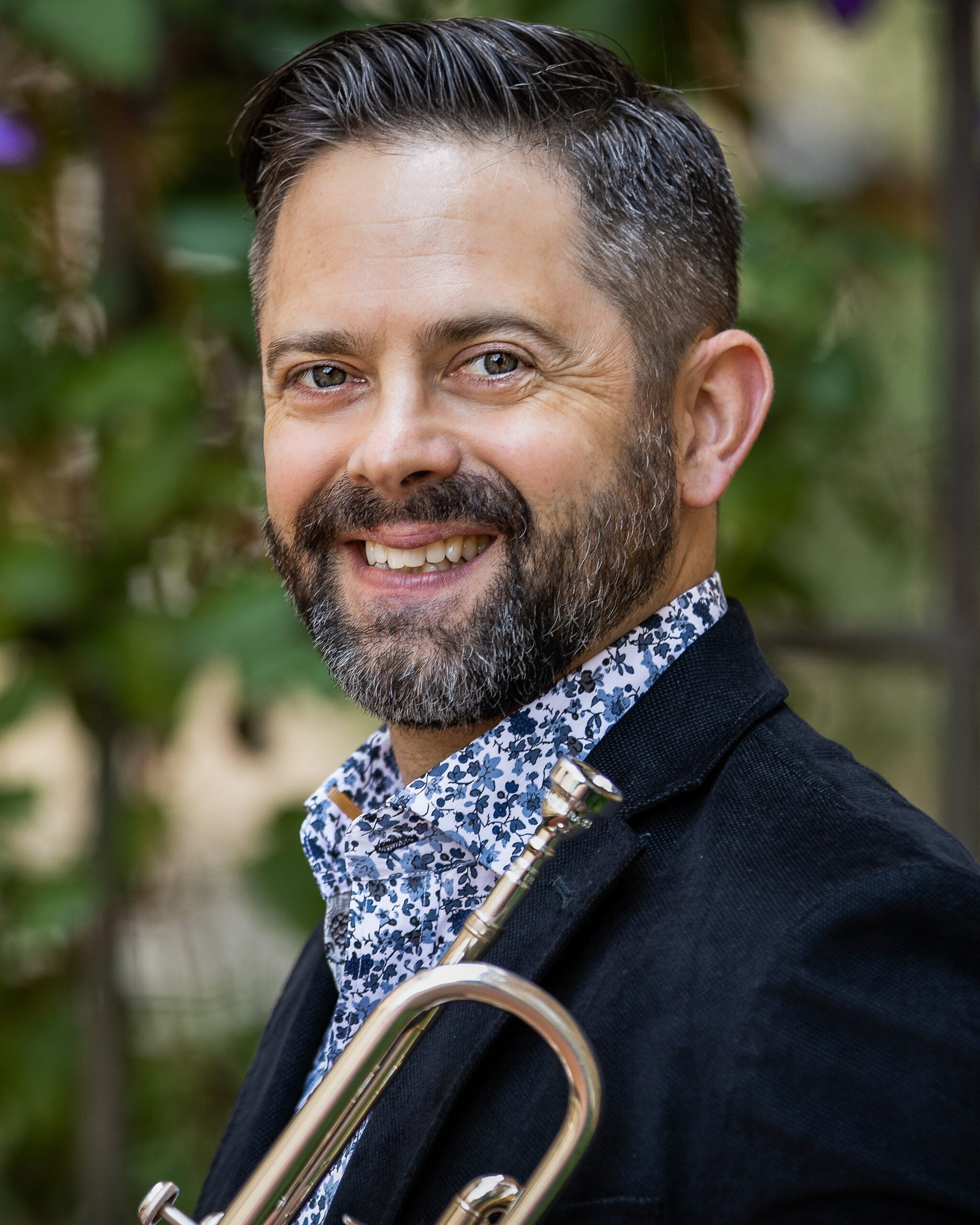
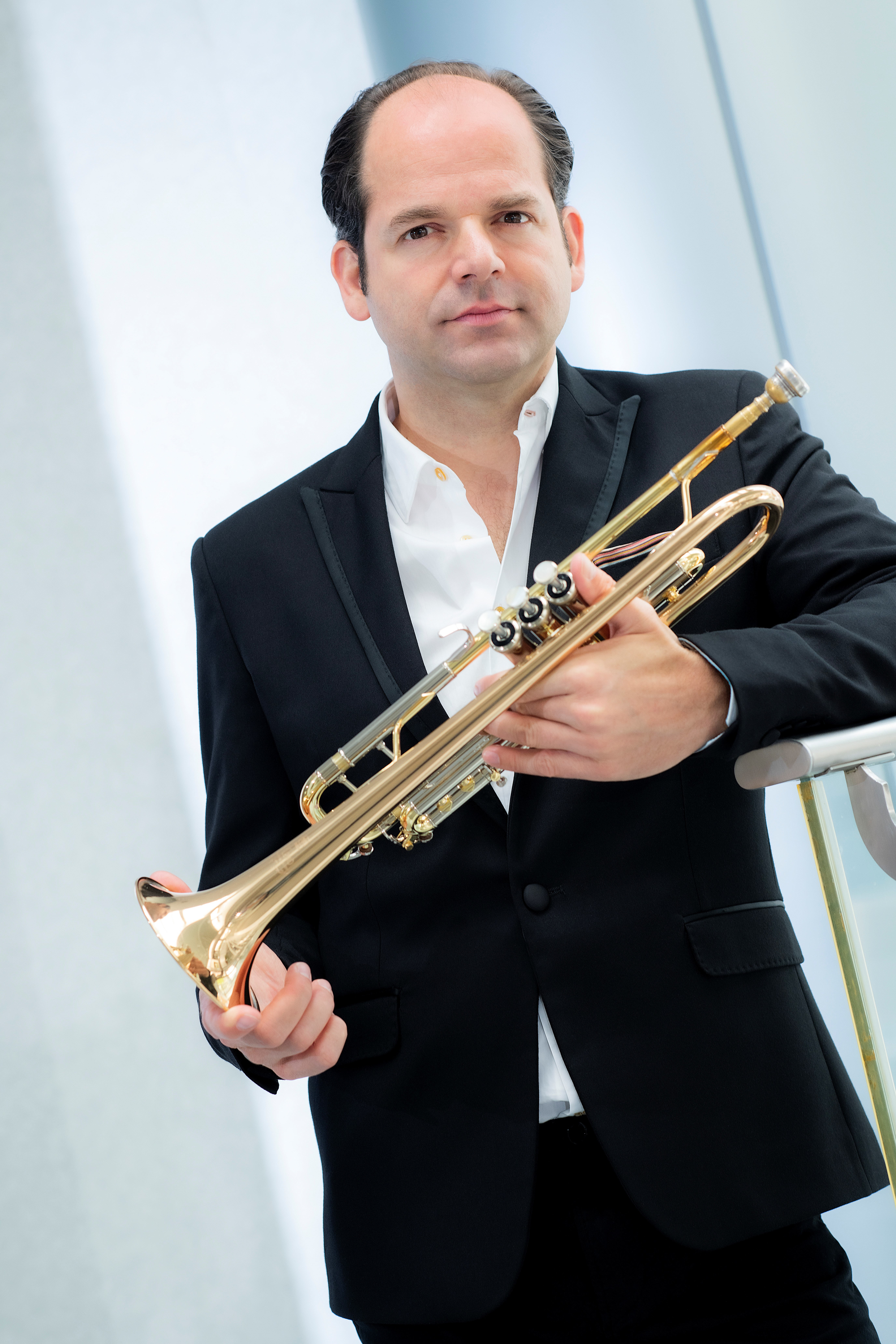
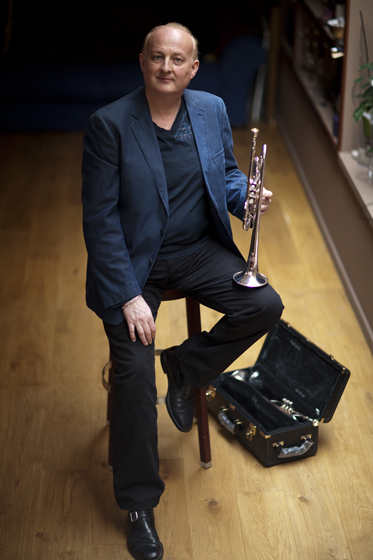
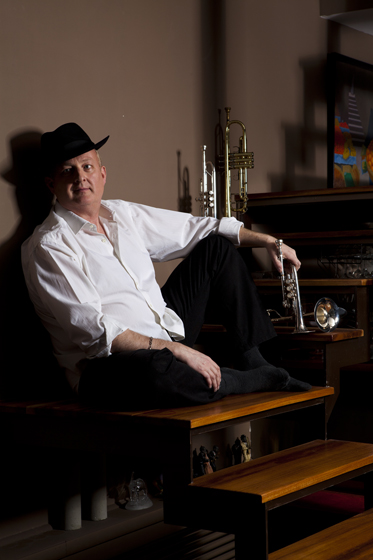
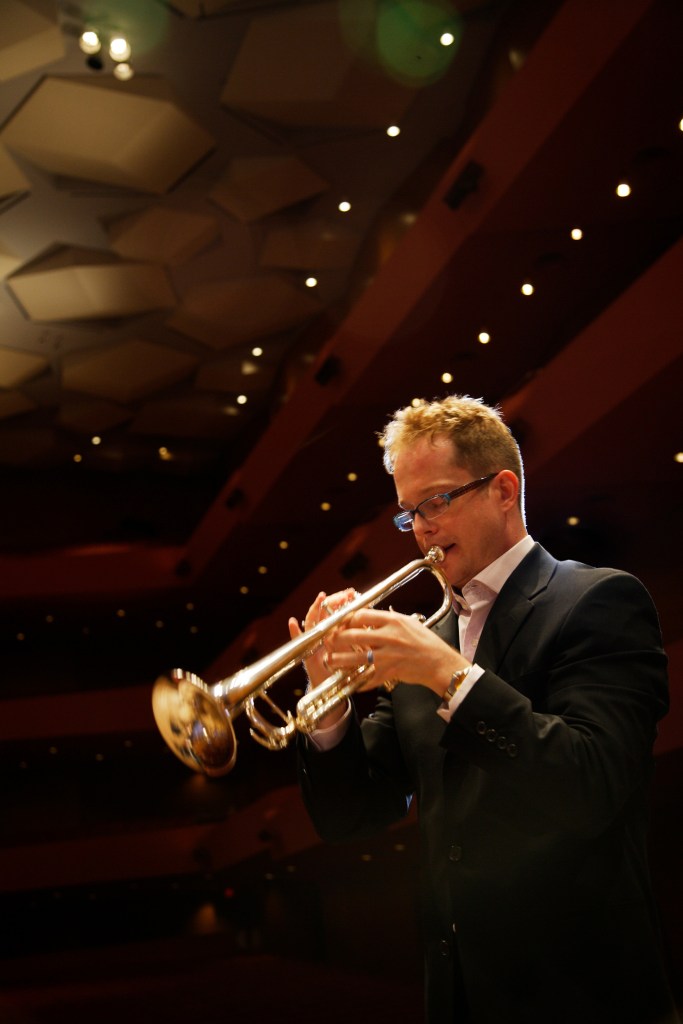
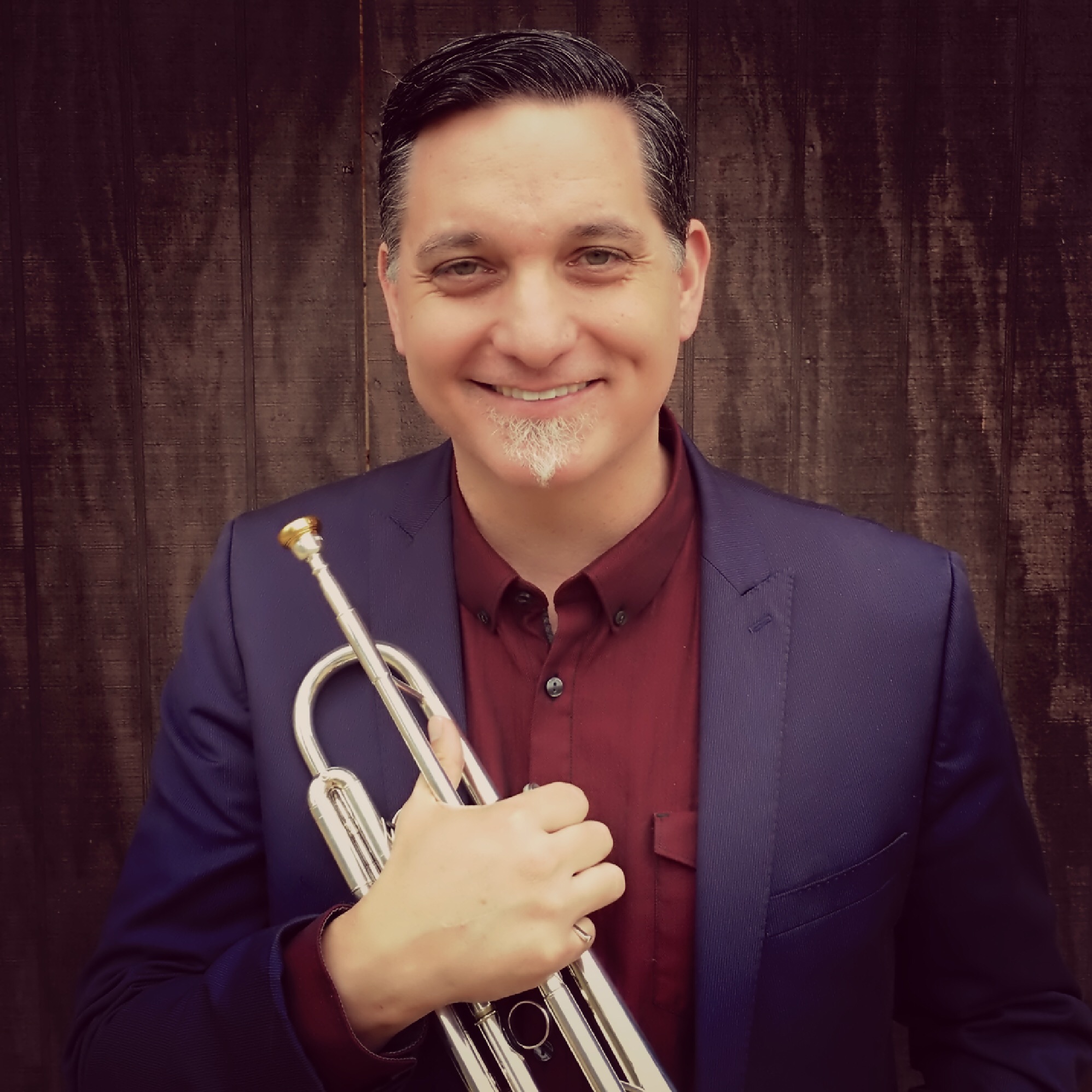
Anthony Prisk has been the 2nd trumpet in the Philadelphia Orchestra since 2013, after previously spending eleven seasons with the Houston Symphony. Tony is an Ultimate Brass and Yamaha artist, and kindly shares his thoughts with us here:
What first drew you to the trumpet in the early days?
I distinctly remember listening to my Dad’s Star Wars soundtrack over and over again. When I went to my elementary school’s band program I was drawn to the cornet and was successful at making a sound. Then as I went along, I really began to enjoy practicing and hearing improvement and performing for my friends and family. It was the ultimate trill to eventually work with and study with Maurice Murphy and John Williams. It came full circle for me!
Who or what were your early musical influences?
My biggest influence in the early days was my high school band directors, Ross Kellan, Greg Cunnigham and Steve Hoffman. Ross was such a positive and encouraging teacher, he instilled pride and artistry in everything we did. I went to the University of Illinois with the goal to follow in his footsteps and influence students in a positive and inspiring way. Eventually, Ray Sasaki took over with this great influence and encouraged me to pursue a life in musical performance and supported my goals and progress. To this day, he is still supportive and helpful in my development as a player and teacher.
Anthony Frisk
Do you have any particular practice regimes? Does this change a lot depending on what repertoire you are covering in the orchestra?
I am an avid practicer. I have a daily fundamental routine including many concepts from the Sach Daily Fundamentals to Stamp, Schlossberg, Cichowicz, Plog, Vizzutti, Bai Lin, Zauder, Gekker, and more. I do try to stay in shape away from the orchestral repertoire playing etudes and solos from Bousquet, Arban, Concone, Snedecor, Brandt, Charlier, Bitsch, etc…to Bohme, Tomasi, Jolivet, Arutiuinian, etc…If we are playing big rep I will prepare for the week by blowing down Bordogni/Rochut, Brandt, or Smith Top Tones to get ready and then the week of, focus on fundamentals and lighter repertoire to balance my playing. When I am doing a lot of low playing in the orchestra I will turn to playing more piccolo at home and softer solo repertoire. I keep a daily practice log most weeks to keep track of my routines and progress. This also allows me to take notes on what is working and what isn’t. I bring this into my teaching to help students achieve their daily, weekly and life goals.
What do you think are the most important elements of music and trumpet playing that young players should focus on?
First of all, SOUND! Finding a Resonant, Brilliant, Rich, Warm, Complex, Flexible, Dominant, Sweet, Singing sound or tone that moves a listener is most important. Finding an efficient way to do this should be a daily goal. Then, for the music, it’s great TIME! Not just playing the correct rhythm but feeling the music and creating the style out of time feel and pulse. If you have these two things, the others will come. Everyone wants great range and speed and loudness but Sound and Time come first.
How have different teachers through your life shaped the way that you teach?
I have studied with more teachers I can count but every single lesson had something in it that was helpful. I can remember little tips from each lesson from Bud Herseth showing me how he practiced Arban’s and Bobby Shew showing me his wedge breath. There are endless amounts of tools to help students solve issues and achieve their goals. I try to get them to hear the issue, figure out what might be causing it and then create a routine or practice regiment that will nip it in the bud. I also encourage my students to work on their fundamentals to serve the music. For instance, if they are working on Mahler, then play your Concone with a Mahler like sound or work on the Gekker Articulation drills in the tempo and style of Ravel. This all comes from the many teachers that help me along the way. Thanks to Ray Sasaki, Dr. Mike Ewald, John Hagstrom, Paul Merkelo, Charlie Geyer and Barbara Butler, Mike Sachs, Ray Mase, Chris Gekker and so many more.
Can you talk a little about your Ultimate Brass mouthpieces, why you play them, and the process of selecting them?
Sun He and I worked on finding a replacement for my longtime Parke mouthpiece. The mouthpiece was wearing out and I always thought it was leaving something on the table for me and my playing. I needed a mouthpiece that was flexible in sound production in my role as second trumpet but also allowed me to step out of the ensemble and lead at times or play solos with brilliance. The mouthpiece line we came up with takes the mouthpieces I played and improved the playability and resonance by finding a better balance of throat and back bore along with adjusting dimensions of the mouthpiece. They are derived from Bach, Parke and Reeves elements but really are unique to Ultimate Brass. We spent a couple years of testing in the orchestra and sending videos back and forth to land on our final product. We are also continuing to develop better versions and more horn specific sizing.
Can you also tell me a little about your relationship with Yamaha?
Ever since Yamaha introduced the Gen 1 Chicago C trumpet I have been playing Yamaha trumpets. I actually had a Yamaha Piccolo way before but I really switched around 2005 or 2006 cold turkey to mostly Yamaha trumpets. Now I am a Yamaha Artist and I play exclusively Yamaha trumpets. The support you get from Bob Malone, Wayne Tanabe and all the folks at Yamaha are unmatched. They are in constant development of new instruments to serve the needs of their customers and artists. It’s a pleasure to work with and represent Yamaha. And the Ultimate Brass mouthpiece works very well with my Gen 3 instruments.
What are some career highlights to date?
Playing for John Williams was an absolute highlight. I had goose bumps when he walked out on stage the first time. But I really have to say, almost every concert I play with the Philadelphia Orchestra, something special and moving happens on stage. I am absolutely lucky to be playing with so many great and inspiring colleagues, highlights happen every week. I’m looking forward to making more career highlights as we start this new season!
I guess that there were some periods of long lay-off through the pandemic? Is working life starting to get back to normal now? Are there any lessons that you can take out these past 18 months?
The lessons I learned from the past 18 months are many. Mainly, to appreciate your friends and colleagues. Learn from everyone around you. Take the good and leave the bad. Positive influence and encouragement goes a long way to help others rather than negative talk and thoughts. I learned a lot about how to be a better colleague, teacher and friend. On the trumpet side of things, I experimented with different ways of playing, warming up, equipment, etc. It was time to reflect on weakness in my playing and coming up with new ways of tackling those issues. I also created lots of online content that you can see on my Facebook/Instagram and YouTube Channel. I actually didn’t take any time off the trumpet…I looked at the pandemic as an opportunity in the middle of my career to practice like I was in college again and try to develop better habits for second half of my career. It was a productive time for me that helped me to stay in a positive and productive mindset.
Any projects that you have coming up that you would like to talk about?
I continue to work on projects for social media and my YouTube tutorials. I am looking forward to a more regular performance schedule and teaching in person. I get so much energy from teaching, sharing my knowledge and inspiring younger students. My hope is to transition from performing to full time teaching in the next 10 years. So my goals currently are to get the most from my playing experiences and build a great trumpet studio at Peabody and Temple University.
Thank you for asking me to contribute. I enjoy sharing my experiences and stories with the music world. I want people to know I am accessible for questions on social media and look forward to hearing from everyone. Let me know what you think of the Ultimate Brass mouthpieces…I’d love the feedback.
Belgian trumpet soloist Jeroen Berwaerts combines immense technical prowess with beautiful sensitivity across a huge range of styles. His CV is extraordinary, boasting solo appearances with orchestras across the globe, teaching commitments in Hannover and London, as well as a really interesting relationship with Yamaha.
What first drew you to the trumpet? Who or what were your early musical influences?
My father was the key. He played euphonium in the hometown band and brought a trumpet home. He did teach me the first notes. About half a year later I had my first real teacher at a music school, he was a Horn player , very much focused on a nice round and warm sound, that sound idea never left me. I also switched to the cornet at the beginning years because that trumpet was too heavy for me.
You had significant success as a young soloist – at what point did you know that you wanted a career as a trumpet player?
I cannot remember that I ever wanted to become anything else in my life. After hearing and seeing a concert of the Philip Jones brass ensemble in Kerkrade (Holland) I told my father on the way home , that’s what I wanna do. I must have been around 9 or 10 years old.
Your early competition successes must have helped to open some doors for you? How did this success influence the pattern of your current working life?
I realize now that these competitions at young age, as well as concerts or performance situations, are the best base to have for security on stage later on. Due to the fact that I have always performed or competed, the stage as well as the challenge to conquer pieces feel very much like home for me.
You have received critical acclaim for your interpretations of many different musical styles – do you find it difficult to ’switch gear’ between them?
With the right equipment and the correct mindset it’s not really a problem. I find ‘variety’ one of the most beautiful sides of being a trumpet player.We can compare it with being a Decathlon athlete. It’s very challenging to switch between styles, instruments, including many different colors and moods, but it’s never boring 🙂
Do you have any regular practise routines that you use?
Oh yes, I have my favorites like Charles Colin lip flexibilities and vincent cichowicz. But also Caruso, Arban….. some of them are always around and some come and go 🙂 I like the balance between a secure feeling (what we now) and new challenges (the unknown). But most important for me, when I practice I probably sing about 50% of the time and play 50%. I see the trumpet as my own voice-extension.
Do these routines change a lot depending on what repertoire you are working on?
When I am working on a big program or physically demanding works (so practically all the time :-)), I try to never neglect the “sports” aspect of the job.The actual work I am doing is a combination between high-performance sports and musicianship. And yes, there are great routines to support different issues that come up depending on the works we play.
To what extent does your equipment need to change depending on what you are working on?
I have never been too much into trying out thousands of mouthpieces and trumpets, I need equipment that I trust, that’s it. The mouthpiece I play is a 30 year old 1,5c Bach. It’s so old that my friends at Yamaha have to change the head of the lead pipe when I am trying out there newest babies.
What key advice do you have for today’s young and aspiring trumpet players?
Practise, practise, practise ! And read the “ten rules for students and teachers” from John Cage.
Can you please talk a little about your relationship with Yamaha and how you have worked to develop the right instrument and mouthpiece combinations for you?
The most important thing for me, working with Thomas, Timo and Eddy is that they understand my language. Talking about sound is mostly very abstract and at that point you need a good understanding, that works great. Like I wrote before, I was never so much into changing material but last year, we worked on a Bflat and I have never played an instrument that good. It speaks as if I can just sing in it.
What are you currently working towards? Do you have any up and coming projects that you would like to talk about?
My personal challenges are a program in April where I will play Michael Haydn C-Major concerto in combination with a very demanding work by Viennese composer HK Gruber. And in May another challenging program together with Reinhold Friedrich where I will perform rather modern works by Hindemith, M.B.Watkins, Ligeti and Hosokawa.Before these events I’ll have the pleasure to be working with the brass sections of several nice orchestras in Germany, mostly in a “lead/play” function.
We will be performing (mostly streaming for now) original works for brass by Tomasi, Grieg, Britten, Henze and many other composers. Between these soloistic pleasures there is the red wire of education. As much as I love to perform and be on stage, it is always the greatest pleasure to work with my students in Hannover or to come to London to the RAM and work with our students there. I find education such a wonderful field, it’s demanding at one side but you are also able to learn so much yourself continuously. Maybe THE most meaningful profession.
We are living through difficult times in the midst of COVID-19 lockdowns across the globe. How has this affected your preparations and projects?
Of course there was a period where most concerts where cancelled but I tried to re-orientate immediately and see where the possibilities are. I am very grateful and lucky to not needing so much to be motivated. Trying to motivate others is actually the best motivation for me.
And of course being on the road so much it was a new and fantastic feeling to be home and in one place for such a long time, I forgot how that felt.
Sign up here for new blog articles emailed direct to your inbox:
A renowned soloist and educator, Eric Aubier is held in the highest regard by musicians around the world. He talks to me here about being a child prodigy and breaking into the industry at a young age, his trumpet heroes, his glittering career so far, and the challenges that we must all face up to as we navigate our way through this global pandemic…
Can you give a little background to your relationship with the trumpet? What were your early influences?
It could be summed up with this statement: “I did not choose the trumpet; it was it who chose me”.
In fact, I started the trumpet by pure chance! I come from a modest background and we lived in a working-class suburb of Paris. My parents were looking for a cultural activity to do during the schoolchildren’s free day in France. It turns out that we had a neighbour in our building who brought his children to our city’s music conservatory, which had just opened. I started doing music theory with my older brother for several months. I was 6. When the principal asked us to choose an instrument, my parents didn’t have the money!
So it was not possible to buy! Luckily, a neighbour had an old Couesnon trumpet in a cupboard at his house and he offered to lend it to us. My brother and I started like this! Also, there was no trumpet teacher and we started with a horn teacher.
At that time, I had no notion of music and was not particularly attracted to it! I just obeyed my father who was rather bossy! The beginnings in music theory were difficult, I did not understand anything, but on the trumpet, it worked straight away! It was easy for me! This is the first contact with the trumpet. So, it was not the trumpet that I liked but more the fact of being highlighted. I saw my father’s satisfaction there. Obviously very early on I was made aware of the great master of the trumpet Maurice André and I started listening to his recordings on vinyl records.
You could say that all my early years were influenced only by Maurice André.
In conclusion, in this time I did not particularly like the trumpet or the music but the importance it gave me. I really discovered the music and the instrument much later.
When did you decide that you wanted a career in music?
It’s very simple, never! It just happened on its own, without having to think about it as if there couldn’t be any other way. This is due to the fact that I joined Maurice André at the CNSM in Paris very early on. I was barely 14 years old. I got my Trumpet award when I was just 16 years old (Masters equivalent today).
In fact, in my youth, I would have liked to do scientific work. I was very interested in sciences like astronomy, molecular biology, nuclear physics, all things in the world infinitely large and small. Later, I almost became a racing driver or restaurateur! But this is another story!
To sum up, I didn’t choose the profession of musician, it’s not that I was against it because it worked pretty well for me, but I would never have dared to tell my father that I would like to do other things. So, the question never really arose.
What styles of music have you listened to most over the years?
My early listening was for years mainly Maurice André but also Sydney Bechet and Louis Amstrong. I actually listened to what my parents bought or liked! It wasn’t until my teenage years, when I attended the CNSM, that I was introduced to other genres of music by my classmates.
It was the heyday of Bill Chase and Maynard Ferguson who became my “secret” idols hahaha. I loved Count Basie and the big bands too.
I can say that I really “discovered” music when I entered the Paris Opera, I was 19 years old. Then I traveled to many countries, entered trumpet competitions and discovered other worlds and other paths that made me who I am today. Now I love the violin, I love lyrical art, jazz in general but especially to compensate for my frustration of not being able to express with my trumpet what can be expressed with a violin, a human voice or a freedom of improvisation whether in phrasing like Clifford Brown, in colour like Chet or Miles or in the humanity in Armstrong who remains for me the undisputed master.
After breaking through into the profession at a young age, were there any particular challenges that you faced? Would you do anything differently if you had your time over again?
The answer is yes, twice! I arrived in an adult world and I was still a child or almost, I only had social relations with my parents or almost and it was very difficult both in my beginnings at the CNSM in Paris and when I started to work in the orchestra. I was not prepared.
As everything had been easy for me at the start, I came up against the “real” world, that of rivalry and competition. There is no empathy but the harsh reality on the ground. At the time, few very young people like me (as a trumpeter), if any, had faced this kind of situation. Today it’s very different, a lot of young people reach a high level very quickly and have learned from the experiences of people like me.
I found myself without a teacher very early on and suffered greatly from this loneliness. I was set apart. I had to do it myself.
Looking back, yes, I would do it differently now, but I had neither the idea nor the possibility at the time. It was the time when everyone wanted to be Maurice André, to look like Maurice André.
We were considered by foreign trumpeters as privileged to have the chance to rub shoulders with the Master. Of course, I never thought of going anywhere else because we felt like we had the “best” here! Yet this is what I missed in my studies in my opinion.
In demand as a soloist and educator, how do you manage your practice routines? Do these stay the same or do they change drastically depending on what you are working on?
I gradually built my practice routines with my personal experiences and especially with my students. I started teaching at 17! I had time to experiment a lot! In the 1980s I was a colleague of Pierre Thibaut at the Paris Opera Orchestra and as Pierre only spoke of methods, mouthpieces and trumpets, I was able to know a lot of things without asking anything hahaha! That was all that he talked about! As I teach a lot, I mainly work on routines, technical, warm-ups with the students. I don’t change my routine much, but my exercises are numerous and have a wide field of action.
So, I would say that depending on my performance in concert, I manage differently by increasing or decreasing the ranges of certain exercises and choosing the most appropriate.
Can you take us through some of your career highlights?
I have flashbacks coming back to me. I don’t know if these are the most emblematic, but they are the ones that I have not forgotten, and which obviously marked me.
A Christmas mass that my primary school principal had asked me to do with him (he was an amateur lyric singer!) and who gave me some coins at the end of our performance saying “Here is your first fee!”. I was 9 or 10 years old!
My first real solo concert with the conservatory orchestra on April 28, 1972, I played Haydn on C trumpet. In fact, I didn’t have any others …
Concert at the Salle Pleyel in 1974 with the Philharmonic Radio orchestra! I played Hummel still in C!
Recording of my first CD in 1987 with the Paris Bastille Opera Orchestra with Marius Constant.
My recital with percussion (Heptade by Jolivet etc ..) in Santa Barbara at ITG 1989.
My tour of 40 concerts in the USA with a French chamber orchestra in 1988.
Recital with the only piano available completely out of tune in Douala, Cameroon in Africa.
Concert at Theater Colon in Buenos Aires, Argentina in 1995.
My recital at the ITG in Long Beach in 1996
My meeting with James Watson, whom I loved.
My concert with organ (Thierry Escaich) and 235 trumpeters that I conducted at Suntory Hall in Tokyo in 2010
Concert in the El Jem arena in Tunisia in front of thousands of Muslim faithful (Obliged to wait after the 1st movement of Hummel because it was the time of prayer) I ended up without light because the sun had set!
But above all, to have a family in a lot of countries around the world thanks to my students.
Can you talk a little about the horns and mouthpieces that you play, and the process of working with Yamaha to find the right setup?
Music for me it is less a rigid art than a philosophical allegory!
I find this symbolism in the Yamaha instruments that I have been playing for 20 years now. They are technically reliable, potentially full of color and nuance but if they were to have only one quality, I would say they are … unconstrained and liberated, they know how to accompany you in the effort but also know how to be forgotten to allow full artistic expression to develop. However, not everything was perfect at the time, but Yamaha has always had the concern to develop its instruments by synthesizing all the requests of artists on the 5 continents.
We can say that Bob Malone’s commitment was decisive. Yamaha, for example, today has one of the best C-trumpets in the world, if not the best! Anyway, I sincerely believe they have the best, most consistent and homogeneous line of trumpets in the world. The engineering process really evolved with the artist models of Malone. I did not intervene directly in the development process of the instrument but indirectly asking for years to make me Malone lead pipes for my instruments! They finally heard my requests and Yamaha hired Bob!
Bob had made the trumpet for me in the past and prior to my collaboration with Yamaha I only played instruments that were reworked or made by him. In fact, at the start of my collaboration with Yamaha I continued for a while to play the C Yamaha trumpet with an MC2 lead pipe.
Regarding the mouthpieces, with me it’s very simple! I have been playing the same C and B flat trumpet mouthpiece for 35 years now.
I have recorded almost all of my records with it. It was made by a real master: Toshiaki Kameyama. He was working for Yamaha in Germany at the time.
My first quality criterion for a mouthpiece is above all the homogeneity in the range without any compromise on the sound and whatever the technical difficulty.
I think this mouthpiece is very multi-skilled, both for orchestral and solo play. It was designed on this basis. It can give a lot for those who know how to demand perfection.
Besides my old mouthpiece, I play new mouthpieces that Kameyama made for me for piccolo, E flat, D trumpets…
How have you managed during this global lockdown? How do you think that musicians are going to need to adapt in the future to deal with may be a very different musical world?
Like the whole world, we have all been surprised by the pandemic and the strictness of the new measures taken by the various governments. In France there is lockdown as in many other countries!
This created a state of bewilderment and putting us into this state unknown to almost everyone.
For us musicians it is clear that our activity was and is still being questioned, leading us to ask ourselves questions about our future.
Paradoxically, this experience could be beneficial in the long term! In fact, I have been wondering for several years about the evolution of our profession. We can see that things have evolved considerably since the 1980s and that our profession is in decline overall. During my studies and in the early days of my career, the world has changed a lot. We can no longer compare the situations of a musician starting his career today and when I started mine for example.
With this pandemic “adventure”, it may well be that we are rushing things because it is certain that the world after will be different.
As in all of human history if we are to survive, we will have to adapt! I think this situation is not new if you look at the history of the world. Regularly, particularly with technological advances, professions must evolve. We have to constantly reinvent ourselves in fact. The problem is that today everything is going very fast, too fast and if we don’t anticipate we can disappear quickly enough! For us musicians and trumpeters, what solutions do we have? Of course, all is not over and that concerts will still exist after this crisis, but it is clear that the trend is towards a certain decline in the performing arts with or without a pandemic! Today it is more complicated to move people, the average age in the “classical” concert is still very high. It becomes very difficult to fill the rooms.
During the lockdown we saw loads of people coming together to create virtual recordings. Videos of this type have invaded the web. I myself have initiated projects and participated in others. We have all done, and even now, lessons by videoconference on Zoom or whatever. Everyone had fun with it! However, is this the future of our profession? I am not sure …
Today we see flourishing the first virtual concerts broadcast on the net or the broadcast of programs recorded in the form of virtual performances. Is this the future?
For me, this is only part of our future. We still have to reinvent the essentials! Because if we transpose our business “from before” to other broadcast medium without changing anything, the result will not be much different in the end.
This means that for me, with or without a pandemic, the essential remains to be reinvented. As for starting the crisis, I asked my students to do a short essay on the future of our profession with the new components of distancing. Well, none of them did! I think they are not really aware of all of this.
In short, adaptation to technological tools and their uses is necessary, but it is only the means of transmission and not the crux of the matter.
Suggestions: For me the first concern is our teaching methods which are used most of the time to make instrumentalists, technicians, even “musicians”, forgetting that our future could be in the education of the public. The idea is to “build” enlightened people capable of discernment. If we browse the new media (Facebook, Instagram, YouTube) we find anything and everything! However what will determine success is the number of likes or views! Would the great soloists of yesterday turn into a Youtube artist manager? I believe their talents would not be enough!
The profession is therefore transformed into something other than purely artistic musical talent. We are in the world of imaging, 20 or 30 years ago it was almost exclusively the sound business. The technological component takes up a lot of space, but not only that. The business strategy too.
You have to recompose everything taking into account these different parameters. If you look at the “internet artists” who work or succeed today, they are nothing to do with our “soloists” from a few years ago.
Secondly, it is clear that for me, being exclusively a performing is no longer a viable future.
Basically, what interests’ people is to show a universe that is unknown to them. In our profession we reproduce a lot because the majority do what already exists. And finally, few people are able to make a real difference between the performers. The difference no longer makes on the quality because we no longer recognize ourselves in it. It is therefore necessary to evolve and personalize more than before. We must learn to exist not only with our quality of playing the trumpet but to know how to use the components of our personality to include them in our proposals. We must become as much “actors” as musicians. We can see the trend today! The evolution is more based on the looks of the performer. Obviously on a certain side because today we sell images and not just sound.
It would therefore be necessary to evolve knowing not only to offer a good performance but an entire universe in which you will be recognised by everything that makes you unique.
What other advice would you give to young and aspiring trumpet players?
I would tell them:
First, know who you want to be! Obviously for that you already need to have a certain open-mindedness and awareness of the world around you.
If you are looking for yourself, which is okay, start by thinking about who you would like to look like! Often students ask me, (to do a Masters abroad for example) who should I go to see or who could I go to see? I can’t understand this question! I answer them, who would you like to look like? Who do you admire among the existing personalities? Here is the answer! If you want to become a musician “by default”, that is to say, I study to get my diploma and I find a job to live quietly until the end of my career – so change your mind – there will soon be no space for these attitudes!
Think and anticipate! How? Listen to the world around you. Therefore? Travel!
Motivation is the main engine, it’s what starts everything! If you run out, find out why! If you can’t find it, change path!
Take advantage of the time of your studies to try to open yourself to as many things as possible, not just the trumpet and all the theoretical courses that go around. Other disciplines, other art forms or even sports or sciences.
Learn the art of challenging right from the start! Take part in promotional contests.
Know how to spotlight your talents. Be aware of who you are, what are your strengths, your weaknesses!
Have goals, feed on your dreams! Believe in what you are doing. Belief is power! Finally, perhaps the most important: Dare! Everything is impossible until you try!
Summary:
Dream! Believe! Travel! Dare!
If you do all this, you will emerge a real personality and a unique being, whatever your modes of expression are.
What are you working on at the moment?
As I mainly play abroad, the concerts have stopped for me not being able to travel at the moment. However, I continue to practice as I hope to be free again soon!
Institutionally I continue to teach mainly at the Haute Ecole de Musique in Lausanne in Switzerland.
I am waiting to be able to travel again to teach at Nagoya University of the Arts in Japan, Shobi College of Music in Tokyo as well as the Royal Academy of Music in London where I am a guest professor.
In private education, I developed my own trumpet institute where I specialize in coaching. I have given so many “classical” master classes all over the world, and today I am trying to evolve. I use my experience, notably acquired as a jury member in a large number of international competitions over the past 25 years, to manage students and prepare them as best as possible for both international and positional competitions. So, coaching to be as close as possible to the control of one’s full abilities.
I’m still recording! I have a CD of “Belle Epoque” style cornet pieces which will be released in a few weeks, a project on the works of Julien François Zbinden and a little later a project around Bach.
Trumpeter Charles Lazarus is a multi-faceted performer, composer, producer and band leader whose career has included tenures in Dallas Brass, Meridian Arts Ensemble, Canadian Brass, and the Minnesota Orchestra. He has appeared as a soloist with numerous orchestras around the US and Canada, performed with the Empire Brass, New York Philharmonic Principal Brass, London Brass, Barry White, and opened for Tony Bennett.
Charles has performed and taught master classes in every US state, Canada, throughout Asia and Europe, and currently serves as adjunct faculty at the University of Minnesota. He has created and produced several crossover orchestral shows featuring his various ensembles with which he has released four CDs and a children’s animated short film.
Hi Chuck, can you please give a little background to your relationship with the trumpet?
When I was 9, my Dad took me to a Dizzy Gillespie concert and I got to meet Dizzy backstage. He actually let me try to play a note on his trumpet which was pretty exciting! I didn’t start playing in band until I was 12, but I picked trumpet and fell in love with the sound and versatility of the instrument right away. Trumpet was just the right amount of frustrating to keep me chasing the dangling carrot of success!
When did you decide that you wanted a career in music?
I knew this would be my career path within the first few week of playing the instrument. It was the first way I had ever seen my own self improvement and I was hooked!
What styles of music have you listened to most over the years?
All styles. I tend to listen more to styles of music I’m not playing at the time.
You have worked across many, many genres and styles over the years. What are the challenges both musically and technically, adjusting to these changes?
Advancing harmonically in jazz is challenging when playing classical music full time, so I try to make sure my daily routine covers a lot of ground harmonically. The biggest difference between my approach as I change styles is articualtion. I pay a lot of attention to that.
How do your practice routines need to change to reflect this?
I pick days where I focus on certain modes or patterns in my playing and incorporate that in my flow studies and arpeggio workouts. Monday= diminished day Tuesday= lydian dominant etc. That kind of thing. Sometimes I substitute my usual Clarke or Vizzutti studies with the John McNeil Art of Jazz Trumpet studies. I can work on my fundamentals of airflow and articulation while exploring harmonic ground. It’s way too easy to get stuck in open harmonics. I try to branch out. I consider it cross training. It’s more efficient and way more fun. I also practice the opposite of what I am performing on any given week. If I’m playing 2nd trumpet in Beethoven one week, I do a lot of high note practice. If I’m playing lead on a pops show, I practice a lot of soft low notes.
Career highlights?
Oh man. So many to be grateful for! Playing the Britten St Edmunsbury Fanfare with Doc Severinsen and Bud Herseth. Playing the Haydn Trumpet Concerto in Carnegie Hall with the NY String Orchestra. My first concert with Canadian Brass. Playing My Spirit Be Joyful next to Rolf Smedvig in Empire Brass. Playing my own jazz compositions with the Minnesota Orchestra for the first time with Osmo Vänskä conducting. The privilege to play in the Minnesota Orchestra brass section with friends that inspire me.
Can you talk a little about the horns and mouthpieces that you play, and the process of working with Pickett Brass to find the right setup?
Well, I’ve known Peter for many years when he was just getting started in his garage! He is a great guy and a total pro. I was already playing Yamaha trumpets when I met him and I’ve been playing them since I was 19. I’ve also owned a number of Blackburns over the years and they are fantastic as well! For mouthpieces, Peter has always been willing to work with players to find a great fit for their style and technical needs. Finding the size and contour of his rims and cups was kind of like finding a pair of shoes that fits perfectly. He’s great at that and because I have so many varied demands on my playing, my line of mouthpieces tends to have something for everyone. It’s all on the Pickett Blackburn site.
I should say though, that for me, the thing that really makes his mouthpieces work so well is the evenness and quality of his backbores. They really even everything out allowing me to relax and blow smoothly, giving me more control over my sound than I’ve ever had. He has a lot of little tweaks in his designs that can accomplish pretty much anything you need. Plus the staff there are all great trumpet players that are a blast to hang out with. In addition to my work with Peter, I’ve also worked a lot with Eric Murine (killer player) and the rest of the staff there on mouthpieces as well as eating BBQ and perfecting the “Whiskey Chew”- An important art in Lexington!
How have you managed during this global lockdown? How do you think that musicians are going to need to adapt in the future to deal with may be a very different musical world?
I’m just trying to practice, plan recordings, and double down on learning technology. I’ve been setting up my home studio for recording and I’ve been getting into some video projects for fun. There are so many new and increasingly efficient ways to reach people online. it’s a perfect and necessary time for all of us to learn more about how to pilot our own ships. I really think when this mess is all over, people will be so starved for live music that it will be a roaring 2020s age of music. I am trying my best to make sure I’m ready for that.
What advice would you give to young and aspiring trumpet players?
View every mistake and failure as an opportunity to learn. Be willing to fail. Every little success is built on a multitude of failures. Most importantly though, enjoy making music. Then, all the work is just an enjoyable part of the process. The smarter you practice, the better you get. The better you get, the easier it is. The easier it is, the more fun you have!
What are you working on at the moment or in the future?
I’m recording some brass quintet and solo trumpet music by Jack Stamp and learning Logic Pro Audio.
Chris Still is a renowned musician and educator, and I was delighted that he was able to find time to do this interview. He is currently a member of the Los Angeles Philharmonic and the founder of ‘Honesty Pill’.
In THIS feature, Chris talks about all things trumpet! …
Please can you give a bit of background to what got you started playing the trumpet and who your early musical influences were?
My father was a really big early influence for me. He was an amateur trumpet player in the local fire Department band and would often take me along with him for rehearsals. Actually, one of my earliest musical memories was of him playing an old Shelton Brooks Dixie land tune, “The Darktown Strutters’ Ball”. I’m sure I still have that sheet music lying around in a box somewhere.
He also had a pretty extensive record collection including the Phillip Jones Brass Ensemble, and too many Herb Albert and the Tijuana Brass records to count.
Like every other teenager growing up in the 80s, I also thought I was going to become the next Maynard Ferguson, but luckily, I realized at an early age that probably wasn’t a really good career path for me.
At what point in your early trumpeting did you realize that an orchestral job would be your aim?
I actually did not set out to become an orchestral trumpet player, but initially thought I would become a band teacher. In fact, I did my undergraduate double major in music education and performance at the Crane School of Music SUNY Potsdam in NY. And I think that undergraduate degree in education was one of the best things that ever happened to me. It made me a better performer, clearly a better teacher, and has helped me become a better coach as well.
I think that every performer should do some teaching, and every teacher should still get up and perform regularly. That is one of the strongest takeaways from my early career.
It wasn’t until a performance of Stravinsky’s “The Soldiers Tale”, that I realized I wanted to switch my focus to orchestral performance. I ended up going to do a Master’s degree at the New England Conservatory in Boston and that sort of set my trajectory towards orchestral performance.
How do you manage to juggle all of your other projects alongside keeping your trumpet playing at the highest level?
Other projects aside, I think the best way to answer this question is to first address how to just keep your playing at a high level in any case. And that comes from being efficient and effective in the practice room. I think this is an area most people could improve a lot. I mean, think about it. One of the biggest questions i get is how long should I practice something? This would dictate how much time you have leftover afterwards right? And there are several ways to answer this. Number one, when your mental focus begins to fade and it becomes diminishing returns, it’s time to move on. Or, if you have become physically exhausted to the point of diminishing returns that’s another good indication it’s time to move on to something else.
But the number one way to be efficient in the practice room and know when to stop, is when you have achieved your goal for that session. The problem is most people don’t actually set goals or have any metric to know if they’ve improved or achieved anything. Most musicians just spend their wheels in the practice room. So how would you ever know it’s time to move on? And that’s the problem with efficiency right there.
So to get back to your original question, I have found I have time for other projects in my life by becoming efficient with the work that I have to do for the Los Angeles Philharmonic. Of course sometimes I realized that I’ve taken on too much and I have to put a project on the backburner for a while. Developing some skills to balance work life as another area I think most musicians could improve a lot.
I guess the last point to make answering this question is that the trumpet section of my orchestra is a pretty efficient machine. Everyone pulls their weight and everyone has the skills and mindset control to be effective and efficient and get the job done. When you are surrounded by people with that type of work ethic, it makes it really easy to stay in stride.
Have your practice routines and practice sessions changed much over the years?
Oh completely. My practice routines change regularly depending on what type of challenge I need to face. A great tip here is to try and practice the opposite types of challenges at home then you have to do at work. For example, if we are playing a lot of Beethoven on Rotary trumpets for a week or two, I will be sure to practice some high horn work like piccolo. Or, if we are playing some world premiere with a ton of really loud playing, my practice sessions at home look a lot more soft, low and relaxing.
But to answer the question in more of a big picture, I think it’s important to know why you are practicing a certain thing or using a certain tool in the practice room. If you understand the “why”, then you can switch up what you do whenever you want and still accomplish the goals. I think when people don’t know the purpose of a particular approach or exercise, their practice becomes a little mindless, and certainly can become boring or routine.
Another thing i should mention here is, as the years go by my level of awareness continues to rise. Every five years or so I realize that I could probably be doing something even more efficiently than I have been doing it. So I make adjustments. This is good news though because this means I am on an upward trajectory with my playing. And the only other option is to be on a downward trajectory, and I’m really not interested in that.
What are the key things that young aspiring players should concentrate on?
This is a big question. And it depends on the context. However if I were to answer generally, if I were to give you the number one thing that would fast track your improvement, is to record yourself. And I don’t mean once in a while. I mean record yourself every day, for a very short period of time, and then listen back right away while you still remember what it felt like. That is how you improve quickly. That is how you raise your levels of awareness. That is how you swallow the honesty pill and deal with the things in your playing that need to be dealt with for you to improve.
Also, take your work seriously, but don’t take yourself seriously. Musicians are really good at forgetting why they started playing an instrument in the first place…because it brought us joy. That is something that we all need to remember to connect to as we strive to become better musicians. And that is something you can do when you’re first starting out or if you’re a seasoned pro. Find the joy.
Would you say that your approach to trumpet teaching has changed much over the years, and if so, how?
One of the things I’ve noticed having been a coach and teacher for so long, is that everyone tends to make the same exact types of mistakes. In fact, in the study of excerpts, many people make the exact same mistakes over and over. So when someone comes in to study with me, my default is that i already know most of what they’re probably going to do wrong. This has saved me a lot of time and made me become a much more effective teacher.
However, one of the things that has evolved and my teaching over the past 10 years or so, is I try to create more of a thinking space for my students. I am letting them find these solutions themselves with my guidance, instead of just telling them what they’re doing wrong. I think I have realized that my number one job as a teacher is to help my students do their own best independent thinking. That is what will give them the tools to solve problems when I am not around. And that’s sort of the point of teaching isn’t it?
Trust me, I still call my students out when they make mistakes, but I have been making an effort to lead them more than just tell them what’s wrong. Funny thing is, when they record themselves, they hear their mistakes right away anyway, so I normally don’t have to say anything.
You have worked closely with a number of makers and manufacturers in making sure that you are playing gear that is best suited to you. Please can you talk a little about your relationships with any of these?
I have been a Yamaha performing artist since I was the principal trumpet of the Colorado Symphony, and can’t say enough great things about the support I have gotten from Bob Malone and my colleagues at Yamaha. The equipment is unparalleled in my opinion, and the support network that comes with it is really aligned with my needs.
Joining the Yamaha family was a really easy decision for me because i already loved their equipment and it just keeps getting better.
What has been your most enjoyable project or concert to be a part of?
That’s a tough question to answer. I’m lucky to work in an orchestra that experiments with a wide variety of genres and types of projects, so it’s hard to pick just one. I’ll narrow it down to three.
• Mahler 9 with the Los Angeles Philharmonic and Gustavo Dudamel at the Musikverein in Vienna. It doesn’t get much better than that for me. • Anytime John Williams conducts the LA Phil at the Hollywood Bowl for 18,000 screaming, light saber waving fans • Playing with Herbie Hancock at Walt Disney Concert Hall and talking to him about his dogs after the concert.
What are your trumpeting ambitions for the future?
Happily, the trumpet section of the LA Phil is pretty ambitious and we are always pushing each other to improve and discover things about our playing. So I guess my ambition is to keep contributing and supporting that mission in every way I can.
Sign up here for new blog articles emailed direct to your inbox:
Educator, clinician and coach (and also a trumpet player with the Los Angeles Philharmonic!) Chris Still has a really fascinating project that can benefit ALL musicians. I am extremely grateful for his time to chat about “Honesty Pill”.
Can you give a brief rundown of what Honesty Pill is all about?
Sure. Honesty Pill is an online resource that helps people teach themselves to be better musicians. I like to talk about auditions a lot because they require such complicated and focused effort, and because those same techniques apply to all areas of musical performance and practice. I chose the name “Honesty Pill” in reaction to a common issue with performers and artists—people are afraid to take a close look at what they’re doing wrong, even if they desperately want to succeed. My goal is to help people to tackle their issues, so they can achieve their goals. I like to call my approach “swallowing the Honesty Pill.” I offer practical courses, informative articles, and activities to help you ditch your excuses and really improve.
Did you come to a lot of these improvement processes from your own learning or teaching experiences, and if so, how?
In all of the years I’ve been coaching and teaching, I’ve definitely noticed that everyone is making the exact same types of mistakes. All of us. Which is actually really good news, because if we are all making the same mistakes, that means that we can all solve those mistakes. In other words, you are not the first person to have an unfocused sound, or issues with your time or rhythm.
Basically, I get paid to watch people think, and that has informed my coaching and teaching and certainly helped me design the programs that I offer today.
And I should be clear, I have personally made all of those mistakes I’m talking about, and also figured out the solutions to them. So if I can do it, so can you.
What are the most common misconceptions that even the most ‘diligent’ of musicians come to you with?
This is an easy one. Whether we’re talking about audition strategy, improving practice habits or creating an online business, even the most diligent musicians don’t start the process early enough, and they wait until it’s “perfect” until they let anyone else hear what they are doing.
And this is understandable, since we are trained to lock ourselves in a practice room seeking perfection. Newsflash––perfection does not exist. Everything is a work on progress, and the only way to really improve is to fail and learn. But most musicians are afraid to do that.
At the time of writing, we are in a worldwide Covid 19 lockdown – a lot of people are finding that they have time to reflect on a lot of things including perhaps addressing musical, technical, emotional and mental barriers to their success. Are there any basic tips or general advice that you can give to help people analyze and address what needs to be worked on?
Obviously, the pandemic has been devastating on so many levels. But I am remaining optimistic, because I believe the bigger the problem is, the bigger the opportunity that comes with it. And that goes for practicing too. We spend so much of our musical lives running around staying “busy” that we never stop to reflect on what’s actually happening in our lives. It’s like one of those snow globes with a little village scene inside…we shake it up and the snow swirls around covering everything. And just when it starts to settle, we shake it all up again.
The lockdown has forced us all to let everything settle, and then stare right at it for a really long time. I’m not sure I have any advice, but I would say that this is a great opportunity to get used to slowing down, to being more mindful in the practice room as well as in our daily lives.
Can you talk a little about how your coaching process works? And has this changed a lot since we have all now moved online?
My coaching hasn’t actually changed much at all since Covid-19. I started coaching online three years ago when I realized I could reach a much wider audience that way, and help more musicians achieve their goals.
If I had to notice one change, it would be that so many online barriers that existed before the pandemic have been completely torn down. Three years ago most people had never logged into a digital classroom in their lives, and now that has completely shifted. Which I think is one of the silver linings in this situation.
What are the areas that you have addressed yourself by taking the Honesty Pill?
Great question. Full confession here––there is nothing in my teaching or coaching that I don’t do myself, every day. I still record myself. I still have a practice buddy. I still use a practice chart. These tools and skills are for life, not just for while you are in school or trying to get a job.
The idea that we can ever be “done” mastering something is misguided. It’s not like one day there is a knock on the door of your practice room and someone hands you a certificate that shows you are finished working on your rhythm or articulation.
All of this is to say, the fun part of mastery is the journey, and while we’re all on different points along the way, we are all on it together.
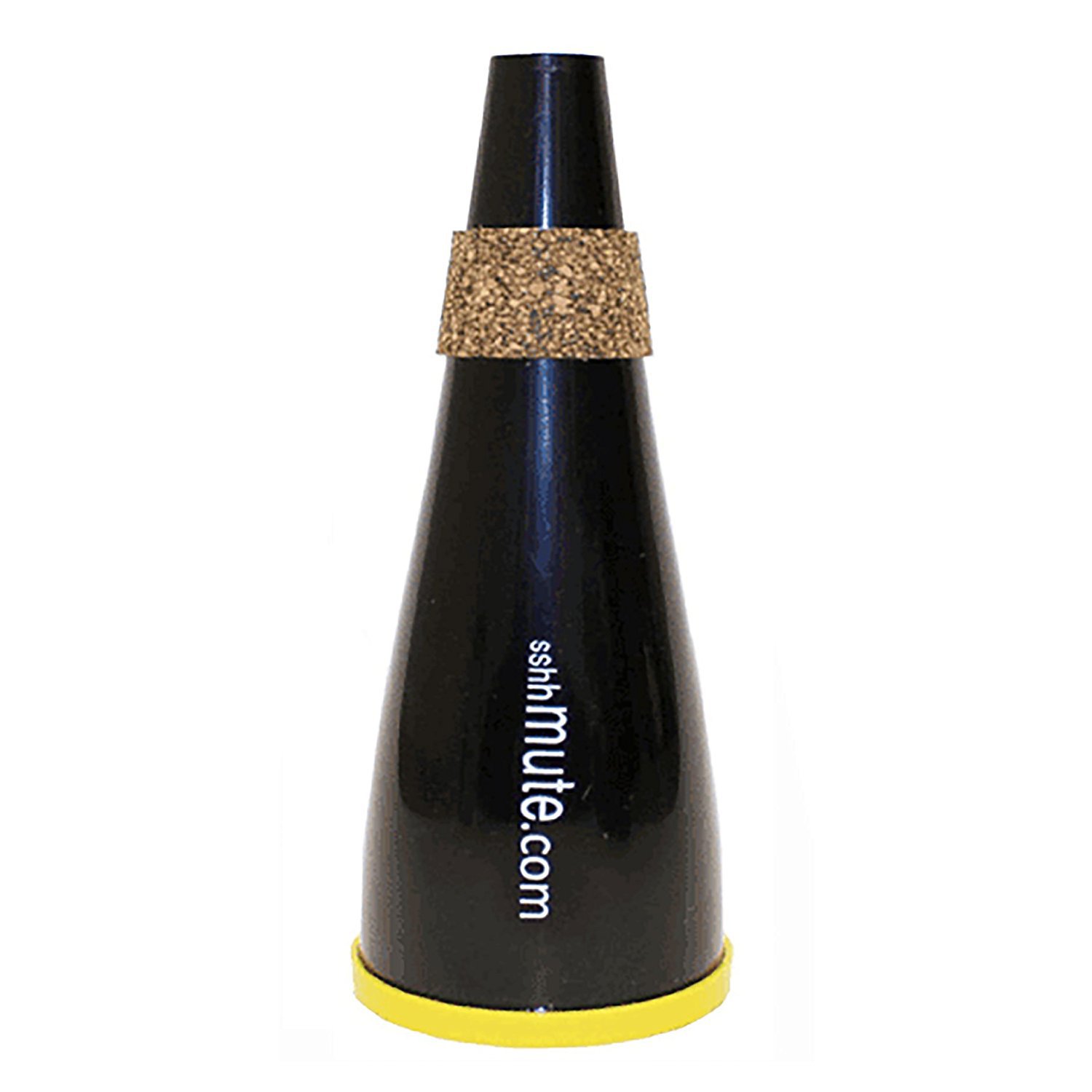
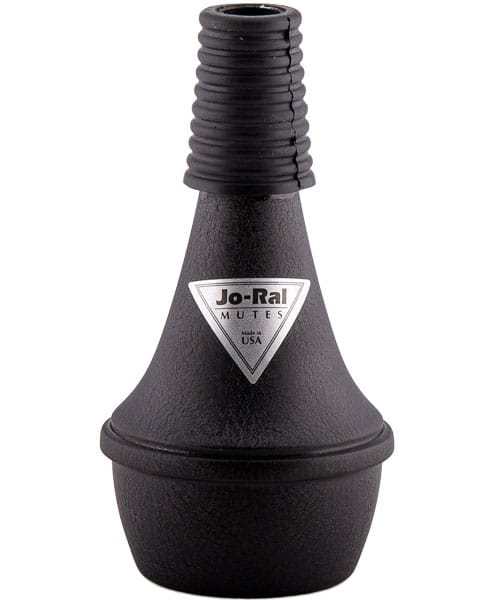
Practice Mutes have become accepted as a necessary evil for brass players. They are not an ideal way of preparing yourself, however there are times where we all accept that you just need to practice or warm-up quietly. Listed below are a number of mutes currently available that will all do the job. They will all have different strengths though, so I have tried to demystify them somewhat with this ‘Buying Guide’.
NB. The prices listed here are meant as a guide and are subject to change.
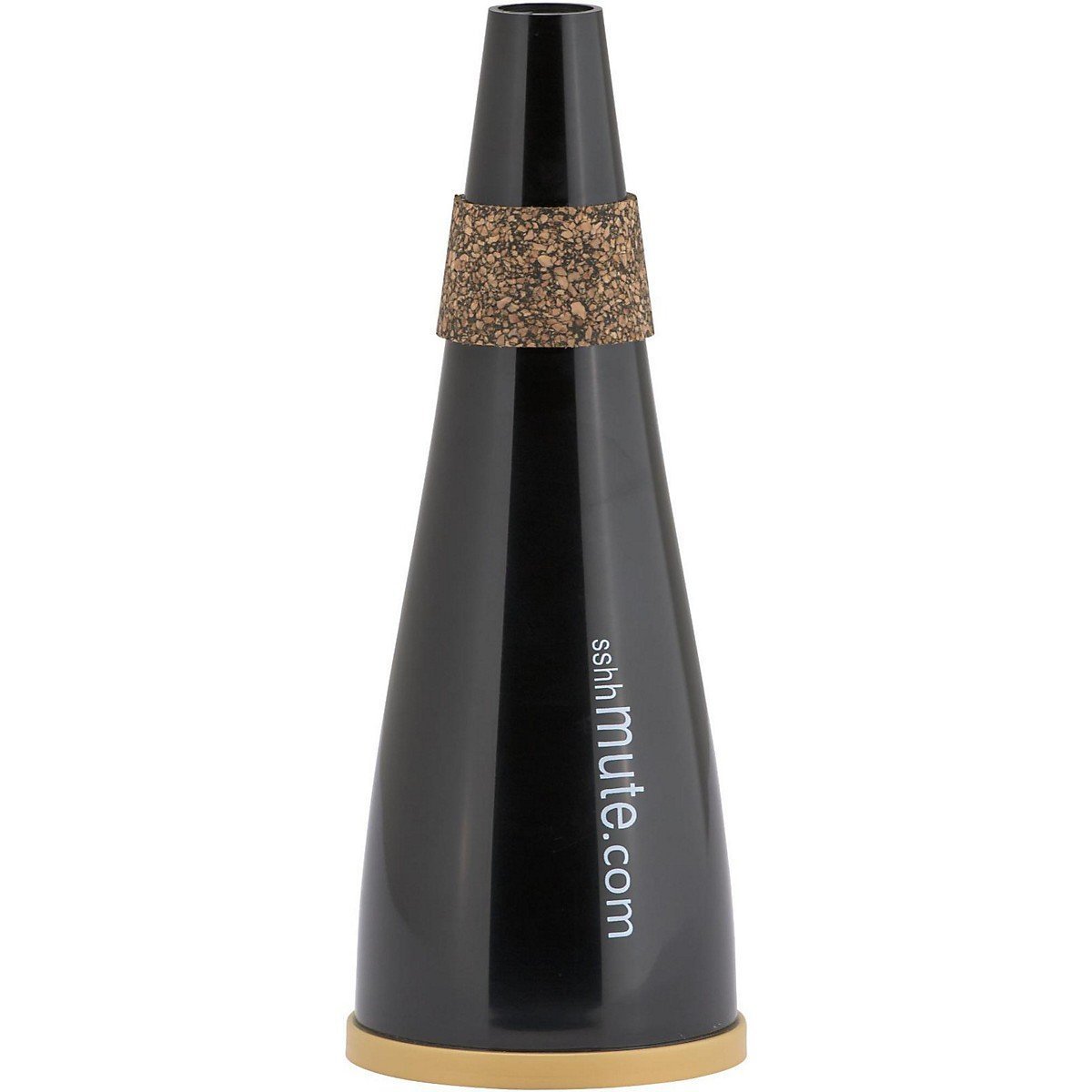
I have put this at the top because it is by far the best practice aid that I have come across. A great mute that does not allow you to overflow while practising, and also has a built-in mouthpiece buzzing aid. Around $80, worth every penny!
A really great lightweight and responsive mute. The intonation is pretty good across the range. Low C and below tends to be slightly sharp as with pretty much all practice mutes, however this is better than most. Priced at just $50, this is a really good all-rounder.
As with the other Sshhmutes, this has very low resistance and a nice quick response. The Whisper Mute has a lovely soft tone that can also be used in a section where a real muted pianissimo is required. Again, a good buy at $50.
This is not the quietest practice mute on the market, however it is one of the most even and allows you to blow pretty honestly. This is a great hotel room tool! $60 for this one.
This is extremely decent especially considering its modest price tag of $35. Back pressure is pretty low, cutting down on over-blowing, and intonation as also surprisingly good for the price point.
This is an excellent compact mute that only just protrudes from the bell. You do not get a feeling of ‘battling’ this mute as it feels really natural. It is quieter than most and also has decent intonation. $94.99
This is a plastic (and therefore lighter) version of Best Brass’ practice mutes. There are some small compromises in resistance and tuning compared to its big brother, however this is reflected in the lower price of $54.99, and it is still a darn good mute!
Like the Lyric Stealth, this has a nice even response across all registers and dynamics. It is softer however, so inevitably has slightly more resistance. $45
This lightweight neoprene will fit easily in any case and is great for travelling. There are a number of sponge ring inserts so that you can adjust the volume and resistance levels. It also doubles up as a very compact bucket mute by hanging it over the bell of your horn. Even if you already have a preferred general practice or warm-up mute, this is something a little different that will always have a use. $39.99
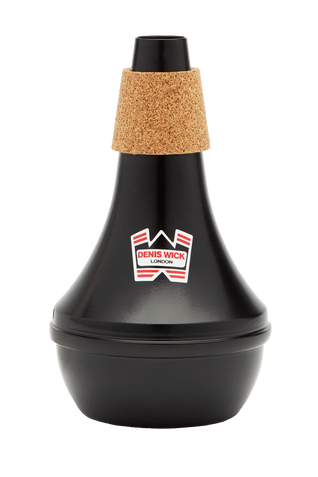
Let’s face it, all of us have probably had one of these classics at some point! A good solid all-rounder that allows for a quiet warm-up. The intonation is perhaps not quite as good as some of the newer designs on the market, however still a good mute for the price. $42.95
The Silent Brass system has been around for a while now, and the latest pickup mute is very good indeed. Now fitting completely into the bell for storage, the intonation, response and quiet volume are all very good. Even at the price of $189.99, the sharpness in the lower register has not been completely eliminated, however the digital technology that comes packed inside the Personal Studio, and the acoustic environment that it creates are exceptional.
Sign up here for new blog articles emailed direct to your inbox:
After visiting the Arena in the beautiful city of Verona some 20 years ago, I have been fascinated by not only its history but its use today as one of the most spectacular opera venues that you will ever visit. Built nearly 2,000 years ago, this outdoor amphitheatre could accommodate over 30,000 spectators, attracting audiences from across the Roman Empire.
What would it be like to work here as Principal Trumpet with its resident orchestra? Well Massimo Longhi knows! He has held this position for 25 years now and has kindly shared his thoughts with us.
What got you started on trumpet?
The trumpet came into my life at 10, my grandfather and my uncle played in my family in the village band.
Who and what were your biggest early musical influences?
Certainly, Maurice Andre was decisive, and then the opera, which still fascinates me and stimulates me, and has opened me up to an incredible world and has influenced my way of playing.
Which trumpeters today do you enjoy listening to?
The one and only… Wynton Marsalis
How did joining the ‘Arena di Verona Orchestra’ come about?
The Verona Arena Orchestra is a full-time orchestra that carries out the summer festival in the Arena from May to September and the rest of the year is produced in the beautiful Teatro Filarmonico of the city (18th century theatre) with operas, concerts and ballets.
In 1993 I won the competition for the position of the first trumpet, and have been there ever since.
The Arena in Verona is one of my favourite places to visit! Was it difficult to adjust to playing outdoors instead of a traditional concert hall environment? Are there any things that you do different technically on the trumpet when playing outdoors?
Every year when we start work in the Arena we need a little bit of acoustic adjustment, the ear has to get used to it. Technically we think we are playing better, rather than stronger, the best thing is to imitate the voice of the singers and to think of projecting the sound. The less force use, the more the sound projects and sings. I do not need use any different equipment for playing in this environment.
Are there any favourite memories or highlights from your time so far in the orchestra, that you would like to share?
Today, just as 24 years ago, when I started working in the Arena, the most incredible thing is the moment of silence that precedes the director’s gesture that starts the show and I can assure you that the silence of 15,000 people is magical!
What projects have you got going on at the moment?
In addition to the orchestra, I have been a conductor for some time. Here is an association that organises my master class concerts and competitions – www.associazionemusicalepozzoli.com
What are the most important things for young aspiring trumpet players to remember?
That the study and the continuous work on the instrument will give the best results, playing an instrument on a professional level means dedicating oneself to it every day. It’s a bit like trying to fill a bucket with a hole in it!
What gear are you playing on?
I am a Yamaha artist and I use their trumpets but the mouthpiece for the trumpet player is incredibly important! I play Frate Precision mouthpieces.
What are the benefits that you have found after changing to your Frate Precision mouthpieces?
The first time I tried them I was struck by how they responded to my ideal sound. It may seem strange but since I use it I have not had any problems with my lips. I also liked having the opportunity to develop some ideas with Dario and I must say that today I am extremely pleased!
Can you tell us a little about the process involved with selecting your mouthpiece?
Choosing a mouthpiece is not simple but if we base the choice mainly on the sound we want, it is easier to achieve. Personally, I have to be satisfied with the sound first, and then later I looked for variations on the edge of the rim and the throat that help me to smooth out any imperfections.
Acclaimed trumpet soloist and respected educator Rex Richardson has been described as “one of the world’s most engaging and astonishingly versatile trumpeters” (Style Weekly), and “among the very best trumpet soloists in the world today” (ITG). I was delighted to be able to catch up with him and to find out more.
What drew you to the trumpet as a child?
I think it’s funny in retrospect, that I began playing the trumpet, only because I’m asthmatic. My family, into which I was adopted as 9-month old, was not the slightest bit musical, but my mother tells me that I was drawn to music from the very beginning. Early on, I joined church and school choirs, and quite surprisingly (to anyone who has heard my raspy speaking voice) I was often given solo parts, so I must have had a bit of an affinity for it. Then at the age of ten, the family doctor suggested joining the school band on a wind instrument to assist with my asthma. Because my best friend at the time played the trumpet, I thought I’d give it a go!
Were there any particular early musical influences, or any musicians now that you particularly admire?
One of my very first influences, before I even really “took” to the trumpet at age 14, was Maurice Murphy. I had the Star Wars soundtrack on vinyl, because as an eight-year old (when the film was released in 1977) I thought the film – and the music – were the best things ever! The London Symphony personnel were listed in the credits, which is how I discovered Maurice and the rest of that phenomenal brass section. Years later I’d be thrilled to play with him and to develop a wonderful friendship with him and his lovely wife Shirley.
I think it was seeing Doc Severinsen on the Tonight Show, as well as seeing the Boston Pops on TV – when the trumpet section included Tim Morrison – that nudged me in the direction of wanting to pursue the trumpet more seriously. From that point, I was spending my allowance on records: Maurice André, Rafael Mendez, Wynton Marsalis (whose first records were just being released), Miles Davis, Freddie Hubbard, Woody Shaw, Louis Armstrong, saxophonist Mike Brecker – these were the earliest influences, but the list started to expand rapidly.
To this day, the list of musicians that I admire continues to grow…to list all of them might be beyond the scope of this interview, ha-ha! I find inspiration in wildly varying sources, from trumpet artists of every stripe to jazz saxophonists, and from classical singers to rock bands. I’ve been blessed to share the stage with a number of my recent heroes (Trumpeters Pacho Flores, Sergei Nakariakov, Til Brönner, Wayne Bergeron; saxophonists Steve Wilson and Chris Potter); some I would love to play with are vocalists Jan DeGaetani, Dawn Upshaw and Inari George, as well as Beck and Radiohead.
I have spoken with a number of players for this blog, and one thing that keeps coming up is how players often get categorised or pigeonholed into one particular genre. This could be a tough one, but if you were pushed to have to categorise yourself into one particular musical genre, where would it be?
Interesting question. I think that everyone finds it convenient to label things & people, but I don’t think it’s so easy to do that for most players anymore. Someone might “live” in a particular genre but make strong statements in another…take Pacho Flores, who is renowned as a classical soloist but whose latest amazing recording features folk arrangements for trumpet and guitar. Or take Mark Inouye, one of the U.S.’s very best orchestral players, who is also a dynamite jazz improviser. In my case, it’s tough because I pretty much split my time and energy as a classical soloist and a jazz musician. I suppose I’d categorise myself as living in “new music,” if that can be considered a genre, because I specialize in post-bop as a jazzer and often premiere solo works on the classical side. However, my last recording featured “old” music – our famous concertos by Haydn, Hummel, Telemann, Albinoni and Tartini (albeit, played on modern rather than period instruments), and I often play tributes to Louis Armstrong or other “older” jazz trumpet legends.
So, I don’t really know! I used to be more concerned with musicians trying to “limit” me with a label, but I don’t really care anymore; I just play music that I enjoy.
You are renowned for your skill as an all-round musician playing a wide variety of settings and styles. Mentally, is there a big shift from going from say a concerto with orchestra to the next night, playing a jazz set?
In a word: YES! The bigger challenge for me is that I often need to shift in the middle of performances; that is, I might do a pops show with orchestra that features concertos in the first half and jazz in the second. But truly, the challenge for me is less about making the shift itself, than it is about being physically and mentally conditioned to play whatever I have to…I find that, if I get out of shape, it tends to be my physical conditioning on the classical side (mostly with regards to delicate attacks, pristine articulation, details like those) and my mentalconditioning on the jazz side (losing my sense of “flow” when improvising, getting rusty in certain keys, etc.).
How do you keep that level of versatility in your playing? Do you have a set routine that works for everything or do you have to change it drastically depending on what gigs you have in your diary?
I’ve found that a balance of disciplined routine and flexible adaptability works best for me. I have certain fundamentals that I love and tend to hit every day: Stamp bending exercises, Clarke Technical Studies with every form of articulation (including jazz), and flexibility. I have a quite elaborate routine with the Clarke book in particular; too complicated to detail here! But working jazz articulation into the mix with along my single, K-, double- and triple-tonguing helps me to feel that it’s natural to switch styles, like switching accents if you’re bilingual.
I also tend to do an elaborate workout on certain harmonically “dense” tunes, playing modes, arpeggios and bass lines, as well as improvising at different tempos, to keep my improvisation skills in shape. I still listen and transcribe too (mostly stealing licks from Chris Potter or other saxophonists I admire!).
Beyond this though, my practicing tends to be based on what I need: What’s the repertoire for the next concert? Am I rusty in some area; e.g., is my single tonguing getting clumsy, fingers stiff, flexibility need a touch up? I have ways of dealing with any area of my playing that may be slipping.
I guess your teaching is pretty important to you? You have been at VCU since 2002 and also a visiting professor at the RNCM – have you found that your teaching methods and emphases have changed a lot over the years?
Yes, while I feel most comfortable and confident in my work as a performer/composer, I really enjoy teaching and feel that I have drawn tremendous personal and musical benefit from working with students, as well as from my long tenure at VCU and my association with other schools. I was International Tutor in Trumpet at the RNCM from 2012-2015 and have been back several times since, to teach and to perform. I really love that place! It’s bristling with musical energy.
For sure, things have changed over the years. When I started teaching, I understood almost nothing about the mechanics of playing; I have always simply found exercises that allowed me to develop skills without considering what I was doing with my lips, tongue, breathing etc. To this day, I feel that this is still a bit of a blind spot for me; I don’t entirely understand “how” I play but I can tell you which I exercises I practiced to get there! So, virtually everything I know about the mechanics of playing the trumpet is through teaching, not through my own playing. On the other hand, I feel I’m pretty good at teaching people how to structure a practice routine.
I still find that I can’t always diagnose student embouchure issues with perfect confidence, so I turn to some of my colleagues, in particular Taylor Barnett and Kevin Maloney at VCU, to help with that. I don’t pretend to be a “master” teacher and don’t tout my students’ accomplishments, which I feel are wholly their own; I simply want to help every musician that I can, and am very happy to enlist the assistance of wiser pedagogues whenever I feel that will benefit a particular student.
What are the key things that young aspiring players should concentrate on?
Get your fundamentals together and be a good musician.
That is, spend the time to acquire the skills required of every trumpeter (healthy/efficient sound production, flexibility in every register, articulation, fingers, etc.), then commit wholly to becoming the best interpreter of music that you can, whether you want to play in an orchestra, improvise, play with rock/pop/folk groups, or any combination of any genres. Remember that people should feelsomething in response to our performances, so as you learn to play expressively – and to master the nuances of what that means in any particular context – you have to stay tuned in to your own emotional connection with music as a listener. I don’t care about my own feelings while I perform; indeed, I always play best when my heart and mind are quiet. However, I want to play in such a fashion that the listenercan have a special experience, will feel moved, or uplifted from hearing the music. If that doesn’t happen, then all my practicing is for naught.
I learned this by simply observing my own emotions when I listen. Being overwhelmed while listening to Mahler’s Das Lied von der Erde,or just by the sound of Coltrane’s saxophone or Inari George’s voice…this is a powerful thing, and I want to my make my own small contributions to music lovers’ experiences.
Most enjoyable project?
Actually, this is a Manchester story! I’ve had a myriad of enjoyable projects of course but playing at Band on the Wall in 2012 with the jazz bands from Chetham’s School of Music really stands out for me. It was the perfect night…the kids were astonishing, as they always seem to be at Chet’s, and we were all – performers and audience alike – completely swept up in the excitement, indeed the magic, of sharing that music. Yes, performing with young students turned out to be one of the most musically satisfying experiences of my career!
Proudest professional moment?
I’d have to say that’s quite recent: I played with Doc Severinsen and the Indiana Wind Symphony in mid-March. Doc heard me play a new concerto by Allen Vizzutti the night before on a different concert, then another new concerto (by the RNCM’s own Andy Scott) on the concert we shared…and we played together too. Doc had incredibly kind words about my playing; I was stunned and humbled by his reaction. It was deeply validating!
What have you got coming up that you are most looking forward to?
These are busy times! Tomorrow morning, I fly to Minnesota to play as soloist with the Adam Meckler Jazz Orchestra, and then on to Wisconsin for a residency at Lawrence Conservatoire. This will be followed by a concert with the Motor City Brass Band in Detroit, then a residency in Austria, doing several jazz concerts (including a trumpet summit with Austrian virtuosos Thomas Gansch and Daniel Nösig); then back to Michigan to work with the Brass Band of Battle Creek, and then off to perform a couple of concertos at the ITG Conference in San Antonio. So….that gets me to the end of May!
My big news is that I’ve got a new CD coming out in mid-May: Freedom of Movement: 21stCentury Trumpet Concertos, featuring the aforementioned works by Vizzutti and Andy Scott, as well as Tony Plog’s Concerto for Trumpet and Brass Band and Jim Stephenson’s “Rextreme” Concerto. That was a lot of work for a multitude of people (recorded in four cites on three continents), and I’m very excited about it!
Thanks for this Rex, and I am looking forward to seeing you at the ITG Conference next month! Is there anything else that you would like to add?
Just wanted to thank you wholeheartedly for thinking about me, John!
For further information about Rex including upcoming concerts and projects, please visit rexrichardson.net
Sign up here for new blog articles emailed direct to your inbox:
D.H. Lawrence writes: “Never set a child afloat on the flat sea of life with only one sail to catch the wind.” The same could easily be said about trumpet students and the importance of developing versatility in not only their playing but also their outlook on life.
To discuss how we achieve this, I have been fortunate to have the thoughts and experience of 2 fantastic trumpet players who have both made careers out of crossing musical boundaries, genres and pigeon holes.
Mike Lovatt is primarily a commercial player (John Wilson Orchestra, BBC Big Band and session and show extraordinaire) although classically trained, who is often asked to guest on principal trumpet with the major orchestras. www.mikelovatt.co.uk
Shaun Hooke is a classically trained player, now Principal Trumpet with the RTE Concert Orchestra in Dublin and regularly also plays lead trumpet with the RTE Big Band. www.dublintrumpetacademy.com
They both have some fascinating insights into approaching very similar problems and challenges, but from different perspectives.
Can you tell us a little about your background as a player, and what you got you into the trumpet in the first place?
Mike: I was born into a musical family. My Dad was head of music at a secondary school and my Mum was a fine amateur singer with the local choral society. Early in his career my Dad began to collect instruments and taught himself to play them. There were no peripatetic teachers in those days and he wanted to be able to teach well enough to form a youth orchestra within the school. By the time he retired he was conducting an orchestra of about 70 children! The trumpet was one of the many instruments lying around the house. I really wanted to play the trombone but at the age of eight my arms weren’t long enough.
Around that age on a shopping trip to the local supermarket, I was drawn to the record carousel and saw a record with a picture of a trumpet player on the front. It was Eddie Calvert ‘The Man with the Golden Trumpet’ I immediately asked if I could have it and after listening to the album I tried to play along with it using an old Selmer. I was hooked! Trumpet playing was all I wanted to do.
I began to play in my Dad’s youth orchestra and eventually the Staffordshire youth orchestra. I really wanted to be a professional and every day I would rush from school to try to play along to all sorts of records. I would pretend I was doing a concert with the Syd Lawrence Orchestra or that I was Maurice Murphy with the London Symphony Orchestra or a member of the PJBE, or the great Kenny Baker. This developed my ear not only for pitch but also for sound, style, articulation, placement of time and phrasing.
Disaster struck when aged 14; I was involved in a serious cycling accident. I lacerated my top lip and lost several front teeth. I thought my playing days were over. Thanks to the skills of the plastic surgeons of the North Staffs hospital I healed and began to try to play again. At first it was terrible, I could not produce a sound. Eventually I got it working again enough to do my grade 8 and I then auditioned for the music colleges. The range I previously had didn’t come back however and it wasn’t until I discovered the Maggio system some 10 years later that finally my chops came together.
I was fortunate to study at Trinity College of Music in the 80’s. My teacher was Norman Burgess, formally principal trumpet of the BBC concert orchestra, and later co-principal in the BBC Symphony. He taught me to be as versatile as possible with a view to being employable in the future. He also encouraged me to attend the extra-curricular college big band rehearsals run by the great Bobby Lamb. There were no Jazz courses available at music colleges back then, so I was lucky to be able to learn from these two great musicians who between them had a wealth of experience from all sides of the profession. I quickly realized that whatever style you play, a good solid technique on the instrument is essential. With a strong technical foundation and embouchure, it is possible to cope with the demands of all styles of playing.
Shaun: I grew up in Leicestershire in England. I was enormously lucky to be able to avail of free trumpet lessons provided by our County Music Service. Particularly Don Blakeson, who was taught by David Mason who in turn apparently could trace back teacher to teacher all the way back to Handel’s time! I’m doing the Messiah next week so hopefully something has worn off on me. I was also heavily involved with Enderby Silver Band. I started with them as they reformed in ’77 when I was a nipper and enjoyed many happy years growing up with so many wonderful people to mentor me.
I decided to do Chemistry at Oxford University rather than going on to music college, but I had the trumpet bug and after completing a doctorate I knew I wanted to at least give pro trumpet playing a go. Jon Holland and Wes Warren at the CBSO taught me orchestral skills and still now I put myself back in their presence the moment before I play something. What did Jon say to do here? What was Wes’s trick for this?…
Quite quickly I was appointed to Principal Trumpet in the RTE Concert Orchestra but to this day I’m still thinking about how these guys coached me and I’m passing it on to my own students.
Your job involves you constantly switching styles – do you have a regular practise routine that encompasses everything, and what are the most important things to concentrate on?
Mike: I believe production is key across all types of trumpet playing. In commercial music, big bands and some Jazz playing the style requires a more defined articulation and sometimes brightness and sizzle in the sound. I always maintain that under that brightness there should be a full broad tone across the entire register. High notes are expected in lead trumpet playing and some areas of commercial music and so should be developed. However, they must never be the be all and end all at the expense of a good sound and considered playing. Super C is almost normal range these days but it’s important to have a full rich centered sound. You should always use your ears and listen to all types of music… try playing along with the music you listen to and copy it. You could also record yourself playing different styles and listen back and compare. For a particular style to come across to the listener, it needs to be exaggerated.
Shaun: I don’t really have a set practice routine. As a full time performer, I think it’s important to have some time away from the trumpet. I try to have one day a week where I’m neither playing or studying repertoire to help clear the head and relax the muscles. My emphasis on preparation is looking after the basics. Generally, I always have plenty of strength, stamina and range because I’m working pretty constantly. There are skills however that might not be required week in week out, and these are the ones that I’m careful to maintain at home. Flexibilities and double and triple tonguing can get rusty pretty quickly if you don’t end up being asked to produce them, particularly valve/tongue coordination so these are the things I always make sure stay sharp. The other golden rule is “practice what you’re NOT doing currently.” If I’ve been doing lead big band charts at work I try to make sure I play something at home on my regular orchestral mouthpiece and something on the piccolo trumpet – choose something for my own pleasure rather than something coming up in the schedule. Vice versa, I always try to do 15-20 minutes on my lead mouthpiece, 2-3 days before I start a project that is going to need that. Other than that, I try to listen to recordings of stuff I have coming up. Not really to familiarise or learn repertoire but more to guard from getting “stuck in your ways”.
It’s nice to be inspired by others and try to do repertoire differently the next time it comes around. I listen to lots of players from the 20s,30s and 40s and try to emulate their styles. There are lots of transcriptions of their solos and I like to collect the original recordings.
Do you have a basic instrument and mouthpiece setup that covers most things, or is it very different depending on what the schedule brings?
Mike: My basic trumpet and mouthpiece set up is the same for most of the works I perform. I play my own signature model Mike Lovatt Smith-Watkins Bb Trumpet exclusively. It is a 460 bore. The bell is similar in size to a Bach 37 except that is a heavy weight. I have two gold plated instruments and one that is silver-plated. I use my own range of signature mouthpieces of which there are three models: Studio, Lead and Classical.
The majority of my playing is done on the Studio mouthpiece. On this set up I play first Trumpet in the John Wilson Orchestra, perform lead on the West End show 42nd Street and the BBC big band, and when on first trumpet in Studio sessions. Mouthpieces are very personal and what works for me may not work for someone else. Lip formation and lip thickness determine what might work and feel comfortable to the individual. My mouthpieces are perfect for the various styles required of me. It seems other players like their ability to be used in different settings. When playing in the high register, I find the Lead with its large back bore, medium shallow cup and the comfy 5ish Bach diameter rim enables me to produce a bright sound I need, and stamina is helped by the resistance being transferred to the trumpet through the large back bore. I use my classical piece (more or less a Bach 3C) for studio sessions sitting down the line, my practice and occasionally on first trumpet if I require a broader darker sound.
My instruments have different qualities because of the plating. The silver ML Smith Watkins trumpet enables me to produce a cutting bright sound not only useful in Lead but also certain styles of orchestral music too. I don’t change lead pipes for different styles of playing. I could if I wanted, as the trumpet features an interchangeable leadpipe system. However, I like to keep the feel (resistance) of the instrument the same regardless of the genre of the music I am playing to help me with my production and familiarity in supporting the notes and sound. I use the ML designed pipe that comes with the trumpet as it balances perfectly with the 37-size bell and the bore size of the instrument. The most important thing here is sound quality whether it is classical, jazz, lead in a big band, pop horn section or solo.
Shaun: To be honest, kit is everything in my job. We try of course to perform in the correct style, but the range of sounds and timbres required is so varied that it really means you need some different equipment to achieve that. At the beginning of my career I did that mostly by playing on my beloved Bach (then later Yamaha) B-flat and using quite a variety of mouthpieces. It had a degree of success, but it is hard work on the embouchure, chopping and changing rims, cup depths, throats, backbores etc… and I certainly felt that my tuning and accuracy suffered.
For the past number of years I have had a different approach. My responsibilities at RTE were putting more emphasis on my role as lead trumpet in the RTE Big Band and I felt I needed a dedicated lead instrument. I tried great gear from Shires, Smith-Watkins and Schilke but I fell in love with B&S’s JBX trumpet. When I’d decided to buy this, the store asked if I’d like to try the B&S Challenger II trumpet (their standard classical model). Well I loved it. So now I have two B flat trumpets, one for classical work and one for light repertoire. The huge advantage for me is that the reverse leadpipe is almost the same on both, the bore is the same, the bell profile is the same, so the tuning slots and the way it “blows” feels entirely similar, making it so easy to switch back and forth.
But the JBX bell is lightweight and has a French bead giving it a really exciting live fizzing sound. Whilst the Challenger II bell (a 43) is much more solid and rounded sound much like the Bachs I’d been playing for the previous 30 years. Since then I have B&S C and E-flat trumpets both light and heavyweight bells. As to mouthpieces I use a Bach 1 1/4c on both of my B-flats for orchestral (Challenger II) and “Show” work (JBX). For lead work I use a Marcinkiewitz 3/3C. I turned up at work once without my old lead mouthpiece and was loaned this by my excellent co-principal Eoin Daly – I liked it so much I bought 2 so I could keep one at home and one at work and therefore wouldn’t be caught out again. I have a Schilke piccolo that I use for recording work but have recently just bought a Scherzer rotary valve piccolo for baroque and orchestral repertoire. Again, it’s all about making the right sound. I use a Marcinkievitz 7s mouthpiece on the piccolo. I found one in 1989 in an “odds and sods” box at a band competition thinking it would be a good “screamer” mouthpiece but it didn’t work for that. It got me through a tour of Brandenburg 2 though so I’ve stuck with it.
How has the versatility that you require affected the way that you approach teaching? Do you recommend that advancing students work on a wide variety of playing styles or concentrate on fundamentals?
Mike: The versatility that I have developed over the years is something I try to pass on to my students. I encourage listening to all types of music. This is essential for stylistic development. Occasionally this is done in lessons but I encourage listening to be done on a regular basis to keep ones ear in tune with different styles. A couple of years ago I gave a trumpet class at a major conservatoire in London and when I asked if anyone had listened to any music recordings or attended concerts recently, not one of the 12 classical trumpet students had. One of them admitted to listening to Bruno Mars three days previously!
I teach fundamental trumpet techniques. First and foremost, I make sure the student has a solid embouchure formation and can make a good basic sound. I’m a stickler for note production and articulation so there are exercises based around those techniques using Arban and Schlossberg. I use Caruso, Stamp, Maggio and my own ideas to develop the embouchure. I try to instill playing with reverence for the music. Long notes are important to develop resonance and to find the ‘soul’ of the note and the core of ones playing. When you have control of the sound, this can be adapted and applied to whatever style you are playing. I teach different vibrato techniques and ways to help note projection whether at the back of an orchestra, in a west end pit or in a studio microphone technique to record well.
Shaun: The music business is hard and getting harder. I always encourage my students to be flexible even if you’re pretty sure that you will be going in one particular direction. Make sure you have the skills to be able to say ‘yes’ to the next call and go in and do a good job. It is a wonderful way to earn a living but at the outset, you need to be out there making contacts and proving your professional credentials. One of my colleagues in the RTE CO was a regular in a German Beer band to put money on the table while he was trying to break into the orchestral scene. Work hard but don’t be over focused is my advice.
What is easier, a classically trained player playing light music or a commercial player playing in a classical orchestra section?
Mike: As someone who has dipped my toe into both sides of the profession, I am inclined to say that both styles are as difficult as the other to play convincingly. You need to apply yourself honestly to the style and exaggerate it enough to come across to the listener. I have always had the view that trumpet playing is trumpet playing and that the most important quality to have is solid musicianship built from listening. Always listen carefully to your sound and the music going on around you. If you’re playing third trumpet in a classical section on a film soundtrack recording, you then respect that and whoever is on first trumpet. Try to blend with them and above all support the sound style they are playing. The same goes for an orchestral player playing big band repertoire on a symphonic pops date. I have played with orchestras from San Francisco Symphony, the Concertgebouw Amsterdam, CBSO, BBC Symphony, LSO, LPO, Philharmonia, BBC Scottish, BBC Philharmonic, RTE Concert, Gothenburg Symphony, BBC Concert and many more. On many of these occasions my role is to help shape and lead classical players into becoming commercial big band section players in a three-hour rehearsal followed by a concert. Some seem more capable of giving up to the music and using their ears more than others. If they have a solid technique and command of their instrument, then they are more able to adapt successfully.
To quote John Wilson “anyone who can play good lead trumpet in a dance band can play first trumpet in a symphony orchestra”.
I think it can be difficult for ‘classical’ players to get used to playing swing quavers, combined with the way in which articulation changes in commercial playing. I always try to help by singing the phrasing to them and making them feel confident they can do it. It’s also important to tell the players to articulate and play the shorts and longs accurately.
Shaun: I think that it is not always right to pigeon hole people like that, but there are people who specialise of course. I remember taking the chance to have Tony Fisher come over to cover a James Bond concert for me when my wife was about to pop with our first child. Of course, I waxed lyrical to our management – he was interviewed for RTE radio about the very first Bond sessions including of course the original theme track – it was a brilliant week. Then the baby was born, and I was gone for a few weeks and they asked him to come and do a week of Mendelsohn… he gracefully declined – although it would have been interesting I expect!
I come from a classical background, trained over the years and “on the job” to do light repertoire, and I have local guys here that slot in well in the RTECO and RTE Big Band, but similarly we have guys who mostly do commercial work who are fine sitting down the line on orchestral repertoire. We have lots of mixed programmes where this is required. All the “classical” guys have plenty of “light” experience and the commercial guys are for the most part classical trained so have orchestral skills and can TRANSPOSE. That is the key!
What challenges and projects have you got coming up?
Mike: I’m so happy I’ve managed to carry on doing many varied projects, gigs and recordings with orchestras, bands, groups and big bands all over the world. My future projects include my first solo album with the amazing Fodens Brass Band, directing the Stockholm Radio Symphony Brass in a concert of Billy May’s Big Fat Brass music, big band lead trumpet sessions for Gary Barlow, UK jazz festivals this summer with the Skelton Skinner all-stars, concerts with the John Wilson Orchestra, concerts and broadcasts on lead trumpet with the BBC Big Band, continuing on lead trumpet for 42nd street and as guest first trumpet for the Symphony in Antwerp. I am fortunate to be looking forward to such a stylistically varied schedule.
Shaun: A few highlights of upcoming stuff are: The Classical Series at the National Concert Hall featuring Mozart, Mendelssohn and Beethoven; studio work with Irish singer/songwriters for rock station RTE2FM; Giselle with visiting English National Ballet, Bartok’s Bluebeard’s Castle with the Irish National Opera. Up to our summer holidays we are also doing 4 sell-out shows at the Donnybrook Dublin Rugby Stadium and The Marquee in Cork with RTE2FM of 90s dance anthems! Hopefully we will tour this show in Australia in the autumn.
Used to distinguish new sessions and visits. This cookie is set when the GA.js javascript library is loaded and there is no existing __utmb cookie. The cookie is updated every time data is sent to the Google Analytics server.
30 minutes after last activity
__utmc
Used only with old Urchin versions of Google Analytics and not with GA.js. Was used to distinguish between new sessions and visits at the end of a session.
End of session (browser)
__utmz
Contains information about the traffic source or campaign that directed user to the website. The cookie is set when the GA.js javascript is loaded and updated when data is sent to the Google Anaytics server
6 months after last activity
__utmv
Contains custom information set by the web developer via the _setCustomVar method in Google Analytics. This cookie is updated every time new data is sent to the Google Analytics server.
2 years after last activity
__utmx
Used to determine whether a user is included in an A / B or Multivariate test.
18 months
_ga
ID used to identify users
2 years
_gali
Used by Google Analytics to determine which links on a page are being clicked
30 seconds
_ga_
ID used to identify users
2 years
_gid
ID used to identify users for 24 hours after last activity
24 hours
_gat
Used to monitor number of Google Analytics server requests when using Google Tag Manager
1 minute
_gac_
Contains information related to marketing campaigns of the user. These are shared with Google AdWords / Google Ads when the Google Ads and Google Analytics accounts are linked together.
90 days
__utma
ID used to identify users and sessions
2 years after last activity
__utmt
Used to monitor number of Google Analytics server requests