The 45th Annual International Trumpet Guild Conference begins now! Trumpeters of all ages will find this virtual workshop an opportunity to improve their playing by accessing the Conference content for an entire 60 days! Don’t miss this opportunity to learn from over 200 of the finest players and teachers in our profession. For those students who are on break, this is a great way to stay engaged and maximize progress while away from school!
If you are serious about improving your trumpet playing, this is the resource you have been waiting for. Register today!
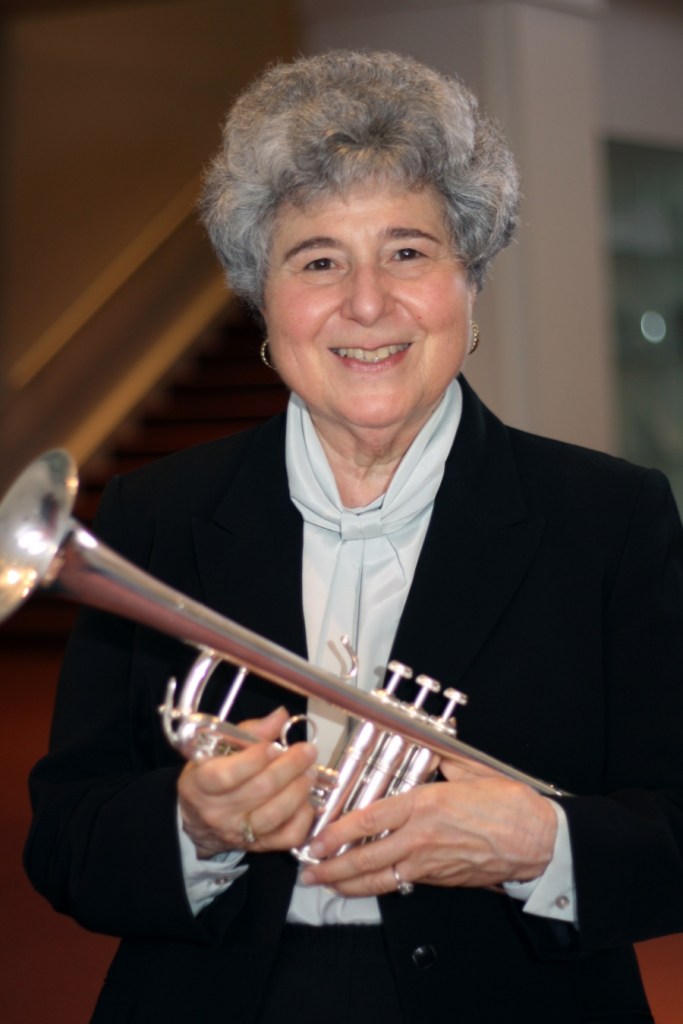
In an effort to share the many ways the ITG serves the worldwide trumpet community, the International Trumpet Guild is regularly sharing content from the ITGJournal on their social media platforms (as well as here on MouthpieceOnline.com!). In January of 2020, they featured one of their ITG Honorary Award winners, Marie Speziale, in an article by Wendy Matthews and Marcelyn Atwood.
Marie was the first woman trumpeter ever to be appointed to a major American orchestra, held the associate principal trumpet position with the Cincinnati Symphony for 32 years, and, more recently, built one of the top trumpet studios in the US at Rice University. Marie is a kind person, nurturing teacher, and wonderful ambassador of the trumpet. Please enjoy learning more about her here:
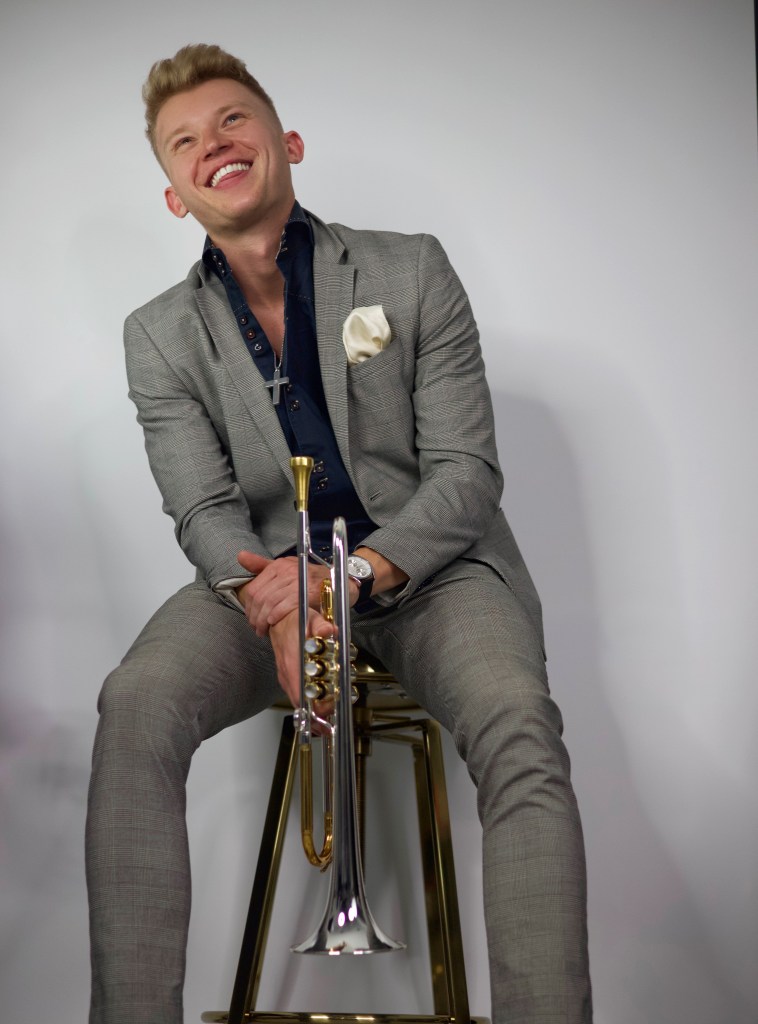
2020 was a tough year across the globe, but despite this, Evan Taylor continued his upward trajectory as a winner of ‘Jazz in Europe 2020’ and a finalist in the ITG’s Jazz Improvisation Competition. So what is next for this talented young man?!
What first drew you to the trumpet?
When I was about 10 years old my dream was to be a drummer. In fact, I had saved up and bought a Pearl drumset that I kept in my room and used to play it every day. My mother made me join the school band in 6th grade, where I assumed I would be a percussion player. However, the program I was joining required that you spend one year on either, Flute, Clarinet, Trombone or Trumpet. My uncle had an old Bach trumpet lying around, which would eliminate any rental costs for my parents, so we decided that was going to be my avenue for the first year. Not long after I developed a natural affinity for the horn and it became my pride and joy!
Can you talk a little about your early influences and inspirations?
My early influence for music was Church! My grandfather was a pastor, and my father and mother had both dabbled in music. I grew up singing in church, playing guitar in church, etc. My influences on the trumpet were Bob Parker and John Taranko. Bob was a choir director at Ludington High School, who had previously studied classical trumpet at Michigan State University. Both were my private instructors in high school and middle school and helped develop my early playing. I think at the time I was listening to mostly Lee Morgan & Blue Mitchell records.
What styles and genres of music were you into as a child?
As a child I loved listening to my mom’s CD’s. Mostly contemporary christian and gospel music, I recall a lot of Michael W. Smith albums. I would pop them into the DVD player and just sit on the carpet listening to them in the living room. I was attracted to a lot of John Mayer’s early albums as well, my mom was a big JM fan. She had all his early albums on disc and would keep them in the car!
And now? Who are your biggest influences?
My influences have a pretty widespread variety now, on purpose, because I’m trying to diversify as much as possible. Kris Johnson and Etienne Charles were two musical mentors that I studied with over the course of the last six years who have had a big impact on the way I treat my journey. As far as the trumpet goes, the last few years I have been really listening to and digging into the style of Marquis Hill and Sean Jones. A lot of my writing techniques are in an attempt to emulate them or pull sounds from the same palette. However, I’ve found myself working much with analog sound production in the last two years. I have a home studio where I record and I’m constantly checking out different styles of beatmaking, house music production, and hip hop artists. This has drastically changed the way I think about ensemble playing and how trumpet / horns fit into recorded or performed music.
When did you realise that you wanted to play the trumpet for a career?
Sometime around the end of highschool I decided if I was going to do it, I needed mentorship. I was really inspired by my time studying at Michigan State University and the music faculty there really shaped my playing abilities. I don’t think I ever realized it, I think I was sort of just pulled in that direction because of things that had occurred in my life. Music had always been my way of connecting to the world, and trumpet became my voice for that.
You have had some fantastic competition success so far. Can you talk a little about preparing for big competitions like the 2020 ITG contest?
Thank you so much! ITG was a really cool experience that pushed me extremely hard. They had a heavy hitting staff list applied to judge the competition. I really had my head down during that time and knew it was a big deal to even have the opportunity to be a finalist. I focused hard on my fundamentals, I developed a pretty distinct practice routine in the months leading up to that competition. We recorded the tapes for it on campus at the University of Utah. I really learned a lot about improvisation while I was getting ready for that, I spent a lot of late nights in my home studio just listening to Greg Gisbert and Clark Terry albums.
Do you have set, regular practice routines that work for you? Do these play a big part when you are teaching too?
Yes, one-hundred percent. I still do Arbans 47 almost every day. It’s like breathing for me. I don’t even really think about it anymore, and I can play it almost any way you can think of, and definitely in all 12 keys. I put all of my students on this exercise and make them learn it. It’s an interval study and if you can get it in all 12 keys major, minor, harmonic minor, altered, it can really really change how you think about music. I also do a longtone flush every day just to keep everything vibrating smoothly. This helps me with range, tone development, and just staying fluid. I practice more fundamentals than I practice anything else at this point, mostly because I don’t always have time to do the things I’d like to work on. I’m too busy recording or out playing gigs, etc. Gotta make sure the lips are working at all times and I’m ready to play whatever is put in front of me.
Can you talk a little about the your relationship with Victory and the process of selecting your horn?
The owner of Victory, Melvin Quinones, is one of the sweetest people you will ever meet. He is one of the most humble, genuine cats I have ever come across in the music industry. I connected him via my friend Candido Abeyta who has been a Growling Sax artist for Melvin for the last several years. My first time meeting Melvin in person we stayed in a hotel in Anaheim my first year as an artist for Victory and worked together at the NAMM conference testing horns and comparing Victory trumpets with a few other brands. Melvin has always taken great care of me, and when I found out they were developing a horn that had a Christian stamp on it, I knew I had to try it. The “Trumpet of Jesus” professional model is by far one of the best horns, if not the best horn I have ever tried. It fits me perfectly. I believe in God, and destiny. I believe that this company has created something truly, truly, heaven blessed by designing this horn model. It was a no-brainer to decide to be an artist with this company.
How has the COVID lockdown affected you and your work? Have there been any positives that you can take at all from this?
COVID was one of the most dramatic, hard times I think any of us have ever been through. I lost a lot of friends because of this awful, dreaded virus. I’m confident that this time has revealed a lot about our culture and the things we truly cling to. I’ve changed a lot in the last two years and realized what I value. Life is short. As far as priorities go, I just want to put God first, then family, close friends, and music last on the list. I hope that my trumpet playing and musicianship can inspire people, and honor the people I’ve lost.
What are your plans and ambitions for the future?
I just moved to Miami, FL this week. I made the 35 hour drive from Salt Lake City, UT to here throughout the course of the week by myself. I’m hoping by moving here I will have made a grand step in the right direction. I will be continuing to do studio recording work for several companies, meanwhile working on pursuing my artistry and broadening my network. I’m humbled to be affiliated with the projects I am currently on, many of them I can’t talk about at the moment, but my team has big things cooking for 2021! I’m very blessed to have plenty of work already lined up in Florida as a trumpet player, producer, and composer. I also teach private lessons via Zoom for a local music program in Detroit, Michigan. My ambitions revolve around building a healthy lifestyle that honors God and my family, and I hope that my music can be a vessel that contributes to that process. Much love!
The International Trumpet Guild’s Listen and Learn workshop is an online festival featuring five days of original performance and pedagogical videos by over 50 artists. This exciting event happened at the end of October 2020 but all resources are available on the ITG website indefinitely. And best of all, these resources are available for free to ITG members and non-members alike!
From Grant Peters, ITG President:
The ITG Board of Directors is pleased to offer this weeklong event featuring original performances and presentations for trumpeters everywhere to enjoy. You will be able to view an entirely new program of original material for five days. This online event is free of charge and will remain on our site indefinitely.
For those who may be new to ITG, this collection of videos is representative of the spirit of collaboration and sharing found in our organisation. Trumpeters from major symphony orchestras and service bands, jazz and classical soloists, professors, freelancers, and historical specialists – to name just a few – coming together to help each other improve and enjoy all that the trumpet has to offer.
I would like to thank the artists and presenters for generously contributing their time and talent to make this wonderful resource available to us all. Sincere thanks are also due to our Listen and Learn chair, Aaron Witek: video editor, Aaron Jansen; layout designer, Eric Millard; and the entire committee for their work to make this event available to our colleagues in a year when we were unable to meet for our annual ITG Conference.
While visiting the ITG Website, be sure to take some time to look around and learn more about our organisation. Now, please enjoy Listen and Learn!
Many incredible musicians have contributed to this resource including Allen Vizzutti, David Hickman, Chris Coletti, Vince DiMartino, Mary Bowden and Bria Skonberg to name just a few.
The International Trumpet Guild continue to offer great support and resources to our worldwide trumpet community – you can read the latest updates from the ITG newsdesk on this dedicated page on Mouthpiece Online.
Sign up here for new blog articles emailed direct to your inbox:
When you talk about getting your trumpets adjusted so that they respond perfectly to you or matching and adjusting a mouthpiece so that it works perfectly with your horn, you are probably already thinking about Bob Reeves!
I was able to meet up with Bob at ITG 2018 for a coffee and a chat about his career. In 2018, Bob was celebrating a staggering 50 years in the industry. I am sure that he has some pretty special stories to tell, but in this interview, we mainly stuck to the technical stuff and the fascinating challenges that he faces in helping us all to be better players.
One of the topics that readers would like to hear about is matching the right equipment to players. What can you tell us?!
When I started in Hollywood it was the capital of music. There was so much recording going on there. There were great players already in Los Angeles but also lots of touring orchestras from the US and around the world would visit. I used to work with whatever they brought in for me to look at. My philosophy is to service. I am not a salesman; I don’t sell things. I listened to players to work out what will make their life easier.
Take one great Hollywood trumpet player, Tony Terran. I saw him 3 times a week looking at adjusting mouthpieces. I had pretty well perfected the process for valve alignment – I call that the foundation. If that is not right, you can forget the rest of it. So, one day I took his trumpet, took it in the back, cleaned it and did a valve alignment on it, and brought it back. He then came back 3 days later with all of his trumpets and his son’s, had them aligned, and never needed to have another mouthpiece adjusted in all his career.
I stayed in touch with his son who now still uses those same trumpets in Las Vegas and says that he doesn’t ever need anything else from a horn. I like to hear that. Like I said, I am not a salesman, I don’t care what people come in for. I hear them play, and that gives me most of the answers to where their problems lie. If I can fix that by looking at the player and their equipment, that is great. I don’t have to sell them something.
So, if you are listening to a player, can you confidently diagnose their technical deficiencies just from the sound?
Yes. I won’t mention any names, but there is a particular trumpet soloist who makes me crazy. I can hear on recordings that they are a very fine musician, but there are some technical problems that I would be able to fix given a chance. I can hear that the instrument is very badly out of alignment, so every note sounds different. And you can see looking at their face while playing that it is a battle and is having to overcompensate. Maybe one day I will reach out to them!
I built trumpets at Benge back in the 60s. I was the worst guy in the place because I always wanted to try to improve things. After 3 years, I didn’t have a friend in the place! I am not sorry about that at all. It started me on the process of making trumpets to be as good as they can be. And I still keep working on it today.
Trumpets built today by a number of manufacturers are very poorly made and adjustment is essential. Many instruments are designed alongside great players, but the problem is that at the mouthpiece end of the instrument, you can’t really hear yourself clearly while playing. I will always listen to the sound coming from the bell. That is what matters. You have to be able to tell where the note actually starts. I can tell you whether the note is starting inside the bell, at the edge or even outside of the bell. You cannot tell this when you are playing.
All the time that I am working with a player, I am listening carefully to their sound and how they describe what they are not satisfied with, but I am also slowly teaching them to listen too, as they have often never thought about it before. You are busy in your head when you are playing so you tend to ignore things. Maybe you are just glad to get the note!
So, doing the valve alignment is the foundation to figuring out any other problems. Higher register is where I see the biggest problems occurring, often with very fine and strong players. People reach a point where they change from what they can do instinctively with their good technique and change to try to ’muscle’ the next note out. This is an area that I often work on both in trumpet and mouthpiece adjustment but also in that player’s own technique.
I have a good friend and talented trumpet player. He could play solos with double C and triple C, just like songs. He had that upper register so figured out that he could just ‘play’ the thing without thought. He never looked like he was working hard. And he did that on a standard mouthpiece. There are very few people who have figured that out!
So how do you approach it with a customer when you know that there are things as much about their own trumpet technique that need to be fixed, as well as the trumpet and mouthpiece? That must be tricky!
Everybody who comes in has their own opinion. If it is correct, I say nothing. For most players, it takes more time to adjust their thinking than it does to adjust the horn. The mouthpiece is David and their own mind is Goliath! Through our conversation I need to slowly get them to give up a little – as my suggestions gradually become more successful, they become easier and easier to work with. The next time they come back it is much easier.
What are the most common adjustments to mouthpieces that you make?
The rim is the most important to most players. Most people come in with a rim that they like, so I just cut the rim off and work with that if it is already comfortable for the player. Then we work on finding something that matches the sound that he wants and also with the kind of resistance that he wants to match that horn. I don’t tell anybody what to do, I don’t make choices for people. I advise, but you’ve got to make the choice that is right for you. You’ve got to be happy. That’s the only way that I am going to be happy.
Is there ever a battle where perhaps people don’t like to hear what you have to say?
Absolutely. A few people have packed up their stuff on me. You know what, sometimes they don’t come back for years. And then all of a sudden, they come back because someone else has eventually convinced them.
Which of your customers over the years have given you the most pride in the changes that you have been able to help with?
There are so many and don’t want to leave anyone out! One example would be the 8 hours that I spent with Hakan Hardenberger and changed everything that he came in with! He did a concert the next night and sounded great. Doc Severinsen has been a great guy to work with. Sometimes it is difficult as he always has his own opinions and you have to work with that. He is a great trumpet player and a terrific person. There really are too many great players that it has been a pleasure to work with!
Are there common preconceptions that players come to you with?
We talk about the gap between the end of the mouthpiece and start of the leadpipe. People have opinions about that, professors have opinions about that. The player tells you that they must have a gap of precisely X. Nobody can tell you that, it is very personal. For you, that gap might be 2 hairs’ width too big or small, but some people will remain adamant until you have proved it to them. 6 thousands of an inch gap completely changes the way that the horn feels and sounds. Getting the gap right is matching the mouthpiece to the trumpet. That gap cannot be taken to the next trumpet. You have to discover it all over again. That is what got me started thinking about building sleeves, because the player wants to have one mouthpiece in a number of different horns. I think of mouthpieces as tools – I probably have 25,000 different ‘tools’ in my shop, all with different purposes.
If you are playing the horn in a small room, you may want a different gap than you may want in a larger room. The reflected sound coming off a wall in a smaller room is going to be very different to what a listener will hear when you are playing in a concert hall. This is one important thing that I have to teach players when they come in. If I convert a player’s mouthpiece to the sleeves system, I suggest 3 sleeves. At first, the player wants the one that works there and then. It may not be perfect in the next venue. So, small variations may sit easier for different performance settings.
The important thing for me is not to have a plan for a particular player until I have heard them properly. Then, I will have a number of options in mind for us to experiment with. I have been doing this a lot of years now, but I will never presume to know exactly what will be perfect for each player that I hear. It is really important to try the things that your instincts tell you may not be right too!
‘Service’ always needs to come first, certainly before ‘sales’. I hope that this is something that continues in our industry, but it is hard to predict what is to come for different companies in the future. The thing that I think about at the end of each day is the person that I have helped and whether or not their life is a little easier. Not, whether I have made money or not.
Are there any new developments or tools that you are looking at for the future?
We are always looking to see what we can improve both in the products and services we offer, and in our manufacturing processes. For trumpet, our latest thing is a project of mine that I had wanted to do for several years. I took good examples of popular rims and cups — 3C, 1-1/2C, and some others – and designed a backbore to go with them that keeps their classical sound but improves their intonation and efficiency.
Our biggest developments have been for trombone. I’ve done custom work for trombone players since the beginning, but for the first time we released a line of stock mouthpieces in collaboration with Noah Gladstone of the Brass Ark. We have models for small and large bore tenor and bass trombone. It’s been great to see players like Jay Friedman and Charlie Vernon of the Chicago Symphony and David Rejano Cantero of the L.A. Philharmonic using our pieces. Besides the stock and custom mouthpieces we make, we now also offer our Reeves Sleeve system for large bore tenor and bass trombone.
I have a hard time sleeping at night because I’m always thinking of new things. The next project will likely be a new trumpet backbore I’ve been working on. We’ll see!
Do you still have any ambitions to fulfil or are you there yet?!
One thing I would love to do is to spend more time travelling to different countries, listening to and working with lots more players. Although the fundamentals are the same for great trumpet players around the world, there are so many subtleties and small differences of tone and style that I want to explore more.
I met up with Markus Stockhausen on a (typically) rainy day at the Royal Northern College of Music in Manchester, UK on 23rd March 2018. He is a trumpeter at the cutting edge of modern performance, and as I was to find out during the course of this interview, a fascinating one at that!
JH: Thank you for meeting me here in Manchester Markus! You are in the middle of a tour at the moment I believe?
MS: Yes, last week I was touring with Florian Weber, we had 4 concerts in the UK. And here in Manchester I have a guest professorship at the RNCM, so I come here once or twice a year to either teach or do concerts. This time around I am doing a concert of my compositions with Big Band and String Orchestra. There are some smaller scale pieces in the first half with different instrumentation and lots of different elements including free improvisation. The second half is a piece called “Tanzendes Licht” [Dancing Light], a work that I wrote around 10 years ago for the Swiss Jazz Orchestra together with the Camerata Bern. That was a commission to bring those two ensembles together. I also later adapted it slightly to perform with the Metropole Orkest under Jules Buckley. This is the version that we are performing now in Manchester. I am very happy to come here, and the students, particularly the rhythm section, are excellent. I was so astonished to find such good players here, and all so young too!
Festival Time in Jazz, August 2017 in Ozieri, Sardegna, Italy. Photo: Gerhard Richter
JH: Can I take you back to the beginning of your trumpet experience and ask you what made you choose the trumpet?
MS: My father [Composer, Karlheinz Stockhausen] brought me a small post horn back from England when I was about 8 or 9. I had a blow on that one a few times and somehow, I felt drawn to the trumpet players of the brass section whenever I would go along to hear my father’s works in rehearsals and concerts. I don’t know why, I just found this fascinating! I started on piano when I was age 6, but when I was 12 we had to choose a second instrument at school. I tried the trumpet, and although I don’t think that I was especially gifted at that stage, I loved the sound and also the possibilities of being able to play with other players in small ensembles, wind bands, big bands, dance music, on weddings, funerals! … everything that you can think of! We had a band at school, we started to improvise, I had a small motorbike and with the trumpet on my back I was travelling all over the place going from one rehearsal to another. School wasn’t really that important to me, it was more about making music.
When I was around 15 or 16 we had a lot of good teachers. Jiggs Whigham lived near my home and leant me some important LPs. He also came down to teach our school big band sometimes which was great.
There were 3 main strands to my music making in those early days: The 1st was my classical teacher who took me through the major repertoire – Haydn, Hummel, Telemann, Hindemith etc, and orchestral excerpts and studies. The 2nd was the jazz and improvising that I enjoyed doing. The 3rd was from when I was 17 when I started to work with my father who would take me into orchestras to sit in the trumpet section to play his pieces. And when I was around 18 or 19 I began to take solo roles in some of his projects. He wrote “Sirius” for me which was an incredibly musical and demanding piece, 96 minutes of music we had to perform from memory. I was just 19 at this point! Shortly after, in 1978 he wrote “Michaels Reise um die Erde” as a trumpet concerto for me, which – being part of the Opera cycle “Licht” – in 1981 had its opera premiere at La Scala di Milano.
The kind of training that I received through my father really exceeds anything that any other student could possibly have! It was so broad.
JH: With this incredibly broad training that you had, with so many different styles, did you identify mostly with and enjoy one particular kind of playing?
MS: At that age, no, I enjoyed everything. I was ambitious and wanted to develop everything. I entered solo competitions which opened the door for me to perform with orchestras. I was taken on by an agent who helped to develop this side with me. I lost count of the number of times that I performed the Haydn concerto… with my father’s cadenzas of course! I had requests from other composers to perform their works, which I did sometimes, but I favoured working and collaborating with my father.
People told me that I had to decide which direction to take. I also considered conducting which I enjoyed, but ultimately decided not to pursue that as my trumpet playing would suffer. That was a big decision. I made the decision NOT to choose between playing different styles, but to continue pushing myself with classical, jazz etc. It became hard sometimes when a concerto one night would be followed by a jazz club gig the next, followed by a project with my father! I tried to space things out but it was not always possible – it sometimes was difficult and stressful.
JH: And what about now? Do you find that it is difficult to prepare for so many different kinds of projects?
MS: Yes, but in 2001 I took the decision to stop the collaboration with my father and to concentrate more on my own projects. This gives me more space to contemplate and organise. I also no longer take on classical concertos, I think my last Haydn concerto was 2008. There are lots of people that can do that – I think that it is important that I concentrate on what I can do that is unique. I wanted to explore my creative side deeper, and since then I have started various projects, duos, trio, quartet, larger ensembles… I recently started 2 new ensembles with 7 musicians, one is called Wild Life, the other is called Eternal Voyage. Sometimes I composefor them, but Wild Life is completely improvised.
I do not write so much now for larger ensemble. My son is now 25, and when he started to get older I was writing a lot. But when my daughter arrived in 2009, I felt that my energy and time to compose reduced drastically. Part of that creative energy goes into a person rather than into compositions! And it has to be that way.
JH: And are you able now to manage your work schedule pretty much how you want it, around your family life? It is that age-old dilemma for working musicians isn’t it?!
MS: I get complaints from my family that I am not at home enough, but they get used to it of course. It is difficult, but we manage. But if you want to keep the trumpet up at a good level, you have to be performing constantly. So, it is an essential choice for me to be on the road a lot, and away from the family sometimes. You certainly get used to airports and train stations! I try to do mostof my organisational work while I am travelling so that when I am at home, I can be more present. The projects that I do now are all incredibly enjoyable and rewarding, and I am at least able to stay in control of my schedule from this point of view. Sometimes I go on tour with my wife Tara Bouman, our duo MOVING SOUNDS. Then the whole family travels, which is very nice too.
My duo with Florian Weber is particularly busy at the moment, I think as funding gets tighter, a duo is suddenly much more appealing to a promoter than a quartet! And we constantly change our performances and the pieces depending on how we feel. It is incredibly liberating to be able to follow your emotions and state of mind instantlyin a performance.
As an interpreter,preparing a concerto is completely different as you have to train yourself to replicate a state of mind that is particularly suitable to that repertoire. The mental preparation is often the biggest challenge with that. With improvised music, I can just follow my own intuition, emotion and energy levels. “Go with the flow” as you say in English, and ride on the wave of your energy. It is more natural in a way.
Markus Stockhausen in Starnberg, 2016. Photo: Thomas J. Krebs
JH: You talk and teach on the subjects of the emotional, mental and spiritualpreparations towards performance and music making. Do you think that this is an aspect that can be ignored with a lot of ‘traditional’ trumpet teaching?
MS: No, they are as important for traditional performance also. Yet, I would say that it is very personal. From a young age, I was interested in finding better ways for controlling my body, controlling my breathing, and found that yoga was very helpful. I still do it on a daily basis. When I am travelling I will go for a short run every day and also do some meditation which helps me to stay calm, centre myself, and also to connect to something that is much bigger than we are, I call it ‘The Source’. Everything that we are is a manifestation of something vaster than we can possibly comprehend. And yet every one of us is a representation of that, and if we can make that conscious link to that ‘source’, by reducing our mental activity to an open state, we can have access to a much greater wisdom and energy that we can use in our lives. It brings us forward, it inspires us, it gives us ideas, and also good health. It is nothing strange or foreign, it is our deeper nature. Just open up to it.
JH: Would you say that this outlook changes the way that you approach playing and practicing the trumpet?
MS: I just try to listen to my body when I practice, to see what it needs. There is still some ambition there to cover the full range and to play strongly. I usually do some flapping of the lips and a short mouthpiece warm-up to promote blood circulation. I then activate my breathing as I learnt under Carmine Caruso. I have a pdf available to download on my website of my version of some of these exercises, that I find really helpful, I call them “The Basic Caruso”. Then I proceed with gently soft low register exercises for a few minutes before I start to play whatever I want to.
Coming back to Caruso, I studied twice with him having been recommended to him by Marvin Stamm. I was initially irritated that he was not a trumpeter, and there was a sterile system of how to practice… but then I understood, and it opened up something in me and made me understand that activating your breathing is the MOST important thing. I added a little bit myself, where you exhale completely before inhaling. You are then full of breath which gives you much more energy, even to approach simple things. Teaching your body to work in this way takes a lot of the problems away from the lip.
Another thing is that when you play a difficult passage, of course there is tension in the body. The important thing is that once you no longer need the tension, you should release it and move past it. I learnt this from yoga. The balance between contraction and relaxation is key. We have this in trumpet playing all of the time.
Another piece of advice that I would like to offer is not to overdo the practice. Stop as you are beginning to feel tired, do not push on through. I made this mistake too many times in my youth, it is much better to play in smaller units and then take a break. I tend to do 2 or 3 sessions each day, around 40-45 minutes each time. I try to make sure that I really challenge myself in that time, but then take the time to relax afterwards. A lot of my practice involves improvisation, so I like to sometimes use a metronome to train my timing, as well as varying the spaces in which I play – sometimes a dry room, sometimes a big resonant space. It can feel physically very different playing in different rooms as you need to breathe much more deeply in a bigger space in order to fill it. The whole body vibrates differently, as well as your instrument of course. Sometimes I will also change my equipment depending on the space too.
JH: Do you tend to stick to a fairly set routine when practicing, or does it change a lot depending on what projects you are working on?
MS: It is pretty fluid really. The warm up is only 10 to 15 minutes and then I practice whatever I need to be working on, whether it be improvisation, pieces with my small groups, or something else. Usually there is a lot of organisational work to do along with lots of travelling so my practice time is limited. I have to really focus on what is coming up next and make the best possible use of my available practice time. My equipment changes depending on whether or not I will be miked up or not, so that also affects my practice.
Festival Time in Jazz, August 2017 in Ozieri, Sardegna, Italy. Photo: Gerhard Richter
JH: And what equipment are you using mostly?
MS: I mostly play Bb trumpet, Flugelhorns and Piccolo. These are the instruments that I generally travel with. I have a tuning bell, large bore Bach with a lightweight 72 bell. This is my oldest instrument and is the one that I fill has ‘my sound’. I also recently bought a Bach 43B (Mariachi) with a bronze bell. I love the sound of it and I am gradually getting used to having a bit more resistance. I also have an Olds Recording that has been customised, a Callichio with a Bach bell, a Schilke X3 with a beryllium bell and several others! Sometimes I don’t really feel like playing a particular trumpet on one day, so I will change things around and pick something else. On longer tours of course, I have to decide on an instrument to take with me. When I am going to a concert by car, sometimes I may take several instruments with me including perhaps 2 different flugelhorns – I have a very nice Van Laar flugelhorn which is quite heavy – great sound, great projection, but can get tiring playing for long performances. I also have a much lighter instrument, an Adams with a very light copper bell that was made for me by a local maker, Gaertner und Thul. It allows me to play very evenly and in tune in the whole register and does not tire me. I took off all excess weight including the triggers and the regular water-keysto make it as light as possible. At least with the flugelhorn, you can still get the water out quickly and easily by twisting and tipping the instrument. I am quite extreme in the way that I adjust and customise my instruments! My research on flugelhorns lasts about 4 years now …
I also am particular with mouthpieces. I have a wide variety of different styles, cup depths, apertures… but all with the same rim from JBS. These rims were unfortunately discontinued so I made sure that I bought a lot of them! I combine the rims and cups with different Warburton backbores. The difference a small adjustment to throat or backbore can make to the whole response and intonation of your instrument is phenomenal, and I like to experiment until it is as good as it can be.
I must say that in the last 20 years or so, the quality of mouthpiece manufacture around the world has drastically improved and there are so many makers that can produce consistent products. Even the Bach mouthpieces tend to be very consistent now! Thanks to the new digital technology.
Young players now have such an advantage having access to fantastic craftsmanship with instruments and mouthpieces. The only question is making sure that you have opportunities to try them.
JH: Would you say that things have changed in the past 20 or 30 years to make it even more important for students to be developing versatility in their playing and being open to trying lots of musical styles?
MS: The possibilities are there more than before, and maybe also the necessity to be a versatile player. I you go down the route of being a freelance player, I think that versatility is an absolute ‘must’. From early on I would encourage students to be good readers, to have orchestral experience, to have big band experience, and also some small group experience including improvisation.
But this is one answer only… The alternative answer to this question is, in the end you must realise yourself. Find out whatyou love, who you really are, and try to find situations which match your satisfaction and musical desires and instincts. Or else, you might be unhappy. In the end, we live our lives for ourselves, not for the money, not for anyone else. Through music we have incredible opportunities to express ourselves. It is worth saying that not many of us know at a young age exactly what we want to do, so perhaps a combination of both of these answers is the correct approach, try out many things and distillate your taste, style, abilities and thus find yourself.
JH: What are your plans looking ahead?
MS: Right now, I want to concentrate on the projects that I currently have going on, including my duo with Florian Weber called ‘Inside Out’, our CD ‘Alba’ on ECM has been doing really well. I have a new recording coming out in July with an ensemble that I have got going again called ‘Eternal Voyage’, on Sony Records. There are a lot more ‘world music’ elements in this and it is a bringing together of East and West. I like the name and concept of ‘one world music’ as a way of describing this group, but it is sometimes difficult to get engagements for this ensemble, because we are many players. I also have a new improvising group that includes my brother Simon again – we hadn’t worked together for about 15 years. The project is called Wild Life and we have just had a beautiful festival appearance, which has been filmed for the prestigious arte tv.
The ‘Moving Sounds’ duo with my wife Tara Bouman on clarinets also has some concerts coming up later in the year. We perform together since 2002 and have steadily developed our playing. It is maybe the most spiritual music of all my projects. My quartet ‘Quadrivium’ had a CD release with Sony last August that has been successful. Because of this recording I am nominated for the German ‘Echo Jazz Prize’. We will promote this group still further. We have to put a lot of energy into developing these projects, but I am pleased that we are getting a lot back now as a result of the hard work.
I am also continuing my seminars which give me occasional moments of rest from the touring and concerts. This is almost a second life in parallel with everything else, where everyone can come and participate. We do introspection, singing, voice improvisation and silence – this has the purpose of relaxing and finding your own centre in a more spiritual environment. I find that music is such a perfect means to dive into silence and meditation and expand yourself and relax. I found some beautiful places where I can run these seminars throughout the year and for me it is a really good mix.
MS: We are in a world with more possibilities than ever before, of course also with more competition. Have trust in yourself, don’t compare yourself in a judging way, follow your inner vocation, and if you pursue you ambitions, they willmaterialise. Follow your inner conviction and your desires, and in the long run you will succeed. And above all: enjoy your life. It is the only thing you have, and you will only ever live NOW.
JH: Thank you for your time Markus, and I am looking forward to hearing you perform at the ITG Conference in San Antonio, TX in May!
Used to distinguish new sessions and visits. This cookie is set when the GA.js javascript library is loaded and there is no existing __utmb cookie. The cookie is updated every time data is sent to the Google Analytics server.
30 minutes after last activity
__utmc
Used only with old Urchin versions of Google Analytics and not with GA.js. Was used to distinguish between new sessions and visits at the end of a session.
End of session (browser)
__utmz
Contains information about the traffic source or campaign that directed user to the website. The cookie is set when the GA.js javascript is loaded and updated when data is sent to the Google Anaytics server
6 months after last activity
__utmv
Contains custom information set by the web developer via the _setCustomVar method in Google Analytics. This cookie is updated every time new data is sent to the Google Analytics server.
2 years after last activity
__utmx
Used to determine whether a user is included in an A / B or Multivariate test.
18 months
_ga
ID used to identify users
2 years
_gali
Used by Google Analytics to determine which links on a page are being clicked
30 seconds
_ga_
ID used to identify users
2 years
_gid
ID used to identify users for 24 hours after last activity
24 hours
_gat
Used to monitor number of Google Analytics server requests when using Google Tag Manager
1 minute
_gac_
Contains information related to marketing campaigns of the user. These are shared with Google AdWords / Google Ads when the Google Ads and Google Analytics accounts are linked together.
90 days
__utma
ID used to identify users and sessions
2 years after last activity
__utmt
Used to monitor number of Google Analytics server requests