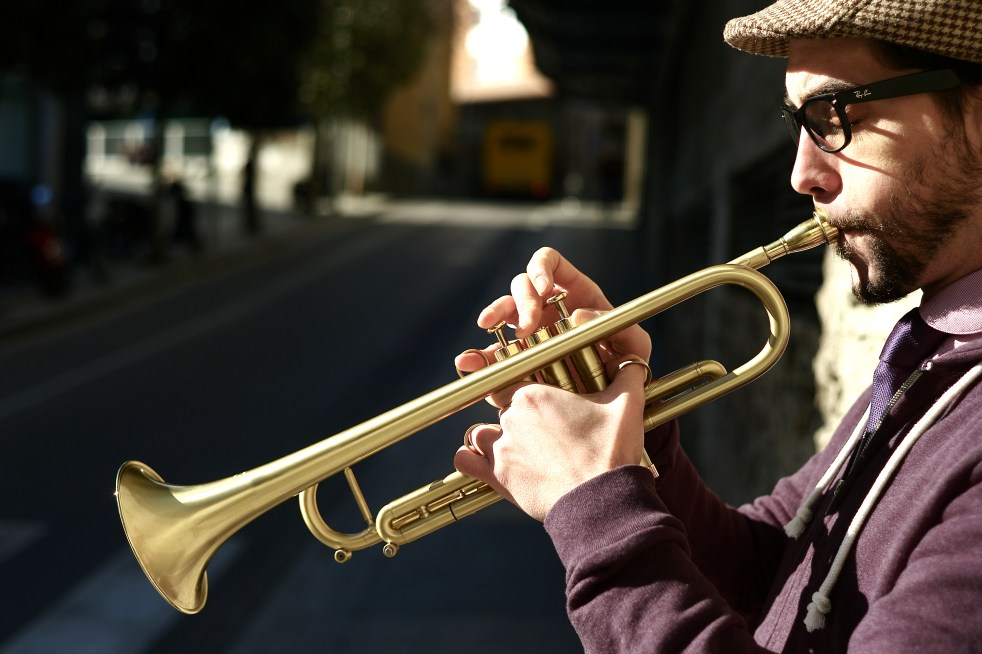
Trumpet Artist Profile: Raynald Colom

Raynald Colom is one of the bright talents to emerge from the thriving Spanish jazz scene to make a splash on the International circuit. Described as “a simply superb trumpet player” by JazzWise and “a force of spirit and feeling” by DownBeat Magazine, it is easy to see why his profile is on the rise.

Ray kindly gave up some of his time for me last month to tell us a little about himself and his trumpet playing:

Can you tell us a little about your musical background and early musical influences?

Because my parents are in the music biz, I started when I was 4 playing violin until I was 8 – that’s when my dad brought a trumpet home and I fell in love with the instrument. I was lucky for 2 years to have André Spelitsch as a teacher, who held the 1st trumpet chair of the Orchestre de Paris. After that my family moved to Barcelona where I mainly played by ear and also played with my dad’s band, learning the Armstrong repertoire and all the greats. When I was 17, I received a scholarship to attend Berklee College of Music, but I stayed there for just two semesters (LOL!). I would say at that time I was into Clifford Brown, Dizzy , Lee Morgan and of course Miles.

What can you tell us about what appears to be a thriving jazz scene in Spain at the moment?

There are a lot of great cats that created the path for the younger generations like Tete Montoliu. After him people like Jorge Rossy, Perico Sambeat, Marc Miralta. But what for me is really thriving is the so-called “flamenco jazz” created by musicians like Carles Benavent or Jorge Pardo, alongside Paco de Lucia who played with Miles and Chick Correa. I’m lucky to play with these guys on regular basis.

How does it compare to other countries as you visit on tour?

Well, we are a southern country with the Mediterranean Sea so I would say the life gives you a different approach rhythm-wise… if there is a negative note I would say that there is no real industry in the so called “jazz” (don’t really like this word ) world compared to France or Germany.

You are based in Barcelona right? What is the atmosphere like in the close-knit musical community there after the horrific attack recently?

Man, I just did a gig right after the attacks and I have to say Barcelona is an example of togetherness and kindness. Barcelona is a melting pot of cultures and I saw that when we played.

What projects have you got going on at the moment?

Luckily quite a few! I have got my new band called “STEEL” that use pedal steel guitar and lots of electronics that we are going to record in the fall. I also just did a live recording with master bass player Carles Benavent and Tomasito. For 2018 I’m putting together a band with my good friend and guitarist from NYC, Yotam Silberstein and Piraña, Carles Benavent and Diego del Morao. A dream band for me! Several other projects and records are coming too. I feel blessed that musicians count me in for their music!

What equipment do you use?

Right now I’m playing the P.Mauriat PMT-72. Great horn! I like the fact that it doesn’t colour your sound. Also I can have a big sound without having to play a horn that is too heavy. I have been playing P.Mauriat for the last 4 years and I’m really happy with it. [You can read the Mouthpiece Online review of this instrument here]

For the mouthpiece I play a custom-made signature model consisting of briarwood and metal. I have been working with “Investigaciones Manchegas” from Spain for a year on how to get all that “wood” warm sound without loosing the edge of metal and it came out in the most amazing way. We are now working on put it in the market soon. [You can read about different mouthpiece materials here]

Any advice on keeping your trumpet playing in good shape especially when you are on the road?

Long tones and regular Arban and Clark studies. Usually I try to have at least 30/45 minutes before the sound check and play basics: intonation, attack, scales (really simple and slow) and whatever I’m working on at that time. If you have a routine you do when you are at home, let’s say 2/3 hours approx., it is kind of a compressed one to manage when you don’t have the time for it on the road. Good sleep (when you can!), eat well, and lots of water to hydrated the body and muscles so your lips don’t get like a wooden block!

Anything else that you would like to mention?

Just to thank you for spreading to word in our trumpet community – music can heal the soul and gives a better society where everyone is welcome and grows with respect and love.

For further information about Raynald and his music, please visit raynaldcolom.biz


Sign up here for new blog articles emailed direct to your inbox:

[jetpack_subscription_form show_subscribers_total=”false” button_on_newline=”false” submit_button_text=”Sign up” custom_font_size=”16″ custom_border_radius=”0″ custom_border_weight=”1″ custom_padding=”15″ custom_spacing=”10″ submit_button_classes=”” email_field_classes=”” show_only_email_and_button=”true”]

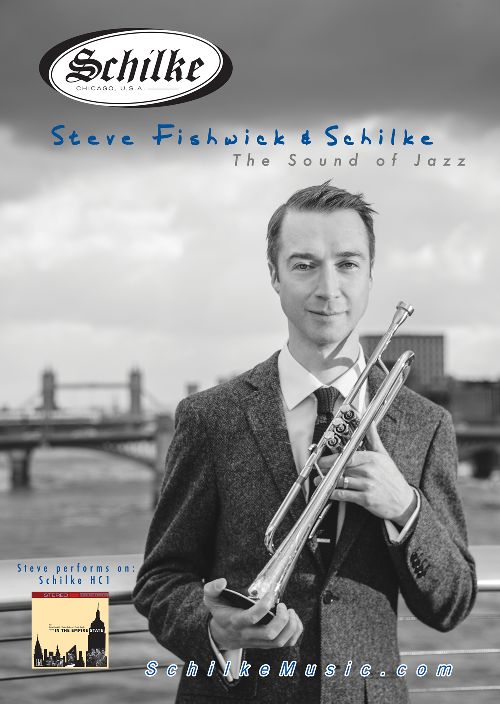
Trumpet Artist Profile: Steve Fishwick

With a rapidly growing profile on the UK and International Jazz circuits, and an ever-increasing back catalogue of critically-acclaimed recordings to his name, I am immensely grateful to trumpeter and Schilke Artist, Steve Fishwick for giving up his time to share his thoughts and insights…

Tell us about how you got into trumpet playing, and your main influences.

“Aged 8, I started having lessons with a wonderful teacher called John Crosdale who had spent time in the Halle orchestra.  My twin brother Matt (now a drummer) made fun of me for a week then decided that he wanted to play too.  I think our parents thought we’d give it up in a few months.  Mr Crosdale used to regale my parents with stories of his professional trumpet playing days, so to an 8 or 9 year old, this was the greatest thing ever.  By the age of 10, I had more or less made up my mind that I was going to be a professional musician, not really having any idea what that entailed or how hard it would be!

I’ll be forever grateful to Mr Crosdale because he was so curious and enthusiastic about music.  When my brother and I started getting interested in jazz, he didn’t discourage it, he was very positive and excited by it even though he was a classical trumpet player.  At the time, the 1980s jazz boom was underway. Wynton Marsalis’ fame was at its peak so he was on the TV all the time along with Courtney Pine, Tommy Smith and Andy Sheppard.  Plus, they were showing old jazz 625s on the TV which we used to video tape and watch over and over.  I remember going to see Dizzy Gillespie with the United Nations Orchestra (with Arturo Sandoval and Claudio Roditi) and our teacher Mr Crosdale was in attendance too.  At our next lesson, he presented us with a programme signed by Dizzy, he’d gone backstage after the concert to meet the band and chat to Arturo about trumpet technique!  He really was an inspirational teacher.

I had got into some bad habits, playing on the red of my lip, so I undertook an embouchure change.  I had no idea what I was doing, I just changed position and told myself: “right that’s where I’m putting the mouthpiece from now on” and it kind of worked.  Then we went to London to study at the Royal Academy of Music under Graham Collier (we were there 1994-98).  Steve Waterman was my teacher along with Gerard Precenser (for my final year) who was very inspirational.  I also had some lessons from vibraphonist Anthony Kerr who was very helpful when I was trying to get fast tempos together, and Martin Speake was great too.  I played pretty convincing jazz when I arrived at college but I didn’t really know technically what I was doing (I was playing mainly by ear).  Martin found me out on day one and proceeded to roast me.  I was a little headstrong and stupid in those days and rebelled quite a bit, but the lessons stuck with me and much, much later I eventually caught on to what they were trying to tell me!

I should also mention Lew Soloff who I had the good fortune of working with in Pete Long’s Gillespiana.  I had met him in New York a little while before this too.  He was very encouraging, but told me in no uncertain terms that I needed to improve my technique, particularly my breathing.  He turned me onto the Arnold Jacobs breathing exercises which I’ve been working on ever since, along with the Chicowicz long tones and flow studies (which Terrell Stafford turned me onto).  I would say that these two things, more than anything else, have improved my trumpet technique immensely.

As for players that I admire, there are a lot!  Main influences I would say are Kenny Dorham, Miles Davis, Art Farmer, Lee Morgan, Freddie Hubbard, Blue Mitchell, Donald Byrd, Clifford Brown, Woody Shaw, Charlie Parker and Dizzy.  I often feel torn between the Kenny Dorham/Miles Davis vulnerable introspection and the more gregarious extrovert Lee Morgan and Freddie Hubbard.  So, I guess I’m trying to balance the two things in some way.  I also listen to more contemporary players like Joe Magnarelli, Ritchie Vitale, Wallace Roney, Scott Wendholt and pretty much anyone playing now.  I try and keep up with all the contemporary players: Avishai Cohen, Ambrose Akinmusire, Michael Rodriguez and the rest of them.  Plus, we have some very fine jazz trumpet players over here in the UK who are very inspiring, such as Percy Pursglove, Tom Walsh and Robbie Robson.  I also like to listen to classical music too.”

What model trumpet do you play?

“I am playing a Schilke HC-1.  For a long time, I played a Martin Committee from the 1940s, but I wore the thing out, put my hands through the brass and everything.  Even after I had it reconditioned it just became unviable to play as my everyday horn.  I got another Martin but the tuning wasn’t fantastic.  Then I moved onto Olds Supers which I liked, incredible projection, but I never felt like I could hear myself very well – Probably because the horn was so good at projecting!  I eventually bought a Schilke B1 after a lot of research.  Basically, I like lightweight horns with step bore and a reverse leadpipe.  I like to feel the horn vibrate in my hands as I’m playing it.  The B1 is great, it has a wide variety of tonal expression, and out front it doesn’t sound bright at all.  But from behind the horn it does sound a little bright.  So, I’ve moved onto the HC-1 which, although it was designed for Wallace Roney, I feel it could have been designed personally for me!  It is a fantastic amalgamation of the Martin Committee and the classic Schilke designs, two of my favourite horns.  The sound is great, the tuning perfect and the resistance from low to upper register is amazingly consistent.  For me personally and for what I’m trying to do, they are the best horns out there.”

…and mouthpiece?!

“I play on a Monette B2S3 Prana Resonance Mouthpiece.  I’ve experimented a lot – Used to play big mouthpieces, moved to shallow ones and gradually went bigger again.  I think most jazz players want something that can give them a big, warm sound but also enables them to get into the upper register.  So, everything is a little bit of a compromise between sound and range, deep and shallow.  The Monette mouthpiece isn’t a compromise, great sound and the upper register is easier.  If I try and play a conventional mouthpiece now, it just doesn’t work.  And the sound is nowhere close to the Monettes (for me personally, not that other players can’t make conventional mouthpieces sound great, I mean Clifford Brown didn’t need it!).  I feel that they also ‘correct’ your playing in some way.  If I’m not using my air correctly or I have tension somewhere in my body then the mouthpiece just kind of shuts down, it doesn’t work.  I don’t consider myself the greatest trumpet technician as it’s something I’ve always struggled with, so I need the daily reminder!”

What are the most important aspects of trumpet playing that young, aspiring musicians should focus on?

“I think an aspiring player should concentrate on sound.  There is a lot to think about when learning any instrument, so I think that sound sometimes goes out of the window.  Along with this goes correct breathing and listening a lot to the greats.  A lot of younger players don’t know how to listen, and in a lot of ways it isn’t their fault.  They have Spotify, YouTube and all of this music at their fingertips, so they end up listening to different stuff every day.  There is a lot to be said for the old way of getting a bunch of CDs and listening to them repeatedly, internalising them and really learning every note on the record.  Also, listening isn’t as social as it used to be when you would get together with friends and listen to music.  Everybody listens on headphones on their phone or computer in isolation.  Do yourself a favour and buy a decent stereo system!  It will sound so much better and you will hear details in the music you won’t have heard before.  Also, you’ll experience the joy of listening and sharing music with friends.  I feel listening and internalising the sound of great players is hugely important, it will give you a strong concept of what you want to sound like.  And if you don’t have that strongly in your mind, it will never come out of the bell of the instrument.  Also go to gigs and hear people live!  It’s the best lesson you will ever get.  The amount of great, great trumpet players that I go to hear and see zero of my trumpet students there in the audience alarms me.

When I was a young player, I attended the Wavendon Jazz Summer Course. Steve Waterman was teaching there and he was invaluable because he showed me all of these transcriptions of people like Lee Morgan and Miles Davis he had done.  Before that I was seriously groping in the dark, but I went home and started transcribing, and my jazz playing started rapidly improving.  It kind of makes me chuckle now when I tell my students they have to transcribe and some of the reactions of horror that I get, because it is quite a daunting prospect at first.  I remember transcribing from vinyl and cassettes because I didn’t have a CD player.  If you wanted to slow it down you had to buy a special cassette player from the US that slowed the music to half speed but made it an octave lower in pitch.  Now there are numerous computer apps that you can download in seconds for a few pounds that can slow the music down whilst keeping the pitch.

Teaching is really important to me.  I think that we have a lot of amazing players here in the UK that aren’t really appreciated enough, and the standard is getting better and better year after year.  I love being part of a team in the colleges that I teach at (Leeds College of Music, Guildhall School of Music and Drama, Birmingham Conservatoire, and the Royal Academy of Music).  When you manage to get the student to play better during the lesson and you see them getting the idea, coupled with seeing their progress over time, it’s exciting and very rewarding to feel you’ve been a part of that process.”

What projects do you currently have in the pipeline?

“I have a band co-led with my brother Matt, featuring Dave O’Higgins on Saxophone, Rob Barron on piano and Dario de Leche playing the music of Cedar Walton.  My brother and I had the honour of recording with Mr Walton in 2007 along with bass legend Peter Washington and my long standing musical partner Osian Roberts.

I recorded a CD last November with Alex Garnett on Alto Saxophone, New York bassist Mike Karn and Matt again on drums.  We’re currently working to get that mixed, mastered and released with a view to touring late next year.

Also in the pipeline is another sextet album as a follow up to our two previous CDs, In the Empire State and When Night Falls.  This band features Osian Roberts on Tenor, NYC musicians Frank Basile on Baritone, Mike Karn on bass and Jeb Patton on drums.  I’m writing music for that when I can find the time!”

Details on projects, recordings and future gigs can be found at www.stevefishwickjazz.com

Instrument details can be found at www.schilkemusic.com


Sign up here for new blog articles emailed direct to your inbox:

[jetpack_subscription_form show_subscribers_total=”false” button_on_newline=”false” submit_button_text=”Sign up” custom_font_size=”16″ custom_border_radius=”0″ custom_border_weight=”1″ custom_padding=”15″ custom_spacing=”10″ submit_button_classes=”” email_field_classes=”” show_only_email_and_button=”true”]

Mike Lovatt: Interview and Instrument Review

Mike Lovatt has one of the most heard and recognisable trumpet sounds in the world right now.  If you do not think that you have heard him play before, you are probably wrong!  Starring on more movie soundtracks than I can even begin to list, he is instantly recognised by his signature scintillating yet full, rich sound and his smooth, understated style.  His versatility means that he is equally at home in his lead trumpet chairs with the John Wilson Orchestra and Superbrass as he is as guest principal with all of the UK’s major symphony orchestras.  He is also sought after by the biggest names in the pop and commercial sectors and is a true A-lister of the trumpet world.  I never had the opportunity to sit in a section with Mike in my trumpet playing days, but was fortunate enough to work as producer on some Superbrass sessions that he was involved in.  I got to see first hand his incredible skill, musicianship and professionalism.

This incredible level of versatility requires an instrument to match it, which has led to Mike’s latest project, a collaboration with trumpet builder Richard Smith to design a new instrument capable of fulfilling all of these varied requirements.  The ML Smith-Watkins is the result of this partnership.  My review of the new model follows these thoughts and insights on the design process that Mike has kindly shared with me:

Mike:The process of designing was quite slow as Richard Smith is in York while I am in Hertfordshire, which meant a lot of bits of trumpet being sent backwards and forwards as well as trips up there for me to tweak and try things.  

I wanted to improve all of the things that that weren’t quite right for me on the original SW models which Richard designed in consultation with the late, great Derek Watkins.  After nearly 30 years of playing one of those models I felt that I was in a position to develop them further for my needs.  I always liked the way those trumpets blew though, and wanted to keep the interchangeable lead pipe system.  I think that this part of the design (dual lead pipe) is key to the feel of the instrument and helping the resonance and efficiency of the energy going through the horn.  

We started off by choosing a valve block – I had about 4 different ones to try just as they come (a valve block and slides). I was looking for good compression yet good mechanical movement of the valves.  I sat in front of the TV wiggling valves for hours on end and ended up choosing a .460 bore which had good compression and worked really well !

Next was a bell to balance it up.  I tried a different bell in lots of different settings on a trumpet all taped together!  I tried lots of bells of different sizes and gauges.  In the end I settled (not knowingly)  for something equivalent to a Bach 37 – the only thing was that I thought it sounded a bit bright and wanted to have the full picture range of sound from dark to bright when pushed!  After trying the bell in standard gauge metal we tried a heavyweight version.  This was perfect.  At this stage I still hadn’t tried the instrument soldered together! 

Lastly and importantly we worked on developing a leadpipe to be adaptable in lots of different styles of playing and one which lent itself well to the smaller bore and smaller bell than I’d been used to.  After the ‘core’ of the trumpet was sorted, we addressed little things like a new style finger hook and water key position.

Since the launch of the new trumpet in Summer 2016, demand has vastly outstripped supply.  Interestingly, they are not only proving a hit with jazz/commercial players but can also be seen in a number of symphony orchestras across the UK and Ireland.  I was therefore very keen to get my hands on one to review and see what all of the fuss has been about!

The trumpet has a .460” medium large bore valve section, heavyweight yellow brass bell and is supplied with the custom ML leadpipe.  A lovely distinguishing feature is the laser-etched titanium finger buttons. It is supplied in silver plate as standard, but gold plate is an optional extra.

I was immediately struck by the ML model’s response.  Most of the Smith-Watkins trumpets that I have played in the past have required a tighter feeling late-taper leadpipe to give you that delicate and immediate response.  I found that with this model, I could get that immediacy yet combined with a rich full sound even at quieter dynamics.  The tonal core feels really stable across the range and dynamics, and there is a lovely sizzle to the sound when you open up the throttle.

In short, I was not disappointed!  For my own interest, I also tried this model with #10 and #32 leadpipes.  For quality of sound and general versatility, the supplied ML leadpipe definitely wins the day though, and I can certainly see why this trumpet’s appeal seems to have reached out of the commercial sector.

To find out more about Mike Lovatt, please visit www.mikelovatt.co.uk


Sign up here for new blog articles emailed direct to your inbox:

[jetpack_subscription_form show_subscribers_total=”false” button_on_newline=”false” submit_button_text=”Sign up” custom_font_size=”16″ custom_border_radius=”0″ custom_border_weight=”1″ custom_padding=”15″ custom_spacing=”10″ submit_button_classes=”” email_field_classes=”” show_only_email_and_button=”true”]