Advice · Education · Interview

The Carmine Caruso Legacy

I think that the concept of a saxophonist and former violinist becoming one of the most well-respected and well-known trumpet (and brass) teachers is a fascinating one. His callisthenic approach will be well-known to many readers through his publications, but in addition to this concentration on the physical synchronisation of different muscle groups, he also built a reputation on positivity and for really nurturing his students.

So many top players over the years attribute a huge portion of their success to Carmine Caruso – I was fortunate enough to be able to gather the thoughts of four of these fabulous players, in order to get to the bottom of how their experiences with Carmine influenced them and their careers: Marvin Stamm, John Thirkell, Randy Brecker and Markus Stockhausen.

VISIT THE ‘EDUCATIONAL RESOURCES’ PAGE FOR FREE WORKSHEETS AND LINKS TO PUBLICATIONS

Why did you go to study with Carmine Caruso?

MARVIN STAMM:  I had just settled in New York City in late 1966 and was beginning to be a part of the jazz and studio scene. I mentioned to friend and fellow trumpet player Burt Collins that I wanted to continue to study and work on certain aspects of my playing. Coming off the road, I was bothered by a few things that I felt needed to be addressed. Burt told me about his study with Carmine, that he was a trouble-shooter and problem-solver. He also mentioned a number of players who had been helped through studying with Carmine, among them the great lead player Al Porcino and others, and he felt Carmine would be the teacher to see.

JOHN THIRKELL:  I was at Leeds College of Music when I first came across the Caruso Method. I had studied several other method books – Claude Gordon, Louis Maggio etc. – but something about the concise and prescriptive nature of the Caruso appealed to my sensibilities. Do A and B will happen, then do C and D will result, and so on. That kind of regime somehow clicked with me and I quickly became a devotee. My then trumpet teacher was, I’m afraid, very much against such perceived radical methods but I think that only made me more determined. I’ve always been (and still am) one for swimming against the tide.

RANDY BRECKER:  I was playing in the Duke Pearson big band in ’66 and the other 3 trumpet players, (Marvin Stamm, Burt Collins and Joe Shepley) had studied with him and swore by him and said I should see him to improve my range.

MARKUS STOCKHAUSEN:  In January 1978 I came to New York. It was a winter with heavy snow. New York was peaceful and quiet. I contacted Marvin Stamm, whom I admired from his recordings with the Pat Williams Orchestra. I told him that I would like to have lessons with him. He denied and said that instead I should go to his teacher, Carmine Caruso, which then I did. Nevertheless, I had a good time with Marvin, he took me several times to studio sessions and gave me the opportunity to feel the scene, to meet other players like Alan Rubin, Lew Soloff, and also, I witnessed a rehearsal with the Maynard Ferguson Band in some hotel, a great experience at the time.

What were your impressions of the first lesson?

MARVIN:  Carmine was one of the most positive thinkers I have ever met, and he strived to infuse this positive attitude into all his students. Any progress, any improvement, no matter how small, was recognized as progress and needed to be appreciated in that light. My impression after my first lesson was that I had really found the teacher who could help me over whatever obstacles I felt were a problem.

JOHN:  My overriding memory of the first lesson was how energizing it was. He had the uncanny ability to make you feel like you could achieve absolutely anything, and he removed much of the worry I had associated with playing and practicing. He always said that, if you are following his instructions implicitly and not making progress, then the fault was in his teaching rather than in you. That idea was incredibly liberating and allowed me to focus on the process rather than worry about any innate ability. Just do it! I felt that sense of positive energy every single time I came out of a lesson.

Also, I couldn’t believe how little I actually played. I would say in the 90 minutes I was with him, I played probably no more than 15 minutes maximum, the rest of the time being taken up with the explanation of his theories and the idea of allowing your body to adapt and find the solutions rather than you consciously trying to find them. That was a common thread in all of the lessons and I would go as far as to say that he was as much a psychologist as he was a trumpet teacher. He talked you into playing well. There is a common idea that, as a trumpet player if you think you are going to miss it, you’ll miss it. Caruso, as with so many other things, turned that into a positive by inculcating the idea that, by knowing that you will hit it, you’ll hit it. And the more you know it, the more you’ll hit it.

RANDY:  Well he had those airline noise-reducing huge headphones on the whole time and talked a lot… and said a bunch of surprising things about how to approach his exercises (don’t worry about your sound, don’t worry if you miss a note etc.

MARKUS:  With Carmine I had seven lessons. Each time he would write me the next exercise on a little sheet of paper. So, in the beginning I just had the six notes I think, and at the end of the month the full system. His book was in preparation and had not yet been released, and he did not care so much about it, I had the expression. His teaching, though he had a system, seemed very individual.

His room was dusty, with old book shelves full of music, and a fan. The heating was hot, he just wore an undershirt, and often put on his headphones while I played, the kind they use in airports. Now I can understand him very well, because also for me the trumpet often is loud to my ears, and I use some plugs or phones when I play or teach a lot. He was very kind with me, like a father. His eyes were loving and distant at the same time. He was very patient, but clear, to the point.

What were the big changes that you found from the way that you had previously approached the trumpet?

MARVIN:  I’m not sure there were big changes in my approach to the trumpet. What I was looking to find were solutions to a problem, and I believe any big changes were more in my thinking—that is, in discovering how and what to practice to overcome these issues.

Problem-solving, of course, is most always a slow process. The time during which I studied with Carmine took place before cell phones, tablets and laptops, even the Internet, so everything moved at a slower pace than it would today. Musicians’ expectations of progress were based on the “long view” rather than how much could be learned in the short term. Carmine had a unique ability to recognize and analyse individual problems, so the exercises he gave were designed for each student to assimilate corrections into their playing slowly, without disrupting their ability to continue working while at the same time finding answers to their musical problems. The exercises were also meant to become permanent solutions that would serve the players throughout their performance career. So, the big changes happened over time and in small increments.

I approached Carmine to help overcome the “break” I had at the top of the staff—to close the space in that area so as to provide a smooth path from top to bottom. Meantime, Carmine also saw problem areas that he could fix while helping me with what I perceived to be my only impediment. I was using movement or manipulation with my hands for one thing; another was playing a note before properly setting for it, kind of like “jumping on a running horse.” Carmine also knew that I wanted to build stamina and broaden my sound, thereby making my lead-playing stronger and more effective. All this we achieved over time. Patience was the key to the results I desired.

JOHN:  The idea that, whilst practicing the Caruso method, you should not worry at all about musicality or the sound. This was purely calisthenics. Building muscle. Pushing the body a tiny bit further every time and allowing it to find a way to cope. Rather than make arbitrary changes in order to achieve an objective, by pushing the body it will find its own way to cope with the added demands. Again, this is incredibly liberating and allows you to stop worrying and just focus on the process.

Tapping the foot is also a big part of the method – that and the breath attack on the first note of an exercise – the idea being to train all of the disparate muscles required to play a note to come together at the exact same time. Again, subliminally training the body to automatically synchronise everything.

RANDY:  Better high register and more flexibility.

MARKUS:  His exercises focused my embouchure and gave me strength and endurance and developed my high register.

Could you feel a big difference in your playing immediately after starting studying with Carmine, or was it a slower process to see results?

MARVIN:  Some things were immediate, but the bulk of what I wanted to achieve was a slower process.

JOHN:  I think I pretty much felt a difference straight away, but this was probably more a result of the incredible sense of self belief which he gave you. You came away from a lesson feeling that nothing was impossible and that certainly manifested in the way I played thereafter. That confidence removes much of the doubt that holds back progress and I found myself playing with much more abandon. On a more physiological level though, pretty soon I found my range, not necessarily expanding that much but certainly becoming much more solid and dependable and I think that was as a result of the muscular development.

RANDY:  Pretty fast I must say.

Were there any aspects of the teaching that contradicted what you had been working on previously?

MARVIN:  Yes and no. His approach was quite different. Carmine was very “up front” that he was not working on students’ musical values, but on their physical attributes, striving to solidify a structural approach to playing the instrument. He told his students NOT to put aside playing etudes, solo pieces, practicing Arban’s, Schlossberg, Colin or other methods. He always stressed to me the importance of mixing in his studies with all the others that I had been working on, especially the musical ones.

If there were any contradictory elements to Carmine’s approach, they might be the use of nose-breathing, the long-settings, and the tapping of one’s foot to create the rhythmic movement of moving from tone to tone.

Nose-breathing allows one to have no movement of the corners of the mouth when taking a breath, thereby making possible a long setting, a consistent or constant placement of the horn to the lips. Tapping of the foot to set up the “time” meant that when moving from one tone to another, the only thing one had to be aware of was to consciously move “to the beat,” thus eliminating having to think of the many other elements of playing the instrument—the tongue, air, and muscles. Only moving to “time.”

Carmine’s exercises might be considered by some to be contrary to the usual structural exercises as those utilized by Schlossberg, Arban, St. Jacome, and Charles Colin. The approach was certainly different. And though I did some work out of the Baermann Clarinet Method, this was not really for any technical aspect, but rather to work over the break that I hoped to minimize to the fullest. All the exercises other than the Baermann were Carmine’s. There was also a strong focus on using dynamics in his exercises, both in a typical and atypical manner. These were used to work the embouchure in a more arduous way, making actual performance of demanding music much easier.

JOHN:  The idea of not being concerned with musicality or sound was very different but you soon learn to separate out the Caruso part of your practice from the other, more music focused stuff. He would use the analogy of a footballer (American football, not proper football) working out in the gym with weights. Where were the weights during the football game? But the weight training was of fundamental importance to his performance on the field.

RANDY:  Well I always worked on my sound and sound didn’t matter when doing his callisthenic exercises.

MARKUS:  He knew all the struggles that I was going through at the time. My embouchure had to be dry while playing, at least the top lip, which had been a problem for me during concerts when I sweated a lot, especially with spot lights on me. His pedal tone exercises followed by the chord pedals gave me a wet embouchure, resulting in much better playing possibilities.
Did you continue with his methods exactly as prescribed, or did you need to adapt them to fit in better with your work schedule, etc.?

MARVIN:  No, I didn’t find a need to adapt anything to fit my work schedule. Carmine always stressed to practice his exercises as he prescribed in the lessons, but when performing in my work, approach things as I usually did. He said the effects of his exercises working their way into my playing would happen by osmosis—that it should happen seamlessly. In my experience, I found this to be true.

I tried to use his methods exactly as prescribed. As is the case with any fine teacher, however, if he felt at some juncture that a change in approach might be more beneficial, he would make the necessary change. I studied with Carmine six and one-half years and continue to include a number of his exercises in my daily practice, along with a number from Laurie Frink, Dennis Najoom, and the classic methods mentioned earlier.

JOHN:  For several years I followed his methods to the letter but in time, as I got busier and busier as a pro player, I slowly watered down the routine as it can be physically quite demanding, and it becomes more important that your chops are in shape for your session rather than completing the whole routine. The Caruso done thoroughly means you are pushing your body more and more and, by overdoing it you can leave your chops a little shredded. I remember explaining the lessons as taught by Caruso to Guy Barker and, being Guy, he went mad and practiced it for hours. Well, of course it did more harm than good, and he pretty soon gave it up. The idea is to go through the day’s routine, take a break then move on to your regular practice. These days I tend to stick to the 6 notes exercise as part of my warm up and maybe once a week do the full routine.

RANDY:  Tried just to do what he said to do, fit them into what I was already doing, but I applied his ideas about timing to other things I did like the Adam Routine warm up.

MARKUS:  At times I would overdo the exercises. Especially the soft-loud-soft, as well as the loud-soft-loud exercises were very strenuous to me when I did them on a daily basis. Nevertheless, I continued the exercises for quite some years, not always very regularly, but still. Within time I found my own way, a little more moderate, and surely not applying the full system, I am aware of that. I do the exercises only from time to time now, when I feel I need to focus my embouchure or prepare for a very hard trumpet concerto. Often just by doing the “Six notes”, the body remembers the whole thing immediately and I can play up and down without any further warm ups. The body actually is magic, how it can reproduce results that have been properly programmed. In fact that is the basis for Carmine’s system, as well as of others of course, that the cells have memory.

I would like to thank Marvin, John, Randy and Markus for their contributions here! Please visit their websites to find out more:

Marvin Stammmarvinstamm.com

John Thirkelljohnnythirkell.com

Randy Breckerrandybrecker.com

Markus Stockhausenmarkusstockhausen.de

Click here to purchase a copy of Carmine Caruso’s ‘Musical Calisthenics for Brass’ at Thompson Music

Markus Stockhausen’s “The Basic Caruso”, from which his quotes are taken above, is available here

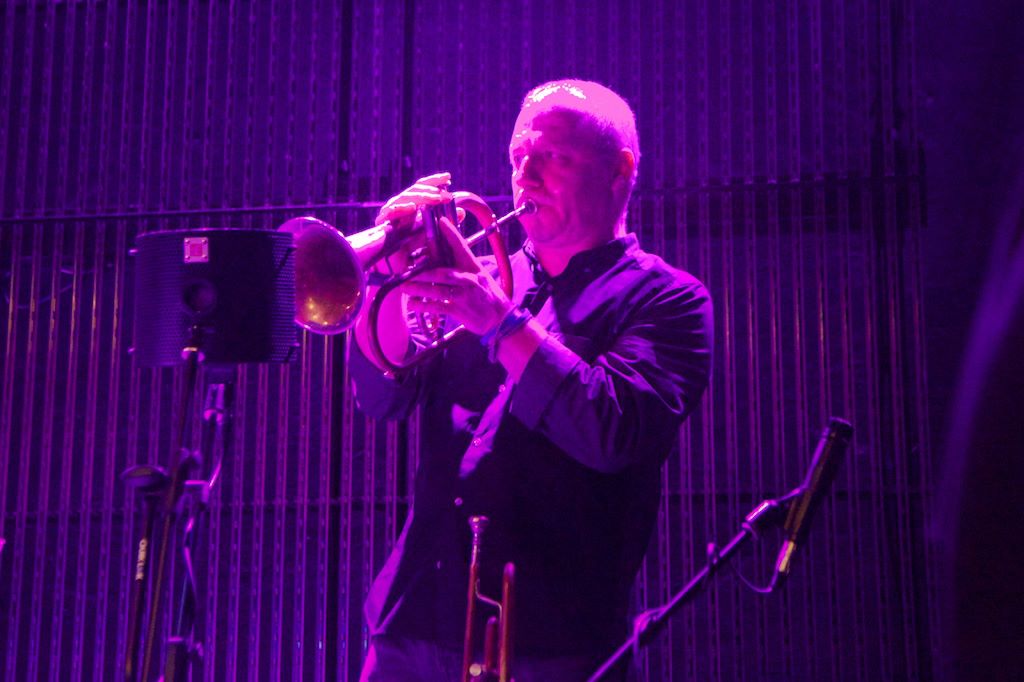
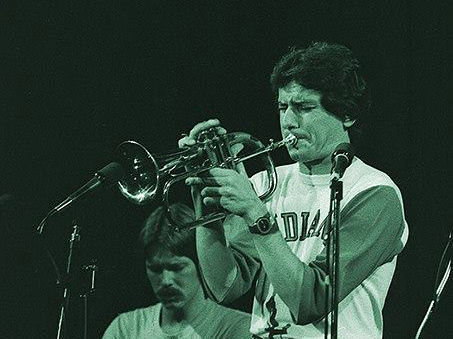
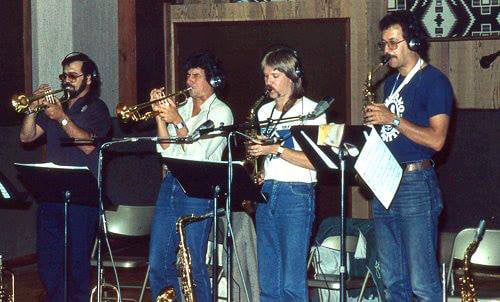
Photo Credits: Bev Nathan (John Thirkell), Judy Kirtley ( Marvin Stamm), Gerhard Richter (Markus Stockhausen)
Sign up here for new blog articles emailed direct to your inbox:


Advice · Education · Interview

Trumpet Artist Profile: Rex Richardson

Acclaimed trumpet soloist and respected educator Rex Richardson has been described as “one of the world’s most engaging and astonishingly versatile trumpeters” (Style Weekly), and “among the very best trumpet soloists in the world today” (ITG). I was delighted to be able to catch up with him and to find out more.

What drew you to the trumpet as a child?

I think it’s funny in retrospect, that I began playing the trumpet, only because I’m asthmatic. My family, into which I was adopted as 9-month old, was not the slightest bit musical, but my mother tells me that I was drawn to music from the very beginning. Early on, I joined church and school choirs, and quite surprisingly (to anyone who has heard my raspy speaking voice) I was often given solo parts, so I must have had a bit of an affinity for it. Then at the age of ten, the family doctor suggested joining the school band on a wind instrument to assist with my asthma. Because my best friend at the time played the trumpet, I thought I’d give it a go!

Were there any particular early musical influences, or any musicians now that you particularly admire?

One of my very first influences, before I even really “took” to the trumpet at age 14, was Maurice Murphy. I had the Star Wars soundtrack on vinyl, because as an eight-year old (when the film was released in 1977) I thought the film – and the music – were the best things ever! The London Symphony personnel were listed in the credits, which is how I discovered Maurice and the rest of that phenomenal brass section. Years later I’d be thrilled to play with him and to develop a wonderful friendship with him and his lovely wife Shirley.

I think it was seeing Doc Severinsen on the Tonight Show, as well as seeing the Boston Pops on TV – when the trumpet section included Tim Morrison – that nudged me in the direction of wanting to pursue the trumpet more seriously. From that point, I was spending my allowance on records: Maurice André, Rafael Mendez, Wynton Marsalis (whose first records were just being released), Miles Davis, Freddie Hubbard, Woody Shaw, Louis Armstrong, saxophonist Mike Brecker – these were the earliest influences, but the list started to expand rapidly.

To this day, the list of musicians that I admire continues to grow…to list all of them might be beyond the scope of this interview, ha-ha! I find inspiration in wildly varying sources, from trumpet artists of every stripe to jazz saxophonists, and from classical singers to rock bands.  I’ve been blessed to share the stage with a number of my recent heroes (Trumpeters Pacho Flores, Sergei Nakariakov, Til Brönner, Wayne Bergeron; saxophonists Steve Wilson and Chris Potter); some I would love to play with are vocalists Jan DeGaetani, Dawn Upshaw and Inari George, as well as Beck and Radiohead.

April'18-promo

I have spoken with a number of players for this blog, and one thing that keeps coming up is how players often get categorised or pigeonholed into one particular genre. This could be a tough one, but if you were pushed to have to categorise yourself into one particular musical genre, where would it be?

Interesting question. I think that everyone finds it convenient to label things & people, but I don’t think it’s so easy to do that for most players anymore. Someone might “live” in a particular genre but make strong statements in another…take Pacho Flores, who is renowned as a classical soloist but whose latest amazing recording features folk arrangements for trumpet and guitar.  Or take Mark Inouye, one of the U.S.’s very best orchestral players, who is also a dynamite jazz improviser.  In my case, it’s tough because I pretty much split my time and energy as a classical soloist and a jazz musician. I suppose I’d categorise myself as living in “new music,” if that can be considered a genre, because I specialize in post-bop as a jazzer and often premiere solo works on the classical side.  However, my last recording featured “old” music – our famous concertos by Haydn, Hummel, Telemann, Albinoni and Tartini (albeit, played on modern rather than period instruments), and I often play tributes to Louis Armstrong or other “older” jazz trumpet legends.

So, I don’t really know! I used to be more concerned with musicians trying to “limit” me with a label, but I don’t really care anymore; I just play music that I enjoy.

You are renowned for your skill as an all-round musician playing a wide variety of settings and styles. Mentally, is there a big shift from going from say a concerto with orchestra to the next night, playing a jazz set?

In a word: YES!  The bigger challenge for me is that I often need to shift in the middle of performances; that is, I might do a pops show with orchestra that features concertos in the first half and jazz in the second. But truly, the challenge for me is less about making the shift itself, than it is about being physically and mentally conditioned to play whatever I have to…I find that, if I get out of shape, it tends to be my physical conditioning on the classical side (mostly with regards to delicate attacks, pristine articulation, details like those) and my mentalconditioning on the jazz side (losing my sense of “flow” when improvising, getting rusty in certain keys, etc.).

How do you keep that level of versatility in your playing? Do you have a set routine that works for everything or do you have to change it drastically depending on what gigs you have in your diary?

I’ve found that a balance of disciplined routine and flexible adaptability works best for me. I have certain fundamentals that I love and tend to hit every day: Stamp bending exercises, Clarke Technical Studies with every form of articulation (including jazz), and flexibility. I have a quite elaborate routine with the Clarke book in particular; too complicated to detail here! But working jazz articulation into the mix with along my single, K-, double- and triple-tonguing helps me to feel that it’s natural to switch styles, like switching accents if you’re bilingual.

I also tend to do an elaborate workout on certain harmonically “dense” tunes, playing modes, arpeggios and bass lines, as well as improvising at different tempos, to keep my improvisation skills in shape.  I still listen and transcribe too (mostly stealing licks from Chris Potter or other saxophonists I admire!).

Beyond this though, my practicing tends to be based on what I need: What’s the repertoire for the next concert? Am I rusty in some area; e.g., is my single tonguing getting clumsy, fingers stiff, flexibility need a touch up? I have ways of dealing with any area of my playing that may be slipping.

I guess your teaching is pretty important to you? You have been at VCU since 2002 and also a visiting professor at the RNCM – have you found that your teaching methods and emphases have changed a lot over the years?

Yes, while I feel most comfortable and confident in my work as a performer/composer, I really enjoy teaching and feel that I have drawn tremendous personal and musical benefit from working with students, as well as from my long tenure at VCU and my association with other schools. I was International Tutor in Trumpet at the RNCM from 2012-2015 and have been back several times since, to teach and to perform.  I really love that place! It’s bristling with musical energy.

For sure, things have changed over the years. When I started teaching, I understood almost nothing about the mechanics of playing; I have always simply found exercises that allowed me to develop skills without considering what I was doing with my lips, tongue, breathing etc. To this day, I feel that this is still a bit of a blind spot for me; I don’t entirely understand “how” I play but I can tell you which I exercises I practiced to get there! So, virtually everything I know about the mechanics of playing the trumpet is through teaching, not through my own playing.  On the other hand, I feel I’m pretty good at teaching people how to structure a practice routine.

I still find that I can’t always diagnose student embouchure issues with perfect confidence, so I turn to some of my colleagues, in particular Taylor Barnett and Kevin Maloney at VCU, to help with that. I don’t pretend to be a “master” teacher and don’t tout my students’ accomplishments, which I feel are wholly their own; I simply want to help every musician that I can, and am very happy to enlist the assistance of wiser pedagogues whenever I feel that will benefit a particular student.

What are the key things that young aspiring players should concentrate on?

Get your fundamentals together and be a good musician.

That is, spend the time to acquire the skills required of every trumpeter (healthy/efficient sound production, flexibility in every register, articulation, fingers, etc.), then commit wholly to becoming the best interpreter of music that you can, whether you want to play in an orchestra, improvise, play with rock/pop/folk groups, or any combination of any genres. Remember that people should feelsomething in response to our performances, so as you learn to play expressively – and to master the nuances of what that means in any particular context – you have to stay tuned in to your own emotional connection with music as a listener. I don’t care about my own feelings while I perform; indeed, I always play best when my heart and mind are quiet. However, I want to play in such a fashion that the listenercan have a special experience, will feel moved, or uplifted from hearing the music. If that doesn’t happen, then all my practicing is for naught.

I learned this by simply observing my own emotions when I listen. Being overwhelmed while listening to Mahler’s Das Lied von der Erde,or just by the sound of Coltrane’s saxophone or Inari George’s voice…this is a powerful thing, and I want to my make my own small contributions to music lovers’ experiences.

Most enjoyable project?

Actually, this is a Manchester story! I’ve had a myriad of enjoyable projects of course but playing at Band on the Wall in 2012 with the jazz bands from Chetham’s School of Music really stands out for me. It was the perfect night…the kids were astonishing, as they always seem to be at Chet’s, and we were all – performers and audience alike – completely swept up in the excitement, indeed the magic, of sharing that music. Yes, performing with young students turned out to be one of the most musically satisfying experiences of my career!

Proudest professional moment?

I’d have to say that’s quite recent: I played with Doc Severinsen and the Indiana Wind Symphony in mid-March. Doc heard me play a new concerto by Allen Vizzutti the night before on a different concert, then another new concerto (by the RNCM’s own Andy Scott) on the concert we shared…and we played together too. Doc had incredibly kind words about my playing; I was stunned and humbled by his reaction. It was deeply validating!

What have you got coming up that you are most looking forward to?

These are busy times! Tomorrow morning, I fly to Minnesota to play as soloist with the Adam Meckler Jazz Orchestra, and then on to Wisconsin for a residency at Lawrence Conservatoire. This will be followed by a concert with the Motor City Brass Band in Detroit, then a residency in Austria, doing several jazz concerts (including a trumpet summit with Austrian virtuosos Thomas Gansch and Daniel Nösig); then back to Michigan to work with the Brass Band of Battle Creek, and then off to perform a couple of concertos at the ITG Conference in San Antonio. So….that gets me to the end of May!

My big news is that I’ve got a new CD coming out in mid-May: Freedom of Movement: 21stCentury Trumpet Concertos, featuring the aforementioned works by Vizzutti and Andy Scott, as well as Tony Plog’s Concerto for Trumpet and Brass Band and Jim Stephenson’s “Rextreme” Concerto. That was a lot of work for a multitude of people (recorded in four cites on three continents), and I’m very excited about it!

Thanks for this Rex, and I am looking forward to seeing you at the ITG Conference next month! Is there anything else that you would like to add?

Just wanted to thank you wholeheartedly for thinking about me, John!

For further information about Rex including upcoming concerts and projects, please visit rexrichardson.net


Sign up here for new blog articles emailed direct to your inbox:

[jetpack_subscription_form show_subscribers_total=”false” button_on_newline=”false” submit_button_text=”Sign up” custom_font_size=”16″ custom_border_radius=”0″ custom_border_weight=”1″ custom_padding=”15″ custom_spacing=”10″ submit_button_classes=”” email_field_classes=”” show_only_email_and_button=”true”]

Interview

Trumpet Artist Profile: Jerry Hey

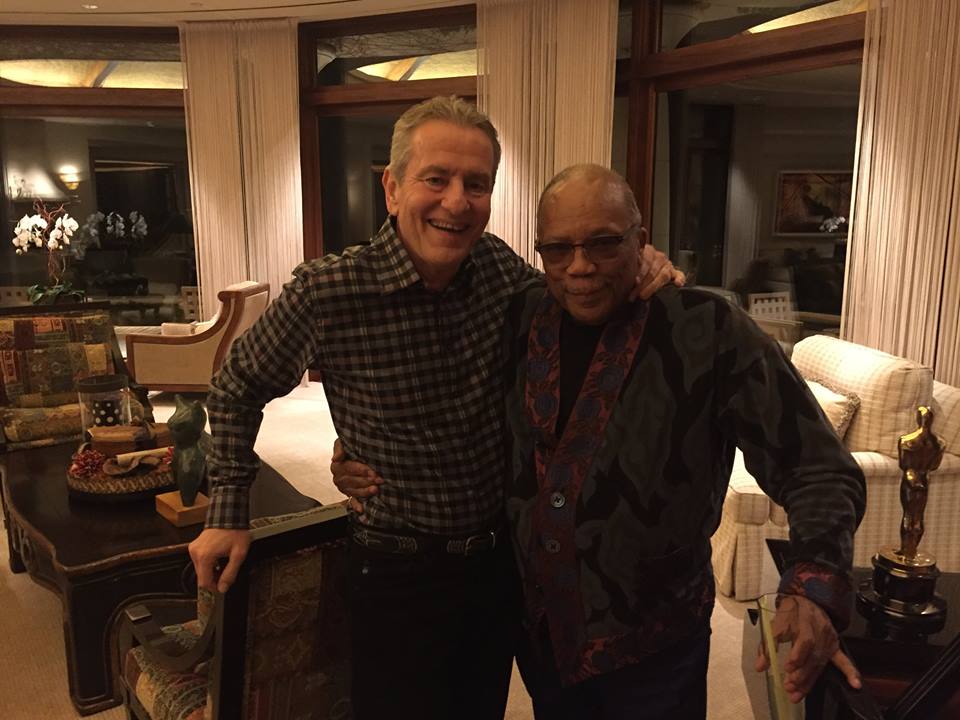
Jerry Hey is one of the most prolifically recorded trumpet players around. His style, sound and musicality made him the go-to guy on the LA scene, and as a horn arranger he is second to none. His collaborative projects with the great Quincy Jones are now legendary, and even now, after 40 years at the very top of the business, Jerry is still the man to go to for scintillating horns.

From a personal perspective, Jerry is the reason that I picked up a trumpet as a child after hearing those early Michael Jackson albums, so I was delighted that he could spare me some time to answer a few questions:

10155247_745011175540487_3006028246139385832_n
Jerry playing with Seawind in the ’70s

My reason for first picking up a trumpet was hearing you on those Michael Jackson tracks! What was yours?

My father was a trombone player and my 10-year older brother had a bugle he played in the Boy Scouts that I picked up as a child.

Who would you say was your biggest musical influence in those early days?

Clifford Brown – my father heard him live in Chicago and bought his first record.

VISIT THE ‘EDUCATIONAL RESOURCES’ PAGE FOR FREE WORKSHEETS AND LINKS TO PUBLICATIONS

Can you tell us a little about your time studying with Bill Adam?

He was simply the greatest person I have ever met, and that has nothing to do with the trumpet but a lot about life, which I try to emulate.

[youtube https://www.youtube.com/watch?v=qWrxgrDMQmE&w=854&h=480]

Your time in Hawaii in the early days sounded huge in terms of your development as a player and arranger. How did that move to LA come about and how was that transition?

Hawaii was pivotal in my development with forming Seawind and meeting Gary Grant. Seawind moved to LA to record and Gary had moved from Hawaii a year earlier. Seawind played at the Baked Potato in North Hollywood at least once a week for a couple of years. A lot of musicians came to hear us so that helped get my start in the studio scene, but Gary Grant was instrumental in getting me on many sessions. Also, having met Chuck Findlay and Dalton Smith in Hawaii, they also recommended me for sessions.

27459581_1896192140422379_5793760852817823140_n
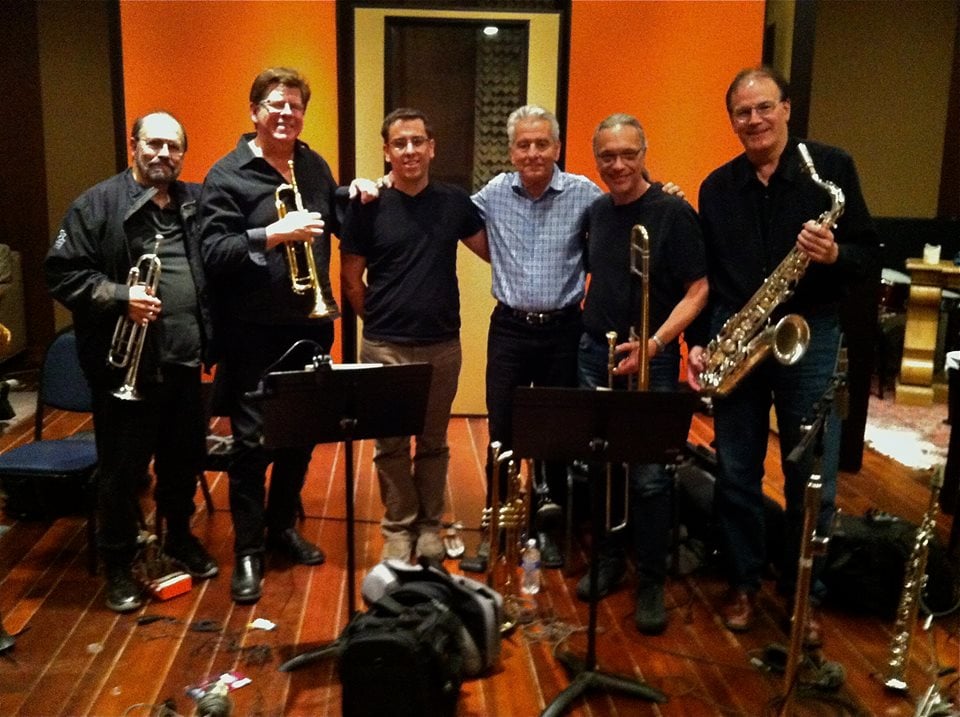
Gary Grant, Jerry Hey, Bill Reichenbach, Larry Williams

Did you have any regular practise routines to keep you in shape during busy periods?

I did the daily routine that evolved under Mr. Adam’s teaching and that Larry Hall and I adapted.

What are the priorities for young and aspiring players hoping to have a long and successful career?

Listen, listen, listen… and then practise!

[youtube https://www.youtube.com/watch?v=IhssbQAbM10&w=854&h=480]

What trumpets and mouthpieces have you used over the years?

Bach 37 and Bach 3C were my standards throughout, but I played a Calicchio for a while and a had a Bob Reeves mouthpiece which was a copy of a NYC Bach 3C rim.

To read reviews of the latest Bach models, click here.

This is a guest question from Johnny Thirkell, who I interviewed a few weeks ago! [you can read it here] “In the lesson that you gave me, you had me blowing super loud through everything. Much louder than I would ordinarily practise. Is there a specific reason for that or is it just that I am a wimp?!”

It is mainly to get the sound concept that Mr. Adam was trying to impress upon us all. And also to keep the air moving at all times. But once that is established it doesn’t have to be at full volume all the time, like when playing Arban or Charlier for example.

VISIT THE ‘EDUCATIONAL RESOURCES’ PAGE FOR FREE WORKSHEETS AND LINKS TO PUBLICATIONS

Your horn sections have always had a trademark sound and style that have set the benchmark that producers and engineers now aspire to. Where did that rich, bright and intense sound come from?

It all starts with the players and everyone having a concept of how to make the section sound the best. Then the writing and engineering also play a big part in the sound. Fortunately, I started with Bruce Swedien and Quincy, who both knew exactly how the horn section should be recorded and what the section should sound like. It was a big learning experience for me with both of them.

14708383_1298262346882031_1788043795554436819_n
Jerry with Quincy Jones

What are your favourite microphones for recording trumpet?

Bruce Swedien has an incredible array of mikes he used on us, and any mike he used was amazing. My general favourites are Neumann U47, Neumann KM54, Neumann FET47, Neumann U67, and most recently the Royer 121 and 122.

What are the horn sections that you like to listen to that you have not been involved with?!

Tower of Power, Brecker Brothers, Edgar Winter White Trash, Stevie Wonder, Snooky Young with Count Basie and Thad Jones.

Is there a particular project that you can say has been your most enjoyable?

Too many to single out just one! Any Quincy projects, Al Jarreau, Earth Wind and Fire, David Foster Projects, and George Duke.

Do you have proudest professional moment?

There are so many recordings that I am very proud of, but maybe the proudest moment was the first time I worked with my son, Andrew, when he recorded the horn section. We were doing our usual recording when I said, “Let’s double that!”  Andrew talked back through the phones and said, “maybe we should do one more”.  “Play that back for me Andrew. Wow, OK, you’re right. Let’s do one more take!”  And from that very point on, I knew he had some really amazing ears and I go with his suggestion every time. I’m a proud father!”

1780803_686298148078457_1738959349_n
Gary Grant, Wayne Bergeron, Andrew Hey, Jerry Hey, Bill Reichenbach, Dan Higgins

If you are interested to read more from Jerry, please give Michael Davis’ Hip-BoneMusic a visit. There is a great interview covering all sorts, from ‘Arranging Techniques’ to ‘Wine Recommendations’!


Sign up here for new blog articles emailed direct to your inbox:


Advice · Education · Interview

How To Be a Versatile Trumpeter

D.H. Lawrence writes: “Never set a child afloat on the flat sea of life with only one sail to catch the wind.”  The same could easily be said about trumpet students and the importance of developing versatility in not only their playing but also their outlook on life.

To discuss how we achieve this, I have been fortunate to have the thoughts and experience of 2 fantastic trumpet players who have both made careers out of crossing musical boundaries, genres and pigeon holes.

Mike Lovatt is primarily a commercial player (John Wilson Orchestra, BBC Big Band and session and show extraordinaire) although classically trained, who is often asked to guest on principal trumpet with the major orchestras. www.mikelovatt.co.uk

mike-lovatt_pr042

Shaun Hooke is a classically trained player, now Principal Trumpet with the RTE Concert Orchestra in Dublin and regularly also plays lead trumpet with the RTE Big Band. www.dublintrumpetacademy.com

shaunhooke

They both have some fascinating insights into approaching very similar problems and challenges, but from different perspectives.

Can you tell us a little about your background as a player, and what you got you into the trumpet in the first place?

Mike: I was born into a musical family. My Dad was head of music at a secondary school and my Mum was a fine amateur singer with the local choral society. Early in his career my Dad began to collect instruments and taught himself to play them. There were no peripatetic teachers in those days and he wanted to be able to teach well enough to form a youth orchestra within the school. By the time he retired he was conducting an orchestra of about 70 children! The trumpet was one of the many instruments lying around the house. I really wanted to play the trombone but at the age of eight my arms weren’t long enough.

Around that age on a shopping trip to the local supermarket, I was drawn to the record carousel and saw a record with a picture of a trumpet player on the front. It was Eddie Calvert ‘The Man with the Golden Trumpet’ I immediately asked if I could have it and after listening to the album I tried to play along with it using an old Selmer. I was hooked! Trumpet playing was all I wanted to do.

I began to play in my Dad’s youth orchestra and eventually the Staffordshire youth orchestra. I really wanted to be a professional and every day I would rush from school to try to play along to all sorts of records. I would pretend I was doing a concert with the Syd Lawrence Orchestra or that I was Maurice Murphy with the London Symphony Orchestra or a member of the PJBE, or the great Kenny Baker. This developed my ear not only for pitch but also for sound, style, articulation, placement of time and phrasing.

Disaster struck when aged 14; I was involved in a serious cycling accident. I lacerated my top lip and lost several front teeth. I thought my playing days were over. Thanks to the skills of the plastic surgeons of the North Staffs hospital I healed and began to try to play again. At first it was terrible, I could not produce a sound. Eventually I got it working again enough to do my grade 8 and I then auditioned for the music colleges. The range I previously had didn’t come back however and it wasn’t until I discovered the Maggio system some 10 years later that finally my chops came together.

I was fortunate to study at Trinity College of Music in the 80’s. My teacher was Norman Burgess, formally principal trumpet of the BBC concert orchestra, and later co-principal in the BBC Symphony.  He taught me to be as versatile as possible with a view to being employable in the future. He also encouraged me to attend the extra-curricular college big band rehearsals run by the great Bobby Lamb.  There were no Jazz courses available at music colleges back then, so I was lucky to be able to learn from these two great musicians who between them had a wealth of experience from all sides of the profession. I quickly realized that whatever style you play, a good solid technique on the instrument is essential. With a strong technical foundation and embouchure, it is possible to cope with the demands of all styles of playing.

Shaun: I grew up in Leicestershire in England.  I was enormously lucky to be able to avail of free trumpet lessons provided by our County Music Service. Particularly Don Blakeson, who was taught by David Mason who in turn apparently could trace back teacher to teacher all the way back to Handel’s time! I’m doing the Messiah next week so hopefully something has worn off on me. I was also heavily involved with Enderby Silver Band. I started with them as they reformed in ’77 when I was a nipper and enjoyed many happy years growing up with so many wonderful people to mentor me.

I decided to do Chemistry at Oxford University rather than going on to music college, but I had the trumpet bug and after completing a doctorate I knew I wanted to at least give pro trumpet playing a go. Jon Holland and Wes Warren at the CBSO taught me orchestral skills and still now I put myself back in their presence the moment before I play something.  What did Jon say to do here?  What was Wes’s trick for this?…

Quite quickly I was appointed to Principal Trumpet in the RTE Concert Orchestra but to this day I’m still thinking about how these guys coached me and I’m passing it on to my own students.

Your job involves you constantly switching styles – do you have a regular practise routine that encompasses everything, and what are the most important things to concentrate on?

Mike: I believe production is key across all types of trumpet playing. In commercial music, big bands and some Jazz playing the style requires a more defined articulation and sometimes brightness and sizzle in the sound. I always maintain that under that brightness there should be a full broad tone across the entire register. High notes are expected in lead trumpet playing and some areas of commercial music and so should be developed. However, they must never be the be all and end all at the expense of a good sound and considered playing. Super C is almost normal range these days but it’s important to have a full rich centered sound. You should always use your ears and listen to all types of music… try playing along with the music you listen to and copy it. You could also record yourself playing different styles and listen back and compare. For a particular style to come across to the listener, it needs to be exaggerated.

Shaun: I don’t really have a set practice routine. As a full time performer, I think it’s important to have some time away from the trumpet. I try to have one day a week where I’m neither playing or studying repertoire to help clear the head and relax the muscles. My emphasis on preparation is looking after the basics. Generally, I always have plenty of strength, stamina and range because I’m working pretty constantly. There are skills however that might not be required week in week out, and these are the ones that I’m careful to maintain at home. Flexibilities and double and triple tonguing can get rusty pretty quickly if you don’t end up being asked to produce them, particularly valve/tongue coordination so these are the things I always make sure stay sharp. The other golden rule is “practice what you’re NOT doing currently.”  If I’ve been doing lead big band charts at work I try to make sure I play something at home on my regular orchestral mouthpiece and something on the piccolo trumpet – choose something for my own pleasure rather than something coming up in the schedule. Vice versa, I always try to do 15-20 minutes on my lead mouthpiece, 2-3 days before I start a project that is going to need that. Other than that, I try to listen to recordings of stuff I have coming up. Not really to familiarise or learn repertoire but more to guard from getting “stuck in your ways”.

It’s nice to be inspired by others and try to do repertoire differently the next time it comes around. I listen to lots of players from the 20s,30s and 40s and try to emulate their styles. There are lots of transcriptions of their solos and I like to collect the original recordings.

Do you have a basic instrument and mouthpiece setup that covers most things, or is it very different depending on what the schedule brings?

Mike: My basic trumpet and mouthpiece set up is the same for most of the works I perform. I play my own signature model Mike Lovatt Smith-Watkins Bb Trumpet exclusively. It is a 460 bore. The bell is similar in size to a Bach 37 except that is a heavy weight.  I have two gold plated instruments and one that is silver-plated. I use my own range of signature mouthpieces of which there are three models: Studio, Lead and Classical.

The majority of my playing is done on the Studio mouthpiece. On this set up I play first Trumpet in the John Wilson Orchestra, perform lead on the West End show 42nd Street and the BBC big band, and when on first trumpet in Studio sessions.  Mouthpieces are very personal and what works for me may not work for someone else. Lip formation and lip thickness determine what might work and feel comfortable to the individual.  My mouthpieces are perfect for the various styles required of me. It seems other players like their ability to be used in different settings. When playing in the high register, I find the Lead with its large back bore, medium shallow cup and the comfy 5ish Bach diameter rim enables me to produce a bright sound I need, and stamina is helped by the resistance being transferred to the trumpet through the large back bore. I use my classical piece (more or less a Bach 3C) for studio sessions sitting down the line, my practice and occasionally on first trumpet if I require a broader darker sound.

My instruments have different qualities because of the plating. The silver ML Smith Watkins trumpet enables me to produce a cutting bright sound not only useful in Lead but also certain styles of orchestral music too. I don’t change lead pipes for different styles of playing. I could if I wanted, as the trumpet features an interchangeable leadpipe system. However, I like to keep the feel (resistance) of the instrument the same regardless of the genre of the music I am playing to help me with my production and familiarity in supporting the notes and sound. I use the ML designed pipe that comes with the trumpet as it balances perfectly with the 37-size bell and the bore size of the instrument. The most important thing here is sound quality whether it is classical, jazz, lead in a big band, pop horn section or solo.

Shaun: To be honest, kit is everything in my job. We try of course to perform in the correct style, but the range of sounds and timbres required is so varied that it really means you need some different equipment to achieve that. At the beginning of my career I did that mostly by playing on my beloved Bach (then later Yamaha) B-flat and using quite a variety of mouthpieces. It had a degree of success, but it is hard work on the embouchure, chopping and changing rims, cup depths, throats, backbores etc… and I certainly felt that my tuning and accuracy suffered.

For the past number of years I have had a different approach. My responsibilities at RTE were putting more emphasis on my role as lead trumpet in the RTE Big Band and I felt I needed a dedicated lead instrument. I tried great gear from Shires, Smith-Watkins and Schilke but I fell in love with B&S’s JBX trumpet. When I’d decided to buy this, the store asked if I’d like to try the B&S Challenger II trumpet (their standard classical model). Well I loved it. So now I have two B flat trumpets, one for classical work and one for light repertoire. The huge advantage for me is that the reverse leadpipe is almost the same on both, the bore is the same, the bell profile is the same, so the tuning slots and the way it “blows” feels entirely similar, making it so easy to switch back and forth.

But the JBX bell is lightweight and has a French bead giving it a really exciting live fizzing sound. Whilst the Challenger II bell (a 43) is much more solid and rounded sound much like the Bachs I’d been playing for the previous 30 years. Since then I have B&S C  and E-flat trumpets both light and heavyweight bells. As to mouthpieces I use a Bach 1 1/4c on both of my B-flats for orchestral (Challenger II) and “Show” work (JBX). For lead work I use a Marcinkiewitz 3/3C.  I turned up at work once without my old lead mouthpiece and was loaned this by my excellent co-principal Eoin Daly – I liked it so much I bought 2 so I could keep one at home and one at work and therefore wouldn’t be caught out again. I have a Schilke piccolo that I use for recording work but have recently just bought a Scherzer rotary valve piccolo for baroque and orchestral repertoire.  Again, it’s all about making the right sound. I use a Marcinkievitz 7s mouthpiece on the piccolo. I found one in 1989 in an “odds and sods” box at a band competition thinking it would be a good “screamer” mouthpiece but it didn’t work for that. It got me through a tour of Brandenburg 2 though so I’ve stuck with it.

How has the versatility that you require affected the way that you approach teaching? Do you recommend that advancing students work on a wide variety of playing styles or concentrate on fundamentals?

Mike: The versatility that I have developed over the years is something I try to pass on to my students.  I encourage listening to all types of music. This is essential for stylistic development.  Occasionally this is done in lessons but I encourage listening to be done on a regular basis to keep ones ear in tune with different styles. A couple of years ago I gave a trumpet class at a major conservatoire in London and when I asked if anyone had listened to any music recordings or attended concerts recently, not one of the 12 classical trumpet students had. One of them admitted to listening to Bruno Mars three days previously!

I teach fundamental trumpet techniques. First and foremost, I make sure the student has a solid embouchure formation and can make a good basic sound. I’m a stickler for note production and articulation so there are exercises based around those techniques using Arban and Schlossberg. I use Caruso, Stamp, Maggio and my own ideas to develop the embouchure. I try to instill playing with reverence for the music. Long notes are important to develop resonance and to find the ‘soul’ of the note and the core of ones playing. When you have control of the sound, this can be adapted and applied to whatever style you are playing. I teach different vibrato techniques and ways to help note projection whether at the back of an orchestra, in a west end pit or in a studio microphone technique to record well.

Shaun: The music business is hard and getting harder. I always encourage my students to be flexible even if you’re pretty sure that you will be going in one particular direction. Make sure you have the skills to be able to say ‘yes’ to the next call and go in and do a good job. It is a wonderful way to earn a living but at the outset, you need to be out there making contacts and proving your professional credentials. One of my colleagues in the RTE CO was a regular in a German Beer band to put money on the table while he was trying to break into the orchestral scene. Work hard but don’t be over focused is my advice.

What is easier, a classically trained player playing light music or a commercial player playing in a classical orchestra section?

Mike: As someone who has dipped my toe into both sides of the profession, I am inclined to say that both styles are as difficult as the other to play convincingly. You need to apply yourself honestly to the style and exaggerate it enough to come across to the listener. I have always had the view that trumpet playing is trumpet playing and that the most important quality to have is solid musicianship built from listening. Always listen carefully to your sound and the music going on around you. If you’re playing third trumpet in a classical section on a film soundtrack recording, you then respect that and whoever is on first trumpet. Try to blend with them and above all support the sound style they are playing. The same goes for an orchestral player playing big band repertoire on a symphonic pops date. I have played with orchestras from San Francisco Symphony, the Concertgebouw Amsterdam, CBSO, BBC Symphony, LSO, LPO, Philharmonia, BBC Scottish, BBC Philharmonic, RTE Concert, Gothenburg Symphony, BBC Concert and many more. On many of these occasions my role is to help shape and lead classical players into becoming commercial big band section players in a three-hour rehearsal followed by a concert. Some seem more capable of giving up to the music and using their ears more than others. If they have a solid technique and command of their instrument, then they are more able to adapt successfully.

To quote John Wilson “anyone who can play good lead trumpet in a dance band can play first trumpet in a symphony orchestra”.

I think it can be difficult for ‘classical’ players to get used to playing swing quavers, combined with the way in which articulation changes in commercial playing. I always try to help by singing the phrasing to them and making them feel confident they can do it. It’s also important to tell the players to articulate and play the shorts and longs accurately.

Shaun: I think that it is not always right to pigeon hole people like that, but there are people who specialise of course. I remember taking the chance to have Tony Fisher come over to cover a James Bond concert for me when my wife was about to pop with our first child. Of course, I waxed lyrical to our management – he was interviewed for RTE radio about the very first Bond sessions including of course the original theme track – it was a brilliant week. Then the baby was born, and I was gone for a few weeks and they asked him to come and do a week of Mendelsohn… he gracefully declined – although it would have been interesting I expect!

I come from a classical background, trained over the years and “on the job” to do light repertoire, and I have local guys here that slot in well in the RTECO and RTE Big Band, but similarly we have guys who mostly do commercial work who are fine sitting down the line on orchestral repertoire. We have lots of mixed programmes where this is required. All the “classical” guys have plenty of “light” experience and the commercial guys are for the most part classical trained so have orchestral skills and can TRANSPOSE.  That is the key!

What challenges and projects have you got coming up?

Mike: I’m so happy I’ve managed to carry on doing many varied projects, gigs and recordings with orchestras, bands, groups and big bands all over the world. My future projects include my first solo album with the amazing Fodens Brass Band, directing the Stockholm Radio Symphony Brass in a concert of Billy May’s Big Fat Brass music, big band lead trumpet sessions for Gary Barlow, UK jazz festivals this summer with the Skelton Skinner all-stars, concerts with the John Wilson Orchestra, concerts and broadcasts on lead trumpet with the BBC Big Band, continuing on lead trumpet for 42nd street and as guest first trumpet for the Symphony in Antwerp. I am fortunate to be looking forward to such a stylistically varied schedule.

Shaun: A few highlights of upcoming stuff are: The Classical Series at the National Concert Hall featuring Mozart, Mendelssohn and Beethoven; studio work with Irish singer/songwriters for rock station RTE2FM; Giselle with visiting English National Ballet, Bartok’s Bluebeard’s Castle with the Irish National Opera. Up to our summer holidays we are also doing 4 sell-out shows at the Donnybrook Dublin Rugby Stadium and The Marquee in Cork with RTE2FM of 90s dance anthems! Hopefully we will tour this show in Australia in the autumn.

For further information about Mike Lovatt, please visit www.mikelovatt.co.uk

Mike’s signature ML Smith-Watkins trumpet is reviewed here if you would like to read more.

For to find out more about Shaun Hooke, please visit www.dublintrumpetacademy.com

Shaun is a B&S Artist and you can view the trumpet range here.

You may also be interested to read a review here of good all-round B-flat trumpets.

For a great range of trumpets, mouthpieces and specialist advice, please visit Thompson Music


Sign up here for new blog articles emailed direct to your inbox:

[jetpack_subscription_form show_subscribers_total=”false” button_on_newline=”false” submit_button_text=”Sign up” custom_font_size=”16″ custom_border_radius=”0″ custom_border_weight=”1″ custom_padding=”15″ custom_spacing=”10″ submit_button_classes=”” email_field_classes=”” show_only_email_and_button=”true”]

Advice · Interview

Trumpet Artist Profile: Matilda Lloyd

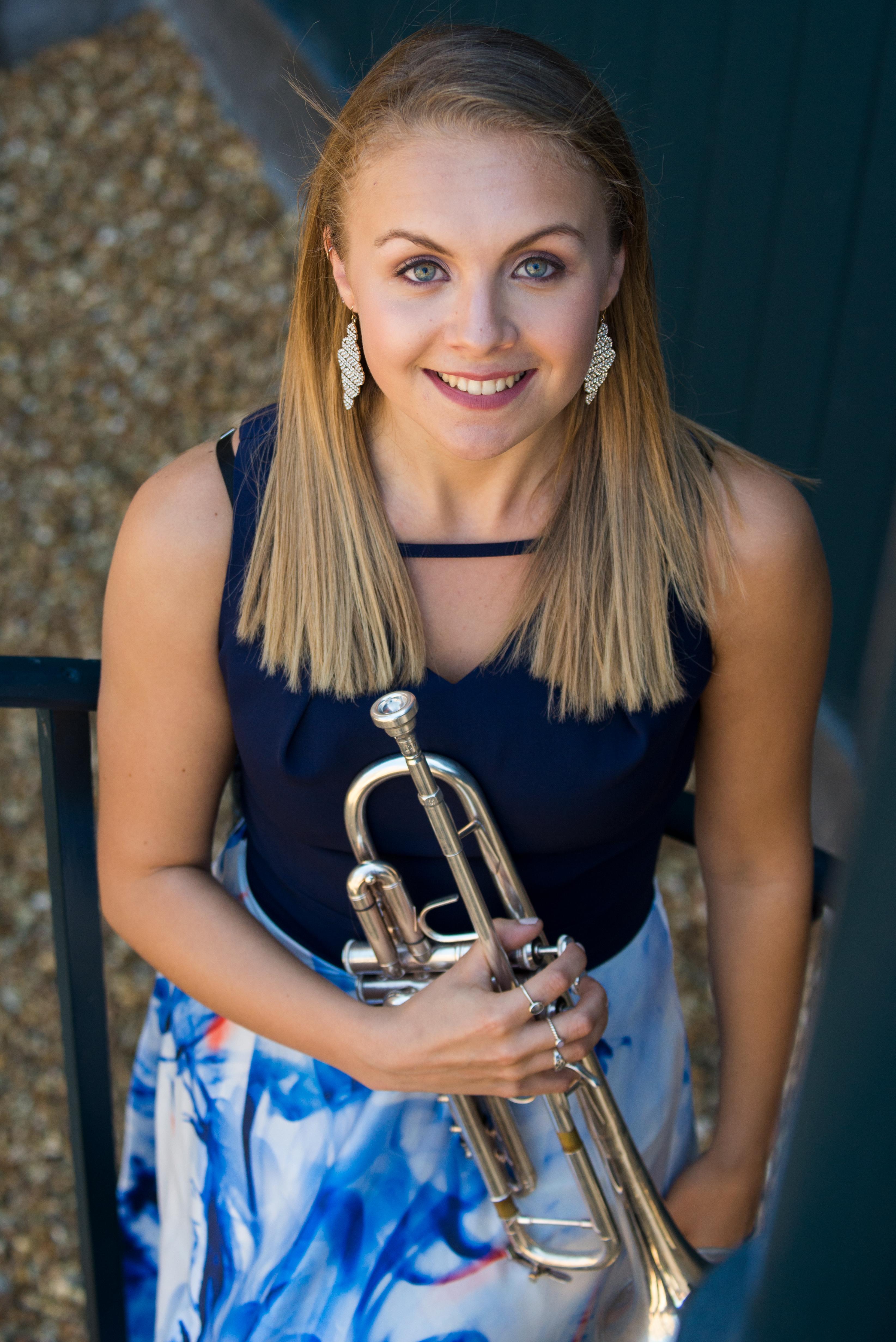
There are not many 22-year-olds that made it onto my list of fabulous trumpet players that I wanted to try to interview. Matilda Lloyd’s biography however, is glitteringly impressive and it does not seem possible to have achieved so much in music at such a young age!

Matilda came to prominence in the UK in 2014 by winning both the Brass Final of BBC Young Musician of the Year, as well as the BBC Radio 2 Young Brass Award. A BBC Proms solo debut followed in 2016, and in October last year, Matilda won the inaugural Eric Aubier International Trumpet Competition in France, beating off competition from 53 other top players along the way.

Graduating from Trinity College, Cambridge last year, she is now studying for a Masters at the Royal Academy of Music in London. I am grateful that Matilda could find the time in amongst her studies and trumpet engagements to share some thoughts with us:

What made you choose the trumpet as an instrument? Were there any particular early musical influences?

My Dad played the trumpet while he was at school. As a very curious 8 year old, I was rummaging around in our cupboards one afternoon and stumbled across his very old trumpet. Naturally, I wanted to have a go! As I could make a decent sound on the instrument, which isn’t easy to do, I decided that I wanted to start having lessons and that’s where the story began. My Mum is a piano teacher and accompanist, and she started teaching me the basics on the piano a few years earlier, so my ability to read music and rhythms really helped when I first started to play the trumpet.

What are some of your performing highlights to date?

I think my absolute performing highlight has to be playing as a soloist at the BBC Proms in July 2016. Walking onstage at the Royal Albert Hall to an audience of 6,000 and many thousands more watching when the Prom was broadcast on television, was one of the most memorable experiences of my life. It was absolutely exhilarating, and an experience like no other. Performing with the BBC Philharmonic, led by Alpesh Chauhan, was just incredible as I really felt the support of the orchestra and that they were following me – it felt more like chamber music than a concerto. And I was lucky enough to be able to do it twice! Aside from the Proms, another performing highlight was playing First Trumpet in Bruckner’s Seventh Symphony with Bernard Haitink conducting in his home, the Royal Concertgebouw in Amsterdam. To work with such an incredible conductor in a place that means so much to him with an audience that were so mesmerised by the performance was absolutely unforgettable.

AJM_6050.jpg

What are your long term goals after leaving the Royal Academy of Music?

My ambition is to be an international trumpet soloist. I would love to be able to expand the trumpet repertoire, both through the commissioning of new works and also the revival of forgotten works. Too often, works are performed at their premiere and then rarely played again – and I am trying to re-introduce lost works into the repertoire by recording them and playing them in my recital programmes. I would also like to do more educational and outreach work as a soloist to try and encourage more young people (especially girls!) to take up a brass instrument.

What instruments and mouthpieces do you play on?

I’ve had my Bach Stradivarius LR43 Bb Trumpet for about 10 years now! I originally wanted the more standard 37, but at the time of my purchase the UK warehouse had just burnt down and the shop didn’t have any in stock to sell! Luckily, I decided in the shop that I preferred the 43 anyway and haven’t ever wavered from that decision. I have recently purchased the new Yamaha C trumpet that I absolutely adore – it feels very easy to play. I also have a Yamaha Eb/D trumpet, and a Schilke piccolo. I play on a Warburton mouthpiece – 10* backbore with a 3M top.

You have had success in a number of high profile competitions now, while still very young. How do you manage preparing so many programmes for a gruelling competition week while also continuing with your studies and other engagements?

This is a difficult question as different methods work for different people! What’s best for me is to learn pieces well in advance. If I know I have a quiet period say five months before a competition, I will learn a few of the pieces in the repertoire during that time. This enables me to leave them alone during busier patches when I have more urgent things to prioritise. I also find that this ends up improving how I play those pieces as I always find them easier at the second time of practising them! I also always try to perform the pieces for a competition beforehand, whether in a recital or a masterclass, just so that the competition is never the first time performing the repertoire.

AJM_6435

Do you have any particular advice on keeping your chops in good physical shape during these preparations?

I recommend not doing much more than 3½ to 4 hours of practice a day. And ideally this would be split up into smaller chunks spread throughout the day for the best stamina. It is very tempting in the run up to a concert or competition to panic and do last-minute over practice, where you suddenly increase the amount of practice or the length of practice sessions. This is very bad for the lip so try to avoid this as much as possible! I would recommend tapering down the amount of practice over the few days before the performance to rest the lips and give them a chance to recover and be on top form for the day.

Congratulations on winning the inaugural Eric Aubier Trumpet Competition last October! Can you share with us any insights into what it was like going through that process in particular? 

Thank you very much! The competition was a great experience for me, particularly as I was able to share a flat with a fellow student from the Royal Academy of Music. This was an absolutely fantastic idea and I think my experience of the competition would have been completely different if I had stayed alone. It was great to have company throughout the week as it was a complete rollercoaster. With the quick-fire rounds often on consecutive days, emotions ranged from being nervous before performing, the adrenaline and high after performing, the worry about whether the performance was good enough or not, the anticipation of the results, the elation at finding out I had got through a round, the stress of having to then rehearse with the pianist for the next round on that same day, and then the nerves for that performance in the next round the next day! Having someone to share all of this with made it a whole lot easier, so an enormous thank you to Aaron Akugbo for his company and support. The competition in Rouen was an incredibly enjoyable week for me. All the other competitors were very friendly, and many of them stayed the whole week to support us in the semi-final and final, which was really lovely.

Do you have any general advice for any young players?

I just want to say something that I think will resonate with every brass player in the world! Every single musician in the world has periods or moments of self-doubt, wondering whether they are good enough or not for something, or comparing themselves to other players. So often, people are afraid to enter a competition or put themselves forward for a concert or opportunity because they are afraid that they won’t play as well as they know they can or fear that someone else will play better. All I have to say about this is that you are not alone! The only outcome of not applying for something is that it won’t happen. If you don’t apply for a competition, you can never win it. So the one thing I would encourage all brass players is to put themselves forward for opportunities and embrace them!

Please visit www.matildalloyd.com for further information and for upcoming concerts

You can also follow Matilda on Twitter at @lloyd_matilda and on Instagram as @matildalloydtrumpet 


Sign up here for new blog articles emailed direct to your inbox:

[jetpack_subscription_form show_subscribers_total=”false” button_on_newline=”false” submit_button_text=”Sign up” custom_font_size=”16″ custom_border_radius=”0″ custom_border_weight=”1″ custom_padding=”15″ custom_spacing=”10″ submit_button_classes=”” email_field_classes=”” show_only_email_and_button=”true”]

Advice · Interview

Trumpet Artist Profile: John Thirkell

Johnny Thirkell is one of the most recorded trumpet players still working today. Through the 80s and 90s, as well as being a member of Level 42, Swing Out Sister and Jamiroquai, he has also worked with George Michael, Bruno Mars, Phil Collins, Pet Shop Boys, Kylie Minogue, Eric Clapton, Buddy Rich, The Who and Tina Turner. He has performed on over 6000 recordings including 23 No.1 records – most recently the Bruno Mars/Mark Ronson smash, “Uptown Funk”. The list goes on and on!!

For 10 years, John had a self-imposed break from the trumpet to concentrate on his various businesses in music and technology, but he is now back playing again and very graciously agreed to meet me in a my local pub to discuss his career…so far!

JH: What got you interested in the trumpet to start off with?

JT: Well an old friend of mine from school in the North-East of England made me want to start. Ken Brown, now 2nd trumpet with the Hallé Orchestra was a boy-wonder cornet player at school and I saw the kudos that this got him at school. This piqued my interest, and then when I found out that band practise was the same time as 2nd period maths, I thought “I’m in, where do I sign?”. I loved it immediately, and there was nothing that I wanted to do more from that point onwards.

JH: And apart from Ken, where there any other particular musical influences or inspirations?

JT: My father took me to see the Syd Lawrence Orchestra at the Billingham Forum. Freddy Staff stood up and played ‘Manhattan’ and this blew my mind. The next big damascene moment was hearing Tower of Power for the first time! “THAT is what I want to do!”. This is probably what guided me towards the pop music scene. And then, before long I came across the playing of Jerry Hey. He is an incredibly nice guy, but his trumpet playing was sublime, and his arrangements are incredible. This is the pinnacle of the craft! Jerry was very much the inspiration for the ‘Phantom Horns’. We could never dream of coming close, but you always want to try!

I have worked with Lisa Stansfield on and off for 25 years and on our most recent album and the previous one, Jerry did half of the horn section stuff in LA, and I did the other half in Rochdale! Trust me, when you listen to the album, you can tell who is who! For me that is such a thrill. This guy has been my idol all through my career. They say “never meet your heroes” but it was amazing having lessons with him.

JH: So, talking about horn sections, when you set up ‘Phantom Horns’ was there a particular identity or sound that you wanted?

JT: No. Really, we wanted to be able to adapt to whatever the artists and producers wanted. Flexibility and versatility were absolutely key. Our job as a horn section is to blend and provide what fits with the particular artist. I have recently been going through a load of old recording and video clips, and I was struck how we sounded incredibly different from project to project. I think that if a band booked the Tower of Power horns they would be wanting and expecting that particular sound. Our job was to fit in!

Chile Flugel

JH: I really like the incredible stat about your chart appearances. Can you tell me about that!?

JT: Yes, I was on at least one album in the UK charts without a break for 13 years and 4 months. This was with dozens of different acts through that period. At one stage there were 11 albums in the top-50 that I was playing on at the same time! I think that this is not symptomatic of being earth-shatteringly brilliant, more that I always had a business mind. I would approach my work as business, and on keeping good working relationships with people and always treating the artists and their music with respect. If a parent came up to you with their baby, you wouldn’t tell them that it was ugly! It is the same with musicians and their music. You have to treat people well and remember how important it is to them. You also have to remember that once your name is on an album, it is there forever! If I was not happy with the way that I had played on a particular take, I would sabotage it to make sure that nobody would ever hear it. It didn’t make me popular with other musicians on some occasions, but it is important that you take pride in everything that you do. If you don’t, it will come back to haunt you.

VIDEOJamiroquai – Tighten up – Live at club Citta, Tokyo 1993

VIDEOBuddy Rich Band – Prague 1984

JH: Through busy patches and big tours, how do you keep on top of your playing and technique?

JT: I certainly have a strict-ish 20 minute warm-up routine that I do when I am busy. I will vary it though. I had this idea a few years ago, coming back to playing again, that it would be a great idea for a book to talk to all the great players about their practise routines. I sat with lots of great players – Craig Wild, Andy Greenwood, Simon Gardner, Wayne Bergeron, Malcolm McNab, Gary Grant, Jerry Hey… and discovered that hardly any of them seem to have one. There’s the book out of the window!

I love to be organised with my practise and use various apps to keep track of what I have been doing. I suspect that I am rather OCD with it all, but it works!

I had some lessons actually with Gary Grant, Jerry Hey and Malcolm McNab. I love to go and talk to these guys, you can learn so much from them. I have been a massive Jerry Hey fan since I was around 18. He is so gracious and we spent a whole day at his house just talking about the trumpet.

JH: Does that leave you with a feeling of worry or anxiety if you haven’t been able to do your daily routine, like if you have just got off a flight or something?

JT: Yes I think sometimes it does. I also have an emergency short routine too, that I can do in the car that mainly involves buzzing. Jerry Hey would always do lots of practise including long warm-up/set-up before work. I asked what he does if he is on in LA at 9am in the morning. He answered very matter-of-factly that he would just get up at 4am so that he has time to do it and then travel in to the city!

JH: So here is the geek question… Equipment?

I’ve played on the same trumpet throughout my entire career. It is a 1962 Doc Severinsen Getzen Eterna, and I find that it just does everything that I need it to. It started out silver plated, I painted it white for a while during the Phantom Horns period, and it has now been beautifully replated like new. I am also playing on the same Marcinciewicz mouthpiece that I have had for years. I also use a Getzen Eterna Flugelhorn which I bought from Giardinelli’s in 1979. I absolutely love it and everyone comments what a big warm sound it has. I would not swap it for anything!

I must be any music shop’s worst customer! I think that given a bit of time, you end up sounding like yourself on any instrument setup. Some will obviously make it easier, but I have always felt comfortable on what I have so have had no reason to change.

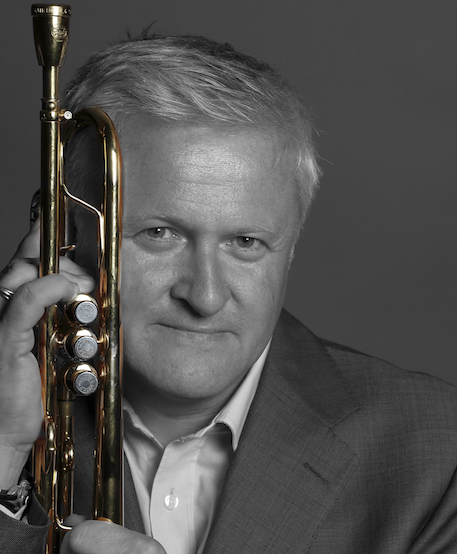
Johnny Thirkell

JH: Would you say that the music industry has changed a lot over the years?

JT: Certainly. Some avenues for work have changed and dried up but there are also huge opportunities that have been created by the internet. Even I am able to build my own website, and I’m an idiot when it comes to that! If I can do it, there is hope for us all. I may have run a software company, but I got clever people to do all of that! I think that young people coming into the industry need to be exploring those avenues for promoting yourself and generating additional income streams. We have to be much more self-starting, the world has become much more democratised. In music there are all these outlets, and the long-term winners are the ones that really take advantage of this. Blockchain technology in the distribution of music is also going to keep changing the way that we all work, allowing us to track every digital file that we create.

Some younger UK players are really building a great reputation for themselves. Louis Dowdeswell for example – loads of the top guys in the US like Wayne Bergeron are talking about him. I love the idea of young people just making it happen. What’s really interesting is when I was a young player, all the ‘old-school’ trumpeters would tell us that they would hate to be starting out on a career then as there wasn’t enough work around. It didn’t deter us, and here I am, still playing the trumpet all these years later! So that is the lesson that I would pass on to these younger players. Forget what those ‘old farts’ said! The nature of the beast changes – there was a period of around 10 years where I was surviving entirely on studio work, but then you get a show or whatever, but it has started to get a little more fragmented now. The ‘playing’ industry is certainly different to how it was, but I do not think that it is necessarily worse. The smart ones are the ones that get with the program and make a career for themselves. What these young guys like Louis and Tom Walsh are doing is fantastic. They are really making use of all of their talents.

The key is to embrace a portfolio of careers, whether it be playing, teaching, writing, producing, and to put your heart and soul into it and make it the best that it can be. Embracing the changes and the new technology is key and makes for a much more interesting way to earn a living.

JH: There is a big emphasis on ‘identity’ isn’t there? And I think that if you embrace the fact that being a trumpet player today is so much more than just being a trumpet player, you are going to be a lot happier! And a lot of these younger guys are really going for it.

JT: Absolutely, and in my day, we were very much compartmentalised to an even greater extent. You were either a studio player, or a show player, or a function band player or whatever. That started to break down as there became less studio work and less work generally. I never forget hearing for the first time that a guy like Derek Watkins would take on a show – we were amazed that he would do that. We never thought of him as a ‘show player’ but looking back, that was ridiculous. Why on earth wouldn’t he? It is great work, and he was a great player.

Things are certainly more fragmented now in the music industry, but as I said the key is to embrace it instead of bemoaning it. It is like when the drum machines were first introduced. It showed up that there were 2 kinds of drummer – those that complained that the drum machine was taking some of their work, and those that went out and bought one! Who better to programme a drum machine than a drummer? And for me, that sums up the differences.

JH: So we have talked about compartmentalising and pigeon-holing players. What ‘slot’ would you have put yourself in 20 years ago?

JT: Pop. Almost exclusively pop music studio work. I would tour sometimes. There were 3 bands over the years that I had a spell in: Swing Out Sister, I did about 4 or 5 years. I was with Level 42 for 8 years, then after that, Jamiroquai. Now those bands only toured for part of the year so a lot of the rest of the time was studio work. Myself and sax-player Gary Barnacle set up a horn section called ‘Phantom Horns’ which we branded and treated like a business. For 15 years, I would say that I was exclusively pop music.

JT Purple

JH: And if you had to give yourself a job title now, and ‘pigeon-hole’ yourself, what would you say? I am guessing that it is probably a little more complicated!

JT: My wife describes me as a retired business man, but I am not so sure that I like that particular moniker! I am enjoying being a trumpet player again and feel that I am playing better than ever. For the first time ever, I have TIME to practise, and I am loving it! I had many years as a full-on professional musician, then 10 years as a full-on business person building up and running a number of businesses – throughout all of that though, inside I still feel like a trumpet player, and dress like one too!

I like to be stimulated and love being on the board for various things like the Music City Foundation in Sheffield, and also being involved with numerous projects involving music, education and technology. It keeps me busy and interested. Underneath it all though, there is no hiding from the fact that I am a ‘trumpet player’!

JH: So, here’s a strange thing: Reading your discography I see that you are listed as playing flute on a Kylie Minogue track. Surely that is a mistake?

JT: That is not a typo! Steve Anderson was the producer on that track and booked me on trumpet. We were at Olympic studios in London, I was the last instrument to go on and they needed rough mixes by that night. Steve was struggling to find good flute samples in a hurry so I said, “If it is not too difficult, I’ve got my daughter’s flute in the car!”. I went and got it and played one bar of flute, for no extra money I might add!

JH: Any other projects on the go at the moment?

JT: I am starting the next Lisa Stansfield tour in April 2018 for a couple of months, I then will be working with Marti Pellow for a month after that. I have also just finished doing some arrangements for a great new young artist. Hopefully I can say more soon!

JH: What advice would you give to a young JT?!

JT: Treat your career like a business and don’t worry about what other people think!

Please visit Johnny’s awesome website at johnnythirkell.com

Be sure to also check out the great videos and audio clips on there!


Sign up here for new blog articles emailed direct to your inbox:

[jetpack_subscription_form show_subscribers_total=”false” button_on_newline=”false” submit_button_text=”Sign up” custom_font_size=”16″ custom_border_radius=”0″ custom_border_weight=”1″ custom_padding=”15″ custom_spacing=”10″ submit_button_classes=”” email_field_classes=”” show_only_email_and_button=”true”]

Advice · Education · Gear Review · Interview

Trumpet Artist Profile: Allen Vizzutti

Regular readers will most likely need no introduction to Allen Vizzutti – an artist of the highest calibre: soloist, recording artist, composer, educator and master clinician!

On a visit to the UK earlier this year I caught up with him and wanted to discuss two main topics with him – a fascinating topic on which Allen often talks in clinics and also in his method books that have become standard literature for students around the world: whether there is an over-emphasis on the word “buzz” in a trumpeter’s vocabulary; and also the design process behind the impending launch of the new Yamaha Vizzutti Model Trumpet.

I had a (brief!) opportunity to have a blow on a new prototype 9335V when Allen was touring Europe recently, and my first impression was that it felt very similar in response and tonal character to the 9335NY New York model. There was perhaps a slightly richer tonal core across the range though. I very much look forward to having a proper test-drive when the instrument is launched later this year – watch this space!

Below, Allen tells us a little about the thoughts and processes behind this new model:

The new Yamaha 9335V Bb trumpet will be launched in it’s second iteration in November. The Vizzutti model idea was born in a conference room in Japan several years ago and I was given the go ahead to help design a personal model from the ground up. It was an exciting opportunity and one for which I am very grateful. I worked on the project with Yamaha genius designers Bob Malone and Wayne Tanabe in New York at the Yamaha Atelier on 5th Ave.

Even though we had permission to start from scratch I had been enjoying using a gold plated but otherwise stock New York Xeno for some time. Logically we chose to start with that trumpet as the basis for the new model. If that didn’t prove successful we could always begin again from scratch. I would like to make clear that I am not a trumpet designer. My input was based on evaluations of the physical feel, the sound, timbre and the trumpet’s characteristics in different registers. Again, I was pretty happy with my stock Yamaha New York Xeno. I should note that I brought along a Bach Strad that belonged to one of my students because there were characteristics of that horn that I liked and wanted to reference.

The short story is after a few hours of experimenting with different small part changes we were getting amazing results. We blew the Bach away early on. Changes consisted of using different small parts made of varying materials and having different weights. We moved bracing and tested myriad slides, water keys and valve parts. I would ask for something and Bob and Wayne would head into the workshop and return to the testing room with changes. The final result came relatively quickly. The new 9335V had a better harmonic structure and was slightly more open and free blowing without being a large bore. It was much easier to play above high C regarding both response and resistance. The sound was a little darker than the New York Xeno. In reality, the improved characteristics of this trumpet are most noticeable by professional or near professional level players. When played with maximums of flexibility, power, control and beauty it is the best horn I have had.

Later when production was in full swing I tried 40 examples of the trumpet. Asked to pick 2 for my personal use I couldn’t really tell the difference between them. In the end I randomly pointed at a couple and those were the horns I ended up using. Unfortunately the first run of the 9335V was limited to a small number of units. The good news is the newer version will be unlimited!

Yamaha 9335V 2.0. What’s been changed? Over a couple of years Bob Malone worked on small tweaks to the 9335V. After he was happy with it I tried out several examples. We ended up with a minimal version of changes through evaluation most of which you cannot see. The water key structure is probably the most observable difference to the newest 9335V. It plays great. I like it a little better. I can honestly say I would be happy performing on either version.

Like a great automobile company, Yamaha is committed to constant development and improvement. The evolution never stops. The Yamaha 9335V should be available in November 2017.

Regarding the question, “To buzz or not to buzz?”, Allen has kindly pointed me towards the relevant page in his method which I have reproduced below this. From my perspective, buzzing has always been a fundamental part of my teaching and important concept for beginners to grasp early on. The main priority for me is that the buzzing is used to show students how relaxed the chops should be and to put the emphasis on the air and support.

Aged 16, I was put through quite an aggressive embouchure change that set the mouthpiece onto a “buzzing embouchure”. This meant that my embouchure barely moved across the range of the instrument, but unfortunately my sound went to crap! It was only when I started at the RCM at 18 that James Watson told me to ignore the past 2 years, and I suddenly had my sound and flexibility back! Therefore Allen Vizzutti’s theories below strike a chord with me…

The use of the word buzz in trumpet study is pervasive. When creating sound with the lips alone or playing the mouthpiece alone it is easy to understand why this is true. The sounds created are sounds of buzzing. However, buzzing one’s lips into a trumpet mouthpiece will create an unwanted “beginner’s” sound. Even actual beginners can avoid ever having a beginner’s sound when taught to blow and not to buzz.

Using the embouchure [described on page 153], one can learn to send a steady and firm airflow through the aperture – made by the lips, into the trumpet, creating a wonderful tone without ever thinking of buzzing. The tense, tight sound of buzzing and the accompanying weeks of frustration associated with “unlearning” this habit can be completely avoided. Unfortunately, for most of modern history, the conventional wisdom of trumpet pedagogy has been to instruct beginners to buzz their lips. Aggressively sending air through the trumpet without buzzing causes the air column to cycle in waves against the tubing of the horn. The vibrating air column is a result of the air meeting the resistance set up by the lips, mouthpiece and leadpipe. The trumpet bell amplifies the vibration. The smoother one blows through the horn, the smoother the sound. Buzzing does not create the sound.

ls there any purpose in buzzing? Actually, yes. Buzzing is just a different entity than trumpet tone production. Buzzing the lips without the mouthpiece and trumpet, including flapping them (loose and low-pitched), is a very useful relaxation technique. I do it to loosen my lips, warm down and as an emergency substitute when warming up may be impossible. Lip buzzing exact pitches to then match on the trumpet, as suggested in some educational material, is of little value (other than ear training), in my opinion. My range on the lips alone is very limited. My range on the trumpet is much more extensive.

Playing the mouthpiece alone is often referred to as mouthpiece buzzing. lt can be very useful as part of an organized warm-up. The concept of playing the mouthpiece should be the same as playing the trumpet. lmproving one’s mouthpiece sound can really help improve one’s trumpet sound as well. Eliminating the trumpet and its sometimes-confusing technical concerns can encourage successful breathing and relaxed blowing. Playing melodies on the mouthpiece is very helpful for ear training and embouchure pitch control. Ultimately, the smoothness of playing the mouthpiece alone will translate to a smooth and steady trumpet sound.

To find out more about Allen, his projects, recordings and publications please visit www.vizzutti.com


Sign up here for new blog articles emailed direct to your inbox:

[jetpack_subscription_form show_subscribers_total=”false” button_on_newline=”false” submit_button_text=”Sign up” custom_font_size=”16″ custom_border_radius=”0″ custom_border_weight=”1″ custom_padding=”15″ custom_spacing=”10″ submit_button_classes=”” email_field_classes=”” show_only_email_and_button=”true”]

Interview

Trumpet Artist Profile: Raynald Colom

Raynald Colom is one of the bright talents to emerge from the thriving Spanish jazz scene to make a splash on the International circuit. Described as “a simply superb trumpet player” by JazzWise and “a force of spirit and feeling” by DownBeat Magazine, it is easy to see why his profile is on the rise.

Ray kindly gave up some of his time for me last month to tell us a little about himself and his trumpet playing:

Can you tell us a little about your musical background and early musical influences?

Because my parents are in the music biz, I started when I was 4 playing violin until I was 8 – that’s when my dad brought a trumpet home and I fell in love with the instrument. I was lucky for 2 years to have André Spelitsch as a teacher, who held the 1st trumpet chair of the Orchestre de Paris. After that my family moved to Barcelona where I mainly played by ear and also played with my dad’s band, learning the Armstrong repertoire and all the greats. When I was 17, I received a scholarship to attend Berklee College of Music, but I stayed there for just two semesters (LOL!). I would say at that time I was into Clifford Brown, Dizzy , Lee Morgan and of course Miles.

What can you tell us about what appears to be a thriving jazz scene in Spain at the moment?

There are a lot of great cats that created the path for the younger generations like Tete Montoliu. After him people like Jorge Rossy, Perico Sambeat, Marc Miralta. But what for me is really thriving is the so-called “flamenco jazz” created by musicians like Carles Benavent or Jorge Pardo, alongside Paco de Lucia who played with Miles and Chick Correa. I’m lucky to play with these guys on regular basis.

How does it compare to other countries as you visit on tour?

Well, we are a southern country with the Mediterranean Sea so I would say the life gives you a different approach rhythm-wise… if there is a negative note I would say that there is no real industry in the so called “jazz” (don’t really like this word ) world compared to France or Germany.

You are based in Barcelona right? What is the atmosphere like in the close-knit musical community there after the horrific attack recently?

Man, I just did a gig right after the attacks and I have to say Barcelona is an example of togetherness and kindness. Barcelona is a melting pot of cultures and I saw that when we played.

What projects have you got going on at the moment?

Luckily quite a few! I have got my new band called “STEEL” that use pedal steel guitar and lots of electronics that we are going to record in the fall. I also just did a live recording with master bass player Carles Benavent and Tomasito. For 2018 I’m putting together a band with my good friend and guitarist from NYC, Yotam Silberstein and Piraña, Carles Benavent and Diego del Morao. A dream band for me! Several other projects and records are coming too. I feel blessed that musicians count me in for their music!

What equipment do you use?

Right now I’m playing the P.Mauriat PMT-72. Great horn! I like the fact that it doesn’t colour your sound. Also I can have a big sound without having to play a horn that is too heavy. I have been playing P.Mauriat for the last 4 years and I’m really happy with it. [You can read the Mouthpiece Online review of this instrument here]

For the mouthpiece I play a custom-made signature model consisting of briarwood and metal. I have been working with “Investigaciones Manchegas” from Spain for a year on how to get all that “wood” warm sound without loosing the edge of metal and it came out in the most amazing way. We are now working on put it in the market soon. [You can read about different mouthpiece materials here]

Any advice on keeping your trumpet playing in good shape especially when you are on the road?

Long tones and regular Arban and Clark studies. Usually I try to have at least 30/45 minutes before the sound check and play basics: intonation, attack, scales (really simple and slow) and whatever I’m working on at that time. If you have a routine you do when you are at home, let’s say 2/3 hours approx., it is kind of a compressed one to manage when you don’t have the time for it on the road. Good sleep (when you can!), eat well, and lots of water to hydrated the body and muscles so your lips don’t get like a wooden block!

Anything else that you would like to mention?

Just to thank you for spreading to word in our trumpet community – music can heal the soul and gives a better society where everyone is welcome and grows with respect and love.

For further information about Raynald and his music, please visit raynaldcolom.biz


Sign up here for new blog articles emailed direct to your inbox:

[jetpack_subscription_form show_subscribers_total=”false” button_on_newline=”false” submit_button_text=”Sign up” custom_font_size=”16″ custom_border_radius=”0″ custom_border_weight=”1″ custom_padding=”15″ custom_spacing=”10″ submit_button_classes=”” email_field_classes=”” show_only_email_and_button=”true”]

Advice · Education

1st things 1st…

A new school term is just starting, with thousands of children picking up a trumpet for the first time this month. The purpose of this article is to look at how we as teachers approach these crucial first few weeks, what our priorities are to ensure sustained enthusiasm and a solid technical and musical grounding… and also any tips and tricks that we have learnt that help to achieve this.

I will start with my tuppence-worth, and then welcome my fellow trumpet teachers to share their thoughts here too. Any top tips that any of you may have will be received with interest and gratitude!

The first priority has to be continuation – no child can get the educational, personal and emotional benefits that we all know learning an instrument can bring, if they are desperate to quit after a handful of lessons. For me, most of the activities are centred on materials and music that is already familiar to the new-starter: very simple (sometimes one-note) arrangements of pop songs, lots of full-on singing and ear activities including improvising with backing tracks from lesson 1. I have found this to be a really brilliant way of building confidence and enthusiasm from the start – there is no such thing as a wrong note after all!

As far as a technical grounding goes, I tend to concentrate on 2 main aspects: Breathing and Tongue Level. I will also do a bit of mouthpiece work and buzzing with them to get them used to the feel of it, without worrying about it sounding rubbish!

The purpose of the controlled breathing is hopefully obvious. I have spoken to a number of teachers who do not start to talk about tongue level until months or sometimes years in. I have found that getting students to think about and sing melodies using aaah, eeeh etc gets most kids comfortably with a workable range of a 5th or an octave within 2-3 weeks. The sooner they can play some ‘proper’ tunes, the better! I cringe when I hear (often very experienced) brass teachers telling their students to ‘blow harder’ or ‘squeeze’ to get up to that 2nd space G.

There are loads of fantastic all-in-one tutor books around. I tend to use mostly my own materials for the first 5 or six weeks until half term, and then ask the parents to get their wallets out for a good book.

I have spoken to a number of colleagues with some great technical tips. One was to ask the student to grip a thin drinks straw (the type that comes with a Capri-Sun) to form nice centred and relaxed embouchure. Then put the mouthpiece over the top of the straw, and then finally remove the straw, leaving the mouthpiece perfectly centred. Repeating this at the start of each practice or lesson gets the student used to exactly where it should go. I used this myself for a while, and it worked very well with most students. However, I found that in these early days, especially if you have an excited younger student, you do not want to be doing anything that tempers and gets in the way of their enthusiasm and love of what they have just started. As with any of these things, it is a balancing act.

What are the priorities for you as you set another student off on their adventure? What are the things that have worked well and perhaps not so well? Have your priorities (or indeed the students) changed over the years? Please do comment here…


Sign up here for new blog articles emailed direct to your inbox:

[jetpack_subscription_form show_subscribers_total=”false” button_on_newline=”false” submit_button_text=”Sign up” custom_font_size=”16″ custom_border_radius=”0″ custom_border_weight=”1″ custom_padding=”15″ custom_spacing=”10″ submit_button_classes=”” email_field_classes=”” show_only_email_and_button=”true”]

Interview

Trumpet Artist Profile: Steve Fishwick

With a rapidly growing profile on the UK and International Jazz circuits, and an ever-increasing back catalogue of critically-acclaimed recordings to his name, I am immensely grateful to trumpeter and Schilke Artist, Steve Fishwick for giving up his time to share his thoughts and insights…

Tell us about how you got into trumpet playing, and your main influences.

“Aged 8, I started having lessons with a wonderful teacher called John Crosdale who had spent time in the Halle orchestra.  My twin brother Matt (now a drummer) made fun of me for a week then decided that he wanted to play too.  I think our parents thought we’d give it up in a few months.  Mr Crosdale used to regale my parents with stories of his professional trumpet playing days, so to an 8 or 9 year old, this was the greatest thing ever.  By the age of 10, I had more or less made up my mind that I was going to be a professional musician, not really having any idea what that entailed or how hard it would be!

I’ll be forever grateful to Mr Crosdale because he was so curious and enthusiastic about music.  When my brother and I started getting interested in jazz, he didn’t discourage it, he was very positive and excited by it even though he was a classical trumpet player.  At the time, the 1980s jazz boom was underway. Wynton Marsalis’ fame was at its peak so he was on the TV all the time along with Courtney Pine, Tommy Smith and Andy Sheppard.  Plus, they were showing old jazz 625s on the TV which we used to video tape and watch over and over.  I remember going to see Dizzy Gillespie with the United Nations Orchestra (with Arturo Sandoval and Claudio Roditi) and our teacher Mr Crosdale was in attendance too.  At our next lesson, he presented us with a programme signed by Dizzy, he’d gone backstage after the concert to meet the band and chat to Arturo about trumpet technique!  He really was an inspirational teacher.

I had got into some bad habits, playing on the red of my lip, so I undertook an embouchure change.  I had no idea what I was doing, I just changed position and told myself: “right that’s where I’m putting the mouthpiece from now on” and it kind of worked.  Then we went to London to study at the Royal Academy of Music under Graham Collier (we were there 1994-98).  Steve Waterman was my teacher along with Gerard Precenser (for my final year) who was very inspirational.  I also had some lessons from vibraphonist Anthony Kerr who was very helpful when I was trying to get fast tempos together, and Martin Speake was great too.  I played pretty convincing jazz when I arrived at college but I didn’t really know technically what I was doing (I was playing mainly by ear).  Martin found me out on day one and proceeded to roast me.  I was a little headstrong and stupid in those days and rebelled quite a bit, but the lessons stuck with me and much, much later I eventually caught on to what they were trying to tell me!

I should also mention Lew Soloff who I had the good fortune of working with in Pete Long’s Gillespiana.  I had met him in New York a little while before this too.  He was very encouraging, but told me in no uncertain terms that I needed to improve my technique, particularly my breathing.  He turned me onto the Arnold Jacobs breathing exercises which I’ve been working on ever since, along with the Chicowicz long tones and flow studies (which Terrell Stafford turned me onto).  I would say that these two things, more than anything else, have improved my trumpet technique immensely.

As for players that I admire, there are a lot!  Main influences I would say are Kenny Dorham, Miles Davis, Art Farmer, Lee Morgan, Freddie Hubbard, Blue Mitchell, Donald Byrd, Clifford Brown, Woody Shaw, Charlie Parker and Dizzy.  I often feel torn between the Kenny Dorham/Miles Davis vulnerable introspection and the more gregarious extrovert Lee Morgan and Freddie Hubbard.  So, I guess I’m trying to balance the two things in some way.  I also listen to more contemporary players like Joe Magnarelli, Ritchie Vitale, Wallace Roney, Scott Wendholt and pretty much anyone playing now.  I try and keep up with all the contemporary players: Avishai Cohen, Ambrose Akinmusire, Michael Rodriguez and the rest of them.  Plus, we have some very fine jazz trumpet players over here in the UK who are very inspiring, such as Percy Pursglove, Tom Walsh and Robbie Robson.  I also like to listen to classical music too.”

What model trumpet do you play?

“I am playing a Schilke HC-1.  For a long time, I played a Martin Committee from the 1940s, but I wore the thing out, put my hands through the brass and everything.  Even after I had it reconditioned it just became unviable to play as my everyday horn.  I got another Martin but the tuning wasn’t fantastic.  Then I moved onto Olds Supers which I liked, incredible projection, but I never felt like I could hear myself very well – Probably because the horn was so good at projecting!  I eventually bought a Schilke B1 after a lot of research.  Basically, I like lightweight horns with step bore and a reverse leadpipe.  I like to feel the horn vibrate in my hands as I’m playing it.  The B1 is great, it has a wide variety of tonal expression, and out front it doesn’t sound bright at all.  But from behind the horn it does sound a little bright.  So, I’ve moved onto the HC-1 which, although it was designed for Wallace Roney, I feel it could have been designed personally for me!  It is a fantastic amalgamation of the Martin Committee and the classic Schilke designs, two of my favourite horns.  The sound is great, the tuning perfect and the resistance from low to upper register is amazingly consistent.  For me personally and for what I’m trying to do, they are the best horns out there.”

…and mouthpiece?!

“I play on a Monette B2S3 Prana Resonance Mouthpiece.  I’ve experimented a lot – Used to play big mouthpieces, moved to shallow ones and gradually went bigger again.  I think most jazz players want something that can give them a big, warm sound but also enables them to get into the upper register.  So, everything is a little bit of a compromise between sound and range, deep and shallow.  The Monette mouthpiece isn’t a compromise, great sound and the upper register is easier.  If I try and play a conventional mouthpiece now, it just doesn’t work.  And the sound is nowhere close to the Monettes (for me personally, not that other players can’t make conventional mouthpieces sound great, I mean Clifford Brown didn’t need it!).  I feel that they also ‘correct’ your playing in some way.  If I’m not using my air correctly or I have tension somewhere in my body then the mouthpiece just kind of shuts down, it doesn’t work.  I don’t consider myself the greatest trumpet technician as it’s something I’ve always struggled with, so I need the daily reminder!”

What are the most important aspects of trumpet playing that young, aspiring musicians should focus on?

“I think an aspiring player should concentrate on sound.  There is a lot to think about when learning any instrument, so I think that sound sometimes goes out of the window.  Along with this goes correct breathing and listening a lot to the greats.  A lot of younger players don’t know how to listen, and in a lot of ways it isn’t their fault.  They have Spotify, YouTube and all of this music at their fingertips, so they end up listening to different stuff every day.  There is a lot to be said for the old way of getting a bunch of CDs and listening to them repeatedly, internalising them and really learning every note on the record.  Also, listening isn’t as social as it used to be when you would get together with friends and listen to music.  Everybody listens on headphones on their phone or computer in isolation.  Do yourself a favour and buy a decent stereo system!  It will sound so much better and you will hear details in the music you won’t have heard before.  Also, you’ll experience the joy of listening and sharing music with friends.  I feel listening and internalising the sound of great players is hugely important, it will give you a strong concept of what you want to sound like.  And if you don’t have that strongly in your mind, it will never come out of the bell of the instrument.  Also go to gigs and hear people live!  It’s the best lesson you will ever get.  The amount of great, great trumpet players that I go to hear and see zero of my trumpet students there in the audience alarms me.

When I was a young player, I attended the Wavendon Jazz Summer Course. Steve Waterman was teaching there and he was invaluable because he showed me all of these transcriptions of people like Lee Morgan and Miles Davis he had done.  Before that I was seriously groping in the dark, but I went home and started transcribing, and my jazz playing started rapidly improving.  It kind of makes me chuckle now when I tell my students they have to transcribe and some of the reactions of horror that I get, because it is quite a daunting prospect at first.  I remember transcribing from vinyl and cassettes because I didn’t have a CD player.  If you wanted to slow it down you had to buy a special cassette player from the US that slowed the music to half speed but made it an octave lower in pitch.  Now there are numerous computer apps that you can download in seconds for a few pounds that can slow the music down whilst keeping the pitch.

Teaching is really important to me.  I think that we have a lot of amazing players here in the UK that aren’t really appreciated enough, and the standard is getting better and better year after year.  I love being part of a team in the colleges that I teach at (Leeds College of Music, Guildhall School of Music and Drama, Birmingham Conservatoire, and the Royal Academy of Music).  When you manage to get the student to play better during the lesson and you see them getting the idea, coupled with seeing their progress over time, it’s exciting and very rewarding to feel you’ve been a part of that process.”

What projects do you currently have in the pipeline?

“I have a band co-led with my brother Matt, featuring Dave O’Higgins on Saxophone, Rob Barron on piano and Dario de Leche playing the music of Cedar Walton.  My brother and I had the honour of recording with Mr Walton in 2007 along with bass legend Peter Washington and my long standing musical partner Osian Roberts.

I recorded a CD last November with Alex Garnett on Alto Saxophone, New York bassist Mike Karn and Matt again on drums.  We’re currently working to get that mixed, mastered and released with a view to touring late next year.

Also in the pipeline is another sextet album as a follow up to our two previous CDs, In the Empire State and When Night Falls.  This band features Osian Roberts on Tenor, NYC musicians Frank Basile on Baritone, Mike Karn on bass and Jeb Patton on drums.  I’m writing music for that when I can find the time!”

Details on projects, recordings and future gigs can be found at www.stevefishwickjazz.com

Instrument details can be found at www.schilkemusic.com


Sign up here for new blog articles emailed direct to your inbox:

[jetpack_subscription_form show_subscribers_total=”false” button_on_newline=”false” submit_button_text=”Sign up” custom_font_size=”16″ custom_border_radius=”0″ custom_border_weight=”1″ custom_padding=”15″ custom_spacing=”10″ submit_button_classes=”” email_field_classes=”” show_only_email_and_button=”true”]