Trumpet Artist Profile: John Thirkell

Johnny Thirkell is one of the most recorded trumpet players still working today. Through the 80s and 90s, as well as being a member of Level 42, Swing Out Sister and Jamiroquai, he has also worked with George Michael, Bruno Mars, Phil Collins, Pet Shop Boys, Kylie Minogue, Eric Clapton, Buddy Rich, The Who and Tina Turner. He has performed on over 6000 recordings including 23 No.1 records – most recently the Bruno Mars/Mark Ronson smash, “Uptown Funk”. The list goes on and on!!

For 10 years, John had a self-imposed break from the trumpet to concentrate on his various businesses in music and technology, but he is now back playing again and very graciously agreed to meet me in a my local pub to discuss his career…so far!

JH: What got you interested in the trumpet to start off with?

JT: Well an old friend of mine from school in the North-East of England made me want to start. Ken Brown, now 2nd trumpet with the Hallé Orchestra was a boy-wonder cornet player at school and I saw the kudos that this got him at school. This piqued my interest, and then when I found out that band practise was the same time as 2nd period maths, I thought “I’m in, where do I sign?”. I loved it immediately, and there was nothing that I wanted to do more from that point onwards.

JH: And apart from Ken, where there any other particular musical influences or inspirations?

JT: My father took me to see the Syd Lawrence Orchestra at the Billingham Forum. Freddy Staff stood up and played ‘Manhattan’ and this blew my mind. The next big damascene moment was hearing Tower of Power for the first time! “THAT is what I want to do!”. This is probably what guided me towards the pop music scene. And then, before long I came across the playing of Jerry Hey. He is an incredibly nice guy, but his trumpet playing was sublime, and his arrangements are incredible. This is the pinnacle of the craft! Jerry was very much the inspiration for the ‘Phantom Horns’. We could never dream of coming close, but you always want to try!

I have worked with Lisa Stansfield on and off for 25 years and on our most recent album and the previous one, Jerry did half of the horn section stuff in LA, and I did the other half in Rochdale! Trust me, when you listen to the album, you can tell who is who! For me that is such a thrill. This guy has been my idol all through my career. They say “never meet your heroes” but it was amazing having lessons with him.

JH: So, talking about horn sections, when you set up ‘Phantom Horns’ was there a particular identity or sound that you wanted?

JT: No. Really, we wanted to be able to adapt to whatever the artists and producers wanted. Flexibility and versatility were absolutely key. Our job as a horn section is to blend and provide what fits with the particular artist. I have recently been going through a load of old recording and video clips, and I was struck how we sounded incredibly different from project to project. I think that if a band booked the Tower of Power horns they would be wanting and expecting that particular sound. Our job was to fit in!

Chile Flugel

JH: I really like the incredible stat about your chart appearances. Can you tell me about that!?

JT: Yes, I was on at least one album in the UK charts without a break for 13 years and 4 months. This was with dozens of different acts through that period. At one stage there were 11 albums in the top-50 that I was playing on at the same time! I think that this is not symptomatic of being earth-shatteringly brilliant, more that I always had a business mind. I would approach my work as business, and on keeping good working relationships with people and always treating the artists and their music with respect. If a parent came up to you with their baby, you wouldn’t tell them that it was ugly! It is the same with musicians and their music. You have to treat people well and remember how important it is to them. You also have to remember that once your name is on an album, it is there forever! If I was not happy with the way that I had played on a particular take, I would sabotage it to make sure that nobody would ever hear it. It didn’t make me popular with other musicians on some occasions, but it is important that you take pride in everything that you do. If you don’t, it will come back to haunt you.

VIDEO: Jamiroquai – Tighten up – Live at club Citta, Tokyo 1993

VIDEO: Buddy Rich Band – Prague 1984

JH: Through busy patches and big tours, how do you keep on top of your playing and technique?

JT: I certainly have a strict-ish 20 minute warm-up routine that I do when I am busy. I will vary it though. I had this idea a few years ago, coming back to playing again, that it would be a great idea for a book to talk to all the great players about their practise routines. I sat with lots of great players – Craig Wild, Andy Greenwood, Simon Gardner, Wayne Bergeron, Malcolm McNab, Gary Grant, Jerry Hey… and discovered that hardly any of them seem to have one. There’s the book out of the window!

I love to be organised with my practise and use various apps to keep track of what I have been doing. I suspect that I am rather OCD with it all, but it works!

I had some lessons actually with Gary Grant, Jerry Hey and Malcolm McNab. I love to go and talk to these guys, you can learn so much from them. I have been a massive Jerry Hey fan since I was around 18. He is so gracious and we spent a whole day at his house just talking about the trumpet.

JH: Does that leave you with a feeling of worry or anxiety if you haven’t been able to do your daily routine, like if you have just got off a flight or something?

JT: Yes I think sometimes it does. I also have an emergency short routine too, that I can do in the car that mainly involves buzzing. Jerry Hey would always do lots of practise including long warm-up/set-up before work. I asked what he does if he is on in LA at 9am in the morning. He answered very matter-of-factly that he would just get up at 4am so that he has time to do it and then travel in to the city!

JH: So here is the geek question… Equipment?

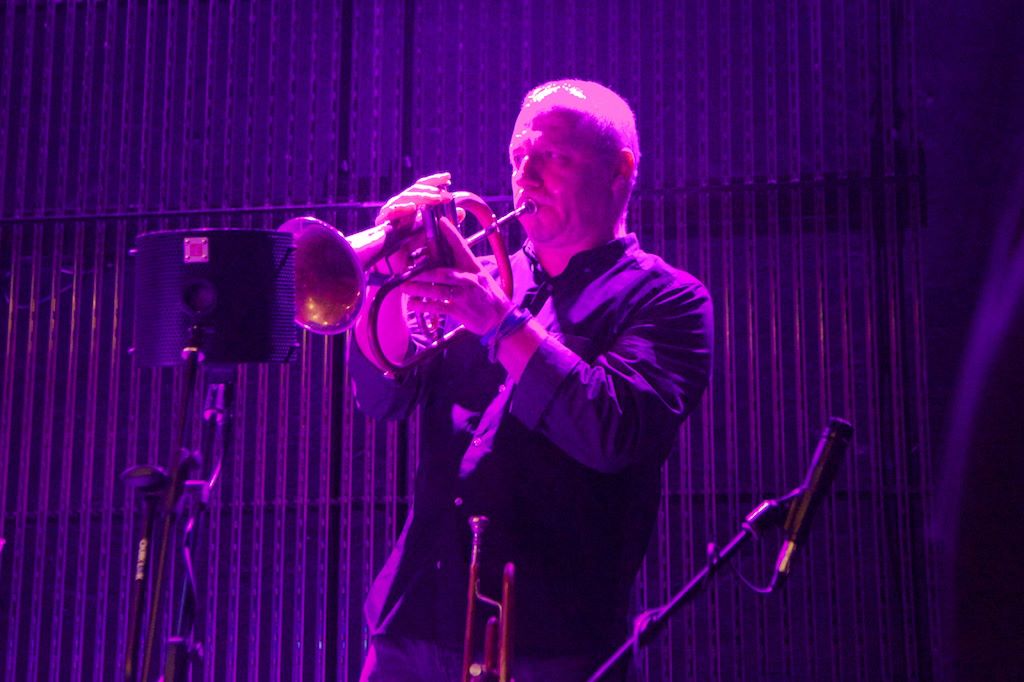
I’ve played on the same trumpet throughout my entire career. It is a 1962 Doc Severinsen Getzen Eterna, and I find that it just does everything that I need it to. It started out silver plated, I painted it white for a while during the Phantom Horns period, and it has now been beautifully replated like new. I am also playing on the same Marcinciewicz mouthpiece that I have had for years. I also use a Getzen Eterna Flugelhorn which I bought from Giardinelli’s in 1979. I absolutely love it and everyone comments what a big warm sound it has. I would not swap it for anything!

I must be any music shop’s worst customer! I think that given a bit of time, you end up sounding like yourself on any instrument setup. Some will obviously make it easier, but I have always felt comfortable on what I have so have had no reason to change.

Johnny Thirkell

JH: Would you say that the music industry has changed a lot over the years?

JT: Certainly. Some avenues for work have changed and dried up but there are also huge opportunities that have been created by the internet. Even I am able to build my own website, and I’m an idiot when it comes to that! If I can do it, there is hope for us all. I may have run a software company, but I got clever people to do all of that! I think that young people coming into the industry need to be exploring those avenues for promoting yourself and generating additional income streams. We have to be much more self-starting, the world has become much more democratised. In music there are all these outlets, and the long-term winners are the ones that really take advantage of this. Blockchain technology in the distribution of music is also going to keep changing the way that we all work, allowing us to track every digital file that we create.

Some younger UK players are really building a great reputation for themselves. Louis Dowdeswell for example – loads of the top guys in the US like Wayne Bergeron are talking about him. I love the idea of young people just making it happen. What’s really interesting is when I was a young player, all the ‘old-school’ trumpeters would tell us that they would hate to be starting out on a career then as there wasn’t enough work around. It didn’t deter us, and here I am, still playing the trumpet all these years later! So that is the lesson that I would pass on to these younger players. Forget what those ‘old farts’ said! The nature of the beast changes – there was a period of around 10 years where I was surviving entirely on studio work, but then you get a show or whatever, but it has started to get a little more fragmented now. The ‘playing’ industry is certainly different to how it was, but I do not think that it is necessarily worse. The smart ones are the ones that get with the program and make a career for themselves. What these young guys like Louis and Tom Walsh are doing is fantastic. They are really making use of all of their talents.

The key is to embrace a portfolio of careers, whether it be playing, teaching, writing, producing, and to put your heart and soul into it and make it the best that it can be. Embracing the changes and the new technology is key and makes for a much more interesting way to earn a living.

JH: There is a big emphasis on ‘identity’ isn’t there? And I think that if you embrace the fact that being a trumpet player today is so much more than just being a trumpet player, you are going to be a lot happier! And a lot of these younger guys are really going for it.

JT: Absolutely, and in my day, we were very much compartmentalised to an even greater extent. You were either a studio player, or a show player, or a function band player or whatever. That started to break down as there became less studio work and less work generally. I never forget hearing for the first time that a guy like Derek Watkins would take on a show – we were amazed that he would do that. We never thought of him as a ‘show player’ but looking back, that was ridiculous. Why on earth wouldn’t he? It is great work, and he was a great player.

Things are certainly more fragmented now in the music industry, but as I said the key is to embrace it instead of bemoaning it. It is like when the drum machines were first introduced. It showed up that there were 2 kinds of drummer – those that complained that the drum machine was taking some of their work, and those that went out and bought one! Who better to programme a drum machine than a drummer? And for me, that sums up the differences.

JH: So we have talked about compartmentalising and pigeon-holing players. What ‘slot’ would you have put yourself in 20 years ago?

JT: Pop. Almost exclusively pop music studio work. I would tour sometimes. There were 3 bands over the years that I had a spell in: Swing Out Sister, I did about 4 or 5 years. I was with Level 42 for 8 years, then after that, Jamiroquai. Now those bands only toured for part of the year so a lot of the rest of the time was studio work. Myself and sax-player Gary Barnacle set up a horn section called ‘Phantom Horns’ which we branded and treated like a business. For 15 years, I would say that I was exclusively pop music.
JT Purple

JH: And if you had to give yourself a job title now, and ‘pigeon-hole’ yourself, what would you say? I am guessing that it is probably a little more complicated!

JT: My wife describes me as a retired business man, but I am not so sure that I like that particular moniker! I am enjoying being a trumpet player again and feel that I am playing better than ever. For the first time ever, I have TIME to practise, and I am loving it! I had many years as a full-on professional musician, then 10 years as a full-on business person building up and running a number of businesses – throughout all of that though, inside I still feel like a trumpet player, and dress like one too!

I like to be stimulated and love being on the board for various things like the Music City Foundation in Sheffield, and also being involved with numerous projects involving music, education and technology. It keeps me busy and interested. Underneath it all though, there is no hiding from the fact that I am a ‘trumpet player’!

JH: So, here’s a strange thing: Reading your discography I see that you are listed as playing flute on a Kylie Minogue track. Surely that is a mistake?

JT: That is not a typo! Steve Anderson was the producer on that track and booked me on trumpet. We were at Olympic studios in London, I was the last instrument to go on and they needed rough mixes by that night. Steve was struggling to find good flute samples in a hurry so I said, “If it is not too difficult, I’ve got my daughter’s flute in the car!”. I went and got it and played one bar of flute, for no extra money I might add!

JH: Any other projects on the go at the moment?

JT: I am starting the next Lisa Stansfield tour in April 2018 for a couple of months, I then will be working with Marti Pellow for a month after that. I have also just finished doing some arrangements for a great new young artist. Hopefully I can say more soon!

JH: What advice would you give to a young JT?!

JT: Treat your career like a business and don’t worry about what other people think!

Please visit Johnny’s awesome website at johnnythirkell.com

Be sure to also check out the great videos and audio clips on there!

Sign up here for new blog articles emailed direct to your inbox:

[jetpack_subscription_form show_subscribers_total=”false” button_on_newline=”false” submit_button_text=”Sign up” custom_font_size=”16″ custom_border_radius=”0″ custom_border_weight=”1″ custom_padding=”15″ custom_spacing=”10″ submit_button_classes=”” email_field_classes=”” show_only_email_and_button=”true”]

Freddie Gavita: Interview & Instrument Review

Freddie Gavita is a young trumpet player at the top of his game. The trumpet category winner at the 2017 British Jazz Awards is receiving critical acclaim for his debut album ‘Transient’ as well universal admiration for his stunning playing with the Ronnie Scott’s Club Quintet alongside many other projects.

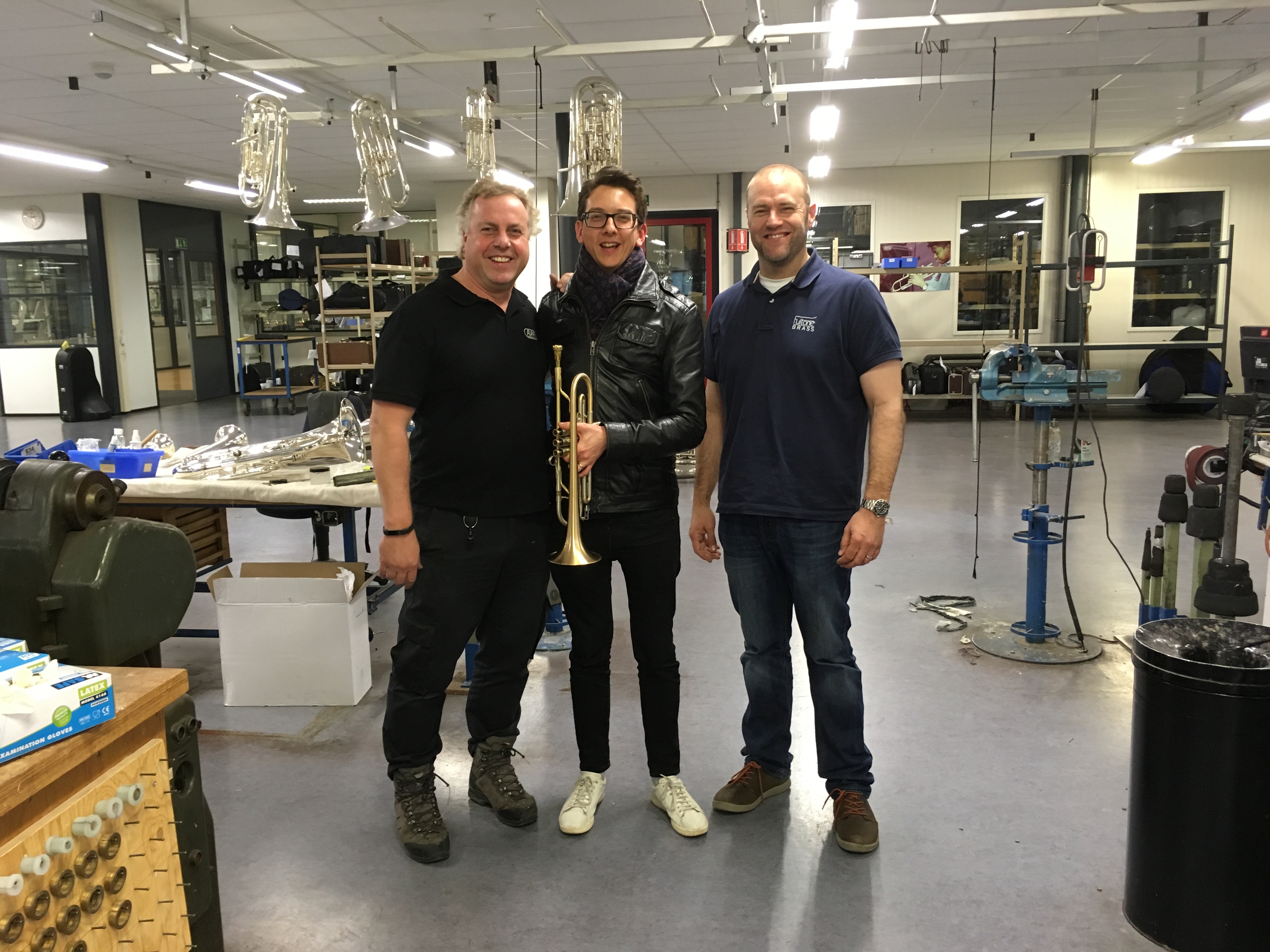
I have caught up with him here to find out a little more about him, and also his new role as an Adams Performing Artist and his work with Adams and Fultone Brass to settle on a new Adams A4 Bb Trumpet. I have also had the opportunity to get hold of a couple of different A4 models from Fultone Brass to include a review of this trumpet range below.

Fultone Brass

Freddie, can you tell me a little about your musical background and what led you to play the trumpet? Any particular influences?

So I was brought up in Norwich, and started learning the trumpet in primary school aged 7. Back then you got free lessons and a free instrument, and I was lucky to have a teacher in David Amis who had a great knowledge of the physical side of brass playing, a deep love of all styles of jazz (even free!) and was an excellent communicator. I would put a large part of my career down to him, he was my only teacher from 7 – 18 years old. My mum was quite proactive as well, so she bought me a Louis Armstrong cassette which I really took to, and still love his music. My dad was the one that encouraged me to practice until I actually started enjoying practicing!

What trumpet and mouthpieces do you use?

I play a Monette B6 mouthpiece that I bought from eBay when I was 17, and an Adams A4 Custom Series ML with Gold Brass bell.

How did you find the process selecting your new horn? Can you describe the process?

So I was lucky enough to go on the Blue Note Cruise from Miami with the Ronnie Scott’s Quintet and Natalie Williams, and there were about 40 of the greatest jazz musicians on the planet on this boat! I met a great trumpeter called Keyon Harrold who works with Gregory Porter and has just released a brilliant new album of his own, he was playing an A4. As soon as I tried one I knew I wanted to delve deeper as I’d been looking for something like this for years. For me it’s about excitement, which might be dangerous, but I want to feel inspired when I pick up a trumpet and the Adams does this for me! I tried a few other models (A4 LT, A8 etc) with Neil Fulton at Fultone Brass, play testing the horns in the BBC Maida Vale studios! He had a good listen up close and far off, we recorded a few bits so I could hear what it’s like from the other side and then took it away to try it on some gigs, which is the main test any horn has to pass!

I have obviously played a lot of other people’s instruments on gigs, but this had the characteristics I’d always wanted. I can play acoustic gigs with a rhythm section and still not feel like I’m having to over blow to be heard, the slots are wide so you can bend notes and get sounds and tones from the trumpet that you never knew existed. It plays beautifully at a whisper and you can get a big, thick sound from it when you open it up. The valves are amazing as well!

IMG_4403

Your album ‘Transient’ has had a great reception from critics and musicians alike. Was it a difficult process getting this album together?

Thanks! It was difficult in one sense, that I’ve not done it all myself before. It does mean you have more control over what happens, who you use and where you record etc, the music was the least of my worries in a way! I also crowdfunded the album, which was very encouraging; not having to worry too much about the financial side of it does help you relax a little and think about the playing side of things more. We recorded 13 tracks in one day (10 made it onto the record) which for a trumpeter is probably a little silly, I’m happy with the results but I’d definitely do two days next time.

How do you find striking that balance between working on and progressing your own projects, and working with other bands and artists?

I think you have to be strong in your practice more than anything. Fortunately, I’m not much of a lead player, so I can focus on more jazz orientated practice which keeps me in good enough shape to play most of the gigs I do without being too knackered! I should probably do more reading practice as that’s one thing that I feel I’ve neglected a little over the last few years, but I’m ok! Having your own band and project gives you a stronger sense of the way you want to play and sound, so I guess when I have to sound like other trumpet players for different situations I’m trying to access a place where it’s still me, but bringing out their influence in my playing. I’d love to do more with my band, as its where I feel happiest and most at home, but it’s hard getting promoters to take you on playing original music sometimes.

Any top tips or preferred materials for technique preservation etc.?

I try to take at least one day off a week! I’ve fallen in love with the Cichowicz flow studies again recently and I regularly use material from Flexus (Laurie Frink) and Gerard Presencer’s book. I try to practise in my head as much as possible (often singing in my head and moving my fingers), so my mind is ready for the trumpet when I play. Especially when improvising, it really helps to have a clarity of idea in your head before you try to play it on the horn! I always feel the benefit when I get the chance to warm down as well, even if it’s just a few pedal notes. I love the Vizzutti Response and Rejuvenation exercise from New Concepts for this.

Do you have any advice for young aspiring players?

I would encourage any young trumpeters or musicians in general to go out and see as much live music as they can! Whatever style, hearing the best people play gives you such inspiration and a better idea of what you might want to sound like. I fully believe that you make the sound on the instrument that you hear in our mind, and the better the sounds you’ve listened to closely, the better the sound you’ll make!

Mouthpiece Online review of the Adams A4 Trumpet range:

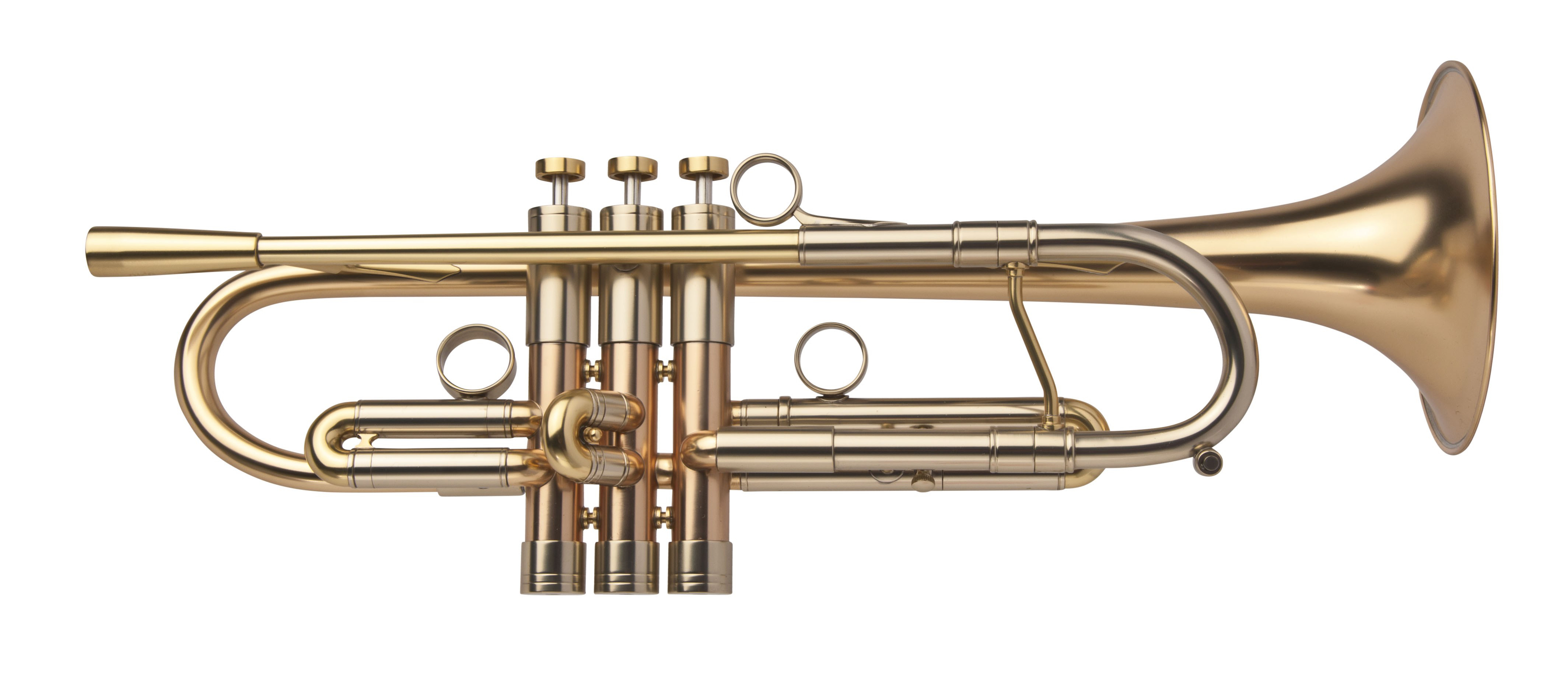
The A4 is one of the most popular in the Adams range. Developed in conjunction with Amik Guerra, it is one of their heavier models with a heavy bronze and nickel silver valve block and a heavy 140mm bell. I had two popular options to try – The first, Adams’ Selected Series with the most popular option of a large bore (12mm) valve section and a 0.45 gauge gold brass bell. The second model is a custom instrument, similar to the standard Selected Series, but with a lighter 0.40 gauge yellow brass bell.

A4_Selected2

My first impression is that these are fabulously designed and constructed instruments. Nothing has been left to chance, and every curve and nuance in the design is there for a technical purpose… and it looks pretty smart too!

I started by blowing the Selected Series gold brass bell model, which I would describe as a real nice combination of silky and solid. The large bore valve section gives you a lovely open feel through the middle of the horn, which is balanced out well with the responsive leadpipe and the larger bell. The harmonics still slot really naturally, yet you are not held back from creating the richness of sound that players want from this style of heavyweight trumpet.

Fultone Brass

The custom model with the yellow brass bell gave me a similar feel. You can continue to make that rich, dark sound at softer dynamics, yet you get a little more sizzle to the sound when you open in the higher registers particularly.

Customisable options on this model include ML (11.7mm) or L bore (12mm), 4 different gauges of bell and 4 different bell materials. It is easy to see why this model has become such a popular one in the Adams range as it offers the remarkable feature of versatility alongside the tonal characteristics that one would expect from a heavier instrument.

To find out more about Freddie Gavita, please visit www.freddiegavita.com

To find out more about Adams Trumpets, please visit www.fultonebrass.co.uk

US readers, please visit Thompson Music for further information on Adams.


Sign up here for new blog articles emailed direct to your inbox:

[jetpack_subscription_form show_subscribers_total=”false” button_on_newline=”false” submit_button_text=”Sign up” custom_font_size=”16″ custom_border_radius=”0″ custom_border_weight=”1″ custom_padding=”15″ custom_spacing=”10″ submit_button_classes=”” email_field_classes=”” show_only_email_and_button=”true”]

Trumpet Artist Profile: Eric Miyashiro

With a trumpet in his hands, Eric Miyashiro is a force of nature. The powerful sound, blistering range and flamboyant lyrical playing suggest a very different personality to the one that I met! Eric is one of the gentlest, nicest people that I have come across so I was thrilled when he agreed to spend some time doing this interview for Mouthpiece Online…

What drew you to the trumpet as a child?

My dad was a well-known trumpet player in Honolulu, Hawaii, so music and trumpet came naturally.  It was like a “toy” for me, I really don’t remember when I started to play!

Who are/were your main musical and trumpeting influences?

Well, there are sooooo many… my dad, Maynard, Bobby Shew, Snooky, Doc, Herseth, Vizzutti, Jerry Hey, Chuck Findley, Freddie, Stahl, Chase, Audino, Clark Terry, Faddis, Wynton… too many to list. I like everybody! I always try to find something in a player that I like, and then learn from them.

As a young pro, one of your first big touring band gigs was with Buddy Rich – What was it like as a young player going into that environment on lead trumpet?

To tell you the truth, I was too green to take that chair, I was not ready… but I think that Buddy saw something in me and he let me grow in to that chair. It was brutally a tough, difficult book to play. Buddy’s energy was so strong that you can’t help but to get caught up in that typhoon of power – it was real tough to try to keep up with him. But it was also the best, and the most fun I had on the road… I would not trade those years for anything!

You have worked with a few manufacturers over the years on custom mouthpiece and horn designs. Can you give us any insights on the design process from a players’ perspective, particularly in relation to your GR mouthpiece and Yamaha trumpet?

Over the years, I was able to meet and work with most of the famous makers. Each company has their own philosophy and systems in designing their products, some of them contradicted the others, but overall the science is the same. Yamaha and GR are at the highest level of product tolerance control in my opinion. To me, the horn and mouthpiece are just tools, it really doesn’t make you sound any different or better then you are capable… depending on how long the “honeymoon” period lasts!

But having a horn that is easy to work with is the key to letting your personal voice come through your playing. I have had about 600 mouthpieces, 47 Bb trumpets, 2 MF Firebirds, 5 flugels, 4 piccolos, 3 melophoniums and a superbone. I have tried all the gadgets known to mankind, and my conclusion is in the end, it’s you and your “voice” in your head that matters. You can change the way you sound by finding a sound that you want and need, that comes from listening, and trying to get a strong image etched in your head. Your priority should be finding equipment that is easy to handle. Only then can you concentrate on the music at hand, rather than fighting the horn, and blaming the horn and mouthpiece for your performances.

Mouthpieces are like your shoe size, bigger is not better! And resistance, from your horn or mouthpiece, is your friend. Learn how to use resistance. Lean against it, and let the resistance help to keep your buzz from opening up too much.

In some recent ‘clinics’ of yours that I attended, you discussed some really interesting approaches to playing high notes! You demonstrated with a leadpipe and some tissue paper that it is not necessarily about airspeed. Can you share some of your thoughts, theories on this? How did you come to start using these techniques?

I always knew from early on that it wasn’t all about the “Air”, “Tongue Arch”, “Pedal Tones” etc. Everything is important, and it’s about balance. We often base our playing on physics with fluid dynamic and acoustic theories. What we do is completely unique. There are very few detailed, and scientifically proven studies done on the physics of brass playing. Any studies are not accurate and reliable because of the player’s physical and personality differences.

The amount and the speed/pressure of the air is a factor that will come into play with the lip tension, tongue position, mouthpiece design, the horn, acoustical condition and the size of the room etc… and on and on… So many factors are involved, but one thing that is certain, is that we “overblow” when things are not working with the chops.

I know this because I am guilty of having done this for most of my life. So, I have been doing my share of studies and experimentation to figure what does and does not work. The bore size, bell size, venturi size, or the gap and drill size on mouthpieces does not necessarily determine the resistance. It is the balance between all of this, plus the most unstable factor, you and your preference.

For you, what are the key factors in keeping on top of your playing when you are travelling?

Sleep, (which is hard to do….) Lots of water, avoiding alcohol, (which is really hard to do)… and keeping your chops in shape by carefully maintaining the buzz centre and the mouthpiece position.

If you could give any advice to a teenage Eric, or suggest that he does things differently, what would you say?

Take lessons!!!! I have never taken a lesson in my life, I am self-taught so I have many bad habits!

Please visit www.ericmiyashiro.com to find out more.

To see the range of GR Mouthpieces, please visit Thompson Music and purchase with an additional 11% off over Thanksgiving weekend.


Sign up here for new blog articles emailed direct to your inbox:

[jetpack_subscription_form show_subscribers_total=”false” button_on_newline=”false” submit_button_text=”Sign up” custom_font_size=”16″ custom_border_radius=”0″ custom_border_weight=”1″ custom_padding=”15″ custom_spacing=”10″ submit_button_classes=”” email_field_classes=”” show_only_email_and_button=”true”]

Instrument Review: New Bach B-flat Trumpet Models

The past few years has seen a number of new Bb models enter the Vincent Bach catalogue. Below is a summary…

LT1901B Commercial

LT weight #1 bell with French bead 5” bell, standard weight 2-piece valve section with bronze upper, custom #43 pipe.

This model was a long time in coming. After much experimentation, the #1 bell (so numbered because it is believed to be the first bell design that Vincent Bach drew) was used in lightweight bronze. One of the biggest features is the 2-piece lightweight valve section with a bronze upper, that really adds a lot of brightness to the sound, particularly when you ‘give it one’! The custom #43 leadpipe has a later taper than the standard #25, but opens out quickly through a nice open-feeling tuning slide section. It is available in both ML and L bore.

Lightness of response, dark tone in mid-register and mid to low dynamics, contrasting with real zip and zing for higher register work make this a real Marmite trumpet. For US readers, Marmite is a disgusting, sticky brown product that a vast number of sick people like to spread on their bread – it is not possible to be indifferent to it, you love it or you hate it!

For the record, I really enjoyed playing this horn. I have spoken to some players who have described this model as like playing on a Yamaha LA only without the good intonation! I do not agree. The LT1901B is an individual instrument with some wonderful characteristics that I have not found in other horns.

VISIT THE ‘EDUCATIONAL RESOURCES’ PAGE FOR FREE WORKSHEETS AND LINKS TO PUBLICATIONS

LR19043B Mariachi

Bronze 5” #43 bell with flat bell wire, lightweight 2-piece valve block with nickel upper, LR25 pipe

This custom model for the incredible Jose Hernandez was Bach’s first real success in putting an instrument together for the more commercially minded. Great jazz and commercial players over the years have played and loved their Strads, but there had never been an option for that natural brightness in an instrument.

What I like about this model is it still feels like a Bach. This may sound like a stupid point to make, but it has that natural bite and depth to the attack that makes Bach trumpets different. For a primarily legit player like myself, it feels very comfortable with a natural soft and dark sound, but then opens up as you go through the gears. In the right hands, this trumpet sounds spectacular! My colleagues in the UK and many around the world will already be familiar with Simon Gardner, who uses this model to great effect for warm jazz as well as spectacular full-bodied lead playing.

R180ML37/43 London

Standard weight 1-piece body, LR25 pipe, gold trim, yellow or gold brass bell.

This has been available and popular as a special order for a number of years, especially in the UK. It is basically a reverse leadpipe 180 model, but mounted on a standard rather than a lightweight valve section. This has now been launched for the UK market as a standard model with added gold bling and a price tag to match! It is now just available as special order if you want it to look like a ‘normal’ trumpet!

I was working with Conn-Selmer at the time of its launch in 2015 and had the opportunity to blow on a dozen of these models, mainly 37s but also a couple of 43s. They give a combination of the slightly more open feel of the reverse leadpipe with the solidity of tonal core that you get from a standard leadpipe configuration. I had always been intrigued to try this model as I was always unsure how much genuine difference in feel the reverse leadpipe on a 180 Bach actually made. I always put down the difference in response more to the lighter weight valve section that it was mounted on.

What I found was that this model does actually have its own distinct feel and sound and holds its own within the Bach catalogue. Bach marketing material tells us that it is designed with the brass band heritage and style of many top UK orchestral trumpet players in mind. I am not sure that I completely buy this, but it does certainly give a richer core to the sound. One point to note is that out of the many instruments that I tried, there was a huge variation between them all. We all know that the Bach bell-making process deliberately allows for some variation from instrument to instrument, and we are advised to try a selection before making our minds up. The variation between these London models was even greater however, so I would definitely recommend visiting a stockist who is able to keep a good range in store.

I believe that for most US players, this model would still be a special order – contact Thompson Music for further information.

19037 50th Anniversary Model

Side seam, round steel bell wire, 2-piece valve block.

This is a natural progression from what Bach have learnt from the design of the Artisan range a few years back. Looking to the past to develop something new is not something that happens too often in this industry, but is something at which Bach excels.

The spec above tells you what is different about this model from the 18037 so I will not rehash it here. There is even more natural resonance than the standard 180, and a more focussed tonal core. There is a fraction more weight in the hand compared to the 18037 which adds to the richness of natural sound and also improved slots. I initially found this disconcerting as I am accustomed to having plenty of room to bend notes in tune, particularly the top of the stave E, Eb, D which are generally very flat. The tuning is slightly better on this model, so having that room to manoeuvre was not necessary!

An interesting point that I learnt from a Bach insider is that they save production costs on the Strad 180 models in silver plate by actually using brass outers to the slides instead of the nickel silver which you can clearly see on the lacquered models. The silver plate hides it, so we can’t tell! I have had assurances that there is none of this cost-cutting on the 190 Anniversary Model!!!

19043 (52nd Anniversary Model!!!)

Side seam, round steel bell wire, 2-piece valve block

This is a model that I have not yet been able to get hold of to assess, so I have been kindly helped out by my friends at Thompson Music! Please see Mike’s video tour of both the 190-37 and 43 below.

VISIT THE ‘EDUCATIONAL RESOURCES’ PAGE FOR FREE WORKSHEETS AND LINKS TO PUBLICATIONS


Sign up here for new blog articles emailed direct to your inbox:


Trumpet Artist Profile: Allen Vizzutti

Regular readers will most likely need no introduction to Allen Vizzutti – an artist of the highest calibre: soloist, recording artist, composer, educator and master clinician!

On a visit to the UK earlier this year I caught up with him and wanted to discuss two main topics with him – a fascinating topic on which Allen often talks in clinics and also in his method books that have become standard literature for students around the world: whether there is an over-emphasis on the word “buzz” in a trumpeter’s vocabulary; and also the design process behind the impending launch of the new Yamaha Vizzutti Model Trumpet.

I had a (brief!) opportunity to have a blow on a new prototype 9335V when Allen was touring Europe recently, and my first impression was that it felt very similar in response and tonal character to the 9335NY New York model. There was perhaps a slightly richer tonal core across the range though. I very much look forward to having a proper test-drive when the instrument is launched later this year – watch this space!

Below, Allen tells us a little about the thoughts and processes behind this new model:

“ The new Yamaha 9335V Bb trumpet will be launched in it’s second iteration in November. The Vizzutti model idea was born in a conference room in Japan several years ago and I was given the go ahead to help design a personal model from the ground up. It was an exciting opportunity and one for which I am very grateful. I worked on the project with Yamaha genius designers Bob Malone and Wayne Tanabe in New York at the Yamaha Atelier on 5th Ave.

Even though we had permission to start from scratch I had been enjoying using a gold plated but otherwise stock New York Xeno for some time. Logically we chose to start with that trumpet as the basis for the new model. If that didn’t prove successful we could always begin again from scratch. I would like to make clear that I am not a trumpet designer. My input was based on evaluations of the physical feel, the sound, timbre and the trumpet’s characteristics in different registers. Again, I was pretty happy with my stock Yamaha New York Xeno. I should note that I brought along a Bach Strad that belonged to one of my students because there were characteristics of that horn that I liked and wanted to reference.

The short story is after a few hours of experimenting with different small part changes we were getting amazing results. We blew the Bach away early on. Changes consisted of using different small parts made of varying materials and having different weights. We moved bracing and tested myriad slides, water keys and valve parts. I would ask for something and Bob and Wayne would head into the workshop and return to the testing room with changes. The final result came relatively quickly. The new 9335V had a better harmonic structure and was slightly more open and free blowing without being a large bore. It was much easier to play above high C regarding both response and resistance. The sound was a little darker than the New York Xeno. In reality, the improved characteristics of this trumpet are most noticeable by professional or near professional level players. When played with maximums of flexibility, power, control and beauty it is the best horn I have had.

Later when production was in full swing I tried 40 examples of the trumpet. Asked to pick 2 for my personal use I couldn’t really tell the difference between them. In the end I randomly pointed at a couple and those were the horns I ended up using. Unfortunately the first run of the 9335V was limited to a small number of units. The good news is the newer version will be unlimited!

Yamaha 9335V 2.0. What’s been changed? Over a couple of years Bob Malone worked on small tweaks to the 9335V. After he was happy with it I tried out several examples. We ended up with a minimal version of changes through evaluation most of which you cannot see. The water key structure is probably the most observable difference to the newest 9335V. It plays great. I like it a little better. I can honestly say I would be happy performing on either version.

Like a great automobile company, Yamaha is committed to constant development and improvement. The evolution never stops. The Yamaha 9335V should be available in November 2017. “

Regarding the question, “To buzz or not to buzz?”, Allen has kindly pointed me towards the relevant page in his method which I have reproduced below this. From my perspective, buzzing has always been a fundamental part of my teaching and important concept for beginners to grasp early on. The main priority for me is that the buzzing is used to show students how relaxed the chops should be and to put the emphasis on the air and support.

Aged 16, I was put through quite an aggressive embouchure change that set the mouthpiece onto a “buzzing embouchure”. This meant that my embouchure barely moved across the range of the instrument, but unfortunately my sound went to crap! It was only when I started at the RCM at 18 that James Watson told me to ignore the past 2 years, and I suddenly had my sound and flexibility back! Therefore Allen Vizzutti’s theories below strike a chord with me…

“ The use of the word buzz in trumpet study is pervasive. When creating sound with the lips alone or playing the mouthpiece alone it is easy to understand why this is true. The sounds created are sounds of buzzing. However, buzzing one’s lips into a trumpet mouthpiece will create an unwanted “beginner’s” sound. Even actual beginners can avoid ever having a beginner’s sound when taught to blow and not to buzz.

Using the embouchure [described on page 153], one can learn to send a steady and firm airflow through the aperture – made by the lips, into the trumpet, creating a wonderful tone without ever thinking of buzzing. The tense, tight sound of buzzing and the accompanying weeks of frustration associated with “unlearning” this habit can be completely avoided. Unfortunately, for most of modern history, the conventional wisdom of trumpet pedagogy has been to instruct beginners to buzz their lips. Aggressively sending air through the trumpet without buzzing causes the air column to cycle in waves against the tubing of the horn. The vibrating air column is a result of the air meeting the resistance set up by the lips, mouthpiece and leadpipe. The trumpet bell amplifies the vibration. The smoother one blows through the horn, the smoother the sound. Buzzing does not create the sound.

ls there any purpose in buzzing? Actually, yes. Buzzing is just a different entity than trumpet tone production. Buzzing the lips without the mouthpiece and trumpet, including flapping them (loose and low-pitched), is a very useful relaxation technique. I do it to loosen my lips, warm down and as an emergency substitute when warming up may be impossible. Lip buzzing exact pitches to then match on the trumpet, as suggested in some educational material, is of little value (other than ear training), in my opinion. My range on the lips alone is very limited. My range on the trumpet is much more extensive.

Playing the mouthpiece alone is often referred to as mouthpiece buzzing. lt can be very useful as part of an organized warm-up. The concept of playing the mouthpiece should be the same as playing the trumpet. lmproving one’s mouthpiece sound can really help improve one’s trumpet sound as well. Eliminating the trumpet and its sometimes-confusing technical concerns can encourage successful breathing and relaxed blowing. Playing melodies on the mouthpiece is very helpful for ear training and embouchure pitch control. Ultimately, the smoothness of playing the mouthpiece alone will translate to a smooth and steady trumpet sound. “

To find out more about Allen, his projects, recordings and publications please visit www.vizzutti.com


Sign up here for new blog articles emailed direct to your inbox:

[jetpack_subscription_form show_subscribers_total=”false” button_on_newline=”false” submit_button_text=”Sign up” custom_font_size=”16″ custom_border_radius=”0″ custom_border_weight=”1″ custom_padding=”15″ custom_spacing=”10″ submit_button_classes=”” email_field_classes=”” show_only_email_and_button=”true”]

Trumpet Artist Profile: Raynald Colom

Raynald Colom is one of the bright talents to emerge from the thriving Spanish jazz scene to make a splash on the International circuit. Described as “a simply superb trumpet player” by JazzWise and “a force of spirit and feeling” by DownBeat Magazine, it is easy to see why his profile is on the rise.

Ray kindly gave up some of his time for me last month to tell us a little about himself and his trumpet playing:

Can you tell us a little about your musical background and early musical influences?

Because my parents are in the music biz, I started when I was 4 playing violin until I was 8 – that’s when my dad brought a trumpet home and I fell in love with the instrument. I was lucky for 2 years to have André Spelitsch as a teacher, who held the 1st trumpet chair of the Orchestre de Paris. After that my family moved to Barcelona where I mainly played by ear and also played with my dad’s band, learning the Armstrong repertoire and all the greats. When I was 17, I received a scholarship to attend Berklee College of Music, but I stayed there for just two semesters (LOL!). I would say at that time I was into Clifford Brown, Dizzy , Lee Morgan and of course Miles.

What can you tell us about what appears to be a thriving jazz scene in Spain at the moment?

There are a lot of great cats that created the path for the younger generations like Tete Montoliu. After him people like Jorge Rossy, Perico Sambeat, Marc Miralta. But what for me is really thriving is the so-called “flamenco jazz” created by musicians like Carles Benavent or Jorge Pardo, alongside Paco de Lucia who played with Miles and Chick Correa. I’m lucky to play with these guys on regular basis.

How does it compare to other countries as you visit on tour?

Well, we are a southern country with the Mediterranean Sea so I would say the life gives you a different approach rhythm-wise… if there is a negative note I would say that there is no real industry in the so called “jazz” (don’t really like this word ) world compared to France or Germany.

You are based in Barcelona right? What is the atmosphere like in the close-knit musical community there after the horrific attack recently?

Man, I just did a gig right after the attacks and I have to say Barcelona is an example of togetherness and kindness. Barcelona is a melting pot of cultures and I saw that when we played.

What projects have you got going on at the moment?

Luckily quite a few! I have got my new band called “STEEL” that use pedal steel guitar and lots of electronics that we are going to record in the fall. I also just did a live recording with master bass player Carles Benavent and Tomasito. For 2018 I’m putting together a band with my good friend and guitarist from NYC, Yotam Silberstein and Piraña, Carles Benavent and Diego del Morao. A dream band for me! Several other projects and records are coming too. I feel blessed that musicians count me in for their music!

What equipment do you use?

Right now I’m playing the P.Mauriat PMT-72. Great horn! I like the fact that it doesn’t colour your sound. Also I can have a big sound without having to play a horn that is too heavy. I have been playing P.Mauriat for the last 4 years and I’m really happy with it. [You can read the Mouthpiece Online review of this instrument here]

For the mouthpiece I play a custom-made signature model consisting of briarwood and metal. I have been working with “Investigaciones Manchegas” from Spain for a year on how to get all that “wood” warm sound without loosing the edge of metal and it came out in the most amazing way. We are now working on put it in the market soon. [You can read about different mouthpiece materials here]

Any advice on keeping your trumpet playing in good shape especially when you are on the road?

Long tones and regular Arban and Clark studies. Usually I try to have at least 30/45 minutes before the sound check and play basics: intonation, attack, scales (really simple and slow) and whatever I’m working on at that time. If you have a routine you do when you are at home, let’s say 2/3 hours approx., it is kind of a compressed one to manage when you don’t have the time for it on the road. Good sleep (when you can!), eat well, and lots of water to hydrated the body and muscles so your lips don’t get like a wooden block!

Anything else that you would like to mention?

Just to thank you for spreading to word in our trumpet community – music can heal the soul and gives a better society where everyone is welcome and grows with respect and love.

For further information about Raynald and his music, please visit raynaldcolom.biz


Sign up here for new blog articles emailed direct to your inbox:

[jetpack_subscription_form show_subscribers_total=”false” button_on_newline=”false” submit_button_text=”Sign up” custom_font_size=”16″ custom_border_radius=”0″ custom_border_weight=”1″ custom_padding=”15″ custom_spacing=”10″ submit_button_classes=”” email_field_classes=”” show_only_email_and_button=”true”]

1st things 1st…

A new school term is just starting, with thousands of children picking up a trumpet for the first time this month. The purpose of this article is to look at how we as teachers approach these crucial first few weeks, what our priorities are to ensure sustained enthusiasm and a solid technical and musical grounding… and also any tips and tricks that we have learnt that help to achieve this.

I will start with my tuppence-worth, and then welcome my fellow trumpet teachers to share their thoughts here too. Any top tips that any of you may have will be received with interest and gratitude!

The first priority has to be continuation – no child can get the educational, personal and emotional benefits that we all know learning an instrument can bring, if they are desperate to quit after a handful of lessons. For me, most of the activities are centred on materials and music that is already familiar to the new-starter: very simple (sometimes one-note) arrangements of pop songs, lots of full-on singing and ear activities including improvising with backing tracks from lesson 1. I have found this to be a really brilliant way of building confidence and enthusiasm from the start – there is no such thing as a wrong note after all!

As far as a technical grounding goes, I tend to concentrate on 2 main aspects: Breathing and Tongue Level. I will also do a bit of mouthpiece work and buzzing with them to get them used to the feel of it, without worrying about it sounding rubbish!

The purpose of the controlled breathing is hopefully obvious. I have spoken to a number of teachers who do not start to talk about tongue level until months or sometimes years in. I have found that getting students to think about and sing melodies using aaah, eeeh etc gets most kids comfortably with a workable range of a 5th or an octave within 2-3 weeks. The sooner they can play some ‘proper’ tunes, the better! I cringe when I hear (often very experienced) brass teachers telling their students to ‘blow harder’ or ‘squeeze’ to get up to that 2nd space G.

There are loads of fantastic all-in-one tutor books around. I tend to use mostly my own materials for the first 5 or six weeks until half term, and then ask the parents to get their wallets out for a good book.

I have spoken to a number of colleagues with some great technical tips. One was to ask the student to grip a thin drinks straw (the type that comes with a Capri-Sun) to form nice centred and relaxed embouchure. Then put the mouthpiece over the top of the straw, and then finally remove the straw, leaving the mouthpiece perfectly centred. Repeating this at the start of each practice or lesson gets the student used to exactly where it should go. I used this myself for a while, and it worked very well with most students. However, I found that in these early days, especially if you have an excited younger student, you do not want to be doing anything that tempers and gets in the way of their enthusiasm and love of what they have just started. As with any of these things, it is a balancing act.

What are the priorities for you as you set another student off on their adventure? What are the things that have worked well and perhaps not so well? Have your priorities (or indeed the students) changed over the years? Please do comment here…


Sign up here for new blog articles emailed direct to your inbox:

[jetpack_subscription_form show_subscribers_total=”false” button_on_newline=”false” submit_button_text=”Sign up” custom_font_size=”16″ custom_border_radius=”0″ custom_border_weight=”1″ custom_padding=”15″ custom_spacing=”10″ submit_button_classes=”” email_field_classes=”” show_only_email_and_button=”true”]

What difference does mouthpiece material make?

This is too a broad question and also very difficult to judge!  I ask it because I came across a now-discontinued Sterling Silver Yamaha 14B4 trumpet mouthpiece a short while ago and was very interested to find out…

1. What difference the silver makes…and

2. Why they were discontinued.

Question 2 is probably pretty straightforward to answer. Where they are still showing as available in the UK, the retail cost of them is around £300, which is most certainly not a price bracket that we are accustomed to with Yamaha.

What difference the silver makes requires some playing and listening, so I have lined up 3 mouthpieces that are all advertised as having the same rim and cup profiles from Yamaha and will test them on a Xeno 8335RGS and a Bach 180ML37:

Standard 14B4 Trumpet Mouthpiece

Custom GP (heavyweight) 14B4 Trumpet Mouthpiece

Custom 925 Sterling Silver 14B4 Trumpet Mouthpiece

I played each mouthpiece on both trumpets at a range of dynamics and registers using a variety of attacks and articulations. I took notes based on how they ‘felt’, and also recorded them closely-miked to get an idea of how they would perform for me in the studio. I also asked a trumpeter friend (although they may not be for much longer after the racket that I subjected them to!) to listen from the other side of the room and take their own notes.

The whole lot makes for a long (and not particularly interesting) read, so I have done a summary below and would very much welcome thoughts from other players (and indeed designers and manufacturers) on these and any other mouthpieces made from non-brass.

The Standard mouthpiece gives a nice even sound across the range, although it gets overly bright for me in the upper register and doesn’t really open out enough for my taste in the lower registers.  This is probably partly to do with the fact that although I generally have always played on 14 style (Bach 3) rims, I have also always opened out the throats to give less resistance.  The brightness and ‘edge’ that I was experiencing was also picked up on by my audient and to a lesser degree by my close-miked recording.

The Custom GP mouthpiece is also brass and has more mass around the outside of the cup.  Immediately I felt a huge tonal difference.  The sound was much more centred and had a richer and more solid tonal core across the registers.  I could not however get a brightness of sound (even on the 8335RGS) at louder dynamics that I would want.  Interestingly, my listener at the other side said that there was not much difference at louder dynamics to the standard model.  This was also the case listening back to the recording, suggesting that the biggest difference with the GP model is in feel and comfort from a playing perspective rather than necessarily in sound.

The Sterling Silver model has a similar volume to the standard (a bach-ish style blank) but is certainly a few grams heavier than the standard due to the material.  It felt instantly different – more tonal core (quite similar to the heavier GP), but surprisingly also a massively quicker response.  Unlike the GP model, what I was feeling as a richer sound did actually come across to the audience and the difference could clearly be heard on the recording.  Generally you would expect this from a tighter or shallower-cupped mouthpiece, but not necessarily from something like the 14B4.  The rim and cup profiles, the throat and backbore should all be the same as the standard model, however this mouthpiece responded completely differently.

I mentioned earlier that I generally open out my mouthpieces to a 25 or 26 throat. This silver model has a standard narrower 27 throat, yet has a strange combination of the open sound that you associate with a larger mouthpiece with the quick response and overtones that you can get from a smaller more resistant piece.

What do my fellow trumpeters think? I would be really interested to hear what you have thought about non-brass mouthpieces.  There are obviously a lot of options now available made out of synthetic materials and plastics. Has anyone experimented with metals other than brass, and is there scope and/or a financial viability for designers and manufacturers to explore this further?

Numerous mouthpiece options are available along with specialist advice from Thompson Music.


Sign up here for new blog articles emailed direct to your inbox:

[jetpack_subscription_form show_subscribers_total=”false” button_on_newline=”false” submit_button_text=”Sign up” custom_font_size=”16″ custom_border_radius=”0″ custom_border_weight=”1″ custom_padding=”15″ custom_spacing=”10″ submit_button_classes=”” email_field_classes=”” show_only_email_and_button=”true”]

Trumpet Artist Profile: Steve Fishwick

With a rapidly growing profile on the UK and International Jazz circuits, and an ever-increasing back catalogue of critically-acclaimed recordings to his name, I am immensely grateful to trumpeter and Schilke Artist, Steve Fishwick for giving up his time to share his thoughts and insights…

Tell us about how you got into trumpet playing, and your main influences.

“Aged 8, I started having lessons with a wonderful teacher called John Crosdale who had spent time in the Halle orchestra.  My twin brother Matt (now a drummer) made fun of me for a week then decided that he wanted to play too.  I think our parents thought we’d give it up in a few months.  Mr Crosdale used to regale my parents with stories of his professional trumpet playing days, so to an 8 or 9 year old, this was the greatest thing ever.  By the age of 10, I had more or less made up my mind that I was going to be a professional musician, not really having any idea what that entailed or how hard it would be!

I’ll be forever grateful to Mr Crosdale because he was so curious and enthusiastic about music.  When my brother and I started getting interested in jazz, he didn’t discourage it, he was very positive and excited by it even though he was a classical trumpet player.  At the time, the 1980s jazz boom was underway. Wynton Marsalis’ fame was at its peak so he was on the TV all the time along with Courtney Pine, Tommy Smith and Andy Sheppard.  Plus, they were showing old jazz 625s on the TV which we used to video tape and watch over and over.  I remember going to see Dizzy Gillespie with the United Nations Orchestra (with Arturo Sandoval and Claudio Roditi) and our teacher Mr Crosdale was in attendance too.  At our next lesson, he presented us with a programme signed by Dizzy, he’d gone backstage after the concert to meet the band and chat to Arturo about trumpet technique!  He really was an inspirational teacher.

I had got into some bad habits, playing on the red of my lip, so I undertook an embouchure change.  I had no idea what I was doing, I just changed position and told myself: “right that’s where I’m putting the mouthpiece from now on” and it kind of worked.  Then we went to London to study at the Royal Academy of Music under Graham Collier (we were there 1994-98).  Steve Waterman was my teacher along with Gerard Precenser (for my final year) who was very inspirational.  I also had some lessons from vibraphonist Anthony Kerr who was very helpful when I was trying to get fast tempos together, and Martin Speake was great too.  I played pretty convincing jazz when I arrived at college but I didn’t really know technically what I was doing (I was playing mainly by ear).  Martin found me out on day one and proceeded to roast me.  I was a little headstrong and stupid in those days and rebelled quite a bit, but the lessons stuck with me and much, much later I eventually caught on to what they were trying to tell me!

I should also mention Lew Soloff who I had the good fortune of working with in Pete Long’s Gillespiana.  I had met him in New York a little while before this too.  He was very encouraging, but told me in no uncertain terms that I needed to improve my technique, particularly my breathing.  He turned me onto the Arnold Jacobs breathing exercises which I’ve been working on ever since, along with the Chicowicz long tones and flow studies (which Terrell Stafford turned me onto).  I would say that these two things, more than anything else, have improved my trumpet technique immensely.

As for players that I admire, there are a lot!  Main influences I would say are Kenny Dorham, Miles Davis, Art Farmer, Lee Morgan, Freddie Hubbard, Blue Mitchell, Donald Byrd, Clifford Brown, Woody Shaw, Charlie Parker and Dizzy.  I often feel torn between the Kenny Dorham/Miles Davis vulnerable introspection and the more gregarious extrovert Lee Morgan and Freddie Hubbard.  So, I guess I’m trying to balance the two things in some way.  I also listen to more contemporary players like Joe Magnarelli, Ritchie Vitale, Wallace Roney, Scott Wendholt and pretty much anyone playing now.  I try and keep up with all the contemporary players: Avishai Cohen, Ambrose Akinmusire, Michael Rodriguez and the rest of them.  Plus, we have some very fine jazz trumpet players over here in the UK who are very inspiring, such as Percy Pursglove, Tom Walsh and Robbie Robson.  I also like to listen to classical music too.”

What model trumpet do you play?

“I am playing a Schilke HC-1.  For a long time, I played a Martin Committee from the 1940s, but I wore the thing out, put my hands through the brass and everything.  Even after I had it reconditioned it just became unviable to play as my everyday horn.  I got another Martin but the tuning wasn’t fantastic.  Then I moved onto Olds Supers which I liked, incredible projection, but I never felt like I could hear myself very well – Probably because the horn was so good at projecting!  I eventually bought a Schilke B1 after a lot of research.  Basically, I like lightweight horns with step bore and a reverse leadpipe.  I like to feel the horn vibrate in my hands as I’m playing it.  The B1 is great, it has a wide variety of tonal expression, and out front it doesn’t sound bright at all.  But from behind the horn it does sound a little bright.  So, I’ve moved onto the HC-1 which, although it was designed for Wallace Roney, I feel it could have been designed personally for me!  It is a fantastic amalgamation of the Martin Committee and the classic Schilke designs, two of my favourite horns.  The sound is great, the tuning perfect and the resistance from low to upper register is amazingly consistent.  For me personally and for what I’m trying to do, they are the best horns out there.”

…and mouthpiece?!

“I play on a Monette B2S3 Prana Resonance Mouthpiece.  I’ve experimented a lot – Used to play big mouthpieces, moved to shallow ones and gradually went bigger again.  I think most jazz players want something that can give them a big, warm sound but also enables them to get into the upper register.  So, everything is a little bit of a compromise between sound and range, deep and shallow.  The Monette mouthpiece isn’t a compromise, great sound and the upper register is easier.  If I try and play a conventional mouthpiece now, it just doesn’t work.  And the sound is nowhere close to the Monettes (for me personally, not that other players can’t make conventional mouthpieces sound great, I mean Clifford Brown didn’t need it!).  I feel that they also ‘correct’ your playing in some way.  If I’m not using my air correctly or I have tension somewhere in my body then the mouthpiece just kind of shuts down, it doesn’t work.  I don’t consider myself the greatest trumpet technician as it’s something I’ve always struggled with, so I need the daily reminder!”

What are the most important aspects of trumpet playing that young, aspiring musicians should focus on?

“I think an aspiring player should concentrate on sound.  There is a lot to think about when learning any instrument, so I think that sound sometimes goes out of the window.  Along with this goes correct breathing and listening a lot to the greats.  A lot of younger players don’t know how to listen, and in a lot of ways it isn’t their fault.  They have Spotify, YouTube and all of this music at their fingertips, so they end up listening to different stuff every day.  There is a lot to be said for the old way of getting a bunch of CDs and listening to them repeatedly, internalising them and really learning every note on the record.  Also, listening isn’t as social as it used to be when you would get together with friends and listen to music.  Everybody listens on headphones on their phone or computer in isolation.  Do yourself a favour and buy a decent stereo system!  It will sound so much better and you will hear details in the music you won’t have heard before.  Also, you’ll experience the joy of listening and sharing music with friends.  I feel listening and internalising the sound of great players is hugely important, it will give you a strong concept of what you want to sound like.  And if you don’t have that strongly in your mind, it will never come out of the bell of the instrument.  Also go to gigs and hear people live!  It’s the best lesson you will ever get.  The amount of great, great trumpet players that I go to hear and see zero of my trumpet students there in the audience alarms me.

When I was a young player, I attended the Wavendon Jazz Summer Course. Steve Waterman was teaching there and he was invaluable because he showed me all of these transcriptions of people like Lee Morgan and Miles Davis he had done.  Before that I was seriously groping in the dark, but I went home and started transcribing, and my jazz playing started rapidly improving.  It kind of makes me chuckle now when I tell my students they have to transcribe and some of the reactions of horror that I get, because it is quite a daunting prospect at first.  I remember transcribing from vinyl and cassettes because I didn’t have a CD player.  If you wanted to slow it down you had to buy a special cassette player from the US that slowed the music to half speed but made it an octave lower in pitch.  Now there are numerous computer apps that you can download in seconds for a few pounds that can slow the music down whilst keeping the pitch.

Teaching is really important to me.  I think that we have a lot of amazing players here in the UK that aren’t really appreciated enough, and the standard is getting better and better year after year.  I love being part of a team in the colleges that I teach at (Leeds College of Music, Guildhall School of Music and Drama, Birmingham Conservatoire, and the Royal Academy of Music).  When you manage to get the student to play better during the lesson and you see them getting the idea, coupled with seeing their progress over time, it’s exciting and very rewarding to feel you’ve been a part of that process.”

What projects do you currently have in the pipeline?

“I have a band co-led with my brother Matt, featuring Dave O’Higgins on Saxophone, Rob Barron on piano and Dario de Leche playing the music of Cedar Walton.  My brother and I had the honour of recording with Mr Walton in 2007 along with bass legend Peter Washington and my long standing musical partner Osian Roberts.

I recorded a CD last November with Alex Garnett on Alto Saxophone, New York bassist Mike Karn and Matt again on drums.  We’re currently working to get that mixed, mastered and released with a view to touring late next year.

Also in the pipeline is another sextet album as a follow up to our two previous CDs, In the Empire State and When Night Falls.  This band features Osian Roberts on Tenor, NYC musicians Frank Basile on Baritone, Mike Karn on bass and Jeb Patton on drums.  I’m writing music for that when I can find the time!”

Details on projects, recordings and future gigs can be found at www.stevefishwickjazz.com

Instrument details can be found at www.schilkemusic.com


Sign up here for new blog articles emailed direct to your inbox:

[jetpack_subscription_form show_subscribers_total=”false” button_on_newline=”false” submit_button_text=”Sign up” custom_font_size=”16″ custom_border_radius=”0″ custom_border_weight=”1″ custom_padding=”15″ custom_spacing=”10″ submit_button_classes=”” email_field_classes=”” show_only_email_and_button=”true”]

Mike Lovatt: Interview and Instrument Review

Mike Lovatt has one of the most heard and recognisable trumpet sounds in the world right now.  If you do not think that you have heard him play before, you are probably wrong!  Starring on more movie soundtracks than I can even begin to list, he is instantly recognised by his signature scintillating yet full, rich sound and his smooth, understated style.  His versatility means that he is equally at home in his lead trumpet chairs with the John Wilson Orchestra and Superbrass as he is as guest principal with all of the UK’s major symphony orchestras.  He is also sought after by the biggest names in the pop and commercial sectors and is a true A-lister of the trumpet world.  I never had the opportunity to sit in a section with Mike in my trumpet playing days, but was fortunate enough to work as producer on some Superbrass sessions that he was involved in.  I got to see first hand his incredible skill, musicianship and professionalism.

This incredible level of versatility requires an instrument to match it, which has led to Mike’s latest project, a collaboration with trumpet builder Richard Smith to design a new instrument capable of fulfilling all of these varied requirements.  The ML Smith-Watkins is the result of this partnership.  My review of the new model follows these thoughts and insights on the design process that Mike has kindly shared with me:

Mike: “The process of designing was quite slow as Richard Smith is in York while I am in Hertfordshire, which meant a lot of bits of trumpet being sent backwards and forwards as well as trips up there for me to tweak and try things.  

I wanted to improve all of the things that that weren’t quite right for me on the original SW models which Richard designed in consultation with the late, great Derek Watkins.  After nearly 30 years of playing one of those models I felt that I was in a position to develop them further for my needs.  I always liked the way those trumpets blew though, and wanted to keep the interchangeable lead pipe system.  I think that this part of the design (dual lead pipe) is key to the feel of the instrument and helping the resonance and efficiency of the energy going through the horn.  

We started off by choosing a valve block – I had about 4 different ones to try just as they come (a valve block and slides). I was looking for good compression yet good mechanical movement of the valves.  I sat in front of the TV wiggling valves for hours on end and ended up choosing a .460 bore which had good compression and worked really well !

Next was a bell to balance it up.  I tried a different bell in lots of different settings on a trumpet all taped together!  I tried lots of bells of different sizes and gauges.  In the end I settled (not knowingly)  for something equivalent to a Bach 37 – the only thing was that I thought it sounded a bit bright and wanted to have the full picture range of sound from dark to bright when pushed!  After trying the bell in standard gauge metal we tried a heavyweight version.  This was perfect.  At this stage I still hadn’t tried the instrument soldered together! 

Lastly and importantly we worked on developing a leadpipe to be adaptable in lots of different styles of playing and one which lent itself well to the smaller bore and smaller bell than I’d been used to.  After the ‘core’ of the trumpet was sorted, we addressed little things like a new style finger hook and water key position.”

Since the launch of the new trumpet in Summer 2016, demand has vastly outstripped supply.  Interestingly, they are not only proving a hit with jazz/commercial players but can also be seen in a number of symphony orchestras across the UK and Ireland.  I was therefore very keen to get my hands on one to review and see what all of the fuss has been about!

The trumpet has a .460” medium large bore valve section, heavyweight yellow brass bell and is supplied with the custom ML leadpipe.  A lovely distinguishing feature is the laser-etched titanium finger buttons. It is supplied in silver plate as standard, but gold plate is an optional extra.

I was immediately struck by the ML model’s response.  Most of the Smith-Watkins trumpets that I have played in the past have required a tighter feeling late-taper leadpipe to give you that delicate and immediate response.  I found that with this model, I could get that immediacy yet combined with a rich full sound even at quieter dynamics.  The tonal core feels really stable across the range and dynamics, and there is a lovely sizzle to the sound when you open up the throttle.

In short, I was not disappointed!  For my own interest, I also tried this model with #10 and #32 leadpipes.  For quality of sound and general versatility, the supplied ML leadpipe definitely wins the day though, and I can certainly see why this trumpet’s appeal seems to have reached out of the commercial sector.

To find out more about Mike Lovatt, please visit www.mikelovatt.co.uk


Sign up here for new blog articles emailed direct to your inbox:

[jetpack_subscription_form show_subscribers_total=”false” button_on_newline=”false” submit_button_text=”Sign up” custom_font_size=”16″ custom_border_radius=”0″ custom_border_weight=”1″ custom_padding=”15″ custom_spacing=”10″ submit_button_classes=”” email_field_classes=”” show_only_email_and_button=”true”]