
Trumpet Artist Profile : Christopher Still

Chris Still is a renowned musician and educator, and I was delighted that he was able to find time to do this interview. He is currently a member of the Los Angeles Philharmonic and the founder of ‘Honesty Pill’.

Regular readers will have read Chris’ feature a couple of weeks ago – If you haven’t already, please do follow this link to find out more about his incredible project.

In THIS feature, Chris talks about all things trumpet! …

Please can you give a bit of background to what got you started playing the trumpet and who your early musical influences were?

My father was a really big early influence for me. He was an amateur trumpet player in the local fire Department band and would often take me along with him for rehearsals. Actually, one of my earliest musical memories was of him playing an old Shelton Brooks Dixie land tune, “The Darktown Strutters’ Ball”. I’m sure I still have that sheet music lying around in a box somewhere.

He also had a pretty extensive record collection including the Phillip Jones Brass Ensemble, and too many Herb Albert and the Tijuana Brass records to count.

Like every other teenager growing up in the 80s, I also thought I was going to become the next Maynard Ferguson, but luckily, I realized at an early age that probably wasn’t a really good career path for me.

At what point in your early trumpeting did you realize that an orchestral job would be your aim?

I actually did not set out to become an orchestral trumpet player, but initially thought I would become a band teacher. In fact, I did my undergraduate double major in music education and performance at the Crane School of Music SUNY Potsdam in NY. And I think that undergraduate degree in education was one of the best things that ever happened to me. It made me a better performer, clearly a better teacher, and has helped me become a better coach as well.

I think that every performer should do some teaching, and every teacher should still get up and perform regularly. That is one of the strongest takeaways from my early career.

It wasn’t until a performance of Stravinsky’s “The Soldiers Tale”, that I realized I wanted to switch my focus to orchestral performance. I ended up going to do a Master’s degree at the New England Conservatory in Boston and that sort of set my trajectory towards orchestral performance.

How do you manage to juggle all of your other projects alongside keeping your trumpet playing at the highest level?

Other projects aside, I think the best way to answer this question is to first address how to just keep your playing at a high level in any case. And that comes from being efficient and effective in the practice room. I think this is an area most people could improve a lot. I mean, think about it. One of the biggest questions i get is how long should I practice something? This would dictate how much time you have leftover afterwards right? And there are several ways to answer this. Number one, when your mental focus begins to fade and it becomes diminishing returns, it’s time to move on. Or, if you have become physically exhausted to the point of diminishing returns that’s another good indication it’s time to move on to something else.

But the number one way to be efficient in the practice room and know when to stop, is when you have achieved your goal for that session. The problem is most people don’t actually set goals or have any metric to know if they’ve improved or achieved anything. Most musicians just spend their wheels in the practice room. So how would you ever know it’s time to move on? And that’s the problem with efficiency right there.

So to get back to your original question, I have found I have time for other projects in my life by becoming efficient with the work that I have to do for the Los Angeles Philharmonic. Of course sometimes I realized that I’ve taken on too much and I have to put a project on the backburner for a while. Developing some skills to balance work life as another area I think most musicians could improve a lot.

I guess the last point to make answering this question is that the trumpet section of my orchestra is a pretty efficient machine. Everyone pulls their weight and everyone has the skills and mindset control to be effective and efficient and get the job done. When you are surrounded by people with that type of work ethic, it makes it really easy to stay in stride.

Have your practice routines and practice sessions changed much over the years?

Oh completely. My practice routines change regularly depending on what type of challenge I need to face. A great tip here is to try and practice the opposite types of challenges at home then you have to do at work. For example, if we are playing a lot of Beethoven on Rotary trumpets for a week or two, I will be sure to practice some high horn work like piccolo. Or, if we are playing some world premiere with a ton of really loud playing, my practice sessions at home look a lot more soft, low and relaxing.

But to answer the question in more of a big picture, I think it’s important to know why you are practicing a certain thing or using a certain tool in the practice room. If you understand the “why”, then you can switch up what you do whenever you want and still accomplish the goals. I think when people don’t know the purpose of a particular approach or exercise, their practice becomes a little mindless, and certainly can become boring or routine.

Another thing i should mention here is, as the years go by my level of awareness continues to rise. Every five years or so I realize that I could probably be doing something even more efficiently than I have been doing it. So I make adjustments. This is good news though because this means I am on an upward trajectory with my playing. And the only other option is to be on a downward trajectory, and I’m really not interested in that.

What are the key things that young aspiring players should concentrate on?

This is a big question. And it depends on the context. However if I were to answer generally, if I were to give you the number one thing that would fast track your improvement, is to record yourself. And I don’t mean once in a while. I mean record yourself every day, for a very short period of time, and then listen back right away while you still remember what it felt like. That is how you improve quickly. That is how you raise your levels of awareness. That is how you swallow the honesty pill and deal with the things in your playing that need to be dealt with for you to improve.

Also, take your work seriously, but don’t take yourself seriously. Musicians are really good at forgetting why they started playing an instrument in the first place…because it brought us joy. That is something that we all need to remember to connect to as we strive to become better musicians. And that is something you can do when you’re first starting out or if you’re a seasoned pro. Find the joy.

Would you say that your approach to trumpet teaching has changed much over the years, and if so, how?

One of the things I’ve noticed having been a coach and teacher for so long, is that everyone tends to make the same exact types of mistakes. In fact, in the study of excerpts, many people make the exact same mistakes over and over. So when someone comes in to study with me, my default is that i already know most of what they’re probably going to do wrong. This has saved me a lot of time and made me become a much more effective teacher.

However, one of the things that has evolved and my teaching over the past 10 years or so, is I try to create more of a thinking space for my students. I am letting them find these solutions themselves with my guidance, instead of just telling them what they’re doing wrong. I think I have realized that my number one job as a teacher is to help my students do their own best independent thinking. That is what will give them the tools to solve problems when I am not around. And that’s sort of the point of teaching isn’t it?

Trust me, I still call my students out when they make mistakes, but I have been making an effort to lead them more than just tell them what’s wrong. Funny thing is, when they record themselves, they hear their mistakes right away anyway, so I normally don’t have to say anything.

You have worked closely with a number of makers and manufacturers in making sure that you are playing gear that is best suited to you. Please can you talk a little about your relationships with any of these?

I have been a Yamaha performing artist since I was the principal trumpet of the Colorado Symphony, and can’t say enough great things about the support I have gotten from Bob Malone and my colleagues at Yamaha. The equipment is unparalleled in my opinion, and the support network that comes with it is really aligned with my needs.

Joining the Yamaha family was a really easy decision for me because i already loved their equipment and it just keeps getting better.

What has been your most enjoyable project or concert to be a part of?

That’s a tough question to answer. I’m lucky to work in an orchestra that experiments with a wide variety of genres and types of projects, so it’s hard to pick just one. I’ll narrow it down to three.

• Mahler 9 with the Los Angeles Philharmonic and Gustavo Dudamel at the Musikverein in Vienna. It doesn’t get much better than that for me.
• Anytime John Williams conducts the LA Phil at the Hollywood Bowl for 18,000 screaming, light saber waving fans
• Playing with Herbie Hancock at Walt Disney Concert Hall and talking to him about his dogs after the concert.

What are your trumpeting ambitions for the future?

Happily, the trumpet section of the LA Phil is pretty ambitious and we are always pushing each other to improve and discover things about our playing. So I guess my ambition is to keep contributing and supporting that mission in every way I can.


Sign up here for new blog articles emailed direct to your inbox:

[jetpack_subscription_form show_subscribers_total=”false” button_on_newline=”false” submit_button_text=”Sign up” custom_font_size=”16″ custom_border_radius=”0″ custom_border_weight=”1″ custom_padding=”15″ custom_spacing=”10″ submit_button_classes=”” email_field_classes=”” show_only_email_and_button=”true”]

Meet the Maker : Peter Pickett | Progress brings change, but precision craftsmanship endures.

Originally posted June 23, 2020 by John Hutchinson; Updated July 29, 2026 by Leslie Saidak. In 2020, Mouthpiece Online interviewed Peter Pickett, founder of Pickett Brass and now also steward of Blackburn Trumpets. Six years after our original conversation, Peter Pickett reflects on what has changed—and what has not. (Jump to 2026 update.)

Pickett Brass and Blackburn Trumpets

At Pickett Brass and Blackburn Trumpets, every mouthpiece and instrument begins with a deep respect for the art of music and the craft of precision.

2020 INTERVIEW

Can you talk a little about the background to getting started on this trumpet craftsmanship journey with Pickett Brass and Blackburn Trumpets? 

This entire journey of Pickett Brass and Blackburn Trumpets, in hindsight, appears elegant and neat when laid out on paper, but it has actually been quite challenging. I’ll look back one day and say that all the pieces were laid out and it was such a natural progression, but the truth is that opportunities came and went. With some luck, I was able to latch onto key ones along the way. For example, when Cliff Blackburn approached me in 2009 about working with him to carry Blackburn Trumpets forward, I happened to be in the right place at the right time.

Most of the company’s significant steps forward have hinged on being in the right place at the right time, paying attention, and taking advantage of fortuitous timing. You must always be aware of what’s going on around you and have the imagination to envision the possibilities, even when they sound impossible in the moment.

My internal, irrational, and unconscious drive to bring this all to life came from combining the joy of playing trumpet with my background in engineering and manufacturing. What could be a better combination of those interests? So much of the company’s progress has been driven by brute force and pure work ethic: powering through inefficiencies and uncertainty, accelerating our learning, and not settling for what was easy or merely sufficient. Out of the gate, you simply have to execute and do the work required to get it done.

When Pickett Brass officially started in 2003, I did not have all the skills necessary to do what we do today. But that didn’t stop me from stepping forward to see if all of this could work. Stumbling through numerous issues that had nothing to do with the actual parts really woke me up to the sheer number of obstacles we would need to overcome.

Peter Pickett

Who or what were your inspirations?

Most of my inspiration comes from wanting to make something meaningful and bring something to life. Being able to create something from raw materials—from almost nothing—is what fuels me most. Coupling that with music, and creating something that contributes to the creation of music, only reinforces the inspiration.

The incredible variety of artists I get to meet and work with is humbling. Ultimately, it’s a privilege to be part of this music-making community, and that is not something to take lightly. When we are actively part of something larger than ourselves and can contribute to the greater good, it isn’t an opportunity to boast or brag, but rather to quietly contribute to the growth of the community and build strength together.

Peter Pickett with Allen Vizutti
Peter Pickett with long time customer and friend Allen Vizutti

Did you set out with ideas of how manufacturing could be improved?

Absolutely. When any process becomes elegant and efficient, it’s more fun and enjoyable. This applies to any endeavor. We don’t play trumpet because it’s hard, no fun, and produces unpleasant sounds. Instead, when we become adept and efficient at playing the instrument, it becomes more enjoyable—and the end product is that much better. Wanting the business, design, and production processes to be elegant and efficient has always been a significant driving force.

How and why did you branch out from valve trim-sets to the excellent custom mouthpieces that you now produce?

When all of this started in 2001, I was aiming to make only one set of trumpet buttons for myself. They were made by hand—nothing special, but made by me, for me. Stems, top caps, and bottom caps followed, and as far as I could tell at the time, that was all it was going to be.

Mouthpieces followed as a natural progression around 2007. I had the machines to make them and, as every trumpet player knows, no single mouthpiece is going to be “it” for every player. The unlimited possible variations in brass-instrument mouthpieces allow many designers and manufacturers around the world to participate in this industry. That was exciting. Despite the idea that “everything has been invented already,” I could still produce unique mouthpieces that worked differently for players and had never been made before.

Are there any unexpected challenges that you have met along the way?

Absolutely – seemingly endless and absolutely overwhelming at times.  Most people don’t realize what goes into creating and running a complete business. Making actual mouthpieces is only one small aspect and can be challenging in itself, but ultimately it takes so many other steps to get that freshly made mouthpiece out the door to a player.  So overcoming the challenges of running a business from the financial processes, to ecommerce development and management, taxes, payment processing, facilities, and numerous others, have all been challenges.

Running a successful manufacturing business takes a lot of time and commitment. How do you balance this with having a life outside of the workshop?!

Running a small business is all-encompassing and a lifestyle choice. Some call it a curse and others a privilege, but there is almost no time in any day when the business isn’t being worked on or thought about. So balance in the traditional sense is fleeting and fairly nonexistent.

The variety of activities the business offers is one outlet. From manufacturing to meeting with customers, there is a wide range of involvement and autonomy. Trade shows, for example, give me a fantastic opportunity to meet new people, hear new music, and see new places outside the shop.

Can you talk a little about your work with Cliff and taking on the Blackburn Trumpets brand?

Cliff and I have been friends for a long time, beginning when I met him at the 2004 International Trumpet Guild conference in Denver. He probably doesn’t remember that initial introduction, but it was my first opportunity to talk briefly with him and his wife.

Over the years we saw each other often and talked at conferences, eventually working together on manufacturing Blackburn trumpet mouthpieces and other components. At the 2009 ITG Conference in Harrisburg, Pennsylvania, Cliff asked if I would be interested in helping carry Blackburn Trumpets forward after his retirement. Of course the answer was yes, but little did I know it would take another seven years to work through the details.

During that period we trained, learned, and explored what made Blackburn Trumpets so well known. Even after we acquired the company in 2016, an incredible amount of learning and work remained. It has been an overwhelming exercise, but it has ultimately proved worth the work and challenges.    

What were your plans and ambitions for the future?

As it turns out, making trumpets from scratch is hard. The process is mind-boggling when you consider all the details along the way—and details matter. We were working toward complete documentation and process improvements so the Blackburn brand could continue well into the future, with strength and a solid succession plan.

I wanted the Blackburn team to expand as our space expanded. With a solid group of craftspeople who understood the quality and technical expectations, we could produce like no other. On the mouthpiece side, we continued to expand capabilities and improve processes. It may not sound significant, but reducing the number of steps needed to produce a mouthpiece—or any product—makes the entire process better, easier, and more enjoyable. We strive to study how we work and try new approaches so we remain relevant and avoid destructive complacency.

At the moment, the world is in the midst of the Covid-19 pandemic. How has this affected you?

The Covid-19 pandemic and uncertainty has all but fully consumed everyone.  Our business, like many others, has been shut down for a while to stem the spread of the virus, bringing to a halt the production of mouthpieces and trumpets like never before.  In addition, the economic fallout from the significant job disruptions and losses worldwide is incredibly disheartening.  Despite the day to day challenges facing us, I am optimistic that we will get through this together.  This period of time offers an unprecedented opportunity for self reflection and a pause – a universal “time-out” per se. The challenge has been that this has all progressed so quickly and it’s hard to appreciate the sudden change in routines and ‘normal’ and do the self-reflection and evaluation.  Herein lies the present challenge – and the chance for the once in a lifetime opportunity.  

2026 UPDATE

What are the most significant changes at Pickett Brass and Blackburn Trumpets since the original interview in 2020?

The biggest change is that the plans we were discussing in 2020 have become a much broader, more mature operation. We have continued to document processes, strengthen the team, improve the way work moves through the shop, and expand both the Pickett mouthpiece side and the Blackburn instrument side of the business. Of course, we have Covid in there as well – a disruptive event that lasted years.  I think its effects are still being felt, both in how people interact and also in the economy. Covid has become part of how we relate and navigate.

What has not changed is the foundation: we are still in Lexington, still combining musicianship with engineering, and still making products with extraordinary attention to consistency and sound. The scale and range are larger, but the goal remains the same—to make tools that help musicians do their best work.

How has your product line expanded or changed?

The product line now reaches well beyond the trumpet trim sets and early mouthpieces that started the business. On the mouthpiece side, we offer one-piece and modular two-piece designs across trumpet, cornet, flugelhorn, trombone, and other brass applications, along with artist models, educator and young-artist options, multiple materials and finishes, scanning, replating, and related services.

Blackburn has also grown into a wide family of complete instruments and components: B-flat and C trumpets, cornets, piccolo and specialty instruments, bugles and herald trumpets, plus bells, leadpipes, and accessories. That breadth lets us serve a developing student, a teacher building a studio, and a professional looking for a very specific response or sound.

What was your very first shop like? What tools and equipment did you use, and how did that change along the way? When did you move into CNC technology?

The first “shop” was very modest – the 300 square foot garage behind my house. The original goal in 2001 was simply to make one set of trumpet buttons for myself, and those first pieces were made by hand. From there I added the tools and skills needed for stems, caps, and other small parts. By about 2007 I had the machining capability to begin making mouthpieces, and each new product exposed the next limitation in our tooling, measuring, documentation, or workflow.

The move toward CNC was not a single switch so much as an evolution. Manual work taught me how the material behaved and what the musical result needed to be; CNC machining, CAD/CAM, better inspection tools, and more disciplined process control then gave us repeatability and the ability to explore designs much more efficiently. Today our mouthpieces are designed and manufactured in-house using proprietary CAD/CAM software and precision machining, followed by careful measuring, hand finishing, plating, and individual inspection.

How has the Blackburn Trumpets part of the shop evolved? Are high-tech tools used there, or is it all done by hand?

Blackburn has become more deeply integrated into the Lexington shop, while preserving the instrument-making knowledge passed down from Cliff. It is not a choice between technology and handwork; the process depends on using each where it contributes most.

Precision equipment supports design, tooling, repeatable components, pistons and valve blocks, bells, tubing, and inspection. But a Blackburn instrument is still assembled, fitted, finished, tested, and adjusted by skilled craftsman. Bell making, soldering, alignment, final finishing, and play-testing all require judgment that cannot be reduced to pushing a button. Modern engineering helps us hold the details consistently; hand craftsmanship is what turns those details into an instrument.

What is the best way to get Pickett Brass mouthpieces and Blackburn Trumpets?

The easiest starting point is the Pickett Blackburn website, where players can see the broad product range and learn how the different options fit together. We ship worldwide and also work with a number of dealers.

For a specific mouthpiece or instrument, however, the best route is often a conversation. Players can schedule a phone consultation or a visit to our Lexington shop, and trade shows remain a great place to meet us and try equipment. A dealer can also be the right choice when a player wants local guidance. The important thing is not the channel—it is getting enough information about the player, instrument, and musical goal to make a useful recommendation.

You built the bugle used for the Kentucky Derby. How did you make that connection? What kind of instrument is it, and what mouthpiece is used?

That project grew out of a long relationship with Steve Buttleman, the official bugler at Churchill Downs. As the 150th Kentucky Derby approached in 2024, we reached out because it felt like the right moment to create a new instrument for him and bring the Blackburn name back to Churchill Downs.

Steve Buttleman
Steve Buttleman, official bugler at Churchill Downs

We built Steve a custom Blackburn bugle and a B-flat herald trumpet for the Derby and for performances at Churchill Downs and Keeneland. The herald trumpet is based on the Blackburn 313A20S bell and #52 leadpipe, a combination designed to project with power and clarity while remaining easy to play in the fanfare setting. The instrument was a gift from our team, and hearing it carry the “Call to the Post” was both a proud Kentucky moment and a meaningful example of what a close relationship between maker and musician can produce.

What other ways have you connected with and contributed to your local community?

Community has always been part of the reason for doing this work. We contribute first by keeping specialized design and manufacturing in Lexington, employing and training local craftspeople, and making instruments that carry Kentucky workmanship to musicians around the world. We also welcome players and educators into the shop, meet students and professionals at events, support music education through educator and young-artist offerings, and collaborate with local partners when a project needs expertise beyond our walls.

The Derby instruments made that connection visible on a very large stage, but the quieter work matters just as much: helping a student find equipment that makes playing more rewarding, sharing knowledge with an educator, supporting a local ensemble or organization, and creating skilled work here at home.


Pickett Blackburn

We hold an unwavering belief that our knowledge, passion and commitment to you, the musician, will increase confidence on your musical path. We are musicians helping musicians through precise machining, exceptional service, and integrity. We honor and protect the legacy and traditions by guaranteeing the highest product quality and consistency at all times.

-Pickett Brass and Blackburn Trumpets


Original post updated by Leslie Saidak July 29, 2026.

Check out the ultimate directory of trumpet mouthpiece and brass instrument makers

Honesty Pill : In conversation with Christopher Still

Educator, clinician and coach (and also a trumpet player with the Los Angeles Philharmonic!) Chris Still has a really fascinating project that can benefit ALL musicians. I am extremely grateful for his time to chat about “Honesty Pill”.

Can you give a brief rundown of what Honesty Pill is all about?

Sure. Honesty Pill is an online resource that helps people teach themselves to be better musicians. I like to talk about auditions a lot because they require such complicated and focused effort, and because those same techniques apply to all areas of musical performance and practice.
I chose the name “Honesty Pill” in reaction to a common issue with performers and artists—people are afraid to take a close look at what they’re doing wrong, even if they desperately want to succeed. My goal is to help people to tackle their issues, so they can achieve their goals. I like to call my approach “swallowing the Honesty Pill.”
I offer practical courses, informative articles, and activities to help you ditch your excuses and really improve.

Did you come to a lot of these improvement processes from your own learning or teaching experiences, and if so, how?

In all of the years I’ve been coaching and teaching, I’ve definitely noticed that everyone is making the exact same types of mistakes. All of us. Which is actually really good news, because if we are all making the same mistakes, that means that we can all solve those mistakes. In other words, you are not the first person to have an unfocused sound, or issues with your time or rhythm.

Basically, I get paid to watch people think, and that has informed my coaching and teaching and certainly helped me design the programs that I offer today.

And I should be clear, I have personally made all of those mistakes I’m talking about, and also figured out the solutions to them. So if I can do it, so can you.

What are the most common misconceptions that even the most ‘diligent’ of musicians come to you with?

This is an easy one. Whether we’re talking about audition strategy, improving practice habits or creating an online business, even the most diligent musicians don’t start the process early enough, and they wait until it’s “perfect” until they let anyone else hear what they are doing.

And this is understandable, since we are trained to lock ourselves in a practice room seeking perfection. Newsflash––perfection does not exist. Everything is a work on progress, and the only way to really improve is to fail and learn. But most musicians are afraid to do that.

At the time of writing, we are in a worldwide Covid 19 lockdown – a lot of people are finding that they have time to reflect on a lot of things including perhaps addressing musical, technical, emotional and mental barriers to their success. Are there any basic tips or general advice that you can give to help people analyze and address what needs to be worked on?

Obviously, the pandemic has been devastating on so many levels. But I am remaining optimistic, because I believe the bigger the problem is, the bigger the opportunity that comes with it. And that goes for practicing too. We spend so much of our musical lives running around staying “busy” that we never stop to reflect on what’s actually happening in our lives. It’s like one of those snow globes with a little village scene inside…we shake it up and the snow swirls around covering everything. And just when it starts to settle, we shake it all up again.

The lockdown has forced us all to let everything settle, and then stare right at it for a really long time. I’m not sure I have any advice, but I would say that this is a great opportunity to get used to slowing down, to being more mindful in the practice room as well as in our daily lives.

Can you talk a little about how your coaching process works? And has this changed a lot since we have all now moved online?

My coaching hasn’t actually changed much at all since Covid-19. I started coaching online three years ago when I realized I could reach a much wider audience that way, and help more musicians achieve their goals.

If I had to notice one change, it would be that so many online barriers that existed before the pandemic have been completely torn down. Three years ago most people had never logged into a digital classroom in their lives, and now that has completely shifted. Which I think is one of the silver linings in this situation.

What are the areas that you have addressed yourself by taking the Honesty Pill?

Great question. Full confession here––there is nothing in my teaching or coaching that I don’t do myself, every day. I still record myself. I still have a practice buddy. I still use a practice chart. These tools and skills are for life, not just for while you are in school or trying to get a job.

The idea that we can ever be “done” mastering something is misguided. It’s not like one day there is a knock on the door of your practice room and someone hands you a certificate that shows you are finished working on your rhythm or articulation.

All of this is to say, the fun part of mastery is the journey, and while we’re all on different points along the way, we are all on it together.

How can people get in touch with you?

I’m on all of the usual social media platforms:
Website: www.honestypill.com (join my mailing list to get in the loop on free trainings and resources)
Facebook “Honesty Pill” group: https://www.facebook.com/groups/honestypill/
Instagram @honestypill

Chris’ Online Business Accelerator is still enrolling until 5th July, so please do also check that out: https://honestypill.com/online-business-accelerator/

You may also be interested to check out Chris’ interview talking about all-things trumpet here.


Sign up here for new blog articles emailed direct to your inbox:

[jetpack_subscription_form show_subscribers_total=”false” button_on_newline=”false” submit_button_text=”Sign up” custom_font_size=”16″ custom_border_radius=”0″ custom_border_weight=”1″ custom_padding=”15″ custom_spacing=”10″ submit_button_classes=”” email_field_classes=”” show_only_email_and_button=”true”]

Frate Precision : Black Onyx Trim Kit Review

Hands up, anyone who has wasted a practice session messing around with heavy valve caps and trim in the hope that they will be the answer to all of their problems. And then gone back to what they had on originally. I guess that I am probably not alone.

There are some really attractive options out there and there is no doubting their ability to give you a ‘pimped up’ horn. At first glance, these trim kits from Frate Precision are beautiful. A gold-plated refined Italian design with black onyx set into the finger buttons, and black anodised aluminium stems. They are simply stunning. Ultimately though, what will persuade us to keep them on the horn is how they help or improve the instrument’s performance.

Different weights positioned at different points on the trumpet undoubtedly make a big difference to tonal colour and response. I will go through the 3 different weighted cap options that Frate Precision offer as well as looking at the performance of the upper part of the trim kit.

I have started by putting the trim kit on my Bach LR180ML37. Bach valves are not known for being the smoothest, so I was initially looking for an improvement in the action. These trims use an original dampening system which uses low density rubber washers encased under the finger buttons and positioned on the axis of the stem for a more silent and fluid movement. They certainly made a big improvement to the action of the valves. I then play-tested these using my normal Bach bottom caps and actually found slightly less resistance than normal.

The Frate Precision ‘Light’ bottom caps are 41g and 9mm deep and are a small fraction heavier than my standard Bach caps. There is immediately a greater stability of sound. Slotting is better, but there is still a nice resonance to the sound, which is why I picked out this horn in the first place!

The ‘Medium’ bottom caps are 72g and 13mm deep. They add a real darkness and a silky quality to the focussed sound. This would not be my setup of choice for sitting in an orchestral section and making a blending sound, but I love it nonetheless! Effortless (well, nearly!) power with round and focussed sound – I can see this setup suiting lots of players, classical, jazz and commercial.

The ‘Heavy’ caps are not as extreme as we see from some other makers, at 135g and 20mm deep. I have never really seen the benefits of adding extreme weight to a horn that was not designed with that in mind. The intonation often suffers as well as the original characteristics that presumably led you to pick out that trumpet in the first place! The Frate Precision heavy caps are more ‘civilised’. Yes, they totally change the character of the instrument – dark, compact, forward-facing power – but the intonation and articulation characteristics of the instrument remain intact.

A number of players like to add some additional weight to just one valve. For instance, extra weight to the 3rd valve cap can really help give some extra depth and weight to the sound without compromising the overall resonance of the instrument. Some players like to add that extra weight to the 1st valve which can typically give you a more explosive and immediate attack. Adding a single ‘Medium’ cap to the ‘Light’ kit gave exactly this reaction.

When ordering these kits, you can choose exactly what weights of caps you want (all at the same price), and you can add an additional single heavier one if you like, or even have one swapped over. They are completely customisable.

These trim kits get a ‘highly recommended’ from me! Yes, they look great. But they also give a real and noticeable range of performance enhancements. The full specs and prices are below:

-Refined Italian design

-Disc in Black Onyx set into the finger button

-Black anodised aluminium stem

-Original dampening system

-Available in Gold Plate (£189.95) or Raw Brass (£129.95). An extra bottom cap is £15.95 in Raw Brass and £26.95 in Gold Plate

-Available for Bach and Yamaha trumpets

-Light Bottom Caps 9mm, 41g

-Medium Bottom Caps 13mm, 72g

-Heavy Bottom Caps 20mm, 135g

All of these options are available to purchase in the Online Store with FREE UK Shipping and International Shipping Options.


Sign up here for new blog articles emailed direct to your inbox:

[jetpack_subscription_form subscribe_placeholder=”Enter your email address” show_subscribers_total=”false” button_on_newline=”false” submit_button_text=”Sign up” custom_font_size=”16px” custom_border_radius=”0″ custom_border_weight=”1″ custom_padding=”15″ custom_spacing=”10″ submit_button_classes=”” email_field_classes=”” show_only_email_and_button=”true”]

Trumpet Artist Profile : Matthias Höfs

Matthias Höfs is a trumpet player and musician of the highest order. He is Professor of Trumpet at the University for Music and Theatre in Hamburg, and an acclaimed soloist and chamber musician in his native Germany and around the globe.

Last year’s release of his ‘Bach Trumpet Concertos’ album – beautiful performances of great Bach concertos arranged for the trumpet – led to me being mildly obsessed with any of Matthias’ recordings that I could get my hands on! A truly astonishing feat of music-making [IMHO!]. It was a real privilege to catch up with him here for this article:

Please can you give a bit of background to what got you started playing the trumpet and who your early musical influences were?

As a young boy, I would hear stories from my grandmother about my grandfather, who was an avid trumpet player in the church’s brass ensemble. Unfortunately, I never got to know him, but when my parents later asked me (I had just turned 6 years old) if I wanted to learn an instrument, I remembered my enthusiasm for the trumpet from those stories. On top of that, I was also fascinated by such shiny gold instruments!

As I had absolutely no musical training (I couldn’t read a single note), I started to learn solely by ear and would try to play melodies from the radio. Unknowingly, it was a very good method to train the ear and feeling for the instrument. Finally, when I was 11 years old and came to learn with my first teacher, Prof. Peter Kallensee, the then solo trumpet player of the Hamburg Philharmonic State Orchestra, my wish was clear: to play solo trumpet in a large symphony orchestra. To this day I still spend a lot of time on stage with friends from my youth orchestra days. Since 1980 I have played together with Christoph Baerwind, Uwe Füssel, and Werner Heckmann, all of whom were also later members of German Brass.

At what point in your career did you realise that solo performance and musical innovation would play an important part for you?

I have always had a desire to play music with my friends. Since there was however, very little chamber music for trumpet, I began very early on to arrange for a wide variety of instruments so that I could also play music with strings and woodwinds. Then, when I was engaged as the principal trumpet of the Hamburg State Opera at age 18, I enjoyed a great support from my chief conductor, who let me regularly perform as a soloist with the orchestra. In 1984 the invitation came to join the newly established ensemble, German Brass. I will never be able to forget the ensemble’s first concert. The trumpet group at the time consisted of Konraden Groth, Günther Betz, Reinhold Friedrich and my humble self! Since then German Brass has been like a family and has strongly influenced my playing.

How do you manage to juggle multiple projects alongside keeping your trumpet playing at the highest level?

When you are passionate about something, you can always find room to consistently pursue what is important to you. So I have, for example, no scruples about a practice session in an empty airport gate before a connecting flight, or to practise in a car park if there is nothing better available. I also enjoy practising outdoors under the open sky. This happens sometimes during tours in the warmer months while we’re travelling by car, we’ll look for a rest area in a remote forest.

Have your practice routines and practice sessions changed much over the years?

I don’t have any ‘Routine’ and don’t like purely technical exercises without a hint of music. For me, a sense of feeling for the body and embouchure is very important. If you can ‘save’ a good feeling, then you can make your warm-ups very compact and save a lot of time. 

©Sibylle Zettler

What are the key things that young aspiring players should concentrate on?

We will make the most progress when we try to play music with the greatest joy, ease and relaxation, and only ask of ourselves the things that we can play in a controlled manner. 

Would you say that your approach to trumpet teaching has changed much over the years, and if so, how?

For me, it is very important to see the trumpet as a musical medium and not as a sort of sport. The tone and expression stand in the foreground. Naturally, technique also helps us to implement this and with it to gain assurance. However, the pressure of performing at auditions and competitions has increased enormously over the years. The standard is constantly climbing and there are always more and more better players and fewer jobs. Because of that, psychological aspects play an ever-increasing roll in lessons. 

You have worked closely with a number of makers and artisans on helping to develop new and better products. Please can you talk a little on the process of developing the Vhizzper with our mutual friend, Christoph Baerwind?

The Vhizzper Mute is the idea and product of my friend and German Brass colleague, Christoph. I have accompanied and followed the stages of its development through repeated testing and playing. Because we are more or less neighbours and have known each other since childhood, this is very easy, uncomplicated and effective. This practise mute is a great asset for our equipment and another tone colour that we can use for more than just practising.

What has been your most enjoyable project to be a part of?

There are so many wonderful moments for me that I have been able to experience through music over the years, that I find it very difficult to name a single concert or moment. Naturally, it is often the Premiers, the famous ‘first time’, that stays in everyone’s memories: the first concerto with a large orchestra, the first opera, the first German Brass concert…

At the time of writing, we are all in a strange worldwide state of lockdown due to Covid 19. Has this enforced break made you change your perspective or think differently at all on any aspects of life or music-making?

Naturally, these times change all of our thoughts and actions. What we musicians realise, and I think also our audience is there is no alternative to live concerts or operas. This energy can only be freed together with the audience in this special acoustic and atmosphere. Naturally, we are also grateful that at the moment through the internet, we still have the opportunity to convey anything at all. But that cannot at all replace live performances. If there is something positive to see in the situation, it’s the time that we suddenly have with family. You can practise and arrange without the pressure of a deadline, and reflect on the essential things…

What are your ambitions for the future?

Of course, we are all craving to play concerts together again and to be able to bring everything than we are planning now onto the stage. For me, it is something fantastic if it succeeds in bringing our instrument, the trumpet, new works either self-arranged or to be commissioned, where we can show new colours or techniques. The collaboration with my instrument maker Max Thein is also, for me, very inspirational and satisfying when we manage to continue to improve the instrument or to develop new models. For me, to share my experiences and the passion for my instrument and the music with my students at the University for Music and Theatre in Hamburg is very fulfilling. What more could you wish for?!

To find out more about Matthias Höfs, please visit his website.

Please click here to read the review of the excellent Vhizzper Mute


Sign up here for new blog articles emailed direct to your inbox:

[jetpack_subscription_form show_subscribers_total=”false” button_on_newline=”false” submit_button_text=”Sign up” custom_font_size=”16″ custom_border_radius=”0″ custom_border_weight=”1″ custom_padding=”15″ custom_spacing=”10″ submit_button_classes=”” email_field_classes=”” show_only_email_and_button=”true”]

Design Innovations : Markus Arnold

The challenge of adding resistance to the mouthpiece buzz is one that a number of people have tackled, but always with big compromises to be made. German trumpet player, educator and designer, Markus Arnold talks to me here about his journey in designing the acclaimed ‘Buzz-R’.

Can you give us a little background to starting this design process?

My father taught me how to play trumpet at an early age. Since then I’m playing professionally in very different styles of music (classical music, bigband/jazz, german/austrian folk music, etc.).I also do workshops, band/orchestra coaching, clinics and private teaching.

The Buzz-R is handmade out of high quality wood and was developed in cooperation with a woodwind instrument manufacturer. We tested quite a few different sorts of wood and after a while we found the perfect one in terms of vibrance, resistance and longevity. The form of the product is designed ergonomically so the Buzz-R is easy and comfortable to hold. 

What are the primary purposes of the Buzz-R?

First of all, the main concept of this training device is added resistance. The mouthpiece alone makes it quite hard to produce a relaxed buzz. There’s much more embouchure and lip tension needed than if you would play your actual instrument. Especially Kids and Beginners are having a hard time with this lack of resistance. I think that buzzing the mouthpiece should feel like playing the instrument. And that’s why the Buzz-R works so well. You can adjust the degree of resistance, depending on your individual taste, with closing one hole or one-and-a-half or letting both holes open for a freer feel of blow.

One other great feature is that you can practice almost everywhere. Because of its quiet sound and small size you can use it in the car, on a trip, on holidays and at home. Especially whenever it is unable for you to bring your instrument with you.  The Buzz-R is also excellent for warming up. 

What challenges did you face along the way with this design process?

Of course it can be very difficult for a family company to grow and compete with the big brands. But our strong spirit and love of detail  helped us to make brass players from over the world become better players. We’re receiving messages everyday from happy customers, telling us about their progress. That’s a very satisfying feeling!

How long was the process from initial conception to the product reaching the market?

The process was quite long. I thought about the idea for over 20 years. And this idea wasn’t commercial at all in the beginning. I built the first example for myself after experiencing positive effects from buzzing the mouthpiece with added resistance, especially with wood. And so the “Buzz-R” was born. More and more colleagues got interested in the concept so I decided to produce more. 

What were your main ways of launching and marketing the Buzz-R?

In the beginning I was mainly advertising my products through social media like facebook and instagram. It took not very long and big shops like Thomann and Amazon got interested. Meanwhile there are dealers all over the world who are selling my products. And even famous players like Wayne Bergeron or Eric Miyashiro are talking about using the Buzz-R in their workshops and clinics. This is also not too bad 😉

Is there anything that you would differently?

Nothing!

What new developments are you currently working on?

We have a new product available in our online shop, called the “Lipmaster”. It’s a unique training device, which is also handmade out of high quality wood. With the Lipmaster you can train your embouchure and lip muscles easily and isolated, away from your instrument. You can find it on our website www.buzz-r.de.

We’ve also planned to publish a new brass method book in the near future where the concept of the Buzz-R is explained in detail. It will be an innovative compilation of common topics like embouchure, breathing, efficient practice, etc. This book also includes some instructional videos, exercises with funky play-alongs and practice routines.

So stay tuned! 

For further information, please visit www.buzz-r.de


Sign up here for new blog articles emailed direct to your inbox:

[jetpack_subscription_form show_subscribers_total=”false” button_on_newline=”false” submit_button_text=”Sign up” custom_font_size=”16″ custom_border_radius=”0″ custom_border_weight=”1″ custom_padding=”15″ custom_spacing=”10″ submit_button_classes=”” email_field_classes=”” show_only_email_and_button=”true”]

Frate Precision : HM Cup Review

I speak to trumpet players regularly who are looking for are looking for a slightly shallower than standard cup in their mouthpiece. Perhaps they are playing a variety of different styles and need the extra brightness and flexibility. Some are symphonic players looking for that additional ‘utility’ mouthpiece that they can switch to when required. Others are commercial and jazz players who are looking for great slotting in the higher registers without a big compromise on sound quality. Or maybe they are looking for a mouthpiece that they can play comfortably on E-flat or Piccolo trumpet.

The best solution that I have found that can work for many of these players is the HM cup/rim range from Frate Precision. They are designed and made in Lombardy, Italy by Dario Frate – you may be interested to read this interview with Dario here.

The striking thing about these high cup mouthpieces is that you do not feel a compromise in sound quality and sonority. The ‘H’ refers to the High (or medium shallow) cup, and the M is the code for the rim shape. Combined with the slightly more open 106 backbore, it is easy to get a ‘sizzle’ to the sound while still keeping a lovely rich tonal core. The slotting and flexibility on them is also fantastic.

On piccolo trumpet, they are available with cornet shank. The standard shank/backbore seems to work best for most players on these.

Here is a list of my most popular and recommended models:

3HM, 106 : This has the number 3 rim (16.62mm), medium shallow HM cup, 3.66mm throat and a medium large backbore. Rim and cup combination and very approximately equivalent to a Bach 3D.

5HM, 106 : Similar to the 3HM, 106 but with a slightly narrower (16.35mm) inside rim.

7HM, 106 : As above but with a 16.22mm inner rim, roughly equivalent to Bach 7D.

All of these combinations are also available and in stock with cornet shank – please do send me a message if you are interested in one of these, or would like any advice on finding the right mouthpiece for you.

I have also reviewed a number of different styles of Frate Precision mouthpieces here.


What’s the story behind Trump Street?

Visitors to the City of London (London’s main financial district) will be accustomed to the glass-fronted homes of high finance and over-priced coffee. They may well have also come across the interestingly named ‘Trump Street’ and thought it to be a nod to our friends over the pond. They would however be wrong!

I recently came across this informative article written by Katie Wignall on the ‘Look Up London’ website:

” In the City of London, one street name has been causing a lot of pointing and smirking recently…

But despite this street’s uncanny resemblance to the US President, it actually dates from the early 18th century, before America even became an official country.

SO WHAT’S THE STORY?

It sits just off Cheapside, the market centre of Medieval London, which is littered with street names hinting at their historic function; Milk Street (for dairy products), Poultry (for buying chickens), Bread Street (you get the idea) and – just to catch you out – Cannon Street, which was originally Candlewick Street and the home of candle makers, not canons.

So it makes sense that ‘Trump’ has something to do with a trade.

The first record of Trump Street is mentioned on this map of London by Rocque dating from 1746

More solid information comes from HT Riley’s 1868 work; ‘Memorials of London and London Life in 13th, 14th and 15th Centuries.’

Riley talks about a Mr William Trompeor (a trumpet-maker) and says “The persons who followed this trade mostly lived, in all probability, in Trump Street … near the Guildhall.”

He also says the trumpets were usually made for the nearby watchmen, who guarded the City and who might need to sound the alarm for intruders trying to breach the *ahem* large City of London walls.

Later historians seem to agree with Trump Street being the home of Trumpet makers; Pevsner’s City of London Architectural Guide (published 1997) also notes an inn called ‘The Trumpeter’ used to stand on Lawrence Lane which “is thought to be commemorated in the post-fire Trump Street.”

So there you have it. Trump Street = Former Trumpet Maker’s Street.

IT GETS WEIRDER…

To really hammer home that truth is stranger than fiction, Trump Street leads onto Russia Row. It’s name is also trade-related, probably a reference to the ‘Muscovy’ or ‘Russia’ Trading Company established near here in 1555.

Find Trump Street here. “

Many thanks to Katie Wignall for her permission to republish this article and images. To view the original article, and to find out more about London’s hidden corners, please visit lookup.london


Sign up here for new blog articles emailed direct to your inbox:

[jetpack_subscription_form show_subscribers_total=”false” button_on_newline=”false” submit_button_text=”Sign up” custom_font_size=”16″ custom_border_radius=”0″ custom_border_weight=”1″ custom_padding=”15″ custom_spacing=”10″ submit_button_classes=”” email_field_classes=”” show_only_email_and_button=”true”]

Vhizzper : Mute Review

So, here is a really interesting new product that I have been sent through for review… The Vhizzper mute is the brainchild of Christoph Baerwind, trumpeter in ‘German Brass’ and ‘Der Orchester der Hamburgischen Staatsoper’.   The essential concept is a practice mute that can also be used as a mouthpiece mute.   This is not something that I have encountered before so was fascinated to give it a try.

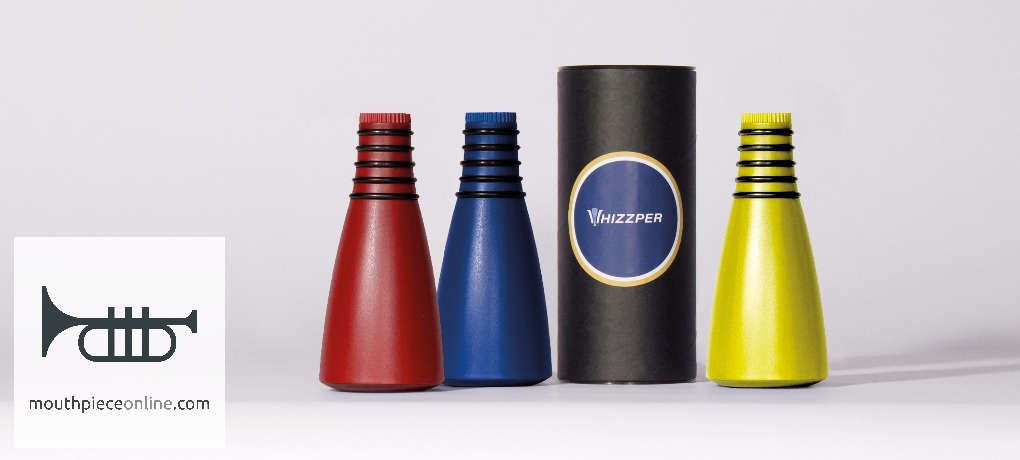
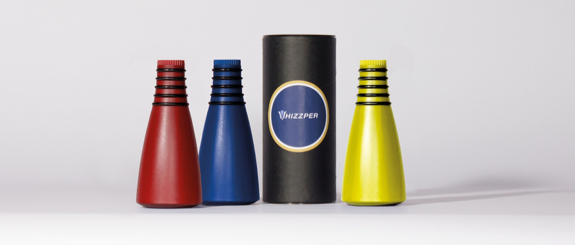
This mute is adjustable so that you can alter the resistance level and volume. It also comes in 3 colours as pictured above! To start with I used it as a traditional mute. I spent a minute or so trying the different resistance/volume settings and found that I was most comfortable playing at the halfway point between closed and open. This seems to give the best balance for me, but even with the adjuster completely open, the volume is still nice and soft.

I have to confess that it took a little while to get to grips with this mute. Notes were not really where I was expecting them, and I did not really feel in control. However, what I found after a short while was that as soon as I backed off a bit and tried to imagine that there was no mute in, it became easy! I had been over-blowing, which I can only assume is the way that I have always subconsciously approached practice mutes in the past.

It is such a breath of fresh air, being able to blow naturally and keep the centre of the notes exactly where I want them. Once I got used to playing with less effort, even my low C was in tune – this has been sharp to varying degrees on every practice mute that I have ever played. Intonation and response across the range is also very even.

Not only is this a good tool for doing that essential practice when noisemaking is not convenient, I can also see it as a great training tool. Sometimes when faced with a student who just needs to get used to blowing more and keeping the throat open, I have prescribed short bursts of playing with a more traditional practice mute such as a Denis Wick, to add resistance to help with that. In contrast, I can see the Vhizzper being a really useful tool for helping students to develop their lower breathing muscles, and keeping really natural airflow and support.

Next I set the adjuster to the closed position which seems to give the best response for me when using just with the mouthpiece (as pictured above). I have always liked to incorporate lots of free and mouthpiece buzzing into my practice and teaching. It can be a great way of really forcing you to concentrate on the absolute basics of breathing, control and blowing, without getting hung up on the sound. I have tried lots of buzzing aids including the Berp and the Buzzard and found them to have a really positive impact. The Vhizzper is another good product to add to this category.

It adds a little more resistance to your natural mouthpiece buzz so that it comes slightly closer to the feeling that you get when playing the trumpet. It also adds a little more resonance, which is surprising seeing as it is also muting the sound! This helped my general range for buzzing (I have always struggled to get a good natural buzz when playing in both extremes of high and low) and also naturally encourages you to support the airflow in the same way that you would want to play the trumpet.

In summary, I am very impressed! The very nature of a practice mute is that there is a large element of compromise. You are going to lose a level of response, intonation and natural vibration in return for a quieter sound. However, the Vhizzper keeps these compromises to a minimum, stacks up well against the alternatives on the market, and also gives you a valuable mouthpiece buzzing tool. It is certainly worthy of place in any trumpeter’s mute armoury!


Sign up here for new blog articles emailed direct to your inbox:

[jetpack_subscription_form show_subscribers_total=”false” button_on_newline=”false” submit_button_text=”Sign up” custom_font_size=”16″ custom_border_radius=”0″ custom_border_weight=”1″ custom_padding=”15″ custom_spacing=”10″ submit_button_classes=”” email_field_classes=”” show_only_email_and_button=”true”]

Frate Precision : Mouthpiece Review

Since 2006 Dario Frate has been designing and making mouthpieces from his base in Lombardy, Italy. The aim across the entire range is to give the player richness of sound, fluidity, and to do it as easily as possible. These are certainly noble ambitions and I was very keen to try some mouthpieces for myself!

I asked Dario to send me a small selection of mouthpieces with the following brief:

  1. An ‘all-rounder’ for a 3C-style player that can accommodate a warm classical sound as well as lighter styles. SELECTED: 3 M,3,106 with a semi-round rim
  2. A possibly shallower version of the above mouthpiece that could help the same player make a brighter sound. SELECTED: 3 HM,106 medium rim shape, medium large backbore
  3. A slightly wider rim mouthpiece aiming at a 1.5C-style player that still gives a degree of versatility. SELECTED: 1 M,3,106 with a semi-round rim
  4. A symphonic style piece allowing a free blow with a rich tonal core. SELECTED: 6+ M,3,106 with a semi-round rim

Below are my thoughts after taking them all through their paces. For general comparison and reference points I have used the Bach sizes to describe them, purely because these are references that most people are accustomed to, and not because they are in any way modelled after the Bach range.

3 M,3,106

First impression on the chops is that this is a very comfortable semi-round rim. The response is quick and the notes slot very easily, far easier than many of the 3C-style mouthpieces that I have played on in the past.

Working through some flexibility exercises (Colin), the word that springs to mind is ‘easy’. There is also a depth to the sound that I often find is missing when playing on a flexible and easy-slotting piece. After playing through some middle register melodies for a few minutes, I am finding that the sound is opening up more as I get used to backing off the air a little bit. This really does tick the boxes that I was looking for with this brief – a solid, warm, centred sound with flexibility and slotting.

3 HM,106

The medium-rounded rim on this has the high point nearer to the centre of the rim rather than the inside. This is really helpful for a little more lip compression without needing to go to a smaller rim size. The cup is also slightly higher without being too shallow. I often find that my fleshy lips bottom out easily on really shallow cups so this seems like a good compromise for me. 

The response is lightning fast with a nice bright yet rounded sound. I am no lead player by any stretch of the imagination but I am able on this mouthpiece to play with good flexibility and control with a centred sound above the stave up to high Fs and Gs – which is the upper limit of my normal controlled, working range. This strikes me as an ideal mouthpiece to look at if you are a legit player looking for a more commercial type piece to switch to when required, and also for more natural commercial players who like a slightly wider rim and a fairly open backbore.

1 M,3,106

This is similar in setup to the first mouthpiece that I played but with a slightly wider inner rim, getting closer to a 1.5C kind of feel. Again, this is really comfortable with a nice balance of cushioning and inner-rim ‘bite’. Flexibility and slotting feel great, and the biggest thing that strikes me is the consistency and depth of sound that I am able to make across the entire range of the trumpet. Playing on these slightly larger rim mouthpieces does not come naturally to me so I have had to spend a good 20 minutes playing through studies and exercises on this one before I can really get the measure of it. And boy was it worth it!!! It has been a long time since I was last able to make a sound this big and broad that still has good control and centre. 

6+ M,3,106

I asked Dario to recommend a setup that could suit a symphonic player who likes the feel of a 1.25C type rim but wants more depth and tonal core. The 6+ that I have been sent has a larger rim diameter than the previous model and slight V-shape to the cup. The sound is huge and still beautifully centred. I have to confess though, that having not played on this style of mouthpiece since college 20 years ago, I am not the best person to really put this through its paces. Some symphonic colleagues of mine here in Manchester kindly agreed to help!

Both of them have generally played on slightly more open feeling mouthpieces to a standard 1.25C, and both agreed that this fits really nicely in that zone. There is a warmth and centre to the broad sound that I am hearing in medium dynamics that holds together really well as they really open up. There are also some really nice increased overtones at the louder dynamics, particularly noticeable on the C trumpet. Feedback from both players is that these feel really comfortable to play too, with the same easy flexibility and slotting that I found on all of the other mouthpieces. You never know, I may have just made a couple of sales here!

In summary, Frate Precision is a really coherent range that sticks to that ethos of richness, fluidity and ease across the entirety. Many mouthpiece manufacturers will make fantastic mouthpieces to suit any player’s requirements and across those ranges will be enormous variation in feel and core sound. This is not a bad thing! We all as players look for THE ONE, so we are so lucky at the moment to have so many dedicated designers and makers who will help us to achieve that goal.

The feature that Dario Frate has brought to his range is that ALL of his mouthpieces should make our jobs as trumpet players, slightly easier, while keeping a rich tonal core in mind. If this is something that you are looking for, you will more than likely find something in this range that suits you.

For further information and expert advice, you can contact Dario Frate directly via his website.

You may also be interested to read these interviews with Frate Precision artists Massimo Longhi and Fabrizio Bosso, as well as this interview with Dario Frate himself.